1. Introduction
Two-phase displacement flows are widely encountered in energy and geotechnical engineering applications, such as the replacement of drilling fluid by cement slurry during well cementing, fluid substitution in pipelines, and multiphase injection and displacement processes in subsurface engineering. In oil and gas well cementing operations, displacement efficiency is regarded as a critical indicator for ensuring long-term wellbore structural integrity and reliable zonal isolation [
1]. Physically, the process involves the stable and effective advancement of the injected fluid within a confined flow channel, displacing the resident fluid and ultimately forming a continuous and mechanically stable consolidated body [
2,
3]. However, two-phase displacement is typically accompanied by interface evolution, flow instabilities, and complex coupled behaviors arising from density and viscosity contrasts, exhibiting pronounced nonlinear characteristics [
4,
5,
6]. Accurately characterizing interface propagation and the associated evolution of flow structures has therefore become a fundamental scientific challenge in multiphase flow modeling and numerical simulation.
Early investigations into interface advancement and flow structure evolution in two-phase displacement primarily relied on physical experiments and theoretical mechanism-based modeling. Experimentally, Renteria et al. [
7] examined the formation of residual zones during interface propagation and demonstrated that interface evolution is significantly influenced by flow structures and local velocity distributions. Zhang et al. [
8] conducted large-scale annular displacement experiments to quantitatively evaluate displacement efficiency and reported pronounced non-uniform characteristics during interface advancement. Nevertheless, experimental approaches remain limited in spatial resolution due to sensor placement and measurement accuracy, with interface positions typically characterized indirectly at the millimeter scale [
8,
9], making it difficult to continuously capture interface topology evolution and localized mixing structures. From a theoretical modeling perspective, Tardy et al. [
10,
11] propose annular displacement evolution models based on macroscopic governing equations, improving computational efficiency in predicting displacement efficiency. However, such models generally rely on empirical closure parameters to represent interfacial mixing and diffusion behaviors. Under strong convective conditions or rapid interface evolution, model predictions exhibit considerable sensitivity to parameter selection. Lavrov et al. [
12] further noted that parameter inversion procedures may yield numerically acceptable yet physically distorted results when model parameters are artificially adjusted to fit experimental data. Overall, although experimental studies and theoretical models have provided valuable insights into the macroscopic behavior of two-phase displacement, limitations remain in achieving continuous spatiotemporal characterization of interface evolution and stable representation of nonlinear dynamics.
With the development of computational fluid dynamics (CFD), numerical simulations based on the finite volume method (FVM) and the Volume of Fluid (VOF) approach have become mainstream tools for investigating two-phase displacement flows. Peng et al. [
13] established a three-dimensional CFD model using Fluent to systematically evaluate the influence of rheological parameters on displacement efficiency. Song et al. [
14] constructed numerical models with irregular flow channels to analyze the effects of displacement rate and flow behavior index on interface evolution. Enayatpour et al. [
15] further developed a three-dimensional CFD framework to simulate non-Newtonian flow and interfacial transport in complex cementing processes. These studies demonstrate that the VOF method enables a unified solution of the velocity field, pressure field, and volume fraction transport equation within a discretized mesh framework, thereby providing full-field information on interface propagation. However, in slender confined geometries or flow-redirection regions, accurate capture of interface gradients and shear layer evolution typically requires refined meshes and small time steps, leading to a substantial increase in computational degrees of freedom [
16,
17,
18]. Moreover, under convection-dominated conditions, VOF-type interface algorithms are highly sensitive to mesh quality and reconstruction strategies, often introducing numerical diffusion or spurious oscillations [
19,
20,
21,
22], which may compromise the stability and accuracy of interface morphology prediction. Consequently, under multiparameter studies or complex geometric conditions, traditional CFD approaches still face challenges in computational cost and scalability.
In recent years, Physics-Informed Neural Networks (PINNs) have emerged as a continuous-domain computational framework that directly embeds governing physical equations into the neural network training process, offering a new pathway to overcome limitations of conventional discretization-based methods [
23,
24,
25]. The central idea is to incorporate Navier–Stokes equations, boundary conditions, and initial conditions into the loss function in residual form, while leveraging automatic differentiation to replace traditional spatial discretization and time-marching procedures, thereby constructing physically constrained approximations in continuous space and time [
26,
27,
28]. This framework alleviates dependence on explicit meshes, avoids mesh distortion and numerical dissipation issues, and exhibits promising scalability in high-aspect-ratio structures and parameter inversion problems [
28,
29,
30,
31]. Existing studies have demonstrated that PINNs achieve high prediction accuracy in single-phase flow, heat conduction, and homogeneous media problems, and have shown encouraging performance in wellbore flow and reservoir pressure inversion. For instance, Nugroho et al. [
32] successfully predicted pressure distributions in geothermal well two-phase flow by constructing physics-constrained loss functions; Walter et al. [
33] propose the WellPINN framework to improve pressure diffusion characterization near wells; Han et al. [
34] employed domain decomposition strategies to achieve high-precision inversion of wellbore–reservoir coupled systems; Zhang et al. [
35] and Patel et al. [
36] further verified the feasibility of PINNs in multiphase displacement and interface instability problems.
Nevertheless, compared with single-phase or weakly nonlinear problems, two-phase displacement in cementing engineering involves interface sharpening, abrupt property variations, and strongly convection-dominated coupling. High gradients and non-smooth structures are typically present near the interface, posing significant challenges to the convergence stability and high-frequency representation capability of PINNs. Although several studies have explored the application of PINNs in multiphase displacement or fracture–wellbore systems [
37,
38,
39,
40,
41], systematic validation of interface propagation under varying geometric complexities remains limited [
29], particularly in achieving unified characterization of interface topology evolution and numerical stability under strong convection-dominated conditions [
42,
43,
44]. Therefore, establishing a stable and unified framework for describing coupled behavior of complex boundaries and moving interfaces, and systematically evaluating the influence of key parameters on interface morphology and displacement efficiency, remains a critical challenge in applying PINNs to two-phase displacement problems.
Motivated by the above considerations, this study develops a unified PINN framework to directly solve the coupled incompressible Navier–Stokes equations and VOF equation governing two-phase displacement flow. The contribution of this work is not merely the application of PINNs to a coupled Navier–Stokes–VOF system, but the development of a unified framework for cement–drilling fluid displacement in complex confined geometries. The framework is validated progressively from canonical benchmarks to parallel-plate, semicircular-bend, and casing–annulus configurations. In addition, physics-guided auxiliary constraints are introduced to enhance convergence and interface stability in the strongly confined turning region. These features, together with the systematic analysis of geometric and convection–diffusion effects, distinguish the present study from existing generic PINN demonstrations.
The remainder of this paper is organized as follows.
Section 2 presents the governing equations and the PINN formulation, including network architecture and physical residual design.
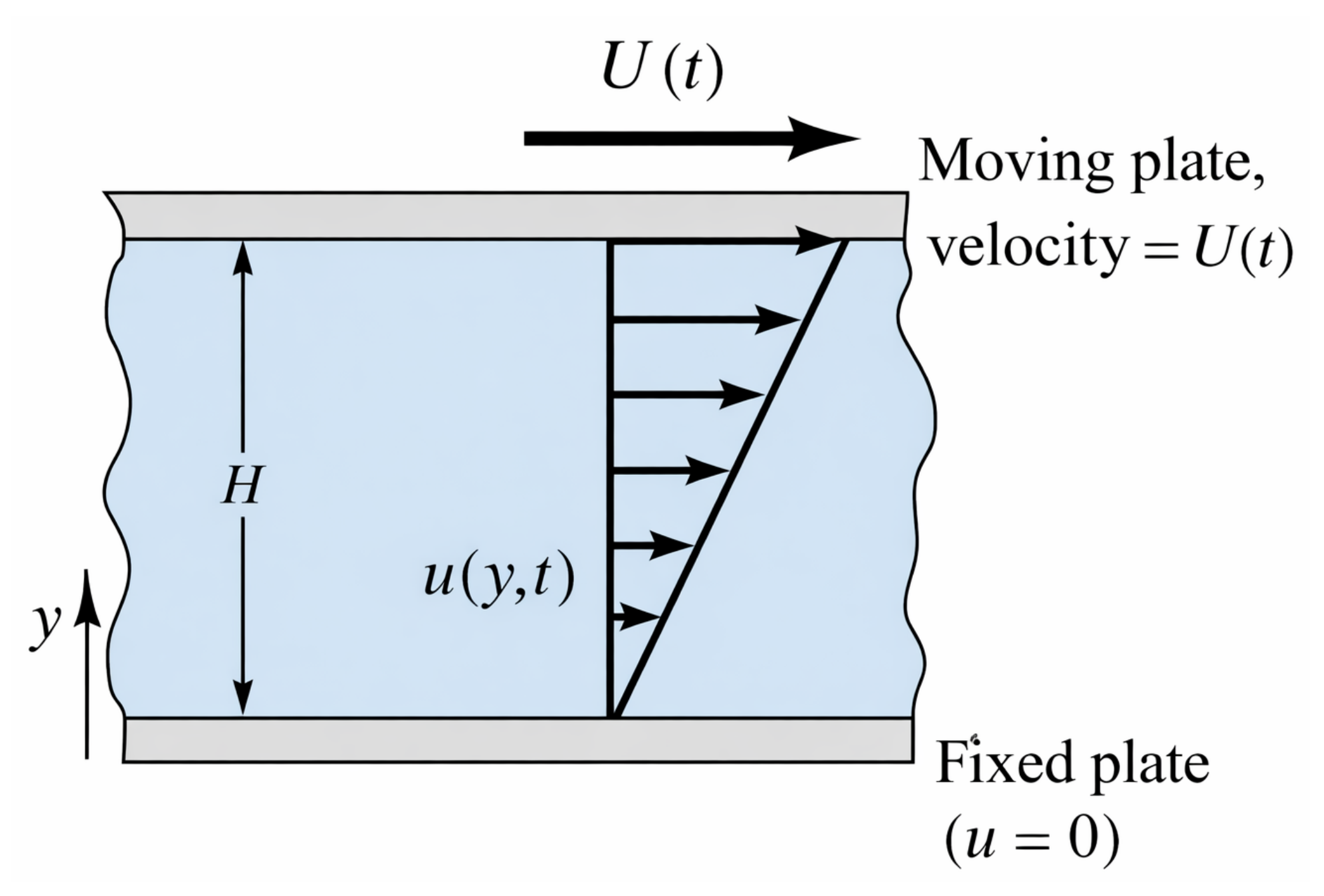
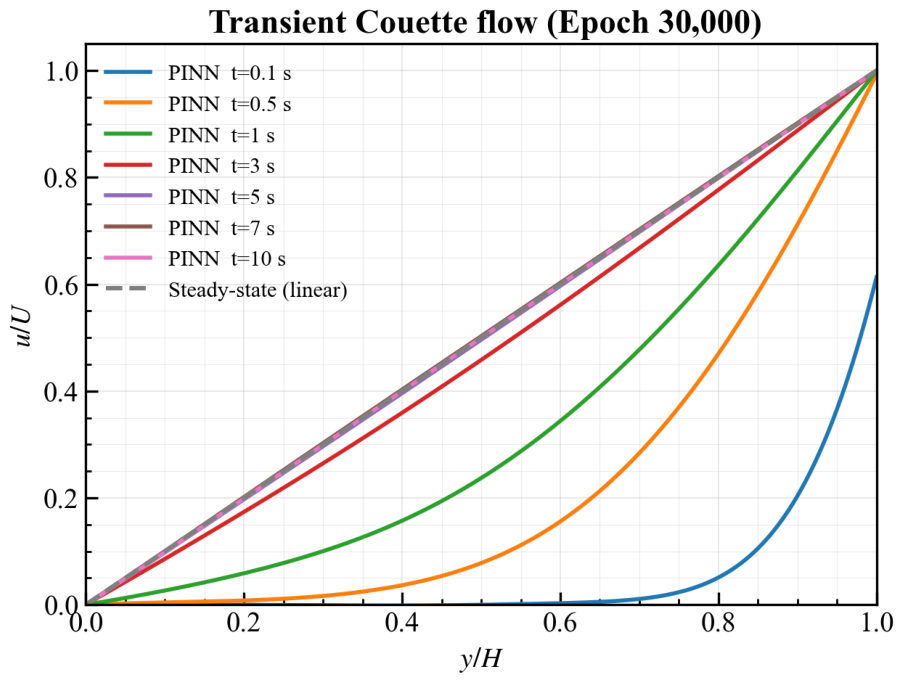
Section 3 validates the model using classical Couette flow and Poiseuille flow cases to examine physical consistency and temporal evolution capability.
Section 4 extends the framework to two-phase displacement problems in planar channels and curved geometries, with comparisons against conventional CFD results.
Section 5 further develops a casing–annulus system model to investigate interface evolution in complex connected structures and performs sensitivity analyses on geometric parameters and the convection–diffusion effects.
Section 6 concludes the study and outlines future research directions.
2. Methodology
2.1. Governing Equations for Two-Phase Displacement Flow
The two-phase displacement problem investigated in this study is motivated by fluid replacement processes occurring in confined geometries commonly encountered in engineering applications. Particular emphasis is placed on the continuous displacement of one fluid by another under externally imposed driving forces within representative configurations such as straight pipes, curved conduits, and U-shaped channels. Such displacement phenomena are widely observed in well cementing operations, pipeline cleaning, multiphase transport systems, and subsurface injection processes. The resulting flow behavior is governed by the combined effects of fluid property contrasts, geometric confinement, and interface evolution dynamics. To provide a unified continuum-scale description of these coupled mechanisms, a volume-fraction-based one-fluid formulation is adopted to mathematically characterize the two-phase displacement process.
In constructing the model, the following assumptions are introduced: (1) both phases are incompressible, immiscible Newtonian fluids; (2) the flow is isothermal, with thermal effects and phase change neglected; (3) chemical reactions and interfacial mass transfer are disregarded, and only hydrodynamic behavior is considered; (4) the interface thickness is negligible at the macroscopic scale, and its dynamics are represented in a continuous manner through a volume fraction transport equation. Under these assumptions, the two-phase displacement system can be regarded as a nonlinear dynamical system governed by the strong coupling among the velocity field, pressure field, and interface evolution field.
To describe the spatial distribution of the two phases, a volume fraction function
is introduced to represent the volumetric proportion of the injected fluid (phase 1) at a given location and time, satisfying
where
indicates that the location is fully occupied by phase 1, whereas
corresponds to complete occupation by the displaced fluid (phase 2). In the vicinity of the interface, a continuous transition region
naturally arises. This representation eliminates the need for explicit interface tracking within the continuum framework and is particularly suitable for two-phase displacement problems involving complex geometries.
Within the one-fluid modeling paradigm, the two phases are treated as an equivalent mixture whose effective properties vary continuously in space and time according to the local volume fraction. The mixture density
and dynamic viscosity
are expressed through linear interpolation:
where
and
(
) denote the density and dynamic viscosity of the respective phases. This interpolation ensures the continuity of material properties across the interfacial region, mitigates potential numerical singularities, and effectively captures the influence of property contrasts on the displacement dynamics.
Based on the property interpolation described above, the velocity and pressure fields governing the two-phase displacement flow are described by incompressible Navier–Stokes equations. The momentum conservation equation is expressed as
where
denotes the velocity vector,
is the pressure field, and
represents the body force term accounting for gravity or other equivalent driving forces. In practical displacement processes, the flow is typically driven either by an imposed inlet pressure gradient or by volumetric body forces. Different driving mechanisms directly influence the propagation speed of the displacement interface and the resulting flow structure. Within the momentum equation, the relative contributions of inertial, pressure-gradient, and viscous effects depend primarily on the Reynolds number and the contrast in material properties between the two phases. When significant differences in density or viscosity exist between the injected and displaced fluids, pronounced variations in shear stress distribution and velocity gradients may arise near the interface, thereby exerting a direct impact on displacement efficiency and interface morphology.
Under the incompressibility assumption, mass conservation is enforced through
This constraint guarantees volume conservation throughout the flow domain and serves as a fundamental condition for maintaining the physical consistency of the velocity field in two-phase displacement problems.
The spatiotemporal evolution of the two-phase interface is described by the VOF equation, written as
The advective term on the left-hand side governs the transport of the interface by the local velocity field, whereas the diffusion term on the right-hand side is introduced as a regularization mechanism to improve numerical stability, particularly in convection-dominated regimes where sharp interface gradients may lead to oscillations or convergence difficulties. As a result, the interface is represented as a finite-thickness transition zone rather than an ideal sharp discontinuity. It should be noted that this regularization may introduce a certain degree of interface smoothing. However, in the present study, the diffusion coefficient is chosen to be sufficiently small such that the overall interface evolution, displacement pattern, and global flow behavior remain consistent with reference CFD solutions. Therefore, its main influence is limited to the local interface thickness, while the macroscopic displacement characteristics are preserved. The influence of the diffusion term on interface behavior and displacement results will be further discussed in the numerical examples.
The governing equations presented above indicate that two-phase displacement flow is inherently a highly nonlinear and strongly coupled problem. The distribution of the volume fraction determines the effective material properties and of the mixture, thereby influencing the evolution of the velocity and pressure fields. Conversely, the velocity field directly governs the propagation and deformation of the interface through the VOF equation. This bidirectional coupling renders the overall displacement behavior highly sensitive to property contrasts, geometric confinement, and driving conditions, and also increases the difficulty of achieving balanced optimization during PINN training. In the coupled Navier–Stokes–VOF framework, loss weighting is therefore introduced to balance the optimization of the flow-field equations and the interface-transport equation, since these residuals may differ in magnitude and convergence sensitivity. Based on preliminary numerical testing, equal weighting between the Navier–Stokes and VOF residuals was found to provide a reasonable compromise between convergence stability and prediction accuracy. Therefore, a 1:1 weighting strategy was adopted in this study. The resulting system of equations, together with the corresponding PINN formulation, provides a unified physical framework for describing flow structures, interface dynamics, and displacement efficiency in two-phase systems, enabling systematic analysis under different geometric configurations and parameter combinations.
2.2. Fundamental Principles of PINNs
PINNs provide a continuous-domain computational framework in which governing physical equations are incorporated directly into the neural network training process. Instead of relying on mesh-based discretization, the unknown solution fields are approximated by neural networks, while the governing equations are enforced through residual minimization.
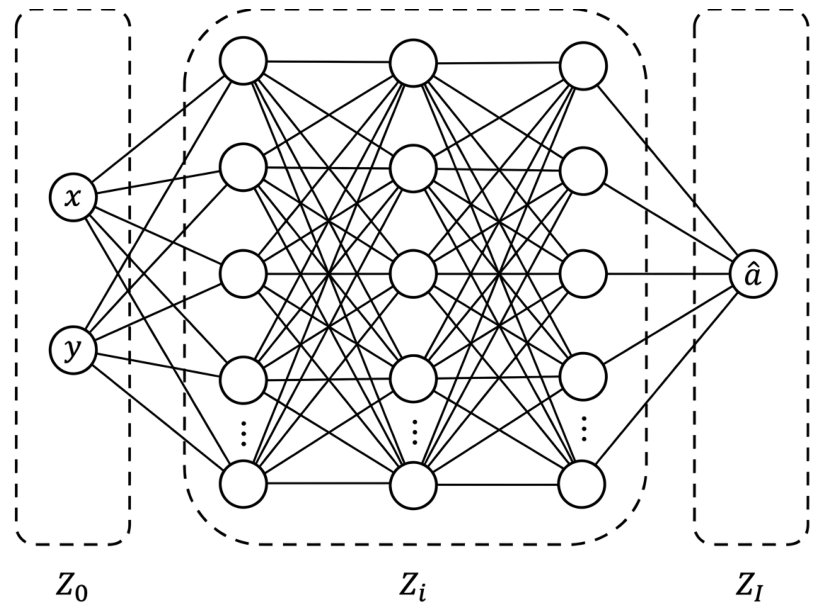
Figure 1 illustrates the architecture of the neural network employed in this study. A fully connected feedforward deep neural network (DNN) is used as a global function approximator that maps the spatial coordinates
to the corresponding predicted field variable
. The transformation between adjacent layers is expressed as
where
and
denote the trainable weights and biases, and
represents a nonlinear activation function. The hyperbolic tangent function is adopted in this study due to its smoothness and favorable gradient characteristics for representing continuous physical fields.
The neural network parameterization defines a trial solution
where
represents the set of trainable parameters.
Based on this neural network representation, the PINN framework further incorporates the governing equations as physical constraints. By means of automatic differentiation, the required spatial derivatives of the network output are obtained and substituted into the governing equations to construct the residuals. The corresponding loss functions are defined as
The total loss is given by
Minimization of yields a continuous solution that satisfies both the governing equations and boundary conditions over the entire domain. This unified framework provides an efficient and mesh-free approach for modeling the strongly coupled two-phase displacement flows considered in this study.
4. PINN Modeling of Two-Phase Displacement with Interface Evolution
Two-phase displacement flow constitutes one of the most fundamental and practically relevant problems in multiphase fluid mechanics. Unlike single-phase flow, it involves not only the evolution of velocity and pressure fields but also the dynamics of a moving interface, whose behavior critically influences displacement efficiency and flow stability. The analysis begins with a baseline configuration of two-phase displacement between parallel plates, where interface propagation and its interaction with the underlying flow field are examined in a controlled setting. Geometric curvature and flow redirection effects are subsequently incorporated to progressively approach more complex conduit configurations representative of practical engineering applications.
4.1. Two-Phase Displacement Between Parallel Plates
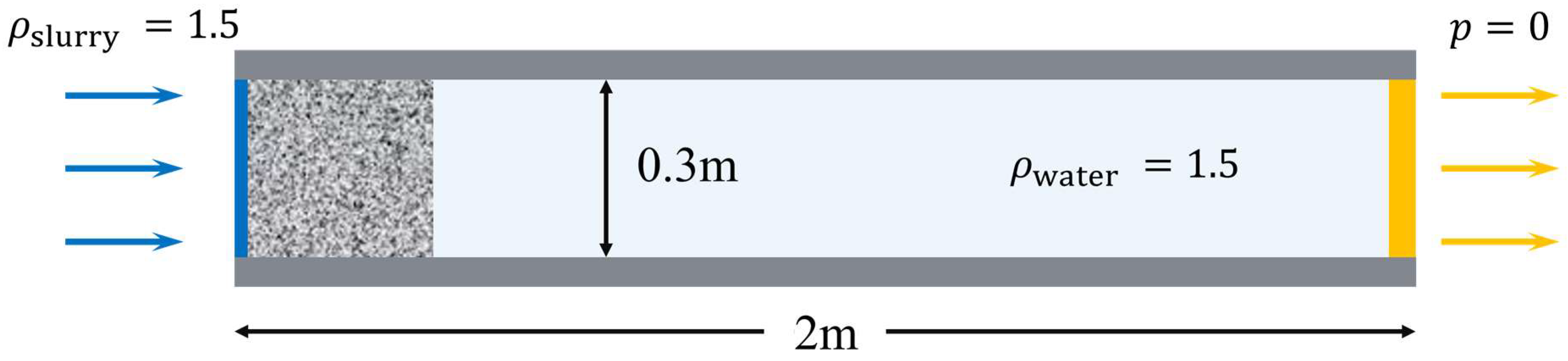
As illustrated in
Figure 8, the computational domain consists of a two-dimensional parallel-plate channel with a length of 2 m and a height of 0.3 m, representing an idealized planar section of a conduit. Initially, the domain is filled with a stationary fluid of density
, and the velocity field is zero throughout the domain, corresponding to the pre-displacement state.
Displacement is initiated by imposing a pressure-driven inflow at the left boundary. A denser fluid with density is injected to represent the cement slurry displacing the original fluid. The inlet pressure is ramped linearly from 0 to over the time interval , and maintained constant thereafter. A constant-pressure outlet boundary with is prescribed at the right boundary to maintain a sustained pressure gradient across the domain. No-slip boundary conditions are imposed along the upper and lower walls to account for viscous confinement by the solid boundaries. The dynamic viscosity is set to , and the density diffusion coefficient is prescribed as .
For the two-phase displacement benchmark in the planar channel configuration, the flow dynamics and interface evolution are governed by the variable-density incompressible Navier–Stokes–VOF system introduced in
Section 2 (see Equations (2)–(6)). Within the continuous mixture framework, the velocity field
, pressure field
, and volume fraction field
are solved in a fully coupled manner. The volume fraction influences the momentum equations through the density interpolation relationship, thereby establishing a bidirectional coupling between hydrodynamics and interface transport.
For the two-phase displacement problem in the planar configuration, a unified PINN framework is constructed to simultaneously predict the velocity field
, pressure field
, and volume fraction field
. The neural network takes the space–time coordinates
as inputs and outputs
where
denotes the trainable network parameters. To enforce physical admissibility, a Sigmoid activation is applied to the volume fraction output, ensuring
throughout training. The governing equations—including the incompressibility constraint, the variable-density momentum equations, and the VOF transport equation—are embedded into the loss function via automatic differentiation. The volume fraction field enters the momentum equations through density interpolation, thereby establishing an implicit coupling between interface transport and hydrodynamics. This volume-fraction–density–momentum linkage is essential for capturing displacement-front propagation. Initial and boundary conditions are imposed in residual form. The detailed PINN configuration and training parameters are summarized in
Table 3.
To further assess the predictive reliability of the proposed PINN framework for two-phase displacement problems, numerical results obtained from the commercial computational fluid dynamics software ANSYS Fluent(2024R1) are employed as a reference benchmark. Fluent adopts a finite-volume discretization strategy and solves the incompressible Navier–Stokes equations coupled with the VOF model under the same geometric configuration, physical parameters, and boundary conditions as those used in the present study.
As shown in
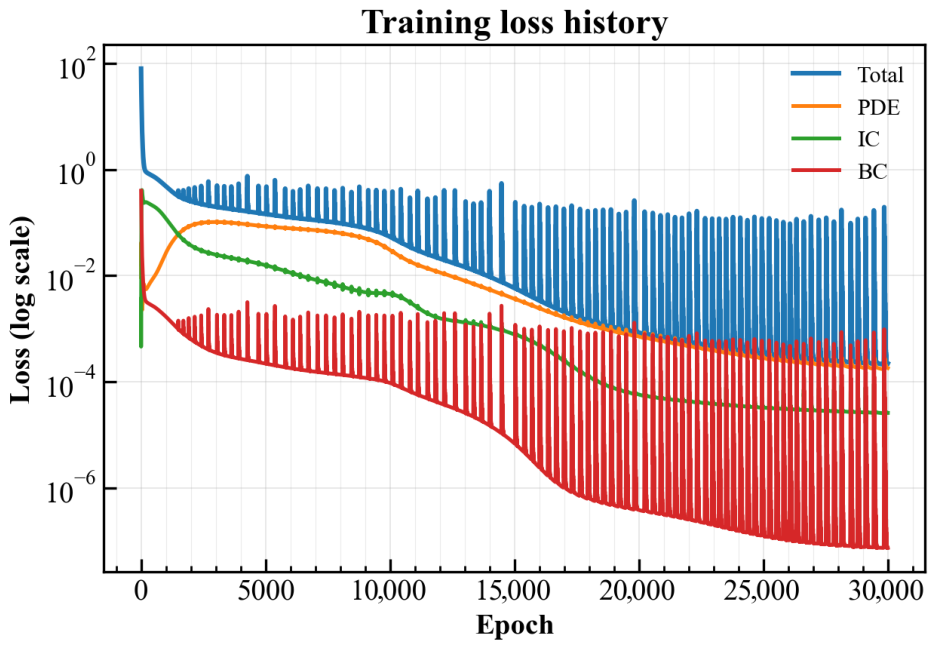
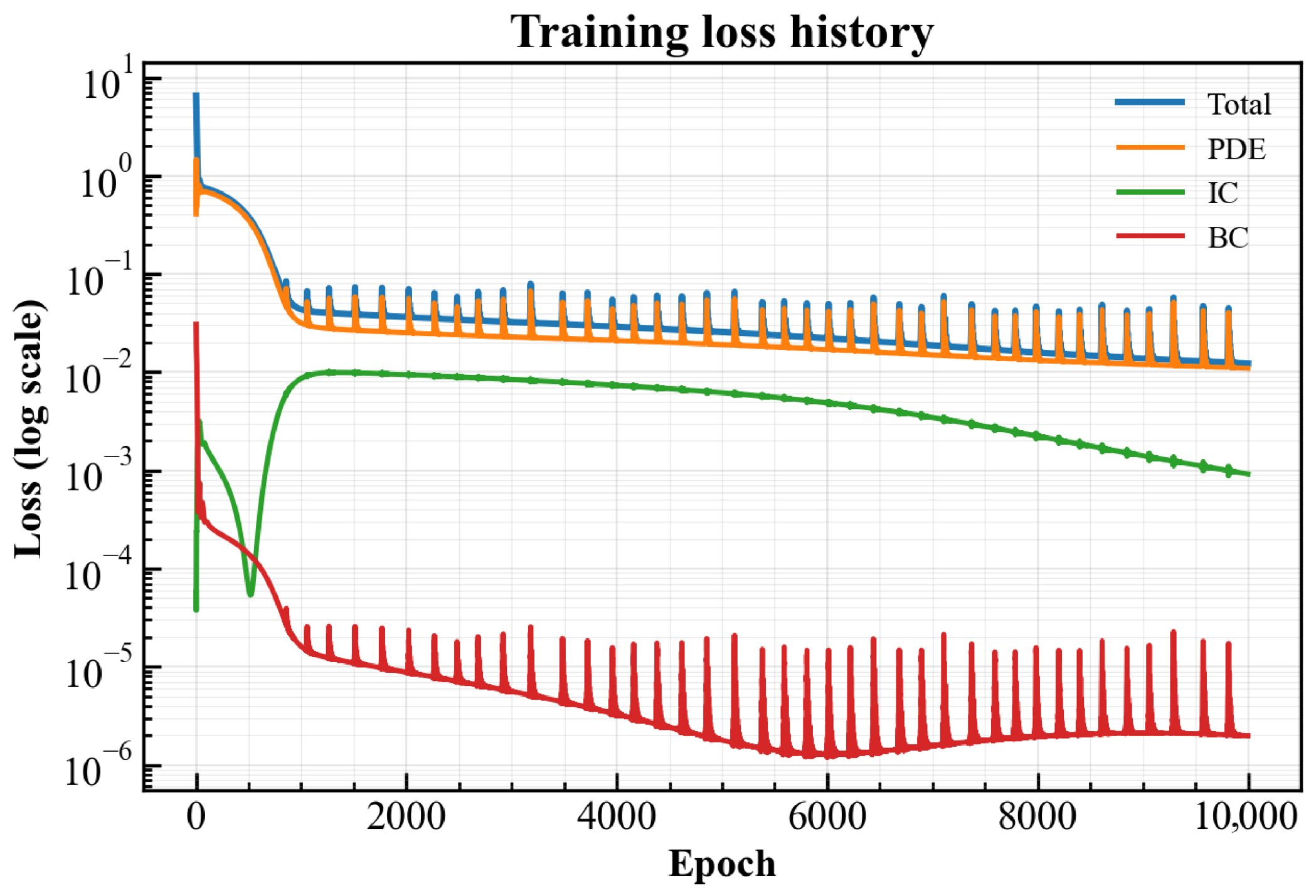
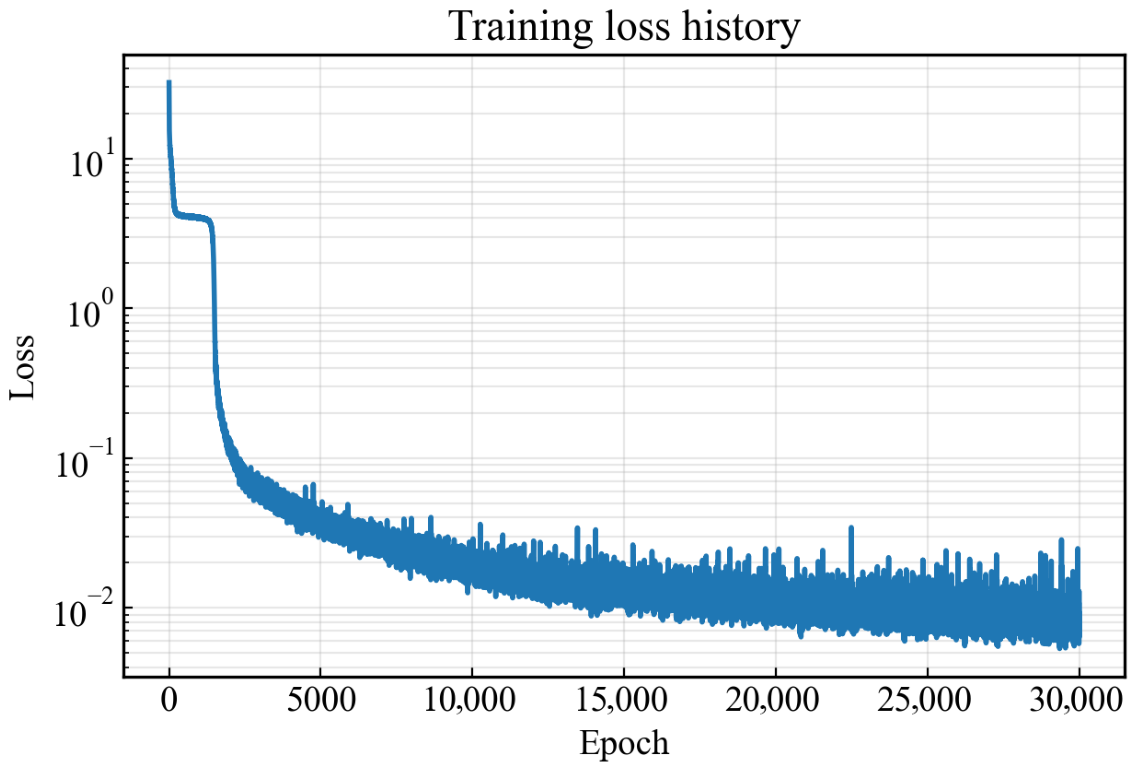
Figure 9, the loss curves exhibit stable convergence, confirming the satisfactory training performance of the model.
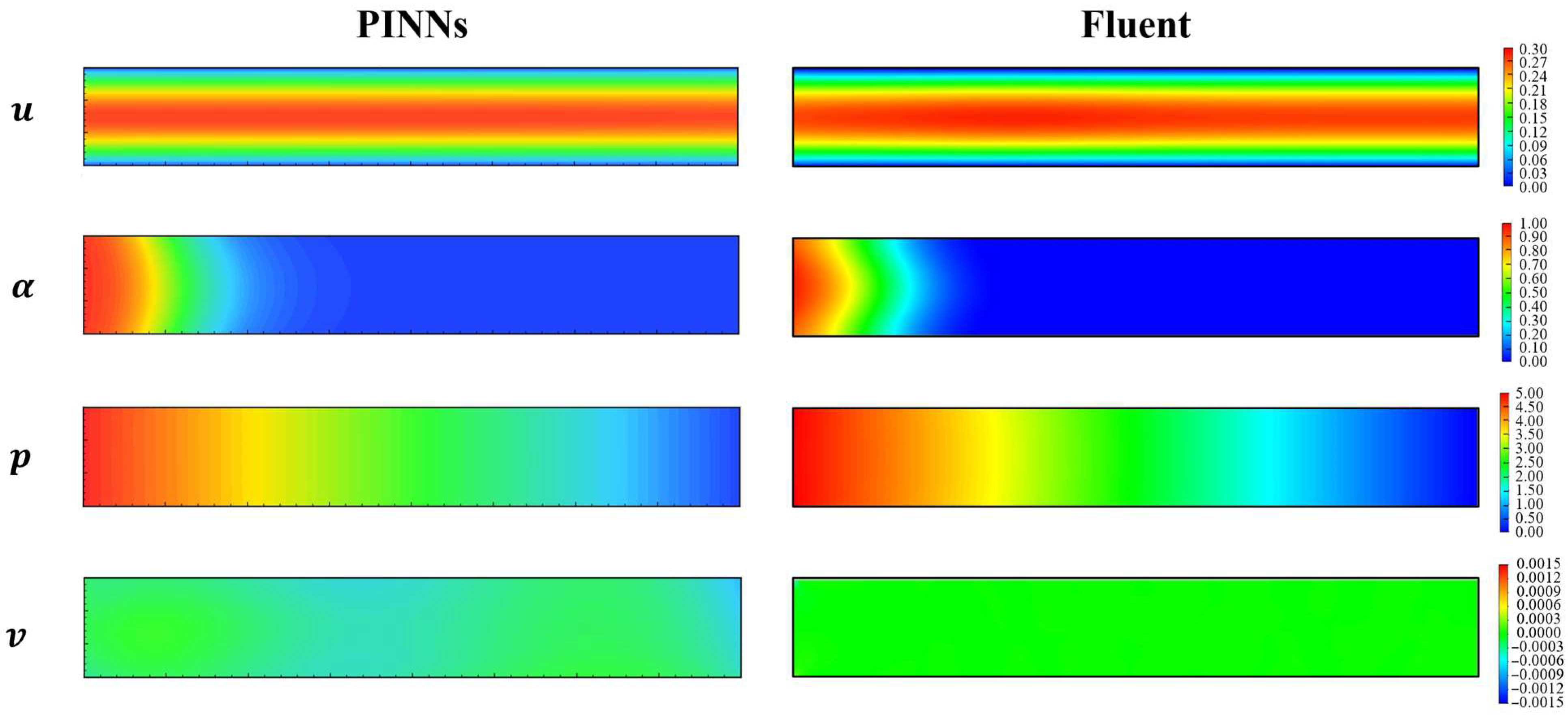
Figure 10 presents the contour distributions of the velocity components
, pressure field
, and volume fraction
at representative time instants, together with the corresponding results obtained from Fluent simulations. A high degree of agreement is observed in terms of flow structure, pressure distribution, and interface evolution patterns. These results indicate that the proposed framework is capable of accurately resolving the strongly coupled multi-field behavior inherent in two-phase displacement processes without relying on explicit mesh discretization or interface reconstruction techniques.
4.2. Two-Phase Displacement in a Semicircular Bend
In practical engineering applications, two-phase displacement frequently occurs in conduits with geometric curvature, such as elbow sections, turning joints, and deviated wellbore segments. In contrast to straight channels, curved configurations not only alter the primary flow direction but also introduce curvature-induced effects that modify the balance among inertial, viscous, and pressure forces. The resulting redistribution of velocity and pressure fields can significantly influence interface evolution, displacement efficiency, and flow stability.
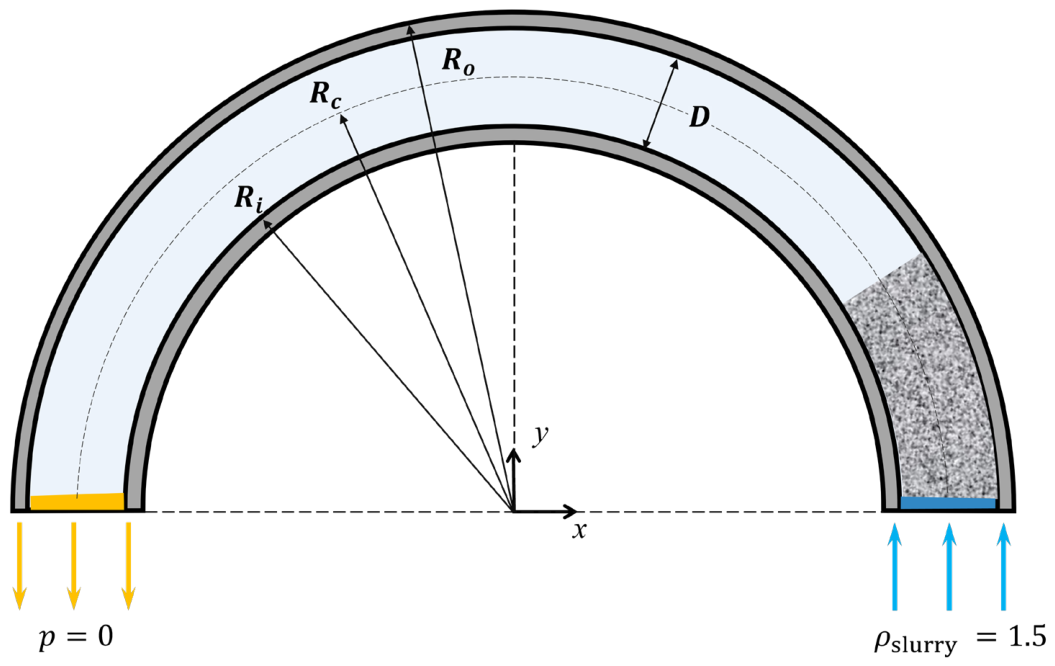
Two-phase displacement in a two-dimensional semicircular bend is investigated, as illustrated in
Figure 11. The computational domain consists of a semicircular annular channel with a constant diameter along the curved centerline. A Cartesian coordinate system
is adopted for implementation, with the bend center located at (0, 0). The radius of the channel centerline is denoted by
, and the inner and outer wall radii are defined as
where
represents the pipe diameter. In polar coordinates, the computational domain corresponds to the semicircular annular region satisfying
The inlet and outlet are located at the two ends of the bend, corresponding to
and
, respectively, while the inner and outer walls extend along the curved arc. At the initial time
, the bend is entirely filled with the displaced fluid (drilling fluid), and the velocity field is set to zero throughout the domain. The loading strategy, boundary conditions, fluid assumptions, and governing equations are identical to those adopted in the parallel-plate displacement case. It is important to note that, although the flow trajectory undergoes significant curvature in the bend configuration, the analytical form of the governing equations remains unchanged. Geometric curvature is incorporated implicitly through the spatial domain definition and boundary conditions rather than through explicit curvature terms in the governing equations. The network architecture, optimization algorithm, and training strategy are consistent with those adopted in the previous benchmark cases. The key PINN configuration parameters for the semicircular bend case are summarized in
Table 4.
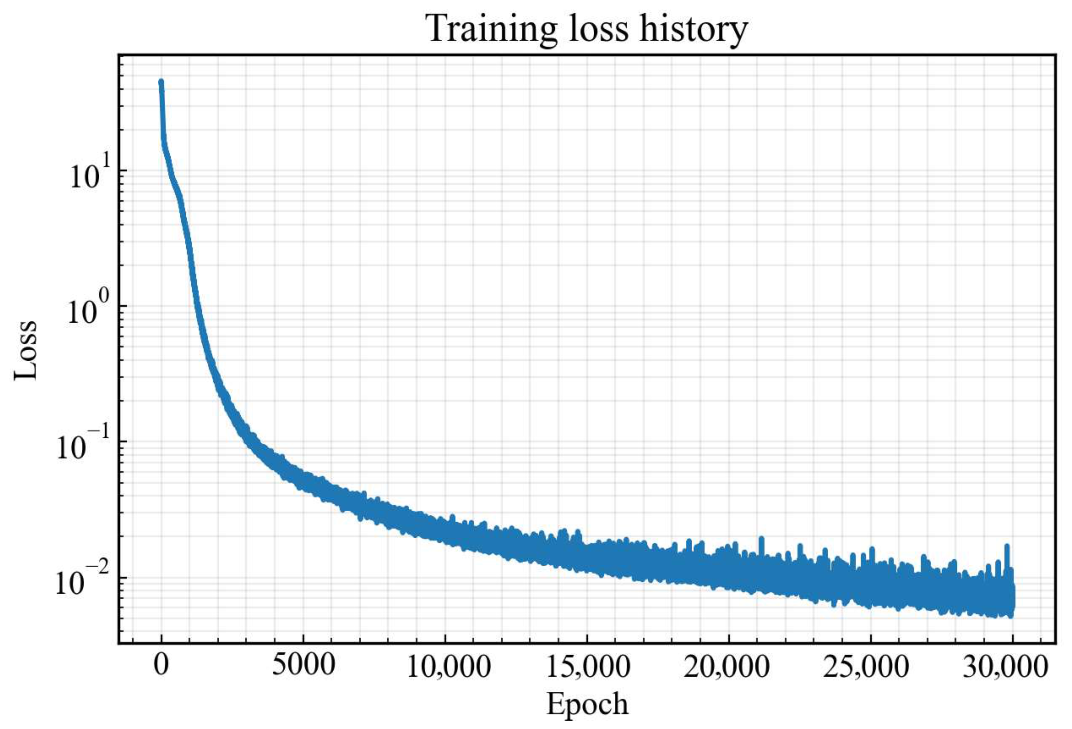
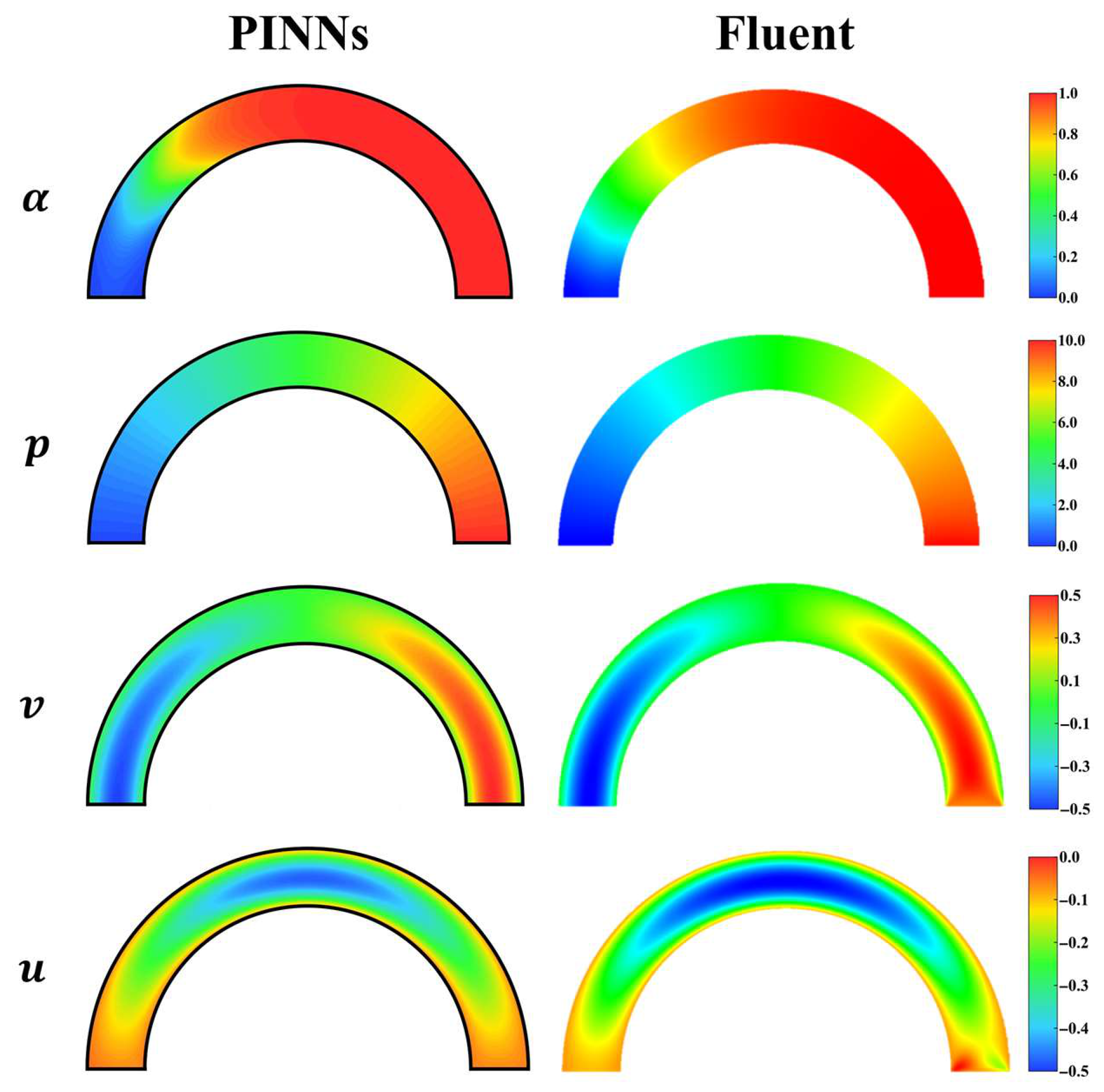
Figure 12 presents the loss convergence curve, while
Figure 13 compares the four predicted fields with the corresponding ANSYS Fluent results. The overall agreement confirms the accuracy and robustness of the PINN framework. The transition from a straight channel to a curved geometry further demonstrates that the proposed model maintains stability and predictive capability under flow redirection and curvature-induced momentum redistribution. Notably, without introducing additional curvature-specific terms into the governing equations, the method accommodates geometric complexity naturally through boundary representation and sampling design. This reflects the inherent flexibility of PINNs in handling multiphase flows within nontrivial domains and provides a reliable basis for extending the approach to more realistic wellbore geometries and displacement-efficiency analyses in practical cementing applications.
5. Cement Slurry Displacement of Drilling Fluid in a Casing–Annulus Geometry
In practical cementing operations, slurry displacement takes place within the casing–annulus system, where geometric confinement and local flow restrictions strongly influence the displacement pathway and interface evolution. To represent such engineering conditions while maintaining computational efficiency, a two-dimensional axisymmetric simplification of the wellbore geometry is adopted to construct an idealized casing–annulus displacement model. This configuration enables systematic evaluation of the proposed PINN framework under confined geometries and evolving interface dynamics, and provides a numerical basis for subsequent displacement-efficiency analysis.
5.1. Geometric Models and Physical Problem Descriptions
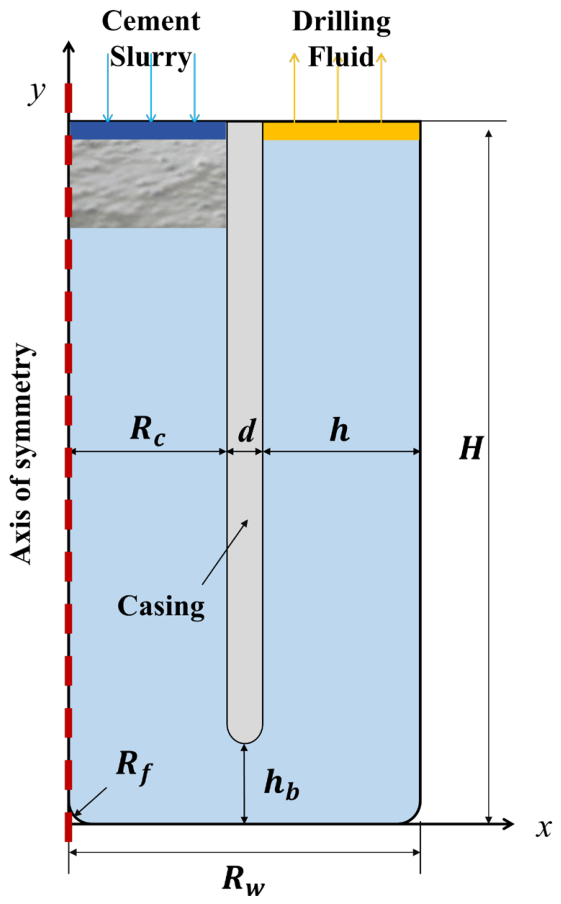
As illustrated in
Figure 14, the red dashed line denotes the axis of symmetry. The computational domain comprises the fluid region inside the casing and the surrounding annulus, bounded by the outer wellbore wall and the symmetry axis, forming an axisymmetric casing–annulus configuration. The wellbore radius is
, and the outer casing radius is
; the annular clearance width is therefore defined as
. The total axial height of the domain is
. To avoid geometric discontinuities and enhance training stability, a filet transition with radius
is introduced at the bottom corner of the wellbore wall. In addition, a bottom clearance parameter
is defined as the minimum axial distance between the casing shoe and the wellbore bottom, which governs the effective flow passage and influences the turning behavior of the displacing fluid as well as the associated local pressure drop.
The resulting geometry forms a typical “upper-connected–lower-restricted” flow pathway. Initially, the annular region is entirely filled with quiescent drilling fluid. Cement slurry is then injected from the upper-left inlet under a time-dependent pressure boundary, with the inlet pressure increasing linearly over the ramping period before reaching a constant value. Driven by the imposed pressure gradient, the slurry descends along the left annulus, turns through the semi-circular transition at the casing shoe, and ascends along the right annulus, thereby continuously displacing the drilling fluid. The arrows indicate the inflow and outflow directions.
5.2. Governing Equations and Boundary Conditions
The governing equations remain consistent with those introduced in
Section 4, including the incompressible Navier–Stokes equations coupled with a VOF-type transport equation for the volume fraction
, except for the explicit inclusion of gravitational effects, which become non-negligible in the casing–annulus configuration due to density contrast between cement slurry and drilling fluid. The incompressible continuity equation is retained in its standard form. The momentum equation is written as
where
denotes the gravitational acceleration vector. The additional body-force term
introduces buoyancy-driven effects through the density field
, thereby allowing density stratification and gravitational instability to influence the displacement dynamics.
The inlet, outlet, and wall conditions follow the same formulation as described in the previous two-phase displacement cases and are therefore not repeated here. Owing to the geometric and loading symmetry about the vertical centerline, a mirror symmetry boundary condition is imposed along the axis. Specifically, the normal velocity component vanishes on the symmetry line, while the normal gradients of tangential velocity, pressure, and volume fraction are set to zero,
5.3. PINN Modeling
The training objective of the PINN model follows the standard physical constraints defined previously. In the casing–annulus configuration, however, the displacement process features a strongly confined “downward–turning–upward” flow pathway. Under such geometric connectivity and convection-dominated transport, enforcing only the conventional PDE residuals may result in slow convergence or insufficient interface resolution within practical training epochs. To improve training stability and better capture the essential displacement characteristics, a set of auxiliary physics-informed constraints is incorporated. These auxiliary terms are formulated as soft regularization components and incorporated into the composite loss function as
Specifically, localized volume-fraction guidance is imposed in geometrically critical regions (e.g., throat and bottom clearance zones) to facilitate physically consistent interface penetration through narrow passages. In addition, a weak interface regularization term is introduced to suppress nonphysical distortions of the α-contours without constraining their exact position. All auxiliary components are formulated as soft penalties with carefully calibrated weights to preserve the dominance of the governing equation residuals. The detailed model configuration and parameter settings are summarized in
Table 5.
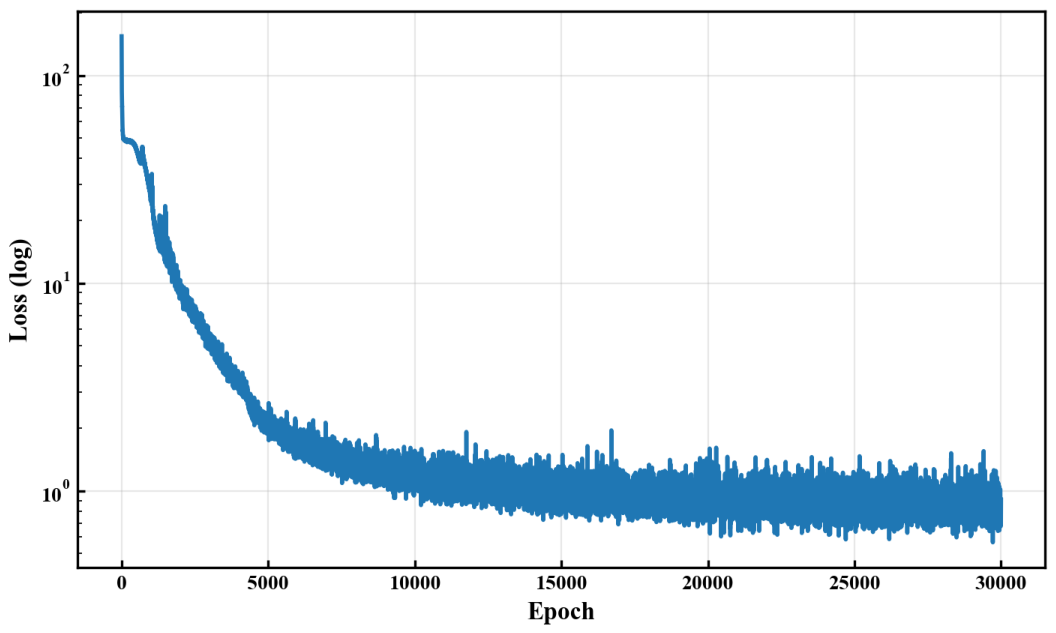
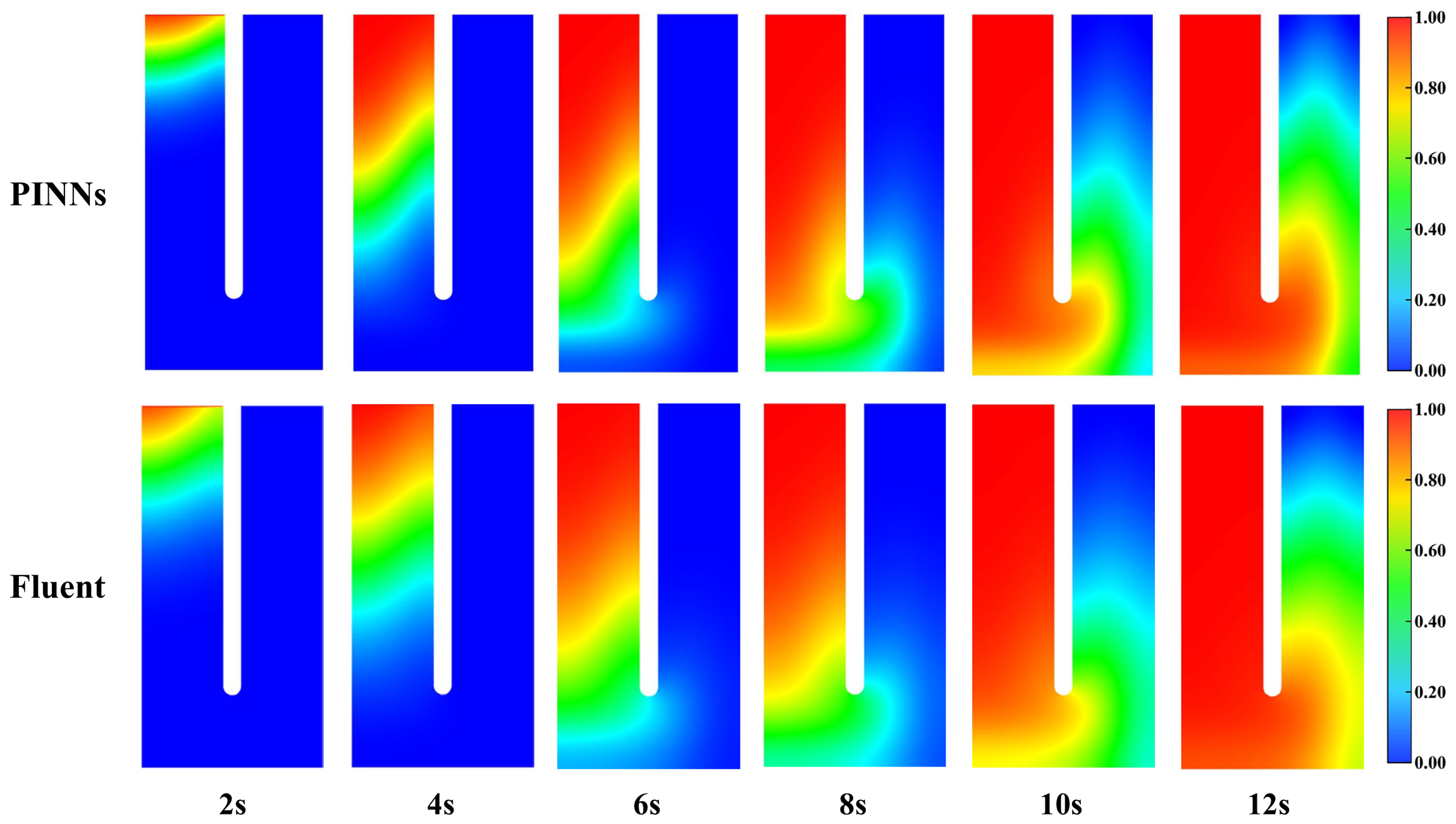
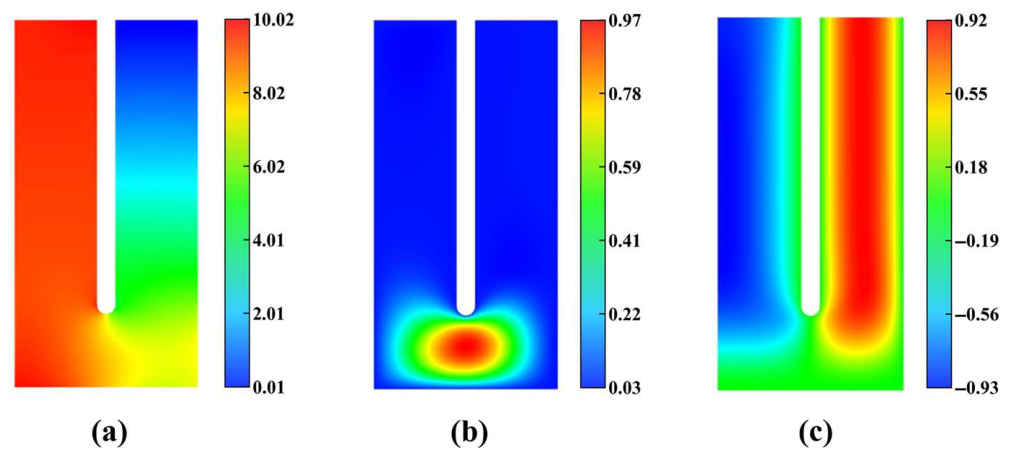
Figure 15,
Figure 16 and
Figure 17 show the training convergence history and the four fields predicted by the PINN model. The loss exhibits stable decay without divergence, indicating good convergence behavior. The predicted velocity, pressure, and volume-fraction fields are in good agreement with the CFD results, and remain physically consistent with the expected flow evolution. To quantitatively assess the prediction accuracy, a relative L2 error analysis is performed by comparing the PINN predictions with the corresponding Fluent solutions. The relative L2 error is defined as:
where
denotes the target variable, and the superscripts “pred” and “ref” represent the PINN prediction and the corresponding Fluent solution, respectively. The results show that the average error over six representative time instants is 4.8%, with a maximum value of 5.96% observed at 8 s. The main discrepancies are concentrated near the interfacial transition zone in the turning region, where strong gradients and geometric confinement increase the difficulty of accurate prediction. Overall, the agreement between the PINN and CFD results remains good throughout the displacement process.
In addition, a comparison of computational cost is conducted to assess the efficiency of the proposed framework. The representative Fluent simulation requires approximately 5 h, whereas the corresponding PINN training takes about 0.5 h under the same computational condition. Once trained, the PINN framework can efficiently provide predictions for varying parameter settings without the need to repeat full CFD simulations. This makes the approach particularly attractive for parameter studies and optimization problems.
5.4. Geometric and Convection–Diffusion Parameter Sensitivity Analysis
To assess the robustness of the proposed PINN framework under variations in key engineering parameters, a sensitivity analysis is conducted with respect to the bottom filet radius and the Péclet number. The former governs geometric smoothness at the casing shoe and influences flow turning behavior, while the latter is a dimensionless parameter characterizing the relative importance of convective transport to diffusive transport in interface evolution. These parametric studies provide insight into the model’s ability to capture geometry-dependent flow redistribution and interface dynamics. It should be noted that the purpose of the following analysis is not to provide a comprehensive parametric study, but to examine the representative effects of key physical and geometrical parameters on the behavior of the proposed PINN framework.
5.4.1. Influence of Bottom Filet Radius
To quantify the influence of geometric smoothness at the casing shoe, all parameters are kept constant while varying only the bottom filet radius . Four cases, , 0.02 m, 0.05 m, 0.1 m, are considered, covering the transition from a sharp corner to progressively smoother geometries. Each case is trained under the same PINN settings so that the effect of geometric variation on convergence behavior can be assessed directly.
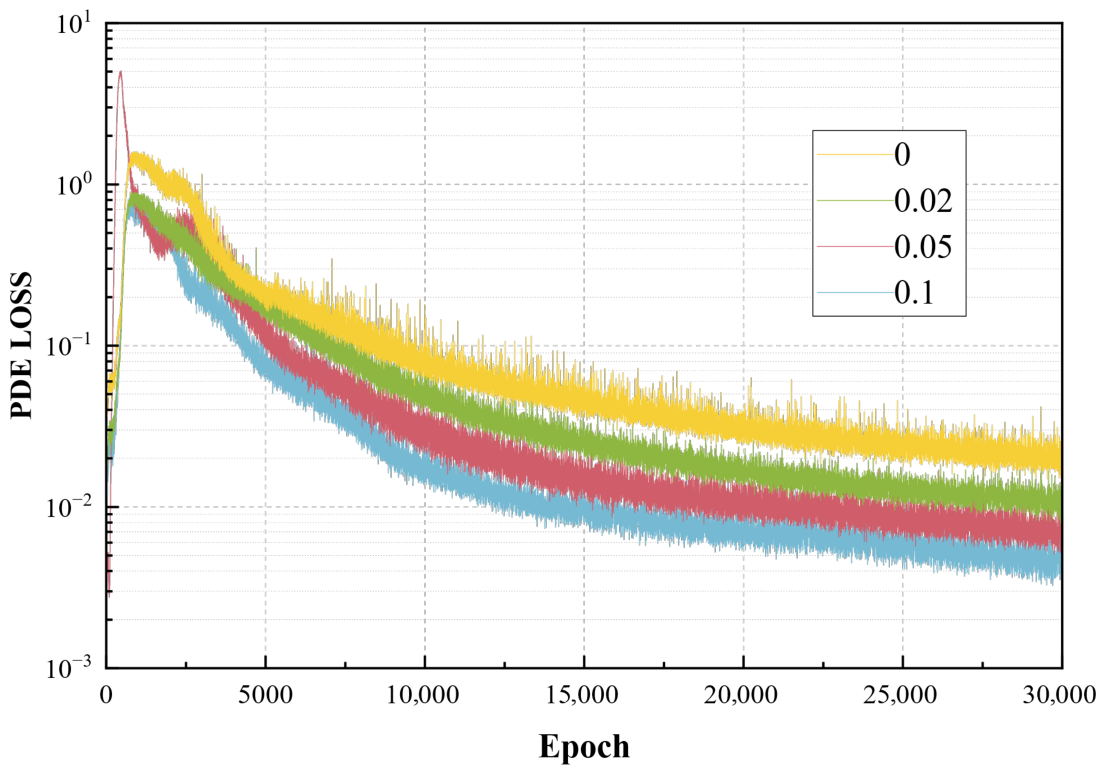
The corresponding PDE loss histories are shown in
Figure 18. A clear improvement in convergence behavior is observed with increasing
. When the filet radius is small, especially for the sharp-corner case (
= 0), the training process exhibits relatively higher residual levels and more noticeable oscillations, indicating that the strong geometric discontinuity increases the difficulty of optimization. This behavior can be attributed to the sharp turning structure, which tends to induce stronger local gradients and makes it more difficult for the PINN to satisfy the governing equations uniformly throughout the computational domain.
As increases, the convergence process becomes progressively smoother and the residual magnitude decreases. For larger filet radii, the PDE loss drops more steadily and reaches a lower level within the same number of training iterations, demonstrating a more stable and efficient optimization process. These results indicate that improving geometric smoothness at the casing shoe can effectively alleviate local learning difficulty and enhance the convergence performance of the PINN framework.
5.4.2. Influence of the Convection–Diffusion Parameter (Péclet Number)
In the casing–annulus displacement process, the evolution of the cement–drilling fluid interface is governed by the competition between advective transport and diffusive smoothing. To quantify their relative dominance, the Péclet number (
) is defined as
where
is a characteristic velocity,
is a characteristic length scale, and
denotes the diffusion coefficient in the volume-fraction transport equation. In the present study, variations in
are implemented by adjusting
while keeping all geometric and hydrodynamic parameters fixed.
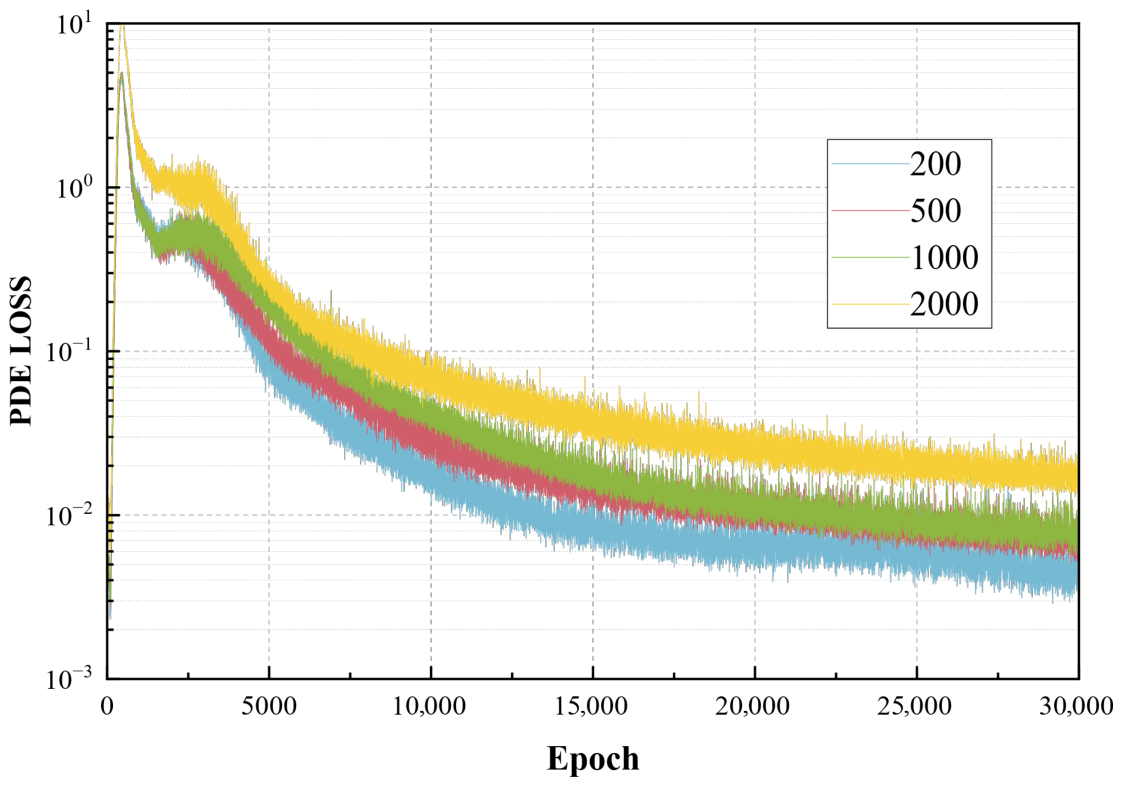
The convergence histories corresponding to different
values are shown in
Figure 19. As
increases, the convergence process becomes more difficult, as reflected by a slower decay of the PDE loss and a higher stabilized residual level. In addition, the high-
cases exhibit more noticeable oscillations during training, indicating reduced optimization stability.
This trend can be attributed to the increasing dominance of advection over diffusion at large Péclet numbers. Under such conditions, the governing equations tend to produce sharper gradients and more localized interface structures, which makes the solution more difficult for the neural network to approximate accurately over the entire computational domain. As a result, the training process becomes less stable and the residuals decay more slowly. By contrast, at lower Péclet numbers, the stronger diffusive effect smooths the solution field and reduces local stiffness, thereby improving convergence behavior. Although the introduced physics-guided auxiliary constraints help improve stability in strongly convective regions, the results indicate that high-Péclet-number cases remain more challenging for the present PINN framework.




 and
and