1. Introduction
Digitization is forcing societies to transform by pushing them to use the latest technologies. Both the public and private sectors face numerous challenges in adapting to this change. This is because both a lack of human capital and a lack of accumulated knowledge emerge as obstacles to digital transformation [
1]. The digitization of public services, along with innovative investments and strategies for the future in socio-economic and political spheres, is gaining importance. With the widespread adoption of information and communication technologies (ICTs), noticeable improvements are being observed in public services such as health, law, education, security, finance, and agriculture, in areas such as efficiency, accountability, integrity, reliability, and citizen participation [
2].
In different parts of the world, the public sector has set a series of reforms and strategic goals for digital transformation. Regular monitoring and evaluation processes inform stakeholders about the progress of government digital transformation. For example, in 2015, the EU proposed DESI, a common approach to rating progress in digital government development. Furthermore, the EU aims to build a globally resilient and competitive industry in a climate-neutral environment by 2050 through a series of industrial and digital strategies [
3,
4,
5]. Alternatively, the OECD has proposed the Digital Government Index (DGI), consisting of various indicators. This index reflects the current state of digital government strategies in member states and some partner countries. Similarly, the UK and Australian governments released digital performance indicators on stakeholder satisfaction, transaction information, and the degree of digitization in public services [
6].
Despite the growing body of research on digital transformation and e-government, several important limitations remain in the existing literature [
7,
8]. First, most studies focus on specific countries, regions, or individual public institutions, which limits the ability to provide a comprehensive global assessment of digital government performance [
9]. Second, many existing studies rely primarily on survey-based or qualitative approaches, which may introduce subjectivity and restrict the use of objective international indicators. Third, although multi-criteria decision-making (MCDM) approaches have been increasingly applied in public sector evaluations, relatively few studies integrate uncertainty modeling, clustering techniques, and ranking mechanisms within a unified framework [
10]. In particular, directly comparing countries with substantially different levels of digital maturity within a single ranking structure may yield biased or less interpretable results [
11]. Therefore, there remains a need for a comprehensive analytical framework that (i) incorporates objective international datasets, (ii) addresses uncertainty in expert judgments, and (iii) evaluates countries within relatively homogeneous groups to enable more balanced performance comparisons. Addressing these limitations, this study proposes a clustering-embedded fuzzy decision-making framework for evaluating digital government performance across 165 countries.
This study addresses the research gap in evaluating digital government performance across different clusters using fuzzy multi-criteria decision-making methods and clustering techniques. Existing studies on digital transformation in the public sector are largely restricted to regional cases [
12], institution-specific analyses [
13], or survey-based assessments [
14]. In contrast, this paper develops a comprehensive evaluation structure based on seven main criteria and 21 sub-criteria, using objective international data for 165 countries. Moreover, the contributions of this paper are three-fold. First, seven main criteria (MC) and 21 sub-criteria (SC) are identified as performance indicators for evaluating digital government performance across 165 countries. While existing studies often focus on regional cases or specific public institutions, this study provides a comprehensive global evaluation structure. Second, a fuzzy decision-making framework embedded with a clustering technique is proposed to assess digital government performance. The framework integrates intuitionistic trapezoidal fuzzy (ITF) number-based analytical hierarchy process (ITFNAHP) to determine criteria weights under uncertainty, k-means clustering to group countries with similar digital development characteristics, and TOPSIS to rank countries within each cluster. The use of ITF numbers enables modeling both membership and non-membership degrees in expert judgments, providing a more flexible representation of uncertainty than classical fuzzy numbers. The presented decision-making framework has not been used in decision-making assessments, offering flexibility and precision in an uncertain environment. Third, the proposed framework generates managerial and policy implications aligned with the Sustainable Development Goals (SDGs), providing policy-makers with insights to improve digital government strategies and public service delivery. Overall,
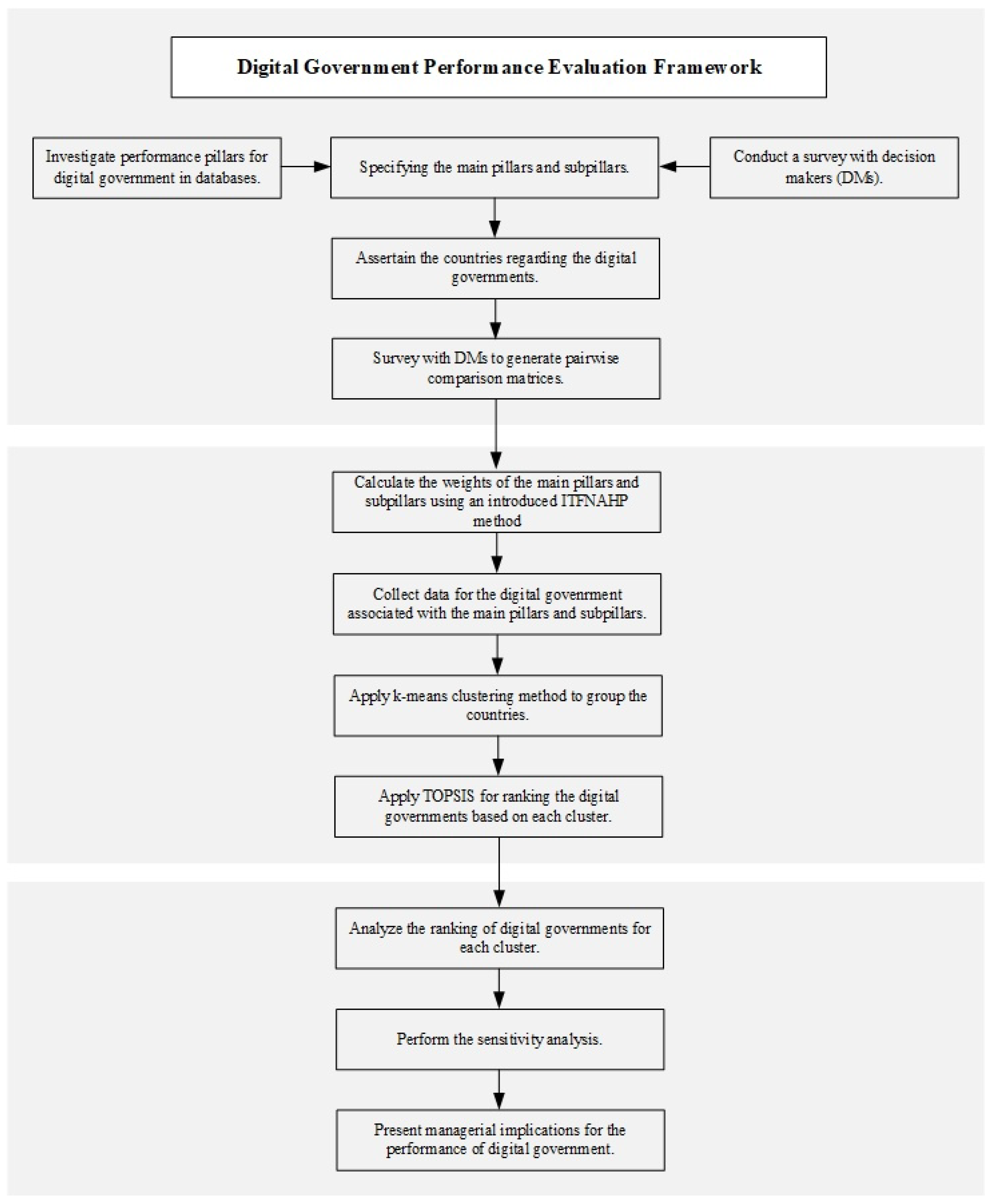
Figure 1 shows the proposed digital performance evaluation framework.
The remainder of this research paper is structured as follows. The relevant studies are reviewed in
Section 2. Then, the problem statement and the proposed fuzzy decision-making framework are presented in
Section 3. Next, the application of the proposed methodology is shown in
Section 4 for 165 countries. Further, managerial and policy implications are provided for policy-makers in
Section 5. Finally, concluding remarks, limitations, and potential studies are drawn in
Section 6.
2. Literature Review
The digital transformation process began in other sectors before the public sector. Changing societal expectations and international agreements necessitate a series of service delivery changes to improve efficiency, transparency, accessibility, and more, enabling citizens to receive high-value, real-time digital public services. While external factors are seen as the biggest driver of digital transformation, it has become clear that this process, its services, and its products need to be frequently updated to meet emerging needs. Therefore, the process is expected to contribute to the relationship between public administration and stakeholders, increase citizen satisfaction, and open a new dimension in public bureaucracy and organizational culture [
15].
Lindgren et al. [
16] examined the interaction between citizens and the government in the context of the digitization of public services. The study focused on the contributions of technologies such as data mining, machine learning, and sensor technology to the government’s vision for public sector service delivery. Thus, the aim is to improve citizens’ quality of life through the digital transformation and to ensure that public services are prepared for potential threats. Later, Alvarenga et al. [
1] studied the digital transformation process of the public sector and its perspective on knowledge management. A survey and review were conducted with public service employees affiliated with the Portuguese Ministry of Environment. The results indicate that digital transformation activities in the public sector are directly related to the quality of the organization’s knowledge management. In a similar manner, Peng et al. [
17] conducted a study to achieve digitization goals and support green transformation in the digital transformation process. Using text data mining and data from companies in Shanghai and Shenzhen, the study analyzed the dimensions of digitization and green transformation. The results show that digitization initially acts as an obstacle to green transformation in businesses but later becomes an incentive. Along the same lines, Zhao et al. [
18] put forward that traditional cyber attack detection is becoming increasingly ineffective in the era of high digitization. Deep learning technology is showing better results in network security. Therefore, the study proposes a multi-classification method for web injection attacks. In the first stage, a new method was developed to address the problems of uneven distribution of training samples and low detection accuracy of command injection attacks. Subsequently, an effective model combining deep learning and manual discrete feature extraction methods was used.
Crăciun et al. [
19] investigated the relationship between public administration and digital transformation in the 27 member states of the European Union region using both structural equation modeling and Gaussian and Mixed-Markov graphical models. The study employs structural equation modeling (SEM) to assess the relationships between digital transformation attributes and public administration, and Gaussian graphical models to account for variable dependencies. The results show that greater levels of digital transformation lead to significant improvements in public governance. Furthermore, the digitization of public services contributes to technological progress in some member states. Later, Irani et al. [
20] addressed the challenges of digital transformation in public administration. Regarding the current literature, the authors highlighted that there are seven distinct stages in improving conventional systems and that the impact of the problems encountered at each stage on the transformation is unknown. Digital transformation projects in public administration in Denmark, the Netherlands, and the United Kingdom were examined. The results revealed problems in key challenges such as inter-system alignment and integration.
Anggara et al. [
21] evaluated the digital service transformation process in the public sector using two different methods. The first is the theoretical meta-synthesis method, and the second is the empirical method using surveys and interviews. The theoretical implementation steps of digital service transformation were examined, and the results of surveys conducted with 35 individuals in different public institutions were analyzed. The results revealed the needs of the transformation activities in public institutions in the Republic of Indonesia. Later, Lee et al. [
22] proposed a model comprising a series of stages to assist public sector decision-makers in the digital transformation process. First, in the exploratory stage, text mining was performed on policy reports. Second, factors derived from the results were identified. Third, a digital transformation policy framework was proposed. Fourth, the proposed model underwent confirmatory analysis using focus group interviews. Finally, the Delphi method was applied to determine integrative inferences.
Sanina [
23] studied the internal motivation of digital transformation at the local level. The author investigated the motivations and barriers that encourage local government officials to use these technologies in digital transformation. Forty-seven interviews were conducted with Russian city administrators. The results show that while local administrators emphasize the leadership potential of technological tools in urban digital transformation, factors such as lack of resources and community distrust emerge as barriers. Next, Sigurjonsson et al. [
24] addressed the challenges of digital transformation in municipal services. For the study, interviews were conducted with municipal employees in Iceland, and data were collected and analyzed using surveys. The results indicate that strong leadership, adequate funding, staff collaboration, and effective data management are critical to achieving a successful and sustainable digital transformation in the long term. Then, Yukhno [
25] analyzed the interaction between the state and society in the post-COVID-19 pandemic era. They have expressed the necessity of a unified system centered on big data, which plays a significant role in digital transformation. They state that a robust technological infrastructure is needed to process the ever-increasing volume of data, and that storage, analysis, and related capacity are essential for solving societal and public problems.
More recently, Canonico et al. [
26] examined information sharing in a digital transformation project in the public sector. The study investigated information processes related to legal cases at the Italian Supreme Court of Appeals. The results highlight the importance of information mediation in the legal process between different actors and environments, as well as the need for understanding and compatibility between parties. Later, Chen et al. [
27] highlighted the importance of robust cyber threat intelligence systems and proposed EnhanceCTI, an improved system. This new system is described as using a semantic filtering method with a cyber threat intelligence platform (TIP). The results indicated that it is a cyber security-enhancing and adaptable solution for organizations facing increasing complexity across different sectors.
The increasing cyber threats in the Financial Services Sector (FSS) due to digitization have necessitated the adoption of new measures. In addition to traditional threats, the growing number of different threats highlights the need for a real-time, adaptable, and scalable approach in the financial sector. Karn et al. [
28] proposed an AI-Powered Defense in Depth (AI-E-DiD) system to address this security need. Next, Liu et al. [
29] investigated how digital bureaucracy in the public sector is affected by digital technologies, focusing on its impact on the sustainability of digital transformation. A survey of public employees was conducted and analyzed using ordinary least squares (OLS) regression models. The results revealed perceptions of digital bureaucracy at different levels, and both formalization and centralization were found to be significantly associated with it. Furthermore, Lloret et al. [
30] developed an AI-based methodology for automatically assessing the level of digital transformation in the public sector. The study includes a case study with local public units in the Community of Valencia (Spain). The results indicate that shortcomings in the public sector can be addressed by integrating technologies such as the Internet of Things (IoT), sensor networks, and AI-based analytics to facilitate the transition to sustainable smart cities.
The use of artificial intelligence in public services requires a fundamental transformation of many components of public administration. Tangi et al. [
31] studied the concept of AI-assisted government transformation, focusing on the integration and use of AI. Findings obtained after consultations with experts reveal the relationship between social and technical systems in public services. Özdemir et al. [
32] developed a novel hybrid fuzzy logic-based AHP and VIKOR framework for evaluating urban transportation systems across several global economies. The results show that economic, safety, and hazard are the three most crucial criteria. Along the same lines, Erdem et al. [
33] evaluated sustainability and risk performance elements in logistics networks, including the logistics action plan for emergencies. In this study, cities in Türkiye were evaluated for logistics operations according to the specified criteria. Later, van Roekel et al. [
34] proposed a psychometric scale to measure Digital Transformation Leadership in the public sector. The study proposes a multi-stage process scale based on an analysis plan for the digital transformation process, encompassing item development, scale creation, and evaluation. The findings indicate that Digital Transformation Leadership has two key pillars: the strategic and operational dimensions. Recently, Vignieri and Santoni [
35] investigated how digital transformation activities in the public sector act as a catalyst in the utilization of information assets. The study uses “Developers Italia,” a digital government platform. The results indicate that the creation of information assets and public value, along with digital transformation, play a mutually supportive role.
There is no comprehensive study in the literature that examines the digital performance of governments. Furthermore, existing studies in the literature are limited to regional or specific firms, municipalities, and public institutions. The majority of the data in these studies is survey-based. Objective data from international organizations are important to provide a holistic result. Although agreements with member organizations may objectively describe the performance of public institutions, comparing countries’ digital transformation maturity levels using these data is crucial, as it directly affects investments, sustainability, and risk management.
3. Problem Statement and Proposed Methodology
The problem statement and proposed methodology section consists of five sub-sections as follows. First, the problem statement is presented. Second, the concept of intuitionistic fuzzy numbers (ITFNs) is reviewed, and the reasons for their preference in this study are explained. Next, the intuitionistic trapezoidal fuzzy number-based analytical hierarchy process (ITFNAHP) is proposed to determine the weights of criteria and sub-criteria. Then, the clustering algorithm is presented using the ITFNAHP weights to group the alternatives. Finally, the TOPSIS method is offered to rank the alternatives of all clusters.
3.1. Problem Statement
Digitization has become increasingly important as services such as education, finance, health, and law aim to improve efficiency, accountability, integrity, participation, and welfare. Based on this awareness, the government may analyze the efficiency of digital performance indicators for citizens under uncertainty. Another concern is that each digital government performance criterion is not equally important, and the weights of each criterion may be determined. Moreover, countries do not share similar digitization features, so clustering may be necessary to group digital governments with particular characteristics. Then, within a cluster, digital governments do not have the same ranks, so they are ranked based on digital performance indicators, with managerial recommendations provided as well. In this study, all concerns are addressed by analyzing digital government performance indicators to improve the efficiency of digital government operations through a clustering technique-based fuzzy decision-making framework.
3.2. Concept of Intuitionistic Trapezoidal Fuzzy Numbers (ITFNs)
An ITFN is an extension of a fuzzy set defined by membership,
, and non-membership,
, functions. Moreover, ITFNs enhance decision-making in uncertain environments, imprecision, and hesitancy, as denoted by their trapezoidal structure. Unlike trapezoidal fuzzy numbers, ITFNs have membership and non-membership functions determined for each one. Hence, in this study, an ITFN is selected because it is appropriate for representing decision-makers’ (DMs) intuitionistic preferences. Moreover, an ITFN is denoted as follows [
36].
where
denotes an ITFN,
, and
.
and
are denoted as ITFNs, and the following properties of ITFNs are provided.
where
is denoted as the first ITFN and
is specified as the second ITFN.
where
c is a positive scalar number.
The deffuzification of the first ITFN,
, can be obtained as follows.
3.3. Proposed Intuitionistic Trapezoidal Fuzzy Number-Based Analytical Hierarchy Process (ITFNAHP)
The analytical hierarchy process works under certain conditions and is highly dependent on crisp, time-intensive pairwise comparisons, but it struggles to address high complexity and uncertainty. So, the traditional analytical hierarchy process is not a suitable technique for obtaining criterion weights under an uncertain environment. Also the fuzzy extension of the analytical hierarchy process, such as a trapezoidal structure, is based solely on membership functions, without considering non-membership functions or hesitancy. On the contrary, the ITFNAHP is an appropriate technique for dealing with uncertainty, imprecision, and hesitancy. Therefore, in this study, the ITFNAHP is proposed, and its steps are presented in the following way.
Step 1: Determine decision-makers (DMs). In this study, three DMs hold doctoral degrees and have knowledge of digital government performance metrics. Note that the three DMs are selected based on their educational background and knowledge about the topic. The number of DMs is specified as three in this study, based on the relevant literature.
Step 2: Specify the main criteria and sub-criteria to evaluate digital government performance.
Step 3: Construct pairwise comparison matrices (PCMs) based on the linguistic terms (LTs) in
Table 1. The three DMs individually state their preferences for the main criteria and sub-criteria using the linguistic terms in
Table 1.
Step 4: Aggregate the DMs’ preferences in the following way.
where
Step 5: Use Equation (
6) for the deffuzification of the aggregated pairwise comparison matrices (APCMs), which is denoted as
.
Step 6: Employ the following formula for the normalization of deffuzified APCMs.
where
Step 7: Acquire the
jth weight,
, in the following way.
Step 8: Find a consistency ratio (
) to validate the credibility of the DMs’ selections as follows.
where
and RCI denote the principal eigenvalue, and the random consistency index, respectively.
Step 9: If the is greater than 0.10, the DMs’ selections should be asked again until the CR is obtained as less than 0.10.
Step 10: Apply steps 3–9 for the main criteria and their sub-criteria. Based on steps 3–9, the global weights (GWs) of the sub-criteria can be obtained. Then, the local weights (LWs) of the sub-criteria can be obtained by multiplying their GWs by their main criterion weight.
3.4. Clustering Algorithm
In this stage of the proposed method, k-means clustering is used to group economies homogeneously and to identify detailed relationships within each cluster. This algorithm is described as a non-hierarchical clustering method that is frequently used and yields successful results [
37,
38]. This approach starts with a set of k randomly assigned center points. Then, coordinates for grouping are re-calibrated iteratively. In other words, the center coordinates of the clusters are iteratively calculated to determine the number of clusters. The Euclidean distance is calculated in the clustering algorithm, as shown in Equation (
11).
Here, represents the data and refers to the k-th center centroid. The algorithm requires determining the number of clusters k for the clustering process. Furthermore, the silhouette score metric was used to evaluate the clustering results. This metric expresses a result for each observation value relative to its own cluster and to clusters it does not belong to, and provides information about how well the observations are grouped.
3.5. Ranking Economies of Each Cluster Using the Proposed TOPSIS
The following TOPSIS steps are provided to rank the economies within each cluster.
Step 1: Obtain the normalized multi-criteria decision-making matrix,
, as follows.
where
and
denote the normalized performance value and raw performance value, respectively.
Step 2: Determine the positive ideal solutions (
) and negative ideal solutions (
) based on the benefit or cost criteria using the normalized performance value in Equation (
12) as follows.
Step 3: Obtain the weighted Euclidean distances associated with the positive and negative ideal solutions of all specified alternatives in the following way.
where
and
represent the weighted Euclidean distances regarding the positive and ideal solutions, respectively.
Step 4: Find the
ith overall performance score (OPS) for the
ith alternative in a cluster as follows.
Step 5: Rank the alternatives within each cluster by OPSs. Next, go to step 6 for other alternatives in different clusters.
Step 6: Apply the steps (1)–(5) to other clusters. If all alternatives are ranked in all clusters, then go to step 7.
Step 7: Draw the conclusion remarks for the decision-making process with sensitivity analysis, and present managerial recommendations.
4. Application of the Proposed Methodology Under Uncertainty
This section presents an application of the proposed methodology for evaluating countries, including four sub-sections as follows. First,
Section 4.1 specifies the main criteria, sub-criteria, and alternatives in this study. Second, the main criteria and sub-criteria are presented, along with the weights obtained from the ITFNAHP, in
Section 4.2. Then, the clustering results and discussions are provided in
Section 4.3. Next, the TOPSIS results are presented, along with a detailed discussion, in
Section 4.4. Finally, sensitivity analysis was conducted in
Section 4.5 to investigate changes in the criteria that affect the results.
4.1. Specifying Main Criteria, Sub-Criteria, and Alternatives
In this study, there are three DMs who have PhD degrees and at least ten years of experience in the field, with knowledge of the digital government performance pillars. In addition, the raw performance data for each sub-criterion are used for 165 countries as alternatives by the sources of Oxford Insights [
39], National Cyber Security Index (NSCI) [
40], Block et al. [
41], and INFORM [
42]. Next, the specified seven main criteria (MC) and twenty-one sub-criteria (SC) are shown in
Table 2. Moreover, the seven main criteria and twenty-one sub-criteria are specified based on the literature and consultations with DMs to address the research gap in evaluating digital performance pillars.
The digital government paradigm aims to implement digital government strategies for citizens and businesses. In this study, digital government (MC1) is one of the specified main criteria. It consists of five sub-criteria, such as governance and ethics (SC1.1), digital capacity (SC1.2), adaptability (SC1.3), e-government index (SC1.4), and e-participation index (SC1.5).
Digital technologies, innovation, and the economy are closely related and key concepts for countries seeking to enhance efficiency, enable new business models, and promote sustainable development. Based on this awareness, digital technologies, innovation, and economy are specified as another main criterion that includes maturity (SC2.1), innovation capacity (SC2.2), human capital (S2.3), the AI preparedness index (SC2.4), and the innovation and economic integration index (SC2.5).
Infrastructure and data are crucial for enabling sustainable development in countries by supporting information processes, the flow of goods, and communication. Also they are important for achieving digital government operations. So, infrastructure and data (MC3) involve the specified sub-criteria as follows: infrastructure (SC3.1), data availability (SC3.2), and data representativeness (SC3.3).
Cyber threats adversely impact the functioning of national information and communication systems and electronic services. So, policies are required to address cyber threats to prevent the negative effects of the digital government operations. Taking this situation into consideration, cyber security should be addressed in digital government. Cyber security is one of the main criteria, and includes the national cyber security index (SC4.1) and the digital development index (SC4.2).
Sustainability improves the efficiency of public service, transparency, and environmental goals for digital government operations. For this purpose, the environmental performance index (EPI), a sub-criterion of sustainability, is used to associate with environmental health and ecosystem status in countries.
The social criterion aims to ensure inclusive and equitable access to digital government services without bias, such as age, gender, or education. Therefore, social criterion consists of three sub-criteria as follows: human capital and labor market policies index (SC6.1), development and deprivation (SC6.2), and inequality (SC6.3).
Hazard risk consists of the two sub-criteria, such as natural hazard (SC7.1) and human hazard (SC7.2). Natural hazards, such as earthquakes, floods, tsunamis, cyclones, etc., and human hazards, such as projected conflict probability and current conflict intensity, adversely impact digital government services. Therefore, countries may take into account natural and human hazards in order to enable sustainable and digital government services.
4.2. Prioritizing the Main Criteria and Sub-Criteria
The steps of the proposed ITFNAHP are applied to obtain the main criteria and sub-criteria weights.
Table A1 in the
Appendix A indicates the PCMs of the three DMs and
Table 3 denotes the weights of the main criteria and sub-criteria. The weights of the main criteria are discussed as follows. Firstly, the main criterion of digital technologies, innovation, and economy has the highest weight among others, with a weight of 0.172. Indeed, digital technologies improve the quality and productivity of digital government services when sustaining innovation and economic development, as indicated by the results of the proposed ITFNAHP. So, the finding is also consistent with the previous work of Crăciun et al. [
19]. Secondly, cyber security is the second most important criterion. The importance of cyber security criterion indicates that cyber threats should be eliminated to sustain digital government operations. Next, the criterion of infrastructure and data has the third-highest weight, at 0.163. The result supports the statement that the achievement of the information process for digital government services and operations depends on the quality of the infrastructure and data processing. Then, the sustainability criterion has the fourth-highest weight, and this criterion contributes to efficient digital government services and operations when addressing environmental concerns. As Liu et al. [
29] observed, the sustainability of digital government services and operations should not be ignored. Moreover, hazard risk is the fifth important criterion, with a weight of 0.140. Natural and human hazards should be minimized to sustain effective digital government operations and services. Furthermore, the criterion of digital government is the sixth crucial criterion, with a weight of 0.121. Although the digital government criterion is the sixth most important one, it should not be ignored. Finally, the social criterion has a weight of 0.094, and social concerns are addressed without bias.
Each most important sub-criterion of each main criterion is summarized as follows. One, the e-government index is the most crucial sub-criterion of digital government. Next, the innovation and economic integration index is the most significant sub-criterion of digital technologies, innovation, and economy. It is noted that innovation capacity and the AI preparedness index are also prominent sub-criteria of digital technologies, innovation, and economy. So, innovation and AI preparedness are key factors in achieving economic development and enabling new technology-based public services. Then, the infrastructure is the most crucial sub-criterion of infrastructure and data. Without high-quality infrastructure, digital services cannot be successfully provided to citizens. Furthermore, the national cyber security index is the most notable sub-criterion of the cyber security pillar. In addition, the EPI is the only and vital sub-criterion of the sustainability pillar. Next, the human capital and labor policies index is the most crucial sub-criterion of the social pillar. Moreover, natural hazard is the most substantial sub-criterion of the hazard risk pillar.
4.3. Clustering Results and Discussions
The clustering analysis results indicate that assigning a cluster size of 4 would be more accurate. The silhouette score was calculated considering the results with the assigned four clusters. In other words, when the dataset was divided into four clusters, the silhouette score was 0.51, indicating moderate to strong clustering quality in line with the guidelines [
43]. We also conducted preliminary analyses of cluster size and quality, using metrics accepted in the literature. Moreover, the clustering algorithm used has a maximum number of iterations of 15, a convergence criterion of 0.02, and the method is defined as iterate-and-classify [
44,
45]. The case with three or five clusters was examined, and lower silhouette scores of 0.40 and 0.38 were obtained. It was also understood that, when the cluster size increased to five, the resulting clusters contained only a small proportion of observations. Furthermore,
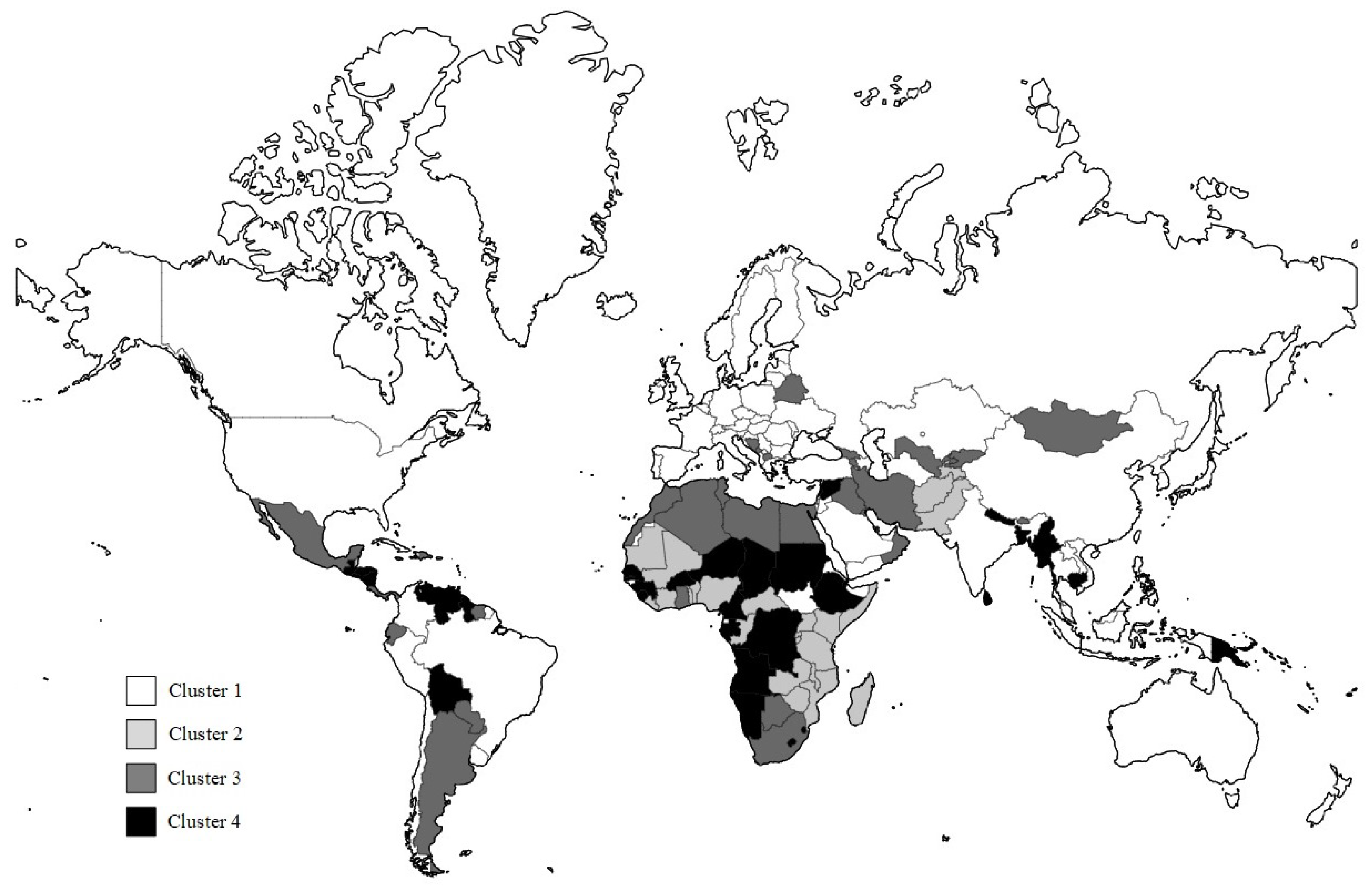
Figure 2 presents the classification results on the world map. Here, the white color represents economies in the first cluster. The second group is shown in light gray, and the third in dark gray. Finally, the fourth cluster is shown in black color. When the percentage distribution of the clusters is further investigated, the first cluster comprises 38.79% of the 165 economies, the second cluster 16.36%, the third cluster 24.24%, and finally, the last cluster 20.61%.
Table 4 and
Table 5 present the country distribution by income level and by region within each cluster. Looking at the country pattern in Cluster 1, it is clear that it consists mainly of high-income countries. These countries are mostly located in the European and Central Asia and East Asia and Pacific regions. The second cluster consists of low- and lower-middle-income countries. Most of these are located in Sub-Saharan Africa. Cluster 1 and Cluster 2 can be described as being as different as black and white in terms of both income levels and locations. The countries in Cluster 3 are those located in Latin America and the Caribbean, the Middle East, and North Africa regions. Furthermore, most of the economies in this cluster are upper-middle-income. Finally, the last cluster is similar to Cluster 2, comprising most countries with similar income levels located in Latin America and the Caribbean and Sub-Saharan Africa regions.
4.4. TOPSIS Results and Discussion
In this section, we evaluated the members of each cluster separately employing the proposed TOPSIS method. We also found the overall performance scores for countries in each cluster. The raw performance value of each country and the weight of each pillar affect the overall performance score. In addition, the overall performance score ranges from 0 to 1. A higher value indicates a better alternative. If a country has a high overall performance score in a cluster, it is a better alternative than others, providing digital government strategies, digital technologies, and infrastructure, and exposing fewer natural and human hazards.
Table 6 presents the results grouped into each cluster. Cluster 1 generally consists of developed economies with high standards. When the ranking of the first cluster is examined, Switzerland is at the top with the highest OPS score. Finland and Denmark are the second- and third-ranked economies, respectively. On the other hand, India, the Philippines, and Indonesia are the lowest performers of Cluster 1.
Cluster 2 is the smallest group in terms of membership, mostly consisting of countries from Sub-Saharan Africa. Moreover, Cluster 2 does not include developed countries, and there is a potential hazard risk and limited infrastructure for digital government performance. Rwanda is the best-performing country on the list among the 27 economies. It is followed by Côte d’Ivoire and Benin. These countries are in the low-income group. The bottom three scorers are Afghanistan, Haiti, and the Central African Republic. These countries are generally fragile economies affected by armed conflict, natural disasters, or political instability, and have limited infrastructure investment.
Furthermore, the majority of countries in Cluster 3 are located in Central Asia, Latin America and the Caribbean, the Middle East, and North Africa. Cluster 3 generally includes upper-middle-income countries and mostly has limited digital capacities for digital government performance. North Macedonia, with a score of 0.775, is at the top of Cluster 3. It is tailed by Montenegro and Qatar with scores of 0.771 and 0.593, respectively. The bottom three scorers are Iraq, Libya, and Iran with scores of 0.308, 0371, and 0.468, respectively.
Finally, Cluster 4 mostly consists of low-income economies with limited digital capacity, as well as low e-government and e-participation indices for digital government performance. In Cluster 4, Eswatini tops the charts with a score of 0.716. Sri Lanka closely follows it with a score of 0.709. With a score of 0.687, Fiji ranks third in Cluster 4. At the other end of the spectrum, Syria ranked last with a score of 0.351. It is tailed by Myanmar and Chad with scores of 0.367 and 0.369, respectively.
4.5. Results of the Sensitivity Analysis
Sensitivity analysis in the ITFNAHP verifies the robustness of the decision on how changes in the main criteria weights or pairwise comparisons impact clustering and the rankings of each cluster. In this study, varying criteria weights are used as a sensitivity analysis method, and ten different situations are considered with the ten different change limits. Furthermore,
Table 7 shows the sensitivity analysis with ten different situations. In
Table 7, the change limits are set between −0.172 and 0.828. The low level of change limit is obtained by multiplying minus one by the weight of the most important criterion. Moreover, the high level of change limit is found as follows. An alpha value is obtained as the original value of the changed weight is divided by one minus the weight of the most important criterion. Then, we can find the minimum of the original value of the changed weight divided by the alpha value as the high-level change limit. In addition, situation 2 (S2) is the original weights obtained from the ITFNAHP. Moreover, MC2 is the most important and sensitive criterion associated with change limits. Also the ranking and clustering results may remain largely unchanged if the criteria weights are used in
Table 7. Hence, the clustering technique-embedded fuzzy decision-making framework in this paper is robust.
5. Managerial and Policy Implications
This section provides managerial and policy implications for examining the performance of digital governments. Governments should pay attention to digital technologies, innovation, and the economy. Digital technologies, such as AI, could enhance the efficiency and accessibility of digital government services to citizens and businesses. So, governments may require the inclusion of digital technologies to alter interactions with users of government services. Governments could adopt policies for using digital technologies in public services. In particular, a country with a low OPS should prioritize digital technologies and develop policies to support them. A country with a medium OPS should improve its digital services and policies. A country with a high OPS should maintain the quality of digital technologies. Next, cyber security is another concern for digital governments. So, governments focus on data protection and national security against cyber attacks, particularly in countries with low and medium OPSs. Based on this awareness, policies can be adopted to address cyber security. Moreover, digital governments in each cluster could also need to develop strategic plans to enhance resilience, reduce the likelihood of successful cyber attacks, and implement secure-by-design principles for their digitization service activities. Furthermore, digital governments in each cluster are recommended to build robust infrastructure to deliver secure, high-quality digital services to citizens and businesses. Moreover, sustainability is addressed to minimize adverse environmental effects and to ensure the long-term economic viability of digital government operations. Then, it is recommended that investigations into natural and human hazards be included in the strategic plan for digital governments. Also preparing a risk action plan would be beneficial, especially in countries with low OPSs. Policies are needed to address social concerns and ethical considerations in the design of digital government activities in each cluster.
SDGs 5.1, 5.5, 8.2, 8.3, 9.1, 10.3, 12.2, 13.1, 16.6, and 17.14, as defined by the UN [
47], are achievable based on the outcomes of this study. The equality sub-criterion is addressed in the social main criterion, so SGDs 5.1, 5.5, and 10.3 are attainable to make sure equal opportunity and decrease inequalities in digital government operations. Next, digital technologies, innovation, and economy (MC2) is the most significant pillar among others. Also SGDs 8.2 and 8.3, associated with economic productivity, technological upgrading, and innovation, can be achieved when addressing MC2. Then, SDG 9.1 concerns the development of sustainable and resilient infrastructure. Moreover, SDG 9.1 is attainable, as the study’s results show that infrastructure is important for sustainable, resilient government operations. Further, SDG 12.2 can be achieved through sustainability (MC5). Next, SDG 13.1 is achievable, as the adverse impacts of natural hazards are minimized to ensure resilient digital government services. Additionally, when addressing MC1, SDG 16.6 is attainable for developing efficient and transparent digital government services. Finally, SDG 17.14 is achievable because policy coherence can be improved based on the study’s findings on sustainable digital governments.
6. Conclusions
The digitization of public services is a significant concern for governments when meeting users’ requirements. Hence, governments may need to address these issues by adopting digital technologies and innovation in their public services. In this paper, seven main pillars and 21 sub-pillars are specified to evaluate the performance of each digital government across 165 countries worldwide. For this purpose, a clustering-based fuzzy multi-criteria decision-making framework is introduced in this paper. The first part of the introduced framework is to identify the main pillars and sub-pillars using the ITFNAHP method, considering uncertainty. Based on the results of ITFNAHP, MC2, MC4, and MC3 have the top three highest weights, respectively. The second part of the introduced framework is clustering. 165 countries in this study lack opportunities for digitization, so k-means clustering is used to group countries based on digital performance indicators. A cluster size of four is obtained from the clustering analysis. The first cluster includes 38.79% of the 165 countries, the second cluster involves 16.36 % of the 165 countries, the third cluster comprises 24.24% of the 165 countries, and the fourth cluster covers 20.61% of the 165 countries. Moreover, the last part of the introduced procedure is to apply TOPSIS to rank each cluster separately. Switzerland is at the top of the first cluster; Rwanda is the best-performing digital government in the second cluster; North Macedonia is at the top of the third cluster; and Eswatini is at the top of the fourth cluster. Furthermore, the sensitivity analyzes are conducted with the ten different situations.
Managerial and policy implications are presented. Governments in each cluster should focus on digital technologies, innovation, and the economy when adopting policies for digital services. Also data protection and national security against cyber attacks should be addressed when developing cyber security policies. Risk analysis should also be included in strategic plans, especially in countries with low OPSs, to improve the efficiency of sustainable digital public services. Furthermore, the SDGs 5.1, 5.5, 8.2, 8.3, 9.1, 10.3, 12.2, 13.1, 16.6, and 17.1 can be achieved through the outcomes of the study.
The limitations and potential extensions of this study are summarized as follows. There are three DMs to construct PCMs in this study, which is a limitation. Future studies could ask more than three DMs to generate PCMs. Next, k-means clustering is employed to group countries, starting with a specific number of randomly assigned k center points. Other clustering methods can yield different numbers of groups for clustering countries. So, other clustering methods could be used for further research. Moreover, ITFNAHP and TOPSIS methods are introduced to obtain weights and rank the countries. Other decision-making techniques could be used for future studies to evaluate digital government performance.