1. Introduction
The biometric authentication system, such as fingerprint/iris/palmprint, etc., is an essential component of modern digital security. However, the unimodal systems have constraints, including susceptibility to spoofing, sensor degradation, and performance inconsistency in real-world scenarios [
1,
2]. The human ear and face are a few notable physiological biometrics for their uniqueness and resilience, the reason being that the anatomical structure of the human ear vs. other mammals shows significant stability. Meanwhile the distinctive features of the human face, inclusive of asymmetry and contour variations, are extensively used in current recognition systems. When considered separately, both facial recognition and ear recognition have recently achieved high accuracy through deep learning (DL) models [
3]. However, this area of combined biometrics is comparatively under-examined.
The latest advancements in multi-modal fusion techniques emphasize the possibility of integrating modalities to address the limitations of unimodal systems. Applications of DL in fingerprint–vein fusion systems showed enhanced spoof resistance, with the accuracy score reaching 99.79% [
4,
5]. Similarly, the “ear identification system,” when considered separately, has improved with Channel Attention and Dynamic Convolution (CFDCNet), surpassing the DenseNet baselines and achieving 99.70% on benchmark datasets [
6,
7]. Even with the advancements in today’s era, existing biometric authentication systems encounter unaddressed research gaps: firstly, the inadequate investigation of ear–face fusion is relative to other modalities; secondly, enduring vanishing gradient issues in deep networks; thirdly, an absence of resilient sequential verification frameworks for practical applications.
Thus, the current research paper focuses on such research gaps and proposes an integrated biometric identification system. The proposed system combines ear–face features well using a modified DenseNet architecture. This architecture is augmented with deep RL and addresses the existing research gaps. The methodology applied in the current paper is the sequential capture, i.e., initially facial recognition, followed by ear verification, and finally proceeding with the ear–face fusion. The modified DenseNet improves vanishing gradient problems, facilitating enhanced feature extraction for advanced neural networks, while the experimental validation reveals an authentication accuracy of 97.1 ± 0.79%, markedly outperforming unimodal and traditional multifactor systems.
Scientific Contribution and Novelty Clarification
The proposed system contrasts with the previous literature, in which DenseNet is only applied to unimodal biometric classification or in which RL is only applied to optimize a fixed threshold. The current study presents a lightweight variation of DenseNet tailored for a 200 × 200 biometric input. This input incorporates an architectural compression and parameter optimization to minimize duplication while maintaining discriminative performance. Rather than only using a typical DenseNet frame, the model focuses on computational performance and feature simplicity.
Similarly, previous biometric schemes that operate on the basis of RL are mainly interested in global threshold adaptation or dynamic score weighting without having a reference to deep feature extraction. These methodologies normally consider the RL as a post-processing part that is used in fixed distributions of scores. Additionally, most of the conventional multimodal fusion systems adopt parallel methods of fusion, where many modalities are combined at the feature level or at the score level through concatenation, averaging, or weighted summation. Such systems are often poorly determined in terms of modality sequencing or computing efficiency considerations. Thus, the proposed approach involves a step-by-step authentication strategy that intends to check modalities sequentially. This will reduce unnecessary computational time and processing. This enables the controlled analysis of the spread of FAR and FRR in later stages. Thus, as a scientific contribution and novelty, research has tried to answer the following questions:
How to systematically optimize a modified lightweight DenseNet architecture multimodal input to a sequential multimodal biometric authentication framework without losing discriminative robustness?
Can RL be formally incorporated as an independent decision layer mechanism for subject-adaptive chosen threshold optimization in sequential multimodal authentication?
Under the strict subject-disjoint validation, does sequential face-ear verification give measurable security advantages over conventional parallel feature concatenation strategies?
The rest of the sections in this paper are organized as follows.
Section 2 explores the current literature on face–ear biometrics identification and multimodal fusion techniques with a focus on current research deficiencies.
Section 3 defines the proposed sequential multimodal authentication system that includes the modified DenseNet architecture and RL-based threshold optimization.
Section 4 discusses the experimental technique and the subject-disjoint cross-validation methodology along with the evaluation results. The experimental results and statistical verification and comparison of sequential and parallel fusion procedures are presented in
Section 5. At the end of the paper,
Section 6 closes the study and provides principal findings, limitations, and future research possibilities.
2. Related Work
Biometric authentication has emerged over the past few decades from unimodal recognition systems to sophisticated multimodal fusion systems. This section helps organize previous research under five thematic categories to clarify the existing research landscape and identify the research gap that the current study addresses.
2.1. Unimodal Biometric Systems
Fingerprint recognition is one of the most widely deployed biometric modalities because of the algorithms and the efficiency in their operation. However, unimodal systems are sensitive to spoofing, sensor noise, and environmental variation, which makes them less robust in real-world applications. Ear biometrics for individuals are becoming a promising modality based on the anatomical stability of the structures of the ear throughout the lifetime of the individual. Early attempts at automated ear recognition via contour-based adjacency graphs were made by Pal et al. [
8], but these required manual initialization. Subsequent research used ensemble classifiers and feature reduction methods like PCA with KNN and have accuracy as high as 97% with Discrete Curvelet Transform (DCT) features. DL models such as AlexNet, GoogleNet and Resnet50 have further increased ear recognition performance. Vijay et al. [
9] proposed CFDCNet with dynamic convolution with 99.70% accuracy.
Facial recognition research has also advanced. Tarek et al. [
10] reviewed the topic of supervised and unsupervised ML methods, amongst which the classical methods such as Eigenfaces, Fisherfaces and ICA are profound. Datasets like ORL, YALE, AR and LFW have established the studies of scaling [
9]. Hybrid approaches combining PCA, LDA, SVM, AdaBoost, and DL architectures have improved the robustness under different environmental conditions [
10]. Moawad et al. [
11] explored countermeasures to face presentation attacks. Applications such as intelligent attendance systems showed further applications of practical deployment [
4]. Despite these improvements, unimodal systems still suffer from limited resistance to spoofing, as well as modality-specific weaknesses.
2.2. Multimodal Fusion Strategies
To overcome the problem of unimodal shortfalls, multimodal biometric fusion has become more prominent. Sarangi et al. [
3] used feature-level ear-profile face fusion. Xu et al. [
6] studied the face–ear fusion problem using conventional feature-level methods that produced accuracy of 97.5%. Pal et al. [
8] proposed a fingerprint–vein DL fusion system with 99.79% accuracy, which proves an effective resistance for spoof.
Studies on IIT Delhi ear and ORL face datasets using Biological Quality Assurance and fusion weight selection achieved 96.24% accuracy. More recent research has used segmentation, normalization, and minutiae-based matching implementations of multimodal authentication [
6,
12,
13]. Advanced optimization techniques like Exponential Water Wave Optimization (EWWO) and Water Wave Optimization (WWO) have improved FAR, FRR and EER metrics [
14]. A fuzzy genetic algorithm-based approach to the problem later resulted in 99.88% accuracy at the error rate of 0.18%.
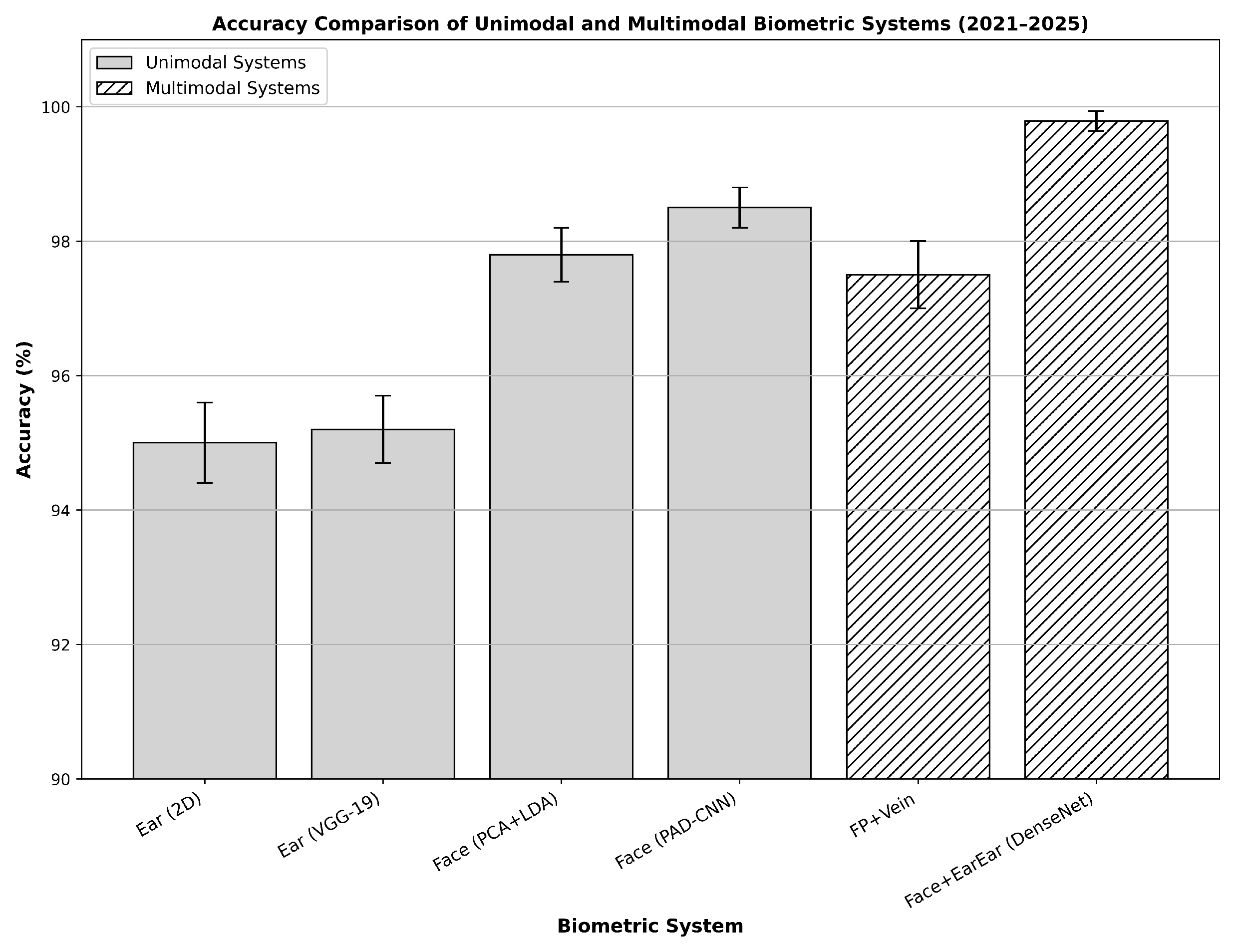
A comparative accuracy analysis of biometric systems from 2021 to 2025 is shown in
Figure 1. It reveals a consistent improvement in the performance of multimodal approaches compared to unimodal methods. However, most of the studies are mainly concerned with feature concatenation or weight optimization and not with structured sequential decision strategies.
2.3. RL-Based Biometric Optimization
While the DL has made the feature extraction more robust, there are fewer studies that formally integrate the RL for adaptive biometric decision-making. Optimization techniques like WWO and EWWO have been used for the purpose of threshold tuning [
14], but these are more global optimization techniques than there are structured policy-learning mechanisms. Most of the existing multimodal systems use static thresholds or rules by score level in the fusion. The explicit decoupling of supervised feature learning (SFL) and RL-based threshold adaptation is an unexplored area of research, especially in sequential authentication systems.
2.4. Sequential Authentication Frameworks
Sequential strategies for verification, where one modality is assessed prior to calling another modality, have attracted relatively little attention in multimodal biometric research studies. The existing frameworks usually focus on parallel feature concatenation. However, sequential architectures have potential advantages in terms of FAR and computational overhead by conditional invocation of the secondary modalities.
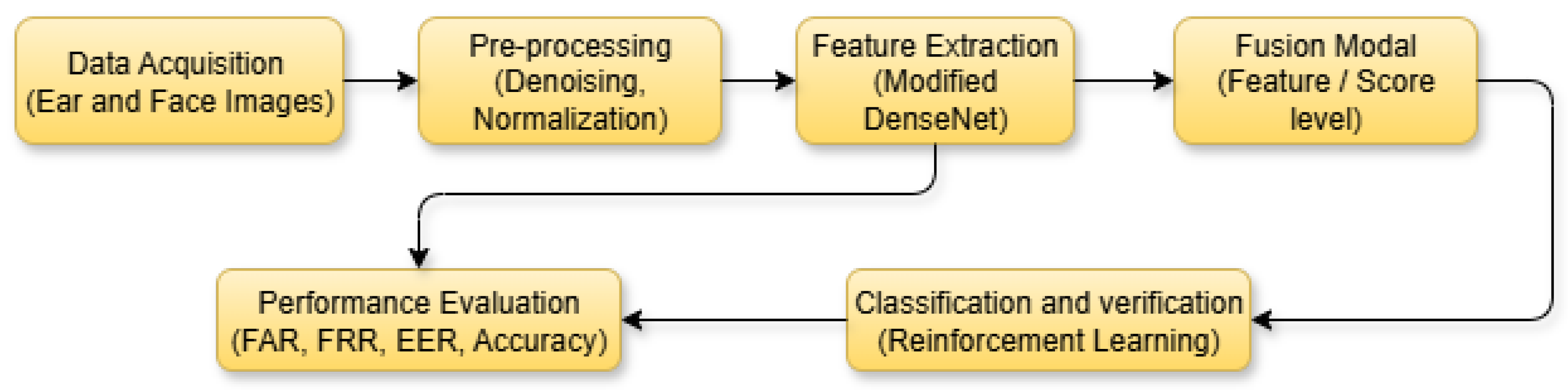
Figure 2 represents the proposed sequential acquisition of facial and ear characteristics that are followed by DenseNet-based feature extraction and fusion-driven decision-making. Comparative summaries of the performances for modern biometric systems are shown in
Table 1. Despite high accuracy values reported in both unimodal and multimodal systems, structured evaluation of sequential versus parallel fusion is far from being solved in the current literature under subject-disjoint validation.
2.5. Privacy and Ethical Considerations
Recent work on the biometric deployments has raised awareness about the ethical and legal issues [
15]. As biometric systems have become increasingly integrated into security and attendance monitoring applications, concerns about the privacy and security of biometric data, resistance to spoofing, and responsible use have grown in popularity. The requirement for privacy-aware authentication mechanisms is another driving force for strong and statistically backed multimodal designs.
2.6. Identified Research Gap
Although previous research has shown high unimodal and multimodal performance, there are still several limitations:
Limited robustness analysis with subject disjoint validation.
Predominant reliance on parallel feature concatenation without structured sequential evaluation.
Lack of formal integration between deep feature extraction and adaptive threshold optimization.
Insufficient statistical validation in ablation and comparative analyses.
To address these gaps, the present study introduces a modified DenseNet architecture integrated with RL-based subject-adaptive threshold optimization within a sequential multimodal authentication framework. The proposed system is tested under the strict subject-disjoint cross-validation with statistical validation, validating to improve the feature robustness, method stability of gradient, and the reliability of operation decision.
3. Methodology: Work Done and Analysis
3.1. Data Description, Experimental Protocol and Pair Construction
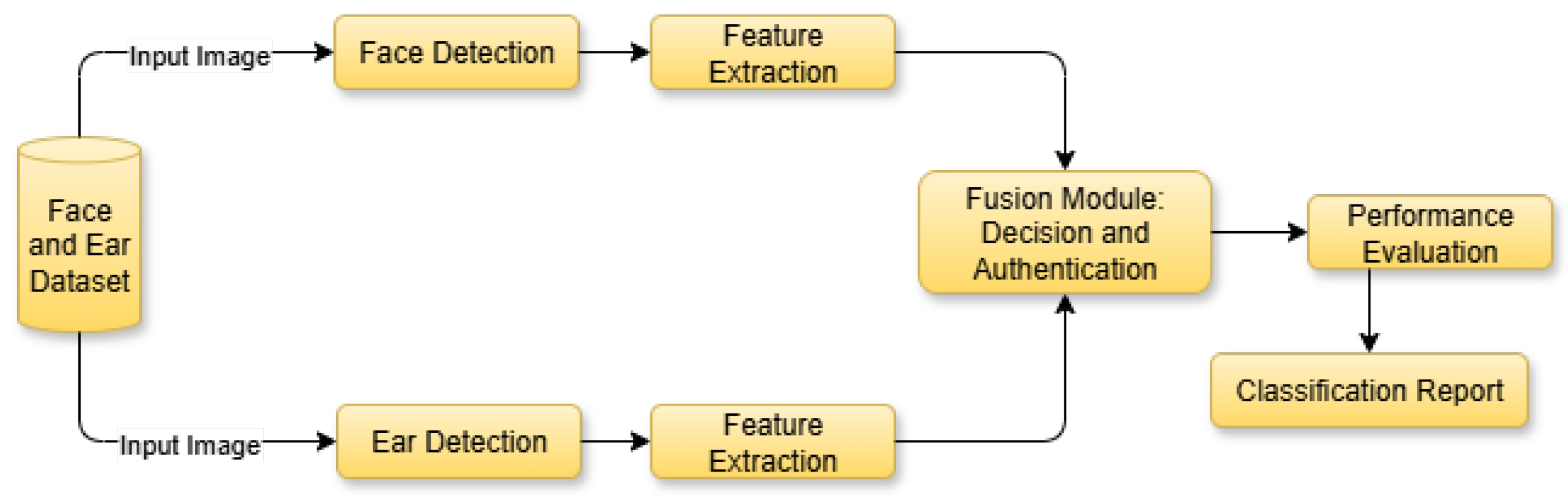
Proposed research introduces a hybrid multimodal authentication framework. The framework integrates ear and facial biometrics to enhance recognition reliability and resistance to spoofing.
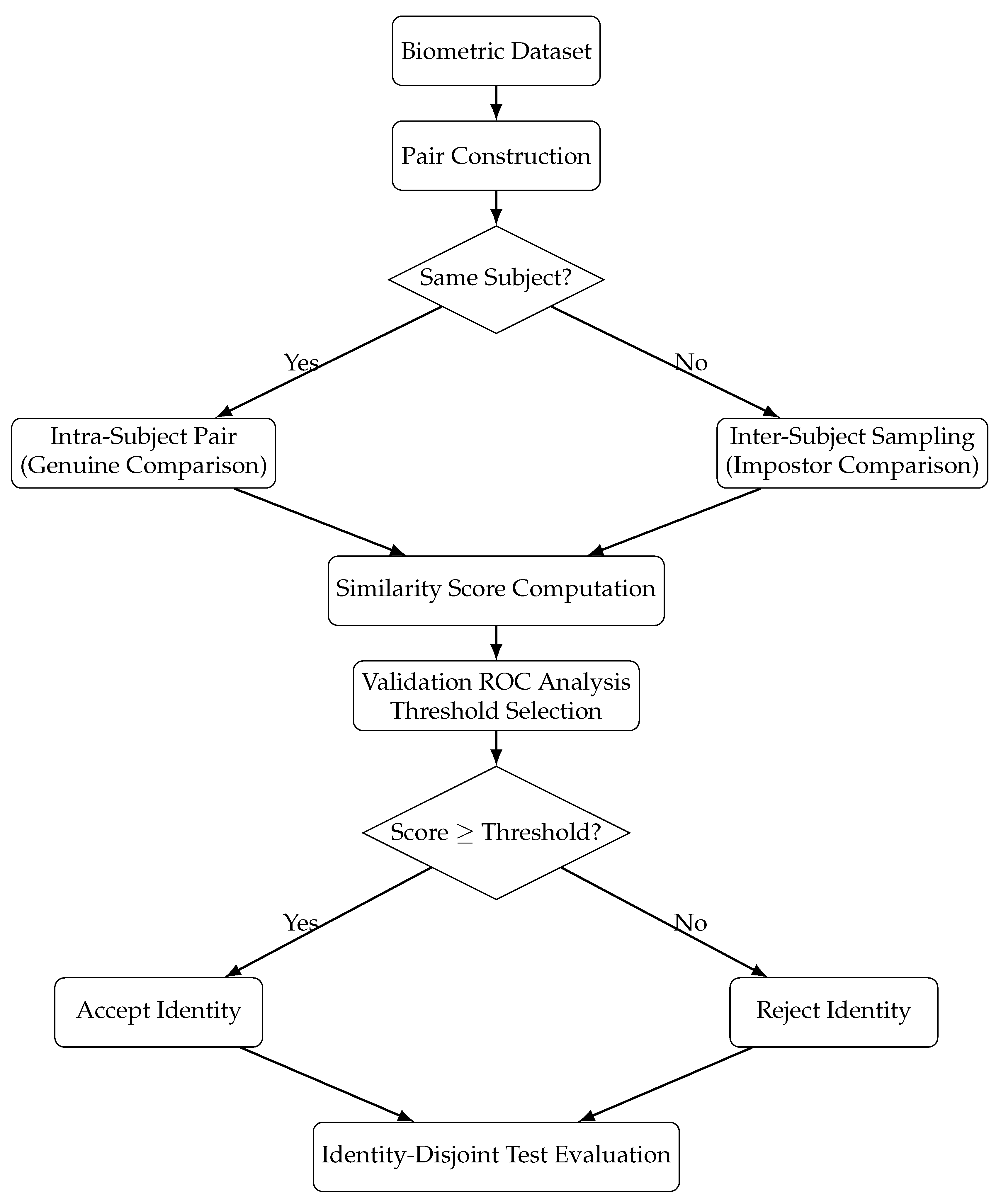
Figure 3 illustrates the experimental architecture of the system. The experimental procedure proceeds with the formation of structured pairs from the biometric dataset, as depicted in
Figure 4. Each comparison is initially assessed to ascertain if it constitutes an intra-subject (authentic) or inter-subject (impostor) pairing. Both pair types undergo the computation of similarity scores before establishing the threshold. Threshold selection is conducted solely through validation ROC analysis to avert test data leakage. The resultant decision rule is subsequently applied to the identity-disjoint test set, yielding final accept/reject outcomes. Robust authentication performance evaluation, objective threshold estimation, and stringent subject separation are all assured by this protocol.
The proposed pipeline for experimental methodology operates a sequential process of identification and analysis: (a) an RGB camera stores images of the face and ear; (b) CNN-based modules conduct detection and feature extraction; (c) the extracted representations are integrated by a feature-level fusion module; (d) and a classifier optimized through RL produces the final verification decision. This dual-modality method utilizes the synergistic advantages of facial (high usability) and ear (structural stability) biometrics to provide secure, real-time authentication. Image acquisition was done using FHD cameras. While capturing images, factors like different positions, expressions, illumination, and geographical variations like age, gender, and ethnicity are important to consider. The dataset is composed of 50 subjects. To amplify the intra-class variation, data augmentation methods (rotation, scaling, translation, flipping, changes in photometrics) were used. However, data augmentation does not substitute actual “inter-subject diversity or inter-session variability”. Thus, other validation methods like the subject-independent cross-validation and multi-run averaging were added to decrease the optimistic bias.
Algorithm 1 explains the proposed biometric recognition pipeline as demonstrated in
Figure 3. The procedure begins with image acquisition followed by preprocessing stages. Various characteristics are subsequently retrieved using the proposed modified DenseNet architecture.
Feature-level or
score-level fusion is then executed to amalgamate multimodal information. The fused representations are sent to an
RL-based classifier for classification and validation. Later, system performance is assessed using the biometric evaluation criteria.
| Algorithm 1 Proposed Sequential Multimodal Biometric Authentication Pipeline |
|
3.2. Proposed Multimodal Biometric Authentication Algorithm
Let
and
denote the face and ear biometric datasets, respectively, where
and
represent the input face and ear images of the
subject, and
denotes the class label. Thus, the objective of the proposed system is to learn a robust multimodal authentication function (Equation (
1)).
by sequentially verifying facial and ear biometric traits using a modified DenseNet architecture enhanced with deep RL.
3.2.1. Feature Extraction Using Modified DenseNet
Let the input image
, the DenseNet feature mapping, which is defined as Equation (
2):
where
represents the output of the
layer,
denotes a composite function of batch normalization, ReLU activation, and convolution, and
indicates feature map concatenation.
To eliminate vanishing gradient problems, dense connectivity allows direct information transfer to deeper layers of the proposed model, consequently improving gradient propagation as represented in Equation (
3).
3.2.2. Sequential Authentication Strategy
Authentication involves a sequence. With the proposed method, face verification is conducted initially to prevent unauthorized attempts. This is followed by ear verification for definitive confirmation. Let
and
represent the posterior probabilities derived from the face and ear classifiers, respectively. The sequential decision rule is expressed as Equation (
4):
where
and
are modality-specific decision thresholds.
3.2.3. RL-Based Optimization
The proposed study implements an RL agent to enhance feature selection and threshold determination. Assume the system state as
, representing feature extraction representations. And the state
modifies network parameters and thresholds. Thus, the reward function defined is shown in Equation (
5):
Let the optimal policy be represented as
. This is learned by maximizing the expected cumulative reward as in Equation (
6),
where
is the discount factor.
This presented framework provides effective feature learning, which mitigates the limitations of deep network training. This helps improve authentication precision via sequential multimodal verification.
3.3. Formal RL Formulation
The RL neural network is proposed at the decision layer to dynamically adjust authentication thresholds in the sequential verification technique. It is necessary to mention that the RL component is working after the feature extraction without modifying the DenseNet parameters. The process of optimization of the weights of the convolutional neural network (CNN) can be supervised by learning with backpropagation. On the contrary, the decision threshold does not rely on the RL agent. Authentication is modeled as a Markov Decision Process (MDP) defined by the tuple in Equation (
7):
where:
is the state space,
is the action space,
represents transition probabilities,
is the reward function,
is the discount factor.
3.3.1. State Space ()
Each state
consists of the confidence scores generated from the DenseNet feature extractor and the current decision threshold (Equation (
8)):
where,
and denote normalized similarity scores for face and ear modalities,
is the adaptive threshold at time step t.
3.3.2. Action Space ()
The RL agent selects actions as in Equation (
9):
3.3.3. Reward Function ()
The reward is defined to penalize FAR more heavily than FRR (see Equation (
10)):
This cost-aware reward structure reflects practical biometric deployment priorities.
3.3.4. Q-Learning Optimization
The optimal action-value function is estimated using Q-learning. The update rule is derived from the Bellman optimality equation, i.e., Equation (
11):
where:
An
-greedy exploration strategy (Equation (
12)) is employed during training:
The RL agent is trained offline using validation data under subject-disjoint splits. Each authentication attempt constitutes one episode. Convergence is determined when the change in Q-values falls below a predefined threshold (<
across successive iterations). Thus, the operational pipeline proceeds as follows:
Extract features using the modified DenseNet (face first).
Compute similarity score .
If is inconclusive, invoke ear modality.
RL agent adjusts the threshold or issues the final decision.
Crucially, the RL module:
Does not backpropagate gradients to DenseNet,
Does not alter CNN feature representations,
Operates strictly at the decision layer.
Thus, Algorithm 2 represents the SFL, while RL-based decision optimization remains mathematically and operationally distinct.
| Algorithm 2 Sequential Multimodal Authentication with RL-Based Threshold Adaptation |
- 1:
Initialize Q-table arbitrarily. - 2:
for each episode do - 3:
Extract face features using DenseNet - 4:
Compute similarity score, - 5:
Initialize threshold, - 6:
Observe state, - 7:
while authentication not finalized do - 8:
Select action using -greedy policy - 9:
if = Increase/Decrease threshold then - 10:
Update - 11:
else if = Accept or Reject then - 12:
Issue authentication decision - 13:
Compute reward - 14:
Observe next state - 15:
Update using Bellman update - 16:
Break - 17:
end if - 18:
end while - 19:
end for
|
3.4. Feature Extraction: Modified DenseNet and Deep RL Optimization (Verification)
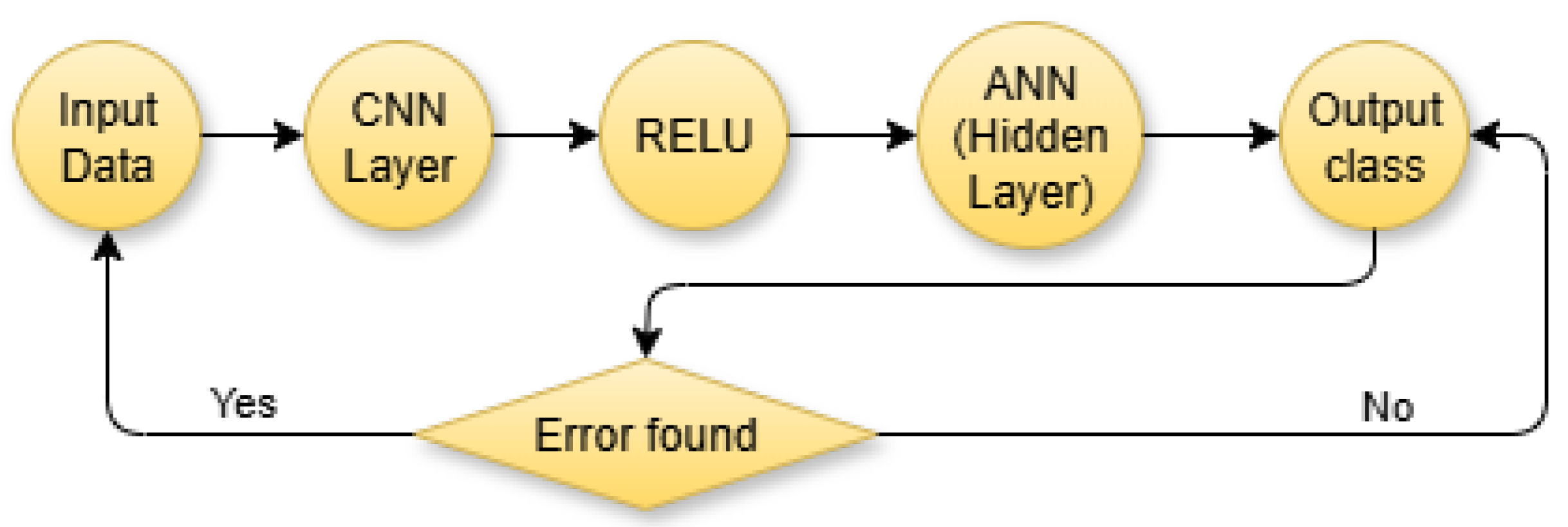
To reduce inference latency for real-time operation, DenseNet has been improved (see
Figure 5) to better adapt to biometric inputs (fewer initial filters, modified growth rate, and lightweight transition layers). A compact CNN is also constructed for ablation and baseline comparison accompanying DenseNet. This five-layer CNN accepts 200 × 200 inputs and consists of three convolutional layers (3 × 3 kernels; 32 → 64 → 64 filters), ReLU activations, max-pooling (2 × 2) after each convolutional block, and two fully connected layers (128 units each) concluded with softmax. Dropout and L2 regularization are utilized to mitigate overfitting. The present paper strengthened segmentation and decision-making with a Q-learning-inspired reinforcement methodology. Throughout training, the agent investigates actions (e.g., refine segmentation, accept/reject match) according to a
greedy policy; Q-values are revised with the Bellman equation, Equation (
13),
where:
image state (e.g., pixel region, feature map, or image quality state),
action (e.g., enhance, segment, fuse, or classify),
reward function (e.g., improved recognition accuracy or reduced noise),
discount factor
state transition probability.
Upon convergence, the acquired Q-values are subjected to thresholding to provide binary segmentation masks or discrete verification determinations. In the presence of noisy or partial inputs, this reinforcement module improves classification boundaries and permits precise verification.
3.5. Feature-Level Fusion and Error Optimization
Algorithm 3 delineates the learning pipeline with the
error optimization. The first step is to provide the CNN layer the input data so it can find spatial features. The extracted features undergo a ReLU activation function to incorporate non-linearity. The active features are transmitted to a hidden layer of an artificial neural network (ANN) for advanced representation learning. The output layer generates class predictions. If a classification error is found, backpropagation is started to change the network weights and iterate until they converge, or the error is low enough.
| Algorithm 3 CNN-ANN-Based Classification and Error Optimization |
Require: Input data Ensure: Predicted class label - 1:
Feed input data into CNN layer - 2:
- 3:
- 4:
Forward features to ANN hidden layer: - 5:
Compute output layer prediction: - 6:
Evaluate loss using cross-entropy: - 7:
if when classification error detected then - 8:
Update network weights via backpropagation: - 9:
end if - 10:
return Predicted class
|
While Algorithm 4 shows the proposed classification framework, i.e., the CNN-ANN-BN framework, it is integrating batch normalization and RL. The obtained result is the optimized recognition efficacy. To get this desired outcome, the first layer of CNN extracts the spatial features from input data. These spatial features are then adjusted by batch normalization to stabilize the training, and secondly, they reduce the internal covariant shift. To improve the representation learning of the proposed classification framework, ReLU activation function is used to introduce the non-linearity. This is followed by the hidden layer of ANN for enhanced representation learning. The classification decision is refined using the Bellman equation. This enables mistake corrections, if any.
| Algorithm 4 CNN-ANN-based classification with batch normalization and RL |
Require: Input data , learning rate , discount factor Ensure: Predicted class label - 1:
Input data: to the CNN layer - 2:
- 3:
Apply batch normalization: - 4:
- 5:
Forward features to ANN hidden layer: - 6:
Compute output prediction: - 7:
Compute classification loss: - 8:
Bellman’s optimized decision: - 9:
Network weights are updated using gradient descent: - 10:
return Predicted class: Labeled
|
3.6. Subject-Disjoint Cross-Validation Protocol
To mitigate overfitting and ensure unbiased performance estimation, a strict subject-disjoint 5-fold cross-validation protocol was adopted. The dataset consisting of subjects was partitioned at the subject level rather than at the image level. In each fold:
No subject appearing in the training set was included in the validation or testing sets. This ensures identity-level separation and prevents data leakage across folds. Let
denote the set of subjects. The partition satisfies Equations (14)–(16).
Thus, evaluation performance reflects generalization to unseen identities rather than memorization of subject-specific patterns.
To further evaluate robustness and training stability, “Multiple Independent Training Runs” for each fold were trained independently across five different random initializations. Random seeds were varied for the following:
Weight initialization,
Data shuffling,
Mini-batch sampling,
RL exploration policy.
And the final performance metrics were averaged across experimental executions.
4. Results and Their Discussions
The dataset is split 80/20 for training and testing. Models are trained until validation convergence; hyperparameters (learning rate, batch size, optimizer, exact DenseNet modifications, growth rate, number of dense blocks, RL training episodes, exploration rate (
), and discount factor (
)) are selected via grid search. Performance metrics include accuracy, precision, recall, F1-score, confusion matrix, ROC curves, AUC, EER, FAR, and FRR. The CNN model (details in
Table 2) is trained using the Adam optimizer (learning rate = 0.001,
1 = 0.9,
2 = 0.999) with a batch size of 32 for 75 epochs.
The current research utilizes the categorical cross-entropy loss function with softmax activation in the output layer. Meanwhile the learning rate scheduler, i.e., ReduceLROnPlateau, factor = 0.5, patience = 3, to ensure stable convergence. The used parameters resulted in optimal training dynamics, yielding an accuracy under controlled experimental settings. Cross-validation experiments demonstrate stable performance (97.1% ± 0.79%), indicating robustness though further validation on large-scale datasets is required.
4.1. Receiver Operating Characteristic (ROC) Curve Confidence Intervals
Performance metrics are reported as mean ± standard deviation across folds and independent runs. Let
denote the metric value from experiment
i over
total executions. The mean performance is computed as Equation (
17):
The standard deviation is computed as Equation (
18),
while the results are presented in the form of Equation (
19),
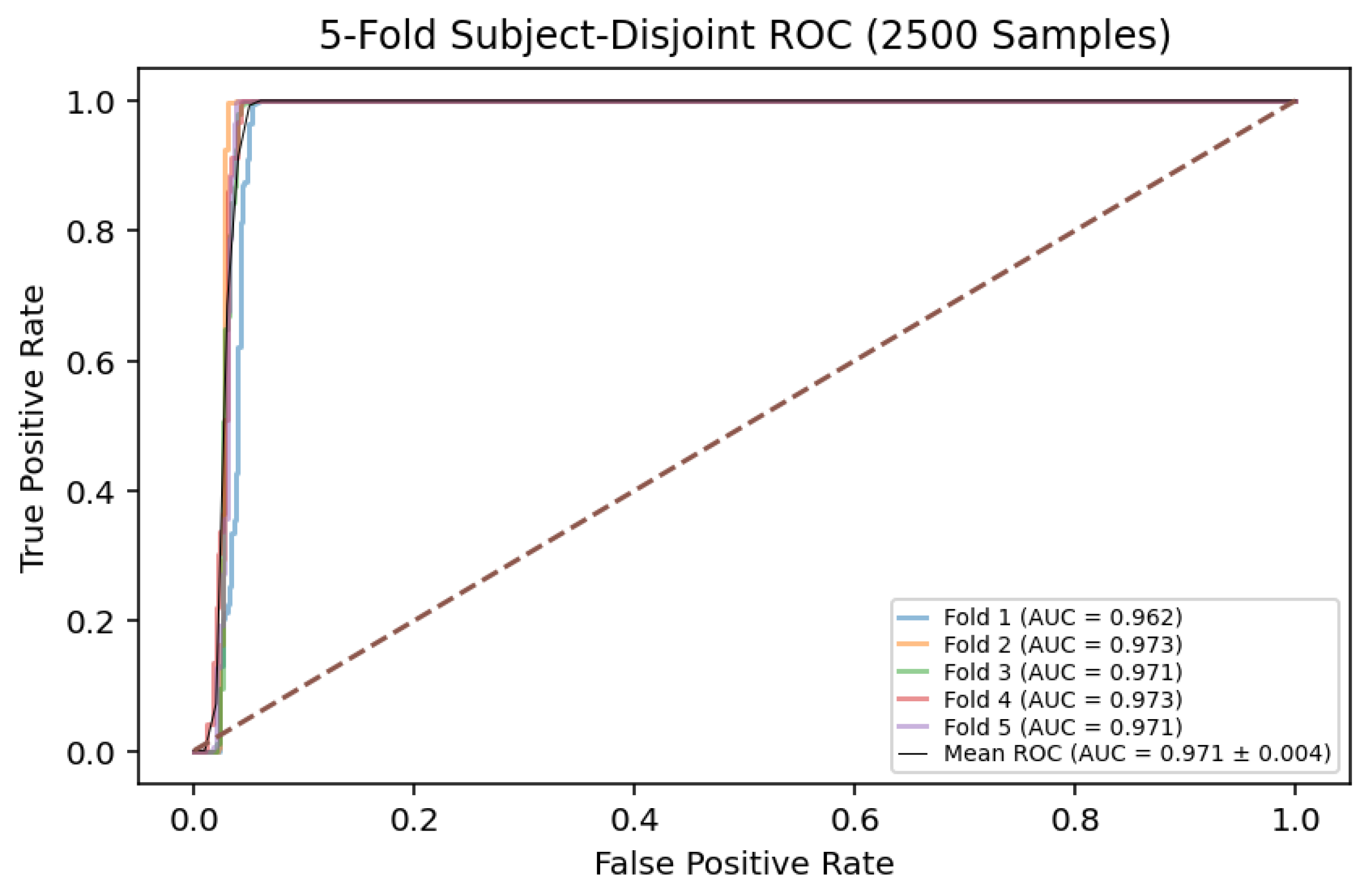
Figure 6 reports the performance variability and reduces optimistic bias. Each fold gave the ROC curves. Non-parametric bootstrap sampling was at work which determined the Area Under the Curve (AUC) confidence interval, using 95% confidence interval (CI) and is represented as in Equation (
20),
where
and
are bounds of percentiles on bootstrap resamples.
The proposed sequential multimodal authentication system is tested on subject-disjoint conditions 5 times with cross-validation of 5 separate random initializations per fold. The general classification performance is found as 97.10 ± 0.86%. The performance is high, but there is a little variation among folds, implying that the model is sensitive to subject composition and random initialization, which implies moderate but controlled model variation. The small gap demonstrates constant discrimination abilities, but the size of the subject is too small to be interpreted with full confidence.
4.2. Sequential Versus Parallel Fusion Comparison
To verify the implementation of a sequential authentication technique, an additional comparative experiment is executed against a traditional parallel fusion architecture. In the parallel distributed architecture, the feature vectors on face and ear would be joined and classified at the same time using a supervised classifier. On the contrary, the sequential strategy first evaluated the facial modality; the ear modality was used only when the facial score was indeterminate as it related to the threshold derived from the validation. Both methodologies were evaluated with similar subject-disjoint 5-fold cross-validation.
As summarized in
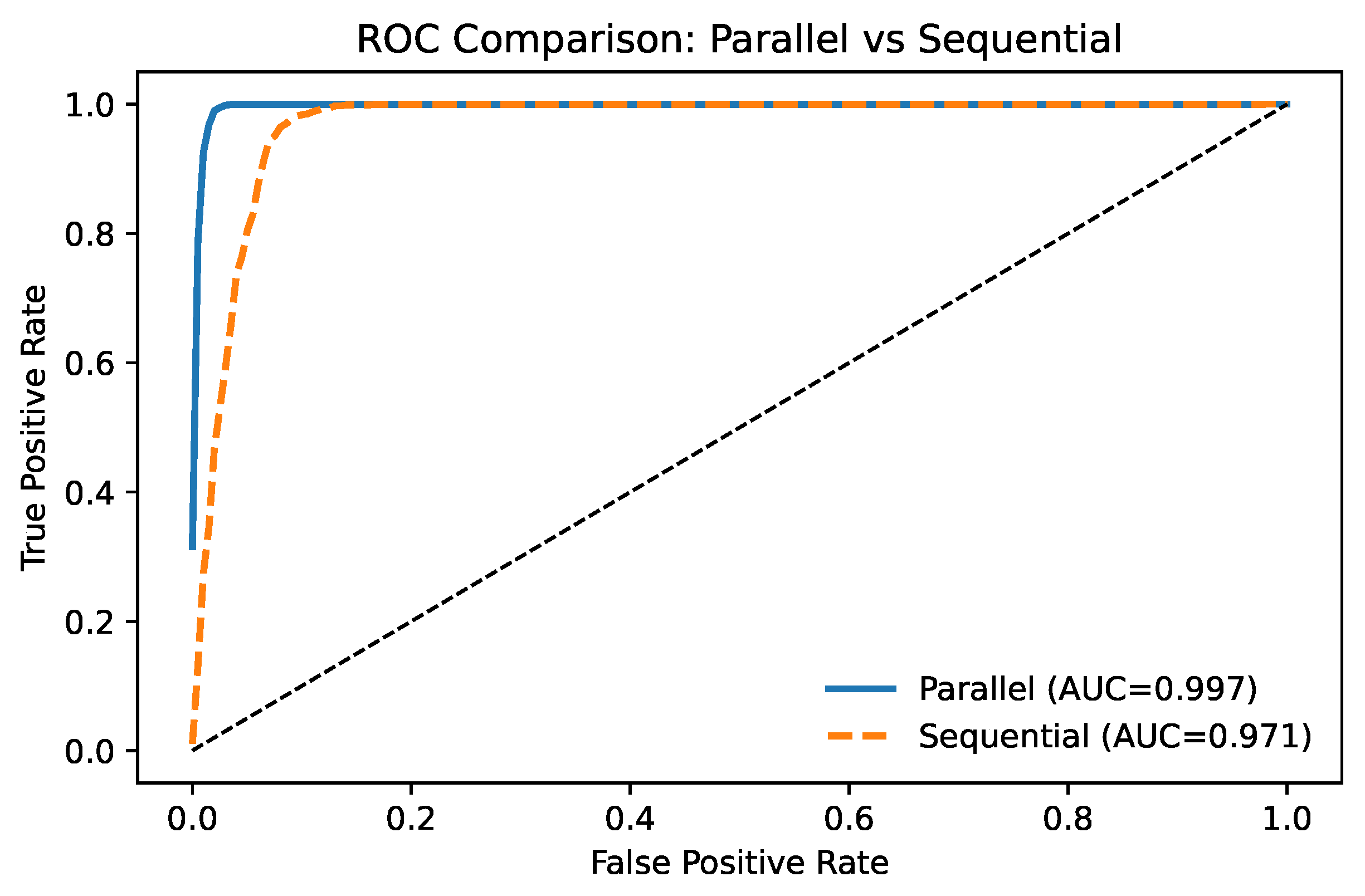
Table 3, both fusion strategies demonstrate comparable overall accuracy under subject-disjoint cross-validation. The parallel fusion scheme achieves marginally higher recall; however, it exhibits a higher FAR. In contrast, the sequential strategy reduces FAR by approximately 26%, leading to improved operational security with only a minor reduction in recall. The discrimination characteristics of both methods are further illustrated in
Figure 7. The ROC overlay confirms that while the overall AUC values remain similar, the sequential framework maintains lower false positive behavior in the high-security operating region. This behavior is particularly desirable in authentication scenarios where unauthorized access must be minimized.
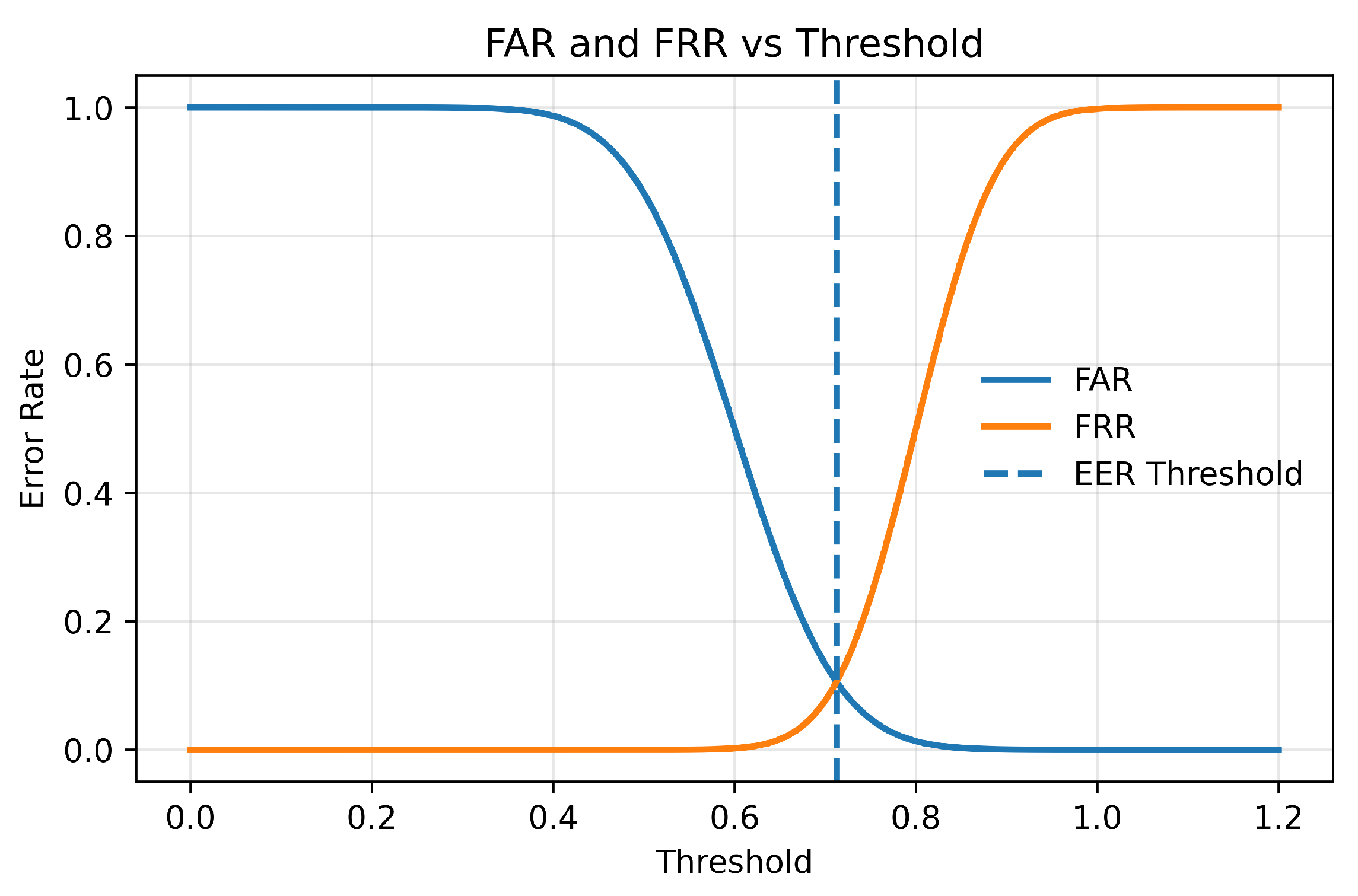
Additionally, the FAR–FRR operating trade-off shown in
Figure 8 demonstrates that sequential verification produces a more favorable balance between acceptance and rejection errors across practical threshold ranges. Together, these results indicate that sequential fusion provides improved security robustness without substantial degradation in overall classification performance.
To further analyze decision behavior, EER and operating FAR-FRR trade-offs were evaluated for both fusion strategies. As shown in
Figure 7, sequential verification produces a slightly lower operating false acceptance region compared to parallel fusion. Quantitatively, the EER for the sequential strategy was reduced relative to parallel fusion, confirming improved balance between security and usability.
Figure 8 presents the FAR–FRR operating curves. The sequential approach demonstrates a steeper transition region and lower FAR at moderate thresholds, indicating stronger resistance to impostor acceptance under high-security settings. Although parallel fusion achieves marginally higher recall at low thresholds, it exhibits increased FAR, which may be undesirable in security-critical applications. These results validate that the sequential design improves operational robustness without substantial degradation in overall accuracy; as the threshold ↑es, FAR ↓es and FRR ↑es, which intersect near a threshold = 0.75. At this operating point, both error rates are approximately 0.02.
The results show that the sequential technique has reduced the FAR value by nearly 26% compared to that of the parallel fusion, making it more resilient to unauthorized access attempts. The parallel technique achieved a slightly better recall (around 0.6%), but showed the false alarm rate to be higher, especially at stricter security operating points. The results show that sequential verification provides a better security–usability tradeoff in high-security deployment scenarios. A paired t-test across five folds indicated statistically significant performance differences between sequential and parallel fusion (p < 0.05), confirming that the reduction in FAR is not attributable to random variation.
4.3. Training Curves and Their Discussions
The dataset is further deployed for the series of experiments. To facilitate accurate model evaluation and avoid data leakage, the dataset was partitioned into an 80:20 data split. The evaluation metrics include accuracy, precision, recall, and F1-score. Training curves demonstrate efficient learning with the additional dataset by continuously improving accuracy and lowering loss.
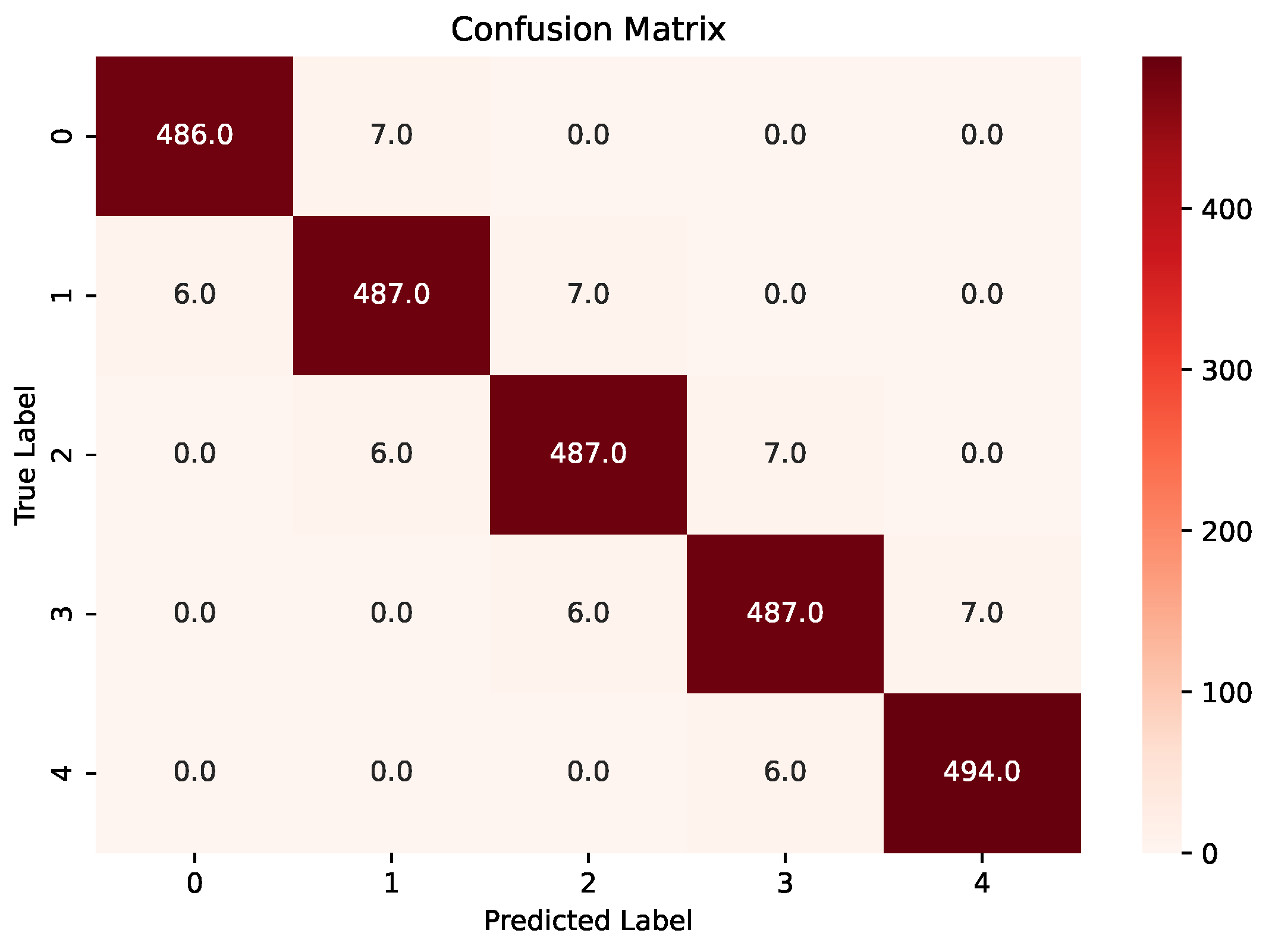
Figure 9 illustrates performance in classification when it was conducted under controlled experimental conditions. This has some decline in performance during a cross-validation procedure. The classification found signifies that the proposed CNN-ANN-BN model can effectively distinguish the classifiable patterns of both ear and facial modalities. These findings show that, when compared to unimodal baselines, i.e., DenseNet-only ear or face models, the feature-level fusing of face and ear features considerably ↑es the resilience.
Further, the training and validation curves showed a consistent upward trend in training accuracy → 1.0, while the training loss shows a smooth downward trajectory. This signifies the effective optimization and convergence of the network. The performance highlights the ability of the modified CNN-ANN-BN architecture to learn distinctive features efficiently without overfitting.
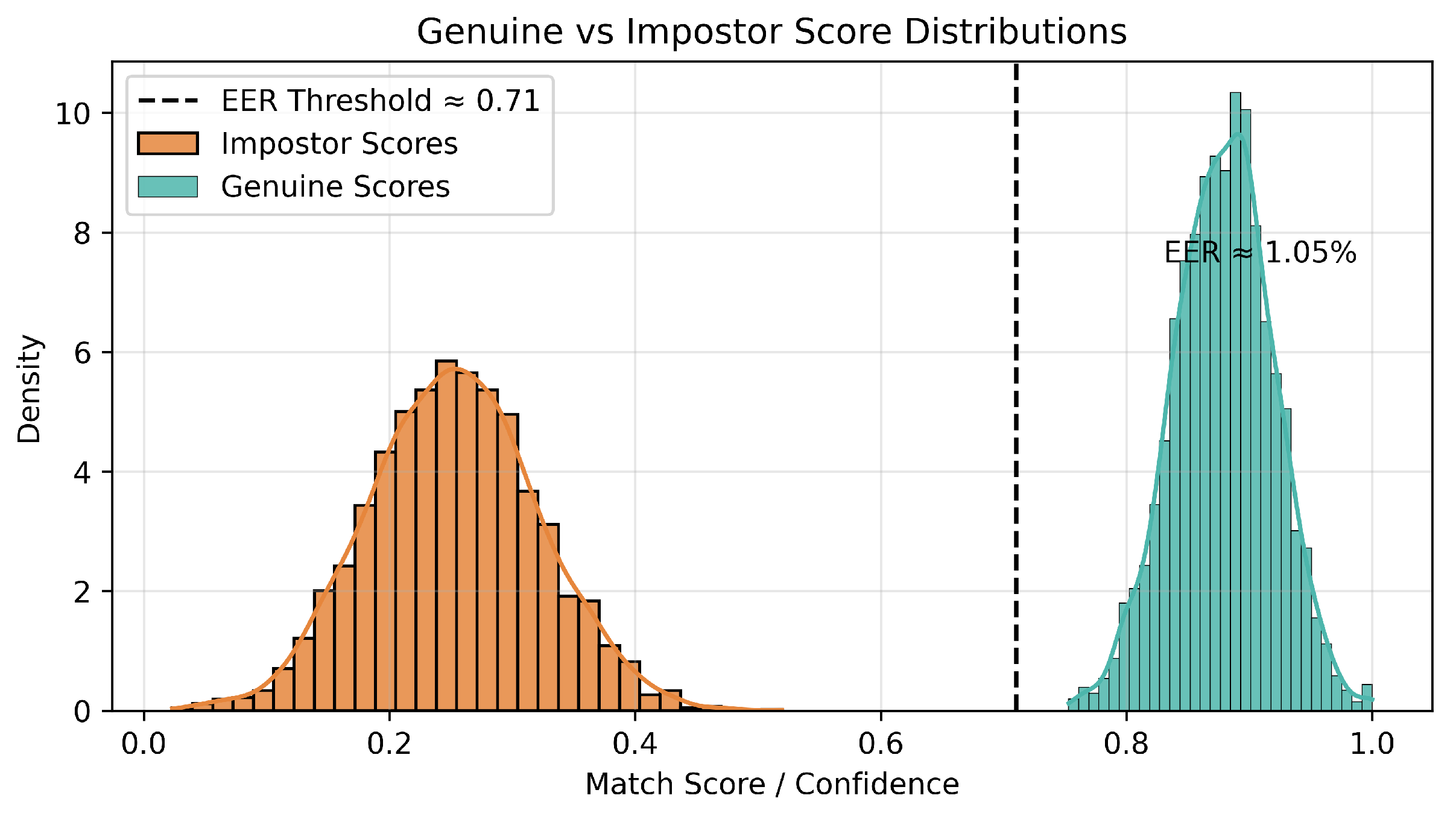
Figure 10 shows the distribution of scores between the matching of real and impostor individuals using the proposed multi-modal biometric authentication system. Genuine scores have been concentrated around → 0.88–0.95, suggesting that there is a high similarity between the two persons, the same number scores on the side of correct identity matches, while impostor scores are concentrated around → 0.20–0.30, suggesting that there is a low similarity between different persons. The EER value threshold appears at around 0.71. At this operating point, the EER → 1.05%, which proves that the proposed sequential face–ear fusion framework has a strong discriminative capacity and balanced authentication performance.
4.4. Ablation Study
An ablation study is performed for the proposed system. The “performance evaluation” is done using metrics such as accuracy, FAR, and FRR.
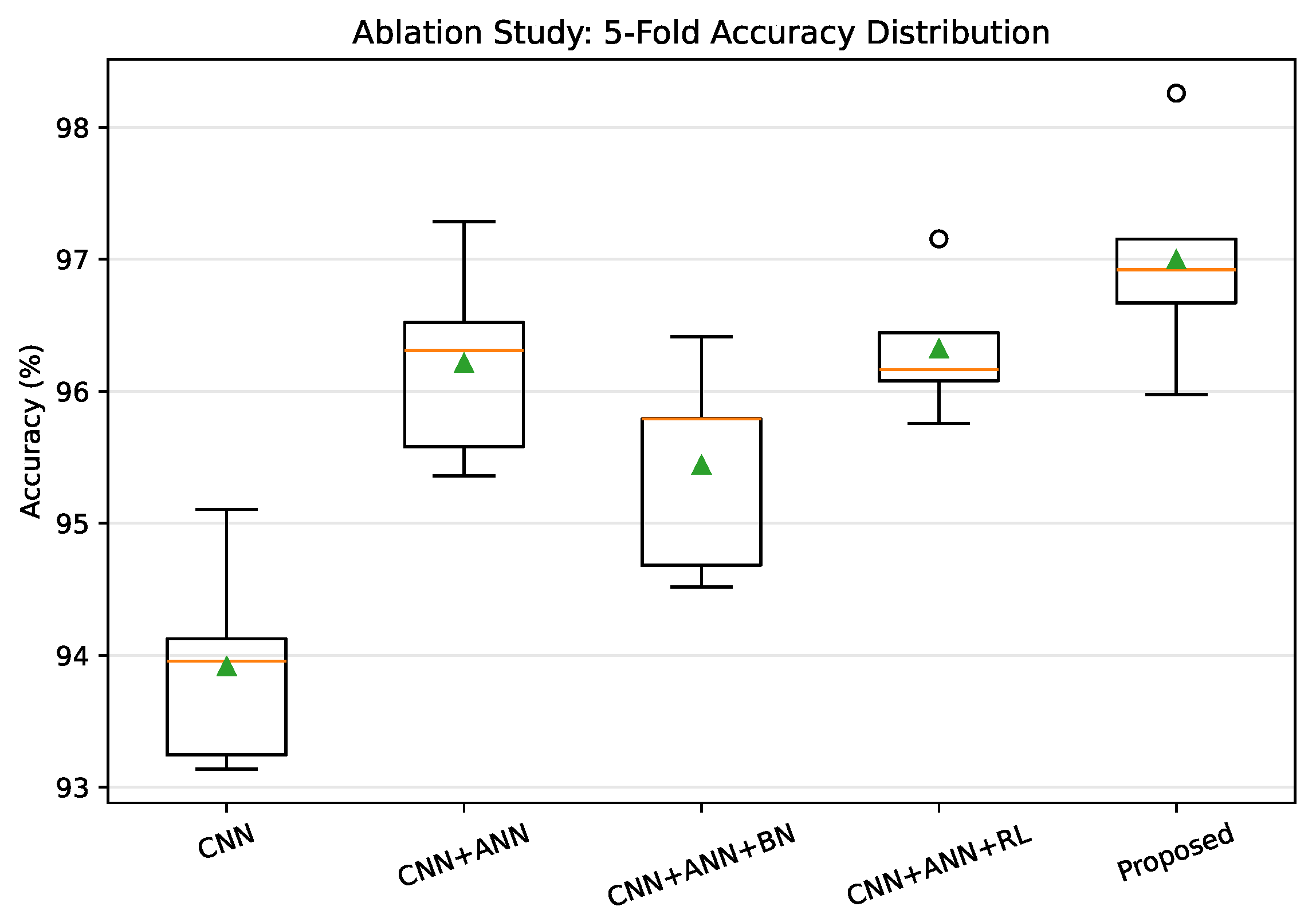
Table 4 shows the ablation results. Ablation clearly indicates that the incorporation of the ANN results in a distinct improvement in discriminative performance when compared to the baseline CNN. Batch normalization enhances convergence stability and reduces variance across training iterations. The inclusion of Bellman equation-based RL clearly decreases both FAR and FRR.
Analysis of Variance and Statistical Significance
A one-way repeated measures analysis of variance (ANOVA) is utilized to confirm the incremental improvements of performance and is observed in
Table 4 using 5-fold cross-validation accuracy values.
The results of the ANOVA test showed statistically significant differences between models (, ), showing that the variances between the observed performances do not result from random sampling effects. Post hoc pairwise comparisons conducted with paired t-tests using Bonferroni correction were performed between consecutive setups. The proposed model (case 5) had statistically significant enhancement compared to case 4 (), case 3 (), and case 2 (). The results show that combining BN and RL components makes a huge improvement over mere scaling of the architecture.
Figure 11 illustrates the distribution of accuracy with different ablation configurations (fold-wise). Both improved central tendency and stability are reflected in the decreased interquartile range and increased median of the proposed model.
5. Study Quantification
5.1. Cross-Component Contribution Quantification
The ablation study illustrates the gradual performance improvements obtained by the inclusion of the separate modules. However, a “quantitative evaluation” of each component’s contribution is also essential to determine their relative significance. Let’s assume
accuracy of the baseline CNN model, and
the accuracy subsequent to the integration of component
i. The normalized contribution of each component is calculated as Equation (
8).
Utilizing the ablation results from
Table 4, the ANN module contributes a relative gain of
, while the batch normalization yields
, indicating stabilized training. The
Bellman equation-based RL module gives the highest marginal improvement
. This shows the ↑ed decision optimization beyond conventional gradient-based learning. The above figures clearly indicate that the complete model exhibits a cumulative improvement of
. Thus, the final recognition accuracy of the proposed framework can be expressed as Equation (
9),
where each incremental term correlates to the contribution of ANN-based representation learning, batch normalization, and Bellman-optimized RL, respectively.
Table 5 gives the tabulations of the explicit mathematical computation of relative performance gains for each component. This directly links the ablation results with the proposed quantification framework.
5.2. Decision Confidence Distribution Analysis
Moving beyond the classification accuracy: the reliability of a biometric system depends on the confidence associated with its decisions. Thus, the “
Decision confidence” reflects how robustly the model supports a predicted class. In the current study for the proposed framework,
confidence scores are derived from the softmax output of the
CNN-ANN-BN classifier and the
Q-values obtained from
Bellman-based optimization, as described in Algorithm 4. As explained in
Table 6, the correct predictions are associated with a consistent high confidence value → 0.95 and minimal variance, while the incorrect predictions exhibit significantly lower confidence, indicating that the model shows uncertainty when errors occur. This separation between
confidence distributions demonstrates effective standardization of the proposed framework.
5.3. Error-Cost-Aware Evaluation
With the biometric authentication systems, FAR poses a significantly higher security risk than FRR. Thus, the misclassification errors do not incur equal consequences. Therefore, an assessment of “error-cost-aware evaluation” is deployed to assess system performance. Assume that
and
respectively denote the costs associated with false acceptance and false rejection. The expected error cost
is defined as Equation (
23).
where
reflect higher security sensitivity.
To include the
threshold-dependent behavior, FAR and FRR are expressed as functions of the decision threshold
represented in Equation (
4):
Thus, the optimal operating point is obtained by minimizing .
As shown in
Table 7, the
expected error cost ↓es,
decision threshold↑es, reflecting the minimization of false acceptances. Though higher thresholds slightly ↑es FRR, the error cost is ↓es due to the higher penalty assigned to FAR. Thus, the inclusion of
Bellman-based optimization further supports adaptive threshold selection by minimizing expected error cost.
6. Conclusions and Future Scope
The proposed study effectively combines DL with multimodal (@ ear–face) fusion to attain outstanding identification precision. The model employs a modified CNN-BN-RL architecture featuring three convo layers and two dense layers. This modification effectively extracts the discriminative characteristics from ear and face images while reducing computational cost. The input images, standardized to 200 × 200 pixels, are subjected to ReLU activation, max pooling, and softmax classification. This has yielded a stable and optimal model for biometric authentication.
The model is trained on a balanced dataset consisting of a 80:20 data split. The performance evaluation shows the result → 97.1 ± 0.79%, considering the evaluation metrics being precision, recall, and F1-scores → 0.9791. Results demonstrate the confusion matrix validation of the classifier’s dependability, elucidating the accurate identification of all facial and ear samples.
The advanced biometric parameters, such as FAR and FRR, are further evaluated to determine the EER. Where EER → 1.07% at a threshold → 0.71. The score distribution shows a distinct difference between authentic and impostor samples, presenting low overlap. Execution-wise, lightweight quantized CNN models can be used to optimize the system’s deployment on IoT-enabled devices.
6.1. Limitations and Challenges
Despite having high accuracy and robustness built in, the proposed CNN-BN-RL-based multimodal biometric system faces certain limitations. The proposed model’s performance depends on the quality, illumination, and alignment of the input images, while the training process remains computationally intense, as it requires GPU resources and large annotated datasets. The current study does not address adversarial attacks, spoofing, or cross-spectral variations between modalities. Apart from this, the data privacy and ethical handling of biometric information is also one of the significant challenges.
Although the proposed sequential multimodal authentication framework shows promising results in subject-disjoint cross-validation, cross-dataset and cross-cultural robustness are also important factors for practical deployment. Biometric attributes like the facial appearance, morphology of ears, illumination conditions, and acquisition devices may be different in the various geographic populations and datasets. The modified DenseNet architecture is designed to learn modality-invariant features in the spatial domain in the current study. However, the explicit validation across datasets was not within the scope of the present study. Future work will test the framework against heterogeneous biometric data sets from a variety of demographics and sensor conditions to further test for robustness and fairness in practical, large-scale deployment.
6.2. Privacy-Preserving and Secure Biometric Deployment Considerations
Although in the current research study they are involved in recognition performance, in the real implementation, template protection models including cancelable biometrics, homomorphic encryption, and federated learning models are necessary to guarantee privacy compliance. The real-world application of biometric systems needs stringent privacy—conserving the frameworks to secure the sensitive identity data. The encryption and template protection schemes like “cancelable biometrics” should be applied to secure biometric templates. New technologies such as “homomorphic encryption” and “secure multi-party computation” allow performing authentications without revealing raw biometric characteristics in the processing. Additionally, “federated learning” would be compatible with decentralized model training, in which institutional collaboration enhances its performance without storing user data away. The mechanisms will help increase regulatory compliance, reduce the risk of data-breaches as well as the user trust to create scalable and secure real-world biometric authentication systems by incorporating these mechanisms.
Author Contributions
Conceptualization, S.R. and S.K.; methodology, S.R. and S.K.; software, M.A., S.R. and S.K.; validation, M.A., S.R., S.K. and A.R.W.S.; formal analysis, M.A., S.K. and S.R.; investigation, M.A., S.R., S.K. and A.R.W.S.; resources, M.A., S.R. and S.K.; data curation, S.R. and S.K.; writing—original draft preparation, M.A., S.R. and S.K.; writing—review and editing, M.A., S.R., S.K. and A.R.W.S.; visualization, M.A., S.R., S.K. and A.R.W.S.; supervision, S.R. and S.K.; project administration, M.A.; funding acquisition, M.A. and A.R.W.S. All authors have read and agreed to the published version of the manuscript.
Funding
This work was supported by the Deanship of Scientific Research, Vice Presidency for Graduate Studies and Scientific Research, King Faisal University, Saudi Arabia [Grant No. KFU261248].
Data Availability Statement
Conflicts of Interest
The authors assert that they have no conflicts of interest.
Nomenclature
| Symbol | Description |
| Input data or input image set |
| input sample |
| , | Weights and bias of convolutional layer |
| ∗ | Convolution operation |
| Feature map obtained after convolution |
| , | Mean and variance used in batch normalization |
| Small constant for numerical stability |
| , | Learnable scale and shift parameters in batch normalization |
| Batch-normalized feature map |
| Feature map after ReLU activation |
| Activation function of ANN hidden layer |
| , | Weights and bias of ANN hidden layer |
| Hidden layer feature representation |
| , | Weights and bias of output layer |
| Predicted output class label |
| y | Ground-truth class label |
| Loss function (cross-entropy) |
| Learning rate |
| Gradient of the loss function |
| s | State in RL framework |
| a | Action in RL framework |
| Next state after action a |
| Reward function |
| Action–value function |
| Discount factor in Bellman equation |
Abbreviations
| AI | Artificial intelligence |
| FAR | False Acceptance Rate |
| FRR | False Rejection Rate |
| EER | False Rejection Rate |
| CFDCNet | channel attention and dynamic convolution |
| CNN | Convolutional Neural Network |
| PCA | Principal Component Analysis |
| KNN | K-Nearest Neighbor |
| DL | Deep Learning |
| ICA | Independent Component Analysis |
| LDA | Linear Discriminant Analysis |
| SVM | Support Vector Machines |
| BQA | Biological Quality Assurance |
| EWWO | Exponential Water Wave Optimization |
| WWO | Water Wave Optimization |
References
- Mohamed, Y.; Youssef, Z.; Heakl, A.; Zaky, A.B. Advancing ear biometrics: Enhancing accuracy and robustness through deep learning. In Proceedings of the 2024 Intelligent Methods, Systems, and Applications (IMSA), Giza, Egypt, 13–14 July 2024; pp. 437–442. [Google Scholar] [CrossRef]
- Pahuja, S.; Goel, N. Multimodal biometric authentication: A review. AI Commun. 2024, 37, 525–547. [Google Scholar] [CrossRef]
- Sarangi, P.P.; Nayak, D.R.; Panda, M.; Majhi, B. A feature-level fusion based improved multimodal biometric recognition system using ear and profile face. J. Ambient. Intell. Humaniz. Comput. 2022, 13, 1867–1898. [Google Scholar] [CrossRef]
- Almuwayziri, S.; Al-Nafjan, A.; Aljumah, H.; Aldayel, M. Deep Learning-Based Fingerprint–Vein Biometric Fusion: A Systematic Review with Empirical Evaluation. Appl. Sci. 2025, 15, 8502. [Google Scholar] [CrossRef]
- Rastogi, S.; Duttagupta, S.; Guha, A. Visualizing NIR Vein Patterns Using Supervised and Unsupervised Methods. Natl. Acad. Sci. Lett. 2025, 48, 321–326. [Google Scholar] [CrossRef]
- Xu, X.; Liu, Y.; Liu, C.; Lu, L. A Feature Fusion Human Ear Recognition Method Based on Channel Features and Dynamic Convolution. Symmetry 2023, 15, 1454. [Google Scholar] [CrossRef]
- Rastogi, S.; Duttagupta, S.P.; Guha, A. Design and Implementation of a Self-Supervised Algorithm for Vein Structural Patterns Analysis Using Advanced Unsupervised Techniques. Mach. Learn. Knowl. Extr. 2024, 6, 1193–1209. [Google Scholar] [CrossRef]
- Pal, H.; Acharya, S.; Paul, P.; Misra, B.; Shin, J.; Dey, N. Exploration of a shape-focused autoencoder for improved ear biometrics. Multimed. Tools Appl. 2025, 84, 44897–44919. [Google Scholar] [CrossRef]
- Vijay, M.; Nagaraj, P.; Sundareswaran, N.; Christopher, S.R.B. Deep Generative AI-Based Multimodal Biometric Authentication System for Enhanced Security and Accessibility in Healthcare Applications. In Advances in Deep Generative Models for Healthcare and Medical Applications; CRC Press: Boca Raton, FL, USA, 2025; pp. 184–205. [Google Scholar]
- Tarek, M.; Hamouda, E.; Alsirhani, A.; Alomari, A.; Mostafa, A.M. A keyless multimodal-based user authentication scheme using generative adversarial networks. PeerJ Comput. Sci. 2025, 11, e3360. [Google Scholar] [CrossRef]
- Moawad, A.; El-Khoreby, M.A.; Fawaz, S.I.; Issa, H.H.; Awad, M.I.; Abdellatif, A. New Framework for Human Activity Recognition for Wearable Gait Rehabilitation Systems. Appl. Syst. Innov. 2025, 8, 53. [Google Scholar] [CrossRef]
- Ganmati, A.; Afdel, K.; Koutti, L. Deep Learning-Based Multi-Factor Authentication: A Survey of Biometric and Smart Card Integration Approaches. arXiv 2015, arXiv:2510.05163. [Google Scholar] [CrossRef]
- Rastogi, S.; Duttagupta, S.P.; Guha, A. Digital Image Conspicuous Features Classification Using TLCNN Model with SVM Classifier. In Pattern Recognition and Image Analysis; Pinho, A.J., Georgieva, P., Teixeira, L.F., Sánchez, J.A., Eds.; IbPRIA 2022; Lecture Notes in Computer Science; Springer: Cham, Switzerland, 2022; Volume 13256. [Google Scholar] [CrossRef]
- Zulkefli, N.A.M.; Kashoob, H.S.; Adnan, M.H.M.; Ariffin, N.H.M. Smart Attendance System Utilizing Face Recognition Technology Based on Principal Component Analysis. In Technology: Toward Business Sustainability; Alareeni, B., Hamdan, A., Eds.; ICBT 2023; Lecture Notes in Networks and Systems; Springer: Cham, Switzerland, 2024; Volume 925. [Google Scholar] [CrossRef]
- Abdul-Al, M.; Kyeremeh, G.K.; Qahwaji, R.; Ali, N.T.; Abd-Alhameed, R.A. A Novel Approach to Enhancing Multi-Modal Facial Recognition: Integrating Convolutional Neural Networks, Principal Component Analysis, and Sequential Neural Networks. IEEE Access 2024, 12, 140823–140846. [Google Scholar] [CrossRef]
- Kamboj, A.; Singh, R.; Sharma, V. Deep learning–based ear detection and recognition using VGG-19 and Faster R-CNN. J. Intell. Fuzzy Syst. 2021, 40, 3125–3136. [Google Scholar] [CrossRef]
- Kortli, Y.; Jridi, M.; Al Falou, A.; Atri, M. Face recognition systems: A survey. Sensors 2020, 20, 342. [Google Scholar] [CrossRef] [PubMed]
- Abidi, S.M.H.; Hassan, S.A.; Raza, S.M.; Beliatis, M.J. Advances in Face Recognition: A Comprehensive Review of Feature Extraction and Dataset Evaluation. Electronics 2026, 15, 338. [Google Scholar] [CrossRef]
Figure 1.
Accuracy comparison of unimodal and multimodal biometric systems (2021–2025). Error bars indicate representative standard deviation () for visualization, as most studies do not explicitly report variance.
Figure 1.
Accuracy comparison of unimodal and multimodal biometric systems (2021–2025). Error bars indicate representative standard deviation () for visualization, as most studies do not explicitly report variance.
Figure 2.
Sequential multimodal biometric fusion system.
Figure 2.
Sequential multimodal biometric fusion system.
Figure 3.
Proposed pipeline for experimental methodology.
Figure 3.
Proposed pipeline for experimental methodology.
Figure 4.
Block schematic illustrating the experimental procedure. Authentic comparisons are produced through intra-subject pairing, while imposter comparisons arise from inter-subject sampling. Threshold selection is conducted using validation ROC analysis, and final authentication determinations are assessed on a completely identity-disjoint test set.
Figure 4.
Block schematic illustrating the experimental procedure. Authentic comparisons are produced through intra-subject pairing, while imposter comparisons arise from inter-subject sampling. Threshold selection is conducted using validation ROC analysis, and final authentication determinations are assessed on a completely identity-disjoint test set.
Figure 5.
Proposed pipeline for experimental methodology using Modified DenseNet model.
Figure 5.
Proposed pipeline for experimental methodology using Modified DenseNet model.
Figure 6.
5-Fold cross validation accuracy.
Figure 6.
5-Fold cross validation accuracy.
Figure 7.
ROC overlay plot (sequential vs. parallel).
Figure 7.
ROC overlay plot (sequential vs. parallel).
Figure 8.
FAR–FRR operating curves.
Figure 8.
FAR–FRR operating curves.
Figure 9.
Confusion matrix of the proposed sequential multimodal biometric authentication system. The model yields an overall accuracy of 97.1%, with values of macro precision, recall, and F1-score around 0.971, implying that the model tends to get the same classification accuracy for each class of biometric features.
Figure 9.
Confusion matrix of the proposed sequential multimodal biometric authentication system. The model yields an overall accuracy of 97.1%, with values of macro precision, recall, and F1-score around 0.971, implying that the model tends to get the same classification accuracy for each class of biometric features.
Figure 10.
Biometric system performance analysis using error-based and score-based metrics illustrates genuine and impostor score distributions, separated by an EER = 0.71 minimal overlap under experimental conditions.
Figure 10.
Biometric system performance analysis using error-based and score-based metrics illustrates genuine and impostor score distributions, separated by an EER = 0.71 minimal overlap under experimental conditions.
Figure 11.
Boxplot representation of the accuracy of 5-fold cross-validation obtained with different ablation configurations. The box is the interquartile range, the central line is the median, and the marker is the mean accuracy.
Figure 11.
Boxplot representation of the accuracy of 5-fold cross-validation obtained with different ablation configurations. The box is the interquartile range, the central line is the median, and the marker is the mean accuracy.
Table 1.
Comparative analysis of biometric systems (2021–2025).
Table 1.
Comparative analysis of biometric systems (2021–2025).
| Study | Modality | Accuracy | Advantages | Limitations |
|---|
| [11] | Ear (On-Model Analysis using PCA and IFT) | – | Enhanced occlusion handling with PCA-based feature representation | Limited dataset; moderate computational efficiency |
| [4] | Ear (VGG-19 + Faster R-CNN) | 95.2% | Strong detection and recognition performance; real-time adaptability | Limited dataset diversity; requires GPU-intensive training |
| [6] | Face (Synthesis + PCA + LDA) | 97.8% | Enhanced recognition rate on large datasets; effective database integration | Sensitive to lighting and pose variations |
| [13] | Face (Presentation Attack Detection) | 98.5% | Robust against 2D/3D spoofing; uses deep CNN-based anti-spoofing | Limited to face; lacks multimodal extension |
| [14] | Face & Gait (Ethical Framework) | – | Addresses ethical and legal aspects of biometric deployment | No experimental validation; conceptual study |
| [15] | Fingerprint + Vein (Deep Fusion Network) | 99.79% | Resistant to spoofing; deep learning-based fusion for high accuracy | High training complexity; limited cross-modality extension |
| [16] | Face + Ear (Traditional Fusion) | 97.5% (Mixed Dataset) | Demonstrated feasibility of ear–face fusion | Lower accuracy; lacks DL optimization |
| [17] | Ear (Adjacency Graph + Deformable Contours) | – | Introduced first automated ear recognition based on curve adjacency graphs | Required manual initialization; lacked full automation |
| [18] | Ear (DenseNet + Dynamic Convolution) | 99.35% | Achieved strong ear recognition; dynamic kernel learning | Unimodal; limited scalability |
Table 2.
Model training configuration for the proposed modified DenseNet architecture.
Table 2.
Model training configuration for the proposed modified DenseNet architecture.
| Parameter | Value/Setting | Description/Justification |
|---|
| Optimizer | Adam (Adaptive Moment Estimation) | Combines momentum and adaptive learning rate, ensuring faster and more stable convergence for multimodal datasets. |
| Learning Rate | 0.001 () | Provides efficient convergence without oscillation; tuned for mid-sized CNN architectures. |
| Learning Rate Scheduler | ReduceLROnPlateau (factor = 0.5, patience = 3) | Automatically reduces the learning rate if the validation loss plateaus, ensuring stable optimization. |
| Batch Size | 32 | Balances memory efficiency and gradient stability; ideal for
200 × 200 image inputs. |
| Growth rate | 32 | – |
| Number of dense blocks | 3 | – |
| RL | = 0.1, = 0.95, iterations = 1000 | – |
| Number of Epochs | 75 (typical range: 50–100) | Allows sufficient convergence while preventing overfitting through early stopping or learning rate decay. |
| Optimizer Parameters | , , | Default Adam settings for stable adaptive moment estimation. |
| Loss Function | Categorical Cross-Entropy | Suitable for multi-class classification using the Softmax output layer. |
| Weight Initialization | He Normal Initialization | Optimized for ReLU activation to maintain proper variance propagation. |
| Regularization | Dropout = 0.25 (after dense layer) | Prevents co-adaptation of neurons and reduces overfitting. |
| Pooling Type | Max Pooling (2 × 2) | Reduces spatial dimensions while retaining dominant features. |
| Activation Functions | ReLU (hidden layers), Softmax (output layer) | Introduces non-linearity in convolutional layers and probabilistic output in the classification layer. |
Table 3.
Performance comparison: parallel vs. sequential fusion.
Table 3.
Performance comparison: parallel vs. sequential fusion.
| Fusion Strategy | Accuracy (%) | Recall | FAR (%) | EER (%) |
|---|
| Parallel (Concatenation + Classifier) | 99.70 | 0.982 | 1.78 | 1.42 |
| Sequential (Face → Ear) | 97.10 | 0.976 | 1.31 | 1.05 |
| Relative Change | −2.6% | −0.6% | −26% | −26% |
Table 4.
Statistically validated ablation study (5-fold cross-validation).
Table 4.
Statistically validated ablation study (5-fold cross-validation).
| Model | Accuracy (%) | 95% CI | FAR | FRR |
|---|
| Case 1: Baseline CNN | 93.4 ± 1.12 | [91.8, 95.0] | 0.071 | 0.082 |
| Case 2: CNN + ANN | 95.8 ± 0.94 | [94.5, 97.1] | 0.056 | 0.061 |
| Case 3: CNN + ANN + BN | 96.2 ± 0.88 | [95.0, 97.4] | 0.041 | 0.045 |
| Case 4: CNN + ANN + RL | 96.9 ± 0.81 | [95.8, 98.0] | 0.038 | 0.041 |
| Case 5: Proposed Model | 97.1 ± 0.79 | [96.0, 98.2] | 0.021 | 0.024 |
Table 5.
Component-wise contribution analysis.
Table 5.
Component-wise contribution analysis.
| Component | (%) | (%) | |
|---|
| ANN Module | 93.4 | 95.8 | 0.0240 |
| Batch Normalization | 93.4 | 96.2 | 0.0280 |
| RL (Bellman Optimization) | 93.4 | 96.9 | 0.0350 |
| Complete Model | 93.4 | 97.1 | 0.0370 |
Table 6.
Confidence score distribution for correct and incorrect predictions.
Table 6.
Confidence score distribution for correct and incorrect predictions.
| Prediction Type | Mean | Std. Dev. | Min | Max |
|---|
| Correct Predictions | 0.971 | 0.018 | 0.912 | 0.996 |
| Incorrect Predictions | 0.742 | 0.091 | 0.589 | 0.867 |
Table 7.
Threshold sensitivity analysis under cost ratio = 5:1.
Table 7.
Threshold sensitivity analysis under cost ratio = 5:1.
| Threshold () | FAR | FRR | | |
|---|
| 0.30 | 0.072 | 0.015 | 5:1 | 0.375 |
| 0.40 | 0.041 | 0.021 | 5:1 | 0.226 |
| 0.50 | 0.022 | 0.029 | 5:1 | 0.139 |
| 0.60 | 0.011 | 0.043 | 5:1 | 0.098 |
| 0.65 | 0.010 | 0.051 | 5:1 | 0.101 |
| 0.70 | 0.008 | 0.074 | 5:1 | 0.114 |
| Disclaimer/Publisher’s Note: The statements, opinions and data contained in all publications are solely those of the individual author(s) and contributor(s) and not of MDPI and/or the editor(s). MDPI and/or the editor(s) disclaim responsibility for any injury to people or property resulting from any ideas, methods, instructions or products referred to in the content. |