Interpretable Performance Prediction for Wet Scrubbers Using Multi-Gene Genetic Programming: An Application-Oriented Study

Abstract
1. Introduction
2. Materials and Methods
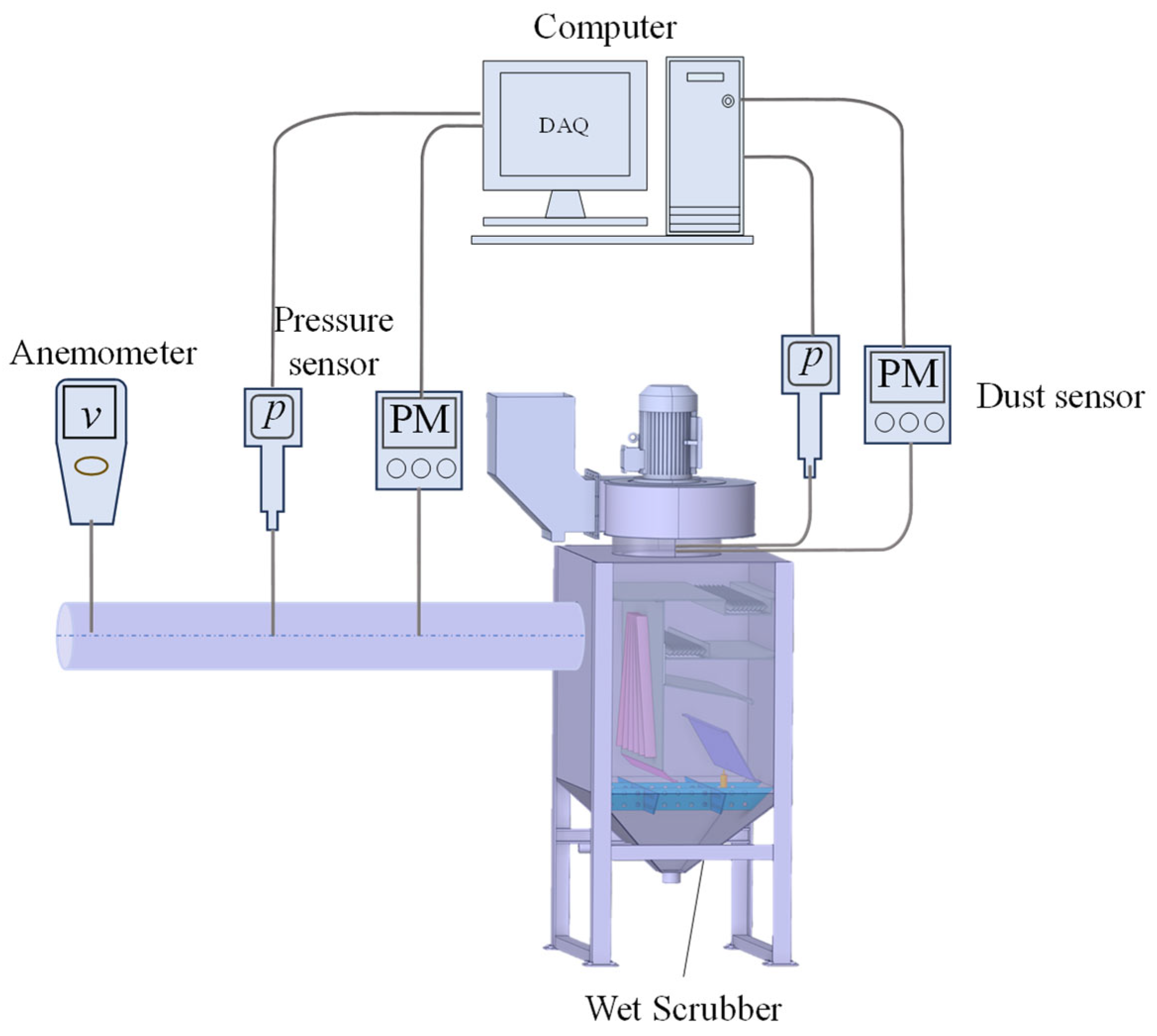
2.1. Experimental System and Data Acquisition
2.2. Data Preprocessing Methods
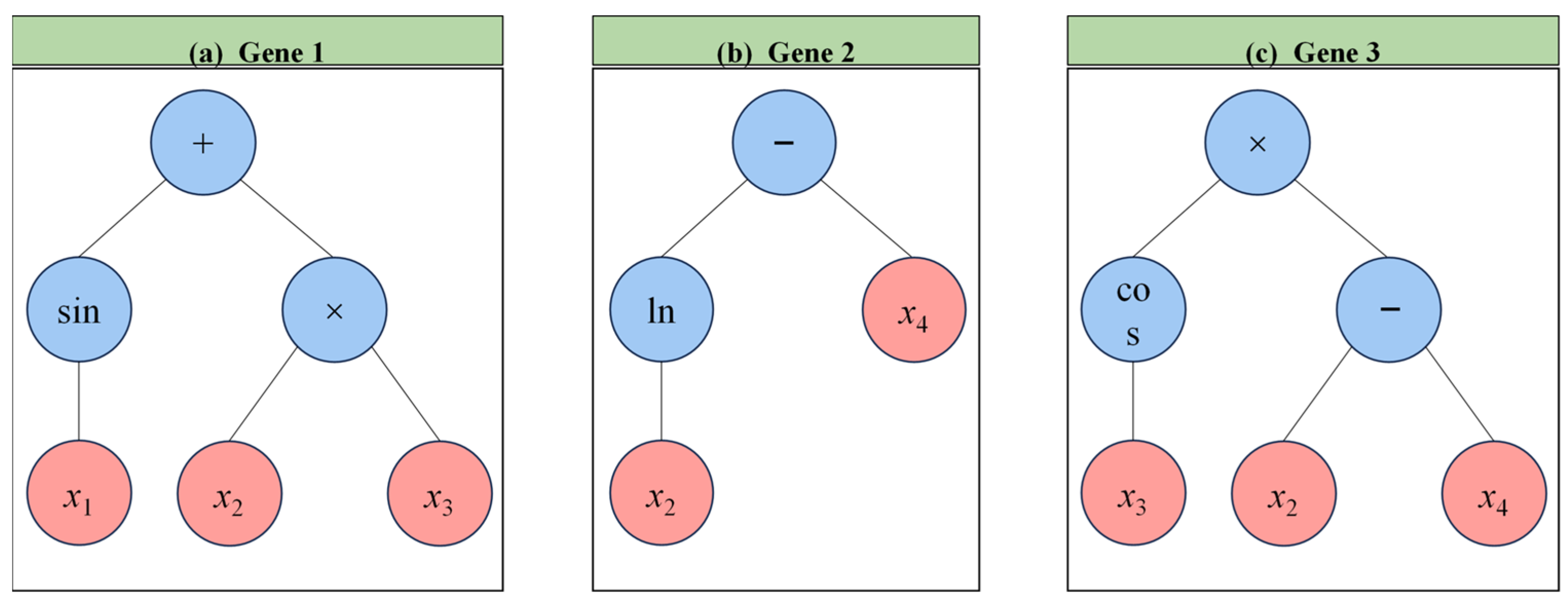
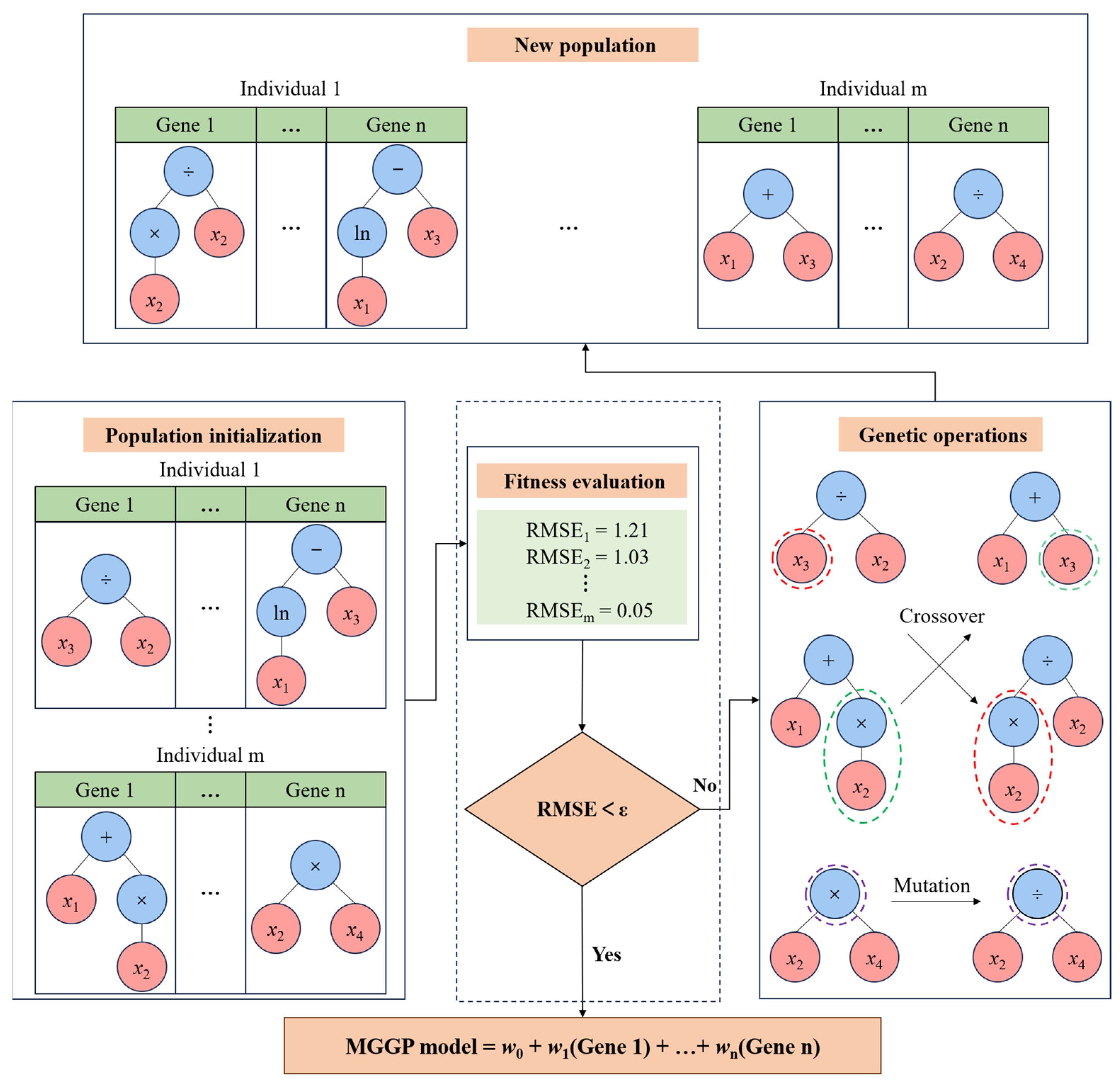
2.3. MGGP
3. MGGP Modeling
3.1. Selection of Input Variables
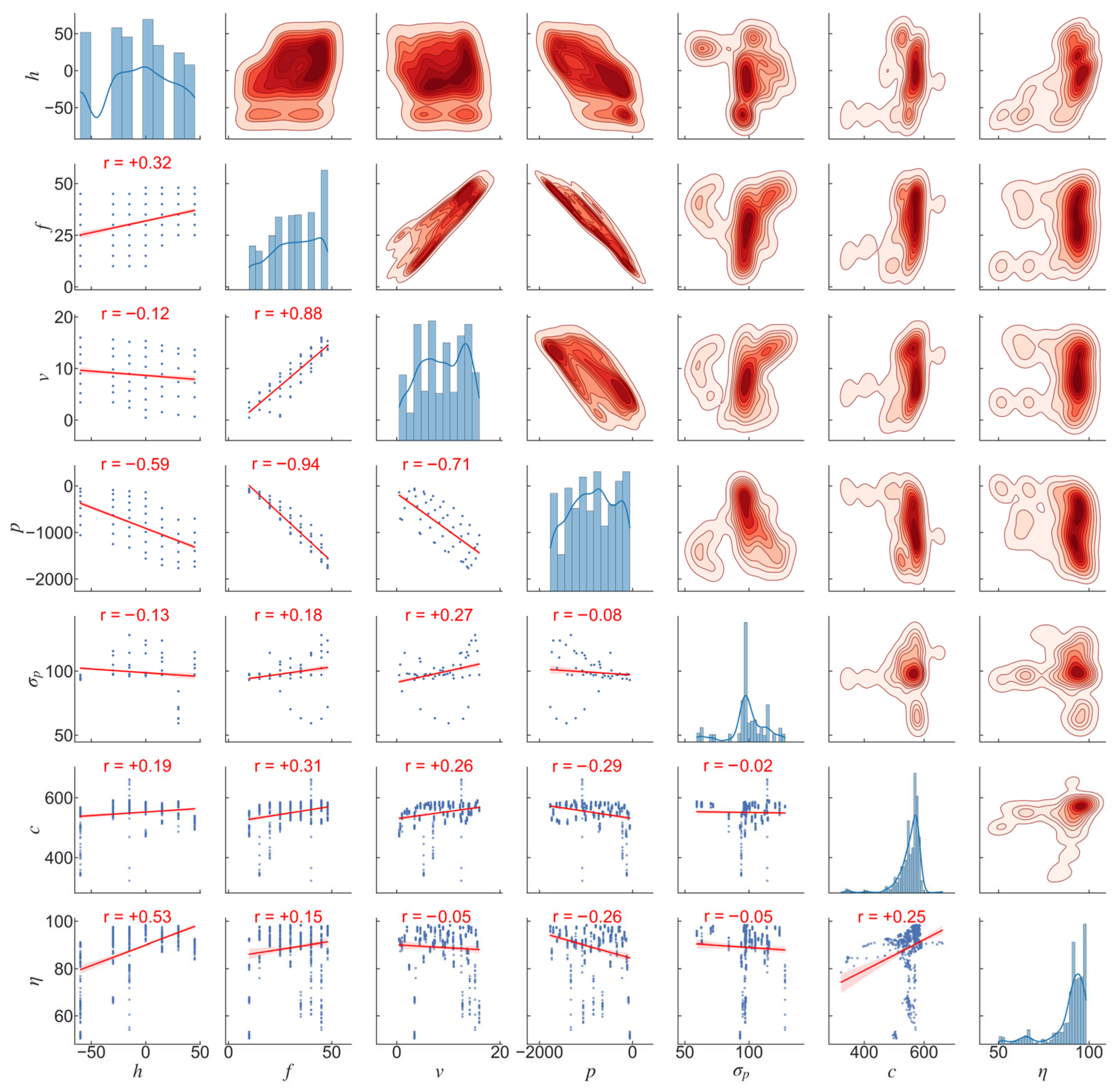
3.1.1. Variable Correlation Analysis Method
3.1.2. Input Variable Selection Result
3.2. Modeling Data
3.3. MGGP Parameter Configuration
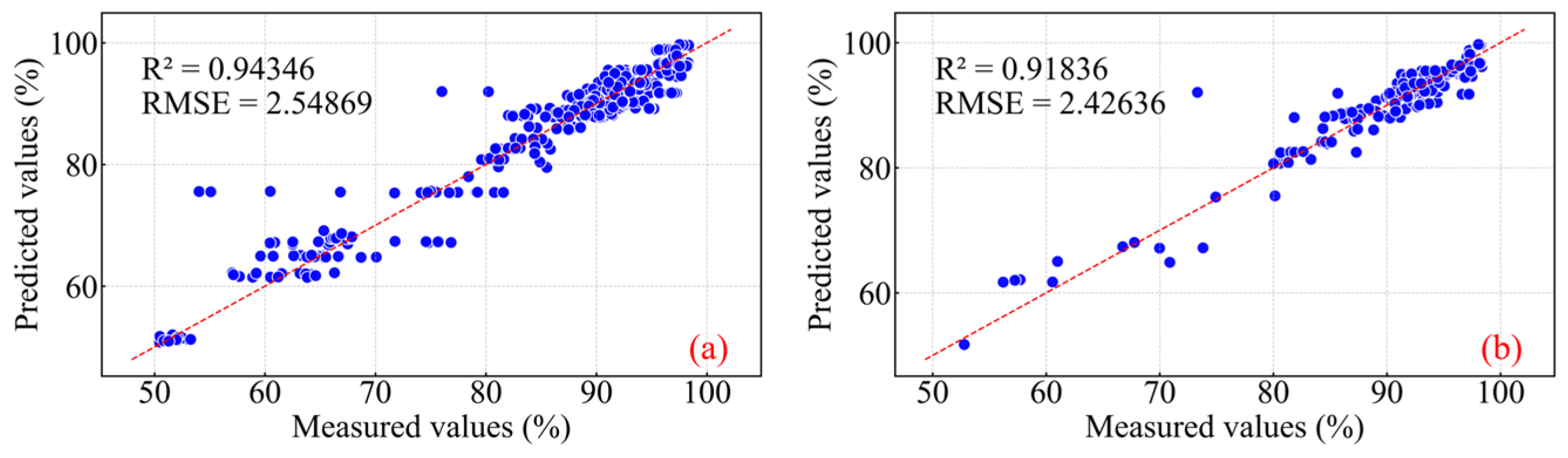
3.4. MGGP Modeling Results
3.5. Interpretability of the MGGP Models
4. Discussion of Model Performance
4.1. Single Factor Analysis
4.1.1. Parameter Configuration
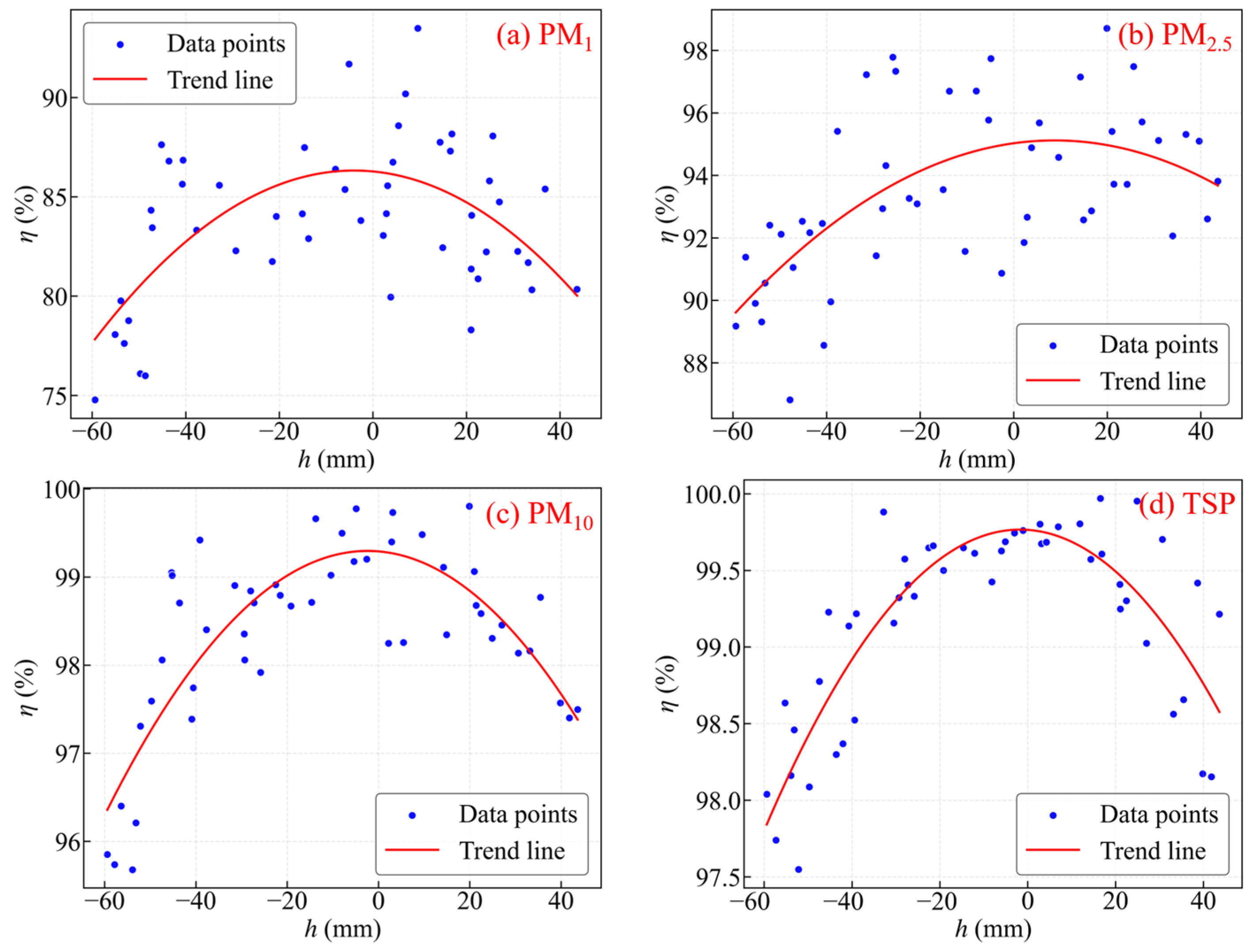
4.1.2. Effect of Liquid Level Height on Removal Efficiency
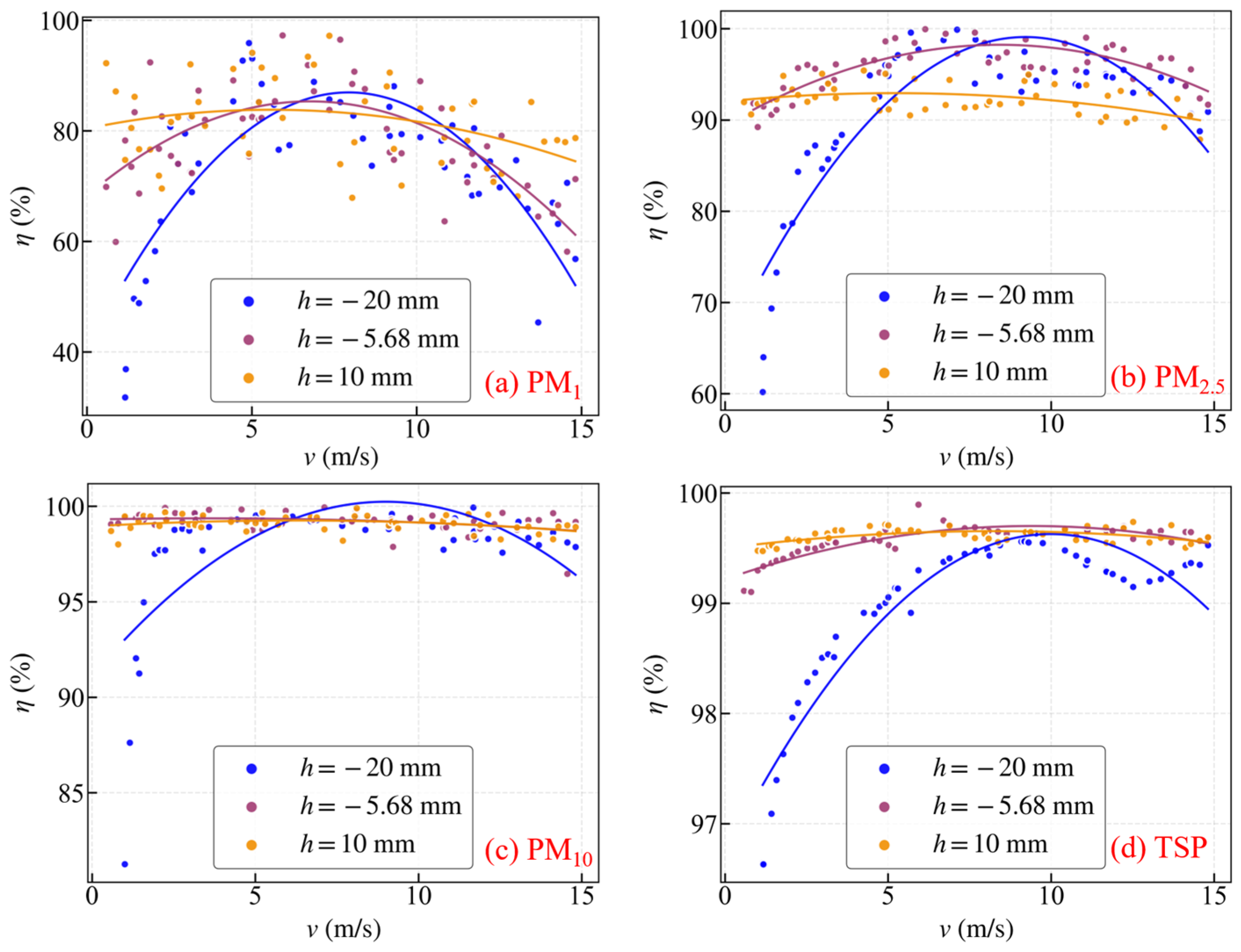
4.1.3. Effect of Airflow Velocity on Removal Efficiency
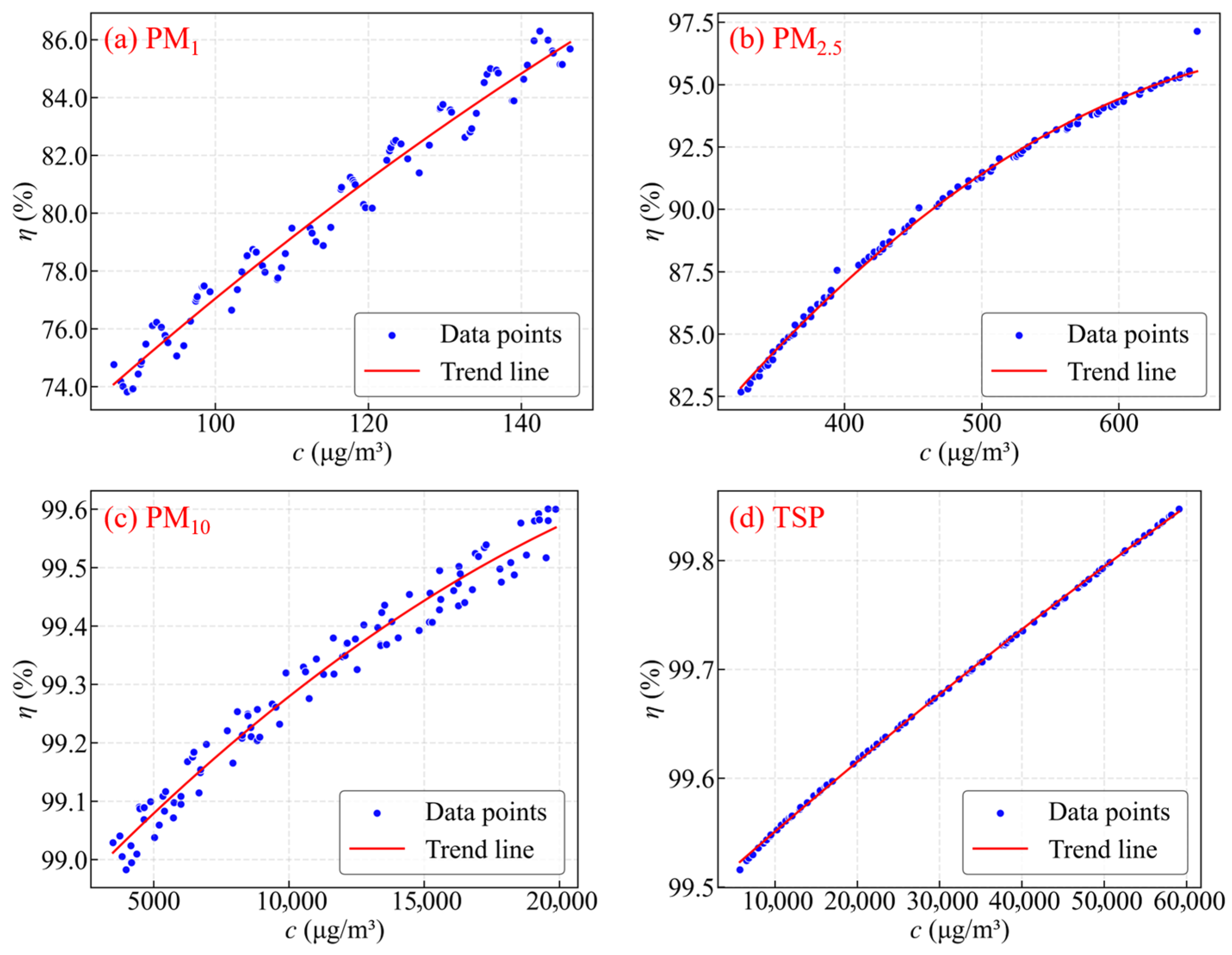
4.1.4. Effect of Inlet Dust Concentration on Removal Efficiency
4.2. Sensitivity Analysis
4.2.1. The Elementary Effect Test
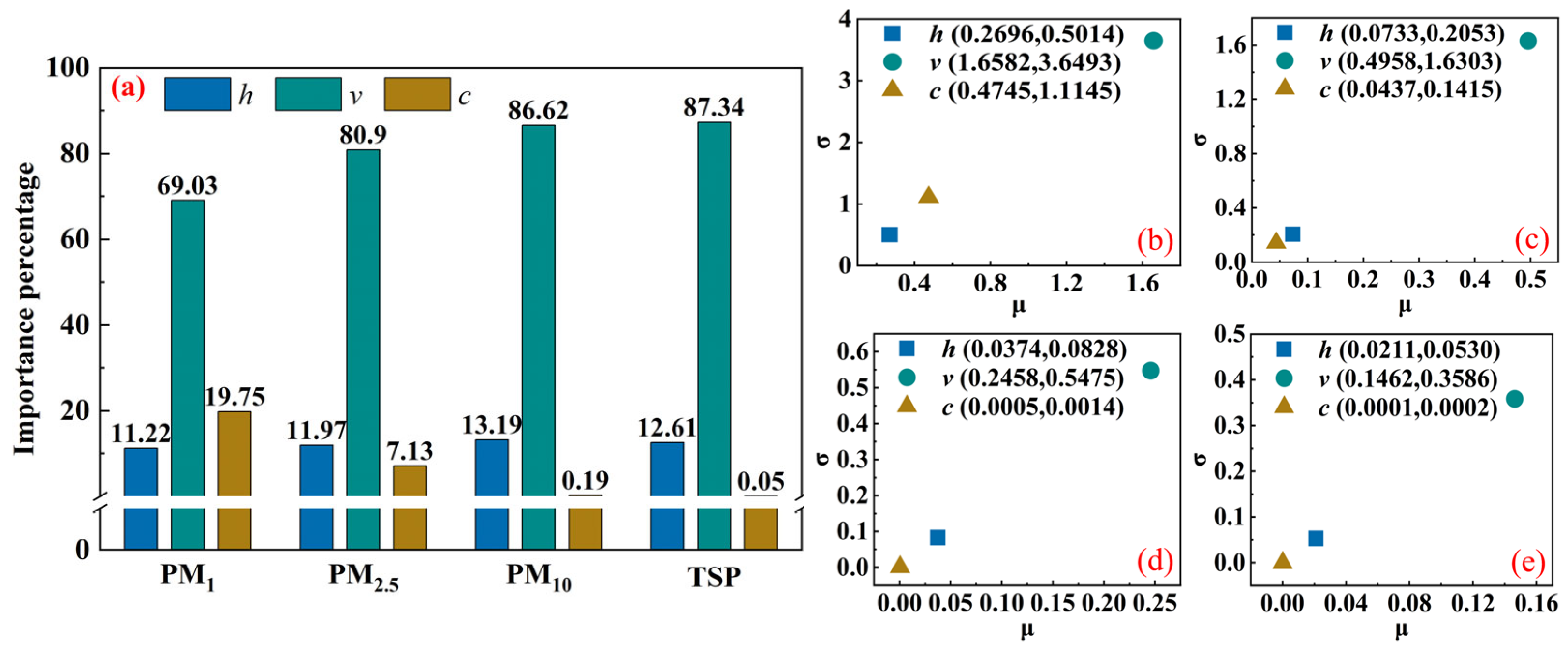
4.2.2. Quantification of Variable Relative Importance
4.2.3. Sensitivity of Dust Removal Efficiency to Different Variables
4.3. Uncertainty Analysis
4.3.1. Quantile Regression
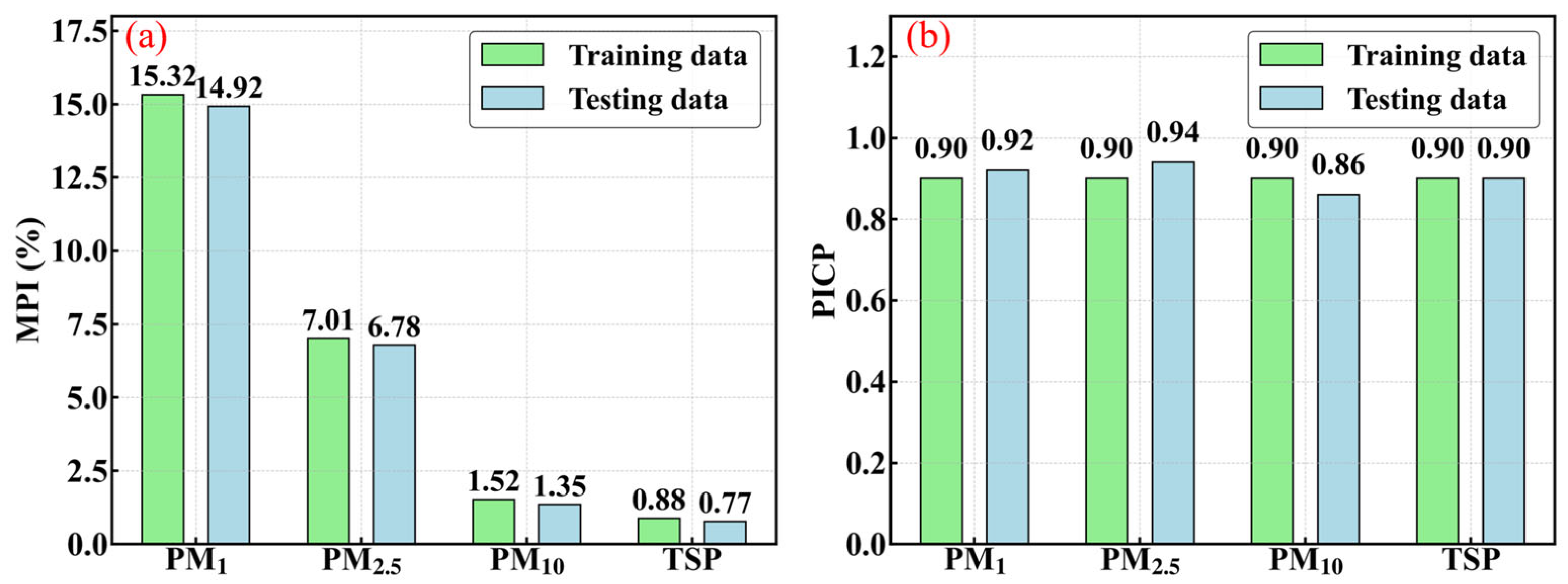
4.3.2. MPI and PICP
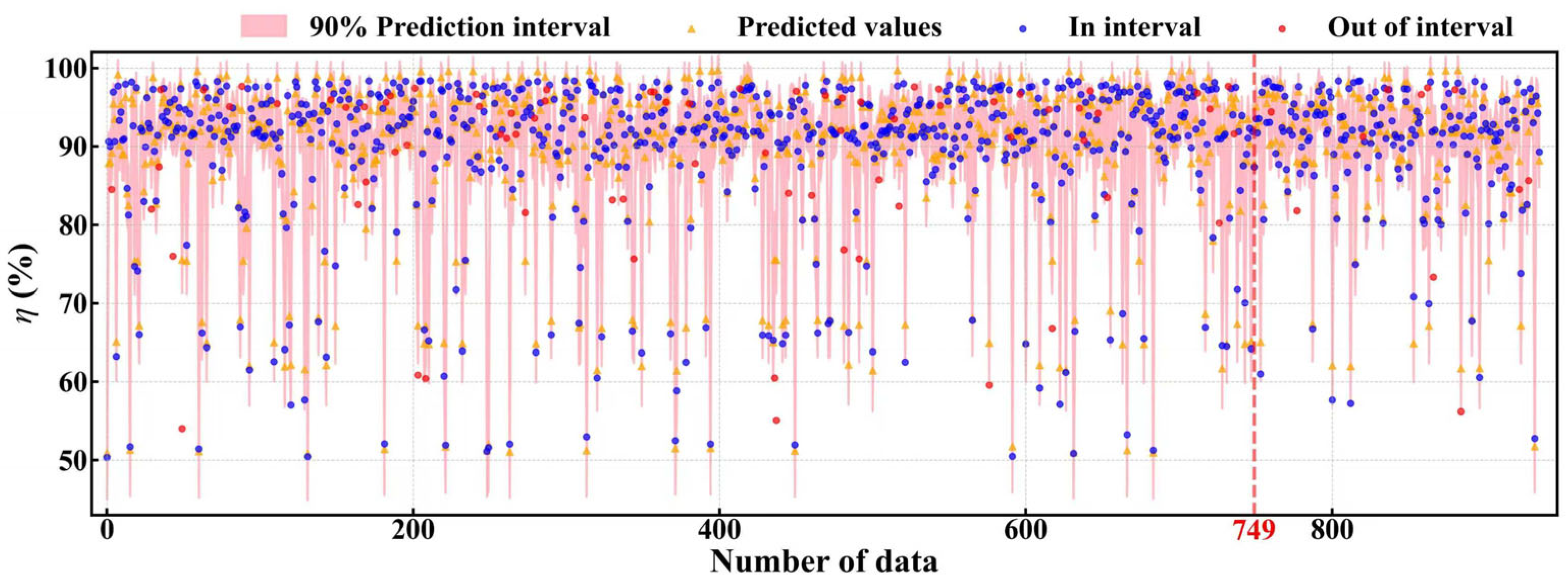
4.3.3. QR Prediction Analysis
4.3.4. Statistical Analysis of MPI and PICP
4.4. Comparative Analysis
5. Limitations and Future Directions
6. Conclusions
Author Contributions
Funding
Data Availability Statement
Conflicts of Interest
Abbreviations
| MGGP | Multi-Gene Genetic Programming |
| EET | Elementary Effect Test |
| QR | Quantile Regression |
| XGBoost | Extreme Gradient Boosting |
| MNR | Multiple Nonlinear Regression |
| PM1 | Particulate Matter with aerodynamic diameter ≤ 1 μm |
| PM2.5 | Particulate Matter with aerodynamic diameter ≤ 2.5 μm |
| PM10 | Particulate Matter with aerodynamic diameter ≤ 10 μm |
| TSP | Total Suspended Particulate |
| RMSE | Root Mean Square Error |
| R2 | Coefficient of Determination |
| MPI | Mean Prediction Interval |
| PICP | Prediction Interval Coverage Probability |
| PLC | Programmable Logic Controller |
References
- Li, Z.; Liu, Y.; Lu, T.; Peng, S.; Liu, F.; Sun, J.; Xiang, H. Acute effect of fine particulate matter on blood pressure, heart rate and related inflammation biomarkers: A panel study in healthy adults. Ecotoxicol. Environ. Saf. 2021, 228, 113024. [Google Scholar] [CrossRef] [PubMed]
- Wang, F.; Liu, C. Acute and chronic health impact of fine particulate matter constituents. Curr. Pollut. Rep. 2024, 10, 401–411. [Google Scholar] [CrossRef]
- Yan, J.; Li, Z.; Wang, K.; Xie, C.; Zhu, J.; Wu, S. Association between ambient fine particulate matter constituents and mortality and morbidity of cardiovascular and respiratory diseases: A systematic review and meta-analysis. Environ. Pollut. 2025, 379, 126476. [Google Scholar] [CrossRef] [PubMed]
- Mao, Q.; Xiao, R.; Yang, W.; Wang, X.; Kong, Y.-Z. Global burden of pneumoconiosis attributable to occupational particulate matter, gasses, and fumes from 1990–2021 and forecasting the future trends: A population-based study. Front. Public Health 2025, 12, 1494942. [Google Scholar]
- Mazurek, J.; Dodd, K.; Syamlal, G.; Blackley, D.D.J.; Weissman, D.N. Coal workers’ pneumoconiosis–associated deaths—United States, 2020–2023. MMWR Morb. Mortal. Wkly. Rep. 2025, 74, 627–633. [Google Scholar] [CrossRef]
- Min, L.; Mao, Y.; Lai, H. Burden of silica-attributed pneumoconiosis and tracheal, bronchus & lung cancer for global and countries in the national program for the elimination of silicosis, 1990–2019: A comparative study. BMC Public Health 2024, 24, 571. [Google Scholar] [CrossRef]
- Byeon, S.; Lee, B.; Raj Mohan, B. Removal of ammonia and particulate matter using a modified turbulent wet scrubbing system. Sep. Purif. Technol. 2012, 98, 221–229. [Google Scholar] [CrossRef]
- Zhao, L.; You, R.; Stocchino, A.; Chen, Q. Bubble deformation characteristics and the effect on particle removal efficiency in wet scrubbers. Sep. Purif. Technol. 2025, 357, 130178. [Google Scholar] [CrossRef]
- Zhao, X.; Jia, J.; Li, X.; Wang, L.; Wang, Y.; Hu, H.; Shen, Z.; Jiang, Y. Potential use of wet scrubbers for the removal of tobacco dust particles in the tobacco industry. Atmosphere 2022, 13, 380. [Google Scholar] [CrossRef]
- Ali, H.; Plaza, F.; Mann, A. Numerical prediction of dust capture efficiency of a centrifugal wet scrubber. AIChE J. 2018, 64, 1001–1012. [Google Scholar] [CrossRef]
- Havryliv, R.; Kostiv, I.; Maystruk, V. Using the computational fluid dynamic to the wet scrubbing process modeling. In Proceedings of the 2021 11th International Conference on Advanced Computer Information Technologies, Deggendorf, Germany, 15–17 September 2021; pp. 204–207. [Google Scholar]
- Luan, Y.G.; Zhao, Z.H.; Liu, P.F. Computational fluid dynamic analysis of gas flow characteristics in a new type of scrubber based on mechanical materials. Adv. Mater. Res. 2013, 700, 119–122. [Google Scholar] [CrossRef]
- Lu, H.; Lin, C.; Le, T.; Lu, M.-C.; An, Z.; Tsai, T.-S.; Dai, Y.; Huang, Y.-S.; Tsai, C.-J. Novel wet electrostatic precipitator using pulse-air-jet-assisted water flow (PJWF) for online dust cake removal. Sep. Purif. Technol. 2025, 367, 132863. [Google Scholar]
- Kim, J.; Kim, J.J.; Lee, S.J. Efficient removal of indoor particulate matter using water microdroplets generated by a MHz-frequency ultrasonic atomizer. Build. Environ. 2020, 175, 106797. [Google Scholar] [CrossRef]
- Li, D.; Liang, S.; Zhang, A.; Jing, D. Research and application of mining Venturi tube wet dust collector. Coal Technol. 2020, 39, 165–168. [Google Scholar] [CrossRef]
- Li, X.; Wu, X.; Hu, H.; Jiang, S.; Wei, T.; Wang, D. Mesoscale behavior study of collector aggregations in a self-excited wet dust scrubber. J. Air Waste Manag. Assoc. 2017, 68, 73–91. [Google Scholar] [CrossRef] [PubMed]
- Wei, T.; Li, X.; Hu, H.; Wang, D.; Xiang, W. Characteristic parameters mining of gas-liquid two-phase flow pattern recognition of wet dust scrubber. J. Mech. Eng. 2017, 53, 143–148. [Google Scholar] [CrossRef]
- Fu, D.; Li, X.; Shen, Y.; Liu, Y. Study on the influence of fog film distribution on the performance of wet dust collector. Coal Technol. 2025, 44, 145–149. [Google Scholar]
- Hu, S.; Gao, Y.; Feng, G.; Hu, F.; Liu, C.; Li, J. Experimental study of the dust-removal performance of a wet scrubber. Int. J. Coal Sci. Technol. 2021, 8, 228–239. [Google Scholar] [CrossRef]
- Chen, Z.; You, C.; Liu, H.; Wang, H. The synergetic particles collection in three different wet flue gas desulfurization towers: A pilot-scale experimental investigation. Fuel Process. Technol. 2018, 179, 344–350. [Google Scholar] [CrossRef]
- Wei, H.; Wang, J.; Chen, S. Research on light scattering method and β-ray dust detection technology based on data fusion. Min. Saf. Environ. Prot. 2025, 52, 82–87. [Google Scholar]
- Wei, T.; Li, X.; Wang, D. Identification of gas-liquid two-phase flow patterns in dust scrubber based on wavelet energy entropy and recurrence analysis characteristics. Chem. Eng. Sci. 2020, 217, 115504. [Google Scholar] [CrossRef]
- Zhao, L.; Liu, J. Fast real-time measurement method of a wet scrubber on particle purification efficiency with image information entropy analysis. Build. Environ. 2022, 218, 109133. [Google Scholar] [CrossRef]
- Koza, J. Genetic Programming: On the Programming of Computers by Means of Natural Selection; MIT Press: Cambridge, MA, USA, 1992. [Google Scholar]
- Riahi-Madvar, H.; Gholami, M.; Gharabaghi, B.; Seyedian, S.M. A predictive equation for residual strength using a hybrid of subset selection of maximum dissimilarity method with Pareto optimal multi-gene genetic programming. Geosci. Front. 2021, 12, 101222. [Google Scholar] [CrossRef]
- Soleimani, S.; Rajaei, S.; Jiao, P.; Sabz, A.; Soheilinia, S. New prediction models for unconfined compressive strength of geopolymer stabilized soil using multi-gen genetic programming. Measurement 2018, 113, 99–107. [Google Scholar] [CrossRef]
- Tahmassebi, A.; Gandomi, A.H. Building energy consumption forecast using multi-objective genetic programming. Measurement 2018, 118, 164–171. [Google Scholar] [CrossRef]
- Gandomi, A.; Alavi, A. A new multi-gene genetic programming approach to non-linear system modeling. Part II: Geotechnical and earthquake engineering problems. Neural Comput. Appl. 2012, 21, 189–201. [Google Scholar]
- Gandomi, A.; Alavi, A. A new multi-gene genetic programming approach to nonlinear system modeling. Part I: Materials and structural engineering problems. Neural Comput. Appl. 2012, 21, 171–187. [Google Scholar] [CrossRef]
- Bardhan, A. Probabilistic assessment of heavy-haul railway track using multi-gene genetic programming. Appl. Math. Model. 2024, 125, 687–720. [Google Scholar] [CrossRef]
- Ma, B.; Zhu, Z.; Song, X.; Pan, T.; Zhang, C.; Liu, Z. Real-time dynamic prediction of rate of penetration based on BO-MGGP. China Pet. Mach. 2025, 53, 18–27. [Google Scholar]
- Wei, T.; Zhu, R.; Zhang, B.; Zhu, L.; Fan, S.; Luo, H.; Li, Z.; Bu, B.; Li, Z.; Li, X.; et al. A gas–liquid entrainment scrubber for fine silica dust control in an ore-crushing workshop: Industrial field testing and integrated assessment. J. Clean. Prod. 2026, 538, 147427. [Google Scholar] [CrossRef]
- Sarrazin, F.; Pianosi, F.; Wagener, T. Global sensitivity analysis of environmental models: Convergence and validation. Environ. Model. Softw. 2016, 79, 135–152. [Google Scholar] [CrossRef]
- Soto Calvo, M.; Lee, H.; Chisale, S. A novel method for long-term power demand prediction using enhanced data decomposition and neural network with integrated uncertainty analysis: A Cuba case study. Appl. Energy 2024, 372, 123864. [Google Scholar] [CrossRef]
- Wang, Z.; Cudmani, R.; Peña Olarte, A.; Zhang, C.; Zhou, P. Leveraging Bayesian methods for addressing multi-uncertainty in data-driven seismic liquefaction assessment. J. Rock Mech. Geotech. Eng. 2025, 17, 2474–2491. [Google Scholar] [CrossRef]
- He, S.; Du, W.; Peng, X. Uncertainty-aware optimization of zeolite particle size: Utilizing quantile regression and SHAP analysis. Chem. Eng. J. 2025, 512, 162085. [Google Scholar] [CrossRef]







| Input Variable | Training Data | Testing Data | ||
|---|---|---|---|---|
| R2 | RMSE | R2 | RMSE | |
| h/v/p/c | 0.94738 | 2.45880 | 0.91424 | 2.48690 |
| h/f/p/c | 0.92908 | 2.85450 | 0.90825 | 2.57210 |
| h/v/p/c/σp | 0.92718 | 2.89250 | 0.89187 | 2.79240 |
| h/v/p | 0.93916 | 2.64380 | 0.88432 | 2.88820 |
| Variable | Dust Size Fraction | Min | Mean | Std | Max | ||||
|---|---|---|---|---|---|---|---|---|---|
| Train | Test | Train | Test | Train | Test | Train | Test | ||
| h (mm) | / | −60 | −60 | 5.68 | −4.71 | 32.54 | 33.13 | 45 | 45 |
| v (m/s) | / | 0.47 | 0.47 | 8.75 | 8.40 | 4.44 | 4.48 | 15.98 | 15.98 |
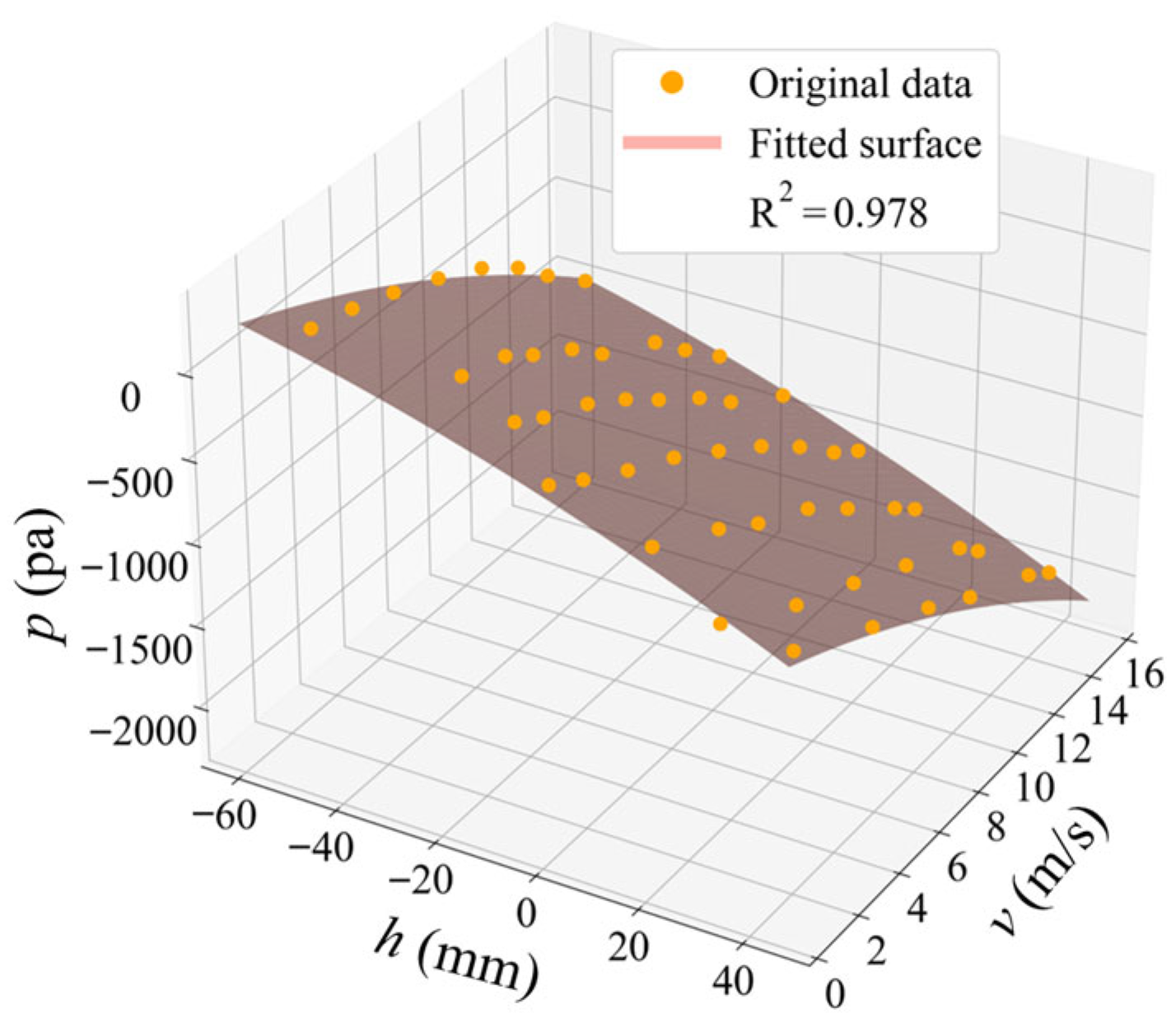
| p (pa) | / | −1767 | −1767 | −860 | −825 | 498 | 503 | −59 | −59 |
| c (μg/m3) | PM1 | 86 | 88 | 129 | 127 | 12 | 15 | 147 | 146 |
| c (μg/m3) | PM2.5 | 323 | 343 | 551 | 547 | 45 | 57 | 661 | 599 |
| c (μg/m3) | PM10 | 3401 | 4875 | 10,950 | 11,335 | 2784 | 3063 | 20,079 | 18,597 |
| c (μg/m3) | TSP | 5441 | 7996 | 24,138 | 25,651 | 10,414 | 11,389 | 59,787 | 57,671 |
| η (%) | PM1 | 18.03 | 17.21 | 75.59 | 76.52 | 17.68 | 16.42 | 95.32 | 95.40 |
| η (%) | PM2.5 | 50.44 | 52.78 | 89.01 | 89.92 | 11.20 | 10.72 | 98.38 | 98.35 |
| η (%) | PM10 | 80.30 | 80.22 | 97.54 | 98.03 | 5.22 | 7.57 | 99.83 | 99.82 |
| η (%) | TSP | 90.51 | 90.75 | 98.78 | 99.04 | 4.05 | 7.31 | 99.90 | 99.90 |
| Parameter | Settings |
|---|---|
| Population size | 800 |
| Number of generations | 500 |
| Tournament size | 6 |
| Elitism fraction | 0.15 |
| Terminate value | 0.003 |
| Crossover rate | 0.84 |
| Mutation rate | 0.14 |
| Direct reproduction | 0.02 |
| Function set | +, −, ×, /, power, sum3, prod3, sqrt, square, sin, cos |
| Model | Dust Size Fraction | R2 | RMSE | ||
|---|---|---|---|---|---|
| Train | Test | Train | Test | ||
| XGBoost | PM1 | 0.98051 | 0.94348 | 2.43822 | 3.67202 |
| PM2.5 | 0.98268 | 0.92608 | 1.41067 | 2.30881 | |
| PM10 | 0.98224 | 0.96880 | 0.50849 | 0.44874 | |
| TSP | 0.98638 | 0.96860 | 0.21522 | 0.21695 | |
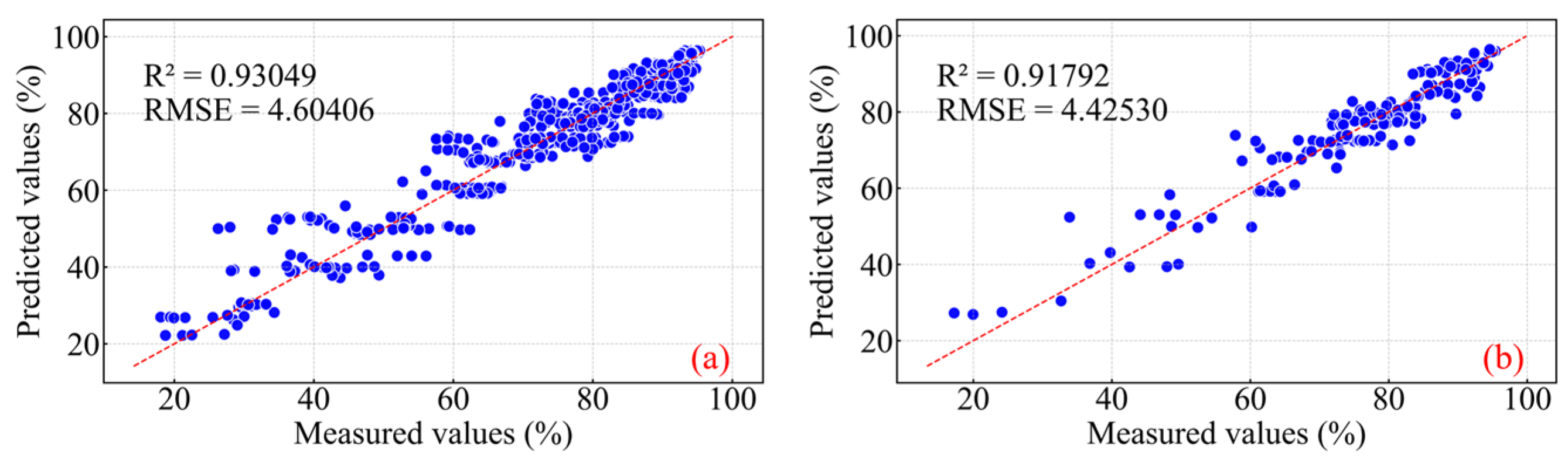
| MGGP | PM1 | 0.93049 | 0.91792 | 4.60406 | 4.42530 |
| PM2.5 | 0.94346 | 0.91836 | 2.54869 | 2.42636 | |
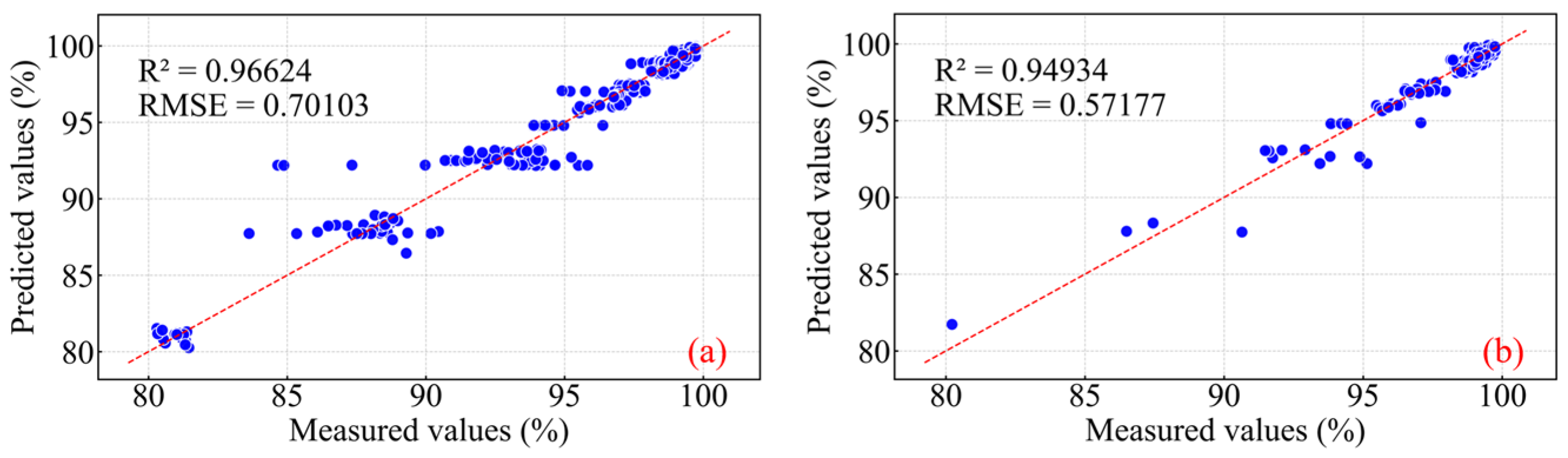
| PM10 | 0.96624 | 0.94934 | 0.70103 | 0.57177 | |
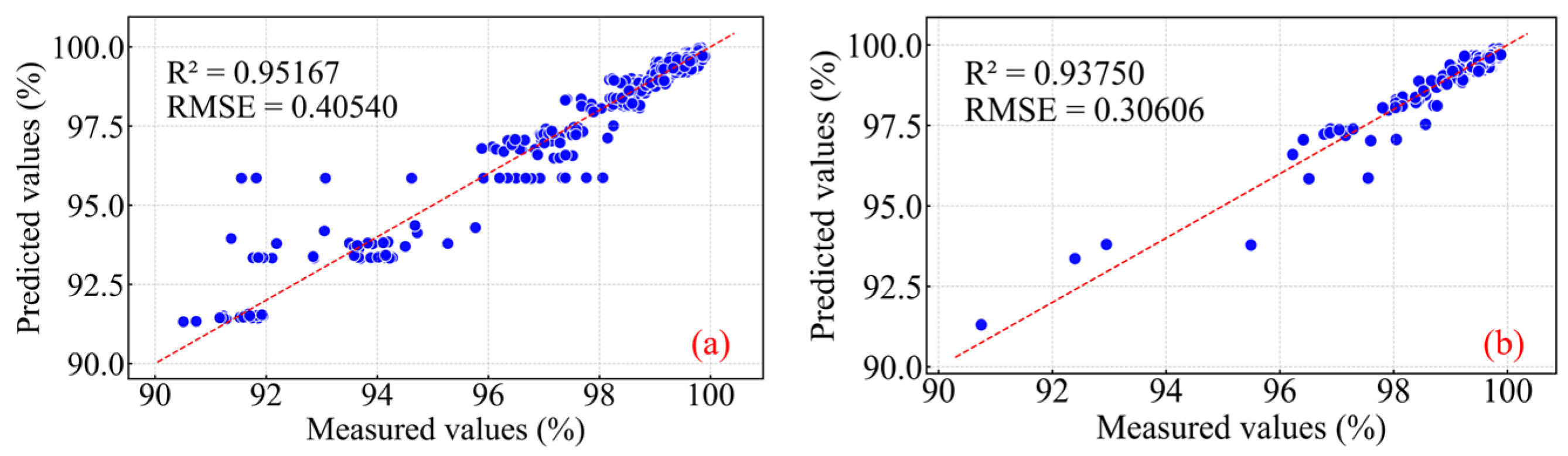
| TSP | 0.95167 | 0.93750 | 0.40540 | 0.30606 | |
| MNR | PM1 | 0.85247 | 0.80137 | 6.70736 | 6.88391 |
| PM2.5 | 0.87564 | 0.81110 | 3.77995 | 3.69071 | |
| PM10 | 0.86026 | 0.73722 | 1.42635 | 1.30225 | |
| TSP | 0.85234 | 0.71430 | 0.70861 | 0.65440 | |
Disclaimer/Publisher’s Note: The statements, opinions and data contained in all publications are solely those of the individual author(s) and contributor(s) and not of MDPI and/or the editor(s). MDPI and/or the editor(s) disclaim responsibility for any injury to people or property resulting from any ideas, methods, instructions or products referred to in the content. |
© 2026 by the authors. Licensee MDPI, Basel, Switzerland. This article is an open access article distributed under the terms and conditions of the Creative Commons Attribution (CC BY) license.
Share and Cite
Zhu, L.; Zhu, R.; Zhou, J.; Luo, H.; Li, X.; Wei, T. Interpretable Performance Prediction for Wet Scrubbers Using Multi-Gene Genetic Programming: An Application-Oriented Study. Mathematics 2026, 14, 1142. https://doi.org/10.3390/math14071142
Zhu L, Zhu R, Zhou J, Luo H, Li X, Wei T. Interpretable Performance Prediction for Wet Scrubbers Using Multi-Gene Genetic Programming: An Application-Oriented Study. Mathematics. 2026; 14(7):1142. https://doi.org/10.3390/math14071142
Chicago/Turabian StyleZhu, Linling, Ruhua Zhu, Jun Zhou, Huiqing Luo, Xiaochuan Li, and Tao Wei. 2026. "Interpretable Performance Prediction for Wet Scrubbers Using Multi-Gene Genetic Programming: An Application-Oriented Study" Mathematics 14, no. 7: 1142. https://doi.org/10.3390/math14071142
APA StyleZhu, L., Zhu, R., Zhou, J., Luo, H., Li, X., & Wei, T. (2026). Interpretable Performance Prediction for Wet Scrubbers Using Multi-Gene Genetic Programming: An Application-Oriented Study. Mathematics, 14(7), 1142. https://doi.org/10.3390/math14071142