A Unified Framework for Identification, Estimation, and Control of an Experimental Duffing–Holmes System

 ,
,  , and
, and
Abstract
1. Introduction
- Parameter Identification: This paper proposes a parameter identification approach for the Duffing–Holmes system based on a filtered model representation combined with a Recursive Least Squares Method (RLSM) incorporating a forgetting factor. The effectiveness of the proposed identification strategy is experimentally validated using a Duffing–Holmes prototype.
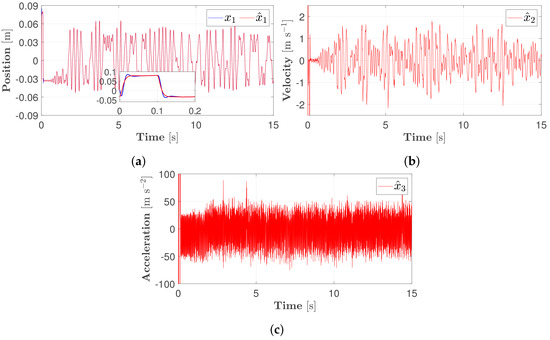
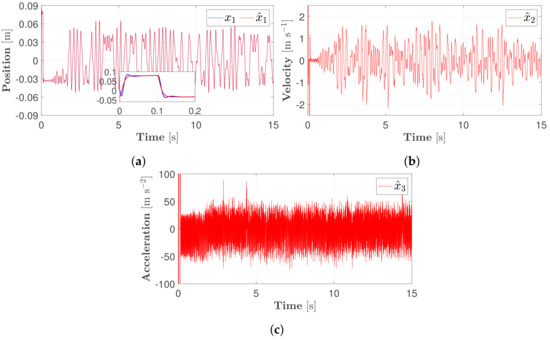
- State Estimation: A Nonlinear Integral Extended State Observer (NIESO) is developed to estimate the unmeasured velocity and lumped uncertainty from position measurements. In contrast to previous works such as [11], the proposed observer integrates a projection mechanism that guarantees bounded estimation errors. The observer gain design is systematically derived, and its performance is validated experimentally.
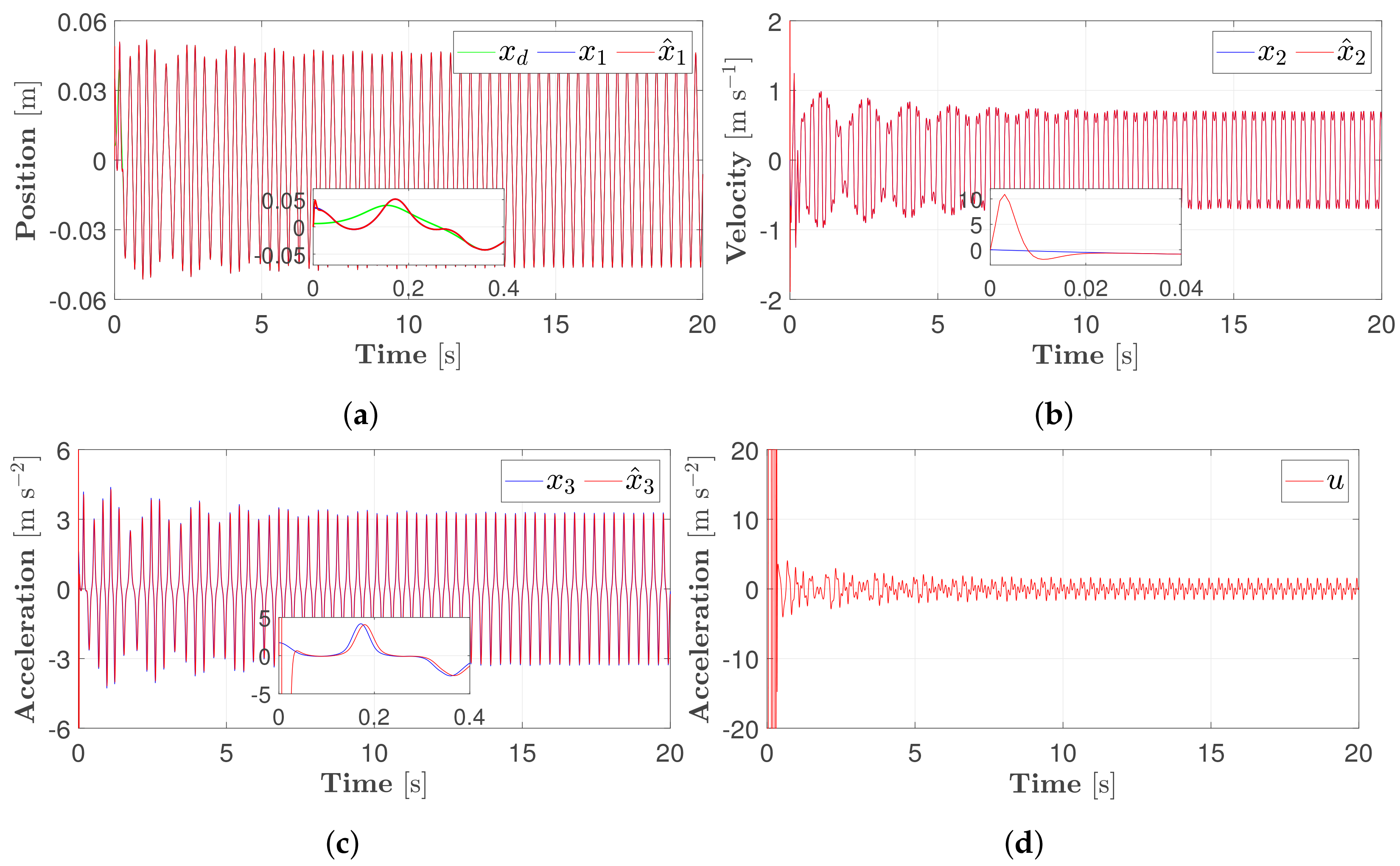
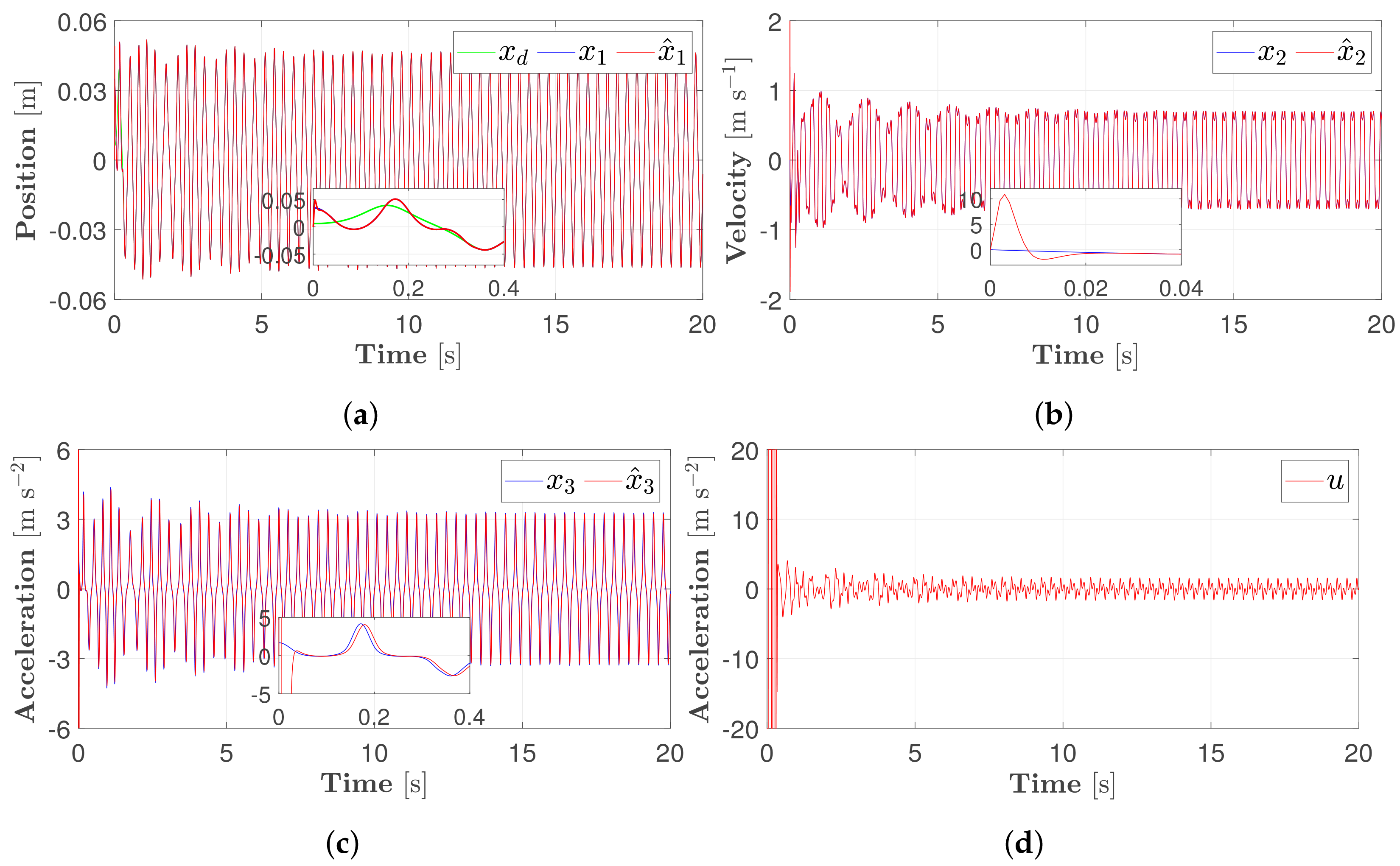
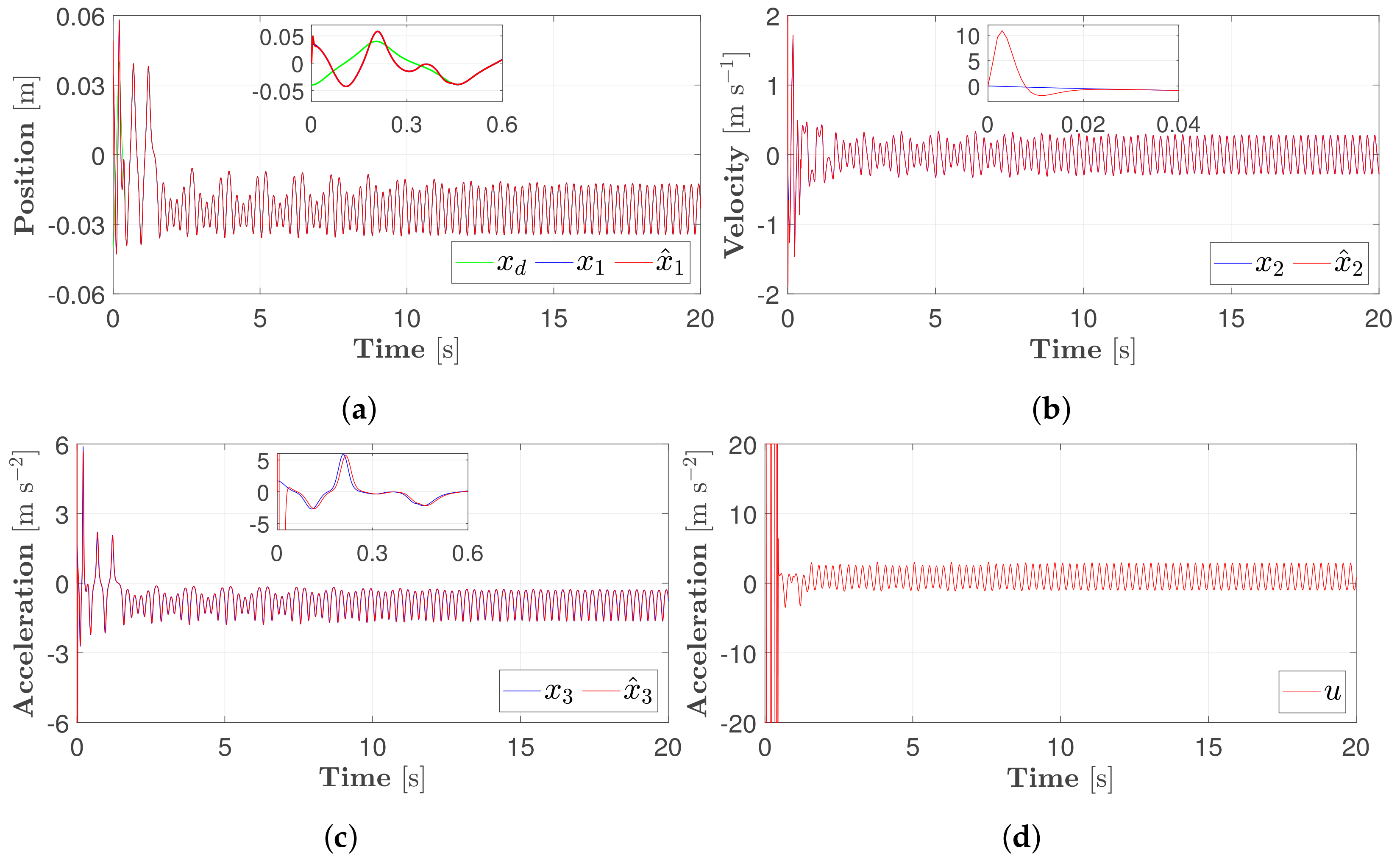
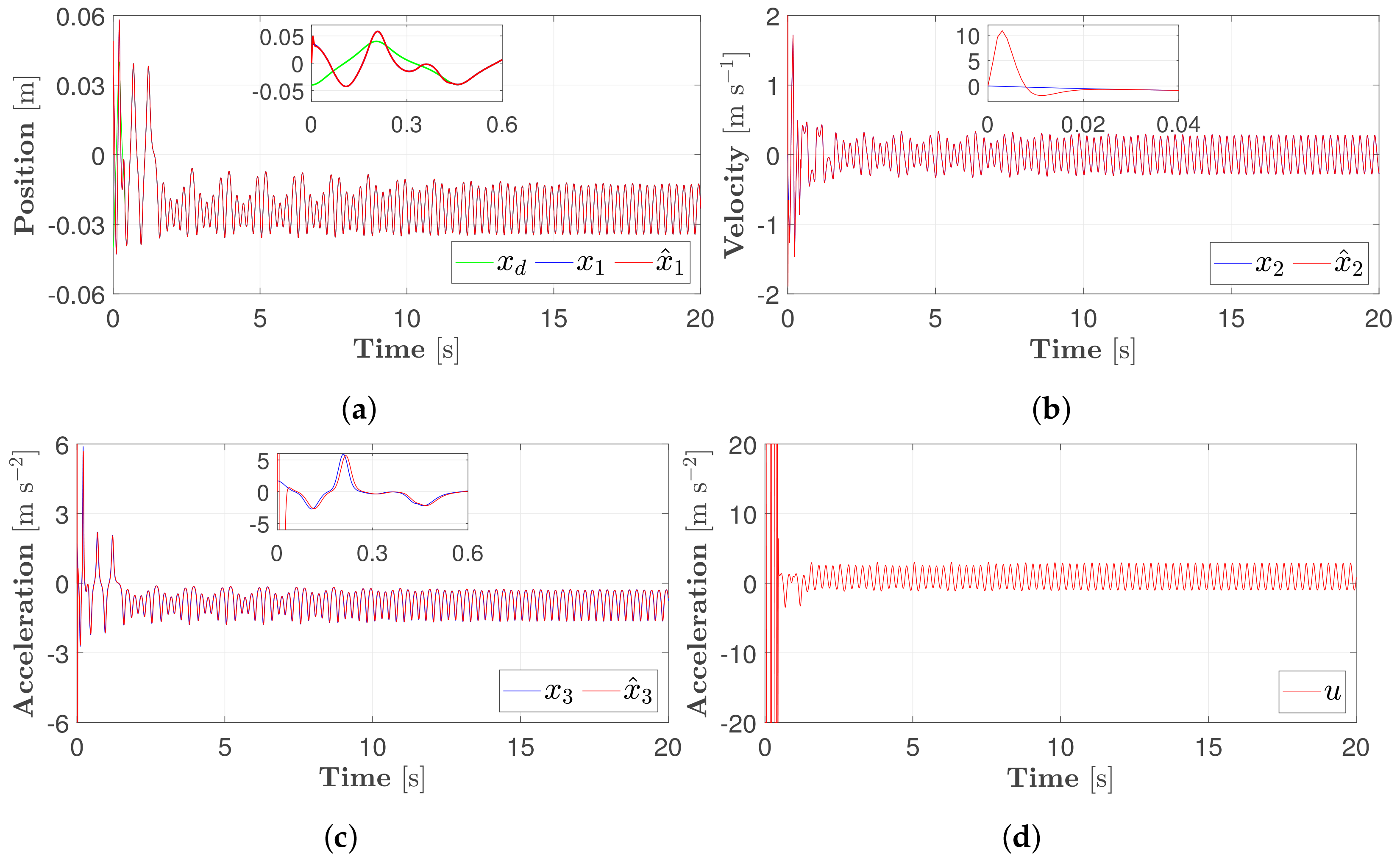
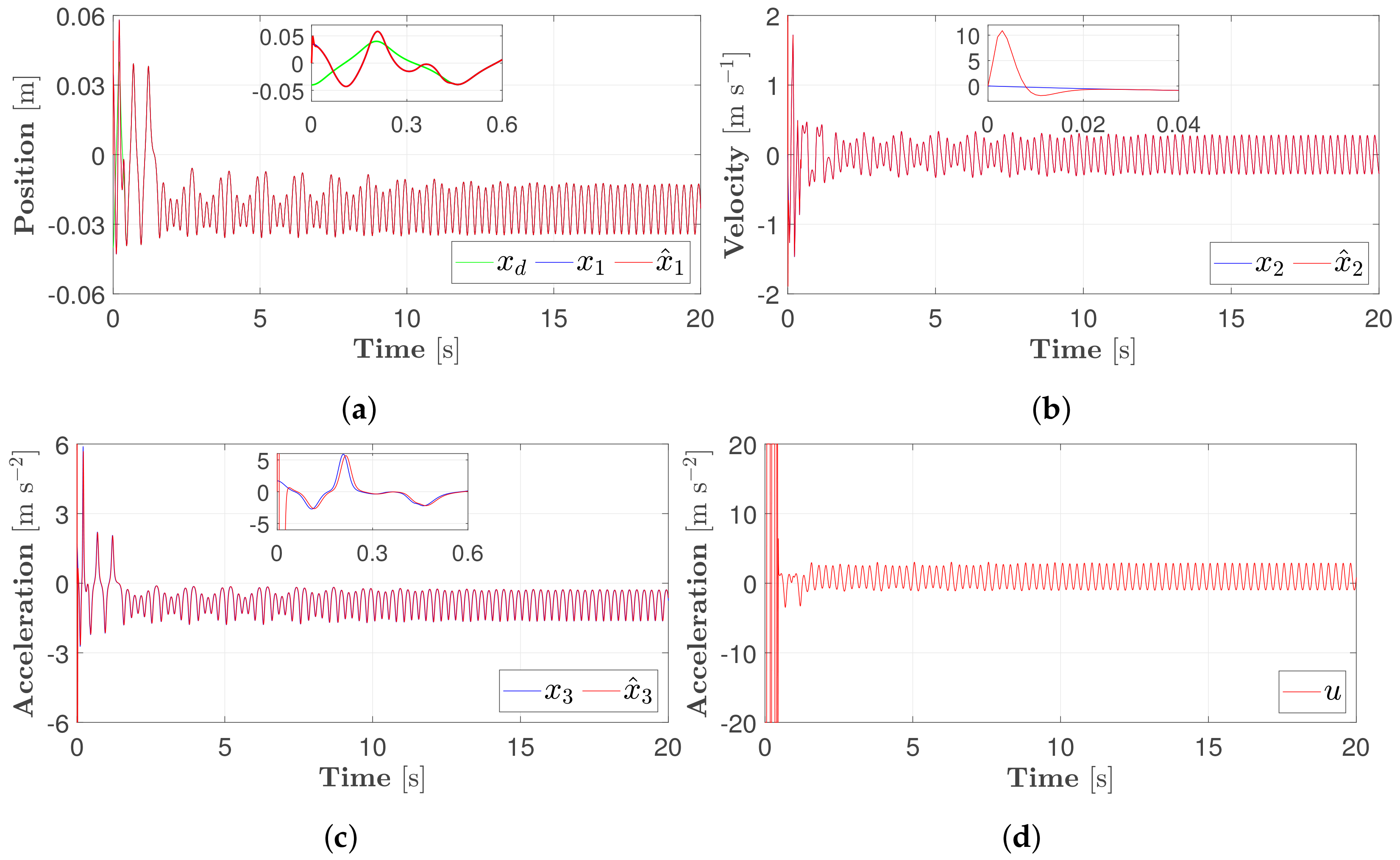
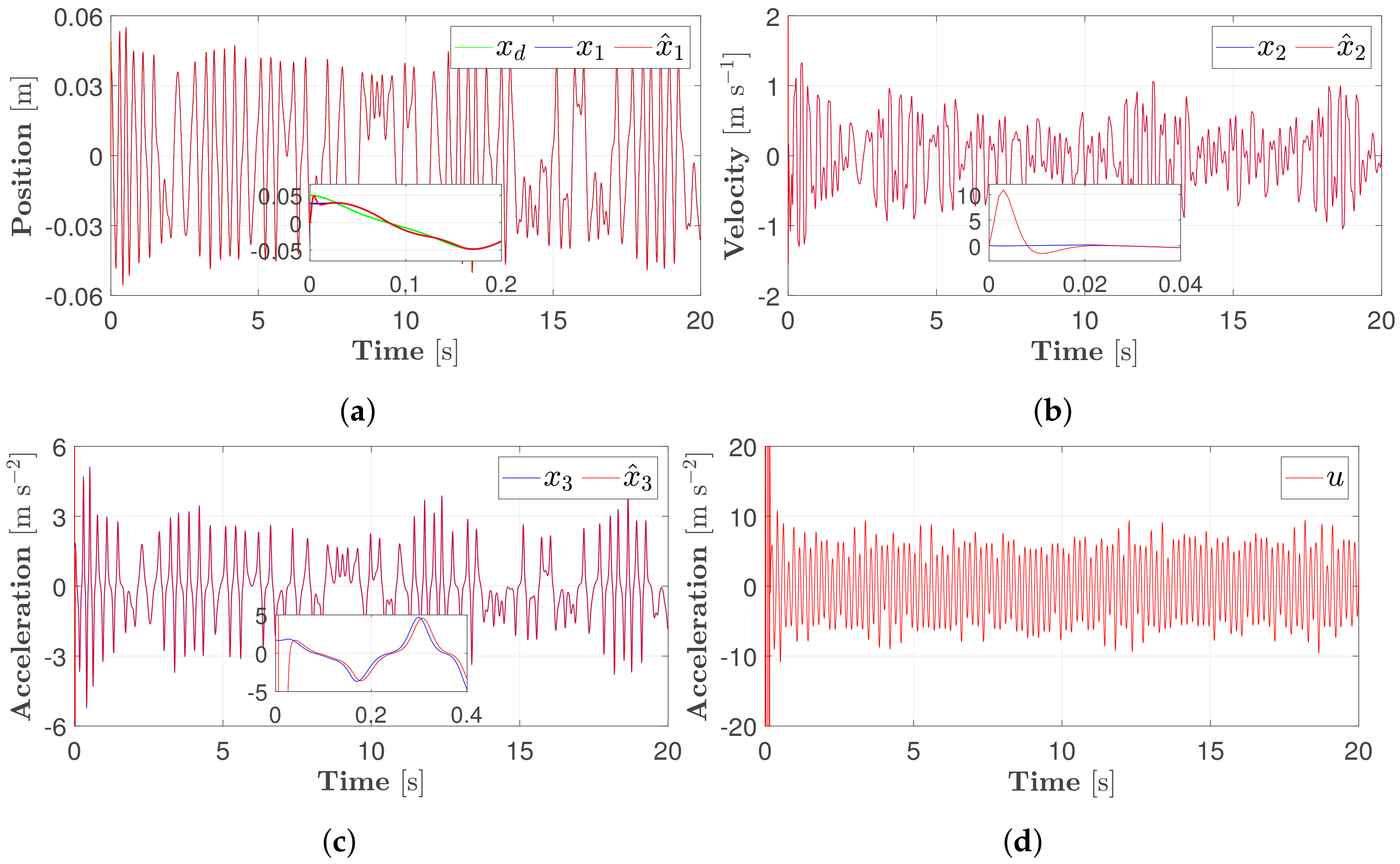
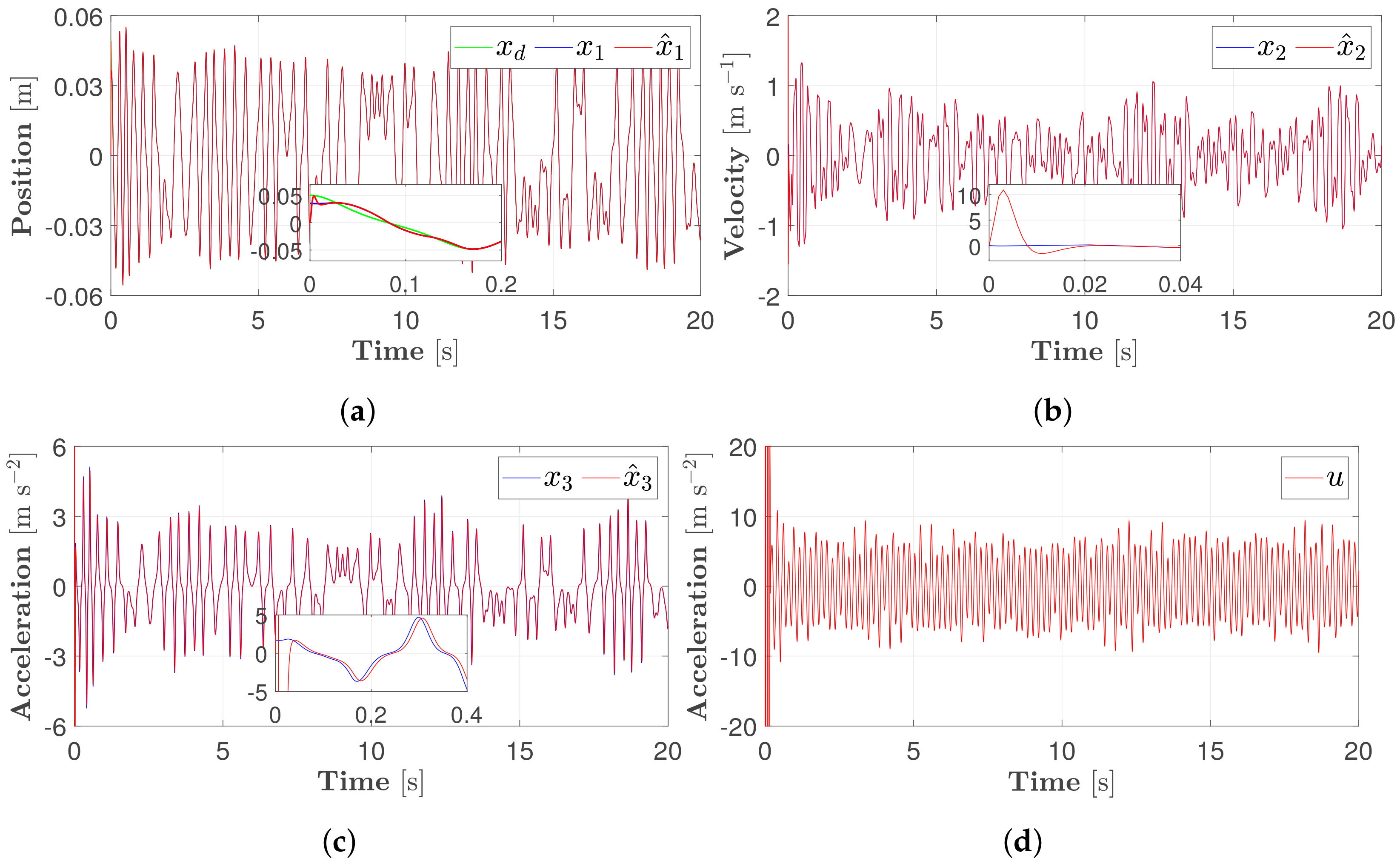
- Tracking Control: Using the identified system parameters and the state estimates provided by the proposed schemes, a backstepping-based tracking control law is developed to drive the position of the Duffing–Holmes system toward a desired trajectory. Experimental results demonstrate satisfactory control performance under interwell dynamics. Due to the physical limitations of the shake table used in the experiments, chaotic and intrawell behaviors could not be experimentally validated. Nevertheless, comprehensive simulation studies are conducted to verify the effectiveness of the proposed parameter identification and state estimation methods in achieving control performance under intrawell, interwell, and chaotic regimes.
2. Dynamics of a Duffing–Holmes System
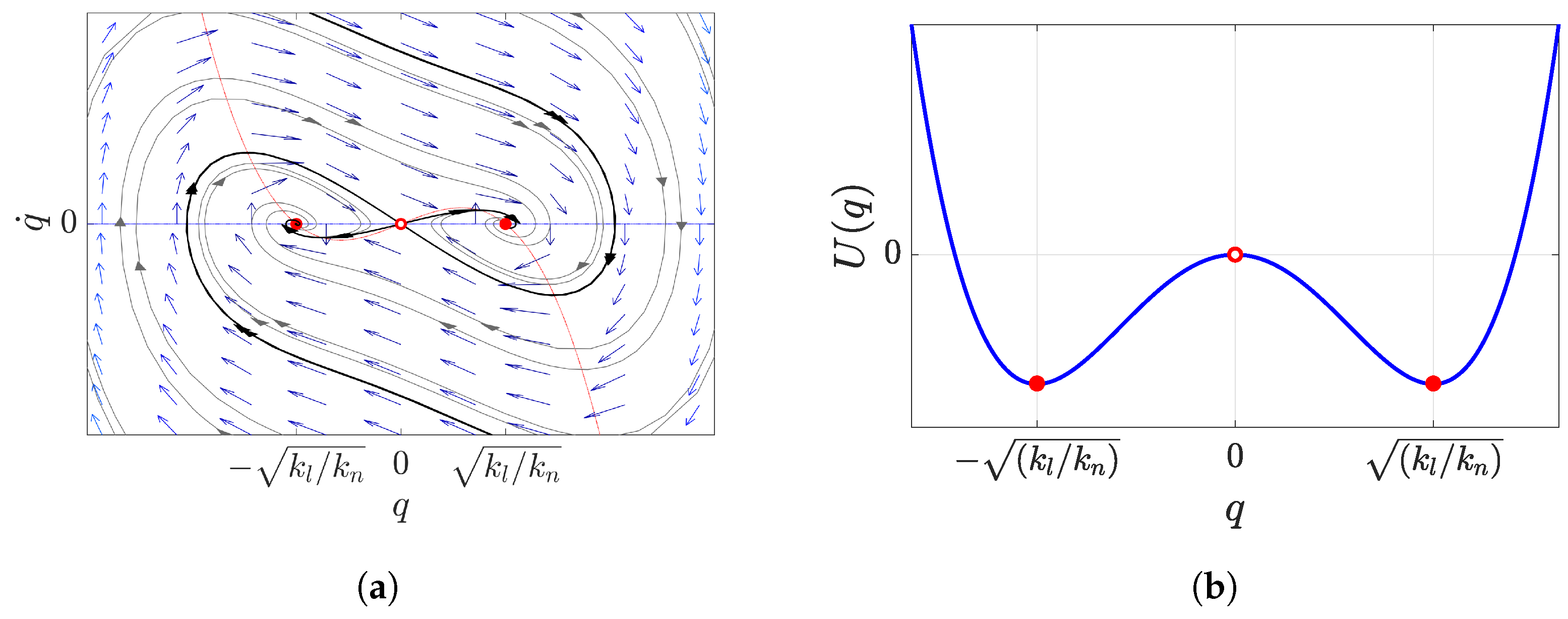
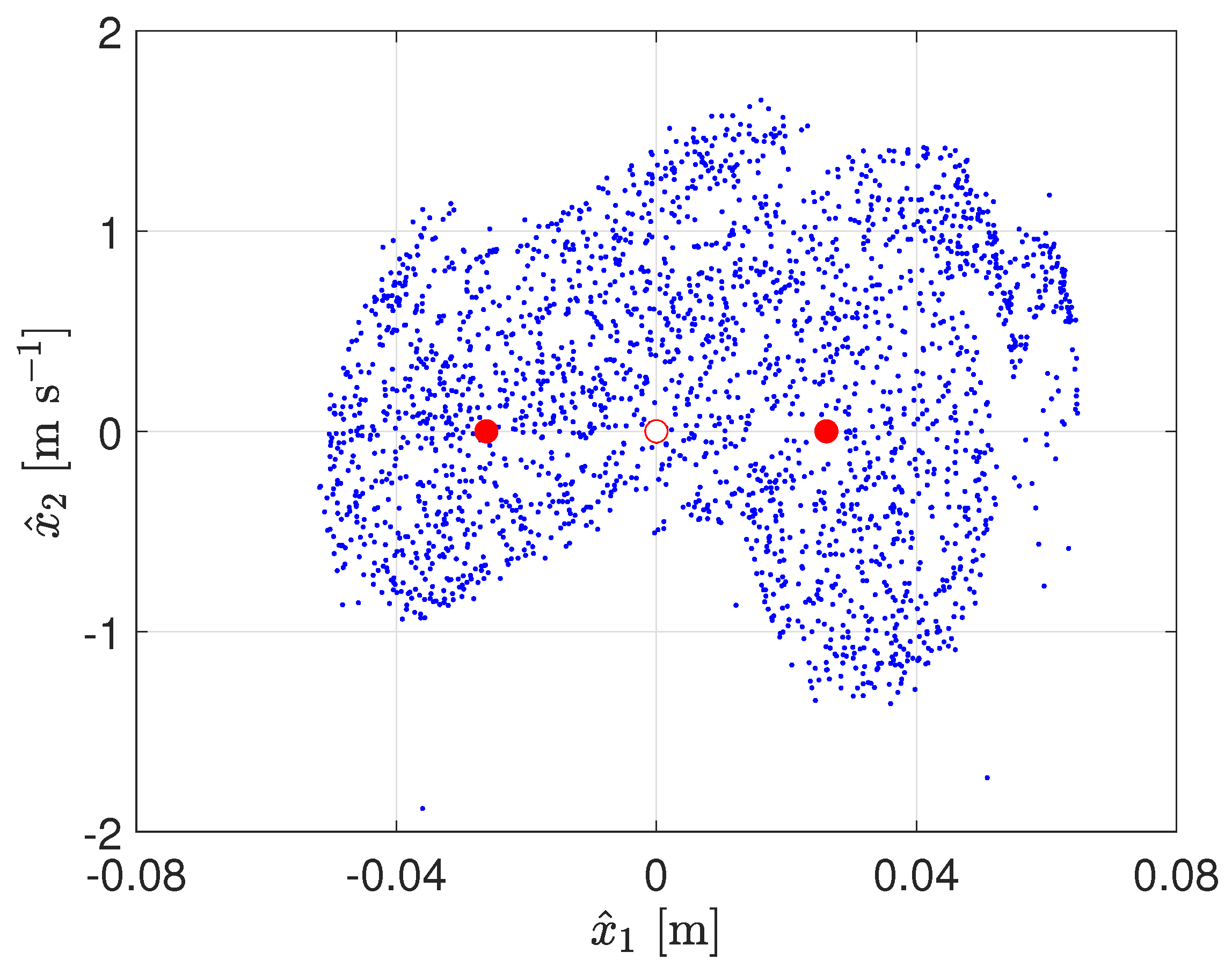
- Interwell motion: The trajectories oscillate between the two potential wells, crossing the potential barrier.
- Intrawell motion: The system trajectories are confined within a single potential well, oscillating around one stable equilibrium point without crossing the potential barrier.
- Chaotic motion: The system produces unpredictable and aperiodic motion due to extreme sensitivity to initial conditions.
Problem Formulation
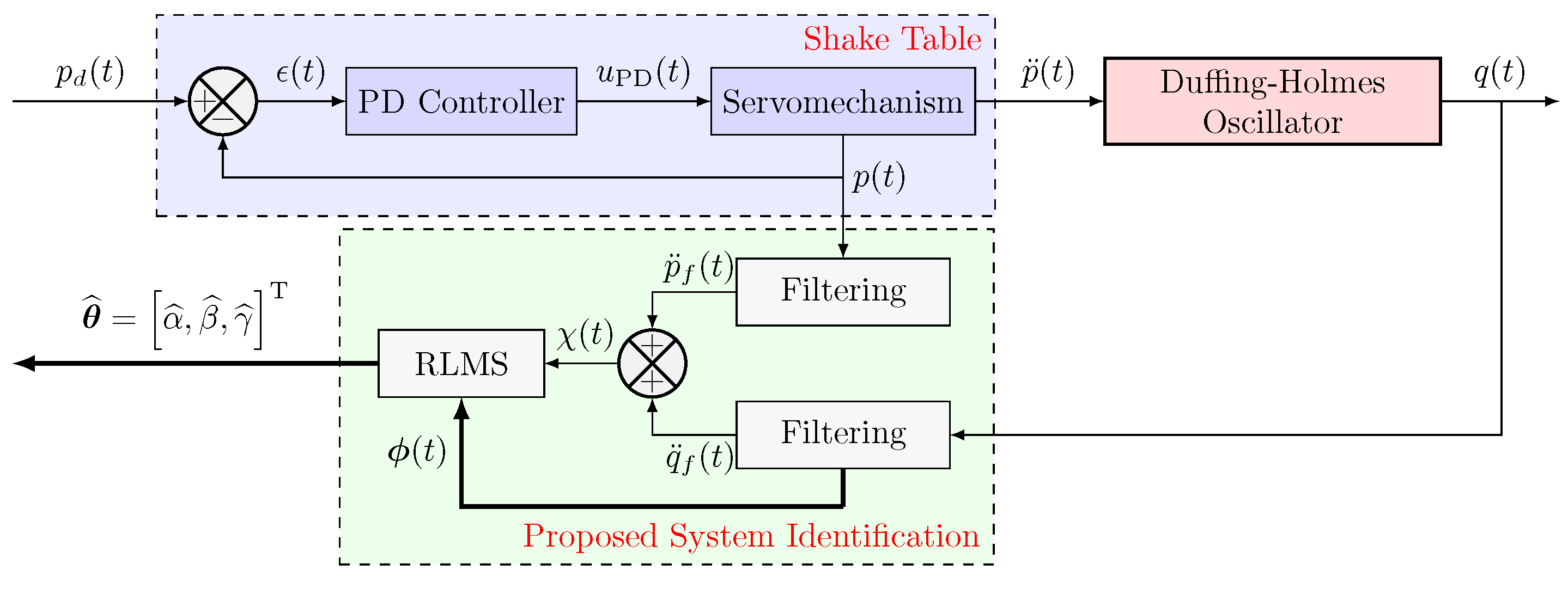
- Parameter Identification: To estimate the unknown parameters , , and in real time.
- State and Uncertainity Estimation: To design an observer capable of estimating the unmeasured velocity and lumped system uncertainties using only the position measurement .
- Trajectory Tracking: To design an observer-based control law that ensures the system position asymptotically tracks a desired trajectory generated by a reference model.
3. Parameter Identification of the System
4. Nonlinear Integral Extended State Observer
5. Observer-Based Controller Design
6. Results and Discussion
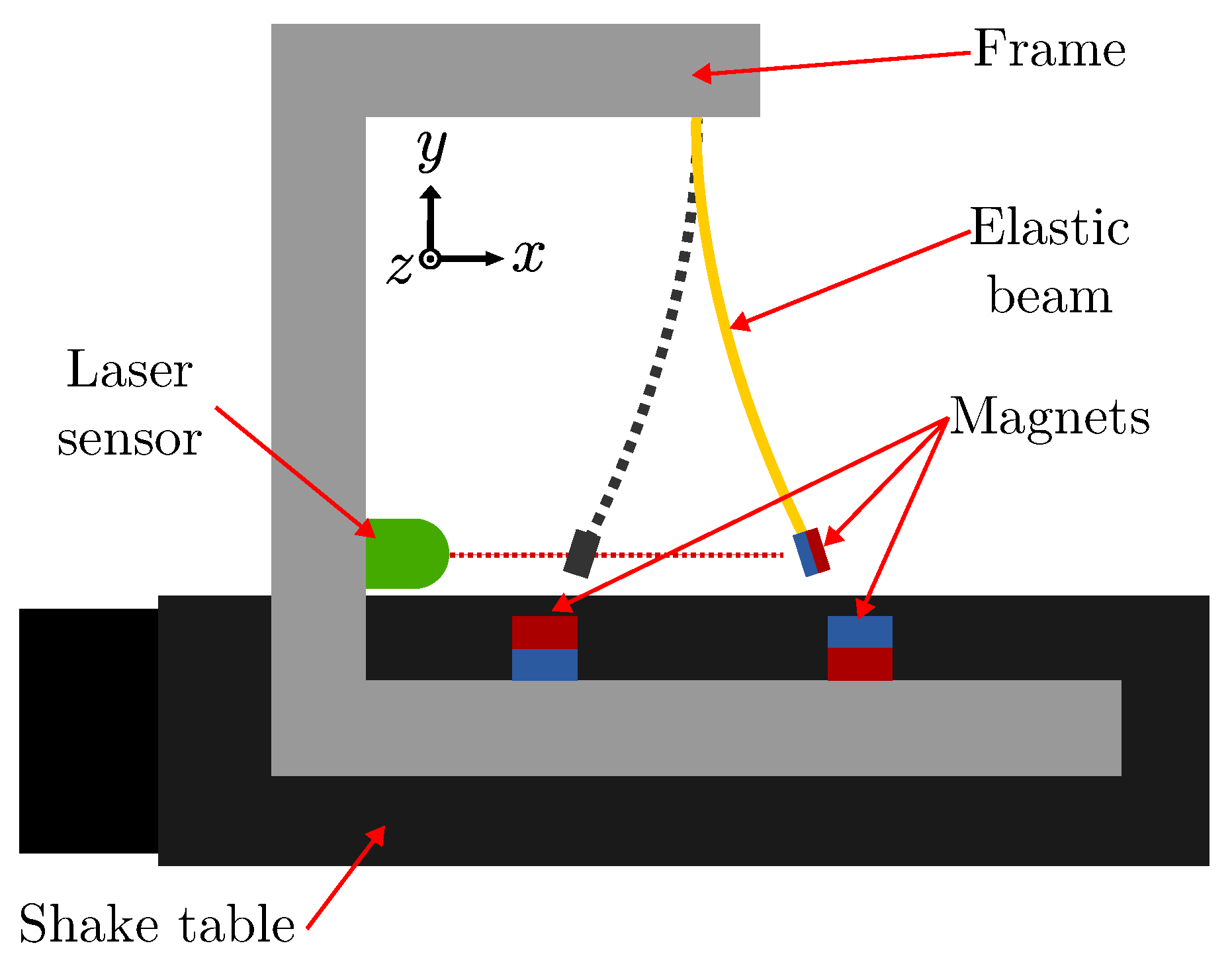
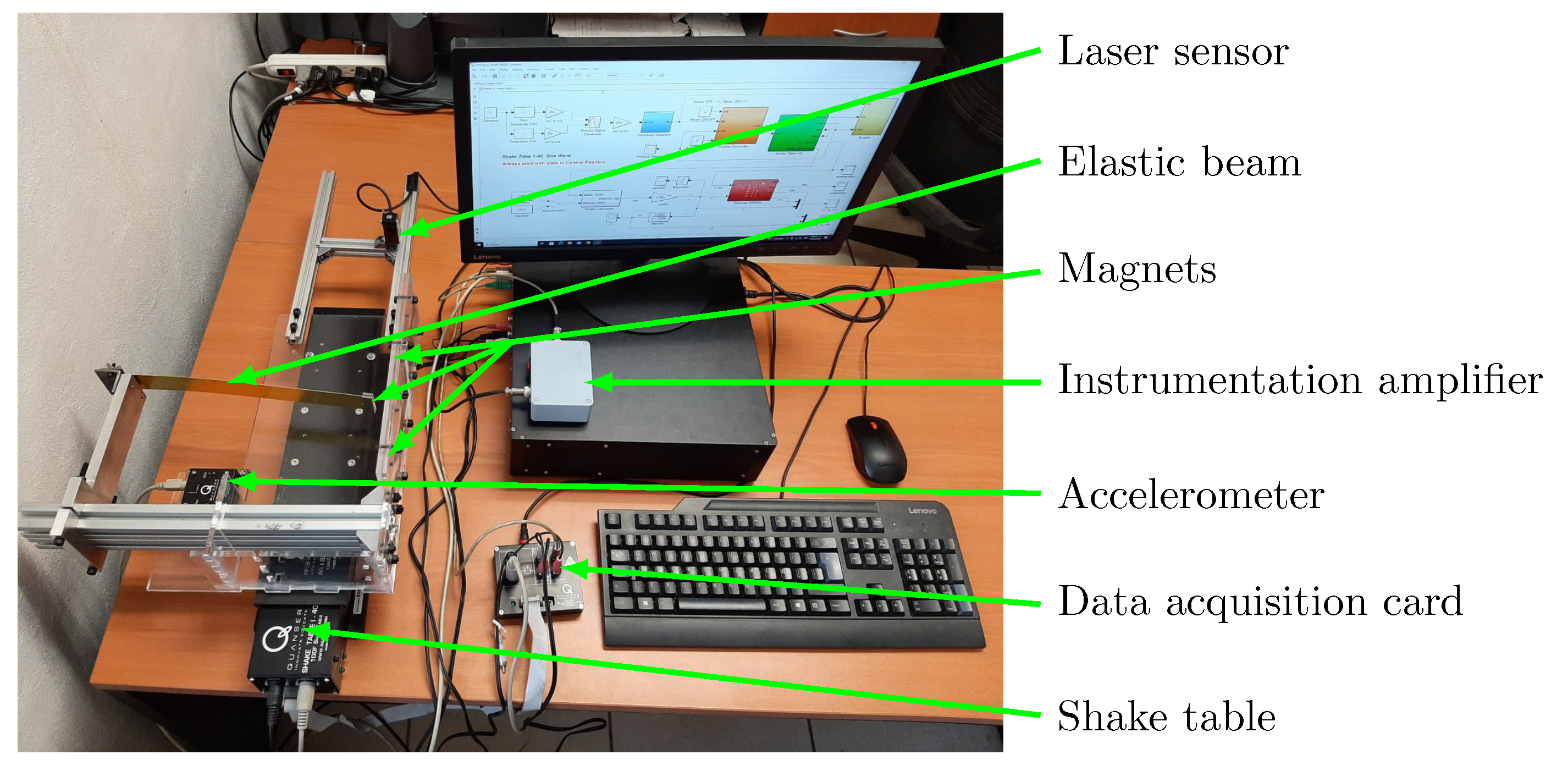
6.1. Experimental Setup
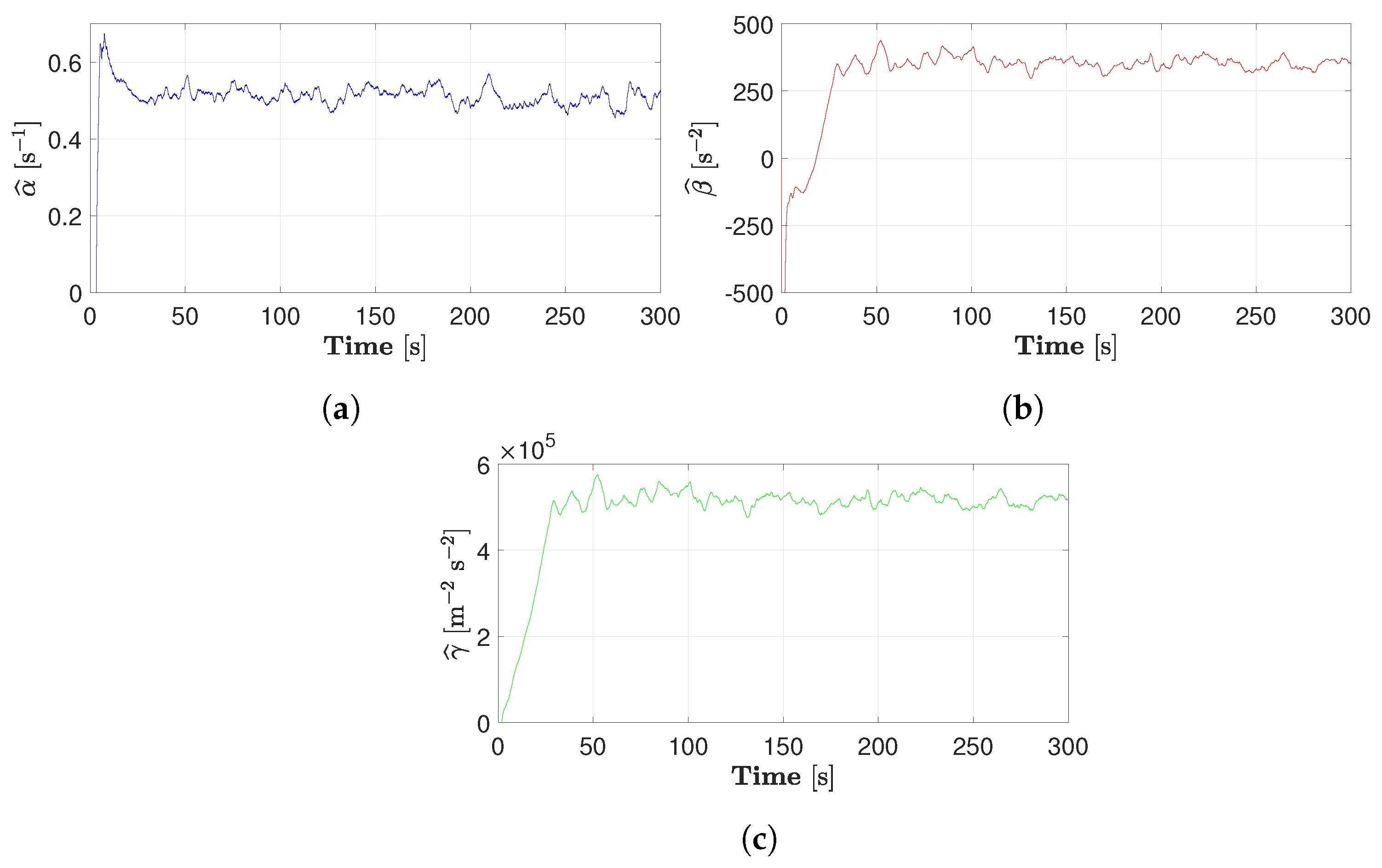
6.2. Parameter Identification
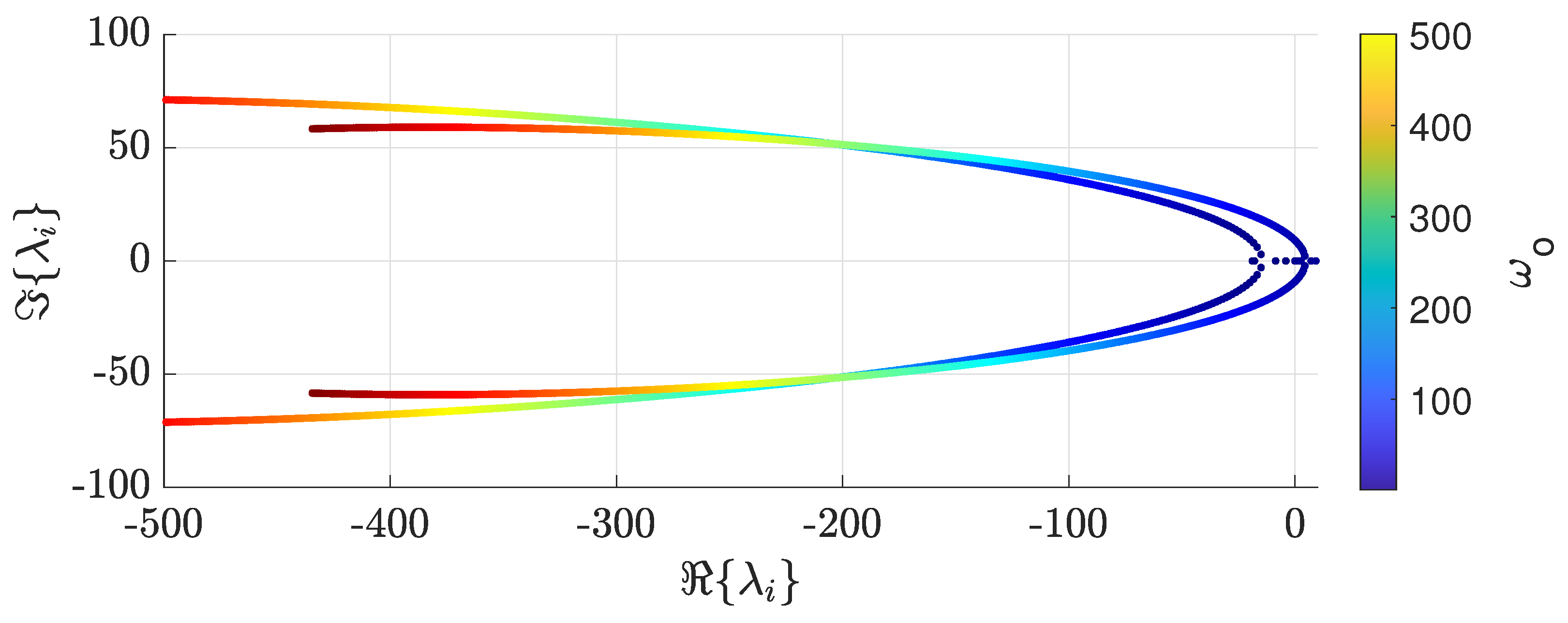
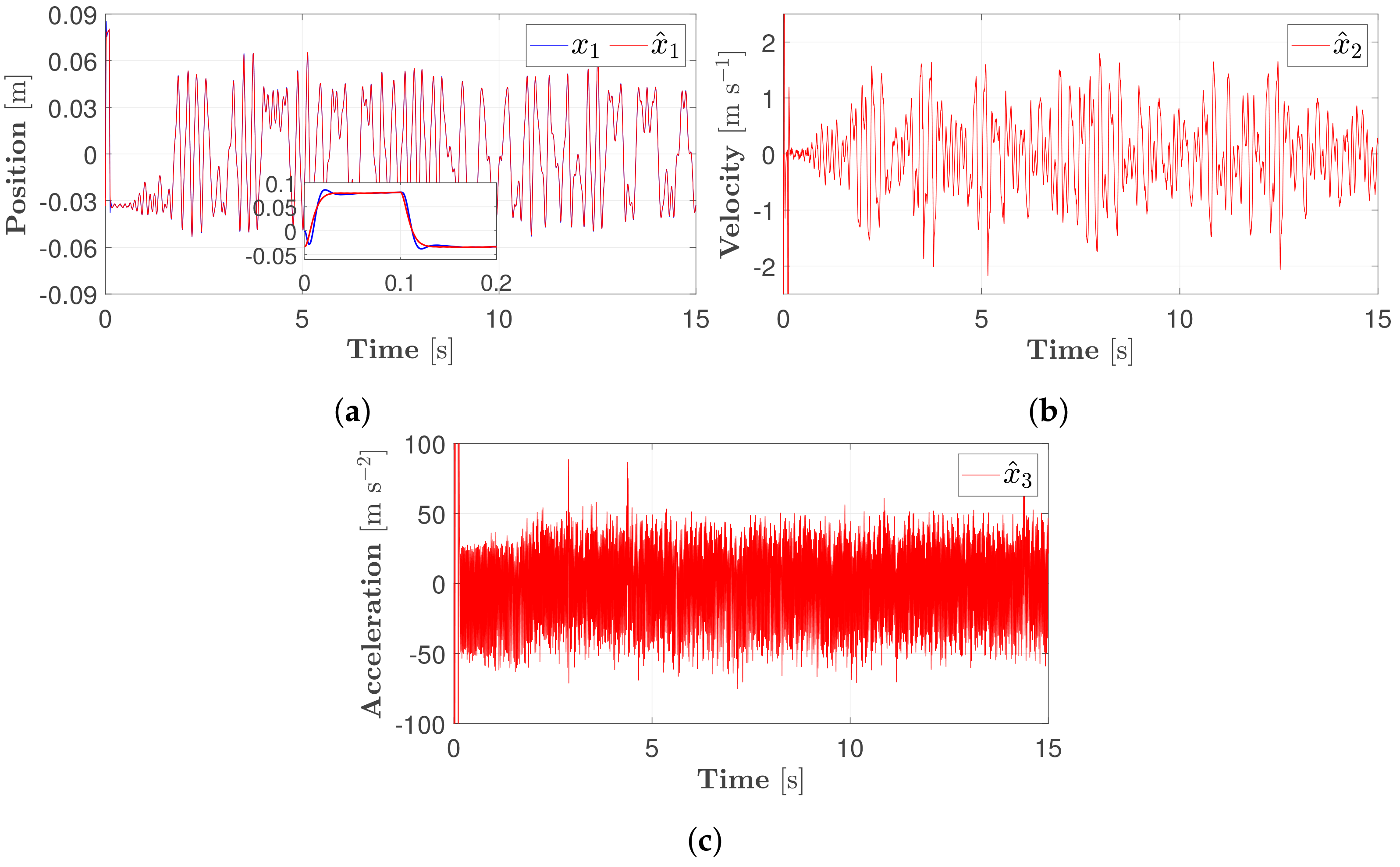
6.3. State Estimation
6.4. Observer-Based Controller Performance
6.4.1. Simulation Results
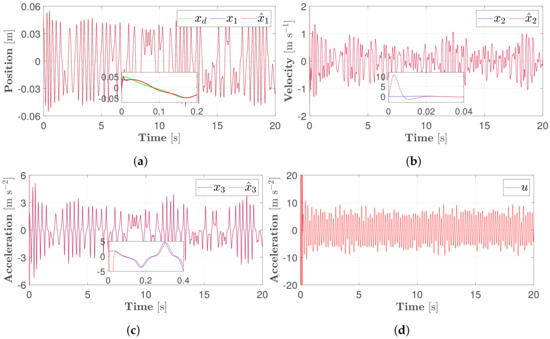
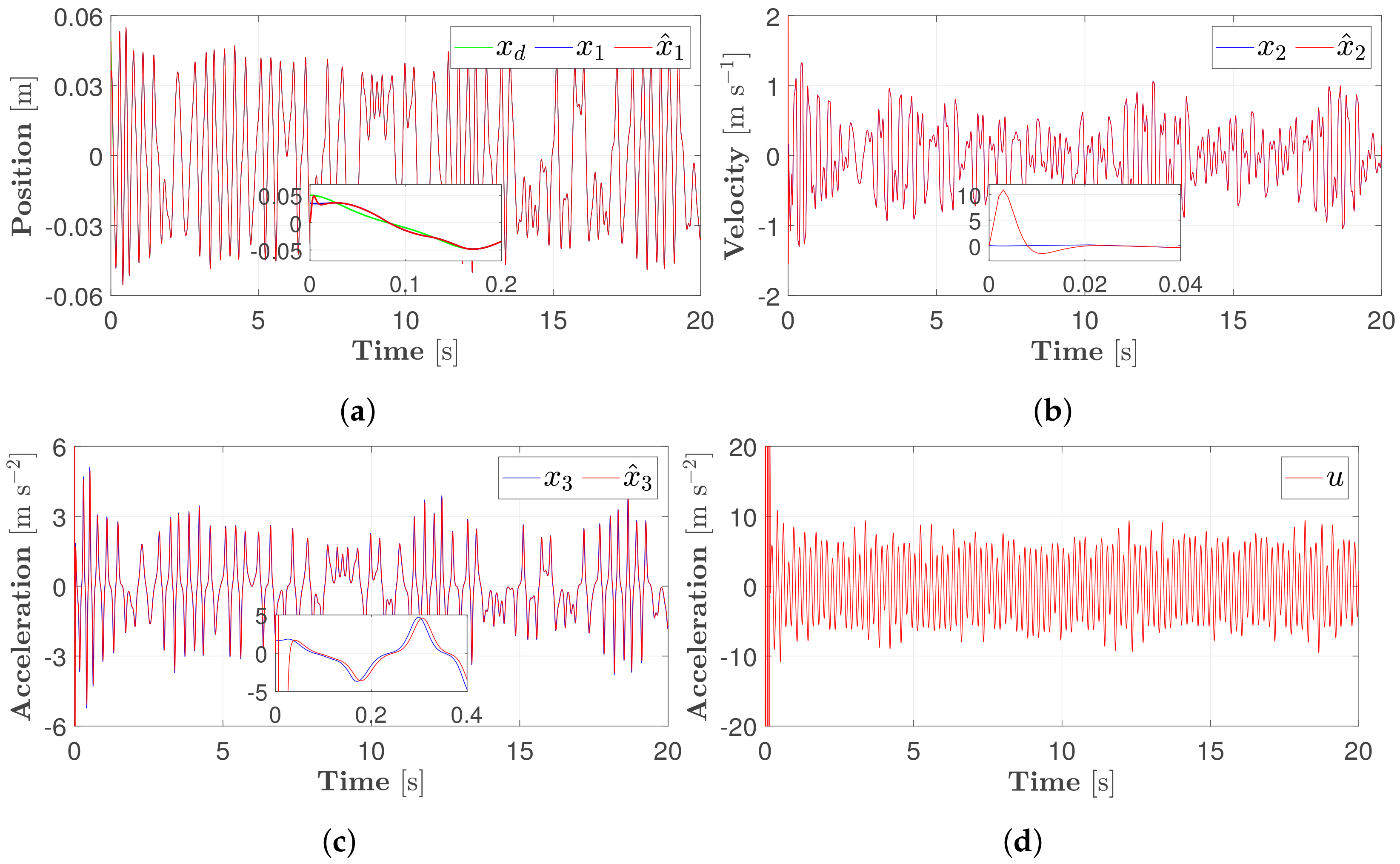
Tracking Performance Under Interwell Motion
Tracking Performance Under Intrawell Motion
Tracking Performance Under Chaotic Motion
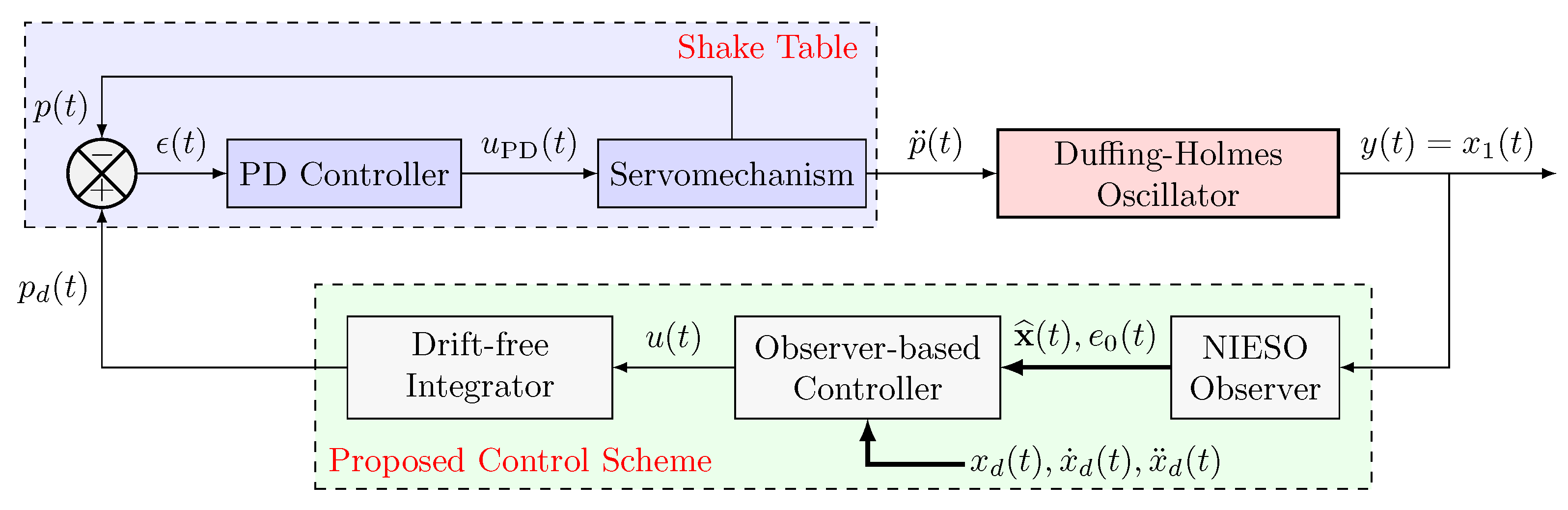
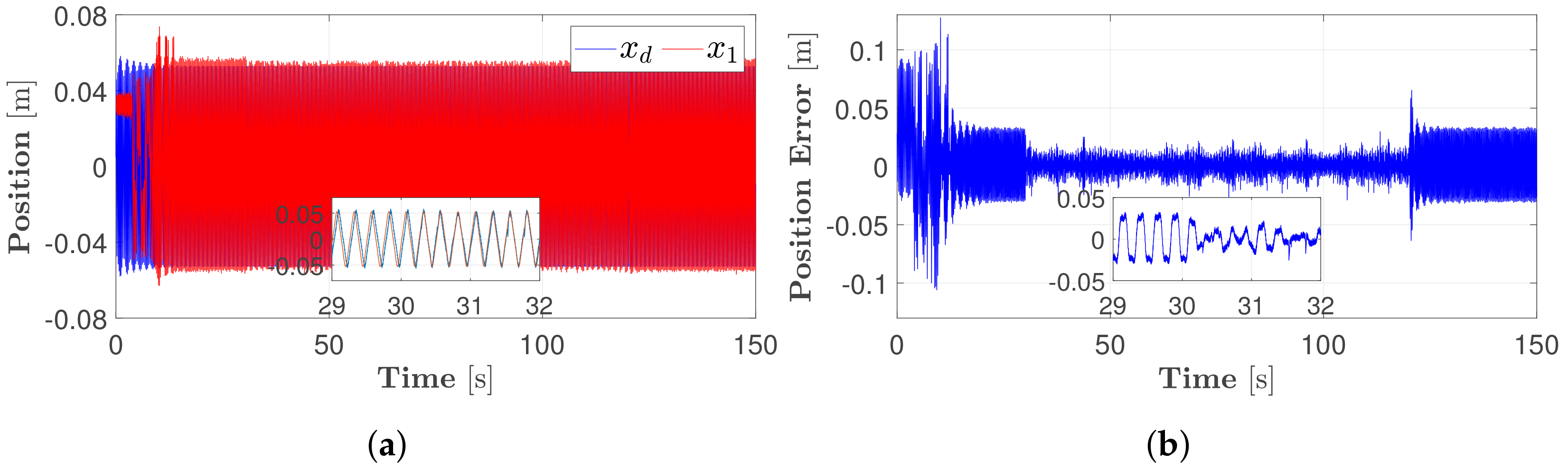
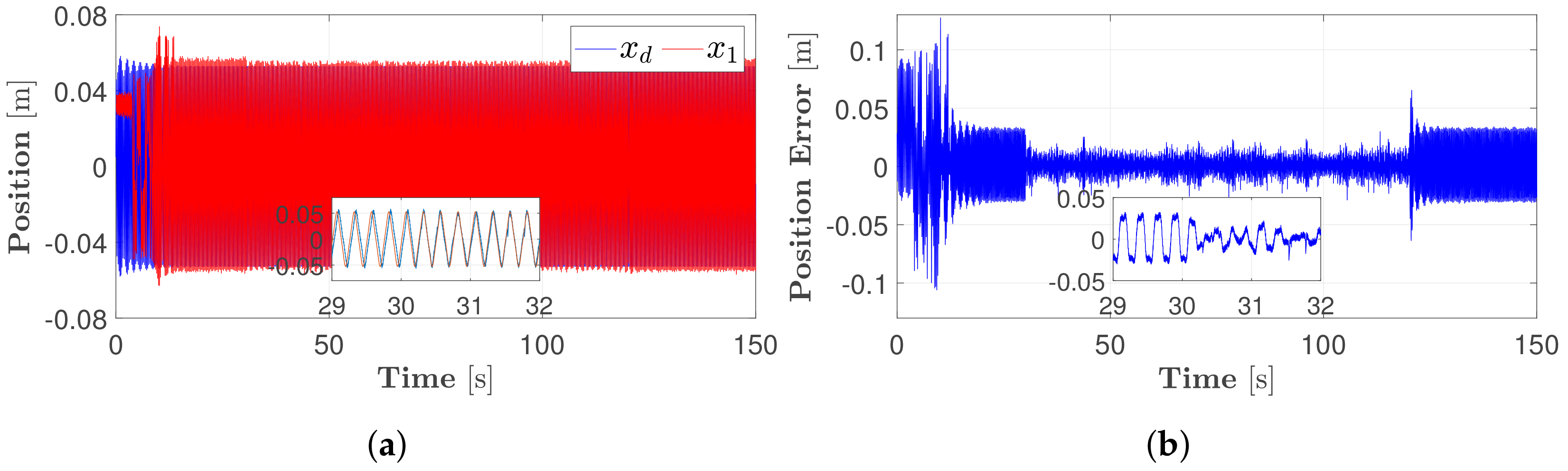
6.4.2. Experimental Control Implementation
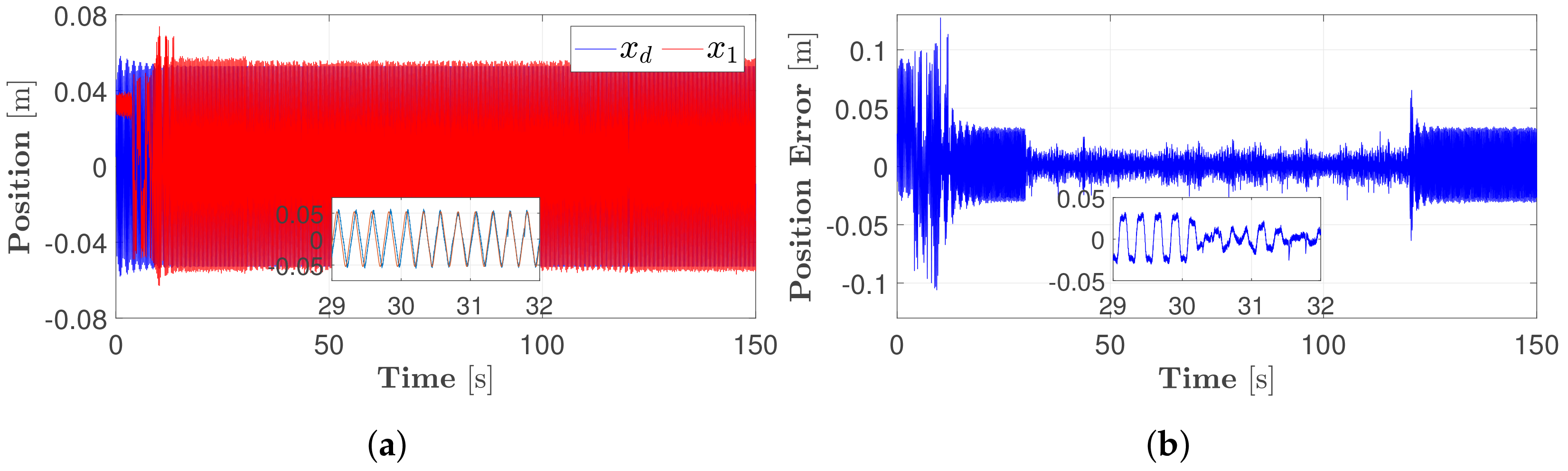
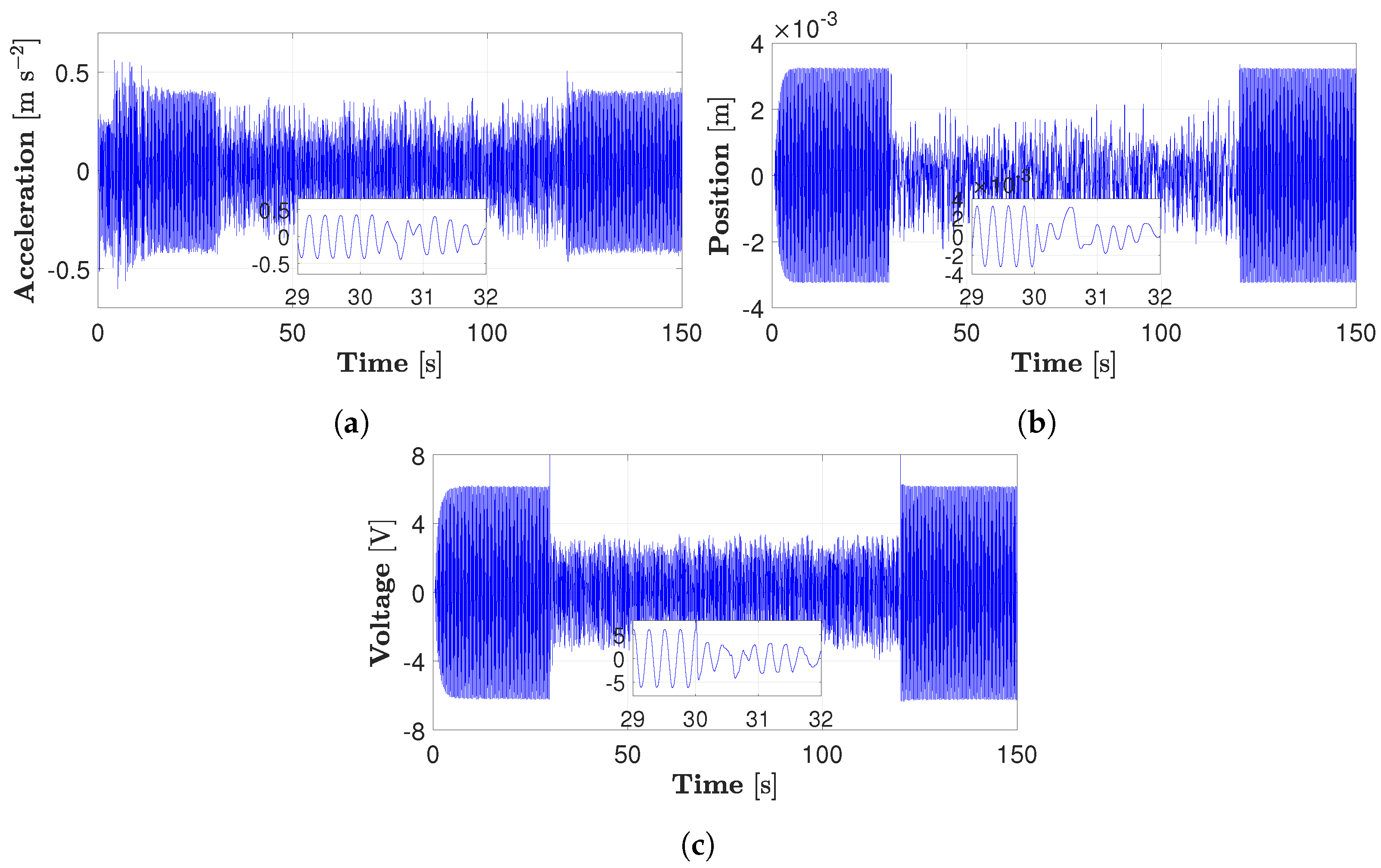
- Open Loop (0–30 s and 120–150 s): The system was driven solely by the external excitation from (50), mimicking the reference model’s input but without feedback control.
- Closed Loop (30–120 s): The proposed backstepping control law from (41) was activated to force the system to track the reference trajectory.
7. Conclusions
Author Contributions
Funding
Data Availability Statement
Acknowledgments
Conflicts of Interest
References
- Harne, R.L.; Wang, K.W. Harnessing Bistable Structural Dynamics: For Vibration Control, Energy Harvesting and Sensing; John Wiley & Sons: Hoboken, NJ, USA, 2017. [Google Scholar]
- Raze, G.; Abeloos, G.; Kerschen, G. Experimental continuation in nonlinear dynamics: Recent advances and future challenges. Nonlinear Dyn. 2025, 113, 4949–4997. [Google Scholar] [CrossRef]
- Kakou, P.; Gupta, S.K.; Barry, O. A nonlinear analysis of a Duffing oscillator with a nonlinear electromagnetic vibration absorber–inerter for concurrent vibration mitigation and energy harvesting. Nonlinear Dyn. 2024, 112, 5847–5862. [Google Scholar] [CrossRef]
- Kovacic, I.; Brennan, M.J. The Duffing Equation: Nonlinear Oscillators and Their Behaviour; John Wiley & Sons: Hoboken, NJ, USA, 2011. [Google Scholar]
- Erazo, K. Parameter Estimation of nonlinear structural systems using Bayesian filtering methods. Vibration 2024, 8, 1. [Google Scholar] [CrossRef]
- Junker, R.G.; Relan, R.; Madsen, H. Physical-stochastic continuous-time identification of a forced Duffing oscillator. ISA Trans. 2022, 126, 226–234. [Google Scholar] [CrossRef]
- Zhu, R.; Marchesiello, S.; Anastasio, D.; Jiang, D.; Fei, Q. Nonlinear system identification of a double-well Duffing oscillator with position-dependent friction. Nonlinear Dyn. 2022, 108, 2993–3008. [Google Scholar] [CrossRef]
- Aguilar-Ibanez, C.; Suarez-Castanon, M.S.; Saldivar, B.; Valdez-Rodríguez, J.E.; García-Canseco, E. A DREM-Based Approach for the Identification of Chaotic Systems. Entropy 2025, 27, 971. [Google Scholar] [CrossRef] [PubMed]
- Zhou, F.; Shen, Y.; Wu, Z. Non-fragile observers design for nonlinear systems with unknown Lipschitz constant. Kybernetika 2024, 60, 475–491. [Google Scholar] [CrossRef]
- Han, J. From PID to active disturbance rejection control. IEEE Trans. Ind. Electron. 2009, 56, 900–906. [Google Scholar] [CrossRef]
- Thenozhi, S.; Cárdenas, U.M.; Sánchez, A.C. Observer Design for a Duffing-Holmes System with Uncertainties. In Proceedings of the 2022 19th International Conference on Electrical Engineering, Computing Science and Automatic Control (CCE); IEEE: New York, NY, USA, 2022; pp. 1–4. [Google Scholar]
- Izadbakhsh, A.; Kalat, A.A.; Nazari, A.J. Szasz-Favard-Mirakyan operators for Chaos synchronization: An Observer-based approach. J. Vib. Control. 2023, 29, 4772–4784. [Google Scholar] [CrossRef]
- Alvarez, H.V.; Fabiani, G.; Kazantzis, N.; Kevrekidis, I.G.; Siettos, C. Nonlinear discrete-time observers with physics-informed neural networks. Chaos Solitons Fractals 2024, 186, 115215. [Google Scholar] [CrossRef]
- Karami-Mollaee, A.; Barambones, O. Sliding observer in sliding mode control of multi-inputs fractional-order chaotic systems. Pramana 2022, 96, 180. [Google Scholar] [CrossRef]
- Moitra, S.; Sharma, K.D. Adaptive Backstepping Control Scheme for Duffing–Holmes Chaotic System with Unknown Disturbances. In Proceedings of the 2022 IEEE Calcutta Conference (CALCON); IEEE: New York, NY, USA, 2022; pp. 303–307. [Google Scholar]
- Thenozhi, S.; Concha, A. Identification-based adaptive tracking control of uncertain bistable electromechanical duffing oscillator. Int. J. Control. Autom. Syst. 2022, 20, 2191–2201. [Google Scholar] [CrossRef]
- Rezaee, H.; Renson, L. Noninvasive adaptive control of a class of nonlinear systems with unknown parameters. SIAM J. Appl. Dyn. Syst. 2025, 24, 587–610. [Google Scholar] [CrossRef]
- Moghaddam, R.K.; Rabbani, M. Back-Stepping Sliding-Mode Control. In Methods of Developing Sliding Mode Controllers; Wiley-IEEE Press: Hoboken, NJ, USA, 2025; pp. 123–149. [Google Scholar]
- Khadra, F.A. Super-Twisting Control of the Duffing–Holmes Chaotic System. Int. J. Mod. Nonlinear Theory Appl. 2016, 5, 160–170. [Google Scholar] [CrossRef]
- Yin, H.; Meng, B.; Wang, Z. Disturbance observer-based adaptive sliding mode synchronization control for uncertain chaotic systems. AIMS Math. 2023, 8, 23655–23673. [Google Scholar] [CrossRef]
- Mahmoodabadi, M. An optimal robust fuzzy adaptive integral sliding mode controller based upon a multi-objective grey wolf optimization algorithm for a nonlinear uncertain chaotic system. Chaos Solitons Fractals 2023, 167, 113092. [Google Scholar] [CrossRef]
- Tabasi, M.; Hosseini, S.A.; Houshmand, M. Stable Fractional-order Adaptive Sliding-based Control and Synchronization of Two Fractional-order Duffing–Holmes Chaotic Systems. J. Control Autom. Electr. Syst. 2025, 36, 20–33. [Google Scholar] [CrossRef]
- Zhang, J.; Chao, F.; Zeng, H.; Lin, C.M.; Yang, L. A Recurrent Wavelet-based Brain Emotional Learning Network Controller for Nonlinear Systems. Soft Comput. 2022, 26, 3013–3028. [Google Scholar] [CrossRef]
- Najafabadi, S.P.; Hashemi, M. The adaptive sliding synchronization of uncertain Duffing-Holmes fractional-order chaotic systems with dead-zone. J. Vib. Control 2024, 30, 4486–4497. [Google Scholar] [CrossRef]
- Holmes, P. A nonlinear oscillator with a strange attractor. Philos. Trans. R. Soc. Lond. Ser. Math. Phys. Sci. 1979, 292, 419–448. [Google Scholar] [CrossRef]
- Correa, G.A.; Cabreraa, J.V.; Péreza, C.M. Estudio de la entropía de Shannon de la dinámica no lineal de dos osciladores de Duffing no disipativos acoplados. In Proceedings of the Encuentro Participación de la Mujer en la Ciencia, León, Mexico, 13–15 May 2015. [Google Scholar]
- Jia, Y. Review of nonlinear vibration energy harvesting: Duffing, bistability, parametric, stochastic and others. J. Intell. Mater. Syst. Struct. 2020, 31, 921–944. [Google Scholar] [CrossRef]
- Moriello, S. Sistemas Complejos, Caos y Vida Artificial. Red Científica. 2003. Available online: https://www.redcientifica.com/doc/doc200303050001.html (accessed on 17 March 2026).
- Vaidyanathan, S.; Azar, A.T. An introduction to backstepping control. In Backstepping Control of Nonlinear Dynamical Systems; Elsevier: Amsterdam, The Netherlands, 2021; pp. 1–32. [Google Scholar]
- Ikhouane, F.; Krstic, M. Robustness of the tuning functions adaptive backstepping design for linear systems. IEEE Trans. Autom. Control 1998, 43, 431–437. [Google Scholar] [CrossRef]
- Gadi, S.K. Open and Closed-Loop Experiments for the Duffing-Holmes Prototype. 2026. Available online: https://www.youtube.com/watch?v=HD0e412WH20 (accessed on 19 February 2026).





| Parameter | Reference Model Behavior | ||
|---|---|---|---|
| Interwell | Intrawell | Chaotic | |
| Input amplitude [] | 1.78 | 1.26 | 5.76 |
| Input frequency [] | 3 | 4 | 5.4 |
| Initial condition [] | 0.006 | −0.04 | 0.05 |
| Initial condition [] | 0 | 0 | 0 |
Disclaimer/Publisher’s Note: The statements, opinions and data contained in all publications are solely those of the individual author(s) and contributor(s) and not of MDPI and/or the editor(s). MDPI and/or the editor(s) disclaim responsibility for any injury to people or property resulting from any ideas, methods, instructions or products referred to in the content. |
© 2026 by the authors. Licensee MDPI, Basel, Switzerland. This article is an open access article distributed under the terms and conditions of the Creative Commons Attribution (CC BY) license.
Share and Cite
Concha-Sánchez, A.; Mondragón-Cárdenas, U.; Thenozhi, S.; Mata-Machuca, J.L.; Gadi, S.K. A Unified Framework for Identification, Estimation, and Control of an Experimental Duffing–Holmes System. Mathematics 2026, 14, 1073. https://doi.org/10.3390/math14061073
Concha-Sánchez A, Mondragón-Cárdenas U, Thenozhi S, Mata-Machuca JL, Gadi SK. A Unified Framework for Identification, Estimation, and Control of an Experimental Duffing–Holmes System. Mathematics. 2026; 14(6):1073. https://doi.org/10.3390/math14061073
Chicago/Turabian StyleConcha-Sánchez, Antonio, Ulises Mondragón-Cárdenas, Suresh Thenozhi, Juan Luis Mata-Machuca, and Suresh Kumar Gadi. 2026. "A Unified Framework for Identification, Estimation, and Control of an Experimental Duffing–Holmes System" Mathematics 14, no. 6: 1073. https://doi.org/10.3390/math14061073
APA StyleConcha-Sánchez, A., Mondragón-Cárdenas, U., Thenozhi, S., Mata-Machuca, J. L., & Gadi, S. K. (2026). A Unified Framework for Identification, Estimation, and Control of an Experimental Duffing–Holmes System. Mathematics, 14(6), 1073. https://doi.org/10.3390/math14061073