Fractional Stochastic Piecewise Approach to Study Hybrid Crossover Dynamics of Corruption Dynamical System: Mathematical and Statistical Analysis with Real Data Simulations


Abstract
1. Introduction
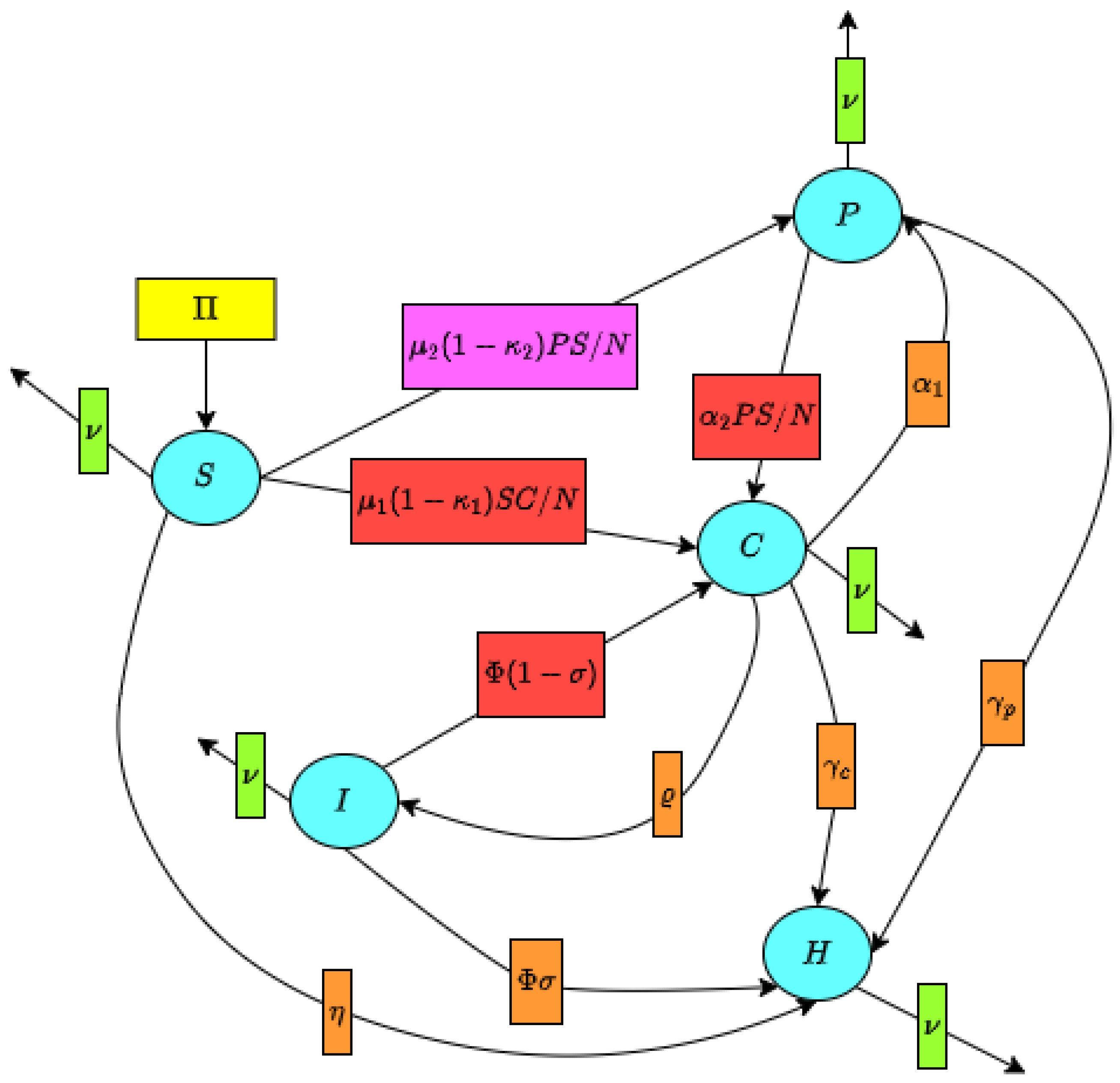
- In this study, we adopt a novel approach by applying the PW operator in a hybrid framework: the classical operator is used over one subinterval, the CPC over a second subinterval, and the stochastic operator over a third. This structure is employed to investigate the dynamics of the proposed model (1). We establish results concerning the existence and uniqueness of solutions for model (1) under fractional order and stochastic approaches.
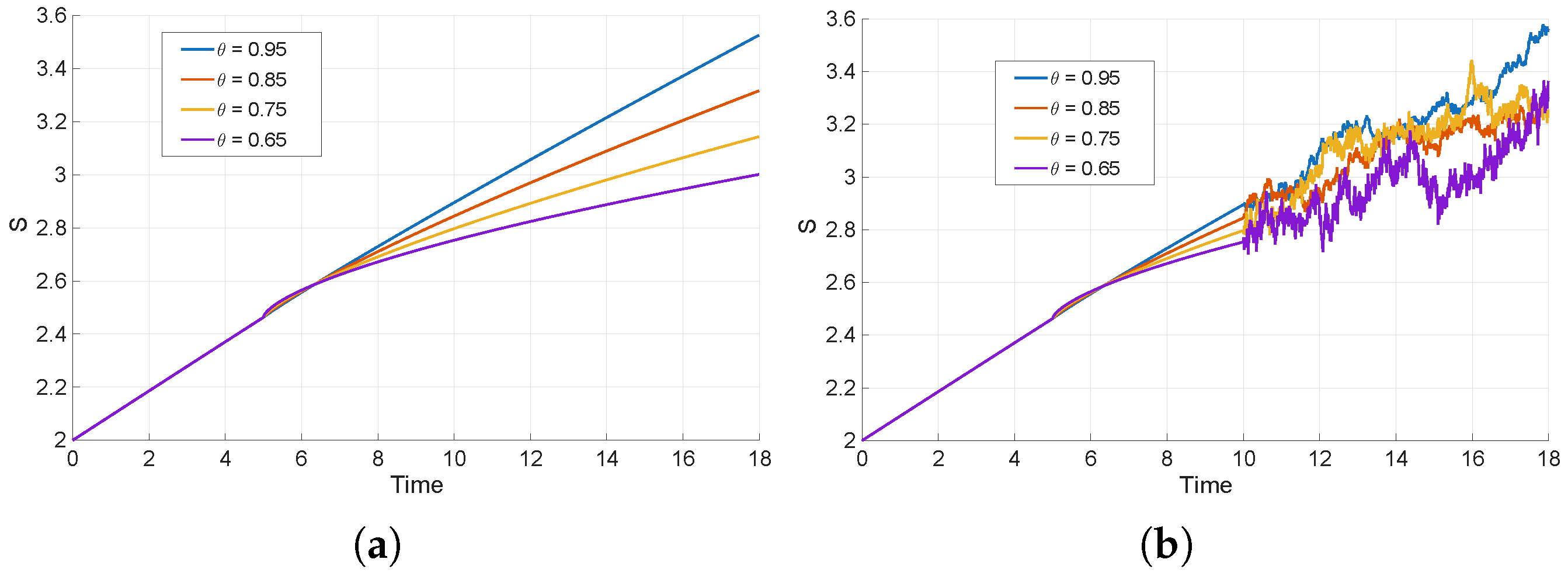
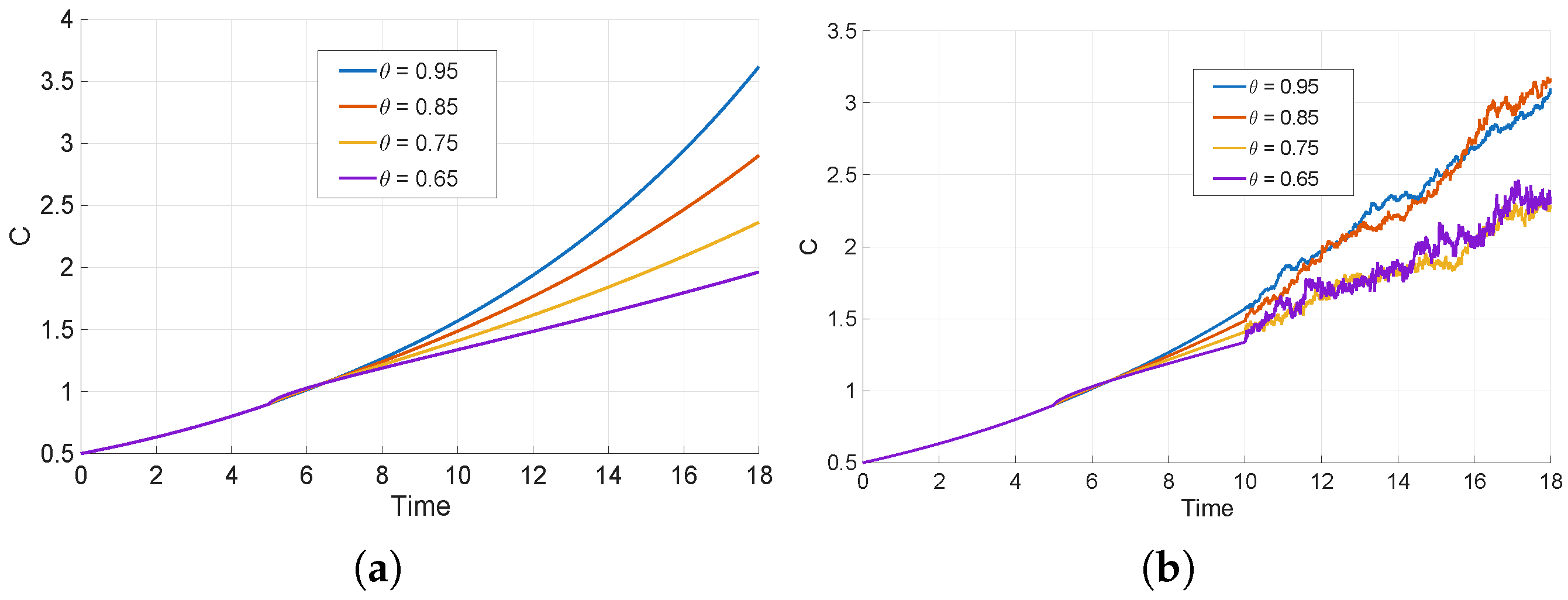
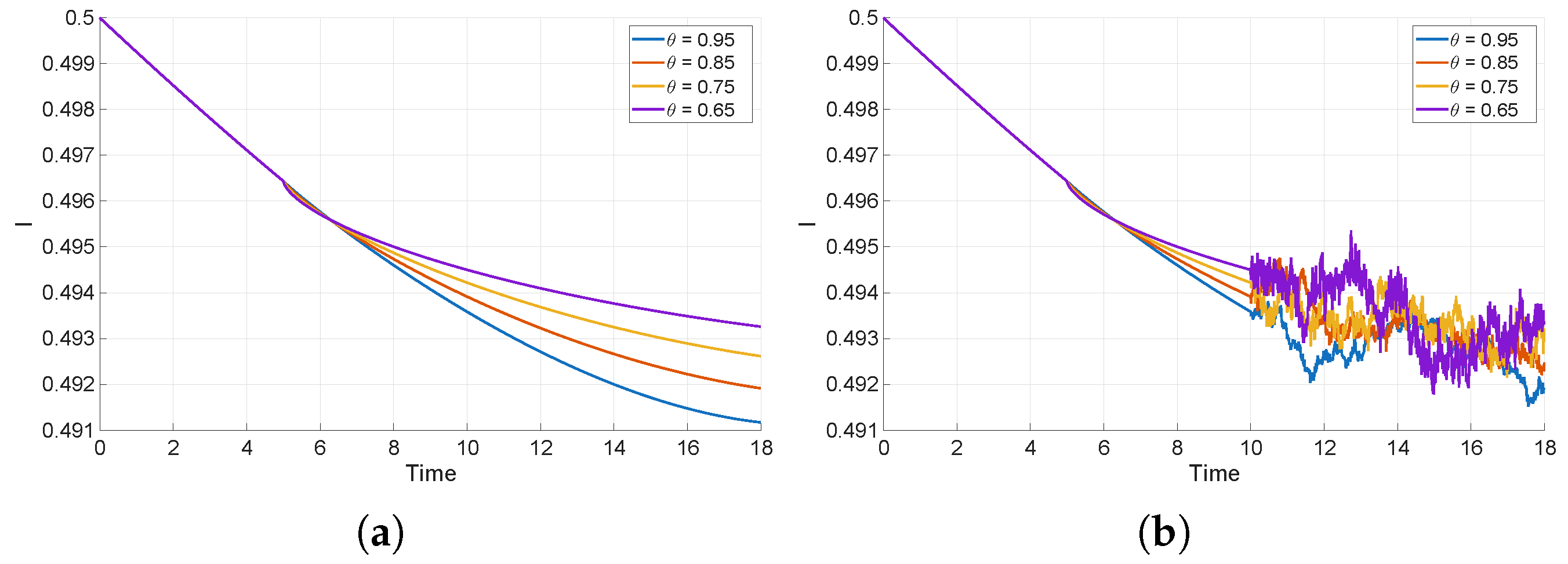
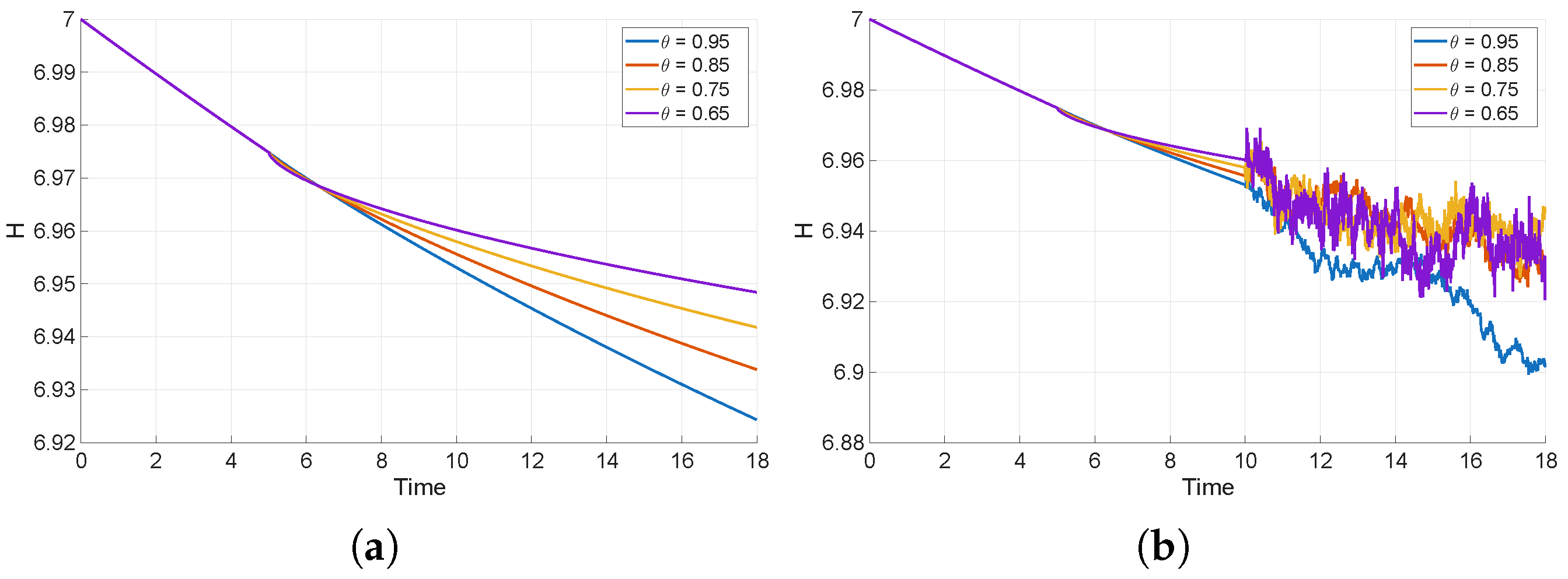
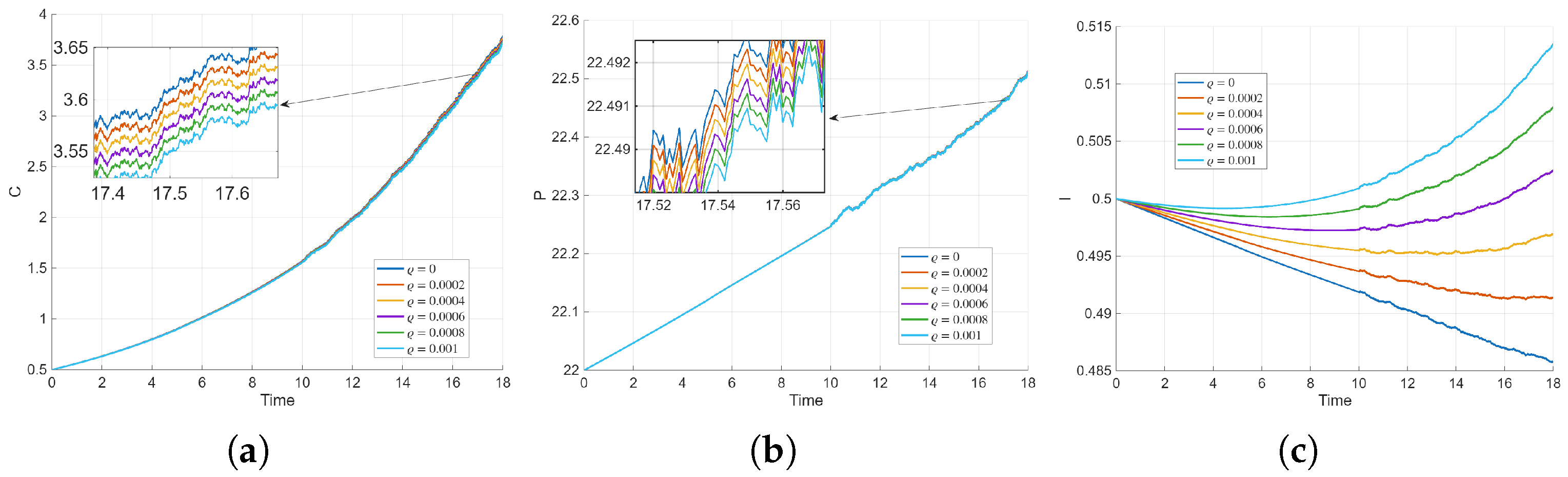
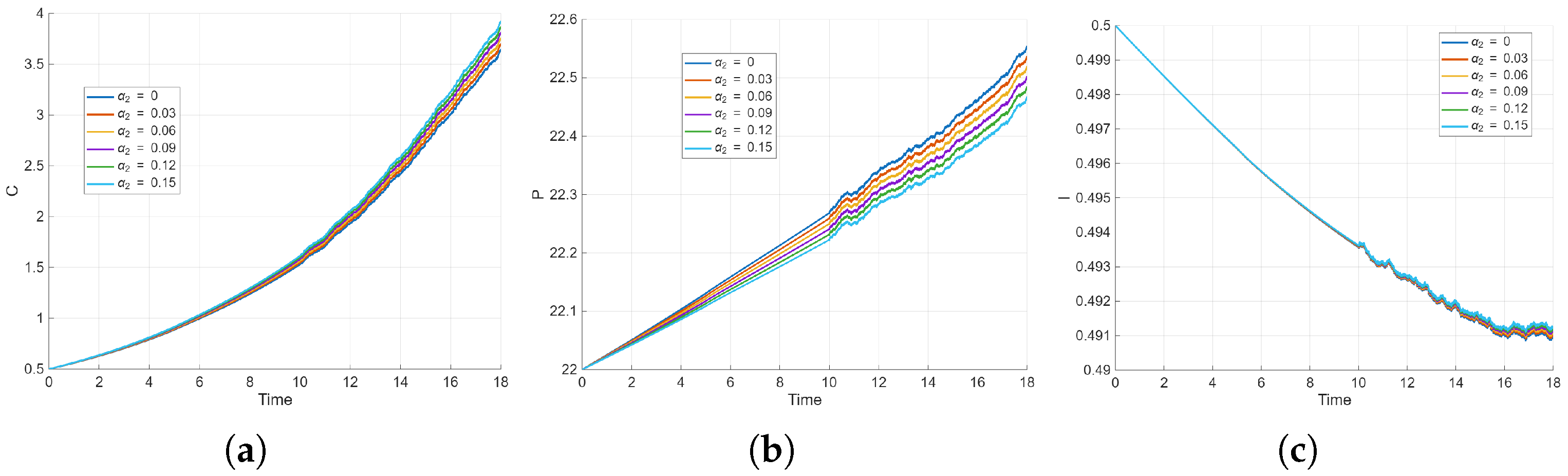
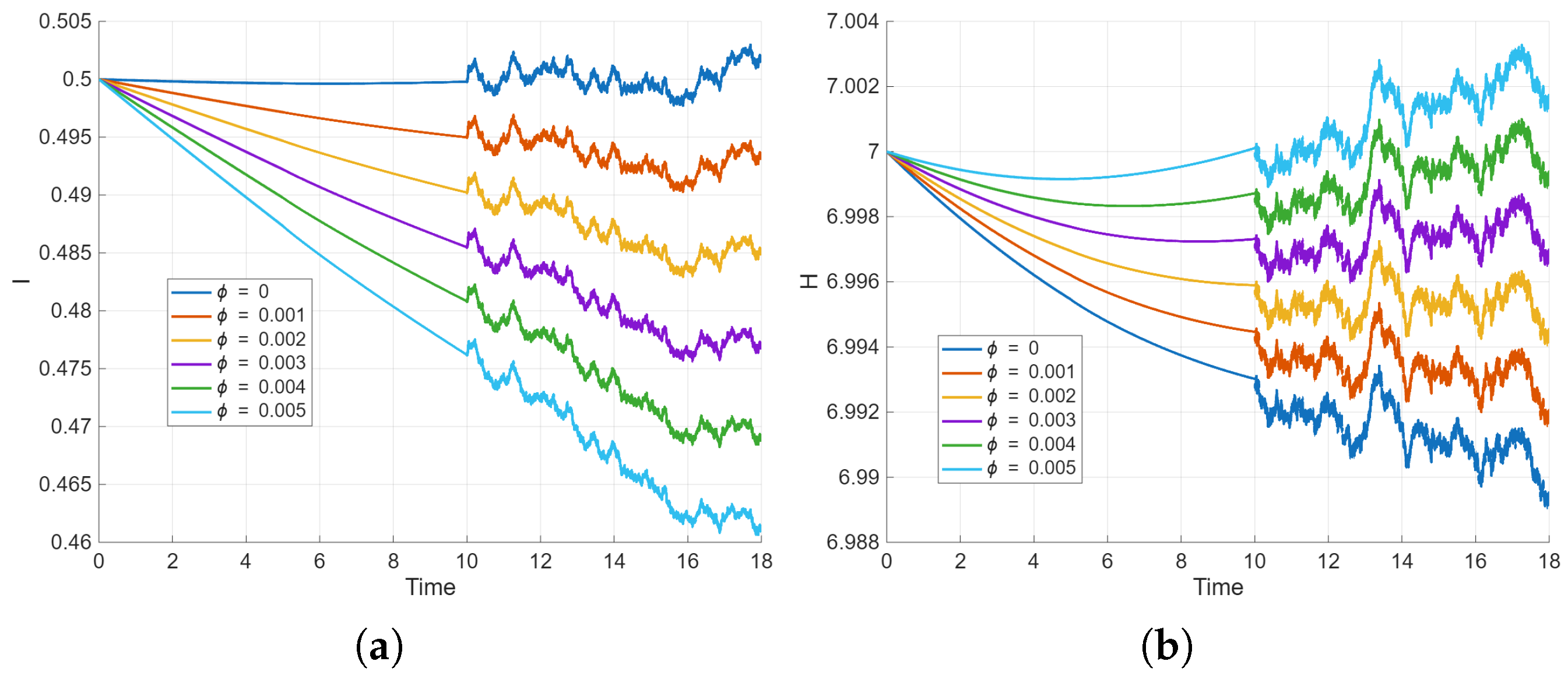
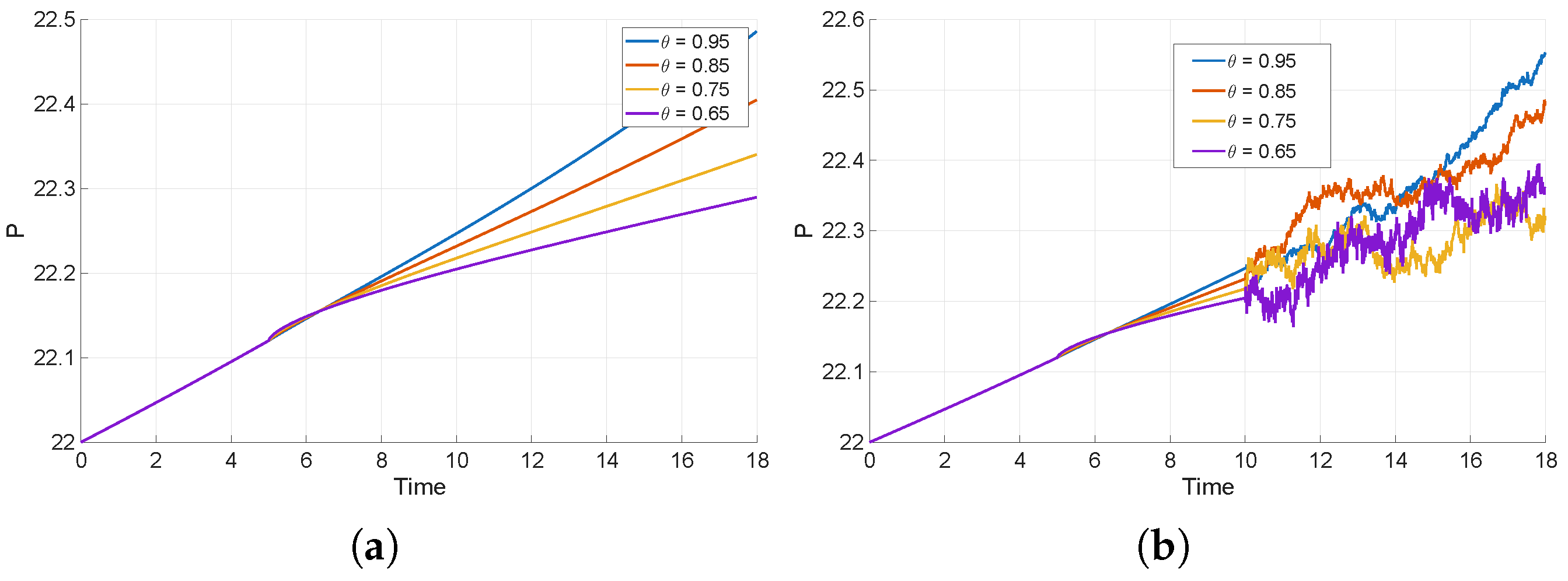
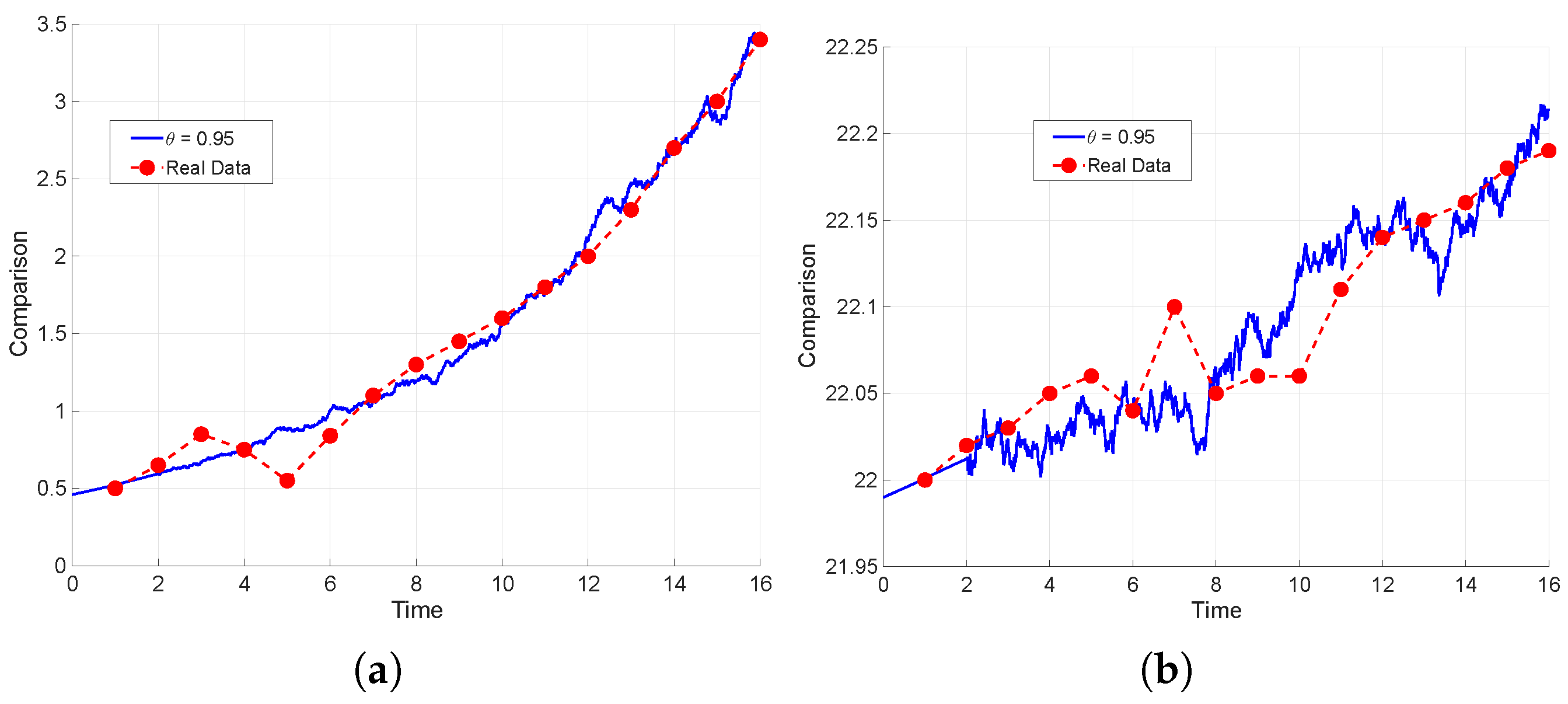
- The numerical results are developed by using the Euler method for the integer order case, the Grunwald–Letnikov NFD numerical approach for the fractional case, and the NMEM numerical method for the stochastic case. Numerical simulations are conducted for the model (1) using PW operators in three intervals. The crossover dynamics are portrayed using these simulations. Also, the effect of some parameters on the crossover dynamics of the corruption model is provided. The validity is affirmed by comparing the simulated results with real cases.
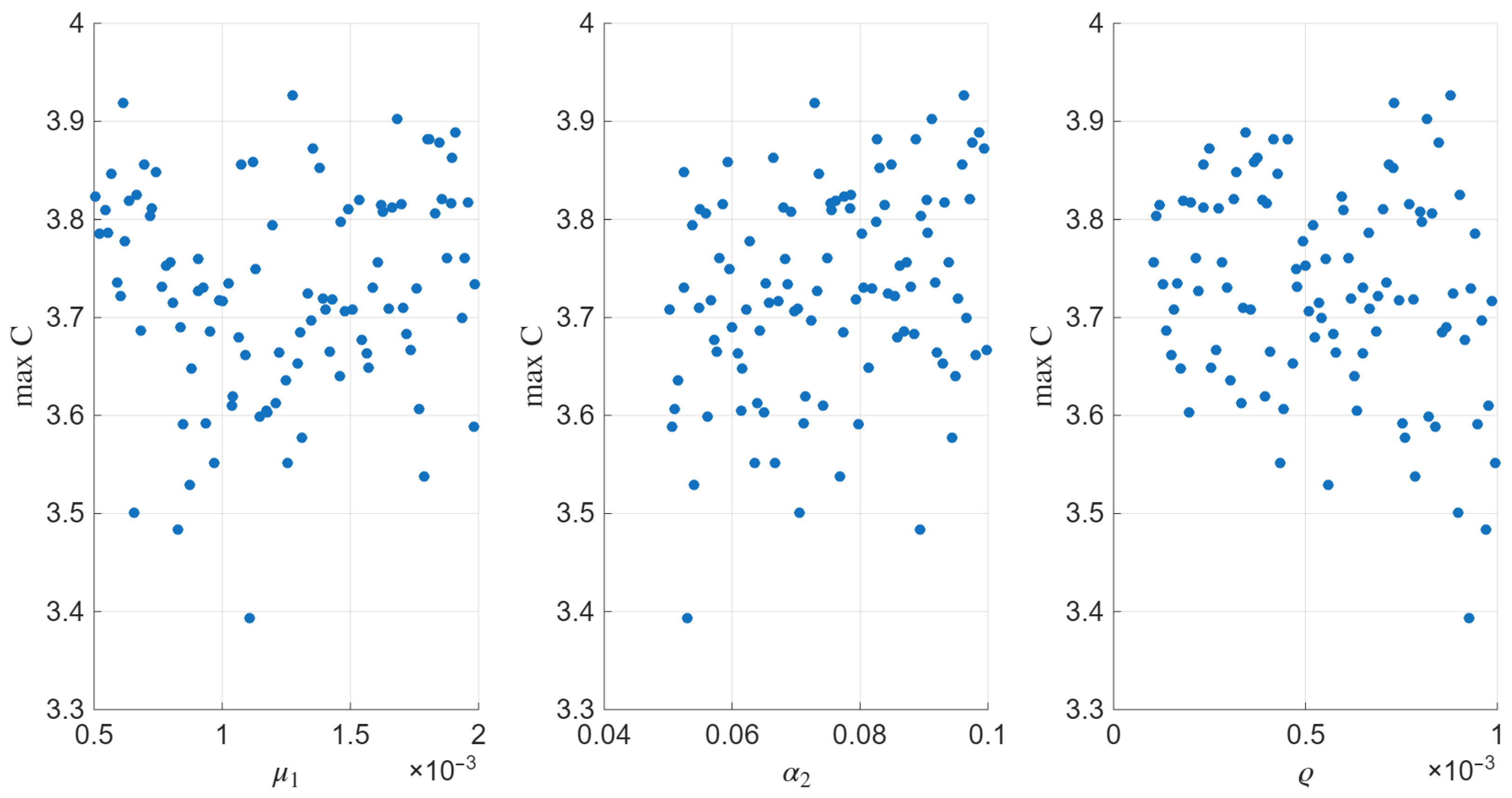
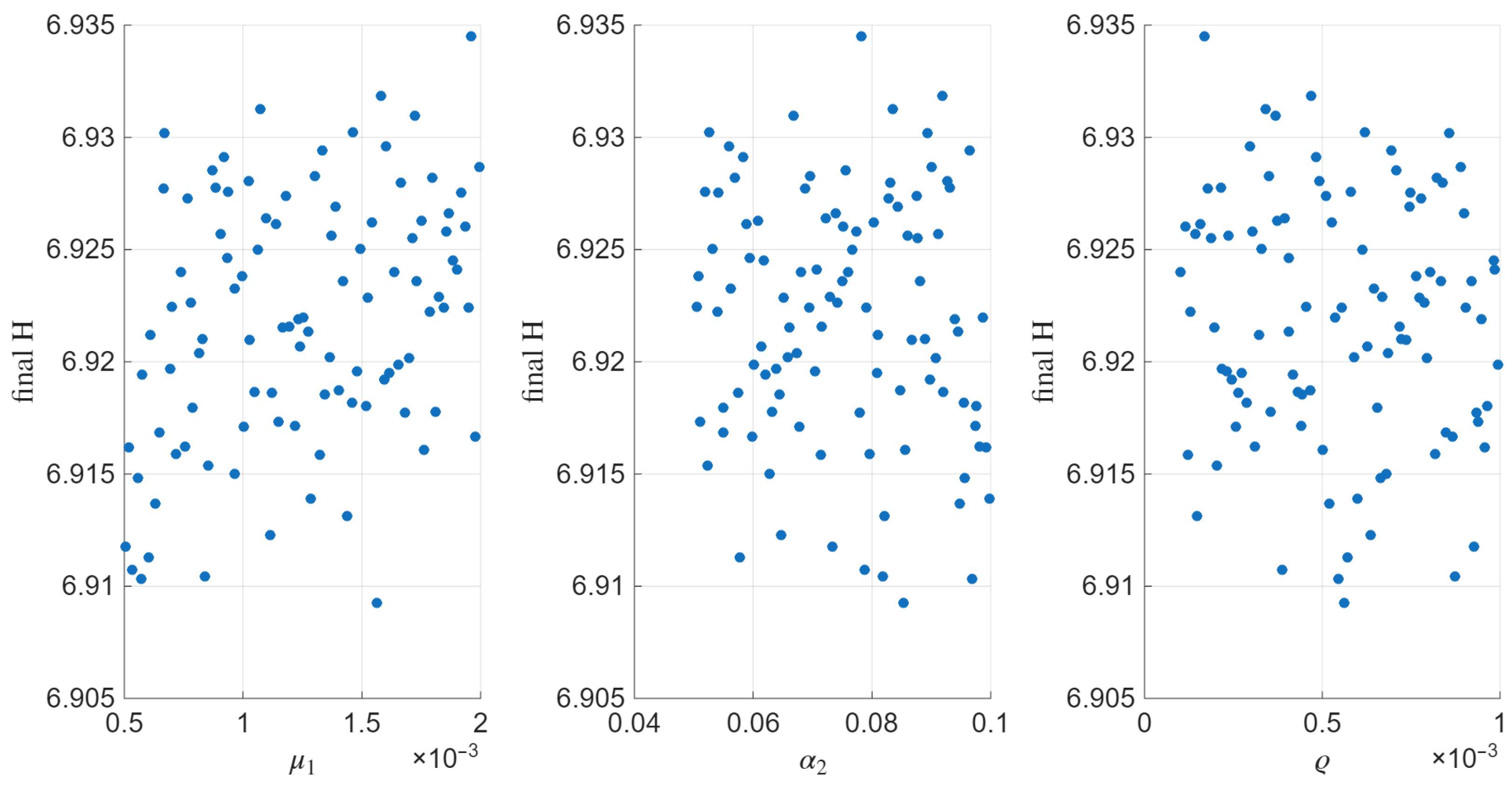
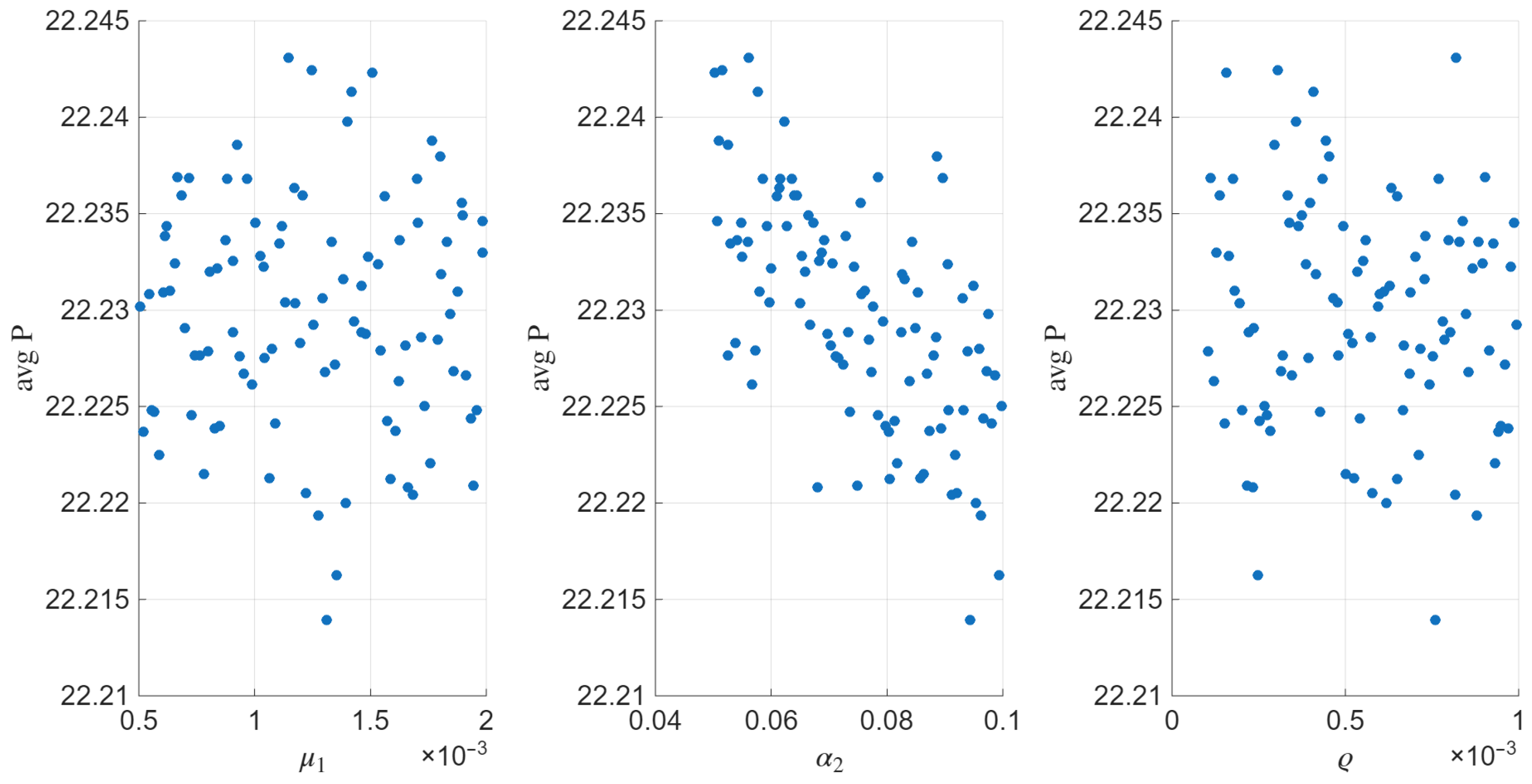
- Statistical analysis via scatter plots is studied to show effect of key parameters on the maximum value of the corrupt population, average poverty levels, and the honest population. Also, pearson correlation between the key parameters and three output objectives: the maximum level of corruption, the average level of poverty, and the final size of the honest population, to provide sensitivity of the key parameters.
2. Basic Concepts
3. Analysis of the Suggested Mathematical Model Using a Hybrid Piece Wise Framework
3.1. Theoretical Demonstration of Model (7)
- (i)
- For all ; if , then ;
- (ii)
- for all and , and
- (iii)
- for all .
3.2. Analysis Stochastic Model (9)
4. Numerical Scheme for Crossover Model
- Phase I: Integer-order ODEs for ;
- Phase II: CPC fractional-order dynamics for ;
- Phase III: Stochastic dynamics for .
5. Numerical Simulations and Physical Interpretations
6. Conclusions
Funding
Data Availability Statement
Acknowledgments
Conflicts of Interest
References
- Brauer, F.; Castillo-Chavez, C.; Feng, Z. Mathematical Models in Epidemiology; Springer: New York, NY, USA, 2019; Volume 32. [Google Scholar]
- Senapati, A.; Rana, S.; Das, T.; Chattopadhyay, J. Impact of intervention on the spread of COVID-19 in India: A model based study. J. Theor. Biol. 2021, 523, 110711. [Google Scholar] [CrossRef]
- Lin, J.; Xu, C.; Xu, Y.; Zhao, Y.; Pang, Y.; Liu, Z.; Shen, J. Bifurcation and controller design in a 3D delayed predator–prey model. AIMS Math. 2024, 9, 33891–33929. [Google Scholar] [CrossRef]
- Baber, M.Z.; Yasin, M.W.; Xu, C.; Ahmed, N.; Iqbal, M.S. Numerical and analytical study for the stochastic spatial dependent prey–predator dynamical system. J. Comput. Nonlinear Dyn. 2024, 19, 101003. [Google Scholar] [CrossRef]
- Ahmad, S.; Ullah, A.; Partohaghighi, M.; Saifullah, S.; Akgül, A.; Jarad, F. Oscillatory and complex behaviour of Caputo-Fabrizio fractional order HIV-1 infection model. AIMS Math. 2021, 7, 4778–4792. [Google Scholar] [CrossRef]
- Xu, C.; Alhejaili, W.; Saifullah, S.; Khan, A.; Khan, J.; El-Shorbagy, M.A. Analysis of Huanglongbing disease model with a novel fractional piecewise approach. Chaos Solitons Fractals 2022, 161, 112316. [Google Scholar] [CrossRef]
- Saifullah, S.; Ahmad, S.; Jarad, F. Study on the dynamics of a piecewise tumor-immune interaction model. Fractals 2022, 30, 2240233. [Google Scholar] [CrossRef]
- Qu, H.; Saifullah, S.; Khan, J.; Khan, A.; Rahman, M.U.; Zheng, G. Dynamics of leptospirosis disease in context of piecewise classical-global and classical-fractional operators. Fractals 2022, 30, 2240216. [Google Scholar] [CrossRef]
- Caulkins, J.P.; Feichtinger, G.; Grass, D.; Hartl, R.F.; Kort, P.M.; Novak, A.J.; Seidl, A.; Wirl, F. A dynamic analysis of Schelling’s binary corruption model: A competitive equilibrium approach. J. Optim. Theory Appl. 2014, 161, 608–625. [Google Scholar] [CrossRef]
- Rose-Ackerman, S. The economics of corruption. J. Public Econ. 1975, 4, 187–203. [Google Scholar] [CrossRef]
- Wei, C.-Y.; Dann, C.; Zimmert, J. A model selection approach for corruption robust reinforcement learning. In Proceedings of the International Conference on Algorithmic Learning Theory, Paris, France, 29 March–1 April 2022; pp. 1043–1096. [Google Scholar]
- Tabassum, S.; Ur Rahman, M. Exploring corruption dynamics through Caputo fractional models with deep neural network interventions. J. Appl. Math. Comput. 2025, 71, 2703–2726. [Google Scholar] [CrossRef]
- Gutema, T.W.; Wedajo, A.G.; Koya, P.R. A mathematical analysis of the corruption dynamics model with optimal control strategy. Front. Appl. Math. Stat. 2024, 10, 1387147. [Google Scholar] [CrossRef]
- Zhu, X.; Xia, P.; He, Q.; Ni, Z.; Ni, L. Coke price prediction approach based on dense GRU and opposition-based learning salp swarm algorithm. Int. J. Bio-Inspired Comput. 2023, 21, 106–121. [Google Scholar] [CrossRef]
- Zhang, X.; Yang, X.; He, Q. Multi-scale systemic risk and spillover networks of commodity markets in the bullish and bearish regimes. North Am. J. Econ. Financ. 2022, 62, 101766. [Google Scholar] [CrossRef]
- Eguda, F.Y.; James, A.; Oguntolu, F.A.; Onah, D. Mathematical analysis of a model to investigate the dynamics of poverty and corruption. Abacus Math. Sci. Ser. 2019, 44, 352–367. [Google Scholar]
- Ur Rahman, M. Generalized fractal–fractional order problems under non-singular Mittag-Leffler kernel. Results Phys. 2022, 35, 105346. [Google Scholar] [CrossRef]
- Waseem, S.A.; Ur Rahman, M. Analysis of Ebola virus model using intelligent computing of a new stochastic neural network. Int. J. Biomath. 2025, 2450162. [Google Scholar] [CrossRef]
- Zhang, L.; Rahman, M.U.; Ahmad, S.; Riaz, M.B.; Jarad, F. Dynamics of fractional order delay model of coronavirus disease. AIMS Math. 2022, 7, 4211–4232. [Google Scholar] [CrossRef]
- Odibat, Z. On two-parameter Mittag-Leffler type fractional derivative models with non-singular and singular kernels. J. Appl. Math. Comput. 2025, 71, 217–234. [Google Scholar] [CrossRef]
- Hattaf, K. A new mixed fractional derivative with applications in computational biology. Computation 2024, 12, 7. [Google Scholar] [CrossRef]
- Zhao, K.; Zhao, X.; Lv, X. A general framework for the multiplicity of positive solutions to higher-order Caputo and Hadamard fractional functional differential coupled Laplacian systems. Fractal Fract. 2025, 9, 701. [Google Scholar] [CrossRef]
- Kanagaraj, S.; Muni, S.S.; Karthikeyan, A.; Rajagopal, K. A chaotic Hartley oscillator with fractional-order JFET and its network behaviors. Eur. Phys. J. Spec. Top. 2023, 232, 2539–2548. [Google Scholar] [CrossRef]
- Abdulwasaa, M.A.; Kawale, S.V.; Abdo, M.S.; Albalwi, M.D.; Shah, K.; Abdalla, B.; Abdeljawad, T. Statistical and computational analysis for corruption and poverty model using Caputo-type fractional differential equations. Heliyon 2024, 10, e25440. [Google Scholar] [CrossRef]
- Din, A.; Li, Y. Stationary distribution extinction and optimal control for the stochastic hepatitis B epidemic model with partial immunity. Phys. Scr. 2021, 96, 074005. [Google Scholar] [CrossRef]
- Zhao, K. A generalized stochastic Nicholson blowfly model with mixed time-varying lags and harvest control: Almost periodic oscillation and global stable behavior. Adv. Contin. Discret. Model. 2025, 2025, 171. [Google Scholar] [CrossRef]
- Ahmad, S.; Saifullah, S.; Ventre, V. Stochastic dynamical analysis, Monte-Carlo simulations, and waves dynamics of a coupled volatility and option pricing model under Brownian motion. Chin. J. Phys. 2025, 94, 9–29. [Google Scholar] [CrossRef]
- Tesfaye, A.W.; Alemneh, H.T. Analysis of a stochastic model of corruption transmission dynamics with temporary immunity. Heliyon 2023, 9, e12752. [Google Scholar] [CrossRef] [PubMed]
- Sahebi Fard, H.; Dastranj, E.; Jajarmi, A. A Novel Fractional Stochastic Model Equipped With ψ-Caputo Fractional Derivative in a Financial Market. Math. Methods Appl. Sci. 2025, 48, 9653–9661. [Google Scholar] [CrossRef]
- Atangana, A.; Araz, S.I. Piecewise Differential Equations: Theory, Methods and Applications; HAL: Villeurbanne, France, 2022. [Google Scholar]
- Ahmad, S.; Yassen, M.F.; Alam, M.M.; Alkhati, S.; Jarad, F.; Riaz, M.B. A numerical study of dengue internal transmission model with fractional piecewise derivative. Results Phys. 2022, 39, 105798. [Google Scholar] [CrossRef]
- Abdelmohsen, S.A.M.; Yassen, M.F.; Ahmad, S.; Abdelbacki, A.M.M.; Khan, J. Theoretical and numerical study of the rumours spreading model in the framework of piecewise derivative. Eur. Phys. J. Plus 2022, 137, 738. [Google Scholar] [CrossRef]
- Podlubny, I. Fractional Differential Equations: An Introduction to Fractional Derivatives, Fractional Differential Equations, to Methods of Their Solution and Some of Their Applications; Elsevier: Amsterdam, The Netherlands, 1998. [Google Scholar]
- Baleanu, D.; Fernandez, A.; Akgül, A. On a fractional operator combining proportional and classical differintegrals. Mathematics 2020, 8, 360. [Google Scholar] [CrossRef]
- Raza, A.; Baleanu, D.; Cheema, T.N.; Fadhal, E.; Ibrahim, R.I.H.; Abdelli, N. Artificial intelligence computing analysis of fractional order COVID-19 epidemic model. AIP Adv. 2023, 13, 085017. [Google Scholar] [CrossRef]
- Tuan, N.H.; Tri, V.V. Existence and uniqueness of the solution to Caputo-Hadamard differential equations with delay and nonlocal conditions. Commun. Anal. Mech. 2025, 17, 725–748. [Google Scholar] [CrossRef]
- Gambera, L.; Marano, S.A. Fractional Dirichlet problems with singular and non-locally convective reaction. Adv. Nonlinear Anal. 2025, 14, 20250082. [Google Scholar] [CrossRef]
- Diblik, J.; Galewski, M.; Šmarda, Z. Existence results for non-coercive problems. Adv. Nonlinear Anal. 2025, 14, 20250071. [Google Scholar] [CrossRef]
- Alalhareth, F.K.; Al-Mekhlafi, S.M.; Boudaoui, A.; Laksaci, N.; Alharbi, M.H. Numerical treatment for a novel crossover mathematical model of the COVID-19 epidemic. AIMS Math. 2024, 9, 5376–5393. [Google Scholar] [CrossRef]








| Parameters | Description | Value | Reference |
|---|---|---|---|
| The per-capita birth rate governing recruitment into the susceptible compartment | 0.097 | [16] | |
| Rate describing loss of individuals via death | 0.00099 | [16] | |
| Corruption transmission probability per contact | 0.0011 | [16] | |
| Poverty transmission probability per contact | 0.0098 | [16] | |
| Effort rate against corruption | 0.0001 | [16] | |
| Effort rate against poverty | 0.0001 | [16] | |
| Effective corruption contact rate | 0.00109989 | [16] | |
| Effective poverty contact rate | 0.00979902 | [16] | |
| How often corrupt persons transition into poverty | 0.0058 | [16] | |
| Rate at which poor persons become corrupt | 0.0701 | [16] | |
| Portion of those engaged in corruption who are tried and sentenced to jail | 0.00019 | [16] | |
| Average period prosecuted individuals spend in prison | [16] | ||
| Transition rate from jailed to corrupt | 0.000700606739 | [16] | |
| Transition rate from jailed to honest | 0.000000393261 | [16] | |
| The portion of individuals engaged in corruption that enter | 0.000000701 | [16] | |
| The portion of those classified as poor who transition to the compartment | 0.0000013 | [16] | |
| The portion of individuals classified as susceptible entering | 0.000833 | [16] |
| Objective | Parameter | Correlation | Interpretation |
|---|---|---|---|
| max C | Slight negative effect on max corruption | ||
| +0.318 | Moderate positive effect | ||
| +0.038 | Negligible effect | ||
| avg P | +0.088 | Very weak positive effect | |
| −0.645 | Strong negative effect (more → less poverty) | ||
| −0.109 | Small negative effect | ||
| final H | +0.326 | Moderate positive effect (higher → more honest) | |
| −0.094 | Weak negative effect | ||
| −0.086 | Weak negative effect |
Disclaimer/Publisher’s Note: The statements, opinions and data contained in all publications are solely those of the individual author(s) and contributor(s) and not of MDPI and/or the editor(s). MDPI and/or the editor(s) disclaim responsibility for any injury to people or property resulting from any ideas, methods, instructions or products referred to in the content. |
© 2026 by the author. Licensee MDPI, Basel, Switzerland. This article is an open access article distributed under the terms and conditions of the Creative Commons Attribution (CC BY) license.
Share and Cite
AL-Essa, L.A. Fractional Stochastic Piecewise Approach to Study Hybrid Crossover Dynamics of Corruption Dynamical System: Mathematical and Statistical Analysis with Real Data Simulations. Mathematics 2026, 14, 819. https://doi.org/10.3390/math14050819
AL-Essa LA. Fractional Stochastic Piecewise Approach to Study Hybrid Crossover Dynamics of Corruption Dynamical System: Mathematical and Statistical Analysis with Real Data Simulations. Mathematics. 2026; 14(5):819. https://doi.org/10.3390/math14050819
Chicago/Turabian StyleAL-Essa, Laila A. 2026. "Fractional Stochastic Piecewise Approach to Study Hybrid Crossover Dynamics of Corruption Dynamical System: Mathematical and Statistical Analysis with Real Data Simulations" Mathematics 14, no. 5: 819. https://doi.org/10.3390/math14050819
APA StyleAL-Essa, L. A. (2026). Fractional Stochastic Piecewise Approach to Study Hybrid Crossover Dynamics of Corruption Dynamical System: Mathematical and Statistical Analysis with Real Data Simulations. Mathematics, 14(5), 819. https://doi.org/10.3390/math14050819