1. Introduction
In the modern financial landscape, accurately predicting credit default is crucial for effective risk management and institutional profitability. As market complexity increases, credit default prediction is a high-stakes decision-supporting task. Misclassifying a default case as non-default can lead to significant financial losses and systemic risks [
1,
2]. A persistent challenge in this domain is the prevalence of imbalanced class distributions, characterized by zero inflation, in which the majority of observations are non-defaulters. These datasets typically contain a mixture of structural zeros that standard classifiers struggle to distinguish from stochastic outcomes governed by a Bernoulli process [
3]. While standard models often fail to disentangle these two distinct sources of non-default, zero-inflated models have demonstrated superior performance by explicitly accounting for this dual-source mechanism.
Lambert [
4] is the pioneer to propose the zero-inflated Poisson (ZIP) model and discussed its applications. Hall [
5] studied the ZIP and zero-inflated binomial regression models with random effects. Rodrigues [
6] applied the Bayesian method to estimate the parameters of zero-inflated distributions. Ghosh et al. [
7] and Gelfand et al. [
8] studied Bayesian inference procedures to obtain the estimates of the zero-inflated regression model parameters. Diop et al. [
9] proposed a simulation-based procedure for the inference on a zero-inflated Bernoulli regression (ZIBR) model. Staub and Winkelmann [
10] studied the estimation consistency of zero-inflated count models. Lee et al. [
11] discussed the validation of the maximum likelihood estimation method for a ZIBR model when missing covariates are found. Li and Lu [
12] studied the inference procedure of the semiparametric ZIBR model. Chiang et al. [
13] proposed an expectation-maximization algorithm to obtain the maximum likelihood estimates of the ZIBD model parameters. Lu et al. [
14] investigated the penalized estimation for ZIBR models. Pho [
15] proposed a goodness-of-fit test method to infer the ZIBR model. Xin et al. [
16] used a regularization rule in the loss function to estimate ZIBD model parameters. Pho [
17] proposed a zero-inflated Probit Bernoulli model and discussed its applications. Su et al. [
18] proposed machine learning methods of using gradient descent methods with a non-constant learning rate to estimate the ZIBD model parameters.
The ZIBD model provides a robust alternative to many machine learning (ML) methods, enabling the expression of causal relationships through analytically defined functional forms. This interpretability is crucial for the real-world banking business, where understanding the link between features and response variables is mandatory. However, in high-dimensional feature spaces, maintaining a high classification rate while identifying significant features becomes increasingly complex [
16,
18]. Despite its strengths, applying ZIBD in modern credit scoring faces several challenges.
A critical discrepancy arises from the misalignment between statistical loss functions and actual financial stakes. Traditional ZIBD models typically use a standard cross-entropy loss function, which treats all misclassifications equally. In credit scoring, the cost of a False Negative varies significantly by loan line and borrower profile. A cost-sensitivity consideration necessitates a mathematically optimized approach that incorporates example-dependent cost-sensitive (EDCS) factors to align model objectives with real-world economic risks [
19].
Even with an appropriate loss function, the mathematical reliability depends on the robustness of its optimization trajectory. Parameter estimation in ZIBD models often relies on gradient-based methods, such as the Newton–Raphson algorithm, which is notoriously sensitive to initial values. In high-dimensional and imbalanced credit data, a poorly chosen starting point can lead to a local optimum rather than a global minimum, particularly when used as an initial solution. This sensitivity requires an algorithmic intervention, specifically the integration of meta-heuristic search strategies to stabilize the parameter space.
The challenges of applying a ZIBD model with the existing parameter estimation methods are as follows:
- 1.
A standalone ZIBD model remains constrained by its structural simplicity. Although it excels at identifying structural zeros, its binary predictions are constrained by a relatively S-shaped logistic function. This simplicity may be unable to capture the intricate, non-linear interactions between financial variables.
- 2.
If cost is a critical concern, the existing estimation method for the ZIBD model does not include cost factors in the maximum likelihood or loss functions. The resulting model may be unrealistic for handling a dataset with cost factors.
- 3.
Lack of discussions on a two-stage estimation that integrates ensemble machine-learning methods and uses heuristic algorithms for gradient estimation for the ZIBD model.
Advanced ensemble models, such as Random Forest, XGBoost, and LightGBM, are designed to address the challenges mentioned above. Consequently, there is a compelling rationale for a two-stage framework that leverages the “divide and conquer” principle: using ZIBD as a structural filter to handle the distributional anomaly of zero inflation, while delegating the complex non-linear mapping to high-performance ensemble algorithms.
By addressing these intertwined challenges, this study proposes a comprehensive algorithmic framework that transforms the ZIBD from a theoretical statistical model into a powerful, cost-aware decision tool for financial risk management. The contributions of this study are as follows:
- 1.
A new loss function and an optimization process are proposed to construct the ZIBD model. To the best of our knowledge, no studies have considered using EDCS factors in the loss function to build a ZIBD model. In this study, the new loss function integrates the EDCS factors and the cross-entropy function.
- 2.
Because the quality of the gradient method is sensitive to initial parameter solutions, it is challenging to obtain better initial parameter solutions in real-world applications. The initial parameter solutions of the Newton–Raphson method are provided from solutions generated by the particle swarm optimization (PSO) and differential evolution (DE) algorithms. Then, the best model is produced by competing with any two initial solutions to minimize the target loss function.
- 3.
The ZIBD model accounts for structural zeros but uses an S-shaped function for binary prediction. The S-shape function is simple to use, but it may struggle to achieve a high classification rate in some cases. The optimized ZIBD model is used to remove structural zero cases that are correctly classified. The cleaned dataset, after removing structural zeros, is used to train the RF, XGBoost, and LightGBM models, thereby improving their classification performance. In this study, the proposed two-stage models are referred to as RF-ZIBD, XGB-ZIBD, and LG-ZIBD, respectively.
Because the final predicted values from the proposed two-stage strategy are not weighted with stacking. Hence, the proposed two-stage method differs from SuperLearner. The implementation of the proposed two-stage strategy will be discussed in
Section 2.
The proposed two-stage strategy employs a metaheuristic-inspired approach that combines DE and PSO with the Newton–Raphson method to navigate the solution space. Typically, metaheuristic learning combines optimization heuristic algorithms with machine learning methods to navigate complex search spaces. Kaveh and Mesgari [
20] reviewed the optimization of Artificial Neural Networks (ANNs) and Deep Learning methods using metaheuristic algorithms. Rahman [
21] proposed a new group metaheuristic algorithm inspired by interactions among individuals and the group leader’s influence on members. Inspired by the intelligence and life of pumas, Abdollahzadeh et al. [
22] proposed a novel metaheuristic algorithm, named Puma Optimize, and showed its good performance against all kinds of optimization problems. Jia and Lu [
23] improved three metaheuristic algorithms, including Stochastic Fractal Search and the Marine Predators Algorithm. The model’s performance was then evaluated on 57 constrained engineering problems. Dasi et al. [
24] studied the performance of the support vector regression and XGBoost algorithms that are enhanced by Satin Bowerbird Optimizer, Ant Lion Optimizer, Artificial Ecosystem-iniBased Optimizer, Slime Mold Optimizer, Moth-Flame Optimizer, and PSO. Helforoush and Sayyad [
25] studied the prediction performance of machine-learning techniques to improve obesity risk assessment. They recommended that the proposed ANN-PSO model has good performance to achieve the goal. Kowalski et al. [
26] investigated the ability of metaheuristic algorithms in enhancing the training performance of Probabilistic Neural Networks. Ahmed et al. [
27] investigated the performance of 10 machine learning methods on a dataset on dye contamination in water sources. In their study, the DE, PSO, and GA are used to optimize tree-based models for predicting contaminant levels. Donmez and Gucluer [
28] provided a comprehensive discussion of the performance of LightGBM, Categorical Boosting, RF, and Extremely Randomized Trees. PSO and Dwarf Mongoose Optimization methods were used to tune the hyperparameters of these models. Tran [
29] proposed a metaheuristic model that integrates an artificial neural network with Teaching–Learning-Based Optimization to improve the performance of breaking wave height prediction.
The remainder of this paper is organized as follows.
Section 2 addresses the zero-inflated model and presents the new loss functions for the ZIBD modeling. In addition, algorithms are proposed to minimize the new loss function using DE and PSO. In
Section 4 and
Section 5, the performance of the proposed RF-ZIBD, XGB-ZIBD, and LG-ZIBD methods is illustrated using two real banking datasets. Moreover, the performance of the proposed two-stage methods is compared with that of the baseline methods RF, XGBoost, and LightGBM. The model transparency, governance, and validation are discussed in
Section 6. Finally, the strengths and limitations of the proposed estimation strategy are discussed, and future studies on this topic are presented in
Section 7.
2. Methods
The ZIBD model will be addressed in this
Section 2.1. Moreover, we will analytically present the process of optimizing the loss function of the ZIBD model with a cost consideration.
2.1. The ZIBD Model
Let , where or 1 is a binary response variable. Typically, Y follows the Bernoulli distribution, denoted by . However, many instances of sample collections appear to have a preponderance of structural zeros in the majority group because subjects are not at risk for the specific event of interest. Structural zeros make the probability model of Y different from , and the collected data set is imbalanced with excess zeros.
Let
W be a latent binary variable that controls whether
is structural or not. Specifically,
indicates that
is a structural zero, and
means that
determines the outcome of
Y. In other words, given
implies that
with
. Let
be a binary response from
n individuals randomly sampled from the distribution, and let
denote the probability that the
ith individual is at risk of the specific event for
. It is trivial to show that
where
and
,
. Assume that two sets of features
and
are available and can be linked to
and
, respectively, by
and
where
and
. Let
denote the set of responses in the ZIBD model with the features
and
,
. Denote the complete data set by
. The typical cross-entropy loss function can be presented by
where
.
In banking, credit scoring is a powerful tool for risk assessment and a crucial decision-making factor for financial institutions. Many existing studies have adopted cost-sensitive models for various binary classification methods, including logistic regression, survival analysis, and ML models, to implement credit risk assessments. Let
denote the cost of misclassifying a non-default customer as default, and
denote the cost of misclassifying a default customer as non-default. Using cost-sensitive factors in the loss function
results in
It can be shown that
reduces to
as
for
. Hence,
can be a generalized case of
.
The gradient method can be used to minimize the target loss function. However, the quality of the gradient method is quite sensitive to the initial parameter values. For big data with a large number of features, the Newton–Raphson method may not yield reliable parameter estimates for the ZIBD model, thereby affecting its classification performance. Hence, heuristic algorithms, including PSO (see Algorithm 1) and DE (see Algorithm 2), are suggested to minimize . Then, the two initial solution sets are used to implement the Newton–Raphson method to search for the optimal ZIBD model.
Let
denote the
ith particle for
. Let
and
be the minimum and maximum of
for
. The PSO can be implemented using the following steps:
| Algorithm 1 The PSO algorithm |
- -
Generating : For , , . - -
Select w, , , and ; For ,
|
Let
F denote the differential weight and CR be a crossover probability. The DE algorithm can be implemented using the following steps:
| Algorithm 2 The DE algorithm |
- -
Let : For , , generate , - -
Select parameters F and CR from the intervals of and , respectively.
D-II. Update Parameters: For , where is the maximum number of iterations.
- -
Mutation: For , randomly select , , and , from , which is the set of but is removed from . - -
Crossover: Randomly select R from . Generate .
otherwise . - -
Selection:
otherwise .
|
2.2. The RF Model
RF is an ensemble learning method used to build a number of decision trees. Then, combining the obtained results to enhance the predictive performance and robustness. The core idea of RF is to use the bagging method of bootstrap aggregating to replace the traditional decision tree method, which relies on a single tree. Each tree in the RF strategy is trained by a different bootstrap sample from the original dataset. Only a subset of features will be randomly selected at each split in RF. Randomness can efficiently reduce correlation among trees, enhance the ensemble’s nonlinearity, capture patterns, and reduce instability when using an individual decision tree.
For categorical response variables, the aggregation of predictions can be majority voting for classification to mitigate overfitting. The RF can handle noisy observations with minimal preprocessing and efficiently process high-dimensional data. RF has been widely used in areas such as finance, healthcare, marketing, and environmental science for prediction and key-feature identification. Recent applications of RF include Salman et al. [
30], Iranzad and Liu [
31], and Mallala et al. [
32].
2.3. The XGBoost Model
Unlike the RF method, XGBoost is an ensemble learning method based on a gradient boosting framework. XGBoost emphasizes efficiency, scalability, and high predictive accuracy. In XGBoost, the method sequentially develops decision trees. Each new tree in XGBoost can correct errors introduced by previous trees. The mechanism of XGBoost is to optimize an objective function with penalty terms in the loss function to enable the model to learn complex nonlinear patterns. Hence, the XGBoost can maintain a better generalization performance.
Because XGBoost considers practical engineering features, including efficient handling of missing values, overfitting penalty, shrinkage at learning rate, row and column subsampling, XGBoost is also effective at handling large-scale and high-dimensional datasets. Moreover, the XGBoost method performs well in terms of computational speed. XGBoost is a popular ensemble learning method widely used in recommendation systems, fraud and credit risk identification, and data science competitions. Recent applications of XGBoost include Niazkar et al. [
33], Wiens et al. [
34], and Imani et al. [
35].
2.4. The LightGBM Model
Similar to XGBoost, LightGBM also uses a gradient-boosting framework. LightGBM was designed to maintain high efficiency and scalability in real-world applications, especially for processing large and high-dimensional datasets. LightGBM sequentially builds decision trees. Each new tree is trained to reduce the errors from the previous ensemble. However, LightGBM uses an efficient strategy, called leaf-wise (or best-first) tree growth, to replace the level-wise strategy used in traditional gradient-boosting ensemble methods. The leaf-wise strategy allows LightGBM to focus on splitting the leaf that yields the largest loss reduction, enabling it to learn more complex patterns with fewer trees.
LightGBM also incorporates several optimization techniques, including histogram-based feature discretization and efficient handling of categorical features. Another strength of LightGBM is that it supports parallel and GPU training, thereby significantly reducing memory usage and computation time to maintain high predictive accuracy. LightGBM is widely applied in domains such as online advertising, ranking systems, finance, and large-scale business analytics. LightGBM can maintain the strengths of fast training and significant performance on processing large-scale datasets. Recent applications of LightGBM include Li et al. [
36], Long et al. [
37], and Lian et al. [
38].
3. The Two-Stage Algorithms
The following steps can be used to implement the proposed RF-ZIBD algorithm (see Algorithm 3):
| Algorithm 3 The RF-ZIBD algorithm |
- I.
Obtaining the Initial Solutions of .
- -
using Algorithm 1, . - -
using Algorithm 2, .
- II.
Obtaining the Optimal Solution of :
- -
using the Newton–Raphson method with as initial solution. - -
using the Newton–Raphson method with as initial solution. - -
if , otherwise . The optimal estimate of is .
- III.
Removing Structural-Zero Individuals:
- -
Condition A: If and , identify as a structural zero. - -
Use Condition A to check all individuals and remove all individuals that are classified as structural-zero cases. Denote the reduced data set by .
- IV.
Establish the RF-ZIBD Model:
- -
The RF-ZIBD Model: Using an RF algorithm to establish a classification model based on the data set . - -
Using the k-fold cross-validation method to evaluate the performance of the RF-ZIBD model based on the metrics of ACC, REC, SPE, PRE, , , and Savings, defined by
where is the loss based on the RF-ZIBD model; is the minimal values of and . and refer to that the classifier predicts all the examples with and , respectively.
|
By replacing the RF in the integrated model with XGBoost and LightGBM, the RF-ZIBD model can be converted to an XGB-ZIBD and LG-ZIBD model, respectively. The metrics accuracy (ACC), recall (REC or sensitivity), specificity (SPE), precision (PRE),
-score (
), and the area under the curve (AUC) are used to evaluate the prediction performance of the competing models in this study. They are defined by
where TP, TN, FP, and FN are the numbers of true positives, true negatives, false positives, and false negatives in a confusion matrix, respectively. The AUC is the area under the receiver operating characteristic (ROC) curve, which is the curve of ‘1-SPE’ vs. REC. REC and SPE are used to estimate the true-positive and true-negative rates. The
is a harmonic mean of the REC and PRE. Only categorical response variables are investigated in this study. The metrics for continuous response variables, such as Mean Absolute Error (MAE), Root Mean Squared Error (RMSE), and Mean Absolute Percentage Error (MAPE), are not used in this study.
The existing proposed methods are difficult to balance across important performance metrics. The proposed two-stage algorithms remove structural-zero cases in the first stage using the ZIBD model, which is designed to minimize a loss function with cost considerations. Then, the cleaning data is used to establish the RF, XGBoost, and LightGBM models. The one with the best performance is selected. Hence, the performance of the proposed two-stage algorithms is better than that of a single RF, XGBoost, or LightGBM model. To illustrate the applications of the proposed two-stage algorithms, two banking examples will be used to evaluate their performance, and the results will be compared with those of the RF, XGBoost, and LightGBM models.
4. Example 1: The Micro and Small Enterprises Dataset
The first dataset, from a Chinese commercial bank, concerns loans to Micro and Small Enterprises (SMEs). The objective of this example is to build a model for successfully identifying default SMEs. The first dataset is unavailable due to confidentiality reasons.
The SME loan dataset contains fifteen features, and the response variable y indicates whether an SME is a default or non-default case. There are 8524 loan records from 2014 to 2019. To predict default status, given the highly imbalanced proportion, only 1.68% of SMEs represent default cases. Key features include Industry, Loan Line, Interest Rate, Term, and Entrepreneur characteristics such as age, education, and income. The features and response variable in this dataset are defined as follows:
Industry: the investment-targeted industry, with 1 = Primary Industry, 2 = Secondary Industry, and 3 = Tertiary Industry.
Entrusted payment: 0 = no, 1 = yes, and 2 = unknown.
Prepay: prepayment status, with 0 = no, 1 = yes, and 2 = unknown.
Interest rate: exercise interest rate.
Rate mode: interest rate setting type, with 0 = fixed, 1 = floating, 2 = periodic auto-adjustment.
Rate floating direction: 0 = upward, 1 = downward, 2 = non-floating/fixed Loan line: loan amount.
Term: loan duration in months.
Gender: entrepreneur’s gender, with 1 = male, 2 = female.
Age: entrepreneur’s age in years.
Education: entrepreneur’s education, with 1 = primary school, 2 = junior high school, 3 = technical secondary school or senior high school, 4 = junior college or bachelor’s degree, 5 = postgraduate and above, 0 = unknown.
Household income: entrepreneur’s annual household income.
Personal income: entrepreneur’s personal monthly incom.
Type of enterprises: 1= non-state-owned domestic/foreign enterprises, 2 = self-employed, 3 = unknown.
Residency: entrepreneur’s housing status, with 0 = rental housing, 1 = self-owned (with mortgage balance), 2 = self-owned (without mortgage balance).
Marriage: entrepreneur’s marital status, with 0 = unmarried/divorced; 1 = married; 2 = unknown.
Preprocessing involved removing inconsistent interest rate records. Descriptive statistics are summarized in
Table 1. Key model parameters for the dataset, including average interest rate, cost of funds, loan term, and loss given default, are provided in
Table 2. Popular ML methods such as RF, XGBoost, and LightGBM cannot consistently achieve satisfactory results across metrics such as ACC, AUC, PRE, SPE,
, and Savings. The proposed integrated method can significantly improve this drawback. The metrics are obtained from 10 repetitions of the 5-fold cross-validation method. Then, the mean and standard deviation (sd) of the ten metrics are reported in
Table 3.
Table 3 summarizes the performance of the proposed ZIBD-integrated methods (RF-ZIBD, XGB-ZIBD, and LG-ZIBD) compared to the baseline ML classifiers RF, XGBoost, and LightGBM. The empirical results demonstrate that incorporating the ZIBD module significantly enhances the predictive performance of all three base classifiers. As shown in
Table 3, the proposed ZIBD-integrated methods consistently outperform the standard algorithms across all critical metrics. This improvement suggests that the ZIBD framework effectively captures the characteristics of structural zeros and addresses the data imbalance inherent in credit risk assessment.
In terms of discriminatory power, the proposed methods achieved superior AUC scores. The LG-ZIBD model yielded the highest AUC of 0.9125, followed by RF-ZIBD (0.9053) and XGB-ZIBD (0.9026). In contrast, the second panel of
Table 3 indicates that the baseline ML models ranged from 0.8385 to 0.8418. Furthermore, REC (or Sensitivity) is a critical metric for identifying actual default cases. RF-ZIBD achieved the highest REC at 0.7855, representing a substantial improvement over the standard RF model (0.6984). This indicates that the proposed approach is significantly more effective in reducing Type II errors for missed default cases, which is crucial for effective risk management.
The F1-score, which balances precision and recall, further validates the robustness of the proposed methods. The baseline ML models achieved F1 scores ranging from approximately 0.38 to 0.45. The ZIBD-enhanced models, by contrast, demonstrated a significant leap in performance: RF-ZIBD reached an F1-score of 0.6360, followed by LG-ZIBD (0.6227) and XGB-ZIBD (0.5395). These results indicate that the proposed framework successfully mitigates the trade-off observed in imbalanced classification tasks.
From a practical banking perspective, the ‘Savings’ metric is the most indicative of business value. The baseline ML models yielded relatively low savings rates, ranging from 0.2364 (RF) to 0.4222 (LightGBM). The values of the corresponding metrics reported by the proposed methods doubled compared to these figures. XGB-ZIBD achieved the highest savings rate of 0.8436, followed closely by RF-ZIBD at 0.8352 and LG-ZIBD at 0.8245. These dramatic increases suggest that the proposed ZIBD-integrated strategies can significantly reduce financial losses associated with unrecognized defaults and optimize risk-mitigation costs. The figures in the lines of
Table 3 with “(sd)” are standard deviations. Regarding the standard deviation, the smaller, the better. In viewing
Table 3, one can find that the proposed two-stage methods perform better in terms of mean, while they are competitive in terms of sd compared with the existing ones placed in the second-row block
5. Example 2: Give Me Some Credit Dataset
The Give Me Some Credit Dataset, available from Kaggle at
https://www.kaggle.com/c/GiveMeSomeCredit/ (accessed on 26 January 2026), is used for Example 2. This dataset has been discussed in many studies, such as Alonso Robisco and Carbó Martínez [
39], Imteaj and Amini [
40], Yan [
41], Bakare and Odunaike [
42], and Chia [
43]. The response variable and features are given as follows:
y: The default customer is denoted by , and non-default customers are denoted by . In this example, indicates that a borrower has experienced an illegal past-due 90 days or more. This is the response variable.
RevolvingUtilizationOfUnsecuredLines (): the total balance of the personal credit line and cards, except for real estate and no installment debt, divided by the credit quota.
Age (): the borrower’s age (years).
PastDue30–59 (): the number of times the borrower has had past due 30-59 days but no worse in the last 2 years.
DebtRatio (): monthly debt payments, alimony, and living costs divided by monthly gross income.
MonthlyIncome (): the monthly income.
OpenCredit (): the number of open loans and credit lines.
PastDue90+ (): the number of times a borrower has been past due 90 days or more.
RealEstateLoans (): the number of mortgage and real estate loans.
PastDue60–89 (): the number of times a borrower has been past due 60-89 days but no worse in the last 2 years.
Dependents (): the number of dependents in the family.
This dataset comprises 112,915 observations with 10 features, with a default proportion of 6.74%. For the Kaggle Credit dataset, we use the same parameters as in previous work in 2015. The model parameters of this data set are summarized in
Table 4. Moreover, the descriptive statistics of the Kaggle default data set are summarized in
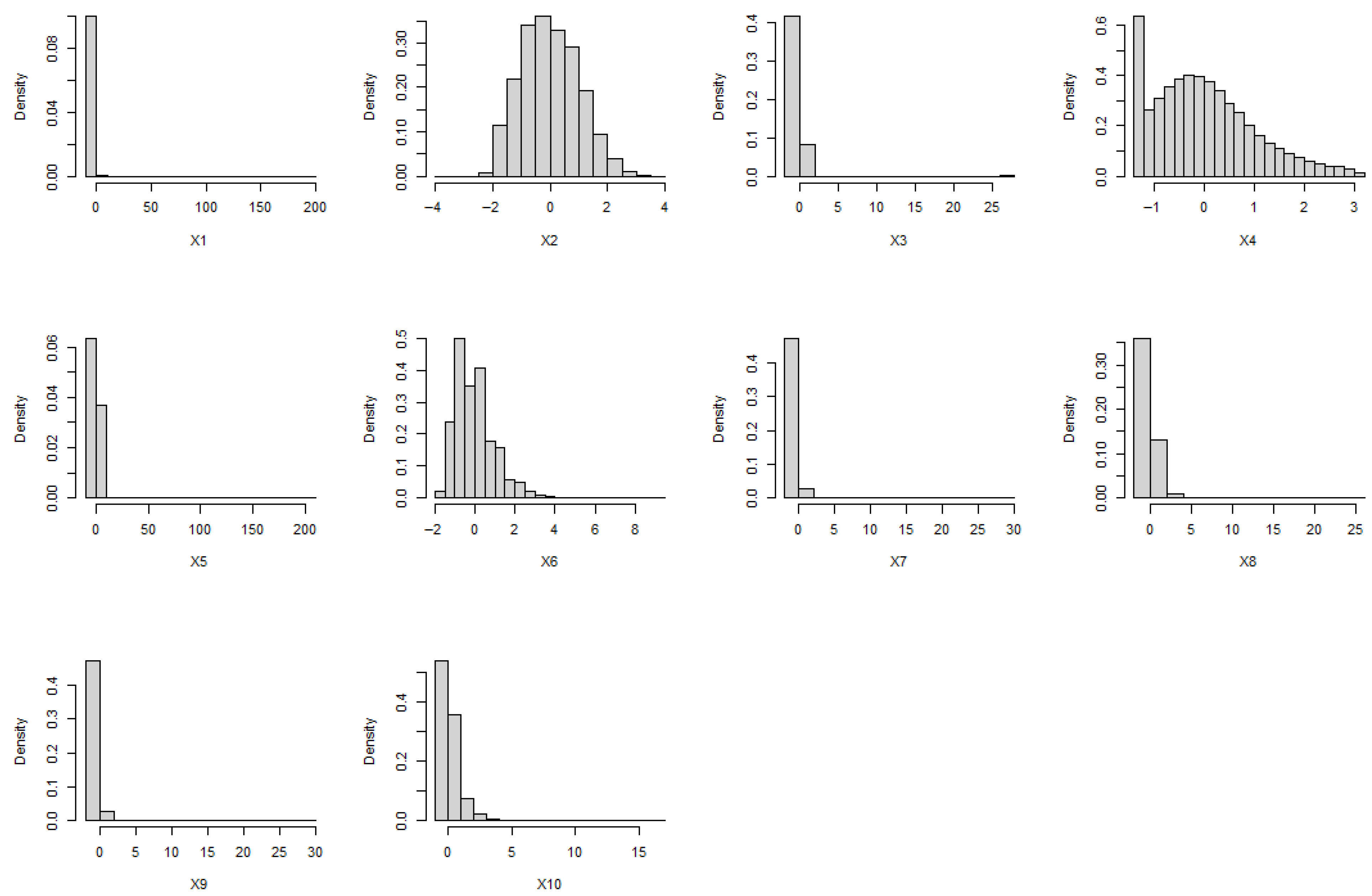
Table 5. The histograms of features are displayed in
Figure 1. We can see that the loss given default (
) in the Kaggle default dataset (75%) is significantly higher than that in the SMEs dataset (48.58%).
Table 6 summarizes the results for the Kaggle default dataset. The R codes to implement the RF and RF-ZIBD methods for Example 2 are presented in the
Appendix A. The R code to implement the XGBoost, LightGBM, XGB-ZIBD, and LG-ZIBD methods for
Section 5 is similar to that in the
Appendix A. We do not display them to save pages. Unlike the dramatic improvements observed in Example 1, the proposed ZIBD-integrated methods yield results comparable to the baseline ML classifiers. This behavior is expected and validates the adaptive nature of our hybrid approach. After analyzing the data using the ZIBD model, we found that the Kaggle default dataset contains fewer structural-zero cases. The ZIBD component effectively converges with the baseline behavior, avoiding performance degradation often seen in specialized models when applied to general data. Crucially, even with less pronounced structural zero-inflation, our method effectively captures subtle risk patterns. The
scores and Savings metrics for RF-ZIBD, XGB-ZIBD, and LG-ZIBD all show positive improvements over their base models. This suggests that the incorporated cost-sensitive loss function continues to optimize for misclassification costs, making the hybrid algorithm a safe and effective solution across varying degrees of data inflation. The figures in the lines of
Table 6 with “(sd)” are standard deviations. Regarding the standard deviation, the smaller, the better.
Table 6 displays that the proposed two-stage methods and the existing ones, shown in the second row block, are competitive in terms of mean and sd metrics.
6. Discussions
Traditional ML models often struggle to precisely identify positive cases in imbalanced datasets, especially when many observations are structural zeros. In this paper, we incorporate EDCS factors into the ZIBD model’s loss function and propose a ZIBD-integrated process to improve prediction performance for imbalanced data with a large proportion of structural zeros. To implement the proposed ZIBD-integrated process, three two-stage algorithms are provided. Moreover, the PSO and DE heuristics are employed to provide stable initial solutions for the Newton–Raphson method, thereby improving estimation accuracy.
To maintain stability of the initial parameters for implementing the Newton–Raphson algorithm to minimize the target loss function, the PSO and DE algorithms are first implemented to generate initial model parameters. Then, the best initial model parameters are obtained through competition. After establishing the ZIBD model, the next step is to remove data with a structural zero response. The method predicts the probability of a response with a structural zero and removes data with probabilities below a conservative threshold, such as 0.80 or higher. To reduce the risk of incorrect removal, we set a high-probability threshold.
The data after removing the structural-zero case is used to train the RF, XGBoost, and LightGBM models to improve prediction accuracy. Because the proposed strategy involves two stages. Moreover, we can repeat the K-fold cross-validation procedures as in
Section 4 and
Section 5 for model validation. The proposed methods definitely are more time-consuming than typical RF, XGBoost, and LightGBM models. This is a trade-off between computational time and prediction accuracy.
The convergence of the proposed two-stage algorithms can be addressed in two stages. At the first stage of candidate solution search, the Newton–Raphson method, PSO, and DE are integrated. When searching for the initial solution using the PSO algorithm, the P-II of Algorithm 1 determines convergence; furthermore, the D-II of Algorithm 2 determines convergence when using the DE to search for the initial solution. In a typical Newton–Raphson method, the search process converges when the loss function cannot be improved. Finally, the best initial solutions that reach the maximal Savings is found. At the second stage, the RF, XGBoost, and LightGBM methods are used. Hence, the convergence of each method follows its traditional design.
The proposed two-stage algorithms are more computationally complex than implementing individual RF, XGBoost, and LightGBM methods. The implementation times of Examples 1 and 2 indicate different patterns. The dataset for Example 1 is not large, and many structural-zero cases are identified. Hence, the secondary dataset, after removing structural-zero cases for the second stage of the proposed method, accelerates the implementation of the RF, XGBoost, and LightGBM methods, with Savings higher than those achieved with the three machine learning methods using the original dataset. The implementation times for the proposed two-stage method are almost equivalent to those of using the RF, XGBoost, and LightGBM methods. The ratio of the time to implement the proposed two-stage methods to that of the RF, XGBoost, and LightGBM methods based on the original dataset is 0.986 (1.968 h over 1.995 h). However, we find different results for Example 2. The dataset of Example 2 is large, and few structural-zero cases are found. The time to implement the RF, XGBoost, and LightGBM methods based on the original dataset is significantly shorter than that to implement the proposed two-stage method. It is obvious that the proposed two-stage method spends more time finding the best initial solutions at the first stage, based on a large dataset, and uses a dataset of almost the same size for the second stage. The ratio of the time to implement the proposed two-stage methods to that of the RF, XGBoost, and LightGBM methods based on the original dataset is 1.428 (10.041 h over 7.032 h). Based on the findings in
Figure 1 and
Section 4, the proposed two-stage method improves savings for the RF, XGBoost, and LightGBM methods when they are applied to the original datasets.
7. Concluding Remarks
Integrating a cost-sensitive loss function aligns model optimization with real-world financial risks, where default misclassification is far more costly than false positives. The fusion of ZIBD and baseline ML models leverages ZIBD’s ability to model zero-inflated distributions and ML models’ strength in characterizing nonlinear relationships. The purpose is to yield a more comprehensive and robust classifier—consistent with the trend toward hybrid algorithms for addressing complex credit risk challenges, which aligns with the expectation of Zheng et al. [
44].
Practically, the proposed ZIBD-integrated models, RF-ZIBD, XGB-ZIBD, and LG-ZIBD, offer actionable value for financial institutions. Its high Recall ensures that most default risks are identified, while its high Precision avoids excessive risk aversion that could restrict credit access for viable loan applicants. The considerable Savings (in cost) are helpful in promoting the profitability of banks and the efficiency of the risk management, addressing the critical need for accurate and cost-effective credit scoring.
Despite its strengths, this study has gaps that future studies can address. First, the computational complexity of the proposed two-stage algorithm may be higher than that of competitors, potentially requiring optimization for large-scale datasets. Second, the current ZIBD-integrated framework does not integrate deep learning models to capture complex, latent patterns (e.g., high-dimensional sequential financial records and unstructured text from loan applications), which may limit its predictive performance. To address these gaps, future work can focus on optimizing the algorithm’s computational efficiency through feature selection or parallel computing. Additionally, exploring fusion with deep learning models to capture more complex data patterns and extending the cost-sensitive framework to dynamic risk assessment (e.g., real-time loan monitoring) could further expand the method’s practical utility.