Decision-Making in Dual-Channel Supply Chains Based on Different Carbon Quota Allocation Policies


Abstract
1. Introduction
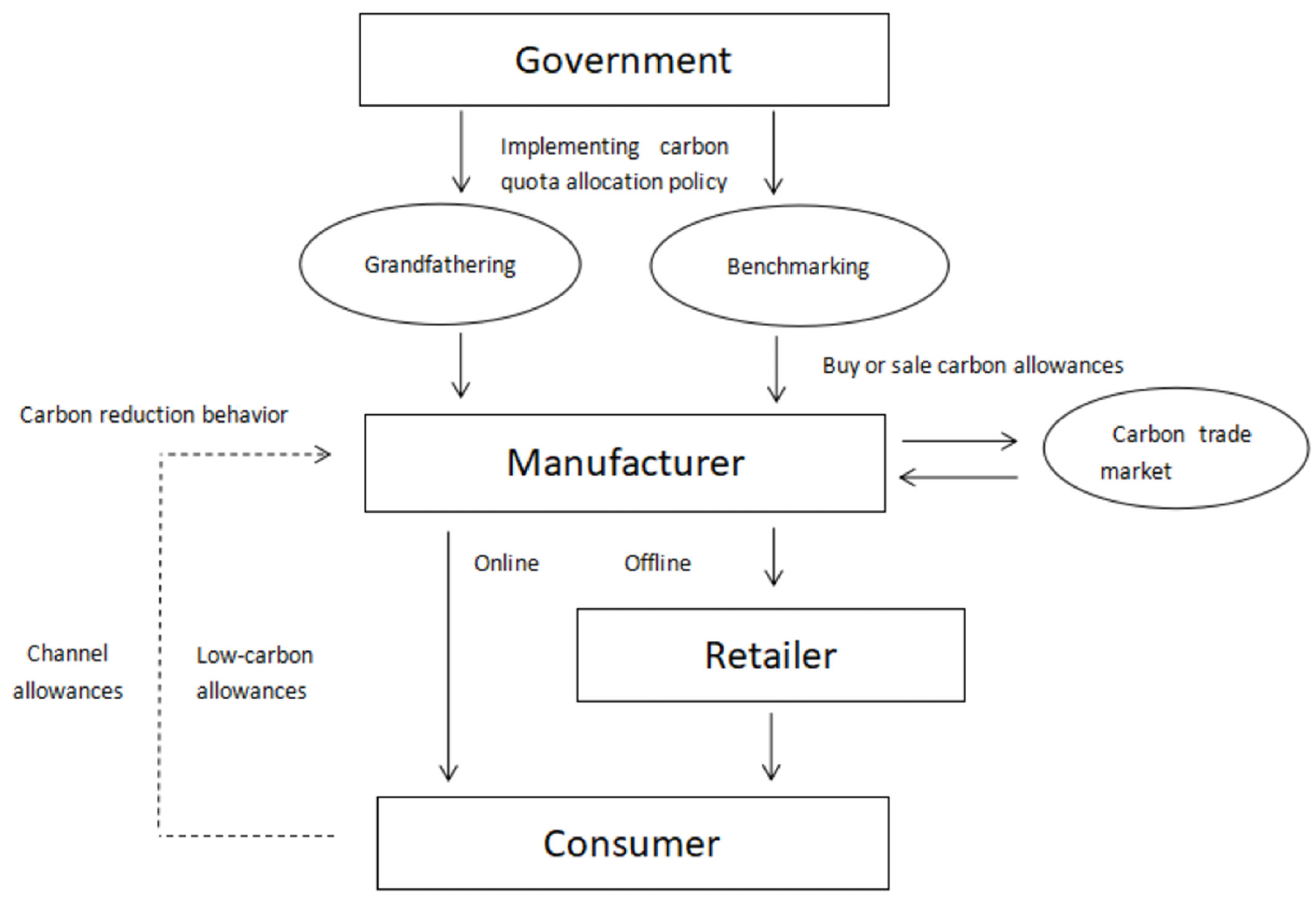
2. Research Framework and Basic Assumptions
2.1. Model Parameters
2.2. Model Assumptions
3. Model Construction and Solution
3.1. Single Channel Decision-Making Under the Historical Emission Method
3.2. Single-Channel Decision-Making Under the Benchmark Method
3.3. Two-Channel Decision-Making Under Historical Emission Method
3.4. Two-Channel Decision-Making Under the Benchmark Method
4. Example Analysis
4.1. Sensitivity Analysis of Manufacturer and Retailer Profits to Carbon Allowances
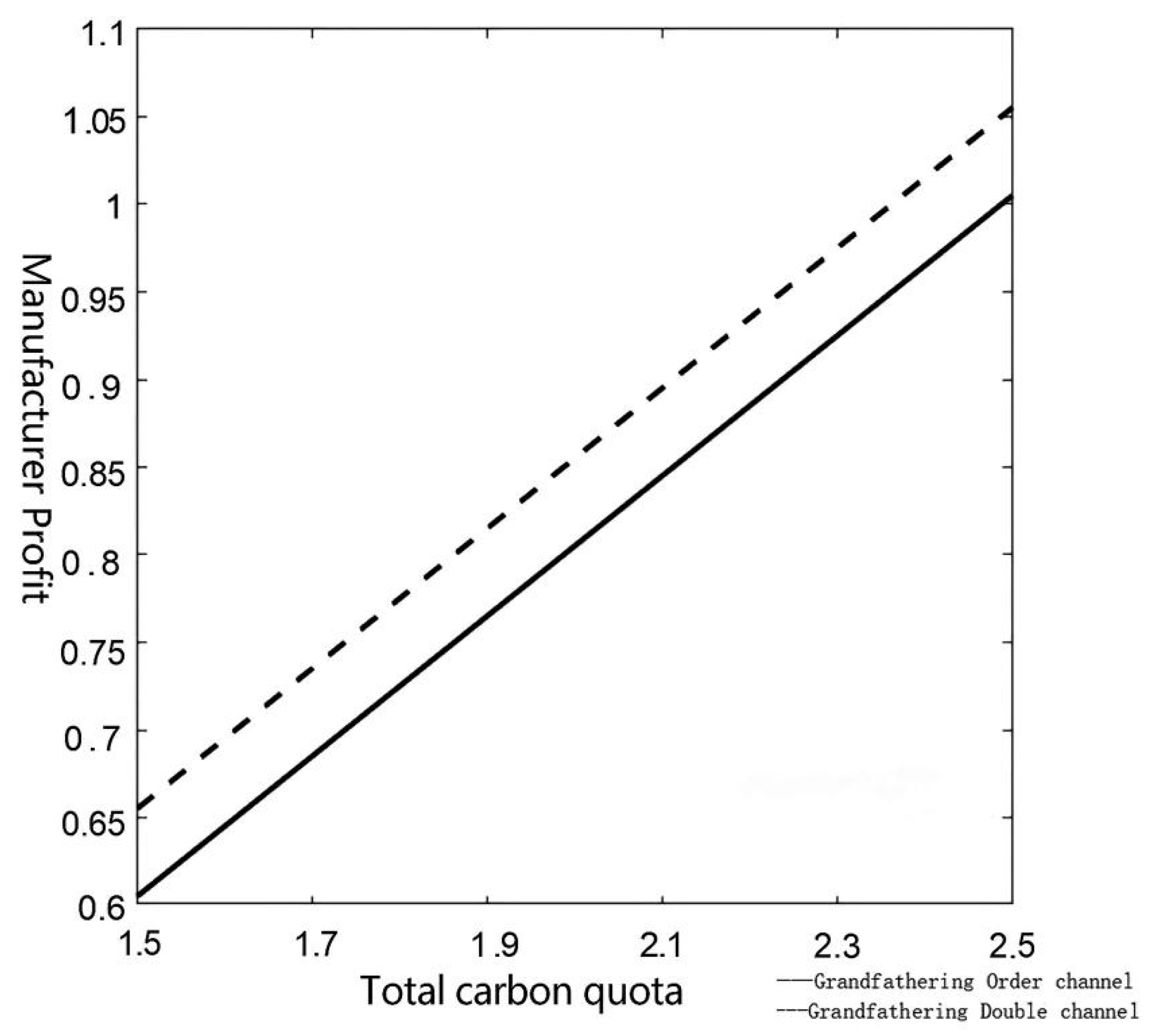
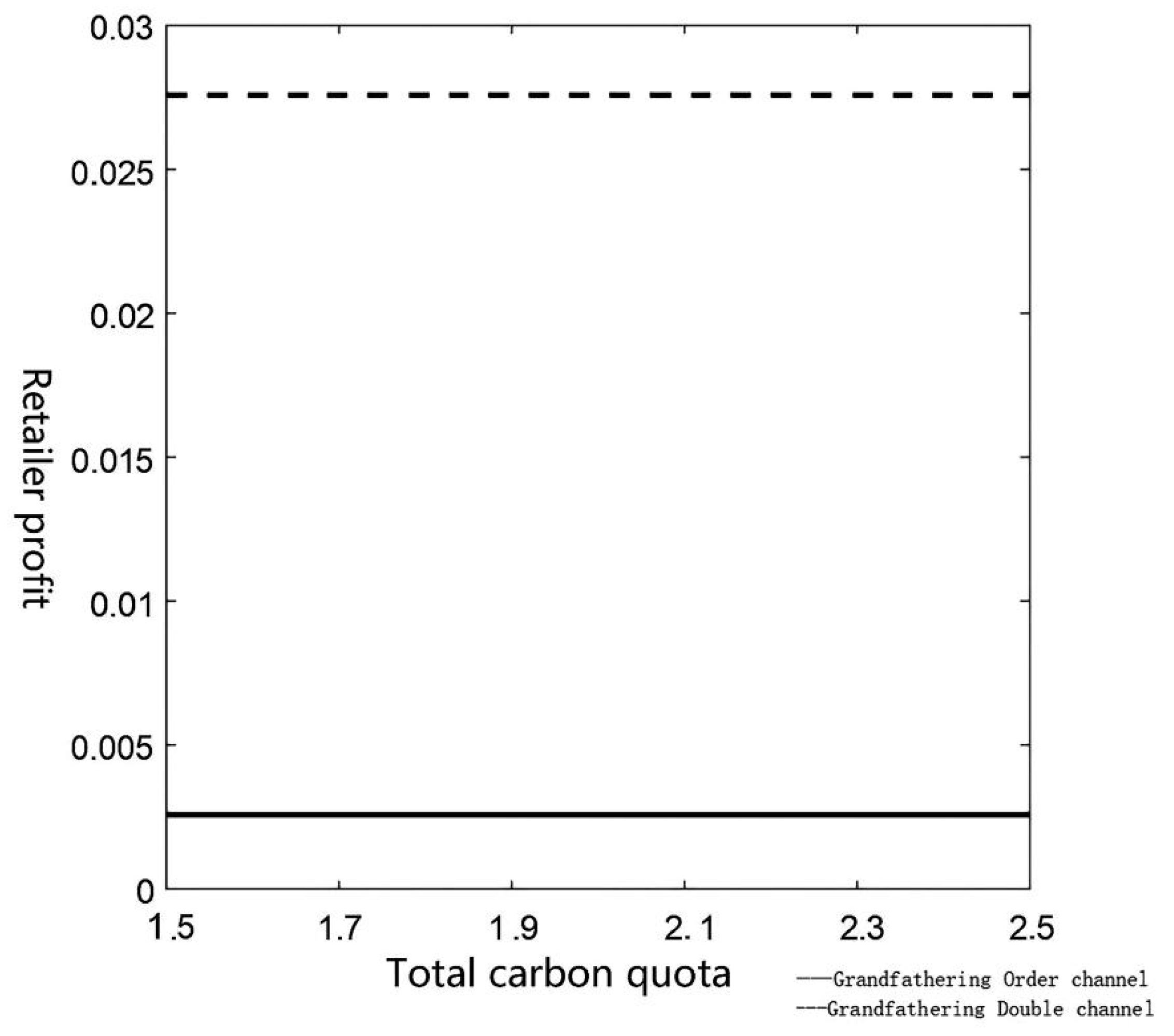
4.1.1. Sensitivity Analysis of the Gross Carbon Allowances of Manufacturers and Retailers to the Gross Carbon Allowances Under the Historical Emissions Approach
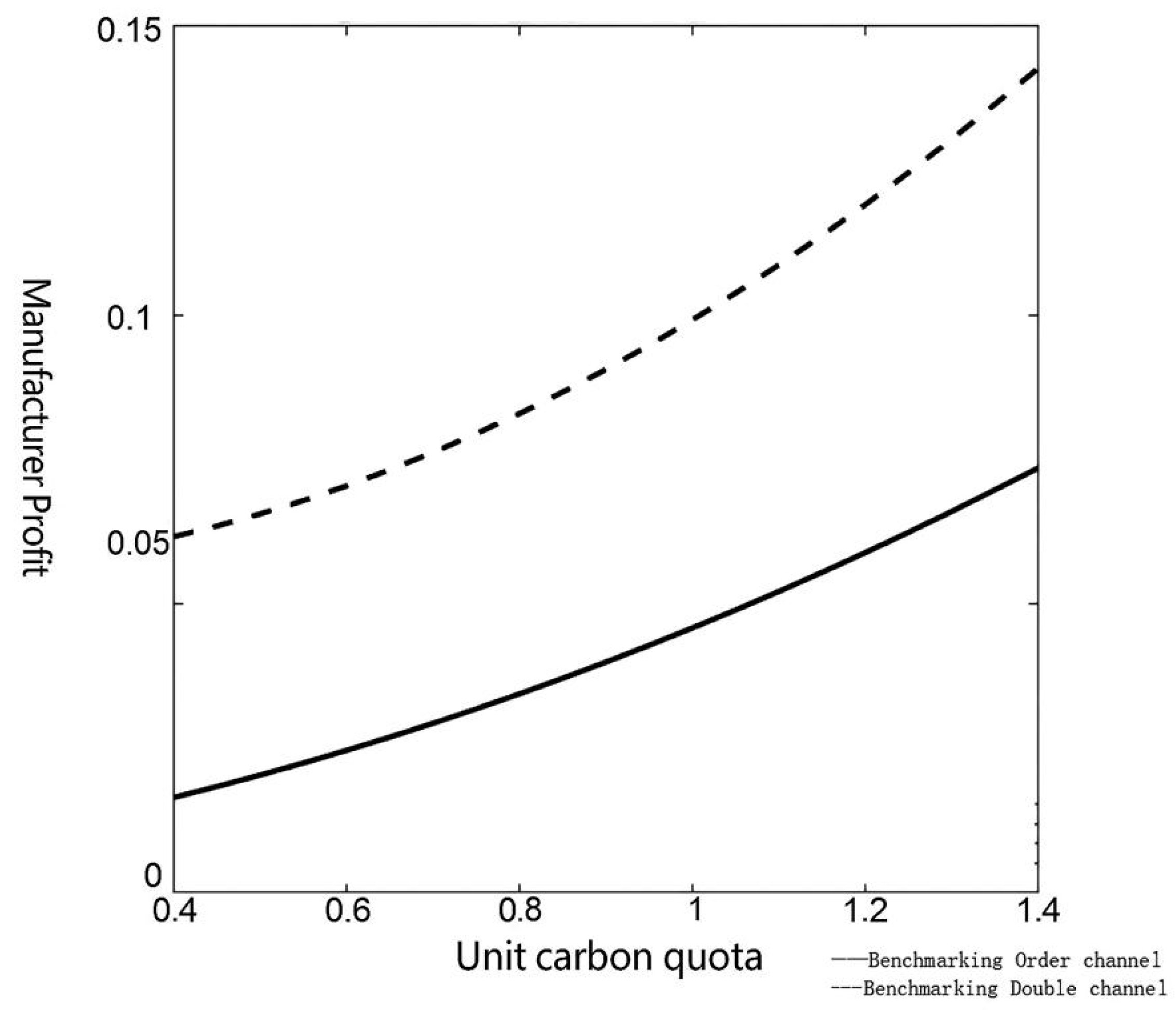
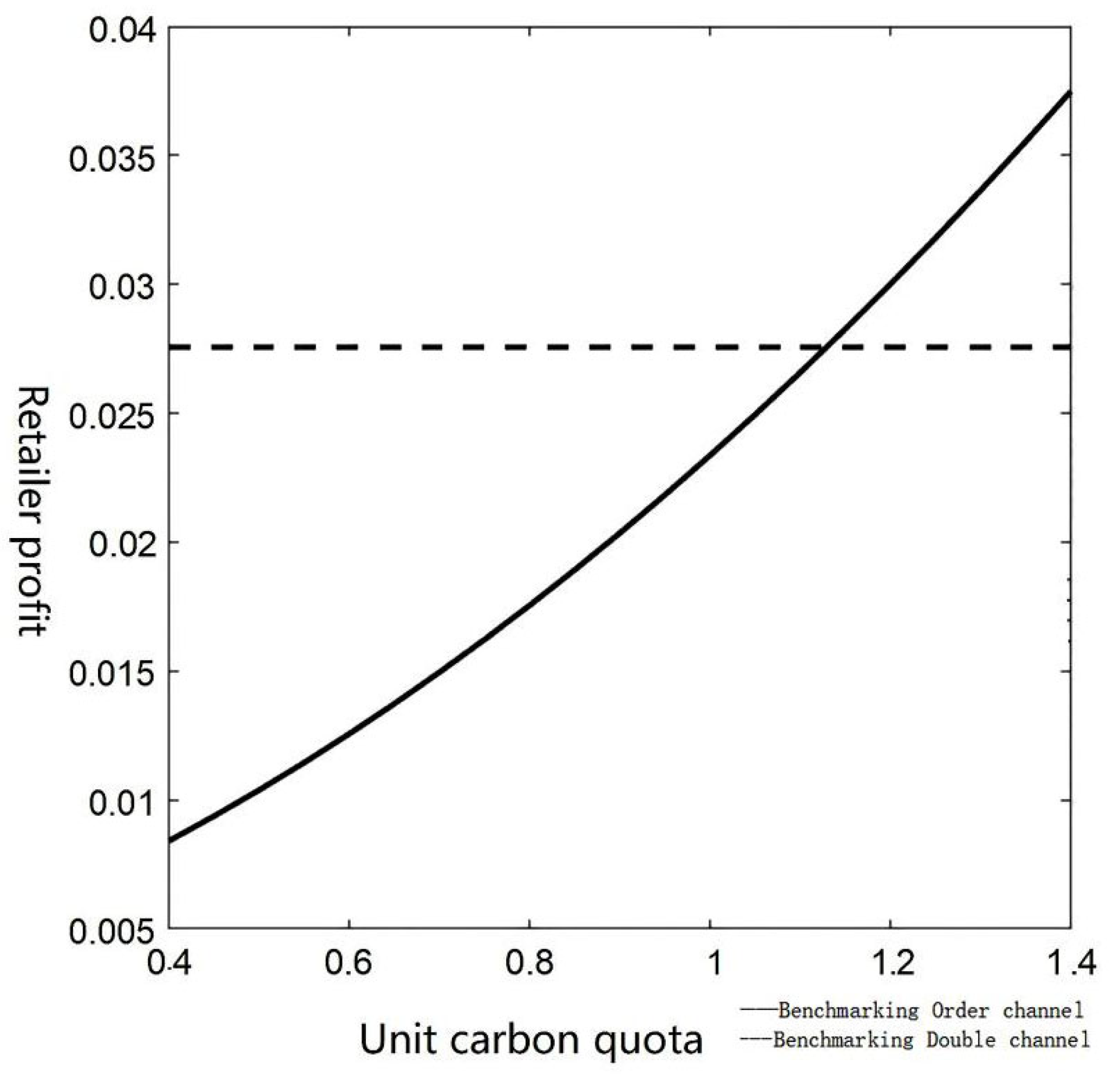
4.1.2. Sensitivity Analysis of Manufacturer and Retailer Profits to Unit Carbon Allowances Under the Baseline Approach
4.2. Sensitivity of Manufacturers’ and Retailers’ Profits to Carbon Prices
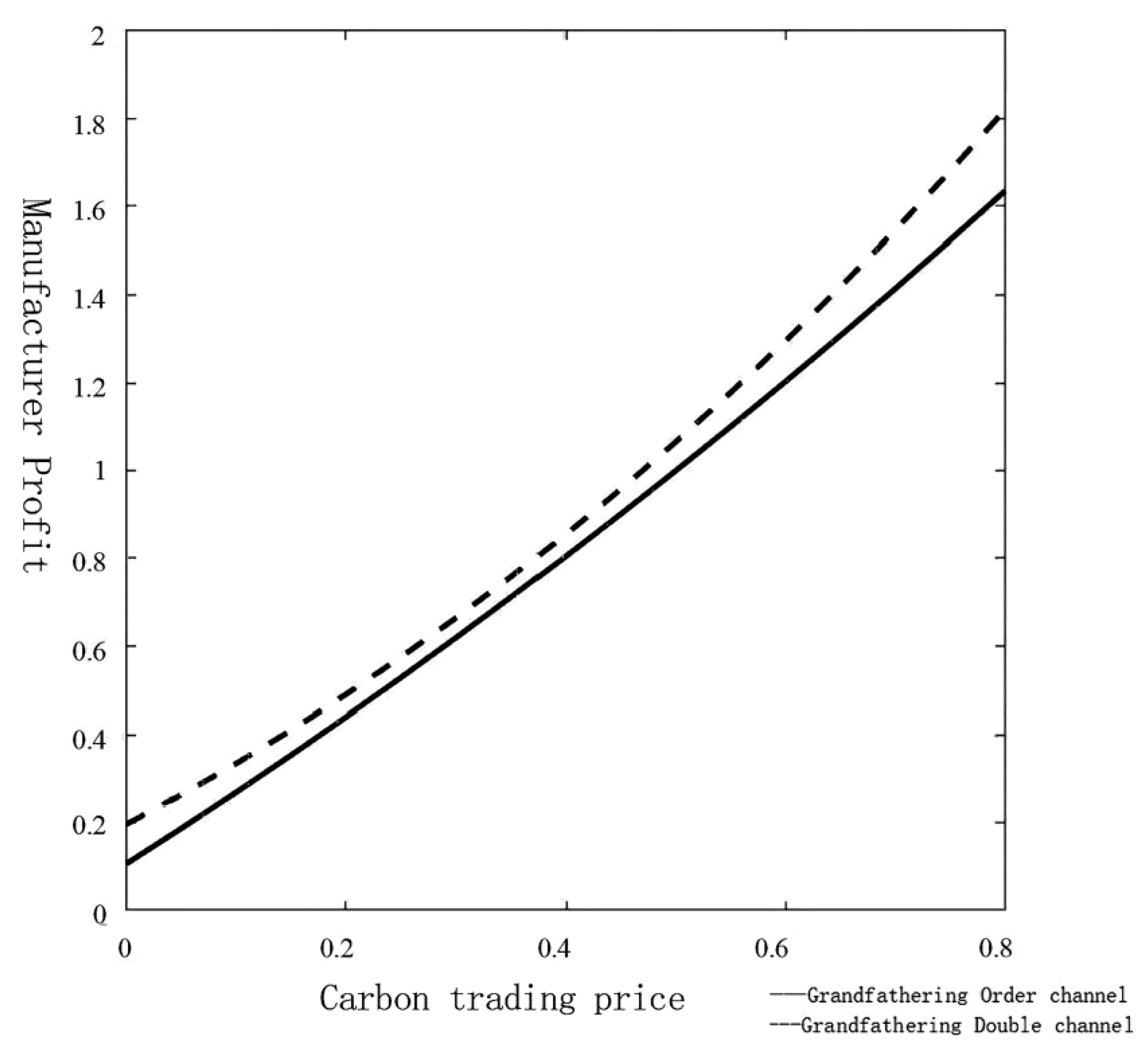
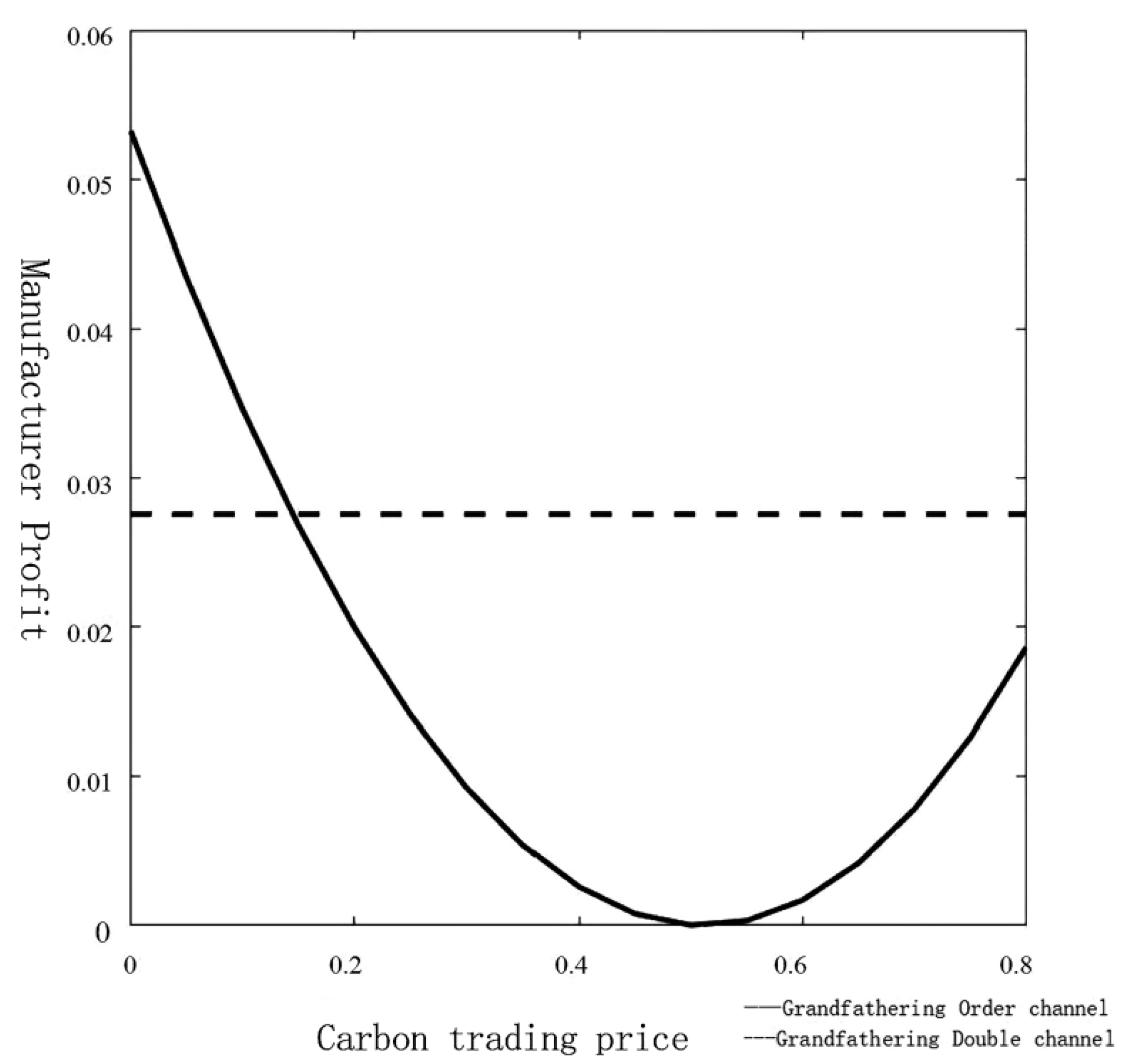
4.2.1. Sensitivity Analysis of Manufacturers’ and Retailers’ Profits to Carbon Trading Prices Under the Historical Emissions Approach
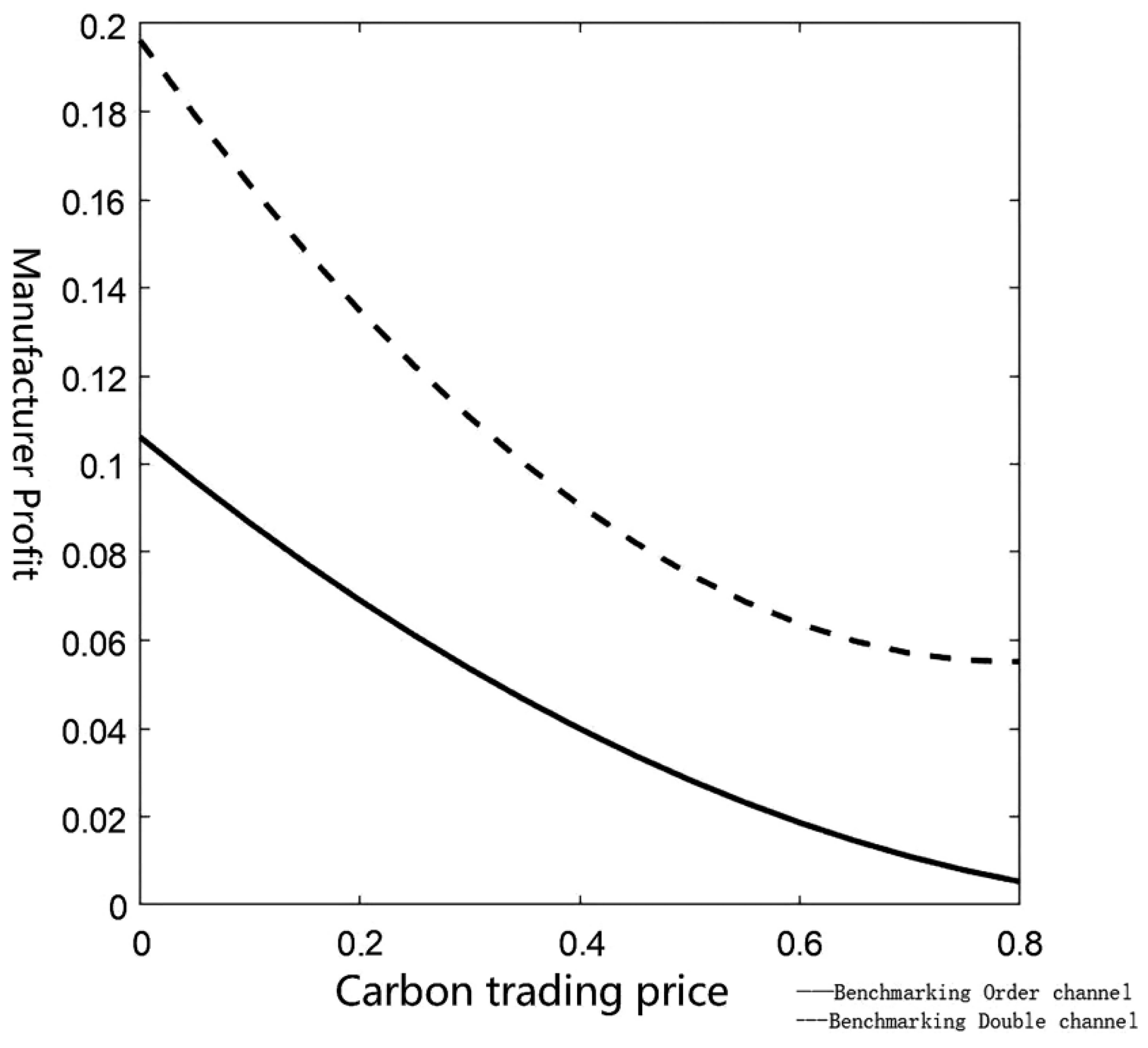
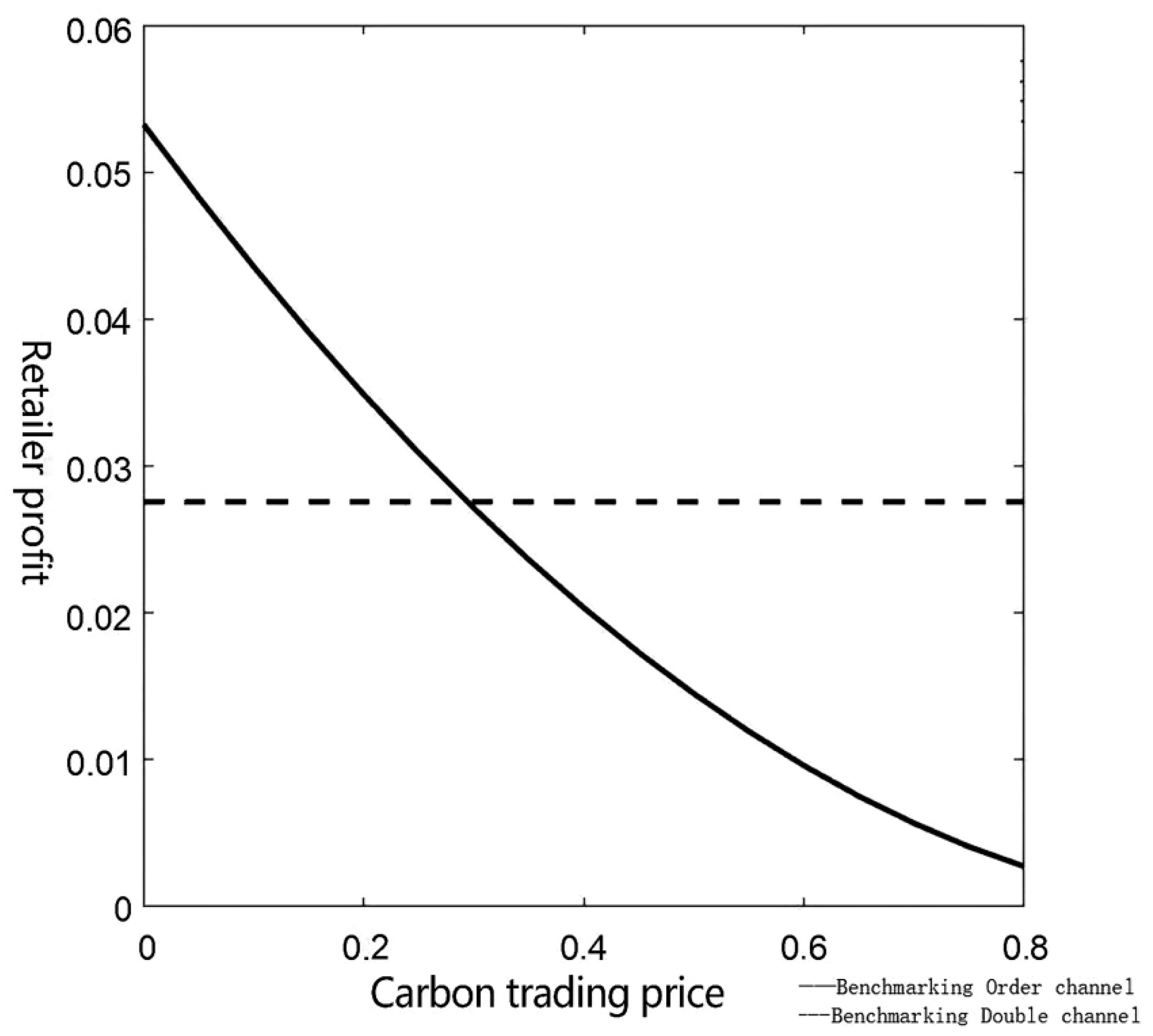
4.2.2. Sensitivity Analysis of Manufacturers’ and Retailers’ Profits to Carbon Trading Prices Under the Manufacturing Benchmark Under the Historical Emissions Approach
4.3. Results Summary and Discussion
5. Discussion
5.1. Research Significance
5.2. Points of Innovation
- (1)
- This paper integrates the government’s various carbon quota allocation policies with profit variations of supply chain enterprises under single- and dual-channel models for analysis. Previous studies have provided preliminary exploration in this area. For instance, Wang et al. (2023) [14] examined the impact of different carbon quota allocation policies on the optimal strategies of supply chains (Wang et al., 2023) [14], while Zhang et al. investigated the emission reduction behaviors of supply chain members under cap-and-trade regulation and consumer low-carbon preferences in single- and dual-channel contexts. Their findings revealed that a joint emission reduction strategy benefits both manufacturers and retailers (Ji et al., 2017) [12]. Building on these studies, this paper further analyzes the impact of different carbon quota policies on the profits of enterprises under dual-channel and single-channel models, thereby establishing a novel research perspective.
- (2)
- Based on the aforementioned innovations, this paper delves deeper into the influence of carbon quota allocation and carbon trading prices on the profits of single- and dual-channel supply chains under different carbon quota allocation policies. Existing research, such as that by Zhang et al., compared the effects of carbon trading prices and carbon emission coefficients on firms’ optimal decisions (Zhang et al., 2024) [21]. Similarly, Li et al. found that appropriate carbon prices could effectively incentivize manufacturers to achieve optimal emission reduction levels (Li et al., 2024) [23]. Building upon these findings, this paper provides a more granular analysis of the impacts of changes in carbon quota levels and carbon trading prices under different policy scenarios, offering practical insights for supply chain stakeholders in channel selection and operational decision-making.
5.3. Research Limitations and Prospects
- (1)
- In simulating the profit models of single-channel and dual-channel supply chains under different carbon quota allocation policies, the parameter values used were primarily based on the ranges proposed by previous scholars in authoritative journals. This reliance on existing literature may impact the practical applicability of the models.
- (2)
- This paper assumes that supply chain enterprises’ decision-making objective is profit maximization. However, in real-world scenarios, factors such as corporate social image may also influence these enterprises’ operational decisions. This singular assumption may result in an incomplete representation of actual corporate behaviour.
- (1)
- Collaborating with relevant institutions and enterprises to collect more extensive and representative data, thereby conducting broader numerical simulations to comprehensively validate and refine the profit models.
- (2)
- Incorporating social image and corporate rationality into the models to account for their potential influence on supply chain decision-making. This approach would enable the development of decision-making models more aligned with real-world scenarios and provide a more comprehensive understanding of supply chain enterprises’ decision-making behaviour.
6. Conclusions
Author Contributions
Funding
Data Availability Statement
Conflicts of Interest
References
- Wang, Q.Q.; Xu, H. A review of China’s carbon trading market. Renew. Sustain. Energy Rev. 2018, 91, 613–619. [Google Scholar] [CrossRef]
- Tian, L.; Vakharia, A.J.; Tan, Y.; Wang, R. Marketplace, reseller, or hybrid: Strategic analysis of an emerging e-commerce model. Prod. Oper. Manag. 2018, 27, 1595–1610. [Google Scholar] [CrossRef]
- Benjaafar, S.; Li, Y.; Daskin, M. Carbon footprint and the management of supply chains: Insights from simple models. IEEE Trans. Autom. Sci. Eng. 2012, 10, 99–116. [Google Scholar] [CrossRef]
- Zhang, L.H.; Dong, K.; Zhang, R. Supply chain strategy selection based on carbon quota trading and emission reduction technology. Chin. Manag. Sci. 2019, 27, 63–72. [Google Scholar]
- Wang, W.; Zhou, C.; Li, X. Carbon reduction in a supply chain via dynamic carbon emission quotas. J. Clean. Prod. 2019, 240, 118244. [Google Scholar] [CrossRef]
- Jin, Y.X. The Impact of Manufacturers’ Channel Encroachment Strategies Considering Consumer Preferences Under the Carbon Trading Mechanism; Beijing University of Chemical Technology: Beijing, China, 2025. [Google Scholar] [CrossRef]
- Wang, Z.; Brownlee, A.E.I.; Wu, Q. Production and joint emission reduction decisions based on two-way cost-sharing contract under cap-and-trade regulation. Comput. Ind. Eng. 2020, 146, 106549. [Google Scholar] [CrossRef]
- Xia, X.Q.; Li, P.H.; Jia, J.H.; Chen, S. Impact of government subsidies on manufacturing/remanufacturing under different carbon allocation mechanisms. Chin. Manag. Sci. 2024, 33, 313–324. [Google Scholar]
- Xu, J.T.; Gao, Y.; Bai, Q.G. Robust emission reduction strategy under different quota allocation methods of carbon trading policy. J. Manag. Eng. 2023, 37, 191–200. [Google Scholar]
- Zhu, Q.H.; Xia, X.Q.; Li, M.Y.; Wu, R. The effect of carbon allowance allocation methods on authorized remanufacturing. J. Manag. Sci. China 2024, 27, 60–75. [Google Scholar] [CrossRef]
- Yang, Q.; Liu, Y.; Ji, K.K.; Deng, Y.; Guo, Q.Z.; Duan, Z.L. Research on provincial transportation carbon quota allocation in China from the perspective of crisis transformation. Environ. Pollut. Control 2025, 47, 122–127. [Google Scholar] [CrossRef]
- Ji, J.; Zhang, Z.; Yang, L. Comparisons of initial carbon allowance allocation rules in an O2O retail supply chain with the cap-and-trade regulation. Int. J. Prod. Econ. 2017, 187, 68–84. [Google Scholar] [CrossRef]
- Han, X.Y.; Yang, X.Y.; Zhang, H.C. Optimization strategies for green platform supply chain systems under carbon trading policies. Syst. Sci. Math. 2024, 45, 398–412. [Google Scholar] [CrossRef]
- Wang, K.; Liu, L.; Zeng, H. Supply chain emission reduction strategies under carbon tax and carbon trading mechanisms. Technol. Innov. Manag. 2023, 44, 292–299. [Google Scholar] [CrossRef]
- Abdulrehman, K.; Yang, J.H.; Lei, M. Price decision analysis of oligopoly firms considering low-carbon preferences under different carbon allocation mechanisms. Econ. Res. Ref. 2024, 1, 86–103. [Google Scholar] [CrossRef]
- Yang, L.; Zheng, C.; Xu, M. Comparisons of low carbon policies in supply chain coordination. J. Syst. Sci. Syst. Eng. 2014, 23, 342–361. [Google Scholar] [CrossRef]
- Yang, S.H.; Xiao, D.D. Channel selection and coordination in two-level low-carbon supply chains. Soft Sci. 2017, 31, 92–98. [Google Scholar] [CrossRef]
- Sun, J.N.; Xiao, Z.D. Emission reduction strategies for low-carbon supply chains considering dual consumer preferences. Chin. Manag. Sci. 2018, 26, 49–56. [Google Scholar] [CrossRef]
- Zhang, L.R.; Xu, H.; Li, Y.F. Emission reduction decisions in dual-channel supply chains under carbon trading. J. Manag. Eng. 2023, 37, 90–98. [Google Scholar] [CrossRef]
- Wu, W.Q.; Zhang, M. Decision analysis of closed-loop supply chains for power batteries under carbon trading and subsidy policies. Chin. Manag. Sci. 2024, 33, 340–354. [Google Scholar]
- Zhang, D.L.; Li, F.; Liang, L. Carbon emission reduction decisions considering consumers’ dynamic green perception under carbon trading. Chin. Manag. Sci. 2024, 33, 269–281. [Google Scholar]
- Wang, D.P.; Yin, Y.; Zhu, M.Y. Research on Emission Reduction Decision of Supply Chain Based on Different Carbon Quota Trading Path. Oper. Res. Manag. 2024, 33, 35–41. [Google Scholar]
- Li, J.; Jiang, H.Q.; Ding, S.Q. Emission reduction strategies and policy design for competitive supply chains under carbon cap-and-trade mechanisms. Chin. Manag. Sci. 2025, 33, 360–368. [Google Scholar] [CrossRef]



| Parameters | Meaning |
|---|---|
| D | Product demand |
| Carbon emission reduction rate per unit product | |
| Consumer acceptance of online channels | |
| Coefficient of consumer utility to carbon reduction rate per unit | |
| Consumer Utility | |
| Consumer value | |
| Unit Price | |
| Wholesale price per unit | |
| Channel cost per unit of product | |
| Cost coefficient of carbon reduction | |
| Carbon emissions per unit of product | |
| Total carbon allowances under the historical approach | |
| Carbon quota per unit product under the benchmark method | |
| Carbon trading price per unit | |
| Offline channels | |
| Online channels | |
| Single Channel | |
| Double Channel | |
| The law of history | |
| Benchmark method |
| Types of Carbon Quota Policies | Channel Modes | Manufacturer’s Profit Change Trend (with the Increase of Total Carbon Quota) | Retailer’s Profit Change Trend (with the Increase of Total Carbon Quota) | Manufacturer’s Profit Change Trend (with the Rise of Carbon Price) | Retailer’s Profit Change Trend (with the Rise of Carbon Price) | Core Conclusions |
|---|---|---|---|---|---|---|
| Grandfathering (Historical Emission Method) | Single Channel | Positive Correlation (the higher the total carbon quota, the higher the profit) | Positive Correlation (the higher the total carbon quota, the higher the profit) | Negative Correlation (the higher the carbon price, the lower the profit) | No Impact | Under the grandfathering method, the total carbon quota has a positive driving effect on the profits of manufacturers in both single and dual-channel modes, and the carbon price only inhibits the manufacturer’s profit. |
| Grandfathering (Historical Emission Method) | Dual Channel | Positive Correlation (the higher the total carbon quota, the higher the profit) | No Impact | Negative Correlation (the higher the carbon price, the lower the profit) | No Impact | The profit of dual-channel retailers is not affected by the total carbon quota and carbon price, and is only determined by the difference between the wholesale price and the offline retail price. |
| Benchmarking (Benchmark Emission Method) | Single Channel | Negative Correlation (the higher the total carbon quota, the lower the profit) | Negative Correlation (the higher the total carbon quota, the lower the profit) | Negative Correlation (the higher the carbon price, the lower the profit) | No Impact | Under the benchmarking method, the total carbon quota has a negative inhibitory effect on the profits of manufacturers in both single and dual-channel modes, and the inhibitory effect of carbon price is consistent with that of the grandfathering method. |
| Benchmarking (Benchmark Emission Method) | Dual Channel | Negative Correlation (the higher the total carbon quota, the lower the profit) | No Impact | Negative Correlation (the higher the carbon price, the lower the profit) | No Impact | Regardless of the type of carbon quota policy, the profit of dual-channel retailers shows the characteristic of “carbon policy immunity”. |
Disclaimer/Publisher’s Note: The statements, opinions and data contained in all publications are solely those of the individual author(s) and contributor(s) and not of MDPI and/or the editor(s). MDPI and/or the editor(s) disclaim responsibility for any injury to people or property resulting from any ideas, methods, instructions or products referred to in the content. |
© 2026 by the authors. Licensee MDPI, Basel, Switzerland. This article is an open access article distributed under the terms and conditions of the Creative Commons Attribution (CC BY) license.
Share and Cite
Shen, H.; Liu, J.; Li, S.; Zhao, J. Decision-Making in Dual-Channel Supply Chains Based on Different Carbon Quota Allocation Policies. Mathematics 2026, 14, 366. https://doi.org/10.3390/math14020366
Shen H, Liu J, Li S, Zhao J. Decision-Making in Dual-Channel Supply Chains Based on Different Carbon Quota Allocation Policies. Mathematics. 2026; 14(2):366. https://doi.org/10.3390/math14020366
Chicago/Turabian StyleShen, Hai, Jiawei Liu, Siyi Li, and Jianbo Zhao. 2026. "Decision-Making in Dual-Channel Supply Chains Based on Different Carbon Quota Allocation Policies" Mathematics 14, no. 2: 366. https://doi.org/10.3390/math14020366
APA StyleShen, H., Liu, J., Li, S., & Zhao, J. (2026). Decision-Making in Dual-Channel Supply Chains Based on Different Carbon Quota Allocation Policies. Mathematics, 14(2), 366. https://doi.org/10.3390/math14020366