Next Article in Journal
Robust Controller Design Based on Sliding Mode Control Strategy with Exponential Reaching Law for Brushless DC Motor
Previous Article in Journal
Understanding the Impact of Flight Restrictions on Epidemic Dynamics: A Meta-Agent-Based Approach Using the Global Airlines Network
error_outline You can access the new MDPI.com website here. Explore and share your feedback with us.
 
 
Article

Research on Risk Contagion and Risk Early Warning of China’s Fintech and Banking Industry from the Perspective of Complex Networks

1
Faculty of Business Administration, Liaoning Technical University, Huludao 125105, China
2
Faculty of Business, Macao Polytechnic University, Macau 999078, China
3
Zhuhai Fudan Innovation Institute, Zhuhai 519031, China
4
College of Computer Science and Artificial Intelligence, Fudan University, Shanghai 200438, China
*
Author to whom correspondence should be addressed.
Mathematics 2026, 14(2), 220; https://doi.org/10.3390/math14020220
Submission received: 20 November 2025 / Revised: 25 December 2025 / Accepted: 5 January 2026 / Published: 6 January 2026
(This article belongs to the Section E2: Control Theory and Mechanics)

Abstract

This study selects daily data from 27 fintech companies and 16 listed commercial banks between January 2015 and December 2024 as research samples. Based on complex network theory, we construct an integrated analytical framework encompassing risk measurement, regime identification, and early warning system construction through HD-TVP-VAR model coupled with the Elastic Net algorithm, MS-AR model, and dynamic Logit model. The findings reveal that the total risk spillover rate between fintech and banking ranges from 73.09% to 95.18%, demonstrating significant time-varying and event-driven characteristics in risk contagion. The risk contagion evolution is characterized by three distinct phases: net risk absorption by the banking sector, bidirectional equilibrium contagion, and net risk dominance by the fintech sector. Joint-stock commercial banks and city commercial banks exhibit higher sensitivity to fintech risks compared to state-owned large commercial banks. Key hubs for risk contagion include institutions like Yinxin Technology and Huaxia Bank, with concentrated risk contagion within industry clusters. The MS-AR model accurately delineates low-, medium-, and high-risk zones, showing strong alignment between high-risk periods and major events. The dynamic Logit model incorporating total risk correlation indices demonstrates high consistency between early warning signals and risk evolution trajectories, providing theoretical and practical references for cross-industry systemic financial risk prevention.
MSC:
62M10; 62P05; 91G70; 91G45; 60H30

1. Introduction

The ripple effects of systemic risks in financial markets could potentially trigger financial crises, causing significant economic disruptions [1,2]. A notable example occurred in March 2023 when Silicon Valley Bank collapsed due to a liquidity crisis, followed by multiple financial institutions in distress. This incident underscores the interconnected nature of the financial system, where risks from individual entities, if not promptly identified, can rapidly propagate through business networks and destabilize the entire financial ecosystem. In recent years, advancements in cutting-edge technologies like big data, artificial intelligence, and blockchain have propelled fintech to become a key driver of socioeconomic development. While fintech has impacted various traditional industries, its transformative effects on the financial sector stand out particularly [3]. On the one hand, digital innovations such as blockchain, IoT, and robo-advisory systems have created new value for commercial banks, fueling industry growth [4,5]. On the other hand, the rapid expansion of fintech has accelerated the rise of online payment platforms, digital investment services, and online lending services, leading to market fragmentation. This shift has reduced commercial banks’ profit margins and poses growing threats to the banking system [6,7].
To effectively address the dual impacts of fintech, China’s commercial banks have gradually increased their investment in fintech and actively promoted the construction of digital transformation. By the end of 2024, more than half of China’s listed commercial banks had reached strategic cooperation agreements with leading internet companies such as JD.com and Tencent; nearly half of the commercial banks had established business sectors for fintech and digital finance. Although these transformation measures have alleviated the impact of fintech to some extent, they have also made the risk correlation model between fintech and the banking industry more complex. China has a bank-based financial system, and the dominant role of banks in indirect financing has made them occupy a major position in China’s financial market, which also concentrates the majority of risks in China’s financial system within the banking system. Therefore, it is crucial to examine the dynamic changes in the risk correlation between fintech and the banking industry and the risk contagion between them, and to explore effective risk early warning pathways accordingly. This research not only clarifies the contagion characteristics of risks between fintech and the banking industry but also provides theoretical support and practical guidance for building a forward-looking risk early warning mechanism and timely blocking risk contagion, which has significant practical implications for preventing systemic risks in the banking sector, maintaining the stability of the financial system, and promoting the healthy development of the real economy.
Based on this, this study selects daily data from 27 fintech companies and 16 listed commercial banks from January 2015 to 27 December 2024 as research samples. By employing the HD-TVP-VAR model coupled with the Elastic Net algorithm, we construct a total risk association index for the fintech and banking sectors to accurately characterize the dynamic contagion characteristics of risks. Meanwhile, leveraging the MS-AR model to identify risk regime states, we embed 20 early-warning indicators across six dimensions into a dynamic Logit model after principal component analysis, achieving effective integration between risk state identification and dynamic early warning.

2. Materials and Methods

2.1. Literature Review

2.1.1. Risk Correlation Mechanism Between Fintech and Banking

Current research on risk linkages between fintech and banking primarily focuses on two aspects: the enabling role of fintech in banking development, and the competitive dynamics between fintech companies and commercial banks. Banna et al. [8] argue that the enhanced financial inclusion brought by fintech can strengthen bank stability. Grennan and Michaely [9] point out that fintech can mitigate information asymmetry in banks and control transaction costs. Cheng and Qu [10] found that increased adoption of fintech by banks reduces non-performing loan ratios. However, on the other hand, fintech companies represented by lending and investment platforms have, to some extent, encroached on the traditional business space of commercial banks, directly impacting the existing value chain system of the banking industry and thereby exacerbating operational risks [11]. Wang et al. [12] suggests that the development of fintech enterprises not only intensifies the overall risk-taking behavior of commercial banks but also triggers asset quality deterioration effects, which are more pronounced in banks with large scale, low operational efficiency, high shadow banking business proportions, and strong dependence on interest income. Li et al. [13] conclude that fintech significantly promotes risk spillovers and increases systemic risks for financial institutions.

2.1.2. Research on Risk Contagion Network

Scholars have measured risk spillovers and related networks primarily from the perspectives of “asset linkages” [14,15] or “price discovery” [16,17,18] to identify inter-institutional network linkages. Due to the significant challenges in data acquisition and updating for the “asset linkage” approach, the “price discovery” method based on high-frequency trading data has gained widespread recognition. For example, Hardle et al. [17] proposed the TENET method to construct tail risk networks, while Billio et al. [18] used Granger causality tests to build variable linkage networks. However, these two methods only consider pairwise relationships, limiting their global measurement capabilities. To address this, scholars have further proposed globalized network measurement models. Among them, the generalized variance decomposition method proposed by Diebold and Yilmaz [16] can accurately characterize the linkage effects of institutional networks. Subsequently, a large number of studies based on the DY framework have emerged, such as Shahzad et al. [19], who explored the asymmetric characteristics of volatility spillovers across industries in China, and Uddin et al. [20], who constructed a risk spillover network among the bond markets of the four ASEAN countries. However, traditional static models struggle to capture the dynamic evolution of risks, while the emergence of high-dimensional time-varying models has significantly enhanced the measurement tools for risk spillovers and interconnection networks. Cogley and Sargent [21] pioneered the Time-Varying Parameter Vector Autoregression (TVP-VAR) model, focusing solely on coefficient time-varying. Primiceri [22] later extended this to a full-time-varying coefficient-variance-covariance framework. Koop and Korobilis [23] introduced the forgetting factor in Kalman filtering to address estimation efficiency challenges in high-dimensional scenarios. Antonakakis et al. [24] noted that sliding-window VAR methods often lose critical information when studying time-varying spillover effects, advocating for time-varying parameter VAR (TVP-VAR) to describe risk spillovers across financial markets. However, this approach faces severe dimensionality curse issues.

2.1.3. Systemic Risk Warning

Current early warning models are primarily categorized into four types: First, traditional econometric models such as ARMA, ARIMA, and GARCH, which are not adept at modeling time series with complex characteristics like nonlinearity and non-stationarity. Second, signal-based methods including the FR model [25] and the widely-used KLR model [26], though their application in non-financial crisis countries faces significant limitations. Perraudin et al. [27] proposed the Logit model, which captures nonlinear relationships. Third, Hamilton [28] pioneered the Markovian transition model, which demonstrates notable advantages in detecting structural breaks and capturing time-varying volatility [29], and has been extensively applied in financial risk early warning with economically sound conclusions. Fourth, neural network and machine learning models. Wang et al. [30] and Casabianca et al. [31] have demonstrated the superior predictive accuracy of machine learning methods. However, these models are often classified as black-box models, unable to directly provide statistical significance of predictors or effectively reveal causal relationships between variables. Audibert et al. [32] compared traditional methods, machine learning-based approaches, and deep neural network techniques, finding that algorithms with higher model complexity did not demonstrate consistent advantages. In variable selection, earlier researchers constructed risk indices using five categories of indicators: interest rates, exchange rates, M2 Growth Rate (YoY), stock prices, and housing prices [33,34,35]. Subsequently, more variables were incorporated into the indicator systems based on specific research objectives [36,37,38]. However, the early warning indicator systems had not yet included fintech market volatility as a novel risk factor.
While current research has yielded substantial achievements in examining the risk linkages between fintech and banking, measuring risk contagion networks, and developing systemic risk early warning systems, several limitations remain. First, most existing studies oversimplify the risk relationship between fintech and banking into unidirectional impacts or analyze it solely from empowerment and competition perspectives. While these approaches validate the direction of fintech’s influence on banking risks, they overlook the intrinsic connections formed through deep integration, failing to reveal the dynamic evolution of risk linkages. Second, traditional tools like VAR models and static network analysis are constrained by the “dimension curse”, making them ill-suited for handling the complex cross-sectoral relationships involving multiple stakeholders in the fintech-banking ecosystem. These methods not only demonstrate low estimation efficiency and insufficient accuracy but also lack the capability to construct dual-risk networks, thereby failing to identify cross-level contagion risks. Third, in the field of systemic risk early warning, existing research relies on macro composite indices. Although these indices reflect the overall risk level of financial systems, they struggle to precisely capture the dynamic processes of cross-sectoral risk contagion. Moreover, they cannot preemptively identify systemic risks triggered by sudden shifts in inter-industry correlations, resulting in vague warning targets and insufficient foresight.
The marginal contributions of this paper are as follows: first, it focuses on the bidirectional risk linkage characteristics under the deep integration of fintech and banking, taking into account the time-varying patterns at different stages of industry development. By constructing a dual risk network for the fintech and banking sectors, it breaks through the constraints of traditional analytical frameworks, reveals cross-level contagion mechanisms, and fills the geographical gap in research on emerging markets. Second, it employs the HD-TVP-VAR model coupled with the Elastic Net algorithm, achieving high-dimensional variable sparsification through parameter penalty terms to overcome high-dimensional modeling challenges. This establishes a risk association measurement-risk zone identification-dynamic early warning analysis framework, effectively bridging risk status recognition with dynamic early warning while addressing the imbalance between explanatory power and predictive accuracy in traditional models. Third, it innovatively uses the aggregate risk association index of fintech and banking as an early warning indicator, breaking the limitation of traditional systemic risk warnings that rely on macro-comprehensive indices. This approach better aligns early warning targets with the integration characteristics of fintech and banking, enhancing the precision and foresight of cross-industry risk warnings.

2.2. Methodology Introduction and Data Description

Risk Contagion Network Model-HD-TVP-VAR Model

1.
Construction of HD-TVP-VAR Model
This study adopts the high-dimensional time-varying vector autoregression (HD-TVP-VAR) model proposed by Koop and Korobilis [23], incorporating a forgetting factor, as shown in Equation (1). It employs a risk spillover network to map the dynamic evolution of systemic risks between the fintech sector and the banking industry.
Y t = i = 1 p Φ i t Y t i + ε t
Here, Y t denotes an n-dimensional column vector representing the dependent variables of n institutions Φ it in the fintech and banking sectors during period t, while the n × n lag coefficient matrix captures Z t 1 = Y t 1 T , Y t 2 T , , Y t p T n p × 1 T ,   Φ t = Φ 1 t , Φ 2 t , , Φ p t n × n p the p-period lagged effects of all institutions on each other. By defining the parameters in Equation (1), the model can be simplified as follows:
Y t = Φ t Z t 1 + ε t
Furthermore, it is Φ t assumed that the following random walk process is followed:
Φ t = Φ t 1 + μ t
The error term ε t is normally N 0 ,   Σ t distributed μ t   N 0 ,   Σ t   μ t , In addition, for any t and s, ε t and μ t are independent of each other.
(1) Sparse structure estimation. Given the 43 variables involved—far exceeding the scope of traditional VAR models—we employ the Elastic Net algorithm, which combines ridge regression and Lasso methods, to reduce dimensionality and construct the HD-TVP-VAR model. By optimizing the Kalman filter algorithm with a forgetting factor proposed by Koop and Korobilis [23], we incorporate a parameter penalty term into the ordinary least squares objective function. This transforms the estimation of TVP-VAR coefficients into an optimization problem, thereby enhancing the model’s estimation efficiency and stability, as detailed in Equation (4):
Φ ^ t = arg min Φ t t = 1 T Y t Φ Z t 1 p 2 + λ Φ t 1 + 1 α Φ t 2 2
The α parameter controls the weight of the L1 norm penalty term, balancing model complexity and fitting performance. Elastic Net compresses coefficients close to zero to zero, reducing computational complexity and minimizing noise interference.
(2) Time-varying coefficient estimation. The Kalman filtering technique is employed to estimate the time-varying parameters of the HD-TVP-VAR model, with the core assumption that the coefficients follow a normal distribution. The corresponding measurement equations and state equations are as follows:
Measurement   equation :   Y t = Φ t Z t 1 + ε t
State   equation :   Φ t = Φ t 1 + μ t
The traditional inference Φ t of the coefficients in Kalman filter is realized by Bayesian method:
Φ t 1 Ω t 1 ~ N Φ t 1 t 1 , V t 1 t 1
Φ t Ω t 1 ~ N Φ t t 1 , V t t 1
In traditional Kalman filtering, the time V t t 1 V t 1 t 1 varying variance of coefficients must adhere to the relationship defined by Equation (9). However, Koop and Korobilis [23] refined Equation (9) by incorporating a forgetting factor λ t , yielding Equation (10) without requiring the time-varying variance μ t mediated by coefficient residuals Q t .
V t t 1 = V t 1 t 1 + Q t
V t t 1 = 1 λ V t 1 t 1
The residual variance-covariance matrix is estimated by the exponential weighted moving average method, and the Formula (11) is obtained. The K t represents the forgetting factor of the model’s residual variance-covariance matrix.
t = K t t 1 + 1 K t ε ^ t ε ^ t
Here, the λ t forgetting factor ( α ) indicates that higher values reflect stronger historical correlations and long-term memory characteristics 0.9 , 1 in the variables. As referenced by Koop and Korobilis [23], its value range is defined as.
2.
Construction of Risk Spillover Effect Indicators
Building upon Diebold and Yilmaz’s [16] generalized variance decomposition approach, we develop a risk network correlation metric for the fintech and banking sectors. Unlike the conventional Cholesky method, this approach objectively quantifies how an institution’s shock impacts other variables within the system, as shown in Equation (12).
d i j t H = σ i j t 1 h = 0 H 1 e i Θ h t Σ t e j 2 h = 0 H 1 e i Θ h t Σ t Θ h t e i
Here, d i j t H denotes the percentage of cumulative impact from all shocks experienced by institution j during period t to t − H + 1 within the variance of institution i at period t. e j or e i represents a specific selection vector, where the i or j element is set to 1 and all others are 0. σ i j t is the j diagonal element in the covariance matrix of residuals from the HD-TVP-VAR model. The prediction window h is set to 10. Θ h t represents the parameters of the infinite-order vector moving average model T V P V M A . Due to operational challenges in direct estimation, the parameters of the p order vector autoregressive model V A R p are first estimated, and then mapped to the parameters of the V M A model through the corresponding transformation relationship, following the conversion process described in Formula (13):
Θ i t = j = 1 p Φ j t Θ i j t
In this context, Θ 0 t is defined as the identity matrix, while Σ denotes the covariance matrix of the prediction error in the V A R p model.
Since the sum of the elements in the generalized variance decomposition matrix calculated by Formula (13) usually does not equal 1, it requires standardization. The calculation formula is shown in Formula (14):
d ˜ i j t H = d i j t H j = 1 N d i j t H
Based on the transformed generalized variance decomposition matrix, we construct the risk network correlation matrix between the fintech industry and the banking sector (Table 1), and further develop the risk spillover effect indicators.
(1) Total Risk Connectedness Index (TCI). This metric quantifies the average spillover effect of a system by summing all non-diagonal elements of the generalized variance decomposition matrix and dividing by the total number of variables within the system. The calculation formula is as follows:
T C I t H = i , j = 1 , i j N d ˜ i j t H i , j = 1 , i = j N d ˜ i j t H × 100 = 1 N i , j = 1 , i j N d ˜ i j t H × 100
(2) Sectoral Correlation Index. Measures the spillover of risks between fintech and banking sectors, either within or across industries.
Group Internal Index (GII): A metric that quantifies the aggregate risk correlation within a sector.
G I I m t H = j V m i V g , j i d ˜ i j t H × 100
where Vm denotes the set of institutions in industry m.
Cross Group Index (CGI): A metric that quantifies the risk correlation between different sectors.
C G I n / m , t H = j V m i V n d ˜ i j t H × 100
Here, n and m represent different industries, while Vm and Vn denote the sets of institutions belonging to industry m and industry n, respectively.
(3) Directed correlation index, which describes the spillover correlation between a single variable and the other variables in the system, including out-degree index, in-degree index and net out-degree index.
The out-degree measures the spillover effect of the i-th variable on all other variables in the system, as defined in Formula (18):
T o i t H = C i . , t H = j = 1 , j i N d ˜ j i t H × 100
The in-degree measures the total spillover effect that the i-th variable receives from all other variables in the system, as defined in Equation (19):
F r o m i t H = C i . , t = j = 1 , j i N d ˜ i j t H × 100
(4) Net Spillover Index (Net): This metric quantifies the net spillover effect of the i-th variable on all other variables within the system, as defined in Equation (20):
N e t i t = T o i t F r o m i t
(5) Risk State Identification Model-MS-AR Model
The Markov zone transition model proposed by Hamilton [28] captures nonlinear characteristics of time series through zone division and Markov chain state transitions, while automatically identifying financial risk states to minimize subjective interference. This study employs the Markov-Switching-Heteroscedastic Transition Model (MSMH-AR), which synchronously adjusts disturbance term variances during state transitions, better aligning with the clustered volatility patterns of risk series. For first-order Markov transition models with N distinct zone states, the expressions are presented in Equations (21)–(23).
  φ L Y t μ S t ε t = 0 ; ε t ~ 0 , σ S t 2
μ S t = μ 0 + μ 1 S t
σ S t 2 = σ 0 + σ 1 S t
φ L is a lag operator polynomial, which characterizes the autoregressive dynamics of the time series by a p-th order lag structure. Y t is the time series variable to be explained. S t is a Markovian transition variable with N states, μ S t and σ S t 2 are the intercept and variance of the disturbance term corresponding to different states, respectively.
The core feature of the first-order Markov transition model S t is that the probability of being in state j at time t is determined solely by the state i at time t − 1:
  P S t   =   j S t 1   =   i   =   P ij t
The transition P ij t probability is usually constant, and the corresponding transition probability matrix can be expressed as:
  P   =   P 11 P 12 P 1 N P 21 P 22 P 2 N P N 1 P N 2 P NN
The total risk i   =   1 ,   2 , , N   P i 1 + P i 2 + + P i N   =   1 correlation index is divided into three states (denoted as 1, 2, 3) with corresponding transition probability matrices.
  P = P 11 P 21 P 31 P 21 P 22 P 23 P 31 P 32 P 33
and satisfy P 11 + P 12 + P 13   =   1 ,   P 21 + P 22 + P 23   =   1 , P 31 + P 32 + P 33   =   1 .
(6) Risk Early Warning Model-Dynamic Logit Model
To achieve systematic risk early warning, this paper adopts the FR probability model approach and constructs a dynamic Logit model incorporating the delayed effects of crises. The risk occurrence probability is measured through historical data, with the specific settings as follows:
The financial crisis is modeled as a discrete dummy variable Y t , where Y t = 1 when the total risk correlation index is in the high-risk zone and Y t = 0 in the low or medium-risk zones. X t represents the various factors that trigger the crisis, with β being the parameter to be estimated. The basic expression for the probability of a financial crisis occurring is:
  P Y t   =   1   =   F X t , β
  P Y t = 0 = 1 F X t , β
Here, F denotes the cumulative distribution function, with the specific form being the Logit distribution.
P Y t = 1 = F X t , β = 1 1 1 + e β X t
The model parameters are solved by the maximum likelihood estimation method, and the corresponding logarithmic likelihood function is:
l n L   =   Σ Y t l n e β X t 1 + e β X t + 1 Y t 1 l n e β X t 1 + e β X t
Taking the logarithmic transformation of Equation (29), we obtain Equation (31):
l n P t 1 P t   =   β 0 + β X t
The corresponding probability expression is:
P t   =   e β X t 1 + e β X t   =   e β 0 + β 1 x 1 + + β i x i + ε 1 + e β 0 + β 1 x 1 + + β i x i + ε
Since the financial crisis will still affect the financial system in the recovery period, it is necessary to consider the dynamic change when constructing the early warning model.
l n P t 1 P t = β 0 + β X t + γ Y t 1
P t = e γ Y t 1 + β X t 1 + e γ Y t 1 + β X t = e β 0 + β 1 x 1 + + β i x i + γ Y t 1 + ε 1 + e β 0 + β 1 x 1 + + β i x i + γ Y t 1 + ε
(7) Data Description
The early form of China’s fintech development was characterized by internet finance. In 2015, the People’s Bank of China, together with ten ministries, issued the “Guiding Opinions on Promoting the Healthy Development of Internet Finance, ” which provided institutional norms for the development of internet finance in China and clarified market order. Therefore, the sample period of this paper covers from 5 January 2015, to 31 December 2024. From the constituent stocks of the CSI Fintech Theme Index (930986. CSI), we selected fintech companies listed after 2015, ultimately determining 27 fintech industry companies and 16 listed commercial banks. As shown in Table 2, there are a total of 43 variables and 2431 daily transaction data points, all sourced from the Wind database. The daily closing prices of each variable were logarithmically transformed and differenced, converting them into logarithmic returns. Further, the volatility of each variable was calculated using the GARCH model to measure individual risks.

3. Network Analysis of Risk Contagion Between Fintech and Banking

3.1. Time-Varying Characteristics of Risk Contagion Between Fintech and Banking

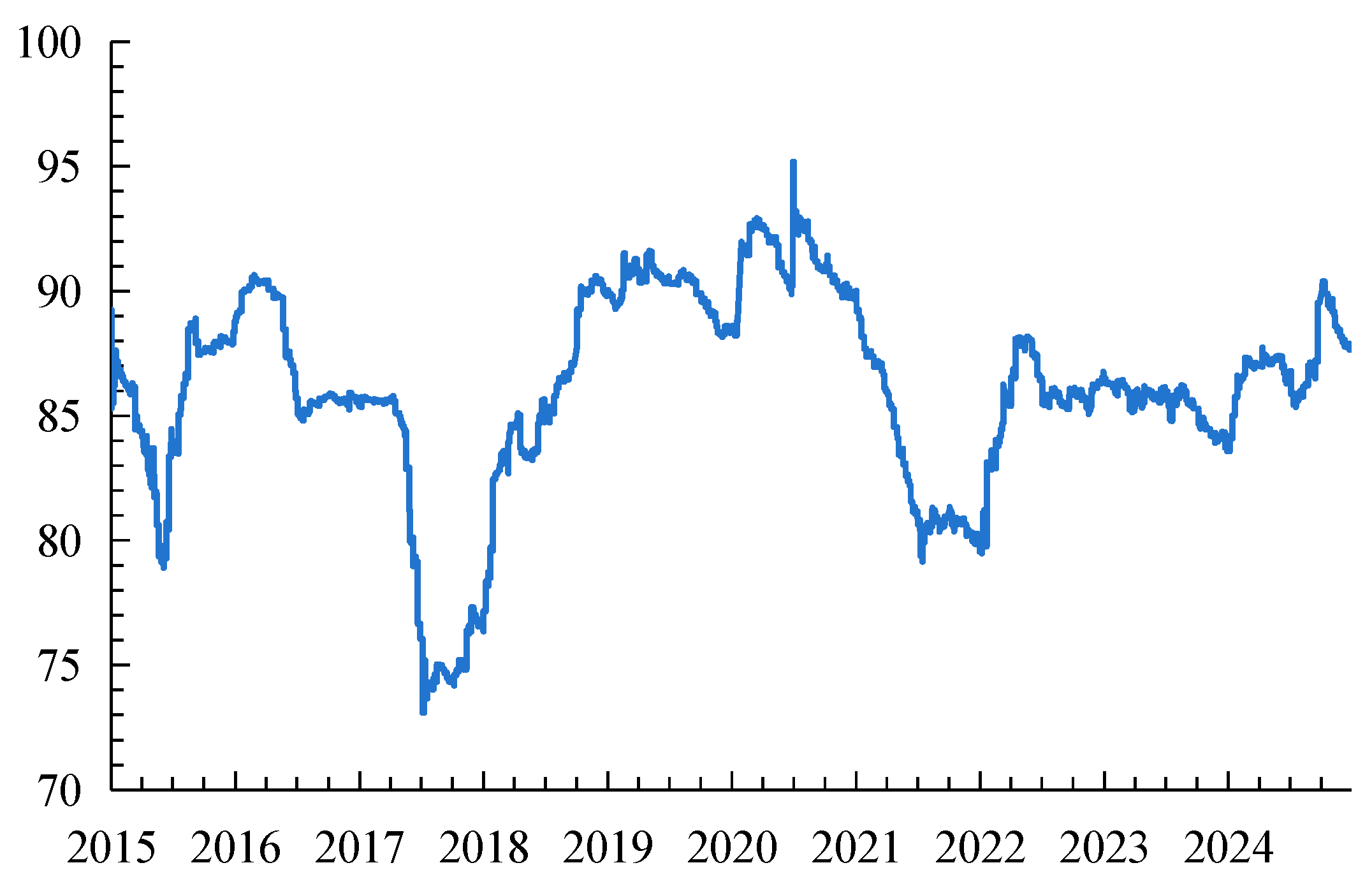
Figure 1 illustrates the overall trend of risk spillovers between the fintech and banking sectors, as measured by the HD-TVP-VAR model. The total risk spillover fluctuates between 73.09% and 95.18%, indicating a significant and strong spillover effect between the two industries. The spillover trajectory exhibits both time-varying characteristics and event-driven patterns, with “jumps” occurring during major risk events. The 2015 A-share market crash caused asset depreciation in both sectors, triggering bidirectional risk contagion. The 2018 Sino-US trade war heightened economic uncertainty, spreading risks through credit and interbank operations. The 2020 COVID-19 pandemic disrupted offline services and cybersecurity, temporarily amplifying spillover effects. The 2022 Russia-Ukraine conflict triggered financial market turbulence, impacting cross-border operations and asset valuations in both industries. These critical risk fluctuations not only confirm the pattern that “increased correlation signals systemic risk, “but also validate the HD-TVP-VAR model’s precision in capturing dynamic risks.

3.2. Time-Varying Characteristics of Internal Risk Contagion in Fintech and Banking

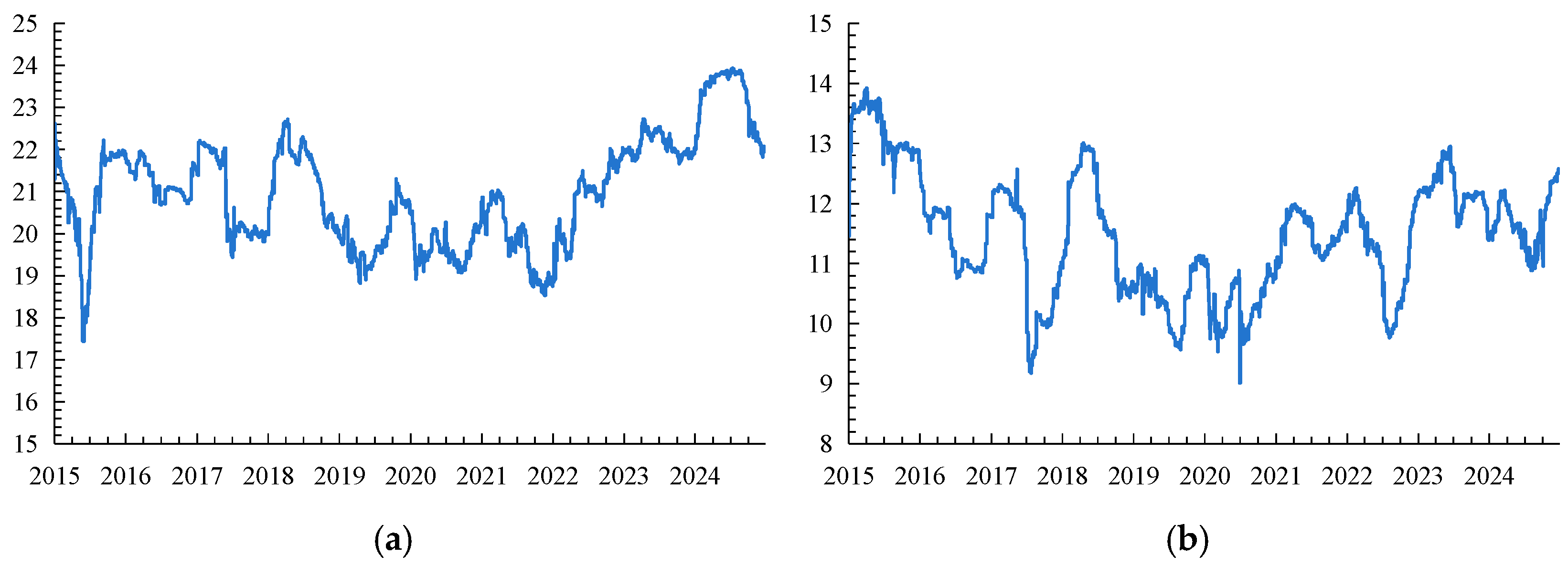
Figure 2 illustrates the divergent trends in risk spillovers between the fintech industry and banking sector. The fintech industry’s internal risk spillovers exhibited a high-volatility upward trajectory, with a fluctuation range of 17.44 to 23.93 between 2016 and 2024. Key drivers included policy-driven industry expansion in 2015, stock market volatility triggering risk contagion, the 2018 P2P lending crisis and escalating trade tensions exacerbating market volatility, brief regulatory containment in 2019, and the COVID-19 pandemic, geopolitical conflicts, and intensified industry competition after 2020, all of which drove significant spillover increases. In contrast, banking sector internal risk spillovers remained at a low, manageable level, fluctuating between 9.01 and 13.92 from 2015 to 2024. Benefiting from regulatory requirements like new wealth management rules and Basel III, along with optimized risk control technologies, the sector experienced limited short-term fluctuations despite external shocks such as trade tensions and COVID-19. However, after 2022, rising funding costs and pressure on cross-border operations led to gradual moderate increases. The core difference in spillover patterns stems from the fintech industry’s innovation-driven nature, rapid business iteration, and prominent compliance and technological risks, while regulatory frameworks lag behind industry development. The banking sector, with its mature business models, robust risk control systems, and stringent regulatory constraints, demonstrates stronger risk resilience. Notably, during critical periods like the 2015 stock market crash, 2018 trade war, and 2020 pandemic, both industries saw synchronized spillover increases, reflecting how external shocks trigger systemic financial market volatility through shared channels like asset shrinkage and liquidity pressures. This demonstrates the two sectors’ coordinated response to systemic risks.

3.3. Analysis of Risk Contagion Relationship Between Fintech and Banking

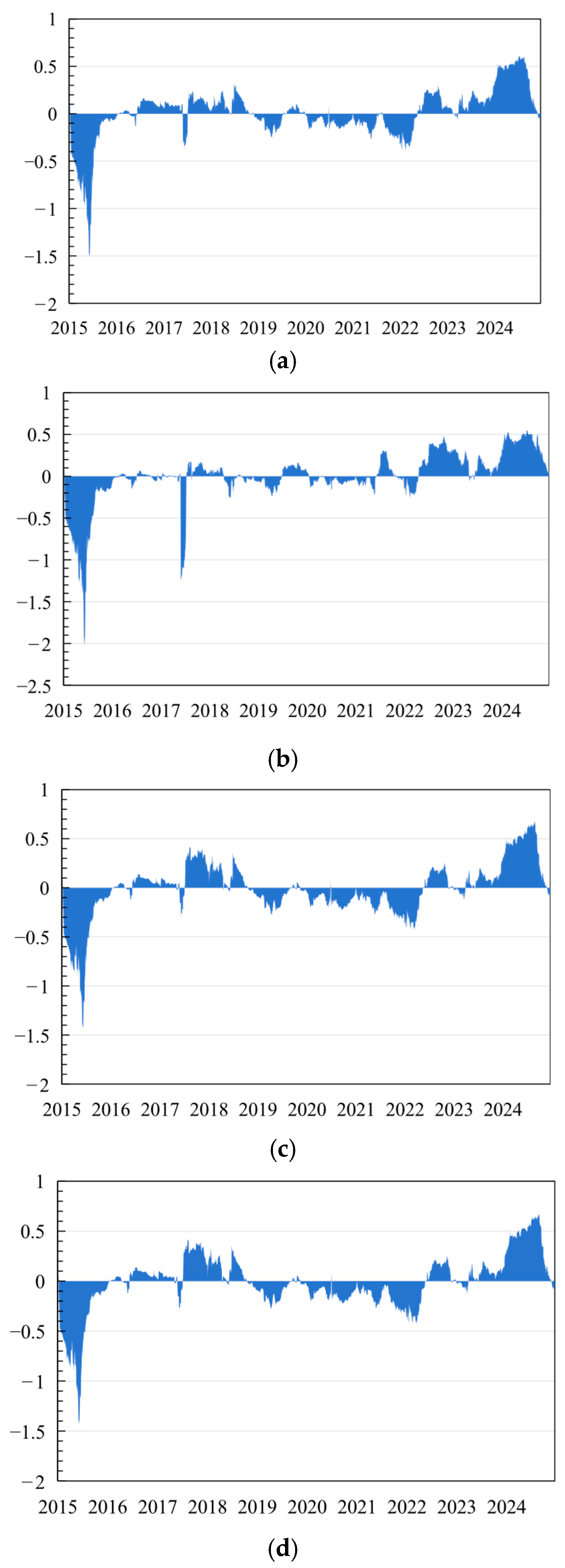
Figure 3 illustrates the risk contagion trends of the fintech industry to the banking sector (including three subsectors) from 2015 to 2024. The risk contagion index is calculated as: (Fintech industry’s risk spillover to banking sector-Banking sector’s risk spillover to fintech industry)/Fintech industry’s risk spillover to banking sector. An index greater than 0 indicates that the fintech industry is the net risk transmitter. The specific characteristics are as follows:
The 2015–2016 period marked a phase dominated by risk absorption, with the index remaining consistently negative and hitting a low of −1.511. The banking sector passively absorbed risks from the fintech industry. During this period, the P2P industry expanded rapidly, causing significant capital outflows from the banking system. Banks faced pressures from deposit losses and deteriorating asset quality, compounded by frequent credit defaults in the industry. As a result, the net spillover effect of fintech on state-owned and joint-stock commercial banks weakened. In contrast, city commercial banks, with their flexible operational mechanisms, experienced relatively lighter risk absorption pressures.
The period from 2017 to 2021 marked a risk contagion equilibrium phase, during which the index exhibited frequent fluctuations within a positive-negative range, peaking at 0.32, signaling a shift toward a two-way interactive risk contagion model. In 2018, when the P2P industry experienced a concentrated wave of defaults, state-owned commercial banks emerged as primary risk absorbers due to their capital strength and operational advantages. Joint-stock banks, leveraging their deep integration with the fintech sector, demonstrated bidirectional risk contagion characteristics, while city commercial banks became risk recipients owing to their close regional collaborations. During the early stages of the 2020 pandemic, restricted offline banking operations and elevated risk levels turned banks into sources of risk spillovers. Meanwhile, the fintech industry, benefiting from the contactless economic model, exhibited a reduced risk contagion effect.
The period from 2022 to 2024 marked the dominant phase of risk contagion, during which the index transitioned from negative to positive and peaked at 0.61, with the fintech sector emerging as the primary source of net risk contagion. Regulatory tightening in early 2022 temporarily curbed risk contagion, but subsequent factors including global inflation, geopolitical tensions, and regulatory reforms led to increased index volatility. Different bank types exhibited distinct vulnerability patterns: state-owned commercial banks, with their strong in-house fintech capabilities and low reliance on external partnerships, were less affected. In contrast, joint-stock commercial banks and city commercial banks, constrained by limited resources and close operational ties, demonstrated more pronounced risk contagion effects.

3.4. Risk Contagion Network Analysis of Fintech and Banking

Using complex network theory, we compute the average risk spillover matrix at each time point to derive the full-sample matrix. This enables us to measure the out-degree, in-degree, centrality, net out-degree, eigenvector centrality, and PageRank scores of each fintech company and bank, followed by ranking. Table 3 presents the top 5 companies in the fintech and banking sectors by these metrics.
In the fintech sector, Sinodata, Yinxin Technology, and Hengbao Co., Ltd. rank as the top three in out-degree, in-degree, centrality, and net out-degree. These firms serve dual roles as both primary risk exporters and high-risk absorbers. Sinodata demonstrates exceptional risk contagion efficiency through its core business of supporting banks’ digital transformation. Yinxin Technology leads the industry in both eigenvector centrality and PageRank score, reflecting its superior node quality and strategic position within the network. This positioning results in more complex risk contagion pathways and broader impact ranges.
In the banking sector, China Huaxia Bank, China Everbright Bank, and Industrial Bank rank highest in out-degree, centrality, and net out-degree, respectively. As key industry connectors, these institutions actively contribute to risk spillover and are classified as net risk exporters. Conversely, China Everbright Bank, China Construction Bank, and China Huaxia Bank lead in in-degree, demonstrating heightened sensitivity to external risks. Notably, China Everbright Bank, China Construction Bank, and China Huaxia Bank also top the rankings in both eigenvector centrality and PageRank scores, reflecting their superior connectivity and strategic importance within the banking network.
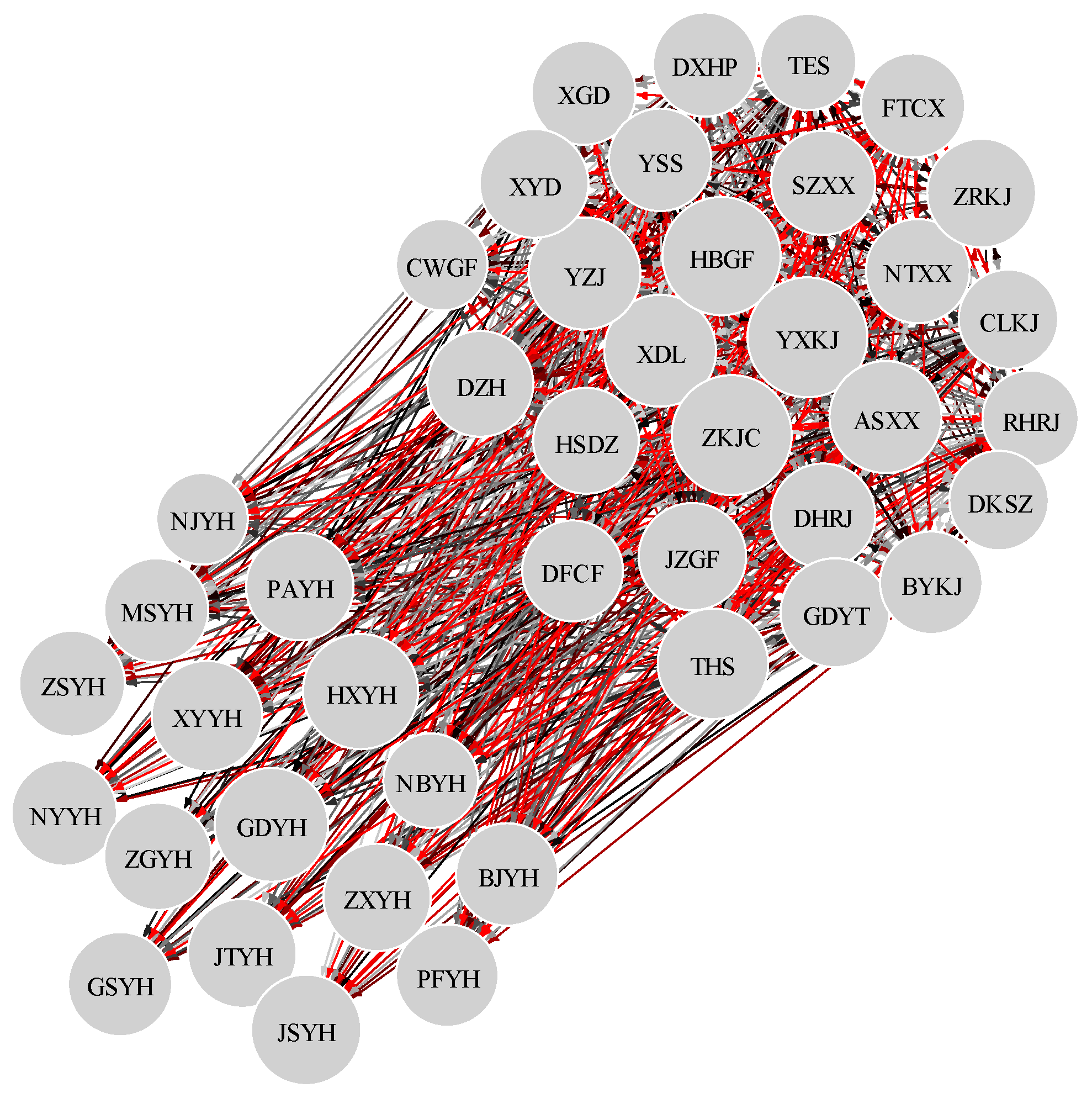
To visually demonstrate the risk contagion network, this study employs the Fruchterman-Reingold algorithm to construct a full-sample risk spillover network diagram (Figure 4). The nodes’ sizes reflect their centrality, while edge thickness and arrow sizes indicate risk spillover weights. Figure 4 reveals that core fintech nodes like YinXin Technology and Sinodata, along with banking hubs such as Huaxia Bank, not only possess substantial scale but also exhibit tight interconnections, serving as critical risk contagion hubs. Their risks can rapidly spread through business collaborations and technological linkages. In contrast, peripheral nodes like Runhe Software and Topshare demonstrate smaller scales and lower centrality, exhibiting weaker risk reception and contagion capabilities. The network also exhibits distinct clustering patterns: Fintech companies like Sunyard Da cluster around banks’ digitalization needs, where similar business models and technological applications facilitate rapid risk diffusion. Meanwhile, state-owned commercial banks such as Agricultural Bank of China and Bank of China form clusters through operational synergies and capital flows, establishing tightly knit networks based on core services like capital financing and payment clearing.

4. Early Warning Analysis of Risk Contagion Between Fintech and Banking Results

4.1. Identification of Risk Contagion Status

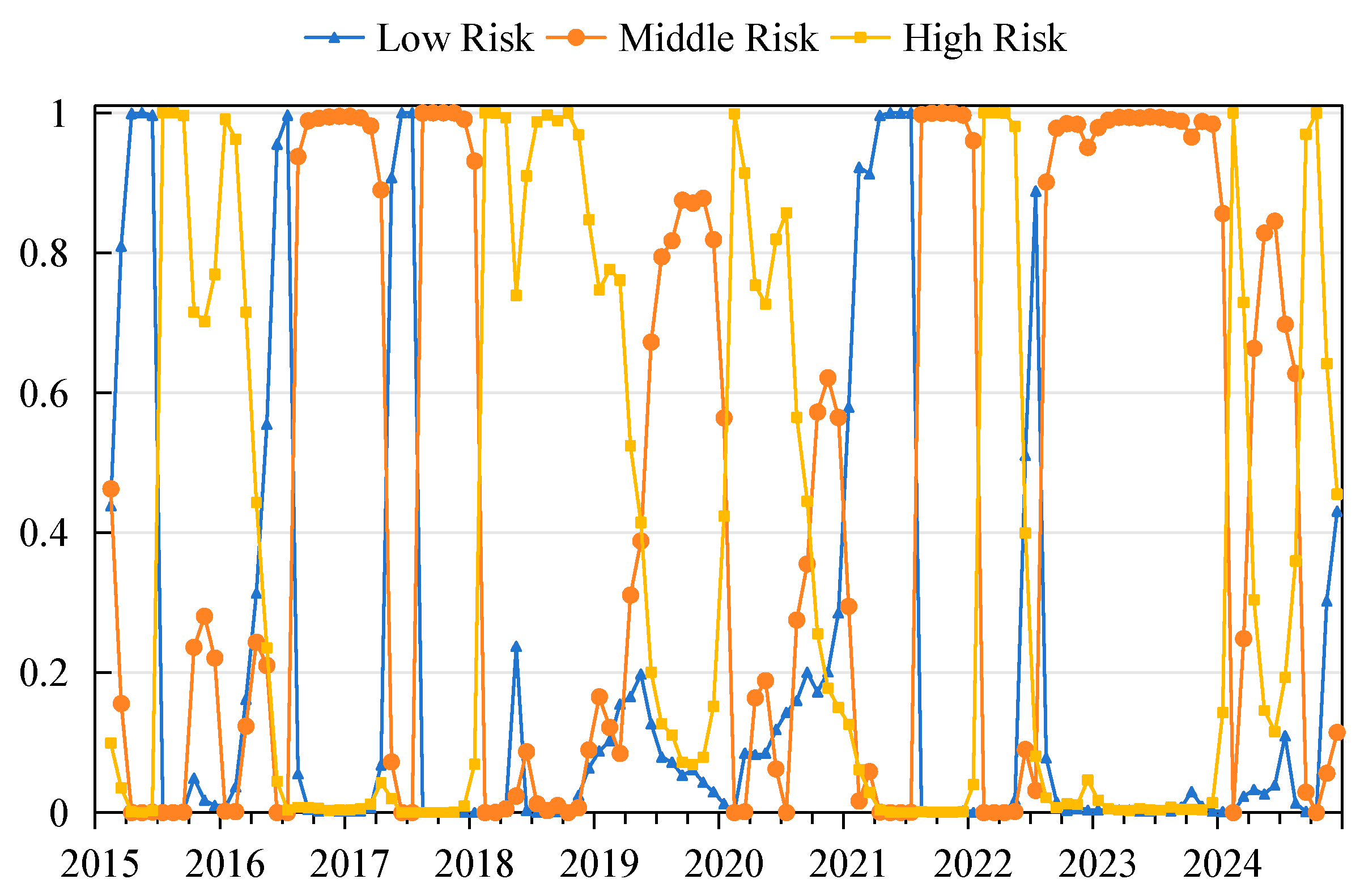
The TCI, derived from the risk contagion network analysis between fintech and banking, was used to measure the risk contagion level. A Markov Self—Regressive (MS—AR) model was constructed. Comparisons were made between MS—AR models with 1–3 lag orders and those with two—region and three—region configurations. After a comprehensive evaluation of AIC, BIC, and LLH criteria, the three—region MS—AR model with a 1—lag order was selected. According to Hamilton’s [28] criterion, if the probability of a system being in a certain state at time t exceeds 0.5, it is considered to be in that state. The distribution periods of the high-risk zone are shown in Figure 1, and these periods closely align with historical major events.
The high-risk periods are primarily concentrated in six timeframes: July 2015 to March 2016, February 2018 to April 2019, February to August 2020, February to May 2022, February to March 2024, and September to November 2024. Specifically, during 2015–2016, the stock market experienced severe volatility. Fintech companies deeply engaged in stock trading through off-exchange margin financing, with risks transmitted along capital chains to banks, driving up the total risk correlation index. From 2018 to 2019, the P2P industry’s concentrated defaults implicated bank collaboration businesses, compounded by financial market turbulence caused by Sino-US trade frictions. This dual impact kept the total risk correlation index at high levels. In 2020, the COVID-19 outbreak impacted the real economy, escalating bank credit and liquidity risks while increasing default risks of fintech-related products. Panic-driven declines in capital markets further transmitted risks. In 2022, the Russia-Ukraine conflict drove up energy and commodity prices, while the Federal Reserve’s interest rate hikes triggered capital outflows, spreading cross-border fintech risks to the banking system. The two high-risk periods in 2024 were driven by factors such as Federal Reserve rate hikes and domestic real estate market adjustments.
The results show that the Markov transition model can accurately identify the high-risk state of the total risk correlation index, effectively capture the major risk events in the financial system, and has a strong ability to identify the risk state (Figure 5).

4.2. Risk Early Warning Analysis Based on Logit Model

4.2.1. Indicator System Construction

Guided by the principles of comprehensiveness, sensitivity, availability, and relevance, this study synthesizes existing research on systemic risk early warning systems. It establishes a comprehensive risk correlation index early warning framework comprising 20 indicators across six dimensions: economic fundamentals, monetary policy environment, banking system, domestic financial market conditions, global financial market conditions, and international environment (see Table 4). The data primarily derives from Wind Database, the official website of the National Bureau of Statistics, and the website of the China Banking and Insurance Regulatory Commission (CBIRC).

4.2.2. Results of Principal Component Analysis

Principal Component Analysis (PCA) is a dimensionality reduction technique based on linear correlation of variables. Through orthogonal linear transformation, it converts multiple correlated original variables into mutually independent composite variables. Its core objective is to achieve low-dimensional mapping of high-dimensional data while minimizing information loss, thereby simplifying data analysis and ensuring the validity of results. To verify the applicability of the selected early warning indicator data for PCA, we first conducted the KMO test and Bartlett’s sphericity test. The KMO test value of 0.66, greater than 0.6, indicates strong partial correlation among variables, confirming the data structure meets the prerequisite for PCA application. The p-value of Bartlett’s sphericity test (0.0000) was significant at the 1% significance level, rejecting the null hypothesis of variable independence and further demonstrating significant linear correlations between indicators, indicating suitability for PCA. Subsequently, we screened principal factors based on the criterion of cumulative variance contribution exceeding 80%. Table 5 data shows that the cumulative explanatory ratio of the first seven principal components (F1–F7) reaches 80.12%, effectively retaining most information from the original variables. Therefore, these seven principal components (F1–F7) were selected as explanatory variables for the early warning model.

4.3. Warning Results

The regression results from the dynamic Logit model (17) with seven principal components are presented in Table 6. The model demonstrates strong explanatory power, with all factors except F4 and F6 showing statistical significance at varying levels. This indicates that the developed early warning indicator system provides substantial practical value for the total risk association index.
The factor parameter estimation results indicate that F1 has a coefficient of −0.3417 and passes the 1% significance test, demonstrating a significant negative correlation with the total risk association index. An increase in its level effectively reduces the probability of risk occurrence, making it a crucial risk mitigation factor. F2 (0.1617) and F3 (0.3190) both pass the 5% significance test, showing significant positive driving effects on risk and serving as key monitoring indicators for risk accumulation. F4 and F6 fail to meet the 10% significance level, with their statistical association with risk not fully validated, limiting their reference value for early warnings. F5 has a coefficient of 0.8701 and passes the 1% significance test, ranking among the highest absolute values among significant factors. Its strong positive impact on risk makes it a core indicator in the early warning system. F7 has a coefficient of 1.2367 and passes the 10% significance test, showing a significant positive impact. An increase in its level raises the probability of risk occurrence, classifying it as a potential trigger requiring close monitoring.
Notably, the coefficient of the lagged term L. SR in the total risk correlation index is 2.8880, passing the 10% significance test. This indicates a significant positive impact of prior risks on current risks, validating the inertia effect and lagged contagion characteristics of risks. When issuing warnings, the sustained influence of historical risk conditions must be fully considered. The constant term coefficient, passing the 5% significance test, suggests that the baseline probability of risk occurrence remains low when all explanatory variables are at baseline levels. In terms of model fit, the R2 value of 0.4153 explains 41.53% of the banking systemic risk variation, indicating moderate fit. The log-likelihood value (LLK) of −44.4247 aligns with the typical characteristics of Logit models, further supporting the rationality of the model setup.
In conclusion, F1, F2, F3, F5, F7, and the risk lag term L. SR demonstrate significant early-warning effects on the correlation index between the fintech industry and the banking sector’s aggregate risk. This confirms that the risk early-warning indicator system developed in this study effectively predicts risk contagion. Furthermore, it validates the applicability of the dynamic Logit model in banking systemic risk early-warning, providing empirical evidence and decision-making references for systemic risk prevention and control.

4.4. Early Warning Signal Restoration

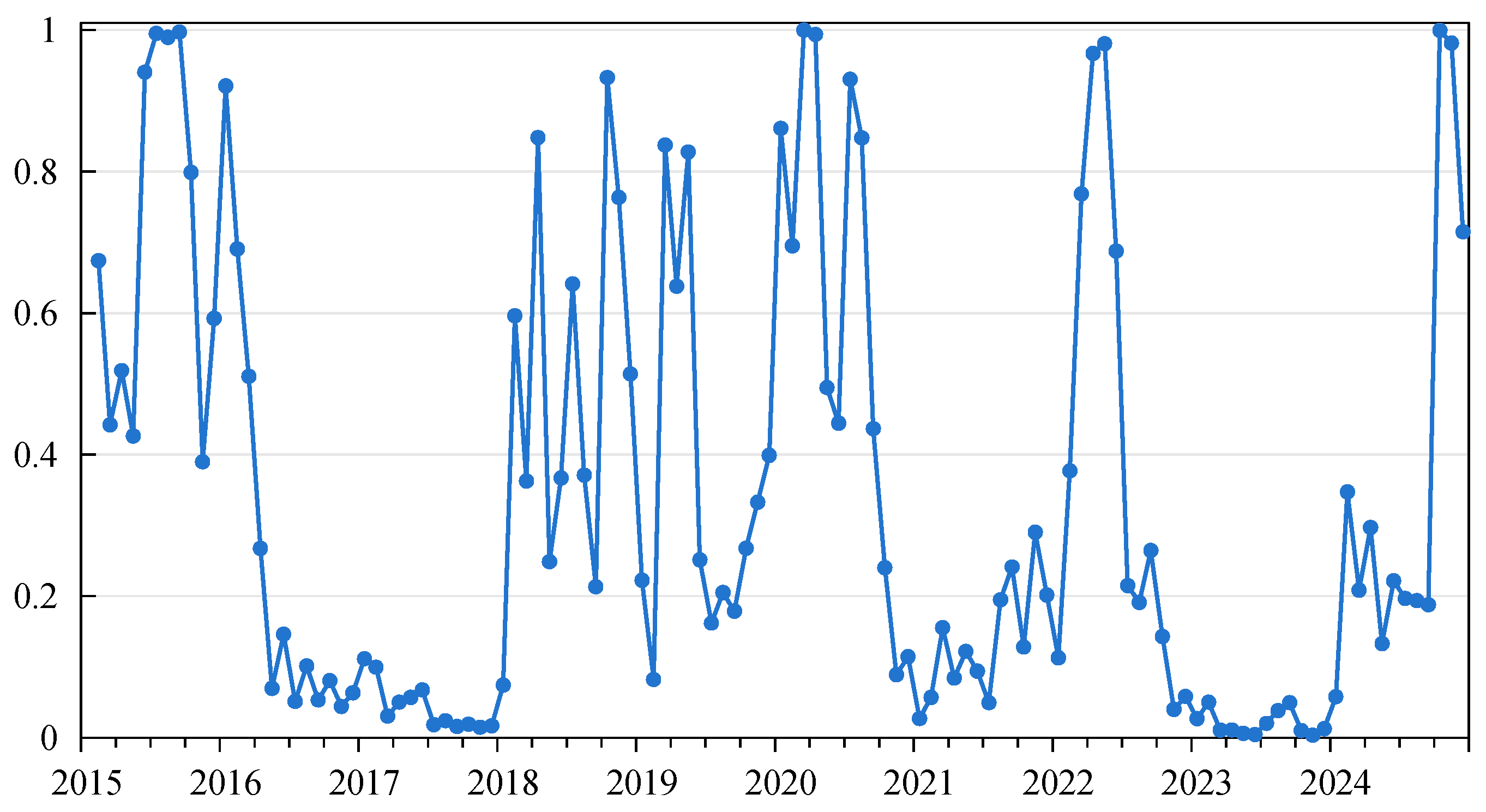
To evaluate the predictive performance of the developed dynamic Logit model, this study applied the monthly data from 2015 to 2024 to the model, calculated the actual systemic risk levels of banks at different time points, and generated a simulation signal chart of banking systemic risk warnings (Figure 6).
Figure 6 demonstrates that the warning signals exhibit dynamic characteristics highly consistent with major risk events. During the stock market crash around 2015, the warning signals showed the most significant increase, directly reflecting the severe impact of market volatility on bank credit asset quality and liquidity. In the Sino-US trade friction period around 2018, the warning signals gradually rose, demonstrating the direct influence of deteriorating external trade conditions on foreign trade-related credit risks. During the COVID-19 pandemic in 2020, the warning signals experienced a marked surge, showcasing the model’s ability to predict financial risks triggered by public health emergencies. The Russia-Ukraine conflict around 2022 and the Federal Reserve’s interest rate hike cycle around 2024 both saw sharp increases in warning signals, corresponding to cross-border capital fluctuations caused by geopolitical conflicts and the impact of global liquidity tightening on domestic banks’ exchange rate risks and capital adequacy ratios. These trends closely matched the actual evolution of market risks. This not only indicates that warning signals can synchronize with major risk events but also reveals their capacity to capture the accumulation and evolution of sudden or cross-cycle risks. This further validates the effectiveness of the dynamic Logit model in accurately identifying systemic risk nodes in the banking system triggered by various types and intensities of risk events, highlighting its risk warning efficacy.

5. Discussion

Building on the unique attributes of China’s bank-dominated financial market, this study systematically addresses the core question posed in the introduction: the interplay, contagion, and early warning mechanisms between fintech and banking risks. By employing complex network theory as an analytical framework, the research utilizes HD-TVP-VAR models, MS-AR models, and dynamic Logit models to provide systematic solutions. Specifically, the study leverages complex network theory to reveal the network characteristics of cross-level risk contagion, employs HD-TVP-VAR coupled with Elastic Net algorithms to overcome the “dimensional curse” in high-dimensional variable modeling, utilizes MS-AR models to accurately identify risk zone states, and ultimately constructs a targeted early warning system through dynamic Logit models. This approach addresses the limitations of traditional research in bidirectional dynamic correlations and cross-industry early warning mechanisms.
The core research findings of this paper achieve significant expansion and differentiated breakthroughs compared to existing studies: Firstly, it reveals the event-driven time-varying characteristics and industry heterogeneity of risk spillovers between fintech and banking sectors. Unlike most current studies that employ static network analysis or single-dimensional correlation measurements, this approach addresses the shortcomings of traditional research in insufficient attention to dynamic risk evolution and industry differences. Secondly, through core indicators of complex networks, it identifies specific risk hub institutions, filling the gap in existing research that predominantly focuses on macro-level industry correlations while lacking micro-level entity analysis. Thirdly, the constructed total risk correlation index overcomes the limitations of traditional early warning models dependent on macro composite indices, enhancing the foresight and relevance of risk alerts. Fourthly, it discovers significant differences in risk contagion intensity between state-owned commercial banks, joint-stock commercial banks, and city commercial banks, refining existing analyses of banking heterogeneity and making conclusions more practically valuable. Overall, the measurement-identification-warning analytical framework established in this paper not only enriches research paradigms in risk contagion and early warning fields but also provides a reference for cross-industry financial risk studies.
Based on research findings and empirical conclusions, the following targeted and actionable policy recommendations are proposed: At the regulatory level, a cross-industry dynamic monitoring platform should be established to include identified risk hub enterprises and banks in key monitoring lists. Regulatory thresholds should be dynamically adjusted based on the aggregate risk correlation index, with quarterly cross-industry risk stress tests conducted. At the banking level, differentiated risk control strategies should be implemented. State-owned commercial banks should strengthen independent R&D in fintech to reduce reliance on external partnerships, while joint-stock commercial banks and city commercial banks need to control the depth of business ties with fintech companies and set upper limits for cooperative risk exposure. At the fintech enterprise level, compliance management systems should be improved, risk disclosure mechanisms established, and regular risk status reports on bank collaborations submitted to regulators. At the macro level, the risk warning indicator system should be optimized by incorporating fintech market volatility indicators into routine monitoring, with tiered response plans formulated based on warning signals generated by dynamic Logit models.
This study still has the following limitations that require urgent improvement: Firstly, the forgetting factor in the HD-TVP-VAR model was set within a fixed range based on existing research, which, while consistent with academic conventions, lacks parameter stability diagnostics and sensitivity analysis of Elastic Net compression estimation. Secondly, due to space constraints, out-of-sample validation was not conducted to compare predictive performance with machine learning models, and the quantitative advantages of early warning indicators remain unverified. Thirdly, the sample is limited to listed fintech companies and commercial banks, excluding unlisted fintech platforms, shadow banking, and large tech financial institutions, which may restrict the study’s coverage. Although these limitations do not undermine the reliability of core conclusions, they provide clear directions for future research improvements.
Future research will focus on targeted improvements to address existing limitations. The next steps can be advanced in the following aspects: First, optimizing core model parameter settings and robustness diagnostics. To overcome the limitation of fixed forgetting factor values in the HD-TVP-VAR model, future work will incorporate the heterogeneity characteristics of the fintech industry. Dynamic calibration methods will be employed to determine forgetting factors, with optimal values for each period selected based on the maximization of likelihood values and the economic significance of risk contagion characteristics, replacing fixed interval settings. Additionally, parameter stability diagnostics will be enhanced to ensure the reliability of high-dimensional modeling results. Second, improving the validation system for early warning models and multi-model comparisons. To compensate for the lack of out-of-sample validation, future research will conduct out-of-sample predictive validation. Key metrics such as the area under the ROC curve, false positive rate, false negative rate, and Diebold-Mariano test will be used to quantify the predictive performance of dynamic Logit models. Comparative analysis will also be conducted with multiple benchmark models, including traditional econometric models, machine learning models, and hybrid models, to establish a comprehensive evaluation framework from three dimensions: prediction accuracy, interpretability, and timeliness. This will further enhance the precision and foresight of early warnings. Third, expanding the coverage of sample ranges and data dimensions. To address the issue of insufficient sample representativeness, future efforts will expand data sources through multiple channels. This includes leveraging industry association reports, regulatory non-public statistical data, third-party data service providers, and web scraping technologies to collect risk-related data from unlisted fintech platforms, private internet banks, and the financial business segments of major tech companies. Additionally, shadow banking institutions and a broader range of bank samples will be incorporated to ensure the comprehensiveness of heterogeneity analysis.

6. Conclusions

This paper, against the background of the deep integration of China’s fintech and banking sectors, selects daily data from 27 fintech companies and 16 listed commercial banks from 2015 to 2024. Using the HD-TVP-VAR model coupled with the Elastic Net algorithm, MS-AR model, and dynamic Logit model, the study reveals that the total risk spillover rate between fintech and banking ranges from 73.09% to 95.18%, indicating a close and time-varying, event-driven relationship. Notably, the internal risk spillover volatility within fintech is significantly higher than that in banking. The risk contagion between the two sectors undergoes three stages: net absorption by banks, bidirectional contagion, and net output by fintech. Joint-stock commercial banks and city commercial banks are more sensitive to fintech risks than state-owned commercial banks. Enterprises such as Yinxin Technology serve as key hubs for risk contagion, with risk contagion within the industry cluster being more concentrated. The MS-AR model accurately delineates low, medium, and high-risk zones, with high-risk periods closely aligning with historical major events. The dynamic Logit model embedded in the total risk correlation index identifies multiple significant warning factors, with warning signals highly consistent with the trajectory of risk evolution.

Author Contributions

Conceptualization, P.S. and K.Y.; methodology, P.S.; software, P.S. and K.Y.; formal analysis, P.S., X.X. and K.Y.; investigation, X.X. and K.Y.; data curation, P.S., X.X. and K.Y.; writing—original draft, P.S.; writing—review and editing, P.S. and K.Y. All authors have read and agreed to the published version of the manuscript.

Funding

This research received no external funding.

Data Availability Statement

The original contributions presented in this study are included in the article. For further inquiries, please contact the corresponding author.

Conflicts of Interest

The authors declare no conflict of interest.

References

  1. Wang, X. Silicon Valley Bank collapse: Causes&consequences. Highlights Bus. Econ. Manag. 2024, 32, 53–57. [Google Scholar] [CrossRef]
  2. Kryshtal, H.; Samofalova, M.; Sakhno, L.; Fedyna, V.; Mokiienko, T.; Yermolaieva, M. Cyber risks in the financial and banking system: Analysis of direct and systemic losses. Financ. Credit Act. Probl. Theory Pract. 2025, 2, 125–140. [Google Scholar] [CrossRef]
  3. Brandl, B.; Hornuf, L. Where Did FinTechs Come From, and Where Do They Go? The Transformation of the Financial Industry in Germany After Digitalization. Front. Artif. Intell. 2020, 3, 8. [Google Scholar] [CrossRef]
  4. Virginia, M.; Oona, V.; Emil, S. The Digital Transformation and Disruption in Business Models of the Banks under the Impact of FinTech and BigTech. In Proceedings of the International Conference on Business Excellence, Bucharest, Romania, 26–28 March 2020. [Google Scholar] [CrossRef]
  5. Rodrigues, A.R.D.; Ferreira, F.A.; Teixeira, F.J.; Zopounidis, C. Artificial intelligence, digital transformation and cybersecurity in the banking sector: A multi-stakeholder cognition-driven framework. Res. Int. Bus. Financ. 2022, 60, 101616. [Google Scholar] [CrossRef]
  6. Chen, J.; Yahya, M.H.; Ali, M.H.; Qamas, M.A. The Influence of Internet Finance on the Profitability of Commercial Banks in China. Soc. Manag. Res. J. 2022, 19, 1–34. [Google Scholar] [CrossRef]
  7. Wang, H.; Haji Yahya, M.H.D.; Rahim, N.A.; Ashhari, Z.M. The impact of fintech on the profitability of Chinese commercial banks. Int. J. Appl. Econ. Financ. Account. 2024, 20, 128–138. [Google Scholar] [CrossRef]
  8. Banna, H.; Hassan, M.K.; Rashid, M. Fintech-based financial inclusion and bank risk-taking: Evidence from OIC countries. J. Int. Financ. Mark. Inst. Money 2021, 75, 101447. [Google Scholar] [CrossRef]
  9. Grennan, J.; Michaely, R. FinTechs and the Market for Financial Analysis. J. Financ. Quant. Anal. 2021, 56, 1877–1907. [Google Scholar] [CrossRef]
  10. Cheng, M.; Qu, Y. Does bank FinTech reduce credit risk? Evidence from China. Pac.-Basin Financ. J. 2020, 63, S927538X–S19307607X. [Google Scholar] [CrossRef]
  11. Buchak, G.; Matvos, G.; Piskorski, T.; Seru, A. Fintech, regulatory arbitrage, and the rise of shadow banks. J. Financ. Econ. 2018, 130, 453–483. [Google Scholar] [CrossRef]
  12. Wang, R.; Liu, J.; Luo, H. Fintech Development and Bank Risk Taking in China. Eur. J. Financ. 2020, 27, 397–418. [Google Scholar] [CrossRef]
  13. Li, J.; Li, J.; Zhu, X.; Yao, Y.; Casu, B. Risk spillovers between FinTech and traditional financial institutions: Evidence from the U.S. Int. Rev. Financ. Anal. 2020, 71, 101544. [Google Scholar] [CrossRef]
  14. Acemoglu, D.; Carvalho, V.M.; Ozdaglar, A.; Tahbaz-Salehi, A. The Network Origins of Aggregate Fluctuations. Econometrica 2012, 80, 1977–2016. [Google Scholar] [CrossRef]
  15. Caccioli, F.; Shrestha, M.; Moore, C.; Farmer, J.D. Stability analysis of financial contagion due to overlapping portfolios. J. Bank. Financ. 2014, 46, 233–245. [Google Scholar] [CrossRef]
  16. Diebold, F.X.; Yilmaz, K. On the network topology of variance decompositions: Measuring the connectedness of financial firms. J. Econom. 2014, 182, 119–134. [Google Scholar] [CrossRef]
  17. Härdle, W.K.; Wang, W.; Yu, L. Tenet: Tail-event driven network risk. J. Econom. 2016, 193, 251–265. [Google Scholar] [CrossRef]
  18. Billio, M.; Casarin, R.; Rossini, L. Bayesian nonparametric sparse VAR models. J. Econom. 2019, 212, 97–115. [Google Scholar] [CrossRef]
  19. Shahzad, S.J.H.; Naeem, M.A.; Peng, Z.; Bouri, E. Asymmetric volatility spillover among Chinese sectors during COVID-19. Int. Rev. Financ. Anal. 2021, 75, 101754. [Google Scholar] [CrossRef]
  20. Uddin, G.S.; Yahya, M.; Park, D.; Hedström, A.; Tian, S. Bond market spillover networks of ASEAN-4 markets: Is the global pandemic different? Int. Rev. Econ. Financ. 2024, 89, 451–467. [Google Scholar] [CrossRef]
  21. Cogley, T.; Sargent, T.J. Evolving post-World War II U.S. inflation dynamics. NBER Macroecon. Annu. 2001, 16, 331–373. [Google Scholar] [CrossRef]
  22. Primiceri, G.E. Time-Varying Structural Vector Autoregressions and Monetary Policy. Rev. Econ. Stud. 2005, 72, 821–852. [Google Scholar] [CrossRef]
  23. Koop, G.; Korobilis, D. Large Time-Varying Parameter VARs. J. Econom. 2013, 177, 185–198. [Google Scholar] [CrossRef]
  24. Antonakakis, N.; Chatziantoniou, I.; Gabauer, D. Refined Measures of Dynamic Connectedness based on Time-Varying Parameter Vector Autoregressions. J. Risk Financ. Manag. 2020, 13, 84. [Google Scholar] [CrossRef]
  25. Frankel, J.A.; Rose, A.K. Currency crashes in emerging markets: An empirical treatment. J. Int. Econ. 1996, 41, 351–366. [Google Scholar] [CrossRef]
  26. Kaminsky, G.; Lizondo, S.; Reinhart, C.M. Leading Indicators of Currency Crises. IMF Econ. Rev. 1998, 45, 1–48. [Google Scholar] [CrossRef]
  27. Perraudin, W.R.M.; Kumar, M.S.; Moorthy, U. Predicting emerging market currency crashes. J. Empir. Financ. 2003, 10, 427–454. [Google Scholar] [CrossRef]
  28. Hamilton, J.D. A New Approach to the Economic Analysis of Non-stationary Time Series and the Business Cycle. Econometrica 1989, 57, 357–384. [Google Scholar] [CrossRef]
  29. Dai, W.; Serletis, A. On the Markov switching welfare cost of inflation. J. Econ. Dyn. Control 2019, 108, 103748. [Google Scholar] [CrossRef]
  30. Wang, T.; Zhao, S.; Zhu, G.; Zheng, H. A machine learning-based early warning system for systemic banking crises. Appl. Econ. 2021, 53, 2974–2992. [Google Scholar] [CrossRef]
  31. Casabianca, E.J.; Catalano, M.; Forni, L.; Giarda, E.; Passeri, S. A machine learning approach to rank the determinants of banking crises over time and across countries. J. Int. Money Financ. 2022, 129, 102739. [Google Scholar] [CrossRef]
  32. Audibert, J.; Michiardi, P.; Guyard, F.; Marti, S.; Zuluaga, M.A. Do Deep Neural Networks Contribute to Multivariate Time Series Anomaly Detection? Pattern Recognit. 2022, 132, 108945. [Google Scholar] [CrossRef]
  33. Angelopoulou, E.; Balfoussia, H.; Gibson, H.D. Building a financial conditions index for the euro area and selected euro area countries: What does it tell us about the crisis? Econ. Model. 2014, 38, 392–403. [Google Scholar] [CrossRef]
  34. Proaño, C.R.; Schoder, C.; Semmler, W. Financial stress, sovereign debt, and economic activity in industrialized countries: Evidence from dynamic threshold regressions. J. Int. Money Financ. 2014, 45, 17–37. [Google Scholar] [CrossRef]
  35. Chakrabarti, A.; Zeaiter, H. The determinants of sovereign default: A sensitivity analysis. Int. Rev. Econ. Financ. 2014, 33, 300–318. [Google Scholar] [CrossRef]
  36. Buse, R.; Schienle, M. Measuring connectedness of euro area sovereign risk. Int. J. Forecast. 2019, 35, 25–44. [Google Scholar] [CrossRef]
  37. Filippopoulou, C.; Galariotis, E.; Spyrou, S. An early warning system for predicting systemic banking crises in the Eurozone: A logit regression approach. J. Econ. Behav. Organ. 2020, 172, 344–363. [Google Scholar] [CrossRef]
  38. González-Rivera, G.; Rodríguez-Caballero, C.V.; Ruiz, E. Expecting the unexpected: Stressed scenarios for economic growth. J. Appl. Econom. 2024, 39, 926–942. [Google Scholar] [CrossRef]
Figure 1. Overall Trend Characteristics of Risk Spillover between Fintech Industry and Banking Sector.
Mathematics 14 00220 g001
Figure 2. Overall Trend Characteristics of Internal Risk Spillover between Fintech Industry and Banking Sector. (a) Fintech internal spillovers; (b) bank internal spillovers.
Mathematics 14 00220 g002
Figure 3. Overall Trend Characteristics of Risk Contagion Index in the Fintech Industry. (a) Risk contagion ratio of fintech to banks; (b) Risk contagion ratio to state-owned commercial banks; (c) Risk contagion ratio of fintech to joint-stock commercial banks; (d) Risk contagion ratio of fintech to city commercial banks.
Mathematics 14 00220 g003
Figure 4. Risk Spillover Network for the Whole Sample.
Mathematics 14 00220 g004
Figure 5. Total Risk Association Index in the Three-Region System Smoothed Probability.
Mathematics 14 00220 g005
Figure 6. Simulation signals of banking system risk warning.
Mathematics 14 00220 g006
Table 1. Network Risk Association Matrix.
x 1 x 2 x N From others
x 1 d 11 H d 12 H d 1 N H Σ j = 1 N d 1 j H , j 1
x 2 d 21 H d 22 H d 2 N H Σ j = 1 N d 2 j H , j 2
x N d N 1 H d N 2 H d N N H Σ j = 1 N d N j H , j N
To others Σ i = 1 N d i 1 H , i 1 Σ i = 1 N d i 2 H , i 2 Σ i = 1 N d i N H , i N 1 N Σ i , j = 1 N d i j H , i j
Table 2. List of Listed Companies in Banking and Fintech Sectors.
Organization TypeList of Specific Institutions
State-owned Commercial Banks (5)Agricultural Bank of China (NYYH), Bank of Communications (JTUH), Industrial and Commercial Bank of China (GSYH), China Construction Bank (JSYH), Bank of China (ZGYH)
Joint-stock Commercial Banks (8)Ping An Bank (PAYH), Everbright Bank (PAYH), Shanghai Pudong Development Bank (PFYH), Huaxia Bank (HXYH), China Minsheng Bank (MSYH), China Merchants Bank (ZSYH), China CITIC Bank (ZXYH), Industrial Bank (XYYH)
City Commercial Banks (3)Bank of Ningbo (NBYH), Bank of Beijing (BJYH), Bank of Nanjing (NJYH)
Fintech companies (27)Anshuo Information (ASXX), Boyan Technology (BYKJ), Cuiwei (CWGF), Great Wisdom (DZH), CETC Digital (DKSZ), East Money (DFCF), Donghua Software (DHRJ), Eastcompeace (DXHP), Feitian Technologies (FTCX), GRG Banking (GDYT), Hengbao Shares (HBGF), Hundsun Technologies (HSDZ), Kingdom (JZGF), Nantian Electronics Information (NTXX), Runhe Software (RHRJ), Digital China Information Service (SZXX), TRS (TES), Hithink RoyalFlush (THS), New Continent (XDL), Xinguodu (XGD), Sunyard (XYD), Yinxin Technology (YXKJ), Winsolutions (YZJ), Winshine (YSS), Sunline Tech (CLKJ), Sunlight (ZRKJ), Sinodata (ZKJC)
Table 3. Network Metrics of Fintech and Banking Industry.
SectorRankOut-DegreeIn-DegreeCentralityNet OutflowEigenvector CentralityPageRank
NameValueNameDesired ValueNameDesired ValueNameDesired ValueNameDesired ValueNameDesired Value
Fintech1ZKCJ104.70YXKJ89.25YXKJ193.88ZKJC16.12YXKJ1.0000YXKJ0.0242
2YXKJ104.63HBGF88.87ZKJC193.29YXKJ15.38HBGF0.9958HBGF0.0241
3HBGF102.36ZKJC88.59HBGF191.23HBGF13.48ZKJC0.9932ZKJC0.0240
4XDL94.81XDL88.16XDL182.96XDL6.65XDL0.9880XDL0.0239
5ASXX94.06ASXX88.01ASXX182.07YZJ6.45ASXX0.9873ASXX0.0238
Bank1HXYH98.95GDYH87.99HXYH186.24HXYH11.65GDYH0.9812GDYH0.0237
2GDYH95.79JSYH87.56GDYH183.78GDYH7.79JSYH0.9770HXYH0.0236
3XYYH93.28HXYH87.30XYYH180.08XYYH6.48HXYH0.9733JSYH0.0236
4JSYH92.39JTYH87.15JSYH179.95JSYH4.82JTYH0.9731XYYH0.0235
5JTYH90.14ZGYH86.96JTYH177.29JTYH2.98ZGYH0.9714JTYH0.0234
Table 4. Early Warning Indicator System.
DimensionName of IndexIndicator Description
Economic fundamentalsIndustrial Value Addedyear-on-year increase in industrial added value
Consumptionyear-on-year growth rate of total retail sales of consumer goods
Fixed Asset Investmentyear-on-year growth rate of total fixed assets investment
inflationYear-on-year increase in CPI
Manufacturing PMIPMI
Entrepreneurial confidencemacroeconomic climate index
Monetary policy environmentM2 Growth Rate (YoY)Year-on-year M2
interest rateShibor1 week
Banking systemLoan Balanceyear-on-year increase in RMB loan balance
loan-to-deposit ratioloan/deposit
Domestic financial market conditionstock market volatilityShanghai Stock Exchange Index Volatility
Foreign Exchange VolatilityUSD/CNY exchange rate volatility
credit spread in bond market3-month to 10-year Treasury yield spread
fluctuation of real estate marketShenwan Real Estate Index Volatility
Financial market volatilityCSI Fintech Index Volatility
Global financial market conditionsglobal financial market volatilityVIX Volatility Index
global interest rate environmentFederal funds rate
global financial market liquidityThe difference between the 3-month LIBOR and the 3-month U. S. Treasury yield
International environmentcurrency reservesmonth-on-month increase in foreign exchange reserves
Foreign trade import and exportyear-on-year growth rate of import and export
Table 5. Principal Component Analysis Results.
IngredientEigenvalueCumulative Variance
PC14.67390.2337
PC24.13220.4403
PC32.47060.5638
PC41.82970.6553
PC51.16560.7136
PC60.92420.7598
PC70.82690.8012
PC8–PC20--
Table 6. Parameter estimation results of the dynamic Logit model.
VariableCoefficientStandard Errorp-Value
F1−0.3417 ***0.08710.0001
F20.1617 **0.07440.0298
F30.3190 **0.16050.0468
F40.25750.17880.1498
F50.8701 ***0.28890.0026
F60.60900.57600.2904
F71.2367 *0.67180.0656
L. SR2.8880 *1.53680.0602
Const−2.7531 **1.06930.0100
R-squared0.4153
LLK−44.4247
Note: Significant differences at the 1%, 5%, and 10% levels are indicated by ***, **, and *, respectively.
Disclaimer/Publisher’s Note: The statements, opinions and data contained in all publications are solely those of the individual author(s) and contributor(s) and not of MDPI and/or the editor(s). MDPI and/or the editor(s) disclaim responsibility for any injury to people or property resulting from any ideas, methods, instructions or products referred to in the content.