1. Introduction
The analysis of geomechanical conditions in underground mining is becoming increasingly challenging due to the growing complexity of modern mining systems, increasing excavation depths, tectonic faults in rock masses, and continuous redistribution of stresses during mining operations. In structurally heterogeneous rock masses, instability processes are controlled by the interaction of multiple factors, including stress concentration, fracture development, excavation geometry changes, degradation of rock mass quality, and proximity to geological discontinuities [
1,
2,
3]. Under such conditions, conventional deterministic approaches based solely on isolated mechanical criteria or empirical stability classifications are often insufficient for comprehensive assessment of excavation stability and identification of potentially hazardous zones.
At the same time, modern underground mining generates large volumes of heterogeneous geomechanical information obtained from field measurements, laboratory testing, geological investigations, numerical simulations, and geomechanical monitoring systems. These data include stress distributions, deformation characteristics, rock mass quality indices, structural parameters, excavation geometry, and spatial relationships relative to tectonic faults. The multidimensional nature of such datasets creates favorable conditions for the application of intelligent data analysis methods aimed at identifying hidden patterns and abnormal geomechanical states associated with instability development.
In recent years, machine learning methods have attracted significant attention in geotechnical and mining engineering. Existing studies demonstrate the potential of intelligent algorithms for rock mass classification, analysis of monitoring data, prediction of geotechnical hazards, and identification of anomalous states in complex engineering systems [
4,
5,
6,
7,
8]. In particular, anomaly detection methods [
9] are of special interest for geomechanical applications because hazardous states of the rock mass are typically rare, spatially localized, and poorly represented in available datasets. Unlike supervised classification methods, unsupervised anomaly detection algorithms enable the identification of potentially dangerous conditions without requiring large, labelled datasets describing instability events.
Despite the rapid development of machine learning applications in geomechanics, several important limitations remain unresolved. Many existing studies focus either on classical numerical modelling of the stress–strain state [
10,
11] or on purely data-driven analysis performed independently from the underlying mechanical processes governing rock mass behavior [
12,
13]. In addition, machine learning methods are frequently applied to simplified or weakly structured datasets that do not adequately reflect the physical characteristics of underground mining systems. As a consequence, the obtained results may demonstrate limited physical interpretability and insufficient engineering applicability for practical geomechanical assessment.
An important research direction therefore consists of the development of integrated computational approaches combining geomechanical modelling, geological characterization, and intelligent analysis of multidimensional datasets within a unified framework. In such approaches, numerical modelling is used not only for deterministic stability assessment, but also as a source of structured geomechanical data suitable for subsequent machine learning analysis. This makes it possible to combine the physical consistency of computational geomechanics with the analytical capabilities of intelligent data analysis methods.
The present study investigates the geomechanical state of the rock mass during underground mining using intelligent data analysis methods. The study is performed using geological and geomechanical conditions of the Zholymbet gold deposit as a representative example of a structurally disturbed underground mining system characterized by tectonic faults, heterogeneous rock mass properties, and extensive excavation networks. The proposed methodology combines field-derived geomechanical characterization, numerical simulation of the stress–strain state, construction of a multidimensional geomechanical dataset, and application of anomaly detection methods for identifying instability-prone regions within the rock mass.
Particular attention is devoted to the formation of a unified multidimensional representation of the geomechanical state of the rock mass. The constructed feature space integrates stress parameters, deformation characteristics, geomechanical classification indices, mechanical properties of rocks, and spatial characteristics associated with excavation geometry and tectonic faults. Such representation enables the transition from isolated analysis of individual geomechanical parameters to intelligent analysis of complex multidimensional relationships governing excavation stability and deformation development.
To identify potentially hazardous geomechanical states, the generated datasets are analyzed using unsupervised anomaly detection methods based on the Isolation Forest algorithm [
14,
15,
16]. The proposed approach enables the identification of regions characterized by abnormal combinations of stresses, deformation parameters, structural conditions, and rock mass quality indicators.
The obtained results contribute to the development of intelligent computational approaches for geomechanical analysis of underground mining systems and demonstrate the potential of anomaly detection methods for the identification of hazardous geomechanical conditions in structurally disturbed rock masses.
Unlike many existing studies that apply machine-learning methods directly to monitoring data or simplified geotechnical datasets, the proposed approach is based on the construction of a multidimensional geomechanical state space generated from large-scale numerical modelling. The novelty of the study lies in the integration of physically interpretable stress, deformation, stability, and yielding descriptors within a unified analytical framework, followed by unsupervised identification of geomechanical regimes and spatial back-mapping of atypical states to the excavation system. This enables interpretation of underground rock mass behavior in terms of multidimensional state organization rather than isolated mechanical indicators.
2. Materials and Methods
2.1. Geological and Geomechanical Characterization of the Zholymbet Deposit
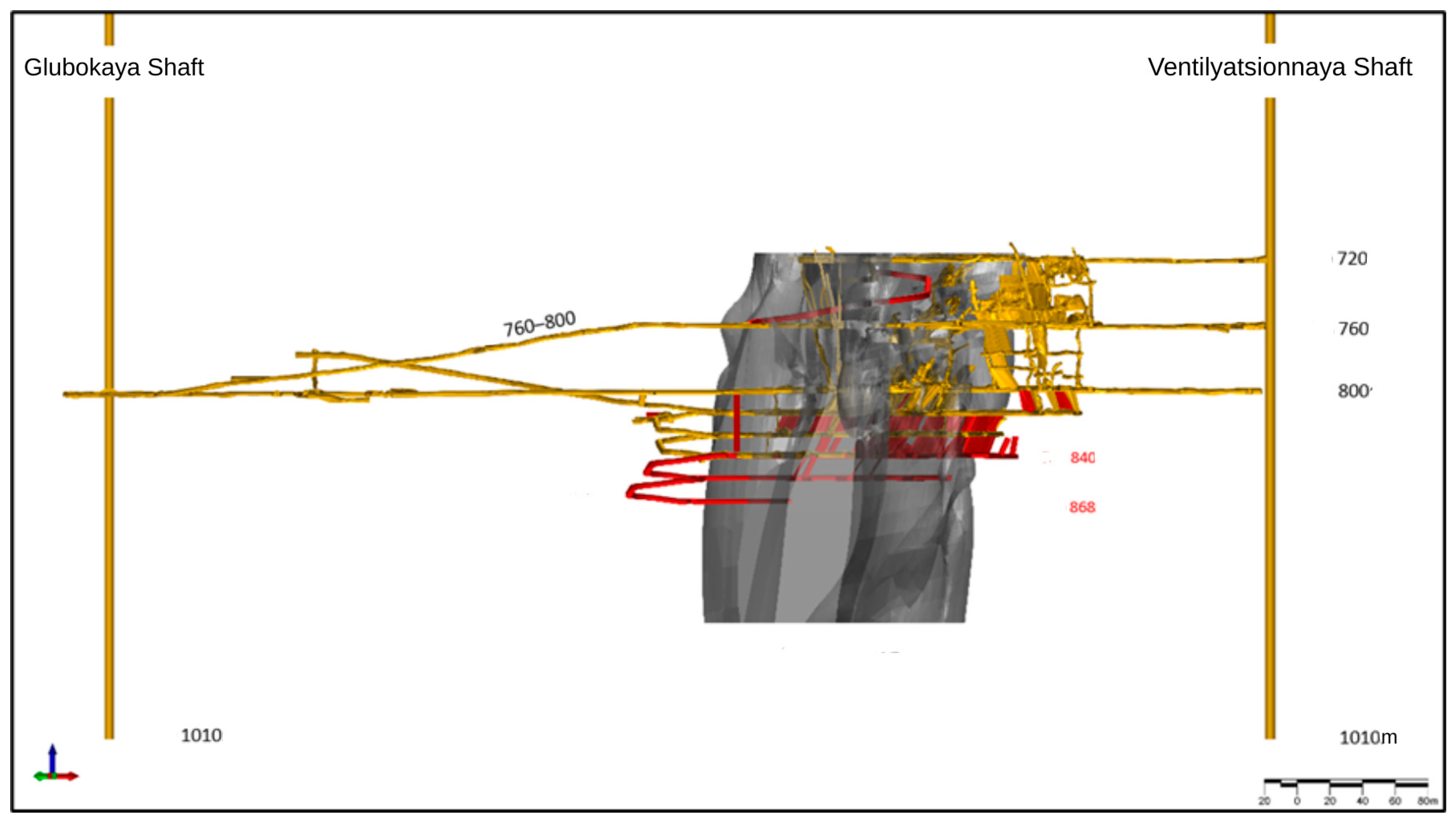
The Zholymbet deposit is currently being developed according to the project “Development of Deep Horizons of the Zholymbet Deposit Using the ‘Glubokaya’ and ‘Ventilation’ Shafts” developed by the D.A. Kunaev Institute of Mining in 2011. Within the framework of this project, the first-stage mining horizons at depths of 640 m and 720 m, as well as the second-stage horizons at 760 m and 800 m, were opened and commissioned. The project also includes the progressive development and extraction of deeper mining horizons within the Central mining block, accompanied by parallel exploration activities. The planned development stages include the 840 m horizon during Stage II and the 880 m, 920 m, 960 m, and 1000 m horizons during Stage III.
In accordance with the geological and geomechanical conditions of the deposit, mining operations are conducted using underground mining methods that have been technologically established at the Zholymbet mine. For stockwork ore zones with thickness exceeding 6.0 m, the sublevel caving method with drawpoint ore extraction and longhole fan drilling and blasting is applied.
For numerical modelling of the stress–strain state and construction of the multidimensional geomechanical dataset, the production mining layouts planned for 2025 at the Zholymbet Mining and Processing Complex were considered. According to the production schedule, the principal mining activities are concentrated within three major mining regions:
Zone No. 301 between the 800 m and 840 m horizons;
Zone No. 7 between the 560 m and 760 m horizons;
The “Oktyabrskaya” zone between the 400 m and 430 m horizons.
Field investigations and preliminary geomechanical assessments indicated that these mining regions are characterized by non-uniform stress redistribution, elevated deformation gradients, excavation interaction effects, and reduced structural stability associated with tectonic faults and fractured rock mass conditions. In the present study, intelligent analysis of the geomechanical state of the rock mass is demonstrated using Zone No. 301 located between the 800 m and 840 m horizons as a representative case study (
Figure 1).
This mining region was selected due to its significant mining depth, active extraction operations, and complex geomechanical conditions associated with stress concentration, fractured rock mass behavior, and excavation-induced deformation processes.
2.2. Numerical Geomechanical Modelling
Numerical modelling was performed to generate geomechanical datasets describing the mechanical response of the rock mass under varying geological and mining conditions. The obtained simulation results were subsequently used for intelligent analysis and identification of instability-prone regions within the underground mining system.
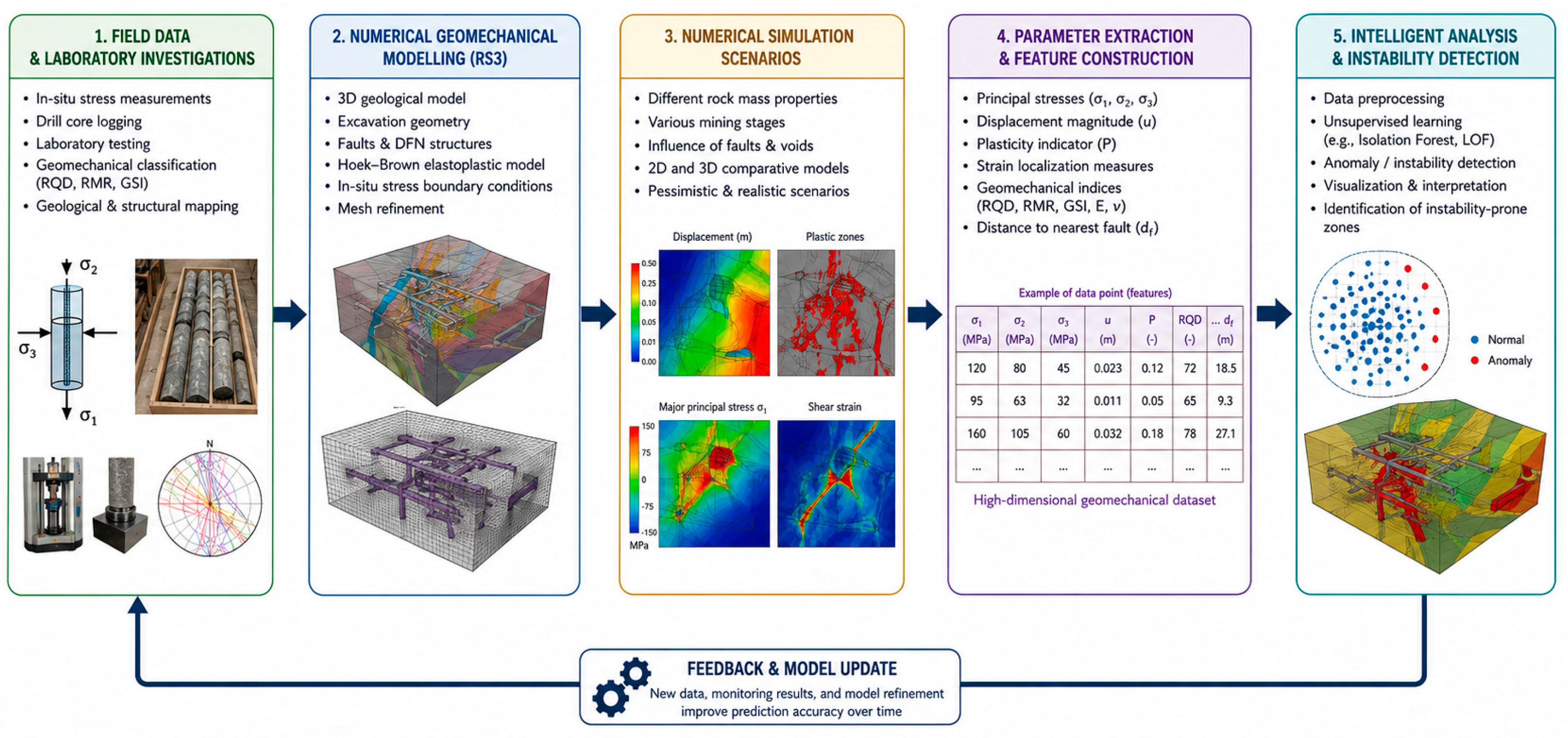
The modelling workflow included (
Figure 2):
Construction of a three-dimensional geomechanical model of the deposit;
Simulation of the stress–strain state under different mining scenarios;
Extraction of stress, deformation, and structural parameters;
Formation of multidimensional datasets for intelligent geomechanical analysis.
2.2.1. Constitutive Model and Numerical Representation
The rock mass surrounding underground excavations was modelled as an elastoplastic medium governed by the generalized Hoek–Brown failure criterion. The Hoek–Brown model was selected because it enables a realistic representation of fractured and structurally heterogeneous rock masses under complex stress conditions.
The generalized Hoek–Brown criterion [
17,
18,
19] is given by
where
and
are the major and minor principal stresses at failure,
is the uniaxial compressive strength of the intact rock, and
,
, and
are empirical rock mass parameters.
The model parameters were determined using field investigations, laboratory testing, and geomechanical classification data obtained from the Zholymbet deposit (
Table 1). Numerical simulations considered both relatively competent rock conditions and weakened fractured zones characterized by reduced compressive strength and lower rock mass quality.
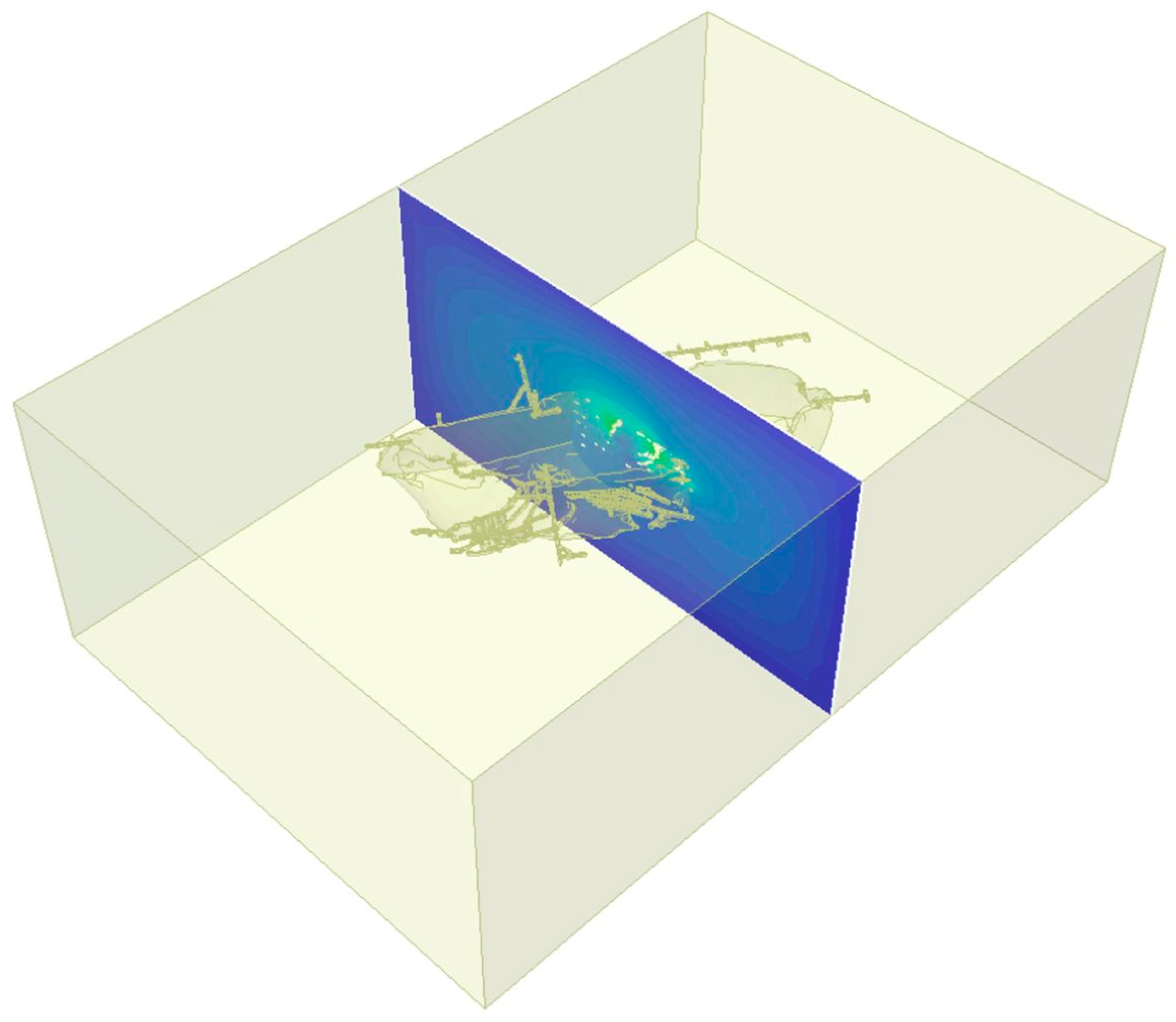
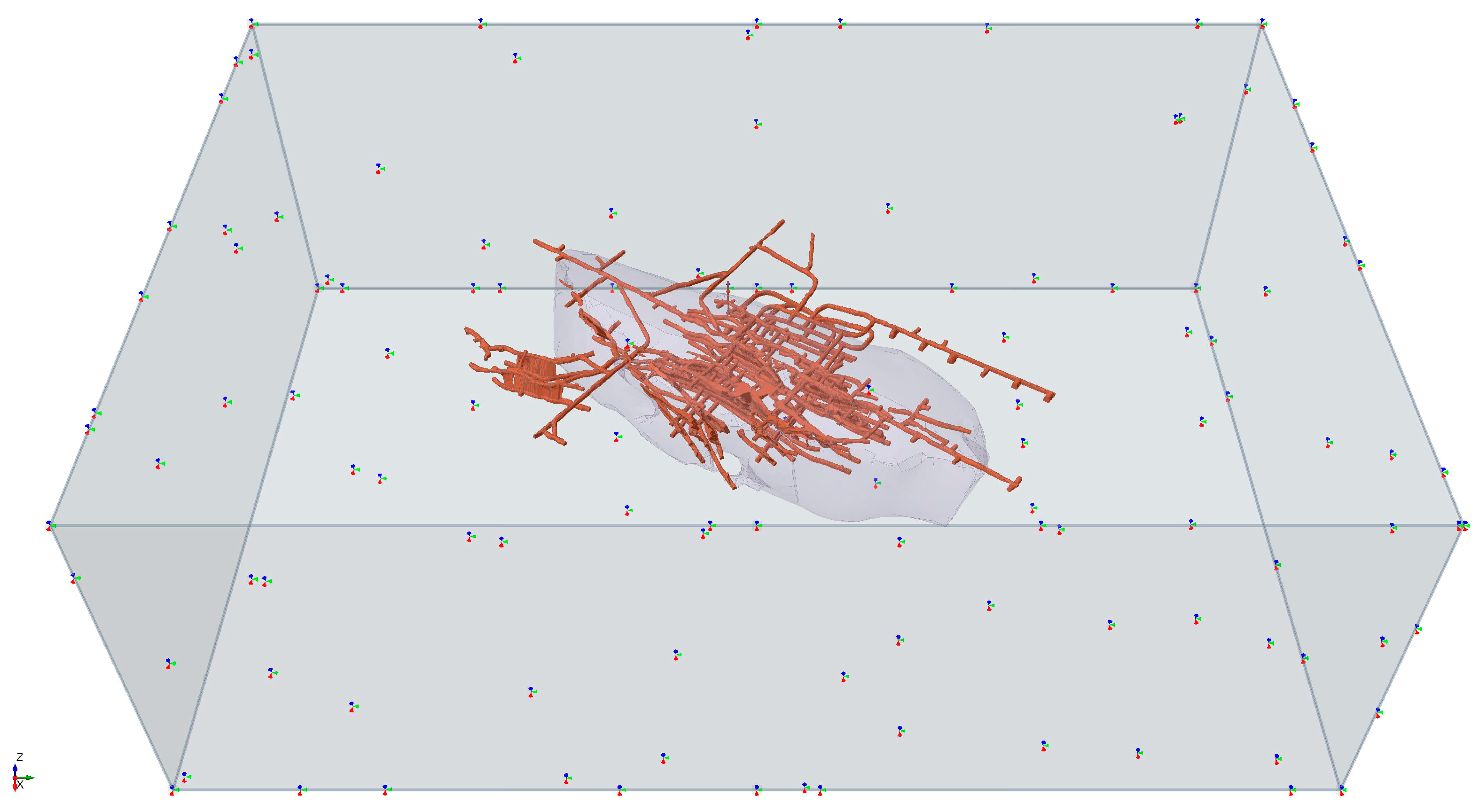
The three-dimensional numerical model (
Figure 3) was implemented in the RS3 version 4.034 software environment (Rocscience Inc., Toronto, ON, Canada). Boundary conditions were assigned according to the measured in situ stress field obtained from hydraulic fracturing measurements. Mesh refinement was applied near excavation contours and tectonic discontinuities to improve the resolution of stress concentration and deformation localization zones. The numerical model was constructed as a three-dimensional parallelepiped representing the surrounding rock mass weakened by a system of underground excavations. The computational domain was discretized using a tetrahedral finite-element mesh, in which adjacent elements were connected through common nodes. Boundary conditions were defined by fixing all external faces of the model, preventing translational displacements at the domain boundaries and ensuring overall numerical stability during stress–strain analysis.
2.2.2. Numerical Simulation Scenarios and Stress–Strain State Evaluation
The developed three-dimensional geomechanical model was used to simulate the stress–strain state of the rock mass during underground mining operations and planned excavation development at the Zholymbet deposit. Numerical simulations were performed for representative mining regions characterized by intensive excavation interaction and structurally disturbed geological conditions. Particular attention was devoted to Zone 301, located between the 800 m and 840 m horizons, where extensive excavation systems and planned mining expansion create complex geomechanical conditions.
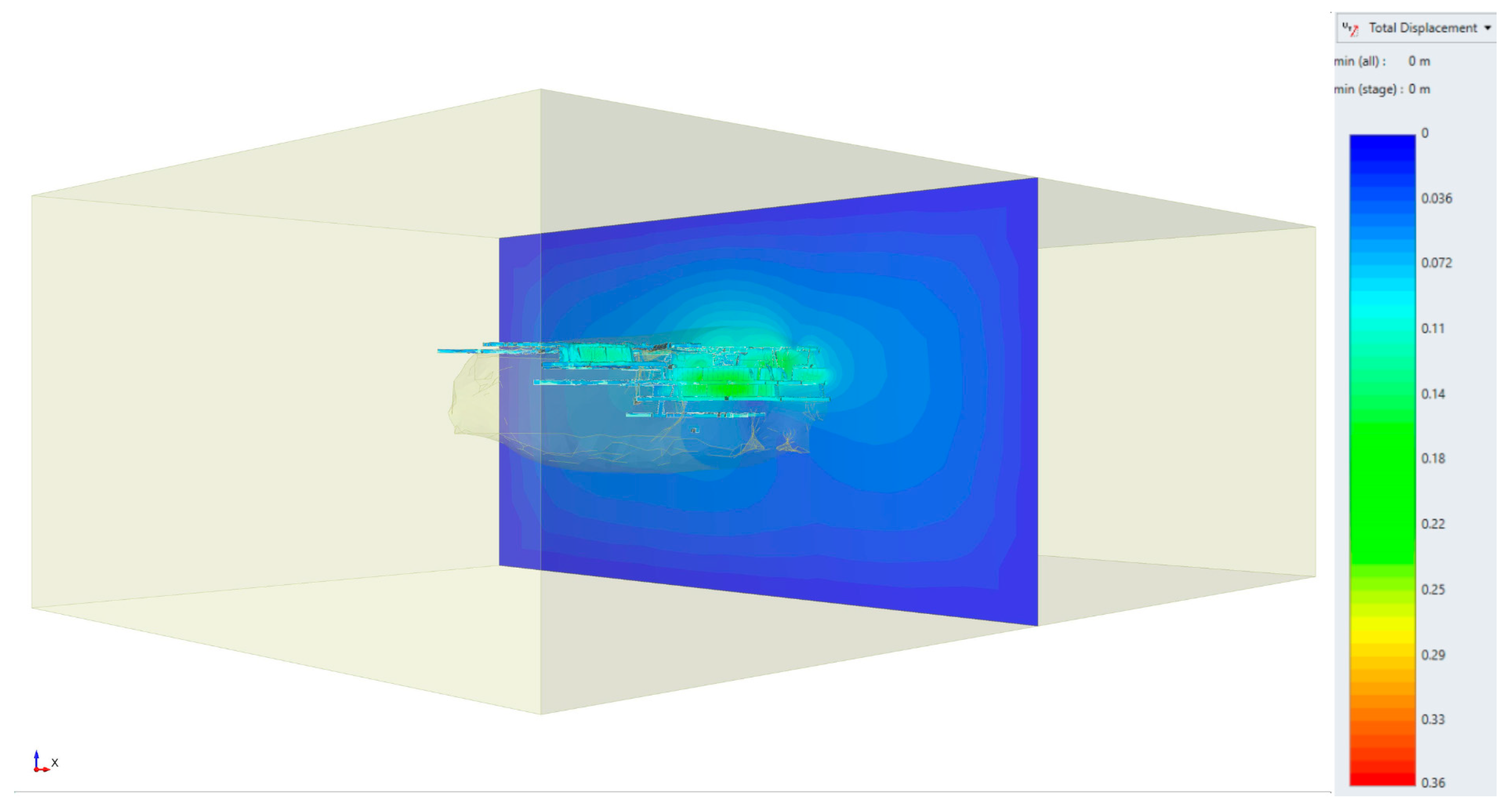
The stress–strain state of the rock mass was evaluated using elastoplastic finite element analysis within the entire three-dimensional computational domain containing underground excavations, mined-out voids, and surrounding rock mass regions. Since stresses, strains, and displacements are determined at the integration points of finite elements, sectional visualization of the three-dimensional domain was applied for analysis of the computed fields (
Figure 4).
The numerical simulations were performed as a single-stage analysis representing the combined influence of existing excavations, mined-out voids, and planned mining development within the investigated area. All excavation openings included in the mining scenario were explicitly incorporated into the three-dimensional model geometry. Mined-out regions were represented as excavated voids, while support systems and backfill were not considered in the analyzed configuration.
For intelligent analysis, the following groups of parameters were extracted from the numerical model:
Principal stress distributions;
Displacement fields;
Strain characteristics;
Strength factor distributions;
Yielding indicators associated with non-elastic deformation processes.
The resulting numerical data were exported from the RS3 environment in the form of nodal and element-based datasets containing stress, strains, displacement, and stability-related parameters. These datasets subsequently formed the basis for the construction of the multidimensional geomechanical representation used in the intelligent analysis framework described in the following sections.
2.3. Construction of Multidimensional Geomechanical Dataset
The intelligent analysis performed in this study was based on the construction of a multidimensional geomechanical dataset generated from three-dimensional numerical simulations of the stress–strain state of the rock mass. The dataset was designed to provide a physically meaningful representation of the mechanical behavior of the mining system under varying geological and mining conditions and to enable subsequent application of intelligent data analysis methods.
The primary computational data were obtained from numerical simulations performed in the RS3 finite element environment. The exported numerical results included nodal coordinates, stress tensor components, strain characteristics, displacement fields, strength indicators, and information describing the development of non-elastic deformation processes within the rock mass. In total, the generated dataset contained approximately nodal observations corresponding to different spatial regions of the computational domain.
To construct the multidimensional representation of the geomechanical state, a set of physically interpretable features was selected from the numerical modelling results. The selected parameters were grouped according to their physical meaning and role in characterizing the stress–strain state, deformation processes, stability conditions, and spatial structure of the rock mass. The principal groups of features included in the multidimensional geomechanical dataset are summarized in
Table 2.
The dataset was constructed primarily using nodal simulation results because nodal quantities provide a continuous spatial representation of the stress–strain state and allow subsequent analysis of spatial transitions between geomechanical regimes. Each observation in the dataset corresponds to a numerical node of the finite element model representing a localized geomechanical state of the rock mass. In addition, element-based information describing the percentage of yielded finite elements was incorporated into the dataset in order to account for the development of non-elastic deformation zones.
Since the nodal and element datasets corresponded to different discretization levels of the numerical model, a spatial mapping procedure was introduced. For each node of the computational domain, the nearest finite element centroid was identified using a KD-tree nearest-neighbor search algorithm [
20,
21]. The corresponding yielding characteristics of the nearest element were subsequently assigned to the node. This procedure enabled integration of stress, strain, displacement, and plasticity-related information within a unified geomechanical state representation.
Several additional derived features were introduced to improve the physical interpretability of the dataset and to characterize important mechanical processes governing excavation stability. In particular, the deviatoric stress was calculated as
where
and
denote the major and minor principal stresses, respectively. This parameter characterizes the intensity of shear-dominated stress conditions associated with deformation localization and failure development; besides stress, an anisotropy descriptor was calculated as
To characterize the overall strain intensity, a combined strain indicator was introduced in the form
where
and
represent the major and minor principal strains.
An additional stability-related descriptor, termed failure proximity, was defined as
where
is the strength factor obtained from numerical modelling. The strength factor is calculated by dividing the rock strength based on the failure criterion (1) by the induced stress at every point in the mesh. Both major and minor principal stresses have an influence on the strength factor [
22]. This parameter increases as the mechanical state approaches the failure condition and therefore provides an additional indicator of instability development [
23].
Prior to intelligent analysis, the dataset was subjected to preprocessing and normalization procedures. Infinite and undefined numerical values were removed, while all continuous variables were standardized using z-score normalization to eliminate scale-dependent effects and ensure consistency of the subsequent multidimensional analysis [
24].
The final multidimensional geomechanical dataset consisted of 21 physically interpretable features describing stress conditions, deformation intensity, stability characteristics, plasticity development, and spatial position within the rock mass. The resulting dataset formed the basis for the subsequent intelligent analysis aimed at investigating the structure of the geomechanical state space, identifying dominant deformation regimes, and detecting anomalous geomechanical conditions associated with instability development.
2.4. Intelligent Analysis Methodology
The intelligent analysis performed in this study was aimed at investigating the structure of the multidimensional geomechanical state space generated from numerical simulations of underground mining processes. In contrast to conventional approaches focused solely on displacement magnitudes or stress concentration analysis [
25], the proposed methodology considers the geomechanical state of the rock mass as a high-dimensional system characterized by coupled stress, deformation, stability, and plasticity-related parameters.
The intelligent analysis framework included four principal stages:
Data normalization and preprocessing;
Dimensionality reduction;
Identification of geomechanical regimes using clustering methods;
Detection of anomalous geomechanical states.
Prior to intelligent analysis, the constructed geomechanical dataset was subjected to preprocessing procedures intended to ensure numerical consistency and comparability of the selected features. Records containing undefined or non-finite values were removed from further analysis. Because the geomechanical parameters were characterized by different physical units and numerical ranges, feature standardization was performed before dimensionality reduction and machine-learning analysis. The resulting standardized dataset was subsequently used as input for principal component analysis, clustering, and anomaly detection.
To investigate the structure of the multidimensional geomechanical state space and identify dominant patterns governing rock mass behavior, principal component analysis (PCA) was applied [
26,
27]. PCA enables the projection of high-dimensional datasets onto a lower-dimensional orthogonal subspace while preserving the maximum possible variance of the original data. The transformation may be represented as
where
is the matrix of standardized geomechanical features,
is the matrix of principal component vectors, and
is the transformed representation of the geomechanical states in the reduced-dimensional space.
The principal component representation was used to investigate the topology of the geomechanical state space and identify dominant deformation and stability regimes associated with different mechanical conditions of the rock mass. In addition, PCA was employed to analyze relationships between stress-related, deformation-related, and stability-related features and to identify correlated or redundant variables within the dataset.
Following dimensionality reduction, clustering methods were applied to identify groups of geomechanical states characterized by similar mechanical behavior. Since the stress–strain state of structurally disturbed rock masses is expected to exhibit nonlinear distributions and irregular state transitions, density-based clustering methods were selected for the analysis. In particular, the DBSCAN and HDBSCAN algorithms were considered because they allow the identification of clusters with irregular geometry and varying density without requiring prior specification of the number of clusters [
28,
29,
30].
The clustering analysis was aimed at identifying distinct geomechanical regimes corresponding to:
Unlike conventional classification approaches, the clustering procedure was performed in an unsupervised manner without predefined labels or manually assigned stability categories. Consequently, the identified regimes emerged directly from the intrinsic structure of the multidimensional geomechanical dataset.
In addition to clustering, anomaly detection methods were employed to identify rare and atypical geomechanical states potentially associated with hazardous mechanical conditions. In the context of the present study, anomalous states were interpreted not simply as regions with elevated displacement magnitudes, but rather as multidimensional combinations of stress, strain, stability, and plasticity parameters that significantly deviate from the dominant geomechanical behavior of the rock mass.
For anomaly detection, unsupervised methods including Isolation Forest and Local Outlier Factor (LOF) [
31] were considered. These methods are particularly suitable for geomechanical applications because instability-related conditions typically occupy only a small fraction of the overall computational domain and therefore naturally represent rare states within the multidimensional parameter space.
The principal parameters used for dimensionality reduction, clustering, and anomaly detection are summarized in
Table 3.
All machine-learning analyses were performed using standardized geomechanical features. Principal component analysis was applied to the complete dataset containing approximately 1.81 × 10⁶ nodal observations, whereas clustering analysis was conducted on a representative random sample of 150,000 observations in order to reduce computational complexity while preserving the overall structure of the geomechanical state space.
The identified clusters and anomalous states were subsequently projected back onto the spatial coordinates of the numerical model in order to analyze their physical distribution within the mining system. This procedure enabled interpretation of the intelligent analysis results in terms of excavation geometry, tectonic faults, stress redistribution, and development of deformation localization zones.
The proposed intelligent analysis framework therefore combines physically grounded numerical modelling with multidimensional data analysis methods and enables investigation of the internal structure and transitions of geomechanical states in structurally disturbed rock masses subjected to underground mining operations.
3. Results
3.1. Numerical Modelling Results and Evolution of the Stress–Strain State
The performed numerical simulations revealed highly heterogeneous stress redistribution and deformation development within the underground mining system of the Zholymbet deposit. The obtained results demonstrate that the stress–strain state of the rock mass is strongly influenced by excavation interaction, mining depth, structural disturbance, and progressive excavation advance.
The simulations demonstrated that the geometry and spatial interaction of underground workings substantially affect the development of deformation localization zones. Excavations located in close proximity to neighboring workings exhibited significantly more complex stress redistribution patterns compared to isolated excavations surrounded by relatively intact rock mass.
Analysis of displacement fields revealed the existence of spatially localized deformation zones surrounding underground excavations and mined-out regions. Elevated displacement magnitudes were primarily observed near large excavation clusters and in structurally disturbed regions affected by tectonic discontinuities (
Figure 5).
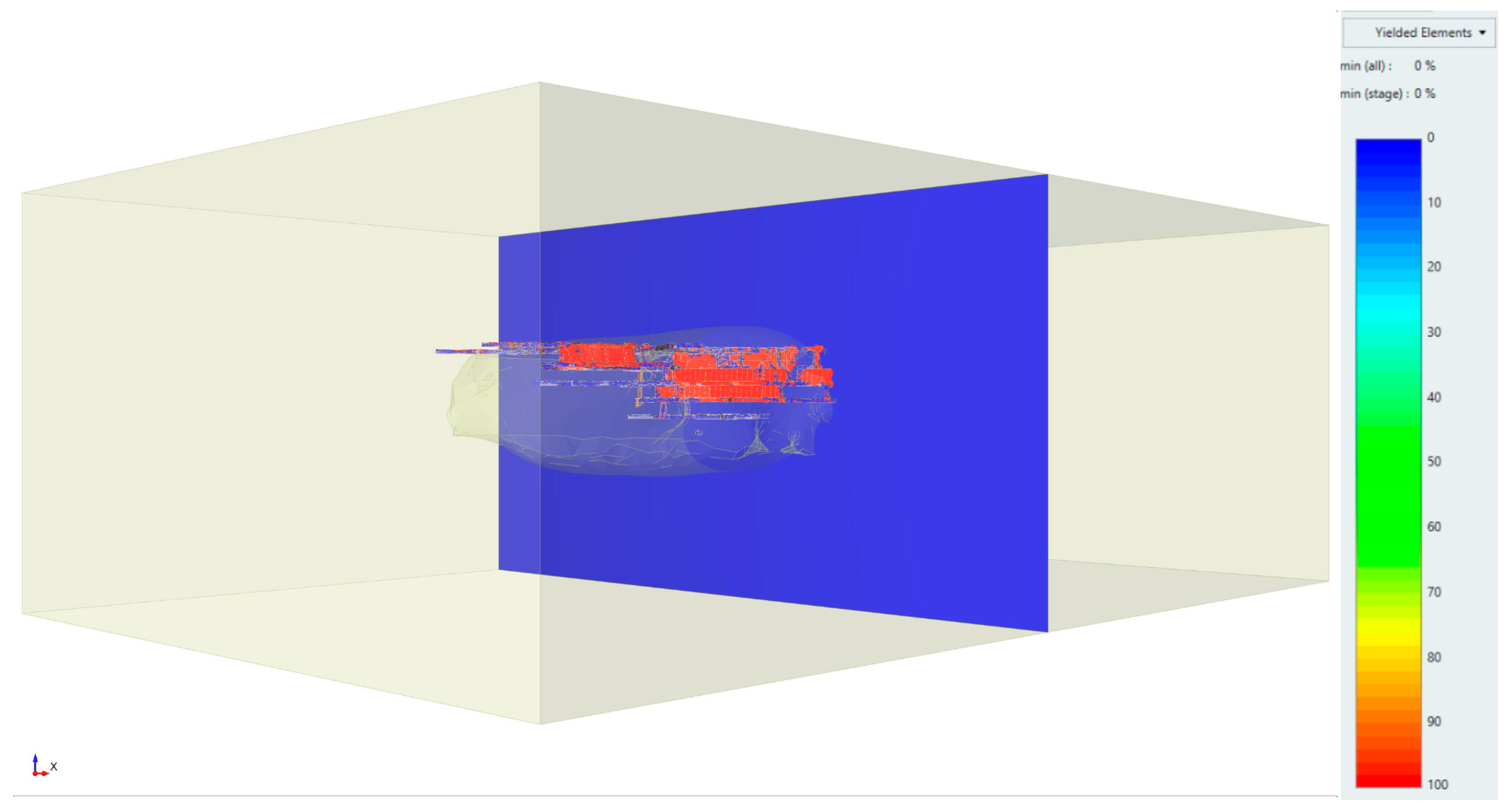
The numerical modelling also demonstrated the development of non-elastic deformation zones surrounding excavations. Yielded regions predicted using the Hoek–Brown elastoplastic formulation were concentrated near excavation contours, excavation intersections, and regions characterized by reduced confinement conditions (
Figure 6).
The simulations corresponding to projected mining development scenarios indicated that increasing excavation density and further excavation advance intensify the heterogeneity of the stress–strain state and contribute to the enlargement of deformation localization zones. In particular, excavation interaction effects become progressively more pronounced in regions containing closely spaced workings and extensive mined-out voids.
The numerical modeling results obtained using RS3 are in good agreement with the geomechanical monitoring data regularly collected at the mine. Field observations have documented cases of rock slabbing, local roof falls, and sidewall failures in haulage drifts located in the vicinity of mined-out voids at the 800–840 m levels. Similar patterns were identified in the numerical simulations, where zones of inelastic deformation were detected around the excavation contours. In the RS3 environment, these areas are represented by yielded elements forming failure zones with a thickness of approximately 0.5–0.7 m. Such zones indicate a loss of rock mass integrity and are interpreted as potential locations of future rock falls and localized instability. The observed correspondence between numerical predictions and monitoring data confirms the adequacy of the adopted geomechanical model.
The obtained results indicate that excavation stability cannot be reliably characterized using only individual parameters such as displacement magnitude or stress concentration considered separately. Instead, instability development is associated with complex interactions between stresses, deformation intensity, yielding processes, excavation geometry, and structural characteristics of the rock mass.
These observations motivated the construction of a multidimensional geomechanical representation integrating stress-related, deformation-related, and stability-related parameters within a unified computational framework. The resulting multidimensional datasets were subsequently analyzed using intelligent data analysis methods in order to investigate the structure and transitions of geomechanical states within the mining system.
3.2. Correlation Structure of Multidimensional Geomechanical Parameters
To investigate the internal relationships between the stress-related, deformation-related, and stability-related characteristics of the rock mass, correlation analysis of the multidimensional geomechanical dataset was performed. The analysis was conducted using the complete dataset containing approximately nodal observations and 21 physically interpretable parameters extracted from the numerical simulations.
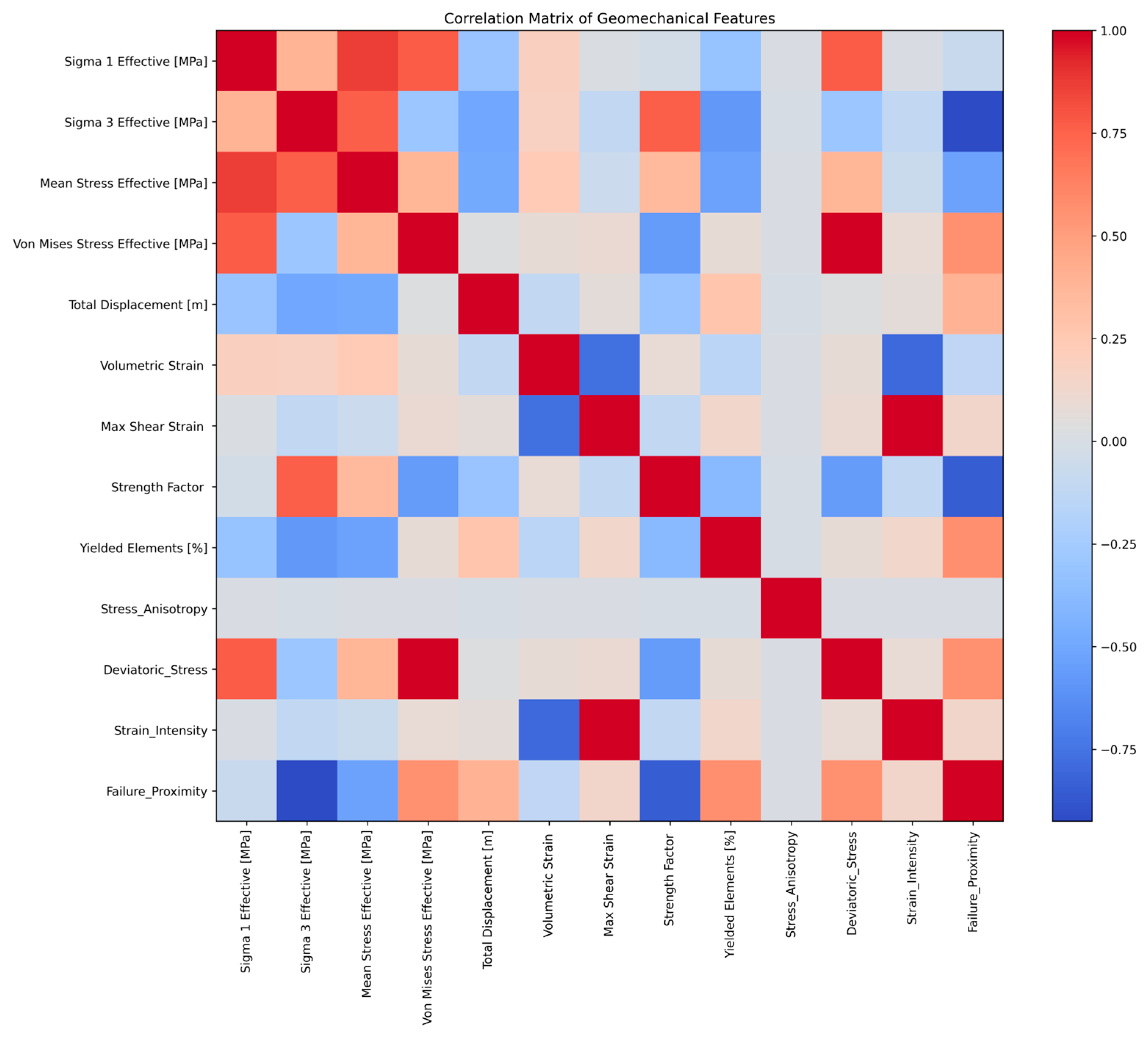
The computed correlation matrix revealed the existence of several strongly coupled groups of geomechanical parameters associated with different mechanical processes occurring within the rock mass (
Figure 7).
As expected, the strongest correlations were observed between characteristics that are related to each other by fundamental relationships in the mechanics of a solid.
In particular, the maximum shear strain and strain intensity demonstrated an almost complete linear relationship with a correlation coefficient of approximately . This close connection stems from the Cauchy relations and quite expectedly indicates that both parameters describe closely related aspects of deformation accumulation and non-elastic strain development within the rock mass.
Similarly, a very strong correlation was identified between deviatoric stress and the equivalent Von Mises stress , indicating that both descriptors characterize nearly identical features of the stress state associated with shear-dominated loading conditions. This observation confirms that the principal mechanisms governing stress redistribution within the investigated mining regions are largely controlled by deviatoric stress accumulation. This result is also quite natural, since the Van Mises failure criterion involves the stress deviator.
A pronounced relationship was additionally observed between the minor principal stress and the failure proximity parameter . Since the failure proximity descriptor was defined as the inverse of the strength factor, this result indicates that confinement conditions represented by strongly influence the stability state of the rock mass. Regions characterized by reduced confinement therefore exhibit increased proximity to instability and non-elastic deformation development, especially since this parameter is directly involved in the Hoek-Brown criterion (1).
The correlation analysis also demonstrated substantial coupling between stress redistribution and deformation-related characteristics, which is due to their relationship within the constitutive model. The major principal stress showed strong positive correlation with mean stress and deviatoric stress parameters, reflecting the dominant role of excavation-induced stress concentration in controlling deformation processes near underground workings.
The above results confirm the correctness of the construction of the multidimensional geomechanical dataset.
At the same time, several parameters demonstrated comparatively weak correlations with the remaining feature space. In particular, the stress anisotropy descriptor exhibited only limited correlation with most other parameters, indicating that the ratio between principal stresses does not represent a dominant independent factor governing the overall structure of the geomechanical state space for the investigated mining conditions.
Interestingly, the percentages of yielded elements and total displacements, while closely related, correlate very weakly with the stress deviator, despite the fact that the deviator is involved in both the Van Mises and the Hoek-Brown failure criteria. This suggests that the failure process of hard rocks is governed by the Hoek-Brown criterion, not the Van Mises criterion, which is more applicable to analyzing the behavior of ductile materials.
The obtained correlation structure demonstrates that the multidimensional geomechanical dataset contains both strongly coupled parameter groups and partially independent mechanical descriptors. This observation is important for the subsequent intelligent analysis because it indicates the existence of underlying latent structures governing the evolution of the stress–strain state of the rock mass.
The identified relationships additionally confirm that instability development within the mining system is governed by coupled interactions between confinement conditions, deviatoric loading, deformation localization, and progressive yielding processes. Consequently, multidimensional analysis methods are required to investigate the internal structure and transitions of geomechanical states within the rock mass.
The revealed correlation structure also motivated the application of dimensionality reduction techniques aimed at identifying dominant modes of variability within the multidimensional geomechanical state space.
3.3. Principal Component Representation of Geomechanical States
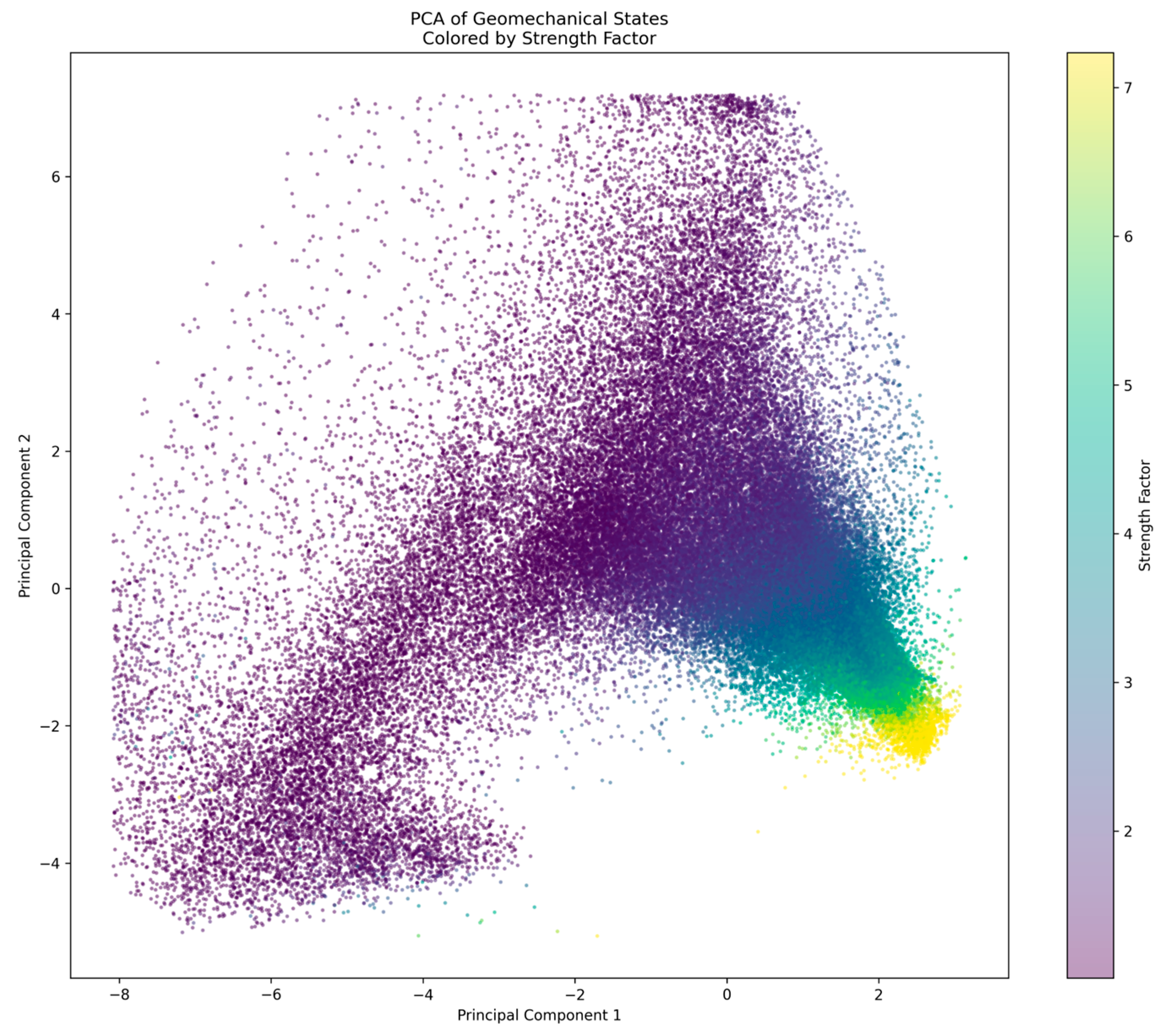
As stated above, to investigate the internal structure of the multidimensional geomechanical state space and identify dominant modes of variability governing rock mass behavior, principal component analysis (PCA) was applied to the standardized multidimensional dataset.
The first two principal components explained approximately 58.9% of the total variance of the multidimensional dataset, with the first principal component accounting for approximately 33.1% and the second component accounting for approximately 25.8% of the total variance. Such results indicate that the high-dimensional geomechanical state space possesses a relatively compact low-dimensional structure.
Analysis of the PCA loadings demonstrated that the dominant modes of variability are primarily associated with confinement conditions, deviatoric stress accumulation, deformation intensity, and stability-related parameters. In particular, the first principal component exhibited strong contributions from the minor principal stress, strength factor, and failure proximity parameters, while the second component was strongly influenced by major principal stress and deviatoric stress characteristics.
The central region of the PCA representation corresponds primarily to mechanically stable states characterized by moderate stress conditions, limited deformation intensity, and relatively high strength factor values (
Figure 8). These states occupy the dominant portion of the computational domain and are associated with elastic or weakly nonlinear deformation behavior of the rock mass.
In contrast, several elongated branches and sparsely populated regions of the PCA space correspond to mechanically distinct geomechanical conditions associated with elevated deformation intensity and progressive yielding processes. The transition from the dense central region toward the peripheral branches is accompanied by a gradual reduction in the strength factor and increased development of non-elastic deformation processes.
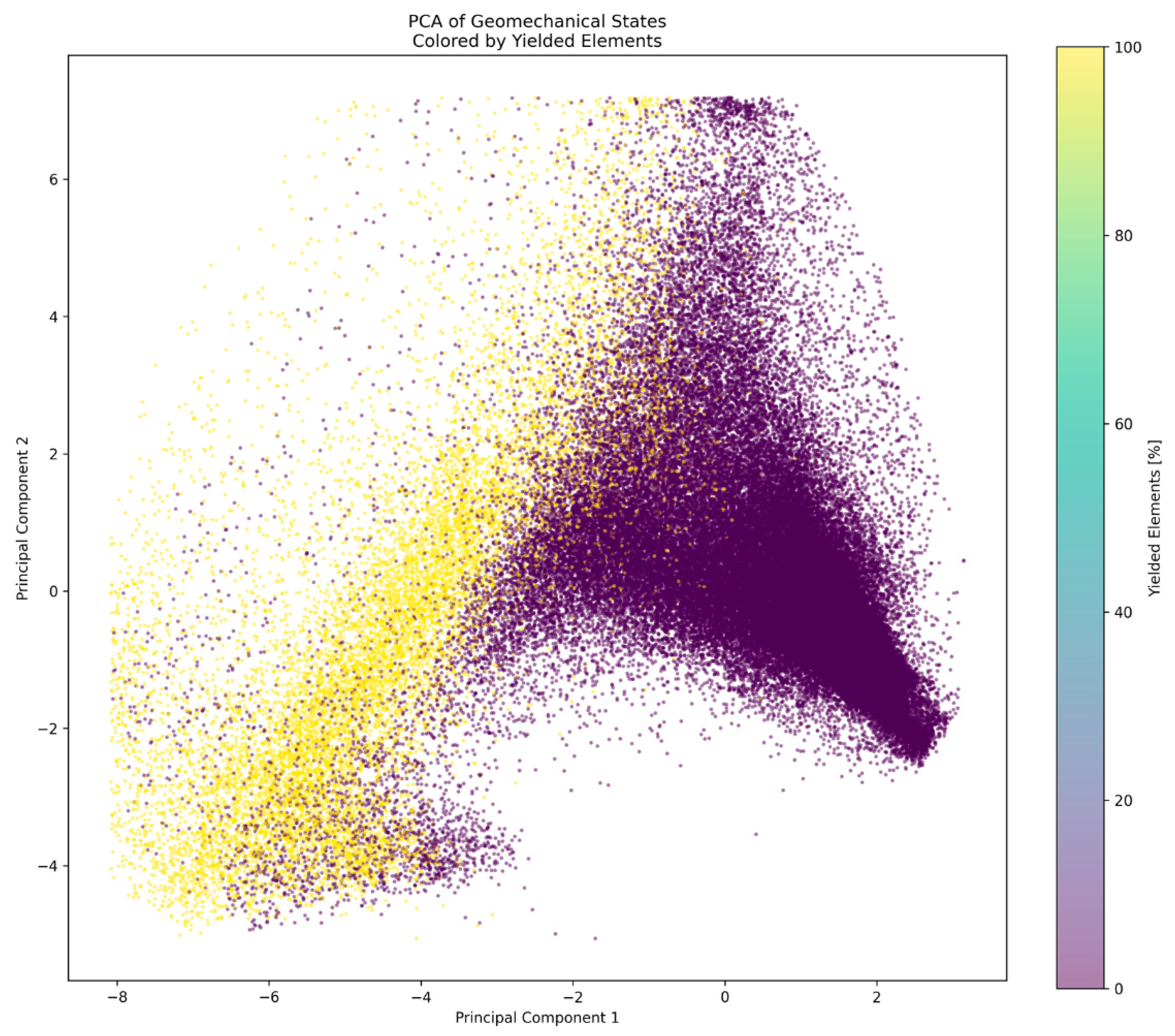
The projection colored according to the yielding indicator (
Figure 9) demonstrates that regions characterized by elevated percentages of yielded elements occupy specific branches of the PCA topology rather than being uniformly distributed throughout the parameter space.
This observation indicates that plastic deformation development is associated with particular combinations of stress, deformation, and stability-related characteristics rather than with isolated variations in individual parameters. Consequently, yielding processes emerge as organized multidimensional geomechanical regimes rather than purely local independent phenomena.
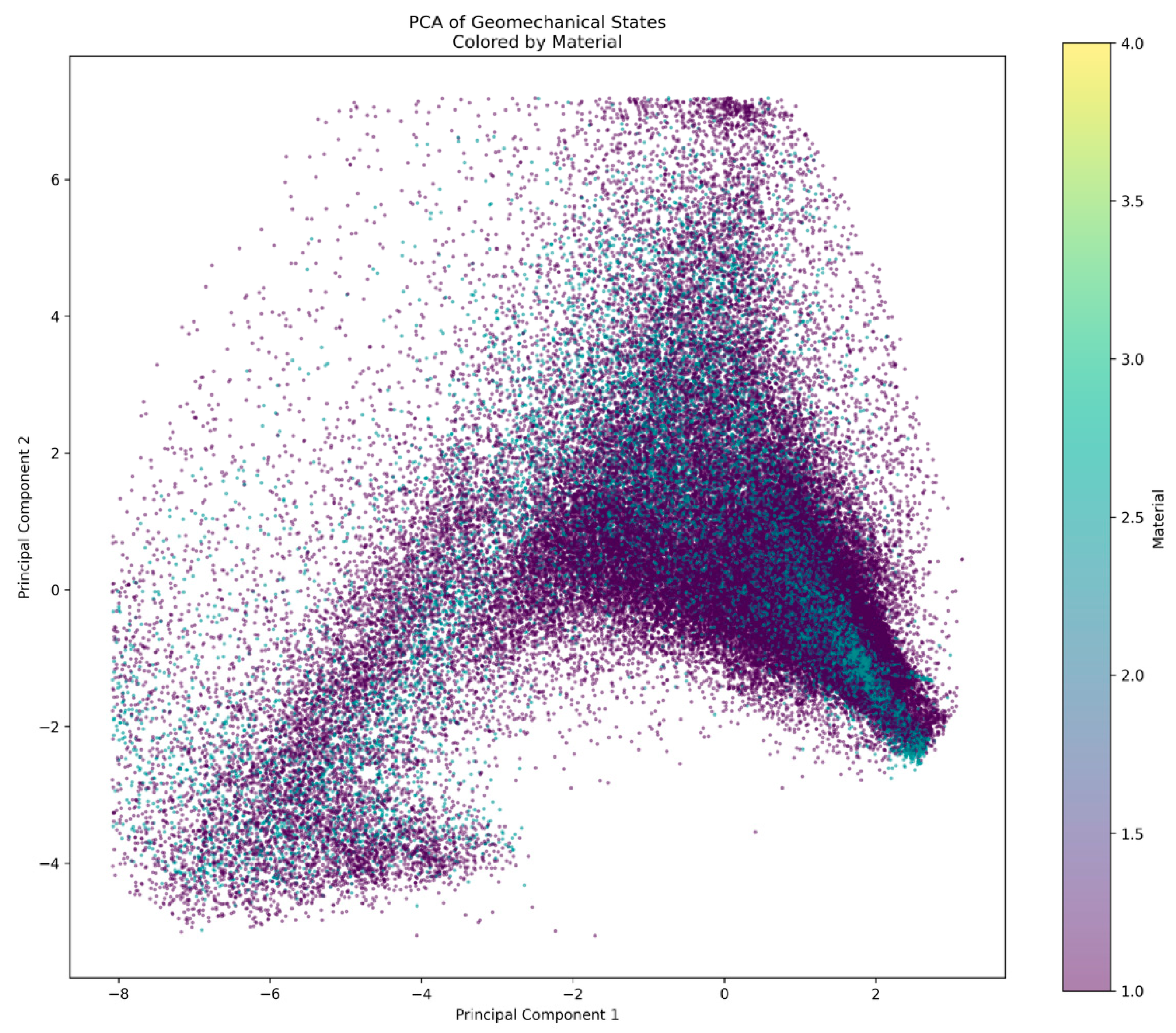
The PCA representation additionally demonstrated that the identified geomechanical structures are not controlled solely by lithological differentiation of the rock mass (
Figure 10). Although certain lithological groups exhibit local concentration within specific regions of the PCA space, the distributions of material identifiers largely overlap, and no distinct lithology-controlled clusters are observed.
This result suggests that excavation-induced stress redistribution, deformation localization, and yielding processes exert a stronger influence on the multidimensional structure of geomechanical states than lithology alone. Therefore, the resulting state space topology reflects coupled mechanical interactions occurring within the mining system rather than simple material classification.
The obtained results indicate that the multidimensional geomechanical state space possesses an internally organized structure governed by coupled mechanical processes rather than by isolated independent parameters. The existence of dense regions, transitional branches, and sparsely populated peripheral states additionally suggests the presence of distinct geomechanical regimes and progressive transitions between stable and instability-prone mechanical conditions.
These observations provide the basis for subsequent clustering analysis aimed at identifying characteristic geomechanical regimes within the multidimensional state space.
3.4. Identification of Geomechanical Regimes Using Clustering Analysis
To investigate the internal organization of the multidimensional geomechanical state space, unsupervised clustering analysis was performed using the HDBSCAN algorithm. Unlike conventional clustering techniques requiring a predefined number of clusters, HDBSCAN identifies regions of different density directly from the statistical structure of the data. Such an approach is particularly suitable for geomechanical systems, where deformation and instability processes are characterized by nonlinear evolution and gradual transitions between mechanical regimes.
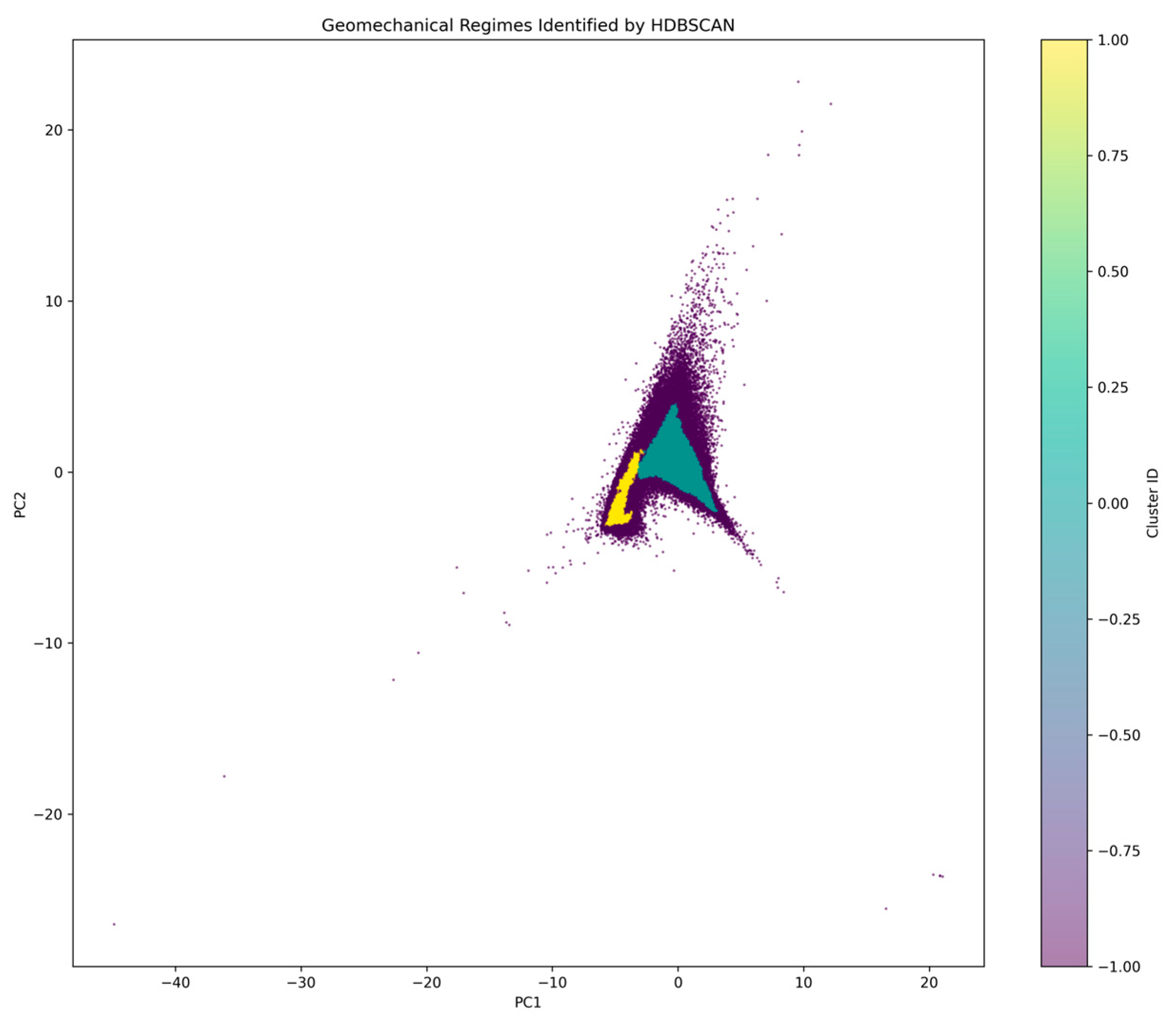
The clustering analysis was performed in the reduced principal component space obtained from the PCA transformation described in the previous section. The first two principal components were used for visualization and structural interpretation of the multidimensional geomechanical state distribution. The obtained clustering structure is presented in
Figure 11.
The HDBSCAN algorithm identified three major categories of geomechanical states:
The corresponding mechanical characteristics of the identified regimes are summarized in
Table 4.
The dominant cluster represents mechanically stable regions of the rock mass characterized by relatively high strength factor values and minimal development of yielded elements. The average strength factor within this regime was approximately 2.97, while the average proportion of yielded elements remained near 1.6%. These states correspond primarily to elastically deformed regions located outside major stress concentration zones and structurally weakened areas.
A second cluster corresponds to instability-prone geomechanical conditions associated with extensive plastic deformation development and a significant reduction in mechanical stability. The average strength factor within this regime decreased to approximately 1.07, while the average proportion of yielded elements increased to nearly 87%. These states represent regions approaching failure conditions and exhibiting strong non-elastic deformation processes. Importantly, the instability-prone states form a distinct and separable region within the multidimensional parameter space rather than appearing as isolated random observations. This indicates that unstable mechanical behavior possesses a characteristic multidimensional structure that can be identified automatically using intelligent analysis methods.
In addition to the stable and instability-prone regimes, the clustering procedure identified a group of intermediate geomechanical states characterized by partially developed yielding and moderate reduction in stability parameters. The average strength factor within this regime was approximately 2.03, while the average proportion of yielded elements reached about 33%. These states occupy transitional regions between stable and unstable domains in the principal component space and may correspond to zones undergoing active stress redistribution and progressive localization of deformation processes.
The obtained results demonstrate that the evolution of the stress–strain state of the rock mass cannot be interpreted as a simple binary transition between stable and failed conditions. Instead, the multidimensional geomechanical parameter space contains distinct regimes associated with different stages of deformation development and instability evolution.
An important feature of the obtained results is that the clustering structure emerged directly from the intrinsic statistical organization of the multidimensional geomechanical dataset without introducing predefined stability labels or manually specified failure criteria. Consequently, the identified regimes may be interpreted as naturally occurring mechanical states of the rock mass arising from complex interactions between stresses, deformation processes, excavation geometry, and structural heterogeneity.
The identified clustering structure subsequently provides the basis for detecting atypical and potentially hazardous geomechanical states using anomaly detection methods discussed in the following section.
3.5. Detection of Atypical and Instability-Prone Geomechanical States
To identify rare and mechanically atypical conditions within the multidimensional geomechanical state space, anomaly detection analysis was performed using the Isolation Forest algorithm. In contrast to conventional threshold-based approaches relying on individual indicators such as displacement magnitude or stress concentration, the applied method detects states characterized by unusual multidimensional combinations of stress-related, deformation-related, and stability-related parameters.
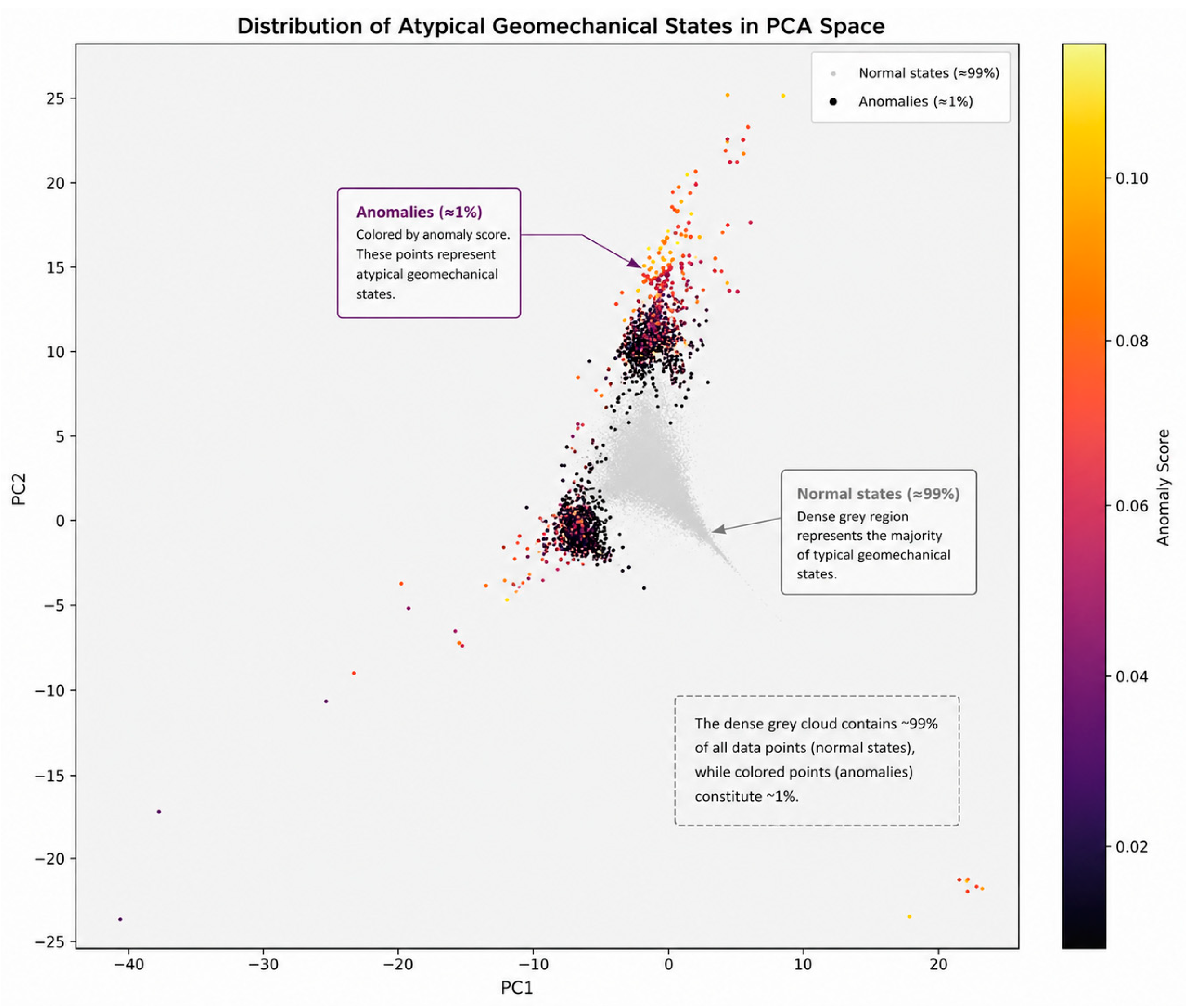
The anomaly detection procedure identified approximately 1% of the analyzed geomechanical states as atypical relative to the dominant multidimensional distribution. The obtained results demonstrate that the detected anomalies do not represent randomly distributed statistical outliers or visualization artefacts. Instead, they form structured and spatially organized regions within both the principal component space and the physical domain of the underground mining system.
Visualization of the anomaly distribution in the PCA-reduced state space (
Figure 12) revealed that the majority of geomechanical states form a compact and dense central region corresponding to mechanically stable conditions. These states are characterized by relatively moderate stress redistribution, limited deformation intensity, and predominantly stable mechanical behavior of the rock mass.
In contrast, the detected atypical states occupy elongated peripheral regions and distinct branches of the multidimensional distribution rather than being uniformly scattered throughout the parameter space. In particular, two dominant groups of anomalies were identified:
Such organization indicates that the detected anomalies correspond to different classes of mechanically atypical behavior rather than representing a single instability mechanism. Consequently, the obtained results suggest the existence of multiple pathways of geomechanical state evolution associated with excavation-induced stress redistribution, deformation localization, and progressive yielding processes. The principal characteristics of the detected atypical states are summarized in
Table 5.
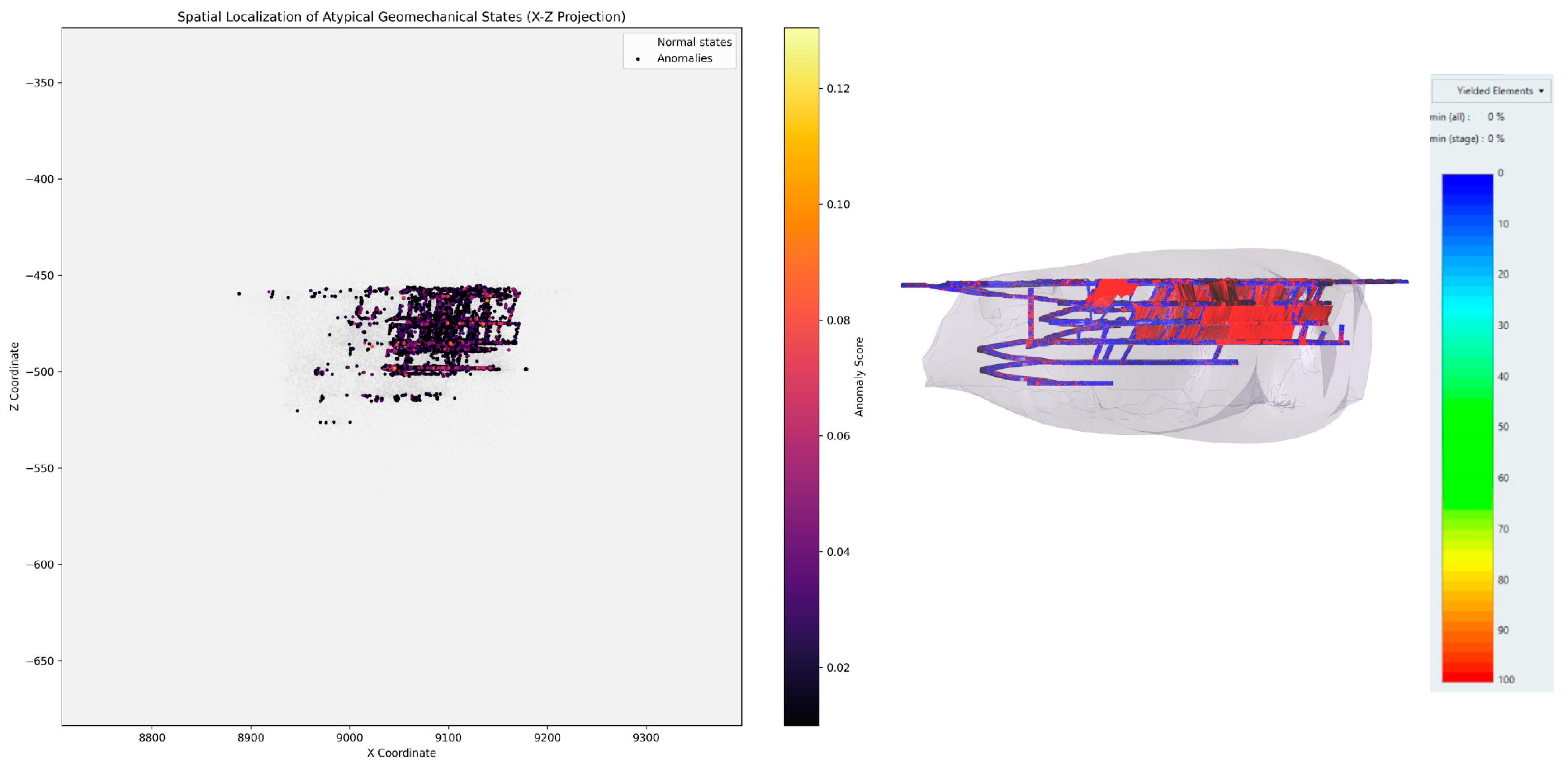
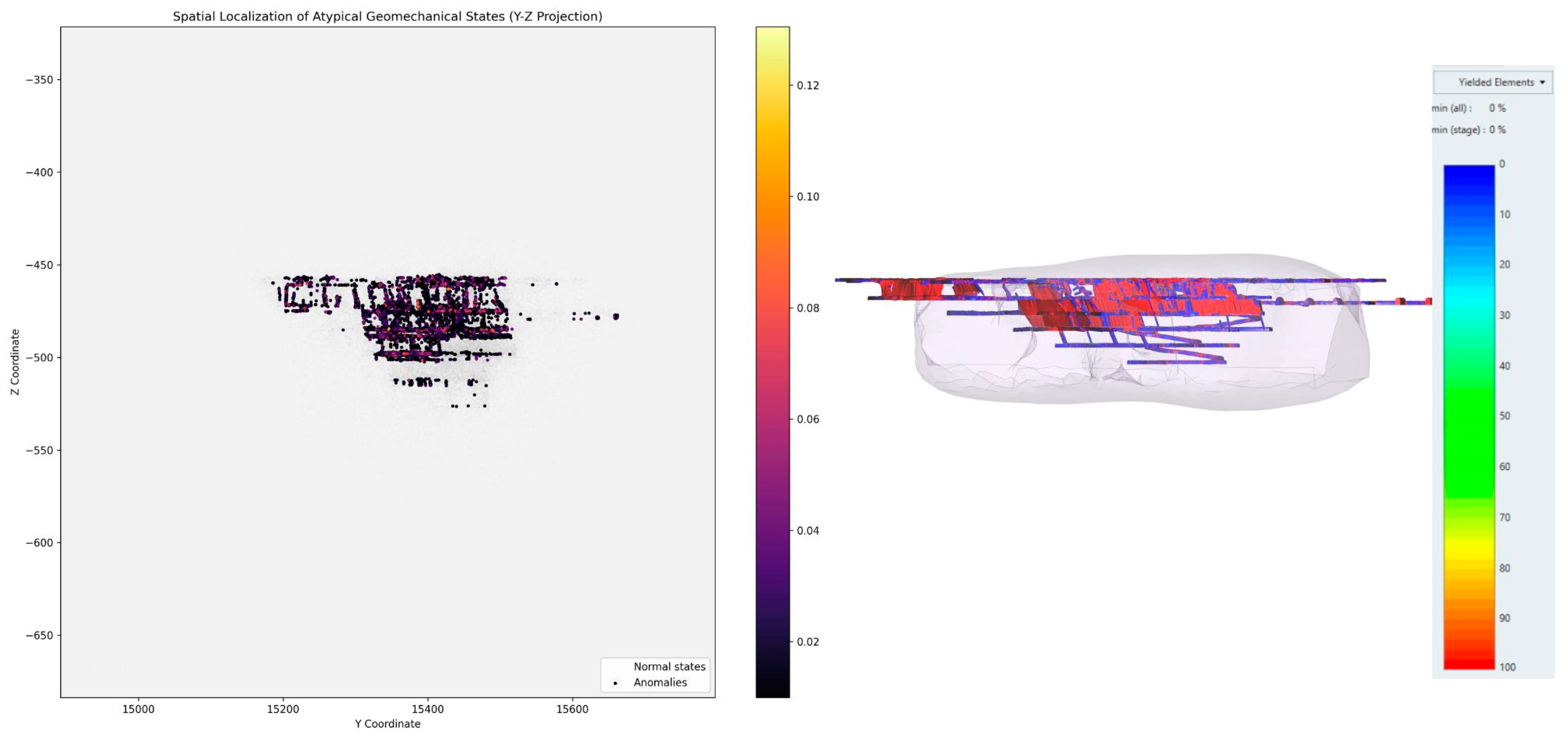
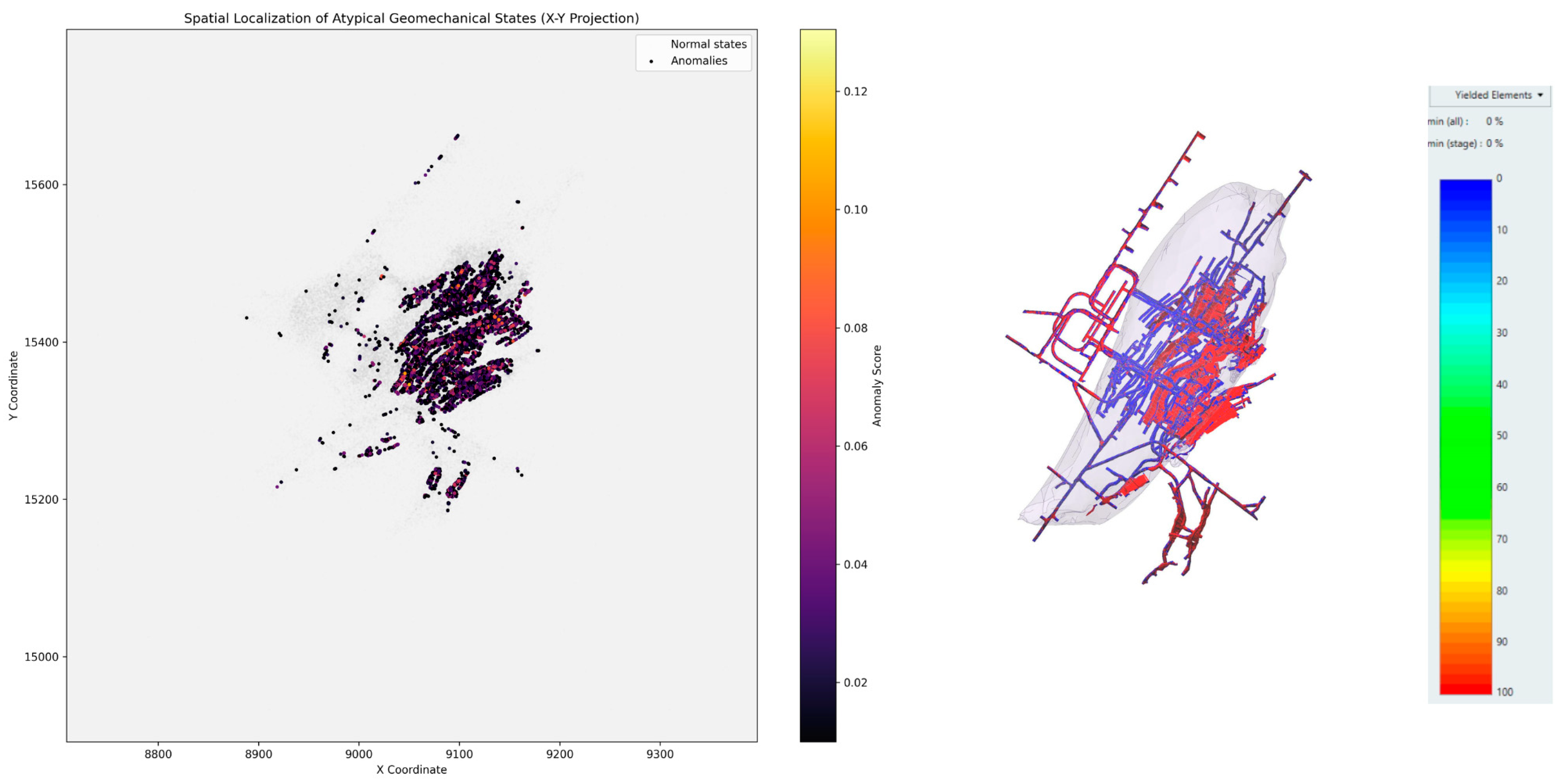
A particularly important result was obtained from the spatial analysis of the detected anomalies. The spatial projections of atypical states demonstrate that the anomalies are not uniformly distributed throughout the computational domain and cannot be explained solely by depth-dependent stress increase. Instead, they exhibit pronounced spatial localization associated with excavation geometry, mining levels, and excavation interaction zones (
Figure 13,
Figure 14 and
Figure 15).
The detected anomalies form elongated linear and band-like structures following the configuration of underground workings and mining levels. Elevated concentrations of atypical states were observed within regions characterized by intensive excavation: mostly near intersections of roadways and mined-out voids. In addition, anomaly bands frequently developed directly in excavation roofs and floors, where stress redistribution and deformation localization are expected to be most pronounced.
The obtained spatial organization demonstrates that the detected anomalies are strongly controlled by excavation topology and stress redistribution geometry rather than by random statistical fluctuations. Importantly, the anomaly density remained spatially localized, while the majority of the rock mass preserved stable geomechanical conditions represented by the dense central region of the multidimensional state space. This indicates that the proposed intelligent analysis framework is capable of isolating localized mechanically disturbed regions without artificially classifying the entire computational domain as unstable.
The observed localization of atypical states near excavation intersections and mining levels additionally suggests that anomaly detection methods may provide useful information regarding zones of progressive plastic deformations within structurally disturbed rock masses.
Overall, the obtained results demonstrate that intelligent anomaly detection methods are capable of revealing hidden structural organization within multidimensional geomechanical datasets generated by numerical modelling. The identified atypical states emerge as spatially localized and mechanically interpretable regions associated with excavation geometry, stress redistribution, and deformation localization processes. Importantly, these instability-prone states were detected without introducing predefined failure labels or manually specified threshold criteria, indicating that the multidimensional geomechanical state space itself contains intrinsic signatures of mechanically disturbed conditions.
4. Discussion
The obtained results demonstrate that multidimensional intelligent analysis of numerical geomechanical modelling data provides substantially richer information about the mechanical behavior of underground rock masses than conventional interpretation approaches based on individual stress or displacement indicators. The proposed methodology allowed identification of hidden structural organization within the geomechanical state space and revealed spatially localized instability-prone regimes associated with excavation interaction and stress redistribution processes.
One of the most important observations of the present study is that hazardous geomechanical conditions cannot be reliably characterized using only isolated scalar parameters such as displacement magnitude or stress concentration. Correlation analysis showed that geomechanical states emerge from complex interactions between stresses, strains, yielding processes, deformation intensity, and excavation geometry. The obtained multidimensional structure confirms that underground instability development should be interpreted as a high-dimensional process governed by coupled mechanical mechanisms rather than by independent threshold exceedance of individual variables. Although several features exhibited strong pairwise correlations, they were intentionally retained because they represent different physically interpretable geomechanical descriptors widely used in engineering practice. Consequently, the feature set was selected to preserve physical interpretability of the multidimensional state space rather than to maximize statistical independence between variables.
The principal component analysis additionally demonstrated that the geomechanical state space possesses a highly organized structure despite the complexity of the numerical dataset. The first two principal components explained a substantial portion of the total variance and revealed the existence of several distinct state evolution trajectories associated with stress redistribution and deformation localization. Such organization indicates that multidimensional geomechanical processes contain a hidden low-dimensional structure that can be extracted using intelligent analysis techniques.
Clustering analysis revealed the existence of several mechanically distinguishable geomechanical regimes, including stable states, transitional states, and instability-prone regimes characterized by elevated yielding intensity and reduced strength factor values. Importantly, the identified regimes were obtained directly from the numerical modelling data without predefined labels or manually specified classification criteria. This demonstrates the capability of unsupervised learning methods to identify physically meaningful patterns within large-scale geomechanical datasets.
The anomaly detection results constitute another important outcome of the study. The Isolation Forest algorithm identified atypical states that were not randomly distributed throughout the computational domain but instead formed spatially localized structures following excavation geometry and mining levels. The detected anomalies concentrated near excavation intersections and mined-out space. Such spatial organization strongly suggests that the identified atypical states correspond to physically meaningful mechanically disturbed conditions rather than to purely statistical outliers or numerical artefacts.
The obtained results are generally consistent with previous studies demonstrating the applicability of machine learning methods for analysis of complex geotechnical and mining systems [
32,
33]. However, unlike many existing approaches relying on supervised learning or manually labeled instability datasets, the proposed methodology operates entirely in an unsupervised manner using only multidimensional numerical modelling outputs. Previous studies have primarily focused on machine-learning applications for rock mass classification, geotechnical parameter prediction, hazard assessment, or integration of monitoring data into decision-support systems [
7,
8,
25,
33]. In contrast, the present study applies unsupervised learning directly to a multidimensional geomechanical state space generated from large-scale numerical modelling. This allows investigation of the internal organization of geomechanical states and identification of mechanically atypical conditions without requiring predefined instability labels or historical failure databases. This is particularly important for underground mining applications, where reliable labeled instability data are often unavailable or incomplete.
An additional advantage of the proposed framework is the preservation of physical interpretability throughout the analysis process. The integration of stress, strain, stability, and yielding characteristics within a unified multidimensional representation enables direct geomechanical interpretation of the identified regimes and state transitions. This provides a bridge between conventional numerical geomechanics and modern data-driven analysis techniques.
A particularly important finding is that the anomalous zones identified through machine learning analysis coincide with locations where geomechanical monitoring has recorded actual stability-related problems, including roof falls, sidewall slabbing, and rock mass delamination. This spatial consistency between the detected anomalies and observed manifestations of rock mass deterioration supports the physical significance of the extracted patterns and demonstrates the capability of the proposed approach to identify areas characterized by elevated geomechanical risk before severe instability develops.
At the same time, several limitations of the present study should be acknowledged. First, the intelligent analysis was performed using numerical modelling results rather than field monitoring measurements. Consequently, the identified instability-prone states should be interpreted as mechanically atypical conditions predicted by the numerical model rather than directly validated hazardous zones. Second, although the anomaly detection procedure revealed a clear spatial organization of atypical states, direct comparison with microseismic observations, convergence monitoring, or documented instability events was not performed within the scope of the present study.
Future research should therefore focus on the integration of numerical modelling results with field monitoring systems, including microseismic observations [
34], displacement monitoring, and stress measurements. Such integration would enable validation of the identified geomechanical regimes and provide the basis for the development of hybrid data-driven forecasting systems for underground mining stability assessment. Additional studies may also investigate the temporal evolution of multidimensional geomechanical states during mining advance and evaluate the applicability of deep learning approaches for real-time analysis of large-scale geomechanical datasets.
Overall, the proposed methodology demonstrates that intelligent multidimensional analysis can substantially improve the interpretation of large numerical geomechanical datasets and reveal the hidden organization of stress–strain states.
5. Conclusions
This study presented a methodology for intelligent multidimensional analysis of geomechanical states generated by three-dimensional numerical modelling of underground mining systems at the Zholymbet deposit. The proposed approach combined numerical geomechanical simulation, multidimensional dataset construction, dimensionality reduction, clustering analysis, and anomaly detection methods for the investigation of the stress–strain behavior of structurally disturbed rock masses.
The performed analysis demonstrated that multidimensional geomechanical datasets contain highly organized hidden structure associated with excavation interaction, stress redistribution, yielding processes, and deformation localization. Correlation analysis revealed strong coupling between stress-related and deformation-related parameters, confirming the multidimensional nature of underground instability development.
Principal component analysis showed that the multidimensional geomechanical state space can be represented using a reduced number of dominant latent variables while preserving the essential structure of the system. The obtained PCA representation revealed several distinct trajectories of geomechanical state evolution associated with mechanically different deformation regimes.
Unsupervised clustering analysis identified stable, transitional, and instability-prone geomechanical regimes directly from numerical modelling data without predefined classification labels. The identified instability-prone regimes were characterized by elevated yielding intensity and reduced strength factor values.
Anomaly detection using the Isolation Forest algorithm demonstrated that atypical geomechanical states form spatially localized structures associated with excavation geometry, mining levels, and excavation interaction zones. The detected anomalies exhibited physically interpretable spatial organization rather than random statistical distribution, indicating that intelligent analysis methods can reveal mechanically meaningful instability-related patterns within multidimensional geomechanical datasets.
The obtained results indicate that intelligent analysis methods provide a promising framework for the interpretation of large-scale numerical geomechanical modelling results and for the identification of potentially hazardous mechanically disturbed regions in underground mining systems. The proposed methodology may serve as a basis for the development of advanced geomechanical monitoring and decision-support systems integrating numerical modelling, machine learning, and field monitoring data.





 ,
,