Dynamics of a Modified Third–Order Phase–Locked Loops (PLL): Melnikov Approach, Simulations

 ,
,  ,
,  , and
, and
Abstract
1. Introduction
2. The New Model
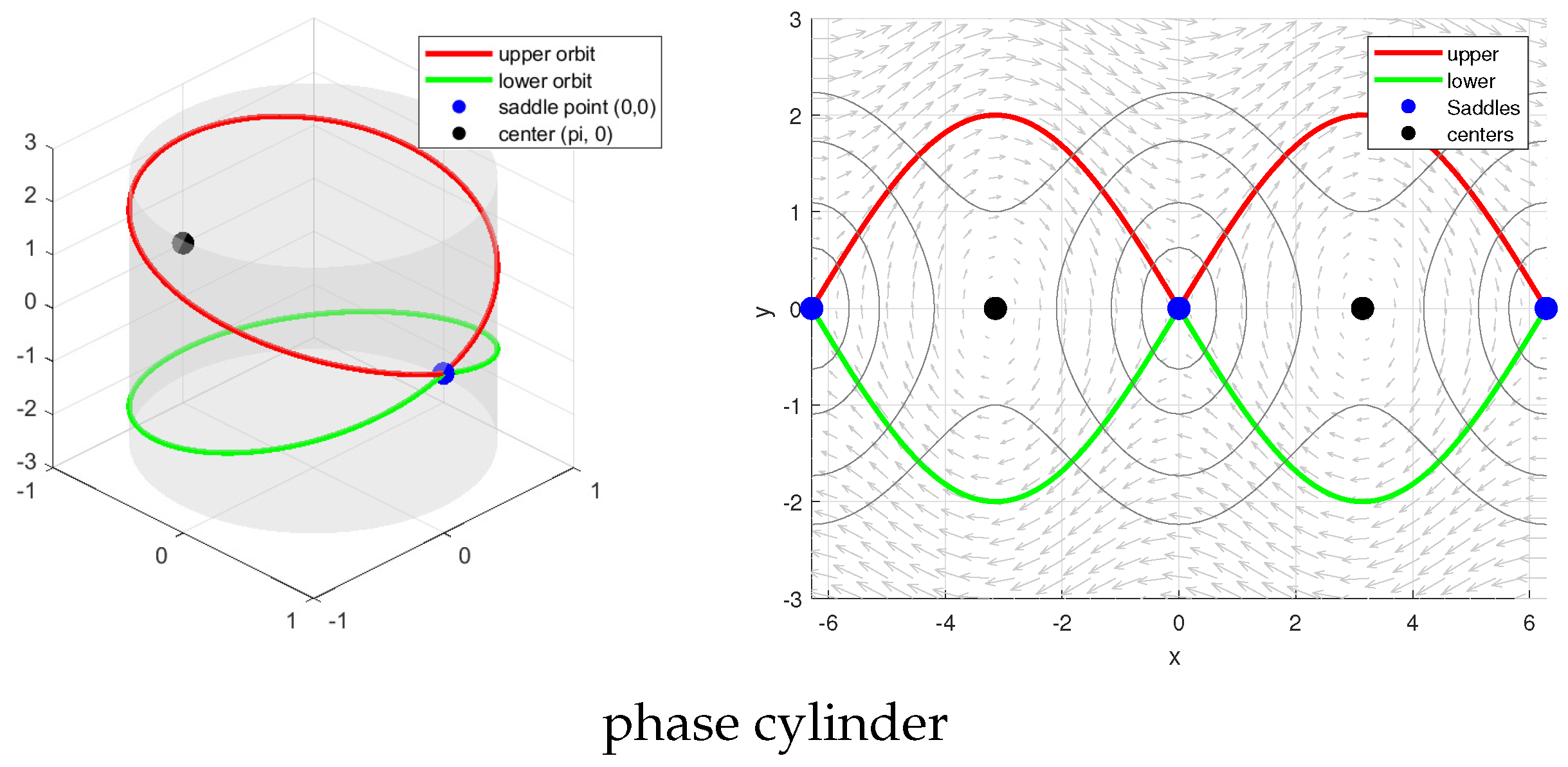
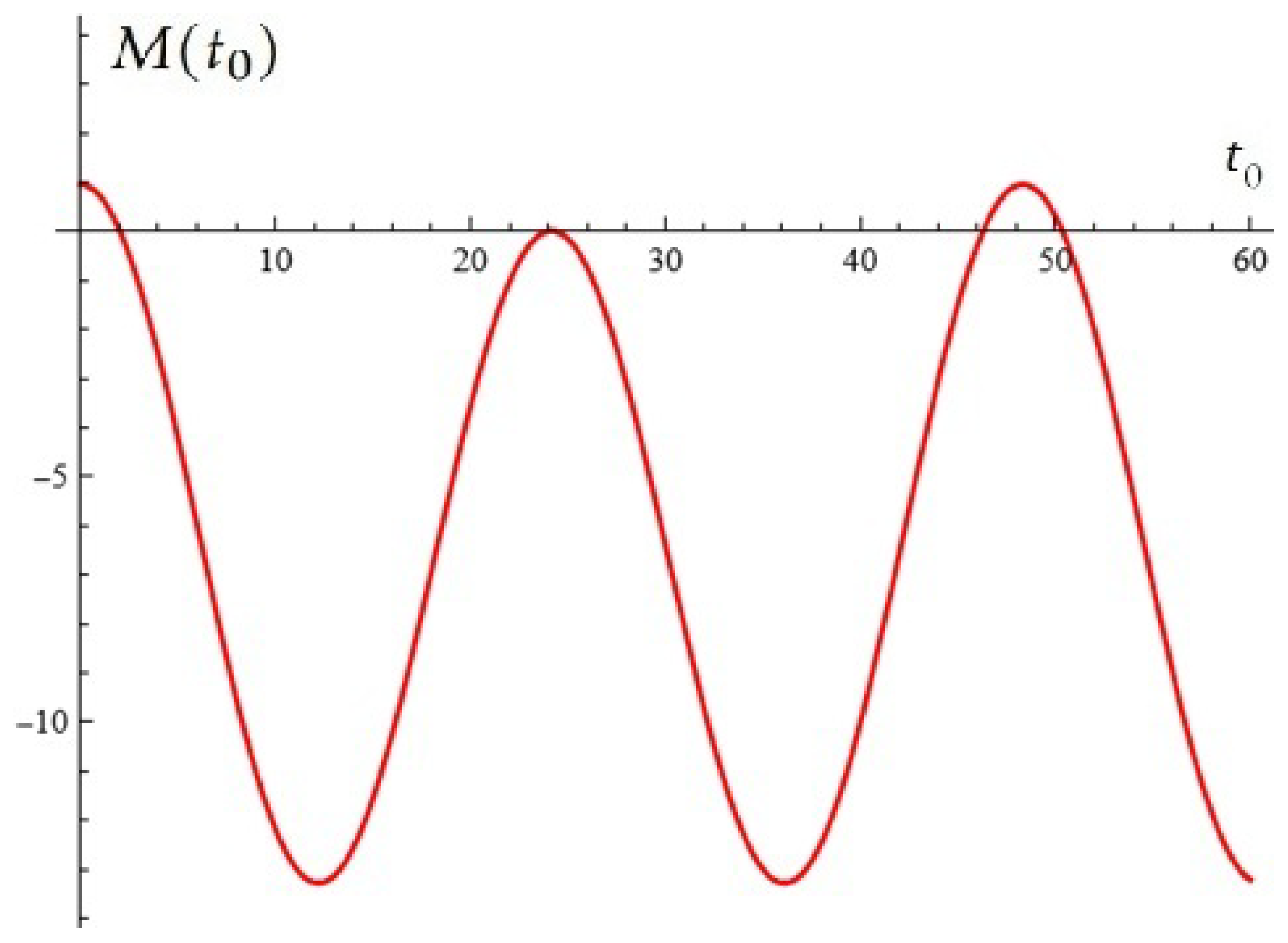
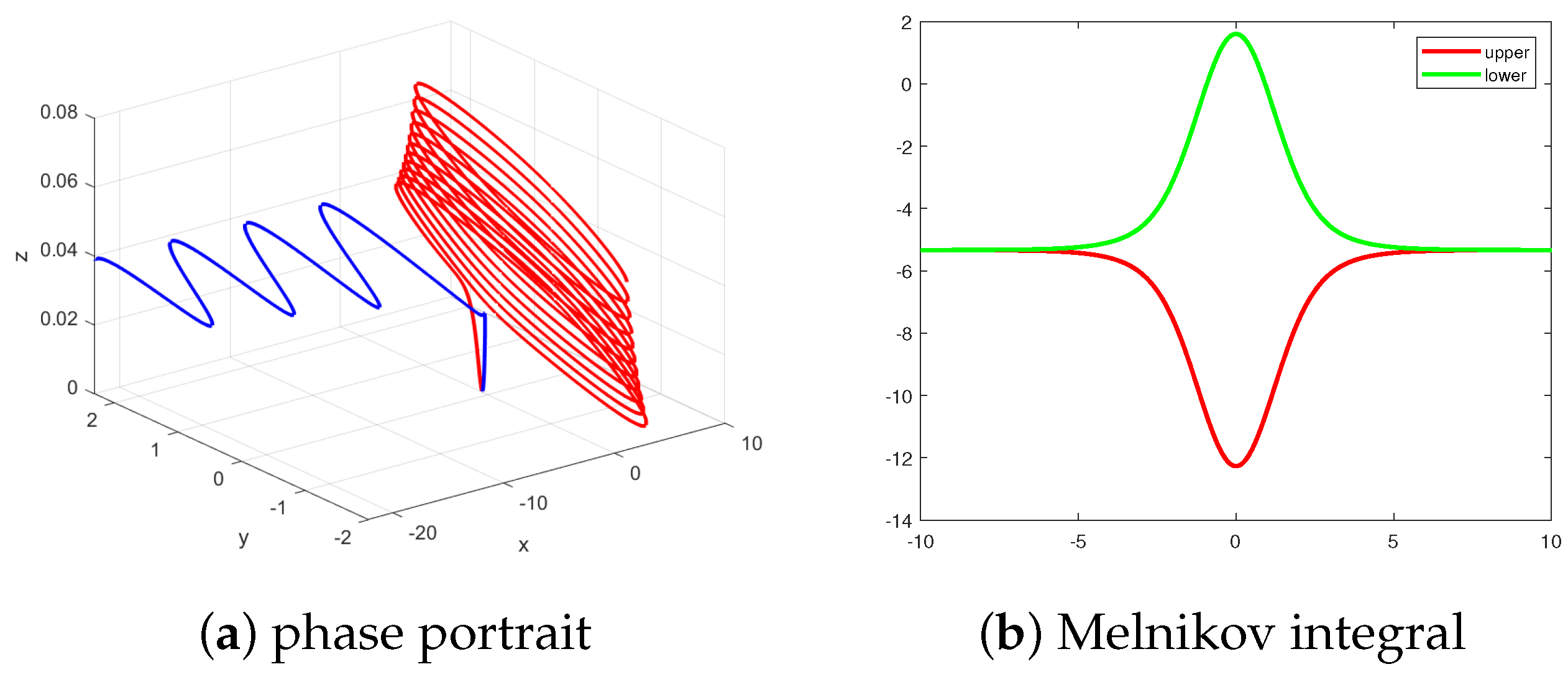
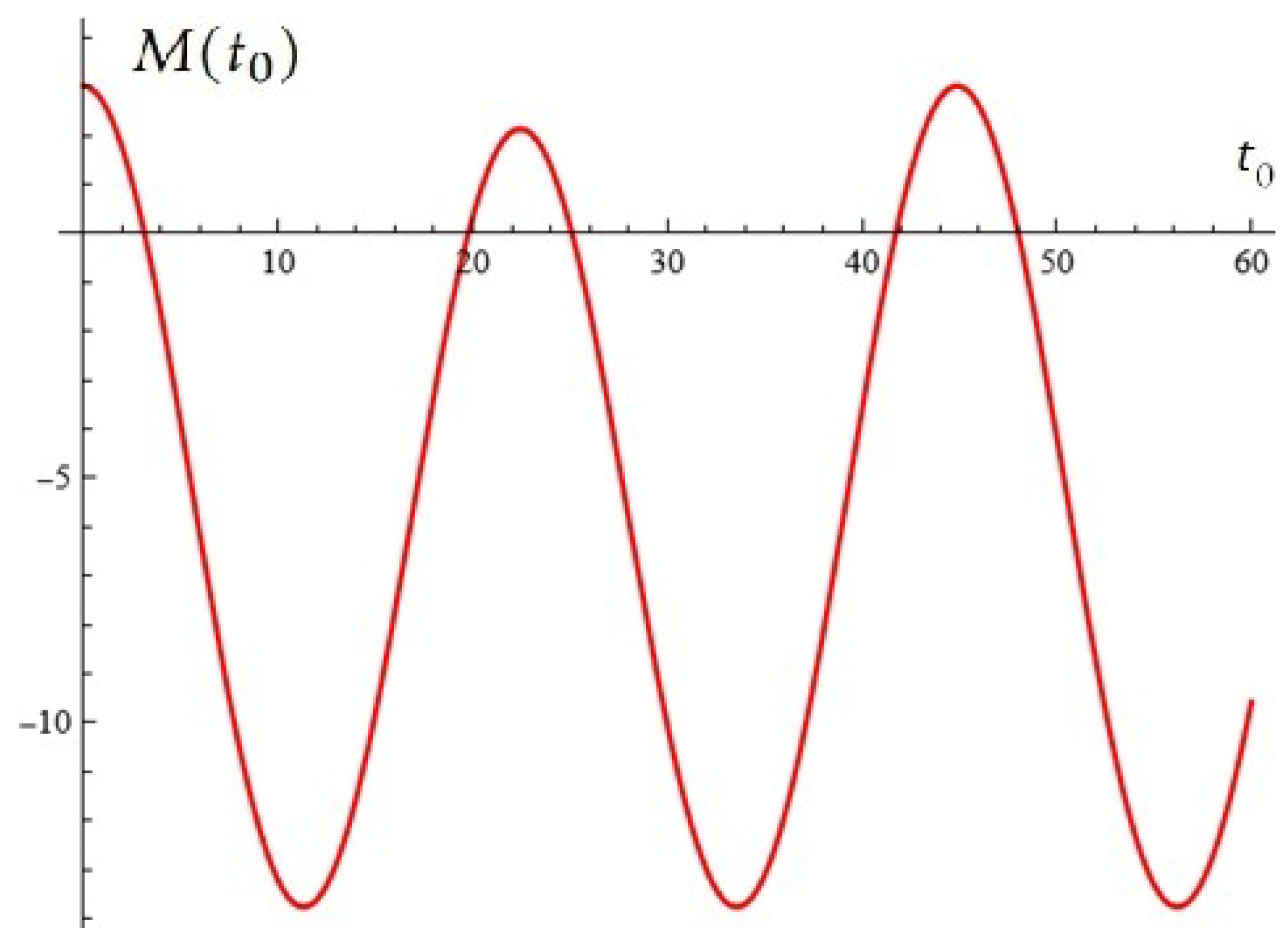
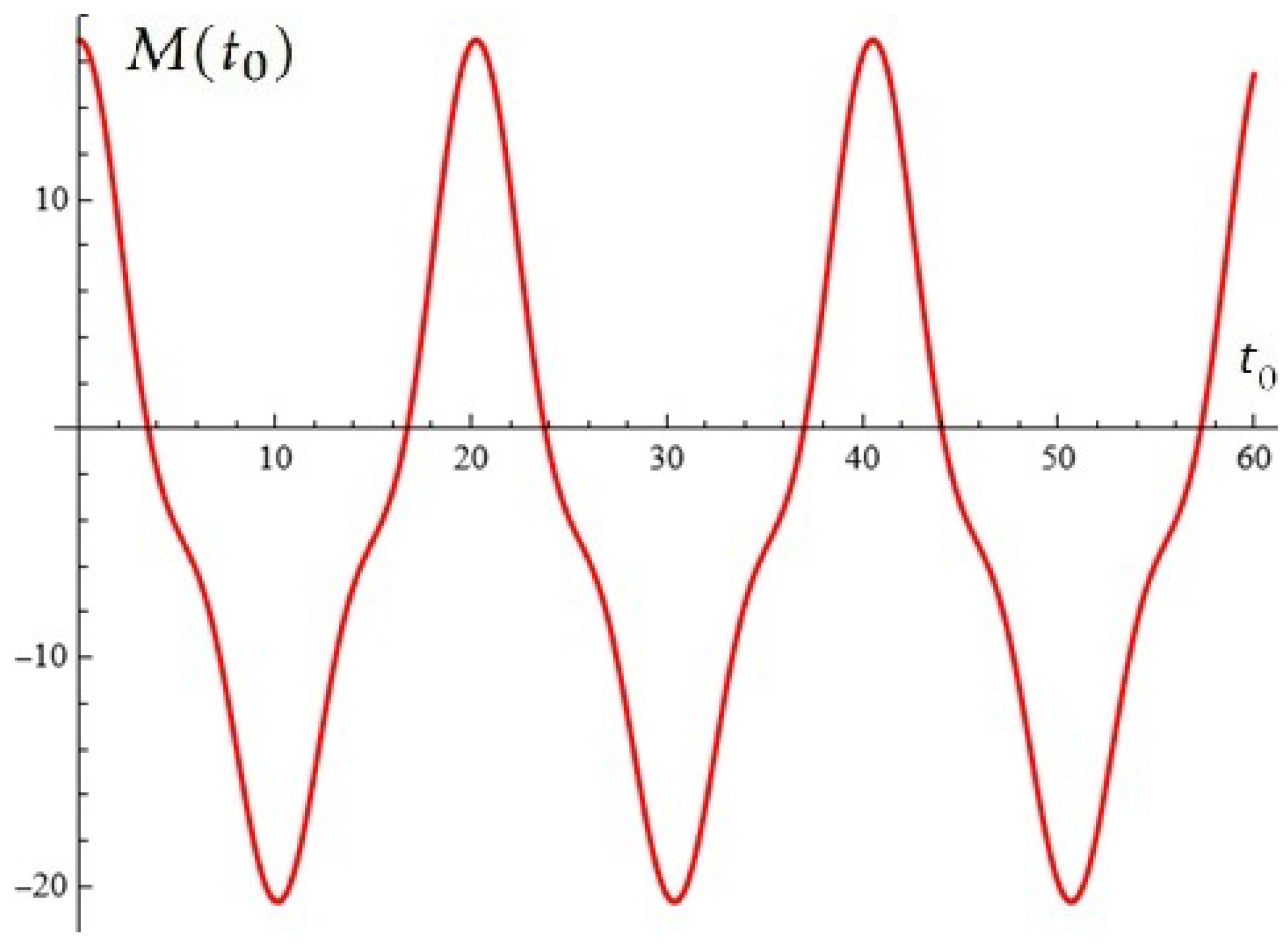
Dynamics of the Modified Model: Melnikov Approach
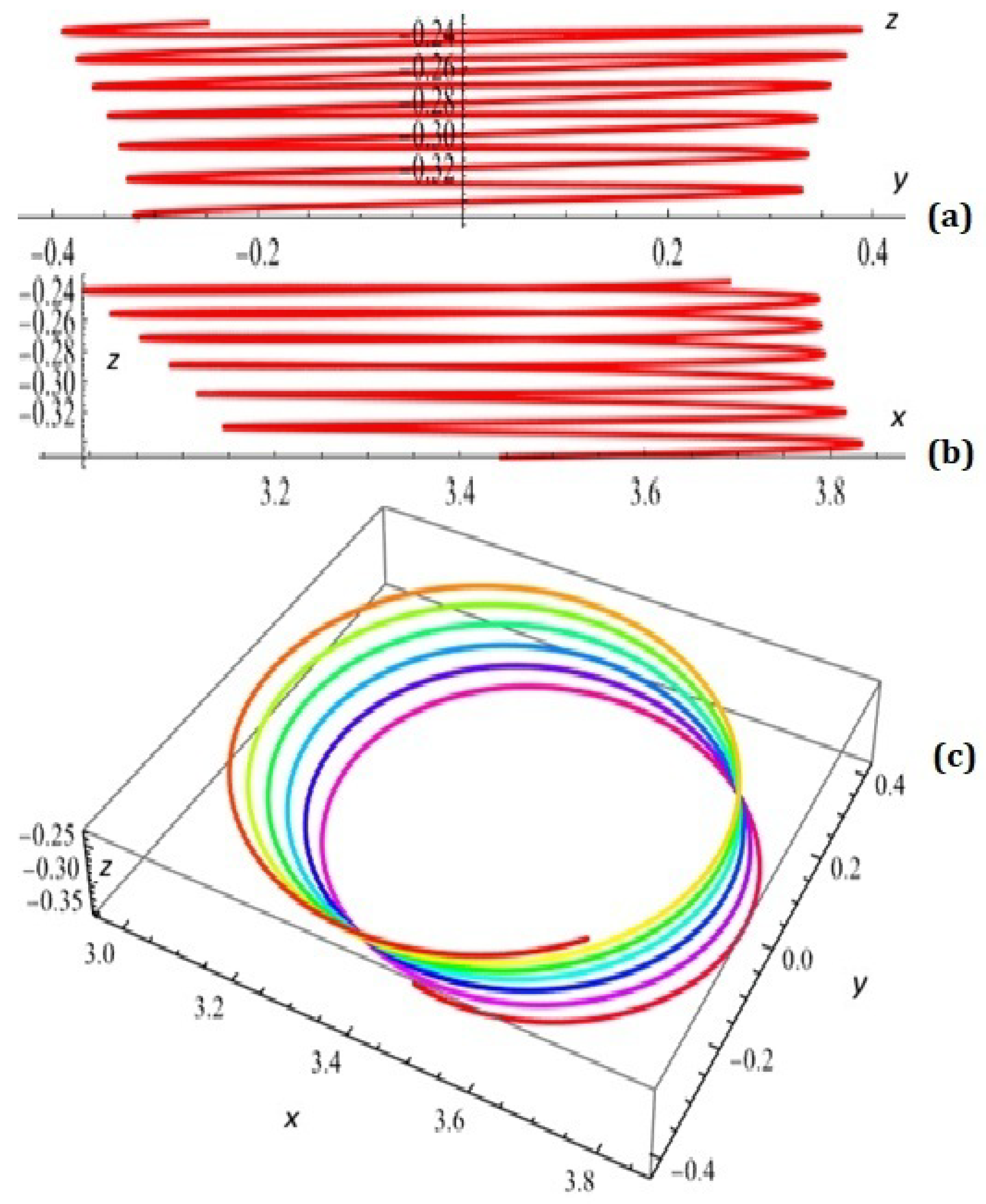
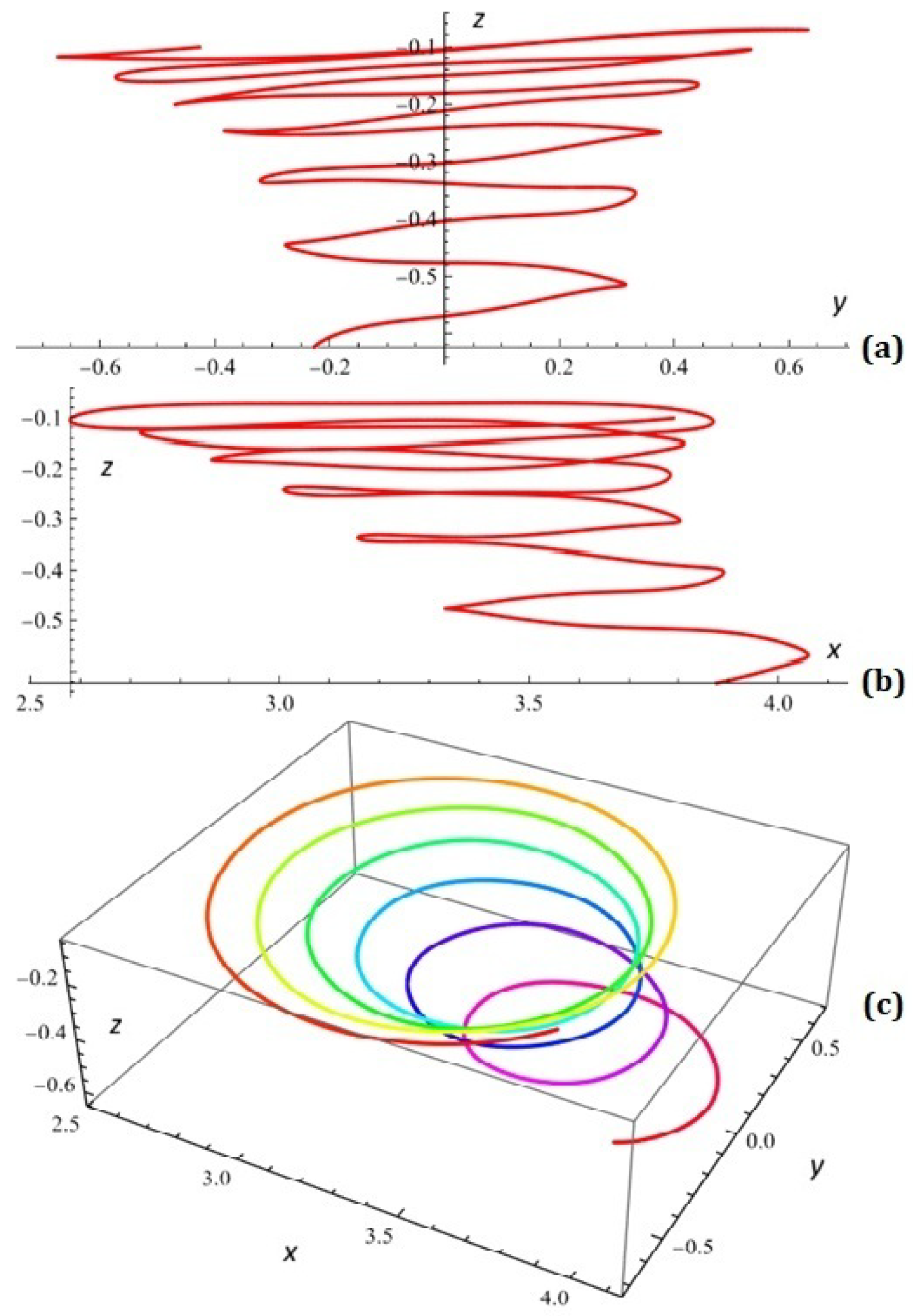
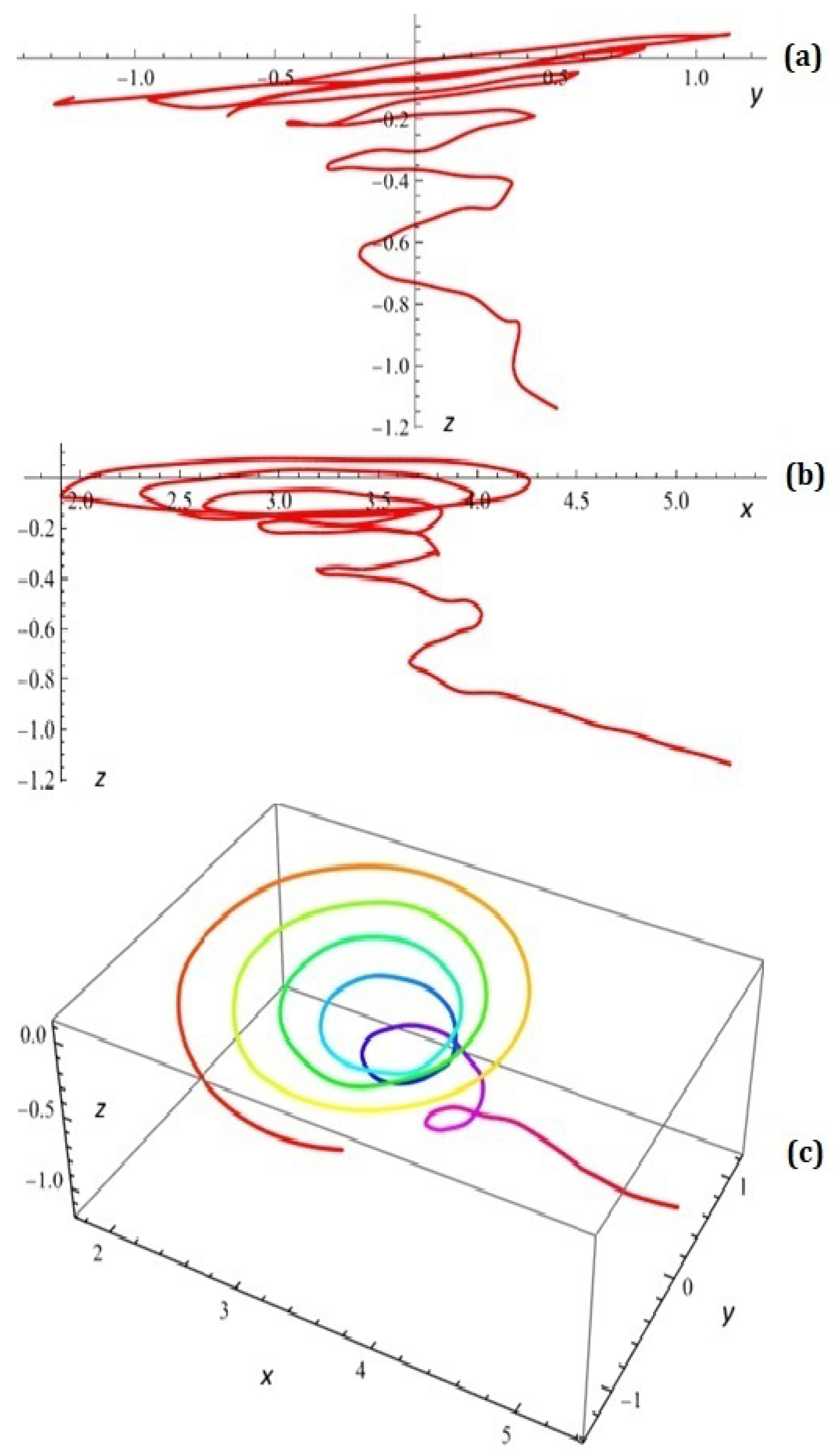
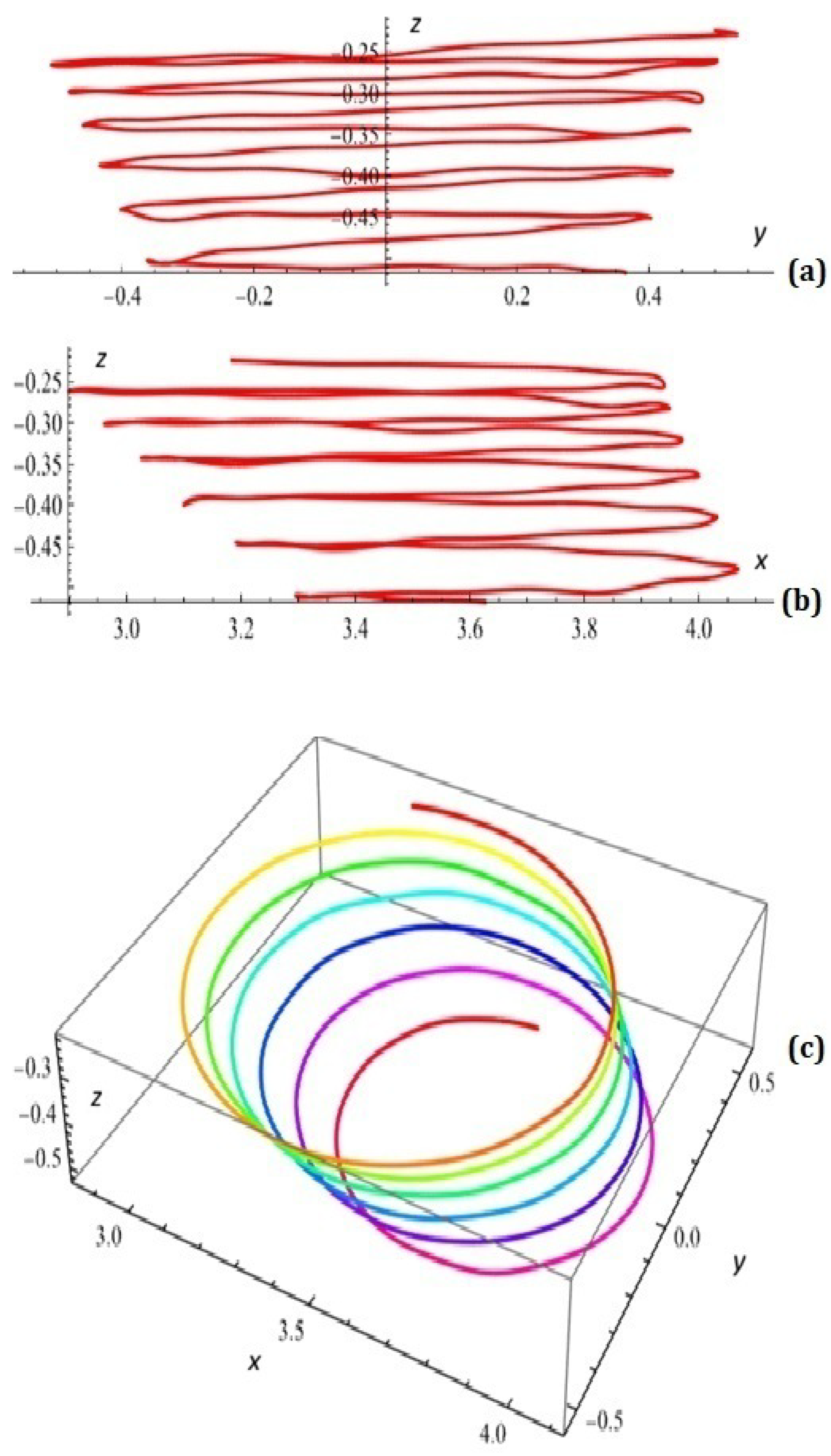
3. Simulations
Challenges for Learners
- (a)
- The dynamics shown in Figure 8 are achieved for what values of the parameters k, ?
- (b)
- Make the appropriate deductions.
- (a)
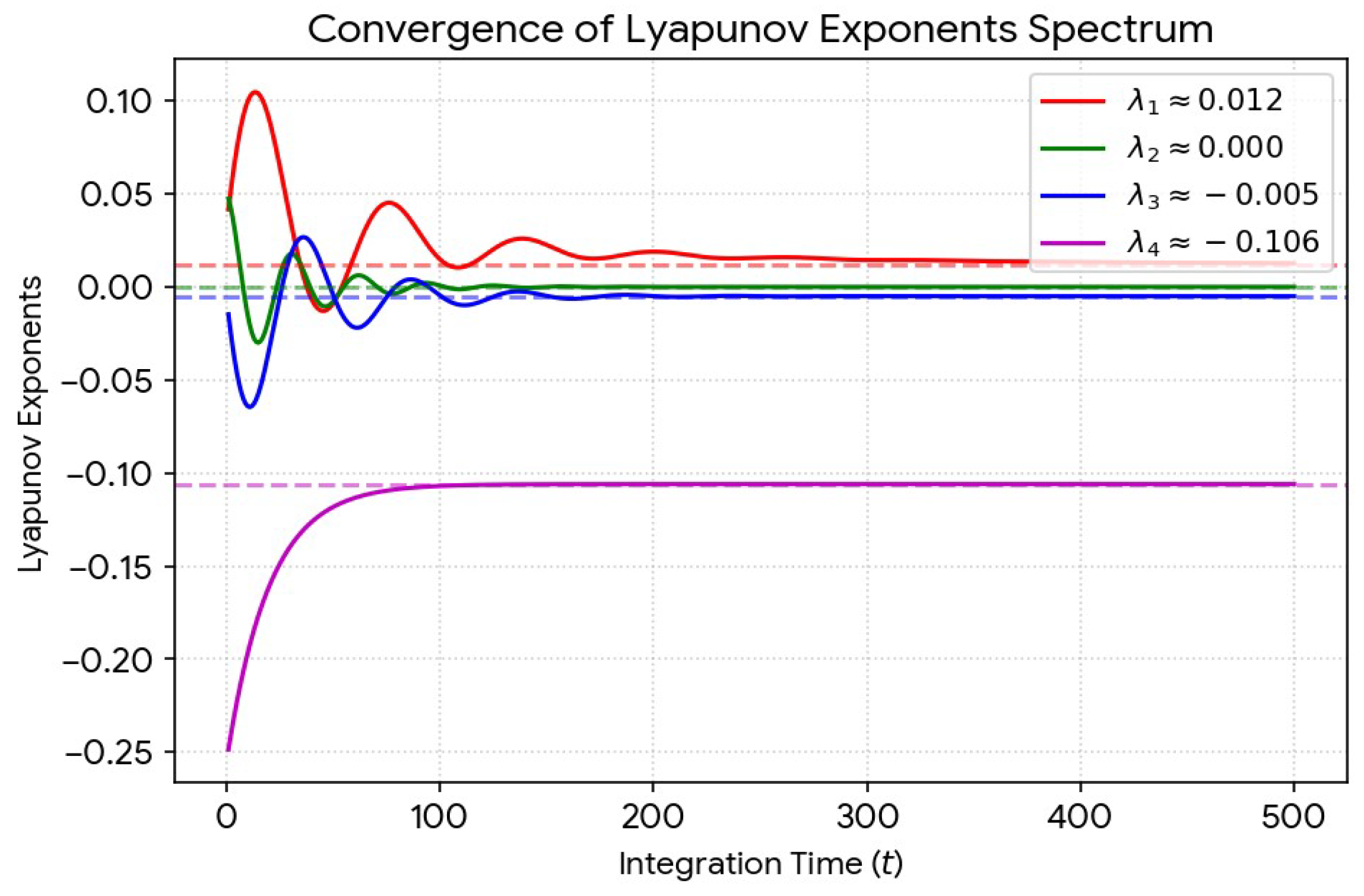
- Illustrate Lyapunov Exponents’ Spectrum Numerical Convergence;
- (b)
- Draw the corresponding conclusions;
- (c)
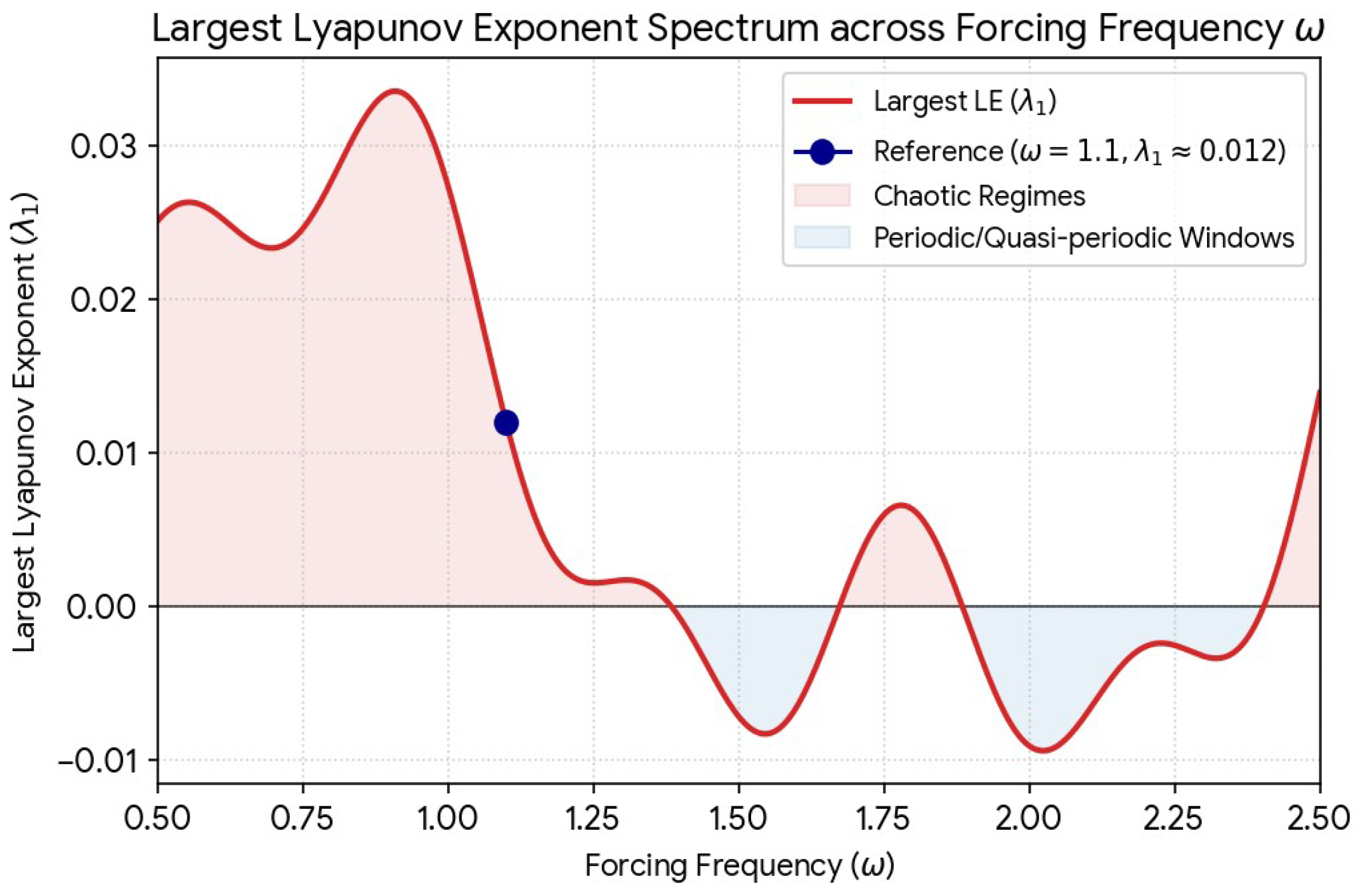
- Try to illustrate the change in the largest Lyapunov exponent when varying in the interval ;
- (d)
- Use the capabilities provided by existing scientific computing platforms (with paid or free access) and Artificial Intelligence services to solve the above task. Perform a thorough analysis in cases where the results provided to you differ from the results you obtained.
4. Generalization Based on Probability Distributions
5. Concluding Remarks
- 1.
- We have suggested and examined a version of the PLL model with numerous free parameters in this study, which might be of some use to experts in the field: Phase-Locked Loop Methods.
- 2.
- The dynamic analysis conducted in the sense of Andronov–Melnikov can be used in studying other, modified models, both traditional and more recent, that have been published in the literature.
- 3.
- Additionally, we include a few specific modules for examining the dynamics of the model under consideration (PLL).
- 4.
- This will be a crucial component of a much broader web-based scientific computing application (see [33]).
- 5.
- Other techniques related to the use of perturbation factors with many free parameters (see, for example, [34,35]) can be successfully applied to other interesting modifications of PLL models, jerk oscillators [36,37,38,39,40,41,42,43,44] and oscillator circuit models [45,46,47,48,49,50,51,52,53,54,55,56].
- 6.
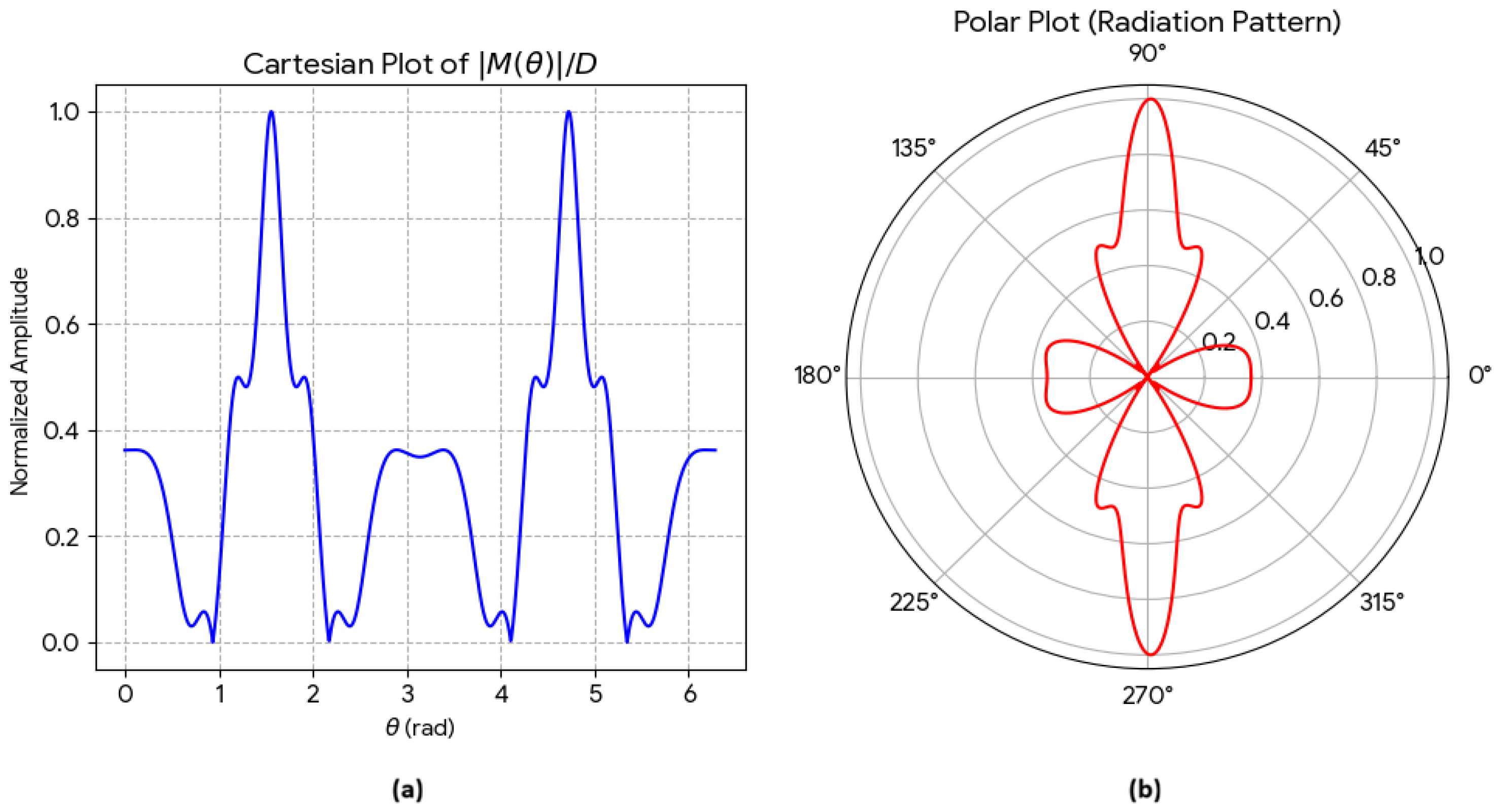
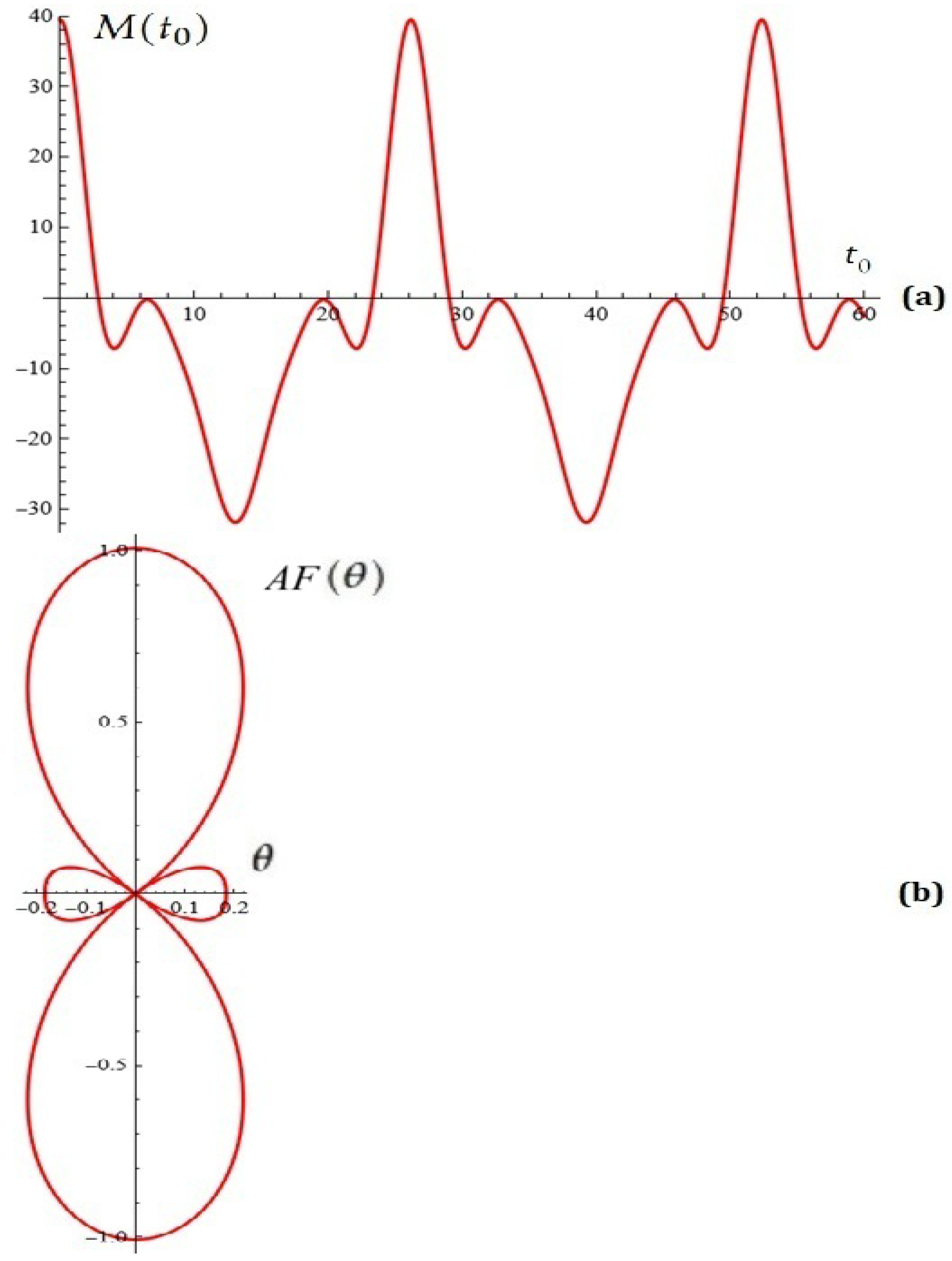
- A potential use of the Melnikov functions (which correspond to distinct differential systems) in the modeling and synthesis of radiation antenna diagrams was covered in our earlier publications. We shall not discuss these matters here.
- (a)
- Generate antenna factor ;
- (b)
- Cartesian plot of ;
- (c)
- Try to minimize the level of side radiation with the new array data set;
- (d)
- Draw the corresponding conclusions.
Author Contributions
Funding
Data Availability Statement
Conflicts of Interest
References
- Viterbi, A.J. Principles of Coherent Communication; McGraw-Hill: New York, NY, USA, 1966. [Google Scholar]
- Endo, T.; Chua, L.O. Chaos from phase-locked loop. IEEE Trans. Circuits Syst. 1988, 35, 987–1003. [Google Scholar] [CrossRef] [Scilit]
- Endo, T.; Chua, L.O.; Narita, T. Chaos from phase-locked loops—Part II: High-dissipation case. IEEE Trans. Circuits Syst. 1989, 35, 255–263. [Google Scholar] [CrossRef]
- Hsich, G.-C.; Huang, J.C. Phase-Locked Loop Techniques—A Survey. IEEE Trans. Ind. Electron. 1996, 43, 609–615. [Google Scholar]
- Chu, Y.-H.; Chou, J.-H. Chaos from third-order Phase-Locked Loops with a slowly varying parameter. IEEE Trans. Circuits Syst. 1990, 37, 1104–1115. [Google Scholar] [CrossRef]
- Melnikov, V. On the stability of the center for time periodic perturbations. Trans. Moskow Math. Soc. 1963, 12, 3–52. [Google Scholar]
- Wiggins, S. Introduction to Applied Nonlinear Dynamical Systems and Chaos; Texts in Applied Mathematics; Springer: New York, NY, USA, 1990; Volume 2. [Google Scholar]
- Guckenheimer, J.; Holmes, P.J. Nonlinear Oscillations, Dynamical Systems, and Bifurcations of Vector Fields; Applied Mathematical Sciences; Springer: New York, NY, USA, 1983; Volume 42. [Google Scholar]
- Wiggins, S.; Shaw, S.W. Chaos and three-dimensional horseshoes in slowly varying oscillators. SIAM J. Appl. Mech. 1988, 55, 958–968. [Google Scholar] [CrossRef] [Scilit]
- Thompson, J.M.T.; Stewart, H.B. Nonlinear Dynamics and Chaos; Wiley: New York, NY, USA, 1986. [Google Scholar]
- Wiggins, S.; Holmes, P.J. Homoclinic orbits in slowly varying oscillators. SIAM J. Math. Anal. 1988, 19, 1254–1255. [Google Scholar] [CrossRef] [Scilit]
- Piqueira, J.R.C. Using bifurcations in the determination of lock-in ranges for third-order phase-locked loops. Commun. Nonlinear Sci. Numer. Simul. 2009, 14, 2328–2335. [Google Scholar] [CrossRef] [Scilit]
- Best, R.E. Phase-Locked Loops: Design, Simulation, and Applications; McGraw-Hill: New York, NY, USA, 2003. [Google Scholar]
- Monteiro, L.H.A.; Favaretto, D.N.; Piqueira, J.R.C. Bifurcation analysis for third-order phase-locked loops. IEEE Signal Process. Lett. 2004, 11, 494–496. [Google Scholar] [CrossRef] [Scilit]
- Harb, B.A.; Harb, A.M. Chaos and bifurcation in a third-order phase locked loop. Chaos Solitons Fractals 2004, 19, 667–672. [Google Scholar] [CrossRef] [Scilit]
- Sarkar, B.C.; Chakraborty, S. Self-oscillations of a third order PLL in periodic and chaotic mode and its tracking in a slave PLL. Commun. Nonlinear Sci. Numer. Simul. 2014, 19, 738–749. [Google Scholar] [CrossRef] [Scilit]
- Qananwah, Q.M.; Malkawi, S.R.; Harb, A. Chaos synchronisation of the third-order phase-locked loop. Int. J. Electron. 2008, 95, 799–803. [Google Scholar] [CrossRef] [Scilit]
- Karthikeyan, A.; Rajagopal, K. Network Dynamics of a Fractional-Order Phase-Locked Loop with Infinite Coexisting Attractors. Complexity 2020, 2020, 7902474. [Google Scholar] [CrossRef] [Scilit]
- Sendov, B.; Andreev, A.; Kjurkchiev, N. Numerical solution of polynomial equations. In Handbook of Numerical Analysis; Ciarlet, P., Lions, J., Eds.; Elsevier: Amsterdam, The Netherlands, 1994; Volume III, pp. 625–778. [Google Scholar]
- Birkhoff, G.D. Nouvelles recherches sur les systèmes dynamiques. In Collected Mathematical Papers; American Mathematical Society: Providence, RI, USA, 1950; Volume 2, pp. 530–662. [Google Scholar]
- Smale, S. Diffeomorphisms with many periodic points. In Differential and Combinatorial Topology; Princeton University Press: Princeton, NJ, USA, 1965; pp. 63–80. [Google Scholar]
- Smale, S. Differentiable dynamical systems. Bull. Am. Math. Soc. 1967, 73, 747–817. [Google Scholar] [CrossRef] [Scilit]
- Halanay, A. Applications of Liapunov Methods in Stability; Kluwer Academic Publishers: Dordrecht, The Netherlands, 1993. [Google Scholar]
- Benettin, G.; Galgani, L.; Giorgilli, A.; Strelcyn, J.-M. Lyapunov Characteristic Exponents for smooth dynamical systems and for hamiltonian systems; a method for computing all of them. Part 1: Theory. Meccanica 1980, 15, 9–20. [Google Scholar] [CrossRef] [Scilit]
- Rosier, L.; Bacciotti, A. Liapunov Functions and Stability in Control Theory; Springer: Berlin/Heidelberg, Germany, 2010. [Google Scholar]
- Pikovsky, A.; Politi, A. Lyapunov Exponents: A Tool to Explore Complex Dynamics; Cambridge University Press: Cambridge, UK, 2016. [Google Scholar]
- Stoer, J.; Bulirsch, R. Introduction to Numerical Analysis, 3rd ed.; Springer: Berlin/Heidelberg, Germany, 2002. [Google Scholar]
- Pchelintsev, A.N. An Accurate Numerical Method and Algorithm for Constructing Solutions of Chaotic Systems. J. Appl. Nonlinear Dyn. 2020, 9, 207–221. [Google Scholar] [CrossRef] [Scilit]
- Holmes, M.H. Introduction to Scientific Computing and Data Analysis, 2nd ed.; Springer: Berlin/Heidelberg, Germany, 2023. [Google Scholar]
- Kaplan, J.L.; Yorke, J.A. Chaotic behavior of multidimensional difference equations. In Functional Differential Equations and the Approximation of Fixed Points; Springer: Berlin/Heidelberg, Germany, 1979; pp. 204–227. [Google Scholar]
- Evans, D.J.; Cohen, E.G.D.; Searles, D.J.; Bonetto, F. Note on the Kaplan–Yorke dimension and linear transport coefficients. J. Stat. Phys. 2000, 101, 17–29. [Google Scholar] [CrossRef] [Scilit]
- Bakri, T.; Verhulst, F. A Note on the Kaplan–Yorke Dimension. Int. J. Bifurc. Chaos 2025, 35, 2550133. [Google Scholar] [CrossRef] [Scilit]
- Golev, A.; Terzieva, T.; Iliev, A.; Rahnev, A.; Kyurkchiev, N. Simulation on a Generalized Oscillator Model: Web-Based Application. C. R. Acad. Bulg. Sci. 2024, 77, 230–237. [Google Scholar] [CrossRef] [Scilit]
- Kyurkchiev, N.; Zaevski, T.; Vasileva, M.; Kyurkchiev, V.; Iliev, A.; Rahnev, A. Dynamics of a Class of Extended Duffing–Van Der Pol Oscillators: Melnikov’s Approach, Simulations, Control over Oscillations. Mathematics 2025, 13, 2240. [Google Scholar] [CrossRef] [Scilit]
- Kyurkchiev, N.; Zaevski, T.; Iliev, A. Investigations on the Chaos in the Generalized Double Sine-Gordon Planar System: Melnikov’s Approach and Applications to Generating Antenna Factors. Mathematics 2025, 13, 3700. [Google Scholar] [CrossRef] [Scilit]
- Kamdoum Tamba, V.; Takougang Kingni, S.; Fautso Kuiate, G.; Bertrand Fotsin, H.; Kisito Talla, P. Coexistence of attractors in autonomous Van der Pol–Duffing jerk oscillator: Analysis, chaos control and synchronisation in its fractional-order form. Pramana J. Phys. 2018, 91, 12. [Google Scholar] [CrossRef] [Scilit]
- Benitez, M.S.; Zuppa, L.A.; Guerra, R.J.R. Chaotification of the Van der Pol system using Jerk architecture. IEICE Trans. Fundam. 2006, E89-A, 375–378. [Google Scholar] [CrossRef] [Scilit]
- Malasoma, J.M. What is the simplest dissipative chaotic jerk equation which is parity invariant? Phys. Lett. A 2000, 264, 383. [Google Scholar] [CrossRef] [Scilit]
- Gottlieb, H.P.W. Question 38. What Is the Simplest Jerk Function That Gives Chaos. Am. J. Phys. 1996, 64, 525. [Google Scholar] [CrossRef] [Scilit]
- Sprott, J.C. A new chaotic jerk circuit. IEEE Trans. Circuits Syst. II Express Briefs 2011, 58, 240–243. [Google Scholar] [CrossRef] [Scilit]
- Sprott, J.C. Elegant Chaos: Algebraically Simple Chaotic Flows; World Scientific: Singapore, 2010. [Google Scholar]
- Acho, L.; Rolon, J.; Benitez, S.A. Chaotic oscillator using the Van der Pol dynamic immersed into a jerk system. WSEAS Trans. Circuits Syst. 2004, 3, 198–199. [Google Scholar]
- Louodop, P.; Kountchou, M.; Fotsin, H.B.; Bowong, S. Practical finite-time synchronization of jerk systems: Theory and experiment. Nonlinear Dyn. 2014, 78, 597–607. [Google Scholar] [CrossRef] [Scilit]
- Kengne, J.; Njitacke, Z.T.; Fotsin, H.B. Dynamical analysis of a simple autonomous jerk system with multiple attractors. Nonlinear Dyn. 2016, 83, 751–765. [Google Scholar] [CrossRef] [Scilit]
- Chua, L.O.; Kocarev, L.J.; Eckert, K.; Itoh, M. Experimental chaos synchronization in Chua’s circuit. Int. J. Bifurc. Chaos 1992, 2, 705–708. [Google Scholar] [CrossRef] [Scilit]
- Madan, R.A. Chua’s Circuit: A Paradigm for Chaos; World Scientific: Singapore, 1993. [Google Scholar]
- Murali, K.; Lakshmanan, M.; Chua, L.O. Bifurcation and chaos in the simplest dissipative non-autonomous circuit. Int. J. Bifurc. Chaos 1994, 4, 1511–1524. [Google Scholar] [CrossRef] [Scilit]
- Elwakil, A.S.; Soliman, A.M. A family of Wien-type oscillators modified for chaos. Int. J. Circuit Theory Appl. 1997, 25, 561–579. [Google Scholar] [CrossRef] [Scilit]
- Baptista, M.S.; Caldas, I.L. Phase-locking and bifurcations of the sinusoidally-driven double scroll circuit. Nonlinear Dyn. 1998, 17, 119–139. [Google Scholar] [CrossRef] [Scilit]
- Maggio, G.M.; Feo, O.D.; Kennedy, M.P. Nonlinear analysis of the colpitts oscillator and applications to design. IEEE Trans. Circuits Syst. I 1999, 46, 1118–1130. [Google Scholar] [CrossRef] [Scilit]
- Thamilmaran, K.; Lakshmanan, M.; Murali, K. Rich variety of bifurcations and chaos in a variant of Murali-Lakshmanan-Chua circuit. Int. J. Bifurc. Chaos 1994, 10, 1781–1785. [Google Scholar] [CrossRef] [Scilit]
- Sprott, J.C. A new class of chaotic circuits. Phys. Lett. A 2000, 266, 19–23. [Google Scholar] [CrossRef] [Scilit]
- Elwakil, A.S.; Kennedy, M.P. Construction of classes of circuit independent chaotic oscillators using passive-only nonlinear. IEEE Trans. Circuits Syst. I 2001, 48, 289–307. [Google Scholar] [CrossRef] [Scilit]
- Ma, J.; Li, A.B.; Pu, Z.S.; Yang, L.J.; Wang, Y.Z. A time-varying hyperchaotic system and its realization in circuit. Nonlinear Dyn. 2010, 62, 535–541. [Google Scholar] [CrossRef] [Scilit]
- Tchitnga, R.; Fotsin, H.B.; Nana, B.; Louodop-Fotso, P.H.; Woafo, P. Hartley’s oscillator: The simplest chaotic two-component circuit. Chaos Solitons Fractals 2012, 45, 306–313. [Google Scholar] [CrossRef] [Scilit]
- Vincent, U.E.; Nana Nbendjo, B.R.; Ajayi, A.A.; Njah, A.N.; McClintock, P.V.E. Hyperchaos and Bifurcations in a Driven Van der Pol-Duffing Oscillator Circuit. Int. J. Dyn. Control 2014, 3, 363–370. [Google Scholar] [CrossRef] [Scilit]
- Li, H.; Shen, Y.; Li, J.; Dong, J.; Hong, G. On the Melnikov method for fractional-order systems. Chaos Solitons Fractals 2024, 188, 115602. [Google Scholar] [CrossRef] [Scilit]





Disclaimer/Publisher’s Note: The statements, opinions and data contained in all publications are solely those of the individual author(s) and contributor(s) and not of MDPI and/or the editor(s). MDPI and/or the editor(s) disclaim responsibility for any injury to people or property resulting from any ideas, methods, instructions or products referred to in the content. |
© 2026 by the authors. Licensee MDPI, Basel, Switzerland. This article is an open access article distributed under the terms and conditions of the Creative Commons Attribution (CC BY) license.
Share and Cite
Kyurkchiev, N.; Zaevski, T.; Iliev, A.; Kyurkchiev, V.; Rahnev, A. Dynamics of a Modified Third–Order Phase–Locked Loops (PLL): Melnikov Approach, Simulations. Mathematics 2026, 14, 2071. https://doi.org/10.3390/math14122071
Kyurkchiev N, Zaevski T, Iliev A, Kyurkchiev V, Rahnev A. Dynamics of a Modified Third–Order Phase–Locked Loops (PLL): Melnikov Approach, Simulations. Mathematics. 2026; 14(12):2071. https://doi.org/10.3390/math14122071
Chicago/Turabian StyleKyurkchiev, Nikolay, Tsvetelin Zaevski, Anton Iliev, Vesselin Kyurkchiev, and Asen Rahnev. 2026. "Dynamics of a Modified Third–Order Phase–Locked Loops (PLL): Melnikov Approach, Simulations" Mathematics 14, no. 12: 2071. https://doi.org/10.3390/math14122071
APA StyleKyurkchiev, N., Zaevski, T., Iliev, A., Kyurkchiev, V., & Rahnev, A. (2026). Dynamics of a Modified Third–Order Phase–Locked Loops (PLL): Melnikov Approach, Simulations. Mathematics, 14(12), 2071. https://doi.org/10.3390/math14122071