Tripartite Evolutionary Game Model and Stability Analysis for Collaborative Innovation in Traditional Energy Enterprises


Abstract
1. Introduction
2. Literature Review
2.1. Research Status of Evolutionary Game Theory
2.2. Research Status of Collaborative Innovation in Green Transition
2.3. Research Status of Tripartite Evolutionary Game
2.4. Research Gaps
3. Materials and Methods
3.1. Basic Assumptions and Parameter Settings
3.2. Model Construction
3.3. Constructing the Payoff Functions
3.4. Replicator Dynamic Analysis

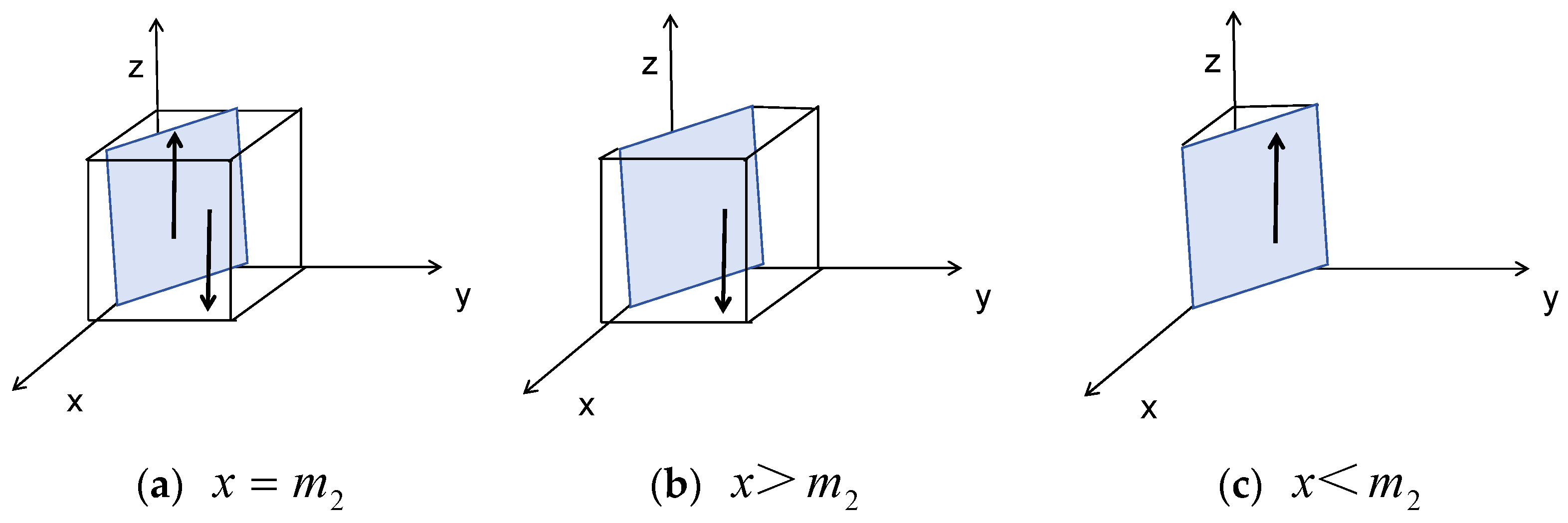
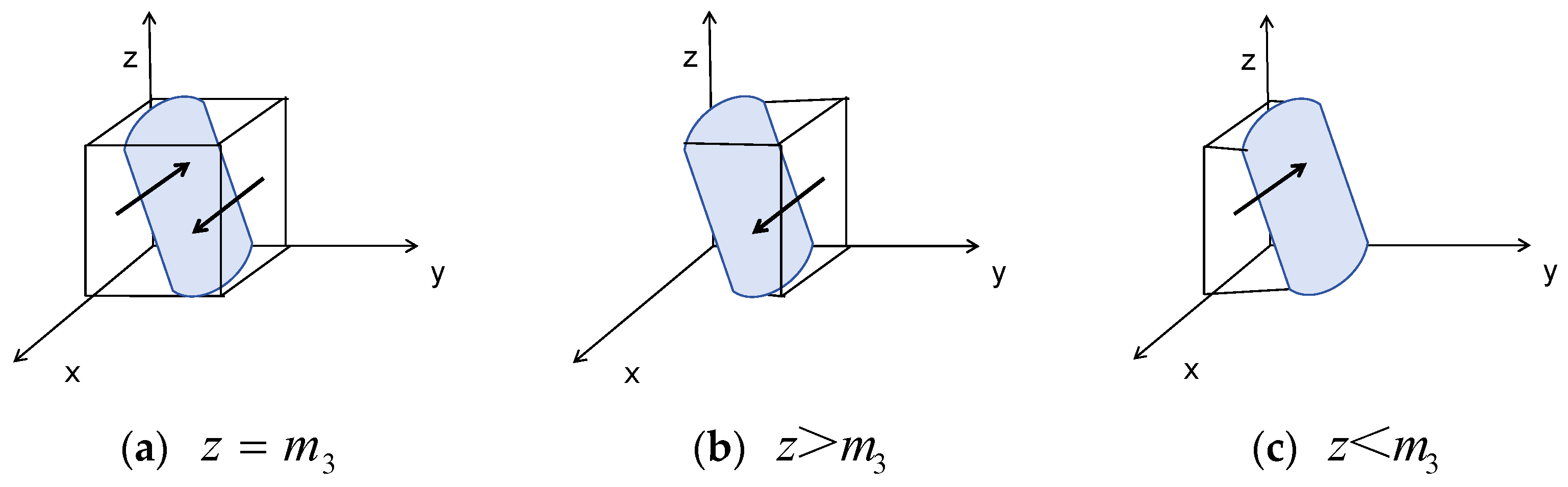
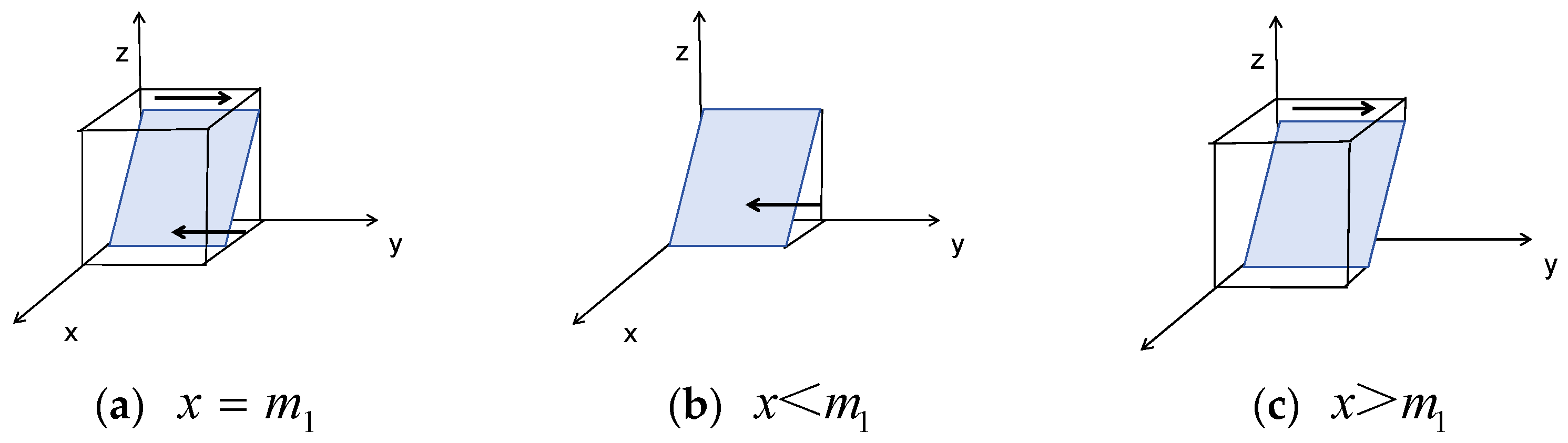
3.5. Evolutionarily Stable Strategy Analysis
4. Results
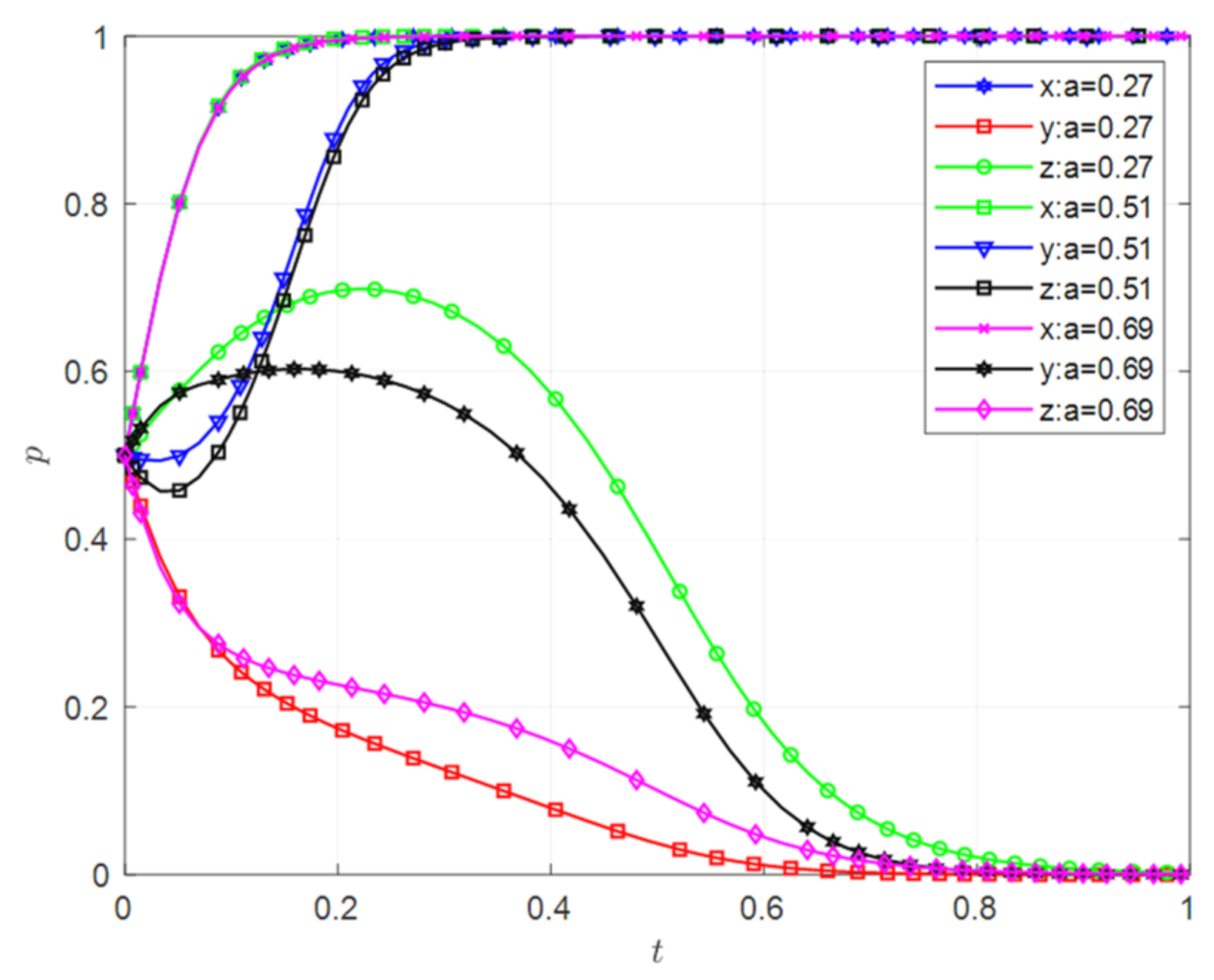
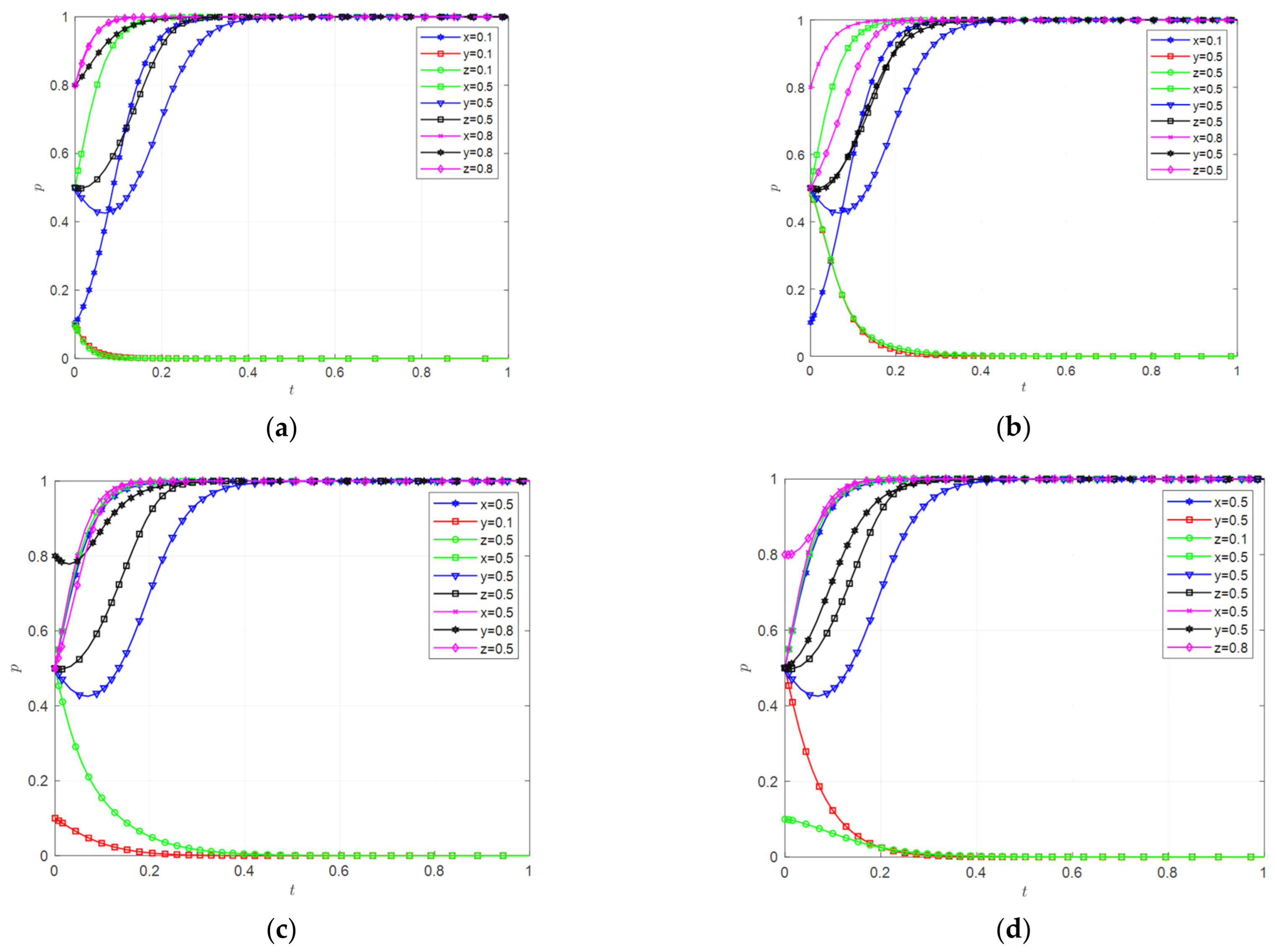
4.1. Impact of Initial Willingness on the Evolutionary Path of Cooperative Relationships
4.2. Impact of Different Parameter Variations on the Evolutionary Path of Collaborative Innovation Relationships
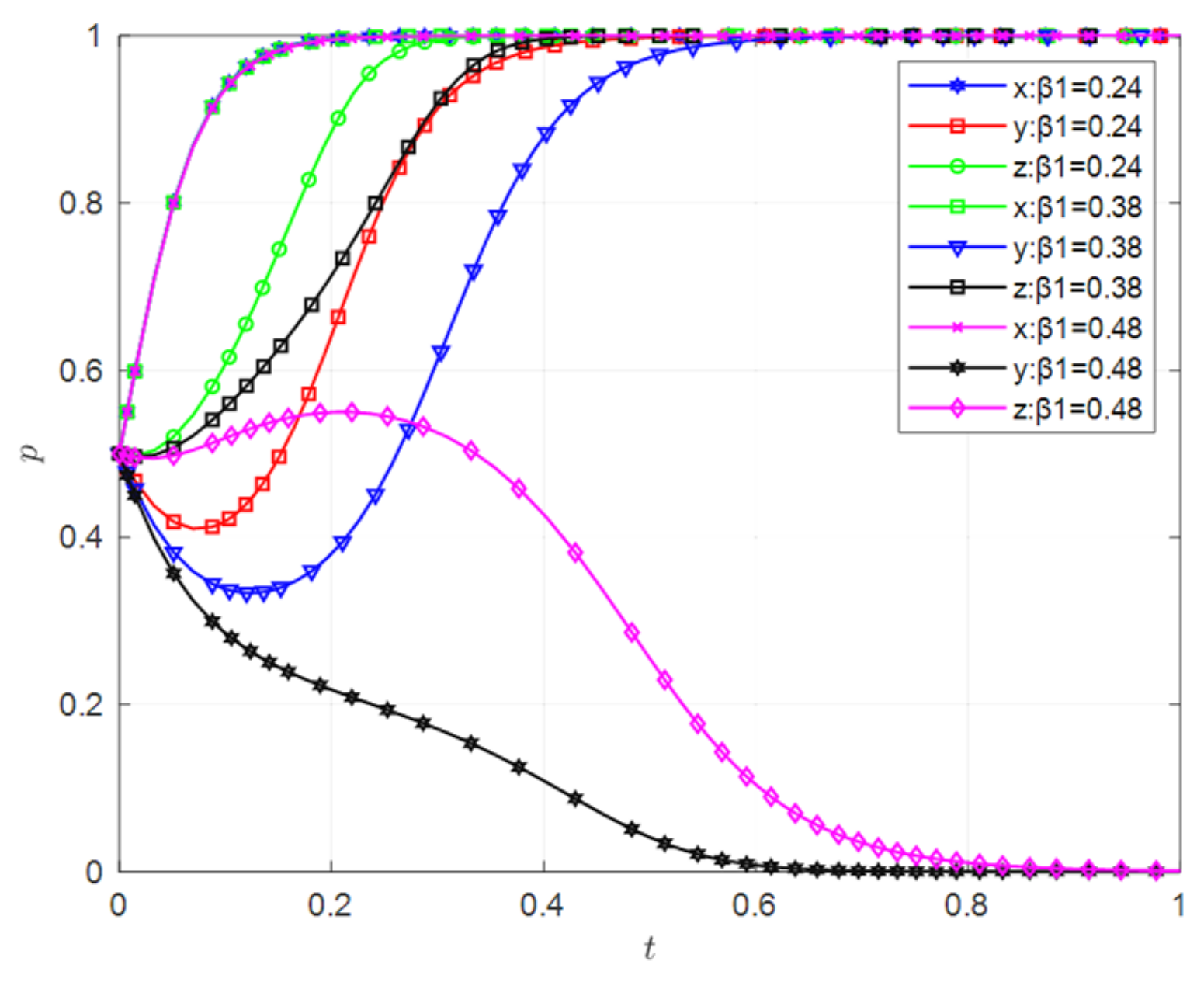
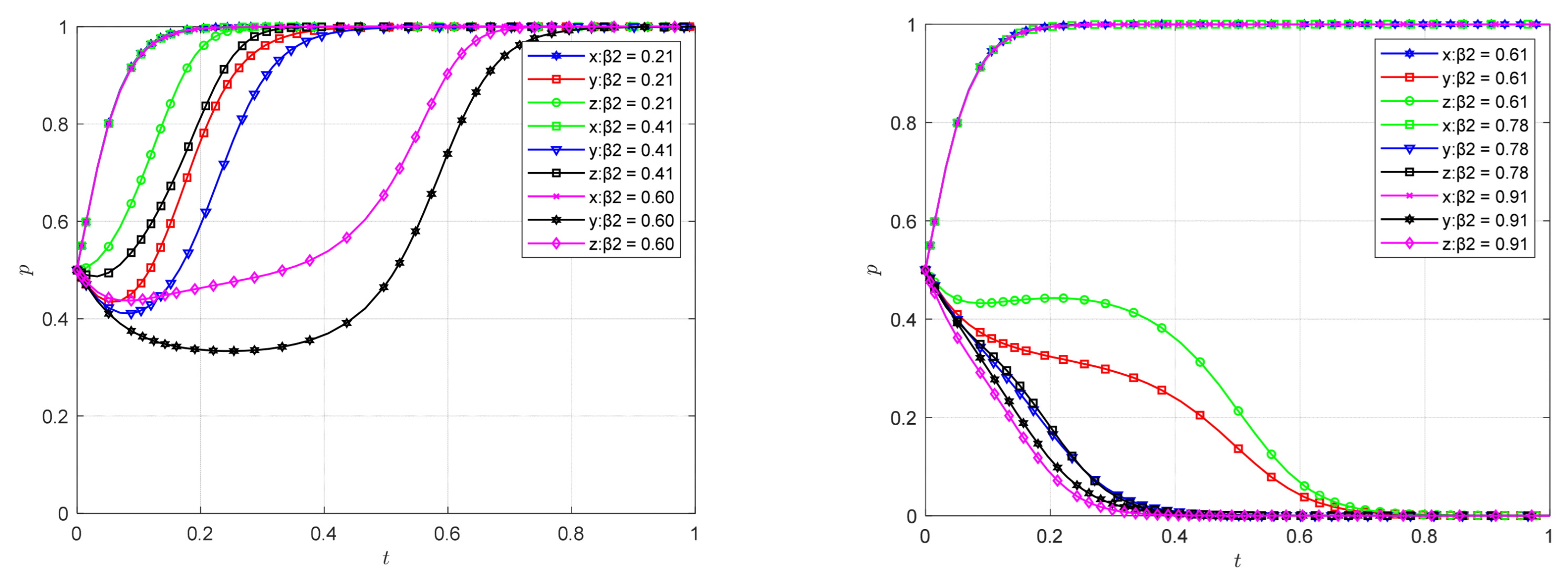
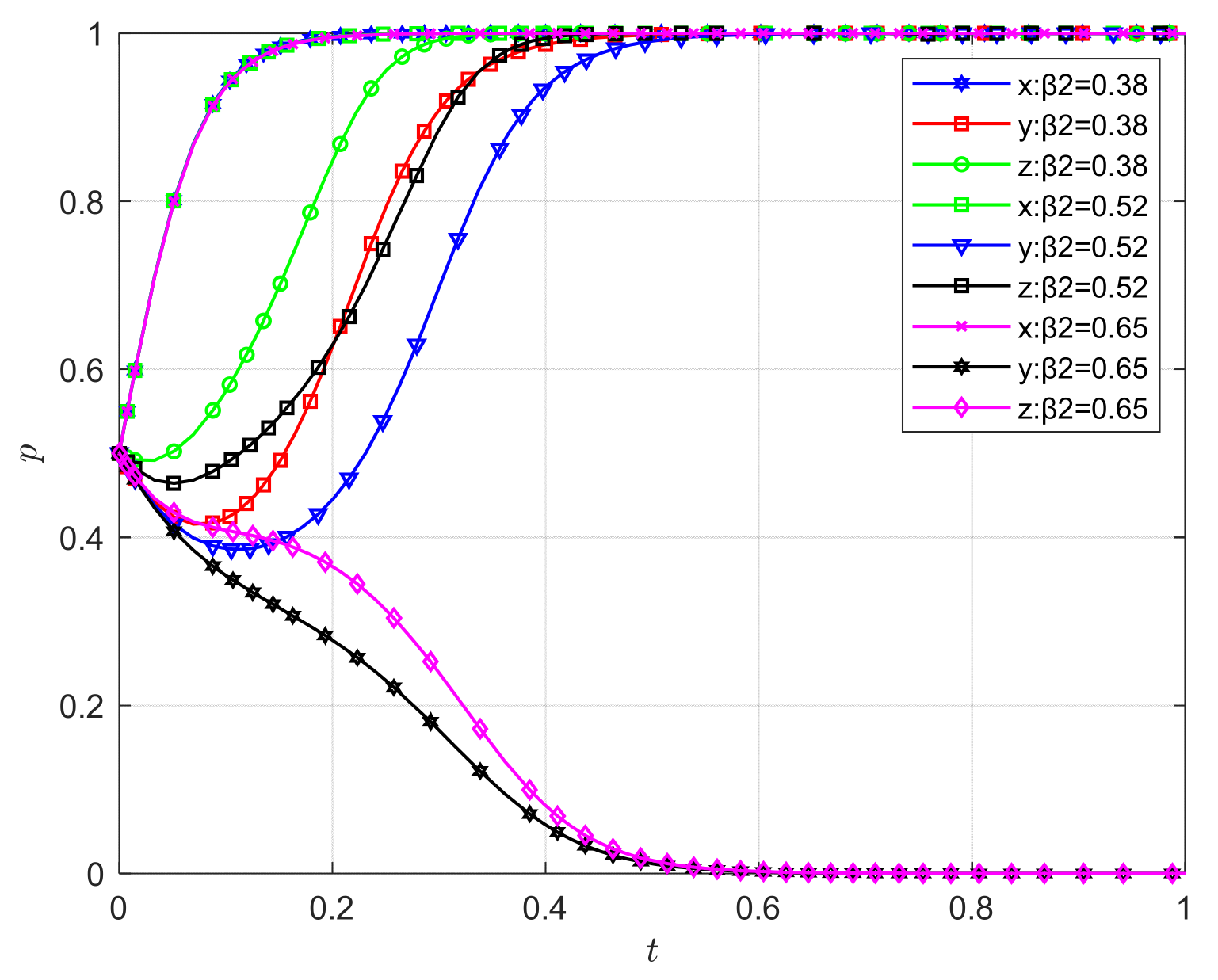
4.2.1. The Impact of the Benefit Distribution Ratio
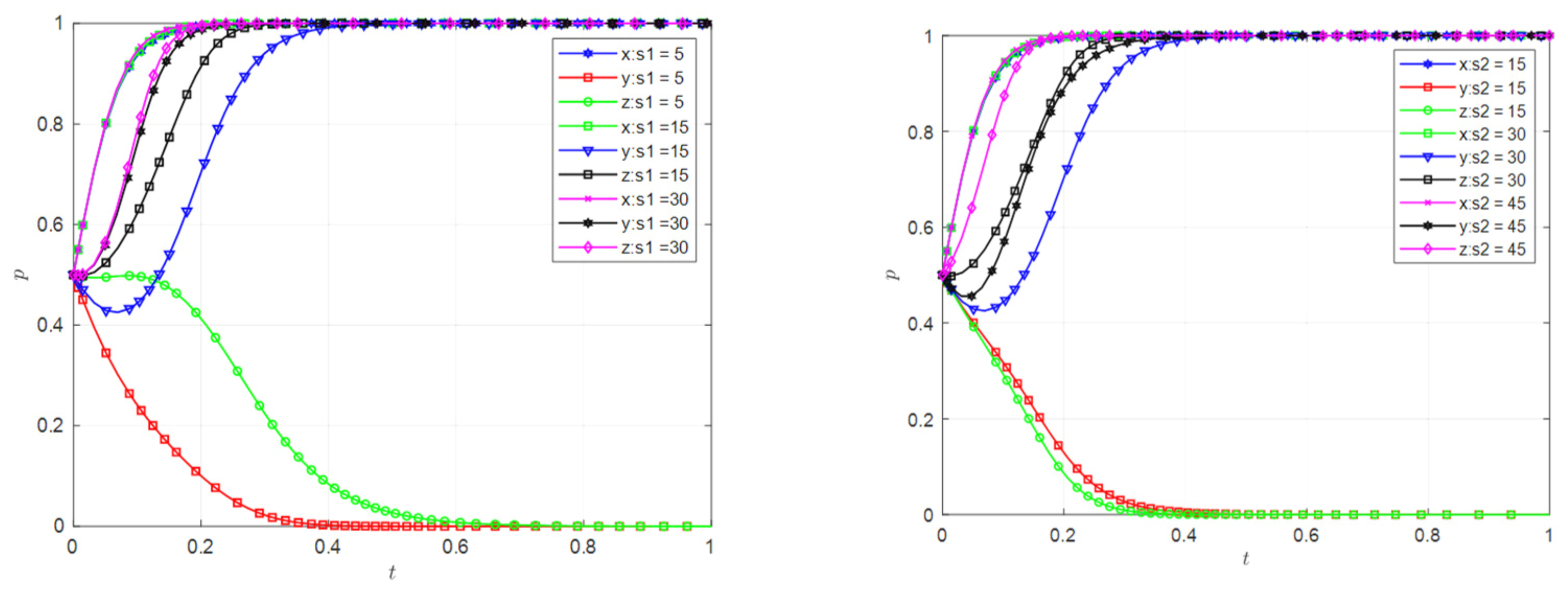
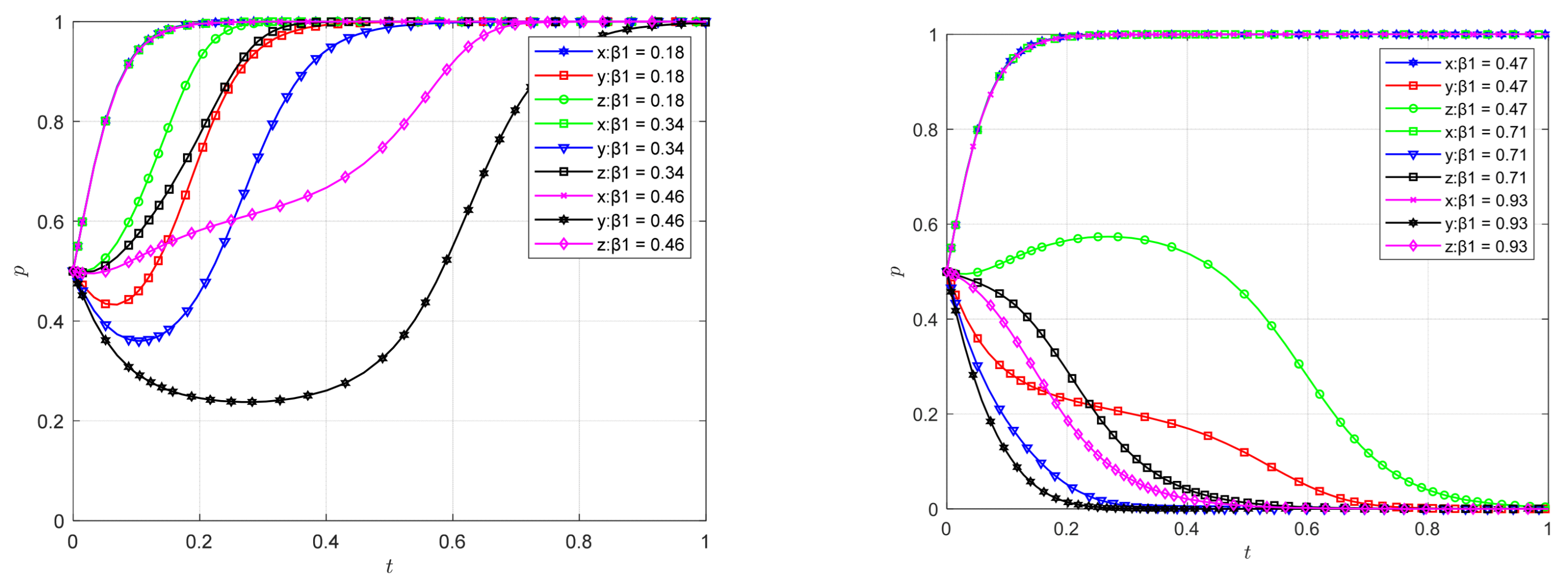
4.2.2. The Impact of the Information Asymmetry Sensitivity Coefficient
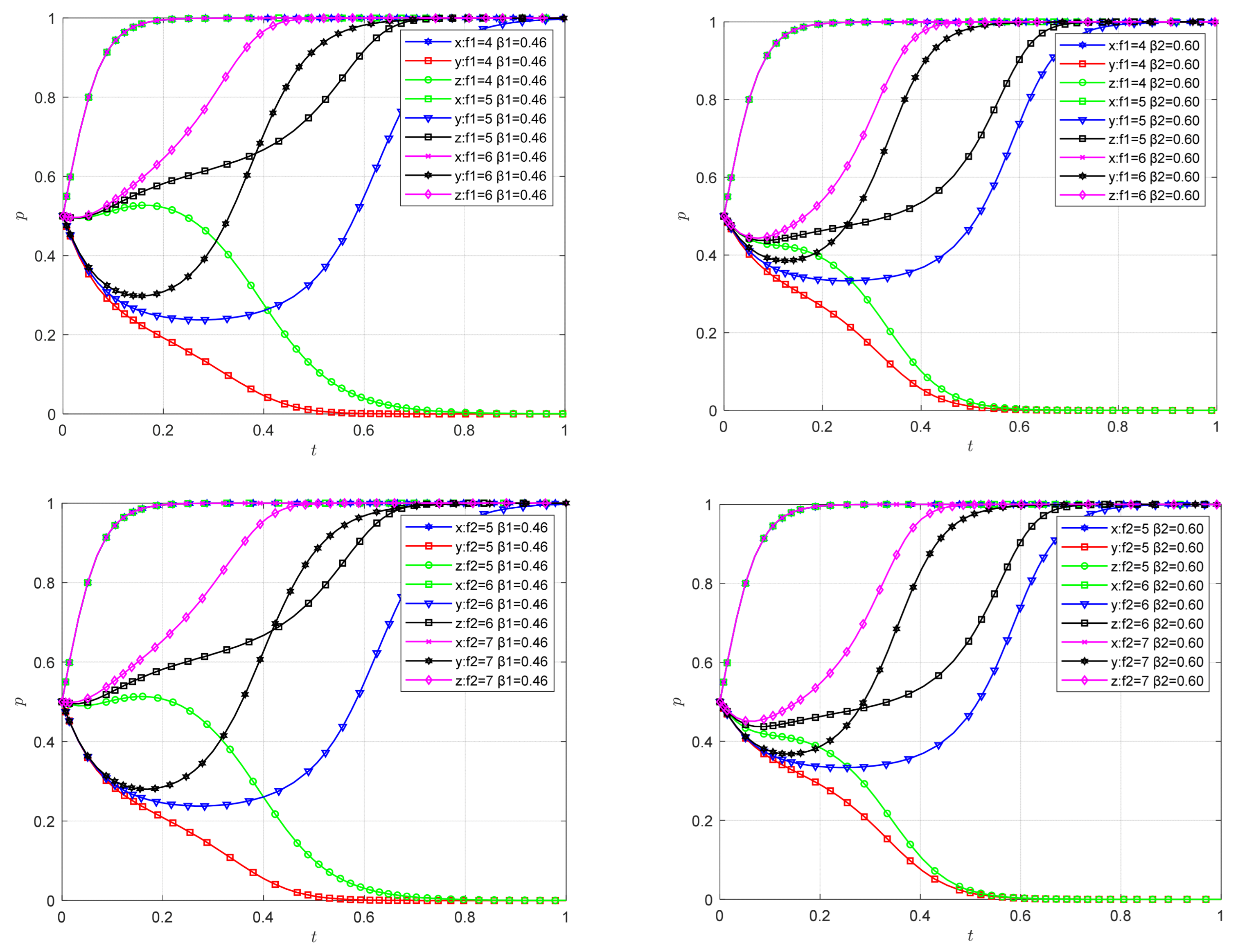
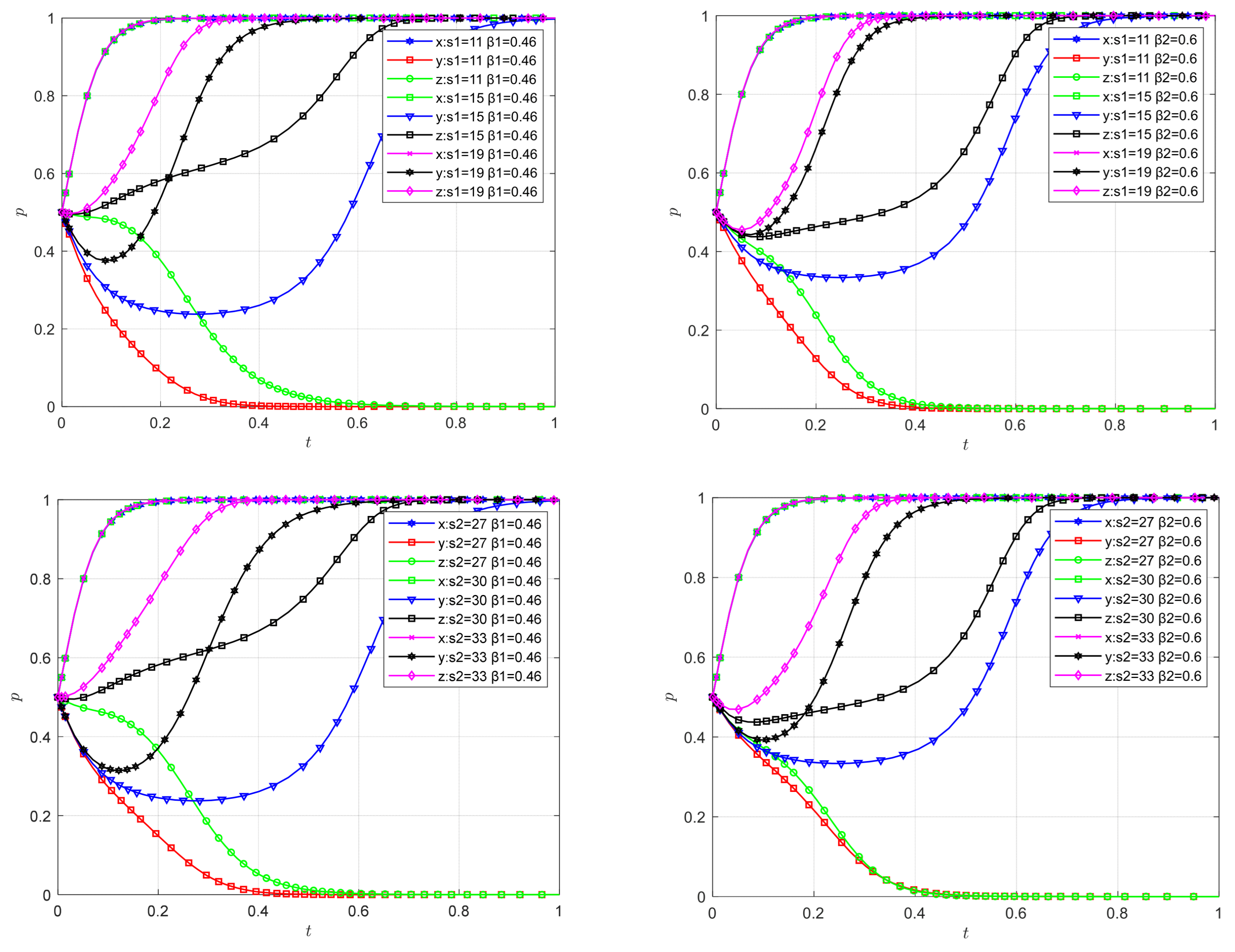
4.2.3. Impact of Government Subsidy and Penalty Intensity
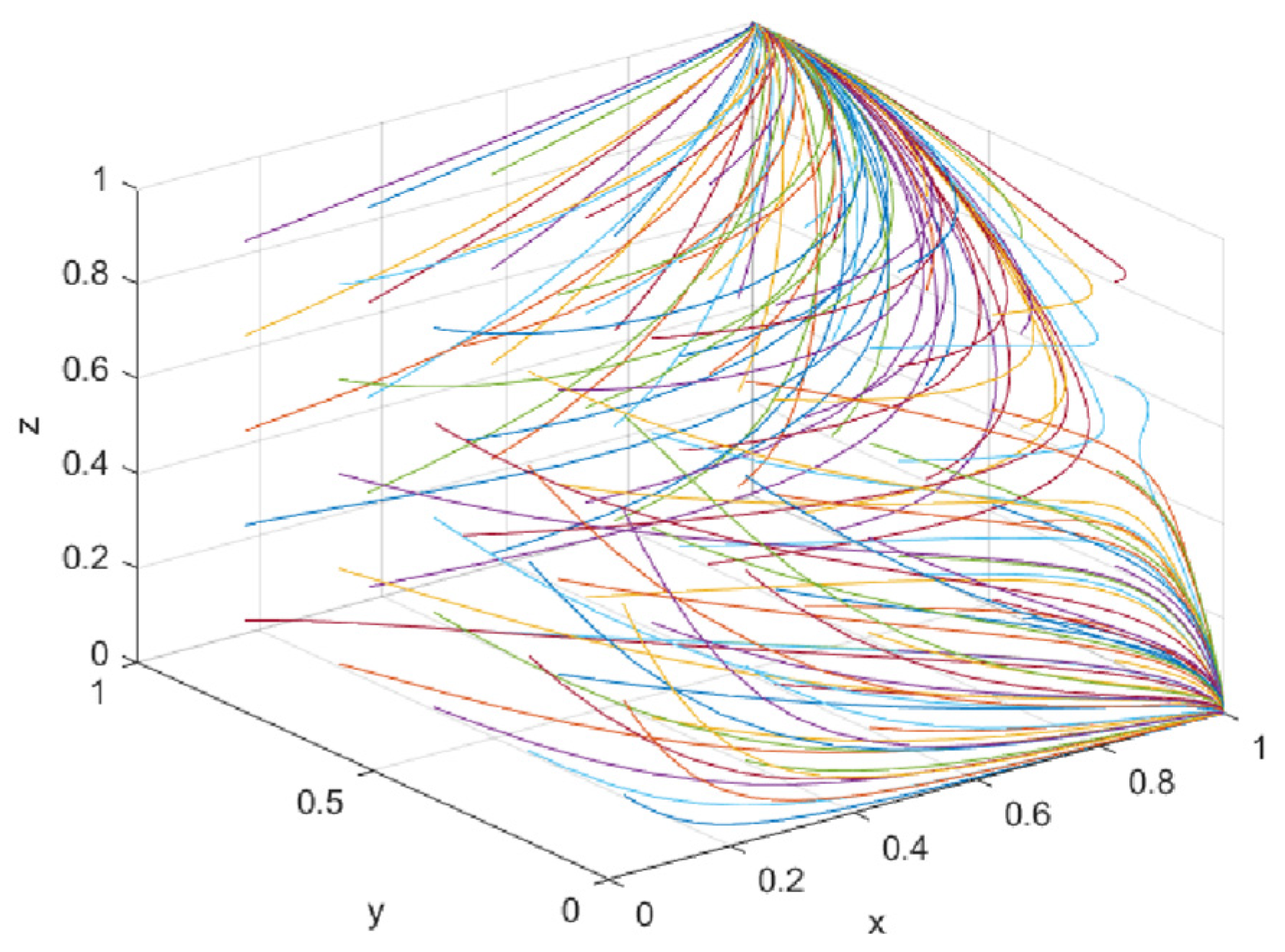
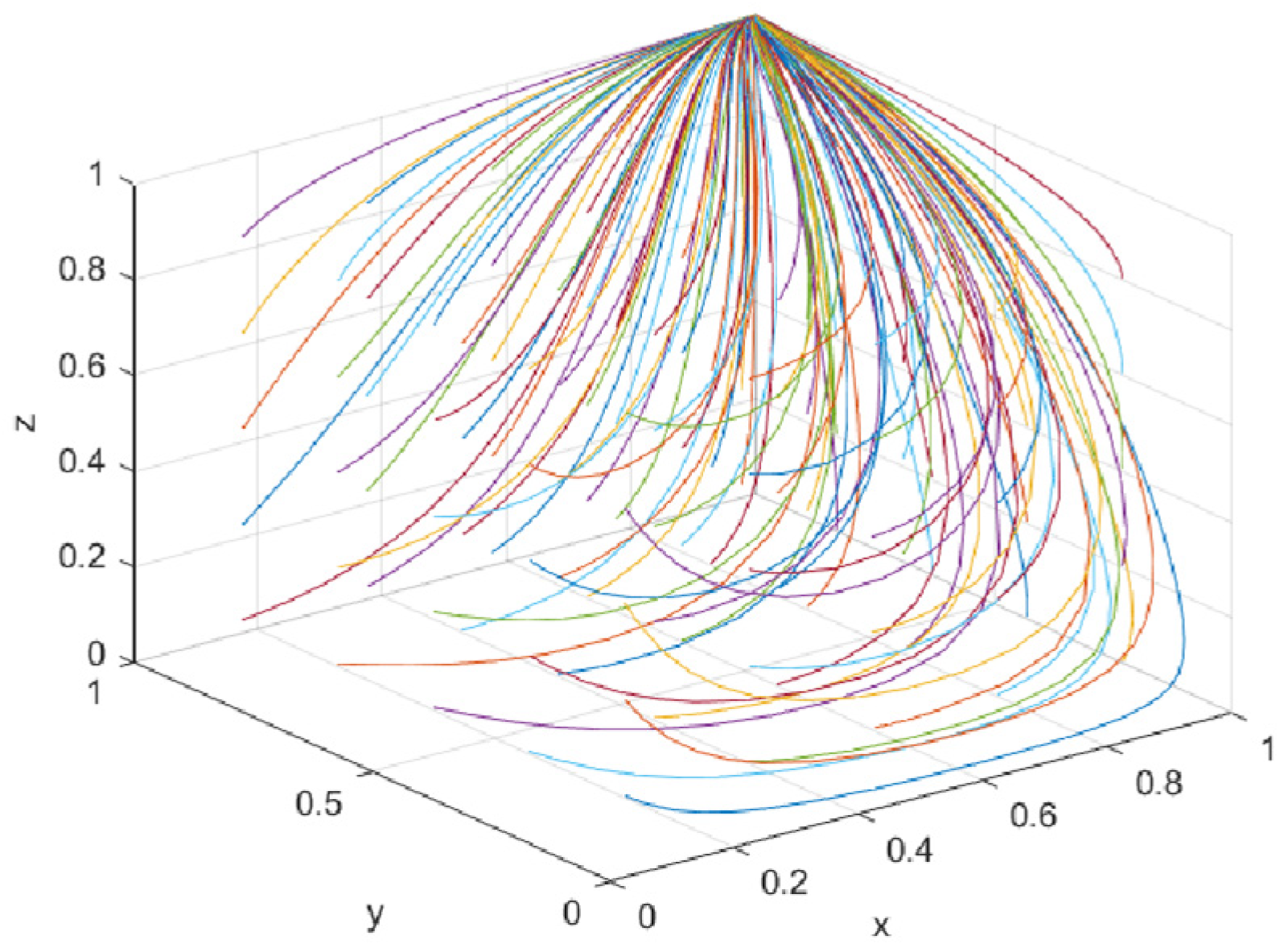
4.3. Numerical Simulation of the Evolution of the Ideal Stable Point in Tripartite Cooperation
5. Discussion
6. Conclusions
Author Contributions
Funding
Data Availability Statement
Conflicts of Interest
References
- Wang, L.; Yang, Z.; Chen, T.; Xu, T.; Xiao, B. The Mechanism of Green Transition of Energy Enterprises Applying Noncooperative–Cooperative Biform Game Model. Systems 2025, 13, 942. [Google Scholar] [CrossRef]
- Wang, L.; Zhang, B. Research on the Green Investment of Traditional Energy Enterprises and Its Effectiveness Under Environmental Regulation. Sustainability 2025, 17, 590. [Google Scholar] [CrossRef]
- Wang, Y.; Chen, G.; Yan, B.; Bastiaans, R. A coupling energy system of 10 clean-energy heating systems: A case study in Shandong province in China. Int. J. Green Energy 2021, 18, 1323–1338. [Google Scholar] [CrossRef]
- Peng, Y.; Zhou, J.; Ke, Y.; Qin, Q. Risk or Opportunity: The Impact of Economic Policy Uncertainty on Technological Innovation in Energy Enterprises. Energies 2026, 19, 337. [Google Scholar] [CrossRef]
- Wang, Y.; Akhtar, R.; Mu, W.; Lv, W.; Li, L. Government Subsidy and Enterprise Green Innovation: Evidence from Chinese Enterprises. Pol. J. Environ. Stud. 2025, 34, 5319–5336. [Google Scholar] [CrossRef]
- Ruan, W.; Zhang, H.; Yang, J. How to break carbon lock-in of thermal power industry in China—A tripartite evolutionary game analysis. Appl. Energy 2025, 377, 124504. [Google Scholar] [CrossRef]
- Smith, J.M.; Price, G.R. The logic of animal conflict. Nature 1973, 246, 15–18. [Google Scholar] [CrossRef]
- Taylor, P.D.; Jonker, L.B. Evolutionarily stable strategies and game dynamics. Math. Biosci. 1978, 40, 145–156. [Google Scholar] [CrossRef]
- Nowak, M.A.; Sigmund, K. Evolution of indirect reciprocity. Nature 2005, 437, 1291–1298. [Google Scholar] [CrossRef]
- Santos, F.C.; Pacheco, J.M. Scale-free networks provide a unifying framework for the emergence of cooperation. Phys. Rev. Lett. 2005, 95, 098104. [Google Scholar] [CrossRef] [PubMed]
- Fargetta, G.; Scrimali, R.L. A tripartite evolutionary game for strategic decision-making in live-streaming e-commerce. J. Comput. Sci. 2025, 87, 102585. [Google Scholar] [CrossRef]
- Benko, P.T.; Pi, B.; Li, Q.; Feng, M.; Perc, M.; Vošner, H.B. Evolutionary games for cooperation in open data management. Appl. Math. Comput. 2025, 496, 129364. [Google Scholar] [CrossRef]
- Janan, M.; Taleizadeh, A.A.; Jolai, F. Electric energy supply chain finance and pricing in an energy blockchain environment: Sustainable energy bonds and evolutionary game theory. Energy 2025, 320, 135186. [Google Scholar] [CrossRef]
- Hu, J.; Ai, X.; Wang, J. The impact of supply chain digitalization on the technological innovation of new energy vehicle enterprises: The moderated mediation effect. Bus. Process Manag. J. 2026; ahead-of-print. [CrossRef]
- Tian, H.; Wang, Z.; Zhang, P.; Li, J.; Wang, Q.; Zhang, S. Complex dynamics of a symmetric quantum Stackelberg duopoly game model with heterogeneous expectations. Phys. A Stat. Mech. Its Appl. 2026, 681, 131073. [Google Scholar] [CrossRef]
- Wu, B.; Liu, P.; Xu, X. An evolutionary analysis of low-carbon strategies based on the government–enterprise game in the complex network context. J. Clean. Prod. 2017, 141, 168–179. [Google Scholar] [CrossRef]
- Wang, H.; Chen, L.; Liu, J. An evolutionary game theory analysis linking manufacturing, logistics, and the government in low-carbon development. J. Oper. Res. Soc. 2022, 73, 1014–1032. [Google Scholar] [CrossRef]
- Zhu, G.; Pan, G.; Zhang, W. Evolutionary Game Theoretic Analysis of Low Carbon Investment in Supply Chains under Governmental Subsidies. Int. J. Environ. Res. Public Health 2018, 15, 2465. [Google Scholar] [CrossRef]
- Xue, J.; He, Y.; Gao, P.; Tang, Y.; Xu, H. Multi-Agent Evolutionary Game Model: Corporate Low-Carbon Manufacturing, Chinese Government Supervision, and Public Media Investigation. Sustainability 2022, 14, 5587. [Google Scholar] [CrossRef]
- Yuan, X.-M.; Zheng, C.-C. Evolutionary game and simulation analysis of low-carbon technology innovation with multi-agent participation. IEEE Access 2022, 10, 11284–11295. [Google Scholar] [CrossRef]
- Cheng, L.; Peng, P.; Lu, W.; Huang, P.; Chen, Y. Study of Flexibility Transformation in Thermal Power Enterprises under Multi-Factor Drivers: Application of Complex-Network Evolutionary Game Theory. Mathematics 2024, 12, 2537. [Google Scholar] [CrossRef]
- Chen, B.; Liu, Y. Data Industry Green Development Promoted by Public Policy and Law in China. Sustainability 2024, 16, 7173. [Google Scholar] [CrossRef]
- Wu, A.H.; Wang, Z.; Chen, S. Impact of specific investments, governance mechanisms and behaviors on the performance of cooperative innovation projects. Int. J. Proj. Manag. 2017, 35, 504–515. [Google Scholar] [CrossRef]
- Lee, J.; Yu, S. Does external monitoring substitute for or complement internal monitoring by corporate board? Evidence from Korean state-owned enterprises. Emerg. Mark. Financ. Trade 2020, 56, 3646–3661. [Google Scholar] [CrossRef]
- Wang, C.; Hu, Q. Knowledge sharing in supply chain networks: Effects of collaborative innovation activities and capability on innovation performance. Technovation 2020, 94–95, 102010. [Google Scholar] [CrossRef]
- Liu, D.; Yan, C. The structure and mechanism of collaborative innovation networks. Manag. World 2013, 243, 1–4. (In Chinese) [Google Scholar] [CrossRef]
- Feranita, F.; Kotlar, J.; De Massis, A. Collaborative innovation in family firms: Past research, current debates and agenda for future research. J. Fam. Bus. Strategy 2017, 8, 137–156. [Google Scholar] [CrossRef]
- Liu, H.; Liu, Z.; Lai, Y.; Li, L. Factors Influencing Collaborative Innovation Project Performance: The Case of China. Sustainability 2021, 13, 7380. [Google Scholar] [CrossRef]
- Jens, F. Inter-firm exchange and innovation in platform ecosystems: Evidence from apple’s worldwide developers conference. Manag. Sci. 2020, 66, 4784–4801. [Google Scholar] [CrossRef]
- Lichtenthaler, U. Outbound open innovation and its effect on firm performance: Examining environmental influences. R D Manag. 2009, 39, 317–330. [Google Scholar] [CrossRef]
- Faems, D.; De Visser, M.; Andries, P.; Van Looy, B. Technology alliance portfolios and financial performance: Value-enhancing and cost-increasing effects of open innovation. J. Product. Innov. Manag. 2010, 27, 785–796. [Google Scholar] [CrossRef]
- Vivona, R.; Demircioglu, M.A.; Audretsch, D.B. The costs of collaborative innovation. J. Technol. Transf. 2023, 48, 873–899. [Google Scholar] [CrossRef]
- Andrea, M.; Francisco, R. Equilibrium innovation ecosystems: The dark side of collaborating with complementors. Manag. Sci. 2016, 62, 534–549. [Google Scholar] [CrossRef]
- Li, Y.; Guo, H.; Cooper, S.Y.; Wang, H. The Influencing Factors of the Technology Standard Alliance Collaborative Innovation of Emerging Industry. Sustainability 2019, 11, 6930. [Google Scholar] [CrossRef]
- Chen, Z.; Liang, S.Z. The research on the collaborative mechanism of technological innovation in the Guangdong-Hong Kong-Macao Greater Bay Area. Sci. Technol. Manag. Res. 2021, 41, 86–96. (In Chinese) [Google Scholar] [CrossRef]
- Xu, Y.; Zhu, J.; Tao, C. The mechanism of technological potential energy driving Industry-University-Research institution collaborative innovation. Int. Entrep. Manag. J. 2021, 17, 1541–1567. [Google Scholar] [CrossRef]
- Arsanti, T.A.; Rupidara, N.; Bondarouk, T. Managing knowledge flows within open innovation: Knowledge sharing and absorption mechanisms in collaborative innovation. Cogent Bus. Manag. 2024, 11, 2351832. [Google Scholar] [CrossRef]
- Li, B.Z.; Wang, X.; Su, Y.; Luo, X.F. The evolutionary game research on collaborative innovation of supply chain enterprises among China’s strategic emerging industries. Chin. J. Manag. Sci. 2021, 29, 136–147. (In Chinese) [Google Scholar] [CrossRef]
- Tidd, J.; Bessant, J.R. Managing Innovation: Integrating Technological, Market and Organizational Change; John Wiley & Sons: Hoboken, NJ, USA, 2018. [Google Scholar]
- Muhammad, F. An empirical study of university-industry R&D collaboration in China: Implications for technology in society. Technol. Soc. 2013, 35, 191–202. [Google Scholar] [CrossRef]
- Xie, X.M.; Liu, S.Y. The influence mechanism of collaborative innovation models on collaborative effects and innovation performance. J. Manag. Sci. 2015, 28, 27–39. (In Chinese) [Google Scholar] [CrossRef]
- Gao, K.; Yuan, Y.; Liu, T. Digital transformation and value co-creation in state-owned manufacturing enterprises: A hypernetwork perspective. Bus. Process Manag. J. 2026; ahead-of-print. [CrossRef]
- Mahdavimanshadi, M.; Anaraki, M.G.; Mowlai, M.; Ahmadirad, Z. A Multistage Stochastic Optimization Model for Resilient Pharmaceutical Supply Chain in COVID-19 Pandemic Based on Patient Group Priority. In 2024 Systems and Information Engineering Design Symposium (SIEDS), Charlottesville, VA, USA; IEEE: New York, NY, USA, 2024; pp. 382–387. [Google Scholar] [CrossRef]
- Liu, Y.; Yu, C.; Zhang, X.; Yang, X. Research on the Evolution Game of Collaborative Innovation of Government- Finance-Enterprise Green Technology from the Perspective of Incentive Mechanism. Pol. J. Environ. Stud. 2024, 33, 6267–6280. [Google Scholar] [CrossRef] [PubMed]
- Shao, Q.; Lyu, Y.; Cao, J. Evolutionary Dynamics and Policy Coordination in the Vehicle–Grid Interaction Market: A Tripartite Evolutionary Game Analysis. Mathematics 2025, 13, 2356. [Google Scholar] [CrossRef]
- He, Z.; Ma, X.; Hu, Y.; Liu, H.; Dong, X. Dynamic evolution game of regional innovation ecosystem with multiple actors under digitalization. Front. Phys. 2026, 14, 1740603. [Google Scholar] [CrossRef]
- Lu, R.; Wang, X.; Yu, H.; Li, D. Multiparty evolutionary game model in coal mine safety management and its application. Complexity 2018, 2018, 9620142. [Google Scholar] [CrossRef]
- Han, Y. A tripartite evolutionary game analysis of enterprises’ behaviour in the platform ecosystem. In Discrete Dynamics in Nature and Society; Wiley: Hoboken, NJ, USA, 2020; pp. 1–10. [Google Scholar] [CrossRef]
- Zhu, Z.; Cheng, L.; Shen, T. Spontaneous Formation of Evolutionary Game Strategies for Long-Term Carbon Emission Reduction Based on Low-Carbon Trading Mechanism. Mathematics 2024, 12, 3109. [Google Scholar] [CrossRef]
- Cai, R.; Zhang, T.; Wang, X.; Jia, Q.; Zhao, S.; Liu, N.; Wang, X. Evolutionary Game and Simulation Analysis of New-Energy Vehicle Promotion in China Based on Reward and Punishment Mechanisms. Mathematics 2024, 12, 2900. [Google Scholar] [CrossRef]
- Li, F.; Wang, Y. Study on the Evolutionary Game of Cooperation and Innovation in Science and Technology Town Enterprises. Sustainability 2022, 14, 9210. [Google Scholar] [CrossRef]
- Liang, J.; Dou, Y.; Song, Y. A Tripartite Evolutionary Game Study on the Carbon Emission Reduction of Shipping Enterprises Considering Government and Shipper Behavior. Sustainability 2025, 17, 3895. [Google Scholar] [CrossRef]
- Jiang, Z.; Xu, C. Policy incentives, government subsidies, and technological innovation in new energy vehicle enterprises: Evidence from China. Energy Policy 2023, 177, 113527. [Google Scholar] [CrossRef]
- Jia, J.; Lai, Y.; Yang, Z.; Li, L. The Optimal Strategy of Enterprise Key Resource Allocation and Utilization in Collaborative Innovation Project Based on Evolutionary Game. Mathematics 2022, 10, 400. [Google Scholar] [CrossRef]
- Fan, R.; Lu, J.; Zhu, C. Clean Heating Technology Diffusion with Government Departments’ and Commercial Banks’ Participation: An Evolutionary Game Analysis. Sustainability 2025, 17, 3413. [Google Scholar] [CrossRef]
- Zhang, R.; Xie, Y.; Li, Y.; Chen, Q.; Wang, Q. How Do Incentive Policy and Benefit Distribution Affect the Cooperative Development Mechanism of Intelligent Connected Vehicles? A Tripartite Evolutionary Game Approach. Electronics 2025, 14, 2042. [Google Scholar] [CrossRef]








| Game Participants | Government | ||||
|---|---|---|---|---|---|
| Incentivize | Not Incentivize | ||||
| Traditional Energy Enterprises | Cooperate | Emerging Technology Enterprises | Cooperate | ||
| Not cooperate | |||||
| Not cooperate | Emerging Technology Enterprises | Cooperate | |||
| Not cooperate | |||||
| Equilibrium Point | Eigenvalues | Eigenvalues | Eigenvalues |
|---|---|---|---|
Disclaimer/Publisher’s Note: The statements, opinions and data contained in all publications are solely those of the individual author(s) and contributor(s) and not of MDPI and/or the editor(s). MDPI and/or the editor(s) disclaim responsibility for any injury to people or property resulting from any ideas, methods, instructions or products referred to in the content. |
© 2026 by the authors. Licensee MDPI, Basel, Switzerland. This article is an open access article distributed under the terms and conditions of the Creative Commons Attribution (CC BY) license.
Share and Cite
Su, N.; Jia, S.; Xin, Y. Tripartite Evolutionary Game Model and Stability Analysis for Collaborative Innovation in Traditional Energy Enterprises. Mathematics 2026, 14, 1968. https://doi.org/10.3390/math14111968
Su N, Jia S, Xin Y. Tripartite Evolutionary Game Model and Stability Analysis for Collaborative Innovation in Traditional Energy Enterprises. Mathematics. 2026; 14(11):1968. https://doi.org/10.3390/math14111968
Chicago/Turabian StyleSu, Nina, Shiying Jia, and Yunsheng Xin. 2026. "Tripartite Evolutionary Game Model and Stability Analysis for Collaborative Innovation in Traditional Energy Enterprises" Mathematics 14, no. 11: 1968. https://doi.org/10.3390/math14111968
APA StyleSu, N., Jia, S., & Xin, Y. (2026). Tripartite Evolutionary Game Model and Stability Analysis for Collaborative Innovation in Traditional Energy Enterprises. Mathematics, 14(11), 1968. https://doi.org/10.3390/math14111968