1. Introduction
In recent years, with the increasingly fierce competition for space resources, countries have put forward higher requirements for spacecraft from the perspectives of economy and efficiency. How to reduce the mass of spacecraft in order to save costs or increase payload mass is a focus of attention for researchers. From the perspective of development direction, there are two main technological approaches for aircraft weight reduction. The long-term direction is technological change, such as researching and preparing new materials, high-performance propellant formulations, and new propulsion systems. The short-term direction is to use existing technology to design and optimize actual propulsion systems. For the latter, establishing an accurate mass model is crucial. During the propulsion system design phase, reasonable and effective mass estimation can optimize rocket performance in the early stages, reduce design margins, and significantly save research and development time and costs. At present, there are two main models for establishing rocket thruster mass models: the first is to treat the rocket as an inseparable system and use general parameters to estimate the system mass [
1,
2]. The advantage of this mode is that it requires fewer parameters and has good generality, but its accuracy is limited. The second method is to divide the propulsion system into different components, estimate the mass model of each component separately, and calculate the propulsion system mass through summation. This method has stronger flexibility and generally higher accuracy in estimating multi parameter relationships, but at the same time, it puts higher demands on the accuracy of the mass model of each component of the propulsion system. For the thruster of space propulsion system, the solenoid valve component is the core component that affects the total mass of the system. For instance, in the 1 N cold helium thruster used in ISRO’s POEM platform, the total system mass is approximately 170 g, while the solenoid valve mass is 150 g, accounting for 88.2% of the total mass [
3]. Therefore, the accuracy of its mass model directly affects the accuracy of the thruster system mass estimation and optimization results.
Due to the wide variety and complex structure of valves, it is difficult to obtain a general model for valve mass calculation by simplifying the valve structure using stress analysis method. Generally, statistical regression method is used to obtain a general calculation formula for valve mass [
4]. The research on the mass modeling of propulsion system valves can be divided into three levels, namely, the mass modeling of the valve body itself, the mass modeling of the valve components and their accessories, and the mass modeling of all valves and their components used in the propulsion system.
The valve body mass model of the propellant supply system was first proposed by Manski in 1986 [
5]. This model models the individual valve mass and has been widely used in valve mass calculation [
6,
7,
8,
9]. Manski believes that the valve mass model can be estimated as a function of volumetric flow rate and propellant flow rate. By collecting a large amount of data related to thruster valves and using statistical regression, a valve mass formula for small thruster with low chamber pressure is obtained, which takes 100 N as the thrust boundary point. However, this formula does not consider the influence of valve type and pressure on valve mass and is not suitable for calculating the mass of gas solenoid valves.
In 1989, Manski conducted a more detailed analysis of the valve mass estimation model and modeled the mass of the valve and its corresponding components in the system [
10]. He proposed that the mass of a valve is usually proportional to the cube of its characteristic length. In addition, in order to expand the applicability of the valve mass model, pressure correction should be applied to the original function of the volume flow rate and flow velocity. Through regression analysis, it has been proven that 50% of valve mass must be corrected using this pressure term. After comparison, there is a good correlation between the predicted and the actual value of valve system mass for rockets with a thrust range of 1000–2200 kN. Compared with the previously proposed valve mass formula, the mass calculation of this formula adds the pipeline, piping, and other pipeline equipment of the valve, supplementing the influence of valve working pressure on its mass. However, it still does not consider the diversity between different types of valves and is not suitable for calculating the mass of gas solenoid valves.
For modeling the mass of the valve system, which includes all valves and their components used in the propulsion system, scholars typically use general parameters or the mass of core components to fit the total mass of the valve system. In 2005, Schlingloff proposed a statistical analysis model for thruster mass in his work, in which the mass of the valve system is expressed as a function of thruster thrust and combustion chamber pressure [
11]. This formula not only considers statistical data but also takes into account the physical relationships between the main parameters of the thruster, but the accuracy of the mathematical model needs to be improved. In 2018, the Brazilian Institute of Aeronautics and Astronautics conducted a mass analysis of the liquid oxygen/ethanol L75 liquid rocket thruster based on the Schlingloff mass model, and the model validation results were satisfactory [
12].
In 1995, Zhu analyzed and collected the types, masses, and quantities of valves used in hydrogen-oxygen rocket thrusters [
13]. He calculated the average mass of valves on various thrusters and proposed a valve mass estimation formula related to the mass of turbopumps for hydrogen-oxygen rocket thrusters. Zhu proposed that the size of the liquid valve is directly proportional to the volume flow rate of the medium passing through the valve (i.e., thrust), while the mass of the valve is not directly related to the thruster thrust.
In recent years, in order to improve the accuracy of valve mass estimation and the flexibility of model application, researchers have begun to pay more attention to the characteristics of the valve itself and comprehensively model the mass of the valve body from the perspective of valve design and historical data fitting. In 2010, Cai et al. used power function curve fitting to obtain a mass estimation formula for the valve body, which related to the liquid propellant flow rate and valve inlet pressure in the modeling of liquid rocket thruster mass for gas generator cycle by fitting historical data of similar rocket thruster valve components [
14]. This mass model has acceptable accuracy in the preliminary optimization design of high thrust liquid rocket thruster systems using gas generator cycles.
In 2012, Wang et al. proposed a general calculation formula and pressure correction formula for the mass of liquid solenoid valves in thrusters with thrust below 1000 N using least squares curve fitting [
4]. This model focuses on the product mass of a single liquid solenoid valve, considering the influence of working medium, valve type, and working pressure on the mass of the solenoid valve. The calculation results are relatively accurate, and the mass of the solenoid valve calculated in the thrust range below 1000 N is more accurate than that calculated by Manski’s general valve formula. However, this formula is not applicable for calculating the mass of solenoid valves for cold gas propulsion or liquefied gas propulsion systems.
In 2017, Tizón et al. referred the Manski valve mass pressure correction formula in the mass modeling of liquid rocket thrusters and conducted a dimensionless analysis of the valve mass models for the oxygen and fuel paths [
15]. They simplified the valve mass into a dimensionless function related to the volume flow rate of the medium passing through the valve, valve density, and chamber pressure from the perspectives of design parameters and historical data fitting. Tizón et al. used this method to represent the mass of all thruster components as a dimensionless function of the main propulsion parameters of the thruster, demonstrating the impact of each parameter on the mass of each component. It combines the advantages of simplicity in using common thruster parameters, while also reflecting the specificity of the components themselves. Using existing thruster data for accuracy testing, this model can provide an accuracy of 20%.
In summary, the mass estimation of liquid valves for high thrust liquid rocket thrusters is relatively complete, but there is still room for improvement in the accuracy of mass calculation for liquid solenoid valves used in space propulsion systems.
The cold gas propulsion system uses compressed gases such as air, nitrogen, helium, etc., as propellants, which have the advantages of simple structure and stable performance. It is widely used as a small thrust attitude control propulsion device for small and medium-sized satellite space propulsion systems with a thrust of generally 0.1~10 N [
16]. In recent years, with the continuous development of high-pressure gas cylinders and high-pressure gas sealing technology, the pressure bearing capacity and the upper limit of total impulse of cold gas propulsion systems have been continuously improved [
17], and gas solenoid valves have also made new progress in lightweight and high-pressure aspects.
In order to estimate the mass of the space propulsion system more reasonably and accurately, this paper derives the relationship between the gas medium flow rate and volume flow rate through the solenoid valve for the head solenoid valve of the space liquid propulsion system and the solenoid valve used in air path control for the cold gas propulsion system. The influence of solenoid valve parameters on their mass is analyzed, and a general calculation model for the mass of the gas solenoid valve used in cold gas propulsion is proposed. The existing general calculation model for the mass of the liquid solenoid valve is adopted. Based on the general calculation model for the mass of gas and liquid solenoid valves, various calculation formulas for the mass of gas and liquid solenoid valves are obtained using mathematical fitting methods after collecting mass data for space propulsion valves. The calculation accuracy of different valve mass model formulas is compared.
2. The Relationship Between Gas Medium Flow Rate and Volumetric Flow Rate of Solenoid Valve
The gas dynamics of gas flowing through a valve is similar to the internal flow law of a convergent-divergent nozzle [
18]. The calculation formula for the volumetric flow rate
qv (m
3/s) of gas medium flowing through a valve with a diameter of
d is as follows, where
v (m/s) is the gas flow rate:
According to the existing data of the solenoid valve, it is found that its minimum diameter is around 1 mm. Solenoid valves can be divided into two types based on the critical volume flow rate of the medium: high flow rate and low flow rate. The gas medium flow rate increases with the increase in volume flow rate and eventually stabilizes. The minimum diameter of the solenoid valve
dmin is taken as 1 mm, and the maximum gas flow rate inside the valve is limited by the gas velocity
c. Therefore, the critical volume flow rate of the gas medium passing through the solenoid valve is:
In the design of solenoid valves, the relationship between gas flow rate and volumetric flow rate is usually influenced by the critical volumetric flow rate. When the volume flow rate of the gas medium passing through the solenoid valve is less than the critical volume flow rate, the diameter of the solenoid valve does not change with the increase in the volume flow rate, and the gas flow rate gradually increases. When the volume flow rate of the gas medium passing through the solenoid valve is greater than the critical volume flow rate, the gas flow rate cannot increase after reaching the speed of sound, and the diameter of the solenoid valve increases in response to the increase in volume flow rate. Therefore, the relationship between gas working fluid flow rate and volumetric flow rate is:
It is worth noting that in the calculation of pipe diameter design, the gas medium flow rate generally does not exceed 100 m/s [
19]. The gas medium flow rate formula proposed in this article is an ideal general formula that does not consider the type and operating conditions of the gas medium. For actual valves, it is also necessary to consider the difference in the upper limit of gas flow rate under different gas media and operating conditions. Due to the compact design of pipelines on space propulsion systems, the gas medium flow rate is generally higher than that of ordinary industrial pipelines. It is necessary to determine the appropriate upper limit of gas flow rate based on the specific gas medium and operating conditions to ensure the system pressure drop requirements and stable operation of valves.
3. Establishment of Mass Model for Gas Solenoid Valve
3.1. General Calculation Model for Gas Solenoid Valve Mass
When space propulsion systems are strictly constrained by size, high chamber pressure working schemes are often adopted to improve thruster performance. The working pressure of liquid solenoid valves can reach over 8 MPa [
4], and the working pressure of gas solenoid valves can reach over 30 MPa [
20]. In this case, the impact of working pressure on the mass of the solenoid valve cannot be ignored. The resistance pressure of a valve refers to the maximum pressure that the valve can withstand under specific conditions, usually determined through testing and verification, and can be used to evaluate the mass and durability of the valve. To quantify the relationship between such pressure-related factors (and other core variables) and valve mass, we adopt the classic valve mass relationship proposed by Manski [
10], which has been widely used in the field of aerospace engineering. Tizón et al. [
15] further nondimensionalized this expression and re-formulated it as the following form:
In this equation, the proportional relationship between the mass of the valve and the cube of the typical length
d reflects the fundamental correlation between typical geometric dimensions and mass, since the typical length (e.g., valve diameter) directly defines the valve’s baseline volume scale and the mass scales with volume. This geometric size also couples with the mass flow rate
, which is determined by the valve’s flow area
A (proportional to
d2), fluid density
ρ, and flow velocity
v (via
). Furthermore, according to the strength theory [
21], the wall thickness depends on the resistance pressure
pc of the valve chamber and the density
ρvalve and allowable stress
σzul of the valve material, which reflects the correlation between the valve mass and its pressure performance and material characteristics.
Due to the fact that valves are mostly made of metal stainless steel material, the material density and allowable stress can be approximately regarded as constants. Furthermore, the velocity of the propellant flowing through the valve can be regarded as a function of the volume flow rate of the medium (e.g., Equation (3)). Thus, Equation (4) can be simplified in the sense that the valve mass is only a function of the volume flow rate of the medium and the pressure resistance of the solenoid valve, that is:
This article collected data from sixteen gas solenoid valves used in satellite cold gas propulsion systems [
20,
22], with a volume flow range of 1 × 10
−9~3.9 × 10
−3 m
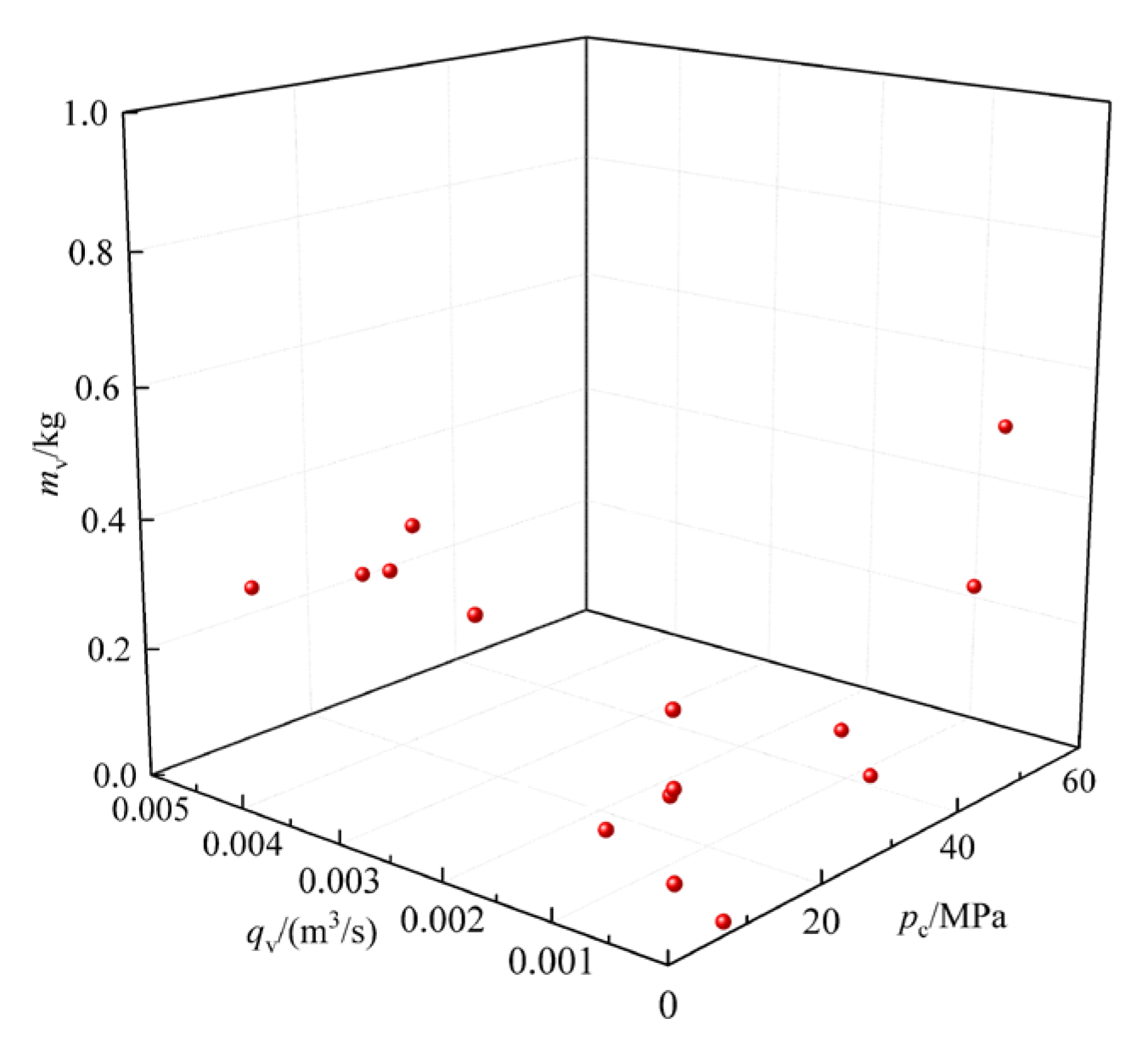
3/s and a valve pressure range of 0.4~49.74 MPa. The valve mass distribution is shown in
Figure 1, and the collected data are performed fitting calculations and comparative analysis.
3.2. Quadratic Polynomial Surface Fitting
If the understanding of causal relationships between variables is not sufficient and there is a lack of solid foundation to assume specific function expressions, polynomials can be used as approximate approximations of the function [
23]. Therefore, the collected data are first fitted using the least squares method to obtain a normalized quadratic surface equation, where the independent variables are the resistance pressure
pc and volumetric flow rate of the solenoid valve
qv. Due to the minimum mass of the gas solenoid valve collected from this set of data being 0.02 kg, the mass formula for the gas solenoid valve with this value as the lower limit for mass calculation can be obtained:
The coefficients are a0 = 0.12071, a1 = 255.86473, a2 = −0.00916, a3 = −51,124.64814, a4 = 0.9688, and a5 = 3.28002 × 10⁻⁴.
The sum of squared errors in calculating the mass of the gas solenoid valve is 0.042 kg
2, the sum of absolute values of errors is 0.549 kg, the maximum error is 0.147 kg, and the average relative error is 0.307.
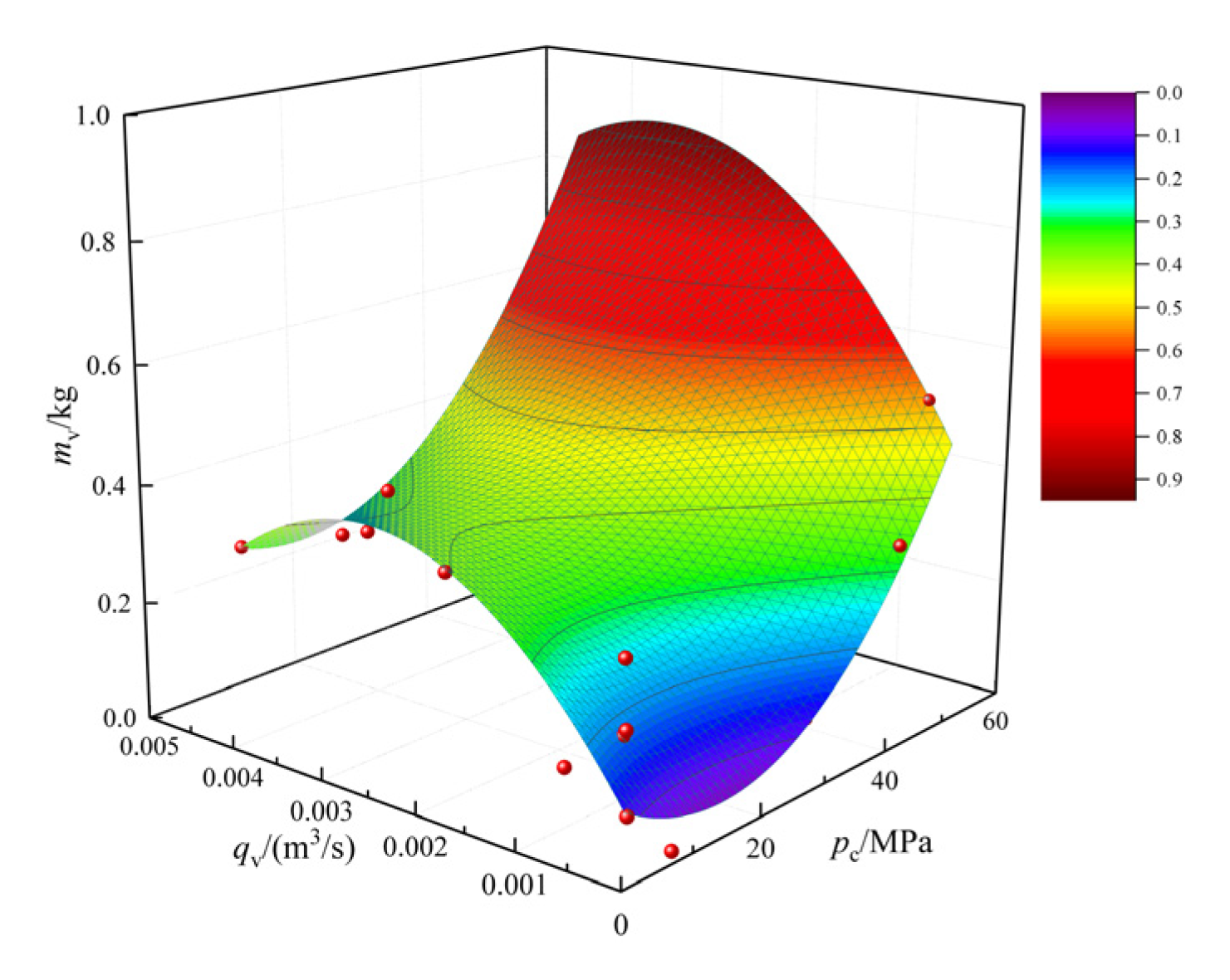
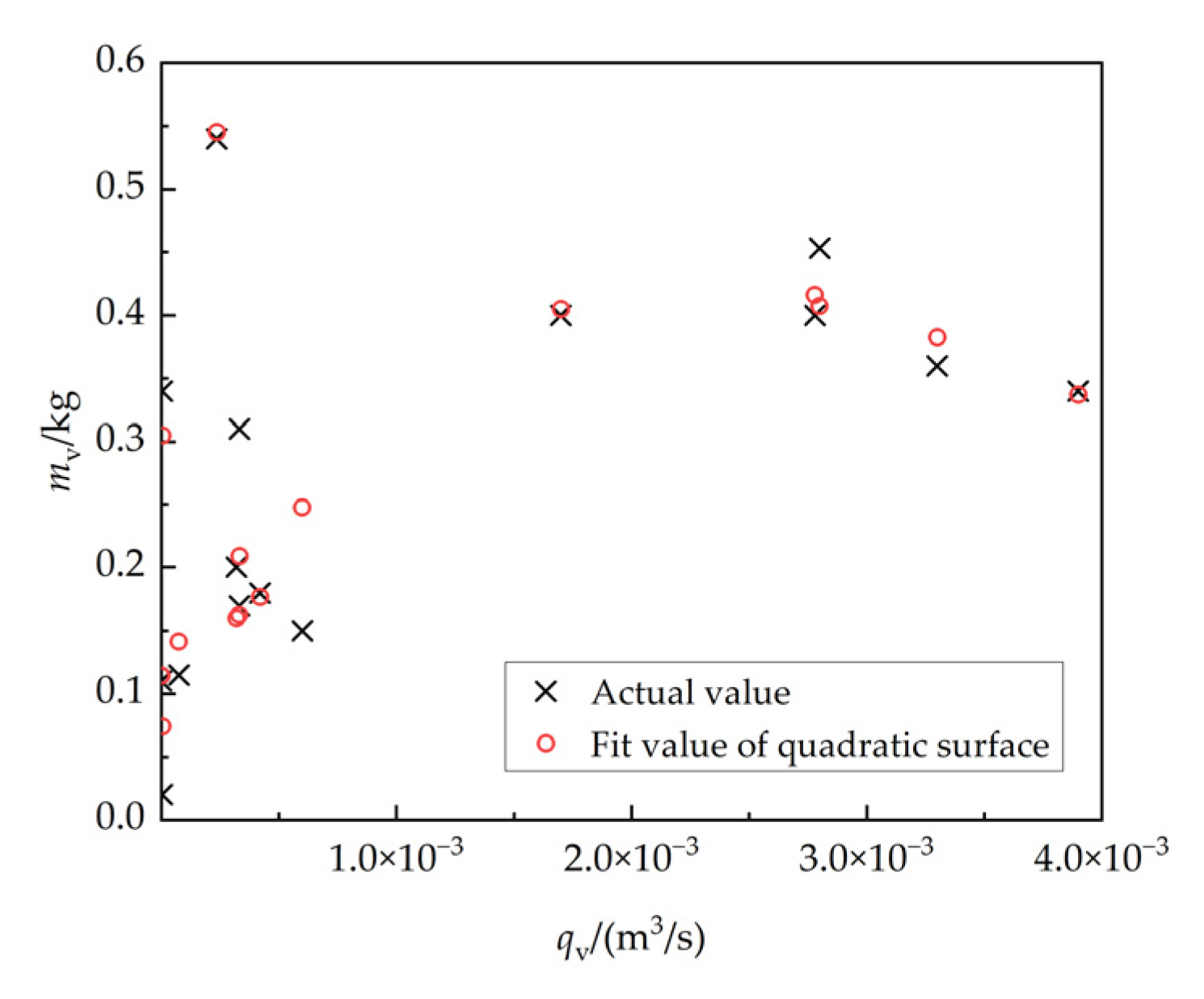
Figure 2 and
Figure 3, respectively, show the fitting results of the quadratic surface of the gas solenoid valve mass and the comparison between the quadratic surface fitting values and the actual values. It can be seen that within the statistical data range, using quadratic surface fitting can better describe the influence of resistance pressure on the gas solenoid valve, and the calculated results are close to the actual situation.
3.3. Binary Power Function Fitting
Cai et al. used a binary power function to fit the mass of liquid valves, which has a certain degree of accuracy [
14]. For gas solenoid valves, considering their high working pressure and compressibility of the gas working fluid, the fitting variables are set as gas volume flow rate
qv and valve resistance pressure
pc. The power function mass formula of the gas solenoid valve fitted by the least squares method is:
The coefficients are a = 0.863,
m = 0.169, and
n = 0.11. The sum of squared errors in calculating the mass of the gas solenoid valve is 0.192 kg
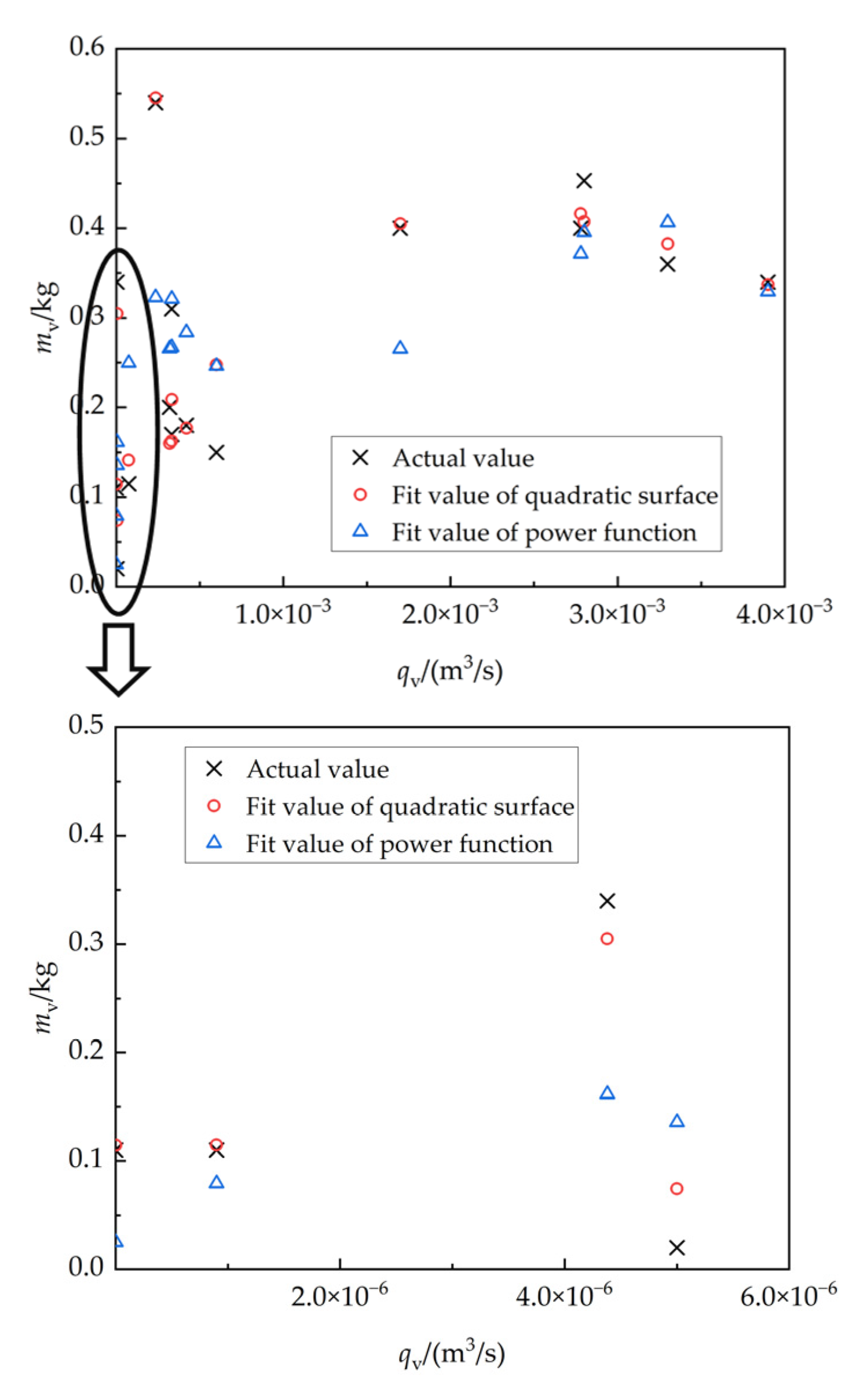
2, the sum of absolute values of errors is 1.499 kg, the maximum error is 0.217 kg, and the average relative error is 0.763. The average relative error from the quadratic surface fitting Formula (6) is 40.2% of that from Formula (8).
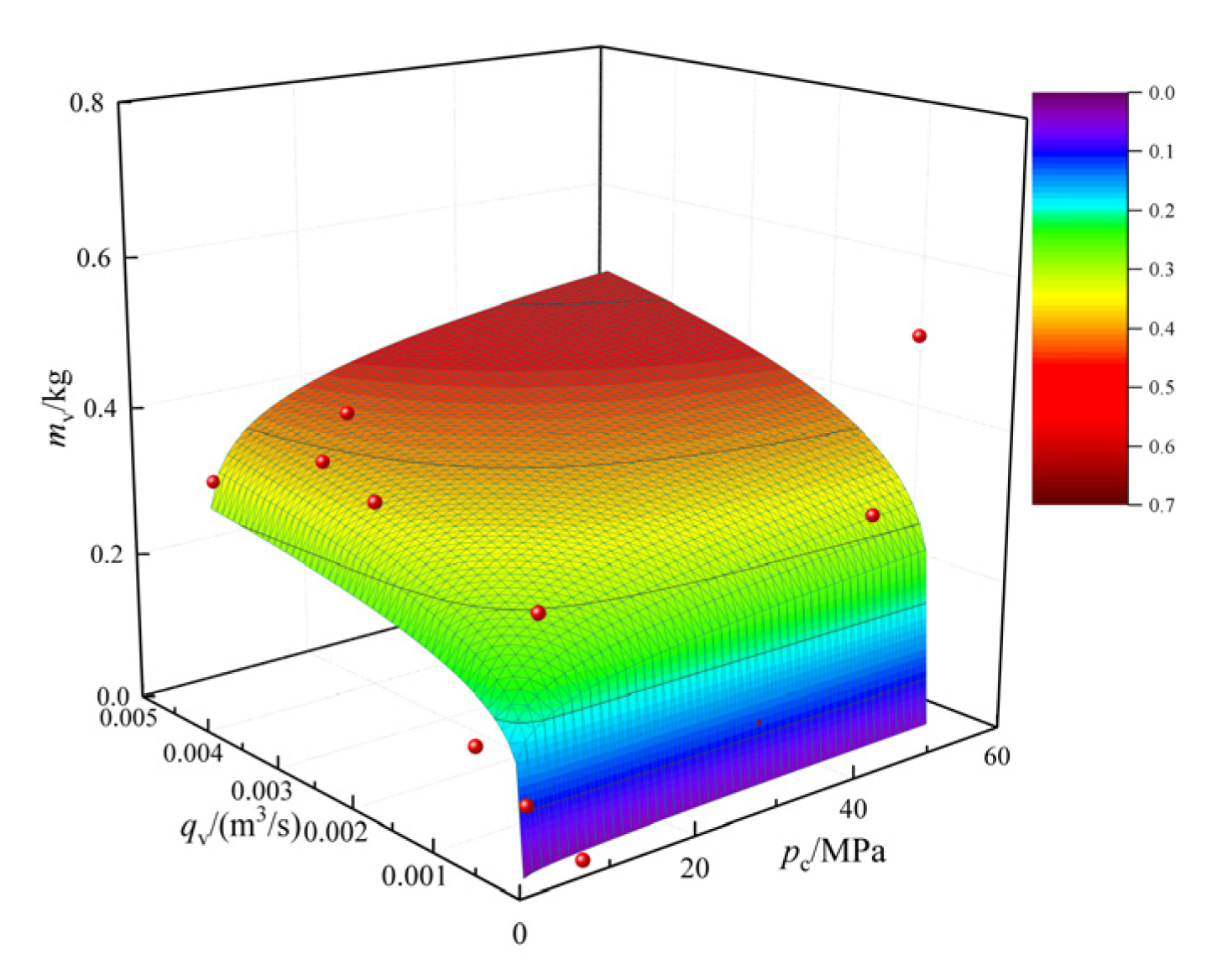
Figure 4 and
Figure 5, respectively, show the fitting results of the power function of the gas solenoid valve mass and the comparison of the power function fitting value and the quadratic surface fitting value and the actual value. It can be seen that the calculation accuracy of the quadratic surface fitting value is higher, especially for high-pressure gas solenoid valves (pressure resistance > 6 MPa), for which the quadratic surface fitting effect is significantly better. From
Figure 1, it can be seen that the mass of the gas solenoid valve is more affected by the pressure resistance value than the volumetric flow rate. Even if the volumetric flow rate is small, as long as the gas solenoid valve has a high resistance pressure, its mass will exceed that of a gas solenoid valve with a larger volumetric flow rate but lower resistance pressure. In addition, at the same volume flow rate level, an increase in resistance pressure can also lead to a sharp increase in the mass of gas solenoid valves. The power function pressure term index fitted by the least squares method for this set of data is relatively small, which is not sufficient to characterize the impact of changes in pressure resistance on the mass of gas solenoid valves.
3.4. Univariate Polynomial Fitting with Pressure Correction
The general calculation model for the mass of solenoid valves established by Wang et al. is applicable to the mass calculation of other types of valves on small thrust liquid rocket propulsion systems [
4]. This method only considers the influence of volume flow rate and working pressure on valve mass. First, the relationship between solenoid valve mass and volume flow rate is fitted using the least squares method, and then a pressure correction term is introduced. It has a satisfactory effect on the fitting of liquid solenoid valve mass. This article also draws on this method for the study of gas solenoid valves and conducts comparative research.
The approximate approximation formula for the m-order polynomial function of the gas solenoid valve is:
In the actual solving process, the degree of the polynomial should not be too high, generally ranging from 2 to 4. If the degree of the polynomial is too high, the equation is often ill conditioned and not conducive to solving [
23]. For a given order, the least squares method can be used to fit the data and calculate the residual sum of squares (RSSs). As the order increases, observe whether the sum of squared residuals significantly decreases. Generally, when the order increase does not significantly reduce the sum of squared residuals, it can be considered that the polynomial order is sufficient.
Table 1 shows the fitting results of the least squares univariate polynomial for different orders of sixteen data. It can be seen that third-order and fourth-order polynomials do not significantly reduce the sum of squared residuals, so quadratic polynomials are chosen as fitting polynomials:
The coefficients in the above equation are a0 = 0.167, a1 = 199.627, and a2 = −40,139.298.
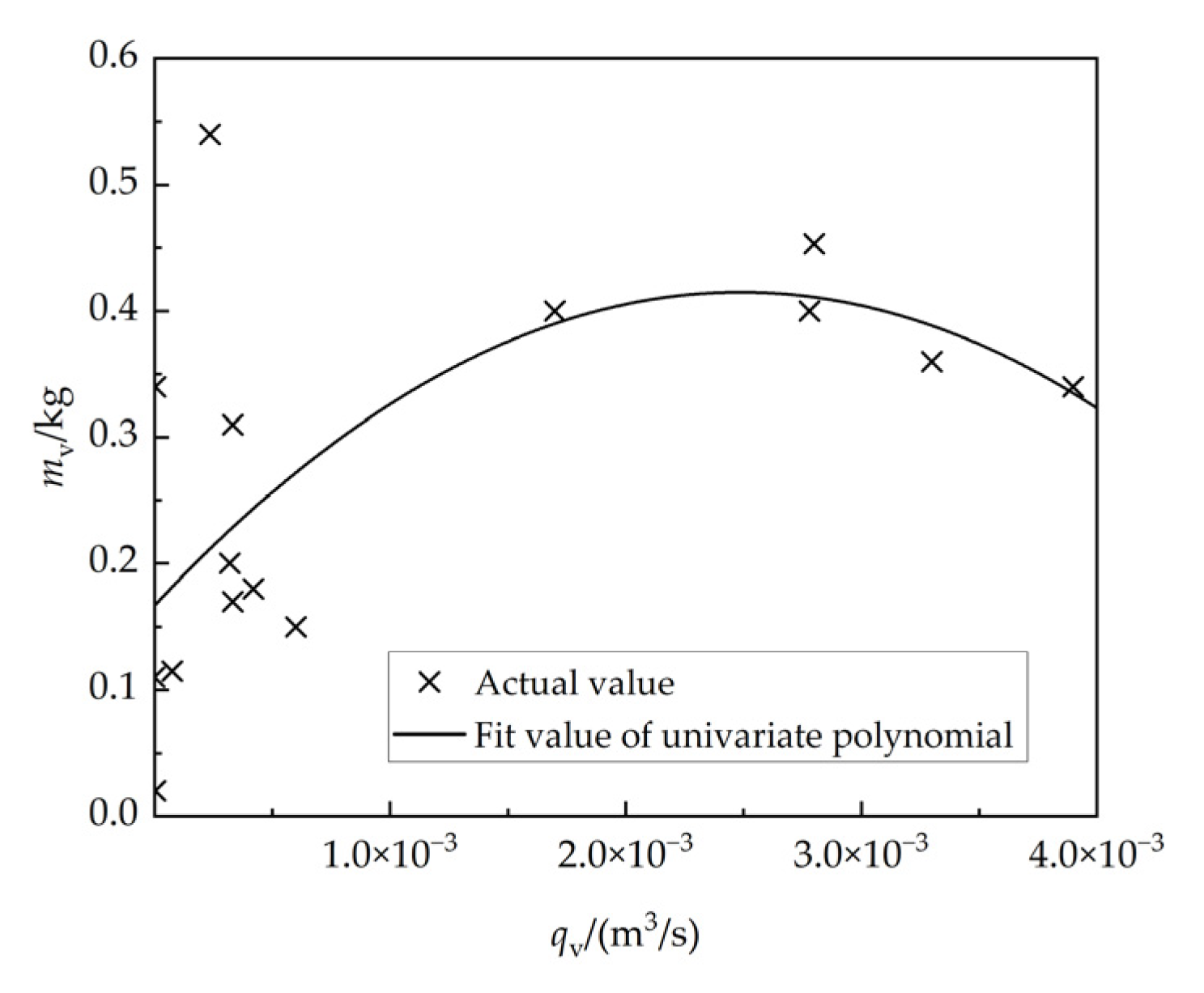
The comparison between the fit value of univariate polynomial and the actual value of the gas solenoid valve mass is shown in
Figure 6.
From
Figure 6, it can be seen that the polynomial fitting of volume flow rate is not ideal for the mass of gas solenoid valve. The sum of squared errors for calculating the mass of the gas solenoid valve using a polynomial fitting formula is 0.203 kg
2, the sum of absolute values of errors is 1.278 kg, the maximum error is 0.328 kg, and the average relative error is 0.767. When the volume flow rate of the medium exceeds 2 × 10
−3 m
3/s, as the volume flow rate of the medium increases, the calculated mass of the solenoid valve actually decreases, indicating that the influence of higher working pressure on the mass of the gas solenoid valve must be considered. Therefore, a pressure correction term is introduced.
The reference pressure for the traditional pressure correction term is 15 MPa, and the constant coefficient of the correction term is calculated using the least squares method. Due to the fact that the working pressure of gas solenoid valves is higher than that of liquid solenoid valves, the pressure reference and constant coefficient are simultaneously corrected, and the final formula for calculating the mass of gas solenoid valves is obtained as follows:
In the formula, the mass of the solenoid valve () considering the pressure correction term is taken into account, and the second term on the right is the pressure correction term, where the reference pressure p0 is taken as 22.19 MPa.
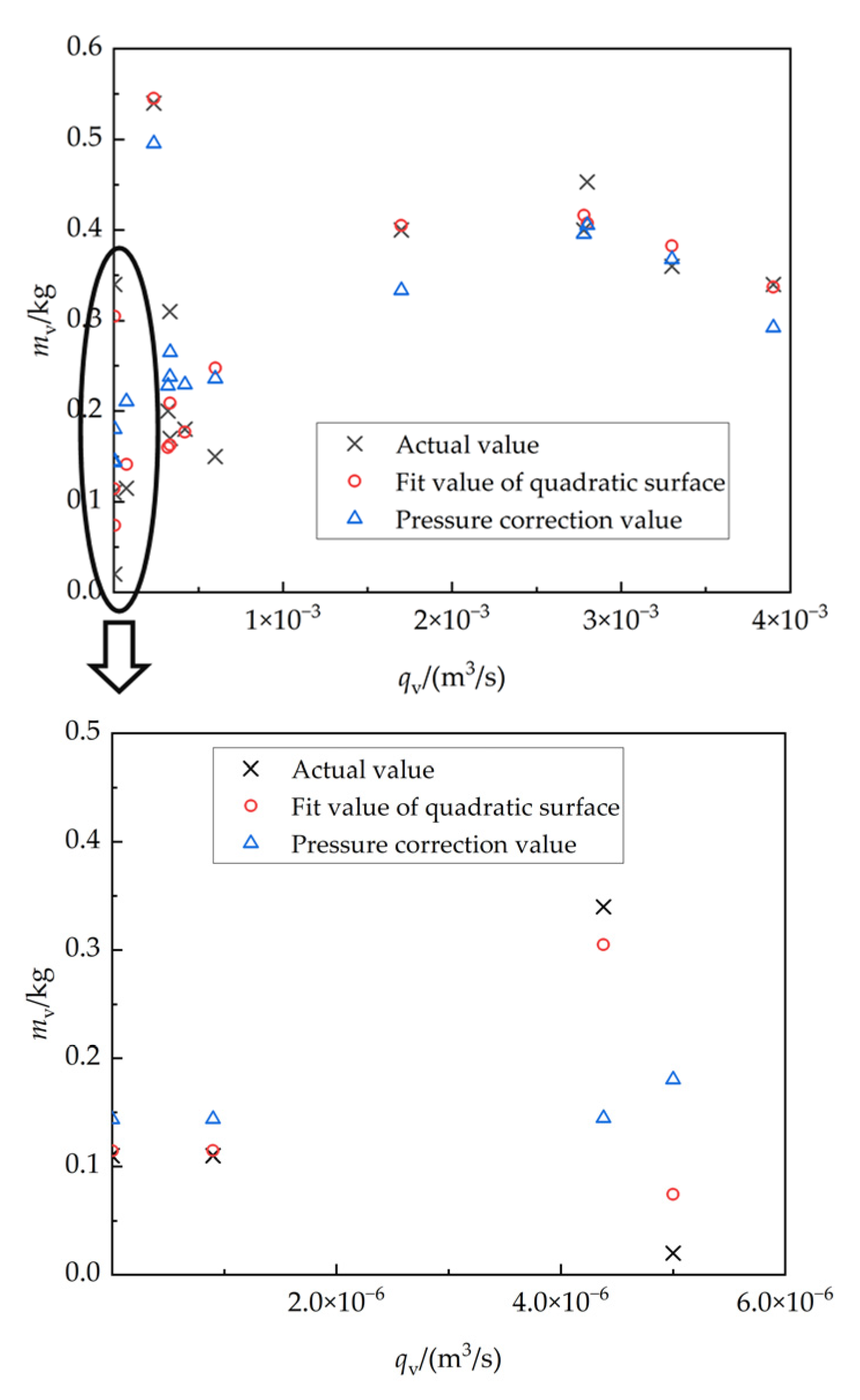
Figure 7 shows the comparison of the calculated mass of the gas solenoid valve using this formula, the fit value of the quadratic surface, and the actual value. The sum of squared errors in calculating the mass of the gas solenoid valve is 0.111 kg
2, the sum of absolute errors is 1.067 kg, the maximum error is 0.195 kg, and the average relative error is 0.771. Comparing the calculation results of the mass of solenoid valves using the univariate polynomial fitting Formula (11) with pressure correction and the quadratic surface fitting Formula (6), the average relative error calculated by Equation (6) is 39.8% of that calculated by Equation (11).
Comparing the calculation results before and after introducing the pressure correction term, it can be seen that for the solenoid valves collected, the calculation results of the two are very close. The relative error of the calculation results considering the pressure effect is 0.52% larger than that of the formula calculation results without considering the pressure effect. This is because the working pressure of this group of solenoid valves is mainly below 7 MPa. For high-pressure solenoid valves, the calculation result of Equation (11) will be closer to the actual situation. At the same time, for high-pressure gas solenoid valves, considering only pressure correction is not sufficient to characterize the impact of working pressure on the mass of gas solenoid valves. The quadratic surface fitting increases the weight of the pressure term in the mass calculation formula, and the calculation results are more in line with the actual situation.
3.5. Comparison with Manski Valve Mass Calculation Formula
When calculating the mass of liquid rocket thruster valves, the Manski valve mass formula is mostly used:
Among them, Equation (12) is the general Manski valve mass formula, and Equation (13) is Manski valve mass formula with pressure correction. In the formulas above, F (N) is the thruster thrust, and k is the fitness coefficient. When calculating the mass of the solenoid valve, if qv < qvcr, the formula with the thrust less than 100 N is calculated; if qv ≥ qvcr, the formula for the thrust greater than 100 N is calculated. The flow velocity of the medium is calculated by Formula (3).
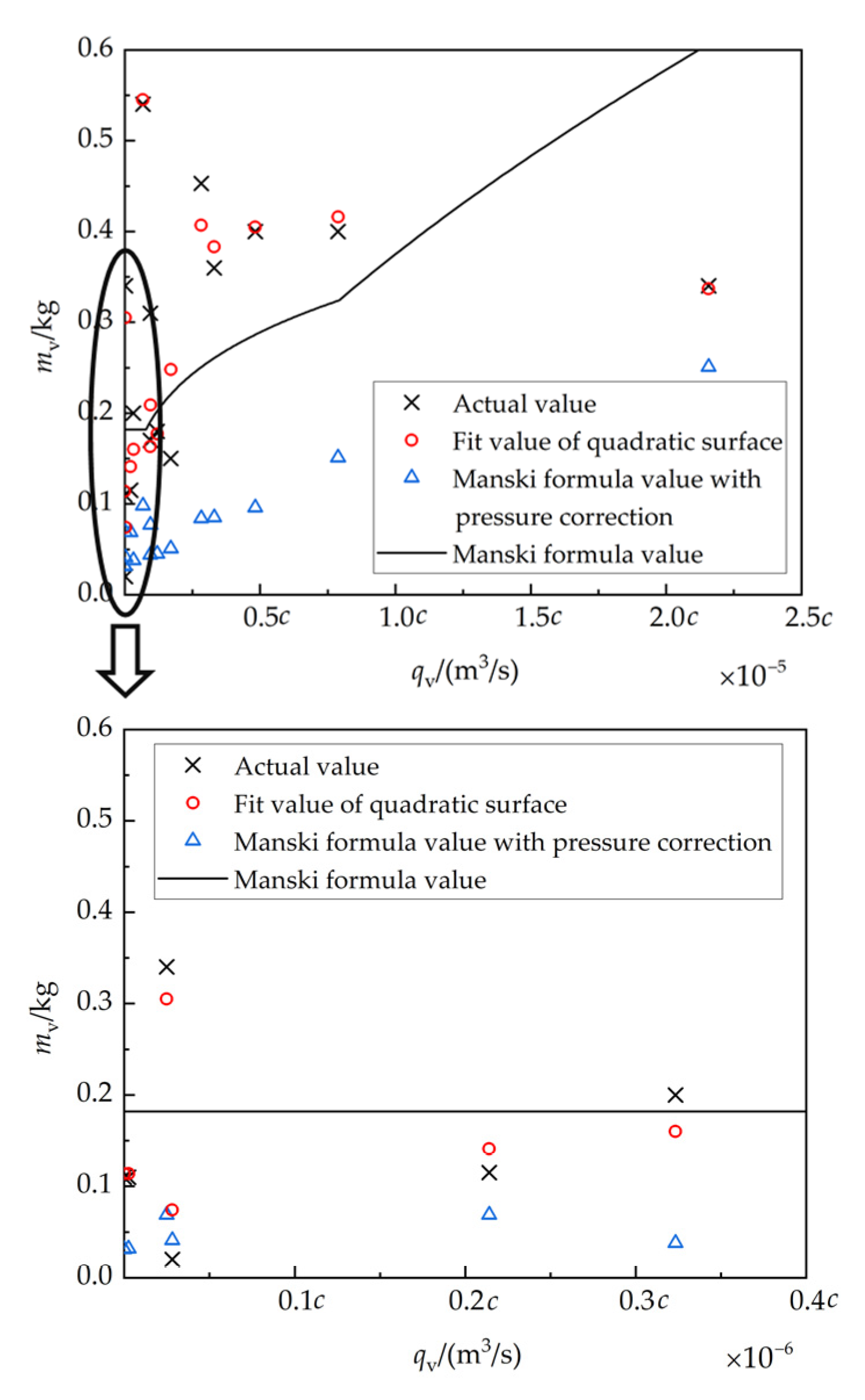
The comparison of the values using the Manski valve mass general formula, Manski valve mass formula with pressure correction, the quadratic surface fitting method, and the actual value of the gas solenoid valve mass is shown in
Figure 8. The sum of squared errors for calculating the mass of the solenoid valve using the general Manski formula is 0.355 kg
2, the sum of absolute values of errors is 1.897 kg, the maximum error is 0.266 kg, and the average relative error is 0.893. Using the Manski formula with pressure correction, the sum of squared errors of the solenoid valve mass is calculated to be 0.791 kg
2, the sum of absolute values of errors is 2.978 kg, the maximum error is 0.369 kg, and the average relative error is 0.709 kg.
The Manski valve mass model has a large error in calculating the mass of gas solenoid valves, mainly due to the following reasons: (1) insufficient consideration of the impact on the working pressure of gas solenoid valves. The Manski formula is a general valve mass calculation formula, which is based on statistical regression of collected mass data of monopropellant and bipropellant liquid rocket thruster valves. It has a good predictive effect on the mass of liquid valves in small thrusters with low chamber pressure but overlooks the impact of working pressure on solenoid valves. Although the Manski pressure correction formula considers it, due to the fact that the maximum working pressure of some high-pressure gas solenoid valves is much higher than that of liquid solenoid valves, using 15 MPa as the reference pressure for the correction term is no longer sufficient to characterize the impact of working pressure on the mass of gas solenoid valves. (2) The error caused by function conversion. The Manski pressure correction formula converts the previously general piecewise function into a functional expression, which carries a large margin of error. (3) The error carried by the mass calculation of valve systems. The Manski pressure correction formula calculates the mass of pipes, pipelines, and other pipeline equipment for oxidizer valves or fuel valves, without separately calculating the mass of the solenoid valve itself or distinguishing the type of valve. (4) Limitations of boundary conditions. Due to the constraint of the maximum gas flow rate c inside the pipe, for gas valves with a flow rate less than the critical volume flow rate, their mass calculation is a constant value and cannot reflect the influence of volume flow rate on the mass of the solenoid valve. Therefore, the traditional Manski valve mass calculation method is not suitable for gas solenoid valve mass calculation. (5) Limitations on the applicability of the formula. Although the Manski pressure correction formula does not emphasize the thrust range of the thruster, from the comparison between the calculated results of the formula and the actual mass, the Manski pressure correction formula has a better mass estimation effect on the valves of propulsion systems with high thrust (above 1000 kN) levels. For low thrust propulsion systems, the industry generally selects the Manski general valve mass formula for calculation.
Table 2 lists the errors and the correlation coefficients R-square of gas solenoid valve mass values calculated by different methods. It can be seen that compared with other commonly used methods and formulas for calculating the mass of solenoid valves, the quadratic surface fitting formula significantly reduces the average relative error of the calculation results, which is 40.2% of power exponent fitting, 39.8% of polynomial pressure correction, 34% of Manski valve mass general formula, and 43.3% of Manski valve mass formula with pressure correction. Moreover, it also possesses the highest R-square value (0.873), indicating that it captures and explains the underlying trends in the data most effectively, with a goodness-of-fit closest to 1. Therefore, it is suitable for mass calculation of gas solenoid valves in cold gas propulsion systems.
4. Establishment of Mass Model for Liquid Solenoid Valve
4.1. General Calculation Model for Liquid Solenoid Valve Mass
The establishment of the mass model for liquid solenoid valves is generally the same as that for gas solenoid valves, that is, the mass of liquid valves is only regarded as a function of the volume flow rate of the medium and the resistance pressure of the solenoid valve. Due to the small difference between the value of inflow pressure and resistance pressure during the actual operation of the liquid solenoid valve, and for ease of comparison with existing liquid valve formulas, this article considers the mass of the liquid valve as a function of the volume flow rate of the medium
qv and the inflow working pressure of the solenoid valve
pv:
On the basis of 21 liquid valve mass data collected by Wang [
24,
25,
26,
27,
28,
29,
30,
31,
32,
33], 12 liquid solenoid valve product data for liquid space propulsion are supplemented [
20]. The thruster thrust range is 0~1000 N, the volume flow range is 1.8 × 10
−7~1.28 × 10
−4 m
3/s, and the valve inflow working pressure range is 0.99~4.24 MPa.
4.2. Quadratic Polynomial Surface Fitting
Firstly, the least squares method is used to fit the data set.
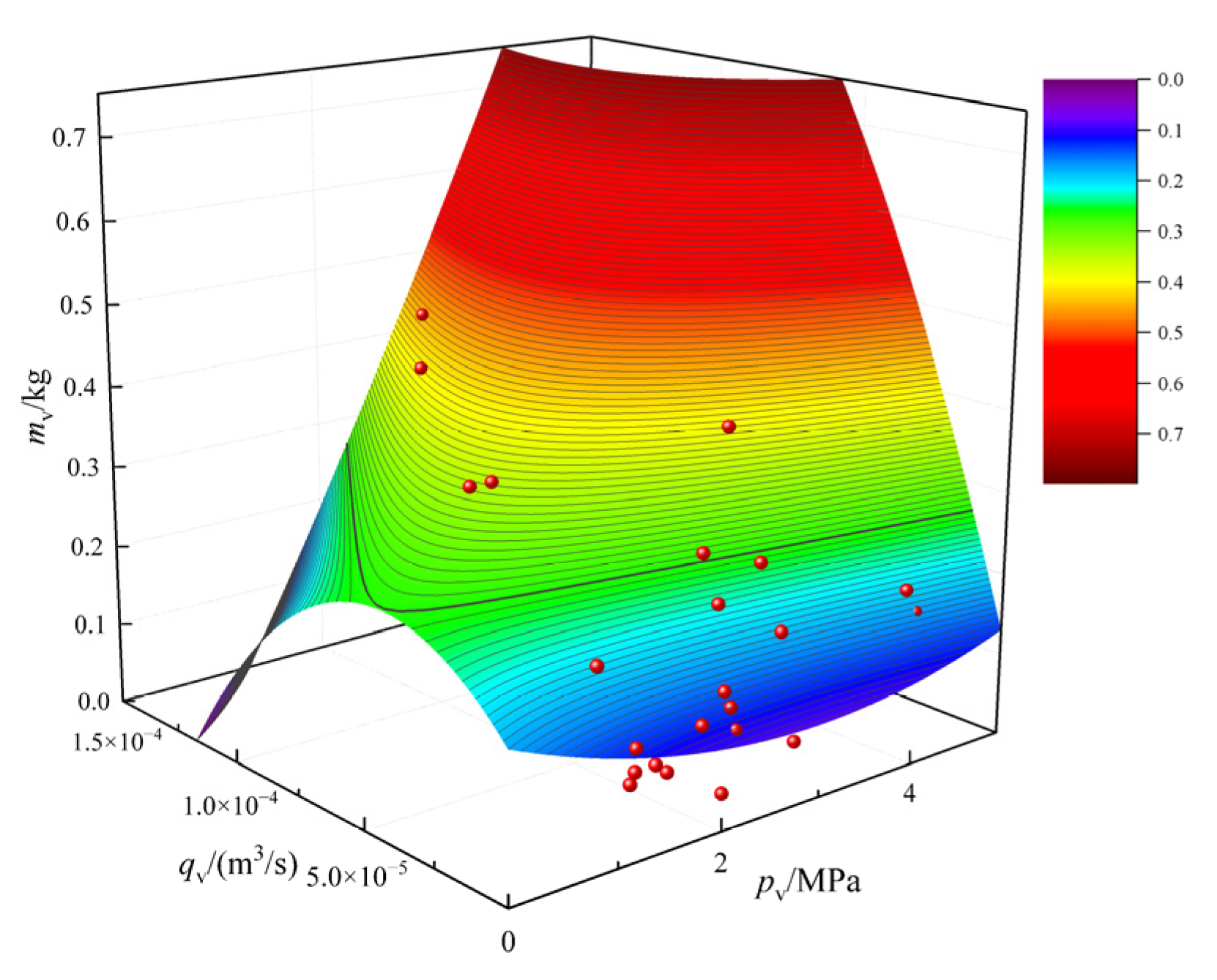
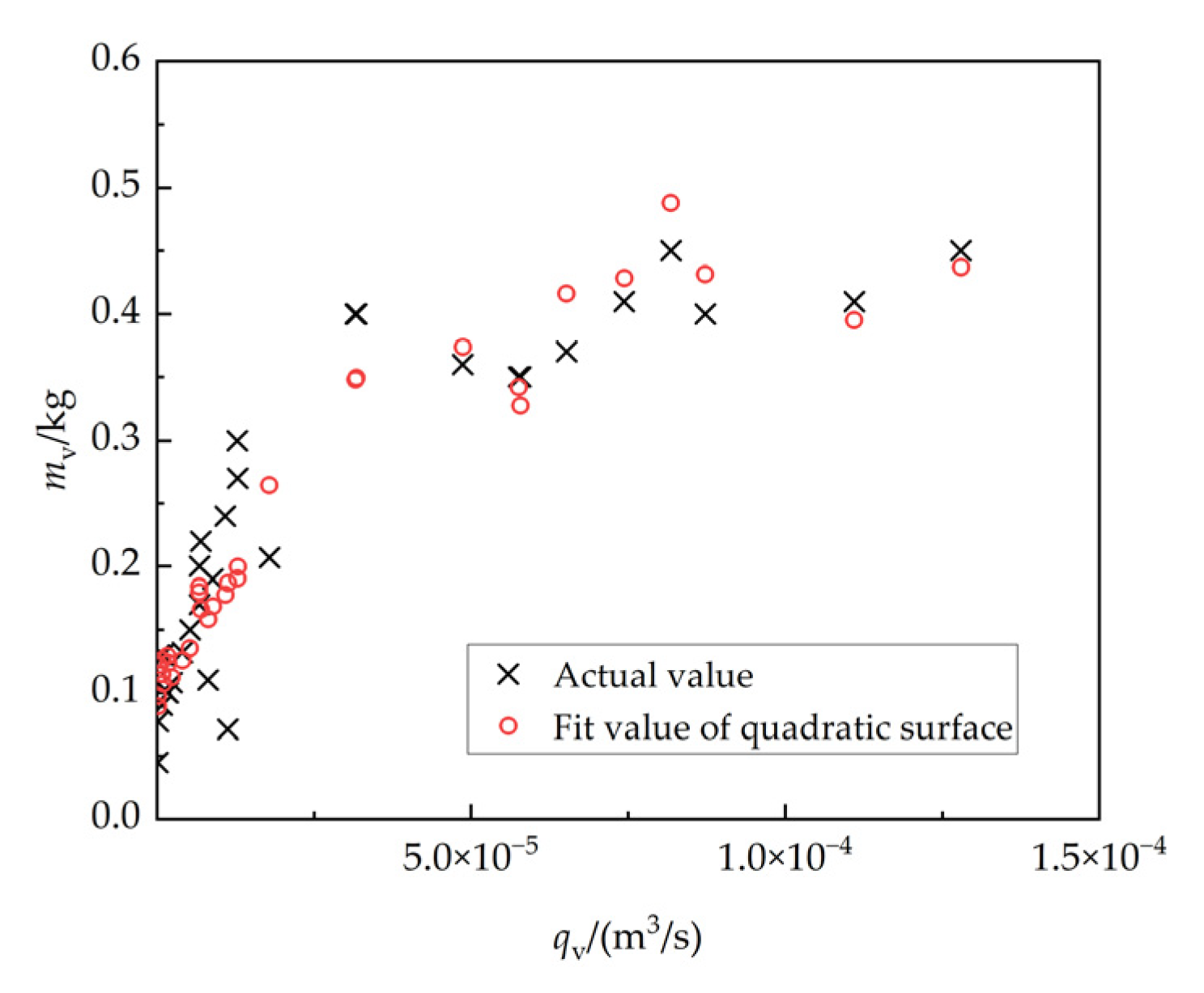
Figure 9 and
Figure 10, respectively, show the fitting results of the quadratic surface of the liquid solenoid valve mass and the comparison between the quadratic surface fitting values and the actual values. The normalized form of the quadratic polynomial surface fitting formula used is as follows:
The coefficients are a0 = 0.1756, a1 = 4189.71355, a2 = −0.06023, a3 = −4.8636 × 10⁷, a4 = 1865.64643, and a5 = 0.01024.
Due to the minimum mass of the liquid solenoid valve collected in this data set being 0.045 kg, this value is used as the lower limit for calculating the mass of the liquid solenoid valve. It is worth noting that when the volumetric flow rate exceeds 4.5 × 10
−5 m
3/s, the quadratic polynomial surface shows a decreasing trend of the liquid solenoid valve mass in the low-pressure region (
pv < 2.29 MPa) with increasing volumetric flow rate, which is not in line with the actual situation. Due to the lack of data in this area, contour line 0.266 kg (thick solid line in
Figure 9) is selected as a conservative estimate, and the formula for calculating the mass of the liquid solenoid valve fitted with a quadratic polynomial surface is obtained as follows:
When
qv < 4.5 × 10
−5 m
3/s and
pv < 2.29 MPa or
pv ≥ 2.29 MPa,
When
qv ≥ 4.5 × 10
−5 m
3/s and
pv < 2.29 MPa,
The sum of squared errors in calculating the mass of the liquid solenoid valve is 0.062 kg
2, the sum of absolute values of errors is 1.13 kg, the maximum error is 0.116 kg, and the average relative error is 0.228. From
Figure 9 and
Figure 10, it can be seen that using quadratic surface fitting within the statistical data range can better describe the effect of working pressure on liquid solenoid valves, and the calculated results are close to the actual situation.
4.3. Binary Power Function Fitting
Cai et al. used a binary power function to fit the mass of liquid valves, with the independent variables being the mass flow rate of the liquid medium passing through the valve
and the inflow pressure
pv [
14]. The fitting formula is:
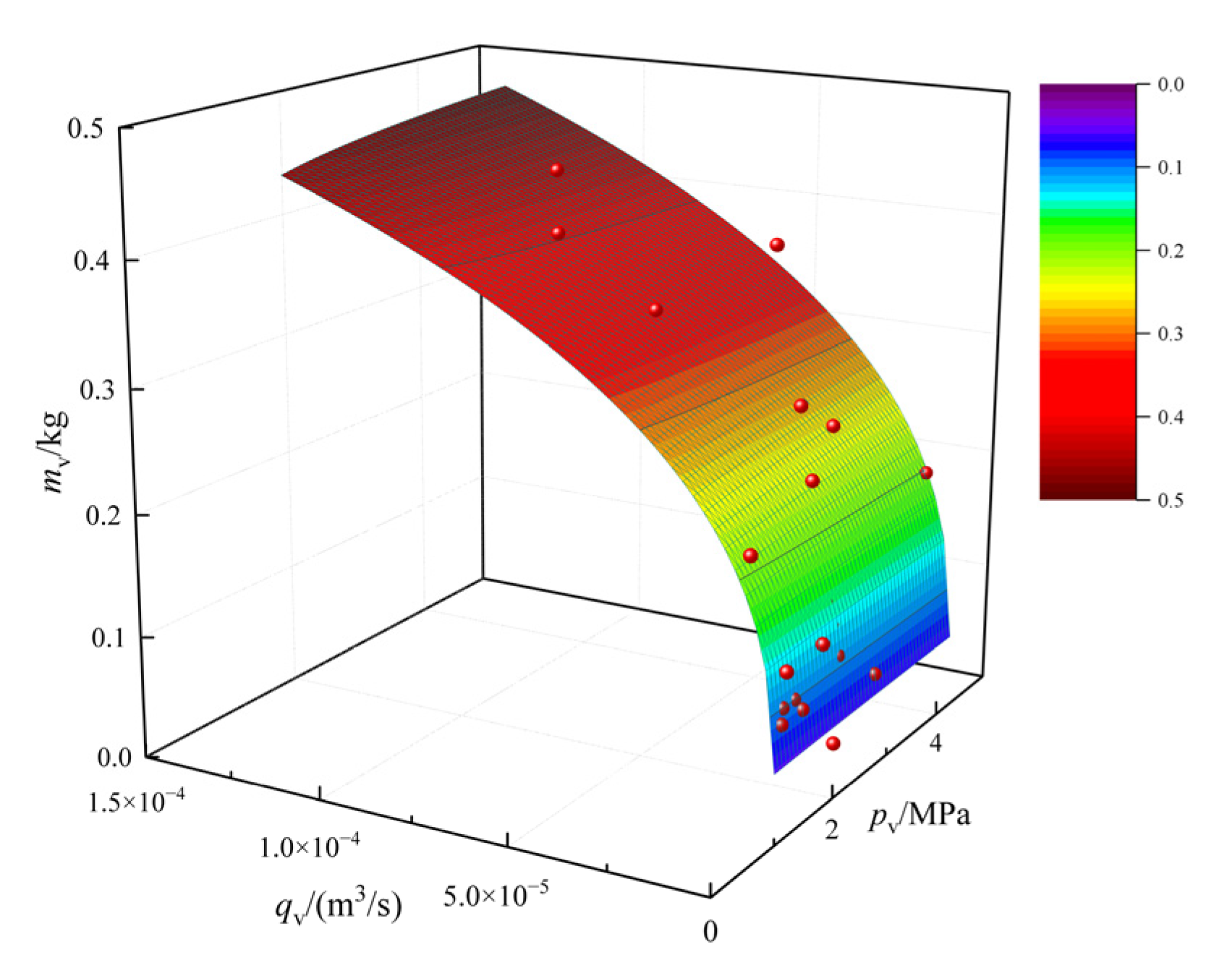
Fit the mass of the liquid solenoid valve using the least squares method, where a = 0.8, b = 0.30415, and c = 0.0536. The sum of squared errors in calculating the mass of the liquid solenoid valve is 0.0742 kg2, the sum of absolute values of errors is 1.208 kg, the maximum error is 0.131 kg, and the average relative error is 0.22. If Equation (8) is used to perform the least squares fit on the independent variables of the volume flow rate of the liquid medium passing through the valve and the inflow pressure, the fitting coefficients are calculated to be a = 7.831, m = 0.317, and n = 0.037. The sum of squared errors in the mass of the liquid solenoid valve is 0.0717 kg2, the sum of absolute errors is 1.116 kg, the maximum error is 0.148 kg, and the average relative error is 0.216 kg. It can be seen that the accuracy of the calculation results using mass flow rate and volume flow rate as power functions to fit the independent variables is comparable.
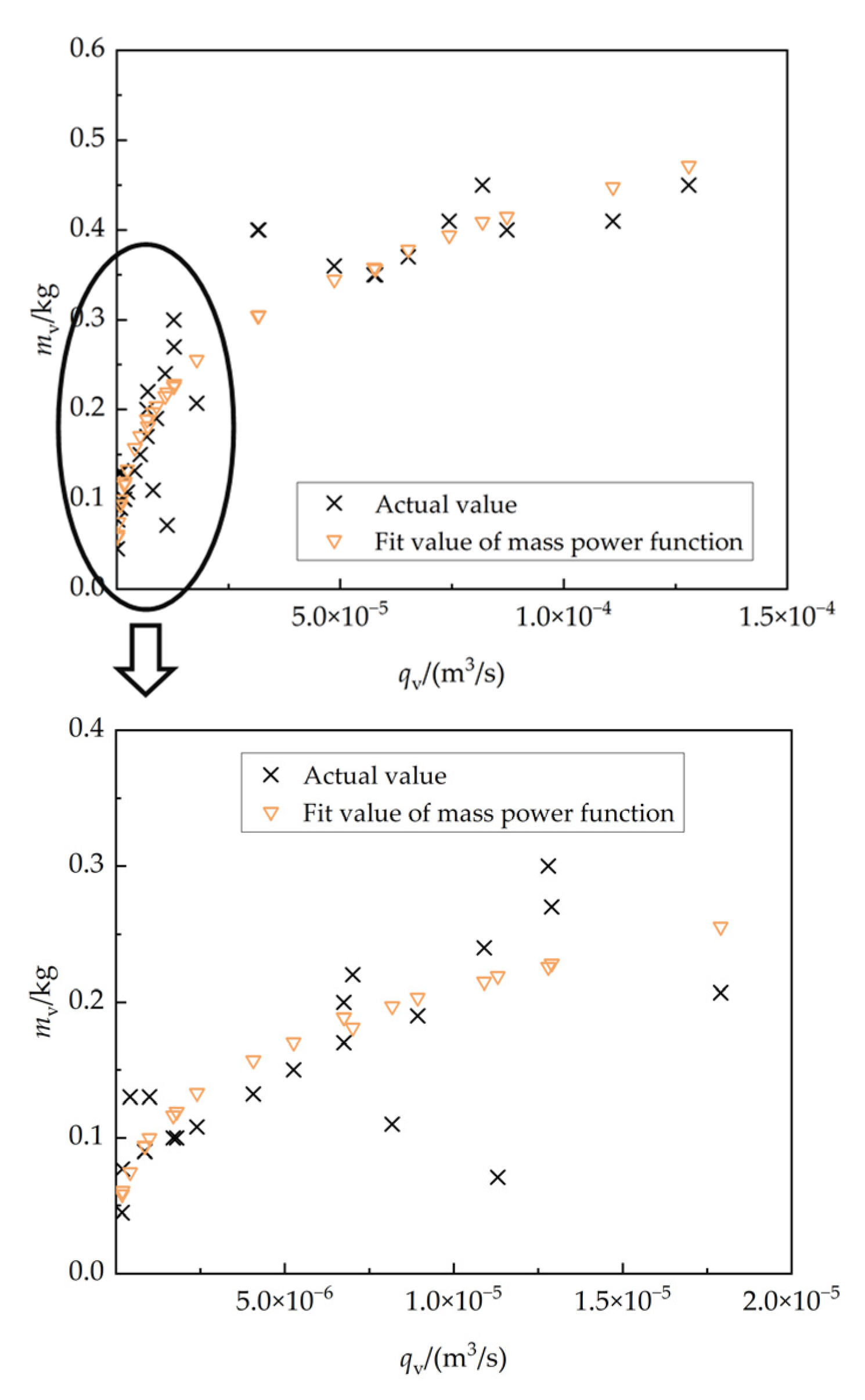
Figure 11 and
Figure 12, respectively, show the fitting results of the power function of the liquid solenoid valve mass and the comparison between the power function fitting value and the actual value. It can be seen that the power function fitting accurately reflects the influence of volume flow rate and working pressure on the mass of the liquid solenoid valve, and the calculated results are close to the actual situation.
4.4. Univariate Polynomial Fitting with Pressure Correction
Wang proposed the mass formula with pressure correction for liquid solenoid valves in reference [
4]:
The coefficients in the above equation are a0 = 6.068303 × 10⁻², a1 = 1.597185 × 10⁴, a2 = −2.890046 × 10⁸, a3 = 2.211771 × 10¹², and a4 = −5.806641 × 10¹⁵.
Based on the collected data of the liquid solenoid valve, the sum of squared errors in calculating the mass of the liquid solenoid valve is 0.065 kg2, the sum of absolute values of errors is 1.06 kg, the maximum error is 0.145 kg, and the average relative error is 0.219.
Consider improving the above two equations, and the coefficients of the improved Equation (19) are a
0 = 7.93 × 10
−2, a
1 = 1.50457 × 10
4, a
2 = −2.78469 × 10
8, a
3 = 2.2792 × 10
12, and a
4 = −6.6147 × 10
15. The improved formula is as follows:
The sum of squared errors in the mass of the liquid solenoid valve calculated in Equation (21) is 0.06 kg
2, the sum of absolute errors is 0.927 kg, the maximum error is 0.153 kg, and the average relative error is 0.1996. The average relative error of the improved pressure correction formula is 91.1% of that of the original pressure correction formula.
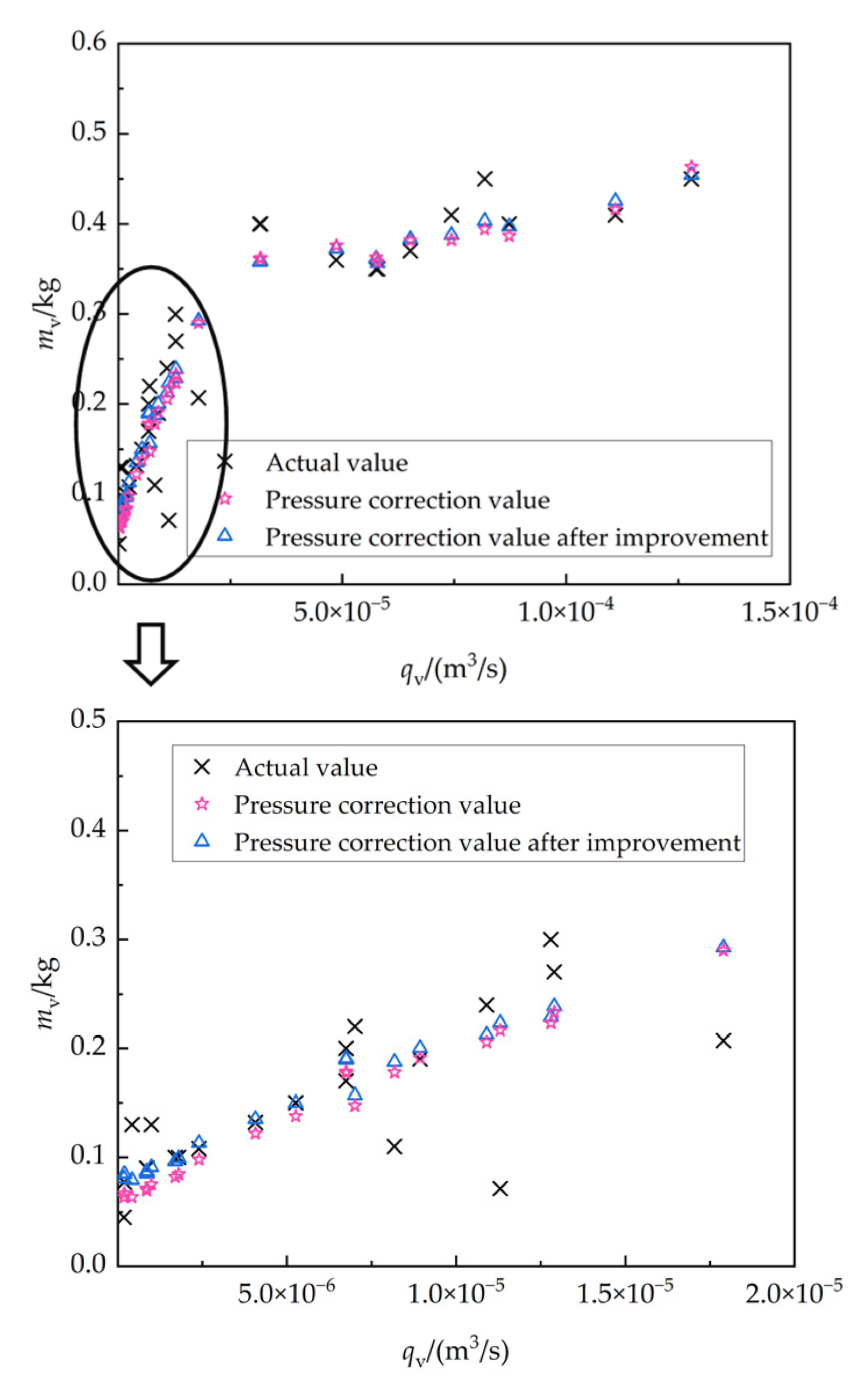
Figure 13 shows the comparison of the values before and after the improvement of pressure correction and the actual value of the liquid solenoid valves.
4.5. Comparison with Manski Valve Mass Calculation Formula
Wang derived the relationship Equation (22) between the flow rate and volume flow rate of liquid medium through valves in reference [
4] and substituted it into the general mass formula of Manski liquid solenoid valves, obtaining the calculation Formula (23) with liquid volume flow rate as the independent variable.
The sum of squared errors in the mass of the liquid solenoid valve calculated in Equation (23) is 0.215 kg2, the sum of absolute values of errors is 2.191 kg, the maximum error is 0.155 kg, and the average relative error is 0.495. Substituting the relationship Equation (22) between the flow rate and volume flow rate of the liquid medium passing through the valve into the Manski valve mass formula with pressure correction (13), the sum of squared errors of the liquid solenoid valve mass is calculated to be 0.824 kg2, the sum of absolute values of errors is 4.636 kg, the maximum error is 0.279 kg, and the average relative error is 0.598.
Table 3 lists the errors and the correlation coefficients R-square of liquid solenoid valve mass values calculated by different methods.
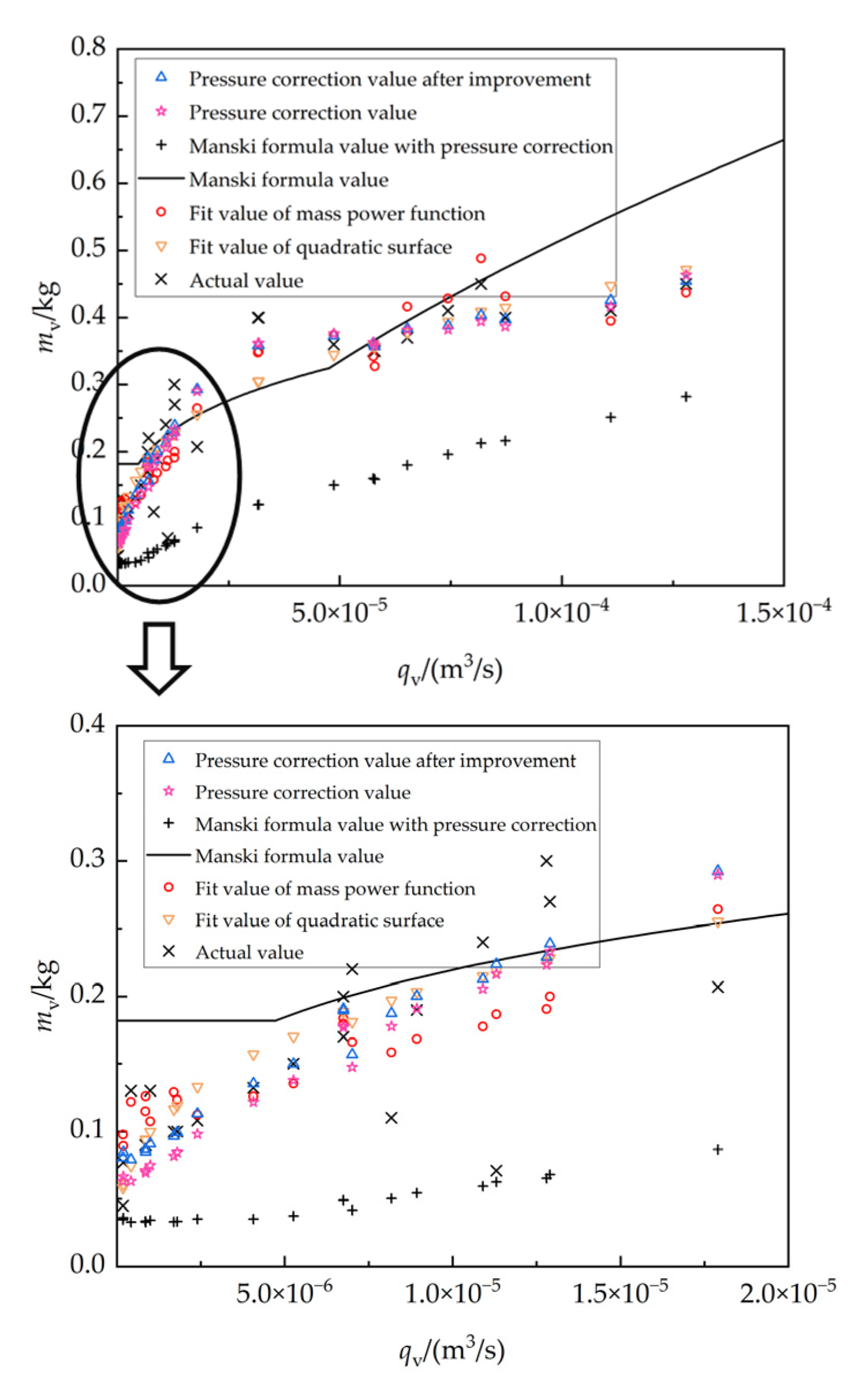
Figure 14 shows a comparison of the calculation results of all the liquid solenoid valve mass calculation methods involved in this article. It can be seen that, except for the Manski valve mass formula, the accuracy of several liquid solenoid valve mass calculation methods is comparable. The improved univariate polynomial fitting with pressure correction has the smallest average relative error and the univariate polynomial fitting with pressure correction has the best fitting goodness (R-square closest to 1), but for high-pressure solenoid valves, the quadratic surface fitting results will be closer to the actual situation. In practical use, the appropriate formula for calculating the mass of liquid valves can be selected according to the needs.
5. Sensitivity Analysis
Sensitivity analysis is conducted to quantify the impact of key independent variables (flow rate and pressure) on the mass of gas and liquid solenoid valves, identify the most influential factor, and verify the rationality of the established mass models. Based on the general mass calculation models and the collected experimental data, the following two key independent variables are selected for analysis: for gas solenoid valves, the variables are medium volume flow rate qv (1 × 10⁻⁹~3.9 × 10⁻³ m3/s) and proof pressure pc(0.4~49.74 MPa); for liquid solenoid valves, the variables are medium volume flow rate qv (1.8 × 10⁻⁷~1.28 × 10⁻⁴ m3/s) and inlet working pressure pv (0.99~4.24 MPa). The sensitivity analysis method (single-variable perturbation) is used to evaluate the sensitivity characteristics.
For gas solenoid valves, taking the quadratic polynomial surface fitting model (Equations (6) and (7)) as the basis, the benchmark values of variables
x0 are selected as the median of the following data range:
qv0 = 1.95 × 10
−3 m
3/s,
pc0 = 25.07 MPa, and the corresponding benchmark mass
m0 = 0.449 kg. A 5% perturbation is applied to each variable
x individually (keeping the other variable unchanged) to calculate the absolute sensitivity coefficient
S and relative sensitivity coefficient
S′:
The calculation results are shown in
Table 4. It can be seen that the relative sensitivity coefficient of proof pressure
pc (0.512) is higher than that of volume flow rate
qv (0.349), with the former being 1.5 times higher than the latter. Thus, proof pressure is the dominant factor affecting the mass of gas solenoid valves, which is consistent with the earlier finding that “high-pressure gas solenoid valves have significantly higher mass even with small volume flow rates.”
For liquid solenoid valves, taking the improved pressure-corrected univariate polynomial model (Equation (21)) as the core (considering its highest accuracy), the benchmark values of variables are selected as the median of the following data range:
qv0 = 6.409 × 10
−5 m
3/s,
pv0 = 2.615 MPa, and the corresponding benchmark mass
m0 = 0.396 kg. A 5% perturbation is applied to each variable to calculate the sensitivity coefficients, with results shown in
Table 5.
The relative sensitivity coefficient of inlet working pressure pv (0.170) is significantly higher than that of volume flow rate qv (0.079), with the former being nearly twice as high as the latter. Thus, the inlet working pressure pv has a more pronounced influence on the solenoid valve mass compared to the volume flow rate qv under the given benchmark conditions.
The sensitivity analysis results show consistent trend between gas and liquid solenoid valves as follows: the proof pressure (for gas valves) or inlet pressure (for liquid valves) serve as the dominant factors influencing valve mass, while the volume flow rate exhibits a moderate effect. This can be attributed to the high-pressure operating environment, which necessitates a substantial increase in wall thickness to meet structural strength requirements, thereby leading to a significant increase in valve mass.