


Abstract
The problem of packing multidimensional spheres in a container defined by a hyperbolic surface is introduced. The objective is to minimize the height of the hyperbolic container under non-overlapping and containment conditions for the spheres, considering minimal allowable distances between them. To the best of our knowledge, no mathematical models addressing optimized packing spheres in hyperbolic containers have been proposed before. Our approach is based on a space dimensionality reduction transformation. This transformation relies on projecting a multidimensional hyperboloid into a lower-dimensional space sequentially up to two-dimensional case. Employing the phi-function technique, packing spheres in the hyperbolic container is formulated as a nonlinear programming problem. The latter is solved using a model-based heuristic combined with a decomposition approach. Numerical results are presented for a wide range of parameters, i.e., space dimension, number of spheres, and metric characteristics of the hyperbolic container. The results demonstrate efficiency of the proposed modeling and solution approach highlighting new opportunities for packing problems within non-traditional geometries.
Keywords:
optimized packing; multidimensional spheres; hyperbolic container; phi-function technique; nonlinear optimization MSC:
05B40; 52C15; 52C17; 90C26
1. Introduction
Sphere packing, i.e., arranging spherical objects in a larger container under specific conditions, is a well-established area of research with both theoretical and practical significance. Its versatility has led to applications across diverse fields. Packing problems are generally categorized into two classes: open dimension problems (ODPs) and knapsack problems [1]. The ODP focuses on optimizing the dimensions of the container, while the knapsack problem aims to maximize either the number of packed objects or the total packed volume. Continuous nonlinear programming (NLP) models are commonly employed for ODPs, while mixed-integer NLP models are typically used for knapsack problems.
Our focus on irregular containers is motivated by several key considerations. Sphere packing within irregular containers has important applications in materials science, nanotechnology, and additive manufacturing [2,3]. In materials science, sphere packing helps to understand the arrangement of atoms and molecules, influencing properties such as strength, density, and thermal conductivity [4]. In nanotechnology, it aids in the design and fabrication of nanostructures and nanoparticles, optimizing their arrangement for specific functions [5]. In 3D printing and additive manufacturing, sphere packing principles are used to enhance material efficiency and structural integrity. Furthermore, topology optimization enables the creation of products with improved mechanical performance and reduced material consumption through computational analysis of optimal material distribution [6,7].
A von Mises stress-driven circle packing algorithm for generating conformal lattice structures in additive manufacturing is studied in [8]. This approach optimizes lattice density by varying circle sizes based on stress intensity, resulting in Voronoi or Delaunay-based lattices that enhance stiffness. A simplified truss model reduces computational cost in finite element analysis, allowing efficient optimization using genetic algorithms, achieving up to 40% weight reduction in aerospace components while maintaining structural integrity.
Sphere packing for porous structure creation using the Voronoi tessellation method is considered in [9] focusing on modeling of porosity and mechanical properties relevant to biomedical applications. Disordered sphere packings of two different sizes are discussed in [10] showing that such arrangements can achieve densities comparable to ordered packings. This provides a theoretical foundation for improving particle density and flowability in metal powders used for additive manufacturing.
Sphere packing has also been applied to biomedical scaffolds. Macroporosity formation in bone scaffolds is modeled in [11] by packing of poly(lactide-co-glycolide) spheres. Sphere packing in mechano-regulation models, specifically the Pauwels model, is presented in [12]. Here an elementary sphere suspended in mesenchyme tissue is subjected to compression, tension, and shear forces, inducing cell formation of collagen fibrils. This modeling approach simulates the mechanical environment experienced by cells within scaffolds, aiding the design of structures that mimic natural skeletal tissue. Likewise, [13] uses sphere packing to model scaffold architecture with controlled porosity, enabling precise regulation of pore size and targeted drug release. These sphere-packed scaffolds mimic the extracellular matrix of bone, enhancing their effectiveness in bone defect repair.
While sphere packing in regular containers (rectangles, circles, etc.) has been extensively studied, especially for 2D objects like circles [14], ovals [15], and ellipses [16], the study of irregular containers remains a topic of significant interest [17]. Amore et al. [18] proposed an algorithm for dense packing configurations of congruent disks in arbitrary domains, such as rectangles, ellipses, crosses, and cardioids. Their introduction of “image” disks overcomes limitations of previous methods and suggests potential extensions to three-dimensional irregular containers.
A notable example of irregular containers is the hyperboloid structure, which offers advantages such as high strength, reduced material use, resistance to wind loads, and aesthetic appeal. These properties make hyperboloid geometries suitable for towers, cooling towers, and other industrial applications. In architecture, hyperbolic paraboloid roofs enable efficient material placement for structural stability and cost reduction. Similarly, hyperbolic geometries are used in designing components such as satellite dishes and other aerodynamic structures [19].
Various approaches have been proposed for solving sphere packing problems, including heuristic, nonlinear programming, probabilistic, and hybrid methods.
Heuristic methods provide approximate solutions to packing problems. Genetic algorithms, inspired by natural selection, have demonstrated high efficiency in solving circle packing problems [14]. Ant colony optimization, inspired by the foraging behavior of ants, employs probabilistic strategies to find efficient paths through solution spaces and has been successfully used for multiscale sphere packing [20]. The simulated annealing technique emulates the cooling process in metallurgy to approximate global optima and has been effectively applied to dense packing of spheres in cylindrical containers [21].
Probabilistic methods, such as Monte Carlo simulation, use random sampling to approximate solutions—particularly beneficial for high-dimensional packing problems [22]. Stochastic programming, which models uncertainty in sphere sizes or container dimensions, has also been applied to sphere packing optimization [23].
Nonlinear programming (NLP) techniques provide precise formulations for complex geometric challenges, particularly in irregular containers and variable object-size contexts [24,25].
Finally, hybrid methods combine the strengths of multiple approaches to enhance solution quality. The energy landscape paving and gradient descent algorithm integrates energy landscape mapping with adaptive-step gradient descent and has proven effective for both circle and sphere packing [26]. The combination of genetic algorithms with simulated annealing improves search performance over individual methods [27], while tabu search and particle swarm optimization effectively solve circle and sphere packing problems with high packing densities [28]. Another hybrid method, employing beam search, has shown promise in optimizing sphere packing configurations [29].
In this paper we develop a novel modeling and solution approach for packing spheres in a hyperbolic container, leveraging new modeling tools that address the geometric and computational challenges posed by the hyperbolic shape.
The main contributions of the paper are as follows:
- ○
- A new problem of packing multidimensional spheres into a minimum-height hyperbolic container is introduced.
- ○
- Non-overlapping and containment conditions for packing multidimensional spheres in the hyperbolic container, considering minimal allowable distances, are presented, using a space dimensionality reduction transformation and the phi-function technique.
- ○
- A novel mathematical model for packing multidimensional spheres in the optimized hyperbolic container is formulated.
- ○
- A model-based heuristic combined with a decomposition approach is developed to solve the corresponding large-scale nonconvex optimization problem.
- ○
- Numerical results are provided to demonstrate the efficiency of the proposed approach for a wide range of space dimensions, number of spheres, and metric characteristics of the hyperbolic container.
The rest of this paper is structured as follows: The problem formulation of packing spheres into a minimum-height hyperbolic container is presented in Section 2. Section 3 describes tools of mathematical modeling for the problem stated. A mathematical model of the problem and its basic characteristics are considered in Section 4. Solution schemes of packing spheres into a one-sheeted and two-sheeted parabolic containers are introduced in Section 5. Computational results are provided in Section 6. Section 7 concludes.
2. Problem Formulation
Placement objects. Let us consider a finite family of multidimensional spheres
where is a vector of unknown centers of the spheres of radii , .
A vector of variable centers of spheres is denoted by .
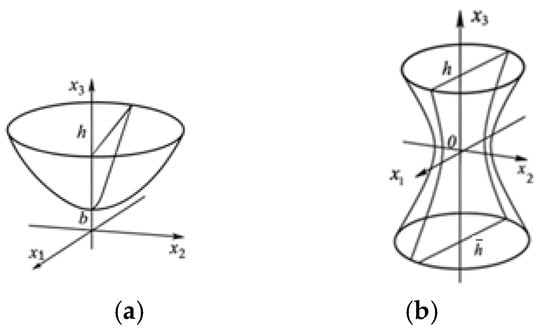
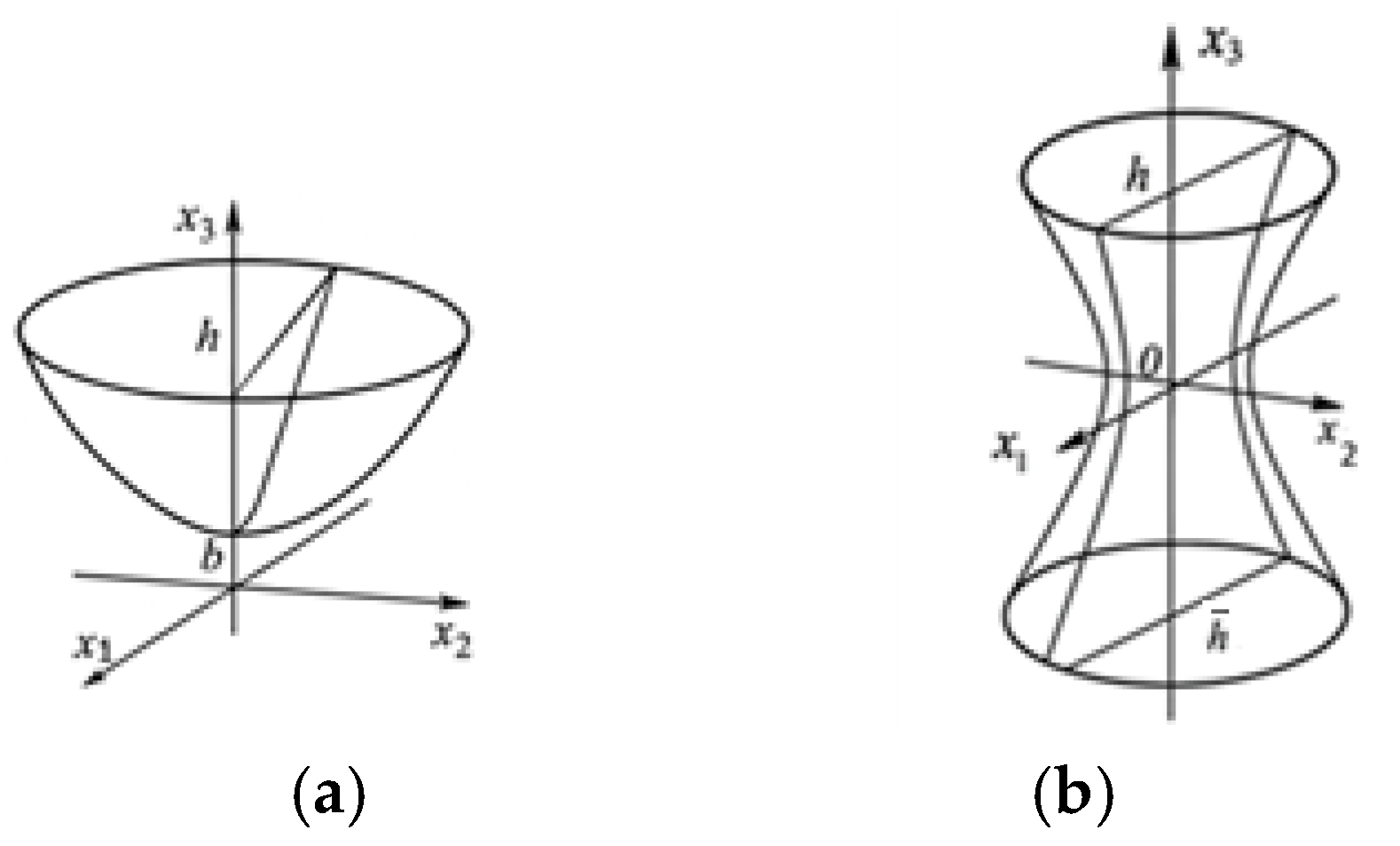
Containers. We further define two types of containers, formed by: (a) two-sheeted circular hyperbolic surfaces and (b) one-sheeted circular hyperbolic surfaces.
Let , be a convex subset of bounded by the two-sheeted hyperboloid surface with given parameters , while be a layer of with variable parameter , i.e.,
We refer of variable as the first type of container (Figure 1a).
Figure 1.
Hyperbolic containers of two types: (a) the first type container ; (b) the second type container .
Let , be a convex subset of bounded by the one-sheeted hyperboloid surface with given parameters , while be a layer of with a given parameter and variable parameter , i.e.,
We refer of variable height as the second type of container (Figure 1b).
The feasibility conditions. Within this study the non-overlapping of each pair of spheres and , i.e.,
and the containment of each sphere within the container, i.e.,
are regarded as basic feasibility conditions. Here the notation is used to denote the topological interior of the corresponding set [30].
In addition, distance conditions may be given: a minimal allowable distance between each pair of spheres and , i.e.,
as well as a minimal allowable distance between each sphere and the boundary of the container , i.e.,
Let us formulate a packing problem in the following setting.
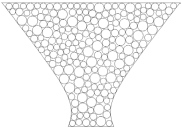
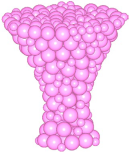
Packing Multidimensional Spheres in an Optimized Hyperbolic Container (PSH). Arrange a given family of multidimensional spheres in a minimum-height hyperbolic container considering the feasibility conditions (non-overlapping, containment and/or distance constraints).
3. Tools of Mathematical Modeling
The construction of the feasibility constraints presented in this work is a generalization of the phi-function approach described in [31], which extends the Minkowski sum of two objects to multidimensional space to define their feasible placements. In our case, the problem of packing a multidimensional sphere inside a hyperboloid is reduced to a two-dimensional setting using a so-called space dimensionality reduction transformation. This transformation yields a 2D hyperboloid and 2D sphere with transformed coordinates, for which we construct special classes of continuous functions to describe the containment condition. Multidimensional packing problems arise, e.g., in project management [32], where objects correspond to projects consuming various resources, while a container represents resource limitations. The general formulation is considered to highlight that the proposed algorithmic approach is suitable for any dimension. To the best of our knowledge, no mathematical models for packing spheres in a hyperbolic container were considered before.
Let us introduce a function
where .
The function (3) relies on the Euclidean norm to project coordinates of vector into a lower-dimensional space.
Then, we define containment conditions , using transformation (3).
3.1. Modeling Containment Constraint:
Firstly, we consider the relation .
Let be the hyperplane passing through axis of and the center of the sphere .
In the sections and , using transformation (3), we obtain the (n−1)D-sphere centered at with and the (n−1)D-hyperboloid
with .
Then, we construct the hyperplane passing through the axis of and the center of .
In the sections and , using transformation (3), we obtain the (n − 2) D-sphere of radius centered at with and the hyperboloid
with .
We continue the procedure until, in the sections and , we obtain the 2D sphere of radius centered at with and the 2D hyperboloid with .
To model the containment constraint, , we introduce an adjusted phi-function [31] for and where
then .
An adjusted phi-function for and can be defined as follows:
Let us consider a function (see Appendix A for details)
Denote an approximation of a local minimum to the problem
as .
Then an adjusted phi-function can be derived in some neighborhood of the point in the following form:
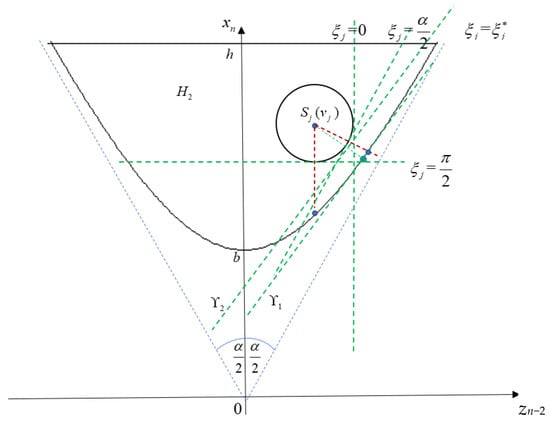
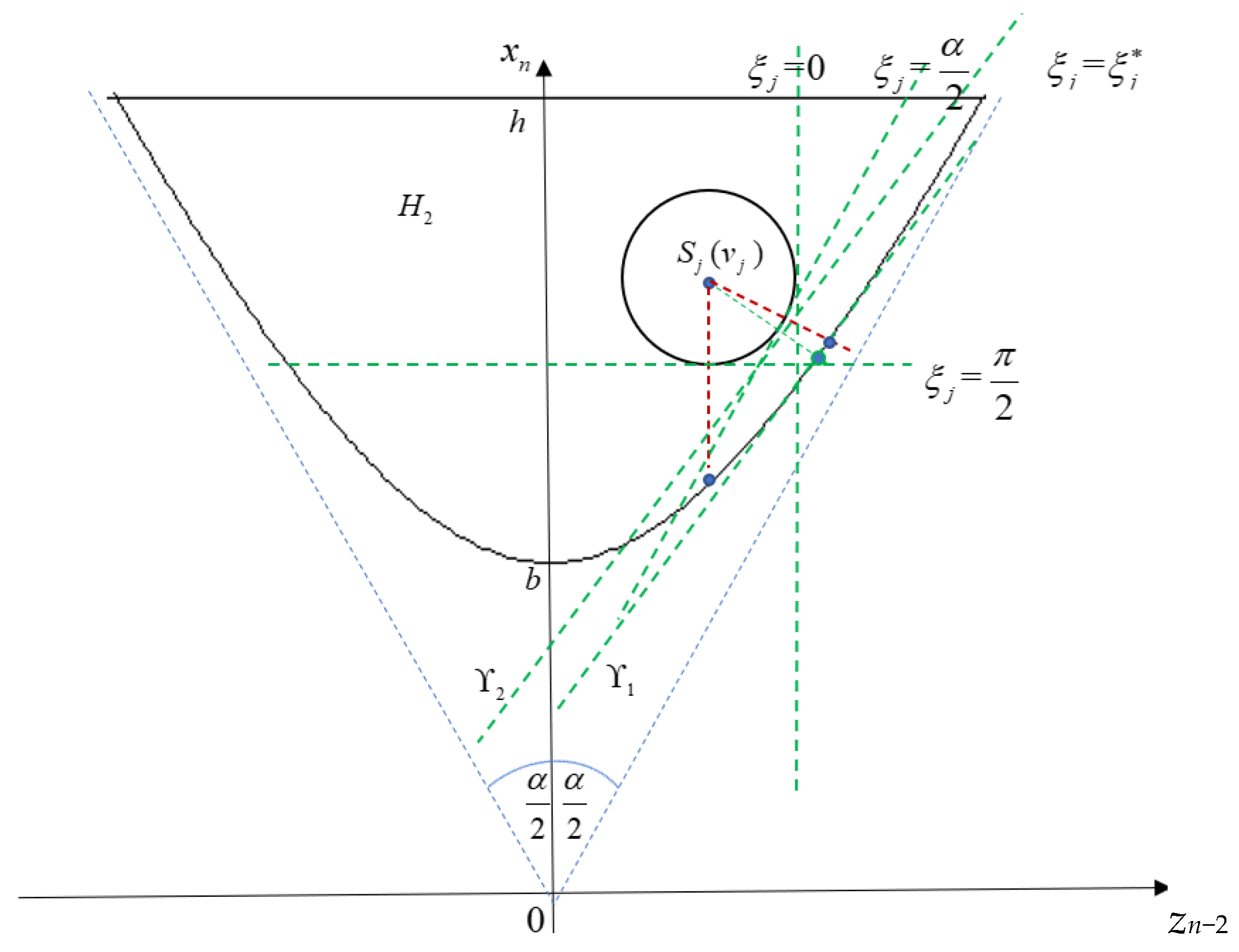
Let us define in (4). Denote the angle between two asymptotes of hyperbola as This means that two parallel tangents, to the boundary of and to the boundary of , do exist if (Figure 2).
Figure 2.
Definition of , case 1.
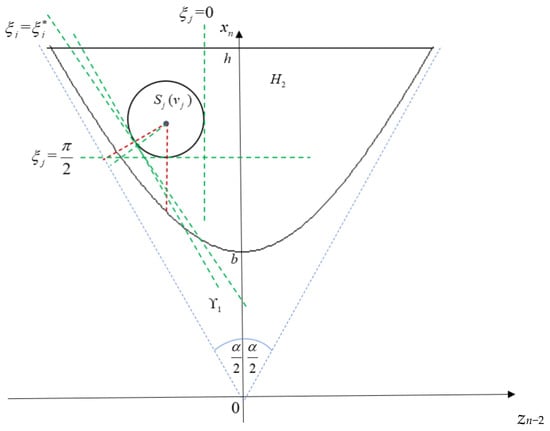
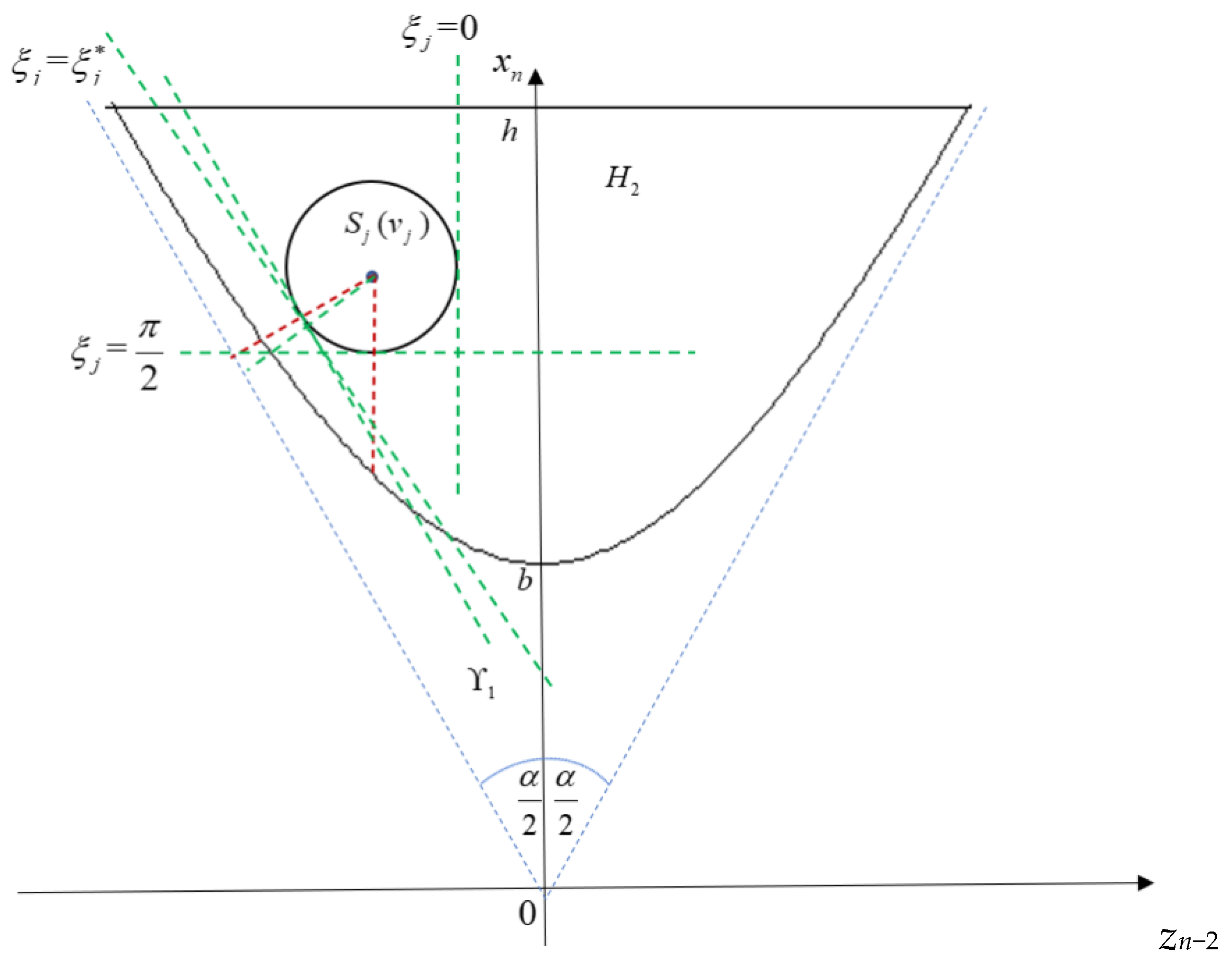
Hereinafter, in all figures the green lines show the tangents to the sphere/container corresponding to different values of the parameter . The blue lines represent asymptotes, while the red lines indicate rays from the sphere center to the extreme values of the search interval for the parameter .
We consider the following four cases:
Case 1. If and , then .
Case 2. If and , then .
Case 3. If and , then .
Case 4. If and , then .
Note that in (5)
and
Based on (1), (4), and (5), an adjusted phi-function for and can be defined in the form
Therefore, holds a given minimal allowable distance between a sphere and the boundary of the container .
Note that the inequality is equivalent to the inequality system
3.2. Modeling Containment Constraint:
Let there be a hyperboloid (2) and a sphere (Figure 3). Then the complement of the hyperboloid to the whole space has the form
Figure 3.
Definition of , case 2.
A normalized phi-function for and using the approach applied in Section 3.1 (see Appendix B for details) takes the form
where
See Appendix B for details.
Note that in (7)
if n = 2, and
Based on (2) and (7), the normalized phi-function for and (see Figure 2) can be presented as follows:
Therefore, holds a given minimal allowable distance between a sphere and the boundary of the container .
Note that the inequality
is equivalent to the following inequality system
3.3. Modeling Non-Overlapping Constraint for Two Spheres and
An adjusted phi-function for two multidimensional spheres and has the form
Note that provides the distance constraint .
In particular, for .
4. Mathematical Models
A mathematical model of the PSH problem for can be formulated as the following optimization problem:
where
where inequality holds allowable distance between each pair of spheres and , while inequality ensures an arrangement of each sphere inside the container considering allowable distance .
The number of inequalities that form the feasible region (10) is , while the number of the problem variables is .
A mathematical model of the PSH problem for can be stated as the following optimization problem:
where
where , inequality holds allowable distance between each pair of spheres and , while inequality ensures an arrangement of a sphere in the container considering allowable distance .
The number of inequalities that form the feasible region (12) is , while the number of the problem variables is .
We describe model-based solution approaches for both problems (9)–(10) and (11)–(12) in the next section.
5. Solution Algorithms
5.1. Packing Spheres into the Container
The following solution approach to the problem (9) and (10) is proposed.
Firstly, we provide the container height guaranteeing a placement of all spheres , fully inside the container subject to feasibility conditions. Then, we use Algorithm A1 (see Appendix C) to generate the sphere centers ensuring the minimal allowable distances between each pair of spheres and , as well as the minimal allowable distance between each sphere and the boundary of the container .
Further, we apply the feasible direction method combined with the ε-active inequalities strategy [33,34], using the iterative procedure
where such that , .
Here, is the search direction at the iteration . It is computed based on the feasible direction method as a solution of a linear programming problem and provides a direction in which the objective function decreases while maintaining feasibility with respect to the ε-active constraints. The value of is the step size along the direction . It is chosen to ensure feasibility preservation, meaning the new point must remain within the feasible region defined by all constraints, ensuring that no inequality is violated during the update. This guarantees that the movement of each sphere respects both non-overlap and containment conditions throughout the optimization process. The point is generated meeting feasibility of the problem (9) and (10), using Algorithm A1 (see Appendix C).
The core steps of our approach to solving the PSH problem for are presented below.
Step 1. Take , .
Step 2. Use Algorithm A1 to generate the sphere centers ensuring , and feasibility conditions of the problem (9) and (10).
Step 3. Calculate the value of the adjusted phi-function (5) by solving the corresponding optimization problem (4), using a bisection search, i.e., , for all .
Step 4. Construct a set of ε-active inequalities in (10) of the form , for and for .
Step 5. Calculate a feasible descent vector for the problem
using an approach described in [34].
Step 6. Set .
Step 7. Set .
Step 8. If , then set and go to Step 7; otherwise, go to Step 9.
Step 9. If , then stop the algorithm; otherwise, set , and go to Step 3.
5.2. Packing Spheres into the Container
Let us consider a solution strategy for the problem (11) and (12) for .
Firstly, we set sufficiently large so that all spheres can fit the container keeping feasibility conditions.
Taking with as a feasible starting point to the problem (11) and (12), we derive functions , defined in (7). Then, we apply an iterative decomposition technique [35] to solve the problem (11) and (12). At each iteration τ only a subset of the solution space (12) is considered. This subset includes feasibility constraints only for those pairs of spheres that are arranged no farther than a predefined distance from each other, as well as between the spheres and the boundary of the container, subject to the restriction that the movement of each sphere is limited to a local neighborhood. This localized movement control preserves feasibility and allows the algorithm to efficiently explore the solution space.
To accomplish this, a sequence of the following nonlinear programming problems is solved:
where
In (14),
is a decomposition parameter, which serves as a balance between the number of NLP subproblems to be solved and the number of nonlinear inequalities involved in a feasible set of each of the NLP subproblems.
Each constraint for variable is either or depending on defined in (7). The choice between these two inequalities depends on the value of . If , then the constraint is applied. If , then the constraint is chosen. If , then the constraint is reversed compared to the previous step to allow switching between the two opposite inequalities.
A starting point is generated meeting feasibility conditions of the problem (11) and (12), using Algorithm A2 (see Appendix C).
Then a local minimum point of the problem (13) and (14) is computed, using an algorithm, presented below.
The core steps of our algorithm to solve the PSH problem for are as follows.
Step 1. Take , .
Step 2. If , then go to Step 4; otherwise, go to Step 3.
Step 3. Derive defined by (7).
Step 4. Generate the spheres’ centers , using Algorithm A2 Step 5. Solve the problem (13) and (14) starting from the point and compute a local minimum point using the local solver IPOPT [36].
Step 6. If , then stop the algorithm with ; otherwise, set , and return to Step 5.
6. Numerical Examples
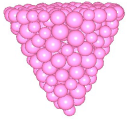
The computational experiment was conducted on a personal computer with the following technical specifications: Intel® Core™ i5-5300U CPU @ 2.30 GHz, 8.00 GB RAM, x64-based processor. The implementation was carried out using the C++ programming language with OpenGL 4.6 for 3D graphics rendering.
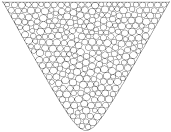
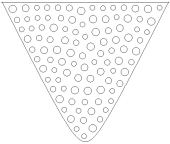
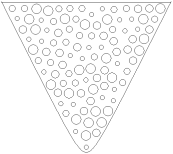
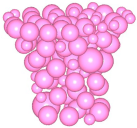
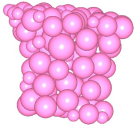
We consider two groups of instances to solve the PSH problem for packing different number m of n-dimensional spheres, with varying dimensions n, into (a) the container and (b) the container. Input and output data are provided in Table 1 and Table 2. For each problem instance the tables indicate input data: dimension of the problem, parameters of the container, the total number m of spheres and their radii , and values of the distance parameters (where applicable). The tables also present an output of the algorithm: the best value of the container’s height and a corresponding total CPU time.
Table 1.
Input and output data for .
Table 2.
Input and output data for .
To the best of our knowledge, there are no computational results on optimized packing spheres in a hyperbolic container. We sincerely hope that the solutions presented here to illustrate the proposed algorithmic approach can serve as a benchmark for future research.
To characterize computational time savings achieved by decomposition, several problem instances were solved with/without using the decomposition approach for the value of the decomposition parameter d = 1.5. The following number of spheres, m = 50, 100, 200, 300, and dimensions n = 3, 4, 5 were considered. For each problem instance the CPU time savings are defined as (CPU time without decomposition)/(CPU time with decomposition) and indicated in parentheses after the number of spheres. Notation () indicates that the solution of the corresponding instance without decomposition was not obtained within the three-hour CPU time limit. The results can be summarized as follows: n = 3, m = 50(4), 100(10), 200(50), 300(200); n = 4, m = 50(3), 100(9), 200(40), 300(); and n = 5, m = 50(2.5), 100(8), 200(3.5), 300(). We can see that the effect of the decomposition approach for n = 3 significantly increases with the number of spheres. However, for higher dimensions n = 4,5 decomposition savings are not so high. We can expect that the reason is that the kissing number [37] is increased for higher dimensions, thus increasing the number of active constraints in pairwise restrictions of nonoverlapping and complicating the local optimization.
7. Conclusions
A novel modeling and solution approach for packing multidimensional spheres in a minimum-height hyperbolic container is proposed. The most challenging part of the corresponding mathematical model is formulating containment conditions for spheres in an n-dimensional hyperboloid. Using the phi-function approach these conditions are defined explicitly, and a corresponding large-scale nonlinear programming problem is formulated. To cope with large dimensions, a decomposition approach is used in combination with a nonlinear optimization technique. Numerical results demonstrate efficiency of the proposed approach for different problem parameters.
The proposed solution approach is focused on obtaining a local solution of the main model. Using optimization techniques to enhance solutions, such as a multistart strategy, a jump algorithm, or a lattice-based algorithm (see, e.g., [34,38]), is a challenging area for future research. Note that the main mathematical models (9), (10) and (11), (12) are exact in the sense that they contain all optimal solutions of the corresponding problems. However, the proposed solution approach, being universal and serving for any dimension of the problem, is in fact a model-based heuristic aimed at obtaining reasonable feasible solutions. Thus, constructing more efficient exact and heuristic solution approaches for the main models is an interesting direction for future research. Solutions obtained by the proposed technique can serve for benchmarking and comparison. Since global optimality of the solutions is not guaranteed, deriving lower bounds for the optimal height is critical to estimate suboptimality. Some results in this direction are on the way.
The assumption that all objects have spherical shapes is rather restrictive and is not fulfilled in many real-world applications. Revising the main models to consider polyhedral objects is necessary to make the models more realistic.
Although the main models are valid for any parameters a, b of the hyperbolic container, it would be interesting to analyze sensitivity of the proposed solution approach to these parameters, e.g., in terms of computational time and the quality of solutions.
It is interesting to explore the optimized packing of spheres, defined by arbitrary norms [39], and irregular objects composed of a union of spheres [40]. Thus, packing more general shapes [41,42,43,44] can be studied without significant changes in the original model. Some results in this direction are on the way.
In many applications the objects must be arranged as distant from each other as possible, thus giving rise to the concept of the sparsest packing [45]. This is especially important when the packing problem corresponds to designing hollowing structures, e.g., in additive manufacturing. Incorporating these sparsest packing conditions in the general model is an interesting area for future research.
Author Contributions
Conceptualization, Y.S. and G.Y.; methodology, T.R. and I.L.; software, Y.E.S., J.M.V.C. and M.L.A.; resources, G.Y. and J.M.V.C.; writing—original draft, Y.S., T.R. and I.L.; writing—review and editing, Y.S., T.R. and I.L.; visualization, G.Y.; project administration, J.M.V.C. and M.L.A.; funding acquisition, T.R. and J.M.V.C. All authors have read and agreed to the published version of the manuscript.
Funding
The third author is supported by the British Academy (Grant No. 100072), the European Union Assistance Instrument for the Fulfillment of Ukraine’s Commitments under the Horizon 2020 Framework Program for Research and Innovation (Research Project No. 0124U004371), and by the Ministry of Education and Science of Ukraine (Research Projects No. 0125U001556), while the last two authors were partially supported by the Technological Institute of Sonora (ITSON), Mexico through the Research Promotion and Support Program (PROFAPI: 2025-0426).
Data Availability Statement
The original contributions presented in this study are included in this article. Further inquiries can be directed to the corresponding authors.
Acknowledgments
The authors would like to thank three anonymous referees for carefully reading this paper and constructive comments.
Conflicts of Interest
The authors declare no conflicts of interest.
Appendix A. Basic Definitions of Phi-Functions
Let us consider two objects and of the given shapes and sizes.
Definition A1
([31]). A continuous and everywhere defined function is called a phi-function for objects
and
if
- is positive for cases when objects and do not intersect, ,
- is 0 for cases when objects and touch, and , is negative for cases when objects and have common interior points, .
Here
are the appropriate variable motion vectors of
and
.
Minimal allowable distance
between two objects
and
is given.
Definition A2
([31]). A phi-function is called a normalized phi-function for objects
and
if the values of
coincide with the Euclidean distances between the objects subject to
.
Definition A3
([31]). A continuous and everywhere defined function is called an adjusted phi-function for objects
and
if
- is positive for cases when the Euclidean distance between objects and is greater than ,
- is 0 for cases when the Euclidean distance between objects and is equal to ,
- is negative for cases when the Euclidean distance between objects and is less than .
Denote a given container by
. The basic placement conditions in a packing problem are as follows:
- non-overlapping condition: and do not intersect but can touch each other, i.e., ;
- containment condition: is arranged fully inside the container , i.e., , where .
This can be stated as follows:
- (non-overlapping condition).
- (containment condition).
- for (distant condition).
- (distant condition).
- for (distant condition).
- (distant condition).
More details on phi-functions can be found in, e.g., [31] and [43] (chapter 15).
Appendix B. Constructing Phi-Functions for Containment Conditions
Let us consider container . Constructing the adjusted phi-function (4) and (5) reduces to deriving an adjusted phi-function for and 2D sphere
Figure A1 illustrates a family of feasible contact positions of and , which corresponds to the Minkowski sum of and .
Figure A1.
Illustration of construction of the containment condition .
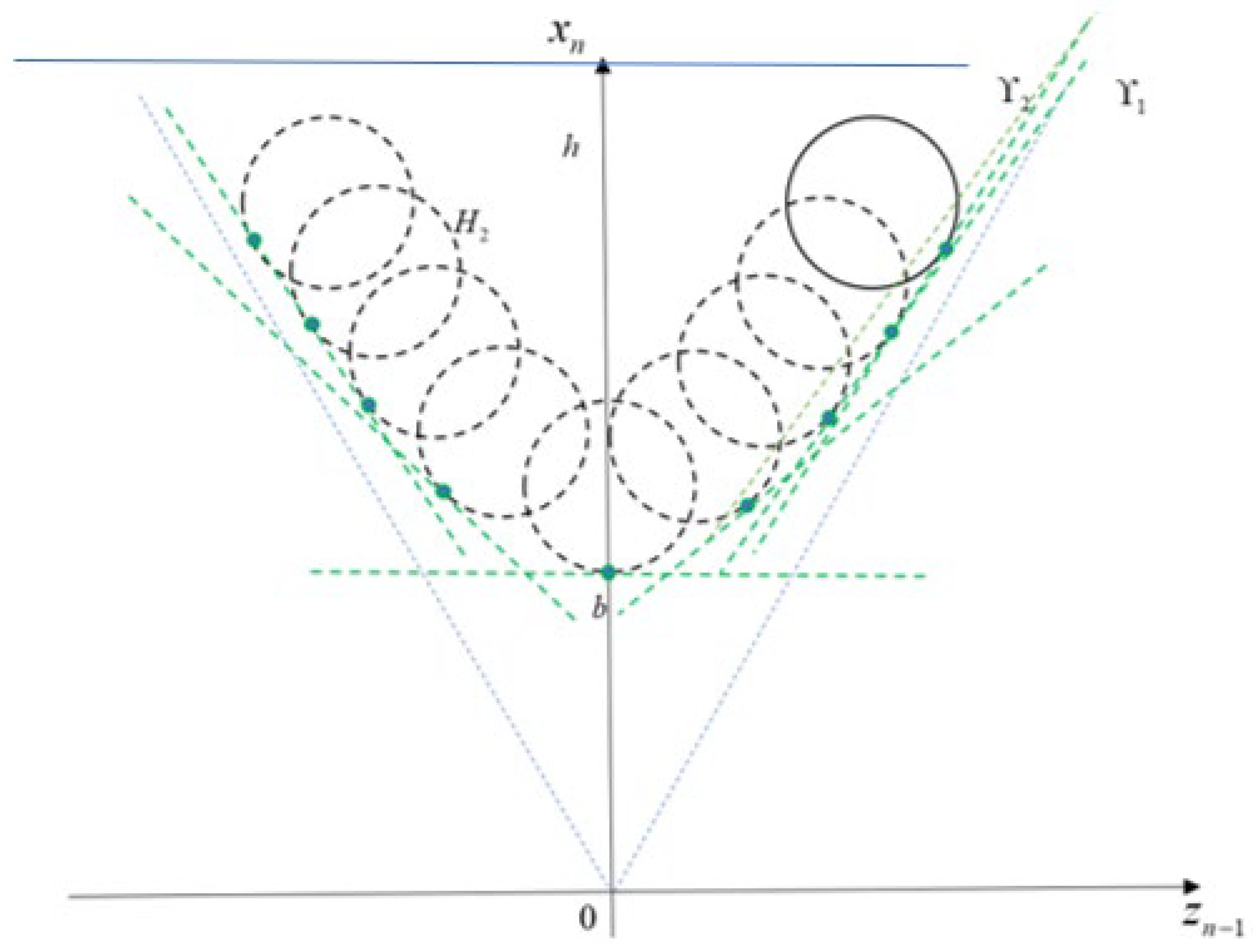
Let us define the equation of tangent to the boundary of at a point and the equation of tangent to the boundary of using a rotation parameter , as follows:
Tangents and are parallel; therefore,
Since , then and
Substituting (A2) in (A1), we obtain the following equation:
which can be rewritten in the normalized form
Since , we have
or
Let us consider container . We construct a normalized phi-function for 2D sphere
and the complement to the 2D hyperboloid denoted as .
We define both the equation of a tangent to at a point and the equation of a tangent to the boundary of the sphere , respectively (Figure A2),
Figure A2.
Illustration of construction of the containment condition .
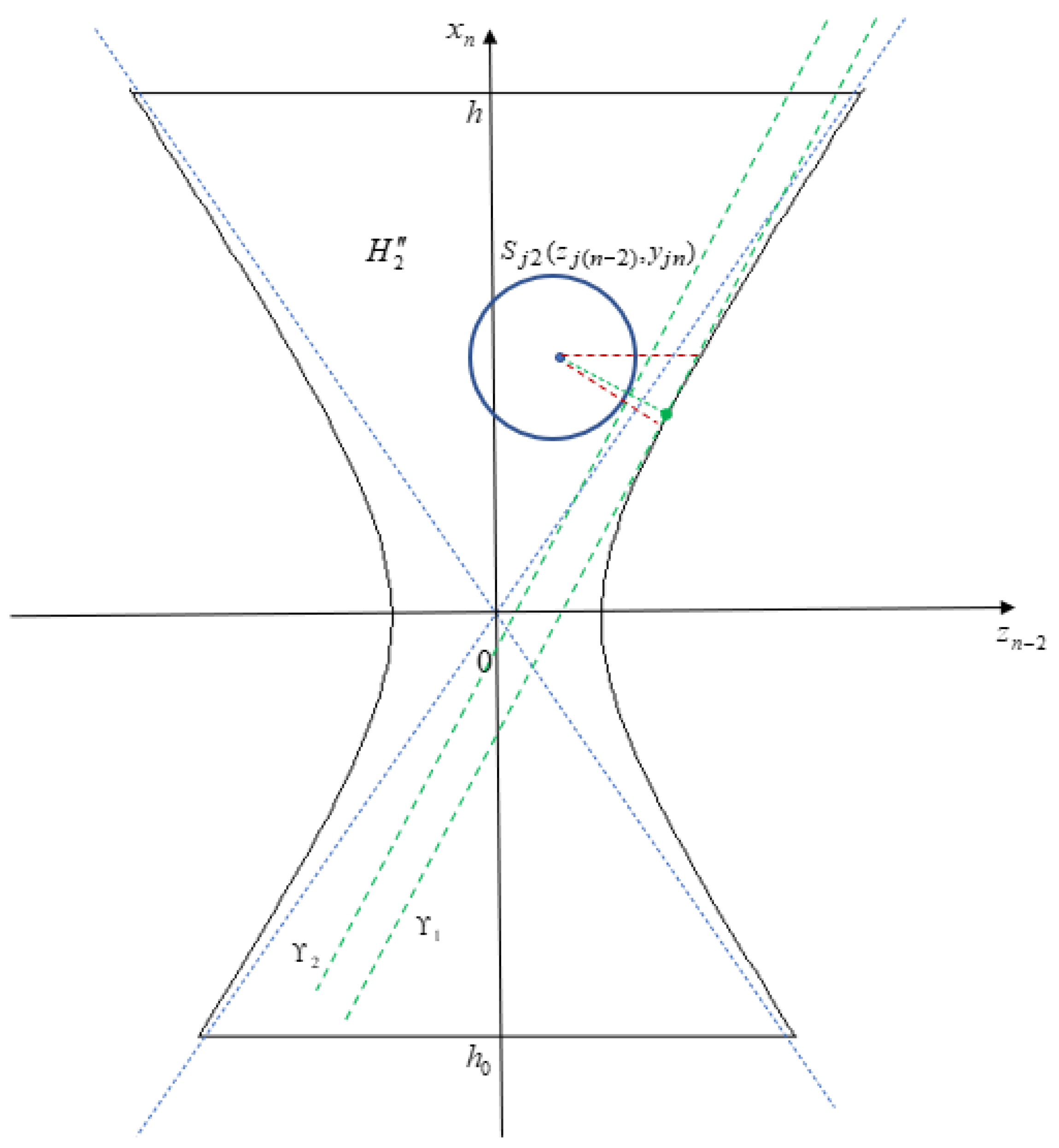
Since the tangents and are parallel, then
The boundary of consists of two branches; therefore, we generate two tangents defined by the following equations, respectively:
or
Appendix C. Algorithm for Generating Feasible Starting Points for the PSH Problem
| Algorithm A1: Container |
| Step 1. Set (), . Step 2. Set , Step 3. Calculate and as a result of solving the problem (4). Step 4. If , then go to Step 5; otherwise go to Step 2. Step 5. Set . Step 6. If , then stop algorithm with , , , . Step 7. Set , Step 8. Calculate and as a result of solving the problem (4). Step 9. If , then go to Step 7, otherwise go to Step 10. Step 10. Set . Step 11. If , then go to Step 7, otherwise go to Step 12. Step 12. Set . Step 13. If then go to Step 5, otherwise go to Step 10. |
| Algorithm A2: Container |
Step 1. Set (), . Step 2. Set . Step 3. Set , , Step 4. If () then go to Step 5; otherwise go to Step 3. Step 5. Set . Step 6. If , then stop algorithm with , , , . Step 7. Set , . Step 9. If (), then go to Step 7, otherwise go to Step 10. Step 10. Set . Step 11. If , then go to Step 7, otherwise go to Step 12. Step 12. Set . Step 13. If then go to Step 5, otherwise go to Step 10. |
References
- Waescher, G.; Hausner, H. An improved typology of cutting and packing problems. Eur. J. Oper. Res. 2007, 183, 1109–1130. [Google Scholar] [CrossRef] [Scilit]
- Gibson, I.; Rosen, D.; Stucker, B. Additive Manufacturing Technologies, 3D Printing, Rapid Prototyping, and Direct Digital Manufacturing; Springer Science + Business Media: New York, NY, USA, 2015. [Google Scholar]
- Lachmayer, R.; Lippert, R.B. Additive Manufacturing. Quantifiziert–Visionäre Anwendungen und Stand der Technik; Springer: Berlin/Heidelberg, Germany, 2017. [Google Scholar]
- Sobirey, E.; Wegner, M.; Laukotka, F.N.; Krause, D. Printing study and design guideline for small hollow structures in medical technology. Proc. Des. Soc. 2024, 4, 1849–1858. [Google Scholar] [CrossRef] [Scilit]
- Burtseva, L.; Valdez Salas, B.; Werner, F.; Petranovskii, V. Packing of monosized spheres in a cylindrical container: Models and approaches. Rev. Mex. Fis. 2015, 61, 20–27. [Google Scholar]
- Tisato, S.; Vera, G.; Song, Q.; Nekoonam, N.; Helmer, D. Additive manufacturing of multi-material and hollow structures by Embedded Extrusion-Volumetric Printing. Nat. Commun. 2025, 16, 6730. [Google Scholar] [CrossRef] [Scilit] [PubMed]
- Khecho, A.; Rahman, M.T.; Reddy, D.; El-Ghannam, A.; Joyee, E.B. DLP-based additive manufacturing of hollow 3D structures with surface activated silicone carbide-polymer composite. Compos. Part B Eng. 2025, 296, 112236. [Google Scholar] [CrossRef] [Scilit]
- Liu, F.; Chen, M.; Wang, L.; Luo, T.; Chen, G. Stress-field driven conformal lattice design using circle packing algorithm. Heliyon 2023, 9, e14448. [Google Scholar] [CrossRef] [Scilit]
- Wang, G.; Shen, L.; Zhao, J.; Liang, H.; Xie, D.; Tian, Z.; Wang, C. Design and Compressive Behavior of Controllable Irregular Porous Scaffolds: Based on Voronoi-Tessellation and for Additive Manufacturing. ACS Biomater. Sci. Eng. 2018, 4, 719–727. [Google Scholar] [CrossRef] [Scilit]
- Hopkins, A.B.; Stillinger, F.H.; Torquato, S. Densest binary sphere packings. Phys. Rev. E 2012, 85, 021130. [Google Scholar] [CrossRef] [Scilit]
- Boschetti, F.; Tomei, A.; Turri, S.; Swartz, M.; Levi, M. Fabrication, and Characterization of a Composite Scaffold for Bone Tissue Engineering. Int. J. Artif. Organs 2018, 31, 697–707. [Google Scholar] [CrossRef] [Scilit]
- Hendrikson, W.J.; van Blitterswijk, C.A.; Rouwkema, J.; Moroni, L. The Use of Finite Element Analyses to Design and Fabricate Three-Dimensional Scaffolds for Skeletal Tissue Engineering. Front. Bioeng. Biotechnol. 2017, 5, 30. [Google Scholar] [CrossRef] [Scilit] [PubMed]
- Zhu, T.; Zhou, H.; Chen, X.; Zhu, Y. Recent advances of responsive scaffolds in bone tissue engineering. Front. Bioeng. Biotechnol. 2023, 11, 1296881. [Google Scholar] [CrossRef] [Scilit]
- Kumar, Y.; Deep, K. Metaheuristic Algorithms for Circle Packing Problem: A Comprehensive Review. In Metaheuristics and Nature Inspired Computing. META 2023. Communications in Computer and Information Science; Dorronsoro, B., Ellaia, R., Talbi, E.G., Eds.; Springer: Cham, Switzerland, 2024; Volume 2016. [Google Scholar] [CrossRef] [Scilit]
- Kampas, F.J.; Pintér, J.D.; Castillo, I. Packing ovals in optimized regular polygons. J. Glob. Optim. 2019, 77, 175–196. [Google Scholar] [CrossRef] [Scilit]
- Kampas, F.J.; Castillo, I.; Pintér, J.D. Optimized ellipse packings in regular polygons. Optim. Lett. 2019, 13, 1583–1613. [Google Scholar] [CrossRef] [Scilit]
- Fischer, A.; Litvinchev, I.; Romanova, T.; Stetsyuk, P.; Yaskov, G. Quasi-Packing Different Spheres with Ratio Conditions in a Spherical Container. Mathematics 2023, 11, 2033. [Google Scholar] [CrossRef] [Scilit]
- Amore, P.; de la Cruz, D.; Hernandez, V.; Rincon, I.; Zarate, U. Circle packing in arbitrary domains. Phys. Fluids 2023, 35, 127112. [Google Scholar] [CrossRef] [Scilit]
- Kolli, U.C. Hyperbolic Geometry and Its Applications. Int. J. Res. Anal. Rev. 2017, 4, 54. [Google Scholar]
- Hu, N.; Fish, J. Enhanced ant colony optimization for multiscale problems. Comput. Mech. 2016, 57, 447–463. [Google Scholar] [CrossRef] [Scilit]
- Mughal, A.; Chan, H.K.; Weaire, D.; Hutzler, S. Dense packings of spheres in cylinders: Simulations. Phys. Rev. E 2012, 85, 051305. [Google Scholar] [CrossRef] [Scilit]
- Rodgers, R.P.C.; Baddeley, A.J. Nested Monte Carlo Study of Random Packing on the Sphere. J. Appl. Probab. 1991, 28, 539–552. [Google Scholar] [CrossRef] [Scilit]
- Baradaran, M.; Poveda, J.I.; Teel, A.R. Global Optimization on the Sphere: A Stochastic Hybrid Systems Approach. IFAC-Pap. 2019, 52, 96–101. [Google Scholar] [CrossRef] [Scilit]
- Castillo, I.; Kampas, F.J.; Pintér, J.D. Solving circle packing problems by global optimization: Numerical results and industrial applications. Eur. J. Oper. Res. 2008, 191, 786–802. [Google Scholar] [CrossRef] [Scilit]
- Pintér, J.D.; Castillo, I.; Kampas, F.J. Nonlinear Optimization and Adaptive Heuristics for Solving Irregular Object Packing Problems. Algorithms 2024, 17, 480. [Google Scholar] [CrossRef] [Scilit]
- Liu, J.; Yao, Y.; Zheng, Y.; Geng, H.; Zhou, G. An Effective Hybrid Algorithm for the Circles and Spheres Packing Problems. In Combinatorial Optimization and Applications; COCOA 2009. Lecture Notes in Computer Science; Du, D.Z., Hu, X., Pardalos, P.M., Eds.; Springer: Berlin/Heidelberg, Germany, 2009; Volume 5573. [Google Scholar] [CrossRef] [Scilit]
- Zhang, D.F.; Deng, A.S. An effective hybrid algorithm for the problem of packing circles into a larger containing circle. Comput. Oper. Res. 2005, 32, 1941–1951. [Google Scholar] [CrossRef] [Scilit]
- Ye, T.; Huang, W.; Lü, Z. Iterated Tabu Search Algorithm for Packing Unequal Circles in a Circle. arXiv 2013, arXiv:1306.0694. [Google Scholar] [CrossRef] [Scilit]
- Hifi, M.; Yousef, L. A dichotomous search-based heuristic for the three-dimensional sphere packing problem. Cogent Eng. 2015, 2, 994257. [Google Scholar] [CrossRef] [Scilit]
- Kelley, J.L. General Topology; Springer: Berlin/Heidelberg, Germany, 1975. [Google Scholar]
- Chernov, N.; Stoyan, Y.; Romanova, T. Mathematical model and efficient algorithms for object packing problem. Comput. Geom. 2010, 43, 535–553. [Google Scholar] [CrossRef] [Scilit]
- Fasano, G. Solving Non-Standard Packing Problems by Global Optimization and Heuristics; Springer: Cham, Switzerland, 2014. [Google Scholar]
- Chen, X.; Kostreva, M.M. Methods of Feasible Directions: A Review. In Progress in Optimization. Applied Optimization; Yang, X., Mees, A.I., Fisher, M., Jennings, L., Eds.; Springer: Boston, MA, USA, 2000; Volume 39. [Google Scholar] [CrossRef] [Scilit]
- Stoyan, Y.; Yaskov, G.; Romanova, T.; Litvinchev, I.; Yakovlev, S.; Cantú, J.M.V. Optimized packing multidimensional hyperspheres: A unified approach. Math. Biosci. Eng. 2020, 17, 6601–6630. [Google Scholar] [CrossRef] [Scilit]
- Romanova, T.; Stoyan, Y.; Pankratov, A.; Litvinchev, I.; Marmolejo, J.A. Decomposition algorithm for irregular placement problems. In Intelligent Computing and Optimization; ICO 2019. AISC; Vasant, P., Panchenko, V., Munapo, E., Weber, G.-W., Thomas, J.J., Intan, R., Arefin, M.S., Eds.; Springer: Cham, Switzerland, 2020; Volume 1072, pp. 214–221. [Google Scholar] [CrossRef] [Scilit]
- IPOPT: Documentation. Available online: https://coin-or.github.io/Ipopt/ (accessed on 7 April 2025).
- Skoge, M.; Donev, A.; Stillinger, F.H.; Torquato, S. Packing hyperspheres in high-dimensional Euclidean spaces. Phys. Rev. E 2006, 74, 041127. [Google Scholar] [CrossRef] [Scilit] [PubMed]
- Stoyan, Y.; Yaskov, G. Packing unequal circles into a strip of minimal length with a jump algorithm. Optim. Lett. 2014, 8, 949–970. [Google Scholar] [CrossRef] [Scilit]
- Litvinchev, I.; Fischer, A.; Romanova, T.; Stetsyuk, P. A New Class of Irregular Packing Problems Reducible to Sphere Packing in Arbitrary Norms. Mathematics 2024, 12, 935. [Google Scholar] [CrossRef] [Scilit]
- Pankratov, A.; Romanova, T.; Litvinchev, I.; Marmolejo-Saucedo, J.A. An Optimized Covering Spheroids by Spheres. Appl. Sci. 2020, 10, 1846. [Google Scholar] [CrossRef] [Scilit]
- Pankratov, A.; Romanova, T.; Litvinchev, I. Packing Oblique 3D Objects. Mathematics 2020, 8, 1130. [Google Scholar] [CrossRef] [Scilit]
- Kallrath, J. Packing ellipsoids into volume-minimizing rectangular boxes. J. Glob. Optim. 2017, 67, 151–185. [Google Scholar] [CrossRef] [Scilit]
- Kallrath, J. Business Optimization Using Mathematical Programming; Springer: Berlin/Heidelberg, Germany, 2021; ISBN 978-3-030-73237-0. [Google Scholar]
- Fasano, G.; Pintér, J.D. (Eds.) Modeling and Optimization in Space Engineering; Springer Optimization and Its Application; Springer: Berlin/Heidelberg, Germany, 2023. [Google Scholar] [CrossRef] [Scilit]
- Romanova, T.; Stoyan, Y.; Pankratov, A.; Litvinchev, I.; Plankovskyy, S.; Tsegelnyk, Y.; Shypul, O. Sparsest balanced packing of irregular 3D objects in a cylindrical container. Eur. J. Oper. Res. 2021, 291, 84–100. [Google Scholar] [CrossRef] [Scilit]

Disclaimer/Publisher’s Note: The statements, opinions and data contained in all publications are solely those of the individual author(s) and contributor(s) and not of MDPI and/or the editor(s). MDPI and/or the editor(s) disclaim responsibility for any injury to people or property resulting from any ideas, methods, instructions or products referred to in the content. |
© 2025 by the authors. Licensee MDPI, Basel, Switzerland. This article is an open access article distributed under the terms and conditions of the Creative Commons Attribution (CC BY) license (https://creativecommons.org/licenses/by/4.0/).