Article

Modeling the Impact of Human Awareness and Insecticide Use on Malaria Control: A Fractional-Order Approach

by
Mlyashimbi Helikumi
1,
Thobias Bisaga
1,
Kimulu Ancent Makau
2 and
Adquate Mhlanga
3,*
1
Department of Mathematics and Statistics, College of Science and Technical Education, Mbeya University of Science and Technology, Mbeya P.O. Box 131, Tanzania
2
Department of Mathematics and Statistics, Machakos University, Machakos P.O. Box 136-90100, Kenya
3
The Program for Experimental and Theoretical Modeling, Division of Hepatology, Department of Medicine, Stritch School of Medicine, Loyola University Chicago, Maywood, IL 84101, USA
*
Author to whom correspondence should be addressed.
Mathematics 2024, 12(22), 3607; https://doi.org/10.3390/math12223607
Submission received: 29 October 2024 / Revised: 10 November 2024 / Accepted: 13 November 2024 / Published: 19 November 2024
(This article belongs to the Special Issue Mathematical Modeling of Disease Dynamics)

Abstract

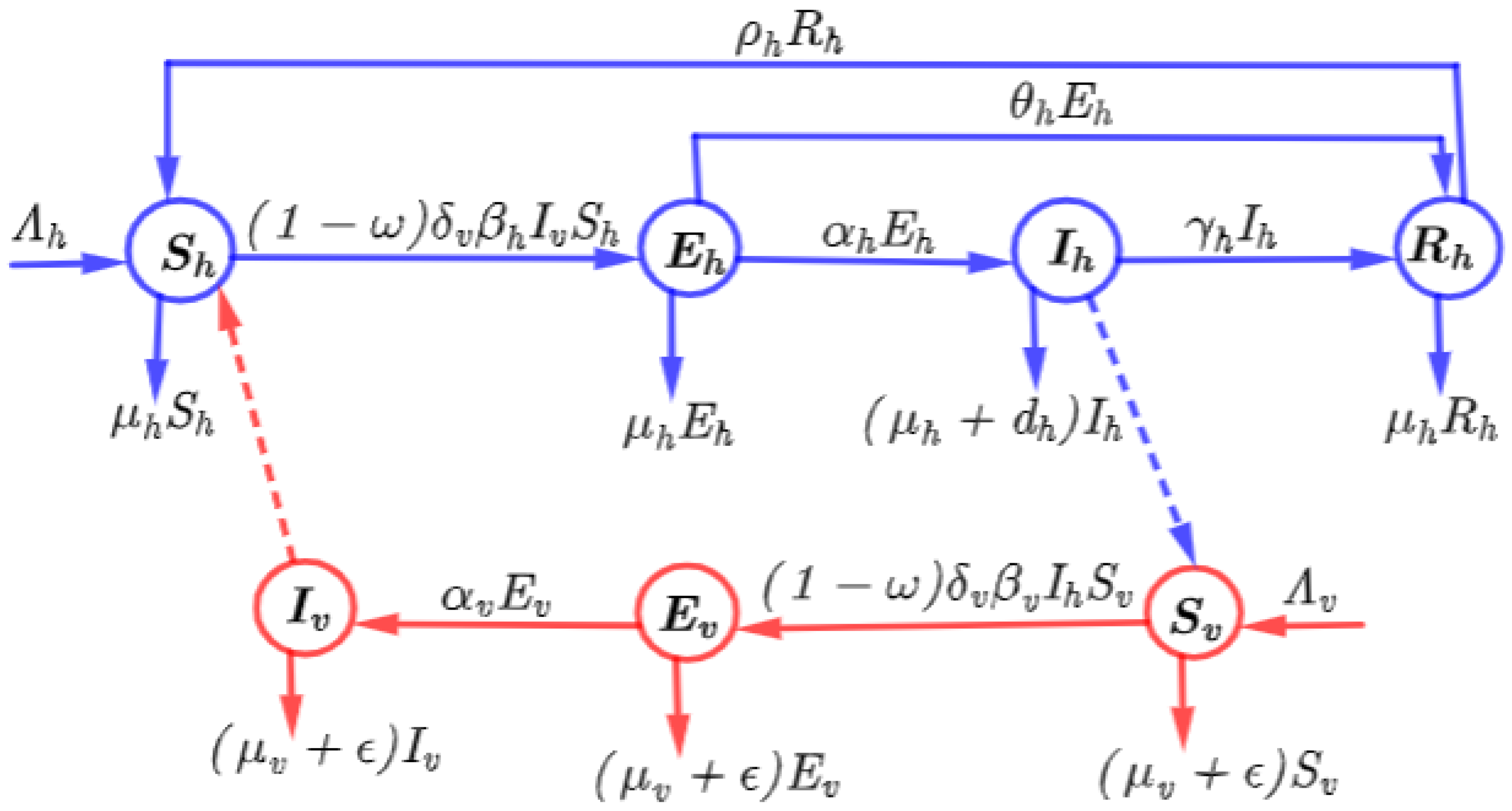
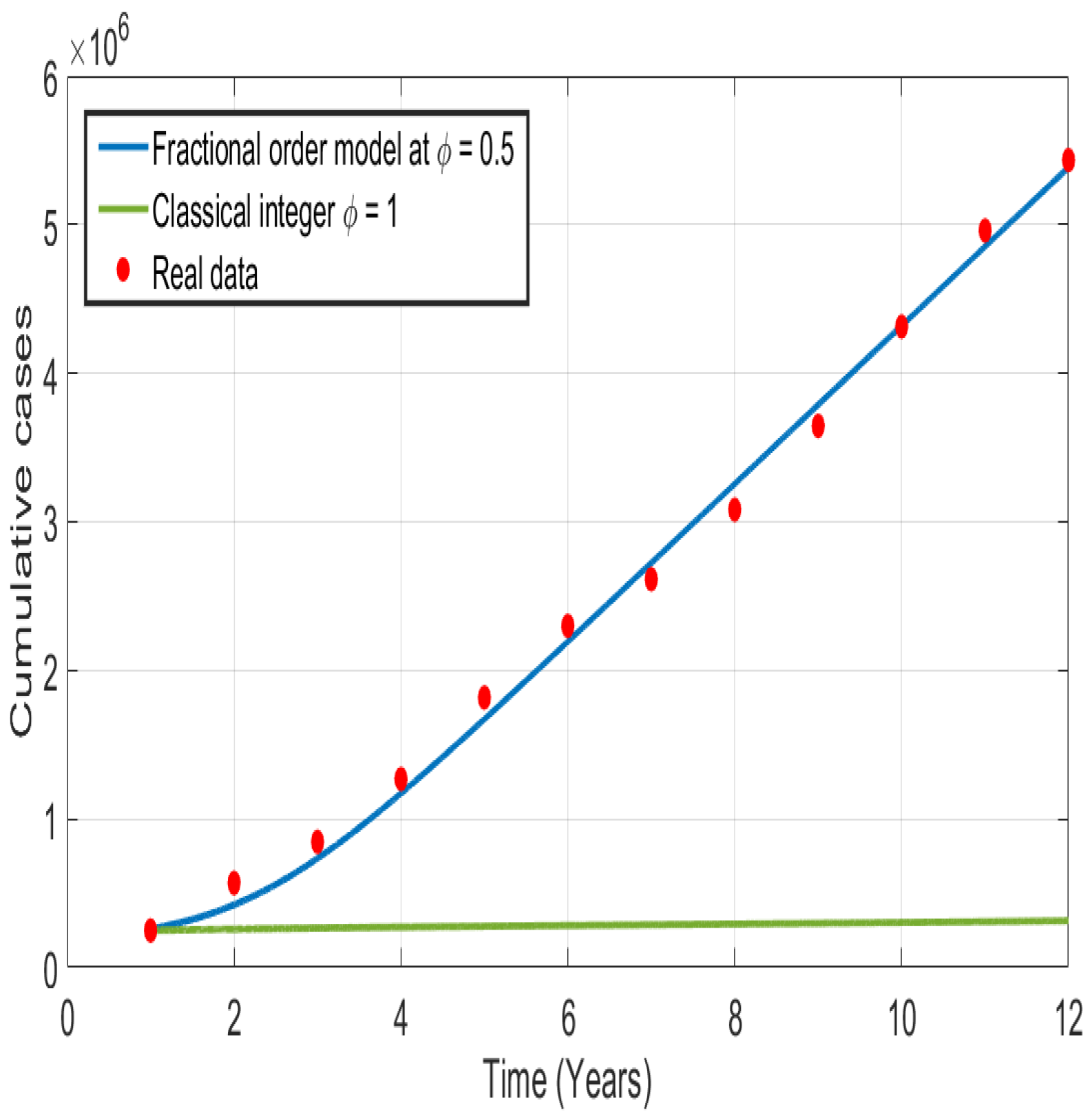
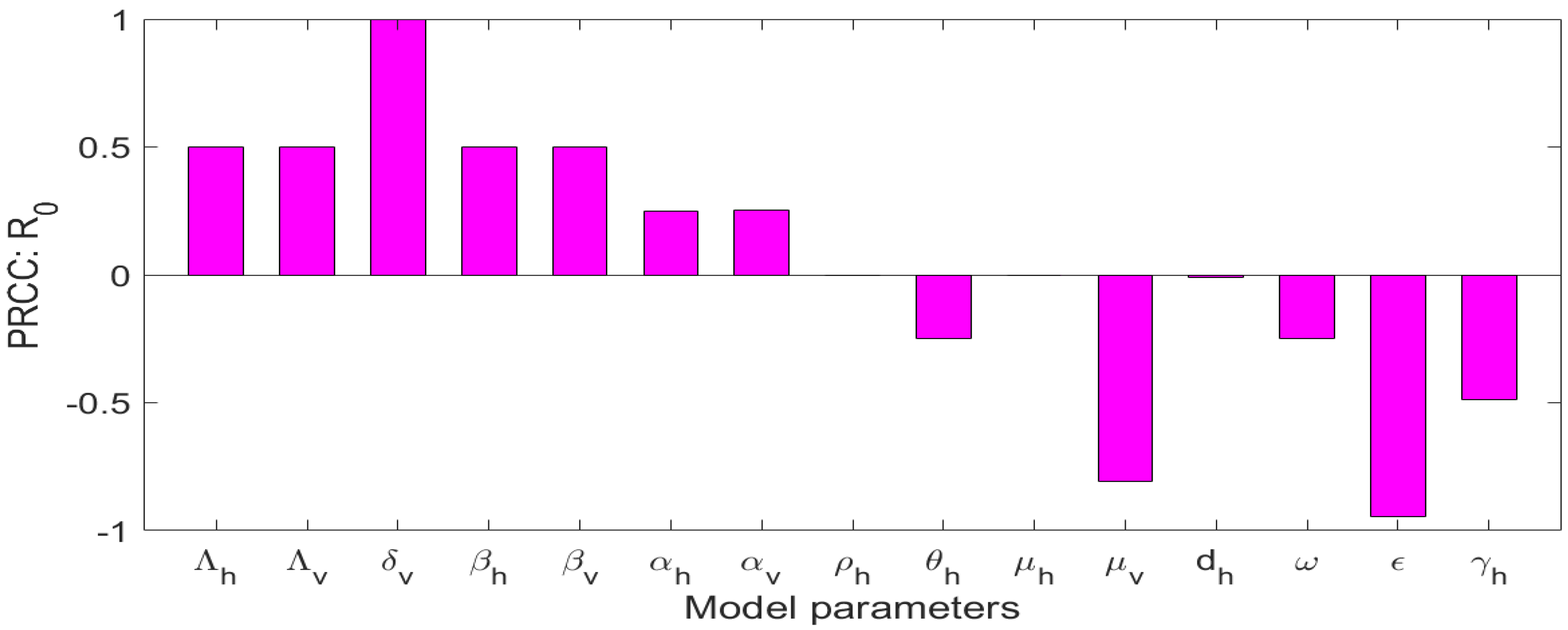
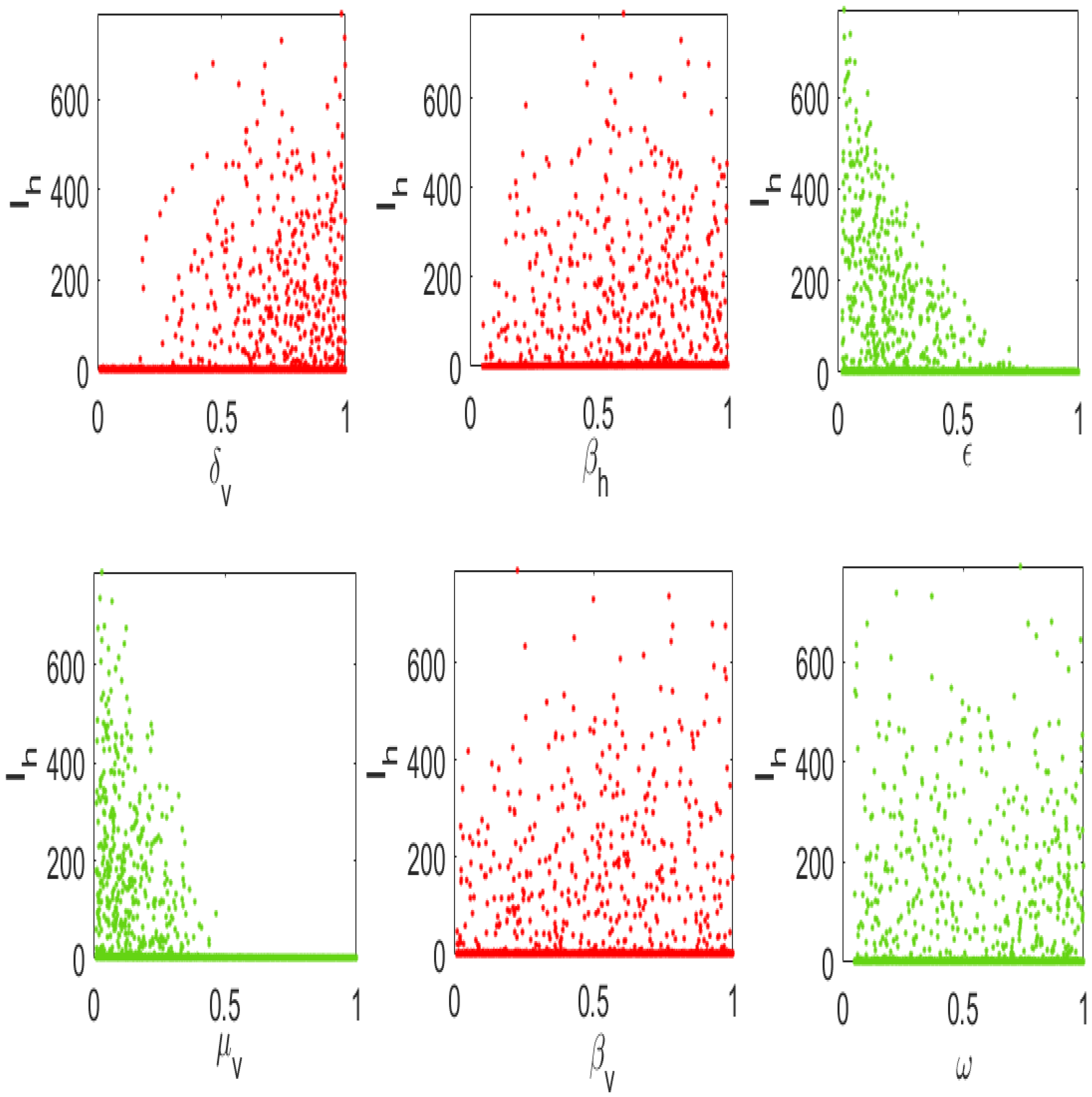
In this research work, we developed a fractional-order model for the transmission dynamics of malaria, incorporating two control strategies: health education campaigns and the use of insecticides. The theoretical analysis of the model is presented, including the computation of disease-free equilibrium and basic reproduction number. We analyzed the stability of the proposed model using a well-formulated Lyapunov function. Furthermore, model parameter estimation was carried out using real data from malaria cases reported in Zimbabwe. We found that the fractional-order model provided a better fit to the real data compared to the classical integer-order model. Sensitivity analysis of the basic reproduction number was performed using computed partial rank correlation coefficients to assess the effect of each parameter on malaria transmission. Additionally, we conducted numerical simulations to evaluate the impact of memory effects on the spread of malaria. The simulation results indicated that the order of derivatives significantly influences the dynamics of malaria transmission. Moreover, we simulated the model to assess the effectiveness of the proposed control strategies. Overall, the interventions were found to have the potential to significantly reduce the spread of malaria within the population.
Keywords: Zika virus disease; model formulation; sensitivity analysis; parameter estimation; numerical simulations Zika virus disease; model formulation; sensitivity analysis; parameter estimation; numerical simulations