Article

A Novel EA-Based Techno–Economic Analysis of Charging System for Electric Vehicles: A Case Study of Qassim Region, Saudi Arabia


1
Department of Electrical Engineering, College of Engineering, Qassim University, Buraydah 52571, Saudi Arabia
2
Department of Electrical Engineering, SND College of Engineering and Research Center, Nashik 423401, India
3
Department of Electrical Engineering, Delhi Technological University, Delhi 110042, India
4
Department of Electrical Engineering, Faculty of Engineering, University of Tabuk, Tabuk 47913, Saudi Arabia
*
Author to whom correspondence should be addressed.
Mathematics 2023, 11(9), 2052; https://doi.org/10.3390/math11092052

Submission received: 8 March 2023 / Revised: 19 April 2023 / Accepted: 21 April 2023 / Published: 26 April 2023

Abstract

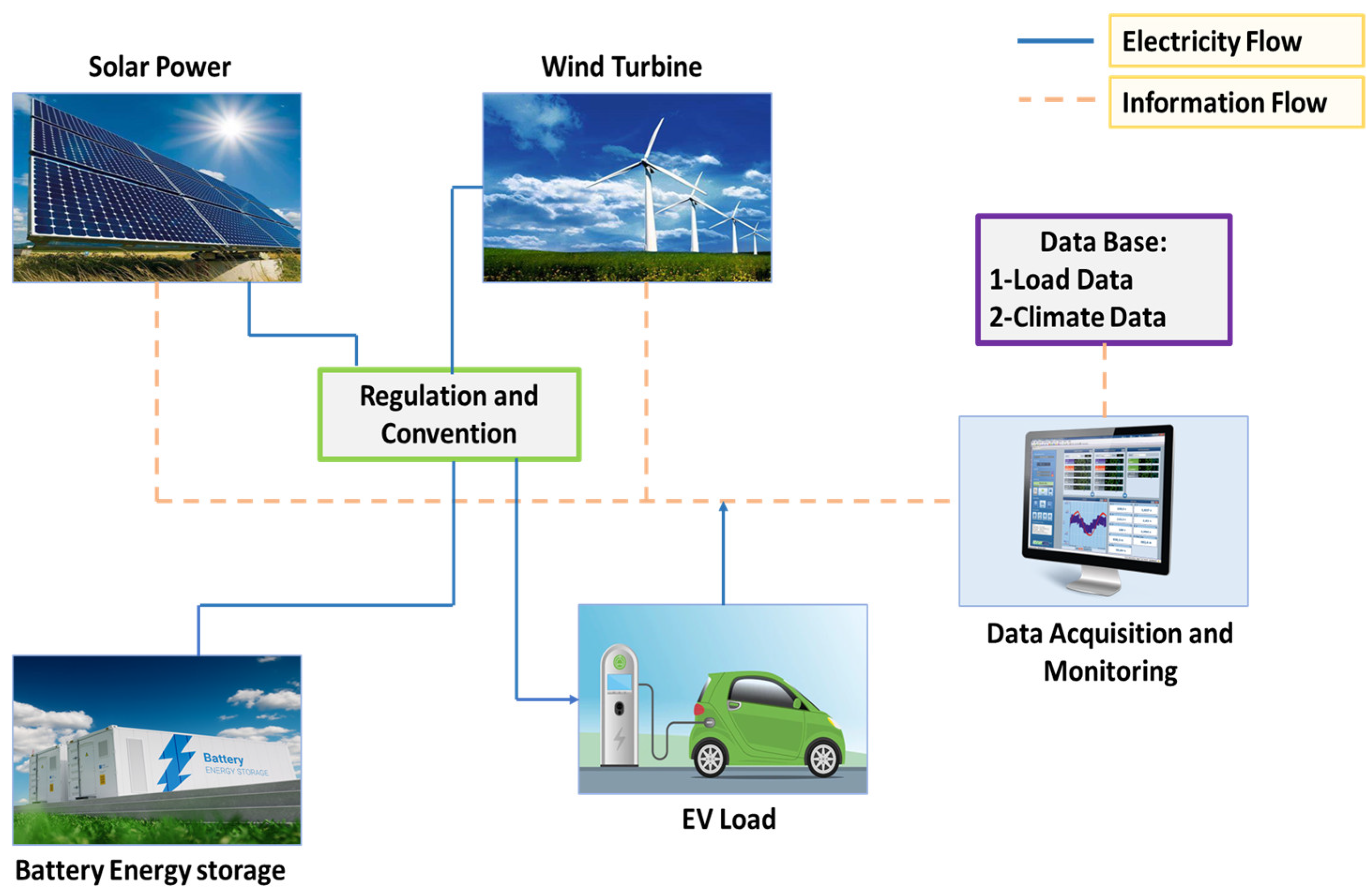
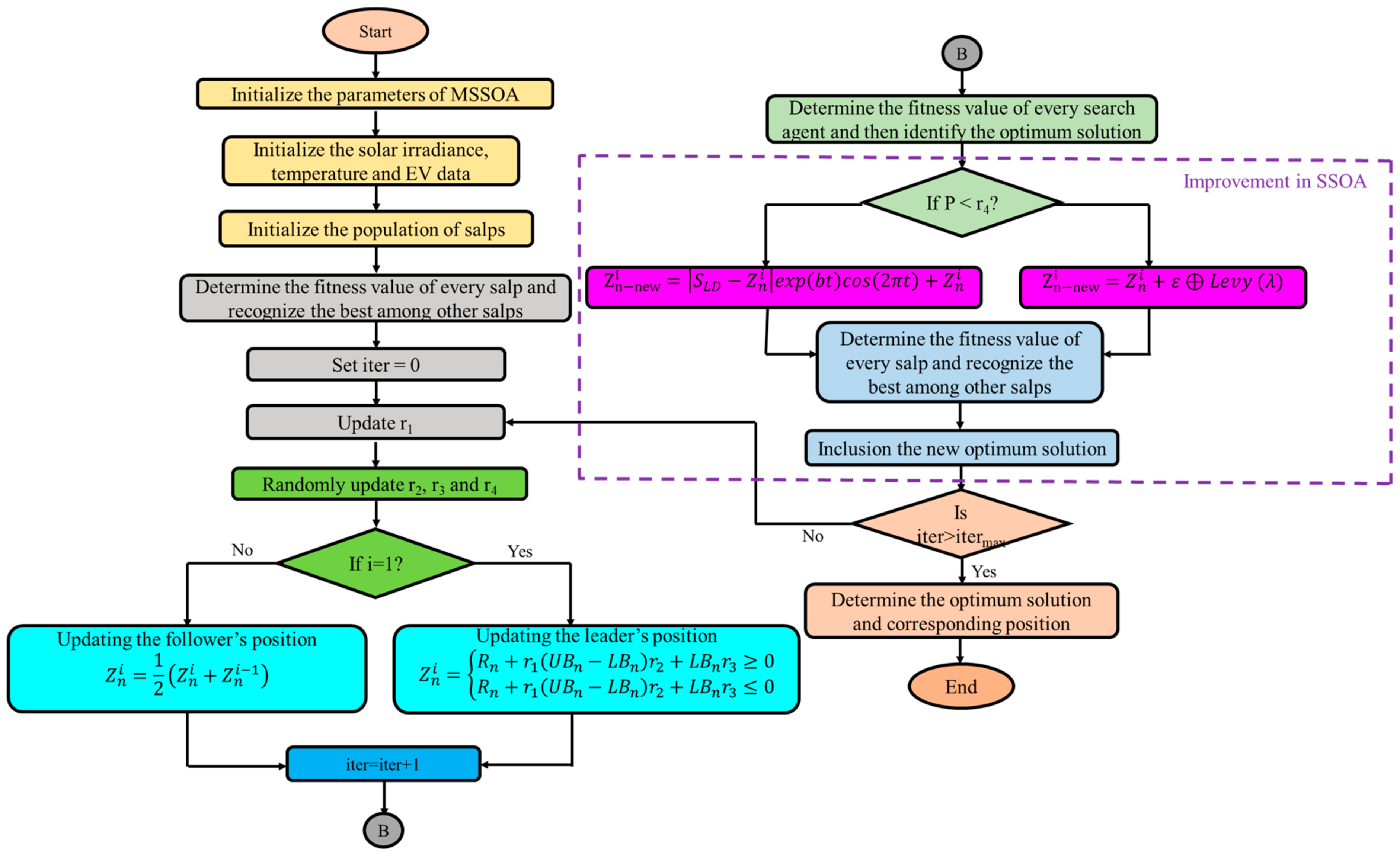
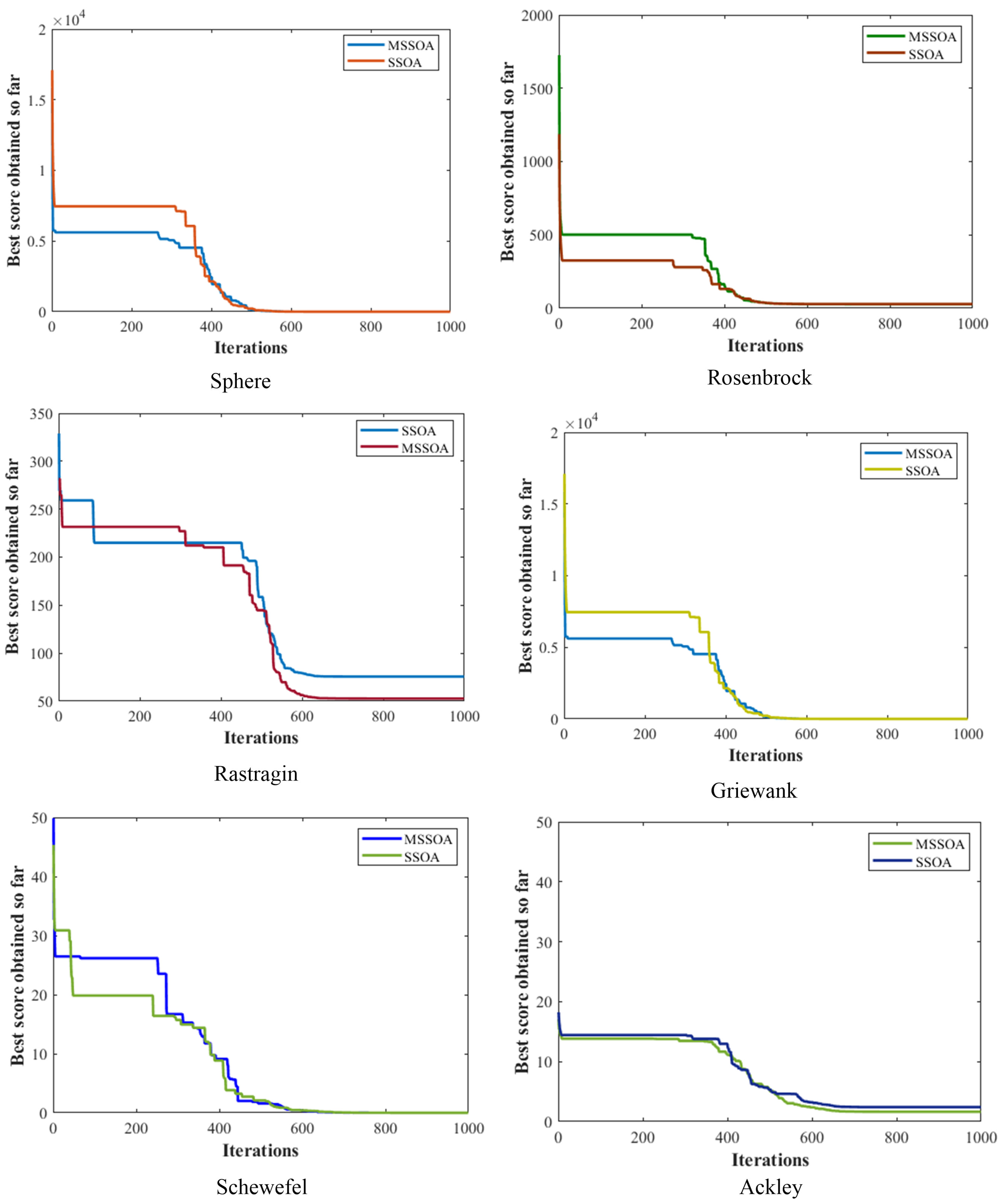
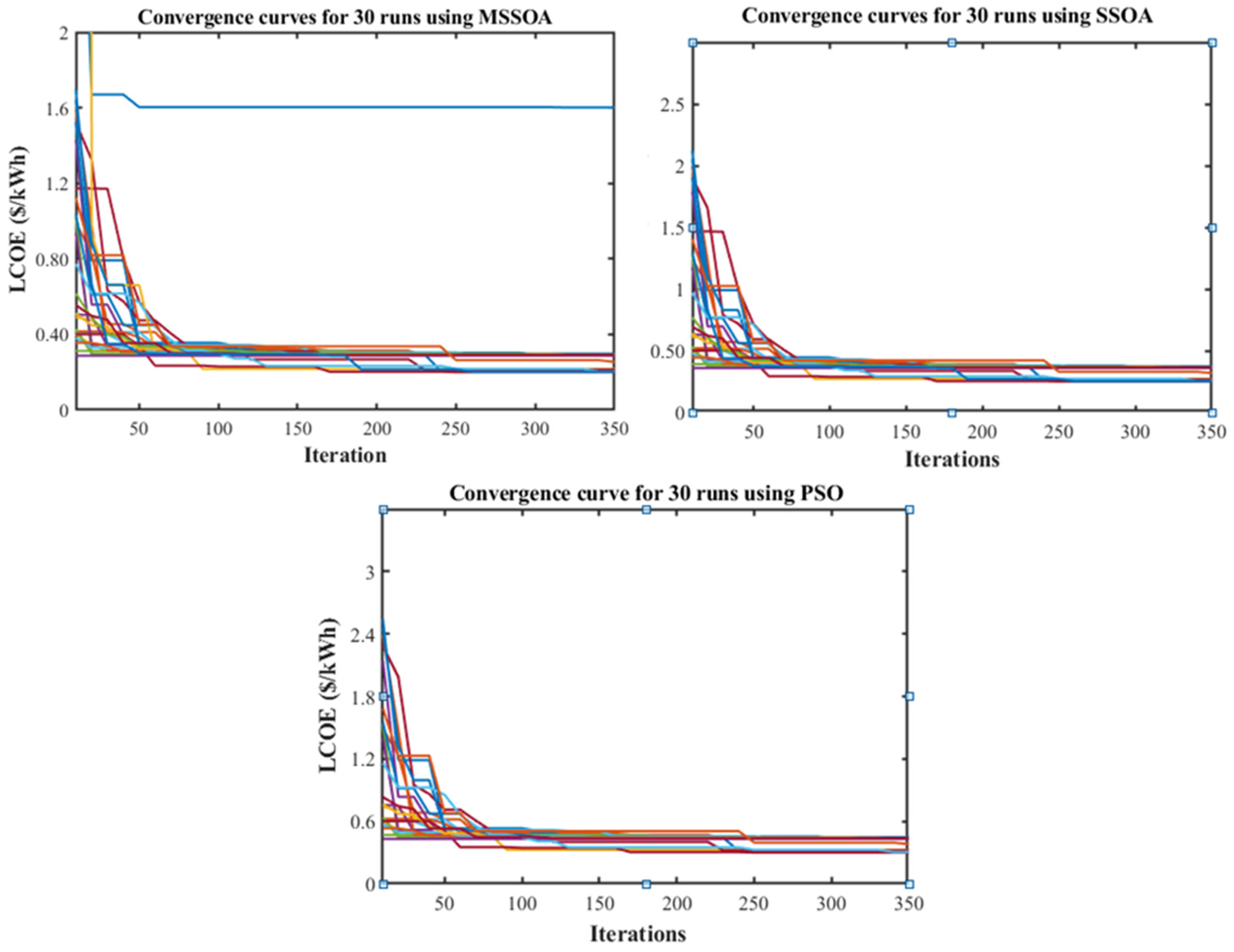
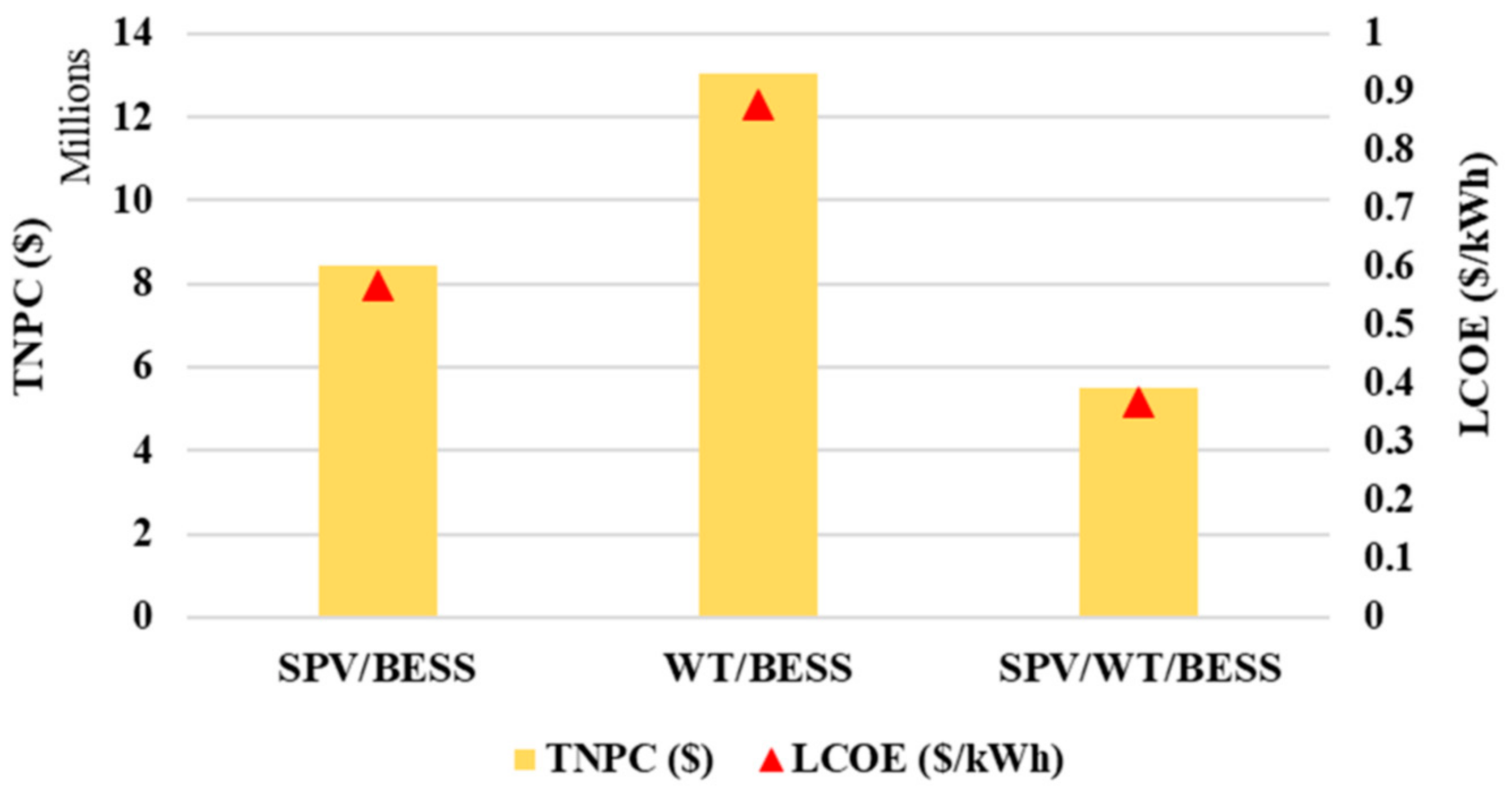
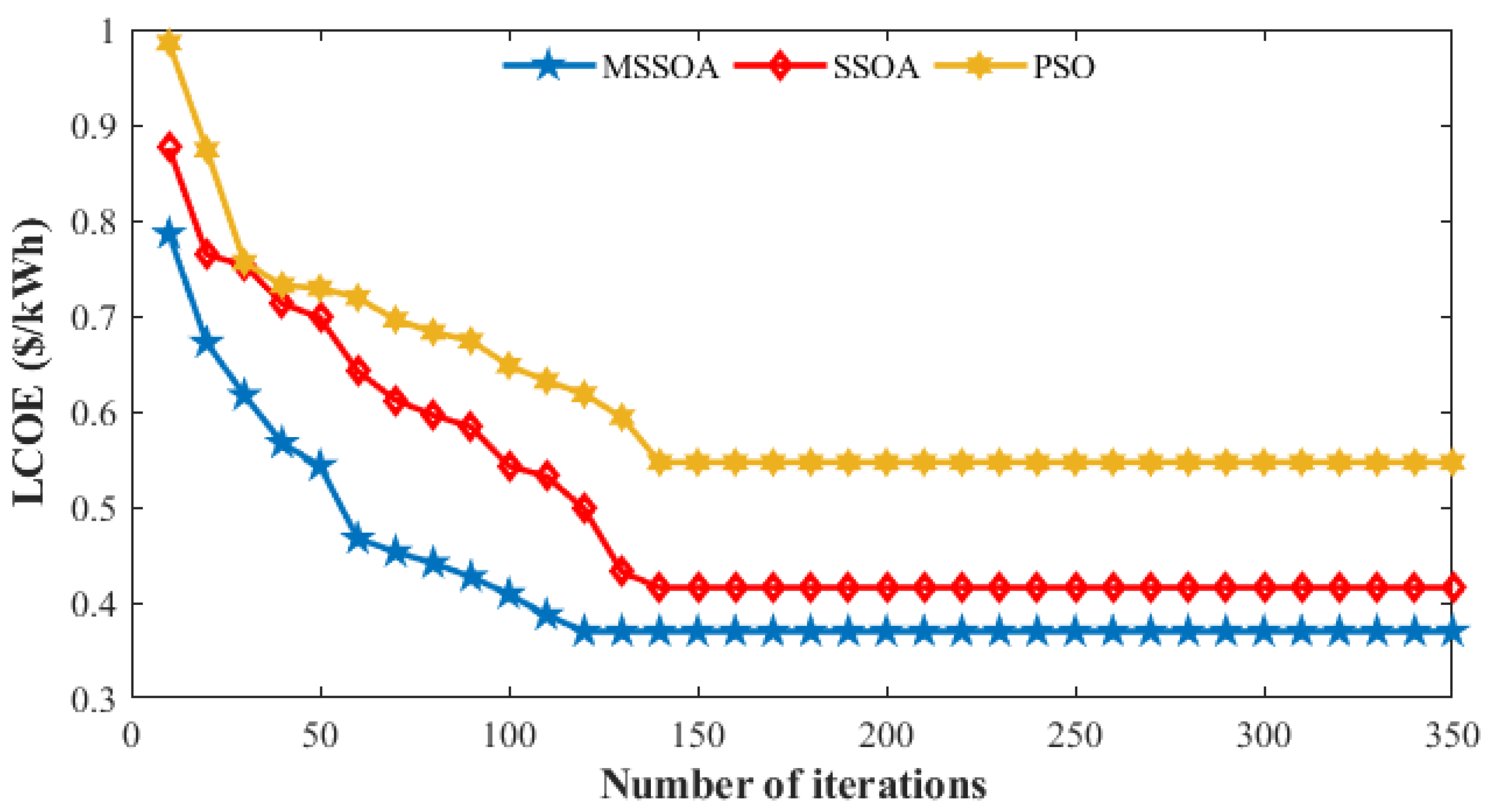
Because of the fast expansion of electric vehicles (EVs) in Saudi Arabia, a massive amount of energy will be needed to serve these vehicles. In addition, the transportation sector radiates a considerable amount of toxic gases in the form of SO2 and CO2. The national grid must supply a huge amount of electricity on a regular basis to meet the increasing power demands of EVs. This study thoroughly investigates the technical and economic benefits of an off-grid and grid-connected hybrid energy system with various configurations of a solar, wind turbine and battery energy storage system for the electric vehicle charging load in the Qassim region, Saudi Arabia. The goal is to decrease the cost of energy while reducing the chance of power outages in the system. This is achieved by using a new optimization algorithm called the modified salp swarm optimization algorithm (MSSOA), which is based on an evolutionary algorithm approach. MSSOA is an improved version of SSOA, which addresses its shortcomings. It has two search strategies to enhance its efficiency: first, it uses Levy flight distribution (LFD) to help individuals reach new positions faster, and second, it instructs individuals to spiral around the optimal solution, improving the exploitation phase. The MSSOA’s effectiveness is confirmed by comparing its results with those of the conventional salp swarm optimization algorithm and particle swarm optimization (PSO). According to simulation findings, MSSOA has excellent accuracy and robustness. In this region, the SPV/WT/BESS-based EV charging station is the optimal option for EV charging stations. The SPV/WT/BESS design has the lowest LCOE of all feasible configurations in the region under study. The optimum values for the LCOE and TNPC using MSSOA are USD 0.3697/kWh and USD 99,928.34, which are much lower than the optimized values for the LCOE (USD 0.4156) and TNPC (USD 1,12,671.75) using SSOA. Furthermore, a comprehensive techno–economic analysis of optimized hybrid systems is assessed by incorporating the grid-connected option. The grid connected system results in optimized values of the LCOE (USD 0.0732/kWh) and TNPC (USD 1,541,076). The impact of different grid purchase prices on the levelized cost of energy is also studied. Our results will assist the researchers to determine the best technique for the optimization of an optimal energy system.
Keywords: artificial intelligence; optimization algorithm; renewable energy; electric vehicles; solar photovoltaic; wind turbine; energy storage system; evolutionary algorithm artificial intelligence; optimization algorithm; renewable energy; electric vehicles; solar photovoltaic; wind turbine; energy storage system; evolutionary algorithm