Article

(SDGFI) Student’s Demographic and Geographic Feature Identification Using Machine Learning Techniques for Real-Time Automated Web Applications †

1
Department of Media and Educational Informatics, Faculty of Informatics, Eötvös Loránd University, 1053 Budapest, Hungary
2
Apex Institute of Technology, Chandigarh University, Mohali 140413, Punjab, India
*
Author to whom correspondence should be addressed.
This paper is an extended version of our paper published in 2021 International Conference on Decision Aid Sciences and Application (DASA).
Mathematics 2022, 10(17), 3093; https://doi.org/10.3390/math10173093
Submission received: 3 August 2022 / Revised: 19 August 2022 / Accepted: 23 August 2022 / Published: 28 August 2022
(This article belongs to the Section E1: Mathematics and Computer Science)

Abstract

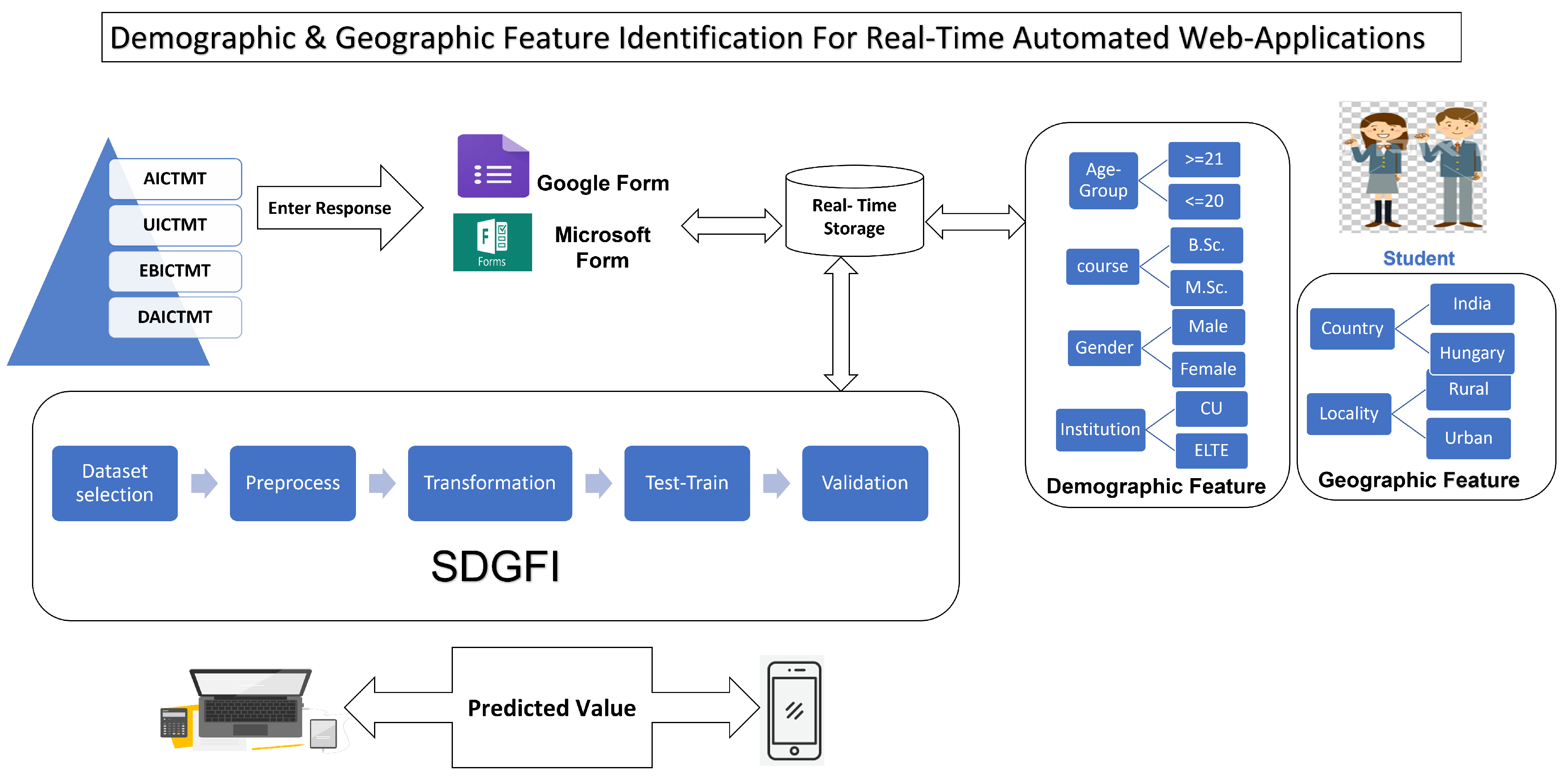
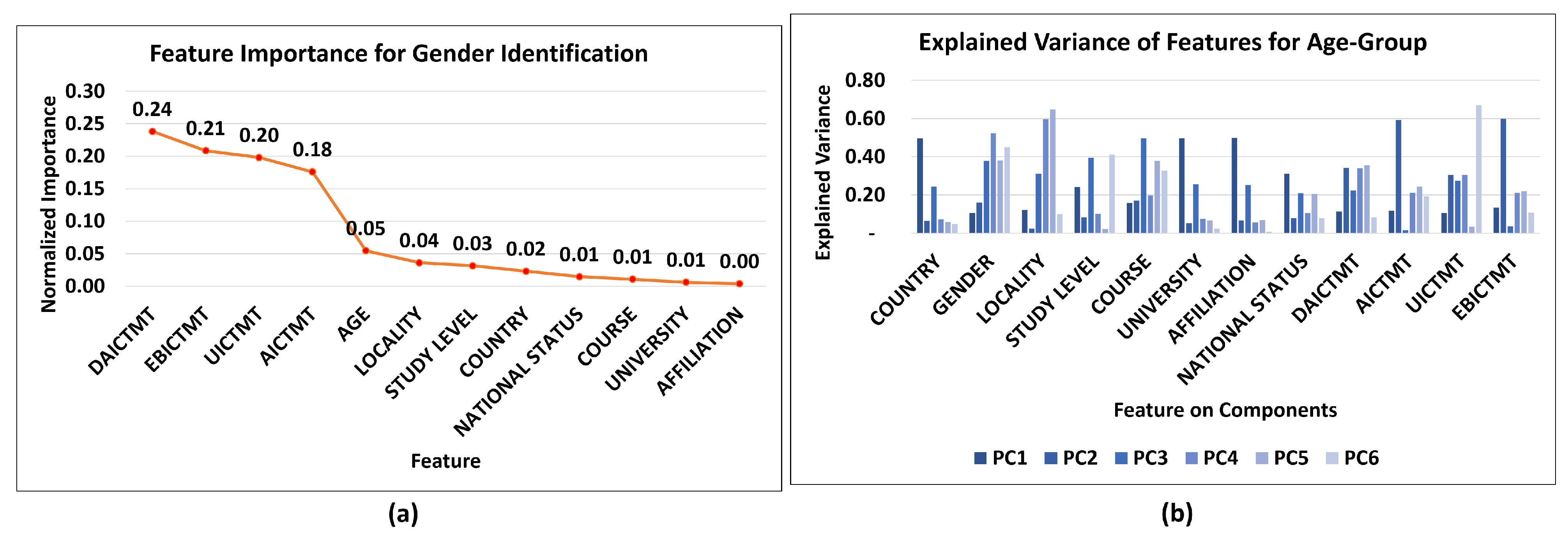
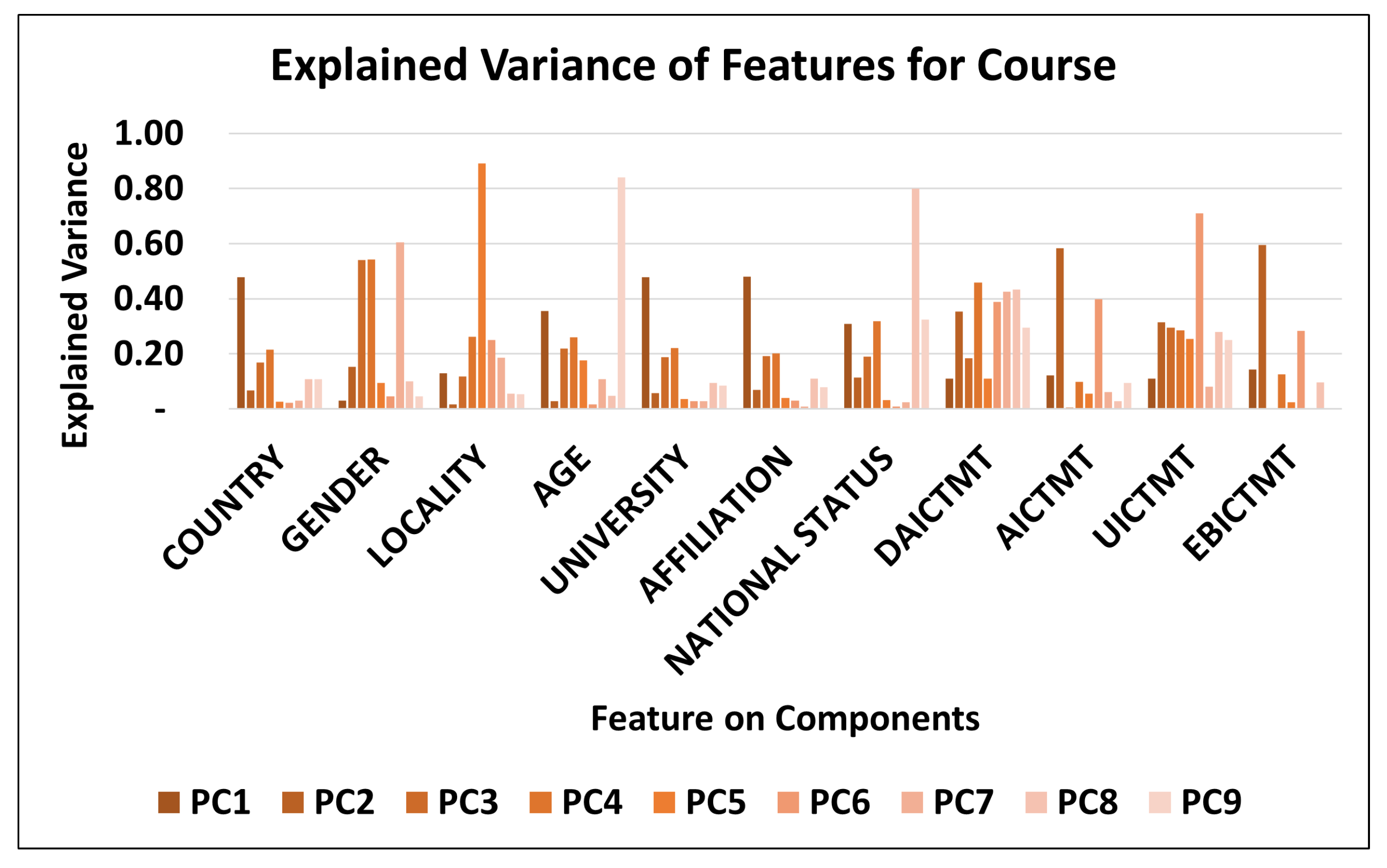
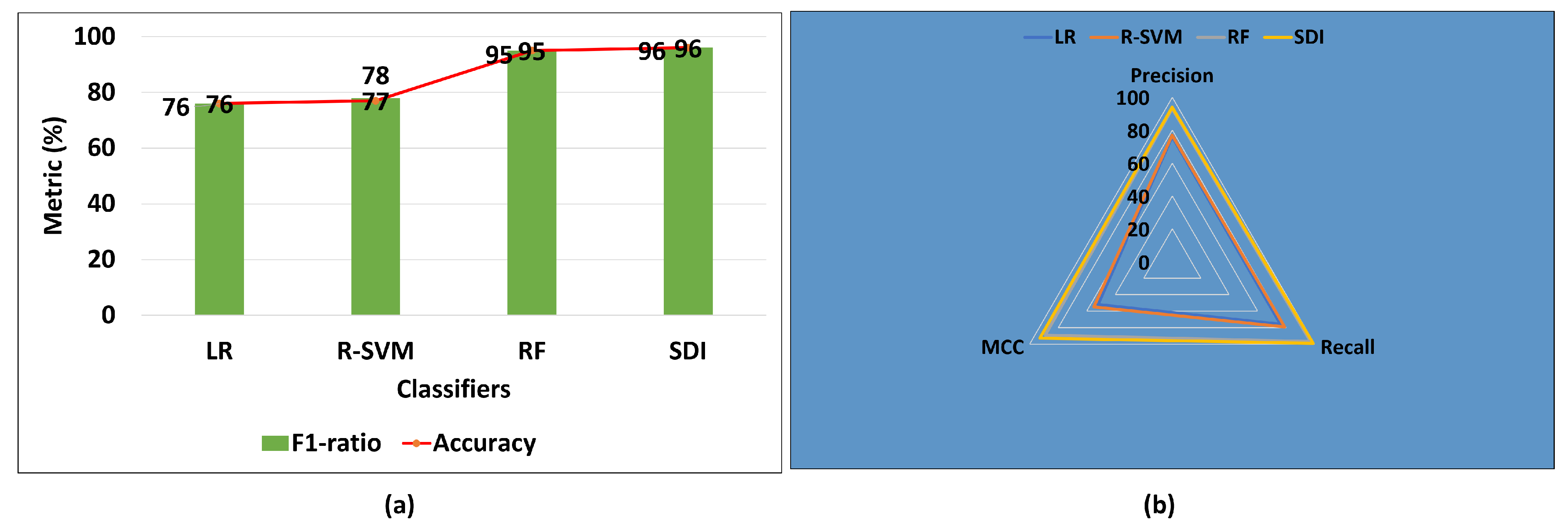
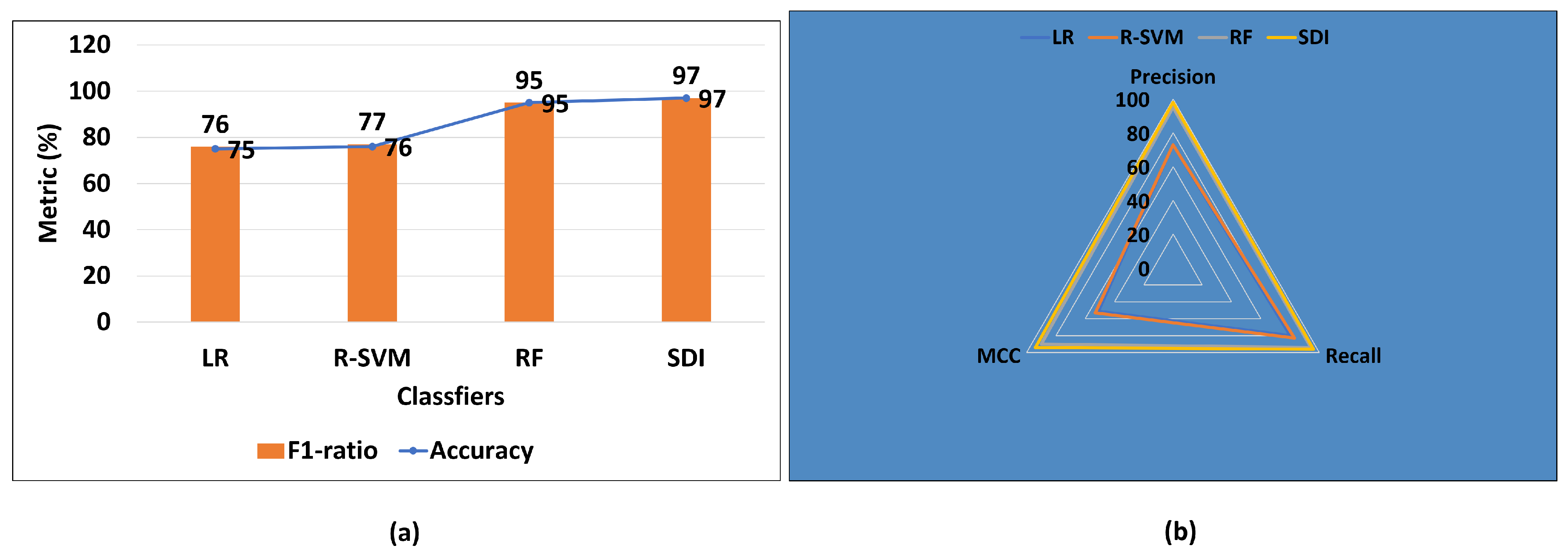
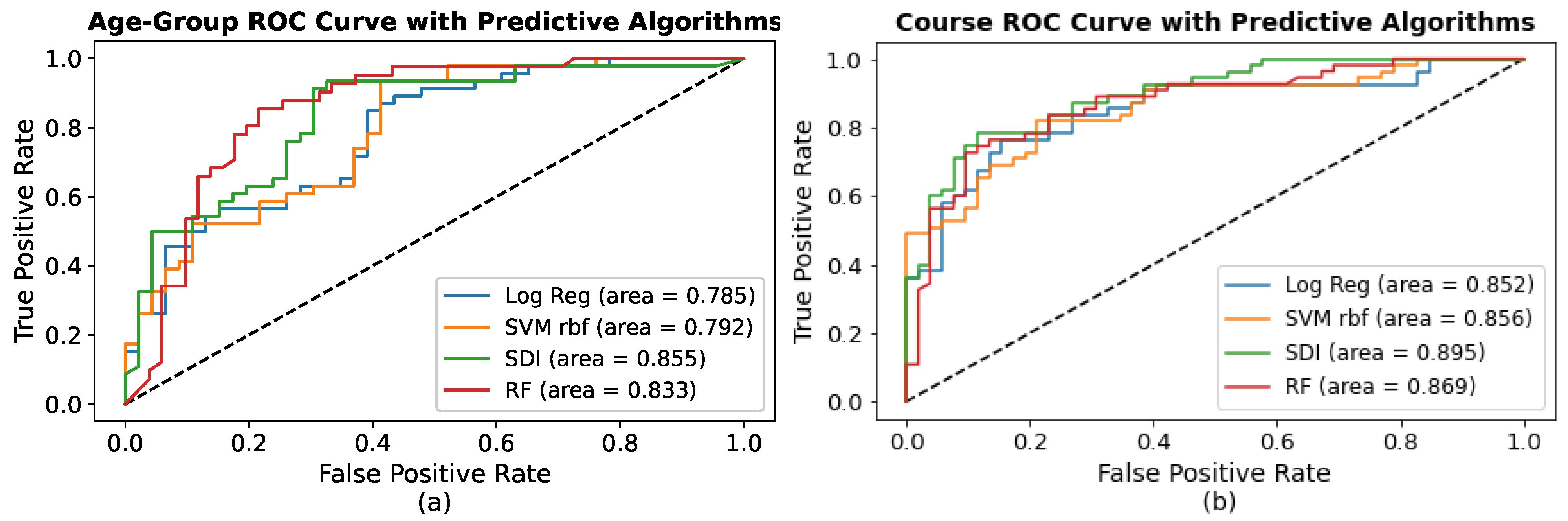
Nowadays, Google Forms is becoming a cutting-edge tool for gathering research data in the educational domain. Several researchers are using real-time web applications to collect the responses of respondents. Demographic and geographic features are the most important in the researcher’s study. Identifying students’ demographics (gender, age-group, course, institution, or university) and geographic features (locality and country) is a challenging problem in machine learning. We proposed a novel predictive algorithm, Student Demographic Identification (SDI), to identify a student’s demographic features (age-group, course) with the highest accuracy. SDI has been tested on primary reliable samples. SDI has also been compared with the traditional machine algorithms Random Forest (RF), and Logistic Regression (LR), and Radial Support Vector Machine (R–SVM). The proposed algorithm significantly improved the performance metrics such as accuracy, F1-score, precision, recall, and Matthews Correlation Coefficient (MCC) of these classifiers. We also proposed significant features to identify students’ age-group, course, and gender. SDI has identified the student’s age group with an accuracy of 96% and the course with an accuracy of 97%. Gradient Boosting (GB) has improved the accuracy of LR, R-SVM, and RF to predict the student’s gender. Also, the RF algorithm with the support of GB attained the highest accuracy of 98% to identify the gender of the students. All three classifiers have also identified the student’s locality and institution with an identical accuracy of 99%. Our proposed SDI algorithm may be useful for real-time survey applications to predict students’ demographic features.
Keywords: classification; demographic; geographic; machine learning; SDI; student; technology response classification; demographic; geographic; machine learning; SDI; student; technology response