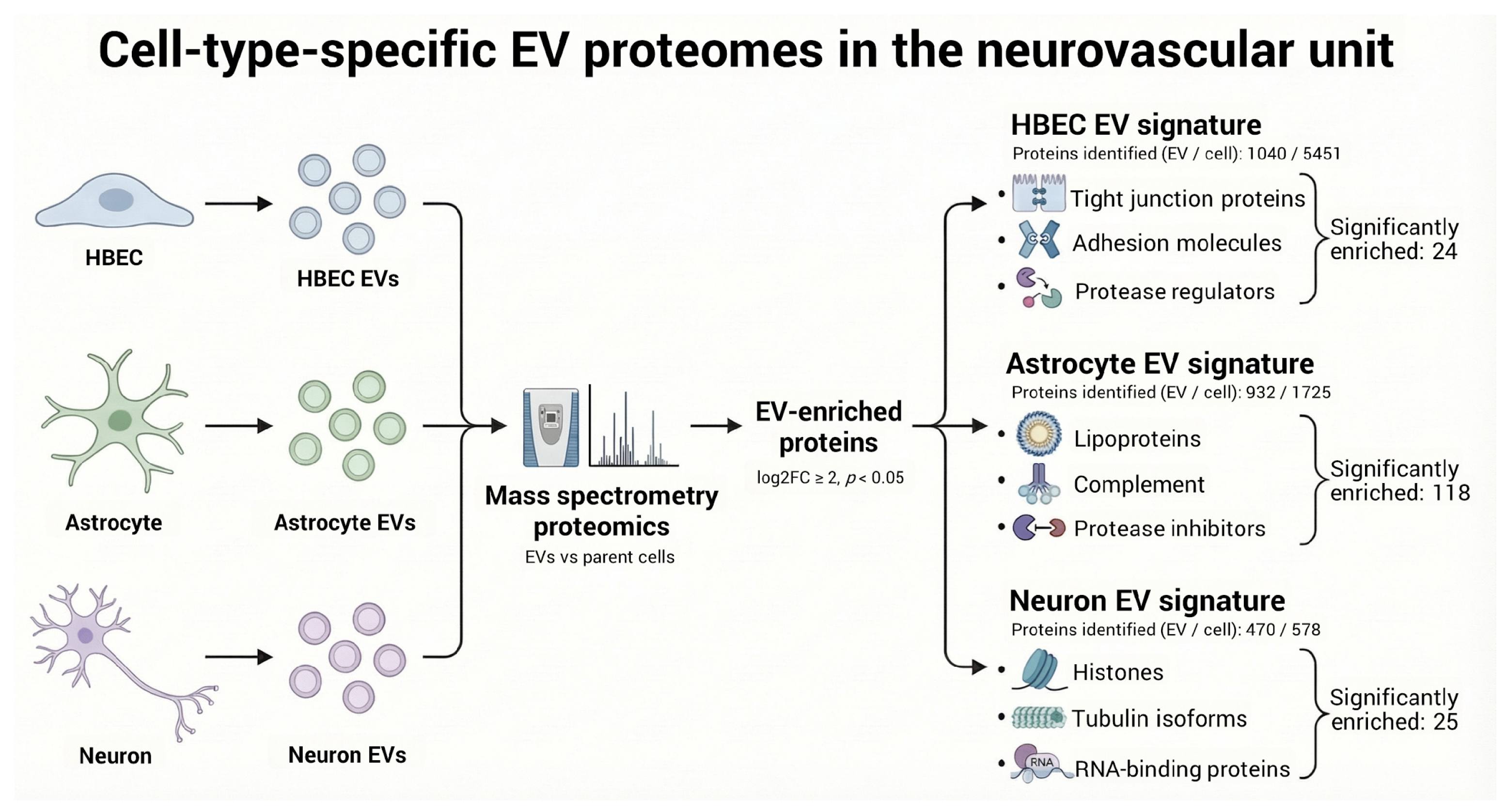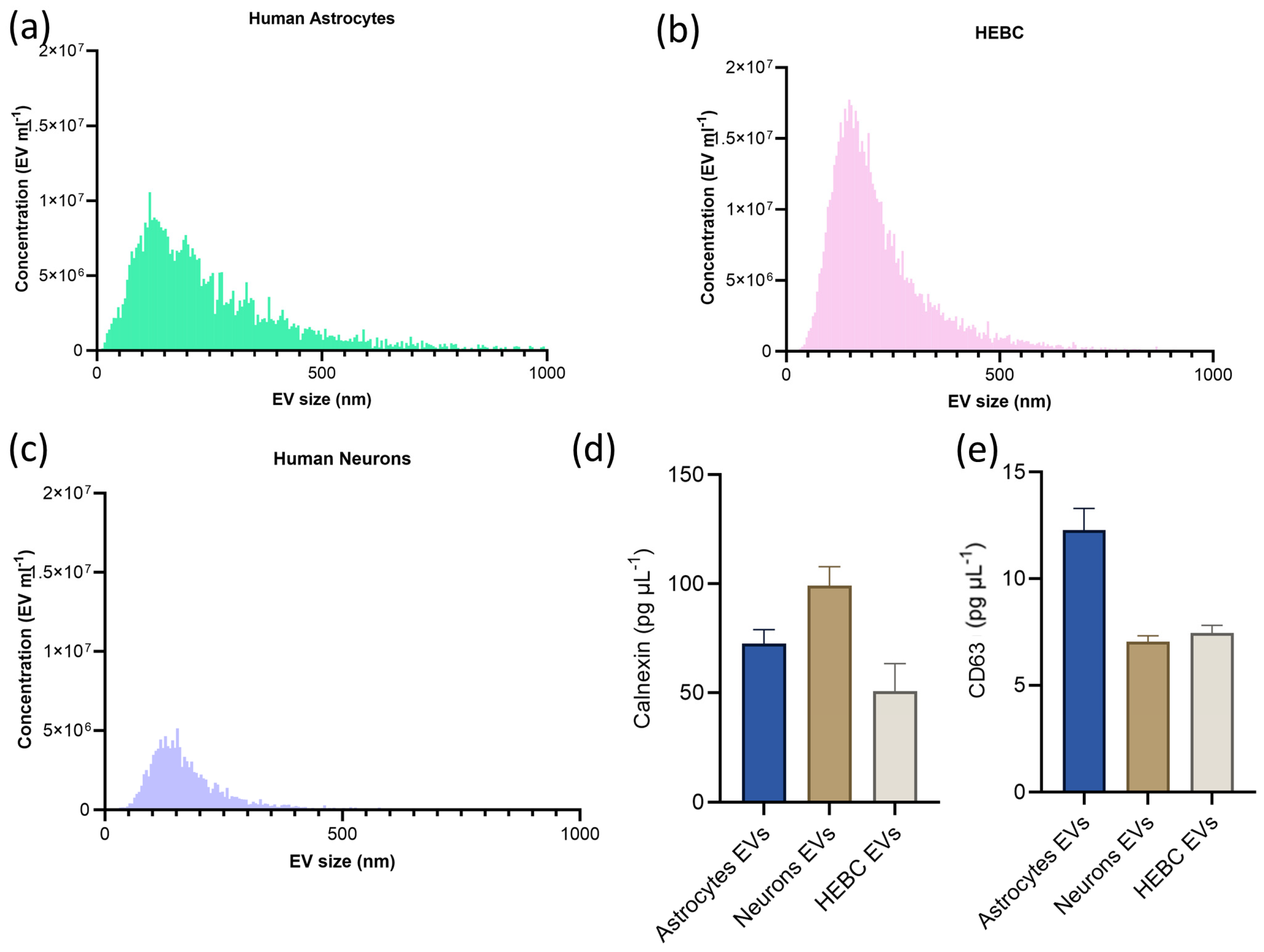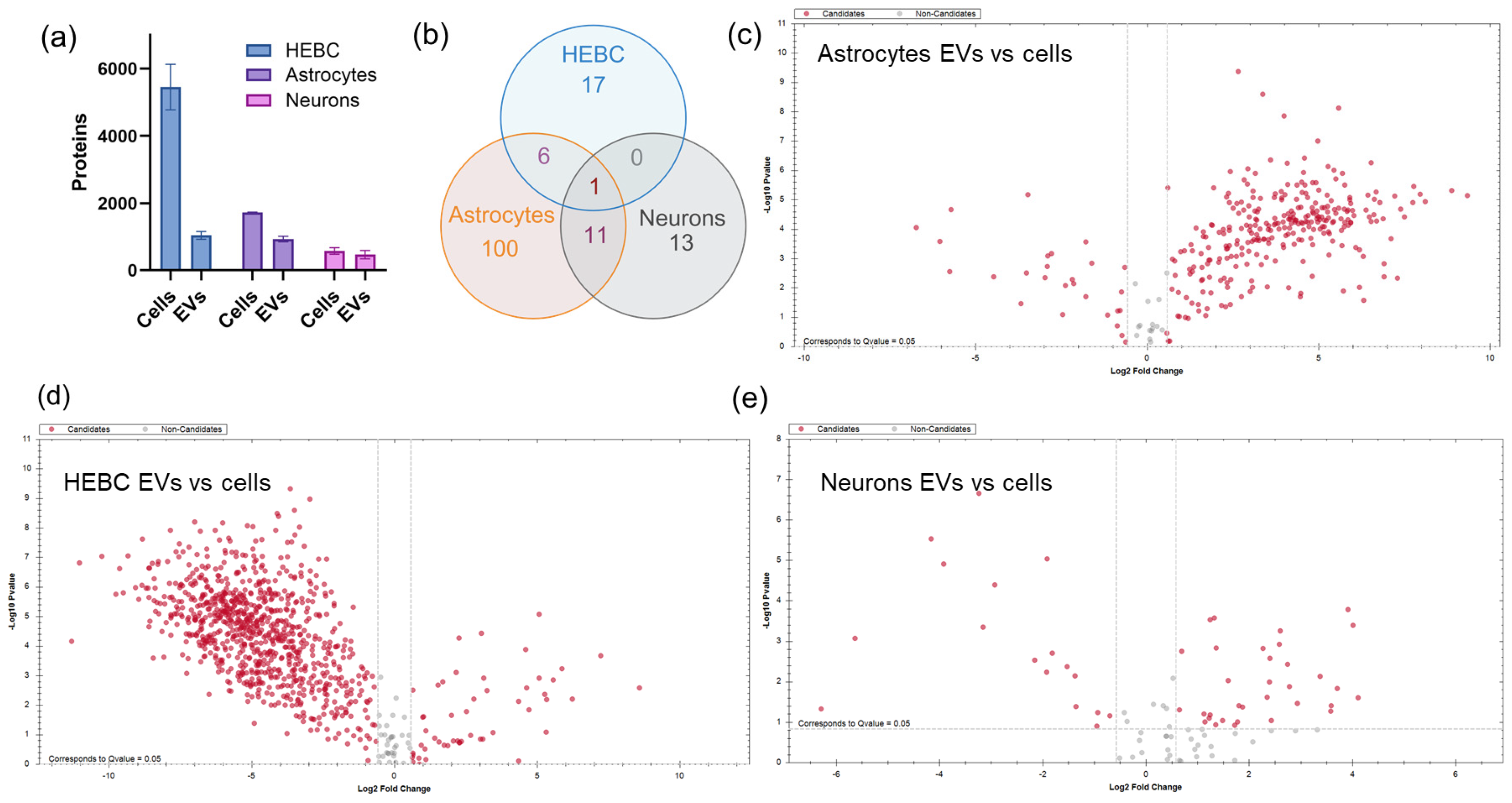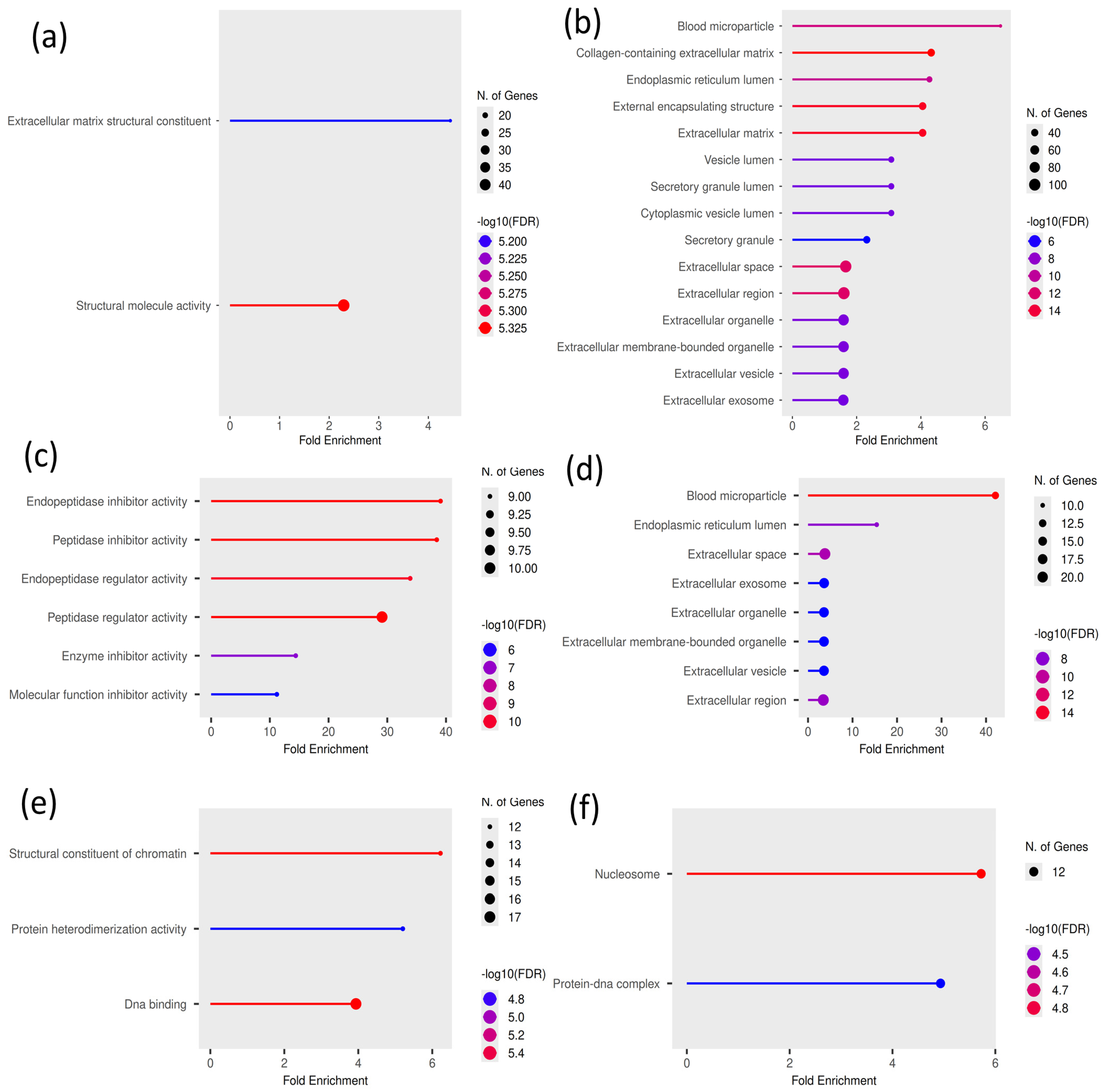
Cell Type-Specific Proteomic Cargo in Human Brain Endothelial, Astrocyte, and Neuronal Extracellular Vesicles


Abstract
1. Introduction
2. Materials and Methods
2.1. Cell Culture
2.2. EV Purification, Quantification, and Characterization
2.3. timsTOF Pro 2 Mass Spectrometry Analysis
2.4. Data Processing and Analysis
3. Results
3.1. EV Characterization
3.2. Proteome Coverage
3.3. Cell-Type-Specific EV-Enriched Proteins
3.4. Comparison with Curated EV Protein Databases
3.5. Comparative Proteomic Signatures Across Cell Types
4. Discussion
5. Conclusions
Supplementary Materials
Author Contributions
Funding
Data Availability Statement
Conflicts of Interest
References
- Zhang, Y.; Lan, M.; Chen, Y. Minimal information for studies of extracellular vesicles (MISEV): Ten-year evolution (2014–2023). Pharmaceutics 2024, 16, 1394. [Google Scholar] [CrossRef] [PubMed]
- Ha, D.; Yang, N.; Nadithe, V. Exosomes as therapeutic drug carriers and delivery vehicles across biological membranes: Current perspectives and future challenges. Acta Pharm. Sin. B 2016, 6, 287–296. [Google Scholar] [CrossRef]
- Valadi, H.; Ekstrom, K.; Bossios, A.; Sjostrand, M.; Lee, J.J.; Lotvall, J.O. Exosome-mediated transfer of mRNAs and microRNAs is a novel mechanism of genetic exchange between cells. Nat. Cell Biol. 2007, 6, 654–659. [Google Scholar] [CrossRef]
- Mathieu, M.; Martin-Jaular, L.; Lavieu, G.; Thery, C. Specificities of secretion and uptake of exosomes and other extracellular vesicles for cell-to-cell communication. Nat. Cell Biol. 2019, 21, 9–17. [Google Scholar] [CrossRef]
- Lizarraga-Valderrama, L.R.; Sheridan, G.K. Extracellular vesicles and intercellular communication in the central nervous system. FEBS Lett. 2021, 595, 1391–1410. [Google Scholar] [CrossRef]
- Malviya, M.; Johnson, C.; Thinakaran, G.; Leisure, M.; Schiera, G.; Svendsen, C.N.; Pizzo, P.; Carafoli, E.; Santoro, G. Extracellular vesicles through the blood-brain barrier: A review. Fluids Barriers CNS 2022, 19, 51. [Google Scholar]
- Roland, P.E. How far neuroscience is from understanding brains. Front. Syst. Neurosci. 2023, 17, 1147896. [Google Scholar] [CrossRef] [PubMed]
- Imam, F.; Saloner, R.; Vogel, J.W.; Krish, V.; Abdel-Azim, G.; Ali, M.; An, L.; Anastasi, F.; Bennett, D.; Binette, A.P.; et al. The global neurodegeneration proteomics consortium: Biomarker and drug target discovery for common neurodegenerative diseases and aging. Nat. Med. 2025, 31, 2556–2566. [Google Scholar] [CrossRef]
- Chen, J.; Tian, C.; Xiong, X.; Yang, Y.; Zhang, J. Extracellular vesicles: New horizons in neurodegeneration. eBioMedicine 2025, 113, 105605. [Google Scholar] [CrossRef]
- Stricker, P.E.F.; de Oliveira, N.B.; Mogharbel, B.F.; Irioda, A.C.; da Rosa, N.N.; Lührs, L.; Saçaki, C.S.; Munhoz da Rocha, I.; Alves, L.R.; Poubel, S.B.; et al. Proteomic characterization of extracellular vesicles from human neural precursor cells: A promising advanced therapy for neurodegenerative diseases. Int. J. Nanomed. 2025, 20, 6675–6699. [Google Scholar] [CrossRef]
- You, Y.; Muraoka, S.; Jedrychowski, M.P.; Hu, J.; McQuade, A.K.; Young-Pearse, T.; Aslebagh, R.; Shaffer, S.A.; Gygi, S.P.; Blurton-Jones, M.; et al. Human neural cell type-specific extracellular vesicle proteome defines disease-related molecules associated with activated astrocytes in Alzheimer’s disease brain. J. Extracell. Vesicles 2022, 11, e12183. [Google Scholar] [CrossRef] [PubMed]
- Kugeratski, F.G.; Hodge, K.; Lilla, S.; McAndrews, K.M.; Zhou, X.; Hwang, R.F.; Zanivan, S.; Kalluri, R. Quantitative proteomics identifies the core proteome of exosomes with syntenin-1 as the highest abundant protein and a putative universal biomarker. Nat. Cell Biol. 2021, 23, 631–641. [Google Scholar] [CrossRef]
- Muoio, V.; Persson, P.B.; Sendeski, M.M. The neurovascular unit—Concept review. Acta Physiol. 2014, 210, 790–798. [Google Scholar] [CrossRef] [PubMed]
- Jebelli, A.; Govindan, S.; Barg, S.; Falck, E. A systematic review of the regulatory mechanisms of extracellular vesicles production and secretion. Int. J. Mol. Sci. 2023, 24, 7078. [Google Scholar]
- Doellinger, J.; Schneider, A.; Hoeller, M.; Lasch, P. Sample preparation by easy extraction and digestion (SPEED)—A universal, rapid, and detergent-free protocol for proteomics based on acid extraction. Mol. Cell. Proteom. 2020, 19, 209–222. [Google Scholar] [CrossRef]
- Ge, S.X.; Jung, D.; Yao, R. ShinyGO: A graphical gene-set enrichment tool for animals and plants. Bioinformatics 2020, 36, 2628–2629. [Google Scholar] [CrossRef]
- Shanthi, K.B.; Fischer, D.; Sharma, A.; Kiviniemi, A.; Kaakinen, M.; Vainio, S.J.; Bart, G. Human adult astrocyte extracellular vesicle transcriptomics study identifies specific RNAs which are preferentially secreted as EV luminal cargo. Gene 2023, 14, 853. [Google Scholar] [CrossRef]
- Oesterreicher, J.; Pultar, M.; Schneider, J.; Mühleder, S.; Zipperle, J.; Grillari, J.; Holnthoner, W. Fluorescence-based nanoparticle tracking analysis and flow cytometry for characterization of endothelial extracellular vesicle release. Int. J. Mol. Sci. 2020, 21, 9278. [Google Scholar] [CrossRef]
- Yakovlev, V.; Lapato, D.M.; Rana, P.; Ghosh, P.; Frye, R.; Roberson-Nay, R. Neuron-enriched extracellular vesicles’ microRNA expression profiles as a marker of early life alcohol consumption. Transl. Psychiatry 2024, 14, 176. [Google Scholar] [CrossRef]
- Saludas, L.; Garbayo, E.; Ruiz-Villalba, A.; Hernández, S.; Vader, P.; Prósper, F.; Blanco-Prieto, M.J. Isolation methods of large and small extracellular vesicles derived from cardiovascular progenitors: A comparative study. Eur. J. Pharm. Biopharm. 2022, 170, 187–196. [Google Scholar] [CrossRef]
- Abbott, N.J.; Patabendige, A.A.; Dolman, D.E.; Yusof, S.R.; Begley, D.J. Structure and function of the blood–brain barrier. Neurobiol. Dis. 2010, 37, 13–25. [Google Scholar] [CrossRef]
- Singh, B.; Sundbom, M.F.; Muthukrishnan, U.; Natarajan, B.; Stransky, S.; Görgens, A.; Nordin, J.Z.; Wiklander, O.P.B.; Sandblad, L.; Sidoli, S.; et al. Extracellular histones as exosome membrane proteins regulated by cell stress. J. Extracell. Vesicles 2025, 2, e70042. [Google Scholar] [CrossRef]
- Giamanco, K.A.; Matthews, R.T. Deconstructing the perineuronal net: Cellular contributions and molecular composition of the neuronal extracellular matrix. Neuroscience 2012, 218, 367–384. [Google Scholar] [CrossRef]
- Solana-Balaguer, J.; Campoy-Campos, G.; Martín-Flores, N.; Pérez-Sisqués, L.; Sitjà-Roqueta, L.; Kucukerden, M.; Gámez-Valero, A.; Coll-Manzano, A.; Martí, E.; Pérez-Navarro, E.; et al. Neuron-derived extracellular vesicles contain synaptic proteins, promote spine formation, activate TrkB-mediated signalling and preserve neuronal complexity. J. Extracell. Vesicles 2023, 12, e12355. [Google Scholar] [CrossRef] [PubMed]
- Mohr, T.; Haudek-Prinz, V.; Slany, A.; Grillari, J.; Micksche, M.; Gerner, C. Proteome profiling in IL-1β and VEGF-activated human umbilical vein endothelial cells delineates the interlink between inflammation and angiogenesis. PLoS ONE 2017, 12, e0179065. [Google Scholar] [CrossRef] [PubMed]
- Jiang, S.; Li, X.; Li, Y.; Chang, Z.; Yuan, M.; Zhang, Y.; Zhu, H.; Xiu, Y.; Cong, H.; Yin, L.; et al. APOE from patient-derived astrocytic extracellular vesicles alleviates neuromyelitis optica spectrum disorder in a mouse model. Sci. Transl. Med. 2024, 16, eadg5116. [Google Scholar] [CrossRef] [PubMed]
- Raulin, A.C.; Martens, Y.A.; Bu, G. Lipoproteins in the central nervous system: From biology to pathobiology. Annu. Rev. Biochem. 2022, 91, 731–759. [Google Scholar] [CrossRef]
- Radwitz, J.; Hausrat, T.J.; Heisler, F.F.; Janiesch, P.C.; Pechmann, Y.; Rübhausen, M.; Kneussel, M. Tubb3 expression levels are sensitive to neuronal activity changes and determine microtubule growth and kinesin-mediated transport. Cell. Mol. Life Sci. 2022, 79, 575. [Google Scholar] [CrossRef]
- Chen, Y.; Chu, J.M.; Wong, G.T.; Chang, R.C. Complement C3 from astrocytes plays significant roles in sustained activation of microglia and cognitive dysfunctions triggered by systemic inflammation after laparotomy in adult male mice. J. Neuroimmune Pharmacol. 2024, 19, 8. [Google Scholar] [CrossRef]
- Carpanini, S.M.; Torvell, M.; Bevan, R.J.; Byrne, R.A.J.; Daskoulidou, N.; Saito, T.; Saido, T.C.; Taylor, P.R.; Hughes, T.R.; Zelek, W.M.; et al. Terminal complement pathway activation drives synaptic loss in Alzheimer’s disease models. Acta Neuropathol. Commun. 2022, 10, 99. [Google Scholar] [CrossRef]
- Hong, S.; Beja-Glasser, V.F.; Nfonoyim, B.M.; Frouin, A.; Li, S.; Ramakrishnan, S.; Merry, K.M.; Shi, Q.; Rosenthal, A.; Barres, B.A.; et al. Complement and microglia mediate early synapse loss in Alzheimer mouse models. Science 2016, 6, 712–716. [Google Scholar] [CrossRef] [PubMed]
- Bao, W.D.; Pang, P.; Zhou, X.T.; Hu, F.; Xiong, W.; Chen, K.; Wang, J.; Wang, F.; Xie, D.; Hu, Y.Z.; et al. Loss of ferroportin induces memory impairment by promoting ferroptosis in Alzheimer’s disease. Cell Death Differ. 2021, 28, 1548–1562. [Google Scholar] [CrossRef]
- Schneider, Y.; Koller, A.; Schweigert, A.; Andert, M.; Hoffmann, L.; O’Brien, S.; Seebauer, L.; Plötz, S.; Kielkowski, P.; Winkler, J.; et al. Vimentin network dysregulation mediates neurite deficits in SNCA duplication Parkinson’s patient-derived midbrain neurons. Sci. Adv. 2025, 11, eadq2742. [Google Scholar] [CrossRef]
- Martí, N.A.; Dal, B.D.; Lambertucci, C.; Spinaci, A.; Volpini, R.; Marques-Morgado, I.; Coelho, J.E.; Lopes, L.V.; Marucci, G.; Buccioni, M. Adenosine receptors as neuroinflammation modulators: Role of A1 agonists and A2A antagonists. Cells 2020, 9, 1739. [Google Scholar] [CrossRef]
- Liu, S.; Duan, Y.; You, R.; Chen, D.; Tan, J. HnRNP K regulates inflammatory gene expression by mediating splicing pattern of transcriptional factors. Exp. Biol. Med. 2023, 248, 1479–1491. [Google Scholar] [CrossRef] [PubMed]
- Lu, Z.; Wang, F.; Liang, M. SerpinC1/Antithrombin III in kidney-related diseases. Clin. Sci. 2017, 131, 823–831. [Google Scholar] [CrossRef] [PubMed]
- Barnstable, C.J.; Tombran-Tink, J. Neuroprotective and antiangiogenic actions of PEDF in the eye: Molecular targets and therapeutic potential. Prog. Retin. Eye Res. 2004, 23, 561–577. [Google Scholar] [CrossRef]
- Rempe, R.G.; Hartz, A.M.S.; Bauer, B. Matrix metalloproteinases in the brain and blood-brain barrier: Versatile breakers and makers. J. Cereb. Blood Flow. Metab. 2016, 36, 1481–1507. [Google Scholar] [CrossRef]



| Functional Module | Neurons | HEBC | Astrocytes |
|---|---|---|---|
| Chromatin and Epigenetics | H2BC12, H2BS1, H2BC5, H2BC4, H2BC18, H2BC9, H2BC15, H2BC14, H2BC13 | None | H2BC12, H2BS1, H2BC5, H2BC4, H2BC18, H2BC9, H2BC15, H2BC14, H2BC13, HMGB1 |
| Cytoskeletal and Microtubule | TUBB, TUBB3, TUBA1B, TUBA1C, VIM | None | None |
| RNA Binding and mRNA Processing | HNRNPK, HNRNPA1 | None | None |
| Lipoproteins and Lipid Metabolism | None | APOA1, APOE, APOB, CP | APOB, APOA1, APOE, LCN1 |
| Complement and Coagulation Cascade | C3 | C3, C4A/C4B, C5, C7, PLG, THBS1, F10 | C3, C7, F2, F5, ITIH2, ITIH3, ITIH4, |
| Protease Inhibitors and Proteolytic Regulators | None | SERPINA7, SERPINC1, SERPINF1 | SERPINF2, ITIH2, ITIH3, ITIH4, SERPINC1, SERPINE1, SERPINB3, A2M, GSN, CTSA, CTSD |
| Extracellular Matrix | None | THBS1, FN1, FBLN1 | COL1A1, COL4A2, COL6A3, LAMA4, LAMA5, LAMB1, LAMB2, TNC, VCAN, POSTN, SPARC, MFGE8, NCAN, GPC4, AGRN, THBS1, FN1 |
| Metabolic Enzymes and Energy | PNP, EEF1G, PPIA, ALDH9A1, HSP90AA1 | None | PGAM1, ATP2A2, PYGL, PLOD1, PLOD3, ASAH1, BLVRB, OLFM4, GGH, EPRS1 |
| Growth Factors and Signaling/Innate Immunity | None | MAP3K2 | TGFB2, CCN1, CCN2, IGF2R, IGFBP7, NCAN, AGRN, NTN1 |
| Cell Adhesion and Junction | None | FBLN1, KIF13B, | BSG, DAG1, LAMB1, LAMB2, ITGA6, ITGB1 |
| Iron transport | LTF, ALB | HBE1, HBG1, HBG2, CP | LTF, TF, HPX, HBA1, HBB, TTR |
Disclaimer/Publisher’s Note: The statements, opinions and data contained in all publications are solely those of the individual author(s) and contributor(s) and not of MDPI and/or the editor(s). MDPI and/or the editor(s) disclaim responsibility for any injury to people or property resulting from any ideas, methods, instructions or products referred to in the content. |
© 2026 by the authors. Licensee MDPI, Basel, Switzerland. This article is an open access article distributed under the terms and conditions of the Creative Commons Attribution (CC BY) license.
Share and Cite
Hutson, H.K.; Qin, G.; Cai, C.; Nestorova, G.G. Cell Type-Specific Proteomic Cargo in Human Brain Endothelial, Astrocyte, and Neuronal Extracellular Vesicles. Proteomes 2026, 14, 24. https://doi.org/10.3390/proteomes14020024
Hutson HK, Qin G, Cai C, Nestorova GG. Cell Type-Specific Proteomic Cargo in Human Brain Endothelial, Astrocyte, and Neuronal Extracellular Vesicles. Proteomes. 2026; 14(2):24. https://doi.org/10.3390/proteomes14020024
Chicago/Turabian StyleHutson, Hope K., Guoting Qin, Chengzhi Cai, and Gergana G. Nestorova. 2026. "Cell Type-Specific Proteomic Cargo in Human Brain Endothelial, Astrocyte, and Neuronal Extracellular Vesicles" Proteomes 14, no. 2: 24. https://doi.org/10.3390/proteomes14020024
APA StyleHutson, H. K., Qin, G., Cai, C., & Nestorova, G. G. (2026). Cell Type-Specific Proteomic Cargo in Human Brain Endothelial, Astrocyte, and Neuronal Extracellular Vesicles. Proteomes, 14(2), 24. https://doi.org/10.3390/proteomes14020024