1. Introduction
Strategic management has become a critical element for ensuring quality, effectiveness, and long-term sustainability in Higher Education Institutions (HEIs). In this context, Data Analytics (DA) has emerged as a powerful enabler of evidence-based decision-making, providing institutions with the capacity to transform large volumes of data into actionable knowledge that supports institutional planning, performance monitoring, and continuous improvement. Consequently, the integration of data-driven approaches into strategic management has gained increasing relevance as universities seek to strengthen the articulation of their core functions and respond effectively to complex and rapidly changing educational environments.
Strategic management in higher education involves the development of long-term visions and the formulation of strategies aimed at achieving institutional objectives while considering available resources and external environmental conditions (
Bryson, 2018). This perspective enables institutions to remain competitive, adaptive, and responsive to emerging social, technological, and economic challenges (
Porter, 2008). In recent years, HEIs have faced increasing pressure to demonstrate quality, accountability, innovation, and societal impact, making strategic management an essential mechanism for achieving sustainable institutional development.
At the same time, higher education systems operate in environments characterized by technological transformation, evolving labor market demands, changing student expectations, and increasing competition. These challenges require institutions to adopt more sophisticated management approaches capable of integrating teaching, research, and community engagement while supporting informed decision-making processes. Within this context, Data Analytics offers unprecedented opportunities to improve institutional effectiveness by facilitating the identification of patterns, trends, and strategic insights derived from academic, administrative, and organizational data.
Despite the growing recognition of data-driven management practices, significant gaps remain in the literature regarding strategic management models specifically designed to support the integration of core university functions. Existing frameworks frequently address strategic planning, quality assurance, or institutional performance independently, while providing limited guidance on how Data Analytics can be systematically incorporated to strengthen the articulation of teaching, research, and community engagement. As a result, there is a need for innovative and transferable frameworks capable of bridging these dimensions and supporting institutional governance through evidence-based strategies.
Based on the diagnostic findings and the theoretical foundations identified in the literature, this study develops the Integrated Strategic Management and Functional Integration Model (MIGEAS), a Data Analytics-driven framework designed to strengthen the integration of core university functions and improve institutional decision-making. The model incorporates strategic dimensions, operational components, and methodological implementation phases intended to facilitate continuous improvement, institutional quality enhancement, and sustainable value creation within higher education institutions. Subsequently, the proposed framework is subjected to a structured expert validation process to assess its relevance, coherence, feasibility, and potential contribution to higher education governance.
The significance of this research lies in its contribution to the growing body of knowledge on strategic management and Data Analytics in higher education. By integrating these two domains into a comprehensive conceptual framework subjected to structured expert evaluation and iterative refinement, the study provides both theoretical and practical insights for HEIs seeking to improve institutional performance, strengthen the articulation of their core functions, and advance evidence-based governance practices in increasingly complex educational environments.
Simultaneously, the growing availability of institutional data has created new opportunities for evidence-based decision-making. Data Analytics enables institutions to transform large volumes of information into actionable knowledge that can support planning, monitoring, evaluation, and resource allocation processes. In higher education, analytics-driven approaches have demonstrated their potential to improve institutional performance, optimize management processes, and strengthen governance systems through more informed and timely decision-making (
Koohang & Nord, 2021).
Therefore, the objective of this study was to design and validate the Integrated Strategic Management and Functional Integration Model (MIGEAS) as a Data Analytics-driven strategic management framework aimed at strengthening the integration of teaching, research, and community engagement in Higher Education Institutions. Specifically, the study sought to identify institutional management and data-related gaps, translate these findings into the conceptual and operational architecture of MIGEAS, and evaluate the resulting framework through a structured expert validation process.
2. Background
2.1. Strategic Management in HEIs
Strategic management has become a fundamental component of institutional governance in Higher Education Institutions (HEIs), enabling universities to respond effectively to increasingly dynamic, competitive, and uncertain environments. The accelerated pace of technological innovation, evolving labor market demands, globalization, and growing societal expectations require HEIs to continuously adapt their organizational structures and decision-making processes. In this context, strategic management provides a systematic framework for defining institutional priorities, aligning resources with strategic objectives, and ensuring long-term sustainability.
According to
Bryson (
2018), strategic management involves the formulation and implementation of decisions that guide organizations toward the achievement of their mission while responding to internal and external environmental changes. Within higher education, this process extends beyond traditional administrative planning and encompasses academic governance, research development, quality assurance, stakeholder engagement, and institutional innovation. Similarly,
Porter (
2008) argues that strategic positioning enables organizations to create sustainable value and maintain competitiveness in rapidly changing environments.
Several authors have highlighted that strategic management in higher education should incorporate quality assurance mechanisms, risk management practices, and internationalization strategies to strengthen institutional competitiveness. In this regard, universities increasingly rely on strategic governance models that facilitate adaptation to environmental uncertainty while supporting long-term organizational sustainability (
Penbek et al., 2011;
Syreyshchikova et al., 2020).
The increasing complexity of higher education systems has transformed strategic management into a critical mechanism for institutional improvement and organizational learning. Modern universities are expected not only to deliver quality educational services but also to demonstrate accountability, transparency, efficiency, and measurable social impact. Consequently, strategic management has evolved from a planning-oriented activity to a comprehensive governance approach that integrates performance evaluation, resource optimization, and continuous improvement processes. This evolution highlights the need for innovative management frameworks capable of supporting evidence-based decision-making and enhancing institutional effectiveness across multiple organizational dimensions.
Strategic management in higher education extends beyond traditional planning practices and encompasses the formulation, implementation, monitoring, and continuous adjustment of institutional strategies. This process facilitates the alignment of organizational capabilities with institutional goals while promoting accountability, efficiency, and long-term sustainability. Furthermore, strategic management supports decision-making processes by providing a structured framework through which institutions can respond proactively to emerging challenges and opportunities (
Bryson, 2018;
Porter, 2008). Strategic control systems are essential for linking planning, implementation, monitoring, and performance evaluation, particularly when institutions seek to align operational actions with strategic objectives (
Anthony & Govindarajan, 2007).
From a broader theoretical perspective, strategic management in higher education should be understood as a dynamic institutional capability rather than merely as a formal planning process. Contemporary HEIs must continuously interpret regulatory, technological, social, and competitive changes, translate them into institutional priorities, and reconfigure organizational resources, governance mechanisms, and academic processes accordingly. Recent research on higher education governance increasingly emphasizes adaptive leadership, digital transformation, organizational learning, and evidence-informed management as interconnected capabilities required for institutional responsiveness and sustainability (
Doğan & Arslan, 2025;
Li et al., 2025). In data-intensive environments, this adaptive capacity also depends on the institution’s ability to transform dispersed information into actionable knowledge and connect analytical evidence with strategic decisions. Consequently, contemporary strategic management requires an integrated relationship among governance, leadership, organizational learning, performance management, digital capabilities, and evidence-based decision-making.
This perspective is particularly relevant to the development of integrated management frameworks because strategic effectiveness depends not only on the formulation of institutional plans, but also on the capacity to coordinate implementation across organizational units, monitor performance, and adjust decisions on the basis of reliable evidence. Digital leadership research in higher education similarly suggests that technological transformation requires strategic leadership, institutional capacity, organizational coordination, and deliberate governance rather than isolated technology adoption (
Doğan & Arslan, 2025;
Li et al., 2025). Therefore, the strategic-management foundation of MIGEAS is grounded in the principle that institutional strategy must function as a continuous governance cycle linking planning, operational execution, evidence generation, evaluation, and organizational adaptation.
2.2. Functional Integration of Core University Functions
Higher education institutions traditionally fulfill three core functions: teaching, research, and community engagement. These functions constitute the foundation of university systems worldwide and represent the primary mechanisms through which institutions generate knowledge, develop human capital, and contribute to social and economic development. Although these functions are conceptually interconnected, their operational integration remains a persistent challenge for many HEIs.
The fragmentation of institutional processes frequently leads to the development of isolated initiatives, duplicated efforts, inefficient resource allocation, and limited collaboration among academic and administrative units. As a result, universities often struggle to achieve coherence between strategic objectives and operational activities, reducing their capacity to generate synergies among teaching, research, and community engagement. This lack of integration may negatively affect institutional performance, innovation capacity, and overall educational quality.
Functional integration in higher education refers to the coordinated alignment of teaching, research, community engagement, and supporting institutional processes with shared strategic objectives, governance mechanisms, and performance criteria. Integration therefore extends beyond administrative coordination; it requires organizational structures that enable information exchange, joint planning, cross-functional decision-making, and the alignment of academic and institutional priorities. When these mechanisms are absent, institutional fragmentation may produce duplicated initiatives, inconsistent information flows, inefficient resource allocation, and limited opportunities to generate synergies across university functions.
Contemporary governance research reinforces the importance of coordination across organizational units in increasingly digital and complex university environments. Digital governance involves not only the adoption of technology but also the creation of institutional arrangements that connect leadership, organizational participation, decision-making, and information flows (
Doğan & Arslan, 2025). Similarly, emerging perspectives on higher education governance emphasize that digital transformation requires distributed coordination and governance mechanisms capable of aligning multiple institutional actors and processes rather than treating academic and administrative domains as isolated systems (
Li et al., 2025).
From this perspective, the articulation of teaching, research, and community engagement can be understood as a governance requirement rather than merely an operational objective. Functional integration allows strategic priorities to be translated into coordinated actions, shared indicators, institutional learning, and more coherent evidence for quality assurance and decision-making. This principle is particularly relevant in systems where accreditation and quality-assurance frameworks require universities to demonstrate explicit relationships among academic functions, planning processes, institutional outcomes, and continuous improvement (
CACES, 2023;
Acosta et al., 2017;
Romero Hidalgo, 2016).
The importance of functional integration has also been recognized within accreditation and evaluation systems. Quality assurance agencies emphasize the need for universities to establish mechanisms that connect teaching, research, and community engagement through coordinated planning, monitoring, and continuous improvement processes. Such articulation contributes directly to institutional effectiveness and educational quality (
CACES, 2023;
Acosta et al., 2017).
Accordingly, functional integration constitutes one of the central theoretical pillars of MIGEAS. The framework assumes that the strategic value of teaching, research, and community engagement increases when these functions are connected through common governance mechanisms, interoperable information flows, coordinated planning, and shared performance evidence. This interpretation distinguishes functional integration from simple organizational coexistence and positions it as a mechanism for generating institutional coherence, synergy, and evidence-based governance.
2.3. Data Analytics for Strategic Decision-Making
The exponential growth of digital technologies has significantly increased the volume, variety, and velocity of data generated within higher education institutions. Academic, administrative, financial, research, and stakeholder-related activities continuously produce large amounts of information that can provide valuable insights into institutional performance and strategic development. In this context, Data Analytics (DA) has emerged as a critical tool for transforming raw data into actionable knowledge that supports informed decision-making.
From an analytical perspective, the quality of institutional decisions depends on the proper treatment, interpretation, and validation of data before transforming them into evidence for management processes (
Rendón-Macías et al., 2016). Therefore, Data Analytics must be understood not only as a technological process but also as a methodological resource for strengthening strategic interpretation and institutional learning (
Rivadeneira Pacheco et al., 2020).
Data Analytics has progressively become a strategic asset within higher education institutions. By enabling the collection, processing, analysis, and visualization of institutional data, analytics facilitates the identification of trends, performance patterns, and improvement opportunities. Consequently, analytics-driven management contributes to more effective decision-making processes and enhances institutional capacity to achieve strategic objectives while improving organizational learning and adaptability (
Koohang & Nord, 2021).
Data Analytics encompasses a set of techniques and methodologies designed to collect, process, analyze, and interpret data to identify patterns, trends, relationships, and predictive insights. Within higher education, these analytical capabilities have been increasingly applied to areas such as student retention, academic performance, resource allocation, institutional planning, quality assurance, and strategic governance. The integration of analytical approaches allows institutions to move beyond intuition-based management toward evidence-based decision-making processes.
In higher education, data mining techniques have been widely applied to predict academic outcomes, identify performance patterns, and support institutional decision-making processes (
Adekitan & Noma-Osaghae, 2019). Educational Data Mining has also demonstrated its usefulness for improving student performance models through predictive and ensemble-based analytical approaches (
Ajibade et al., 2019).
The growing adoption of data-driven approaches reflects a broader transformation in institutional governance. Universities are increasingly expected to demonstrate measurable outcomes and justify strategic decisions through objective evidence. Consequently, institutional leaders require reliable analytical mechanisms that facilitate monitoring, forecasting, and performance evaluation.
Data security, transparency, and user understanding of data use are essential conditions for developing trustworthy analytics-based management systems in institutional contexts (
Meneses Rocha, 2018). The expansion of Big Data and interconnected systems also increases risks related to privacy, security, and information governance, requiring stronger institutional data protection mechanisms (
Alvarez Mendoza et al., 2021).
Data Analytics contributes to this objective by improving information quality, reducing uncertainty, and enabling more accurate assessments of institutional strengths and areas for improvement. Likewise, data governance requires policies that guarantee data quality, accessibility, integrity, and responsible use in decision-making processes (
Lemus-Delgado & Pérez Navarro, 2020).
Predictive analytics in higher education can contribute to early identification of academic risk and improve the capacity of institutions to design timely intervention strategies (
Al-Sudani & Palaniappan, 2019).
Despite its potential benefits, the implementation of Data Analytics in higher education remains uneven. Many institutions possess extensive repositories of institutional data but lack the frameworks, processes, and organizational capabilities necessary to transform these data into strategic knowledge. This challenge highlights the importance of developing integrated management models that systematically incorporate analytical capabilities into institutional governance and strategic planning processes.
Data quality is a central requirement for analytics-based decision-making because unreliable or fragmented data reduce the validity of institutional insights and strategic recommendations (
Qin & Chiang, 2019).
The increasing automation of decisions through data science also raises new challenges regarding transparency, interpretability, and responsible use of institutional information (
Arriagada-Benítez, 2020).
The growing adoption of Business Intelligence and advanced analytics tools has further expanded the capacity of higher education institutions to generate evidence-based insights. Technologies such as dashboards, predictive models, and data visualization systems contribute to improving information accessibility, performance monitoring, and strategic decision-making across institutional levels (
Baldeón Egas et al., 2020,
2022).
Recent evidence further indicates that becoming a data-driven university involves organizational transformation beyond the deployment of analytical technologies. Universities must address data quality, technological infrastructure, governance responsibilities, legal and privacy considerations, organizational coordination, and the institutional capacity to interpret and act upon analytical evidence (
Gaftandzhieva et al., 2023;
Komljenovic et al., 2025). Likewise, the effective use of analytics depends on whether data products are aligned with actual decision-making needs and are understandable and actionable for institutional users (
Hershkovitz et al., 2024). These findings reinforce the view adopted in this study that Data Analytics should be treated as an organizational capability embedded within strategic governance rather than as an isolated technical function.
2.4. Data-Driven Strategic Management Models
The growing availability of institutional data has stimulated the development of strategic management approaches that incorporate analytical methods into organizational decision-making processes. Data-driven management models seek to improve institutional effectiveness by integrating information systems, performance indicators, predictive analytics, and evidence-based governance mechanisms into strategic planning and operational management.
Data-driven strategic management in higher education has evolved through several partially overlapping approaches, including Business Intelligence, Academic Analytics, Learning Analytics, Data Governance, performance-management systems, and digitally enabled institutional governance. Although these approaches differ in scope, they share a common premise: institutional data acquire strategic value when they are systematically transformed into interpretable evidence that can support planning, resource allocation, monitoring, quality assurance, and organizational learning. Recent research confirms that data-driven decision-making is increasingly regarded as an institutional capability rather than a purely technological practice (
Gaftandzhieva et al., 2023).
However, the transition toward data-driven universities remains organizationally complex. Research on the datafication of universities has identified technological infrastructure, data quality, legal and privacy requirements, organizational governance, institutional culture, and the strategic interpretation of data as interdependent dimensions of transformation. This suggests that the effectiveness of analytical systems depends on their integration with governance structures and organizational processes rather than solely on the sophistication of the technology employed.
This broader interpretation is also evident in recent higher education governance research. Digital governance and academic leadership studies emphasize that institutional transformation requires leadership capacity, organizational participation, policy development, cross-unit coordination, and strategic alignment alongside technological innovation (
Doğan & Arslan, 2025;
Li et al., 2025). Thus, a data-driven management framework should connect technological infrastructure with institutional strategy, governance, organizational culture, and decision-making processes.
Recent framework-development research in higher education also demonstrates a growing interest in integrating institutional data governance, visualization, decision support, and expert validation within structured management models. For example,
Toasa et al. (
2026) developed and validated a data-visualization model for academic management in HEIs using a design-based research logic and a three-round Delphi process. Their findings illustrate the value of combining theoretically grounded model development, institutional data governance, and iterative expert refinement to support academic decision-making. However, such models primarily address specific domains of institutional data use, leaving room for broader frameworks that connect Data Analytics with strategic management and the integration of multiple core university functions.
As higher education institutions continue to operate within increasingly complex and data-intensive environments, there is a growing need for management models capable of integrating strategic governance, operational management, institutional analytics, and functional articulation within a unified framework. Such models have the potential to strengthen organizational coherence, improve institutional performance, and support sustainable decision-making processes based on reliable evidence.
Taken together, the literature suggests that data-driven management in higher education is moving from isolated analytical applications toward more comprehensive governance-oriented frameworks. Nevertheless, important fragmentation remains. Strategic planning, institutional analytics, academic management, digital governance, organizational culture, and functional integration are still frequently addressed through separate models or implementation initiatives. Consequently, there remains a need for integrative conceptual architectures capable of connecting these domains within a coherent strategic-management cycle.
This limitation is particularly relevant to the present study. MIGEAS differs from narrowly focused analytics or performance-management models by proposing an architecture in which Data Analytics operates as a cross-cutting capability linked to Strategic Management, Operational Management, Functional Integration, Organizational Culture and Change, and Continuous Improvement. This theoretical positioning provides the transition to the research gap discussed in
Section 2.5.
2.5. Research Gap and Conceptual Foundation of the MIGEAS
The preceding literature review demonstrates substantial but largely parallel advances in strategic management, functional integration, digital governance, and Data Analytics within higher education. However, important gaps remain regarding the development of comprehensive frameworks capable of simultaneously integrating these dimensions into a unified strategic management approach. Existing models often address strategic planning, institutional performance, quality assurance, or data analytics independently, limiting their capacity to support holistic institutional governance.
Furthermore, many higher education institutions continue to experience fragmentation between teaching, research, and community engagement activities, despite the increasing recognition of the importance of functional integration. Similarly, although data analytics has become an essential component of modern institutional management, its implementation is frequently disconnected from broader strategic management processes. This separation reduces the potential value of institutional data as a driver of organizational transformation and continuous improvement.
The identified gap suggests the need for a strategic framework that combines the principles of strategic management, functional integration, and data analytics within a single conceptual and operational structure. Such a framework should facilitate evidence-based decision-making, promote alignment between institutional objectives and operational activities, and strengthen the articulation of core university functions.
A review of the existing literature reveals that most strategic management frameworks focus on isolated organizational dimensions, such as quality assurance, institutional planning, or technological implementation. Few models explicitly integrate strategic governance, Data Analytics, organizational culture, operational management, and the articulation of core university functions within a single conceptual structure. This gap provides the conceptual foundation for the development of the MIGEAS framework (
De Moortel & Crispeels, 2018;
Bryson, 2018;
Porter, 2008).
In response to this need, the present study proposes the Integrated Strategic Management and Functional Integration Model (MIGEAS), a Data Analytics-driven framework designed to enhance institutional governance and strengthen the integration of teaching, research, and community engagement in Higher Education Institutions. The conceptual foundation of MIGEAS is based on the convergence of strategic management principles, data-driven decision-making approaches, continuous improvement processes, and institutional integration mechanisms. Through the combination of these elements, the model seeks to provide a transferable and scalable framework capable of supporting sustainable institutional development and improving organizational effectiveness across diverse higher education contexts.
Conceptually, MIGEAS establishes a functional chain linking strategic management, core university functions, and Data Analytics. Strategic Management defines institutional objectives and priorities; Functional Integration translates these objectives into coordinated actions across teaching, research, and community engagement; and Data Analytics transforms the information generated by these functions into evidence for strategic decision-making. Continuous Improvement closes the cycle by using performance evidence and stakeholder feedback to refine institutional strategies and processes. The significance of MIGEAS therefore lies not in treating these domains independently, but in integrating them within a unified and iterative management architecture.
3. Methodology
3.1. Research Design
This study followed a design-oriented conceptual framework development approach aimed at constructing and refining the Integrated Strategic Management and Functional Integration Model (MIGEAS). The methodological logic combined theoretical synthesis, exploratory institutional diagnosis, framework development, and iterative expert validation. The primary scientific contribution of the study lies in the conceptual and operational development of MIGEAS rather than in statistical generalization from the diagnostic evidence.
The research process was organized into three sequential stages. The first stage consisted of an exploratory diagnostic process designed to identify institutional conditions, management challenges, data-related limitations, and requirements associated with strategic management and the articulation of teaching, research, and community engagement. Multiple sources of diagnostic evidence were examined to obtain complementary perspectives on these institutional conditions.
The second stage involved the conceptual and operational development of MIGEAS. The diagnostic findings were interpreted together with the theoretical foundations identified in the literature to define the framework’s analytical dimensions, organizational components, functional relationships, and six implementation phases.
The third stage consisted of the iterative expert evaluation and refinement of MIGEAS through a three-round modified Delphi procedure. This stage assessed the relevance, conceptual coherence, implementation feasibility, applicability, and potential institutional contribution of the proposed framework.
Accordingly, this study is characterized as an applied conceptual-framework development study supported by exploratory diagnostic evidence and expert-based iterative validation. The diagnostic component was not intended to support population-level statistical inference, hypothesis testing, or causal estimation. See
Table 1.
3.2. Research Context and Participants
The exploratory diagnostic stage was primarily conducted at Universidad Tecnológica Israel (UISRAEL), a Higher Education Institution located in Quito, Ecuador. UISRAEL served as the institutional context for examining strategic management practices, the articulation of core university functions, institutional data practices, and organizational conditions relevant to the development of MIGEAS. The institutional context was characterized by requirements related to strategic planning, quality assurance, accreditation, continuous improvement, and the coordination of teaching, research, and community engagement.
Complementary external perspectives were obtained from institutional planning professionals from other accredited Ecuadorian Higher Education Institutions. The structured diagnostic questionnaire was completed by four planning professionals (n = 4): the planning director of UISRAEL and three planning directors from other accredited Ecuadorian HEIs. Participants were purposively selected because their institutional responsibilities provided direct knowledge of strategic planning, institutional management, performance monitoring, information requirements, and the coordination of core university functions.
The four planning professionals were treated as specialized institutional informants rather than as a statistically representative sample. Their responses were therefore used to identify exploratory diagnostic patterns and framework-design requirements and were not intended to represent the broader population of Ecuadorian HEIs.
Additional contextual evidence was obtained within the institutional case through semi-structured interviews, focus-group activities, and documentary analysis involving information directly related to strategic and institutional management processes. These sources were used to deepen the interpretation of institutional conditions identified during the diagnostic stage and to support the formulation of the design requirements subsequently incorporated into MIGEAS.
3.3. Data Collection Instruments and Evidence Sources
Multiple complementary sources of evidence were used during the exploratory diagnostic stage to obtain a contextualized understanding of strategic management, functional integration, institutional data practices, and organizational conditions relevant to the development of MIGEAS. The use of multiple evidence sources supports qualitative trustworthiness by strengthening credibility, dependability, confirmability, and transferability and by enabling the comparison of institutional patterns across different sources (
Anney, 2014).
A structured diagnostic questionnaire comprising 32 items was administered to the four institutional planning professionals. The instrument explored practices associated with strategic and operational planning, functional integration, institutional data collection and availability, technological support, data quality, data security, and the use of Data Analytics. Given the exploratory nature of the diagnostic stage and the purposively selected group of specialized informants, the questionnaire was used as a structured diagnostic tool rather than as a psychometric scale intended for statistical inference or population-level measurement.
Semi-structured interviews were used to obtain in-depth contextual evidence regarding strategic management practices, organizational challenges, decision-making processes, institutional data use, functional integration, and opportunities for organizational improvement. The semi-structured format enabled the researchers to address comparable thematic areas while allowing participants to elaborate on institution-specific experiences and management conditions.
Focus-group evidence was used to examine issues associated with strategic management, knowledge sharing, and the articulation of core university functions. The group-discussion format enabled the identification of shared perceptions, convergent viewpoints, and organizational challenges that complemented the evidence obtained through the individual interviews and diagnostic questionnaire.
Force Field Analysis was applied as a diagnostic synthesis technique to identify the principal driving and restraining forces affecting institutional transformation, strategic management, and the adoption of Data Analytics. This technique enabled conditions and implementation barriers to be systematically organized and subsequently linked to the design requirements of MIGEAS. Documentary analysis complemented the participant-based evidence through the examination of strategic planning documents, institutional regulations, quality-assurance documentation, and information related to institutional management systems.
Documentary evidence was used to verify formal institutional provisions, planning mechanisms, governance arrangements, and information structures relevant to strategic management and the articulation of university functions.
The combination of questionnaire responses, interviews, focus-group evidence, documentary analysis, and Force Field Analysis enabled qualitative triangulation across complementary sources. Rather than being treated as statistically equivalent datasets, these sources were compared to identify convergences, complementarities, and discrepancies in the institutional diagnosis. This triangulation strengthened the contextual credibility of the diagnostic findings and provided a more robust basis for defining the design requirements of MIGEAS (
Anney, 2014).
3.4. Analytical Domains and Dimensions
The exploratory diagnostic framework was structured around two principal analytical domains derived from the theoretical foundation of the study: Strategic Management and Data Analytics. These domains provided an organizing structure for examining institutional conditions associated with strategic planning, functional integration, decision-making, and institutional data practices. In accordance with the exploratory and design-oriented nature of the study, they were used as analytical categories rather than as independent and dependent variables for causal statistical testing.
Strategic Management was examined through two complementary dimensions: Organizational Management and Academic Management. Organizational Management addressed institutional planning, governance, strategic alignment, organizational coordination, and management processes, whereas Academic Management focused on the articulation of Teaching, Research, and Community Engagement and their relationship with institutional strategic objectives. This distinction enabled the diagnostic process to examine both the organizational and academic dimensions through which institutional strategy is operationalized.
Data Analytics was examined through six dimensions associated with institutional data practices and their use in strategic decision-making. These dimensions addressed the institutional capacity to collect, organize, process, assess, protect, and manage data and to transform them into actionable evidence for institutional decision-making. The specific dimensions used in the diagnostic process are presented in
Table 2.
The relationship between the two analytical domains was conceptual rather than statistically causal. Strategic Management defined the institutional and decision-making requirements to be supported, while Data Analytics represented a cross-cutting organizational capability for generating evidence relevant to planning, monitoring, evaluation, and continuous improvement. Together, these domains provided the analytical structure for organizing the exploratory diagnostic evidence and subsequently informed the conceptual architecture of MIGEAS.
These dimensions served as the analytical foundation for diagnosing the current institutional situation and for designing the MIGEAS framework.
3.5. Data Analysis Procedures
Data analysis was conducted as an exploratory diagnostic process intended to identify institutional conditions, recurring patterns, and design requirements relevant to the development of MIGEAS. The diagnostic evidence was used for contextual interpretation and framework development rather than for population-level statistical inference, hypothesis testing, or causal estimation.
Responses from the four institutional planning professionals were analyzed descriptively using absolute response frequencies. Given the small and purposively selected group (
n = 4), percentages, reliability coefficients, inferential statistical procedures, and regression models were not used in the revised analysis. Instead, the questionnaire responses were interpreted as complementary diagnostic evidence reflecting the perspectives of specialized institutional informants. Response patterns were examined across the analytical domains and dimensions defined in
Section 3.4 to identify institutional strengths, limitations, and recurring conditions relevant to the design of MIGEAS.
Semi-structured interview evidence was organized through thematic categorization. Participant responses were reviewed to identify recurring themes and patterns associated with strategic management, functional integration, institutional data practices, technological limitations, decision-making processes, organizational coordination, and opportunities for continuous improvement. The resulting categories were compared across the available evidence to identify convergent, complementary, and divergent perspectives.
Focus-group evidence was analyzed by organizing participants’ contributions around the principal issues addressed during the discussion, particularly strategic management practices, knowledge-sharing processes, the articulation of Teaching, Research, and Community Engagement, institutional information use, and organizational coordination. This evidence was used to deepen and contextualize institutional conditions identified through the other diagnostic sources.
Documentary evidence was examined to identify formal institutional provisions, strategic-planning mechanisms, quality-assurance requirements, governance arrangements, and information structures associated with strategic management and the articulation of core university functions. Documentary findings were used to contextualize and contrast participant-reported evidence with formally established institutional mechanisms and procedures.
Force Field Analysis was subsequently used to synthesize the principal driving and restraining conditions affecting the implementation of a Data Analytics-driven strategic management framework. Conditions identified across the diagnostic evidence were organized according to whether they facilitated institutional transformation or represented organizational, technological, data-related, or governance barriers. This analysis contributed to identifying implementation conditions that required explicit consideration in the design of MIGEAS.
Finally, the different sources of diagnostic evidence were integrated through qualitative triangulation, which enabled findings from different evidence sources to be compared and interpreted in terms of convergence, complementarity, and discrepancy, thereby strengthening the credibility of the diagnostic interpretation (
Anney, 2014). Response patterns from the diagnostic questionnaire were compared with evidence derived from semi-structured interviews, focus-group discussions, documentary analysis, and Force Field Analysis. Convergences, complementarities, and discrepancies across these sources were examined and synthesized into framework-design requirements. These requirements subsequently informed the analytical dimensions, organizational components, functional relationships, and six implementation phases of MIGEAS.
3.6. MIGEAS Framework Development Procedure
The development of the MIGEAS framework was based on the integration of two complementary sources of conceptual input: (1) the theoretical foundations identified in the literature on strategic management, functional integration, Data Analytics, institutional governance, and continuous improvement; and (2) the framework-design requirements derived from the exploratory diagnostic evidence described in
Section 3.2,
Section 3.3,
Section 3.4 and
Section 3.5. This integration was intended to ensure that the framework was both theoretically grounded and responsive to the institutional conditions identified during the diagnostic stage.
The development process followed a design-oriented logic in which recurrent diagnostic patterns were translated into explicit framework requirements. Institutional conditions related to fragmented functional integration, limited process automation, insufficient data availability, technological constraints, data quality and security, organizational coordination, and continuous improvement were examined together with the theoretical principles identified in the literature. Through this process, the diagnostic evidence was not treated as statistically generalizable proof, but as contextual evidence informing the conceptual and operational design of MIGEAS.
The resulting design requirements were organized into an integrated architecture connecting Strategic Management and Data Analytics with the organizational and operational mechanisms required for institutional implementation. These requirements informed the definition of the framework’s dimensions, six interrelated components, functional relationships, and six implementation phases. The resulting architecture was subsequently subjected to iterative expert evaluation and refinement through the modified Delphi procedure described in
Section 3.7.
The framework was designed to strengthen strategic management and improve the articulation of teaching, research, and community engagement through the systematic use of Data Analytics. MIGEAS integrates strategic, operational, analytical, and organizational components into a unified management structure oriented toward evidence-based decision-making and continuous improvement.
Table 3 details that the model is structured around six implementation phases that facilitate institutional diagnosis, strategic planning, implementation, monitoring, and continuous improvement.
The MIGEAS framework is composed of six interrelated components that collectively support institutional governance, strategic alignment, and continuous improvement in higher education institutions. The Data Analytics component serves as the foundation for evidence-based decision-making by facilitating the collection, processing, analysis, and interpretation of institutional data. Strategic Management provides the mechanisms for defining institutional objectives, aligning resources, and guiding long-term planning processes. Operational Management focuses on the execution, monitoring, and optimization of institutional processes to ensure effective implementation of strategic initiatives. The Functional Integration component promotes coordination and alignment among the core university functions of teaching, research, and community engagement, fostering organizational coherence and institutional effectiveness. Organizational Culture and Change supports stakeholder engagement, adaptability, and the successful adoption of innovation and transformation initiatives. Finally, Continuous Improvement ensures the systematic evaluation of institutional performance through monitoring, feedback, and corrective actions, enabling the framework to evolve in response to emerging challenges and opportunities.
The six components were conceived as interdependent rather than sequential or isolated elements. Strategic Management establishes institutional direction; Operational Management translates strategic priorities into coordinated processes; Functional Integration connects Teaching, Research, and Community Engagement; Data Analytics provides cross-cutting evidence for planning, monitoring, and decision-making; Organizational Culture and Change supports institutional adoption and adaptation; and Continuous Improvement enables feedback and iterative refinement. Their interaction constitutes the operational core of MIGEAS and provides the mechanism through which strategic objectives, institutional functions, and data-informed decision-making are connected within a unified framework.
The integration of the six components with the six implementation phases enables MIGEAS to operate as a coherent strategic management framework that supports evidence-based decision-making, institutional learning, functional articulation, and continuous organizational improvement.
3.7. Modified Delphi Expert Validation
Following its initial development, MIGEAS was subjected to a three-round modified Delphi procedure to evaluate and iteratively refine its conceptual and operational architecture. Delphi-based approaches provide a structured mechanism for obtaining expert judgments, identifying areas of agreement and disagreement, and progressively refining complex conceptual or practice-oriented proposals through successive rounds of consultation (
Linstone & Turoff, 1975/2002;
Nasa et al., 2021).
The procedure used in this study is characterized as a modified Delphi because the initial MIGEAS framework and the evaluation dimensions were established before the first consultation round on the basis of the theoretical synthesis and exploratory diagnostic evidence. Unlike a classical Delphi procedure in which an initial open-ended round may be used to generate the issues to be evaluated, the experts in this study assessed a predefined conceptual framework and subsequently contributed to its iterative refinement across three successive rounds.
The validation panel consisted of five purposively selected experts with advanced academic qualifications and professional experience in areas directly relevant to MIGEAS, including higher education management and policy, strategic management, Data Analytics and educational information systems, educational evaluation and continuous improvement, and university–society engagement. Experts were selected according to three criteria: (1) advanced academic preparation; (2) professional experience related to one or more of the conceptual or operational domains addressed by MIGEAS; and (3) demonstrated expertise relevant to the evaluation of the proposed framework. The multidisciplinary composition of the panel provided complementary strategic, organizational, analytical, technological, and educational perspectives during the validation process.
All five experts participated in each of the three validation rounds. In every round, experts independently evaluated the framework using predefined criteria and provided recommendations for its refinement. Following each iteration, the assessments and qualitative comments were reviewed to identify aspects requiring clarification, modification, or further development. The revised framework was then resubmitted to the same panel in the subsequent round, enabling the evolution of expert judgments to be examined across a stable panel and allowing the conceptual and operational structure of MIGEAS to be progressively refined.
The expert-evaluation instrument addressed six assessment domains: Relevance, Framework Structure, Implementation, Potential Impact, User Satisfaction, and Data Management. These domains were applied consistently across the three rounds to examine the conceptual relevance, structural coherence, implementation considerations, potential institutional contribution, user-oriented aspects, and data-management capabilities of the proposed framework. Expert-based evaluation of conceptual and educational design artifacts can provide structured evidence for identifying weaknesses and guiding refinement before broader institutional implementation (
McKenney & Reeves, 2012).
Iterative refinement is a central principle in educational design research, as designed artifacts are progressively improved through expert feedback, contextual validation, and implementation-oriented adjustments (
Van den Akker et al., 2006).
Kendall’s coefficient of concordance (W) was used to summarize the degree of agreement among the five experts across the predefined evaluation criteria in each validation round. Kendall’s W ranges from 0, indicating absence of agreement, to 1, indicating complete agreement, and was used in this study to examine the evolution of within-panel concordance throughout the iterative refinement process. Statistical significance was assessed at
p < 0.05. Given the purposively selected and limited panel size, Kendall’s W was interpreted exclusively as an indicator of agreement among the participating experts and not as evidence of population-level generalizability or external validity. The evolution of expert agreement across the three modified Delphi rounds is reported in
Section 4.4.
The modified Delphi procedure therefore served two complementary purposes: evaluating the proposed framework and supporting its iterative refinement. Rather than treating expert validation as a single confirmatory event, the three-round process enabled successive modifications to be incorporated and reassessed by the same panel. The final version of MIGEAS presented in this study consequently reflects both the theoretical and diagnostic foundations of the framework and the refinements derived from structured expert judgment.
4. Results
4.1. Exploratory Diagnostic Findings
The exploratory diagnostic questionnaire provided complementary evidence regarding institutional conditions associated with Strategic Management and Data Analytics. Given the purposively selected group of four institutional planning professionals (n = 4), the findings are reported using absolute response frequencies and are interpreted as diagnostic patterns rather than as statistically generalizable estimates. The purpose of this analysis was to identify recurring institutional strengths, limitations, and requirements relevant to the subsequent development of MIGEAS.
The exploratory diagnostic evidence revealed a contrasting institutional pattern. Formal mechanisms supporting the articulation of Teaching, Research, and Community Engagement were recognized by the specialized institutional informants; however, limitations were identified regarding process automation, the sufficiency and accessibility of data for decision-making, technological support, response times, real-time data availability, and the systematic implementation of automated Data Analytics processes. In
Table 4, these findings indicated that the principal institutional challenge was not limited to the existence of formal planning mechanisms, but also involved the capacity to connect institutional processes, data resources, and analytical capabilities with strategic decision-making.
The results reveal an important distinction between the formal existence of institutional management mechanisms and their effective technological and analytical integration. All four participants recognized that processes, procedures, and policies for the articulation of teaching, research, and community engagement were either always or almost always present. However, only one of the four planning professionals indicated that such integration was always automated within institutional information systems, whereas the remaining responses indicated only occasional or very limited automation.
Similar limitations were observed in the strategic use of institutional data. Three of the four planning professionals reported that the available data were only sometimes sufficient for decision-making, and the same proportion indicated that institutional reports only sometimes provided a complete analytical basis for their professional responsibilities. Moreover, all four planning professionals indicated that insufficient technological tools for extracting and processing large volumes of data substantially affected decision-making. These findings indicate that the principal challenge does not lie solely in data generation, but in the institution’s capacity to transform available data into timely, integrated, and actionable strategic evidence.
Data quality and technological performance also emerged as relevant diagnostic concerns. Erroneous data were reported as being detected at least sometimes by all participants, and all respondents supported the application of formal quality standards to data processing and analytics. In addition, three of the four planning professionals considered application response times almost never acceptable, while real-time access to institutional data was reported as occurring only sometimes by the same proportion of respondents. These results indicate that data quality, technological performance, and timely information availability remain critical conditions for strengthening evidence-based institutional management.
In contrast, data-access and modification controls showed comparatively stronger institutional conditions. All four planning professionals indicated that access to institutional data was always or almost always restricted to authorized personnel, and the same pattern was observed regarding authorized data modification. Nevertheless, automated Data Analytics remained weakly institutionalized: two of the four planning professionals reported that such processes occurred only sometimes, while the other two indicated that they occurred almost never. Taken together, these diagnostic patterns indicate a gap between formal strategic and data-governance mechanisms and the operational capacity to automate, integrate, and analytically use institutional information.
The structured diagnostic questionnaire comprised 32 items covering strategic and operational planning, the articulation of Teaching, Research, and Community Engagement, data collection and validation, accessibility, technological support, data quality and security, and the use of automated Data Analytics processes. The questionnaire responses were used as complementary exploratory evidence to identify institutional conditions and framework-design requirements rather than as psychometric or population-level statistical evidence.
The force field analysis identified several driving forces that support the implementation of a strategic management model based on data analytics. Among the most relevant factors were institutional commitment to continuous improvement, the existence of digital information systems, increasing quality assurance requirements, and the growing availability of organizational data. Conversely, the most important restraining forces included resistance to organizational change, lack of analytical competencies among personnel, fragmented information repositories, and insufficient integration among institutional processes.
Taken together, the exploratory diagnostic findings identified limitations in the articulation of strategic and operational processes, the integration of core university functions, and the systematic use of institutional data for decision-making. These findings are interpreted as context-specific diagnostic patterns rather than population-level estimates and provide complementary evidence for the integrated analysis presented in
Section 4.2.
4.2. Integrated Diagnostic Findings and Framework-Design Requirements
The diagnostic evidence obtained from the complementary sources was integrated to identify recurrent institutional patterns and translate them into explicit design requirements for MIGEAS. Rather than treating each source as an independent basis for generalization, the analysis examined convergence across the exploratory questionnaire, documentary evidence, interviews, focus-group discussions, and force field analysis. This integration provided the analytical bridge between the diagnostic phase and the development of the framework.
The qualitative evidence also identified enabling institutional conditions, particularly senior leadership commitment, the existence of strategic planning mechanisms, and recognition of the value of institutional data for decision-making. In
Table 5, these enabling conditions nevertheless coexisted with barriers related to data quality and accessibility, limited analytical competencies, insufficient process automation, fragmented information repositories, and concerns regarding data governance and security.
The Force Field Analysis complemented the questionnaire, interview, focus-group, and documentary evidence by identifying enabling and restraining conditions relevant to the implementation of a Data Analytics-driven strategic management framework. The principal driving forces were the recognized potential of Data Analytics to improve institutional performance, senior leadership support, and the need for higher-quality information for decision-making. Conversely, insufficient implementation knowledge, limitations in data quality and accessibility, and data-security concerns emerged as the principal restraining forces.
Triangulation across the complementary diagnostic sources revealed a consistent institutional pattern. The exploratory questionnaire identified limitations related to functional integration, process automation, data availability, and the systematic use of Data Analytics, while interviews, focus-group evidence, documentary analysis, and Force Field Analysis provided contextual explanations for the organizational, technological, and governance conditions associated with these limitations. Convergence across these sources indicated that the central challenge identified in the diagnostic context was not simply the absence of strategic planning mechanisms or institutional data, but the insufficient integration of institutional processes and the limited transformation of available data into actionable evidence for strategic decision-making.
Based on this integrated analysis, the recurrent diagnostic patterns were translated into explicit framework-design requirements.
Table 6 summarizes the traceability between the principal diagnostic evidence, the integrated findings, and the corresponding requirements incorporated into the MIGEAS architecture.
Taken together, the integrated diagnostic findings identified a gap between the presence of formal institutional management mechanisms and their effective articulation through coordinated, data-informed processes. The convergence of questionnaire, interview, focus-group, documentary, and Force Field Analysis evidence provided the contextual basis for defining the principal design requirements of MIGEAS: functional integration, strategic and operational alignment, integrated data management and governance, Data Analytics capabilities, process automation, organizational readiness and capacity building, decision-support mechanisms, and continuous improvement. These requirements established the empirical-to-design bridge through which the diagnostic evidence was translated into the conceptual and functional architecture of the proposed framework.
4.3. Resulting MIGEAS Framework Architecture
The MIGEAS framework was developed by translating the integrated diagnostic findings identified in
Section 4.1 and
Section 4.2 into specific conceptual and operational design requirements. The diagnostic evidence indicated the need to strengthen functional integration, strategic and operational alignment, data governance, process automation, analytical capabilities, organizational readiness, and continuous improvement. These requirements were integrated with the theoretical foundations established in
Section 2 to define the dimensions, components, relationships, and implementation phases of MIGEAS.
The framework is designed to support institutional performance by integrating Strategic Management, core university functions, and Data Analytics capabilities within a unified decision-support architecture. Unlike strategic planning approaches that address these domains separately, MIGEAS connects strategic direction, operational processes, functional integration, analytical capabilities, organizational adaptation, and continuous improvement within a single institutional framework.
To clarify the structure of MIGEAS, the framework is presented through three complementary visual representations.
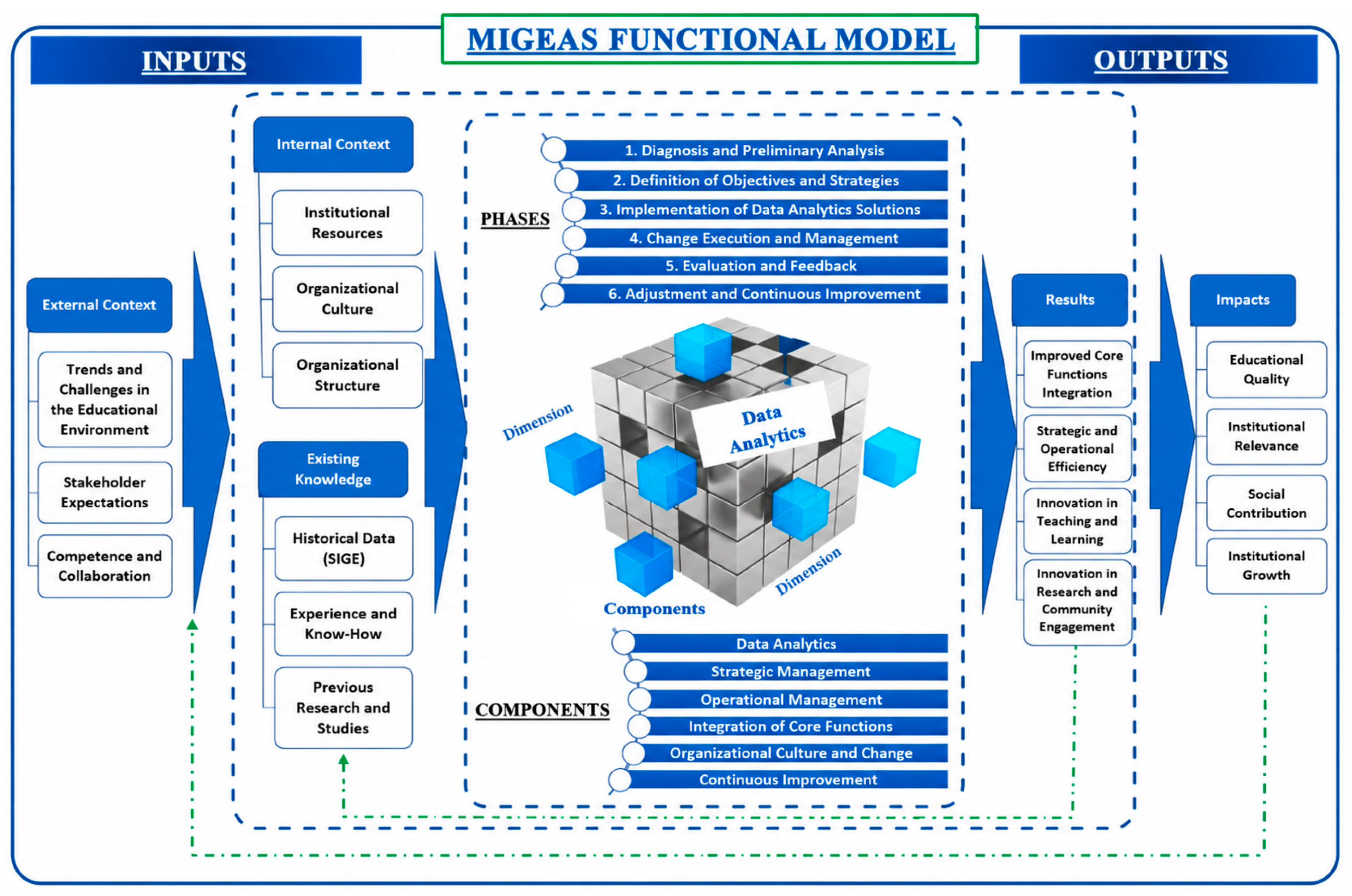
Figure 1 illustrates its functional architecture and operational flow from contextual inputs to institutional outputs and impacts.
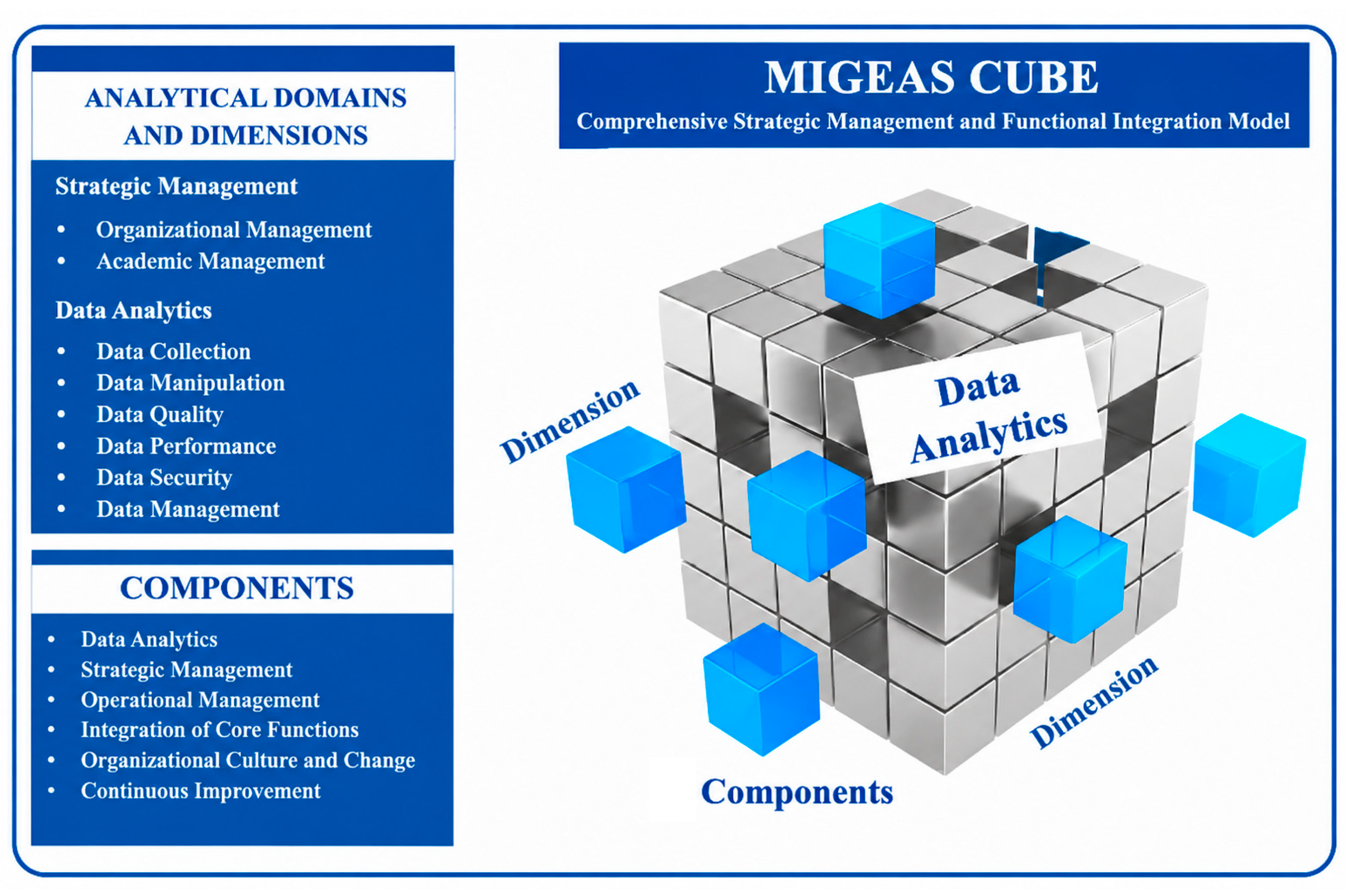
Figure 2 presents the MIGEAS Cube as the conceptual architecture connecting Strategic Management, Data Analytics, and the framework components.
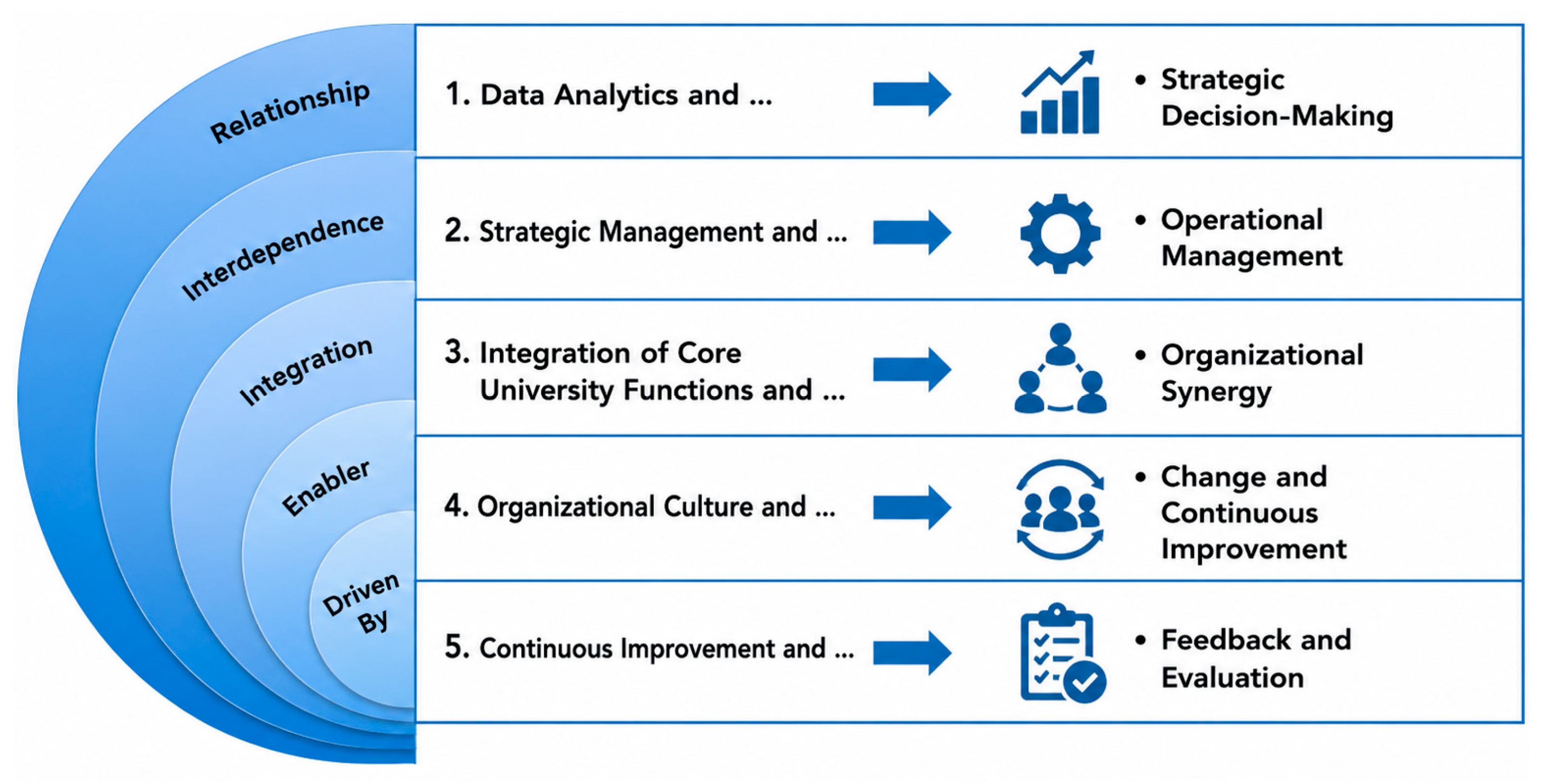
Figure 3 summarizes the foundational relationships that support strategic decision-making, functional integration, organizational adaptation, and continuous improvement.
Figure 1 illustrates the functional architecture of MIGEAS, integrating contextual inputs, implementation phases, Data Analytics capabilities, organizational components, outputs, and institutional impacts. Through this architecture, the framework connects strategic planning, operational execution, functional integration, performance monitoring, and continuous improvement to support evidence-based decision-making and the articulation of Teaching, Research, and Community Engagement.
To provide a multidimensional representation of the framework, the conceptual architecture was organized through a strategic cube structure.
Figure 2 provides the conceptual representation of the MIGEAS core through a multidimensional cube. Unlike
Figure 1, which illustrates the functional flow of the framework from inputs to outputs and institutional impacts, the MIGEAS Cube represents the internal conceptual architecture through which Strategic Management, Data Analytics, and the framework components interact. The cube should therefore be interpreted as the integrative core of the functional model rather than as a sequential process.
Within the MIGEAS Cube, the main dimensions represent the strategic and analytical domains that structure the framework. The Strategic Management dimension encompasses the institutional processes required to define objectives, coordinate resources, monitor performance, and align the core university functions with institutional priorities. The Data Analytics dimension operates transversally by supporting data collection, processing, analysis, visualization, and evidence generation for decision-making. The framework components connect these dimensions with the operational requirements of functional integration and continuous improvement. The smaller blue cubes do not represent additional dimensions or independent sub-models; rather, they visually represent the interconnected operational components through which the strategic and analytical dimensions are translated into institutional processes.
The MIGEAS Cube therefore provides a conceptual synthesis of the relationships among strategic objectives, institutional processes, functional integration, and analytical capabilities. Its purpose is to represent how the principal domains and components of MIGEAS interact within a unified architecture, complementing the operational sequence illustrated in
Figure 1.
The theoretical and conceptual relationships supporting the framework are represented in the following model.
Figure 3 illustrates the foundational relationships among Data Analytics, Strategic Management, Functional Integration, Organizational Culture and Change, and Continuous Improvement. These interdependent relationships constitute the theoretical basis of MIGEAS and explain how strategic decision-making, operational coordination, organizational adaptation, feedback, and institutional learning are conceptually connected within the framework.
In
Table 7, to facilitate implementation, the framework was structured into sequential methodological phases.
The implementation process begins with institutional diagnosis and strategic planning activities, followed by data integration and analytics processes that support evidence generation. Subsequently, strategic initiatives are executed and monitored through performance indicators, allowing institutions to evaluate outcomes and establish continuous improvement mechanisms. This cyclical approach promotes organizational learning and ensures the sustainability of strategic management practices.
The incorporation of data analytics throughout all phases of the framework represents one of the main innovations of MIGEAS, enabling institutions to transform operational data into strategic knowledge for decision-making.
4.4. Modified Delphi Expert Validation Results
The modified Delphi procedure involved the same five experts across three successive rounds of evaluation and refinement. The expert panel assessed MIGEAS across six predefined domains: Relevance, Framework Structure, Implementation, Potential Impact, User Satisfaction, and Data Management. The results reported in this section therefore represent judgments and within-panel agreement among the participating experts rather than evidence of external validity or population-level generalizability.
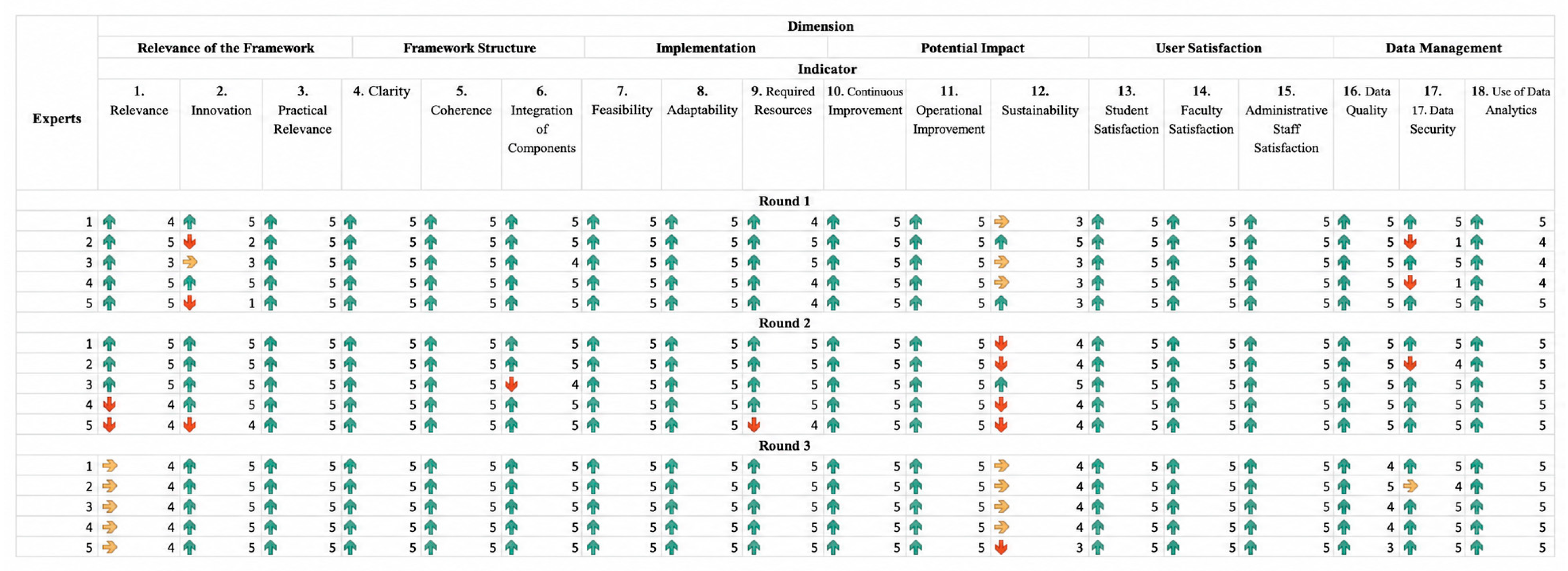
Across the three rounds, the item-level expert assessments summarized in
Figure 4 show progressively stronger agreement regarding the conceptual relevance, structural coherence, implementation considerations, potential institutional contribution, user-oriented aspects, and Data Analytics capabilities of MIGEAS. The qualitative recommendations provided by the panel also identified specific aspects requiring refinement, particularly the clarity of the framework structure, relationships among components, implementation guidance, data-related requirements, and the operational role of Data Analytics.
In Round 1, the five experts independently assessed MIGEAS across the six predefined evaluation domains. The initial evaluation identified areas of agreement as well as aspects requiring further refinement, particularly implementation feasibility, sustainability considerations, data quality, and the institutional understanding of analytics-driven management practices. These observations provided the first set of structured recommendations for revising the framework before the second round.
Before Round 2, the framework was revised in response to the recommendations obtained in the first iteration. The modifications focused on improving the clarity of the framework structure, strengthening the relationships among its components, refining implementation guidance, and clarifying the integration of Data Analytics within institutional management processes. The second-round assessments indicated that some concerns had been addressed, although the overall level of concordance remained similar to that observed in Round 1, indicating the need for further refinement before the final round.
Following additional revisions derived from the second-round feedback, Round 3 evaluated the refined version of MIGEAS. The third-round assessments showed substantially stronger within-panel concordance than the two preceding rounds. This increase indicates that the successive modifications reduced disagreement among the participating experts and produced greater convergence in their judgments regarding the refined framework. Given the limited and purposively selected panel, this result is interpreted as evidence of increased agreement within the expert group rather than as confirmation of external validity, institutional effectiveness, or generalizability across HEIs. See
Table 8.
The expert assessments showed that the strongest convergence occurred in the third round, following the successive revisions introduced in response to panel feedback. In the final iteration, the participating experts exhibited greater agreement across the evaluated domains, particularly regarding framework relevance, structural coherence, implementation considerations, and the role of Data Analytics. This pattern is interpreted as evidence of increased within-panel convergence following iterative refinement.
The final-round expert judgments indicated favorable assessments of the conceptual consistency of MIGEAS and its alignment with strategic management requirements considered relevant by the panel. Experts also identified potential contributions related to institutional coordination, the articulation of core university functions, and responsiveness to quality-assurance requirements. These assessments represent expert judgments regarding the proposed framework and should not be interpreted as evidence of effects observed through institutional implementation.
Regarding implementation, the experts considered that the framework could potentially be adapted to different institutional contexts, provided that minimum technological infrastructure, data-management capabilities, and organizational commitment to data-informed management are available. The panel also identified the integration of Data Analytics as a relevant feature of MIGEAS because of its potential to support descriptive, predictive, and prescriptive analytical processes. In
Table 9, these observations concern perceived implementation feasibility and potential utility and were not derived from field implementation of the framework.
Kendall’s coefficient of concordance showed that within-panel agreement remained moderate and nearly unchanged between the first two modified Delphi rounds (Round 1: W = 0.429, χ2 = 36.505, df = 17, p = 0.004; Round 2: W = 0.431, χ2 = 36.649, df = 17, p = 0.004). Following additional refinement of the framework based on the second-round feedback, agreement increased substantially in Round 3 (W = 0.921, χ2 = 78.279, df = 17, p < 0.001). Within the scope of the five-member panel, this result indicates a marked reduction in disagreement and strong convergence of expert judgments regarding the refined version of MIGEAS.
Taken together, the three-round modified Delphi results provide structured expert-based support for the conceptual relevance and internal coherence of the refined MIGEAS framework. The substantial increase in within-panel agreement observed in the final round indicates that the iterative refinement process successfully reduced disagreement among the participating experts. However, these findings represent expert judgment within a purposively selected five-member panel and do not establish external validity, institutional effectiveness, or generalizability. Evaluation of MIGEAS through broader expert panels and empirical implementation across different HEI contexts therefore remains necessary.
5. Discussion
The integrated diagnostic findings identified a recurring gap between the existence of formal strategic management mechanisms and their effective articulation with institutional processes, core university functions, and data-informed decision-making. In the contexts represented by the diagnostic evidence, fragmented processes, limited coordination among Teaching, Research, and Community Engagement, and insufficient integration of institutional data constrained the translation of strategic planning into coordinated operational practice. This finding is consistent with strategic management perspectives emphasizing that institutional planning generates organizational value only when strategic priorities are connected with implementation, performance monitoring, and organizational capabilities (
Bryson, 2018;
Porter, 2008). Within this context, MIGEAS addresses the identified gap by explicitly connecting Strategic Management, Operational Management, Functional Integration, Data Analytics, and Continuous Improvement within a unified architecture.
The diagnostic evidence further suggests that strategic management should be interpreted beyond the formulation of institutional plans and considered in relation to governance, operational execution, performance monitoring, and organizational adaptation. This interpretation is consistent with strategic management literature that emphasizes the connection between strategic formulation, implementation, control, and institutional responsiveness (
Bryson, 2018;
Anthony & Govindarajan, 2007). For MIGEAS, this distinction is particularly relevant because Strategic Management establishes institutional direction, whereas Operational Management translates strategic priorities into coordinated processes and Continuous Improvement reconnects performance evidence with subsequent strategic adjustment.
A second relevant diagnostic pattern concerned the coexistence of technological and organizational barriers. Fragmented information structures, limitations in analytical capabilities, and challenges related to data quality and accessibility were accompanied by organizational factors such as the need for stronger coordination and institutional readiness. This convergence is consistent with previous research indicating that functional integration and strategic transformation depend not only on technological infrastructure but also on coordinated governance, stakeholder participation, organizational adaptation, and change-management capabilities (
Acosta et al., 2017;
Romero Hidalgo, 2016;
Penbek et al., 2011). Accordingly, MIGEAS incorporates Organizational Culture and Change as an explicit component rather than treating institutional transformation as a predominantly technological process.
A further diagnostic pattern concerned the gap between the availability of institutional data and their systematic transformation into strategic evidence. Although the specialized informants recognized the value of institutional data for planning and decision-making, the diagnostic evidence identified limitations in automation, accessibility, technological integration, and the systematic use of Data Analytics. This distinction is important because data availability alone does not constitute analytical capability; institutional value emerges when data can be reliably collected, governed, processed, interpreted, and connected with decision-making processes. This interpretation is consistent with research emphasizing Data Analytics as an organizational capability for transforming data into actionable knowledge rather than merely as a technological infrastructure (
Koohang & Nord, 2021). Within MIGEAS, Data Analytics is therefore positioned as a cross-cutting capability connecting institutional information with strategic monitoring, operational management, and continuous improvement.
The resulting MIGEAS architecture responds to the conceptual gap identified in
Section 2.5 by integrating domains that are frequently addressed separately in strategic management and data-driven higher education approaches. Rather than treating strategic planning, operational execution, functional integration, Data Analytics, organizational change, and continuous improvement as independent mechanisms, MIGEAS organizes them as interdependent components of a single conceptual and operational architecture. This integration constitutes the principal theoretical contribution of the framework: Data Analytics is not positioned as an auxiliary technological layer, and Functional Integration is not treated as an isolated coordination objective; instead, both are structurally connected with strategic and operational management through iterative monitoring and continuous improvement.
Functional Integration represents a second theoretical contribution of MIGEAS. The diagnostic evidence identified limitations in the operational articulation of Teaching, Research, and Community Engagement despite the presence of formal planning mechanisms. This finding is consistent with literature emphasizing that effective articulation of core university functions requires coordinated governance structures, shared institutional objectives, performance indicators, and mechanisms for collaboration across organizational units (
Acosta et al., 2017;
Romero Hidalgo, 2016;
CACES, 2023). MIGEAS responds conceptually to this challenge by positioning Functional Integration between strategic direction and operational execution, thereby providing an explicit mechanism through which institutional objectives can be translated into coordinated actions across the three core functions.
The three-round modified Delphi procedure provided structured expert-based evidence for the iterative refinement of MIGEAS. Within the five-member panel, agreement remained moderate and nearly unchanged between the first two rounds (W = 0.429 and W = 0.431, respectively), whereas substantially stronger concordance was observed after the additional refinements introduced before Round 3 (W = 0.921). This pattern indicates that the iterative process progressively clarified aspects of the framework that had generated disagreement among the participating experts. The final level of concordance therefore supports the internal coherence of the refined framework as judged by this panel, but it should not be interpreted as evidence of external validity, institutional effectiveness, or generalizability across HEIs.
The use of structured expert judgment before institutional implementation is consistent with design-oriented research approaches in which conceptual artifacts are iteratively assessed and refined prior to field evaluation (
McKenney & Reeves, 2012). In the present study, the modified Delphi procedure served this refinement purpose by identifying areas of disagreement and enabling successive adjustments to the MIGEAS architecture. Accordingly, the expert assessment should be understood as a formative evaluation of the framework’s conceptual coherence and perceived feasibility rather than as empirical confirmation of its effectiveness in institutional practice.
From a theoretical perspective, MIGEAS contributes an integrative view of strategic management in higher education by explicitly connecting Strategic Management, Operational Management, Functional Integration, Data Analytics, Organizational Culture and Change, and Continuous Improvement. Its distinctive contribution lies not in introducing these domains individually, but in specifying their interdependence within a unified architecture oriented toward the articulation of core university functions and data-informed decision-making. In this sense, the framework extends strategic management perspectives by positioning Data Analytics as a cross-cutting organizational capability and Functional Integration as an explicit structural mechanism connecting institutional strategy with Teaching, Research, and Community Engagement.
From a methodological perspective, the study illustrates a design-oriented process in which theoretical foundations and complementary diagnostic evidence were translated into explicit framework-design requirements and subsequently refined through structured expert judgment. The methodological contribution lies in the traceability established between diagnostic patterns, design requirements, framework components, and implementation phases. The modified Delphi procedure provided an iterative refinement mechanism through which the same expert panel reassessed successive versions of the framework. This sequence makes explicit how MIGEAS evolved from the initial theoretical and diagnostic foundations to the refined conceptual and operational architecture presented in the study.
From a practical perspective, MIGEAS provides institutional leaders, planning teams, and quality-assurance practitioners with a structured architecture for examining how strategic direction, operational processes, core university functions, institutional data, organizational adaptation, and continuous improvement can be connected. Its six implementation phases provide a potential pathway for translating the framework into institutional practice, beginning with strategic diagnosis and progressing through the definition of objectives and strategies, Data Analytics implementation, change management, evaluation and feedback, and continuous improvement. However, these practical implications currently represent design propositions supported by diagnostic evidence and expert judgment; their effectiveness, scalability, and adaptability require evaluation through empirical implementation in different institutional contexts.
Despite these contributions, several limitations should be acknowledged. First, the exploratory diagnostic questionnaire involved four purposively selected institutional planning professionals and was intended to identify contextual patterns and framework-design requirements rather than to produce statistically generalizable estimates. Second, the empirical diagnostic evidence was primarily derived from a single Ecuadorian HEI, which limits the extent to which the identified organizational conditions can be assumed to represent other higher education contexts. Third, the modified Delphi procedure involved five purposively selected experts; consequently, the final Kendall’s W reflects agreement within this panel and should not be interpreted as external validation of the framework. Fourth, MIGEAS was evaluated conceptually and through structured expert judgment but has not yet been subjected to longitudinal institutional implementation. Accordingly, claims regarding effectiveness, scalability, sustainability, transferability, and impact on institutional performance remain to be empirically tested. Finally, the rapid evolution of Data Analytics technologies may require periodic adaptation of the framework to incorporate emerging analytical capabilities and data-governance requirements.
Future research should prioritize the empirical implementation and evaluation of MIGEAS across multiple HEIs with different governance structures, institutional sizes, technological maturity levels, and organizational contexts. Longitudinal studies should examine how the framework relates to strategic alignment, functional integration, data-informed decision-making, organizational adaptation, and continuous improvement over time. Broader and more diverse expert panels could also be used to reassess the conceptual architecture, while comparative studies could identify which components and implementation phases require contextual adaptation. Future research should additionally develop and test measurable indicators associated with each MIGEAS component and implementation phase to evaluate institutional outcomes. The integration of artificial intelligence, predictive analytics, and advanced decision-support systems also represents a relevant avenue for extending the analytical capabilities of the framework.