
“Stepping into Wellbeing”: Informal Mindful Pedagogy for Student Wellbeing in Higher Education—A Case Study of Applied Learning

Abstract
1. Introduction
1.1. Wellbeing in Higher Education
1.2. Pedagogies of Wellbeing
2. Materials and Methods
2.1. Introduction Methodological Overview
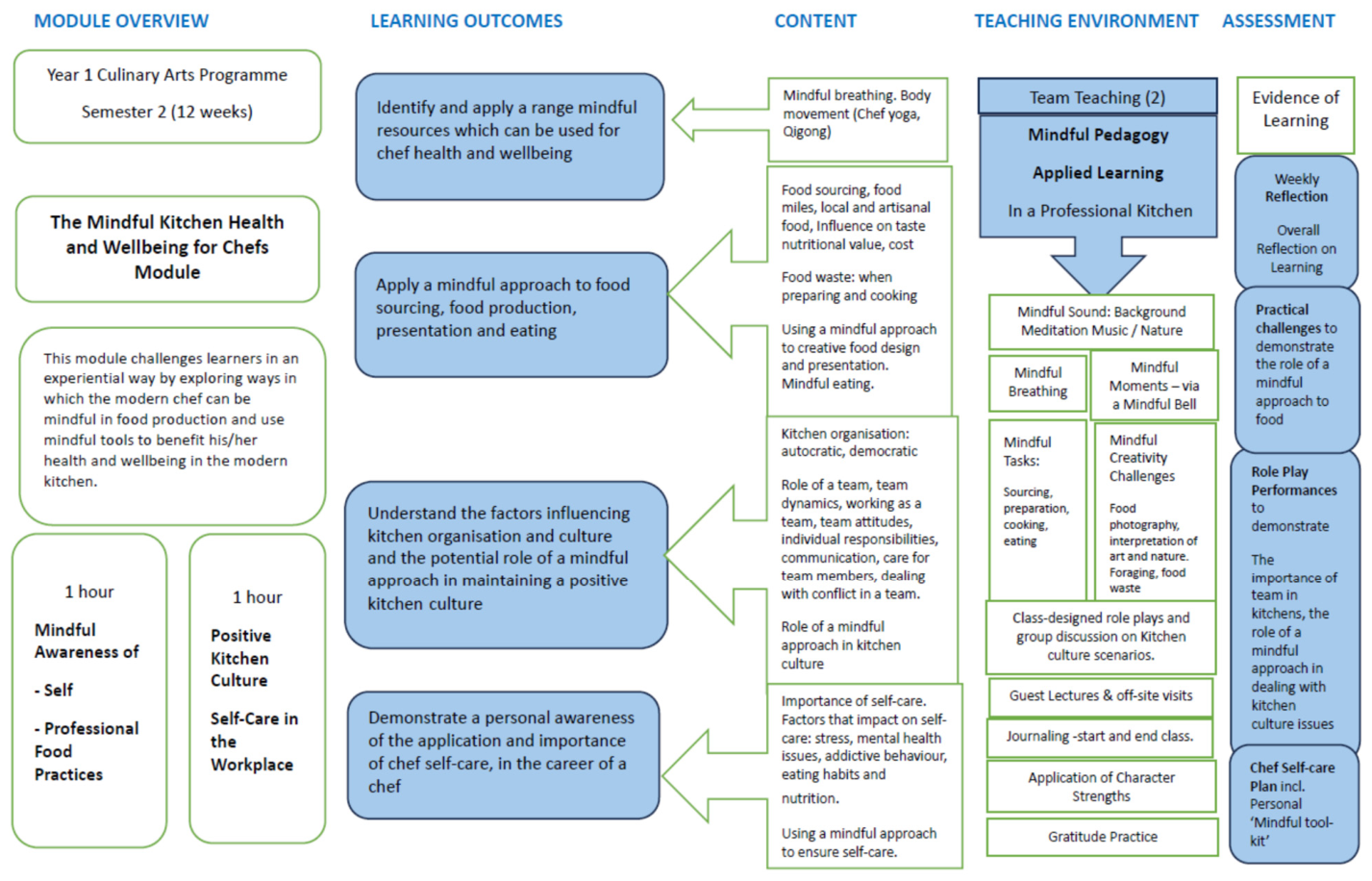
2.2. Research Context
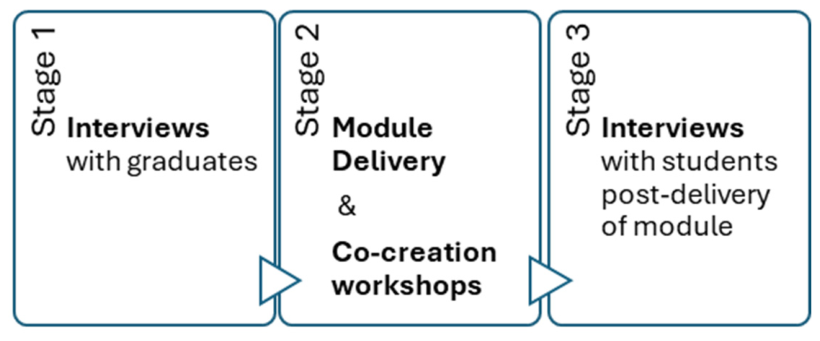
2.3. Study Design
2.4. Participants
2.5. Ethical Considerations
2.6. Data Collection
2.6.1. Semi-Structured Interviews
2.6.2. Classroom Artefacts
2.6.3. Co-Creation Workshops
2.6.4. Class Observation
2.7. Data Analysis
3. Results
3.1. Theme 1: “Stepping into Wellbeing” Using the Breadth Builds Self-Awareness
3.1.1. Self-Awareness of Stress and Anxiety
“Like just because going into college new situation, it’s overwhelming naturally. And everything is new. You know, the smallest things become stressful for no reason.”(I_051224, Pos. 2)
“You can burn out physically if you burn out mentally, it’s a lot harder to get back.”(I_220524, Pos. 2)
“The whole thing helped me, helped me understand and help me more or less see, see myself in a different way.”(I_011225, Pos. 70)
“It meant being able to come into the kitchen and take those few minutes just to ask myself, how am I doing?”(I_141104, Pos. 2)
3.1.2. Breathing as a Relaxation Skill
“I really enjoyed the breathing techniques, the practice, because obviously you tend to forget to breathe in a relaxing way, and it’s almost kind of reins you back to a relaxing state.”(I_260424, Pos. 2)
“I can take deep breaths, and, like, you can reconnect with yourself and you’re able to do it.”(S2_010525_5, Pos. 12)
“Then you’d go into the kitchen, and it’d be like, take a minute, take a breather. You know, it’s grand.”(I_051224, Pos. 2)
“It really puts you in a different frame of mind, and it kind of makes you a lot more creative. And I just feel that you just overall work a lot better when you’re in that situation because you’re a lot more relaxed.”(I_220524, Pos. 2)
“It kind of it helps us face that stress from the beginning.”(I_260424, Pos. 2)
“Before stepping into the kitchen so you can take that time to relax before stepping into a professional mindset.”(I_141104, Pos. 2)
3.1.3. Emotional Regulation Through Breathing Practice
“I’m more mindful of, like how I talk to people, which is very helpful to me.”(S2_010525_2, Pos. 16)
“I thought it was a good insight kind of into industry, like how to, if you’re pressured, how to like stay calm.”(I_090125 (1), Pos. 4)
“It’s helped me like in any kind of leadership, kind of just take a step back instead of being what people are classified as old, old style chefs going in very angry and saying they want to this way, that way, this way, I go in with more like a democratic look to the kitchen instead of a dictatorship.”(I_110225.v1, Pos. 14)
“If you do that from when you are a student, if you instil that mindset, I think when you leave the college and go to work, that’s where it will make sense as well. It will kind of make you want to have these, these things in work. And then if everybody thinks the same things start changing.”(I_260424, Pos. 2)
3.1.4. Breathing—The Most Valued Self-Care Tool
“It’s so simple, but you don’t realize it until it’s brought to your attention the simplicity of it.”(I_051224, Pos. 2)
“So, it’s something you can do quietly and it’s not noticeable. And it helps you.”(I_091224, Pos. 174)
“You feel with the breathing there is an instant feel of wellbeing. And it’s something that you don’t realize until you do it.”(I_260424, Pos. 2)
“Like, step back, relax. You know, it doesn’t need to be 100 miles an hour. You can breathe.”(I_051224, Pos. 2)
“So, I just step aside a little bit. I just breathe for even go out for 2 or 3 minutes and then you reset. You take a few breaths, and you come back and everything is gone.”(S2_010525_4, Pos. 37)
“So yesterday from my pastry exam I was very, very stressed out. And I didn’t think I was going to go through with it. And I was able to take a deep breath. I actually went outside for a little walk, like you said to. Yeah. And so, and I came back into my exam and everything was fine.”(S2_010525_5, Pos. 10)
3.1.5. Building Wellbeing as a Subconscious Habit
“Because I do the breathing just before I go in and just before service. And if I have time during the day, I do it during lunch.”(I_220524, Pos. 2)
3.2. Theme 2: A Mindful Environment Builds Creative Confidence
“It was kind of slow, like, really chill environment. Like a really calm environment.”(I_090125 (1), Pos. 10)
“It was more relaxed. But we were still learning, but in a different kind of way in our head.”(I_130225, Pos. 46)
“But it definitely showed me a way to be creative and how to unleash your creativity.”(I_251124, Pos. 2)
“Definitely prior to ever doing the Mindful Kitchen. I never had given myself any space to allow to think that I am creative.”(I_251124, Pos. 2)
“I never ever had creativity. Well, I never believed I had creativity. I always I never showed Like if I had an idea, I never brought it to the table because I always thought it was a bit of a silly idea or I always doubted myself.”(S2_010525_5, Pos. 40)
“Where I work now is a really open space where our opinions are valued a lot. So, I can be as creative as I want to be. And I feel like mindful kitchen brought a lot of that creativity for me.”(I_141104, Pos. 2)
“I feel more creative. More confident in myself as, a like as a young chef. Like it really, really helped boost like boost my self-esteem because I was such a low self-esteem kind of person. Like I, I’m always hard on myself.”(1_011225, Pos. 66–67)
3.3. Theme 3: Calm Minds Empower the Self for the Workplace
“Just to take yourself out of the kitchen for a minute in your head.”(I_141104, Pos. 2)
“Steps to know how to manage your anger. Don’t let your feelings take over you.”(S2_010525_4, Pos. 19)
“There’s no point in running yourself into the ground because then you’re going to have to, you’re going to burn out and you’re going to have to take a break or leave.”(I_051224, Pos. 2)
“Being a leader, is more about creating a good atmosphere and a good kind of friendly kind of work, teamwork environment.”(I_251124, Pos. 2)
3.4. Theme 4: Informal Mindful Pedagogy Creates “Spacious Applied Learning”
3.4.1. Spacious Learning
“The fact that you are more relaxed. It gives you that space to be able to learn, to access learning in a, in a relaxing way.”(I_260424, Pos. 2)
“It meant being able to come into the kitchen and take those few minutes just to ask myself, how am I doing? And then also, in the best way possible, trying to leave any emotional baggage or family and friend dramas at the door just before stepping into the kitchen so you can take that time to relax before stepping into a professional mindset.”(I_141104, Pos. 2)
“I think the music is brilliant, like, because it’s one of those like as soon as you hear it, it really puts you at ease. I just think it completely changes your train of thought. Like, and you can really feel the stress going as you’re listening to it, like, which is absolutely brilliant.”(I_220524, Pos. 2)
“Because there I was able to disconnect and be able to like calm down, that was good because you’re able to just, like, go into a different mindset.”(S2_010525_5, Pos. 26–28)
“I think I definitely learned better that way. I was engaged with the module.”(I_251124, Pos. 2)
“It’s a nice break. Like especially like, as you said, that point in the week. Good break a stop and lets you relax a bit during what is otherwise a very busy college week.”(S2_010525_6, Pos. 180)
“The whole thing helped me understand and help me more or less see, see myself in a different way.”(1_011225, Pos. 70)
3.4.2. Building Wellbeing Skills
“That’s like that’s kind of all I think about when I, when I get told or asked about this module Is just think about self-care.”(I_141104, Pos. 2)
“I do think it’s a very important learning in here, like to have that balance of looking after yourself as well as being good in the kitchen, you know.”(I_251124, Pos. 2)
“It made me like, realise like, how grateful I was for, like, everything I have, you know? And like, before, I thought I was actually, like, not very grateful for what I had. But now, after this, I was like. I realised I’m very grateful for everything I have.”(S2_010525_2, Pos. 71)
3.4.3. Applied Learning Outcomes
“As a new student, it kind of helps because we were just discovering how the kitchen culture is and sometimes it can be quite tough environment, especially even a young student. And it’s something that you don’t know about really until you discover it.”(I_260424, Pos. 2)
“Probably leadership was a big one for me because I always felt I was never in, like a leadership mindset or a leadership role. And I had strengths that I never realized were there until I was challenged inside of professional kitchens.”(I_141104, Pos. 2)
“I want to be an autocratic and diplomatic chef. Being a diplomatic chef is good as I believe you should treat other chefs with kindness and respect but however you need to set boundaries. Being an autocratic chef can also be good as you set boundaries, and you have respect for yourself but however you need to have to show respect and be kind to other chefs. Being mean and disrespectful to other chefs will not get you anywhere, because at the end of the day you’re all chefs and need to respect each other because you’re all there to learn and need to work together as a team whether if you’re in college or in a restaurant.”(Self-care Plan Student 2025_6, Pos. 7)
“If you do that from when you are a student, if you instill that mindset, I think when you leave the college and go to work, that’s where it will make sense as well. It will kind of, make you want to have these, these things in work. And then if everybody thinks the same things start changing.”(I_260424, Pos. 2)
“I feel bad for the people who didn’t who didn’t have it before. Because I know you kind of you’re kind of doing it and you’re kind of laughing at what you’re doing. But I feel like in those moments, you don’t realize the effect it’s going to have on your career down the line. I feel like when you’re doing it, you’re like, oh, this is just gobbledygook. But more as you go out into the industry, you realize how much it helped you. Instead of being used by the industry. Yeah.”(I_110225.v, Pos. 103)
“I brought nature into the dish. It also stems from the Mindful Kitchen because then you start appreciating, you know, nature, the plants outdoor, you have a better relationship, with nature when you’re more relaxed. And because the mindful kitchen made you think, oh, where this, this food is coming from, where how to cook in a mindful way to protect the environment because you haven’t sourced from miles away.”(I_260424, Pos. 2)
3.4.4. Student Mindful Tool Kit for Applied Wellbeing
“I think giving people in general that kind of toolkit that they can piece together themselves is incredible. It’s like even if 90% of it is useless for someone about 10%, just that extra tool in their, day to day or their work or whatever. That that on its own is worth a course. Just to give them that availability for that stuff.”(S2_010525_6, Pos. 182)
- Chef yoga:“If I’m stressed, I start walking back and forward like on my feet from tippy toes back.”(I_090125 (1), Pos. 20)
- Qigong:“I think it was just a bit unrealistic.”(I_051224, Pos. 2)
- Nature practice:“You start appreciating, you know, nature, the plants outdoor, you have a better relationship with the, with nature when you’re more relaxed.”(I_260424, Pos. 2)
- Music:“I think it just soothes you instantly when you hear relaxing music.”(I_220524, Pos. 2)“Sometimes I play some peaceful music on the bus. That’s my time to kind of wind down.”(I_141104, Pos. 2)
- Photography:“Quite like the one where we took a picture and then had to recreate it with the food.”(S2_010525_1, Pos. 34)
- Mindful tea exercise:“I quite like that kind of, ceremony kind of thing, like having that kind of step as, as I said, I like that structure. It’s very nice. It’s very centred and organised.”(S2_010525_6, Pos. 192)
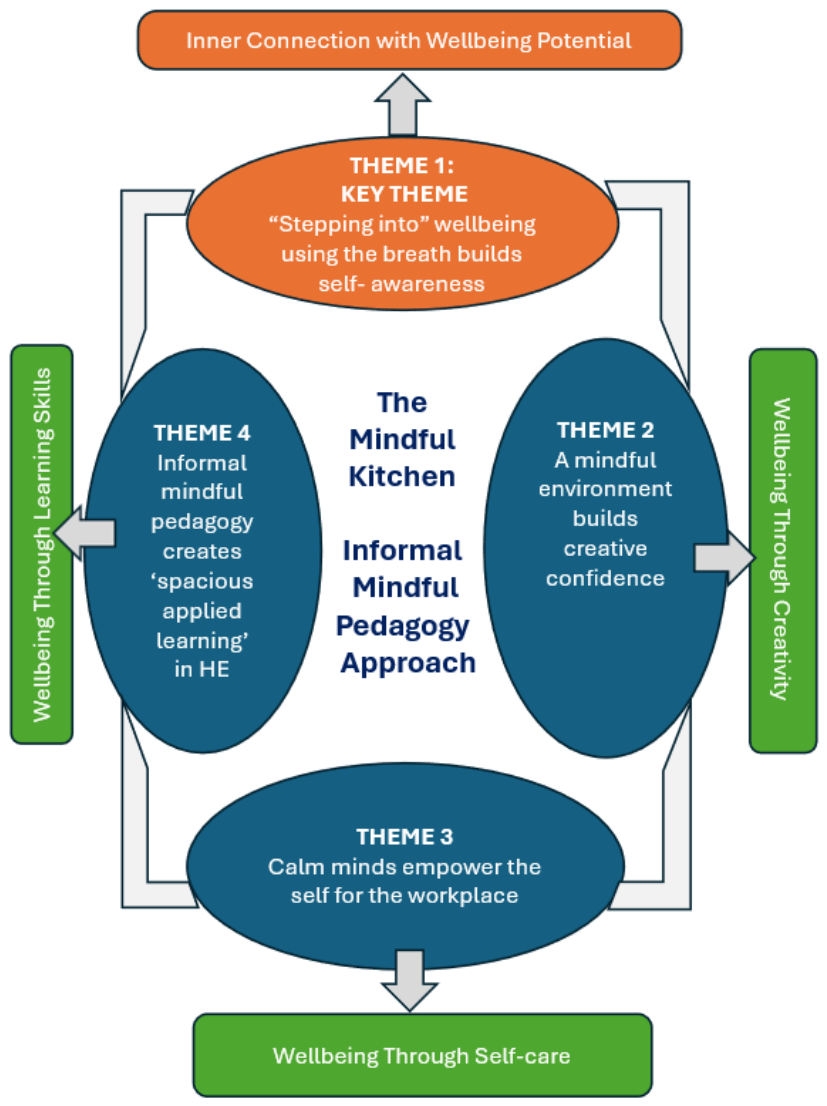
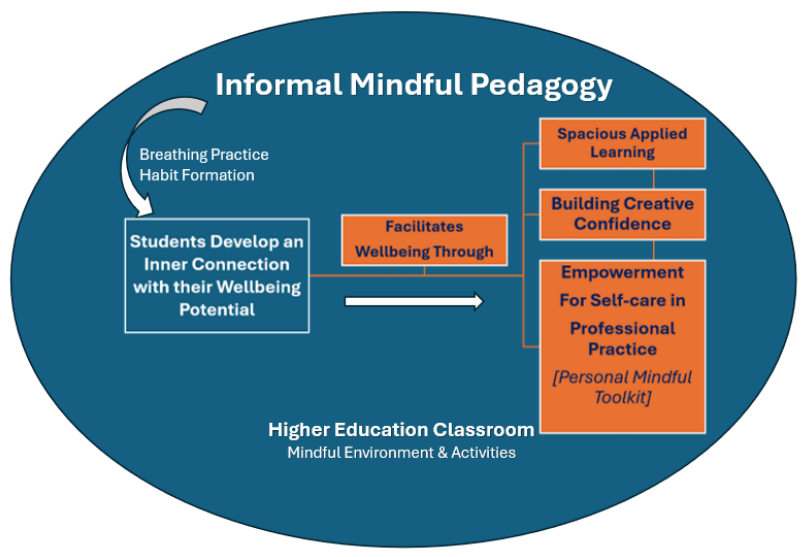
3.5. Proposed Conceptual Model
4. Discussion
4.1. Fostering a Pathway to Psychological Wellbeing
4.2. The Role of an Informal Mindful Environment in Wellbeing
4.3. Fostering Creative Freedom
4.4. Transferability of Findings to Other Disciplines
4.5. Implications for Research and Practice
4.6. Limitations
5. Conclusions
Supplementary Materials
Author Contributions
Funding
Institutional Review Board Statement
Informed Consent Statement
Data Availability Statement
Acknowledgments
Conflicts of Interest
Abbreviation
| HE | Higher Education |
References
- Almarzouki, A. F. (2024). Stress, working memory, and academic performance: A neuroscience perspective. Stress, 27(1), 2364333. [Google Scholar] [CrossRef] [PubMed]
- Attia, M., Ibrahim, F. A., Elsady, M. A.-E., Khorkhash, M. K., Rizk, M. A., Shah, J., & Amer, S. A. (2022). Cognitive, emotional, physical, and behavioral stress-related symptoms and coping strategies among university students during the third wave of COVID-19 pandemic. Frontiers in Psychiatry, 13, 933981. [Google Scholar] [CrossRef] [PubMed]
- Bandura, A. (1997). Self-efficacy: The exercise of control. W H Freeman. [Google Scholar]
- Bannigan, G., McGrath, D., & Matthews, J. (2025). Whole-university approaches to embedding well-being in the curriculum: A scoping review. Frontiers in Education, 10, 1534244. [Google Scholar] [CrossRef]
- Basileo, L. D., Otto, B., Lyons, M., Vannini, N., & Toth, M. D. (2024). The role of self-efficacy, motivation, and perceived support of students’ basic psychological needs in academic achievement. Frontiers in Education, 9, 1385442. [Google Scholar] [CrossRef]
- Beghetto, R. A. (2019). Structured uncertainty: How creativity thrives under constraints and uncertainty. In C. A. Mullen (Ed.), Creativity under duress in education? Creativity theory and action in education (Vol. 3, pp. 37–40). Springer. [Google Scholar] [CrossRef]
- Beresford, K., Kern, M. L., & Jarden, A. (2025). The creative-being model: The role of negative emotion in creative flourishing and the impact on positive education. The Journal of Positive Psychology, 20(1), 59–71. [Google Scholar] [CrossRef]
- Birtwell, K., Williams, K., van Marwijk, H., Armitage, C. J., & Sheffield, D. (2019). An exploration of formal and informal mindfulness practice and associations with wellbeing. Mindfulness, 10, 89–99. [Google Scholar] [CrossRef] [PubMed]
- Bloisi, W., & Hoel, H. (2008). Abusive work practices and bullying among chefs: A review of the literature. International Journal of Hospitality Management, 27, 649–656. [Google Scholar] [CrossRef]
- Bond, F. W., & Flaxman, P. E. (2006). The ability of psychological flexibility and job control to predict learning, job performance, and mental health. Journal of Organizational Behavior Management, 26(1–2), 113–130. [Google Scholar] [CrossRef]
- Bond, F. W., Flaxman, P. E., & Bunce, D. (2008). The influence of psychological flexibility on work redesign: Mediated moderation of a work reorganization intervention. Journal of Applied Psychology, 93(3), 645–654. [Google Scholar] [CrossRef] [PubMed]
- Bovill, C. (2020a). Co-creating learning and teaching: Towards relational pedagogy in higher education. Critical Publishing. [Google Scholar]
- Bovill, C. (2020b). Co-creation in learning and teaching: The case for a whole-class approach in higher education. Higher Education, 79, 1023–1037. [Google Scholar] [CrossRef]
- Braun, V., & Clarke, V. (2022). Thematic analysis, a practical guide. SAGE. [Google Scholar]
- Bywater, A., & Keane, H. (2026). Mindfulness and resilience: The experiences of global majority students in a mindfulness intervention programme at a UK university. British Educational Research Journal, 1–23. [Google Scholar] [CrossRef]
- Cain, J. (2019). We should pay more attention to student curiosity. Currents in Pharmacy Teaching and Learning, 11(7), 651–654. [Google Scholar] [CrossRef] [PubMed]
- Cardi, V., Albano, G., Gentili, C., & Sudulich, L. (2021). The impact of emotion regulation and mental health difficulties on health behaviours during COVID19. Journal of Psychiatry Research, 143, 409–415. [Google Scholar] [CrossRef] [PubMed]
- Castillo, L. (2025). Using pedagogies of emergence to cultivate well-being in students. British Journal of Educational Studies, 73(2), 235–254. [Google Scholar] [CrossRef]
- Cerasa, A., Fabbricatore, C., Ferraro, G., Pozzulo, R., Martino, I., & Liuzza, M. T. (2020). Work-related stress among chefs: A predictive model of health complaints. Frontiers in Public Health, 8, 68. [Google Scholar] [CrossRef] [PubMed]
- Chervonsky, E., & Hunt, C. (2019). Emotion regulation, mental health, and social wellbeing in a young adolescent sample: A concurrent and longitudinal investigation. Emotion, 19, 270–282. [Google Scholar] [CrossRef] [PubMed]
- Cresswell, J. W. (2014). A concise introduction to mixed methods research. SAGE Publications. [Google Scholar]
- Crowther, L. L., Robertson, N., & Anderson, E. S. (2020). Mindfulness for undergraduate health and social care professional students: Findings from a qualitative scoping review using the 3P model. Medical Education in Review, 54, 796–810. [Google Scholar] [CrossRef] [PubMed]
- Csikszentmihalyi, M. (1990). Flow: The psychology of optimal experience. Harper Perennial. [Google Scholar]
- Csikszentmihalyi, M. (2014). The systems model of creativity: The collected works of Mihaly Csikszentmihalyi. Springer. [Google Scholar]
- Cutuli, D. (2014). Cognitive reappraisal and expressive suppression strategies role in the emotion regulation: An overview on their modulatory effects and neural correlates. Frontiers in Systems Neuroscience, 8, 175. [Google Scholar] [CrossRef] [PubMed]
- Dahl, C. J., Wilson-Mendenhall, C. D., & Davidson, R. J. (2020). The plasticity of well-being: A training-based framework for the cultivation of human flourishing. Proceedings of the National Academy of Sciences of the United States of America, 117(51), 32197–32206. [Google Scholar] [CrossRef] [PubMed]
- Davidson, R. J., & Kaszniak, A. W. (2015). Conceptual and methodological issues in research on mindfulness and meditation. American Psychologist, 70(7), 581–592. [Google Scholar] [CrossRef] [PubMed]
- Deci, E. L., & Ryan, R. M. (2008). Self-determination theory: A macro theory of human motivation, development, and health. Canadian Psychology, 49, 182–185. [Google Scholar] [CrossRef]
- Deloitte. (2022). Global 2022 Gen Z and millennial survey. The Deloitte. [Google Scholar]
- Deroche, M. H., Kuyken, W., Uwatoko, T., Imoto, Y., & Kusumoto, R. (2025). The mindful way from information to knowledge, to wisdom, and to life: Perspectives on mindfulness (-based cognitive therapy) for higher education. Mindfulness, 16, 846–863. [Google Scholar] [CrossRef] [PubMed]
- De Smet, A., Mugayar-Baldocci, M., Reich, A., & Schaninger, B. (2023). Gen what? Debunking age-based myths about worker preferences. Mc Kinsey & Company. Available online: https://www.mckinsey.com/capabilities/people-and-organizational-performance/our-insights/gen-what-debunking-age-based-myths-about-worker-preferences (accessed on 15 April 2026).
- Diener, E. (1984). Subjective well-being. Psychological Bulletin, 95(3), 542–575. [Google Scholar] [CrossRef]
- Douwes, R., Metselaar, J., Pijnenborg, G. H. M., & Boonstra, N. (2023). Well-being of students in higher education: The importance of a student perspective. Cogent Education, 10(1), 2190697. [Google Scholar] [CrossRef]
- Dumitrescu, R., & De Caluwé, E. (2024). Individual differences in the impostor phenomenon and its relevance in higher education in terms of burnout, generalized anxiety, and fear of failure. Acta Psychologica, 249, 104445. [Google Scholar] [CrossRef] [PubMed]
- Dunuwila, E., Lockerby, E. C., Mackenzie, E. R., & Patel, D. M. (2025). Integrating mindfulness into the academic curriculum: A qualitative study. Journal of American College Health, 74(1), 177–185. [Google Scholar] [CrossRef] [PubMed]
- Ergas, O., & Hadar, L. L. (2023). Does mindfulness belong in higher education?—An eight year research of students’ experiences. Pedagogy, Culture & Society, 31(3), 359–377. [Google Scholar] [CrossRef]
- Fadil, A., Zoraya, A., & Sriyanti, L. (2026). Mindfulness in student life: A phenomenological study of self-awareness, emotional resilience, and identity development. Jurnal Psikologi Insight, 28(1), 1–21. [Google Scholar] [CrossRef]
- Fan, L., & Cui, F. (2024). Mindfulness, self-efficacy, and self-regulation as predictors of psychological well-being in EFL learners. Frontiers in Psychology, 15, 1332002. [Google Scholar] [CrossRef] [PubMed]
- Fredrickson, B. L. (2001). The role of positive emotions in positive psychology: The broaden-and-build theory of positive emotions. American Psychologist, 56(3), 218–226. [Google Scholar] [CrossRef] [PubMed]
- Fredrickson, B. L. (2004). Gratitude, like other positive emotions (pp. 145–166). The Psychology of Gratitude. [Google Scholar]
- Fredrickson, B. L., Cohn, M. A., Coffey, K. A., Pek, J., & Finkel, S. M. (2008). Open hearts build lives: Positive emotions, induced through loving-kindness meditation, build consequential personal resources. Journal of Personality and Social Psychology, 95(5), 1045–1062. [Google Scholar] [CrossRef] [PubMed]
- Freire, C., Ferradás, M. d. M., Núñez, J. C., Valle, A., & Vallejo, G. (2019). Eudaimonic well-being and coping with stress in university students: The mediating/moderating role of self-efficacy. International Journal of Environmental Research and Public Health, 16(1), 48. [Google Scholar] [CrossRef] [PubMed]
- Gilbert, F. (2024). Teaching mindfulness in an unmindful system. British Journal of Educational Studies, 72(3), 359–378. [Google Scholar] [CrossRef]
- Gomm, R., Hammersley, M., & Foster, P. (2000). Case study method. Key issues, key texts. SAGE Publications. [Google Scholar]
- Hassed, C. (2026). Integrating mindfulness as core-curriculum for training medical and allied health professionals. The Asia Pacific Scholar, 11(1), 86–88. [Google Scholar] [CrossRef]
- Hassed, C., & Chambers, R. (2015). Mindful Learning, reduce stress and increase brain performance for effective learning. Shambhala. [Google Scholar]
- Hayes, S. C., Luoma, J. B., Bond, F. W., Masuda, A., & Lillis, J. (2006). Acceptance and commitment therapy: Model, processes and outcomes. Behaviour Research and Therapy, 44(1), 1–25. [Google Scholar] [CrossRef] [PubMed]
- Healey, M., & Healey, R. (2019). Essential frameworks for enhancing student success: Student engagement through partnership. A guide to the Advance HE Framework. Advance HE. Available online: https://www.advance-he.ac.uk/knowledge-hub/essential-frameworks-enhancing-student-success-student-engagement-through-partnership (accessed on 3 April 2026).
- Henriksen, D., Richardson, C., & Shack, K. (2020). Mindfulness and creativity: Implications for thinking and learning. Thinking Skills and Creativity, 37, 100689. [Google Scholar] [CrossRef] [PubMed]
- Hernández-Torrano, D., Ibrayeva, L., Sparks, J., Lim, N., Clementi, A., Almukhambetova, A., Nurtayev, Y., & Muratkyzy, A. (2020). Mental health and well-being of university students: A bibliometric mapping of the literature. Frontiers in Psychology, 11, 1226. [Google Scholar] [CrossRef] [PubMed]
- Hindman, R. K., Glass, C. R., Arnkoff, D. B., & Maron, D. D. (2015). A comparison of formal and informal mindfulness programs for stress reduction in university students. Mindfulness, 6, 873–884. [Google Scholar] [CrossRef]
- Honsky, J., Edguer, M. N., Click, E. R., Rusnak, S., Burgess Van Aken, B., Salerno, M. A., & Berg, K. A. (2025). Mindfulness matters in the classroom: A pilot study of a university-wide classroom-based brief mindfulness program. Journal of American College Health, 73(2), 753–762. [Google Scholar] [CrossRef] [PubMed]
- Huberman, A. (2026). Science-based meditation tools to improve your brain & health (Featuring Richard J. Davidson) [Audio podcast episode]. Huberman Lab. Ascent Audio. Available online: https://www.hubermanlab.com/episode/science-based-meditation-tools-to-improve-your-brain-and-health-richard-davidson (accessed on 30 April 2026).
- Huppert, F. A., & So, T. T. C. (2013). Flourishing across Europe: Application of a new conceptual framework for defining well-being. Social Indicators Research, 110(3), 837–861. [Google Scholar] [CrossRef] [PubMed]
- Kabat-Zinn, J. (2015). Wherever you go, there you are: Mindfulness meditation in everyday life. Hachette. [Google Scholar]
- Kahu, E. R., & Nelson, K. (2018). Student engagement in the educational interface: Understanding the mechanisms of student success. Higher Education Research & Development, 37(1), 58–71. [Google Scholar] [CrossRef]
- Kashdan, T. B., & Steger, M. F. (2007). Curiosity and pathways to well-being and meaning in life: Traits, states, and everyday behaviors. Motivation and Emotion, 31(3), 159–173. [Google Scholar] [CrossRef]
- König, D. (2020). Emotion regulation. In M. Gellman (Ed.), Encyclopedia of behavioral medicine (pp. 1–2). Springer. [Google Scholar] [CrossRef] [PubMed]
- Kral, T. R. A., Kesebir, P., Redford, L., Dahl, C. J., Wilson-Mendenhall, C. D., Hirshberg, M. J., Davidson, R. J., & Tatar, R. (2026). Healthy Minds Index: A brief measure of the core dimensions of well-being. PLoS ONE, 21(3), e345671. [Google Scholar] [CrossRef] [PubMed]
- Lemon, N., O’Brien, S., Later, N., Britton, S., & Pendergast, J. (2025). Pedagogy of belonging: Cultivating wellbeing literacy in higher education. Higher Education, 90, 199–213. [Google Scholar] [CrossRef]
- Lemon, N. S., & McDonough, S. (2020). Building and sustaining a teaching career: Strategies for professional experience, wellbeing and mindful practice. Cambridge University Press. [Google Scholar]
- Lewis, R. S., Nikolova, A., Chang, D. J., & Weekes, N. Y. (2008). Examination stress and components of working memory. Stress, 11(2), 108–114. [Google Scholar] [CrossRef] [PubMed]
- Li, S. (2021). Psychological well-being, mindfulness, and immunity of teachers in second or foreign language education: A theoretical review. Frontiers in Psychology, 12, 720340. [Google Scholar] [CrossRef] [PubMed]
- Liang, D. (2025). Navigating dual roles. A teacher-researcher’s reflexivity journey in a college composition classroom. Routledge. [Google Scholar]
- Lincoln, Y. S., & Guba, E. G. (1985). Naturalistic inquiry. Sage. [Google Scholar]
- Lomberg, E. N., & Jordaan, J. (2024). Emotional intelligence, adjustment, media and technology usage, and gender as predictors of psychological well-being amongst undergraduate university students. SAGE Open, 14(2), 21582440241256539. [Google Scholar] [CrossRef]
- Lopes, L. F. D., Chaves, B. M., Fabrício, A., Porto, A., Machado de Almeida, D., Obregon, S. L., Pimentel Lima, M., Vieira da Silva, W., Camargo, M. E., da Veiga, C. P., de Moura, G. L., Costa Vieira da Silva, L. S., & Flores Costa, V. M. (2020). Analysis of well-being and anxiety among university students. International Journal of Environmental Research and Public Health, 17(11), 3874. [Google Scholar] [CrossRef] [PubMed]
- Loucks, E. B., Nardi, W. R., Gutman, R., Saadeh, F. B., Li, Y., Vago, D. R., Fiske, L. B., Spas, J. J., & Harrison, A. (2021). Mindfulness-based college: A stage 1 randomized controlled trial for university student well-being. Psychosomatic Medicine, 83(6), 602–614. [Google Scholar] [CrossRef] [PubMed]
- López-Crespo, G., Mursalzade, G., Sánchez-Pérez, N., & Valdivia-Salas, S. (2025). The mediating role of psychological flexibility on the relationship between academic emotions, academic engagement, and academic achievement among university students. Frontiers in Psychology, 16, 1571717. [Google Scholar] [CrossRef] [PubMed]
- Malboeuf-Hurtubise, C., Taylor, G., Lambert, D., Paradis, P.-O., Léger-Goodes, T., Mageau, G. A., Labbé, G., Smith, J., & Joussemet, M. (2024). Impact of a mindfulness-based intervention on well-being and mental health of elementary school children: Results from a randomized cluster trial. Scientific Reports, 14, 15894. [Google Scholar] [CrossRef] [PubMed]
- McCaw, C. T. (2020). Mindfulness ‘thick’ and ‘thin’—A critical review of the uses of mindfulness in education. Oxford Review of Education, 46(2), 257–278. [Google Scholar] [CrossRef]
- Morales-Rodríguez, F. M., Espigares-López, I., Brown, T., & Pérez-Mármol, J. M. (2020). The relationship between psychological well-being and psychosocial factors in university students. International Journal of Environmental Research and Public Health, 17(13), 4778. [Google Scholar] [CrossRef] [PubMed]
- Nardi, W. R., Elshabassi, N., Spas, J., Zima, A., Saadeh, F., & Loucks, E. B. (2022). Students experiences of an 8-week mindfulness-based intervention at a college of opportunity: A qualitative investigation of the mindfulness-based college program. BMC Public Health, 22(1), 2331. [Google Scholar] [CrossRef] [PubMed]
- Nowell, L. S., Norris, J. M., White, D. E., & Moules, N. J. (2017). Thematic analysis: Striving to meet the trustworthiness criteria. International Journal of Qualitative Methods, 16(1), 1609406917733847. [Google Scholar] [CrossRef]
- Oades, L. G., Baker, L. M., Francis, J. J., & Taylor, J. A. (2021). Wellbeing literacy and positive education. In M. L. Kern, & M. L. Wehmeyer (Eds.), The Palgrave handbook of positive education. Palgrave Macmillan. [Google Scholar] [CrossRef]
- Olmos-Vega, F. M., Stalmeijer, R. E., Varpio, L., & Kahlke, R. (2023). A practical guide to reflexivity in qualitative research: AMEE Guide No. 149. Medical Teacher, 45(3), 241–251. [Google Scholar] [CrossRef]
- Öztekin, G. G., Gómez-Salgado, J., & Yıldırım, M. (2025). Future anxiety, depression and stress among undergraduate students: Psychological flexibility and emotion regulation as mediators. Frontiers in Psychology, 16, 1517441. [Google Scholar] [CrossRef] [PubMed]
- Padmanabhanunni, A., Pretorius, T. B., & Isaacs, S. A. (2023). Satisfied with life? The protective function of life satisfaction in the relationship between perceived stress and negative mental health outcomes. International Journal of Environmental Research and Public Health, 20(18), 6777. [Google Scholar] [CrossRef] [PubMed]
- Payne, J. W., & Schimmack, U. (2026). Beyond hedonism: Life satisfaction requires autonomy independent of affect. The Journal of Positive Psychology, 1–10. [Google Scholar] [CrossRef]
- Pérez-Jorge, D., Boutaba-Alehyan, M., González-Contreras, A. I., & Pérez-Pérez, I. (2025). Examining the effects of academic stress on student well-being in higher education. Humanities and Social Sciences Communities, 12, 449. [Google Scholar] [CrossRef]
- Qvick, J., Hintsanen, M., Vahlberg, T., & Volanen, S.-M. (2026). Effect of a universal mindfulness program on well-being in adolescents: A cluster randomized controlled trial. Journal of Happiness Studies, 27, 17. [Google Scholar] [CrossRef]
- Re, A., & Bruno, F. (2026). Learning with the body: Embodied cognition for education. Advances in Medicine, Psychology and Public Health, 3(1), 113–122. [Google Scholar] [CrossRef]
- (2023). An exploration of ‘The Mindful Kitchen’ approach, to create an applied culinary arts educational framework, relevant to the contemporary needs of chefs (REC-23-016). Technological University Dublin. Dublin.
- Rowley, G., & Purcell, K. (2001). As cooks go, she went’: Is labour churn inevitable? International Journal of Hospitality Management, 20(2), 163–185. [Google Scholar] [CrossRef]
- Rusticus, S. A., Pashootan, T., & Mah, A. (2023). What are the key elements of a positive learning environment? Perspectives from students and faculty. Learning Environments Research, 26, 161–175. [Google Scholar] [CrossRef] [PubMed]
- Ryff, C. D. (1989). Happiness is everything, or is it? Explorations on the meaning of psychological well-being. Journal of Personality and Social Psychology, 57(6), 1069–1081. [Google Scholar] [CrossRef]
- Sarzhanova, G., & Nurgabdeshov, A. (2025). Mapping psychological well-being in education: A systematic review of key dimensions and an integrative conceptual framework. Journal of Pedagogical Research, 9(3), 327–349. [Google Scholar] [CrossRef]
- Schulz, C. (2016). Applied learning educators searching for a pedagogical model. In E. Railean, G. Walker, A. Elci, & L. V. Jackson (Eds.), Handbook of research on applied learning theory and design in modern education (pp. 605–631). IGI Global, Hershey. [Google Scholar] [CrossRef]
- Seligman, M. E. P., Steen, T. A., Park, N., & Peterson, C. (2005). Positive psychology progress: Empirical validation of interventions. American Psychologist, 60(5), 410–421. [Google Scholar] [CrossRef] [PubMed]
- Serrão, C., Rodrigues, A. R., & Ferreira, T. (2022). The effects of a mindfulness-based program on higher education students. Frontiers in Education, 7, 985204. [Google Scholar] [CrossRef]
- Shafir, T., Tsachor, R. P., & Welch, K. B. (2016). Emotion regulation through movement: Unique sets of movement characteristics are associated with and enhance basic emotions. Frontiers in Psychology, 6, 2030. [Google Scholar] [CrossRef] [PubMed]
- Shochet, R. B., Colbert-Getz, J. M., Levine, R. B., & Wright, S. M. (2013). Gauging events that influence students’ perceptions of the medical school learning environment: Findings from one institution. Academic Medicine, 88(2), 246–252. [Google Scholar] [CrossRef] [PubMed]
- Stake, R. E. (1995). The art of case study research. Sage. [Google Scholar]
- Sweeney, A., Burke, J., & Meehan, T. (2025). The impact of mindful pedagogy on creativity in higher education students, a systematic review. International Journal of Educational Research, 9, 100504. [Google Scholar] [CrossRef]
- Tan, C.-Y., Chuah, C.-Q., Lee, S.-T., & Tan, C.-S. (2021). Being creative makes you happier: The positive effect of creativity on subjective well-being. International Journal of Environmental Research and Public Health, 18(14), 7244. [Google Scholar] [CrossRef] [PubMed]
- Torrance, E. P. (1981). Predicting the creativity of elementary school children (1958-80) and the teacher who made a difference. Gifted Child Quarterly, 25(2), 55–62. [Google Scholar] [CrossRef]
- Usher, E. L., & Chen, X. Y. (2026). Toward an understanding of self-efficacy development as a sociocultural process. Educational Psychology Review, 38(46). [Google Scholar] [CrossRef]
- Walker, S. (2025). Trends in assessment in higher education: Considerations for policy and practice. Jisc. Available online: https://www.jisc.ac.uk/reports/trends-in-assessment-in-higher-education-considerations-for-policy-and-practice (accessed on 5 March 2026).
- Yin, R. K. (2014). Case study research: Design and methods (5th ed.). SAGE Publishing. [Google Scholar]
- Yin, R. K. (2018). Case study research and applications: Design and methods (6th ed.). SAGE Publishing. [Google Scholar]
- Young, T., Macinnes, S., Jarden, A., & Colla, R. (2022). The impact of a wellbeing program imbedded in university classes: The importance of valuing happiness, baseline wellbeing and practice frequency. Studies in Higher Education, 47(4), 751–770. [Google Scholar] [CrossRef]
- Yu, Y., Xu, S. T., & Li, G. (2023). Abusive supervision and emotional labour on a daily basis: The role of employee mindfulness. Tourism Management, 96(1), 104719. [Google Scholar] [CrossRef]



| Research Stage | Research Tool | No of Samples | Sample Details | Additional Information |
|---|---|---|---|---|
| 1 | Semi-structured graduate interviews | 11 | Male = 7 Female = 4 | Completed module 2019–2024 [1 (2019), 1(2020), 2 (2021), 3(2024)] Completed module 2019–2022 [1 (2019), 2 (2021), 1 (2022)] |
| 2 | Anonymous Free-writing journal | 9 | Each recording insights over 11 weeks | Used in the class by students for personal reflection on their emotions and learning linked to the mindful approach to class challenges |
| 2 | Weekly Class reflections | 62 | Assessed component [reflective practice] | Used at the end of class to reflect on character strengths used during class and to log ‘three good things’ as a gratitude practice. |
| 2 | End of module Self-care plans | 6 | Assessed component [Application of learning for real-world context] | 5-year professional plan |
| 2 | Co-creation workshops during module delivery | 3 | 3 sessions in 12-week semester
| Interpretation of suggestions for class activities adapted in line with feedback without impacting module content delivery |
| 2 | Researcher Observations | Observation of student engagement during module delivery | ||
| 3 | Semi-structured Student interviews | 7 | Male = 4 Female = 3 | Completed module 2025 |
| Transcript Code | M/F | Student (S) Graduate (G) | Year TMK | Years Experience in Professional Practice | Current Role | Other Notes |
|---|---|---|---|---|---|---|
| 1_110225 | M | G | 2019 | 5 full-time | Sous-chef | |
| I_130225 | F | G | 2019 | 5 full-time | Sous-chef | |
| I-220524 | M | G | 2020 | 4 full-time | Chef de Partie | |
| I_141124 | M | G | 2021 | 2 full-time | Chef de Partie | Studied during COVID-19 |
| I_051224 | F | G | 2021 | 2 full-time | Chef de Partie | Studied during COVID-19 |
| I_260424 | F | G | 2021 | 3 years part-time | Commis Chef Part-time student | Studied during COVID-19 |
| I_011225 | M | G | 2021 | 2 full-time | Chef de Partie | Studied during COVID-19 |
| I_091224 | F | S | 2022 | 3 years part-time | Commis Chef Part-time student | |
| I_251124 | M | S | 2024 | Placement only | Full-time student | |
| I_130125 | M | S | 2024 | 1 year part-time | Commis Chef Full-time student | |
| I_090125 | M | S | 2024 | Placement only | Full-time student |
Disclaimer/Publisher’s Note: The statements, opinions and data contained in all publications are solely those of the individual author(s) and contributor(s) and not of MDPI and/or the editor(s). MDPI and/or the editor(s) disclaim responsibility for any injury to people or property resulting from any ideas, methods, instructions or products referred to in the content. |
© 2026 by the authors. Licensee MDPI, Basel, Switzerland. This article is an open access article distributed under the terms and conditions of the Creative Commons Attribution (CC BY) license.
Share and Cite
Sweeney, A.; Burke, J.; Meehan, T. “Stepping into Wellbeing”: Informal Mindful Pedagogy for Student Wellbeing in Higher Education—A Case Study of Applied Learning. Educ. Sci. 2026, 16, 979. https://doi.org/10.3390/educsci16060979
Sweeney A, Burke J, Meehan T. “Stepping into Wellbeing”: Informal Mindful Pedagogy for Student Wellbeing in Higher Education—A Case Study of Applied Learning. Education Sciences. 2026; 16(6):979. https://doi.org/10.3390/educsci16060979
Chicago/Turabian StyleSweeney, Annette, Jolanta Burke, and Trudy Meehan. 2026. "“Stepping into Wellbeing”: Informal Mindful Pedagogy for Student Wellbeing in Higher Education—A Case Study of Applied Learning" Education Sciences 16, no. 6: 979. https://doi.org/10.3390/educsci16060979
APA StyleSweeney, A., Burke, J., & Meehan, T. (2026). “Stepping into Wellbeing”: Informal Mindful Pedagogy for Student Wellbeing in Higher Education—A Case Study of Applied Learning. Education Sciences, 16(6), 979. https://doi.org/10.3390/educsci16060979