1. Introduction
In recent decades, the growing complexity of environmental challenges (e.g., climate change, mountain glacier recession, biodiversity loss, alterations in hydrological cycles, and the increasing frequency of extreme events) has made evident the strategic importance of scientific communication for educating citizens, informing policy-makers, and supporting professionals working in the environmental sector (
Karacaoğlu & Akbaba, 2024;
Lopes et al., 2024). Environmental sciences, by their interdisciplinary nature and direct impact on societal well-being, require communicative approaches capable of translating advanced content into forms that are understandable, rigorous, and culturally accessible (
Byrnes et al., 2022). Within this context, communication cannot be considered an ancillary activity of research, but rather a core competence for addressing highly complex problems with significant societal implications. These competencies are particularly relevant in engineering-related environmental fields, where professionals are required to communicate complex technical data to diverse stakeholders. Nevertheless, several studies highlight that university curricula in environmental and STEM disciplines still tend to privilege technical-scientific knowledge, often providing limited structured training in communication skills such as synthesis, audience adaptation, management of scientific uncertainty, and engagement with diverse stakeholders (
Faber et al., 2024;
Brownell et al., 2013).
At the same time, the emergence of new technologies (e.g., GIS, remote sensing, modelling tools, immersive 360° environments, and artificial intelligence) has expanded the possibilities for representing and communicating environmental phenomena. However, the effectiveness of these tools depends not only on technical proficiency but also on the ability to integrate them into coherent communicative strategies that support understanding, engagement, and accessibility (
Kazanskiy et al., 2025;
Raihan et al., 2025).
This article addresses this gap by proposing a theoretical and operational framework for teaching environmental science communication. The framework is intended to (i) support the integration of scientific accuracy and communicative clarity, (ii) provide pedagogical guidance across different educational levels, (iii) foster transferable communication competencies relevant to professional contexts, and (iv) support the development of narrative and audience-oriented skills.
To illustrate the application of the framework, the study presents a series of case studies developed in university and non-formal learning contexts. These examples are intended to provide applied insights into how communication can be embedded within environmental science education, rather than to offer formal validation of the framework.
The selected examples include (i) glaciological thematic trails and outdoor science communication tools; (ii) dual learning-based programs for secondary schools, using climate games and data analysis activities; (iii) international teaching experiences, particularly with students from Pakistan and other non-European countries, requiring culturally sensitive communication strategies; (iv) immersive 360° technologies for communicating glacier dynamics and climate change; and (v) scientific synthesis and stakeholder engagement activities.
These examples highlight how communication can be taught not only as a linguistic skill, but as an integrated competence embedded within scientific practice, encompassing the production of technical reports, data visualization, risk communication, engagement with environmental agencies, local outreach, and support to climate-related policy processes.
Finally, the article discusses how universities can design training pathways that prepare students, researchers, and future PhD graduates to communicate environmental science effectively, thus contributing to a more scientifically literate society and a more informed environmental governance.
Building on this context, the article introduces a structured three-level communication framework (micro, meso, macro) designed to guide the development of environmental communication skills across different educational settings.
3. Methodology
3.1. Research Design
This study adopts a qualitative, design-informed research approach aimed at developing, implementing, and critically examining a pedagogical framework for teaching environmental science communication in higher education and outreach contexts.
While the study draws on principles of design-based research (DBR)—including the iterative interaction between theoretical development and educational practice—it does not fully implement all phases of a formal DBR cycle (e.g., multiple iterative redesign and re-testing phases under controlled conditions). For this reason, the study is more appropriately framed as a design-informed multiple case study, combining elements of educational design and empirical observation in real-world settings.
The research process involved four main steps:
- (i)
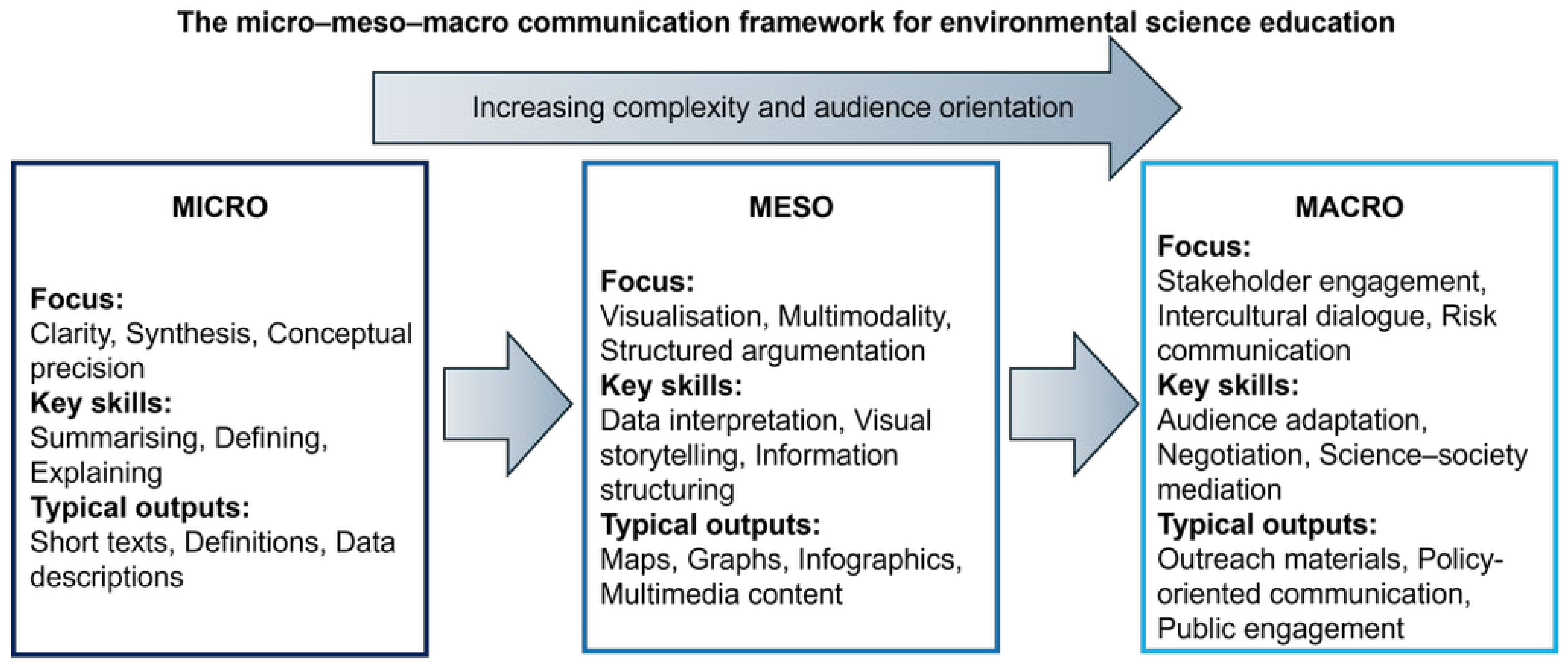
the conceptualization of a structured communication framework (micro–meso–macro) (
Figure 1),
- (ii)
the implementation of this framework across diverse educational and outreach contexts,
- (iii)
the collection and analysis of qualitative and descriptive quantitative data, and
- (iv)
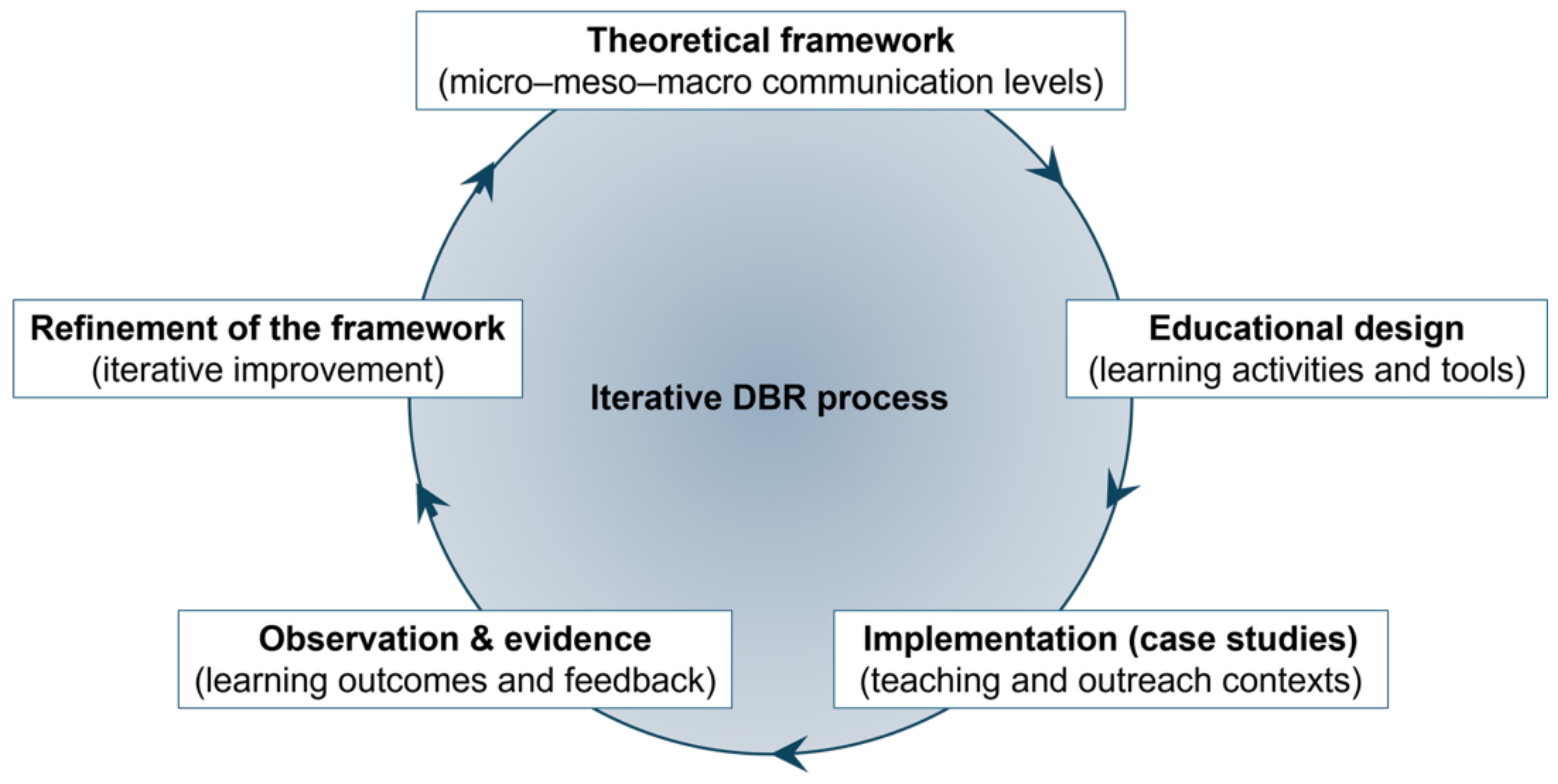
the progressive refinement of the framework based on observed patterns and pedagogical outcomes (
Figure 2).
Figure 1.
Conceptual model of the micro–meso–macro environmental communication framework.
Figure 1.
Conceptual model of the micro–meso–macro environmental communication framework.
Figure 2.
Design-based research (DBR) workflow adopted in the study. The iterative cycle starts from the theoretical micro–meso–macro communication framework, which informs the educational design of learning activities. These are implemented across diverse educational and outreach case studies and monitored through observation and evidence collection. The results are then used to refine and consolidate the framework, supporting its empirical validation across contexts.
Figure 2.
Design-based research (DBR) workflow adopted in the study. The iterative cycle starts from the theoretical micro–meso–macro communication framework, which informs the educational design of learning activities. These are implemented across diverse educational and outreach case studies and monitored through observation and evidence collection. The results are then used to refine and consolidate the framework, supporting its empirical validation across contexts.
The study is therefore positioned at the intersection of conceptual model development and practice-based exploration, with a strong emphasis on ecological validity. The findings are intended to provide analytical insights and illustrative evidence regarding how environmental communication competencies may be fostered across contexts, rather than to offer formal validation of the proposed framework.
3.2. Research Context and Case Selection
The study is based on a multiple-case study design, including six educational and outreach experiences developed between 2021 and 2025 in different institutional and geographical contexts: (i) glaciological thematic trails (Italy), (ii) dual training programs, (iii) climate games for secondary schools, (iv) a transnational higher education project in Pakistan, (v) immersive 360° field experiences, and (vi) an AI-enhanced scientific exhibition in an international policy context.
The cases were selected through purposive sampling to capture a range of educational levels, communication modalities, and implementation conditions. Rather than representing exclusively best practices, the selected cases were intended to reflect diverse and complementary scenarios, including formal and informal learning environments, different audience types (students, general public, stakeholders), and varying degrees of integration of digital and AI-based tools.
The selection criteria included: (i) diversity of educational levels, (ii) variation in communication formats, (iii) relevance to real-world environmental challenges, (iv) presence of active learning and multimodal strategies, and (v) inclusion of intercultural and international dimensions.
This heterogeneity allows exploration of the framework across a wide spectrum of contexts, supporting its analytical transferability. At the same time, it introduces limitations in terms of direct comparability between cases, which are explicitly addressed in the analytical section.
3.3. Data Collection
Data were collected through a combination of qualitative and descriptive quantitative sources, varying across case studies according to context and implementation design.
Data sources included:
- (i)
student-produced outputs (reports, posters, presentations, maps, multimedia artefacts),
- (ii)
observations of teaching and learning activities (classroom sessions, field experiences, and online interactions),
- (iii)
participant feedback collected through surveys and open-ended responses,
- (iv)
self-assessment questionnaires and quizzes (in selected cases), and
- (v)
documentation of educational materials (e.g., interpretive panels, videos, digital platforms, and AI-generated content).
In the transnational case study, structured evaluation instruments were used, including pre/post tests and satisfaction surveys. In the other cases, data collection relied primarily on qualitative observation and analysis of learning artefacts.
Assessments were conducted by instructors and project facilitators involved in the educational activities. While standardized rubrics were not consistently applied across all cases, evaluation criteria generally focused on clarity of communication, ability to adapt content to different audiences, and effective use of multimodal strategies.
Given this variability, the collected data are not intended for statistical generalization but for qualitative interpretation and cross-case comparison.
3.4. Analytical Framework
The analysis is guided by the proposed three-level communication framework, which serves as an interpretive lens encompassing: (i) micro-communication (clarity, synthesis, conceptual precision), (ii) meso-communication (visualization, multimodality, structured argumentation), and (iii) macro-communication (stakeholder engagement, risk communication, and intercultural dialogue).
Each case study was first analyzed individually with respect to:
- (i)
communication skills activated,
- (ii)
levels of the framework involved,
- (iii)
degree of complexity and audience adaptation, and
- (iv)
use of multimodal and interactive strategies.
A cross-case comparative analysis was then conducted, mapping each case against the three levels of the framework to identify recurring patterns, complementarities, and divergences. The aim of this analysis was not statistical generalization, but analytical generalization, providing insights into how different educational configurations may support the development of communication competencies.
Table 1 presents a structured synthesis of this mapping, illustrating how different case studies activate specific combinations of communication skills and how a progression across levels can be observed. However, this progression should be interpreted as indicative rather than strictly linear or universally applicable.
Learning outcomes were evaluated through multiple complementary dimensions, including:
- (i)
evidence of skill development inferred from student outputs,
- (ii)
progression across communication levels,
- (iii)
self-reported learning gains,
- (iv)
engagement and participation indicators, and
- (v)
application of skills in authentic or simulated contexts.
Given the exploratory and practice-based nature of the study, these indicators are intended to provide qualitative evidence of learning processes rather than standardized measurements of effectiveness.
3.5. Evaluation of Learning Outcomes
Although the study adopts a primarily qualitative approach, learning outcomes are evaluated through multiple complementary dimensions. These include (i) evidence of skill development, inferred from student-produced materials (e.g., clarity, structure, visual effectiveness, and audience adaptation), (ii) progression across communication levels, from micro- to macro-communication, (iii) self-reported learning gains, particularly within structured programs, (iv) indicators of engagement and participation, and (v) the application of skills in real or simulated contexts, such as stakeholder interactions and collaborative projects.
Rather than aiming at standardized measurement, the evaluation emphasizes authentic performance and situated learning, in line with contemporary approaches to science education and competence-based training.
4. Results
The following case studies illustrate how environmental science communication can be effectively integrated into university teaching, secondary school outreach, and international training programs.
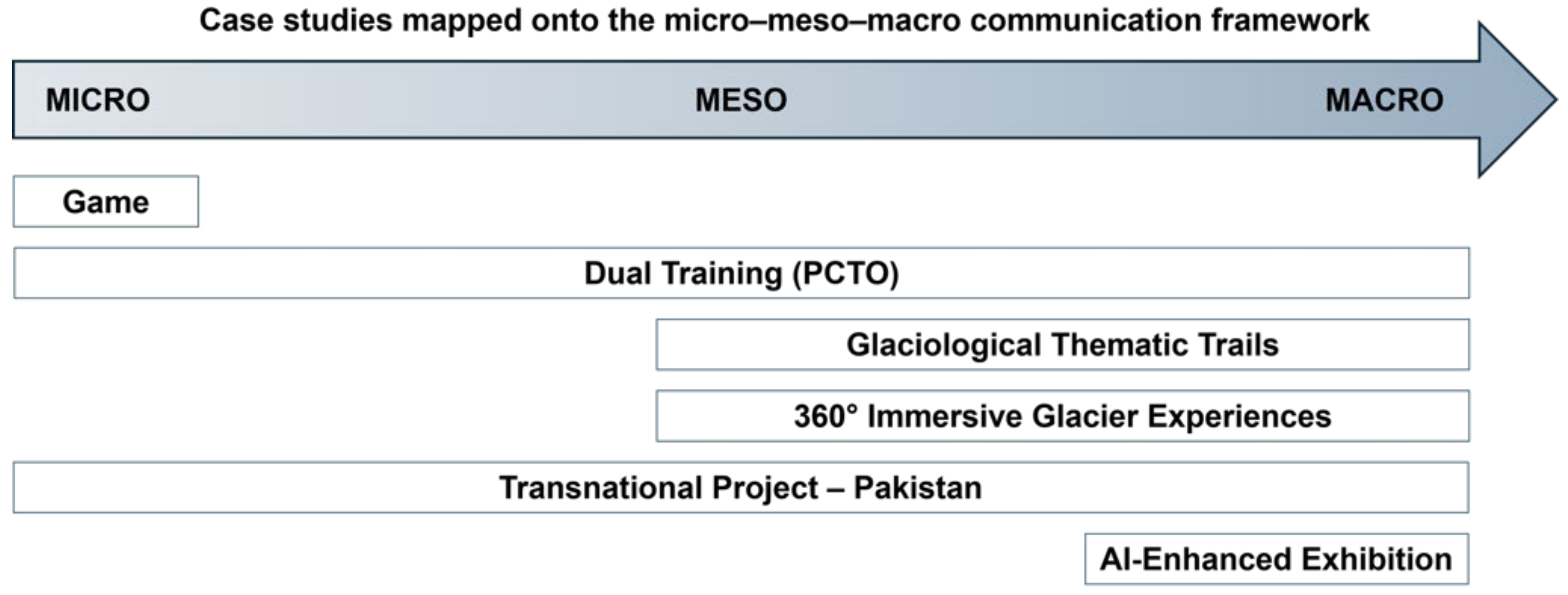
Figure 3 visually synthesizes the cross-case results by mapping the six case studies onto the micro–meso–macro communication framework, highlighting differences in scope and complexity across educational contexts.
Participant groups and implementation conditions vary across cases, reflecting differences in educational level, audience type, and context.
4.1. Case Study 1—Glaciological Thematic Trails and Outdoor Communication
Thematic environmental trails represent an effective form of in situ environmental communication, in which the landscape itself functions as a pedagogical medium. In this context, glaciological trails provide valuable opportunities for communicating climate change and its environmental and geomorphological impacts.
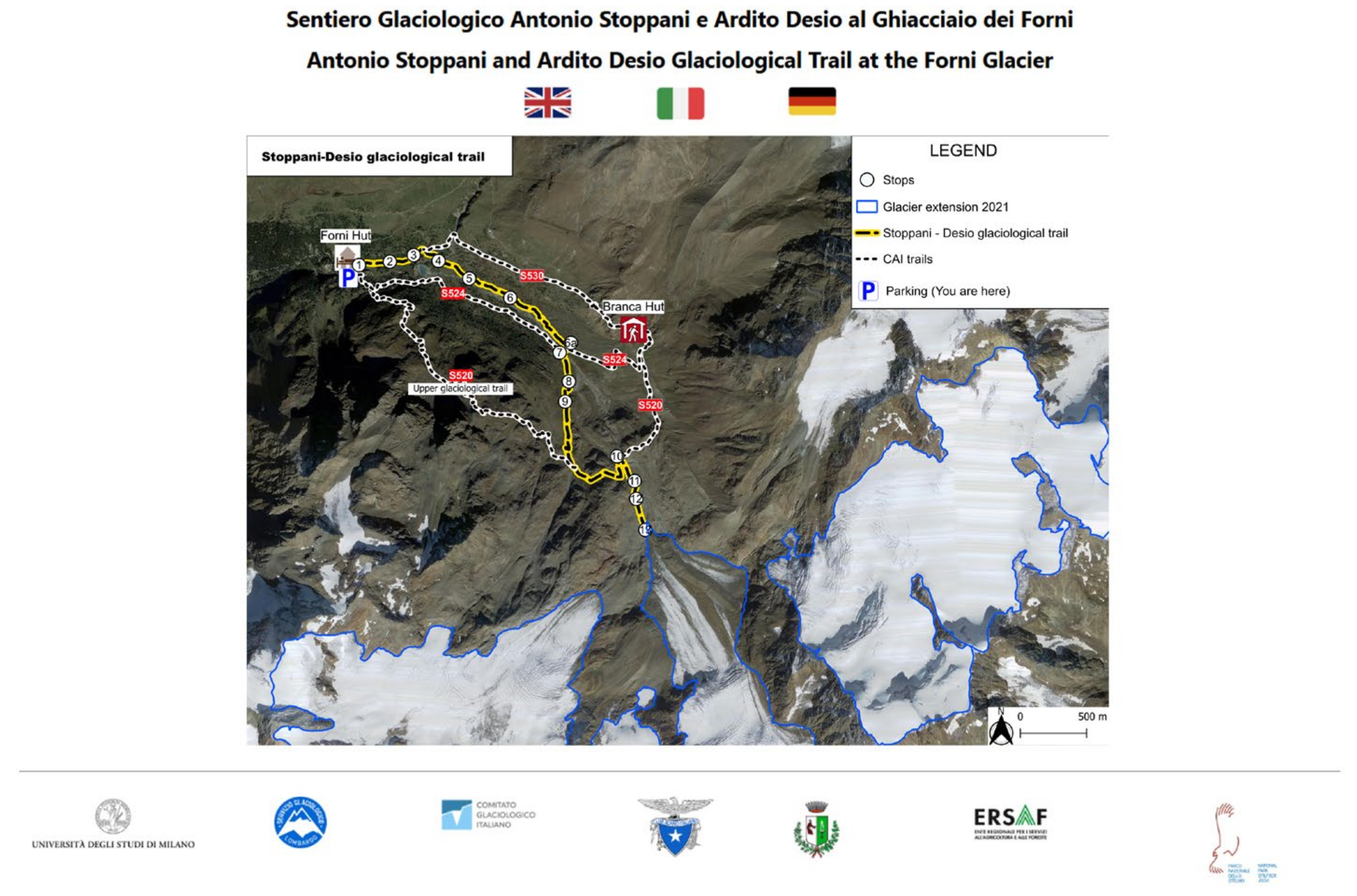
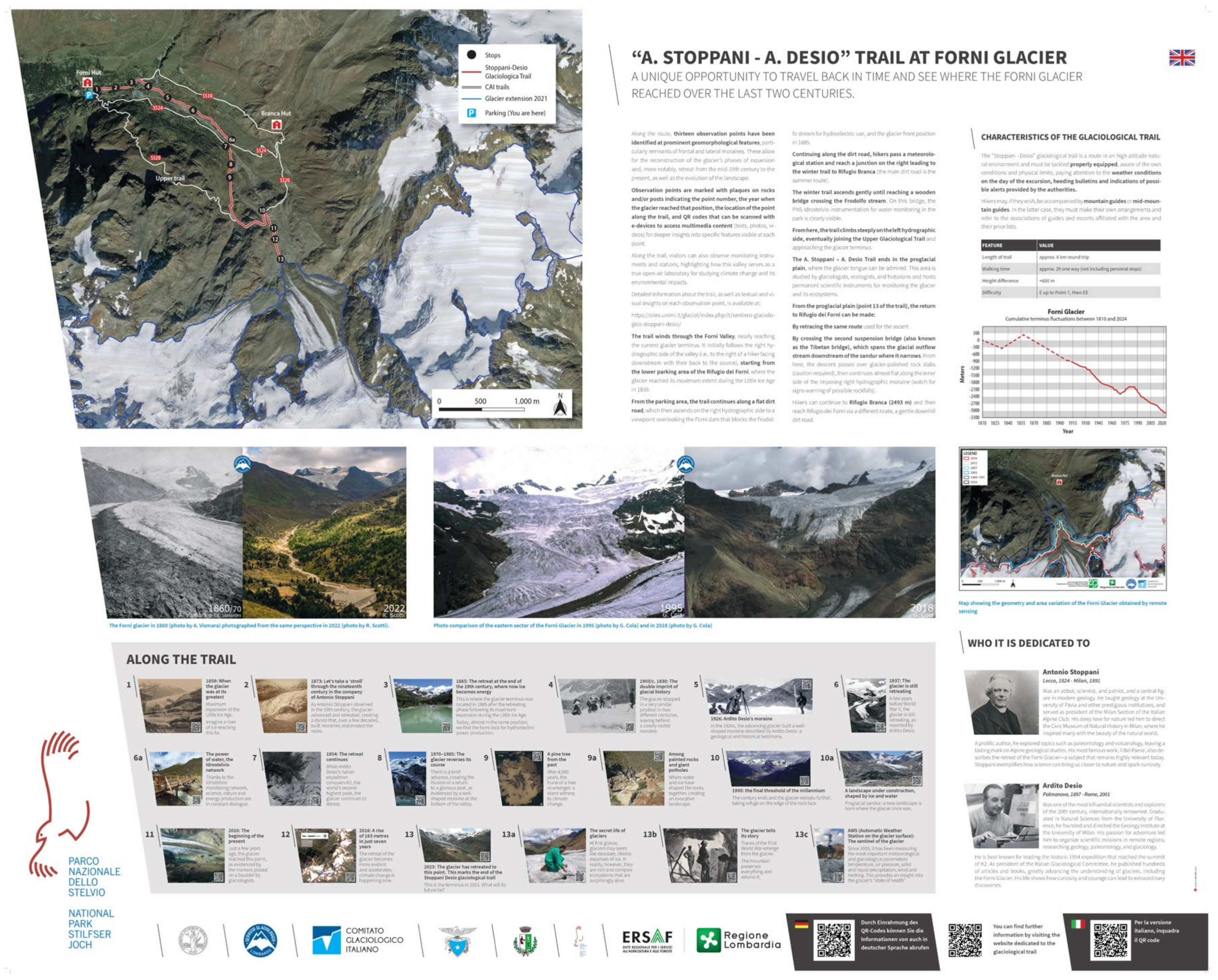
The Stoppani–Desio Glaciological Trail at the Forni Glacier (Stelvio National Park, Central Italian Alps) offers a contemporary example of communication embedded within a rapidly evolving cryospheric landscape (
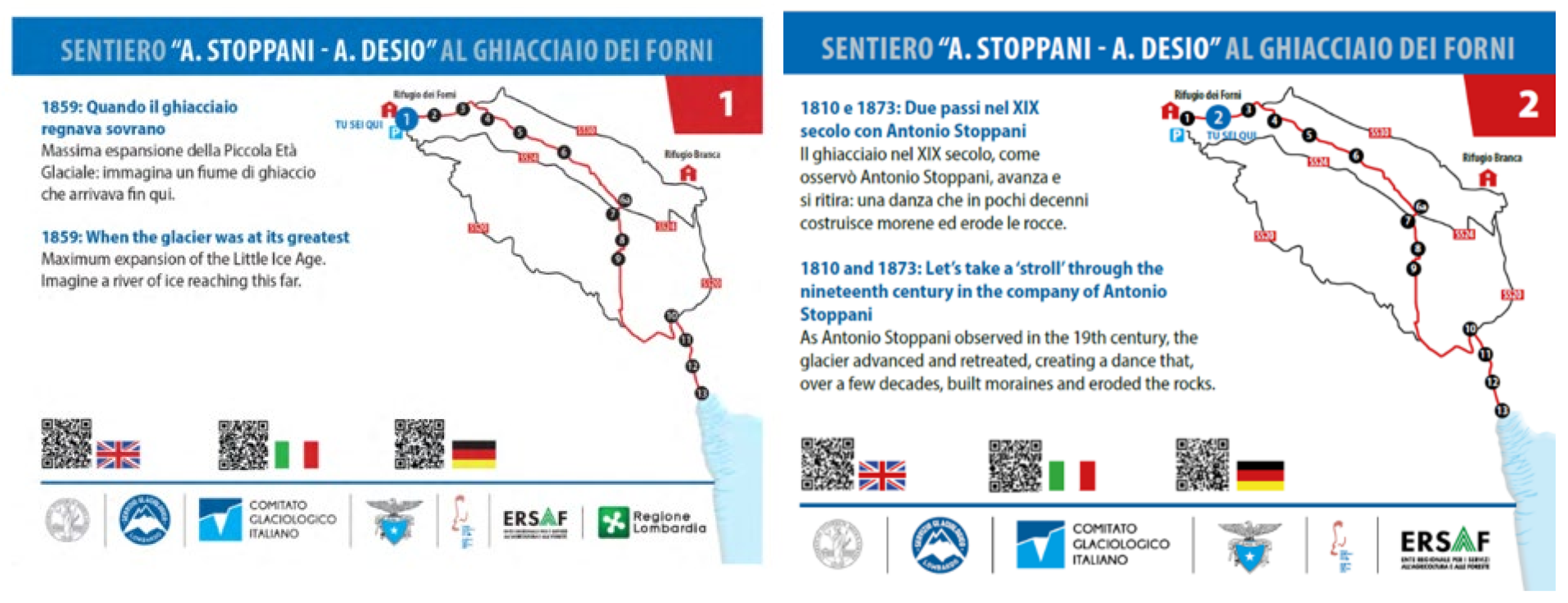
Smiraglia et al., 2026). Developed between 2023 and 2025 through collaboration among researchers, park authorities, the Italian Glaciological Foundation ETS, and local associations, the trail consists of an 8 km educational route with thirteen observation points marking former glacier positions over the past ~3000 years (
Figure 4).
Each stop integrates physical signage with multilingual QR code-based digital content, providing access to texts, historical photographs, videos, 360° imagery, and remote sensing products (
Figure 5 and
Figure 6). These materials illustrate glacier evolution, ecological succession, and geomorphological dynamics, supporting the interpretation of climate-driven changes. The visibility of ongoing monitoring activities (e.g., UAV surveys, weather stations, hydrological sensors, and ecological observations) allows visitors to understand how scientific data are generated and used to interpret environmental processes.
The communication strategy combines place-based interpretation with multimodal resources, including interpretive panels, thematic maps, cross-sections, and digital extensions accessible through QR codes. This integrated approach supports accessibility for diverse audiences and enables continuous updating through a central digital platform.
From an educational perspective, the trail provides a context in which students can engage in the design and evaluation of science communication materials, calibrate levels of complexity, and reflect on audience adaptation. The activity involves both the construction of communication outputs and their application in real-world contexts.
Within the proposed framework, the case primarily activates meso-communication competencies, particularly in relation to visualization, structuring of information, and multimodal design, while also engaging macro-communication through interaction with heterogeneous audiences in a public setting. More broadly, the case suggests how outdoor educational infrastructures can support the integration of scientific knowledge and communication practices.
From an analytical perspective, this case can be summarized as follows:
Communication level(s): primarily meso → macro;
Main strategies: place-based communication, multimodal integration (panels, maps, QR-based digital content), narrative interpretation of environmental processes;
Evaluation approach: observational analysis and assessment of produced communication materials;
Evidence of learning outcomes: improved ability to translate scientific information into accessible formats and to design coherent visual and narrative communication outputs.
4.2. Case Study 2—Dual Training (Learning and Working) Pathways in Climate Education
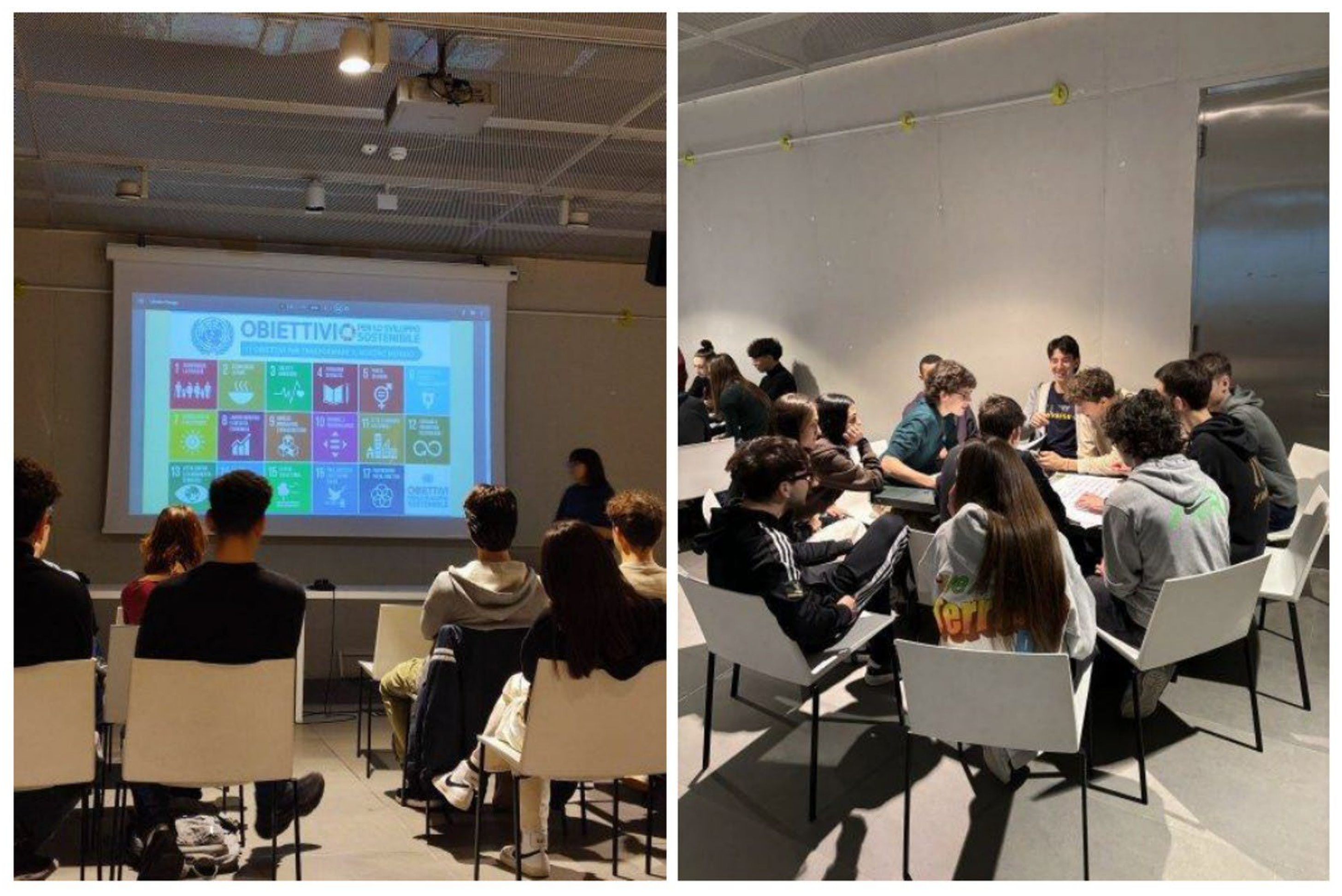
Dual training programs represent an effective approach to integrating scientific learning with the development of transversal competencies, particularly in the context of climate education. Within the framework of the Italian Ministry of Education’s Percorsi per le Competenze Trasversali e l’Orientamento (PCTO), we developed a structured program targeting upper secondary school students (aged 15–19), combining classroom instruction, applied data analysis, and communication activities (
Diolaiuti et al., 2024).
The program is organized as a progressive learning pathway designed to foster communication competencies across the three levels of the proposed framework (
Senese et al., 2026). In the initial phase, students are introduced to climate and cryosphere science through authentic datasets, including temperature series, precipitation records, glacier mass balance data, and satellite imagery. Through guided analysis, they learn to interpret and visualize data, supporting the development of meso-communication skills related to graph interpretation, parameter explanation, and visual data storytelling (
Figure 7).
In a second phase, field methodologies are translated into school-based operational tasks. These include microclimate monitoring, analysis of local environmental variables, and the interpretation of remote sensing products. Through these activities, students engage in the synthesis and structured explanation of scientific concepts, contributing to the development of micro-communication competencies.
The final phase focuses on the production of communication outputs for different audiences, including posters, infographics, short video abstracts, and presentations. At this stage, students are required to adapt language, structure, and content to non-specialist audiences, thereby engaging macro-communication competencies.
From an educational perspective, the program supports the development of transversal skills such as synthesis, critical thinking, and communication, while promoting data-driven learning and scientific citizenship. It also provides opportunities for students to reflect on the role of communication within environmental sciences and its relevance in academic and professional contexts.
Within the proposed framework, this case illustrates how structured educational pathways may support a progressive development of communication competencies across micro-, meso-, and macro-levels within authentic learning environments.
From an analytical perspective, this case can be summarized as follows:
Communication level(s): micro → meso → macro;
Main strategies: data-driven learning, progressive task structuring, production of multimodal outputs (graphs, posters, videos);
Evaluation approach: analysis of student artifacts, teacher observation, and feedback collection;
Evidence of learning outcomes: increased ability to interpret and communicate data, improved synthesis and audience adaptation skills, and high levels of student engagement.
4.3. Case Study 3—Carbon Footprint Game for Lower Secondary Schools
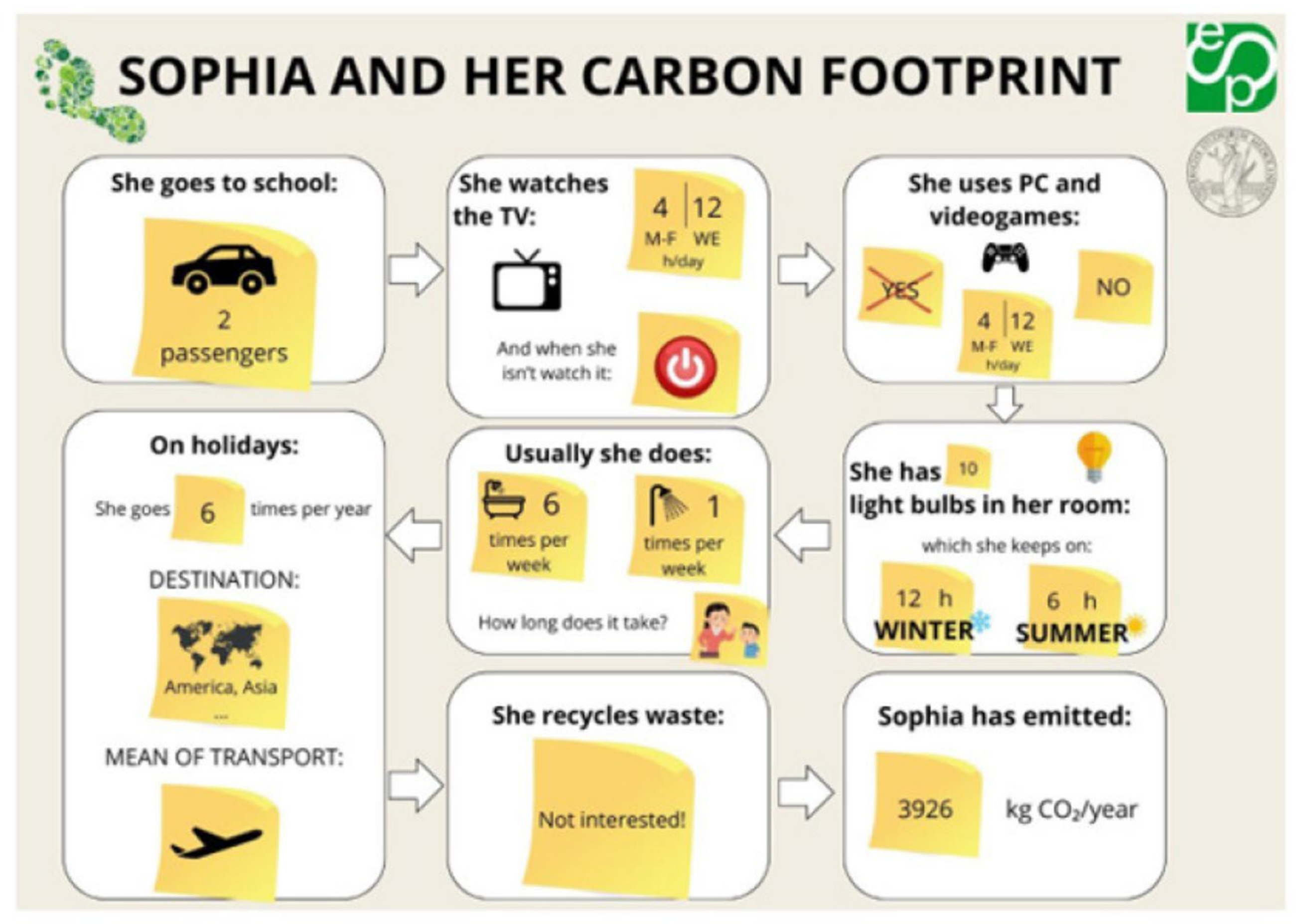
For lower secondary students (aged 12–14), a gamified educational approach was developed in the form of a carbon footprint game designed to introduce climate change concepts through experiential and collaborative learning (
Barbagallo et al., 2024a). The activity is based on a simplified representation of the lifestyle of a hypothetical adolescent characterized by a relatively high environmental impact.
Students are divided into groups and are tasked with progressively modifying this lifestyle in order to reduce greenhouse gas (GHG) emissions. Through a sequence of decisions related to everyday behaviors (e.g., mobility, energy use, consumption patterns), each group evaluates the impact of its choices and iteratively improves its strategy, aiming to minimize the overall carbon footprint (
Figure 8).
A key pedagogical feature of the activity lies in the inversion of conventional game logic: success is defined not by maximizing a score, but by reducing environmental impact. This approach encourages students to reflect critically on consumption habits and to explore the relationship between individual actions and collective environmental consequences.
The activity promotes intuitive understanding of cause–effect relationships in climate systems by linking individual behaviors to cumulative emissions. At the same time, it creates opportunities for the development of early communication skills through group discussion, negotiation, and collective decision-making, as students are required to justify their choices and compare alternative strategies.
From an educational perspective, the game provides an accessible entry point to climate education, reducing cognitive barriers while maintaining conceptual relevance. It also prepares students for more structured and analytical learning experiences in subsequent educational stages.
Although no formal standardized assessment tools were applied, qualitative observation of classroom interactions and analysis of group outputs indicate increased engagement and the emergence of basic communication competencies, particularly in terms of verbal explanation, argumentation, and collaborative reasoning.
Within the proposed framework, the activity primarily activates micro-communication competencies while also introducing initial elements of meso-communication through simplified data interpretation and a comparative evaluation of outcomes.
From an analytical perspective, this case can be summarized as follows:
- -
Communication level(s): early micro → initial meso;
- -
Main strategies: gamification, scenario-based decision-making, collaborative discussion and narrative reasoning;
- -
Evaluation approach: classroom observation and analysis of group outputs;
- -
Evidence of learning outcomes: increased engagement, improved intuitive understanding of cause–effect relationships, and initial development of communication and argumentation skills.
4.4. Case Study 4—Transnational Teaching and Intercultural Communication: The “Glaciers & Students” Project in Pakistan
The Glaciers & Students initiative (2021–2024), developed within an international cooperation framework involving the United Nations Development Program (UNDP), the Italian Ministry of Foreign Affairs and International Cooperation, the Italian Agency for Development Cooperation (AICS), the NGO (non-governmental organization) Ev-K2-CNR, and Italian universities, provides an example of environmental communication integrated with geospatial capacity building and intercultural teaching in a high-mountain, resource-constrained context.
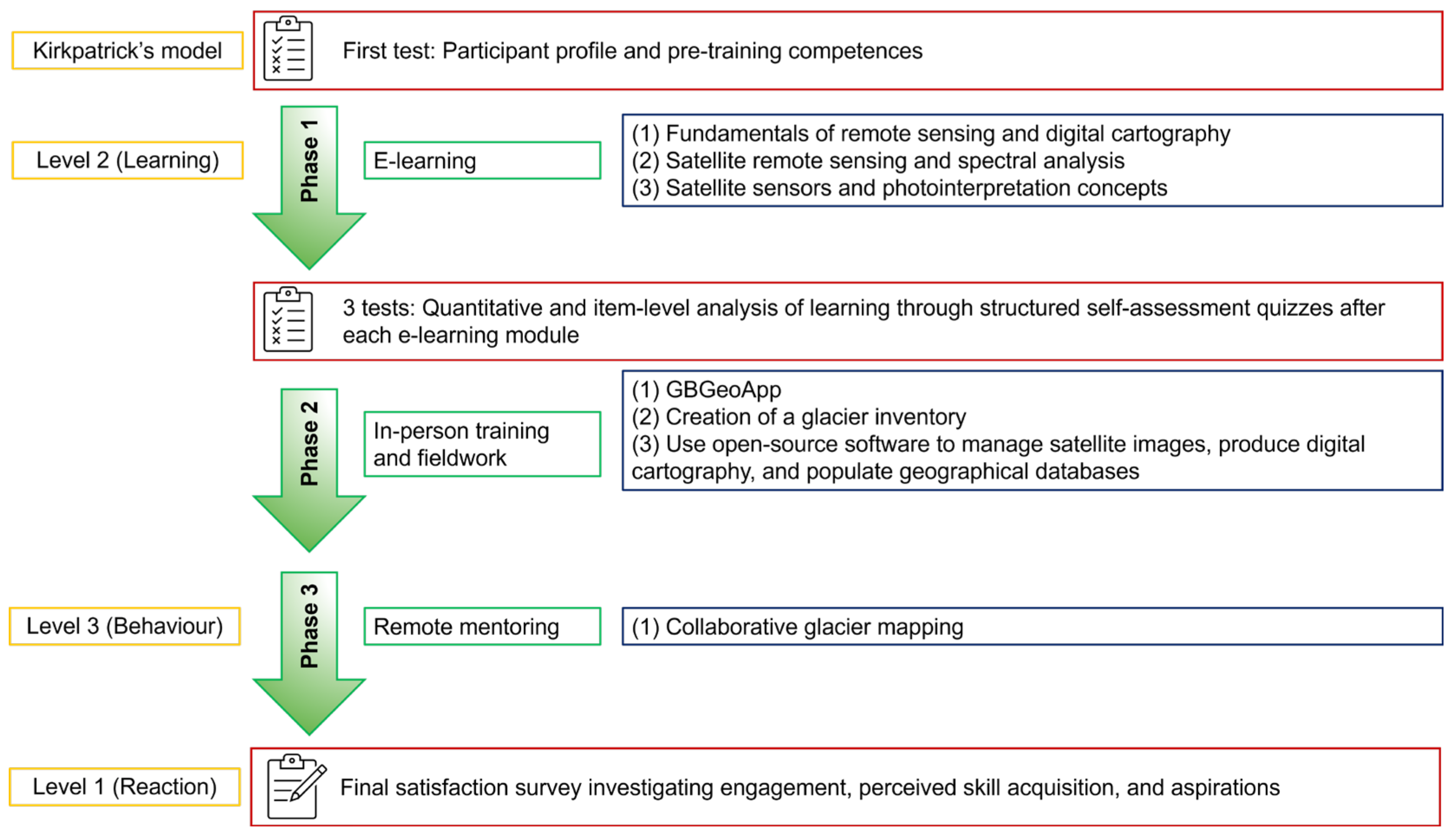
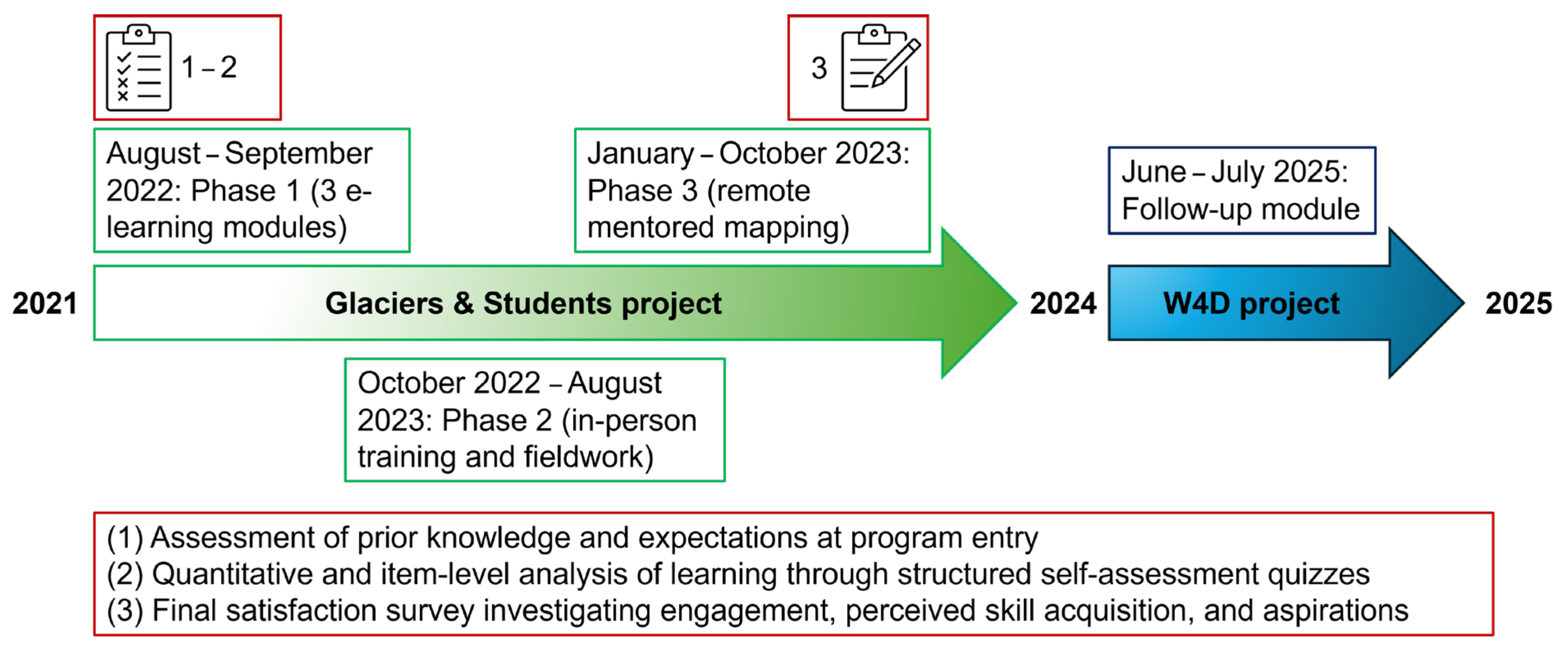
The program was structured as a three-phase blended learning pathway including asynchronous e-learning, in-person training in Pakistan, and a nine-month remote mentoring phase. The training focused on glacier monitoring, a critical topic in Pakistan due to its strong dependence on meltwater from High Mountain Asia (
Fugazza et al., 2026).
In the initial phase (
Figure 9), 93 students participated in short video-based modules covering remote sensing, digital cartography, and basic glaciology. The design emphasized concise and visually supported content to address heterogeneous backgrounds and limited connectivity. Self-assessment quizzes indicated a progressive learning improvement (mean scores increasing from approximately 19/30 to 23/30), suggesting the development of micro-communication competencies related to the clear understanding of technical concepts.
The second phase (
Figure 9) involved in-person training at the University of Baltistan (Skardu) and Karakoram International University (Gilgit), engaging more than 215 students from different environmental disciplines. Activities included GIS-based analysis (QGIS, SNAP), satellite image interpretation, and thematic mapping, combined with field-based experiences. These tasks supported the development of meso-communication competencies, particularly in the transformation of data into visual and interpretable formats. The use of locally relevant case studies and intercultural mediation facilitated engagement and contextualized communication.
The final phase (
Figure 9 and
Figure 10) consisted of a nine-month remote mentoring program involving 60 Pakistani and 30 Italian students in a collaborative glacier mapping exercise using cloud-based GIS platforms. Participants prepared multispectral composites, applied segmentation and classification techniques (e.g., NDSI-based approaches), validated outputs against existing inventories and high-resolution imagery, and contributed to the compilation of a didactic glacier inventory comprising over 13,000 glaciers. Regular online interactions required students to justify their methodological choices, articulate uncertainties, negotiate interpretations across cultural and disciplinary perspectives, and present results collaboratively. This phase activated macro-communication competencies within a simulated research environment.
Results indicated overall learning improvements, high participant satisfaction (mean score: 87.55/100), and strong perceived relevance of the activities. Qualitative feedback highlighted the importance of real-world applications and intercultural collaboration, while some participants reported applying acquired skills in professional or community contexts.
Overall, this case highlights how environmental communication can be integrated into pedagogical and capacity-building activities in an international context. The program combines multimodal resources, intercultural collaboration, and applied learning tasks, supporting the development of communication competencies across different levels. It also provides an example of how communication skills may contribute to professional development in climate-vulnerable regions.
Within the proposed framework, this case illustrates how communication competencies may develop progressively across micro-, meso-, and macro-levels within a complex, international learning environment. The program combines multimodal resources (videos, maps, GIS outputs), intercultural interaction, and applied learning tasks.
From an analytical perspective, this case can be summarized as follows:
- -
Communication level(s): micro → meso → macro;
- -
Main strategies: blended learning, GIS-based multimodal communication, intercultural collaboration, real-world data application;
- -
Evaluation approach: pre/post quizzes, questionnaires, satisfaction surveys, and analysis of student outputs;
- -
Evidence of learning outcomes: measurable improvement in knowledge indicators, high engagement and satisfaction, development of intercultural and multimodal communication skills.
4.5. Case Study 5—Immersive Communication: 360° Experiences to Explore Glacier Change
The development of immersive 360° experiences at the Forni Glacier (Stelvio National Park, Italy) represents an innovative approach to enhancing environmental communication and expanding access to remote cryospheric environments (
Diolaiuti et al., 2021). The project was conceived to address a longstanding challenge in glaciology education: although direct fieldwork is one of the most effective ways to understand glacier processes and climate change impacts, logistical, economic, physical, and more recently, public health constraints, often limit access to high-mountain environments.
To overcome these limitations, an interdisciplinary team from the University of Milan developed a virtual field experience based on high-resolution 360° videos recorded on the glacier surface and within the proglacial area. The videos integrate visual, spatial, and auditory elements, combined with on-site scientific narration, allowing users to explore environmental processes within a coherent and immersive representation.
Each video segment is intentionally kept short (under five minutes) to maintain attention and support learning. During the recordings, researchers guide users through field activities such as data collection, monitoring procedures, and observations of glacier dynamics. This approach aims to support active engagement and facilitate the interpretation of complex environmental processes.
Initially designed for virtual reality headsets, the platform was subsequently adapted for smartphones and web-based access to ensure broader usability. This transition proved particularly relevant during the COVID-19 pandemic, when shared devices were no longer viable. This flexibility allows the experience to be implemented in different contexts, including classrooms, informal learning environments, and public outreach events.
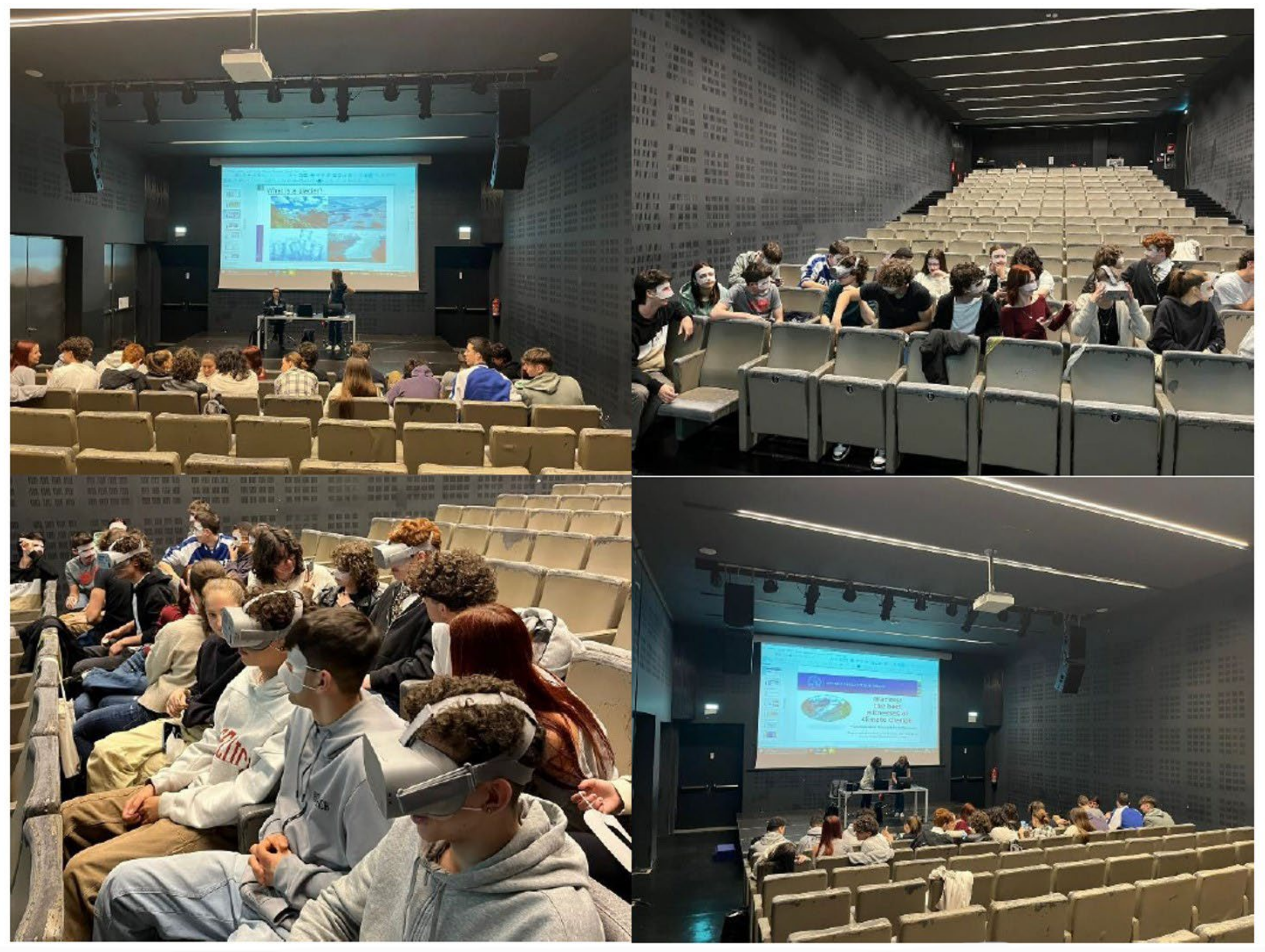
The educational use of the immersive experience was explored across different audiences, including university students, secondary school groups, and participants in public events (
Figure 11). Feedback collected through questionnaires and discussions indicated high levels of engagement and a perceived improvement in the understanding of glacier-related processes, particularly in relation to spatial and dynamic aspects that are difficult to convey through traditional media.
The approach also shows potential for inclusive education. Participants with specific learning needs (i.e., specific learning disorders—SLD and special learning needs—SLN) reported enhanced comprehension compared to traditional lecture-based formats, suggesting that immersive and spatially anchored representations can help reduce cognitive and attentional barriers. The educational effectiveness of the immersive experience was assessed across diverse audiences, including university students, secondary school groups, and participants in public outreach events such as the European Researchers’ Night, EXPO Dubai 2021, and the Sorbonne Science Festival (
Barbagallo et al., 2024b).
Within the proposed framework, the 360° experience primarily supports meso-communication competencies, particularly in relation to spatial interpretation, visualization, and multimodal representation. It also contributes to macro-communication when used as a basis for subsequent explanatory or outreach activities.
Although virtual experiences cannot fully replace direct fieldwork, they may represent a complementary tool, particularly in contexts where access to field environments is limited.
From an analytical perspective, this case can be summarized as follows:
- -
Communication level(s): meso → macro;
- -
Main strategies: immersive visualization, multimodal narration, virtual field experience;
- -
Evaluation approach: user feedback, questionnaires, and observation of learning interactions;
- -
Evidence of learning outcomes: increased engagement, improved spatial understanding, and enhanced accessibility for diverse audiences.
4.6. Case Study 6—AI-Driven Multimodal Communication in the ADB 2025 Exhibition
The scientific exhibition presented during the 58th Annual Meeting of the Board of Governors of the Asian Development Bank (ADB), held in Milan (Italy) in 2025, provides an example of how artificial intelligence (AI) can be integrated into environmental communication to support accessibility and engagement in international contexts. The exhibition showcased research and cooperation activities conducted by the University of Milan, the NGO Ev-K2-CNR, and partner institutions working in High Mountain Asia, reaching a heterogeneous audience of policy-makers, researchers, and stakeholders.
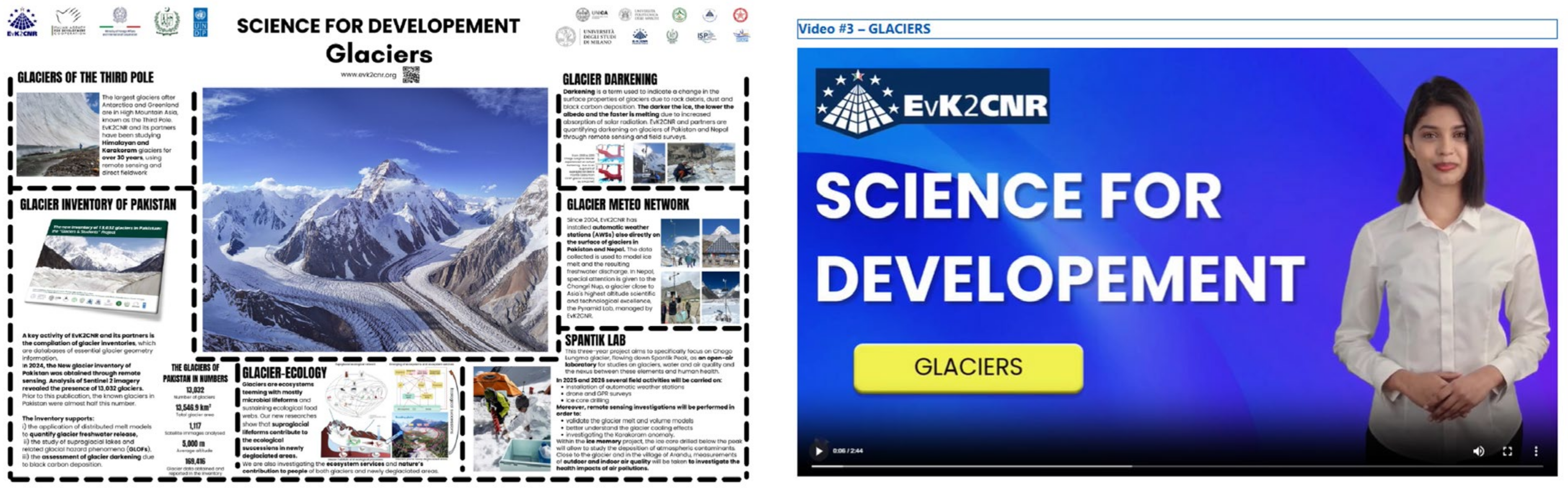
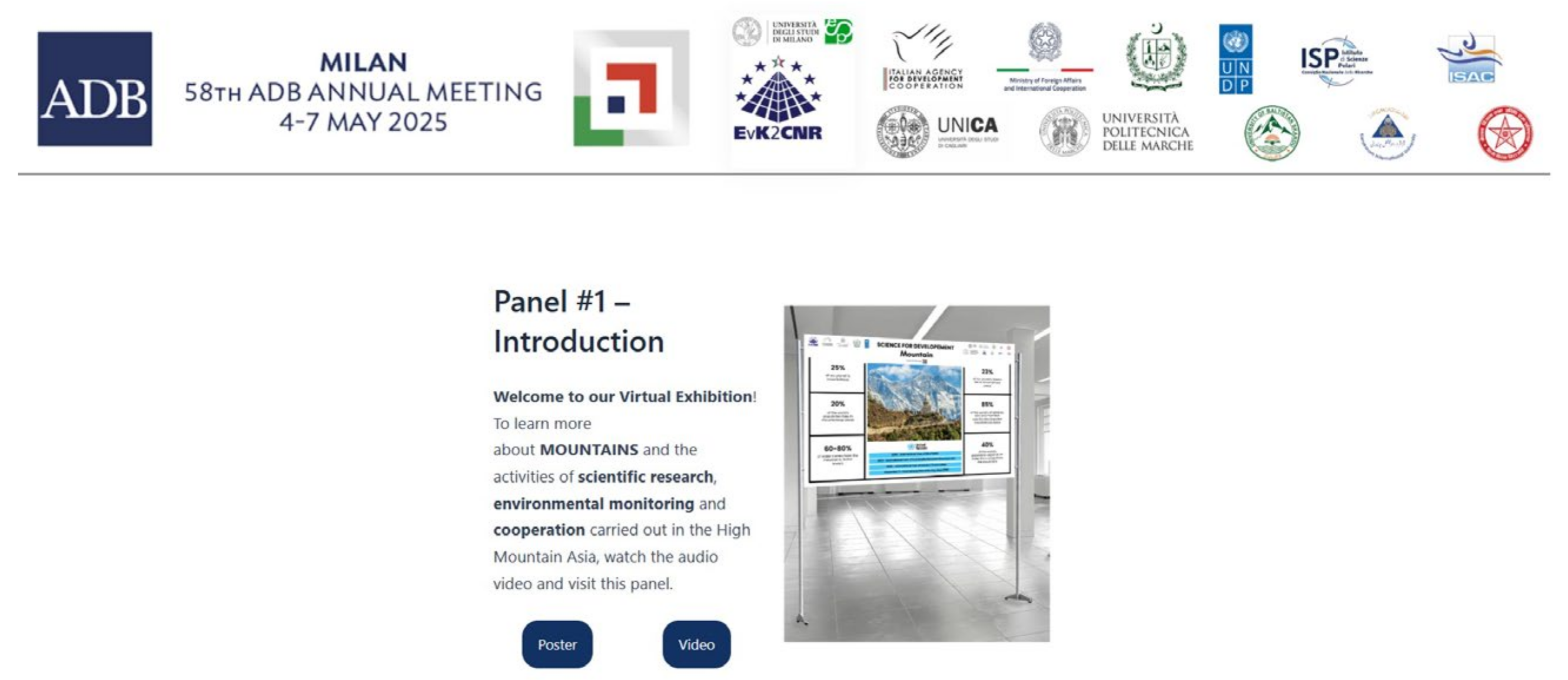
The exhibition consisted of seven thematic posters (
Figure 12) covering key research domains. Each poster was complemented by a QR code linked to a short explanatory video narrated by an AI-generated avatar. These avatars were designed to reflect audience diversity and to support inclusivity in communication.
The videos provided concise summaries of the poster content using accessible language and a multimodal format combining visual and auditory elements (
Figure 13). This configuration enabled users to engage with the material through different channels, potentially facilitating comprehension for non-native English speakers and diverse audiences. The use of AI also supported consistency in content delivery across different topics.
Following the event, all materials were integrated into a digital exhibition hosted on the University of Milan website (
https://sites.unimi.it/glaciol/index.php/en/virtualexhib/, last access 27 May 2026), extending the availability of the content beyond the duration of the event and enabling reuse in educational and outreach contexts.
From a pedagogical perspective, this case suggests how AI-supported tools may be integrated into science communication practices, supporting multimodal communication, accessibility, and scalability. The design and production process, including scriptwriting and visual structuring, involves meso-communication competencies, while the final output addresses macro-communication by targeting a global, policy-oriented audience.
At the same time, the use of AI-based tools raises important considerations. These include potential issues related to the accuracy and reliability of generated content, risk of bias, limited transparency of generative processes, and questions concerning authorship and responsibility. Furthermore, the effective use of AI in educational contexts requires critical supervision to ensure scientific correctness and avoid the dissemination of misleading information.
Within the proposed framework, this case primarily activates macro-communication competencies while also engaging meso-level skills related to multimodal content design.
From an analytical perspective, this case can be summarized as follows:
- -
Communication level(s): meso → macro;
- -
Main strategies: AI-supported multimodal communication, audiovisual synthesis, digital dissemination;
- -
Evaluation approach: expert observation, analysis of outputs, and user interaction feedback;
- -
Evidence of learning outcomes: improved accessibility of content, consistent communication formats, and increased engagement in complex, policy-oriented communication contexts.
4.7. Cross-Case Synthesis: Patterns in Environmental Communication Learning
Across the diverse educational contexts analyzed in this study, a number of recurring pedagogical patterns could be identified, suggesting how environmental communication competencies may develop through different formats, audiences, and levels of complexity.
A first pattern concerns the progressive nature of communication skills, which tend to evolve from micro- to macro-communication. Foundational activities (e.g., short written outputs, data interpretation, and concise explanations, as observed in dual training programs and e-learning modules) primarily foster micro-communication competencies centered on clarity, synthesis, and conceptual precision. These skills appear to function as important prerequisites for more advanced forms of communication.
At an intermediate level, meso-communication can be interpreted as a bridge between scientific understanding and communicative effectiveness. Across several case studies (including GIS-based activities, thematic trails, and immersive experiences), students are engaged in producing visual and multimodal outputs such as maps, infographics, and narrative visualizations. These tasks require not only technical proficiency but also the ability to structure information and design coherent communicative formats.
At the macro level, communication is activated in contexts involving interaction with non-specialist audiences, stakeholders, and international communities. This is particularly evident in the AI-supported exhibition, the glaciological trail, and the transnational project in Pakistan, where participants adapt scientific content to diverse audiences and engage in socially situated communication practices. In these contexts, communication can be understood as a relational competence extending beyond purely technical dimensions.
A second recurring pattern is the central role of multimodality as a pedagogical principle. All case studies integrate multiple forms of representation (textual, visual, spatial, and audiovisual), suggesting that environmental communication relies on the ability to combine diverse semiotic resources. Multimodal approaches may support conceptual understanding and improve accessibility for heterogeneous audiences, including international learners and individuals with different cognitive profiles.
Third, the analysis highlights the relevance of authentic and situated learning environments. Communication competencies appear to develop more effectively when students engage in real or realistic tasks, such as analyzing datasets, designing outreach materials, interpreting field-based evidence, or collaborating in international projects. These contexts expose learners to practical constraints and may foster transferable skills aligned with professional practice.
Finally, digital technologies and artificial intelligence emerge as cross-cutting enablers of communication learning. From immersive environments to AI-supported tools and collaborative platforms, digital resources expand communicative possibilities and support both individual and collective learning processes. Rather than replacing traditional competencies, these technologies appear to complement them by providing additional formats for synthesis, visualization, and interaction.
Overall, the cross-case analysis suggests that environmental communication can be conceptualized as a scaffolded, multimodal, and practice-oriented competence, in which learners progressively move from understanding scientific content to mediating it within complex social, cultural, and professional contexts.
These findings should be interpreted as analytical insights derived from applied case studies, rather than as formal validation of the proposed framework.
5. Discussion
The cross-case synthesis provides analytical insights into the proposed three-level communication framework and its potential application across diverse educational contexts. The variety of case studies suggests that communication in environmental sciences may require flexible, multimodal approaches embedded within authentic educational and territorial settings. The study should therefore be interpreted as exploratory, aiming to generate analytical insights rather than to provide formal validation of the proposed framework. Collectively, the findings support the relevance of the proposed framework and highlight how specific methodological choices (e.g., active learning, integration of digital tools, data-driven storytelling, narrative strategies, and engagement with heterogeneous audiences) may contribute to the development of communication competencies among future environmental professionals.
5.1. Communicating Environmental Science in Complex Educational Contexts
The results of this study suggest that environmental science communication cannot be effectively taught through traditional lecture-based approaches alone. Across the analyzed case studies, communication skills appear to develop more strongly in complex, authentic, and practice-oriented learning environments, where students engage with real data, interact with diverse audiences, and confront real-world environmental challenges.
This observation is consistent with research on active learning in science education (
Freeman et al., 2014), which emphasizes engagement, problem-solving, and contextualized learning. However, the present study extends these perspectives by conceptualizing communication not merely as a by-product of active learning, but as a structured competence that benefits from explicit pedagogical design.
More specifically, environmental communication emerges from the interaction among three interrelated dimensions: scientific complexity, societal relevance, and emotional engagement. The analyzed cases suggest that effective teaching strategies may need to address these dimensions simultaneously, combining rigorous scientific content with narrative, visual, and participatory approaches.
Table 2 compares the proposed framework with selected international approaches to science and environmental communication education, highlighting points of convergence as well as areas that remain less explored in the literature. The comparison indicates that existing approaches often address specific dimensions of communication (e.g., public engagement, visualization, or active learning) in partial or fragmented ways. In contrast, the framework proposed in this study aims to integrate these dimensions within a coherent and progressive structure, linking micro-level cognitive skills, meso-level multimodal representation, and macro-level social and intercultural communication. Furthermore, while several studies emphasize the role of digital tools and innovative formats, fewer explicitly connect these elements to pedagogically structured learning pathways. The present analysis suggests how digital, immersive, and AI-supported tools may be embedded within a scaffolded framework for communication learning, rather than being treated as standalone solutions.
5.2. Validating a Progressive Model: Micro–Meso–Macro Communication
A central contribution of this study lies in the analytical articulation of the proposed three-level communication framework. To further clarify this developmental perspective,
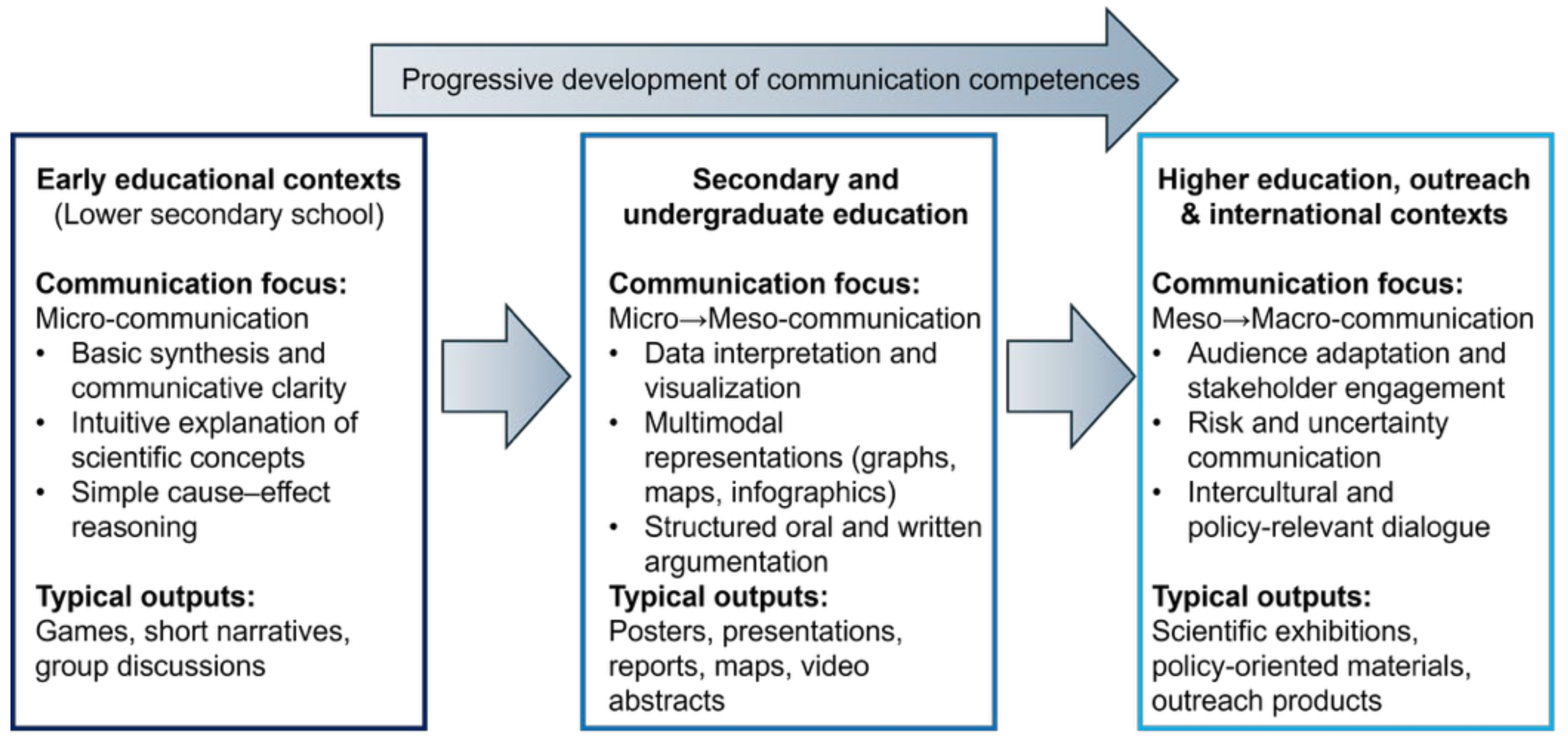
Figure 4 illustrates how environmental science communication competencies may be interpreted as evolving progressively across educational contexts, from early educational settings to higher education, outreach, and international environments.
Communication skills appear to develop from micro-communication, focused on clarity and synthesis in early educational stages, to meso-communication emphasizing visualization and structured argumentation in secondary and undergraduate education. In more advanced contexts, learners engage in macro-communication, involving stakeholder-oriented, intercultural, and policy-relevant communication.
This progression can therefore be understood as a scaffolded learning trajectory across diverse educational environments (
Figure 14).
The cross-case analysis suggests that communication competencies may evolve from foundational micro-level skills (such as summarizing, defining, and explaining), to more complex meso-level practices involving multimodal representation and structured communication, and ultimately to macro-level forms in which communication becomes relational, context-dependent, and oriented toward diverse audiences and stakeholders.
Importantly, these levels should not be interpreted as rigid or discrete categories, but rather as interconnected dimensions within a dynamic and iterative learning process. Across the case studies, micro-level competencies consistently emerged as foundational, supporting the development of more advanced communicative practices. Transitions between levels are often non-linear and overlapping, reflecting the complexity of learning processes in authentic educational contexts.
This progressive model addresses a gap in the literature, where communication is often treated as a transversal or implicit outcome of disciplinary learning. The framework proposed here instead conceptualizes communication as a scaffolded competence that can be explicitly addressed within educational design.
By making different dimensions of communication visible, the model provides a conceptual tool that may support the design, implementation, and interpretation of communication-oriented learning activities in environmental science education. However, its applicability should be understood as context-dependent, and further research is needed to test its transferability across different educational settings and to evaluate its effectiveness through more systematic methodologies.
5.3. Multimodality and Digital Transformation in Environmental Communication
Another key finding concerns the central role of multimodality as a structural component of environmental communication. Across all case studies (from glaciological trails to immersive 360° environments and AI-supported exhibitions), communication was supported through the integration of multiple representational forms, including textual, visual, spatial, and audiovisual elements.
This finding is consistent with previous research highlighting the importance of visualization and narrative tools in science communication (
Sheppard, 2012). The present analysis further suggests that multimodality plays a particularly relevant role in contexts characterized by spatial complexity, temporal dynamics, and high levels of abstraction, such as climate and cryosphere processes.
Within this perspective, digital technologies and artificial intelligence can be interpreted as enablers of multimodal communication. Tools such as GIS platforms, immersive environments, and AI-supported systems expand communicative possibilities by supporting data visualization, experiential learning, and dissemination across contexts. Rather than replacing traditional communication skills, these technologies appear to complement and transform them by enabling new forms of synthesis, interaction, and narrative construction.
At the same time, the integration of AI-based tools requires careful consideration. Potential issues related to accuracy, bias, transparency, and the need for expert supervision may affect the quality and reliability of communication processes, particularly in educational contexts.
Multimodal approaches also appear to support accessibility and inclusivity. By offering multiple entry points to information, they may facilitate engagement for learners with diverse linguistic backgrounds and cognitive profiles, and support communication in international and interdisciplinary environments. However, their effectiveness may vary depending on context, design, and implementation.
5.4. Intercultural and Situated Communication
The transnational case study highlights the relevance of intercultural communication as a key dimension of environmental science education. When students interact across cultural, linguistic, and disciplinary boundaries, communication can be understood as a process of negotiation, adaptation, and co-construction of meaning.
These findings are consistent with the view that communication is context-dependent and socially mediated, rather than neutral or purely technical. Effective environmental communication appears to require sensitivity to local contexts, knowledge systems, and diverse epistemological perspectives (e.g.,
Canagarajah, 2013).
Furthermore, the study underlines the importance of authentic learning environments—such as field-based experiences, international collaborations, and stakeholder-oriented activities—in fostering these competencies. In such contexts, students are required to adapt their communication strategies dynamically, which may contribute to increased flexibility and professional readiness.
Overall, the analysis suggests that intercultural and situated dimensions of communication should be explicitly considered in the design of environmental science education, particularly in increasingly international and interdisciplinary learning contexts.
5.5. Educational and Curricular Implications
The findings of this study suggest several implications for the design of environmental science education programs.
First, communication can be considered as a relevant curricular component, rather than an ancillary or implicit skill. Educational pathways may benefit from integrating communication activities alongside disciplinary content, supporting the development of both scientific understanding and the ability to convey it effectively.
Second, communication competencies may be structured progressively, following a trajectory from micro- to macro-communication. This type of progression can support learners in moving from basic tasks (such as synthesis and explanation) to more complex activities involving multimodal representation, audience adaptation, and stakeholder engagement.
Third, multimodal and digital tools may be incorporated into teaching practices not only to enhance engagement, but also to reflect the evolving nature of environmental communication in professional and societal contexts.
Finally, the use of differentiated educational approaches across age groups—such as game-based learning for younger students and data-driven training for older learners—suggests the value of designing coherent learning pathways. Such pathways may support the gradual development of communication competencies, from intuitive and exploratory forms of understanding to more structured, analytical, and audience-oriented communication practices. This perspective is also relevant for engineering education, where communication skills are increasingly required to translate technical information into decision-making contexts.
5.6. Limitations and Future Research
While this study proposes a practice-based framework informed by multiple case studies, several limitations should be acknowledged. First, the heterogeneity of the analyzed cases in terms of educational level, geographical context, pedagogical design, and learning objectives limits the possibility of direct and standardized comparison across contexts. Although this diversity represents a strength in terms of ecological validity, it reduces the potential for generalization and the application of uniform evaluation criteria.
Second, the predominance of qualitative data and descriptive evidence constrains the ability to systematically assess the effectiveness of the proposed framework. While some cases include structured evaluation components (e.g., self-assessment tests, satisfaction surveys), others rely primarily on observational and interpretive analysis. As a result, the measurement of learning outcomes, particularly with respect to communication competencies, remains partially indirect and context-dependent.
A further limitation concerns the uneven integration of assessment strategies across the case studies. Not all educational interventions include systematic or comparable tools for evaluating the development of communication skills, which makes it difficult to establish consistent cross-case benchmarks. In addition, the relatively short duration of some activities limits the possibility of capturing long-term learning effects and the persistence of acquired competencies.
Finally, while digital technologies and artificial intelligence are explored as enabling tools, their pedagogical impact is not assessed through controlled or experimental designs. As such, conclusions regarding their effectiveness should be interpreted with caution, particularly in relation to issues of scalability, accessibility, and potential biases associated with AI-generated content.
Future research could build on this work in several directions. First, the development of more standardized instruments for assessing communication competencies would represent an important step toward improving comparability across educational contexts and supporting integration into formal curricula (
Schirmer et al., 2005). Second, longitudinal studies are needed to track the evolution of communication skills over time and to better understand the durability and transferability of learning outcomes (
Georghiades, 2000).
Third, further investigation into the role of digital technologies and artificial intelligence should adopt more systematic and experimental approaches, examining not only their effectiveness but also their ethical, cognitive, and pedagogical implications (
Airaj, 2024;
Egamberdiyeva, 2025;
Ozturk, 2025). This includes exploring how AI may support personalized learning, multilingual communication, and inclusive educational practices, while maintaining scientific accuracy and critical engagement.
Finally, the framework proposed in this study could be further explored in other disciplinary domains beyond environmental sciences, such as health communication, engineering education, or social sciences, in order to assess its transferability and adaptability across different educational and epistemological contexts.
Overall, this study suggests the value of moving from implicit and fragmented approaches to communication training toward more explicit, multimodal, and context-sensitive educational designs, while recognizing that further empirical research is needed to support their broader validation and application.
6. Conclusions
Environmental science communication has emerged as an increasingly important competence for addressing complex global challenges, including climate change, glacier retreat, biodiversity loss, and environmental risks. This study suggests that communication should be considered not only as a complementary skill, but as a relevant component of environmental science education, supporting the connection between scientific knowledge and societal needs.
Through the integration of diverse case studies, ranging from glaciological thematic trails and school-based programs to international collaborations, immersive technologies, and AI-supported communication, the findings indicate that communication training may be embedded within a wide range of educational contexts. These experiences highlight the potential of active, multimodal, and practice-based approaches to support the engagement and understanding of environmental processes.
A key contribution of this study lies in the development and application of a three-level communication framework (micro–meso–macro) that conceptualizes communication as a progressive and scaffolded competence. This model moves beyond the view of communication as an implicit outcome of scientific training, proposing instead a structured pedagogical perspective that integrates cognitive, visual, and social dimensions. In this sense, the study contributes to ongoing discussions in the literature, where communication is often addressed in partial or context-specific ways.
The analysis also emphasizes the role of multimodality, intercultural interaction, and digital technologies, including artificial intelligence, in shaping contemporary environmental communication. These elements expand the possibilities for teaching and learning, while requiring careful and critically informed integration to ensure scientific accuracy, inclusivity, and ethical responsibility.
From an educational perspective, the findings suggest the relevance of integrating communication training within environmental science curricula across different educational levels. Preparing future professionals may require not only technical expertise, but also the ability to interpret, translate, and communicate complex information across disciplinary, cultural, and institutional contexts.
At the same time, the study acknowledges its limitations, particularly the qualitative and case-based nature of the analysis and the variability of evaluation approaches across contexts. These aspects highlight the need for further research aimed at developing more systematic assessment tools, longitudinal evaluation frameworks, and comparative studies across institutions and countries. These considerations are particularly relevant in engineering and applied environmental fields, where communication plays a key role in linking technical knowledge with societal needs.
Future research could further explore the role of artificial intelligence, immersive technologies, and participatory approaches in environmental communication, as well as the potential for co-designing educational initiatives with stakeholders, public institutions, and local communities.
Overall, this study suggests that advancing environmental science communication education may benefit from moving toward more explicit, multimodal, and context-sensitive pedagogical approaches. In this perspective, communication can be understood as an increasingly relevant competence for supporting informed decision-making, societal engagement, and environmental governance.