


Teaching and Teacher Educating Data Literacy in K-12 STEM Education: Looking Back, Moving Forward (AA)

Abstract
1. Introduction
2. Defining Data Literacy
3. Methodology
3.1. Search Strategy and Data Sources
3.2. Inclusion and Exclusion Criteria
3.3. Screening and Selection Process
3.4. Expanded Search Strategy
3.5. Data Coding and Validation Strategy
4. Results
4.1. Trends and Themes of Research on Teachers and Teaching of Data Literacy
4.2. Conceptual Models Used in Organizing Research on Data Literacy in STEM Education
5. Sources of Fragmentation
6. Discussion: Moving Toward Bridging
An Illustrative Example of the Model in Action
7. Final Comments
Author Contributions
Funding
Institutional Review Board Statement
Informed Consent Statement
Data Availability Statement
Acknowledgments
Conflicts of Interest
Abbreviations
| NGSS | Next Generation Science Standards |
| UK | United Kingdom |
| UNESCO | United Nations Educational, Scientific, and Cultural Organization |
| OECD | Organization for Economic Co-operation and Development |
| STEM | Science Technology Engineering and Mathematic |
| SET | Statistical Education of Teachers |
| GAISE | Guidelines for Assessment and Instruction in Statistics Education |
| ESSA | Every Student Succeeds Act |
| DLFT | Data Literacy for Teacher |
| XR | Extended Reality |
| CK | Content Knowledge |
| PCK | Pedagogical Content Knowledge |
| SPSS | Statistical Package for the Social Sciences |
| DigCompEdu | Digital Competence of Educators |
| LOCUS | Levels of Conceptual Understanding in Statistics |
| GDL | Guided Discovery Learning |
| SL | Statistical Literacy |
| ST | Statistical Thinking |
| CT | Critical Thinking |
| DDDM | Data-Driven Decision-Making |
| PPDAC | Problem, Plan, Data, Analysis, Conclusion |
| PaCCs | Pattern and Connectivity in Conceptual Knowledge Structures |
References
- Bargagliotti, A., Franklin, C., Arnold, P., Gould, R., Johnson, S., Perez, L., & Spangler, D. A. (2020). Pre-K-12 guidelines for assessment and instruction in statistic education (GAISE) report II. American Statistical Association and National Council of Teachers of Mathematics. [Google Scholar]
- Batiibwe, M. S. K. (2019). Teachers’ pedagogical content knowledge and the teaching of statistics in secondary schools in Wakiso district in Uganda. Journal of Education and Practice, 10(25), 93–101. [Google Scholar] [CrossRef]
- Bauer, J., & Prenzel, M. (2012). European teacher training reforms. Science, 336(6089), 1642–1643. [Google Scholar] [CrossRef]
- Biehler, R., De Veaux, R., Engel, J., Kazak, S., & Frischemeier, D. (2022). Editorial: Research on data science education. Statistics Education Research Journal, 21(2), 1–4. [Google Scholar] [CrossRef]
- Bieza, K. E. (2020). Digital literacy: Concept and definition. International Journal of Smart Education and Urban Society (IJSEUS), 11(2), 1–15. [Google Scholar] [CrossRef]
- Bilgin, A. A. B., Date-Huxtable, E., Coady, C., Geiger, V., Cavanagh, M., Mulligan, J., & Petocz, P. (2017). Opening real science: Evaluation of an online module on statistical literacy for pre-service primary teachers. Statistics Education Research Journal, 16(1), 120–138. [Google Scholar] [CrossRef]
- Bolhuis, E., Voogt, J., & Schildkamp, K. (2019). The development of data use, data skills, and positive attitude towards data use in a data team intervention for teacher educators. Studies in Educational Evaluation, 60, 99–108. [Google Scholar] [CrossRef]
- Burnett, C., Merchant, G., & Guest, I. (2021). What matters to teachers about literacy teaching: Exploring teachers’ everyday/everynight worlds through creative data visualization. Teaching and Teacher Education, 107, 103480. [Google Scholar] [CrossRef]
- Chen, P. P. S. (1976). The entity-relationship model—Toward a unified view of data. ACM Transactions on Database Systems, 1(1), 9–36. [Google Scholar] [CrossRef]
- Common Core State Standards Initiative. (2010). Common core state standards for mathematics. Available online: https://corestandards.org/wp-content/uploads/2023/09/Math_Standards1.pdf (accessed on 8 September 2025).
- Conference Board of the Mathematical Sciences (Ed.). (2012). The mathematical education of teachers II. Mathematical Association of America. [Google Scholar]
- Çebi, A., Özdemir, T. B., Reisoğlu, İ., & Çolak, C. (2022). From digital competences to technology integration: Re-formation of pre-service teachers’ knowledge and understanding. International Journal of Educational Research, 113, 101965. [Google Scholar] [CrossRef]
- Data Schools. (n.d.). About our project. Available online: https://dataschools.education/about-us/ (accessed on 9 September 2025).
- Desjardins, J. (2019). How much data is generated each day? World Economic Forum. Available online: https://www.weforum.org/agenda/2019/04/how-much-data-is-generated-each-day-cf4bddf29f/ (accessed on 9 October 2025).
- Engledowl, C., & Tarr, J. E. (2020). Secondary teachers’ knowledge structures for measures of center, spread & shape of distribution supporting their statistical reasoning. International Journal of Education in Mathematics, Science and Technology, 8(2), 146–167. [Google Scholar] [CrossRef]
- Estrellado, R. A., Freer, E. A., Mostipak, J., Rosenberg, J. M., & Velasquez, I. C. (2021). Data science in education using R. Routledge. [Google Scholar]
- Every Child Succeeds Act (ESSA). (2015). Public law no. 114-95, S.1177, 114th cong. Available online: https://www.congress.gov/114/plaws/publ95/PLAW-114publ95.pdf (accessed on 8 September 2025).
- Federer, L. M., Lu, Y.-L., & Joubert, D. J. (2016). Data literacy training needs of biomedical researchers. Journal of the Medical Library Association, 104(1), 52–57. [Google Scholar] [CrossRef]
- Forbes, S. (2014). The coming of age of statistics education in New Zealand, and its influence internationally. Journal of Statistics Education, 22(2), 1–19. [Google Scholar] [CrossRef]
- Franklin, C., Kader, G., Mewborn, D., Moreno, J., Peck, R., Perry, M., & Scheaffer, R. (2007). Guidelines for assessment and Instruction in Statistics Education (GAISE) report: A Pre-K-12 curriculum framework. American Statistical Association. Available online: https://www.amstat.org/asa/files/pdfs/gaise/gaiseprek-12_full.pdf (accessed on 12 February 2026).
- Giamellaro, M., O’Connell, K., & Knapp, M. (2020). Teachers as participant-narrators in authentic data stories. International Journal of Science Education, 42(3), 406–425. [Google Scholar] [CrossRef]
- Gichohi, B. W. (2020). Leveraging on big data and advanced technologies to enhance domestic revenue mobilization. Statistical Journal of the IAOS, 36, 111–119. [Google Scholar] [CrossRef]
- Global Change Data Lab. (n.d.). Our world in data. Available online: https://ourworldindata.org (accessed on 2 April 2026).
- Green, J. L., Smith, W. M., Kerby, A. T., Blankenship, E. E., Schmid, K. K., & Carlson, M. A. (2018). Introductory statistics: Preparing in-service middle-level mathematics teachers for classroom research. Statistics Education Research Journal, 17(2), 216–238. [Google Scholar] [CrossRef]
- Gummer, E., & Mandinach, E. (2015). Building a conceptual framework for data literacy. Teachers College Record, 117(4), 1–22. [Google Scholar] [CrossRef]
- Guven, B., Baki, A., Uzun, N., Ozmen, Z. M., & Arslan, Z. (2021). Evaluating the statistics courses in terms of the statistical literacy: Didactic pathways of pre-service mathematics teachers. International Electronic Journal of Mathematics Education, 16(2), em0627. [Google Scholar] [CrossRef]
- Gümüş, M. M., & Kukul, V. (2023). Developing a digital competence scale for teachers: Validity and reliability study. Education and Information Technologies, 28(3), 2747–2765. [Google Scholar] [CrossRef]
- Hagen, A. N. (2022). Datafication, literacy, and democratization in the music industry. Popular Music & Society, 45(2), 184–201. [Google Scholar] [CrossRef]
- Hamilton, C., Filia, K., Lloyd, S., Prober, S., & Duncan, E. (2022). “More than just numbers on a page?” A qualitative exploration of the use of data collection and feedback in youth mental health services. PLoS ONE, 17(7), e0271023. [Google Scholar] [CrossRef] [PubMed]
- Hariyanti, F., Budayasa, I. K., & Setianingsih, R. (2025). Design and evaluation of a guided discovery learning model to enhance junior secondary students’ statistical literacy. The Journal of Education Culture and Society, 16(2), 685–708. [Google Scholar] [CrossRef]
- Jairaman, K., Rahim, S. S. B. A., & Zamri, S. N. A. B. S. (2016). A pre-service mathematics teacher’s subject matter knowledge of the mode: A case study. Malaysian Online Journal of Educational Sciences, 4(3), 1–11. [Google Scholar]
- Jennings, A. S. (2023). Understanding students as achievers and learners: A mixed methods study of how frames shape, and are shaped by, teachers’ interpretation of interim assessment data. The Elementary School Journal, 123(4), 485–512. [Google Scholar] [CrossRef]
- Jewell, P., Reading, J., Clarke, M., & Kippist, L. (2020). Information skills for business acumen and employability: A competitive advantage for graduates in Western Sydney. Journal of Education for Business, 95(2), 88–105. [Google Scholar] [CrossRef]
- Kalobo, L. (2016). Teachers’ perceptions of learners’ proficiency in statistical literacy, reasoning and thinking. African Journal of Research in Mathematics, Science and Technology Education, 20(3), 225–233. [Google Scholar] [CrossRef]
- Kippers, W. B., Poortman, C. L., Schildkamp, K., & Visscher, A. J. (2018). Data literacy: What do educators learn and struggle with during a data use intervention? Studies in Educational Evaluation, 56, 21–31. [Google Scholar] [CrossRef]
- Kuş, M., & Çakiroğlu, E. (2020). Prospective mathematics teachers’ critical thinking processes about scientific research: Newspaper article example. Turkish Journal of Education, 9(1), 22–45. [Google Scholar] [CrossRef]
- LaLonde, K., VanDerwall, R., Truckenmiller, A. J., & Walsh, M. (2023). An evaluation of a decision-making model on preservice teachers’ instructional decision-making from curriculum-based measurement progress monitoring graphs. Psychology in the Schools, 60(7), 2195–2208. [Google Scholar] [CrossRef]
- Leavy, A. M., Hourigan, M., Murphy, B., & Yilmaz, N. (2021). Malleable or fixed? Exploring pre-service primary teachers’ attitudes towards statistics. International Journal of Mathematical Education in Science and Technology, 52(3), 427–451. [Google Scholar] [CrossRef]
- Lee, J., & Lee, J. (2025). Generative AI chatbot for teachers’ data-informed decision-making: Effects and insights. Educational Technology & Society, 28(3), 298–317. [Google Scholar] [CrossRef]
- Lee, V. R., Wilkerson, M. H., & Lanouette, K. (2021). A call for a humanistic stance toward K–12 data science education. Educational Researcher, 50(9), 664–672. [Google Scholar] [CrossRef]
- Louie, J. (2022). Critical data literacy: Creating a more just world with data (Technical report). In National Academy of Sciences’ workshop on foundations of data science for students in grades K–12. National Academy of Sciences. [Google Scholar]
- Louie, J., Stiles, J., Fagan, E., Chance, B., & Roy, S. (2022). Building toward critical data literacy with investigations of income inequality. Educational Technology & Society, 25(4), 142–163. [Google Scholar]
- Mandinach, E. B., & Gummer, E. S. (2016). What does it mean for teachers to be data literate: Laying out the skills, knowledge, and dispositions. Teaching and Teacher Education, 60, 366–376. [Google Scholar] [CrossRef]
- Martin, E. R. (2014). What is data literacy? Journal of EScience Librarianship, 3(1), 1–2. [Google Scholar] [CrossRef]
- Matuk, C., DesPortes, K., Amato, A., Vacca, R., Silander, M., Woods, P. J., & Tes, M. (2022). Tensions and synergies in arts-integrated data literacy instruction: Reflections on four classroom implementations. British Journal of Educational Technology, 53(5), 1159–1178. [Google Scholar] [CrossRef]
- Matuk, C., Vacca, R., Amato, A., Silander, M., DesPortes, K., Woods, P. J., & Tes, M. (2024). Promoting students’ informal inferential reasoning through arts-integrated data literacy education. Information and Learning Sciences, 125(3/4), 163–189. [Google Scholar] [CrossRef]
- Merk, S., Poindl, S., Wurster, S., & Bohl, T. (2020). Fostering aspects of pre-service teachers’ data literacy: Results of a randomized controlled trial. Teaching and Teacher Education, 91, 103043. [Google Scholar] [CrossRef]
- Miller, K. M. (2022). Developing pedagogical content knowledge for STEM integration through data literacy: A case study of high school science teachers (Publication No. 29321391) [Ph.D. thesis, University of Pennsylvania]. ProQuest Dissertations and Theses Global. [Google Scholar]
- Moher, D., Liberati, A., Tetzlaff, J., & Altman, D. G. (2009). Preferred reporting items for systematic reviews and meta-analyses: The prisma statement. PLoS Medicine, 6(7), e1000097. [Google Scholar] [CrossRef]
- Muñiz-Rodríguez, L., Rodríguez-Muñiz, L. J., & Alsina, Á. (2020). Deficits in the statistical and probabilistic literacy of citizens: Effects in a world in crisis. Mathematics, 8(11), 1872. [Google Scholar] [CrossRef]
- NGSS Lead States. (2013). Next generation science standards: For states, by states. National Academies Press. [Google Scholar] [CrossRef]
- Nguyen, D., & Beijnon, B. (2024). The data subject and the myth of the ‘black box’ data communication and critical data literacy as a resistant practice to platform exploitation. Information, Communication & Society, 27(2), 333–349. [Google Scholar] [CrossRef]
- Nguyen, D., & Hekman, E. (2024). The news framing of artificial intelligence: A critical exploration of how media discourses make sense of automation. AI & Society, 39(2), 437–451. [Google Scholar] [CrossRef]
- Organisation for Economic Co-operation and Development (OECD). (2019). OECD future of education and skills 2030. OECD learning compass 2030: A series of concept notes. OECD Publishing. Available online: https://www.oecd.org/content/dam/oecd/en/about/projects/edu/education-2040/1-1-learning-compass/OECD_Learning_Compass_2030_Concept_Note_Series.pdf (accessed on 15 September 2025).
- Palsa, L., & Mertala, P. (2024). Contextualizing everyday data literacies: The case of recreational runners. International Journal of Human–Computer Interaction, 40(19), 5845–5856. [Google Scholar] [CrossRef]
- Quiroz, F. S. (2025). Data-literacy professional development: Improving teachers’ understanding for a K-5 mathematics intervention (Publication No. 31995968) [Ph.D. thesis, University of Wyoming]. ProQuest Dissertations and Theses Global. [Google Scholar]
- Reisoglu, İ., & Çebi, A. (2020). How can the digital competences of pre-service teachers be developed? Examining a case study through the lens of DigComp and DigCompEdu. Computers & Education, 156, 103940. [Google Scholar] [CrossRef]
- Ridsdale, C., Rothwell, J., Smit, M., Ali Hassan, H., Bliemel, M., Irvine, D., Kelley, D., Matwin, S., & Wuetherick, B. (2015). Strategies and best practices for data literacy education: Knowledge synthesis report. Dalhousie University. [Google Scholar] [CrossRef]
- Rosenberg, J. M., Schultheis, E. H., Kjelvik, M. K., Reedy, A., & Sultana, O. (2022). Big data, big changes? The technologies and sources of data used in science classrooms. British Journal of Educational Technology, 53(5), 1179–1201. [Google Scholar] [CrossRef]
- Rowe, S., Riggio, M., De Amicis, R., & Rowe, S. R. (2020). Teacher perceptions of training and pedagogical value of cross-reality and sensor data from smart buildings. Education Sciences, 10(9), 234. [Google Scholar] [CrossRef]
- Rubin, A. (2020). Learning to reason with data: How did we get here and what do we know? Journal of the Learning Sciences, 29(1), 154–164. [Google Scholar] [CrossRef]
- Savard, A., & Manuel, D. (2016). Teaching statistics: Creating an intersection for intra and interdisciplinarity. Statistics Education Research Journal, 15(2), 239–256. [Google Scholar] [CrossRef]
- Scheaffer, R. L. (1988). Statistics in the schools: The past, present, and future of the quantitative literacy project. Journal of Educational Technology Systems, 17(1), 47–58. [Google Scholar] [CrossRef]
- Schoen, R. C., LaVenia, M., Chicken, E., Razzouk, R., & Kisa, Z. (2019). Increasing secondary-level teachers’ knowledge in statistics and probability: Results from a randomized controlled trial of a professional development program. Cogent Education, 6(1), 1613799. [Google Scholar] [CrossRef]
- Shields, M. (2005). Information literacy, statistical literacy, and data literacy (pp. 6–11). IASSIST Quarterly Summer Fall. Available online: https://iassistquarterly.com/public/pdfs/iqvol282_3shields.pdf (accessed on 9 September 2025).
- Shulman, L. S. (1986). Those who understand: Knowledge growth in teaching. Educational Researcher, 15(2), 4–14. [Google Scholar] [CrossRef]
- Suh, H., Kim, S., Hwang, S., & Han, S. (2020). Enhancing preservice teachers’ key competencies for promoting sustainability in a university statistics course. Sustainability, 12(21), 9051. [Google Scholar] [CrossRef]
- Sujarwanto, E. (2022). Data literacy of prospective physics teacher students in STEM learning. In Proceedings of the 4th international conference on innovation in education (ICoIE 4 2022) (pp. 287–291). SciTePress. [Google Scholar] [CrossRef]
- Umbach, G. (2022). Statistical and data literacy in policy-making. Statistical Journal of the IAOS, 38(2), 445–452. [Google Scholar] [CrossRef]
- Umugiraneza, O., Bansilal, S., & North, D. (2022). Analysis of teachers’ confidence in teaching mathematics and statistics. Statistics Education Research Journal, 21(3), 1–17. [Google Scholar] [CrossRef]
- United Nations Educational, Scientific and Cultural Organization (UNESCO). (2022). K-12 AI curricula: A mapping of government-endorsed AI curricula. United Nations Educational, Scientific and Cultural Organization. [Google Scholar] [CrossRef]
- Wahid, N. A. A., Rahim, S. S. A., & Syed, S. N. A. (2018). Statistical graph interpretation skills among preservice teachers. International Research Journal of Education and Sciences (IRJES), 2(1), 13–17. [Google Scholar]
- Wild, C. J., Utts, J. M., & Horton, N. J. (2018). What is statistics? In D. Ben-Zvi, K. Makar, & J. Garfield (Eds.), International handbook of research in statistics education (pp. 5–36). Springer. [Google Scholar] [CrossRef]
- Williams, D., & Coles, L. (2007). Teachers’ approaches to finding and using research evidence: An information literacy perspective. Educational Research, 49(2), 185–206. [Google Scholar] [CrossRef]
- Wolff, A., Gooch, D., Montaner, J. J. C., Rashid, U., & Kortuem, G. (2016). Creating an understanding of data literacy for a data-driven society. The Journal of Community Informatics, 12(3), 9–26. [Google Scholar] [CrossRef]
- Wolff, A., Wermelinger, M., & Petre, M. (2019). Exploring design principles for data literacy activities to support children’s inquiries from complex data. International Journal of Human-Computer Studies, 129, 41–54. [Google Scholar] [CrossRef]
- Wu, X., Xu, T., & Zhang, Y. (2023). Research on the data analysis knowledge assessment of pre-service teachers from China based on cognitive diagnostic assessment. Current Psychology, 42(6), 414–417. [Google Scholar] [CrossRef]

| Database | Search String |
|---|---|
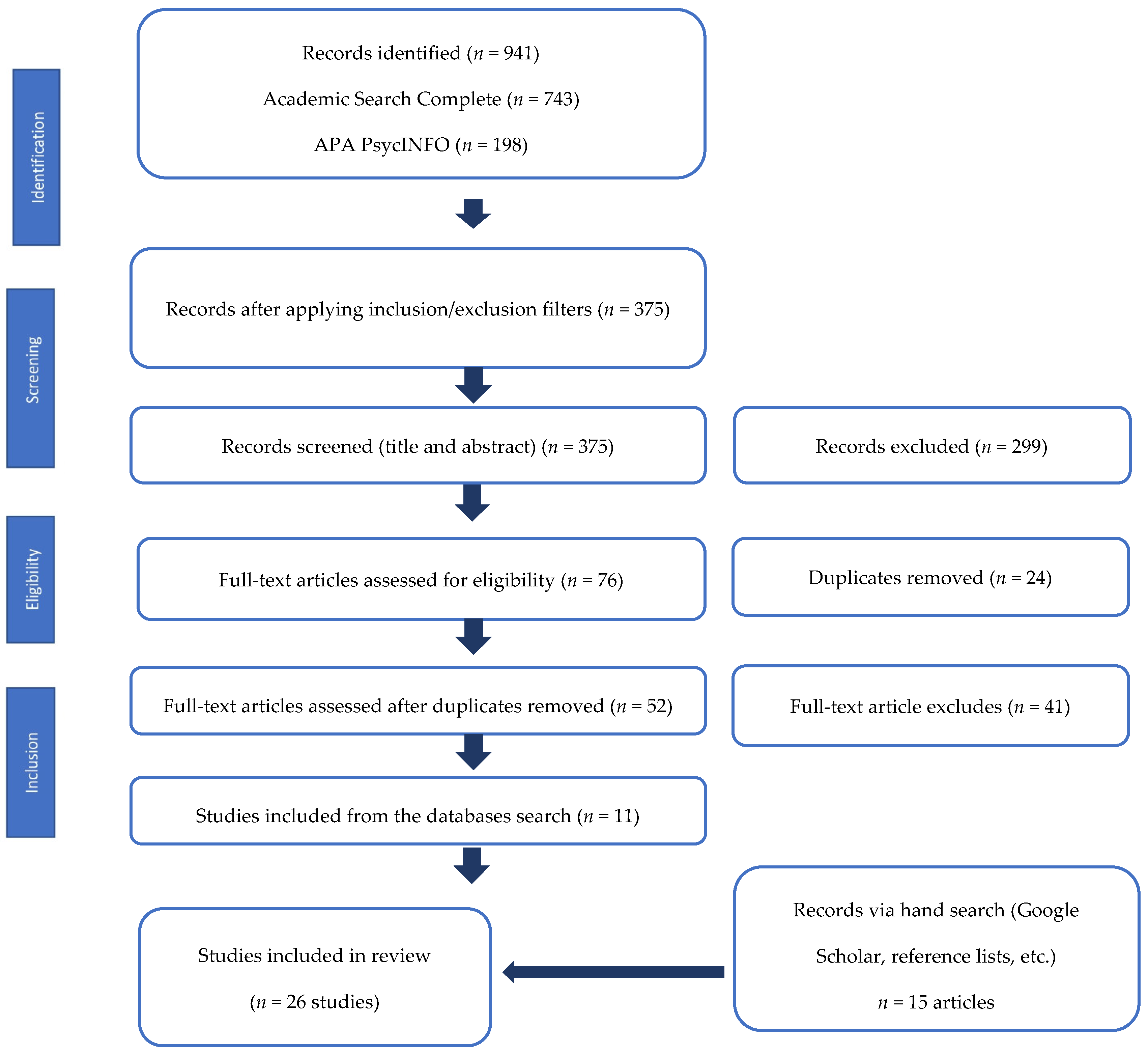
| Academic Search Complete | “Data literacy” OR “statistical literacy” AND “STEM education” AND “k-12 teachers” |
| APA PsycInfo | “Data literacy” OR “statistical literacy” AND “STEM education” AND “k-12 teachers” |
| Authors | Dimensions of Knowledge | Key Findings |
|---|---|---|
| (Engledowl & Tarr, 2020; Wahid et al., 2018; Wu et al., 2023) | Procedural and conceptual gaps | Able to apply isolated procedural skills and basic representations, but often struggle with deep conceptual and justification of reasoning. |
| (Quiroz, 2025) | Pedagogical content knowledge | Deficit in PCK, but Data Error Literacy Protocol helps to improve teachers’ skill to identify students’ misconceptions. |
| (Merk et al., 2020) | Baseline data literacy (DLFT) | Teachers often demonstrate low levels of data literacy knowledge and feel poorly prepared. |
| (Jennings, 2023) | Sociocognitive frames | Mental representations (viewing students as ‘achievers’ vs ‘learners’) shape how teachers interpret data. |
| (Miller, 2022) | Teachers’ identity and data literacy | High school science teachers are often insecure to develop conceptual definitions of data integrity through collaborative reflection. |
| (Kippers et al., 2018; Reisoglu & Çebi, 2020) | Decision-making (DBDM); instructional decision-making | Teachers frequently rely on personal knowledge rather than data-based decision-making. |
| (Miller, 2022; Leavy et al., 2021; Umugiraneza et al., 2022) | Attitudes | Positive dispositions toward data literacy while also persistent perception of individual attitude of how data literacy is practiced. |
| Authors | Technological Tools |
|---|---|
| (Suh et al., 2020; Schoen et al., 2019; Reisoglu & Çebi, 2020; Leavy et al., 2021; Quiroz, 2025) | Microsoft spreadsheet |
| (Jairaman et al., 2016; Bolhuis et al., 2019) | Calculator |
| (Umugiraneza et al., 2022; Kalobo, 2016; Hariyanti et al., 2025) | Rasch analysis software and R, spss, and win step program |
| (Rowe et al., 2020) | (XR) tools for data visualization |
| (Gümüş & Kukul, 2023) | They do not mention tools, but suggest tools to apply in their study |
| (J. Lee & Lee, 2025) | Gen AI for automated data-informed decision-making |
| (Suh et al., 2020) | Online communication tools |
| (Wolff et al., 2019; Biehler et al., 2022; Muñiz-Rodríguez et al., 2020; Burnett et al., 2021) | Interactive tools and visualization platforms: Menti meter, Dear Data, Lost Words, and Gap minder |
| (Matuk et al., 2022, 2024) | Data-art digital platform |
| (Miller, 2022) | Bioinformatics tools, Google Sheets, and Padlets |
| Model Used in the Study | Authors |
|---|---|
| The Digital Competence of Educators (DigCompEdu) | (Reisoglu & Çebi, 2020) |
| Levels of Conceptual Understanding in Statistics (LOCUS); Pattern and Connectivity in Conceptual Knowledge structures (PaCCs) | (Suh et al., 2020; Engledowl & Tarr, 2020) |
| Sociocognitive Framing | (Jennings, 2023) |
| Gal’s model of statistical literacy | (Jairaman et al., 2016; Savard & Manuel, 2016) |
| Statistical literacy, statistical analysis | (Kalobo, 2016; Umugiraneza et al., 2022; Sujarwanto, 2022) |
| Pedagogical content knowledge | (Batiibwe, 2019) |
| transformational professional competence model (deconstruction, co-construction, and reconstruction) | (Muñiz-Rodríguez et al., 2020) |
| Guided discovery learning (GDL) | (Hariyanti et al., 2025) |
| Data-driven decision-making (DDDM) and the GAISE four-phase statistical problem-solving process | (Green et al., 2018) |
| RCM (refined consensus model) | (Miller, 2022) |
| PPDAC (problem, plan, data, analysis, conclusion) | (Leavy et al., 2021; Bilgin et al., 2017) |
| Critical thinking and statistical literacy | (Kuş & Çakiroğlu, 2020) |
| DELP (Data Error Literacy Protocol); DATA process; Data-Art Inquiry | (Quiroz, 2025; J. Lee & Lee, 2025; Matuk et al., 2022) |
| Rasch model | (Guven et al., 2021) |
| Data Literacy for Teachers | (Merk et al., 2020) |
Disclaimer/Publisher’s Note: The statements, opinions and data contained in all publications are solely those of the individual author(s) and contributor(s) and not of MDPI and/or the editor(s). MDPI and/or the editor(s) disclaim responsibility for any injury to people or property resulting from any ideas, methods, instructions or products referred to in the content. |
© 2026 by the authors. Licensee MDPI, Basel, Switzerland. This article is an open access article distributed under the terms and conditions of the Creative Commons Attribution (CC BY) license.
Share and Cite
Manouchehri, A.; Balad, A.A.F.A. Teaching and Teacher Educating Data Literacy in K-12 STEM Education: Looking Back, Moving Forward (AA). Educ. Sci. 2026, 16, 860. https://doi.org/10.3390/educsci16060860
Manouchehri A, Balad AAFA. Teaching and Teacher Educating Data Literacy in K-12 STEM Education: Looking Back, Moving Forward (AA). Education Sciences. 2026; 16(6):860. https://doi.org/10.3390/educsci16060860
Chicago/Turabian StyleManouchehri, Azita, and Aula Andika Fikrullah Al Balad. 2026. "Teaching and Teacher Educating Data Literacy in K-12 STEM Education: Looking Back, Moving Forward (AA)" Education Sciences 16, no. 6: 860. https://doi.org/10.3390/educsci16060860
APA StyleManouchehri, A., & Balad, A. A. F. A. (2026). Teaching and Teacher Educating Data Literacy in K-12 STEM Education: Looking Back, Moving Forward (AA). Education Sciences, 16(6), 860. https://doi.org/10.3390/educsci16060860

