1. Introduction
The rapid rise of generative AI (GenAI) is reshaping English teaching and learning by offering tools such as personalized learning, intelligent tutoring, automated assessment, and immersive technologies (
Celik, 2023;
Tang & Zhang, 2026;
Fanni et al., 2023;
Ironsi, 2024). Research confirms that while AI will not replace teachers (
Hrastinski et al., 2019), it adds clear pedagogical value across language skills (
Chan et al., 2026;
Liu et al., 2022;
Xia et al., 2025;
Lin et al., 2023). Consequently, English teachers now need new competencies beyond traditional knowledge, including prompt engineering, AI ethics, critical evaluation of AI-generated content, and AI-integrated assessment design (
Tiwari, 2024;
Hockly, 2023). However, despite calls for effective and ethical training (
Pokrivčáková, 2019;
Wang et al., 2023), current evidence shows that teachers are not adequately prepared for this integration, and classroom adoption remains limited (
Chan & Tang, 2025;
Wang et al., 2023).
This raises a critical question: How can we systematically understand English teachers’ GenAI readiness and identify their specific training needs? Currently, validated instruments to measure this readiness are scarce, and existing technology readiness scales are not designed for the unique demands of English language instruction. This study addresses this gap by developing and validating the English Language Teachers’ Generative AI Readiness Scale (ELT-AIR). Specifically, this study seeks to answer the following research questions:
RQ1: What is the current level of Generative AI readiness among pre-service and in-service English teachers across the TK, TPK, TCK, TPACK and AI Literacy dimensions?
RQ2: What are the differences in Generative AI readiness between pre-service and in-service English teachers?
RQ3: How do TPACK elements and AI literacy relate to one another within the ELT-AIR framework in the context of English language teaching?
2. Literature Review
This literature review examines the theoretical and empirical foundations for understanding English teachers’ readiness for Generative AI (GenAI). It begins by defining teachers’ AI readiness as a construct, then introduces the Technological Pedagogical Content Knowledge (TPACK) framework as the theoretical lens. Building on this foundation, the review extends TPACK for the GenAI era, presenting the proposed ELT-AIR model. Following this theoretical grounding, existing instruments for measuring AI readiness are critically reviewed. The review then argues for a subject-specific scale for English teachers.
2.1. The Importance of English Teachers’ AI Readiness
AI readiness refers to the competence of both educators and students to understand fundamental AI concepts and recognize how AI can enhance educational practices and learning outcomes (
Asal et al., 2025). This readiness includes not only knowledge of AI technologies but also the practical skills to use these tools effectively in educational settings (
Luckin et al., 2022). While AI readiness includes affective, behavioral, and contextual dimensions (
Lorincz & Csernicskó, 2026), this study focuses specifically on the behavioral dimension as the most directly observable and actionable component. Affective and contextual factors are acknowledged as important but are outside the scope of this investigation.
For English teachers specifically, AI readiness has a more focused meaning. According to
Moorhouse (
2024), AI readiness for English teachers encompasses the preparedness and competencies needed to integrate AI technologies into their pedagogical practices. This includes the ability to adapt to emerging AI tools and the skill to enhance teaching and learning in the English language classroom.
What does AI readiness look like in practice? Teachers with high levels of AI readiness are likely to use AI to improve their work and experience greater job satisfaction (
Wang et al., 2023). In contrast, teachers with low levels of AI readiness may avoid AI altogether, fearing that it will disrupt their established teaching practices.
Building on these definitions, this study conceptualizes AI readiness as a multidimensional construct informing the development of the ELT-AIR scale.
2.2. Technological Pedagogical Content Knowledge (TPACK) Framework and Its Limitations for GenAI
Having defined AI readiness as a multidimensional construct, it is now necessary to establish a theoretical lens for understanding how teachers integrate technology into their practice. The Technological Pedagogical Content Knowledge (TPACK) framework (
Mishra & Koehler, 2006) is one of the most widely cited models for conceptualizing teacher knowledge in technology-rich environments. The framework identifies three core knowledge domains—content (CK), pedagogy (PK), and technology (TK)—along with their intersections (PCK, TCK, TPK, and TPACK itself). The TPACK model highlights the necessity for teachers to integrate technology seamlessly with their pedagogical strategies and content goals. It advocates an intentional and reflective approach to technology integration, one that considers the distinct needs of students and the specific learning objectives associated with various subject areas. It also provides a holistic framework that helps educators move beyond simply using digital tools to consider how those tools can be meaningfully integrated into their teaching practices and specific content areas (
Chan & Tang, 2025).
In addition, TPACK has proven to be a valuable tool for identifying teachers’ existing strengths and areas where they may need further support, thereby helping to shape targeted professional development (
Celik, 2023;
Dewi et al., 2021). One of the model’s key strengths is its attention to context. TPACK recognizes that effective technology integration does not happen in a vacuum; it depends on the particular subject matter being taught, the needs of the learners, and the instructional goals at hand. Because of this, the model can be adapted to fit a wide range of educational settings (
Celik, 2023;
Ning et al., 2024). Recent literature has increasingly focused on the incorporation of contextual knowledge (CKn) as a critical component (
Mishra, 2019). Contextual knowledge refers to the understanding of specific teaching environments, cultural factors, student needs, and institutional policies that influence educational practices. The integration of CKn within the TPACK framework enriches our understanding of effective technology integration in education.
However, scholars have identified several critical shortfalls of the original TPACK framework when applied to generative AI in educational settings. The framework was originally designed around passive, non-generative technologies such as spreadsheets and presentation software. In contrast, AI systems exhibit agentic autonomy—they generate original content, provide personalized feedback, and make independent decisions based on data (
Chiu, 2026). This shift demands new teacher competencies such as prompt engineering and critical evaluation of AI systems, which TPACK does not currently address. Another significant limitation involves knowing what to trust. Traditional Content Knowledge (CK) assumes the teacher serves as the primary authority on subject matter. However, AI’s ability to autonomously create educational materials fundamentally disrupts this assumption, requiring teachers to become critical validators and contextualisers of AI-generated content. Competencies such as source triangulation, bias detection, and disciplinary methodological critique become essential, yet they lie outside the original CK domain. Within TPACK, ethical considerations often remained implicit or peripheral. AI systems, however, inherently raise pressing issues of data privacy, algorithmic bias, fairness, and accountability. These concerns are so pervasive that ethical reasoning must now function as an explicit, core domain of teacher knowledge—a structural feature that TPACK lacks (
Celik, 2023).
Mishra et al. (
2023) indicate that Generative AI is profoundly different from the other technologies we have seen before because it is generative and social. The tools can generate content and promote social interactions with the tool itself with human-like attributes. They also propose to expand TPACK so that teachers need to acquire contextual knowledge (XK) for the successful integration of Generative AI tools in the classroom.
2.3. Existing Instruments for Measuring AI Readiness
Having established the theoretical foundation of the ELT-AIR model, it is now necessary to examine what instruments currently exist for measuring AI readiness in educational contexts. The notion of AI readiness is relatively new in educational research (
Wang et al., 2023;
Luckin et al., 2022). Most existing studies have been conducted in the business sector, where AI adoption is more advanced.
Wang et al. (
2023) argue that applying business-sector frameworks to education is problematic because these frameworks do not address the unique challenges that students and teachers face in classroom settings.
Several studies have directly examined AI readiness among teachers.
Moorhouse (
2024) conducted a qualitative study assessing the readiness and perceptions of novice and first-year language teachers regarding AI integration in English instruction. Through interviews with 27 teachers, the study found that beginning educators felt unprepared to incorporate AI into their teaching practices. However, this study focused only on teachers’ perceptions rather than actual implementation. The small sample size also limits the generalizability of the findings. The researcher recommended including lesson plan analyses and classroom observations in future studies, as well as providing targeted training to enhance teachers’ GenAI competencies.
Kaplan-Rakowski et al. (
2023) conducted a quantitative study exploring teachers’ perceptions of GenAI integration. Using an online survey adapted from Wozney’s framework, the study found that over half of participants were willing to incorporate AI into their English classrooms. However, approximately one-third expressed concerns about AI replacing human educators. The findings suggest that increasing teachers’ awareness of AI could significantly enhance its integration into classroom practices. Consequently, the study stressed the importance of pre-service training and ongoing professional development. A limitation of this study is that it did not specifically target English language teachers or tools designed for English instruction.
Cao (
2025) evaluated the AI readiness of university English teachers using a mixed-methods design. The quantitative findings revealed that while teachers were very willing to learn about and implement AI-assisted teaching, they lacked the necessary attitudes and technological competencies. Teachers found AI tools too challenging to use and did not feel comfortable integrating them into their practices. They also perceived existing organizational and technical infrastructure as inadequate. However, the sample size was relatively small (
n = 49 for surveys,
n = 5 for interviews), limiting the generalizability of the results.
Several researchers have developed scales specifically for measuring AI-related teacher knowledge.
Celik (
2023) developed the Intelligent-TPACK scale to assess teachers’ knowledge and perceptions regarding AI tools in education. This scale builds on the TPACK framework by incorporating ethical considerations as additional contextual elements. The study involved 428 teachers and found that AI-specific technological and pedagogical knowledge is critical for effective AI integration. The findings also highlighted the importance of ethical awareness. Celik advocated pre-service teacher training to include foundational AI knowledge before addressing ethical dimensions, and recommended future qualitative research to validate the findings.
Ning et al. (
2024) introduced another TPACK-based scale specifically designed for AI integration, known as AI-TPACK. This framework encompasses seven domains: Pedagogical Knowledge (PK), Content Knowledge (CK), AI-Technological Knowledge (AI-TK), Pedagogical Content Knowledge (PCK), AI-Technological Pedagogical Knowledge (AI-TPK), AI-Technological Content Knowledge (AI-TCK), and AI-TPACK. Using exploratory and confirmatory factor analysis, the study found that all six domains serve as predictive factors for AI-TPACK. The researchers noted the need for further qualitative data to validate and enrich the model.
In summary, while these studies provide valuable insights into teacher readiness for AI, several limitations persist. Most existing scales were not designed specifically for English language teachers. Even when they target language teachers, they often do not fully capture the unique pedagogical demands of English teaching and learning. These demands include writing instruction, reading comprehension, listening and speaking skills development, and assessment design in an AI-generated world. The ELT-AIR scale developed in this study addresses these gaps by providing a validated, subject-specific instrument grounded in an extended TPACK framework and designed specifically for the context of English language teaching and learning.
2.4. Research Gaps and the Present Study
This study addresses the following interrelated research gaps that constrain both theoretical advancement and practical implementation in the field: teachers’ readiness, theoretical and contextual framework considerations.
2.4.1. Why English Teachers Need a Subject-Specific AI Readiness Scale: Addressing the Limitations of Generic Instruments
English teachers face unique challenges with Generative AI that generic readiness scales fail to address. Unlike in math or science, where AI serves as a supplementary tool, English teaching centers on language generation—the very capability where GenAI excels (
Chan & Tang, 2025). This directly disrupts text-based assessments like essays and portfolios, as teachers can no longer assume submitted work reflects student thinking.
Gao and Wang (
2026) note that English teachers must critically evaluate AI-generated language for authenticity and address ethical concerns like plagiarism detection.
Laoha et al. (
2025) similarly identify AI misuse and over-reliance as frequent challenges. English educators therefore require distinct competencies—prompt engineering, critical evaluation of AI outputs, and ethical assessment practices—that general readiness scales overlook (
Laoha et al., 2025).
Gao and Wang (
2026) emphasize the importance of evaluating teachers’ ability to critically assess AI-generated content and adapt tools to pedagogical goals. By measuring English teachers’ readiness in a targeted way, a customized instrument fills a critical gap in existing tools and provides the evidence base needed to shape policy and training where it is most urgently required.
Existing literature offers limited empirical evidence on English teachers’ baseline competencies, attitudes, and training needs specific to GenAI integration. Although scholars such as
Moorhouse (
2024) have explored beginning teachers’ use of GenAI in language classrooms, and
Celik (
2023) has developed scales to assess teachers’ AI knowledge, these efforts remain fragmented. A comprehensive understanding of teacher readiness is still lacking. Furthermore, the rapid evolution of AI technologies requires continuous rather than one-time assessments of readiness—a dimension largely absent from current scholarship. As
UNESCO (
2024) emphasizes, equipping educators with AI competencies requires ongoing professional development that adapts to emerging technologies. Without a solid understanding of teachers’ current readiness levels, efforts to design effective professional development programmes risk misalignment with actual teacher needs.
2.4.2. Theoretical and Contextual Framework Gap
The third gap relates to theoretical and contextual frameworks. Although frameworks such as UNESCO’s AI Competency Framework for Teachers (AI CFT) and the Technological Pedagogical Content Knowledge (TPACK) model provide valuable scaffolding for understanding technology integration, they exhibit critical limitations when applied to English language teaching.
Mutawa and Sruthi (
2025) identify several challenges with the UNESCO framework, including its lack of subject-specific focus on language teaching, overemphasis on technical skills, and insufficient attention to contextual, ethical, and cultural implications of AI in diverse classrooms. Similarly, while the TPACK framework (
Mishra & Koehler, 2006) has been widely used to evaluate teachers’ technological integration knowledge (
Celik, 2023;
Valtonen et al., 2017), its generic nature does not adequately capture the unique pedagogical demands of language instruction. These demands include fostering communicative competence, scaffolding grammar acquisition, supporting multimodal literacy, and addressing varying language proficiencies.
Moreover, the majority of GenAI research has been situated within higher education settings (
Choi et al., 2025), leaving primary and secondary school sectors, with their distinct developmental, curricular, and classroom management considerations, substantially underrepresented. For English teachers and school leaders, this gap means that existing frameworks offer insufficient guidance for navigating the specific challenges and opportunities of integrating GenAI into English language classrooms at the primary and secondary levels.
2.4.3. Extending TPACK for the GenAI Era with AI Literacy: The ELT-AIR Model
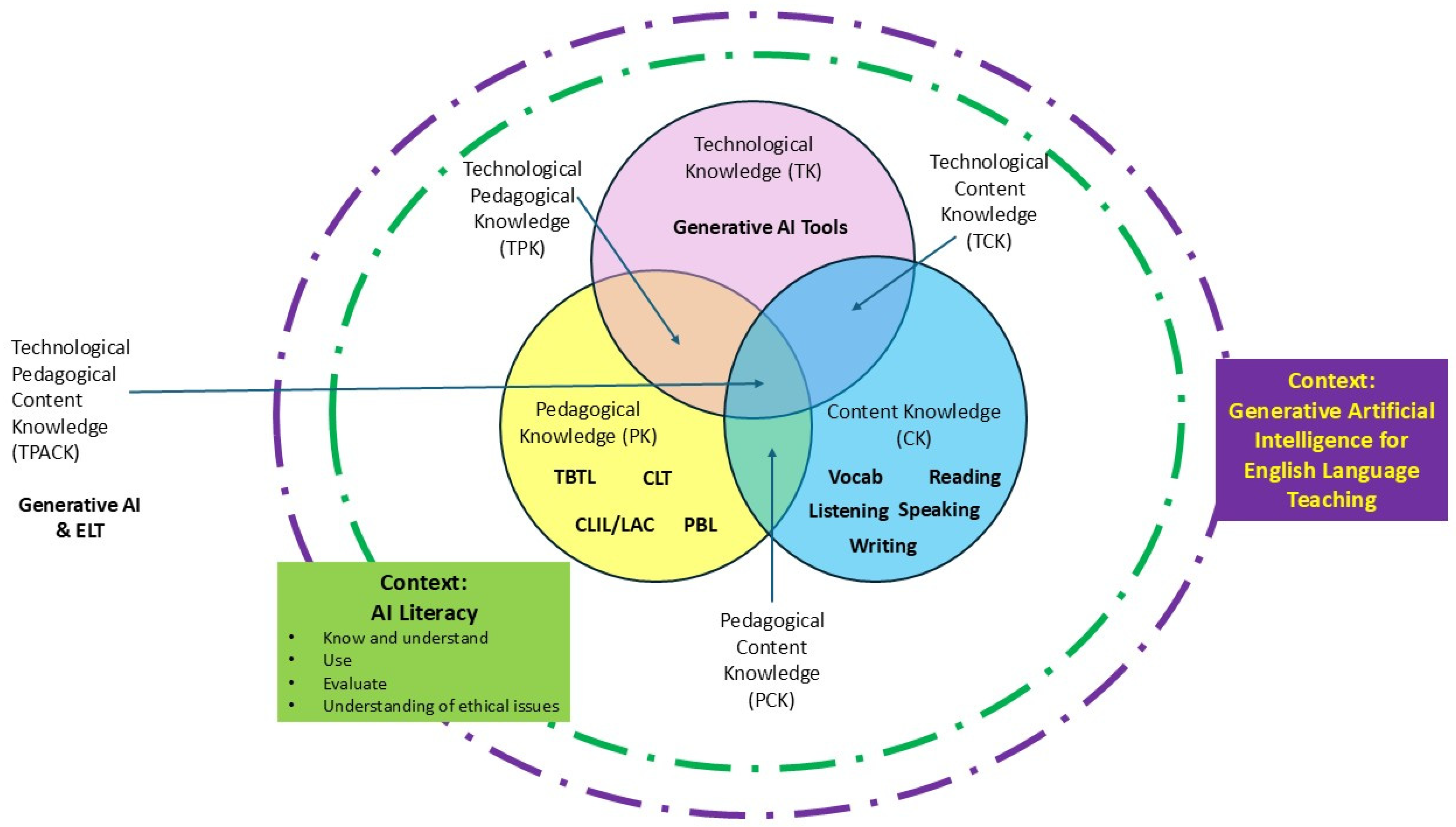
To address the limitations of the original TPACK framework when applied to generative AI, this study proposes the English Language Teachers’ Generative AI Readiness (ELT-AIR) model. This model extends the TPACK framework specifically for the context of English language teaching and learning by operationalizing AI literacy as a core knowledge domain alongside pedagogical content knowledge. Artificial Intelligence Literacy, in a general sense, refers to the ability to understand, interact with, and critically evaluate AI systems and their outputs (
Lintner, 2024).
Ng et al. (
2021) identified four essential components of AI literacy: knowledge and understanding, usage, evaluation, and ethical awareness. Unlike traditional TPACK applications designed for static digital tools, the ELT-AIR model reconceptualizes teacher knowledge for the GenAI era by explicitly integrating four interconnected AI Literacy dimensions: (1) knowledge and understanding of GenAI tools and their basic functions; (2) the ability to use GenAI for English teaching and learning tasks; (3) the capacity to evaluate AI-generated content for accuracy, relevance, and pedagogical appropriateness; and (4) awareness of ethical issues associated with AI, including data privacy, algorithmic bias, and academic integrity. These dimensions, together with the specific pedagogical demands of English language teaching and learning, form the conceptual foundation of the ELT-AIR scale.
A recent systematic review by
Lintner (
2024) examined AI literacy scales across the literature available in Scopus and arXiv up to mid-2024. The review analyzed 22 studies and identified 16 distinct AI literacy scales. Notably, only one of these scales was specifically designed for teachers; the remainder targeted students or the general population. This discrepancy highlights a significant gap in the research and development of AI literacy assessment instruments for educators, particularly for English teachers. The ELT-AIR scale developed in this study directly addresses this gap by providing a validated instrument tailored to the specific needs of English language teaching and learning.
2.4.4. The Present Study
The present study addresses these gaps by developing and validating the ELT-AIR scale, guided by the research questions stated in
Section 1. This study makes three key contributions.
First, it addresses the readiness gap by providing a validated instrument that systematically measures English teachers’ GenAI readiness across multiple dimensions, including knowledge, use, evaluation, and ethics. This enables continuous assessment of readiness as AI technologies evolve.
Second, it addresses the theoretical gap by extending the TPACK framework specifically for the GenAI era. The proposed ELT-AIR model integrates GenAI literacy, ethical awareness, prompt engineering competencies, and the specific pedagogical demands of English language teaching and learning. These are the dimensions that existing frameworks lack.
Figure 1 illustrates the framework used in this study:
Third, it tackles the contextual gap by validating the scale across pre-service and in-service English teachers in diverse educational settings, providing a subject-specific instrument that offers practical guidance for school leaders and policymakers.
Using an explanatory sequential mixed-methods design, this study first quantitatively validates a new AI readiness scale for English teachers through rigorous psychometric testing. It then conducts qualitative interviews to explain and deepen the quantitative findings. The outcome is an evidence-based tool that helps school leaders and policymakers provide targeted support for English teachers as they integrate generative AI into their classrooms.
3. Methodology
This study employed an explanatory sequential mixed-methods design to develop and validate the English Language Teachers’ Generative AI Readiness Scale (ELT-AIR). This design was selected for two main reasons. First, scale development and validation require robust quantitative data to establish factor structure, reliability, and validity. Second, an explanatory sequential approach allows quantitative findings to be further explained and enriched by qualitative data, providing a more complete understanding of teachers’ readiness (
Creswell & Creswell, 2017).
This study consisted of four phases. Phase 1 involved a pilot study in which the instrument was validated with a smaller sample of pre-service teachers. Phase 2 involved administering the quantitative survey to a larger sample of in-service and pre-service English teachers. The data was analyzed using exploratory factor analysis (EFA), confirmatory factor analysis (CFA), and reliability and validity tests to develop and refine the ELT-AIR scale. Phase 3 involved scheduling and conducting semi-structured interviews with a subset of participants to explore their experiences, challenges, and training needs in greater depth. Phase 4 involved data analysis and triangulation, where quantitative and qualitative findings were compared to identify convergence, divergence, and other insights.
3.1. Participants
Participants in this study were English language teachers recruited from primary, secondary, and tertiary institutions in Hong Kong, Macao and the Greater Bay Area (GBA). The sample included both in-service teachers (those currently employed as English teachers) and pre-service teachers. Pre-service teachers usually refer to student teachers registered in a teacher education program at higher education institutes, and they are working towards their teacher certification (
Chand et al., 2022). They typically have no or limited classroom teaching experience. This dual-sample approach allowed the study to examine readiness differences between these two groups and to ensure the ELT-AIR scale was applicable across different career stages.
The study involved three participant samples corresponding to the three phases of data collection: a pilot sample, a main quantitative sample, and a qualitative interview sample.
3.1.1. Pilot Sample
The initial phase contains a pilot study where the instrument was validated with a smaller sample size of pre-service teachers. The pilot sample consisted of 16 pre-service English teachers enrolled in a teacher training programme at a university. Results of the pilot testing were published and the pilot testing helped improve the clarity of the items and the pilot testing results confirm the validity of the instrument (
Chan & Tang, 2025). Furthermore, it allowed us to assess the instrument’s reliability by administering it to a small sample and calculating internal consistency measures with Cronbach’s alpha, which confirmed that the items produced consistent results.
3.1.2. Main Quantitative Sample
The main quantitative sample consisted of 307 pre-service and in-service English teachers who completed the full ELT-AIR survey online. A total of 201 were in-service teachers and 106 were pre-service teachers in Hong Kong, Macao and Greater Bay Area. Why two groups of participants were recruited align with the findings of
Kartchava and Chung (
2015). In-service English teachers typically make instructional decisions differently than pre-service teachers, largely due to their greater classroom experience and ongoing professional development. Research also indicates differences in their beliefs and practices regarding digital technology (
Kartchava & Chung, 2015); pre-service teachers tend to have more positive attitudes and experience, while in-service teachers are generally better at integrating technology into their teaching. These two groups also have different training needs.
3.1.3. Qualitative Interview Sample
For the qualitative phase, interview participants were purposively selected from survey respondents who indicated willingness to be contacted for a follow-up interview. Data was collected through semi-structured interviews with 10 English teachers. Emails were sent to all primary and secondary schools in Hong Kong and Macao, together with teachers from the researcher’s network were invited to participate in the interviews. Participants were chosen with varying number of years of teaching experience to ensure we have a good mix of perspectives from the teachers. The triangulated findings reveal insights into teachers’ familiarity with AI tools, perceived benefits, challenges, and training needs.
3.1.4. Ethical Considerations
Informed written consent was obtained from each participant. The consent form explained the study’s purpose, procedures, risks, and benefits. Participation in this study was voluntary. Participants could refuse to participate or leave the study at any time without negative consequences. All data were anonymized and stored securely.
3.2. Instrument Design and Development (Quantitative)
This study used two main instruments: the ELT-AIR scale (developed for this study) and a semi-structured interview protocol (used in the qualitative phase). This section describes the development and validation of the ELT-AIR scale, followed by a brief description of the interview protocol.
3.2.1. Instrument Sourcing
The ELT-AIR scale is centered on the Technological Pedagogical Content Knowledge (TPACK) framework, integrating the contexts of English language teaching and AI literacy. It is designed to provide a comprehensive understanding of English teachers’ readiness and training needs for incorporating Generative AI into their classrooms.
Rather than building a new instrument from scratch, we sourced and adapted existing validated instruments. First, we adopted
Celik’s (
2023) Intelligent-TPACK framework, which evaluates teachers’ technological pedagogical content knowledge in relation to Generative AI. Items were updated to reflect the specific context of English language teaching and learning (
Chan & Tang, 2025). Second, we adapted the AI Literacy Scale (AILS), originally designed for the general population (
Wang et al., 2023), to better suit the context of English language teachers. The adapted items address teachers’ Generative AI awareness, ability to use and evaluate GenAI tools, and AI ethical responsibilities within the English language teaching context. These AI literacy items were added after the pilot testing phase but before the main quantitative data collection, ensuring a more comprehensive assessment of teachers’ readiness.
The customized instrument, which we name the English Language Teachers’ Generative AI Readiness Scale (ELT-AIR), focuses on aspects of GenAI integration relevant to English teaching while also incorporating items that assess teachers’ AI literacy.
3.2.2. Instrument Adaptation Processes
Items from
Celik’s (
2023) Intelligent-TPACK framework were adapted because this instrument is generic and does not contain subject-specific content. Items were rephrased to reflect how Generative AI tools can be applied in English teaching (Technological Knowledge). Items were also rephrased to indicate how GenAI tools affect English language content knowledge (listening, reading, speaking, and writing) and TPACK (how tools can be used in receptive or productive skills lessons). Four items were added to the TCK construct and two items to the TPACK construct to capture the effects of GenAI tools on receptive and productive skills.
Table 1 illustrates an item adoption matrix that describes the operationalization rules, structural additions (including the four TCK and two TPACK items mapping receptive/productive skills), and some sample phrasing shifts used to ground both instruments into the specific context of EFL instruction.
Ethics items from the Intelligent-TPACK were omitted during pilot testing and replaced with items on information literacy. However, after pilot testing, participants and experts commented that the study should investigate AI literacy instead of information literacy. Consequently, the AI Literacy Scale (AILS), originally designed for the general population (
Wang et al., 2023), was adapted to incorporate four AI literacy constructs: AI Awareness, AI Use, AI Evaluation, and AI Ethics. All items were rephrased in the context of English language teaching. To make the survey easier to understand and ensure reliable answers, two reverse-coded items were rephrased from the original AILS into direct statements (for example, changing “I do not know how…” to “I know how…” and “I am never alert to …” to “I am alert to …”). This helps prevent confusion. After all items were added and modified, they underwent language review and content validation.
3.2.3. Language Review and Content Validation
To ensure the validity and relevance of the items, expert review was conducted. Content validation ensures that assessment items accurately measure the dimensions they are intended to assess, thereby increasing the validity of the results (
Dörnyei, 2007). This step promotes confidence in the assessment’s fairness and reliability and helps establish that the items are comprehensive and representative of the content area.
Expert Panel
Four experts were invited to evaluate the items. Two experts have over 15 years of e-learning development experience and have worked on GenAI application development for language learning. Their applications have been used by English teachers and students in Hong Kong, Macao, and Greater China. The other two experts were experienced English teachers. One teacher has over 20 years of teaching experience and serves as the English Panel Chairperson at a secondary school in Hong Kong. The other has over 15 years of teaching experience and serves as the English Panel Chairperson at a primary school in Macao. Together, these experts possess the technological, content, and pedagogical knowledge needed to ensure the validity and reliability of the instrument.
Review Process
The experts were provided with detailed definitions of the eight constructs being assessed. They were then asked to evaluate each item based on relevance, clarity, and alignment with the stated objectives. They also considered whether the items covered the necessary content areas and whether they were appropriate for English teachers.
Based on the experts’ feedback, 22 items were rephrased to enhance clarity and relevance. All four experts agreed on the number of items, and no items were removed during this process. The revisions focused on improving comprehension while ensuring that each item accurately reflected English teachers’ experiences with GenAI integration in their classrooms.
3.2.4. The Pilot Study
A pilot study was conducted to enhance the validity and reliability of the ELT-AIR scale. The instrument was completed by 16 pre-service English teachers. Results of the pilot study were published, and the pilot testing helped improve the clarity of the items while confirming the validity of the instrument (
Chan & Tang, 2025). The pilot study also allowed us to assess internal consistency using Cronbach’s alpha, which confirmed that the items produced reliable results.
All constructs exhibited strong reliability, with Cronbach’s alpha values exceeding 0.8 (
Chan & Tang, 2025). Correlation analysis revealed that the strongest positive correlation was between TK and TPK (rs(16) = 0.917,
p < 0.001), followed by TPK and TPACK (rs(16) = 0.90,
p < 0.001). All correlations were positive, indicating that the variables moved in the same direction.
The pilot study also identified specific training needs for pre-service English teachers, including the selection and implementation of AI tools for English language teaching, progress monitoring, and pedagogies for integrating AI tools into the classroom. Pilot testing is critical for confirming content validity (
Creswell & Creswell, 2017) and evaluating internal consistency. After the pilot study, we adapted items from
Wang et al.’s (
2023) AI Literacy Scale (AILS) to replace the information literacy construct, gaining a more comprehensive understanding of English teachers’ AI literacy.
3.2.5. Structure of the Finalized ELT-AIR Instrument
The finalized ELT-AIR survey consists of 41 closed-ended items measured on a 5-point Likert scale, ranging from 1 (strongly disagree) to 5 (strongly agree). In addition, demographic information, including participants’ age and gender, was collected to contextualize the findings and analyze potential correlations with the responses.
All items were drafted using clear and simple language to ensure they could be easily understood by English teachers. The items were developed in a general context rather than focusing on specific GenAI applications to prevent them from becoming obsolete as technology evolves. Items were reviewed and checked for redundancy within and across dimensions. During the item development process, some items were eliminated, resulting in a final total of 41 items distributed across 8 dimensions. Each dimension contains between 3 and 8 items, as described in
Table 2.
3.3. Semi-Structured Interview Protocol (Qualitative)
In addition to the quantitative survey, a semi-structured interview protocol was developed for the qualitative phase of the study. These interviews were designed to yield qualitative insights into their experiences and perceptions regarding the incorporation of Generative AI in their teaching methodologies. During the interviews, teachers provided their opinions on the potential benefits of Generative AI, such as personalized learning experiences, enhanced student engagement, and the ability to foster creativity in writing. They also explained challenges they faced.
During the interviews, teachers shared their views on the potential benefits of Generative AI, including personalized learning experiences, enhanced student engagement, and the ability to foster creativity in writing. They also explained the challenges they faced when integrating AI tools into their classrooms. In addition, participants identified specific training needs essential for optimizing the use of Generative AI in their curricula. These needs ranged from understanding the fundamentals of AI technology to developing strategies for effectively integrating these tools into lesson plans. Interviewees emphasized the importance of professional development opportunities that address not only the technical aspects of AI tools but also pedagogical methodologies that leverage these resources to promote student learning.
3.4. Data Collection Procedures
Data collection for this study was conducted in three phases, corresponding to the three phases of the explanatory sequential mixed-methods design: the pilot study, the main quantitative survey, and the qualitative interviews. Each phase is described below.
3.4.1. Pilot Study Data Collection
The pilot study was conducted to test and refine the ELT-AIR scale before its main administration. A total of 16 pre-service English teachers were recruited through convenience sampling via the researcher’s professional network. Participants were invited to complete the 32-item online survey via a survey platform (
Chan & Tang, 2025). The survey took approximately 15–20 min to complete. After completing the survey, participants were asked to provide written feedback on any items they found unclear, confusing, or difficult to answer. All responses were anonymous, and no identifying information was collected.
3.4.2. Main Quantitative Data Collection
Following the pilot study and subsequent refinements to the instrument, the main quantitative data collection was conducted. The finalized ELT-AIR survey (a total of 41 items) was administered online to a larger sample of pre-service and in-service English teachers.
Participants were recruited using convenience sampling, where invitations were distributed through the researcher’s professional network of colleagues, friends, and teacher training institutions. This approach was chosen for its practical advantages, as it allowed the researcher to efficiently reach potential participants within a limited time frame and budget, while also leveraging existing relationships to build trust and encourage higher response rates.
The online survey was hosted on a survey platform, and a link was shared with potential participants via email and social media platforms (e.g., WhatsApp and WeChat). The survey included an informed consent form in the first section, which explained the study’s purpose, procedures, risks, and benefits. Participants were required to indicate their consent before proceeding with the survey questions. The survey took approximately 20–25 min to complete. A total of 307 valid responses were collected for the main quantitative analysis.
3.4.3. Qualitative Interview Data Collection
After the quantitative data were analyzed, a subset of survey respondents was invited to participate in semi-structured interviews. Participants were purposively selected based on their survey responses to ensure a diverse range of perspectives, including teachers with high and low readiness scores in-service teachers, and teachers from different educational levels.
A total of 10 English teachers agreed to participate. Interviews were scheduled at times convenient for the participants and were conducted online via Zoom video conferencing software (version 6.2.0). Each interview lasted approximately 30–45 min. Before each interview, participants were reminded of the study’s purpose and their right to withdraw at any time. Informed written consent was obtained at the beginning of each recorded session.
Interviews were audio- and video-recorded with participants’ explicit permission. All audio recordings were transcribed verbatim to prepare for analysis. To protect participant privacy, teachers were assured that their responses would remain confidential and that any identifying information would be removed from the transcripts. To confirm accuracy, member checking was conducted, meaning each teacher participant received their transcript to review and verify. Initial coding was completed independently by both authors, after which they worked together to refine the codes and group them into broader categories. Themes were then developed and carefully reviewed against both the coded extracts and the full dataset. Finally, investigator triangulation (where both authors compared interpretations to reduce individual bias) and member checking were also used to ensure the trustworthiness of the themes and the overall qualitative results.
3.4.4. Data Storage
All data collected in this study were stored securely. Quantitative survey data were stored on Google Drive, and only the researcher had the password to access the files. All interview recordings, notes, and transcripts were encrypted and stored on the researcher’s password-protected computer. Only the researcher had access to these files.
The researcher will keep the research data for five years upon completion of the study. After this period, the researcher will retain only summary data that contains no personal identifiers. All confidential digital files will be securely deleted. Any non-digital or paper-based data (e.g., printed questionnaires, handwritten interview notes) will be shredded.
3.5. Data Analysis Methods
This section outlines the methods and tools used to analyze the data gathered during the study. By employing both descriptive and inferential statistical techniques, along with thematic analysis for qualitative data, this research aims to uncover patterns, correlations, and insights that contribute to a deeper understanding of English teachers’ AI readiness and associated training needs.
3.5.1. Analysis Methods Used for RQ1 & RQ2
To address RQ1 and RQ2, descriptive statistics were used to provide a foundational overview of the data, summarizing the levels of GenAI readiness among teachers across various constructs. This method helps identify central tendencies (mean, median) and variability (standard deviation), allowing for a quick understanding of overall readiness and facilitating comparisons across dimensions. The quantitative data were analyzed using JASP version 0.96, an open-source statistical analysis program.
In addition, t-tests and ANOVA (Analysis of Variance) were employed to compare readiness levels across different demographic groups (e.g., in-service vs. pre-service teachers). These statistical tests determine whether differences in readiness are statistically significant, providing insights into how various factors impact teachers’ preparedness to use GenAI.
Cronbach’s alpha values were also calculated to confirm the reliability of the collected data. Cronbach’s alpha values 0.70 are generally indicating acceptable reliability (
Dörnyei, 2007). This measure ensures that items within a test consistently reflect the same construct, enhancing the validity of the findings.
Qualitative data from teacher interviews captured perspectives on how teachers perceive their readiness for GenAI. By incorporating qualitative insights, the quantitative findings were enriched, providing a more comprehensive understanding of what “readiness” truly entails in a practical context. The following steps were followed (
Dörnyei, 2007): coding, searching for themes, reviewing themes, and defining themes. Interview texts were carefully reviewed and coded. Themes were then identified from the codes and further refined by reviewing the data. Merging, splitting, or discarding themes were also done during the analysis.
During thematic analysis, the interview texts were coded and skimmed for themes to identify recurring patterns and concepts. The identified themes were then integrated with the quantitative results for triangulation.
3.5.2. Analysis Methods Used for RQ3
To address RQ3 (the relationships of TPACK dimensions and AI literacy), Exploratory Factor Analysis (EFA) was used. EFA identifies underlying relationships among variables related to TPACK elements and AI literacy. This method helps discover the structure of the data and determines how well different aspects of TPACK relate to AI literacy. Acceptable values for factor loadings typically range from 0.30 to 0.40, with loadings above 0.50 considered strong indicators of a variable’s relationship with a factor.
In addition, Confirmatory Factor Analysis (CFA) was conducted to validate the relationships identified in EFA. This method tests whether the data fit the hypothesized measurement model, confirming the constructs of TPACK and AI literacy. By applying CFA, the identified constructs were tested for reliability and validity.
Similarly, themes obtained from the qualitative interviews were integrated with the quantitative results to verify the findings.
4. Results
This section presents the findings of the study, organized according to the research questions and the phases of data analysis. Quantitative results are presented first, followed by qualitative findings. The quantitative analyses include descriptive statistics, reliability tests, exploratory factor analysis (EFA), confirmatory factor analysis (CFA), and comparative analyses between pre-service and in-service teachers. The qualitative findings, derived from semi-structured interviews, are presented through thematic analysis with representative participant quotes. Together, these results provide a comprehensive picture of English teachers’ GenAI readiness and inform the development and validation of the ELT-AIR scale.
4.1. Descriptive Statistics
This section presents the descriptive statistics of the participant sample, including demographic characteristics such as region, gender, and educational level. A total of 307 English teachers participated in the main quantitative phase of the study, comprising 201 in-service teachers and 106 pre-service teachers.
4.1.1. Participant Distribution by Region
Among the 201 in-service English teachers, the majority were from Hong Kong (126 participants, 62.7%), followed by Macao (58 participants, 28.9%). The remaining participants were from three other cities in the Greater Bay Area: Dongguan (13 participants, 6.5%), Guangzhou (2 participants, 1.0%), and Shenzhen (2 participants, 1.0%). In contrast, all 106 pre-service English teachers were exclusively from Hong Kong, representing 100% of that group.
4.1.2. Participant Distribution by Gender
Among the 201 in-service English teachers, 154 were female (76.6%) and 47 were male (23.4%). Among the 106 pre-service teachers, 78 were female (73.6%) and 28 were male (26.4%). This gender distribution shows a notable predominance of female participants in both groups.
This distribution aligns with official statistics. According to the
Census and Statistics Department (
2016), female teachers have consistently dominated the local primary school sector, representing approximately 78% of teaching staff from 2006/07 to 2015/16. At the secondary level, females accounted for about 57% of teaching staff. More recent figures from the 2022–2023 school year (
Census and Statistics Department, 2024) show a similar pattern: in primary schools, there were 20,536 female teachers (76.14%) and 6435 male teachers (23.86%); in secondary schools, there were 16,573 female teachers (55.80%) and 13,127 male teachers (44.20%). Across both sectors combined, there were 37,109 female teachers (65.5%) and 19,562 male teachers (34.5%).
4.1.3. Participant Distribution by Educational Level (In-Service Teachers Only)
Among the 201 in-service teachers, the majority held a master’s degree (47.3%) or a bachelor’s degree (50.7%). The diversity in educational backgrounds allows for a broader understanding of the challenges and opportunities in adopting AI in their classrooms. For example, the study can examine whether teachers with higher education levels are more open to innovative practices.
4.2. Survey Results: Mean Scores, Standard Deviations and CA Values
A total of 307 English teachers (201 in-service and 106 pre-service) completed the ELT-AIR survey.
Table 3 presents the mean scores, standard deviations, and Cronbach’s alpha values for each of the eight dimensions.
4.2.1. Reliability of the Scale
Cronbach’s alpha values for all eight domains exceeded 0.8, indicating strong internal consistency reliability. As discussed earlier, Cronbach’s alpha coefficients above 0.7 are considered good and acceptable for this type of research (
Celik, 2023;
Wang et al., 2023). These results confirm that the ELT-AIR scale reliably measures English teachers’ GenAI readiness across all dimensions.
4.2.2. Key Observations
The mean scores across the different domains indicate varying levels of readiness among participants. The TPACK domain had the lowest mean score (M = 3.15), suggesting that while teachers may be familiar with individual areas of knowledge (technology, pedagogy, and content), they face challenges in integrating all three effectively.
Among the AI literacy domains, participants scored lowest in AI Literacy—Evaluation (M = 3.23). This domain refers to teachers’ ability to analyze, select, and critically evaluate GenAI applications. In contrast, participants scored highest in AI Literacy—Ethics (M = 3.46), indicating that teachers are relatively aware of ethical responsibilities and risks associated with using GenAI technologies.
4.3. Exploratory Factor Analysis (EFA)
To explore the underlying factor structure of the ELT-AIR scale, Exploratory Factor Analysis (EFA) was conducted. The goal was to derive meaningful factors that could inform the development of targeted interventions and enhance understanding of effective GenAI integration for English teachers.
4.3.1. Chi-Squared Test
Before interpreting the factor structure, the chi-squared test was examined to assess the overall model fit.
Table 4 presents the results.
The chi-square test of model fit was significant, χ2(662) = 1702.99, p < 0.001, indicating that the factor model does not perfectly reproduce the observed correlation matrix. However, given the sensitivity of this test to sample size and trivial misspecifications, practical fit should be evaluated using other indices such as RMSEA and CFI.
4.3.2. Factor Structure
Exploratory factor analysis with promax rotation revealed a four-factor solution. All items loaded significantly on their respective factors, with factor loadings (|λ|) exceeding the recommended threshold of 0.40.
Table 5 summarizes the four factors identified.
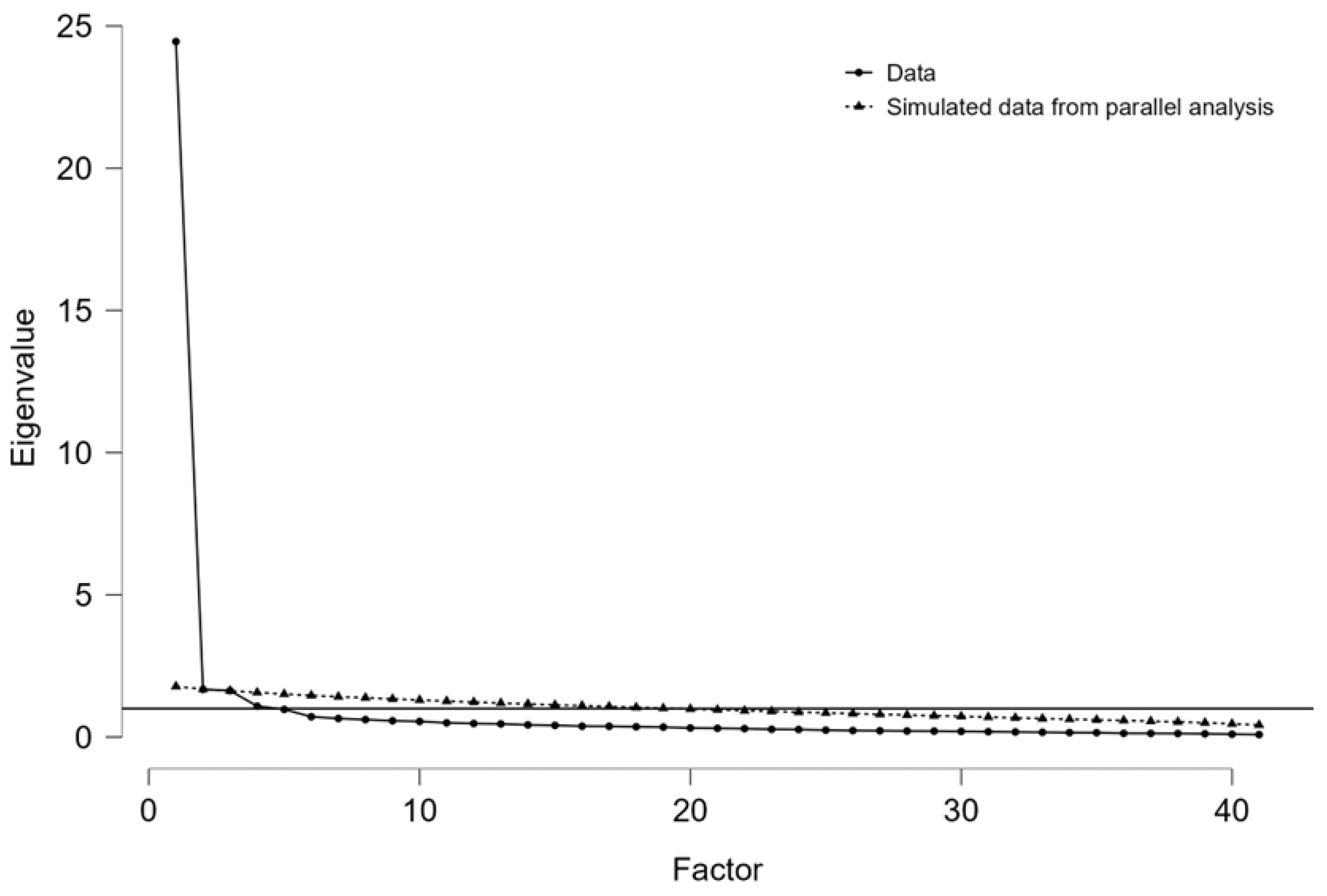
The unrotated solution revealed that Factor 1 accounted for 58.9% of the variance (eigenvalue = 24.13), suggesting a dominant general factor. After rotation, variance was redistributed more evenly across four factors: Factor 1 (31.7%), Factor 2 (14.9%), Factor 3 (13.4%), and Factor 4 (7.2%). Together, these four factors explained 67.3% of the total variance.
Table 6 illustrates that. The first three factors had eigenvalues greater than 1.0, supporting their retention for further analysis.
4.3.3. Examination of Factor Correlations
Factor correlations were also examined. As shown in
Table 7, Factor 1 (TPACK) correlated strongly with Factor 2 (AI Use/Awareness;
r = 0.82) and Factor 3 (Technical Knowledge;
r = 0.74). Factor 2 and Factor 3 also showed a strong association (
r = 0.73). Factor 4 (AI Ethics) exhibited relatively weaker, though still moderate, correlations with other factors (
r = 0.54–0.67).
The strong correlations (r = 0.74–0.82) between TPACK, AI Use, and Technical Knowledge suggest these are interdependent dimensions of teacher competence. These three factors may be combined into a higher-order construct measuring overall GenAI competence. In contrast, the weaker correlations for AI Ethics (r = 0.54–0.67) suggest that this factor is conceptually distinct from the other three.
4.3.4. Scree Plot
Figure 2 presents the scree plot from the EFA. The
y-axis shows eigenvalues (the amount of variance explained by each component), while the
x-axis represents the component number. The “elbow” refers to where the curve starts to flatten out. The scree plot clearly shows four significant components, confirming the retention of four factors.
4.4. Second-Order Confirmatory Factor Analysis (CFA)
Following the Exploratory Factor Analysis (EFA), Confirmatory Factor Analysis (CFA) was conducted to test and confirm the factor structure of the ELT-AIR scale identified in the EFA. While EFA explores the underlying structure of the data without prior assumptions, CFA tests whether the data fits a hypothesized measurement model.
4.4.1. Initial Model (41 Items)
The initial model showed a less than satisfactory fit. The Comparative Fit Index (CFI) was 0.889, falling below the acceptable threshold of 0.90. The Standardized Root Mean Square Residual (SRMR) was 0.045 (recommended cutoff is value less than 0.08), and the Root Mean Square Error of Approximation (RMSEA) was 0.080 (upper threshold of 0.08 for an acceptable fit).
4.4.2. Model Refinement (39 Items)
Two items with weak loadings (TCK6 and TPK5) were removed because they did not align well with their intended factors. After removal, the model fit improved significantly. The revised model achieved acceptable fit on all three indices (CFI = 0.901, SRMR = 0.044, RMSEA = 0.077), supporting the conclusion that the model adequately captures the hierarchical structure of the latent construct.
4.4.3. Second-Order Factor Loadings
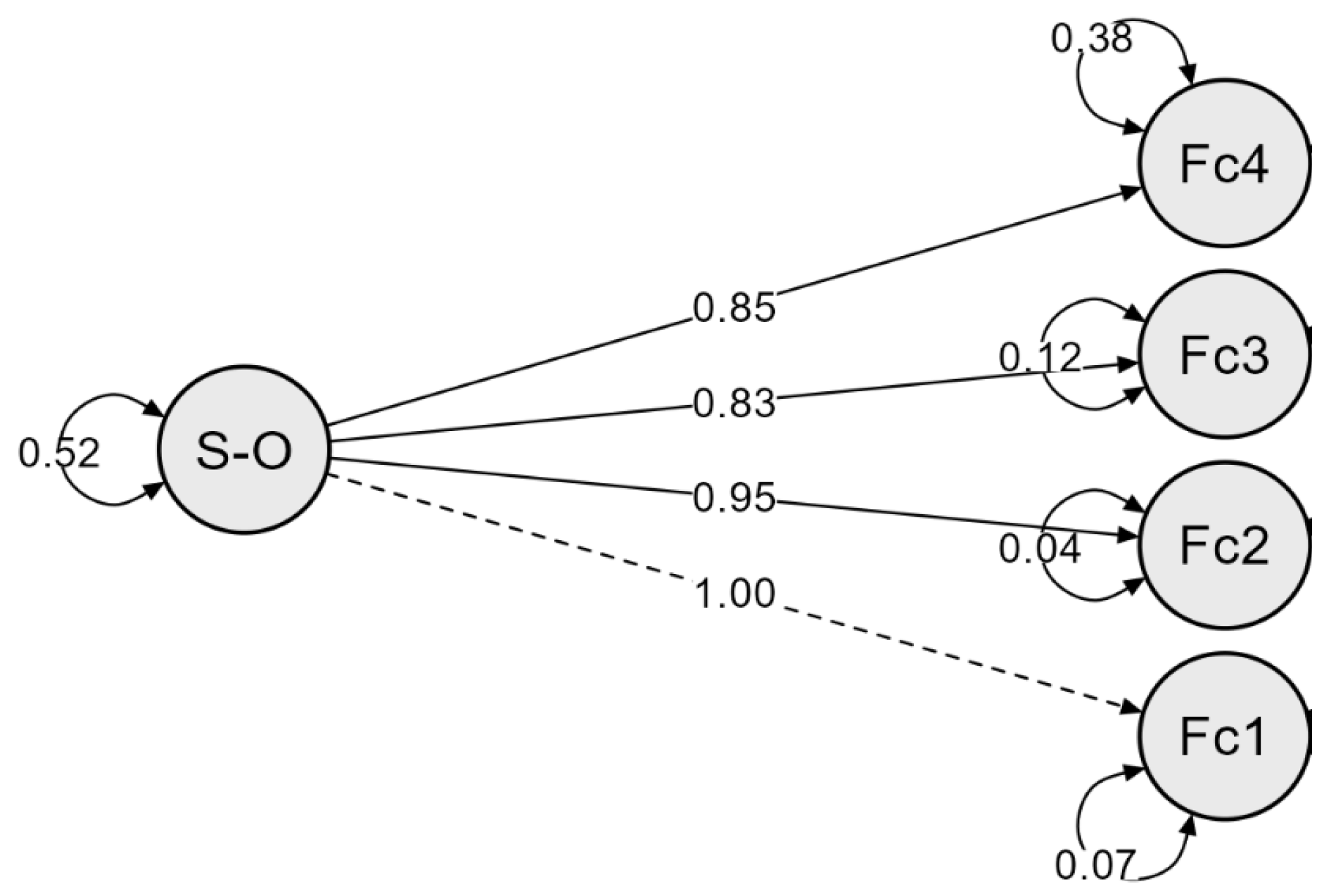
All four factors loaded strongly onto the higher-order ELT-AIR construct:
All loadings were statistically significant (
p < 0.001), confirming that the four factors are meaningful dimensions of English teachers’ GenAI readiness. The CFA results support a well-defined hierarchical structure for the ELT-AIR scale. The revised model with 39 items achieved acceptable fit indices, confirming the construct validity of the scale.
Figure 3 shows the second-order factor has a strength of 0.52, which is moderate to strong, meaning the four factors are clearly connected, yet each has its own unique parts.
The model then checks how well each factor is measured by its own survey questions. The loadings show this: TPACK has 1.00 (a fixed reference), AI use has 0.95 (excellent), technical knowledge has 0.83 (strong), and AI ethics has 0.85 (strong). The residuals (unexplained parts) are very small for AI use (0.04), TPACK (0.07), and technical knowledge (0.12), meaning those survey questions work very well. The one area that stands out is AI ethics, with a larger residual of 0.38. This means AI ethics has a lot of unique, unshared variation that the common thread does not capture. AI ethics is more complex than the other three factors because it involves privacy, bias, fairness, and school policies.
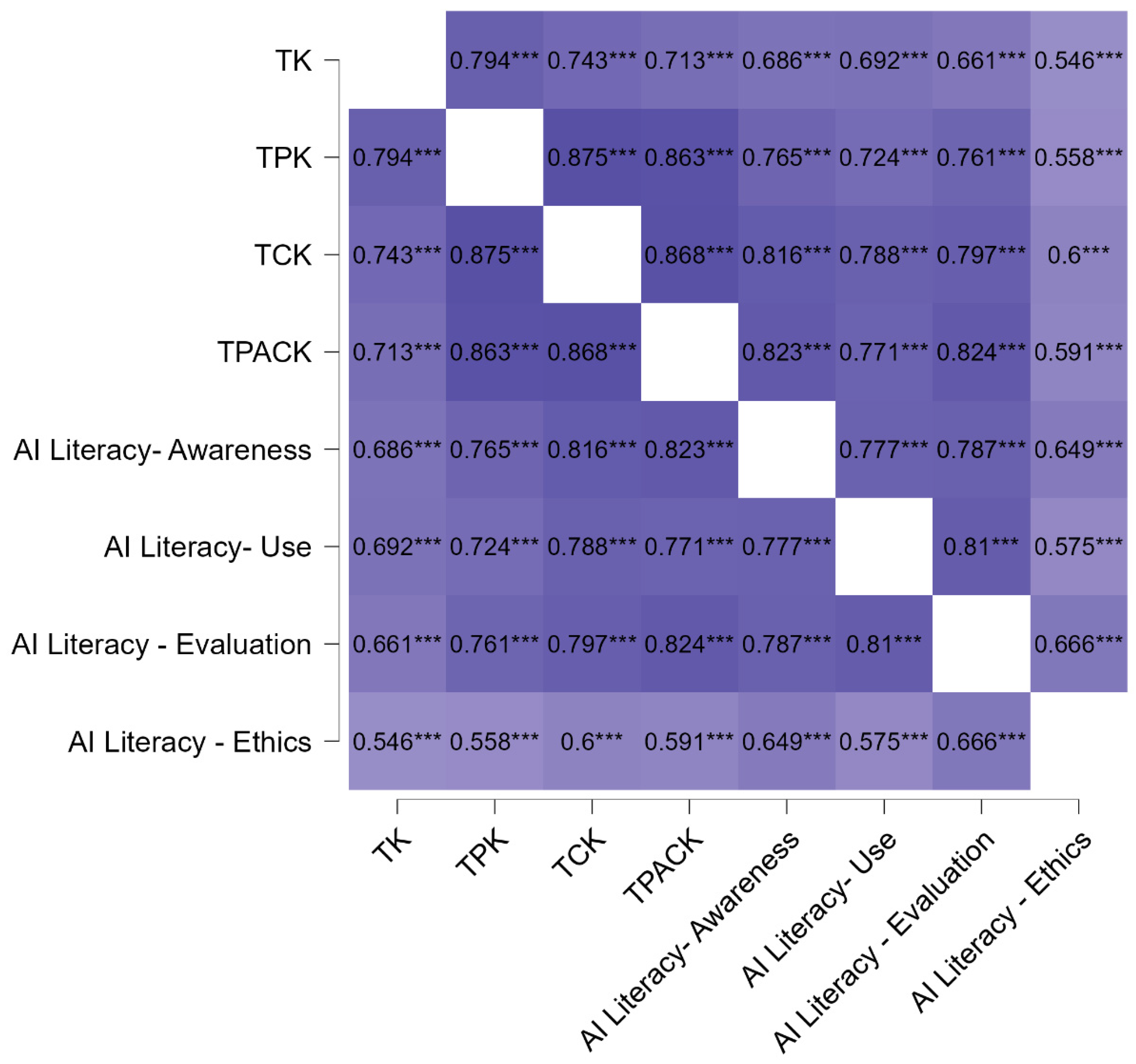
While the correlations among TPK, TCK, and TPACK are relatively high, they do not indicate problematic multicollinearity for the following reasons. First, the highest observed correlation (
r = 0.875) remains below the standard (0.90) threshold used to flag severe bivariate redundancy (
Hair et al., 2018). These dimensions are specified as first-order factors under a single second-order construct. Substantial inter-correlations are conceptually expected and mathematically required; weak correlations would instead suggest that a higher-order model is inappropriate. In addition, this tight integration aligns perfectly with the original TPACK model (
Mishra & Koehler, 2006).
In other words, TPACK, AI use, and technical knowledge can be confidently measured with the survey questions. Second, the four factors do belong together under one larger readiness construct (strength 0.52), so professional development can address them as a group. Third, AI ethics needs special care and additional methods to capture it properly, because it shares the common thread but also brings its own unique complexity.
4.5. Correlation Analysis
To examine the relationships among the TPACK and AI literacy constructs, a Pearson’s correlation analysis was conducted.
Figure 4 illustrates the correlation matrix for all eight dimensions: Technological Knowledge (TK), Technological Pedagogical Knowledge (TPK), Technological Content Knowledge (TCK), Technological Pedagogical Content Knowledge (TPACK), AI Awareness, AI Use, AI Evaluation, and AI Ethics.
Key Findings
All correlations were positive and statistically significant (p < 0.001), indicating that as teachers’ readiness in one dimension increases, their readiness in other dimensions also tends to increase. The strongest relationships were found among TPK, TCK, and TPACK, indicating these dimensions are closely interconnected. AI Ethics had the weakest correlations with other constructs, suggesting that ethical awareness may be a somewhat distinct dimension. This finding implies that training on the ethical dimensions of AI literacy may need to be addressed separately from technical and pedagogical training.
4.6. Comparative Analysis: In-Service vs. Pre-Service Teachers
To determine whether there were statistically significant differences in domain scores between in-service and pre-service teachers, independent sample t-tests were conducted. A total of 201 in-service teachers and 106 pre-service teachers participated in this study.
4.6.1. Descriptive Comparison
Table 8 presents the mean scores and standard deviations for both groups across all eight domains:
Key Findings
Pre-service teachers consistently scored higher than in-service teachers across all eight domains. The largest differences were observed in TPACK (3.39 vs. 3.02) and TPK (3.44 vs. 3.09). This trend suggests that current teacher education programmes may be more effectively preparing future educators for GenAI integration compared to the experiences of in-service teachers.
Standard deviations (SDs) were consistently higher for in-service teachers across all domains, indicating greater diversity in their experiences and perceptions. In contrast, lower SDs among pre-service teachers suggest more uniform views, possibly due to their recent training and similar educational backgrounds.
4.6.2. Inferential Statistics (t-Test Results)
Welch’s
t-test was conducted to test the null hypothesis that there is no difference in means between the two groups.
Table 9 presents the results. All eight domains showed statistically significant differences between in-service and pre-service teachers (
p < 0.05). The strongest differences (
p < 0.001) were found in TPK, TCK, TPACK, AI Awareness, and AI Evaluation.
4.6.3. Interpretation and Implications
Pre-service teachers may have more recent training on AI technologies and greater exposure to emerging digital tools. Their higher scores could reflect up-to-date knowledge gained from current teacher education programmes.
On the other hand, in-service English teachers may be more aware of the complexities and limitations of integrating technology effectively in real classroom settings. Their practical experiences may lead to more cautious self-assessments and lower scores. The higher standard deviations among in-service teachers support this interpretation, as their diverse experiences result in varying levels of confidence and understanding. The significant differences across all domains suggest a clear need for targeted professional development for in-service teachers. Training should focus on enhancing skills in TPACK and AI literacy to ensure in-service teachers remain aligned with contemporary educational practices.
4.7. Qualitative Findings
This section presents the qualitative results of the study. Data were collected through semi-structured interviews with 10 English teachers from Hong Kong and Macao. Participants were selected to ensure a good mix of teaching experience and perspectives.
4.7.1. Participant Demographics
Table 10 summarizes the demographic characteristics of the interview participants. All identities have been anonymized to protect confidentiality.
4.7.2. Thematic Analysis
Thematic analysis of the interview data revealed three primary themes: varying levels of Generative AI integration in the English classroom, navigating between pedagogical gains and emerging risks, and empowering teachers through holistic professional development.
Teachers demonstrated different levels of AI integration. Many could name tools like ChatGPT (Version 3.5) and ELSA Speaks (Version 7.5.1), noting their potential for generating questions, assessments, vocabulary lists, lesson plans, and enhancing student engagement. Among the ten teachers, six reported using Generative AI while four did not. Even among users, there were different levels of intensity, with some using AI frequently and others only occasionally. These responses aligned with teachers’ self-rated AI competency levels: six at “Acquire” level (limited knowledge), three at “Deepen” level (some experience), and one at “Create” level (strong knowledge and experience). For example, Teacher Cat used ChatGPT to support SEN students, noting that autistic students enjoyed talking to chatbots because they provided clear, repeatable answers. However, she found that some students needed simple, step-by-step instructions with visual support. Teacher Ivan used Generative AI for creative writing and grammar practice, and Agentic AI to adapt reading materials to individual needs but warned that over-reliance on AI risks diminishing students’ original thinking and teachers’ professional judgment. Teachers who did not use Generative AI believed that one needed to be tech-savvy to use these tools. They faced technical difficulties, were unfamiliar with the tools, and had concerns about student over-reliance on AI and related ethical issues.
Teachers highlighted both benefits and concerns regarding Generative AI integration. Regarding benefits, Teacher Janet noted that AI can personalize learning and help students practice speaking and writing more effectively with immediate feedback. Teacher Amy stated that AI-powered tools can support personalized learning by providing tailored exercises that adapt to each child’s level and pace. Teacher Gigi commented that Generative AI enables student-centered learning experiences, while Teacher Flora described how her students love using a speaking app that corrects their mistakes and improves their fluency and pronunciation. However, teachers also raised significant concerns. Teacher Hidy remarked that if students always use AI for answers, they might stop thinking for themselves, and sometimes AI gives wrong or unfair answers. She also noted that if students use AI all the time, they might talk less with teachers and classmates, making it harder for them to learn important social skills. Teacher Cat admitted that she did not feel she had sufficient knowledge to flexibly use AI tools in classrooms. Teacher Eva mentioned that AI-generated content is sometimes too difficult for students to comprehend. Teachers also noted practical issues such as login problems, high costs, and the need for smaller class sizes and technical training. On ethical concerns, Teacher Ivan emphasized that teachers should encourage students to use Generative AI ethically, explaining the consequences of over-reliance. He argued that the right attitude towards using AI is far more important than whether students should use AI at all.
A common theme across all teacher participants was the need for more training and knowledge on how to use Generative AI tools and apply them in the classroom. Teacher Hidy suggested more training on classroom uses and knowledge of which Generative AI tools to use. Teachers described three levels of training needs. First, foundational AI literacy and skills: Teacher Bob wanted a basic introduction to what AI and Generative AI are, as well as training in general AI usage, to help teachers feel competent and confident with the technology itself. Second, practical classroom application: teachers wanted professional development programmes that move beyond theory and technical skills to provide concrete and adaptable teaching ideas, focusing on the direct use of Generative AI tools in language learning. Third, strategic balance: more experienced teachers wanted training on technological, content, and pedagogical integrations, with guidance on striking a balance between leveraging AI for assistance and fostering human creativity. Teacher Amy offered valuable insight, stating that a teacher’s willingness to embrace technology matters far more than their technical readiness. She noted that without intrinsic motivation or belief in the pedagogical benefits, even the most user-friendly platforms will go unused. True change requires a shift in perspective, recognizing technology not as a disruption but as a meaningful enhancement to student engagement, personalized learning, and 21st-century skill development. In summary, teachers sought holistic professional development programmes that move from technical skills (using AI) to practical applications (ideas for AI) and finally to strategic balance (managing AI pedagogically). Teachers also recommended setting guidelines for ethical AI use and ensuring that technology enhances, rather than replaces, the vital human interactions in the classroom. As Teacher Flora concluded, with proper safeguards and pedagogical strategies, Generative AI can be a powerful tool in cultivating both language skills and digital competence.
4.8. Triangulation
Triangulation was used to provide a comprehensive understanding of English teachers’ readiness to integrate Generative AI tools into their classrooms. This study utilized data triangulation by gathering qualitative data through semi-structured interviews with 10 English teachers and quantitative data from an online survey administered to 307 teachers. This combination allowed for a richer analysis, as the qualitative insights provided context and depth to the trends identified in the survey results. By comparing findings from both methods, consistent themes and insights were identified to address the research questions.
Table 11 presents a triangulated synthesis of the quantitative and qualitative findings.
4.8.1. Varying Levels of AI and TPACK Competence
In examining teachers’ readiness to use generative AI, both number-based and narrative data point to a clear need for professional development grounded in practical TPACK-AI applications. Quantitatively, teachers scored lowest in key areas such as overall TPACK, technological pedagogical knowledge (TPK), and the ability to critically evaluate AI tools. Advanced statistical analyses confirmed that three core areas—TPACK, AI Use, and technical knowledge—are interconnected, meaning teachers require holistic support rather than isolated training. Notably, strong positive correlations emerged: teachers with stronger technological pedagogical skills also demonstrated richer technology-related content knowledge (TCK), and those with higher AI literacy and usage were more likely to possess advanced TPK. These findings were reinforced by qualitative insights, as teachers openly acknowledged their limited hands-on experience with AI tools. Together, the data suggest that effective professional development should move beyond theory and instead offer practical, integrated opportunities for educators to learn how to evaluate, adapt, and apply generative AI within their specific teaching contexts.
4.8.2. Ethical Awareness vs. Practical Application
The triangulation indicates that English teachers need structured guidance on applying ethical principles in classroom AI use, even though they may acknowledge the ethical implications of GenAI applications.
Quantitative results showed that participants scored highest in AI Ethics (M = 3.46), indicating strong ethical awareness but weaker practical skills in Evaluation and Use. EFA revealed that AI Ethics (Factor 4) emerged as a distinct factor with high loadings, suggesting it requires dedicated teacher training rather than being embedded in technical instruction. Thematic analysis confirmed that teachers emphasized ethical concerns such as plagiarism and over-reliance on GenAI tools, but lacked confidence in implementing GenAI responsibly without additional training.
4.8.3. Interdependence of TPACK, AI Literacy, and TK
Professional development programmes should combine technology skills with pedagogical strategies to address both competence and willingness of English teachers to adopt GenAI in their classrooms.
EFA and CFA illustrated strong correlations between TPACK, AI Use, and Technical Knowledge, suggesting that these competencies are interdependent. TK, TPK, TCK, and TPACK were highly correlated (r = 0.71–0.88), reinforcing that technical and pedagogical skills are intertwined. In the thematic analysis, teachers highlighted the importance of mindset. Those resistant to technology struggled, while motivated teachers saw AI’s potential and were more willing to adopt GenAI.
4.8.4. Holistic Professional Development to Empower English Teachers
Professional development for generative AI should address three interconnected dimensions: technical skills (e.g., selecting and evaluating AI tools), pedagogical integration (e.g., designing lessons that pair appropriate tools with sound teaching strategies), and ethical/critical use (e.g., navigating plagiarism and intellectual property). Quantitative findings reveal that while teachers scored highest in AI Ethics (M = 3.46), reflecting strong awareness of ethical risks, they struggled more with AI Evaluation (M = 3.23) and TPACK (M = 3.15), indicating difficulty critically assessing and responsibly integrating AI tools. Factor analyses confirmed that AI Ethics is a distinct dimension, separate from technical or pedagogical skills, and that technical knowledge alone does not guarantee ethical application. Qualitatively, English teachers voiced clear awareness of ethical challenges—such as plagiarism and reduced human interaction—but expressed confusion about how to enforce ethical use, balance AI with original student work, or determine practical classroom policies. Together, these findings underscore that effective professional development must move beyond raising ethical awareness to providing concrete strategies that help teachers operationalize ethics alongside technical and pedagogical skills in their daily practice.
5. Discussion
5.1. Interpretation of Key Findings
5.1.1. Interpretation of Findings for RQ1: Generative AI Readiness Among English Teachers
RQ1 sought to identify the current level of Generative AI readiness among English teachers across the TPACK and AI Literacy dimensions. The findings revealed both strengths and weaknesses.
Teachers have strong ethical awareness and technological knowledge regarding Generative AI, with ethics being their highest-scoring area. This reflects findings that educator preparation is effectively raising awareness of bias and responsible AI use (
Celik, 2023;
Bohari et al., 2025).
However, awareness alone is insufficient. Professional development must move beyond one-off workshops to provide sustained, job-embedded support that helps teachers translate ethical principles into daily classroom decisions. School leaders should embed ethics into ongoing curriculum and instruction discussions rather than treating it as an isolated topic (
Celik, 2023).
Teachers showed two significant weaknesses. First, they struggled to integrate technology with pedagogy and content, revealing a disconnect between knowing about AI and applying it in the classroom. Second, they lacked the ability to critically evaluate AI tools for instructional use. These gaps align with recent findings (
Yue et al., 2024;
Hava & Babayiğit, 2025): general teaching knowledge or digital familiarity does not automatically prepare educators to teach with AI. Digital skills are necessary but not sufficient. Teachers need targeted, ongoing support to develop the ability to assess when, why, and how to use AI tools effectively in the classroom.
A notable imbalance emerged between teachers’ ethical awareness and their ability to apply this knowledge pedagogically. While teachers could identify and use AI tools, they lacked confidence in critically assessing their effectiveness. Strong ethical awareness does not automatically translate into effective pedagogical practices.
Training must weave technology, pedagogy, and content together through practical workshops and collaborative lesson planning, rather than teaching discrete skills. Structured frameworks should be provided to help teachers critically assess which AI tools are appropriate for instructional use. Mentorship or professional learning communities should also be established to help teachers apply learning to real classroom challenges. While prior research (
Moorhouse 2024;
Aldemir et al., 2025) supports structured, collaborative training, this study reveals a previously underexplored gap: having evaluation frameworks is not enough. Teachers need subject-specific, ongoing guidance to translate those criteria into actual classroom practice.
Qualitative feedback from interviews confirmed these patterns. Teachers expressed a lack of familiarity with AI tools, a desire for structured training, and a need for practical workshops focused on integrating pedagogy, content, and technology. These findings align with
Choi et al. (
2025) and
Moorhouse (
2024), who found that teachers reported low confidence in their GenAI knowledge due to limited exposure and lack of instruction during tertiary education.
Teachers also identified barriers including concerns about inaccurate content, bias, privacy, copyright, and time constraints for training. Importantly, teachers acknowledged that GenAI tools should complement rather than replace human teachers. These findings reinforce the need for holistic professional development that addresses technical skills, pedagogical integration, and ethical application simultaneously.
5.1.2. Interpretation of Findings for RQ2: Differences in Generative AI Readiness Between Pre-Service and In-Service Teachers
Examining differences in Generative AI readiness between in-service and pre-service English teachers, this study found that pre-service teachers demonstrated significantly higher readiness across all TPACK and AI literacy dimensions. This aligns with prior research (
Alqurashi et al., 2017;
Lu & Said, 2025), indicating that teaching experience exerts an indirect negative influence on technological competence, as recent graduates typically report higher confidence due to more current training on AI technologies. In contrast, in-service teachers entered the profession before AI became prevalent and have had fewer formal learning opportunities. Specifically, teachers with more than ten years of experience scored consistently lower in TPACK and AI evaluation, with greater score variability among veteran teachers—some embrace new technologies while many feel less prepared, possibly due to deeper familiarity with traditional methods, resistance to change, or prior frustrations with tech integration.
These findings underscore the need for targeted professional development for in-service English teachers that focuses on three areas: technology integration skills, innovative and student-centered pedagogical strategies, and curriculum development aligned with GenAI tools.
5.1.3. Interpretation of Findings for RQ3: Interplay Between TPACK and AI Literacy
RQ3 explored the interplay between TPACK elements and AI literacy within the ELT-AIR framework. The findings revealed strong interdependence among these constructs, confirming that technical and pedagogical skills are closely linked.
EFA and CFA results showed that TK, TPK, TCK, and TPACK were highly correlated, and all TPACK dimensions were linked to AI literacy. The hierarchical four-factor ELT-AIR model was confirmed, validating that AI literacy enhances TPACK. This confirms the need for integrated training programmes that bridge technical and pedagogical skills.
The four factors are: Factor 1 (TPACK combined with TPK and TCK), Factor 2 (AI Use and Awareness), Factor 3 (Technical Knowledge), and Factor 4 (AI Ethics). The synergy among these factors underscores the complexity of AI integration and highlights the need for comprehensive training encompassing both technical skills and pedagogical approaches.
These findings align with
Celik’s (
2023) i-TPACK model. The four-factor structure mirrors i-TPACK’s domains, and the identification of AI Ethics as a distinct factor aligns with i-TPACK’s treatment of ethics as a co-equal domain. The convergence across factor structure, the centrality of ethics, and the synergy between TPACK and AI literacy provide empirical validation for these emerging theoretical models.
The strong link between TPACK and AI literacy confirms that GenAI cannot be treated as a purely technical topic. Professional development must simultaneously enhance technical skills, pedagogical strategies, and positive attitudes. Effective PD should address applied questions such as “How does AI change the way I teach writing?” From a policy perspective, this calls for sustained funding and institutional support aligned. Establishing clear competency standards and ongoing learning opportunities will be essential for enabling effective, ethical integration of GenAI in the classroom.
5.2. Contributions of the Study
This study makes significant theoretical, methodological and practical contributions to the field of Generative AI in the English Language Teaching and Learning:
5.2.1. Theoretical Contributions
This study proposes and validates the ELT-AIR framework, which integrates the TPACK model with AI literacy dimensions specifically for English language teachers. What sets this framework apart is its deliberate integration of two previously disconnected domains into a single, unified measurement model. While existing frameworks often treat AI literacy as a standalone technical skill, the ELT-AIR model positions it as inherently connected to pedagogical and content knowledge. The study provides empirical evidence of strong correlations between these dimensions, moving beyond the simplistic notion that technological proficiency alone enables effective AI adoption. The innovation lies in offering a structured, empirically grounded tool that captures the multidimensional nature of AI readiness, acknowledging that successful AI integration demands not just know-how, but also pedagogical reasoning and contextual adaptability.
5.2.2. Methodological Contributions
This study’s mixed-methods design improves upon previous readiness studies by moving beyond simple quantitative surveys to capture the full complexity of teacher preparedness. Integrating qualitative interviews and thematic analysis allowed us to uncover the why behind the numbers. The triangulation of methods ensures that findings are both statistically generalizable and deeply grounded in actual teaching practice. The validated ELT-AIR instrument provides a reliable, subject-specific foundation for future researchers, saving significant time and methodological uncertainty. Furthermore, this mixed-method framework can be directly adapted to measure AI readiness in other subject areas, offering a transferable blueprint aligned with the Hong Kong Education Bureau’s objective to achieve “AI for ALL subjects” (
Education Bureau, 2025). Policymakers can use the ELT-AIR instrument to evaluate in-service teachers’ readiness, formulate training courses, and offer professional development programmes through the T-surf
24/7 system. The study also enables validation of pre-service teachers’ AI readiness and review of GenAI training in teacher education curricula.
5.2.3. Practical Contributions
This study offers several practical contributions. For teachers, pre-service teachers need hands-on, classroom-based AI training to prepare for real-world teaching, while in-service teachers benefit more from training on evaluating AI tools, understanding ethical guidelines, and receiving ongoing pedagogical support. Both groups require holistic programs that integrate technical, pedagogical, and AI literacy skills. For schools, the findings can guide the development of localized training programs that reflect their teaching staff’s specific readiness levels, with professional development tailored not only to career stage but also to years of experience and regional contexts. For policymakers, the study provides evidence to support differentiated training strategies that address the distinct needs of teachers at different career stages. For researchers, this study offers initial insights into how AI readiness varies across different types of teachers and years of experience, as well as a foundation for future research into customized training models and strategies for supporting GenAI integration in education.
6. Limitations and Future Research
Several limitations of this study should be acknowledged in order to interpret its findings appropriately and guide future inquiry.
This study relied on surveys where teachers reported their own readiness and challenges. One limitation of this approach is self-report bias, meaning participants may have described themselves more positively than is accurate, overestimating their readiness or downplaying difficulties. In addition, feeling ready to use AI does not always mean a teacher can use it effectively in the classroom. Another key limitation of this study is its reliance on self-reported data. While the authors interpret their findings as measures of knowledge per se, self-reports more accurately reflect participants’ perceived competence or self-efficacy beliefs rather than objective or demonstrated knowledge. Future research should therefore include more direct measures of actual practice, such as reviewing teachers’ lesson plans or examining logs of how they use AI tools.
Because this research was conducted at one point in time, it captures only a snapshot of teacher readiness. It cannot show how teachers’ skills for integrating AI might grow or change as they gain more training and classroom experience. To better understand this learning process, longitudinal studies—following the same teachers over months or years—are needed.
This study deliberately focused on individual teacher-level factors, such as their attitudes and perceived skills. As a result, it did not examine the influence of school-level policies or administrative support, even though these external factors often play a critical role in whether technology is successfully adopted. The findings therefore represent only one piece of a larger systemic picture.
Future studies should move beyond self-reports by including objective measures of performance, such as classroom observations, analysis of lesson plans, or logs of actual AI tool usage. Longitudinal designs are essential for tracking how AI integration skills develop over time. Researchers could follow pre-service teachers from their training into their first years of classroom teaching, or study in-service teachers before and after professional development programmes to assess whether changes are sustained. Future research should also explore whether the patterns found here are consistent across different subject areas (for example, STEM versus humanities) and across different educational levels (primary, secondary, and tertiary). Such comparisons would help determine whether the factors identified are universal or depend on specific teaching contexts.
7. Conclusions
This study developed and validated the English Language Teachers’ Generative AI Readiness Scale (ELT-AIR), a reliable instrument for measuring English teachers’ readiness to integrate Generative AI (GenAI) into their classrooms. The ELT-AIR makes three primary contributions. Theoretically, it extends the TPACK framework for the GenAI era by proposing the ELT-AIR model, which integrates GenAI literacy, ethical awareness, prompt engineering competencies, and the specific pedagogical demands of English language teaching. Methodologically, it provides a validated, subject-specific instrument with strong psychometric properties, offering a reliable foundation for future research. Practically, the ELT-AIR serves as a diagnostic tool enabling school leaders and policymakers to systematically assess teachers’ GenAI readiness, with sub-dimension scores allowing for targeted professional development.
Future research should incorporate objective measures beyond self-reported data, employ longitudinal designs to track how readiness changes over time, and examine systemic factors such as policy and leadership influences. In conclusion, the ELT-AIR scale provides an evidence-based diagnostic tool for understanding and supporting English teachers navigating the Generative AI transformation, contributing to the responsible and effective integration of GenAI in English language teaching and learning.
Author Contributions
Conceptualization, K.K.-W.C.; Methodology, K.K.-W.C.; Validation, K.K.-W.C.; Formal analysis, K.K.-W.C.; Investigation, K.K.-W.C.; Writing—original draft, K.K.-W.C.; Writing—review & editing, K.K.-W.C.; Supervision, W.K.-W.T. All authors have read and agreed to the published version of the manuscript.
Funding
This research received no external funding.
Institutional Review Board Statement
The study was conducted in accordance with the Declaration of Helsinki and approved by the Hong Kong Metropolitan University Research Ethics Committee on 19 June 2024 (HE-SF2024/23).
Informed Consent Statement
Informed consent was obtained from all subjects involved in the study.
Data Availability Statement
The original contributions presented in this study are included in the article. Further inquiries can be directed to the corresponding author.
Acknowledgments
This article is based on research originally conducted for the corresponding author’s doctoral thesis, Empowering English Language Teachers: A Study on Readiness and Training Needs for Generative AI Integration, at Hong Kong Metropolitan University (2026).
Conflicts of Interest
The authors declare no conflicts of interest.
References
- Aldemir, T., Kilinc, S., Bicer, A., Grant, P., Davis, T., & Sweany, N. W. (2025). Intelligent-TPACK in practice: Design and evidence from a three-week teacher preparation module. Computers and Education Open, 9, 100306. [Google Scholar] [CrossRef]
- Alqurashi, E., Gokbel, E. N., & Carbonara, D. (2017). Teachers’ knowledge in content, pedagogy and technology integration: A comparative analysis between teachers in Saudi Arabia and United States. British Journal of Educational Technology, 48(6), 1414–1426. [Google Scholar] [CrossRef]
- Asal, M. G. R., Alsenany, S. A., Elzohairy, N. W., & El-Sayed, A. A. I. (2025). The impact of digital competence on pedagogical innovation among nurse educators: The moderating role of artificial intelligence readiness. Nurse Education in Practice, 85, 104367. [Google Scholar] [CrossRef]
- Bohari, A., Kaliappan, A., & Loh, S. L. (2025). AI literacy beyond stem: Rethinking teacher education for the AI era. International Journal of Humanities Technology and Civilization, 10(2), 126–133. [Google Scholar] [CrossRef]
- Cao, L. (2025). A study on the readiness of English teachers in Macao universities in the era of AI. Asian Education and Development Studies, 14(4), 680–699. [Google Scholar] [CrossRef]
- Celik, I. (2023). Towards Intelligent-TPACK: An empirical study on teachers’ professional knowledge to ethically integrate artificial intelligence (AI)-based tools into education. Computers in Human Behavior, 138, 107468. [Google Scholar] [CrossRef]
- Census and Statistics Department. (2016). Statistics on students and teachers in primary and secondary schools in Hong Kong during the school years from 2006/07 to 2015/16. Available online: https://www.censtatd.gov.hk/en/EIndexbySubject.html?scode=370&pcode=FA100275 (accessed on 1 April 2026).
- Census and Statistics Department. (2024). Table 925-92024: Teachers in selected types of educational institution by sex. Available online: https://www.censtatd.gov.hk/en/web_table.html?id=925-92024 (accessed on 1 April 2026).
- Chan, K. K.-W., & Tang, W. K.-W. (2025). Evaluating English teachers’ artificial intelligence readiness and training needs with a TPACK-Based model. World Journal of English Language, 15(1), 129–145. [Google Scholar] [CrossRef]
- Chan, K. K.-W., Zhang, X., Wong, C. S.-L., & Tang, W. K.-W. (2026). Exploring teachers’ perspectives on the impact of generative AI on english speaking and motivation: A case study of MyAIBuddy. World Journal of English Language, 16(4), 506–520. [Google Scholar] [CrossRef]
- Chand, R., Alasa, V. M., Chitiyo, J., & Pietrantoni, Z. (2022). Preparation of pre-service teachers: Assessment of generation Z students. In Handbook of research on digital-based assessment and innovative practices in education (pp. 116–130). IGI Global Scientific Publishing. [Google Scholar]
- Chiu, T. K. F. (2026). Human-centric artificial intelligence pedagogy (HCAP) framework developed from TPACK through integration of artificial intelligence literacy and competency. Interactive Learning Environments, 1–16. [Google Scholar] [CrossRef]
- Choi, K. Y., Wu, C., & Moorhouse, B. L. (2025). Exploring the use of generative artificial intelligence (GenAI) in English language teaching: Voices from in-service teachers at an early-adopting Hong Kong secondary school. Technology in Language Teaching & Learning, 7(2), 102516. [Google Scholar] [CrossRef]
- Creswell, J. W., & Creswell, J. D. (2017). Research design: Qualitative, quantitative, and mixed methods approaches. Sage publications. [Google Scholar]
- Dewi, N. R., Rusilowati, A., Saptono, S., Haryani, S., Wiyanto, W., Ridlo, S., Listiaji, P., & Atunnisa, R. (2021). Technological, pedagogical, content knowledge (TPACK) research trends: A systematic literature review of publications between 2010–2020. Journal of Turkish Science Education, 18(4), 589–604. [Google Scholar] [CrossRef]
- Dörnyei, Z. (2007). Research methods in applied linguistics. Oxford University Press. [Google Scholar]
- Education Bureau. (2025). Steering committee on strategic development of digital education (SCSDDE). Available online: https://www.info.gov.hk/gia/general/202501/17/P2025011600422.htm (accessed on 17 January 2025).
- Fanni, S. C., Febi, M., Aghakhanyan, G., & Neri, E. (2023). Natural language processing. In Introduction to artificial intelligence (pp. 87–99). Springer International Publishing. [Google Scholar]
- Gao, Y., & Wang, X. (2026). The development and validation of the artificial intelligence literacy scale for middle school English teachers. Language Teaching Research, 13621688261416208. [Google Scholar] [CrossRef]
- Hair, J. F., Black, W. C., Babin, B. J., & Anderson, R. E. (2018). Multivariate data analysis (8th ed.). Cengage Learning. [Google Scholar]
- Hava, K., & Babayiğit, Ö. (2025). Exploring the relationship between teachers’ competencies in AI-TPACK and digital proficiency. Education and Information Technologies, 30(3), 3491–3508. [Google Scholar] [CrossRef]
- Hockly, N. (2023). Artificial intelligence in English language teaching: The good, the bad and the ugly. Relc Journal, 54(2), 445–451. [Google Scholar] [CrossRef]
- Hrastinski, S., Olofsson, A. D., Arkenback, C., Ekström, S., Ericsson, E., Fransson, G., Jaldemark, J., Ryberg, T., Öberg, L.-M., Fuentes, A., Gustafsson, U., Humble, N., Mozelius, P., Sundgren, M., & Utterberg, M. (2019). Critical imaginaries and reflections on artificial intelligence and robots in postdigital K-12 education. Postdigital Science and Education, 1, 427–445. [Google Scholar] [CrossRef]
- Ironsi, C. S. (2024). Exploring the potential of generative AI in English language teaching. In P. Yu, J. Mulli, Z. Syed, & L. Umme (Eds.), Facilitating global collaboration and knowledge sharing in higher education with generative AI (pp. 162–185). IGI Global. [Google Scholar] [CrossRef]
- Kaplan-Rakowski, R., Grotewold, K., Hartwick, P., & Papin, K. (2023). Generative AI and teachers’ perspectives on its implementation in education. Journal of Interactive Learning Research, 34(2), 313–338. [Google Scholar] [CrossRef]
- Kartchava, E., & Chung, S. (2015). Pre-service and in-service English as a second language teachers’ beliefs about the use of digital technology in the classroom. Studies in English Language Teaching, 3(4), 355–383. [Google Scholar] [CrossRef]
- Laoha, R., Chomthong, W., & Pongpanich, W. (2025). Artificial intelligence and English as a foreign language (EFL) teachers’ competencies: A systematic review. Higher Education Studies, 15(3), 262–292. [Google Scholar] [CrossRef]
- Lin, C. C., Huang, A. Y., & Yang, S. J. (2023). A review of AI-driven conversational chatbot implementation methodologies and challenges (1999–2022). Sustainability, 15(5), 4012. [Google Scholar] [CrossRef]
- Lintner, T. (2024). A systematic review of AI literacy scales. npj Science of Learning, 9(1), 50. [Google Scholar] [CrossRef]
- Liu, C. C., Liao, M. G., Chang, C. H., & Lin, H. M. (2022). An analysis of children’s interaction with an AI chatbot and its impact on their interest in reading. Computers & Education, 189, 104576. [Google Scholar] [CrossRef]
- Lorincz, M., & Csernicskó, I. (2026). Are students ready to undertake research?: Developing the ‘student research engagement readiness’ scale. Issues in Educational Research, 36(1), 161–185. [Google Scholar]
- Lu, Y., & Said, M. (2025). A study on AI literacy of teachers in Chinese higher vocational colleges based on the AI-TPACK model. Environment and Social Psychology, 10(10). [Google Scholar] [CrossRef]
- Luckin, R., Cukurova, M., Kent, C., & du Boulay, B. (2022). Empowering educators to be AI-ready. Computers and Education: Artificial Intelligence, 3, 100076. [Google Scholar] [CrossRef]
- Mishra, P. (2019). Considering contextual knowledge: The TPACK diagram gets an upgrade. Journal of Digital Learning in Teacher Education, 35(2), 76–78. [Google Scholar] [CrossRef]
- Mishra, P., & Koehler, M. J. (2006). Technological pedagogical content knowledge: A framework for teacher knowledge. Teachers College Record, 108(6), 1017–1054. [Google Scholar] [CrossRef]
- Mishra, P., Warr, M., & Islam, R. (2023). TPACK in the age of ChatGPT and generative AI. Journal of Digital Learning in Teacher Education, 39(4), 235–251. [Google Scholar] [CrossRef]
- Moorhouse, B. L. (2024). Beginning and first-year language teachers’ readiness for the generative AI age. Computers and Education: Artificial Intelligence, 6, 100201. [Google Scholar] [CrossRef]
- Mutawa, A. M., & Sruthi, S. (2025). UNESCO’s AI competency framework: Challenges and opportunities in educational settings. In A. Mutawa (Ed.), Impacts of generative AI on the future of research and education (pp. 75–96). IGI Global Scientific Publishing. [Google Scholar]
- Ng, D. T. K., Leung, J. K. L., Chu, S. K. W., & Qiao, M. S. (2021). Conceptualizing AI literacy: An exploratory review. Computers and Education: Artificial Intelligence, 2, 100041. [Google Scholar] [CrossRef]
- Ning, Y., Zhang, C., Xu, B., Zhou, Y., & Wijaya, T. T. (2024). Teachers’ AI-TPACK: Exploring the relationship between knowledge elements. Sustainability, 16(3), 978. [Google Scholar] [CrossRef]
- Pokrivčáková, S. (2019). Preparing teachers for the application of AI-powered technologies in foreign language education. Journal of Language and Cultural Education, 7(3), 135–153. [Google Scholar] [CrossRef]
- Tang, W. K. W., & Zhang, X. Y. (2026). Artificial intelligence in English as a foreign language learning: A systematic review of technologies, tools, and their impacts. Computers and Education: Artificial Intelligence, 10, 100595. [Google Scholar] [CrossRef]
- Tiwari, H. P. (2024). Artificial intelligence in the classroom: Revolutionizing English language teaching. Journal of English Teaching and Linguistics Studies (JET Li), 6(1), 42–59. [Google Scholar] [CrossRef]
- UNESCO. (2024). AI competency framework for teachers. Available online: https://unesdoc.unesco.org/ark:/48223/pf0000391104 (accessed on 6 December 2024).
- Valtonen, T., Sointu, E., Kukkonen, J., Kontkanen, S., Lambert, M. C., & Mäkitalo-Siegl, K. (2017). TPACK updated to measure pre-service teachers’ twenty-first century skills. Australasian Journal of Educational Technology, 33(3). [Google Scholar] [CrossRef]
- Wang, X., Li, L., Tan, S. C., Yang, L., & Lei, J. (2023). Preparing for AI-enhanced education: Conceptualizing and empirically examining teachers’ AI readiness. Computers in Human Behavior, 146, 107798. [Google Scholar] [CrossRef]
- Xia, T., Pan, X., Cao, M., & Guo, J. (2025). An investigation of college students’ acceptance of AI-assisted reading tools: An expansion of the TAM and SDT. Education and Information Technologies, 30(13), 18031–18058. [Google Scholar] [CrossRef]
- Yue, M., Jong, M. S. Y., & Ng, D. T. K. (2024). Understanding K–12 teachers’ technological pedagogical content knowledge readiness and attitudes toward artificial intelligence education. Education and Information Technologies, 29(15), 19505–19536. [Google Scholar] [CrossRef]
| Disclaimer/Publisher’s Note: The statements, opinions and data contained in all publications are solely those of the individual author(s) and contributor(s) and not of MDPI and/or the editor(s). MDPI and/or the editor(s) disclaim responsibility for any injury to people or property resulting from any ideas, methods, instructions or products referred to in the content. |