1. Introduction
In recent decades, socio-technological transformations have redefined modes of social, work and educational interaction, emphasizing the importance of socio-communicative skills for full participation in social life. In this context, certain groups continue to face structural barriers that limit their opportunities for inclusion. Among them, women with basic levels of education constitute a group that is particularly vulnerable to the communicative and social challenges of the contemporary environment.
These challenges translate into socio-communicative needs that affect these women’s interpersonal interaction, thus hindering their personal, educational and professional development. These needs not only affect the quality of personal relationships, but also have an impact on access to information, citizen participation and employment, especially in technology-mediated environments.
There are several factors that can reinforce or amplify these needs, such as low educational attainment or unfavorable socio-economic conditions, reinforcing situations of isolation, low communicative self-esteem and low perceived self-efficacy, particularly in women.
The purpose of this study is to analyze the barriers and factors that hinder the acquisition of digital skills, thus generating socio-communicative needs in women, in order to identify strategies and intervention proposals that contribute to reducing the gender digital divide and promoting their effective inclusion in the digital society.
1.1. Theoretical Framework
1.1.1. Digital Competence
Digital competence is defined as the set of knowledge, skills and attitudes necessary for the safe, critical and creative use of information and communication technologies (ICT) in different areas of life. This competence is essential for social inclusion, access to information and active participation in the digital society (
National Institute of Educational Technologies and Teacher Training [INTEF], 2022).
In the digital age, technological literacy has become a fundamental tool for individual and collective empowerment.
UNESCO (
2023) emphasizes that digital competence involves not only the technical handling of devices, but also the ability to understand and actively participate in digital environments, which is essential for full citizenship in contemporary societies.
Beyond competence-based frameworks, international research on digital inequality highlights that digital divides operate as cumulative and sequential processes. Structural factors such as educational background, income, employment trajectories, and social support networks shape not only access to digital technologies, but also the development of skills and the capacity to translate digital engagement into meaningful social, educational, and economic outcomes (
Van Dijk, 2020;
A. J. A. M. Van Deursen & van Dijk, 2023;
Helsper, 2021). From this perspective, digital competence cannot be understood in isolation from broader socio-economic conditions, particularly among vulnerable adult populations whose opportunities for sustained learning and practice are often limited.
Recent studies further emphasize that digital inequality also involves unequal exposure to online risks and harms, including privacy threats, hostile communication, and self-inhibiting behaviors. These dimensions are especially relevant for women in vulnerable situations, as perceived or experienced risks may discourage active participation, reduce confidence, and narrow the range of digital practices in which they engage (
Meier & Bol, 2025). Consequently, analyzing digital competence in women with basic education requires considering not only levels of access and skill acquisition, but also the contextual conditions that shape safe participation, trust, and the perceived benefits of digital engagement.
Despite technological advances, a gender digital divide persists in Spain. According to the National Observatory of Technology and Society (
ONTSI, 2025), women have lower levels of digital skills than men, especially in rural areas and among older women. In Andalusia, this gap is accentuated by factors such as fewer training opportunities and limited access to technological resources (
EAPN España, 2022).
The
WomANDigital (
2023) report points out that women face inequalities not only in access to technology, but also in its use. While health-related activities predominate in women’s use of the Internet, men tend to use it more for playing video games and listening to music. Furthermore, the presence of women in STEM disciplines and in specialized technology roles remains significantly lower than that of men.
Incorporating a gender perspective into digital education is essential to address existing inequalities. This involves designing training programs that consider the specific experiences and needs of women, promoting their empowerment and active participation in the digital society (
Sánchez-Caballé et al., 2020).
In addition, initiatives such as Yes We Tech, a feminist association based in Granada, work to promote gender equality in the technology sector by offering talks, workshops and events to encourage women’s interest in technology from an early age (
García, 2025).
1.1.2. Training Requirements in Today’s Society
The European Commission has recently published the “Report on the State of the Digital Decade 2024” (
European Commission, 2024b), which assesses the European Union’s progress towards the digital targets set for 2030. This report highlights the importance of digital skills in Europe’s digital transformation. It stresses the need for at least 80% of the European population to have basic digital skills by 2030 and for there to be 20 million Information and Communication Technology (ICT) specialists employed in the EU.
The most recent version of the Digital Competence Framework for Citizenship is DigComp 2.2 (
Vuorikari et al., 2022). This update incorporates more than 250 new examples of knowledge, skills and attitudes, adapting to emerging technologies such as artificial intelligence and remote working. The aim is to maintain the relevance of the framework in learning, working and social participation.
This framework provides a common language for identifying and describing key areas of digital competence, serving as a tool for improving citizens’ digital competence and supporting policymakers in formulating policies that promote the development of these competences.
This framework is structured around five areas of competence:
Information and data literacy: searching for and managing data and information.
Communication and collaboration: interacting and collaborating through digital tools.
Digital content creation: developing digital content.
Safety: protecting devices, data and digital well-being.
Problem solving: using digital tools to solve everyday problems.
According to this framework, digital competence involves the safe, critical and responsible use of digital technologies in learning, work and participation in society (
Vuorikari et al., 2022).
On the other hand, at the European level, there are many plans and reference frameworks that emphasize the need to promote the improvement of digital skills and capabilities for digital transformation, as well as the promotion of the development of a digital educational ecosystem. One example is the “Digital Education Action Plan (2021–2027)” (
European Commission, 2020).
These initiatives reflect the Spanish government’s ongoing commitment to improving the digital skills of the population and adapting to the challenges of digital transformation.
Regarding the most recent data in Spain, it is noteworthy that in 2024, 66.2% of the Spanish population aged between 16 and 74 had basic or higher digital skills, placing Spain above the EU average (55.6%) and in sixth position in the European ranking (
European Commission, 2024a;
Eurostat, 2024,
2025).
1.1.3. Gender Gap
International research conceptualizes the gender digital divide as a multidimensional phenomenon that extends beyond differences in access to technology, encompassing disparities in digital skills, patterns of use, and the capacity to obtain tangible benefits from digital engagement. These gendered inequalities are shaped by intersectional factors such as age, educational attainment, income level, and labor market participation, which interact with social norms, care responsibilities, and occupational segregation to produce cumulative disadvantages for women in lower socio-economic positions (
Helsper, 2021;
OECD, 2018a).
Empirical studies consistently show that women with lower levels of education and unstable employment trajectories are less likely to engage in advanced digital practices, such as content creation, strategic information management, and problem solving. Instead, their digital participation tends to be restricted to more routine or passive uses, which limits opportunities for skill development and reduces the potential social and economic returns of ICT use (
A. J. A. M. Van Deursen & van Dijk, 2023;
Peláez-Sánchez & Glasserman-Morales, 2023). As a result, gender digital inequalities persist even in contexts where overall access has improved.
From an inclusion perspective, the persistence of the gender digital divide reflects structural mechanisms rather than individual deficits. Unequal access to training opportunities, reduced exposure to digital tools in professional contexts, and differentiated expectations regarding technology-intensive roles contribute to reinforcing these gaps over time (
OECD, 2018a;
Rebollo-Catalán et al., 2017). Addressing gender digital inequality therefore requires policies and educational interventions that go beyond access provision and explicitly target skill development, confidence-building, and meaningful digital participation among women in vulnerable situations.
1.1.4. Socio-Communicative Needs in the Acquisition of Digital Skills
A socio-communicative need is defined as a deficiency or difficulty in social interaction and interpersonal communication that requires educational or psycho-pedagogical intervention to promote adequate adaptation and functioning in real contexts. It involves identifying the communicative barriers (verbal, non-verbal and pragmatic) that affect the person and establishing lines of intervention that enhance their skills in everyday environments (
Latorre Cosculluela & Puyuelo Sanclemente, 2016).
Socio-communicative needs refer to the skills required to interact effectively in digital environments, including communication on social media, digital identity management, and participation in virtual communities. Women face specific challenges in this area, such as a lack of confidence in using technology, under-representation in digital spaces, and exposure to risks such as cyberbullying (
Gómez-Trigueros & Carabias Álvaro, 2025).
In addition, recent studies indicate that women perceive a greater amount of hate speech online, which can affect their active participation in digital environments (
Instituto de las Mujeres, 2025). This situation highlights the importance of developing digital competencies that include skills for managing digital identity and resilience in the face of negative online content.
In this study, socio-communicative needs are conceptualized as functional barriers that limit effective participation in digital environments and emerge from the interaction between individual competences and structural conditions. Rather than constituting an independent or isolated construct, these needs are understood as cross-cutting mechanisms that become visible through difficulties in specific digital competence domains, particularly those related to interaction, communication, information practices, and safe participation. This perspective aligns with international research on digital inequality, which emphasizes that limitations in skills are often embedded within broader patterns of exclusion and unequal opportunities for meaningful digital engagement (
Helsper, 2021;
A. J. A. M. Van Deursen & van Dijk, 2023).
More specifically, socio-communicative needs in digital contexts are expected to manifest in reduced competence for online communication and collaboration, challenges in managing digital identity and security, and constrained information search and evaluation practices. These limitations can undermine digital self-efficacy and foster self-inhibiting behaviors, especially among women who anticipate negative online experiences or feel insufficiently prepared to manage digital risks (
Meier & Bol, 2025). Previous studies have shown that unequal exposure to online harm—such as hostile communication or privacy concerns—can discourage participation and reinforce withdrawal from digital interaction spaces, thereby intensifying socio-communicative barriers (
Helsper, 2021;
OECD, 2018b). From this standpoint, analyzing socio-communicative needs alongside digital competence dimensions allows for a more nuanced understanding of how structural inequalities translate into everyday difficulties in digital participation.
The objective was to analyze the barriers and factors that hinder the acquisition of digital skills among women, with the aim of identifying strategies and proposals for intervention that contribute to reducing the gender digital divide and promoting their effective inclusion in the digital society.
The following specific objectives were derived from this general objective:
Identify how generational differences influence the difficulties women face in acquiring digital skills and analyze the specific gaps between different age groups.
To examine the impact of income levels on women’s access to and development of digital skills, assessing how economic constraints affect their training and use of technologies.
Analyze the relationship between women’s educational level and their ability to acquire digital skills, considering how prior academic training facilitates or hinders their learning.
Assess how women’s employment status influences the acquisition and application of digital skills, including access to digital training in the professional sphere.
2. Materials and Methods
This research was conducted using a non-parametric inferential methodology to test whether a variable follows a normal distribution. Therefore, a questionnaire was designed based on DigCompEdu: European Framework for the Digital Competence of Educators. The aim is to identify the socio-communicative needs of women in Granada.
2.1. Population
As already mentioned, the study population consists of adult women in the city of Granada. The sample comprises a total of 575 women (N = 575).
2.2. Instrument
Data collection was carried out using a structured questionnaire originally designed by
Soler-Costa et al. (
2024), based on the European Framework for Digital Competence in Education (DigCompEdu). This instrument was developed to assess different dimensions of digital competence in educational contexts, particularly those related to the integration of digital technologies in teaching and learning processes.
The questionnaire consists of 66 items distributed across seven dimensions:
Access to Information and Communication Technologies;
Information search and management using Information and Communication Technologies (ICT);
Communication and collaboration using Information and Communication Technologies (ICT);
Creation of digital content using Information and Communication Technologies (ICT);
Security in Information and Communication Technologies (ICT);
Problem solving using Information and Communication Technologies (ICT);
Attitude towards Information and Communication Technologies (ICT).
This instrument follows a 5-point Likert scale, where 1 = very rarely and 5 = very often.
In this study, the instrument was used without structural modifications, but its internal reliability was analyzed in the sample under study. The Cronbach’s alpha coefficient obtained for the entire questionnaire was α = 0.970, indicating an excellent level of internal consistency according to the criteria of
George and Mallery (
2003). In other words, the items in the questionnaire are highly consistent with each other and accurately measure the construct analyzed (
Table 1). On the other hand, a normality analysis was performed.
2.3. Data Analysis
The data were analyzed using IBM SPSS Statistics software (version 28) (IBM (International Business Machines Corporation), New York, NY, USA). The Kolmogorov–Smirnov normality test was applied to check the distribution of the variables.
Non-parametric inferential tests were also used, specifically a Kruskal–Wallis H test, when it was necessary to compare differences between groups, given that some variables did not follow a normal distribution. The level of statistical significance adopted was p < 0.05.
3. Results
3.1. Description of the Sample
First, the Kolmogorov–Smirnov normality test was used, obtaining values lower than 0.05 (
Table 2). Therefore, non-parametric techniques were used to calculate the results.
3.2. Comparison by Age
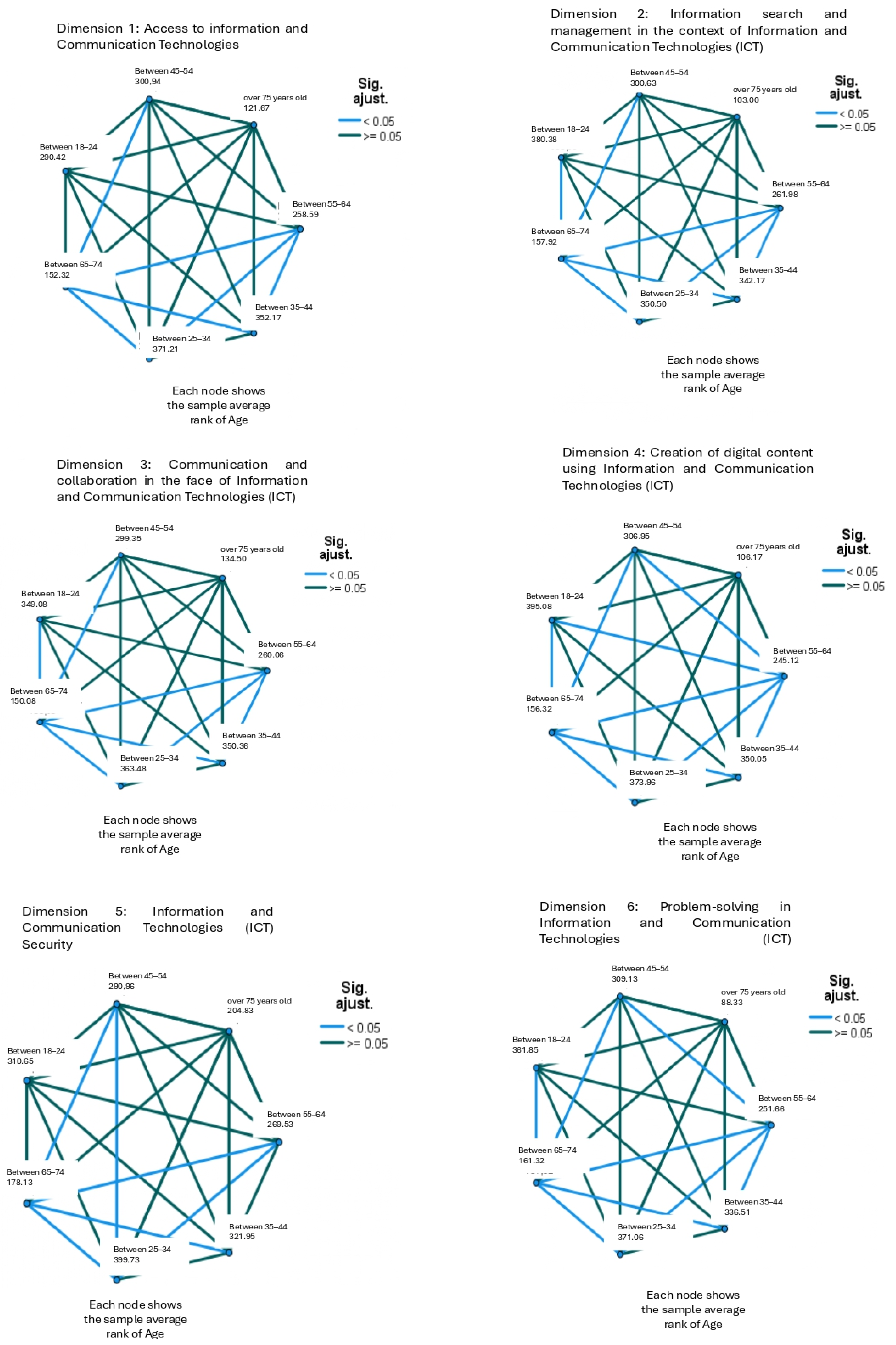
With regard to age, a Kruskal–Wallis H analysis was performed (
Table 3). The results show that there were significant differences due to age in all factors except attitude. For the attitude factor, χ(2) (6) = 3.813,
p = 0.702, the group that seemed to show the most difference from the rest was that comprising women between 65 and 74 years of age, with a mean range of 152.32 lower than the rest of the group (
Figure 1). Of all the factors, the one that stands out is Creation, χ(2) (6) = 78.076,
p = 0.000.
The results showed statistically significant differences (p < 0.001) in all dimensions except for the dimension of attitude towards ICT (p = 0.702). In particular, the 65–74 age group had the lowest mean scores in all dimensions analyzed, reflecting a clear disadvantage in access to, use of, and exploitation of ICT in this population segment. This suggests a deep generational gap in the acquisition of digital skills, which has a direct impact on these women’s opportunities for communication and access to information.
3.3. Comparison by Level of Education
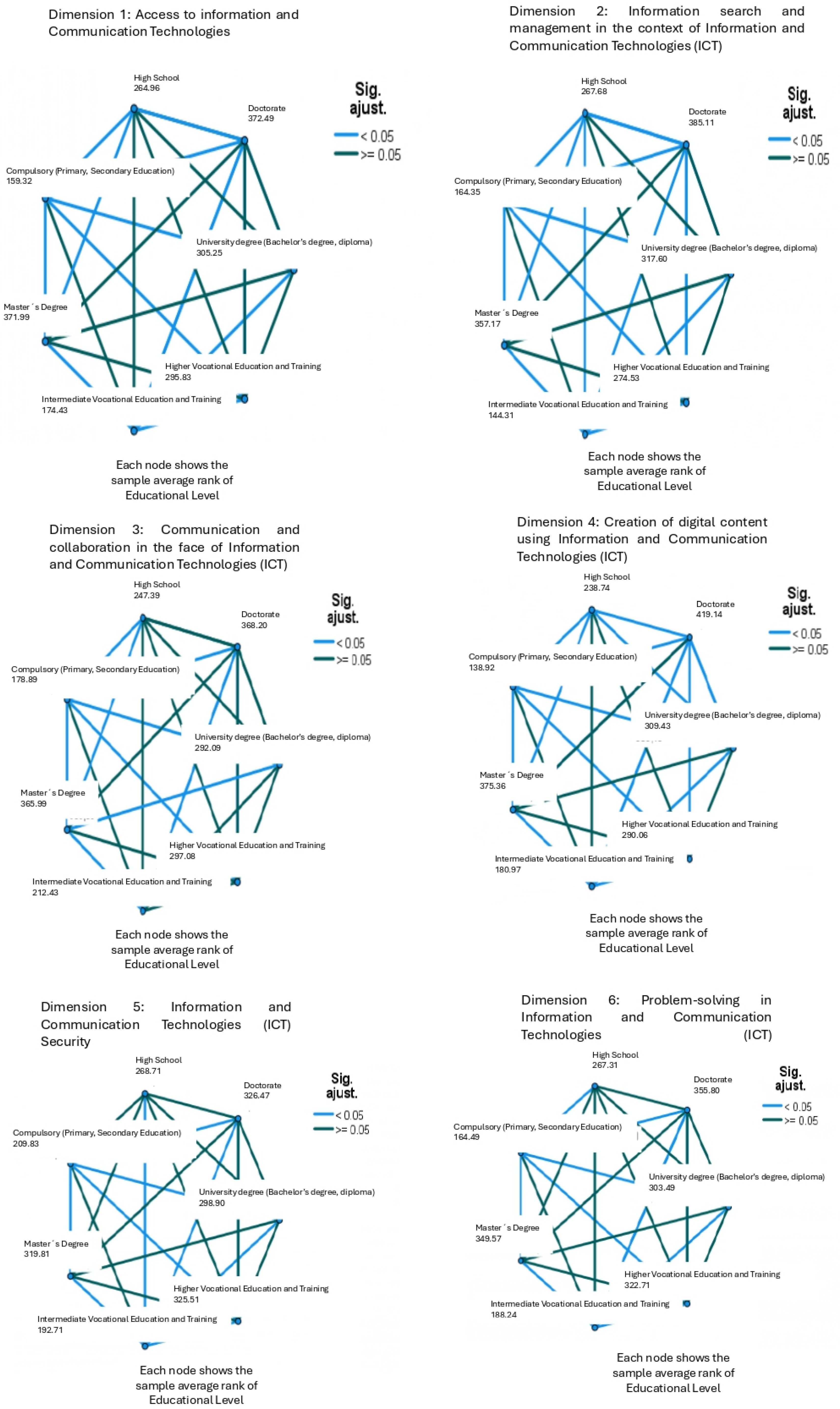
With regard to educational level (
Table 4), the Kruskal–Wallis test identified statistically significant differences in all dimensions of the questionnaire, except for the dimension related to attitude towards ICT (
p = 0.087). These results show that educational level is a determining factor in the acquisition of digital skills.
Specifically, women with lower levels of education have greater difficulties in accessing and using ICT, with a more pronounced gap in dimensions such as digital content creation, information search and management, and problem solving using digital tools. These results suggest that a lower level of education limits not only access to digital devices, but also the development of the technical, cognitive and critical skills necessary for the efficient use of ICT.
Conversely, women with higher levels of education showed greater mastery of digital skills in all dimensions evaluated, reinforcing the close relationship between educational capital and digital literacy. This finding is consistent with previous studies that highlight formal education as a protective factor against digital exclusion, facilitating active participation in digital environments and reducing socio-communicative barriers.
In this regard, the results obtained (
Figure 2) highlight the need to design inclusive training strategies that pay special attention to women with lower levels of education in order to promote full and equitable digital citizenship.
3.4. Comparison According to Employment Status
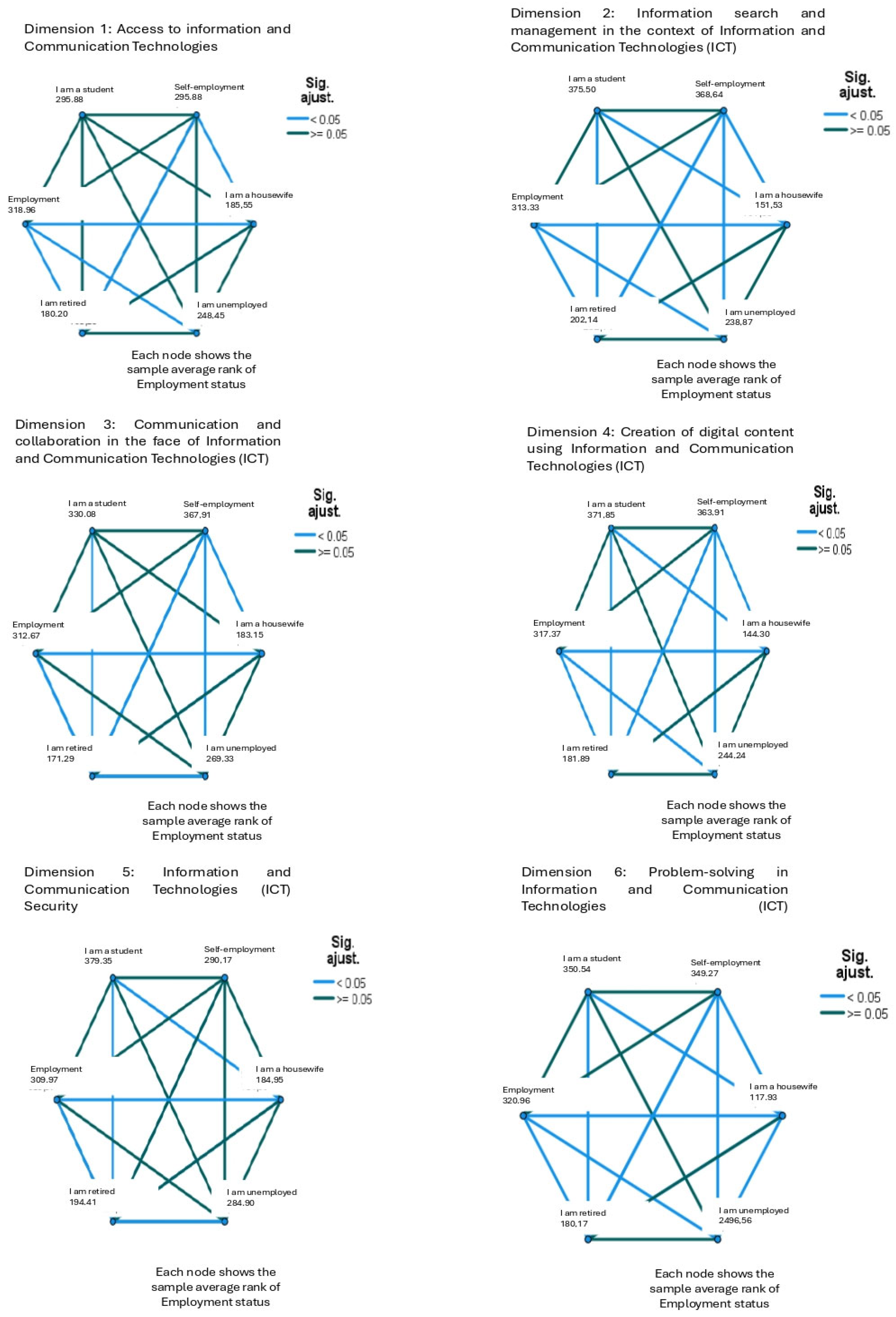
The results obtained through the Kruskal–Wallis test (
Figure 3) revealed statistically significant differences in all dimensions analyzed in the questionnaire, except for the dimension referring to attitudes towards Information and Communication Technologies (ICT) (
p = 0.104). These findings show that employment status is a relevant factor in the acquisition and development of digital skills.
In general terms, women who are unemployed or economically inactive have greater difficulties in accessing and using ICT, as well as in searching for and managing information, digital communication and collaboration, creating digital content, security and problem solving using technological tools (
Table 5). This pattern suggests that the lack of connection to the workplace limits exposure to and daily practice with ICT, which has a negative impact on the development of digital skills.
Conversely, women who are active in the labor market exhibit greater proficiency in all the digital skills assessed. This result is consistent with the existing literature (
Ðorđević et al., 2025;
Rebollo-Catalán et al., 2017), which points to the close relationship between work activity and the acquisition of digital skills, given that the work environment often requires the frequent use of technological tools to perform various tasks.
In this context, it is important to promote digital training policies and programs aimed specifically at women who are unemployed or economically inactive, with the aim of reducing digital divides and promoting their social, educational and labor market inclusion. These findings also reinforce the need to consider employment status as a key variable in the design of interventions for the development of digital skills in women.
3.5. Comparison According by Income Level
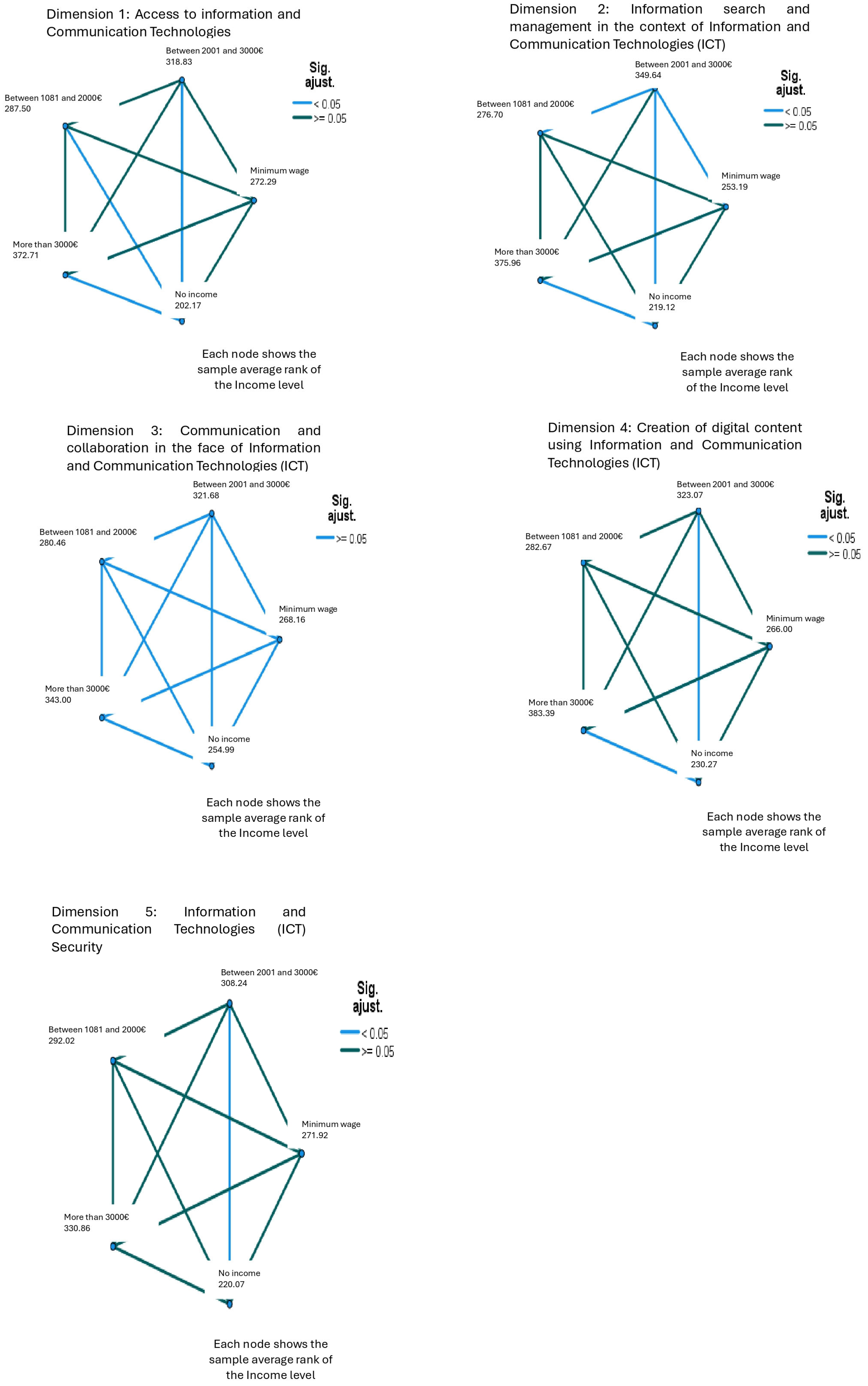
The inferential analysis performed using the Kruskal–Wallis test (
Figure 4) showed statistically significant differences in most dimensions of the questionnaire based on the monthly income level reported by participants, except for the dimension related to attitude towards ICT, where no significant differences were found (
p = 0.336).
In particular, the most pronounced differences were identified in the dimensions related to access to ICT, information search and management, digital content creation, and problem solving using technological tools. Women with lower incomes had lower average scores in these dimensions, highlighting the existence of structural barriers associated with the availability and quality of access to technological resources. This situation can translate into limitations in both the basic use of devices and the development of more complex digital skills.
The results reinforce the evidence that income level has a direct impact on women’s ability to access, use and benefit from digital technologies. In contexts of economic vulnerability, access to quality Internet, adequate devices, continuous training, and support services is often restricted, which significantly hinders the acquisition of key skills for functioning in a digitalized society. This relationship between economic limitation and digital deficit is linked to a form of multidimensional exclusion, in which material restrictions are combined with training gaps and socio-cultural barriers.
Furthermore, although there were no statistically significant differences in attitudes towards ICT, it should be noted that a positive attitude towards technology does not always translate into effective use of it, especially when there are economic obstacles (
Table 6). This dissonance suggests that motivation or a favorable perception of digitalization is not enough if it is not accompanied by the minimum material conditions that allow for the development and consolidation of digital skills.
Consequently, the findings underscore the need to design public policies and training programs that give priority to women with lower income levels, ensuring equitable access to digital media and continuous training in key skills. Addressing this gap from an intersectional approach will not only reduce inequalities in the technological sphere, but also promote the social, educational and labor inclusion of women in situations of economic vulnerability.
4. Discussion
The findings of this study confirm that the acquisition of digital competence among women with basic education is strongly conditioned by structural variables such as age, educational attainment, employment status, and income level. These results align with international research on digital inequality, which conceptualizes digital divides as cumulative and sequential processes in which offline disadvantages shape not only access to technologies but also the development of skills and the capacity to transform digital engagement into meaningful social, educational, and economic outcomes (
Van Dijk, 2020;
A. J. A. M. Van Deursen & van Dijk, 2023;
Helsper, 2021).
Age emerged as a particularly salient factor. Women aged 65 years and older showed significantly lower scores across all competence domains except attitude toward ICT. This pattern reflects a well-documented generational digital divide, whereby older cohorts have experienced reduced exposure to digital technologies throughout their educational and professional trajectories, fewer opportunities for structured training, and limited informal support networks for digital learning (
Van Dijk, 2020;
Whitcomb et al., 2020). From a socio-cognitive perspective, these constraints may contribute to lower digital self-efficacy, reinforcing avoidance behaviors and restricting progression toward more complex digital practices such as content creation and problem solving (
Stang et al., 2020).
Educational level also showed a strong and consistent association with digital competence. Women with lower levels of formal education experienced greater difficulties in information search and management, digital content creation, and problem solving—domains that require not only technical skills but also critical, cognitive, and strategic abilities. This finding is consistent with previous research identifying education as a key form of digital capital that facilitates access to advanced digital practices and enhances the likelihood of obtaining tangible benefits from ICT use (
A. J. A. M. Van Deursen & van Dijk, 2023;
Sánchez-Caballé et al., 2020). In this sense, limited educational trajectories may constrain women’s ability to navigate complex digital environments autonomously, thereby amplifying socio-communicative barriers.
Employment status further differentiated women’s digital competence profiles. Women who were unemployed or economically inactive scored significantly lower across most dimensions, confirming that labor market participation plays an important enabling role in digital skill acquisition. Work contexts often provide repeated exposure to digital tools, opportunities for situated learning, and incentives to develop problem-solving and communication skills through ICT (
Rebollo-Catalán et al., 2017;
Ðorđević et al., 2025). Conversely, detachment from the labor market may intensify digital disengagement and reduce the perceived relevance of developing certain competences, reinforcing patterns of social and digital exclusion (
OECD, 2018b).
Income-related differences were particularly evident in dimensions associated with access, information management, content creation, and problem solving. Women with lower incomes reported lower competence levels, supporting the existence of an economic digital divide in which material resources—such as device quality, connectivity, and access to training opportunities—condition digital skill development (
OECD, 2018a;
Pawluczuk et al., 2021). Importantly, although attitudes toward ICT were generally positive across income groups, favorable dispositions did not translate into higher competence when structural constraints limited opportunities for practice and learning. This finding reinforces prior evidence that motivation alone cannot compensate for deficits in resources and institutional support (
A. J. Van Deursen & Helsper, 2018).
From an analytical standpoint, the concept of socio-communicative needs provides a useful lens to interpret these patterns. In this study, such needs are not understood as a separate competence but as cross-cutting functional barriers that manifest in specific digital domains—particularly communication and collaboration, security, and information practices. Lower competence in these areas may hinder effective participation in digital environments, weaken digital self-efficacy, and increase self-limiting behaviors, especially among women who anticipate negative online experiences or feel insufficiently prepared to manage digital risks (
Meier & Bol, 2025;
Gómez-Trigueros & Carabias Álvaro, 2025).
Recent international research highlights that digital inequality also entails unequal exposure to online risks and harms, including privacy threats, hostile communication, and mistrust, which disproportionately affect socially vulnerable groups and can discourage active participation (
Meier & Bol, 2025;
Helsper, 2021). In this regard, the lower scores observed in security-related competences may contribute to heightened perceptions of vulnerability, reinforcing withdrawal from digital interaction spaces and exacerbating socio-communicative needs.
The absence of statistically significant differences in attitudes toward ICT across sociodemographic variables is a particularly relevant finding. Rather than indicating homogeneous competence levels, this result suggests that positive orientations toward technology may coexist with limited skills and constrained opportunities. From a policy and intervention perspective, this represents a critical opportunity: training programs can build upon women’s favorable attitudes while directly addressing structural barriers and targeting the competence domains most closely linked to safe participation, communication, and autonomy (
UNESCO, 2023;
OECD, 2024).
Overall, these findings underscore the need for intersectional digital inclusion strategies that combine material support, targeted competence development, and socio-communicative empowerment. Interventions aimed at women with basic education should prioritize not only access and basic skills, but also higher-order competences related to information evaluation, problem solving, content creation, and safe digital interaction. Addressing these dimensions simultaneously is essential for reducing persistent digital inequalities and promoting equitable participation in an increasingly digitalized society.
5. Conclusions
The results of this study show that the acquisition of digital skills in women with basic education is conditioned by structural factors such as age, educational level, employment status and income. These variables act as barriers that not only limit access to and use of technologies but also generate socio-communicative needs that affect these women’s active participation in the digital society.
Older women with lower levels of education and limited economic resources were found to be more digitally vulnerable, which has a negative impact on their autonomy, social inclusion, and training and employment opportunities. Despite this, a generally positive attitude towards ICTs was observed, which represents an opportunity to implement inclusive and gender-focused training strategies.
It is concluded that there is an urgent need to develop public policies that integrate adapted digital training, the provision of technological resources and psychosocial support, especially aimed at women in vulnerable situations. Only through intersectional and sustained intervention will it be possible to move towards a more just and equitable digital citizenship.
Author Contributions
Conceptualization, R.S.-C. and S.S.; methodology, C.R.-J.; software, C.R.-J.; validation, R.S.-C. and S.S.; formal analysis, C.R.-J.; investigation, R.S.-C.; resources, S.S.; data curation, C.R.-J.; writing—original draft preparation, C.R.-J.; writing—review and editing, C.R.-J.; visualization, S.S.; supervision, R.S.-C.; project administration, R.S.-C. and C.R.-J. All authors have read and agreed to the published version of the manuscript.
Funding
Project 2023 “Report on Challenges in the Acquisition of Digital Skills Among Women and the Dissemination of Tips for Improvement Through Informative Bits on Virtual Platforms.” (Núm. 2023/0233), led by Dr. Rebeca Soler Costa (University of Zaragoza).
Institutional Review Board Statement
Ethical review and approval were waived for this study due to approval from an Ethics Committee was not required to conduct this study, in accordance with applicable national regulations.
Informed Consent Statement
Informed consent was obtained from all subjects involved in the study.
Data Availability Statement
The datasets generated and analyzed during the current study are not publicly available due to privacy considerations but are available from the corresponding author on reasonable request.
Conflicts of Interest
The authors declare no conflicts of interest.
References
- Ðorđević, B., Milanović Zbiljić, S., & Radosavljević, M. (2025). Impact of the digital skills on employability: Cross-sectional analysis. Economies, 13(7), 196. [Google Scholar] [CrossRef]
- EAPN España. (2022). El estado de la pobreza: Seguimiento del indicador AROPE en España 2008–2021. European Anti-Poverty Network España. Available online: https://www.eapn.es (accessed on 5 December 2025).
- European Commission. (2020). Digital education action plan (2021–2027): Resetting education and training for the digital age. Publications Office of the European Union. Available online: https://education.ec.europa.eu/focus-topics/digital-education/action-plan (accessed on 29 November 2025).
- European Commission. (2024a). Digital decade 2024: Country report–Spain. Publications Office of the European Union. Available online: https://digital-strategy.ec.europa.eu/en/factpages/spain-2024-digital-decade-country-report (accessed on 5 December 2025).
- European Commission. (2024b). Report on the state of the digital decade 2024. Publications Office of the European Union. Available online: https://digital-strategy.ec.europa.eu/en/library/report-state-digital-decade-2024 (accessed on 5 December 2025).
- Eurostat. (2024). Towards digital decade targets for Europe. Publications Office of the European Union. Available online: https://ec.europa.eu/eurostat/statistics-explained/index.php?title=Towards_Digital_Decade_targets_for_Europe#:~:text=authorities%20and%20operators (accessed on 31 October 2025).
- Eurostat. (2025). ICT specialists in employment. Available online: https://ec.europa.eu/eurostat/statistics-explained/index.php?title=ICT_specialists_in_employment (accessed on 21 November 2025).
- García, R. (2025, May 9). Yes we tech: Una década de “tecnofeminismo”. El País. Available online: https://elpais.com/espana/2025-05-09/yes-we-tech-una-decada-de-tecnofeminismo.html (accessed on 27 November 2025).
- George, D., & Mallery, P. (2003). SPSS for windows step by step: A simple guide and reference (4th ed.). Allyn & Bacon. [Google Scholar]
- Government of Spain. (2021). National plan for digital skills. Available online: https://portal.mineco.gob.es/recursosarticulo/mineco/ministerio/ficheros/210127_plan_nacional_de_competencias_digitales.pdf (accessed on 15 November 2025).
- Gómez-Trigueros, I. M., & Carabias Álvaro, M. (2025). Digital divides and digital competence: Challenges for women in the digital society. Feminismo/s, 45, 10–21. [Google Scholar] [CrossRef]
- Helsper, E. J. (2021). The digital disconnect: The social causes and consequences of digital inequalities (2nd ed.). SAGE. [Google Scholar]
- Instituto de las Mujeres. (2025). La violencia contra las mujeres en el entorno digital. Ministerio de Igualdad, Gobierno de España. Available online: https://www.inmujeres.gob.es (accessed on 30 November 2025).
- Latorre Cosculluela, C., & Puyuelo Sanclemente, M. (2016). Evaluación psicopedagógica e intervención sociocomunicativa en niños con trastorno de asperger. Análisis de un caso. Revista Iberoamericana De Evaluación Educativa, 9(1), 61–74. [Google Scholar] [CrossRef]
- Meier, Y., & Bol, N. (2025). Unequal experiences, unequal outcomes? Digital inequalities in experiencing online benefits and privacy harms, mistrust, and self-inhibiting behaviors. Journal of Computer-Mediated Communication, 30(5), zmaf016. [Google Scholar] [CrossRef]
- Ministry for Digital Transformation and Public Administration. (2023). Digital Spain 2026. Available online: https://avance.digital.gob.es/programas-avance-digital/Paginas/Espana_Digital_2026.aspx (accessed on 6 December 2025).
- National Institute of Educational Technologies and Teacher Training [INTEF]. (2022). Reference framework for digital competence in teaching. Available online: https://intef.es/wp-content/uploads/2023/05/MRCDD_GTTA_2022.pdf (accessed on 15 January 2026).
- National Observatory of Technology and Society [ONTSI]. (2025). Gender digital divide, 2025 edition. Available online: https://www.miguiadesalud.es/es/brecha-digital-de-genero-edicion-2025-ontsi (accessed on 6 December 2025).
- OECD. (2018a). Empowering women in the digital age. Available online: https://www.oecd.org/digital/empowering-women-in-the-digital-age.pdf (accessed on 23 December 2025).
- OECD. (2018b). Skills summit 2018: Skills for a digital world. Available online: https://www.oecd.org/content/dam/oecd/en/events/2018/06/Skills-Summit-2018-Issues-Paper.pdf (accessed on 23 November 2025).
- OECD. (2024). Education at a glance 2024: España. Available online: https://www.oecd.org/es/publications/2024/09/education-at-a-glance-2024-country-notes_532eb29d/spain_16706f4a.html (accessed on 15 December 2025).
- Pawluczuk, A., Lee, J., & Gamundani, A. M. (2021). Bridging the gender digital divide: An analysis of existing guidance for gender digital inclusion programmes’ evaluations. Digital Policy, Regulation and Governance, 23(3), 287–299. [Google Scholar] [CrossRef]
- Peláez-Sánchez, J. I., & Glasserman-Morales, L. D. (2023). Gender digital divide and women’s digital inclusion: A systematic mapping. Multidisciplinary Journal of Gender Studies, 12(3), 258–282. [Google Scholar] [CrossRef]
- Rebollo-Catalán, Á., Mayor-Buzón, V., & García-Pérez, R. (2017). Competencias digitales de las mujeres en el uso de las redes sociales virtuales: Diferencias según perfil laboral. Revista de Investigación Educativa, 35(2), 427–444. [Google Scholar] [CrossRef]
- Sánchez-Caballé, A., Gisbert, M., & Esteve, F. (2020). The digital competence of university students: A systematic literature review. Aloma: Revista de Psicologia, Ciències de l’Educació i de l’Esport, 38(1), 63–74. [Google Scholar] [CrossRef]
- Soler-Costa, R., Gaspar-Cabrero, A. R., Morte-Nadal, T., & Bandrés-Goldázar, E. (2024). Difficulties in the acquisition of digital skills in women: A case study in the city of Granada. In O. Almazán-López, B. Cabañés-Cacho, & E. Bumbury (Eds.), AI, education and the media: The TRIC model (pp. 153–173). Dyckinson. [Google Scholar]
- Stang, J. B., Altiere, E., Ives, J., & Dubois, P. J. (2020). Exploring the contributions of self-efficacy and test anxiety to gender differences in assessments. arXiv, arXiv:2007.07947. [Google Scholar] [CrossRef]
- UNESCO. (2023). Digital literacy for all: A global framework. UNESCO Publishing. [Google Scholar]
- Van Deursen, A. J., & Helsper, E. J. (2018). Collateral benefits of Internet use: Explaining the diverse outcomes of engaging with the Internet. New Media & Society, 20(7), 2333–2351. [Google Scholar] [CrossRef]
- Van Deursen, A. J. A. M., & van Dijk, J. A. G. M. (2023). Tangible outcomes of internet use. From digital skills to tangible outcomes project report. Available online: www.oii.ox.ac.uk/research/projects/?id=112 (accessed on 11 November 2025).
- Van Dijk, J. (2020). The digital divide. Polity Press. [Google Scholar]
- Vuorikari, R., Kluzer, S., & Punie, Y. (2022). DigComp 2.2: The digital competence framework for citizens—With new examples of knowledge, skills and attitudes. Publications Office of the European Union. Available online: https://publications.jrc.ec.europa.eu/repository/handle/JRC128415 (accessed on 13 November 2025).
- Whitcomb, K. M., Kalender, Z. Y., Nokes-Malach, T. J., Schunn, C. D., & Singh, C. (2020). A mismatch between self-efficacy and performance: Undergraduate women in engineering tend to have lower self-efficacy despite earning higher grades than men. arXiv, arXiv:2003.06006. [Google Scholar] [CrossRef]
- WomANDigital. (2023). Gender digital divide report 2023. Available online: https://womandigital.es/estudio/informe-de-brecha-digital-de-genero-2023-del-ontsi/ (accessed on 14 October 2025).
| Disclaimer/Publisher’s Note: The statements, opinions and data contained in all publications are solely those of the individual author(s) and contributor(s) and not of MDPI and/or the editor(s). MDPI and/or the editor(s) disclaim responsibility for any injury to people or property resulting from any ideas, methods, instructions or products referred to in the content. |