
The Dimensions of Abundance in AI-Generated Feedback
 , , ,
, , ,
Abstract
1. Introduction
2. Identifying the Four Dimensions of Abundance
- RQ1: How have the dimensions of abundant feedback been implemented across GenAI-enabled feedback in different disciplinary contexts?
- RQ2: Do the proposed dimensions of abundant feedback provide an adequate framework for describing the informational and relational value, as well as the accessibility and quality of GenAI feedback?
- RQ3: What affordances of GenAI feedback are reported that might shape the design, implementation, and educational impact of future feedback practices?
3. Methods
3.1. Inclusion and Exclusion Criteria
- The research needed to report empirical findings related to the use of GenAI for feedback on student work, i.e., not a literature review nor a hypothetical or simulated example.
- The research needed to include original contributions where feedback was a central part of the study and the use of GenAI tools were a focus, not tangential or incidental.
- The study needed to give feedback to the student, rather than simply directly edit the students’ work without any discussion of the changes that were made.
- The study needed to be related to a tertiary education setting.
- Publications needed to be in the English language.
- Publications needed to be indexed via either SCOPUS or IEEE.
- Publications needed to be either conference papers or research articles.
- Publications must have been published from 2023 onward.
3.2. Databases and Search Terms
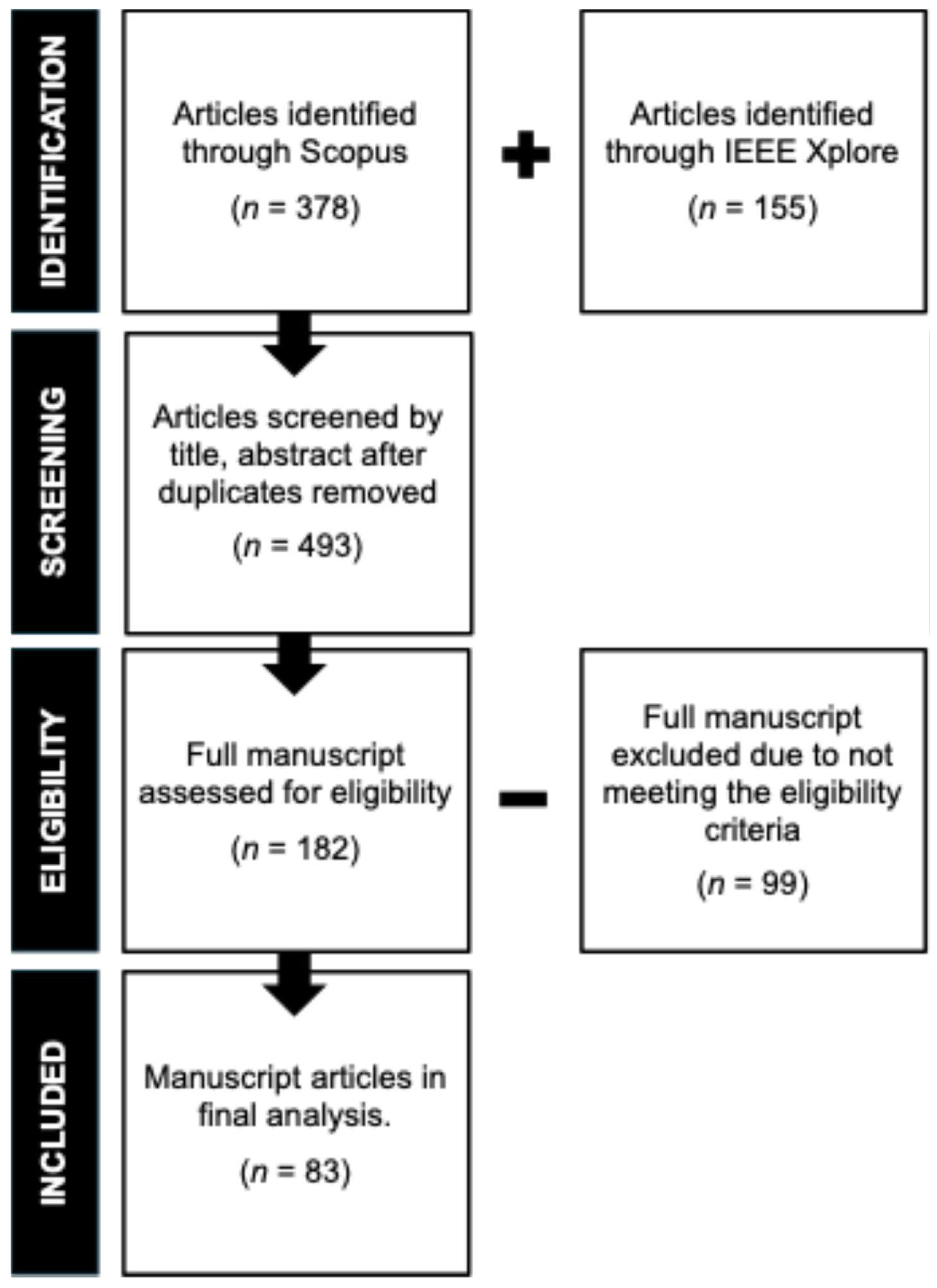
- TITLE-ABS-KEY (“feedback”) AND TITLE-ABS-KEY (“automat*” OR “mark*” OR “grad*” OR “peer”) AND TITLE-ABS-KEY (genAI OR chatgpt OR “Generative AI” OR “generative artificial intelligence”) AND TITLE-ABS-KEY (educat* OR “stud*” OR “teach*”) AND DOCTYPE (ar) AND DOCTYPE (cp) AND PUBYEAR > 2022 AND LANGUAGE (english).
3.3. Screening Protocol
3.4. Synthesis Methods
3.5. Use of AI in This Paper
4. Results and Discussion
4.1. PRISMA Results
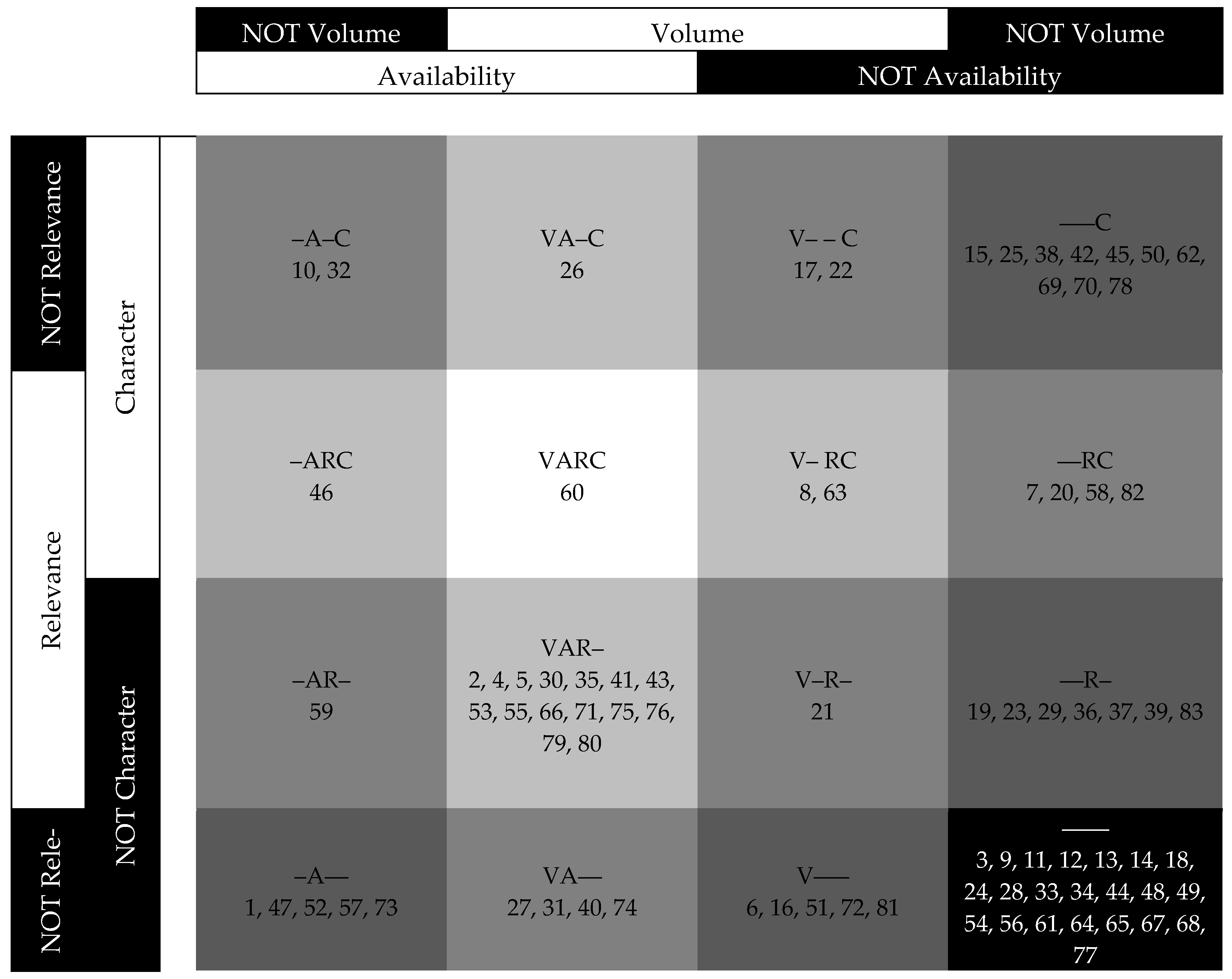
4.2. Presentation of Included Studies
- The authors and year of publication.
- The dimensions of abundance that were observed in the article, where the letters V, A, R and C represent volume, availability, relevance and character, respectively.
- The key affordances of the work described in the article, such as efficiency or personalisation.
- The discipline area in which the students were learning.
- The context of the work.
- A short summary of the findings of the article, particularly in relation to feedback.
4.3. The Affordances of Automated Feedback
4.3.1. Staff Efficiency
4.3.2. Personalisation
4.3.3. Enriched Feedback Experiences
4.3.4. Student Agency
4.4. Mix of Disciplines
4.4.1. Cluster 1: Language Teaching
4.4.2. Cluster 2: Programming
4.4.3. Contextual Similarities of the Two Most Common Disciplines
5. The Dimensions of Abundance
5.1. Volume Abundance
5.2. Availability Abundance
5.3. Relevance Abundance
5.4. Character Abundance
5.5. Not Abundant
6. Findings and Implications
6.1. The Dimensions of Abundance Are Beginning to Be Explored
6.2. Empirical Validation of Framework Dimensions
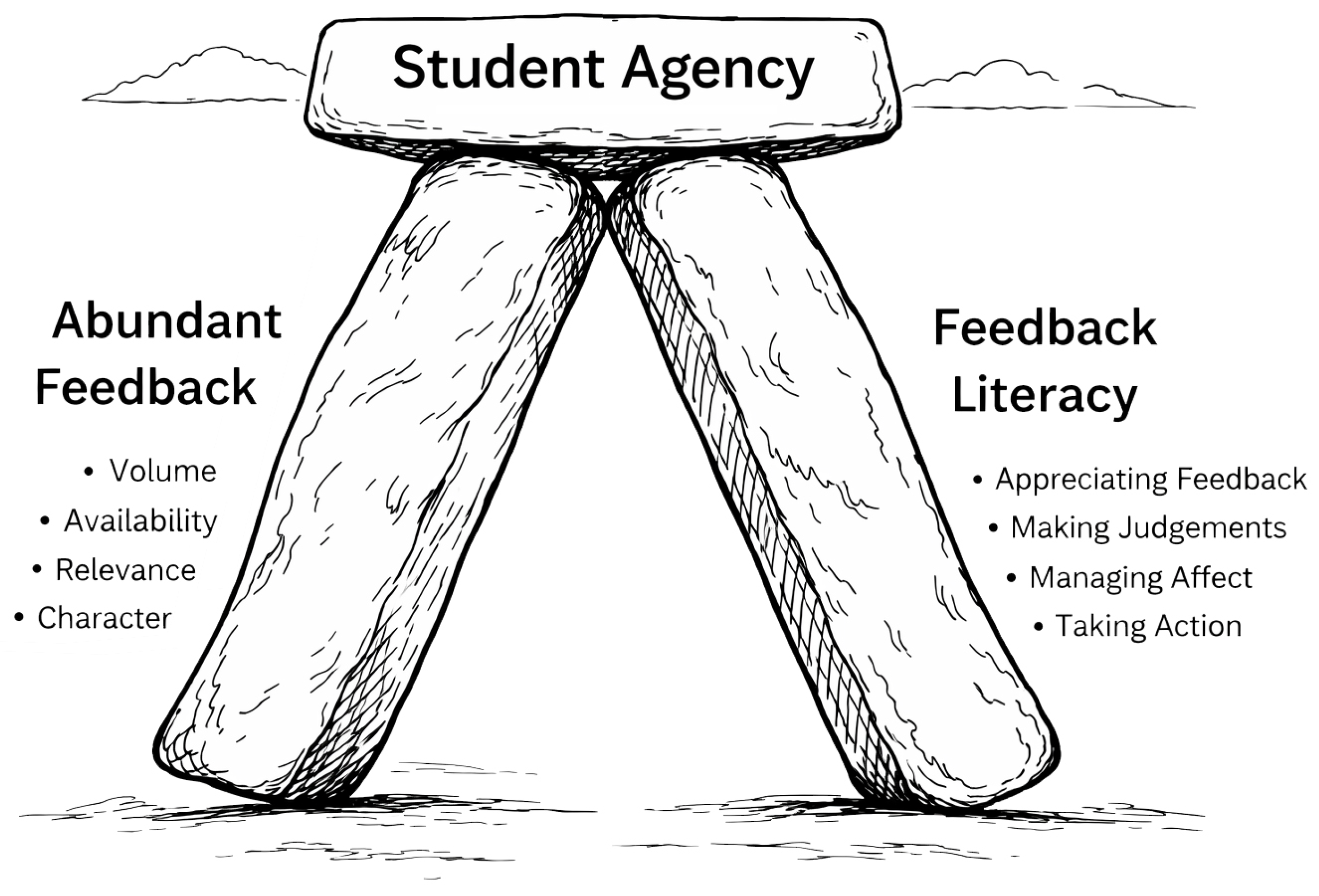
6.3. Interdependence of Abundant Feedback, Student Agency and Feedback Literacy
7. Conclusions
Author Contributions
Funding
Data Availability Statement
Conflicts of Interest
References
- Akiba, D., & Garte, R. (2024). Leveraging AI tools in university writing instruction: Enhancing student success while upholding academic integrity. Journal of Interactive Learning Research, 35(4), 467–480. [Google Scholar] [CrossRef] [Scilit]
- Aksoy, D. A., & KurSun, E. (2024). Behind the scenes: A critical perspective on GenAI and open educational practices. Open Praxis, 16(3), 457–470. [Google Scholar] [CrossRef] [Scilit]
- Alammary, A. (2019). Blended learning models for introductory programming courses: A systematic review. PLoS ONE, 14(9), e0221765. [Google Scholar] [CrossRef] [Scilit] [PubMed]
- Alanazi, S. M., Elmotri, B., Khamis, G. S., & Darem, A. A. (2025). Assessing the efficacy of ChatGPT’s automated corrective feedback in enhancing students’ writing proficiency. International Journal of Advanced and Applied Sciences, 12(2), 205–214. [Google Scholar] [CrossRef] [Scilit]
- Alers, H., Malinowska, A., Meghoe, G., & Apfel, E. (2024). Using ChatGPT-4 to grade open question exams. In K. Arai (Ed.), Advances in information and communication (Vol. 919, pp. 1–9). Springer Nature. [Google Scholar] [CrossRef] [Scilit]
- Ali, M., Rehman, S., & Cheema, E. (2025). Impact of artificial intelligence on the academic performance and test anxiety of pharmacy students in objective structured clinical examination: A randomized controlled trial. International Journal of Clinical Pharmacy, 47(4), 1034–1041. [Google Scholar] [CrossRef] [Scilit]
- Bacon, E. D., & Maneerutt, G. (2024). Enhancing English as a foreign language academic writing through AI and peer-assisted learning. Journal of Institutional Research South East Asia, 22(3), 282–314. [Google Scholar]
- Bai, L., & Wei, Y. (2024). Exploring EFL learners’ integration and perceptions of ChatGPT’s text revisions: A three-stage writing task study. IEEE Transactions on Learning Technologies, 17, 2161–2172. [Google Scholar] [CrossRef] [Scilit]
- Bassner, P., Frankford, E., & Krusche, S. (2024). Iris: An AI-driven virtual tutor for computer science education. In Proceedings of the 2024 on innovation and technology in computer science education V. 1 (pp. 394–400). Association for Computing Machinery. [Google Scholar] [CrossRef] [Scilit]
- Becerra, Á., Mohseni, Z., Sanz, J., & Cobos, R. (2024, May 8–11). A generative AI-based personalized guidance tool for enhancing the feedback to MOOC learners. 2024 IEEE Global Engineering Education Conference (EDUCON) (pp. 1–8), Kos Island, Greece. [Google Scholar] [CrossRef] [Scilit]
- Bernal, M. E. (2024). Revolutionizing eLearning assessments: The role of GPT in crafting dynamic content and feedback. Journal of Artificial Intelligence and Technology, 4, 188–199. [Google Scholar] [CrossRef] [Scilit]
- Borrego, M., Foster, M. J., & Froyd, J. E. (2015). What is the state of the art of systematic review in engineering education? Review of systematic reviews in engineering education. Journal of Engineering Education, 104(2), 212–242. [Google Scholar] [CrossRef] [Scilit]
- Boud, D., & Molloy, E. (2013). Rethinking models of feedback for learning: The challenge of design. Assessment & Evaluation in Higher Education, 38(6), 698–712. [Google Scholar] [CrossRef] [Scilit]
- Brainnita Oktarina, I., Edistianda Eka Saputri, M., Magdalena, B., Hastomo, T., & Maximilian, A. (2024). Leveraging ChatGPT to enhance students’ writing skills, engagement, and feedback literacy. Edelweiss Applied Science and Technology, 8(4), 2306–2319. [Google Scholar] [CrossRef] [Scilit]
- Broadbent, J., Panadero, E., & Boud, D. (2018). Implementing summative assessment with a formative flavour: A case study in a large class. Assessment & Evaluation in Higher Education, 43(2), 307–322. [Google Scholar] [CrossRef] [Scilit]
- Bucol, J. L., & Sangkawong, N. (2025). Exploring ChatGPT as a writing assessment tool. Innovations in Education and Teaching International, 62(3), 867–882. [Google Scholar] [CrossRef] [Scilit]
- Cai, Z., Gui, Y., Mao, P., Wang, Z., Hao, X., Fan, X., & Tai, R. H. (2023). The effect of feedback on academic achievement in technology-rich learning environments (TREs): A meta-analytic review. Educational Research Review, 39, 100521. [Google Scholar] [CrossRef] [Scilit]
- Carless, D. (2006). Differing perceptions in the feedback process. Studies in Higher Education, 31(2), 219–233. [Google Scholar] [CrossRef] [Scilit]
- Carless, D., & Boud, D. (2018). The development of student feedback literacy: Enabling uptake of feedback. Assessment & Evaluation in Higher Education, 43(8), 1315–1325. [Google Scholar] [CrossRef] [Scilit]
- Carless, D., Salter, D., Yang, M., & Lam, J. (2011). Developing sustainable feedback practices. Studies in Higher Education, 36(4), 395–407. [Google Scholar] [CrossRef] [Scilit]
- Chan, S. T. S., Lo, N. P. K., & Wong, A. M. H. (2024). Enhancing university level English proficiency with generative AI: Empirical insights into automated feedback and learning outcomes. Contemporary Educational Technology, 16(4), ep541. [Google Scholar] [CrossRef] [Scilit]
- Chen, A., Xiang, M., Zhou, J., Jia, J., Shang, J., Li, X., Gašević, D., & Fan, Y. (2025). Unpacking help-seeking process through multimodal learning analytics: A comparative study of ChatGPT vs human expert. Computers & Education, 226, 105198. [Google Scholar] [CrossRef] [Scilit]
- Chen, E., Huang, R., Chen, H.-S., Tseng, Y.-H., & Li, L.-Y. (2023). GPTutor: A ChatGPT-powered programming tool for code explanation. In N. Wang, G. Rebolledo-Mendez, V. Dimitrova, N. Matsuda, & O. C. Santos (Eds.), Artificial intelligence in education. Posters and late breaking results, workshops and tutorials, industry and innovation tracks, practitioners, doctoral consortium and blue sky (Vol. 1831, pp. 321–327). Springer Nature. [Google Scholar] [CrossRef] [Scilit]
- Chen, Z., Cross, S., & Rienties, B. (2024). Empowering assessors in providing quality feedback with GenAI assistance: A preliminary exploration. In L.-K. Lee, P. Poulova, K. T. Chui, M. Černá, F. L. Wang, & S. K. S. Cheung (Eds.), Technology in education. Digital and intelligent education (Vol. 2330, pp. 134–148). Springer Nature. [Google Scholar] [CrossRef] [Scilit]
- Coenen, C., & Pfenninger, M. (2025). Transforming learning experiences and assessments through AI-empowered cocreation of quality feedback. New Directions for Teaching and Learning, 2025(182), 59–65. [Google Scholar] [CrossRef] [Scilit]
- Cortez, A., & Schmelzenbach, P. (2024, June 23–26). Integrating ChatGPT in an introductory engineering undergraduate course as a tool for feedback. 2024 ASEE Annual Conference & Exposition Proceedings, 47646, Portland, OR, USA. [Google Scholar] [CrossRef] [Scilit]
- Cronje, J. (2023). Exploring the role of ChatGPT as a peer coach for developing research proposals: Feedback quality, prompts, and student reflection. Electronic Journal of E-Learning, 22, 1–15. [Google Scholar] [CrossRef] [Scilit]
- Dai, W., Lin, J., Jin, H., Li, T., Tsai, Y.-S., Gašević, D., & Chen, G. (2023, July 10–13). Can large language models provide feedback to students? A case study on ChatGPT. 2023 IEEE International Conference on Advanced Learning Technologies (ICALT) (pp. 323–325), Orem, UT, USA. [Google Scholar] [CrossRef] [Scilit]
- Dai, W., Tsai, Y.-S., Lin, J., Aldino, A., Jin, H., Li, T., Gašević, D., & Chen, G. (2024). Assessing the proficiency of large language models in automatic feedback generation: An evaluation study. Computers and Education: Artificial Intelligence, 7, 100299. [Google Scholar] [CrossRef] [Scilit]
- Dawson, P., Yan, Z., Lipnevich, A., Tai, J., Boud, D., & Mahoney, P. (2024). Measuring what learners do in feedback: The feedback literacy behaviour scale. Assessment & Evaluation in Higher Education, 49(3), 348–362. [Google Scholar] [CrossRef] [Scilit]
- Diyab, A., Frost, R. M., Fedoruk, B. D., & Diyab, A. (2025). Engineered prompts in ChatGPT for educational assessment in software engineering and computer science. Education Sciences, 15(2), 156. [Google Scholar] [CrossRef] [Scilit]
- Du, T., Li, X., Jiang, N., Xu, Y., & Zhou, Y. (2025). Adaptive AI as collaborator: Examining the impact of an AI’s adaptability and social role on individual professional efficacy and credit attribution in human–AI collaboration. International Journal of Human–Computer Interaction, 41(19), 12422–12433. [Google Scholar] [CrossRef] [Scilit]
- ElEbyary, K., & Shabara, R. (2024). ChatGPT-generated corrective feedback: Does it do what it says on the tin? Teaching English With Technology, 24(3), 68–89. [Google Scholar] [CrossRef] [Scilit]
- Escalante, J., Pack, A., & Barrett, A. (2023). AI-generated feedback on writing: Insights into efficacy and ENL student preference. International Journal of Educational Technology in Higher Education, 20(1), 57. [Google Scholar] [CrossRef] [Scilit]
- Fiore, M., & Mongiello, M. (2025). Using peer assessment leveraging large language models in software engineering education. International Journal of Software Engineering and Knowledge Engineering, 35(01), 1–18. [Google Scholar] [CrossRef] [Scilit]
- Frankford, E., Sauerwein, C., Bassner, P., Krusche, S., & Breu, R. (2024, April 14–20). AI-tutoring in software engineering education. 46th International Conference on Software Engineering: Software Engineering Education and Training (pp. 309–319), Lisbon, Portugal. [Google Scholar] [CrossRef] [Scilit]
- Gozali, I., Wijaya, A. R. T., Lie, A., Cahyono, B. Y., & Suryati, N. (2024). Leveraging the potential of ChatGPT as an automated writing evaluation (AWE) tool: Students’ feedback literacy development and AWE tools integration framework. The JALT CALL Journal, 20(1), 1–22. [Google Scholar] [CrossRef] [Scilit]
- Grandel, S., Schmidt, D. C., & Leach, K. (2024, April 20). Applying large language models to enhance the assessment of parallel functional programming assignments. 1st International Workshop on Large Language Models for Code (pp. 102–110), Lisbon, Portugal. [Google Scholar] [CrossRef] [Scilit]
- Guo, K. (2024). EvaluMate: Using AI to support students’ feedback provision in peer assessment for writing. Assessing Writing, 61, 100864. [Google Scholar] [CrossRef] [Scilit]
- Guo, K., Pan, M., Li, Y., & Lai, C. (2024). Effects of an AI-supported approach to peer feedback on university EFL students’ feedback quality and writing ability. The Internet and Higher Education, 63, 100962. [Google Scholar] [CrossRef] [Scilit]
- Guo, K., & Wang, D. (2024). To resist it or to embrace it? Examining ChatGPT’s potential to support teacher feedback in EFL writing. Education and Information Technologies, 29(7), 8435–8463. [Google Scholar] [CrossRef] [Scilit]
- Guo, X. (2025). Facilitator or thinking inhibitor: Understanding the role of ChatGPT-generated written corrective feedback in language learning. Interactive Learning Environments, 33(5), 3526–3544. [Google Scholar] [CrossRef] [Scilit]
- Gutiérrez-Ferré, A., Hernández-Leo, D., & Sánchez-Reina, J. R. (2024). Generative AI chatbot in PyramidApp: Students’ behaviors and design principles. In P. Santos, C. Álvarez, D. Hernández-Leo, M. Kobayashi, & G. Zurita (Eds.), Collaboration technologies and social computing (Vol. 14890, pp. 248–256). Springer Nature. [Google Scholar] [CrossRef] [Scilit]
- Hattie, J., & Timperley, H. (2007). The power of feedback. Review of Educational Research, 77(1), 81–112. [Google Scholar] [CrossRef] [Scilit]
- Haughney, K., Wakeman, S., & Hart, L. (2020). Quality of feedback in higher education: A review of literature. Education Sciences, 10(3), 60. [Google Scholar] [CrossRef] [Scilit]
- Hawkins, B., Taylor-Griffiths, D., & Lodge, J. M. (2025). Summarise, elaborate, try again: Exploring the effect of feedback literacy on AI-enhanced essay writing. Assessment & Evaluation in Higher Education, 1–13. [Google Scholar] [CrossRef] [Scilit]
- Henderson, M., Ryan, T., & Phillips, M. (2019). The challenges of feedback in higher education. Assessment & Evaluation in Higher Education, 44(8), 1237–1252. [Google Scholar] [CrossRef] [Scilit]
- Heron, M., Medland, E., Winstone, N., & Pitt, E. (2023). Developing the relational in teacher feedback literacy: Exploring feedback talk. Assessment & Evaluation in Higher Education, 48(2), 172–185. [Google Scholar] [CrossRef] [Scilit]
- Holderried, F., Stegemann-Philipps, C., Herrmann-Werner, A., Festl-Wietek, T., Holderried, M., Eickhoff, C., & Mahling, M. (2024). A language model–powered simulated patient with automated feedback for history taking: Prospective study. JMIR Medical Education, 10, e59213. [Google Scholar] [CrossRef] [Scilit]
- Hornsby, D. J., & Osman, R. (2014). Massification in higher education: Large classes and student learning. Higher Education, 67(6), 711–719. [Google Scholar] [CrossRef] [Scilit]
- Huo, H., Ding, X., Guo, Z., Shen, S., Ye, D., Pham, O., Milne, D., Mathieson, L., & Gardner, A. (2024, December 2–5). Accelerating learning with AI: Improving students’ capability to receive and build automated feedback for programming courses. 2024 World Engineering Education Forum-Global Engineering Deans Council (WEEF-GEDC) (pp. 1–9), Sydney, Australia. [Google Scholar] [CrossRef] [Scilit]
- Hussain, S., Gamage, K. A. A., Ahmad, W., & Imran, M. A. (2019). Assessment and feedback for large classes in transnational engineering education: Student–staff partnership-based innovative approach. Education Sciences, 9(3), 221. [Google Scholar] [CrossRef] [Scilit]
- Hutson, J., Fulcher, B., & Ratican, J. (2024). Enhancing assessment and feedback in game design programs: Leveraging generative AI for efficient and meaningful evaluation. IJERI: International Journal of Educational Research and Innovation, (22), 1–20. [Google Scholar] [CrossRef] [Scilit]
- Ivanović, I. (2023). Can AI-assisted essay assessment support teachers? A cross-sectional mixed-methods research conducted at the university of Montenegro. Annales, Series Historia et Sociologia, 33, 571–590. [Google Scholar] [CrossRef]
- Jaashan, H. M. S., & Alashabi, A. A. (2025). Using AI large language model (LLM-ChatGPT) to mitigate spelling errors of EFL learners. Forum for Linguistic Studies, 7, 328–339. [Google Scholar] [CrossRef] [Scilit]
- Jiang, Y. (2025). Interaction and dialogue: Integration and application of artificial intelligence in blended mode writing feedback. The Internet and Higher Education, 64, 100975. [Google Scholar] [CrossRef] [Scilit]
- Keuning, H., Jeuring, J., & Heeren, B. (2019). A systematic literature review of automated feedback generation for programming exercises. ACM Transactions on Computing Education, 19(1), 1–43. [Google Scholar] [CrossRef] [Scilit]
- Kimmel, B., Geisert, A. L., Yaro, L., Gipson, B., Hotchkiss, R. T., Osae-Asante, S. K., Vaught, H., Wininger, G., & Yamaguchi, C. (2024, May 11–16). Enhancing programming error messages in real time with generative AI. Extended Abstracts of the CHI Conference on Human Factors in Computing Systems (pp. 1–7), Honolulu, HI, USA. [Google Scholar] [CrossRef] [Scilit]
- Koltovskaia, S., Rahmati, P., & Saeli, H. (2024). Graduate students’ use of ChatGPT for academic text revision: Behavioral, cognitive, and affective engagement. Journal of Second Language Writing, 65, 101130. [Google Scholar] [CrossRef] [Scilit]
- Kupershtein, E., Kumar, Y., Manikandan, A., Morreale, P., & Li, J. J. (2023, July 24–27). ChatGPT as a game-changer for embedding emojis in faculty feedback. 2023 Congress in Computer Science, Computer Engineering, & Applied Computing (CSCE) (pp. 1039–1046), Las Vegas, NV, USA. [Google Scholar] [CrossRef] [Scilit]
- Kurt, G., & Kurt, Y. (2024). Enhancing L2 writing skills: ChatGPT as an automated feedback tool. Journal of Information Technology Education: Research, 23, 24. [Google Scholar] [CrossRef] [Scilit]
- Lagisz, M., Yang, Y., Young, S., & Nakagawa, S. (2025). A practical guide to evaluating sensitivity of literature search strings for systematic reviews using relative recall. Research Synthesis Methods, 16(1), 1–14. [Google Scholar] [CrossRef] [Scilit]
- Lee, U., Jeong, Y., Koh, J., Byun, G., Lee, Y., Lee, H., Eun, S., Moon, J., Lim, C., & Kim, H. (2024). I see you: Teacher analytics with GPT-4 vision-powered observational assessment. Smart Learning Environments, 11(1), 48. [Google Scholar] [CrossRef] [Scilit]
- Letteri, I., & Vittorini, P. (2024). Exploring the impact of LLM-generated feedback: Evaluation from professors and students in data science courses. In C. Herodotou, S. Papavlasopoulou, C. Santos, M. Milrad, N. Otero, P. Vittorini, R. Gennari, T. Di Mascio, M. Temperini, & F. De La Prieta (Eds.), Methodologies and intelligent systems for technology enhanced learning, 14th international conference (Vol. 1171, pp. 11–20). Springer Nature. [Google Scholar] [CrossRef] [Scilit]
- Li, L., & Kim, M. (2024). It is like a friend to me: Critical usage of automated feedback systems by self-regulating English learners in higher education. Australasian Journal of Educational Technology, 40, 1–18. [Google Scholar] [CrossRef] [Scilit]
- Li, T., Zhan, Z., Ji, Y., & Li, T. (2025). Exploring human and AI collaboration in inclusive STEM teacher training: A synergistic approach based on self-determination theory. The Internet and Higher Education, 65, 101003. [Google Scholar] [CrossRef] [Scilit]
- Lin, J., Chen, E., Gurung, A., & Koedinger, K. R. (2024, July 18–20). MuFIN: A framework for automating multimodal feedback generation using generative artificial intelligence. Eleventh ACM Conference on Learning @ Scale (pp. 550–552), Atlanta, GA, USA. [Google Scholar] [CrossRef] [Scilit]
- Lin, J., Han, Z., Thomas, D. R., Gurung, A., Gupta, S., Aleven, V., & Koedinger, K. R. (2025). How can I get it right? Using GPT to rephrase incorrect trainee responses. International Journal of Artificial Intelligence in Education, 35(2), 482–508. [Google Scholar] [CrossRef] [Scilit]
- Lin, S., & Crosthwaite, P. (2024). The grass is not always greener: Teacher vs. GPT-assisted written corrective feedback. System, 127, 103529. [Google Scholar] [CrossRef] [Scilit]
- Liu, K., & Deris, F. D. (2025). AI feedback literacy in higher education: Understanding, measuring, and predicting student feedback uptake. Assessment & Evaluation in Higher Education, 1–15. [Google Scholar] [CrossRef] [Scilit]
- Lohr, D., Keuning, H., & Kiesler, N. (2025). You’re (not) my type- can LLMs generate feedback of specific types for introductory programming tasks? Journal of Computer Assisted Learning, 41(1), e13107. [Google Scholar] [CrossRef] [Scilit]
- Luo, L., Liu, J., & Xing, Q. (2024, September 13–15). Integrating AI and human feedback to optimize interdisciplinary proposal writing in science graduate students. 2024 4th International Conference on Educational Technology (ICET) (pp. 383–387), Wuhan, China. [Google Scholar] [CrossRef] [Scilit]
- Machado, G. S., Salgado, T. R. M., Ayres, F. A. C., Bessa, I. V., Medeiros, R. L. P., & Lucena, V. F. (2025). Automatic correction system for learning activities in remote-access laboratories in the mechatronics area. Applied Sciences, 15(5), 2574. [Google Scholar] [CrossRef] [Scilit]
- Mahapatra, S. (2024). Impact of ChatGPT on ESL students’ academic writing skills: A mixed methods intervention study. Smart Learning Environments, 11(1), 9. [Google Scholar] [CrossRef] [Scilit]
- March, J. G. (1991). Exploration and exploitation in organizational learning. Organizational Science, 2(1), 71–87. [Google Scholar] [CrossRef] [Scilit]
- Mazzurco, A., Crossin, E., Chandrasekaran, S., Daniel, S., & Sadewo, G. R. P. (2021). Empirical research studies of practicing engineers: A mapping review of journal articles 2000–2018. European Journal of Engineering Education, 46(4), 479–502. [Google Scholar] [CrossRef] [Scilit]
- Mehnen, L., & Pohn, B. (2024, September 26–28). Supporting academic teaching with integrating AI in learning management systems: Introducing a toolchain for students and lecturers. 2024 International Conference on Software, Telecommunications and Computer Networks (SoftCOM) (pp. 1–6), Split, Croatia. [Google Scholar] [CrossRef] [Scilit]
- Messer, M., Brown, N. C. C., Kölling, M., & Shi, M. (2024). Automated grading and feedback tools for programming education: A systematic review. ACM Transactions on Computing Education, 24(1), 1–43. [Google Scholar] [CrossRef] [Scilit]
- Mi, Y., Rong, M., & Chen, X. (2025). Exploring the affordances and challenges of GenAI feedback in L2 writing instruction: A comparative analysis with peer feedback. ECNU Review of Education, 9(1), 20965311241310883. [Google Scholar] [CrossRef] [Scilit]
- Molloy, E., Boud, D., & Henderson, M. (2020). Developing a learning-centred framework for feedback literacy. Assessment & Evaluation in Higher Education, 45(4), 527–540. [Google Scholar] [CrossRef] [Scilit]
- Morales-Chan, M., Amado-Salvatierra, H. R., Medina, J. A., Barchino, R., Hernández-Rizzardini, R., & Teixeira, A. M. (2024). Personalized feedback in massive open online courses: Harnessing the power of LangChain and OpenAI API. Electronics, 13(10), 1960. [Google Scholar] [CrossRef] [Scilit]
- Mulryan-Kyne, C. (2010). Teaching large classes at college and university level: Challenges and opportunities. Teaching in Higher Education, 15(2), 175–185. [Google Scholar] [CrossRef] [Scilit]
- National Survey of Student Engagement. (2023). Engagement insights: Survey findings on the quality of undergraduate education—Annual results 2023. Indiana University Center for Postsecondary Research. [Google Scholar]
- Nicol, D. (2010). From monologue to dialogue: Improving written feedback processes in mass higher education. Assessment & Evaluation in Higher Education, 35(5), 501–517. [Google Scholar] [CrossRef] [Scilit]
- Nicol, D. J., & Macfarlane-Dick, D. (2006). Formative assessment and self-regulated learning: A model and seven principles of good feedback practice. Studies in Higher Education, 31(2), 199–218. [Google Scholar] [CrossRef] [Scilit]
- Nieminen, J. H., Tai, J., Boud, D., & Henderson, M. (2022). Student agency in feedback: Beyond the individual. Assessment & Evaluation in Higher Education, 47(1), 95–108. [Google Scholar] [CrossRef] [Scilit]
- Nofal, A. B., Ali, H., Hadi, M., Ahmad, A., Qayyum, A., Johri, A., Al-Fuqaha, A., & Qadir, J. (2025). AI-enhanced interview simulation in the metaverse: Transforming professional skills training through VR and generative conversational AI. Computers and Education: Artificial Intelligence, 8, 100347. [Google Scholar] [CrossRef] [Scilit]
- Odesola, O., Alsmadi, H., Al Kafari, A. S., & Kandasamy, G. (2024, July 13–14). AI-powered instant textual feedback on physiotherapist student practical performance. 2024 Intelligent Methods, Systems, and Applications (IMSA) (pp. 443–449), Giza, Egypt. [Google Scholar] [CrossRef] [Scilit]
- Page, M. J., McKenzie, J. E., Bossuyt, P. M., Boutron, I., Hoffmann, T. C., Mulrow, C. D., Shamseer, L., Tetzlaff, J. M., Akl, E. A., Brennan, S. E., Chou, R., Glanville, J., Grimshaw, J. M., Hróbjartsson, A., Lalu, M. M., Li, T., Loder, E. W., Mayo-Wilson, E., McDonald, S., … Moher, D. (2021). The PRISMA 2020 statement: An updated guideline for reporting systematic reviews. BMJ, 372, n71. [Google Scholar] [CrossRef] [Scilit]
- Parker, J. L., Becker, K., & Carroca, C. (2023). ChatGPT for automated writing evaluation in scholarly writing instruction. Journal of Nursing Education, 62(12), 721–727. [Google Scholar] [CrossRef] [Scilit] [PubMed]
- Pazio Rossiter, M., & Bale, R. (2023). Cultural and linguistic dimensions of feedback: A model of intercultural feedback literacy. Innovations in Education and Teaching International, 60(3), 368–378. [Google Scholar] [CrossRef] [Scilit]
- Phan, N., von Zansen, A., Kautonen, M., Grosz, T., & Kurimo, M. (2024, September 1–5). CaptainA self-study mobile app for practising speaking: Task completion assessment and feedback with generative AI. Interspeech 2024, Kos, Greece. Available online: https://www.isca-archive.org/interspeech_2024/phan24b_interspeech.html (accessed on 11 March 2025).
- Pozdniakov, S., Brazil, J., Abdi, S., Bakharia, A., Sadiq, S., Gašević, D., Denny, P., & Khosravi, H. (2024). Large language models meet user interfaces: The case of provisioning feedback. Computers and Education: Artificial Intelligence, 7, 100289. [Google Scholar] [CrossRef] [Scilit]
- Rigaud Téllez, N., Rayón Villela, P., & Blanco Bautista, R. (2024). Evaluating ChatGPT-generated linear algebra formative assessments. International Journal of Interactive Multimedia and Artificial Intelligence, 8(5), 75–82. [Google Scholar] [CrossRef] [Scilit]
- Roest, L., Keuning, H., & Jeuring, J. (2024, January 29–February 2). Next-step hint generation for introductory programming using large language models. 26th Australasian Computing Education Conference (pp. 144–153), Sydney, NSW, Australia. [Google Scholar] [CrossRef] [Scilit]
- Rovagnati, V., Pitt, E., & Winstone, N. (2022). Feedback cultures, histories and literacies: International postgraduate students’ experiences. Assessment & Evaluation in Higher Education, 47(3), 347–359. [Google Scholar] [CrossRef] [Scilit]
- Rowe, A. D. (2017). Feelings about feedback: The role of emotions in assessment for learning. In D. Carless, S. M. Bridges, C. K. Y. Chan, & R. Glofcheski (Eds.), Scaling up assessment for learning in higher education (Vol. 5, pp. 159–172). Springer. [Google Scholar] [CrossRef] [Scilit]
- Sadler, D. R. (1989). Formative assessment and the design of instructional systems. Instructional Science, 18(2), 119–144. [Google Scholar] [CrossRef] [Scilit]
- Sadler, D. R. (2010). Beyond feedback: Developing student capability in complex appraisal. Assessment & Evaluation in Higher Education, 35(5), 535–550. [Google Scholar] [CrossRef] [Scilit]
- Sajadi, S., Ryan, O., Schibelius, L., & Huerta, M. (2023, October 18–21). WIP: Using generative AI to assist in individual performance feedback for engineering student teams. 2023 IEEE Frontiers in Education Conference (FIE) (pp. 1–5), College Station, TX, USA. [Google Scholar] [CrossRef] [Scilit]
- Sebastian, S. K., Chakravarthi, R., Sreedharan, J., Mathew, L., Nosseir, N., Ebby, S., & Ramakrishnan, S. (2024). Enhancing medical education through LLM: Integration of generative GPT for assessment and feedback. Medical Science Educator, 35(1), 29–31. [Google Scholar] [CrossRef] [Scilit]
- Smerdon, D. (2024). AI in essay-based assessment: Student adoption, usage, and performance. Computers and Education: Artificial Intelligence, 7, 100288. [Google Scholar] [CrossRef] [Scilit]
- Social Research Centre. (2023). 2022 student experience survey: National report. Quality indicators for learning and teaching (QILT). Available online: https://www.qilt.edu.au/docs/default-source/ses/2022-ses/2022-ses-national-report.pdf (accessed on 11 March 2025).
- Sreedhar, R., Chang, L., Gangopadhyaya, A., Shiels, P. W., Loza, J., Chi, E., Gabel, E., & Park, Y. S. (2025). Comparing scoring consistency of large language models with faculty for formative assessments in medical education. Journal of General Internal Medicine, 40(1), 127–134. [Google Scholar] [CrossRef] [Scilit]
- Tam, A. C. F. (2025). Interacting with ChatGPT for internal feedback and factors affecting feedback quality. Assessment & Evaluation in Higher Education, 50(2), 219–235. [Google Scholar] [CrossRef] [Scilit]
- Taylor, P., & Marino, M. (2024). On feedback from bots: Intelligence tests and teaching writing. Journal of Applied Learning & Teaching, 7(2), 110–117. [Google Scholar] [CrossRef] [Scilit]
- Teng, M. F., & Huang, J. (2025). Incorporating ChatGPT for EFL writing and its effects on writing engagement. International Journal of Computer-Assisted Language Learning and Teaching, 15(1), 1–21. [Google Scholar] [CrossRef] [Scilit]
- Teubner, T., Flath, C. M., Weinhardt, C., Van Der Aalst, W., & Hinz, O. (2023). Welcome to the era of ChatGPT et al.: The prospects of large language models. Business & Information Systems Engineering, 65(2), 95–101. [Google Scholar] [CrossRef] [Scilit]
- Troussas, C., Krouska, A., Papakostas, C., Mylonas, P., & Sgouropoulou, C. (2024, September 20–22). Assessing the impact of integrating ChatGPT as an advice generator in educational software. 2024 9th South-East Europe Design Automation, Computer Engineering, Computer Networks and Social Media Conference (SEEDA-CECNSM) (pp. 127–133), Egaleo, Greece. [Google Scholar] [CrossRef] [Scilit]
- Tsai, C.-Y., Lin, Y.-T., & Brown, I. K. (2024). Impacts of ChatGPT-assisted writing for EFL English majors: Feasibility and challenges. Education and Information Technologies, 29(17), 22427–22445. [Google Scholar] [CrossRef] [Scilit]
- Van Der Kleij, F. M., Feskens, R. C. W., & Eggen, T. J. H. M. (2015). Effects of feedback in a computer-based learning environment on students’ learning outcomes: A meta-analysis. Review of Educational Research, 85(4), 475–511. [Google Scholar] [CrossRef] [Scilit]
- Velicea, F. P., Ghimbăṣan, A. E., Filip, R. C., Danciu, G. M., & Kertész, C. Z. (2025). Programming examination platform: Generative AI-driven evaluation tool for computer programming classes. In M. E. Auer, & T. Rüütmann (Eds.), Futureproofing engineering education for global responsibility (Vol. 1281, pp. 345–356). Springer Nature. [Google Scholar] [CrossRef] [Scilit]
- Venter, J., Coetzee, S. A., & Schmulian, A. (2025). Exploring the use of artificial intelligence (AI) in the delivery of effective feedback. Assessment & Evaluation in Higher Education, 50(4), 516–536. [Google Scholar] [CrossRef] [Scilit]
- Villagrán, I., Hernández, R., Schuit, G., Neyem, A., Fuentes-Cimma, J., Miranda, C., Hilliger, I., Durán, V., Escalona, G., & Varas, J. (2024). Implementing artificial intelligence in physiotherapy education: A case study on the use of large language models (LLM) to enhance feedback. IEEE Transactions on Learning Technologies, 17, 2025–2036. [Google Scholar] [CrossRef] [Scilit]
- Vinutha, K., Manjunath, T. N., Nithyashri, S., Gopal, A. S., & Sinchana, R. P. (2025, March 21–22). Dynamic content generation for learning management system using generative AI. 2025 International Conference on Computing for Sustainability and Intelligent Future (COMP-SIF) (pp. 1–7), Bangalore, India. [Google Scholar] [CrossRef] [Scilit]
- Wan, T., & Chen, Z. (2024). Exploring generative AI assisted feedback writing for students’ written responses to a physics conceptual question with prompt engineering and few-shot learning. Physical Review Physics Education Research, 20(1), 010152. [Google Scholar] [CrossRef] [Scilit]
- Wisniewski, B., Zierer, K., & Hattie, J. (2020). The power of feedback revisited: A meta-analysis of educational feedback research. Frontiers in Psychology, 10, 3087. [Google Scholar] [CrossRef] [Scilit]
- Yan, D. (2025). Feedback seeking abilities of L2 writers using ChatGPT: A mixed method multiple case study. Kybernetes, 54(7), 3757–3781. [Google Scholar] [CrossRef] [Scilit]
- Yan, D., & Zhang, S. (2024). L2 writer engagement with automated written corrective feedback provided by ChatGPT: A mixed-method multiple case study. Humanities and Social Sciences Communications, 11(1), 1086. [Google Scholar] [CrossRef] [Scilit]
- Ye, Y. (2025, March 14–16). Design and application of teaching system for college English listening and speaking course empowered by generative artificial intelligence. 2025 IEEE 8th Information Technology and Mechatronics Engineering Conference (ITOEC) (pp. 248–253), Chongqing, China. [Google Scholar] [CrossRef] [Scilit]
- Yu, J., Yu, S., & Chen, L. (2025). Using hybrid intelligence to enhance peer feedback for promoting teacher reflection in video-based online learning. British Journal of Educational Technology, 56(2), 569–594. [Google Scholar] [CrossRef] [Scilit]
- Zhang, Z., Dong, Z., Shi, Y., Price, T., Matsuda, N., & Xu, D. (2024). Students’ perceptions and preferences of generative artificial intelligence feedback for programming. Proceedings of the AAAI Conference on Artificial Intelligence, 38(21), 23250–23258. [Google Scholar] [CrossRef] [Scilit]
- Zhou, J., Deneen, C., Tai, J., & Dawson, P. (2023). Feedback seeking by first-year Chinese international students: Understanding practices and challenges. Assessing Writing, 57, 100757. [Google Scholar] [CrossRef] [Scilit]
- Zou, S., Guo, K., Wang, J., & Liu, Y. (2025). Investigating students’ uptake of teacher- and ChatGPT-generated feedback in EFL writing: A comparison study. Computer Assisted Language Learning, 1–30. [Google Scholar] [CrossRef] [Scilit]



| Informational Value | Relational Value | |
|---|---|---|
| Accessibility of Feedback | VOLUME (V) Scalability of feedback provision across large and diverse student bodies. | AVAILABILITY (A) Timing and modes through which student can access and engage with feedback. |
| Content of Feedback | RELEVANCE (R) Topic focus of information contained within feedback that supports learning. | CHARACTER (C) Modality, tone and style of the feedback. |
| Paper # | Authors, Year | Dimensions of Abundance | Affordances | Discipline | Context | Findings |
|---|---|---|---|---|---|---|
| 1 | (Akiba & Garte, 2024) | -A-- | Efficiency | Medical and Healthcare | Using AI to support iterative improvement in writing tasks | AI integration supports student autonomy and engagement |
| 2 | (Alanazi et al., 2025) | VAR- | Agency | Foreign Language | Students completed a writing task, following which they could interact with an AI system to get feedback | Students who received AI feedback performed better on a follow up task compared to those who did not |
| 3 | (Alers et al., 2024) | ---- | Efficiency, Personalisation | Information Technology | Automatically marking and providing feedback on exams | Strong correlation between AI marks and human marks. Massive reduction in the time required to complete the marking and provide feedback |
| 4 | (Ali et al., 2025) | VAR- | Personalisation | Medical and Healthcare | AI tools used to provide personalised study materials | No differences between the experimental and control groups with regard to marks and exam anxiety |
| 5 | (Bacon & Maneerutt, 2024) | VAR- | Agency | Foreign Language | AI feedback was integrated with peer discussion | Observations were made on how different demographics interacted with AI feedback |
| 6 | (Bai & Wei, 2024) | V--- | Efficiency | Foreign Language | AI was used to provide alternative rewritings of student essays | Students’ choices on whether to incorporate changes depended on their ability to interpret the rationale for it |
| 7 | (Bassner et al., 2024) | --RC | Programming | Embedding AI-generated feedback into a learning management system | AI-generated feedback was more readable and consistent than human instructors | |
| 8 | (Becerra et al., 2024) | V-RC | Personalisation | Not Specified | Personalised guidance tool integrated into a MOOC platform | Tool developed—tested different prompts and systems |
| 9 | (Bernal, 2024) | ---- | Personalisation | Programming | Automatic generation of MCQs | Technical implementation is feasible |
| 10 | (Brainnita Oktarina et al., 2024) | -A-C | Foreign Language | Experimental/control group study of using AI chatbots to improve student learning | Experimental group showed significant increases in grades and in feedback literacy | |
| 11 | (Bucol & Sangkawong, 2025) | ---- | Efficiency, Richer experiences | Foreign Language | Student essays were marked by human staff and by AI, using a defined rubric | AI marks were comparable to human |
| 12 | (Chan et al., 2024) | ---- | Foreign Language | Students were asked to write an essay, and then later revise it, having received either AI feedback or no feedback | Students who used AI feedback reported greater motivation and engagement on average, and improved more strongly when the revised essays were graded, compared to those who revised their essays with no feedback | |
| 13 | (E. Chen et al., 2023) | ---- | Programming | A custom AI code feedback system was created | Comparisons were made between the feedback given by different AI language models | |
| 14 | (Z. Chen et al., 2024) | ---- | Foreign Language | Students provided peer feedback on essays | Paper presented different ways in which students integrated AI into their process | |
| 15 | (A. Chen et al., 2025) | ---C | Foreign Language | Comparing AI-provided feedback to human-provided feedback | Students engaged with AI-generated feedback in a non-linear way, but are less reflective as they do so | |
| 16 | (Coenen & Pfenninger, 2025) | V--- | Efficiency | Professional Communication | Staff used generative AI to create personalised feedback to student reflections | Feedback could be completed much more quickly |
| 17 | (Cortez & Schmelzenbach, 2024) | V--C | Agency | Programming | Students used AI to explore their marked answer to an exam question | Students had varying qualitative responses to the task. |
| 18 | (Cronje, 2023) | ---- | Efficiency | Information Technology | Students were given prompts to make AI act as a coach in their career planning | Teaching students to interpret the response of AI systems was critical |
| 19 | (Dai et al., 2023) | --R- | Information Technology | AI was used to create feedback on project proposals | Feedback from AI was more readable and generally more positive than that of human markers | |
| 20 | (Dai et al., 2024) | --RC | Richer experiences | Information Technology | Students completed a project proposal. Feedback was then generated by human markers and two different AI systems | A GPT-4 based model was able to provide feedback that was more readable and better aligned to a framework for good feedback practice vs. human or GPT-3.5 feedback |
| 21 | (Diyab et al., 2025) | V-R- | Efficiency, Richer experiences | Information Technology | Development and testing of a system to provide feedback | The system was able to provide feedback to a range of question types, and also identify general areas of weakness across multiple questions |
| 22 | (Du et al., 2025) | V--C | Agency | Foreign Language | Students completing an argumentative writing task are given either an AI peer or AI expert to work with | Differences were found in the way that students worked with AI of different character |
| 23 | (ElEbyary & Shabara, 2024) | --R- | Foreign Language | Feedback provided by AI was compared to that from human staff | AI provided more indirect feedback and more metalinguistic feedback than human markers | |
| 24 | (Escalante et al., 2023) | ---- | Efficiency | Foreign Language | EFL students received regular feedback on their writing via either an AI or human tutor | AI and human feedback were seen as having different advantages |
| 25 | (Fiore & Mongiello, 2025) | ---C | Information Technology | Using AI to engage in dialogue with students on sample assignments | The learning experience was more interactive and engaging. The approach improved the quality of peer feedback amongst the students | |
| 26 | (Frankford et al., 2024) | VA-C | Agency | Programming | Students submitted code to a system for feedback, response in either English or German | Qualitative investigation of student usage showed most found it easy to use, but feedback was often generic |
| 27 | (Gozali et al., 2024) | VA-- | Agency, Richer experiences | Foreign Language | Students were encouraged to use various AWE tools to gain feedback on their writing, followed by qualitative interview | Students discussed various aspects of their usage that were related to the development of feedback literacy skills |
| 28 | (Grandel et al., 2024) | ---- | Efficiency | Programming | AI feedback on coding assessments was compared to a tutor. A system was then implemented that used an AI pre-check before human grading | AI was found to provide mostly similar feedback to a human tutor |
| 29 | (K. Guo & Wang, 2024) | --R- | Efficiency | Foreign Language | Comparing AI-generated feedback to human-generated feedback | AI tools generate more feedback, and with a more even balance across different feedback foci |
| 30 | (K. Guo et al., 2024) | VAR- | Foreign Language | Students drafted peer feedback on essays, on which an AI system gave feedback | Students who received AI feedback improved both their ability to give feedback and their own writing, compared to a group that did not receive AI feedback | |
| 31 | (K. Guo, 2024) | VA-- | Not Specified | A platform was developed to assist students to give peer feedback on other’s writing | The capabilities of the platform were presented | |
| 32 | (X. Guo, 2025) | -A-C | Efficiency | Foreign Language | Students received either teacher or AI-written feedback on their German essays | Interviewed students reported that AI feedback was useful, but they had concerns about its accuracy. They implemented teacher feedback at a higher rate |
| 33 | (Gutiérrez-Ferré et al., 2024) | ---- | Programming | AI submissions were incorporated into an online discussion platform | The AI gave feedback differently to students, and in discussions where an AI was involved, students also gave feedback differently | |
| 34 | (Holderried et al., 2024) | ---- | Efficiency | Medical and Healthcare | AI-simulated patient to train medical students to take medical histories, with AI then also providing feedback to students | Could give feedback after a session with few flaws |
| 35 | (Huo et al., 2024) | VAR- | Efficiency | Programming | An LLM is trained to respond to student queries on an online forum | System can answer some simpler enquiries well. Intended as a supplement to human feedback |
| 36 | (Hutson et al., 2024) | --R- | Efficiency, Richer experiences | Video Game Design | A case study is described of AI producing feedback on a student’s work | AI feedback is potentially adaptable to complex assessment tasks and can potentially save time |
| 37 | (Ivanović, 2023) | --R- | Efficiency | Not Specified | AI was used to grade essays and compared to human markers | AI grading could potentially save significant time |
| 38 | (Jiang, 2025) | ---C | Efficiency | Culture and Writing | Control/Experiment in using AI to provide feedback to students in a writing class | Hybrid feedback (AI and teachers) provides the best results vs. teacher-only or AI-only feedback |
| 39 | (Jaashan & Alashabi, 2025) | --R- | Foreign Language | Improving spelling of English foreign language students | Students receiving LLM-generated feedback outperformed students in the control group | |
| 40 | (Kimmel et al., 2024) | VA-- | Programming | Students submitted code to solve an exercise to an automated analysis tool. AI was used to provide further interpretation of the error messages | Student survey results showed mixed popularity and usefulness of the intervention | |
| 41 | (Koltovskaia et al., 2024) | VAR- | Foreign Language | Six STEM graduate students using AI to revise their research proposals | Students were engaged and critically judged the feedback they received | |
| 42 | (Kupershtein et al., 2023) | ---C | Richer experiences | Programming | A tool was developed that could read sentiment in feedback and pick matching emojis to automatically insert | Surveyed students reported that they believe that emojis were appropriate to include in feedback |
| 43 | (Kurt & Kurt, 2024) | VAR- | Agency | Foreign Language | English teaching/education students writing essays in English, participated in interviews on their experience | AI feedback has various affordances and constraints, and could be a useful complement to teacher and peer feedback |
| 44 | (Lee et al., 2024) | ---- | Teacher Education | AI tool developed for analysis of video footage to provide feedback to teachers | The tool supported reflection by the teachers | |
| 45 | (Letteri & Vittorini, 2024) | ---C | Mathematics and Statistics | Supplementing static feedback using dynamic LLM-generated feedback | Improved feedback quality | |
| 46 | (L. Li & Kim, 2024) | -ARC | Foreign Language | Students engaging with automated feedback tools to meet self-selected goals | Tools were well received by students, with gains in confidence and learner autonomy | |
| 47 | (T. Li et al., 2025) | -A-- | Agency | Teacher Education | STEM teaching students were mentored by experienced teachers, AI mentors, or a combination | The three approaches to providing mentoring feedback had different advantages |
| 48 | (J. Lin et al., 2025) | ---- | Teacher Education | AI was used to give feedback to trainee teachers on their feedback style | The system classified the feedback and was able to suggest alternatives, which in some cases were improvements on human suggestions | |
| 49 | (S. Lin & Crosthwaite, 2024) | ---- | Foreign Language | Using AI to provide automated written corrective feedback | Strong evidence that chatbots provide different feedback than humans | |
| 50 | (Lohr et al., 2025) | ---C | Programming | Explored the characteristics of LLM-generated feedback | GPT-4 can automatically generate appropriate outputs for a range of different desired types of feedback | |
| 51 | (Luo et al., 2024) | V--- | Foreign Language | Using AI-generated content tools to improve masters research proposals | AI tools were helpful, but students still relied on human instructors | |
| 52 | (Machado et al., 2025) | -A-- | Richer experiences | Engineering | Remote lab activity with a neural network used to analyse student activity and generate feedback | The system was able to provide new forms of feedback |
| 53 | (Mahapatra, 2024) | VAR- | Foreign Language | Students completing writing tasks following training on AI | AI feedback was well received by students and students who used it showed greater improvement in marks | |
| 54 | (Mehnen & Pohn, 2024) | ---- | Efficiency, Personalisation | Programming | Using AI to automate the creation of teaching materials | Improved student engagement and learning outcomes |
| 55 | (Mi et al., 2025) | VAR- | Foreign Language | AI bot used to provide feedback on student essays | The bot was useful to students, although students did not take full advantage of its features and expressed reservations about using it | |
| 56 | (Morales-Chan et al., 2024) | ---- | Personalisation | Teacher Education | Embedding AI feedback into a MOOC | Students found the feedback timely and valuable |
| 57 | (Nofal et al., 2025) | -A-- | Efficiency | Not Specified | A virtual reality interview simulation platform was trialled, which gave students feedback on their interview | The system was found to give consistent scores, but may have shown slight biases to various groups of interviewees |
| 58 | (Odesola et al., 2024) | --RC | Efficiency | Medical and Healthcare | A custom AI system was trained to convert keyword observations of physiotherapy student practical assessments into prose feedback | The model was able to provide structured, human-like text with a desired more positive tone than human assessors |
| 59 | (Parker et al., 2023) | -AR- | Agency | Medical and Healthcare | AI-based automated writing evaluation (AWE) provided feedback on macro-level writing features | The AI-based AWE supported multiple submission cycles and promoted learner autonomy without increasing instructional burden |
| 60 | (Phan et al., 2024) | VARC | Richer experiences | Foreign Language | AI was used to provide automatic assessments of spoken language | The AI system was able to provide corrective feedback on language content, rather than only pronunciation |
| 61 | (Pozdniakov et al., 2024) | ---- | Information Technology | Developing a “Feedback Copilot” to overcome the challenges of text-based interfaces | The Feedback Copilot produced better quality feedback | |
| 62 | (Rigaud Téllez et al., 2024) | ---C | Mathematics and Statistics | A framework was used to instruct an AI system on how to give feedback to students solving mathematical problems | The system could provide feedback, but it had various deficits compared to human feedback | |
| 63 | (Roest et al., 2024) | V-RC | Programming | Using LLMs to provide next step hints for programming exercises | Initial pilot showed that students found the hints mostly useful | |
| 64 | (Sajadi et al., 2023) | ---- | Personalisation | Engineering | Peer feedback in project-based learning subjects | AI can generate high-quality syntheses of peer feedback from students without revealing specific teammates as the source |
| 65 | (Sebastian et al., 2024) | ---- | Medical and Healthcare | Written assignments from anatomy students | AI scores were mostly correlated with human marker scores | |
| 66 | (Smerdon, 2024) | VAR- | Agency | Economics | Students were allowed to use AI tools to complete a writing task, and were then surveyed on their usage. Usage was compared with student demographic data | Student usage patterns were diverse, with a common one being to use it as a personalised tutor |
| 67 | (Sreedhar et al., 2025) | ---- | Efficiency | Medical and Healthcare | AI was used to give feedback on essays and compared to human graders | AI could potentially save time, but there were variations in the feedback given |
| 68 | (Tam, 2025) | ---- | Foreign Language | Using AI to provide feedback on assignment writing | Engaging proactively with AI-generated feedback promoted independent learning and self-regulation | |
| 69 | (Taylor & Marino, 2024) | ---C | Efficiency | Foreign Language | Students creating a chatbot tailored to their preferred learning styles | The chatbots had difficulty providing some types of feedback, but the process of building them was a valuable learning experience |
| 70 | (Teng & Huang, 2025) | ---C | Foreign Language | Randomised control trial of using AI to provide feedback to students | Students in the group using AI displayed higher levels of engagement | |
| 71 | (Troussas et al., 2024) | VAR- | Agency | Programming | Students could request AI feedback on their work or theory concepts through an online system | Students were satisfied with the system, completed tasks more quickly and with fewer errors |
| 72 | (Tsai et al., 2024) | V--- | Personalisation | Foreign Language | Using AI to revise essays written in class | Average test scores improved, although many students actually performed worse. Students in general found the tool useful |
| 73 | (Velicea et al., 2025) | -A-- | Personalisation | Programming | Using AI to generate customised questions for exams | First group of student users are happy with the user experience |
| 74 | (Venter et al., 2025) | VA-- | Accounting | Examined whether AI feedback on written answers could display various principles of effective feedback | A prompt was developed that generated feedback that aligned well with the principles in the framework | |
| 75 | (Villagrán et al., 2024) | VAR- | Medical and Healthcare | Physiotherapy instructors create feedback based on video of students performing procedures | AI was used to analyse the manually created feedback and provide suggestions for improvement. Most commonly, the original feedback lacked suggested plans for students to improve | |
| 76 | (Vinutha et al., 2025) | VAR- | Personalisation | Not Specified | An LMS system was developed that incorporated various AI-enabled features | Modules included a mock interview platform and content-based questions, where students received feedback after completing tasks |
| 77 | (Wan & Chen, 2024) | ---- | Efficiency | Physics | Students answered conceptual physics questions, and were given feedback produced by both human markers and an AI system | Students could not discern AI feedback from human feedback. Most AI feedback was judged to be broadly useful by instructors |
| 78 | (Yan & Zhang, 2024) | ---C | Foreign Language | Using AI to provide feedback on writing exercises | Automated feedback was well received, but its effectiveness is dependent upon the learner’s language proficiency | |
| 79 | (Yan, 2025) | VAR- | Agency | Foreign Language | Three students followed in detail on the way they prompted an AI system to give them feedback | Differences in student usage of AI systems were observed |
| 80 | (Ye, 2025) | VAR- | Efficiency | Foreign Language | Within a larger IT system, AI was used to provide feedback on students’ spoken English | Students were engaged and showed greater improvement vs. a control group |
| 81 | (Yu et al., 2025) | V--- | Efficiency | Teacher Education | Pilot study of improving peer feedback on video recordings of teaching practice | Hybrid intelligence feedback leads to deeper reflections and an improved focus on pedagogical indicators |
| 82 | (Zhang et al., 2024) | --RC | Programming | Investigating student perceptions of AI-generated feedback | Incorporating student code improves the quality of feedback. Students expressed different preferences for feedback tone | |
| 83 | (Zou et al., 2025) | --R- | Efficiency | Foreign Language | Using AI-generated feedback to iteratively improve essay writing | Students found human-generated feedback better for language-related feedback but AI better for organisation |
Disclaimer/Publisher’s Note: The statements, opinions and data contained in all publications are solely those of the individual author(s) and contributor(s) and not of MDPI and/or the editor(s). MDPI and/or the editor(s) disclaim responsibility for any injury to people or property resulting from any ideas, methods, instructions or products referred to in the content. |
© 2026 by the authors. Licensee MDPI, Basel, Switzerland. This article is an open access article distributed under the terms and conditions of the Creative Commons Attribution (CC BY) license.
Share and Cite
Lindsay, E.; Rodda, A.; Lidfors Lindqvist, A.; Quince, Z.; Lim, M.; Jiang, D. The Dimensions of Abundance in AI-Generated Feedback. Educ. Sci. 2026, 16, 465. https://doi.org/10.3390/educsci16030465
Lindsay E, Rodda A, Lidfors Lindqvist A, Quince Z, Lim M, Jiang D. The Dimensions of Abundance in AI-Generated Feedback. Education Sciences. 2026; 16(3):465. https://doi.org/10.3390/educsci16030465
Chicago/Turabian StyleLindsay, Euan, Andrew Rodda, Anna Lidfors Lindqvist, Zach Quince, May Lim, and Dan Jiang. 2026. "The Dimensions of Abundance in AI-Generated Feedback" Education Sciences 16, no. 3: 465. https://doi.org/10.3390/educsci16030465
APA StyleLindsay, E., Rodda, A., Lidfors Lindqvist, A., Quince, Z., Lim, M., & Jiang, D. (2026). The Dimensions of Abundance in AI-Generated Feedback. Education Sciences, 16(3), 465. https://doi.org/10.3390/educsci16030465