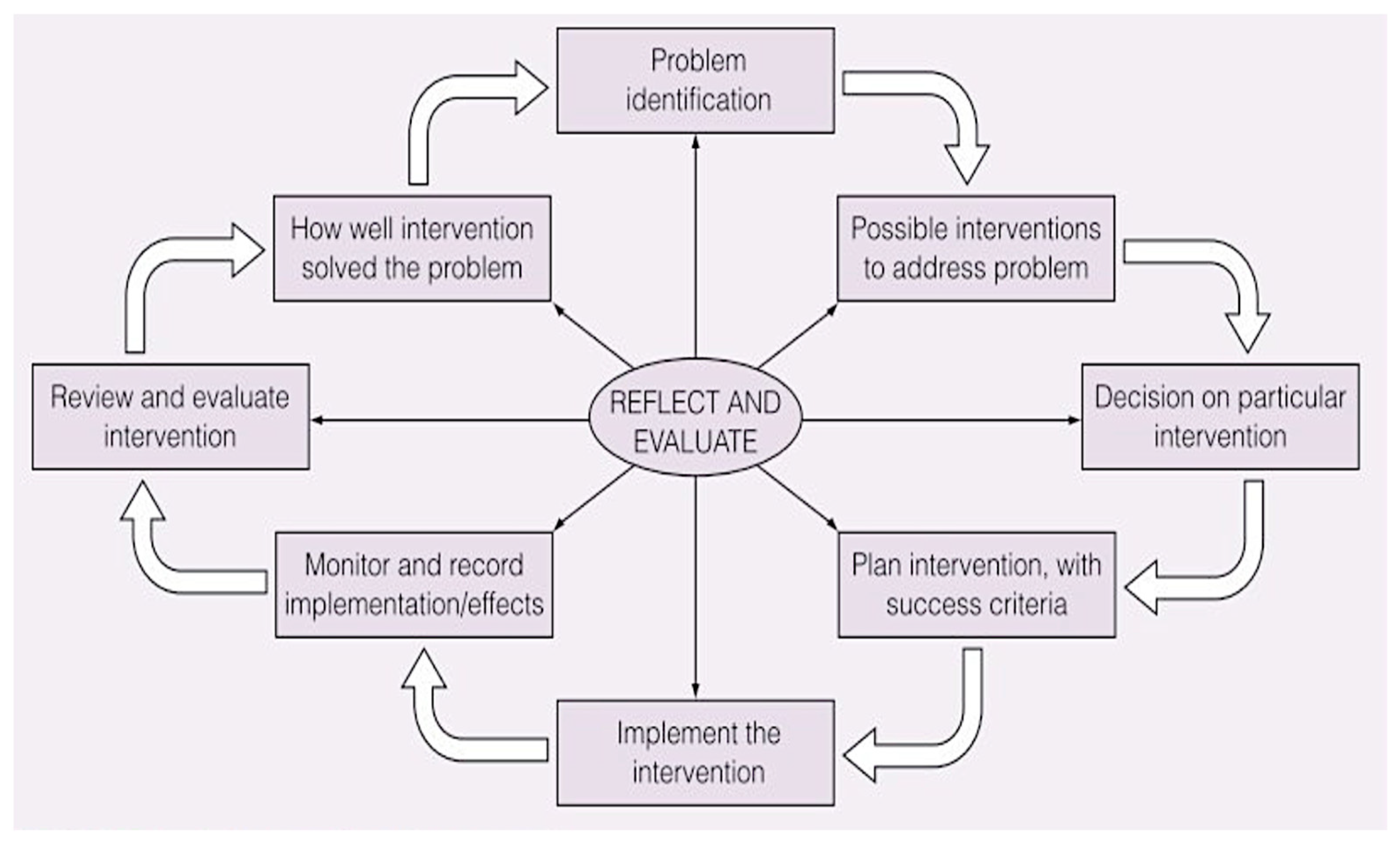
1. Introduction
The concept of Professional Learning Communities (PLCs) has recently gained widespread attention (
Chauraya & Brodie, 2018;
Chen et al., 2016;
Rodick, 2013;
Sompong et al., 2015). Yet there is not one fixed universal definition of this concept. One of the most common definitions of PLCs is that offered by
Henderson (
2018, p. 39), who defines them as “groups of educators working together with a collective purpose of high student achievement.” The concept originated in the business field and was aimed at developing the ability of organisations to learn (
Vescio et al., 2008). PLCs “may have shades of interpretation in different contexts” (
Stoll et al., 2006, p. 222). In education, PLCs generally involve groups of teachers who have an interest in improving the quality of the teaching and learning process and commit to working collectively towards this goal through regular meetings (see, for example,
Bolam et al., 2005;
Cowen, 2010;
Dufour, 2004;
Wenger, 1998).
The concept of PLCs suggests the co-occurrence of collective and professional learning, and the aim of participating in PLCs is to help students learn better rather than determining what to teach them (e.g.,
Bolam et al., 2005;
Hord & Sommers, 2008;
Olivier & Huffman, 2016). To illustrate, the focus on student learning rather than the number of lessons taught implies that PLCs promote a shift from quantity to quality teaching that takes into account what students actually learn from their classes. This is done through sharing the responsibility of leading and directing the learning process among the members, which is based on the needs of their students (
Rodick, 2013;
Sompong et al., 2015). Via sharing practices and reflections (
Abbott et al., 2018;
Dufour, 2004;
Hipp & Huffman, 2007;
Pang et al., 2016), the PLC experience becomes a bottom-up instead of a top-down process. To clarify, unlike professional development (PD), in PLCs, teachers are placed at the centre of the professional learning and development process (
Lave & Wenger, 1991).
In Oman, the context of the study, the Omanization policy has an impact on driving efforts towards staff learning and development. However, there is no clear policy in Higher Education Institutions (HEIs) for PD (
Al Aufi, 2014). In some Omani HEIs, staff PD activities are organised at a ministry level (
Al Ghatrifi, 2016). Unlike the regular training sessions managed at the primary and secondary school level by the Ministry of Education, the PD sessions in HEIs are not systematically organised (
Al Riyami, 2016). In general, teachers in HEIs are involved in presentations and workshops with their colleagues, and the institutions organise symposia and conferences and invite staff from other HEIs to participate or attend. However, these events are not regular, and they are organised by the institution itself. Such a situation has led to a negative connotation of PD and viewing it as a top-down approach; PD activities are attended for the sake of fulfilling administrative requirements (see, for example,
Borko, 2004;
Vangrieken et al., 2015). The same view is reported in the Omani context, where the current PD is inadequate (
Al Riyami, 2016;
Almanthari, 2019). The PD policy that can regulate PD programmes and nature calls for a need to pay more attention to this area and have more organised learning opportunities, which are absent in HEIs (
Al-Lamki, 2009;
Al Aufi, 2014;
Al Hosni, 2019), where academic staff have a voice on what to focus on to improve the performance of the institutions. In their research,
Lim et al. (
2025) emphasise the necessity of catering PD programmes to the needs of the teachers to provide timely and more effective support for them. Therefore, creating and participating in PLCs is found to be an opportunity for teaching and learning innovation and teacher investment, where they participate and collectively lead their own professional learning to meet students’ needs (
Chauraya & Brodie, 2018;
Hord & Sommers, 2008;
Olivier & Huffman, 2016) via sharing the latest updates in language learning. This, in turn, fosters the self-development of the teachers and keeps them updated with the latest and newest pedagogical strategies.
Although the idea of PLCs was formulated early in the last century in the works of John Dewey (
Bolam et al., 2005), and considerable research has been done in many countries in the West, such as the US (
Hipp & Huffman, 2007;
Houdyshell et al., 2022;
Kezar et al., 2025) and the UK (
Bolam et al., 2005;
Byrne et al., 2010;
Stoll et al., 2006), in Asia, including Singapore (
Chauraya & Brodie, 2018) and Taiwan (
Chen et al., 2016), and in Africa, such as South Africa (
Mthembu et al., 2025), little research has been done in Arab countries in general and in Oman in particular. This study aims to bridge this gap by contributing to a deeper and richer understanding of PLCs through insights gained from the Omani context. It aims to gain insights from a higher education institution (HEI) teachers’ first-hand experience after participating in an online PLC for the first time. The Omani context in this study provides an example for other similar contexts worldwide on how to start establishing a PLC in a context where PD does not fully tailor to the needs of academics. The findings of this research can be used when planning PLCs in other similar contexts. Hence, the study seeks to answer the following questions:
What benefits do teachers gain from participating in an online PLC?
Based on participating in the PLC, what recommendations can be derived to create a sustainable PLC?
It is worth noting that since the participants in the study were teaching different levels and were working on different shifts, the PLC was created online to ensure that they all could meet virtually and support each other. Since PLCs rely on teachers’ collaboration, reflection, and learning (
Byrne et al., 2010;
Kezar et al., 2025), the study stems its theoretical framework from the sociocultural theory of
Vygotsky (
1978,
1986), which stresses that learning is social. In this theory, the relationship between the body and the mind, and between the individual and society, is mutual and dialectic. In this theory, learning is a social process, and it is manifested on two planes: between people and within individuals. For this reason, some researchers consider the social constructivism paradigm the foundation of sociocultural theory (
Damşa & Ludvigsen, 2016;
Wang et al., 2011). Social constructivism aligns with the concept of PLCs because PLCs involve the co-construction of meaning and knowledge among their members via sharing practices and reflections (
Mantero, 2002). For this reason, social constructivism represents the ontological approach of this study.
2. Literature Review
A significant concept derived from sociocultural theory is that of participation and practice within what are called “communities of practice” (CoP) (
Lave & Wenger, 1991;
Wenger, 1998). According to
Wenger (
1998, p. 47), practice “gives structure and meaning to what we do”. Although CoPs are based on sociocultural theory, one might think that they are the same as PLCs, but they are not. CoPs and PLCs do share many aims and practices, such as encouraging participation, viewing learning as a social process that can develop via social interaction, and using different resources (e.g., books and computers) to mediate the learning process. However, in the famous work of
Lave and Wenger (
1991), CoPs are discussed in terms of their concept of “legitimate peripheral participation”. The concept of legitimate peripheral participation means that novice members in a CoP have limited participation at the periphery and only move to the core and fully participate in the community when they get more experience. This process indicates unequal participation of the members in the same community.
Handley et al. (
2006, p. 3) refer to this as “socialization bias”.
Wenger (
1998, p. 57), in his discussion, likewise addresses the issue of participation, distinguishing full participation from what he calls “mere engagement in practice” and suggesting many different levels of participation. However, having levels of participation can affect the relationship of the members of the community since peripheral participants may not have the same sense of belonging as that of full participants. In PLCs, all members share equal opportunities for participation.
2.1. PLCs in Higher Education
Like PLCs in primary and secondary schools, which are beyond the scope of this paper, PLCs in higher education (HE) have proved effective and beneficial in various settings since they first appeared in colleges and universities (
Mooney, 2018). For instance,
Tahir et al. (
2013) conducted a study in three Malaysian universities. The results showed participants’ satisfaction with such implementations. The study emphasised the significance of establishing PLCs for the sake of enriching the culture of sharing among staff, “in every educational institution, whether school-based or tertiary level, in order to create effectiveness and improve the academics’ morale and satisfaction” (
Tahir et al., 2013, p. 111). Furthermore, the study highlighted the importance of having collegial relationships and that PLCs can, through sharing values, strengthen the solutions to problems and creative practices among academics.
Moreover, universities such as Walden University in the United States apply the virtual PLC experience. At Walden University,
Bedford and Rossow (
2017) aimed to study academic staff experiences and the impact of PLCs that use synchronous and asynchronous strategies to meet participants’ varying needs. The researchers focused on the influence on the members’ classroom practices and collegial relationships as a result of participating in the virtual PLCs. The PLC discussions occurred over four weeks, showing their positive attitude towards PLCs and reflecting their ability to learn and apply new practices in their classes. Moreover,
Bedford and Rossow (
2017) argued that PLCs provide a means of enhancing participants’ sense of belonging by sharing practices and collaboration, hence, functioning as a professional learning activity.
Supporting these two studies is a longitudinal study conducted by
Abbott et al. (
2018) in Canada. When the participants engaged in collegial environments that supported and assisted professional learning by using peer-reviewed articles that they had selected, they were more likely to co-construct knowledge.
In addition to enabling discussion of research on topics that participants directly derive from classroom practices, forming PLCs can support applying certain new innovative strategies that the administration introduces to enhance the institution’s performance by improving the quality of teaching and learning. For instance, in California, USA,
Ward and Selvester (
2012) examined a PLC called a Faculty Learning Community (FLC), created to introduce staff to adopting accessible technologies to help students access the curriculum. The FLC provided many workshops to enable staff to learn more about such technologies. The administrative support provided through funding the project of the FLC ensured its continuity in enhancing members’ knowledge and experiences related to applying accessible technologies in their curriculum. The results indicated that from participating in the FLC, the members gained many benefits that improved their teaching practices and enabled their students to access the curriculum and improve their learning. However, in some contexts, such administrative support is scarce. In a recent study done in Indonesia, professional learning is “self-driven”, and the instructors took the initiative to participate in webinars and online communities (
Qamariah & Hercz, 2025).
Another study took place in the United Arab Emirates.
Engin and Atkinson (
2015) investigated staff participation in a PLC (operating as an FLC), whose aim was to implement the use of iPads as a new teaching tool. The researchers in this study were also members of the PLC. The findings showed the PLC’s effectiveness, especially in terms of collegiality and cooperation to support one another though the members highlighted the need for more members to maximise its effectiveness.
The studies highlighted above indicate that PLCs can improve classroom practices and teachers’ professional learning, which can lead to bolstering student learning. This is because in such communities, the members meet to discuss and work on areas they want to develop and learn about. Such meetings and discussions are learning opportunities in which teachers work on areas they want to improve with their students. Additionally, these studies highlight a critical aspect of PLCs—namely, the more they address teachers’ needs and the more actively teachers participate in professional learning environments, the more they develop and achieve their learning goals and, therefore, support student learning and achievement. The participants in
Wood’s (
2007, p. 290) study “began to think of themselves as primary agents for necessary changes in teaching and learning. In order for their students to achieve more, they knew they needed to be constantly learning”. In the Omani context, as well as many similar HE contexts worldwide, policymakers, such as administrative staff, must think of staff needs in terms of their working conditions.
Also, the studies cited above point out the significance of having such characteristics as collegiality, trust, and willingness to share ideas and propose solutions to support other members. Thus, the following section discusses the characteristics that
Bolam et al. (
2005) addressed because they are comprehensive and include the strengths and features highlighted in studies at schools and HE institutions.
2.2. Characteristics of PLCs
In a large-scale study conducted in the UK,
Bolam et al. (
2005) examined the process of establishing and sustaining PLCs in 393 schools. A survey and students’ scores were used to select 16 research sites. Based on an extensive review of the literature and several sources of data, such as interviews with stakeholders and observations at the research sites, the researchers pinpointed eight characteristics of effective PLCs. They are: (1) shared values and vision; (2) collective responsibility for students’ learning; (3) collaboration focused on learning; (4) individual and collective professional learning; (5) reflective personal inquiry; (6) openness, networks, and partnerships; (7) inclusive membership; and (8) mutual trust, respect, and support.
2.2.1. Shared Values and Vision
One of the key characteristics of PLCs is the sharing of values and vision related to student learning among all staff of an institution (
Bolam et al., 2005;
Hord, 1997;
Louis & Kruse, 1995;
Stoll et al., 2006). This is because “[v]alues and beliefs guide the behaviour of individuals no matter where they work or in what endeavor” (
Hord & Sommers, 2008, p. 8). This sharing can involve addressing cultural values, ideas, and beliefs (
Schaap et al., 2019) that are directed at a primary future goal and mission, that is, improving student learning (
Hipp & Huffman, 2010).
Trilaksono et al. (
2019) pointed out that establishing the identity of an institution requires a shared understanding of its goals.
2.2.2. Collective Responsibility for Students’ Learning
The second characteristic of successful PLCs is that staff take collective responsibility for student learning (
Bolam et al., 2005;
Stoll et al., 2006). Every staff member should participate, and responsibility should be equally divided (
Murphy & Lick, 2005). This characteristic, as stressed by
Bolam et al. (
2005) and
Stoll et al. (
2006), also implies that the basis of staff discussions on how to improve student learning and boost students’ achievements should be the sharing of learning strategies and student data. In Thailand,
Sompong et al. (
2015) identified a strategy that boosted the participants’ motivation to work collectively in PLCs: shifting the roles of each group member so that each member took on various responsibilities and was recognised by other colleagues for the work that they did.
2.2.3. Collaboration Focused on Learning
Collaboration can take place through the sharing of materials, the joint planning of lessons, and discussions of students’ progress (
Bolam et al., 2005;
Stoll et al., 2006).
Pang et al. (
2016, p. 241) observed that “[c]ollaborative learning capacity is the most significant subscale that contributes to the PLC practice”. When teachers work in teams, they engage actively in posing questions that ignite deep learning and lead to higher student achievement (
Dufour, 2004).
2.2.4. Individual and Collective Professional Learning
The first three characteristics of PLCs are the presence of sharing, collective work, and collaboration. The fourth characteristic, discussed here, signifies that both the individual learning and group learning are being addressed. As mentioned above,
Bolam et al. (
2005) and
Stoll et al. (
2006) stressed the significance of formal and informal professional learning opportunities in building knowledge.
2.2.5. Reflective Personal Inquiry
Reflective personal inquiry is an important characteristic of PLCs. Such reflection is focused on the identification of ways to improve the teaching and learning process (e.g.,
Avgitidou et al., 2024). This can be done by using student data to highlight issues related to learning, conducting action research on class practices, collaborating with staff from other institutions, and listening to students’ opinions on their expectations of a good lesson (
Bolam et al., 2005;
Stoll et al., 2006;
Vescio et al., 2008). As
Chauraya and Brodie (
2018) noted, reflective inquiry can also be developed by asking critical questions on the issues important to a given PLC, searching for justifications, and challenging views and assumptions.
2.2.6. Openness, Networks, and Partnerships
Being open to others’ ideas and forming networks with other staff in the institution and partnerships with other institutions can open up opportunities for sharing and generating ideas (
Bolam et al., 2005;
Stoll et al., 2006). In Taiwan, forming clusters and networks can be an important way of making positive changes in cultures that encourage isolation and discourage support and collaboration (
Chen et al., 2016).
2.2.7. Inclusive Membership
This characteristic suggests that teachers are not the only members of PLCs. Such communities involve all supporting staff in institutions, including technicians, managers, and administrative staff (
Bolam et al., 2005;
Stoll et al., 2006). Although a PLC may have a large number of members, as it was the case in
Sompong et al.’s (
2015) study, it can include a small number of members, as was the case in many studies, especially the ones done in HE institutions (
Bedford & Rossow, 2017;
Engin & Atkinson, 2015). Also, in some PLCs, the members include various staff with various responsibilities. For instance, in
Mooney’s (
2018) study, the investigated PLCs involved educational developers, faculty members, administrators, and support staff, and they were reported as successful.
2.2.8. Mutual Trust, Respect, and Support
When there is reciprocal respect, trust, and support, staff become willing to share their practices (
Bolam et al., 2005;
Stoll et al., 2006). This does not mean having strong personal relationships with every colleague. Instead, what is important here is that staff receive professional responses and support when they face challenges; this helps them to develop confidence (
Stoll et al., 2006). Although developing trust can take a long time, once it exists, it empowers staff to overcome challenges such as being criticised, devalued, or reported on (
Younger & George, 2013).
Because they offer a comprehensive way of identifying and evaluating PLCs, the characteristics identified by
Bolam et al. (
2005) will form the basis for investigating a PLC in the present study. They will be used during data collection and data analysis to understand teachers’ experiences as well as the practices of collective professional learning.
4. Data Collection
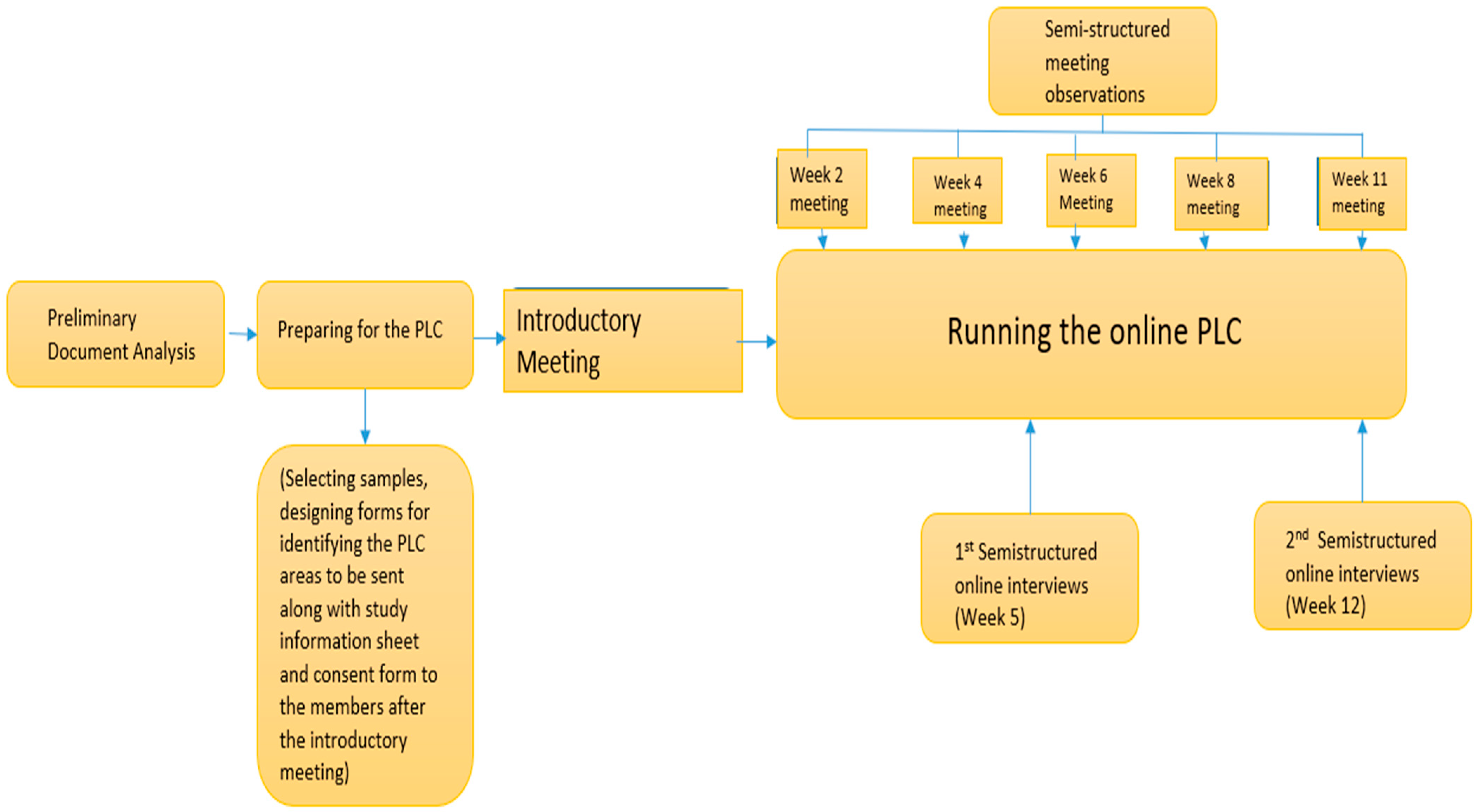
As illustrated in
Figure 2, data were collected using preliminary documentary analysis along with online semistructured observations and interviews. To start establishing the PLC, some documents were collected from the Staff Development Committee (SDC). Documents reflect how staff communicate in an institution and indicate the official perspective of that institution (
Bogdan & Biklen, 2007). Soft copies of the PD documents and reports from the SDC in the target ELC for the three years before the implementation of the study were requested to find out the latest needs of staff areas that require development. The documents that were shared with the researcher were: Staff Appraisal, External Staff Development Programme Report, Internal Staff Development Programme Report, Staff Satisfaction Reports, the committee Annual Report, and Staff Training Needs Based on Staff Appraisal, a total of 10 reports. The content of those documents and reports was analysed to figure out staff interests, as those documents highlighted them (
Drisko & Maschi, 2015). Also, those reports gave an idea of the organisation and evaluation of PD events. They were used to compare the needs listed in PD documents with the needs pointed out by the members of the PLC. This analysis made a significant point—that is, regarding the extent to which the PD reports and documents matched what teachers actually needed and the extent to which they agreed with the current PD practices in their context.
Another method of data collection was semistructured meeting observations. They were used because they “give direct access to social interactions” (
Simpson & Tuson, 1995, p. 16). Observations range on a scale from participatory to non-participatory observations, depending on the degree of participation of the researcher in the activities of the participants (
Leavy, 2017). Although the first researcher led a small part of the first PLC meeting, the meeting observation could be classified as “non-participatory observation” because the part led by the researcher in that meeting was very short, and it was for the purpose of guiding members and giving them a sense of confidence that they could lead the whole meeting. The first researcher designed a checklist with prespecified items to use for observing meetings to find out which of the eight
Bolam et al. (
2005) characteristics were present in the target PLC. Because the PLC was implemented for the first time in the target institution, it was expected that some characteristics or features would be more present than others. So, informed design by
Bolam et al. (
2005) of a guiding observation checklist could help identify how the PLC would work. Thus, the checklist addresses those areas to understand the extent to which they would emerge in the present study. Also, a row for “other comments” was added to record data that did not fall into the predetermined items but were relevant and important (see
Table 2). All the PLC meetings were video-recorded, enabling the researcher to take additional data from them to complement observation notes. Each meeting lasted for approximately one hour.
The last tool for data collection, as shown in
Figure 2, was semistructured interviews. They are powerful in exploring the views, perceptions, meanings, and realities of people involved in the experience (
Bogdan & Biklen, 2007;
Bryman, 2016;
Fontana & Frey, 2000;
Hipp & Huffman, 2007;
Punch & Oancea, 2014). Interviews “aim to make tacit teachers’ cognitive processes visible and provide a descriptive account of their practices” (
Varghese & Huang, 2017, p. 421). So, semistructured online interviews were used because they aligned with the aim of this study, specifically “to rely as much as possible on the participants’ views of the situation being studied” (
Creswell, 2014, p. 8). The eight characteristics of
Bolam et al. (
2005) informed some of the interview questions designed to find out the extent to which they would emerge in the target setting and the members’ opinions of them.
The interviews were conducted at different points during the study, i.e., in the middle of the semester and at the end of the semester, to gain a deeper understanding of how the members viewed the PLC at different points in their experience (see
Figure 2). All the interviews were recorded. The interviews were semistructured to not only ensure maintaining the focus on what the research aimed to answer but also allow the flexibility to ask other questions, depending on how members responded. In addition, some interview questions were adapted or specialised based on the data gathered from the observations. The questions were general and open to elicit as much information as possible from the members. They mostly focused on the teaching approaches of the members, what they learned from this experience, how they conceptualised the PLC, whether they could see an influence on student learning, and how this experience could be improved. There were also questions derived from the characteristics of PLCs discussed in the literature review. Each interview lasted for around 40–60 min.
Data protection is critical in the General Data Protection Regulations (GDPR), as well as in the established research ethics guidelines of the British Educational Research Association (
BERA, 2018). Part of data protection is maintaining participant anonymity and confidentiality. Anonymity and confidentiality are promises “to remove any information from the data they store and analyse that may make individual respondents easily traceable and identifiable” (
Punch & Oancea, 2014, p. 69). Therefore, the members were assured that all data would be held anonymously and confidentially. The members were assigned pseudonyms to veil their identities (see
Table 1). Moreover, the members received their interview scripts to check and delete any parts they thought to be sensitive and/or that might have disclosed their identity or harmed them in any way. Additionally, the members were assured that data would only be accessed and processed by the researcher, and no one else would see their responses.
5. Data Analysis
Since the study aimed at understanding and interpreting the members’ experiences in the PLC, data collected from the three tools mentioned above were analysed to achieve the study aims and enable answering the research questions. Content analysis was used to analyse the documents of the SDC (
Drisko & Maschi, 2015) to have some background on how PD was run and the areas the committee focused on, to compare them with the areas identified in the PLC under investigation. Also, thematic analysis was used to analyse data gathered from meeting observations and interviews to understand members’ experiences, their challenges, and suggestions for future improvements of the PLC. Thematic analysis is “a method for identifying, analysing and reporting patterns (themes) within data. It minimally organises and describes your data set in (rich) detail” (
Braun & Clarke, 2006, p. 79). Such organisation of data into themes helps to interpret participants’ multiple views, meanings, and realities (
Creswell, 2013,
2014;
Spencer et al., 2014). Thematic analysis served this study well because this analysis matches the principles of social constructivism, in which people construct their own knowledge, meanings, and realities. Thematic analysis, as its name suggests, focuses on themes. The themes in this study were the result of members’ social interactions in the online PLC, from which they co-constructed meanings and views in this context. Through this analysis, several themes were identified from the data collection methods. Some of those themes were derived from the literature review, specifically, the conceptual framework of
Bolam et al. (
2005), such as having a positive environment and collaboration within the PLC. Some themes were identified in the data itself, such as having informal conversations and the ideas the members suggested to improve the PLC.
Identifying those various themes in order to answer the research questions was a long process that had many steps. Before the actual start of data analysis, the members received their interview scripts back to check and approve, to make sure they had no objection to any part of the information they provided during the study. This is referred to as “member checking”, and it contributes to the credibility and reliability of the research (
Mertens, 2010;
Tracy, 2010). The transcripts were checked with the members to ensure that the researcher’s values affected neither the validity of the data nor the transcription and analysis process. Each response to an open-ended question was analysed and coded. Then, a comparison of similarity was done to explore the codes elicited from all data collection tools further for triangulation purposes (
Patton, 2002). The themes that emerged from the codes were finalised based on the data sources and the pertinent literature.
6. Findings
This section highlights the key findings collected from the three main tools: preliminary documentary analysis, interviews, and meeting observations. The findings are organised into the following themes, which are ordered based on the research questions mentioned above. The first six themes address the perceived benefits of the PLC, while theme seven spotlights the challenges the members faced when participating in the PLC. The last theme highlights areas that stakeholders can consider to create sustainable and successful PLCs. Because one or more research tools identified some of the themes, these data appear together. This is because the findings of one source support the findings of other sources, and they intertwine.
6.1. Perceptions of the Teaching and Learning Process
The results indicate that the members of the PLC tend to be guiding and approachable teachers. Emma highlights that she guides the students by asking them questions and demanding that they do most of the work. She also clearly asserts that her classes are student-centred. Other members, such as Paul and Steven, emphasise that they are approachable and are available for their students when they need assistance in overcoming any difficulties they face. Sheila and other members believe that it is their responsibility to boost students’ learning in every possible way. This is the key goal of the PLC, which motivated the majority of its members to take part in the present study.
As there was a match between their perceptions of teaching, learning, and the purpose of the PLC, the members were eager to participate. Teachers’ perceptions of the process of teaching and learning are identified as one of the characteristics that influence teachers’ decisions to take part in a PLC (
Brownell et al., 2006). In their study,
Brownell et al. (
2006) stress that teachers’ perceptions are significant because they impact their willingness to contribute to collective learning and development. The study strongly supports these findings.
6.2. Professional Growth Needs
Promoting the PD of staff is one of the key areas of attention in the target institution, as testified by the presence of a committee for professional development for the whole institution and another committee in the ELC called the Staff Development Committee (SDC) to ensure the provision of various PD activities. The SDC reports show that each year, a number of workshops and presentations are organised for staff with the participation of external and internal presenters. To ensure the promotion of staff learning, teachers are asked to submit their appraisals with their preferred areas for development. The SDC uses this list when planning its activities for the next academic year. The actions taken by the target institution reveal the importance given to staff professional development. Although the SDC might be aware of staff preferences for PD, staff may discover that none of their preferences are in the SDC’s action plan due to factors such as the large number of staff in the target institution and time constraints, which make it hard to address the needs of every single member of staff. This was the reason why some members (e.g., Noora) were eager to take part in the study and participate in the PLC.
In this study, the PLC is founded on the pre-specified needs of its members, who have agreed to attend the PLC meetings because each of the PLC’s areas is directly related to their interests and needs. This evidence is in line with the arguments asserted in the PLC literature. For instance, in their project in the UK,
Bolam et al. (
2005) and
Stoll et al. (
2006) investigated 16 schools and found that identifying the needs of teachers when establishing a PLC provides more opportunities for collective learning and support.
The members’ opinions and the SDC reports show that regardless of whether professional development and learning activities are arranged by a committee or through a PLC, they all lead to professional growth, and they complement each other in terms of the goals set for each activity. Leaving names aside (PD and PLC), what matters is the aim of teachers’ professional growth and students’ improvement and, more importantly, the extent to which teachers (and their students) benefit from the sessions. It is worth noting that the title of this section uses the term “professional growth” to reflect the fact that, in both PD and PLC, as far as the goal of improving teachers’ learning is clear, the activities are planned to serve this purpose.
The findings also reveal that the members gained many benefits from participating in the PLC and addressing the four areas highlighted above. For example, they became acquainted with the other levels and the challenges teachers face at each level. Moreover, they improved their learning skills by reading more articles, reflections, and group discussions. Some of the members explained that they changed their classroom practices after the PLC discussions. Furthermore, most of them appreciated the PD sessions arranged at the college and departmental level because these events helped them to expand their knowledge in areas related to the education process, such as using educational software and quality assurance. Overall, the positive viewpoints and learning experiences of the members in the present study corroborate the findings from many other contexts. For example, in Singapore,
Chauraya and Brodie (
2018) report that teachers find conversations and discussions in the PLC a good opportunity, as they can share classroom practices and learn new ones.
6.3. A Positive PLC Environment
The findings of this study show that the members can sense a friendly atmosphere in the PLC. The members of the PLC emphasise that having a positive environment is a vital element for the establishment and sustainability of the PLC. As stated above, such an environment assists the members in being open, trusting, and respecting each other. This positive culture of openness and sharing is not present in the target institution. For instance, Sally, in her Interview B, said, “people do not tend to share because they feel like they know what they are doing or they are comfortable with their own way of teaching methods that they do not feel like they want to improve. It is a bizarre culture that I have encountered so far, but it has been there for quite a while according to some people. So, to break that culture is a bit hard. And it is also I think because maybe some people fear that their way of teaching might be judged perhaps”. This indicates that a lot needs to be done to change this culture. In other contexts, the culture of sharing and openness is already present, making it easier to create PLCs. For instance,
Chen et al. (
2016) report that Chinese culture has a significant impact on teachers’ attitudes towards PLCs. This type of culture contradicts that found in the target institution in the present study, where teachers tend to keep their experiences to themselves. For this reason, for a PLC to succeed and be sustainable, a supportive environment and a culture of openness are required (
Chen et al., 2016). This is especially the case in the context of the target institution, where a culture of openness, sharing, and trust is not being fostered. In the PLC meetings, openness and sharing were apparent. However, if the PLC is to be created for the whole institution and with larger groups of members, then working on creating a supportive environment will be necessary.
6.4. Collaboration Focused on Members’ Learning
In the PLC plan shared with the members prior to the start of the PLC, it was indicated that the members were expected and encouraged to share reflections, experiences, and resources relevant to the PLC areas not only during the meetings. They were expected to share posts, reflections, and resources on MS Teams outside the meetings as well. They were thus supposed to share responsibility and work collaboratively to achieve their goal of bolstering students’ learning. However, in this study, the members are active only during meetings. The MS Teams platform is used very little for chats and discussions outside the meetings.
It is worth noting that compared to the first half of the semester, the meetings of the second half show more enthusiastic discussion and sharing. In other words, the members start to share more ideas and practices, beyond simply talking about them. Some members, such as Sally, take the initiative and make their sharing more interactive. So, the focus on quality is present. However, collective responsibility and collaboration are very limited. Working collectively with other members in order to achieve a desired goal is a significant feature of a PLC (
Bolam et al., 2005;
Dufour, 2004;
Stoll et al., 2006;
Wenger, 1998). This feature is scarcely present in the PLC in question. When questions are posted by the researcher or other members, almost no answers are offered.
Outside the meetings, one member has shared a website she uses with her students to create crossword puzzles, which her students find useful to overcome spelling errors. Sharing educational resources and materials can be helpful and increase collaboration among members (
Antinluoma et al., 2018;
Stoll et al., 2006). The limited and poor sharing of resources found in the present study differs from the PLC in Hong Kong studied by
Pang et al. (
2016). In their study, it is found that the participants share knowledge, practices, and information, and this sharing results in nurturing a culture of mutual support among the participants. This sharing is also reported to develop collective responsibility towards students’ needs. In the present study, the only sharing that happens at a satisfactory level is verbal sharing and reflecting on daily classroom practices. This lack of interaction can be attributed to challenges, such as the workload and time constraints, which are highlighted later in this paper.
Some members, such as Sheila, Paul, and Sally, do not restrict themselves to the PLC meetings. They take the initiative and continue the discussions when they meet other members on the corridor. For example, when Sally thinks someone has raised something interesting in the meeting, she goes to that member after the meeting to discuss it further. In Interview A, she said, “if there’s something that is interesting, I actually go to the teacher and then we just sit there. We share more practices and I say, Oh, I heard you’re having this issue in the meeting, so this is what I do and then the teacher said Oh, I’ve done that as well, but it doesn’t work. We start to discuss a lot more outside the meeting. And then after that, we’ll just see each other and say hey your method works. I think that’s fun, it is interesting or we say it didn’t work for my students, but it’s a great sharing session”.
So, corridor chats can be considered as a form of individual and group learning in this study. This is because these members take whatever opportunity they have to talk about what was discussed in the meetings.
In addition, assigning tasks is a suggestion made by some members of the PLC for the purpose of increasing collaboration and sharing responsibility, which is limited in this study. For example, Sally recommends having a team leader who can make sure that every member performs their responsibilities. The leader should assign tasks, check that they are completed, and schedule meetings. The PLC in the present study does not have a leader. However, the members were assigned some tasks to do in the PLC plan. For instance, they are asked to read articles, write posts, share information, reflect on it, and participate in the meetings’ discussions. However, many of these tasks are not carried out due to various reasons.
6.5. Daily Classroom Practices and Reflections
Based on the data from the meeting observations and the interviews, for example, the members benefit from the experience of Noora, who uses tasks related to the local culture. Some members, such as Robert, try to use reading tasks that are relevant to students’ backgrounds. In addition, Steven uses advanced questioning techniques, such as open questions and concept-checking questions, to encourage his students to think critically and use the language more. Furthermore, peer teaching is one of the practices Sheila uses with her students. Because her students’ linguistic level is low, peer teaching is very helpful and encourages them to be active and motivated and to learn more.
The act of sharing practices during meetings is associated with reflection. When the members share their daily practices, they identify the good practices and reflect back on the challenges they face with the support of other group members. The findings reveal changes in members’ practices as they reflect and apply new innovative practices in their classrooms. This indicates the importance of reflective thinking in professional learning. Other researchers, such as
Bandura (
1986) and
Hipp and Huffman (
2007), argue that reflective thinking is vital for the sake of improving the members’ own learning and their practices.
6.5.1. Knowing About Other Levels
Such discussions and reflections have a great impact on the members’ knowledge about the other levels they are not teaching. Since the members of the PLC were teaching different levels in the foundation and post-foundation programmes, this provided an opportunity for them to learn about the levels they were not teaching during that semester. For instance, Robert said,
“[A]ll these meetings were quite vital for us, for me, especially I think because I I’m teaching at level two now. I may teach at level three or four, or even I may teach at level one. Or I may go to post foundation. So wherever I go, I have to teach students that may need different skills or skills that other levels don’t need. So getting those ideas are really very valuable.” (Interview B)
Moreover, some members had not taught all of the levels in the foundation and post-foundation programmes. Thus, when other members shared their experiences and reflected on their classroom practices, the members could form a picture of the nature of other levels and the anticipated challenges they may face teaching those levels in the future. They also got ideas they may use for teaching at those levels. The same notion was stressed by Steven. He said, “I learned a lot of what other people are doing at different levels” (Interview B). This was because the PLC had members from all levels at the target institution.
6.5.2. Improving Learning Skills
Another benefit of the PLC discussions and reflections was that it improved the members’ learning skills. Mary stated that the PLC had given her the opportunity to learn good practices from other members. In addition, when talking about the challenges she faced, Mary stated that she found the PLC useful because other members suggested ways of managing similar situations in their classes. She said,
“I think this is a one good practice that we have to continue doing because it’s somehow an opportunity for us to, learn from one another from those very good practices as well as those things that we need to improve on. And you know learning ideas from peers or fellow teachers are also good.” (Interview A)
Paul supported Mary’s opinion and indicated that group work was useful because it could support or reject prejudices. He said, “So the individual has a lot to learn if they work in groups because the group itself actually is a great filter of prejudices” (Interview B). This was also observed in the PLC meetings. For instance, during the Week 4 Meeting, the members focused on learner autonomy and motivation in their discussions. They spotlighted intrinsic motivation as lasting longer than extrinsic motivation. One of the teachers had the notion that she could increase students’ motivation through marks. A significant debate ensued, and some members stressed that regardless of students’ linguistic levels, teachers need to find ways to motivate their students intrinsically and make them learn for the sake of learning instead of marks. In other words, such discussions and reflections helped the members filter their beliefs and look at their prejudices from different angles. The PLC gives the members the opportunity to improve their practices by being aware of the current practices. These results support a lot of research highlighting that reflection develops teachers’ practices and expands their knowledge (e.g.,
Andrews & Lewis, 2007;
Bandura, 1986;
Hipp & Huffman, 2007).
6.6. The Link Between Theory and Practice in the PLC
Prior to each meeting, one or more articles were sent to the members to read and reflect on. The members were asked to link the articles’ target areas to their classroom practices. This was done to facilitate discussions and encourage the members to share their daily practices. Despite the lack of sharing of resources via MS Teams, it is noticed that the shared articles have a great impact on the members’ practices. The articles provide an opportunity for members to question their current practices and challenge them based on what they read.
Another merit of reading research for the PLC meetings is that doing so expands the members’ knowledge and makes them more aware of what they are doing in their classes. In one of the articles the members read, the researchers highlight the circles of critical thinking. These circles are found in the members’ practices, but they are not aware of the rationale behind them and what they are called in the literature. Reading scientific articles, therefore, provides an opportunity to learn and develop professionally.
6.7. Challenges Faced
There are many challenges that the members believed affected their participation in the PLC. They included the workload of the members, time issues, and technical issues. All these issues are interrelated.
6.7.1. Workload
Workload was perceived as one of the key obstacles that hindered the members from fully participating in the PLC. For instance, Emma in Interview A explained her limited participation by saying that she was overwhelmed by various tasks that made her take a backseat during the meetings. In both Interviews A and B, Emma stressed how tied up she was with other tasks. She said she was so busy that she could not even find time to chat with her colleagues who worked in the same office. She was working all the time to prepare for her classes. Similarly, Sheila indicated that her collaboration in the PLC was affected due to the same reasons that Emma highlighted. Other members, such as Paul, agreed and stated that the online mode of teaching and learning, and other requirements, had caused the workload to double.
In addition, Steven elucidated that the workload and tasks he had to finish limited his participation in the PLC to some extent. It is worth noting that most members of the PLC had a full teaching load of 18 h per week. Some members had other responsibilities, such as being coordinators for committees. Therefore, they were given lighter teaching loads so they could perform those tasks. With a full teaching load, teachers had at least four hours of teaching per day and spent the rest of the time doing other tasks such as marking, preparing for classes, and attending meetings. Consequently, teachers had little time to do other things, such as taking part in the PLC and attending the meetings, because online teaching took up a lot of their time.
6.7.2. Time Issues
Another constraint was time, which is strongly linked to workload. Some members, such as Paul and Sally, had back-to-back classes from 8 am to 12 pm before the PLC meeting. However, Sally said she did not experience a lot of stress because she could manage her time well and prepare for the meetings. In the last meeting, Paul said that if he had had more time, he would have worked more to benefit from the PLC.
Also, Emma had limited time to do other activities. She pointed out that most of her time was dedicated to administration tasks. Therefore, Sheila indicated that if the members had time, they would work as a group, achieve more, and learn more from the PLC. To overcome the issue of time, Mary suggested shifting the PLC meetings to weekends as the members would have more free time. However, she said this suggestion would need commitment and agreement from all the members to dedicate some of their free time to the PLC.
6.7.3. Technical Issues
Another challenge was related to the online mode of teaching and concerned the technical issues that the members experienced. Sally said that because of online teaching and the technical challenges they had to deal with, there was not much sharing and collective responsibility in the PLC. Sally perceived online teaching and the challenges that accompanied it as demotivating because teachers did not want to do a lot of tasks at the same time. It was observed that towards the end of the semester and the last weeks of the PLC, there was more communication among the members. Some members shared their practices and reflections outside the meetings by posting on MS Teams, but this remained limited.
Moreover, during PLC meetings, there were some technical issues that affected the quality of the recordings. For instance, in the Week 2 Meeting, members’ voices got mixed up, and it was not clear what they were saying. Another problem was that while one member was talking, his voice was cut off and he did not realise it, although the members and the researcher were trying to talk to him and draw his attention to the issue. It took some time to fix this issue and get things settled during the meeting. Furthermore, in most of the meetings, some members were unable to share their screens or open the camera because their devices did not support these functions. Another reason for this was that they had a weak network signal. To ensure that they were able to attend the meeting, they switched off their cameras and only used the microphone to participate and share their experiences.
6.8. How to Create a Sustainable PLC
In this study, the members had first-hand experience with the PLC. Due to its first-time implementation, some aspects went well, and others required improvement. An important step towards PLC sustainability is having support from the management of the institution to avoid any challenges that could hinder members’ participation in the PLC, such as workload. To overcome this challenge, Paul suggested introducing relaxation periods by reducing administrative tasks, so teachers can focus on developing themselves professionally in their free time.
Based on the findings of this study, another area that requires addressing when creating a PLC is its focus. Instead of focusing on many areas of professional learning in one semester, Paul suggests going deeper into the PLC. Concentrating on one area for a significant amount of time would enable the members to dig into it as deeply as possible.
Increasing the number of PLC members is another suggestion that the present study’s findings highlight. Robert argued that having more members results in sharing more ideas and various experiences on which to reflect. The participants in
Engin and Atkinson’s (
2015) study considered the number of members a limitation, believing that having more members can contribute to PLC effectiveness. It is worth noting that the number of members might have no effect if those members are not active in terms of sharing innovative strategies in teaching and learning and seeking professional growth via being up to date in their fields. This can be regulated through assigning a leader, as suggested by some members.
Furthermore, a positive environment enables teachers to share ideas and reflect on their practices, and it promotes their willingness to work with others in the team. Steven elucidated that creating a positive environment can occur by establishing an atmosphere of trust, openness, and collaboration. When members respect and trust each other, as is the case in this study, they exchange their opinions and share their experiences freely. For instance, when the focus of the meeting was critical thinking skills, the members highlighted how they used different ways of teaching to encourage students to think critically based on their levels in English. They also suggested ways for teachers who were teaching low-level students to motivate them to develop their language skills and critical thinking skills, such as peer teaching. The way the members discussed their viewpoints illustrated that they had no hesitation or fear of being underestimated or disrespected. They openly shared their perspectives and stances, regardless of whether they had experienced the same situation.
Bolam et al. (
2005) asserted these attributes, and many research settings have found them effective (
Bedford & Rossow, 2017;
Chen et al., 2016).
In Finland,
Antinluoma et al. (
2018) stress that having positive collegial relationships helps to have a supportive culture of professional learning. A culture of collegiality and trust was present in all the PLCs examined in Antinluoma et al.’s study, which is one of the most comprehensive and large-scale investigations of PLCs, because it covers 13 schools over three years. Its findings not only support the present study regarding the influence and presence of a positive culture in PLCs. Another shared result concerned the challenges the participants face in a PLC. Both studies report that although the PLC environment encourages learning, participants are hindered by time constraints because their daily schedules are so full that they cannot fully take advantage of the PLC.
7. Discussion
The aims of the present study were first, to examine teachers’ experiences when participating in a PLC for the first time and learn about their reflections on what works well and what requires improvement to have a successful PLC; and second, to suggest methods for stakeholders and administrators to use PLCs as a tool for bolstering students’ learning. The research questions the study aimed to answer were:
What are teachers’ experiences and perceptions after participating in an online PLC in the English Language Centre?
Based on the strengths and challenges of participating in the PLC, how can it be improved and utilised to enhance both teacher and student learning?
To establish the feasibility of establishing a PLC in the target setting and elicit what stakeholders can do to establish sustainable PLCs in their target settings, this action research aimed to create a PLC and discover the perceptions of the members following their first-hand experience of working in a team to achieve the goal of enhancing students’ learning. These research questions are answered in the following sub-sections.
7.1. The Benefits of Participating in the PLC
There are several benefits acknowledged in this study. The first is that the aim of the PLC directly matches the perceptions of the members towards the teaching and learning process. Overall, the members indicate that they perceive themselves as approachable, caring, and guiding teachers who like their students to be active and responsible for their studies, and like to have student-centred classes. This is because such characteristics provide the students with a class environment where they can be motivated to learn and trust their skills as autonomous learners. Those perceptions form an apparent link between the focus of the PLC and the aim the members look for in the teaching and learning process, i.e., bolstering students’ achievement. Hence, such perceptions act as a wheel that drives the members’ desire to participate in the PLC, supporting the argument of
Brownell et al. (
2006).
The second benefit the members find very fruitful in their PLC experience is having a learning opportunity where they can grow professionally and meet their professional needs directly. The members highlighted that the PLC complements the sessions and programmes designed by the SDC that address issues related to the educational process, such as how to use technology in teaching and how to meet quality assurance standards at the university level. This is because the areas that the PLC addressed were tailored to the members’ needs via the method of asking them to mention the areas they wanted to focus on in it. It is worth mentioning that the structure and the focus of the PLC were effective motives for many members to participate in it. This is because although the members highlighted the usefulness of the professional development sessions conducted at departmental and university levels, they wanted more personalised sessions to closely discuss the challenges they face and benefit from the good practices of their colleagues. Therefore, the PLC was an opportunity for collective “professional growth”.
Another benefit is that this professional learning and growth was facilitated by a positive learning environment. The findings show that the members were willing to listen to each other, share their experiences, and comment on other viewpoints in a friendly manner. Respect, trust, and transparency were evident in the PLC, thus encouraging the members to share not only the good aspects of their daily practices but also the challenges and obstacles they encountered with their students.
Furthermore, the findings indicate that there was collaboration among the members focused on learning, though it was very limited. Overall, there was a form of formal collaboration during the meetings, in which the members shared their concerns on how to support their students and help them improve their learning. The experiences and the topics the members highlighted reflect the genuine aim they all sought. When one member shared a concern or a difficulty they faced, other members interacted with it, shared similar concerns, and supported that member by putting on the table practices that worked well with their students. Furthermore, some members expanded and took such discussions further by having chats in corridors on areas discussed in the meetings. These chats enabled them to closely follow up with each other on what had or had not worked with their students and why. Moreover, collaboration was found in the form of sharing resources, even though this sharing was infrequent. For instance, one member shared a link to crossword puzzles she used in her class. In addition, there were some posts shared among the members where they shared techniques on how to overcome writing errors and be more autonomous.
Another benefit that the members gained from participating in this PLC was that they taught different levels in the foundation and post-foundation programme. Consequently, they gained knowledge about the levels they were not teaching. They also learned new practices from each other, therefore improving their teaching and practice. An example of this is the use of local tasks to increase students’ motivation and asking excellent students to peer-teach and help their classmates.
In addition, the current PLC was supported by the articles shared with the members so that they could examine them before the meetings. These articles were found to have a positive role in helping the members refresh their minds on recent research in the English Language Teaching (ELT) field and linking the theories and practices they read about with their own settings. Consequently, forming this link was an aid for reflective learning and an opportunity for quality professional growth.
7.2. The Challenges of Participating in the PLC
Despite the advantages of the PLC, there were several challenges noted in the present study. One major challenge was the limited collaboration in the PLC. Discussions on daily practices flowed smoothly during the meetings. However, little could be done outside the meetings due to time restrictions and the members’ workload. Most of the members mentioned their inability to find time to go through the shared files in the PLC group and post in MS Teams because they had a lot of teaching and administrative tasks to finish. Therefore, the priority was given to other tasks.
In addition, when there were meetings that co-occurred with the PLC meetings, those members chose to attend the other meetings. Therefore, more coordination with the target people is required, and some space needs to be allocated for the PLC to reduce members’ pressure. It is worth noting that this would not be an issue if all staff fully recognised and appreciated the significance of the PLC and its effects. Therefore, in this context and other similar contexts, this study provides a starting point that guides policymakers and educators to focus on culture change (
DuFour et al., 2021) as they work on putting the PLC into practice. Developing a positive culture within the institution can contribute to the success of the PLC. In the present study, this positive culture was present among the members who volunteered to take part in the study because they believe in group work and the significance of professional growth. Thus, the members found the atmosphere of working with each other supportive, and it encouraged them to be open and trust one another.
Another challenge was the technical issues that both the researcher and the members faced, especially at the beginning of the study. Considerable time was taken to resolve the technical issues with the account given to the researcher to access the target institution’s domain and MS Teams. In addition, some members had a weak network and could not hear everything others said in the meetings. Furthermore, some members lacked access to the camera and joined the meeting by microphone only.
7.3. The Possibility of Establishing a PLC
To examine the feasibility of establishing a PLC in the target context, the PLC under investigation was evaluated twice by the members during their interviews. In addition, the last meeting contained reflections on the whole PLC. The evaluation of the PLC has always proved to be essential to ensure improvement in practices and both staff and student learning. The first evaluation done during Interview A gave a picture of what went well and what could be done to improve collective learning in the second half of the semester. The second evaluation indicated how well the whole PLC worked and areas for improvement. Overall, the above findings indicate that the PLC is a practical and effective step that can be taken not only to bolster student learning but also to provide “free opportunities” for professional growth using the existing tools of the institution.
When examining successful PLCs worldwide, it is clear that this big project was not achieved in a day or night (see
Section 2). Numerous steps were involved to make institutions shift from isolated and individual learning to collective learning and sharing. More importantly, there have been considerable efforts spent in fertilising the culture and the environment of the institution to ensure the PLC is sustained. Therefore, the present study concluded that all stakeholders and educators need to be involved to start changing the present culture and move towards a more sustained and bigger PLC.
Another point to address is that the present study involved members who were willing and motivated to meet the goal of collective learning and support because their participation was voluntary. They learned and developed their practices during their participation in the PLC. Therefore, the discussions were fruitful, and all the members reported that they learned something from each meeting they attended. However, they were not satisfied and regretted their limited participation overall. For this reason, some of the practical steps that would improve this community are assigning tasks to maintain collective responsibility towards learning outside the meetings and assigning leaders to follow up on the accomplishment of tasks, which would increase member commitment. To ensure that all members benefit in the same manner, roles can be shifted, including leadership. The impressions of the members support the literature and prove the effectiveness of the PLC in developing institutions and staff.
Moreover, since the PLC was created online, the merits of using technology were observed through the benefits the members got from this experience. It made it easy to interact, share files, and store them in one place so that the members could find them easily when needed, even after the study was finished. The online aspect increases the possibility of creating and working in the PLC. Therefore, stakeholders can consider working online on some tasks and aspects of the PLC, especially when the members have different schedules and working hours. This shows how technology can be integrated into staff development and provides a window of thinking about how such utilisation could also be used in teacher learning to provide them with spaces to exchange knowledge easily with no boundaries.
8. Conclusions
Overall, the findings indicate the positive impressions of the PLC members and a hopeful view that it can be conducted again in the target institution with some amendments. There were many challenges that hindered members’ active participation. The findings also highlight points to consider to ensure a sustainable PLC that is likely to work if the efforts of all stakeholders are united to improve students’ achievements.
This study makes several contributions to the Omani context and other international contexts. First, many researchers have a negative connotation of PD and view it as a top-down approach; PD activities are attended for the sake of meeting administrative requirements (see, for example,
Borko, 2004;
Vangrieken et al., 2015). The same view is reported in the Omani context (
Al Riyami, 2016;
Almanthari, 2019). The present study suggests that PD has a positive impact and that the activities organised at a top level by a committee—for example, as is the case in this study—are beneficial. This is because they widen staff horizons by gaining information in broader aspects related to the educational process, such as being aware of quality assurance in teaching and learning. Second, the present study finds that in spite of the usefulness of the PD activities, they are not sufficient for professional growth. Consequently, by doing action research, the study suggests that accompanying them with a PLC will maximise staff learning and ensure that the unique needs and voices are heard by stakeholders. Also, the utilisation of practical action research (
Kemmis et al., 2014) in this study encourages stakeholders to use it when creating their own PLCs. Practical action research opens up opportunities for a mutual relationship between the members and policymakers for monitoring improvements in staff practices and students’ learning, and tackling the weaknesses and challenges they encounter. Furthermore, the conceptual framework of the study suggests that the eight characteristics of
Bolam et al. (
2005) can act as a set of signposts to guide the establishment and evaluation of the PLC. Additionally, the PLC uses a socio-constructivist paradigm in which the members of the PLC can construct knowledge via participating in the PLC meetings and sharing posts and reflections. So, the present study encourages policymakers to involve academics when designing PD activities to share knowledge and expertise and work in ongoing activities to maximise their learning via establishing PLCs. As the study examines staff perceptions of the PLC subsequent to their participation in it, it can be used as a basis when planning the establishment of PLCs in contexts that have not experienced them yet. This is because the findings of the study highlight the positive aspects and the challenges that can be avoided by stakeholders, as well as what to anticipate from the beginning of the PLC.
However, the study has several limitations. First, the present study lacks the use of other data as evidence of students’ learning. It relies only on the members’ observations of their own classes. Therefore, this study can be improved by utilising students’ test scores in order to compare their learning as they progress in their studies. Using such data would support meeting observations and interviews in terms of whether learning is taking place. Also, test scores could be used as a basis of discussion in the meetings, along with the articles the members read before meetings.
Another limitation was that although the study was conducted in Oman, none of the PLC members were Omani. If this study is to be conducted in another Omani context or in other countries with staff from different nationalities, it is suggested that some of the participants should be from the local culture, as they would contribute to the PLC by sharing the students’ culture and background. Knowing the background of the students well would assist in identifying ways to assist their learning.
In addition, the sample was selective and represented how the PLC would work in the target institution if all the members had a positive culture of sharing and the same vision and goals towards self-professional growth and the development of the students. So, the findings were suggestive. Therefore, future research can focus on establishing PLCs with more members, where the leaders of those PLCs need to think of practical ways to change the negative views some members might have, so that they become more productive in the PLC. Also, future studies can build on the findings of this study and use more data collection tools, such as questionnaires and reflective journals, to get more insights about the experiences of the members, what is going well, and what needs to be improved to maximise the benefits of professional learning and make it more sustainable.