Next Article in Journal
Email Communication in English-Medium Instruction: Cultural and Gender Differences in Student Requests to Professors
Previous Article in Journal
Understanding Teachers’ Intention and Behaviour Towards Inclusive Education in Ghana: Applying the Theory of Planned Behaviour
Previous Article in Special Issue
Effectiveness of a Course in Advancing Students’ Understanding of Barriers to Learning and Participation of Underutilized Groups in Science, Technology, Engineering and Math (STEM)
error_outline You can access the new MDPI.com website here. Explore and share your feedback with us.
 
 
Review

Presence, Participation and Learning in Educational Inclusion: A Systematic Mapping Review of Barriers in School Contexts According to Booth and Ainscow


by
Miriam Catalina González-Afonso
1,
Carmen de los Ángeles Perdomo-López
2,
Zeus Plasencia-Carballo
2,
Juan Luis Cabanilla-García
3 and
David Pérez-Jorge
1,*
1
Department of Didactics and Educational Research, Faculty of Education, University of La Laguna, 38204 San Cristobal de La Laguna, Spain
2
Department of Specific Didactics, Faculty of Education, University of La Laguna, 38204 San Cristobal de La Laguna, Spain
3
Department of Education Sciences, Faculty of Education, University of Extremadura, 06071 Badajoz, Spain
*
Author to whom correspondence should be addressed.
Educ. Sci. 2026, 16(1), 95; https://doi.org/10.3390/educsci16010095
Submission received: 4 November 2025 / Revised: 26 December 2025 / Accepted: 6 January 2026 / Published: 8 January 2026

Abstract

From the perspective of educational inclusion proposed by Booth and Ainscow, the transformation of school systems revolves around three key dimensions: presence, participation and learning. These dimensions constitute the axes of the so-called Inclusion Index and allow for a holistic analysis of the barriers that limit equity and inclusion in school contexts. Based on this theoretical framework, this study aims to systematically map the barriers documented in recent academic literature (2000–2025) that affect these dimensions at the primary and compulsory secondary education levels, with a special focus on intersectional variables that amplify inequalities (gender, migration, disability, mental health, among others).

1. Introduction

Over the past two decades, the international commitment to inclusive education has been consolidated as both a human rights imperative and a public policy priority. The United Nations Convention on the Rights of Persons with Disabilities (CRPD, Article 24) enshrines the right to inclusive education throughout life (United Nations (UN), 2006), and this proposal is further reinforced by Sustainable Development Goal 4 of the 2030 Agenda, which seeks to “ensure inclusive, equitable and quality education for all” (UNESCO, 2015).
This framework transcends compensatory responses and positions inclusion as an organizing principle of educational systems. However, the literature reveals persistent gaps between discourse and practice, associated with school cultures, policies, and pedagogical structures that continue to sustain barriers to the presence, participation, and learning of the most vulnerable students (Booth & Ainscow, 2011; Braunsteiner & Mariano-Lapidus, 2014; Figueroa & Cortés, 2023; M. d. C. Rodríguez-Jiménez et al., 2024). In other words, “inclusion” refers to the expectation that all students should be enrolled in mainstream schools, where they can participate with a sense of belonging and make meaningful progress in their learning.
Booth and Ainscow’s Index for Inclusion—from its original 2000 edition through internationally translated and implemented reissues, to the substantially revised 2011 version—has served as a widely adopted self-assessment and improvement framework for identifying and reducing barriers to learning and participation (hereafter, BLP) (Booth & Ainscow, 2000, 2011). Conceptually, the Index marked a deliberate shift away from the language of “special educational needs” towards that of barriers, emphasizing that what is “special” should not be located within the student, but rather in the interactions between individuals, contexts, cultures and practices that shape their presence, participation and learning. This shift is not merely semantic or cosmetic; it reorients action toward identifying situated obstacles (physical, curricular, organizational, attitudinal, cultural) and constructing relevant, sustainable supports co-designed with the educational community (Booth & Ainscow, 2011; Rustemier & Booth, 2005). In this study, we use “presence” to refer to access and continuity; “participation” to denote students’ ability to have a voice, build relationships and experience belonging within the school environment; and “learning” to mean meaningful progress and achievement.
Between 2010 and 2025, the number of publications reporting studies and experiences grounded in the Index has multiplied, yet the evidence remains fragmented. Commonly reported BLP include rigid and insufficiently contextualized curricula; inflexible assessment practices; lack of teacher training in inclusive methodologies; limited availability of accessible resources and infrastructure; and bureaucratic constraints that reduce opportunities (López et al., 2010; Celada, 2017; Figueroa & Cortés, 2023).
The COVID-19 pandemic acted as a systemic stressor, widening digital and accessibility gaps and straining school–family relationships (Correa-Alzate et al., 2023). Recent instrument-development research with teachers of students with SEN and additional support needs confirms that shifts in educational response and ICT use had a specific impact on this group, and provides a validated tool for monitoring such effects (M. C. Rodríguez-Jiménez et al., 2023). Specific BLP have also been documented in particular subject areas (e.g., science education and visual impairment), where multimodal resources, tactile materials, and assistive technologies are recommended (Keleş et al., 2023).
Within this field, several divergent positions coexist, including: (i) the tension between standardization (external assessments, academic tracking) and curricular flexibility; (ii) the adequacy of Universal Design for Learning (UDL) versus the need for more intensive support for specific groups; and (iii) the extent of inclusion at the secondary level, where persistent dilemmas around grouping and accreditation remain (López et al., 2010; Braunsteiner & Mariano-Lapidus, 2014; Celada, 2017). These tensions justify a synthesis of the evidence to clarify both points of consensus and divergence.
The aim of this study is to provide a broad and accessible overview of the current state of knowledge on BLP in primary and secondary education, using the Index for Inclusion framework to identify robust patterns and gaps in the evidence that may inform pedagogical and organizational decision-making.
In light of abundant but dispersed evidence, a systematic review allows for (a) synthesizing findings through explicit criteria, (b) evaluating consistency and methodological quality, and (c) offering an integrative map of BLP that can be directly used by schools and policy-makers (Braunsteiner & Mariano-Lapidus, 2014; Figueroa & Cortés, 2023).
This article adopts the Index for Inclusion framework (Booth & Ainscow, 2011) and aims to synthesize findings from systematic reviews and meta-analyses published between 2013 and June 2025 that document BLP in mainstream primary and secondary education. The study includes sources with explicit methodologies and double screening procedures, written in English or Spanish, and classifies the evidence according to the dimensions of “presence–participation–learning” as well as intersectional variables (gender, migration, disability, mental health, among others). Detailed PICoS criteria and the review process are described in Section 2.
From the body of selected reviews, we identify three key conclusions: (1) a continued asymmetry in favor of primary education and limited coverage of secondary education; (2) thematic and regional fragmentation that hinders holistic and comparable analysis; and (3) an underdeveloped intersectional approach, which limits understanding of how BLP are distributed. These conclusions inform the cultural, policy, and practice recommendations discussed later in the paper (e.g., curricular flexibility, formative assessment, co-teaching, and UDL).

2. Materials and Methods

In this study, a comprehensive search was conducted across key academic databases: Web of Science (WoS), Scopus, ERIC, PsycINFO and Dialnet. The reviews retrieved focused either on inclusive education in general (Ainscow et al., 2013), on the identification of barriers without a clearly defined theoretical framework (Florian, 2014), or on inclusive practices without applying the core categories of presence, participation and learning that underpin the Index for Inclusion. This lack of a specific synthesis highlights the need for the present study.
The methodology followed a multi-phase process of identification, screening, eligibility assessment and inclusion, in line with recommended practices for systematic reviews in social sciences and education (Gough et al., 2017). In addition, the review was reported in accordance with the PRISMA 2020 guidelines (Page et al., 2021) were adopted to ensure transparency, consistency and replicability throughout all stages. To reinforce methodological coherence, further guidance was drawn from Petticrew and Roberts (2008), who emphasize the importance of formulating clear research questions, designing well-scoped search strategies and defining explicit inclusion and exclusion criteria to minimize potential biases.
PRISMA 2020 was used exclusively as a reporting guideline to enhance transparency and replicability, while the methodological design of the review was grounded in established approaches to systematic reviews in education and the social sciences (Petticrew & Roberts, 2008; Gough et al., 2017).
The review protocol was not registered in PROSPERO, as this repository is limited to health and biomedical sciences. However, equivalent standards of rigor, systematicity and transparency were applied, ensuring that the procedure aligns with established expectations for systematic reviews in the field of education (Vidal-Fernández et al., 2025).
Although prospective protocol registration is considered best practice in systematic reviews, particularly in the health sciences, it is not a mandatory requirement in the field of education and social sciences. As indicated in the PRISMA 2020 statement, protocol registration is recommended but not compulsory, and the absence of registration does not preclude a review from being considered systematic provided that transparency, explicit eligibility criteria, and reproducible procedures are ensured (Page et al., 2021).
PROSPERO is restricted to health-related reviews and does not routinely accept reviews focused on educational systems, school practices or pedagogical frameworks. In line with established methodological guidance for systematic reviews in education (Petticrew & Roberts, 2008; Gough et al., 2017), equivalent standards of rigor were applied in the present study through the a priori definition of research questions, explicit PICoS criteria, comprehensive multi-database searches, double independent screening, PRISMA-compliant reporting, and systematic quality appraisal of included studies. These procedures ensure the transparency, replicability and methodological robustness expected of a systematic review of reviews (umbrella review) in educational research.

2.1. Search Strategy

The search strategy was developed in accordance with the PRISMA 2020 protocol guidelines (Page et al., 2021), with the goal of ensuring comprehensiveness, transparency and replicability throughout all phases of the process. Prior to defining the final search equations, a preliminary exploratory search was conducted in Web of Science and Scopus to identify the most frequently used keywords, controlled vocabulary, and indexing terms related to inclusive education, barriers, participation, presence, and learning. This preliminary mapping allowed the research team to refine the semantic blocks and ensure alignment with the terminology employed in the most relevant studies in the field.
The search was conducted between June and August 2025. The primary databases used were Web of Science (WoS) and Scopus, selected for their extensive coverage of peer-reviewed international literature in education and their status as standard sources in systematic reviews within this field. To expand coverage, additional searches were performed in ERIC, PsycINFO, and Dialnet to capture relevant literature in education and the social sciences. PsycINFO was specifically consulted to identify potential contributions from educational psychology. This search yielded five records; after deduplication and title/abstract screening against the a priori eligibility criteria, none were included due to thematic or methodological misalignment.
Operationally, the search was conducted using the TOPIC field (title, abstract, and keywords), with search terms grouped into semantic blocks defined according to the study’s objectives and combined using Boolean operators (Table 1). The general search equation was as follows: (TITLE-ABS-KEY(“inclusive education” OR “inclusive schooling” OR “inclusive classroom” OR “inclusive pedagogy” OR “inclusive practices” OR “inclusive policy”)) AND (TITLE-ABS-KEY(barrier* OR obstacle* OR challenge* OR impediment* OR difficulty* OR exclusion)) AND (TITLE-ABS-KEY(participation OR learning OR presence OR engagement OR involvement OR attendance)) AND (TITLE-ABS-KEY(“primary education” OR “elementary school” OR “secondary education” OR “compulsory education”)) AND NOT (TITLE-ABS-KEY(“university students”)).
For Dialnet, due to character limitations in the search field, a shortened equation was used that remained aligned with the core semantic blocks: (“inclusive education” OR “inclusive schooling”) AND (barrier* OR challenge*) AND (participation OR learning) AND (“primary education” OR “secondary education”).
The application of these search equations ensured a systematic, transparent and reproducible process for identifying relevant literature on inclusive education, the barriers that affect it, their classification according to the dimensions of participation, presence and learning as proposed by Booth and Ainscow, and their contextualization within the framework of compulsory schooling (primary and secondary education).
In addition to database searching, the reference lists of all studies included in the full-text screening phase were manually reviewed to identify additional relevant articles not captured by the primary search strategy. This backward reference screening did not produce new eligible studies, but it served as an additional verification step to ensure completeness and robustness of the search process.
Open-access status was not an eligibility criterion. All retrieved records were assessed regardless of their access conditions. Full-text articles were obtained through institutional subscriptions, interlibrary loan, or direct contact with the authors. Only those articles that remained inaccessible after these reasonable efforts were classified as “full text unavailable” and were explicitly documented in the PRISMA flow diagram.

2.2. Study Selection

Only peer-reviewed systematic reviews and meta-analyses published in scientific journals were included. Grey literature (e.g., reports, dissertations, policy documents) was excluded due to its high methodological heterogeneity and limited suitability for systematic quality appraisal and comparative synthesis.
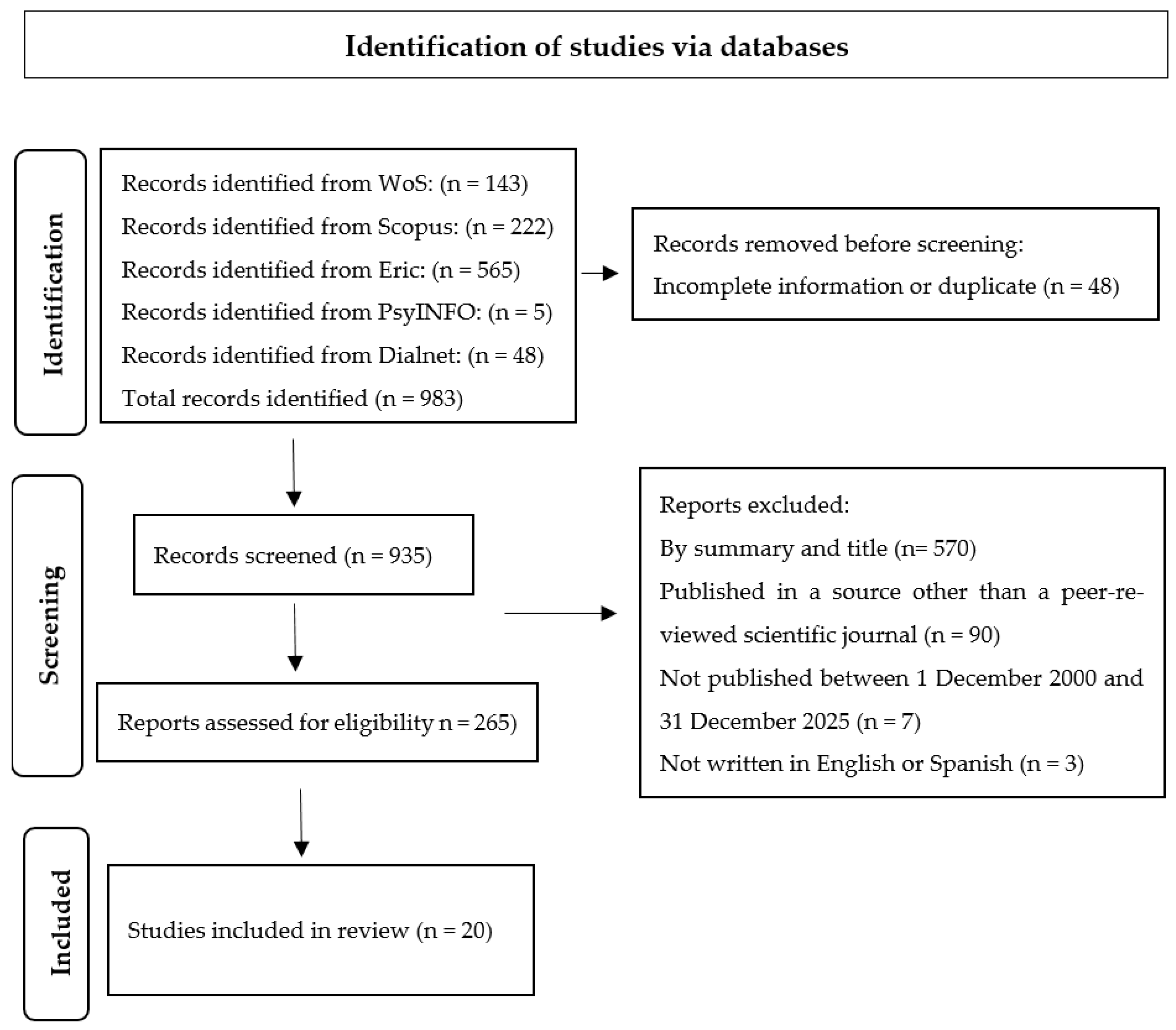
All records retrieved from the databases were exported and deduplicated using Zotero and Rayyan, resulting in the removal of 48 duplicates from an initial total of 983 records. A two-phase screening process was then conducted in accordance with PRISMA 2020 guidelines: (i) title/abstract screening and (ii) full-text review, applying the inclusion/exclusion criteria defined a priori (see Section 2.1).
Title and abstract screening was independently carried out by three reviewers on 935 unique records. Discrepancies were resolved through consensus and, when necessary, further discussion.
A total of 265 full-text reports were sought for retrieval; some could not be obtained despite institutional subscriptions, interlibrary loan and direct contact with authors. These cases are indicated in PRISMA flow diagram. The remaining full texts were assessed for eligibility. The main reasons for exclusion at the full-text stage (not mutually exclusive) included: being out of scope/topic, non-peer-reviewed source, insufficient methodological detail, lack of extractable findings relevant to BLP mapping, ineligible population/context, and language outside the inclusion criteria.
In total, 20 studies met all criteria and were included in the qualitative synthesis. These studies were mapped to the three dimensions of the Index for Inclusion (presence, participation and learning). The PRISMA 2020 flow diagram with counts at each phase is provided in Figure 1, and the study-level selection log (including reasons for full-text exclusion) is available in Table 1.

2.3. Review Process and Coding

The synthesis was conducted using a hybrid deductive–inductive approach. Deductively, we used the Index for Inclusion to organize findings across its three dimensions (presence, participation and learning); inductively, we integrated emerging subthemes through operational definitions and anchored examples. Two reviewers independently coded all included articles following a pilot calibration phase aimed at refining decision rules.
The full selection workflow (identification, screening, eligibility and inclusion) is summarized in the PRISMA 2020 flow diagram (Figure 1), which reports record counts at each stage and reasons for full-text exclusions (Page et al., 2021).
Data extraction was performed using a structured template that recorded the dimension, subtheme, type of evidence and location within the text. Discrepancies were resolved through consensus, with input from a third reviewer when necessary. The unit of analysis was the study (not the frequency of references), and both barriers and facilitators were identified. Inter-rater agreement was estimated based on an independent subsample.

2.4. Quality Assessment

To assess the rigor of the included studies, we used an ad hoc checklist aligned with best practices in educational research. The use of an ad hoc checklist was justified by the substantial methodological heterogeneity of the included reviews, which encompassed qualitative, quantitative, mixed-methods and conceptual approaches typical of educational research. Existing validated tools such as JBI, CASP or Cochrane are primarily designed for specific empirical designs and do not fully capture the diversity of evidence synthesized in umbrella reviews within the social sciences. Therefore, the checklist was developed by operationalizing core quality domains common to these frameworks (e.g., clarity of design, sampling and analysis, transparency of procedures, bias control, ethical reporting and traceability), allowing for consistent and comparable appraisal across studies. The tool was applied following a calibration phase, with independent double assessment and consensus procedures, in line with recommended practices in educational review methodology.
The rubric covered six domains: (1) design and sampling (appropriateness of the design, sampling strategy and size, selection bias), (2) measurement/instruments (construct and item description, reported or justified reliability/validity), (3) procedure and analysis (clarity of the protocol, appropriateness of analytical techniques, consistency between questions, data, and analysis), (4) bias control (triangulation, saturation/case contrast, handling of missing data, sensitivity analysis), (5) ethics and transparency (ethics approval/committee, informed consent, data protection, availability of materials), and (6) clarity and traceability (explicit data trail, sufficient tables/figures, reproducibility).
Two reviewers independently applied the rubric after a pilot calibration (20–30% of the corpus) to standardize criteria; disagreements were resolved by consensus, with the involvement of a third reviewer when necessary. Each criterion was scored as 0 = not met/1 = met/NA = not applicable, and a percentage of criteria met was calculated for each study using an adjusted denominator (excluding NA items). For descriptive purposes, methodological concern was classified as low (≥80%), moderate (50–79%), or high (<50%).
No study was excluded solely based on quality rating. These assessments were used to qualify the synthesis (marking as tentative the findings based on studies with high concern) and to conduct sensitivity analyses (testing the stability of patterns when such studies were temporarily excluded).

3. Results

The 20 studies included in this review encompass a wide geographical distribution across Europe (Greece, Spain, Norway, Bulgaria), Africa (South Africa, Egypt), Asia and the Middle East (Saudi Arabia, Pakistan), Oceania (New Zealand, Cook Islands), North America (United States), Latin America and the Caribbean (Colombia, Jamaica), and the Pacific/Guam. Across the empirical studies reporting sample size, the number of participants ranges widely, from small qualitative samples of teachers, principals, or specialists (7 to 30 participants in Bulgaria, Greece, South Africa, or Saudi Arabia) to larger survey-based studies (e.g., 218 teachers in Egypt; 331 secondary students in Spain; 781 teachers and 104 students in Pakistan). Several studies include pre-service or in-service teachers, while others focus on students with disabilities (ASD, cerebral palsy, dyslexia, learning difficulties) in primary or secondary education. Gender distribution was available in only part of the overall sample of studies and generally reflected female-majority teaching samples. Age ranges are linked to the educational levels under study (primary and secondary schooling), although most studies did not report specific ages. As shown in Table 2, the overall sample of studies reflects a heterogeneous set of contexts, populations, and methodological approaches, which underscores the need for a synthetic analysis aligned with the Index for Inclusion.
The quality appraisal of the 20 included studies showed substantial variability across the six domains evaluated. Using the percentage of met criteria, 7 studies (35%) were classified as having low methodological concern (≥80% of criteria met), 9 studies (45%) showed moderate concern (50–79%), and 4 studies (20%) presented high concern (<50%). The most consistent strengths across studies were clarity of research questions, adequate description of context, and explicit links between data and reported findings. However, common limitations included the absence of impact measures, lack of triangulation, small or non-representative samples, incomplete reporting of reliability/validity of instruments, and limited intersectional or longitudinal analysis. These considerations informed the interpretation of the synthesis and were taken into account when qualifying tentative or less robust findings.
The following table presents a synthesis of the results from the 20 studies included in the review. Each row summarizes an individual study and provides information on: (i) title and context/sample; (ii) key barriers mapped onto the three dimensions proposed by Booth and Ainscow (Presence, Participation, Learning); (iii) distribution across intersectional variables (gender, migration/cultural diversity, disability, mental health, and socioeconomic status, where applicable); (iv) evidence gaps identified in each study (e.g., lack of impact measures, absence of triangulation or intersectional analysis); and (v) future research directions proposed by the original studies or derived from our analysis.
This comparative reading enables the identification of common patterns and contextual specificities, as well as the formulation of priorities for educational research and policy.
The review of twenty studies published between 2009 and 2025—covering the Americas, Europe, Africa, Asia and Oceania—enables the identification of global and regional trends regarding barriers to inclusion in primary and secondary education, based on the three dimensions of Booth and Ainscow’s model (Presence, Participation and Learning). The analysis also incorporates how these barriers are distributed across intersectional variables (gender, migration, disability, mental health, and socioeconomic status) and identifies persistent evidence gaps in the literature.

3.1. Presence: Access, Equity, and Structural Conditions

Presence, understood as access to and retention within mainstream schooling, reveals a persistent gap between political discourse and institutional reality. In the Global South (e.g., Pakistan, South Africa, Egypt; Farooq, 2013; Mokhampanyane, 2024; Ali, 2020), the main barriers are economic, infrastructural, and human-resource related (poverty, teacher overload, schools without physical adaptations, lack of specialists), which restricts the enrolment and retention of students with disabilities or those in vulnerable situations.
In Europe, studies such as Giavrimis (2024) and Reraki (2022) show that the presence of students with special educational needs (SEN) continues to be mediated by rigid diagnostic criteria and segregation-biased practices (e.g., “inclusion classes” based on medicalized approaches).
In contexts of high linguistic diversity (Saudi Arabia; Hong Kong: Alsarawi, 2025; Poon-McBrayer, 2017), the lack of bilingual tools and clear admission policies reinforces inequities for migrant and bilingual students.
In the Pacific and Oceania (Te Ava, 2020; McIlroy, 2015), curricula are often poorly contextualized, marginalizing indigenous knowledge and hindering cultural identification. In the Caribbean and Latin America (Anderson Leachman, 2024; Correa-Alzate et al., 2023), weak institutional leadership and insufficient ongoing training reduce schools’ capacity to respond to diversity. Comparable dynamics have been documented in higher education, where the effectiveness of programmes and services for students with disabilities depends not only on their formal existence but also on institutional culture, coordination, and resource allocation, as illustrated by recent analyses conducted at the University of La Laguna (Márquez-González et al., 2025).
Physical presence alone does not guarantee genuine inclusion when precarious material conditions, lack of institutional support, and fragmented regulatory frameworks persist. Among the 20 studies reviewed, the most frequent barriers relate to infrastructure/resources and human resources (8/20; 40%), followed by rigid diagnostic criteria/segregation (5/20; 25%) and governance/implementation issues (4/20; 20%). Less frequently reported are admission/bilingual instrument gaps (1/20; 5%) and curriculum–culture mismatches (1/20; 5%).

3.2. Participation: School Culture, Leadership, and Sense of Belonging

Participation barriers emerge as the most complex and persistent, combining attitudinal and organizational factors. The evidence suggests that school culture—more than regulatory frameworks—determines the effectiveness of inclusion.
Studies such as Samuels (2018) and Fernández Menor (2020) show that competitive environments, prejudiced attitudes, and non-representative curricula erode students’ sense of belonging and voice. In culturally diverse contexts (e.g., the U.S., the Cook Islands, New Zealand), participation is further limited by the absence of culturally responsive pedagogies and by teachers’ resistance to addressing race, gender, or sexual diversity (Samuels, 2018; McIlroy, 2015; Te Ava, 2020). In the Spanish context, empirical evidence also indicates that peer bullying is more prevalent among students with special educational needs in early adolescence, which underscores how hostile peer dynamics can exacerbate participation barriers for this group (González Contreras et al., 2021).
At the institutional level, Anderson Leachman (2024) and Mokhampanyane (2024) highlight that the absence of distributed leadership and collaborative work among teachers, families and school leaders hinders the consolidation of inclusive practices. In Africa and Asia, administrative rigidity and academic elitism further constrain participation (Farooq, 2013; Poon-McBrayer, 2017).
Even so, promising practices exist, for example, pedagogical drama to foster emotional and communicative engagement (Mesas Jiménez, 2023), or musical improvisation with assistive technologies for students with ASD or cerebral palsy (McCord, 2009). Overall, genuine participation requires inclusive leadership, teacher–family collaboration, and relational pedagogies—beyond mere physical presence.
Aggregate data show that the most frequently cited limitations concern deficits in leadership/family collaboration (7/20; 35%) and in school culture, attitudes and sense of belonging (6/20; 30%). Selectivity/elitism and academic pressure appear only sporadically (1/20; 5%).

3.3. Learning: Pedagogical Practices, Teacher Training, and Technology

Regarding learning, the studies converge around two main deficits: insufficient teacher training and limited methodological adaptation. In countries such as South Africa, Egypt, and Saudi Arabia (Ali, 2020; Alsarawi, 2025; Mokhampanyane, 2024), inclusive teaching is hindered by the absence of systematic professional development (PD) and a reliance on transmissive models.
Technology emerges as both an opportunity and a challenge: Belloula (2025) suggests that AI can support differentiated planning but also highlights digital divides and emerging dependencies. McCord (2009) demonstrates that AAC and Soundbeam technologies are key to enabling access to musical learning for students with motor and communication disabilities, provided adequate material and instructional conditions are in place.
Qualitative studies (Damyanov, 2024; Nyborg, 2011; Reraki, 2022) reveal improvements in motivation and classroom climate through active, multisensory and cooperative methodologies, although standardized assessments remain largely unresponsive to diversity. Inclusive learning depends not only on technical competence but also on teachers’ ethical, cultural, and emotional preparation.
In the quantitative synthesis, all studies address at least one technological or assistive technology layer (20/20; 100%), while gaps are identified in teacher training, professional development (PD) and use of Universal Design for Learning (UDL) (6/20; 30%) and in inclusive assessment and robustness of IEPs (5/20; 25%). The persistence of traditional, undifferentiated methodologies appears less frequently (2/20; 10%).

3.4. Intersectionality: Overlapping Inequalities

An intersectional perspective remains largely underexplored. Some studies report disparities in belonging based on gender identity (Fernández Menor, 2020), double discrimination faced by women with disabilities (Sharma, 2015), or diagnostic biases in bilingual settings (Alsarawi, 2025). Others address cultural/indigenous (McIlroy, 2015; Te Ava, 2020) and socioeconomic dimensions (Correa-Alzate et al., 2023; Farooq, 2013; Giavrimis, 2024), yet most do not systematically disaggregate their findings.
Research continues to focus predominantly on “disability” as a single axis of analysis, often overlooking its interaction with gender, migration, class, and mental health. In terms of coverage, studies more frequently consider gender/identity (16/20; 80%), migration/race/ethnicity (15/20; 75%), and disability (15/20; 75%), while mental health (11/20; 55%) and socioeconomic status/SES (6/20; 30%) receive less in-depth attention. Multilingualism is a specific focus in 4 out of 20 studies (20%), and fine-grained intersections (e.g., gender × disability × SES) are rare, highlighting the need for more robust intersectional approaches.

4. Discussion

The findings do not point to “isolated problems” concerning the topic under study, but rather to a systemic misalignment between policy discourse and what schools are structurally able to sustain. Inclusion becomes constrained when enabling conditions are absent—such as accessibility, specialized support, predictable funding, and fair admissions—when school culture neutralizes diversity as the norm and when classroom practices are not supported by ongoing professional development. This triangular gap helps explain why, despite inclusive policy frameworks, students’ day-to-day experiences remain unequal.
Regarding presence, the data reveal a structural pattern across contexts: barriers are concentrated in resource/infrastructure limitations and staffing shortages (8/20; 40%), followed by rigid diagnostic criteria and segregated arrangements (5/20; 25%), and governance/implementation gaps (4/20; 20%). Less frequently reported are challenges related to admissions or lack of bilingual tools (1/20; 5%) and curriculum–cultural mismatches (1/20; 5%).
In Pakistan, South Africa, or Egypt, the combined realities of poverty + teacher overload + absence of specialists result in schooling that resembles placement rather than true inclusion (Farooq, 2013; Mokhampanyane, 2024; Ali, 2020). In Greece, a medicalized logic continues to legitimize segregated “inclusion classes” (Giavrimis, 2024; Reraki, 2022). In linguistically diverse contexts (Saudi Arabia, Hong Kong), the lack of validated bilingual tools reproduces access inequities (Alsarawi, 2025; Poon-McBrayer, 2017). In the Pacific/Oceania, when the curriculum is disconnected from Indigenous knowledge, formal presence does not translate into cultural recognition (McIlroy, 2015; Te Ava, 2020).
The conclusion is uncomfortable but unequivocal: without enabling conditions, inclusive rhetoric results in empty presence.
With regard to participation, the central issue is not the absence of regulatory frameworks, but rather school cultures that symbolically exclude. The data indicate that deficits in leadership and collaboration with families (7/20; 35%) and school climates or attitudes that undermine belonging and student voice (6/20; 30%) are pivotal in either building or eroding inclusion in everyday school life (Samuels, 2018; Anderson Leachman, 2024; Fernández Menor, 2020; Mokhampanyane, 2024).
When schools maintain support systems outside the classroom, rigid grouping structures, schedules without co-teaching, and itinerant specialists, responsibility is externalized, and silent forms of exclusion persist: students are physically present, but do not participate in meaningful ways. In contrast, distributed leadership enables the conditions for relational pedagogies (e.g., pedagogical drama; musical improvisation with AAC for students with ASD or cerebral palsy) that help restore belonging and voice (Mesas Jiménez, 2023; McCord, 2009).
In summary: without an enabling organizational architecture—including shared schedules, defined roles, co-teaching structures, and coordination with families—inclusive methodologies do not scale or endure.
In terms of learning, the ubiquity of technology should not be mistaken for impact. The fact that all 20 studies (100%) refer to ICT or assistive technologies (AT) says little unless such references are accompanied by sustained professional development and the implementation of UDL (6/20; 30%), meaningful assessment reform (5/20; 25%), and a shift away from transmissive pedagogies (2/20; 10%). The conclusion is anti-tech-solutionist: AI and AT only enable inclusion when embedded within sequences that involve universal design, digital equity, and ethical governance; without these, they tend to widen existing gaps (Ali, 2020; Alsarawi, 2025; Belloula, 2025; Correa-Alzate et al., 2023; Mokhampanyane, 2024). Evidence from this study similarly indicates that ICT-mediated responses during COVID-19 affected students with special educational needs in ways that must be actively monitored and adjusted, rather than assumed to be automatically beneficial (M. C. Rodríguez-Jiménez et al., 2023).
On intersectionality, it is addressed, but only partially. The most frequently examined dimensions are gender/identity (16/20; 80%), migration/race/ethnicity (15/20; 75%), and disability (15/20; 75%), while mental health (11/20; 55%) and socioeconomic status (SES) (6/20; 30%) receive less attention; only 4/20 studies (20%) explicitly discuss multilingualism. Crucial cross-analyses (e.g., gender × disability × SES) are largely absent, which leads to generic conclusions that disadvantage multiply marginalized groups (Alsarawi, 2025; Fernández Menor, 2020; Sharma, 2015). A robust inter-sectional design must be planned from the outset: stratified sampling, sensitive indicators, interaction analyses, and disaggregated reporting are needed to capture how inequalities overlap and intensify.
Stage and region-based variations exist but do not undermine the overall pattern: in the Global South, resources and governance are critical; in Europe, diagnostic rigidity prevails; in Hong Kong/Guam, selectivity is a key barrier; and in New Zealand/Cook Islands, it is cultural relevance. The primary-level bias and limited data from secondary education call for interpretive caution, and the low proportion of impact-measured studies (~20%) restricts causal inference. Nonetheless, patterns persist even when methodologically weaker studies are excluded, suggesting directional robustness.
What, then, should be done? Rather than simply adding new programs or reorganizing the system, it is necessary to link funding to verifiable standards of accessibility and ensure a minimum threshold of human support, along with fair admission policies that prevent parallel tracks and make school enrolment meaningful (Farooq, 2013; Giavrimis, 2024). In terms of participation, we must transform school culture using indicators of belonging and voice and institutionalize (rather than merely “offer”) family–school partnerships and co-teaching structures with clear roles and protected time (Samuels, 2018; Anderson Leachman, 2024; Mesas Jiménez, 2023). In learning, we need to integrate UDL with AT/AAC and implement formative, narrative assessment that opens multiple access routes and results in real classroom progress (Damyanov, 2024; McCord, 2009; Reraki, 2022). Finally, in digital inclusion, we must ensure equity of access, professional development, and locally grounded ethical frameworks before promising technological miracles (Belloula, 2025; Correa-Alzate et al., 2023). Complementary evidence from higher education shows that service-learning can function as an inclusive methodology for students with special educational needs, supporting both competency development and social participation, while also revealing organisational and attitudinal challenges that mirror those documented in compulsory schooling (González-Afonso et al., 2025).
The necessary condition is alignment: without coherence across conditions, culture, and practice, any innovation remains isolated, and schools keep doing the same under new labels.

Strengths, Limitations and Future Directions

This study offers a structured synthesis based on the Booth and Ainscow framework, enabling a “system-level” reading, quantification of findings across contexts, and an intersectional perspective that refreshes the debate. However, it presents several limitations: conceptual and indicator heterogeneity, limited use of impact designs (pre–post/follow-up/control), imbalances across educational levels and regions, lack of fine-grained intersectional analyses (e.g., gender × disability × SES), and a shortage of validated instruments. Additionally, potential publication/language bias and the predominance of self-reported data reduce inferential strength.
In addition, the deliberate exclusion of grey literature (e.g., policy reports, institutional documents, dissertations) may have contributed to publication bias, particularly by underrepresenting locally embedded or practice-oriented initiatives that are less frequently disseminated through peer-reviewed journals.
These limitations point to future lines of research and practice: (i) standardize indicators of presence–participation–learning (including belonging and well-being), with bilingual versions; (ii) plan intersectional designs a priori, rather than retrofitting them; (iii) expand impact and implementation studies, including cost-effectiveness analyses; (iv) link sustained PD, UDL and formative assessment with ethical governance of technology/AI and explicit digital equity; (v) Co-design with students and families, ensuring their voices shape both research and implementation; and (vi) address gaps in secondary education, rural contexts, and underrepresented regions through multi-site research consortia and open datasets that enable replication and cumulative meta-analysis.
Although open-access status was not used as an eligibility criterion, a small number of eligible studies could not be retrieved in full text despite reasonable efforts. This may introduce a minor availability bias, partially mitigated by the multi-database coverage and backward reference searching.

5. Conclusions

The review, conducted in line with PRISMA 2020 and guided by the Index for Inclusion by Booth and Ainscow (2011), confirms that barriers to inclusion are systemic in nature: they do not originate solely within classrooms, but rather in the misalignment between enabling system conditions, school cultures, and teaching practices. When this coherence breaks down, inclusion is reduced to mere student presence—without guaranteeing belonging or meaningful learning—especially in contexts marked by resource scarcity, rigid diagnostic frameworks, and competitive school cultures.
Across the three dimensions, consistent patterns emerge. In presence, structural obstacles prevail (infrastructure, resources and staffing), followed by rigid diagnostic criteria and segregating arrangements, and this is particularly pronounced in the Global South and in systems with selective admissions or tools poorly adapted to bilingualism. In participation, the core barriers are cultural and organizational: weak distributed leadership, limited collaboration with families and school climates that erode students’ sense of belonging. In learning, technology is ubiquitous, but its impact depends on a pedagogical architecture that combines sustained professional development, UDL, co-teaching and formative assessment; in the absence of such an architecture, it tends to widen gaps.
The intersectional analysis reveals partial progress: gender/identity, migration/ethnicity and disability receive more attention than mental health or socioeconomic status. Few studies examine complex intersections (e.g., gender × disability × SES). Furthermore, there is a bias toward primary education and a low proportion of studies with impact measurement, which limits causal inference. However, sensitivity analyses support the directional robustness of the findings.
The findings suggest prioritizing governance through coherence. Specifically: linking funding to verifiable accessibility standards and minimum support provisions; ensuring fair admissions that prevent parallel tracks and segregating practices; institutionalizing distributed leadership, co-teaching and school–family partnerships; and integrating UDL, assistive/AI technologies and formative assessment into instructional sequences that make all students’ progress visible (Pérez-Jorge et al., 2024)
To enhance the practical applicability of these implications, several actionable recommendations can be highlighted. At the school level, establishing structured collaboration mechanisms (e.g., multidisciplinary support teams, scheduled co-planning times and shared decision-making protocols) can strengthen inclusive practices. The use of validated measurement tools—such as the Index for Inclusion, UDL-based observation rubrics or standardized school climate and belonging scales—can support systematic monitoring of barriers and guide pedagogical adjustments. Continuous professional development that prioritizes differentiated instruction, co-teaching models, culturally responsive pedagogy and data-informed decision-making is essential to sustain inclusion over time.
At the policy level, clearer national and regional guidelines that connect inclusion goals with resource allocation, specialist support, and accountability mechanisms can offer a coherent structure for implementation. Policies that incentivize accessibility audits, inclusive admissions, interagency collaboration, and the development of local inclusion support networks can further strengthen systemic capacity.
It is recommended to standardize comparable indicators of presence–participation–learning (including belonging and well-being), to design intersectionality a priori and report interaction analyses, to expand impact and implementation studies (including cost-effectiveness analyses), and to address gaps in secondary education, rural areas and underrepresented regions through multi-site consortia and open data policies.
The Index for Inclusion is confirmed as a useful framework, provided it is employed as a lever for systemic improvement: aligning conditions, culture, and practice to ensure not just attendance, but meaningful participation and relevant learning for all students.

Author Contributions

Conceptualization y methodology, D.P.-J. and M.C.G.-A.; software, J.L.C.-G., Z.P.-C. and C.d.l.Á.P.-L.; validation, D.P.-J., M.C.G.-A. and C.d.l.Á.P.-L.; formal analysis, D.P.-J., M.C.G.-A., J.L.C.-G., Z.P.-C. and C.d.l.Á.P.-L.; investigation, D.P.-J., M.C.G.-A. and C.d.l.Á.P.-L.; resources, M.C.G.-A., J.L.C.-G. and Z.P.-C.; data curation, D.P.-J., M.C.G.-A. and C.d.l.Á.P.-L.; writing—original draft preparation, D.P.-J., M.C.G.-A. and C.d.l.Á.P.-L.; writing—review and editing, D.P.-J., M.C.G.-A., Z.P.-C. and C.d.l.Á.P.-L.; visualization, Z.P.-C. and C.d.l.Á.P.-L.; supervision, D.P.-J. and M.C.G.-A.; project administration, D.P.-J., Z.P.-C. and C.d.l.Á.P.-L.; funding acquisition, D.P.-J., M.C.G.-A., Z.P.-C. and C.d.l.Á.P.-L. All authors have read and agreed to the published version of the manuscript.

Funding

This research received no external funding.

Institutional Review Board Statement

Not applicable.

Informed Consent Statement

Not applicable.

Data Availability Statement

No new data were created or analyzed in this study.

Acknowledgments

During the preparation of this study, the authors used Perplexity AI for semantic and content validation purposes. This manuscript was prepared by members of the research group at the University of La Laguna (DISAE). The authors declare that generative artificial intelligence tools (LanguageTool for Windows-6.7) were used solely for language editing and grammatical refinement.

Conflicts of Interest

The authors declare no conflicts of interest.

References

  1. Ainscow, M., Dyson, A., & Weiner, S. (2013). From exclusion to inclusion: A review of international literature on ways of responding to students with special educational needs in schools. En-clave pedagógica: Revista Internacional de Investigación e Innovación Educativa, 13, 13–30. [Google Scholar]
  2. Ali, A. D. (2020). A framework for an inclusive education professional development program. MEXTESOL Journal, 44(3). Available online: https://eric.ed.gov/?id=EJ1311033 (accessed on 25 December 2025).
  3. Alsarawi, A. (2025). Identifying learning disabilities in bilingual and English language learners: Insights from the Saudi context. Educational Process: International Journal, 15, e2025111. [Google Scholar] [CrossRef]
  4. Anderson Leachman, K. (2024). Non-teaching stakeholders’ experiences with inclusive education in a private school in Jamaica. International Journal for Talent Development and Creativity, 12(1), 253–264. [Google Scholar] [CrossRef]
  5. Belloula, B. (2025). Empowering educators: Leveraging AI to revolutionize lesson planning. arXiv, arXiv:2507.10540. [Google Scholar] [CrossRef]
  6. Booth, T., & Ainscow, M. (2000). Index for inclusion: Developing learning and participation in schools. Centre for Studies on Inclusive Education (CSIE). [Google Scholar]
  7. Booth, T., & Ainscow, M. (2011). Index for inclusion: Developing learning and participation in schools (3rd ed.). Centre for Studies on Inclusive Education (CSIE). [Google Scholar]
  8. Braunsteiner, M.-L., & Mariano-Lapidus, S. (2014). A perspective on inclusion: Challenges for the future. Global Education Review, 1(1), 32–43. [Google Scholar]
  9. Celada, B. M. (2017). Investigación narrativa. Educación secundaria inclusiva y trayectorias escolares de estudiantes con discapacidad y/o en situación de desventaja educativa. Revista del Instituto de Investigaciones en Educación, 8(10), 113–121. [Google Scholar] [CrossRef]
  10. Correa-Alzate, J. I., Suárez-Vallejo, J. P., & Restrepo-Restrepo, N. (2023). Teachers’ experience in times of pandemic with students with educational challenges: Challenges in returning to face-to-face education with an inclusive approach in Medellín, Colombia. Revista Electrónica Educare, 27(2), 1–21. [Google Scholar] [CrossRef]
  11. Damyanov, I. (2024). Strategies for inclusive education and intercultural communication in primary school. International Online Journal of Primary Education, 13(3), 175–184. [Google Scholar] [CrossRef]
  12. Farooq, M. S. (2013). An inclusive schooling model for the prevention of dropout in primary schools in Pakistan. Bulletin of Education and Research, 35(1), 47–74. [Google Scholar]
  13. Fernández Menor, I. (2020). Estudio exploratorio sobre las barreras y apoyos a la pertenencia en la educación secundaria. Revista Iberoamericana de Evaluación Educativa (RIEJS), 9(1), 165–189. [Google Scholar] [CrossRef]
  14. Figueroa, J. A., & Cortés, A. A. (2023). Contextualización curricular para una educación inclusiva: Representaciones y experiencias docentes. Revista INTEREDU, 1(8), 11–50. [Google Scholar] [CrossRef]
  15. Florian, L. (2014). What counts as evidence of inclusive education? European Journal of Special Needs Education, 29(3), 286–294. [Google Scholar] [CrossRef]
  16. Giavrimis, P. (2024). Inclusion classes in Greek education: Political and social articulations. Journal of Research in Special Educational Needs, 24(3), 454–464. [Google Scholar] [CrossRef]
  17. González-Afonso, M. C., Perdomo-López, C. d. L. Á., & Pérez-Jorge, D. (2025). Potential and challenges of service-learning as an inclusive methodology for competency development in students with SEN. Discover Education, 4, 485. [Google Scholar] [CrossRef]
  18. González Contreras, A. I., Pérez-Jorge, D., Rodríguez-Jiménez, M. C., & Bernadette-Lupson, K. (2021). Peer bullying in students aged 11 to 13 with and without special educational needs in Extremadura. Education 3–13, 49(8), 945–956. [Google Scholar] [CrossRef]
  19. Gough, D., Oliver, S., & Thomas, J. (2017). An introduction to systematic reviews (2nd ed.). SAGE Publication. [Google Scholar]
  20. Hove, N. (2022). The inclusiveness of mixed ability grouping in Johannesburg primary schools. South African Journal of Childhood Education, 12(1), 1–9. [Google Scholar] [CrossRef]
  21. Keleş, Ö., Uzun, N., & Yalçın, G. (2023). Barrier-free science education for visually impaired students. Science Insights Education Frontiers, 14(1), 1945–1964. [Google Scholar] [CrossRef]
  22. López, M., Echeita Sarrionandia, G., & Martín Ortega, E. (2010). Dilemas en los procesos de inclusión: Explorando instrumentos para una comprensión de las concepciones educativas del profesorado. Revista Latinoamericana de Educación Inclusiva, 4(2), 155–176. [Google Scholar]
  23. Márquez-González, L. M., Martínez-Murciano, M. C., Olmos-Raya, E., & Pérez-Jorge, D. (2025). The response to disability in higher education: An analysis of programs and services for people with disabilities: The case of the University of La Laguna. Frontiers in Education, 10, 1561841. [Google Scholar] [CrossRef]
  24. McCord, K. (2009). Improvisation as communication: Students with communication disabilities and autism using call and response on instruments. Australian Journal of Music Education, (2), 17–26. [Google Scholar]
  25. McIlroy, A. (2015). All Students Belong inThe New Zealand Curriculum’: A vision supported by the Inclusive Education Capability Building Project. Kairaranga, 16(2), 35–44. [Google Scholar] [CrossRef]
  26. Mesas Jiménez, R. (2023). Aprendizaje inclusivo e integrado de contenidos y lenguas extranjeras a través del Drama. Cuadernos De Literatura, (21), e2113. [Google Scholar] [CrossRef]
  27. Mokhampanyane, M. (2024). Teachers’ capabilities in implementing inclusive education: A South African perspective. Research in Social Sciences and Technology, 9(3), 11–25. [Google Scholar] [CrossRef]
  28. Nyborg, G. (2011). Teachers’ use of motivational utterances in special education. International Journal of Special Education, 26(3), 248–258. [Google Scholar]
  29. Page, M. J., McKenzie, J. E., Bossuyt, P. M., Boutron, I., Hoffmann, T. C., Mulrow, C. D., Shamseer, L., Tetzlaff, J. M., Akl, E. A., Brennan, S. E., & Chou, R. (2021). The PRISMA 2020 statement: An updated guideline for reporting systematic reviews. BMJ, 372, n71. [Google Scholar] [CrossRef]
  30. Petticrew, M., & Roberts, H. (2008). Systematic reviews in the social sciences: A practical guide. John Wiley & Sons. [Google Scholar]
  31. Pérez-Jorge, D., González-Herrera, A. I., Alonso-Rodríguez, I., & Rodríguez-Jiménez, M. d. C. (2024). Challenges and opportunities in inclusive education with ICT: Teachers’ perspectives in the Canary Islands during the COVID-19 pandemic. Education Sciences, 14(3), 283. [Google Scholar] [CrossRef]
  32. Poon-McBrayer, K. F. (2017). Contextualizing the participation and challenges in education for all: The case of Guam and Hong Kong. International Journal of Whole Schooling, 13(2), 63–68. [Google Scholar]
  33. Reraki, M. (2022). Inclusive practices for dyslexic language learners: An intervention study in the Greek EFL setting. Support for Learning, 37(3), 480–494. [Google Scholar] [CrossRef]
  34. Rodríguez-Jiménez, M. C., Pérez Jorge, D., González-Contreras, A. I., & Larumbe Zabala, E. (2023). Development and validation of EDU-COV-NEE-NEAE questionnaire to measure educational response, ICT usage and impact of COVID-19 pandemic on students with special educational needs. Heliyon, 9(9), e19231. [Google Scholar] [CrossRef]
  35. Rodríguez-Jiménez, M. d. C., Puerta-Araña, I., González-Herrera, A. I., & González-Afonso, M. C. (2024). Analysis of quality of life of autistic students on the Canary Islands during the COVID-19 pandemic and the educational response offered. Education Sciences, 14(1), 111. [Google Scholar] [CrossRef]
  36. Rustemier, S., & Booth, T. (2005). Learning about the index in use: A study of the use of the index for inclusion in schools and LEAs in England. CSIE. [Google Scholar]
  37. Samuels, A. J. (2018). Exploring culturally responsive pedagogy: Teachers’ perspectives and practices. SRATE Journal, 27(1), 22–30. [Google Scholar]
  38. Sharma, S. (2015). Perspectives on inclusive education with reference to UN. International Multidisciplinary Research Journal, 5(7), 61–66. [Google Scholar]
  39. Te Ava, A. (2020). Culturally responsive pedagogy for sustainable quality education in the Cook Islands. Waikato Journal of Education, 25(1), 31–41. [Google Scholar] [CrossRef]
  40. UNESCO. (2015). Education 2030: Incheon declaration and framework for action. UNESCO. [Google Scholar]
  41. United Nations (UN). (2006). Convention on the rights of persons with disabilities (CRPD). United Nations. [Google Scholar]
  42. Vidal-Fernández, A., Martínez-Algora, C., & Román-González, M. (2025). Digital tools to support personalized education for gifted students: A systematic literature review. Education Sciences, 15(9), 1257. [Google Scholar] [CrossRef]
Figure 1. Flow diagram of the phases of the review.
Education 16 00095 g001
Table 1. Keywords used in document searches based on each content block.
BlockKeywords
Inclusive education“inclusive education” OR “inclusive schooling” OR “inclusive classroom” OR “inclusive pedagogy” OR “inclusive practices” OR “inclusive policy”
Barriersbarrier * OR obstacle * OR challenge * OR impediment * OR difficulty * OR exclusion
Booth and Ainscow dimensionsparticipation OR learning OR presence OR engagement OR involvement OR attendance
Educational level“primary education” OR “elementary school” OR “secondary education” OR “compulsory education” NOT “university students”
Note: The symbol * indicates truncation (retrieves variants of the word: e.g., barrier *; barrier, barriers).
Table 2. Synthesis of the 20 Studies: Barriers by Dimension (Presence–Participation–Learning), Intersectional Distribution, Evidence Gaps, and Future Research Directions.
TitleSampleBarriers (Booth and Ainscow)Distribution by Variables/IntersectionalityIdentified Evidence GapsFuture Research Directions
Damyanov (2024)30 novice primary school teachers (Bulgaria).Presence: lack of resources and overcrowded classrooms. Participation: limited intercultural competence; weak teacher–family communication. Learning: poorly differentiated teaching methods.Gender: predominantly female sample. Migration/cultural diversity: communication barriers and non-inclusive materials. Disability: no specific supports provided.
Mental health: not addressed.
No impact measurement; absence of student voice and intersectional analysis.Longitudinal studies on CLIL/UDL strategies; include families and cultural analysis.
Nyborg (2011)2 special education teachers and 12 students with learning difficulties (Norway).Presence: partial segregated teaching. Participation: limited communication; unequal interaction. Learning: minimal use of motivational strategies.Gender and migration: not analyzed. Disability: central focus (learning difficulties).No impact measurement; small sample size; no contextual variable analysis.Expand sample; include non-verbal communication; evaluate effects of motivation on participation and achievement.
Mesas Jiménez (2023)40 pre-service teacher education students (Spain).Presence: lack of resources for CLIL. Participation: low autonomy and limited methodological flexibility. Learning: need to integrate UDL and pedagogical drama.Gender: not analyzed. Migration: bilingual context. Disability: addressed through UDL. Mental health: not addressed.Lack of robust empirical evidence; no sustained academic impact analysis.Evaluate longitudinal impact of UDL + Drama; teacher training in active methodologies.
Correa-Alzate et al. (2023)63 teachers in Medellín, Colombia.Presence: digital divide; limited access to accessible materials. Participation: family isolation; weak communication. Learning: limited pedagogical use of ICT.Gender: mostly female. Migration: not analyzed. Disability: cognitive, visual, and auditory. Mental health: teacher and family stress.No post-pandemic studies; limited evidence on family roles; focus limited to technology.Longitudinal studies on digital accessibility; measure socio-emotional impact; strengthen school–family collaboration.
Sharma (2015)Document review; no empirical sample.Presence: institutional weakness; lack of data. Participation: social stigma; poor infrastructure. Learning: lack of teacher training and assistive technology.Gender: double discrimination (girls with disabilities). Migration: not addressed. Disability: central focus. Mental health: not addressed.Lack of empirical evidence; few comparative data; no intersectional approach.Develop monitoring systems; integrate gender perspective; evaluate inclusive technologies.
Alsarawi (2025)12 participants (primary teachers and specialists in Saudi Arabia).Presence: absence of bilingual tools; inadequate diagnosis.
Participation: linguistic and cultural biases. Learning: monolingual assessments; limited family–school collaboration.
Gender: no differences reported. Migration/diversity: Arabic-English bilingualism. Disability: specific learning difficulties. Mental health: emotional impact not measured.Lack of validated tools; insufficient professional development; limited research.Develop bilingual tools; train teachers in inclusive diagnosis; conduct longitudinal studies.
Belloula (2025)10 secondary school teachers (Qatar).Presence: digital divide; unequal technological access. Participation: resistance and mistrust toward AI. Learning: lack of evidence on AI impact.Gender: mostly female. Migration/culture: Western biases in AI. Disability: not addressed. Mental health: work-related stress.Little longitudinal evidence; no ethical–intersectional analysis.Evaluate long-term AI use; create local ethical frameworks; explore AI as an accessibility tool.
Mokhampanyane (2024)7 participants (teachers, principals, and DBST staff, rural South Africa).Presence: lack of training and resources. Participation: weak family support; teacher overload. Learning: limited UDL implementation and collaboration.Gender: mostly female. Migration: not addressed. Disability: multiple special needs. Mental health: teacher stress.Lack of comparative rural studies; no well-being analysis.Study CER in rural schools; include psychosocial variables and parental involvement.
Giavrimis (2024)9 special education teachers (Greece).Presence: medical-diagnostic paradigm; limited resources. Participation: weak teacher coordination; stigmatization. Learning: care-based model; socioeconomic inequality.Gender: not analyzed. Migration: insular multicultural context. Disability: intellectual, autism, learning difficulties. Mental health: not explored.No intersectional focus; limited longitudinal evidence; low family involvement.Reform IC toward social model; strengthen PD and co-teaching; evaluate funding impact.
Anderson Leachman (2024)12 participants (administrators, parents, counselors, aides).Presence: centralized leadership; limited teacher training.
Participation: weak coordination; parental denial.
Learning: lack of specialists and individualized plans.
Gender: not analyzed.
Migration: culturally diverse (Indian, Chinese, Jamaican). Disability: ASD, ADHD, ID, LD. Mental health: parental stress.
No evaluation of shadow teachers; no student outcome data; no intersectional analysis.Promote distributed leadership; train teachers/aides; assess one-to-one support impact.
Hove (2022)≤10 participants (details not specified in summary)Presence: not explicitly documented. Participation: inferred peer dynamics tensions in heterogeneous grouping. Learning: possible inequalities in group support.Not reported in available summary.Incomplete empirical information; lacking methodological and results detail.Complete data (n, profile, methods); assess effects of heterogeneous grouping on belonging and achievement.
Ali (2020)218 EFL primary teachers (Gharbia, Egypt).Presence: low enrolment of students with SEN due to institutional barriers. Participation: negative attitudes and fragmented support. Learning: insufficient teacher training; limited co-teaching/UDL/IEP implementation.No developed intersectionality: school socioeconomic context implied.Proposed framework not evaluated; self-reported data; not generalized; no intersectional approach.Pilot and evaluate PD; compare delivery modes; scale to other subjects/levels; cost-effectiveness; add intersectional focus.
Fernández Menor (2020)331 secondary students (Pontevedra, Spain).Presence: absenteeism and grade repetition. Participation: fragile relationships, competitive climates. Learning: traditional methods, stress from exams/homework.Gender/identity: lower belonging among non-binary students. Adverse family/socioeconomic conditions reduce belonging.Localized sample; no qualitative data; no migration/disability variables; potential instrument limitations.Expand to other contexts; integrate qualitative data; assess belonging-focused interventions; apply intersectional and longitudinal lens.
Poon-McBrayer (2017)23 principals (10 Guam; 13 Hong Kong) in primary and secondary education.Presence: staff and service shortages; unstable funding; school selectivity. Participation: ranking-focused cultures; fragmented support; weak distributed leadership. Learning: limited teacher capacity; staff turnover; policy–practice tensions.No systematic intersectionality; mentions disability and socioeconomic elitism.Only principal perspectives; specific contexts; no impact data; translation may lose nuance.Transnational multi-actor studies; assess funding/elitism effects; strengthen middle leadership.
McIlroy (2015)Ministry project with external advisors and schools; N not reported (narrative evidence).Presence: technical ‘placement’ maintains segregation. Participation: normalized difference cultures; weak pedagogical leadership. Learning: non-inclusive standardized testing; dependency on aides; lack of sustained support.Ethnic-cultural: focus on Māori and Pasifika students (under access and overrepresentation in SEN).No impact evaluation; narrative evidence; weak implementation; uncertain scale.Evaluate scaled implementation; measure student outcomes; PD and communities of practice; equity for Māori/Pasifika; adapt to upper secondary.
Farooq (2013)781 teachers and 104 male students (Gujrat, Pakistan).Presence: poverty, child labour, absenteeism, poor infrastructure, health/psychological issues. Participation: punitive climates, large classes. Learning: learning difficulties without support; rigid assessment; scarce didactic resources.Gender: focus on boys; contextualized inequalities for girls. Socioeconomic: poverty as central factor.Territorial and gender-limited sample; no longitudinal data; self-reported; model not implemented.Pilot and evaluate the model; expand to girls and other provinces; assess early intervention; methodological triangulation.
Reraki (2022)3 classrooms (3 schools) with at least one student with dyslexia; 7-week intervention.Presence: out-of-class support (resource rooms). Participation: language anxiety; peer attitudes; limited teacher knowledge. Learning: modest gains; need for multisensory and explicit instruction.Disability (dyslexia) and multilingualism; gender/migration not analyzed in results.Small scale; no control group; limited EFL instruments; lack of implementation fidelity and follow-up.Scale to school-wide approach; extend duration/intensity; targeted PD; improve evaluation; involve families and intersectionality.
Samuels (2018)200 in-service K–12 teachers from a southeastern U.S. urban district; 2 PD sessions (6 h).Presence: non-representative curriculum; lack of time/resources. Participation: bias and avoidance of sensitive topics; unsafe climates for diversity. Learning: limited differentiation and difficult discourse management.Race/ethnicity and LGBTQ addressed; low SES in district; no systematic disaggregation by gender/migration/disability.Teacher perceptions without impact measurement; self-selection; single district; no classroom observation.Evaluate sustained PD with belonging and achievement metrics; compare contexts; deepen intersectionality; classroom studies with practice coding.
Te Ava (2020)Theoretical-conceptual article; no empirical sample.Presence: imported curriculum lacks relevance. Participation: poor integration of indigenous values/language; lack of whole-school approach. Learning: context-insensitive assessment; missing operational framework.Focus on Pasifika indigenous identity; no breakdown by gender/disability/mental health.Conceptual nature; incomplete operationalization; transferability not documented.Pilot/validate tivaevae model; develop contextualized assessment; PD to integrate values/culture; local curricula; school–community partnerships.
McCord (2009)3 cases: 1 student with ASD, 2 with cerebral palsy; primary school; musical intervention with AAC/Soundbeam.Presence: sensory overload; physical/technological barriers; dependence on individual support. Participation: difficulties with social reciprocity; peer exclusion; poorly adjusted early practices. Learning: need for specific scaffolding and assistive technology.Disability: ASD and CP; medical conditions; no analysis of gender/migration/SES.Very small sample; no standardized pre–post; no follow-up; fidelity not quantified.Classroom/school trials with reciprocity metrics; assess sensory impact; tools for communicative musical learning; teacher training and family involvement.
Note. Abbreviations: SEN = Special Educational Needs; UDL = Universal Design for Learning; CLIL = Content and Language Integrated Learning; ASD = Autism Spectrum Disorder; LD = Learning Difficulties; AAC = Augmentative and Alternative.
Disclaimer/Publisher’s Note: The statements, opinions and data contained in all publications are solely those of the individual author(s) and contributor(s) and not of MDPI and/or the editor(s). MDPI and/or the editor(s) disclaim responsibility for any injury to people or property resulting from any ideas, methods, instructions or products referred to in the content.