1. Introduction
Mathematics continues to be perceived by many students as a complex and often demotivating subject, largely due to the prevalence of traditional methodologies based on the mechanical repetition of exercises (
Grootenboer & Marshman, 2016;
Dhakal, 2018;
Dahal et al., 2019;
Hall et al., 2025). This perception contrasts sharply with the fundamental role that Mathematics plays in developing logical reasoning, problem-solving skills, and practical application across multiple fields of knowledge (
NCTM, 2014;
OECD, 2019;
Schoenfeld, 2016).
In an educational context where student-centred active methodologies are increasingly valued, games have emerged as promising pedagogical tools. Game-based learning has been widely acknowledged as an effective approach for enhancing engagement, participation and motivation. In mathematics education, where disengagement is a recurring concern, games can contribute to transforming the classroom into a more dynamic and inclusive learning environment (
Malone & Lepper, 1987;
Vankúš, 2021).
According to the Portuguese Mathematics Curriculum (
ME/DGE, 2021), learning tasks should be mathematically rich and intellectually stimulating, enabling students to construct their own understanding. Within this framework, educational games can play an important role by promoting logical reasoning, strategic thinking, and increased involvement in mathematical activities. Previous research suggests that, when purposefully integrated into teaching practice, games may also contribute to a more positive disposition towards mathematics by providing alternative ways of engaging with content (
Grando, 2000;
Debrenti, 2024).
Research in the field (
Bezerra, 1962;
Grando, 2000;
Kishimoto, 1998) further demonstrates that, when thoughtfully incorporated into instruction, games enhance student motivation and foster the development of core competencies essential for mathematics learning. Consequently, it becomes crucial for teachers to cultivate classroom environments that promote logical reasoning through active methodologies. In such settings, students assume a central role in their own learning, while the teacher guides and facilitates meaningful and engaging experiences. From this perspective, games function as particularly valuable instructional tools, as they naturally attract students’ interest and participation.
Among game-based resources, board and card games provide unique tactile and social dimensions that complement digital materials.
Espinoza-Espinosa et al. (
2022) identify several advantages of these physical formats, for all ages. These include promoting social interaction—supporting communication, cooperation, and conflict resolution (
Gobet et al., 2004); contributing to motor development through physical movement and coordination (
Nelson et al., 2015); stimulating cognitive processes by encouraging strategic reasoning and problem-solving (
Ferguson, 2007); offering multisensory engagement through visual, tactile, and auditory elements (
Whitebread, 2012); and enhancing inclusion and accessibility, as such games can be adapted for players with different abilities and needs (
Koster, 2013).
Findings by
Erşen and Ergül (
2022) reinforce that game-based learning in mathematics substantially improves students’ motivation and engagement, while also being associated with improved conceptual understanding. Nonetheless, their results highlight that the impact of games strongly depends on their alignment with curricular goals and on their thoughtful and intentional incorporation into instructional practice.
It is in this context that the Game of Games emerges, a game developed in the Netherlands by Caroline Archambault, whose purpose is to support teachers and students in creating educational games (
Archambault, n.d.). The Game of Games is available online, offering free access to resources and rules, which makes it a practical and flexible tool for different educational settings. It is a resource that stimulates creativity and interaction while fostering learning through dynamics of collective knowledge construction. This is where the idea behind this study originated: adapting the Game of Games for the Mathematics classroom, resulting in a new game whose main objective is to enable the creation of educational games with mathematical content. The game developed, called
CriaMat, aims to provide players with a set of rules and tools that allow them to create their own games while exploring mathematical concepts they typically find challenging.
By placing students in the role of creators, this methodology ensures that the playful dimension and the pedagogical objectives remain closely connected (
Ferrara, 2012;
Kishimoto, 2010;
Vale & Pimentel, 2004). The game becomes transformed—from a ready-made tool designed by others into something students themselves invent and develop. This process turns learning into a rich experience, as each rule created, each mechanic developed, and each dynamic tested results from reflection and dialogue, transforming into knowledge that arises from practice (
Dewey, 1938;
Vygotsky, 1978).
Furthermore, creating mathematical games can stimulate students’ creativity and autonomy, which in turn can lead to a deeper understanding and mastery of the content. By devising and testing rules, they are encouraged to apply mathematical concepts in a practical way. This creative process also develops critical thinking, as it requires students to choose the mechanics of the game and the strategies to follow. When a group of students is challenged to create a game using
CriaMat, the task goes beyond simply playing an educational game or experiencing a momentary boost in motivation. It becomes an activity in which Mathematics is not only content to be learned but also a tool for organising the construction of the game. Designing games involves mobilising mathematical knowledge, formulating problems, choosing strategies (
Freudenthal, 1991;
Polya, 1945), and communicating ideas (
Niss & Højgaard, 2019), naturally integrating mathematical understanding with transversal competencies.
This article aims to present and analyse a case study involving the use of CriaMat by middle school students. The study seeks to explore how engaging students in the design of mathematical games is perceived by learners and how this process supports engagement with mathematical content, collaboration, and the development of transversal competencies. Rather than measuring learning gains or comparing instructional models, the focus is on understanding students’ experiences and perceptions of learning mathematics through game design.
By offering a detailed description of the CriaMat tool and its classroom implementation, this article aims to contribute to the growing body of research on playful and game-based approaches in mathematics education and to provide educators with a practical example of how game design can be integrated into everyday teaching practice.
2. Materials and Methods
2.1. Methodological Approach
This study employed a qualitative case study approach, complemented by descriptive quantitative data analysis (
Yin, 1994).
The research question was:
How is the use of the CriaMat game, as a tool for creating games, perceived by middle school students in terms of engagement with mathematics, collaboration, and perceived learning?
Accordingly, the main objective was:
The study involved a total of 50 students, all enrolled in the 8th and 9th year of basic education. These students were distributed across four separate classes, two of each school year. The school is part of the Portuguese public education network in the Oporto district.
These classes include students with different learning profiles and levels of motivation towards mathematics. A significant proportion of these students benefit from additional support in the subject, which highlights the need for differentiated and more engaging strategies in the teaching-learning process.
The intervention was implemented during regular mathematics lessons by the classroom teacher, who was also one of the researchers. This teacher–researcher was responsible for designing the activity, facilitating the classroom sessions, and collecting qualitative data through participant observation and field notes.
2.2. Data Collection Instruments and Procedures
Data were collected using a mixed-methods strategy, combining qualitative and quantitative sources in order to gain a comprehensive understanding of the learning experience. The following instruments were used:
questionnaires—administered in two distinct phases to gauge perceptions and attitudes. The questionnaires were specifically developed by the authors for this exploratory case study. They included a combination of closed-ended items, using five-point Likert scales, and open-ended questions that allowed students to elaborate on their views. This was a convenience sample, as participants were easily accessible to researchers.
field notes—throughout the implementation of the activity, the teacher–researcher kept systematic field notes documenting students’ behaviours, interactions, engagement levels, and difficulties encountered during the ideation, design, and testing phases. These observations provided contextual information that supported the interpretation of the questionnaire data and the analysis of the games produced.
student work: the games created by the students, including boards, cards, rule sheets, and prototypes, were collected and analysed. This documental analysis focused on the coherence of the game rules, the integration of mathematical content, and the ways in which mathematical concepts were operationalised within the game mechanics.
The questionnaires were administered using Google Forms and made available on Google Classroom for each class, allowing it to be completed both in class and at home. Participation was voluntary, and informed consent was obtained from all participants.
2.3. Data Analysis
Statistical analysis of the quantitative data (from the closed-ended questionnaire items), specifically descriptive statistics such as frequencies, percentages, means and standard deviations, were performed using Microsoft Excel. No inferential statistical analyses were conducted, as the study was not designed to test hypotheses or examine relationships between variables. Qualitative data (from open-ended questionnaire responses, field notes, and student work) were interpreted thematically to highlight recurring patterns and insights. The triangulation of multiple data sources contributed to a richer and more nuanced understanding of students’ experiences with CriaMat.
Generative AI (ChatGPT 5.1) was used in this paper to assist in translating text into English.
2.4. Description of the Study
To provide sufficient development time that would allow for creative exploration and the consolidation of concepts, the activity was structured into two main phases, spanning the end of the second term and the beginning of the third. The initial phase, focused on launching the project and generating ideas, took place in March. The final deadline for submitting and presenting the games was set for May 2025. Three 50 min lessons were allocated to each class to ensure adequate time for the ideation, creation, and presentation stages.
The classroom procedure followed a structured sequence for all classes, presented as follows:
Presentation of the challenge (20 min): During this stage, the role of the four decks that make up CriaMat was explained, highlighting how each one provides guidance and inspiration throughout the creation process.
Group formation and distribution of materials (5 min): Students were invited to form groups of two to four members. Each group received a CriaMat set.
Ideation phase (25 min): Groups drew (or selected, depending on the class) one card from each deck. Based on this combination, they began developing the mechanics, objectives, and rules of their game.
Development phase (50 min): With the rules defined, students used the available materials to create a physical prototype of their game (for example, a hand-drawn board or handwritten cards).
Presentation and testing (50 min): In the final phase, each group presented its game to the class, explaining the rules and main concept. If time allowed, groups exchanged games and tried out each other’s creations.
The first questionnaire was administered to the four classes after the implementation of the CriaMat game in the classroom and aimed to gather information about the students’ initial impressions of the activity. The goal was to understand whether students enjoyed the proposal, which aspects they found most interesting or motivating, and how CriaMat helped them experience the dynamics of creating mathematical games in groups.
The second questionnaire was administered after the students had completed the creation of their games and aimed to collect their reflections on the overall experience with CriaMat, as well as to identify students’ perceptions of learning related to the game-design process. This questionnaire sought to assess the impact of the playful–pedagogical proposal on the development of creativity, collaboration, and understanding of the dynamics involved in constructing a game.
3. The CriaMat Game
CriaMat is an educational game-design tool structured to support students in creating their own mathematical games. The game consists of four decks of cards, each serving a distinct pedagogical purpose in the ideation process. These are: Mathematical Concept, Game Type, Game Interaction, and Components.
The Mathematical Concept deck establishes the pedagogical nucleus of the game. Each card specifies a mathematical topic—such as Algebra, Geometry, or Probability—which ensures that the final game is anchored in a clear learning objective.
The Game Type deck provides the primary structure or mechanics of the game. Cards include familiar formats such as Board Game, Puzzle, or Treasure Hunt, offering students a recognised framework on which to build their game rules and interactions.
The Game Interaction deck defines the social dynamics of gameplay. Options such as Competitive, Collaborative, or Individual specify how players relate to each other during the game. These cards shape not only the interaction patterns but also the overall tone and strategic complexity of the game.
The Components deck focuses on the physical and material elements required to play the game. Cards like Dice, Tokens, or Paper and Pencil help students envision the resources at their disposal and consider how these materials can support their intended mechanics and learning goals.
CriaMat was thought to be implemented in classroom settings. In small groups, students must create an original mathematical game using the four CriaMat decks. By drawing one card from each deck (either randomly or by choice), students generate a set of constraints that guides them in developing an original game concept. This approach balances creative freedom with curricular alignment, ensuring that the resulting games incorporate meaningful mathematical content while encouraging experimentation, decision-making, and collaborative problem-solving.
The overall aim is for students to design a coherent set of rules and mechanics that incorporate and explore mathematical ideas through play.
4. Results: The Games Created by the Students
In total, 17 games were developed across the four participating classes, covering a wide range of formats such as card games, board games, trivia, treasure hunts, dice games, and team-based games. Overall, the games designed by the students revealed a wide diversity of formats, themes, and mechanics. The mathematical topics explored were equally diverse, including equations, algebra, geometry, probability, the Pythagorean theorem, and functions. In most cases, the games were designed with an explicit instructional intention, although some presented lower levels of detail or occasional formulation inaccuracies.
Regarding the creation process, the groups had autonomy in selecting the mathematical concept to be addressed. While some chose to draw cards to determine the theme, others preferred to select topics they felt more comfortable with, ensuring greater confidence and mastery of the task.
Next we present three examples of the games developed by the students, illustrating the diversity and quality of their creations.
4.1. Geo-Peddy
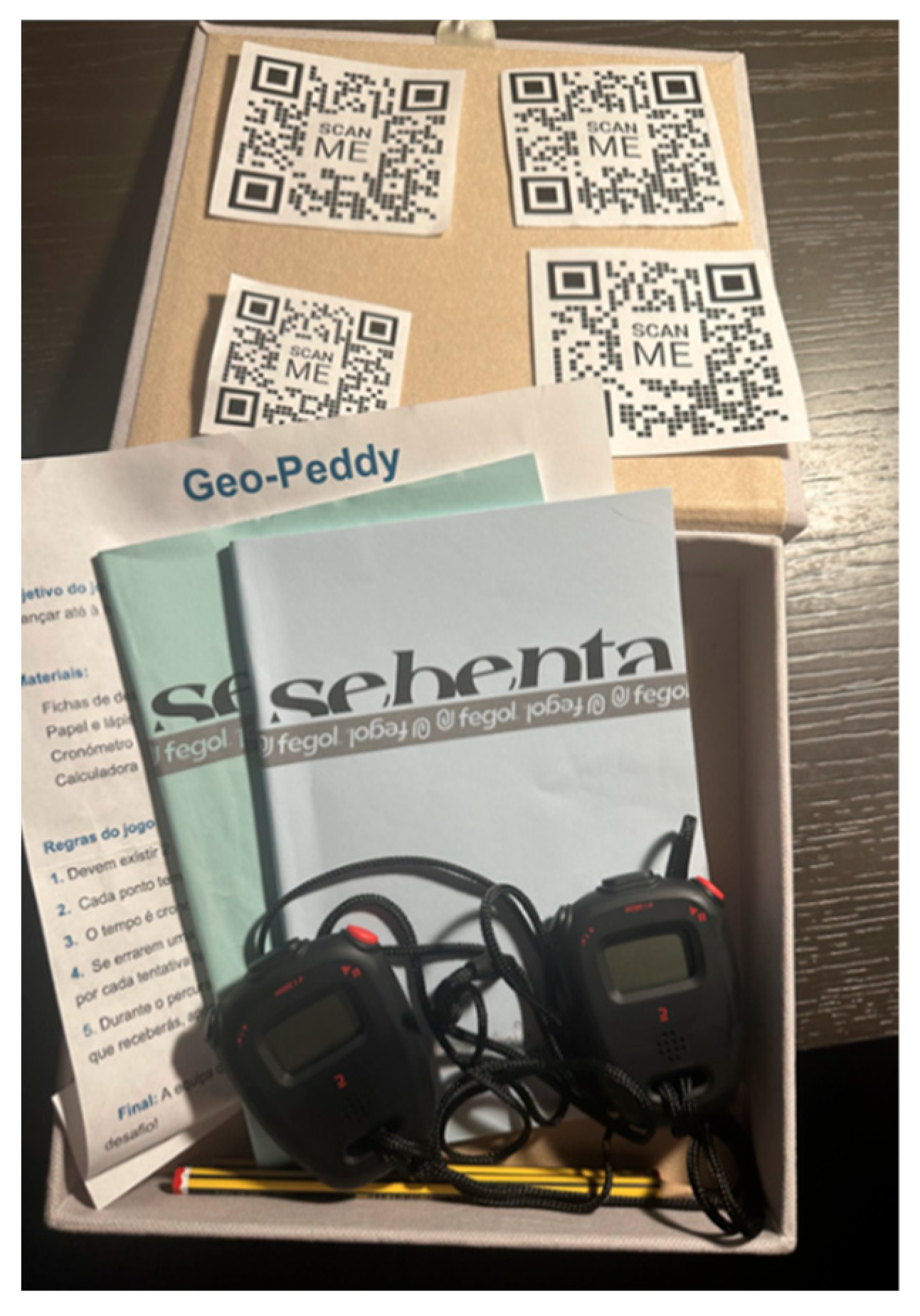
Geo-Peddy is a geometry-focused Peddy-Paper game created by a group of 9th-grade students (see
Figure 1). The game merges mathematical problem-solving with physical exploration around the school environment. It stands out for its coherent integration of
CriaMat categories with the students’ creative extension of the original framework through the inclusion of QR codes and spatial clues.
The objective of the game is for teams to complete a route by solving geometry challenges placed at different physical locations. Each challenge provides a clue—accessible via QR code—that directs the team to the next stop. The group that finishes the circuit in the shortest total time wins. Penalties are added for incorrect answers, encouraging accuracy and strategic decision-making.
The challenges developed by the students demonstrate mastery of core geometry topics such as area and perimeter, polygon properties, volume of solids, and angle relationships. These problems are aligned with the national mathematics curriculum and require students to apply geometric reasoning in real situations. For instance, the first challenge asks students to determine the length of the side of a square panel that exists in the school hall, by providing the area of the panel. It also provides a clue to the next spot of the circuit through some calculations: “The next clue is located in a place where you can “drink” knowledge. The number of letters of that place is given by ((length of the side of the square + 2) + 4)”.
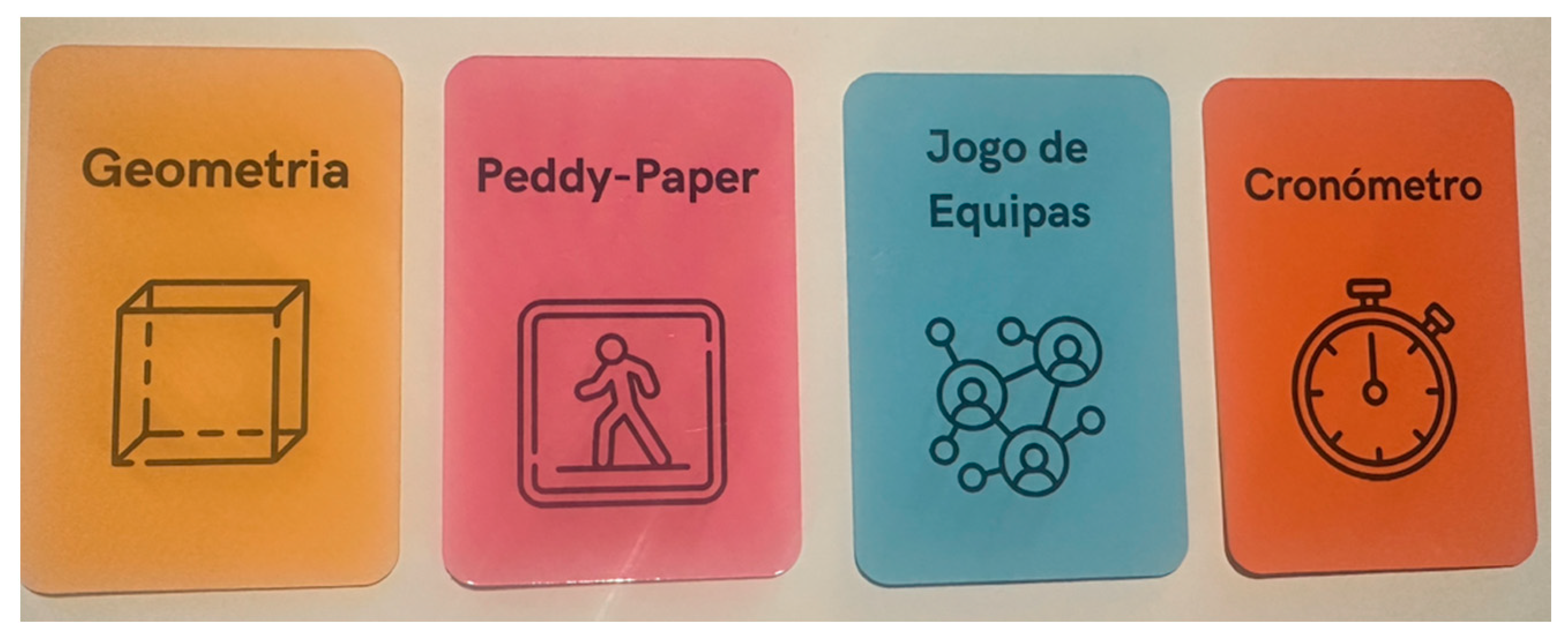
To create this game, the starting point provided by the
CriaMat cards was the set shown in
Figure 2.
4.2. FTITRA—Calculation Time
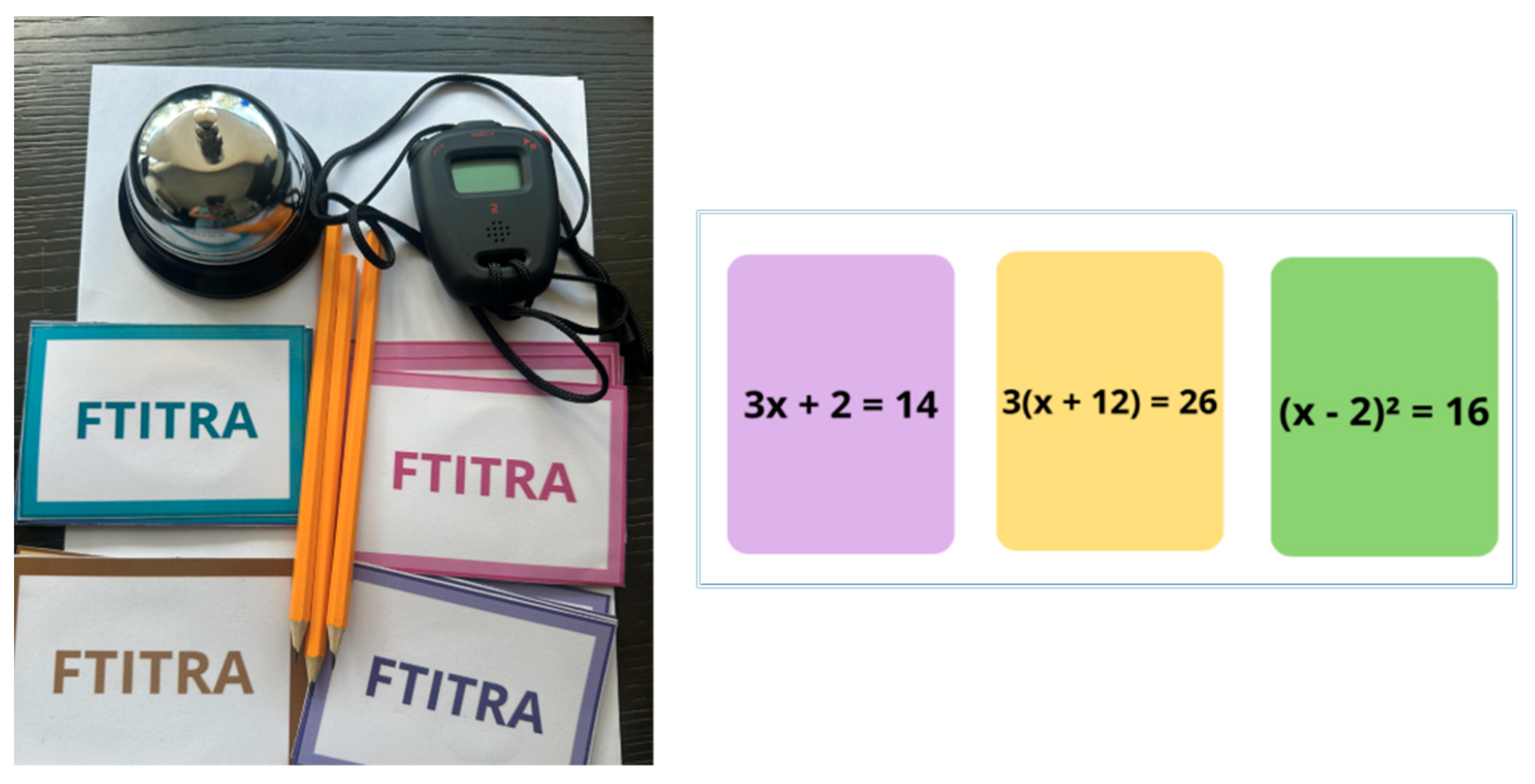
FTITRA—Calculation Time is a fast-paced competitive trivia game centred on algebraic equations. Unlike
Geo-Peddy, which emphasises exploration and teamwork,
FTITRA focuses on speed, accuracy, and strategic risk management. Players compete individually to solve equations of increasing difficulty within a time limit, using a bell to signal when they have an answer (see
Figure 3).
The game uses a multilevel structure, with equations ranging from simple linear expressions to second-degree equations. Players earn points based on the level of difficulty, with additional bonus points for specially marked “difficult questions.” This system reinforces procedural fluency and promotes mathematical resilience by challenging students to engage with increasingly complex tasks.
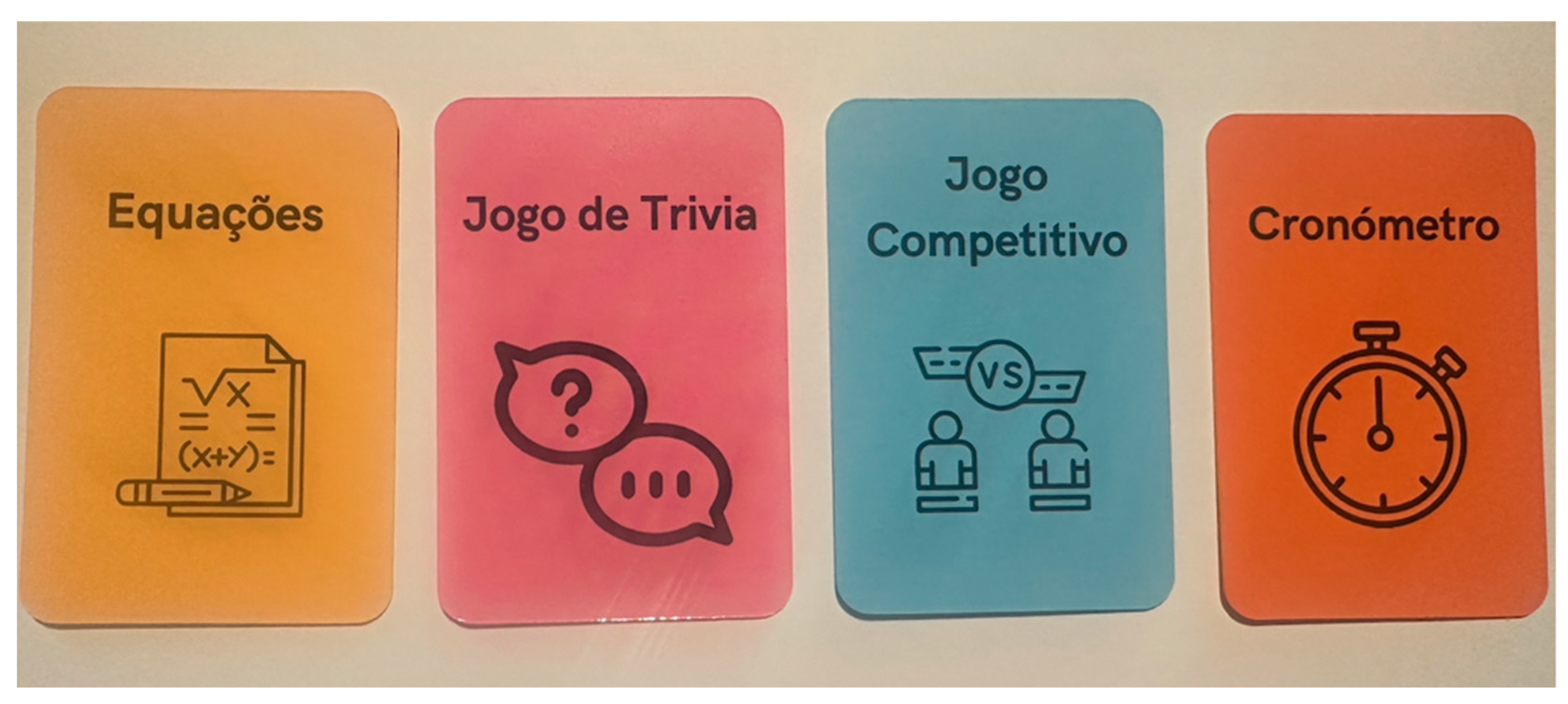
The creation of this game began with the set of
CriaMat cards presented in
Figure 4.
A notable innovation introduced by the students is the use of a physical bell to regulate turn-taking. This mechanism adds tension and requires players to balance speed with confidence, since an incorrect answer awards points to the next correct respondent. This rule encourages self-assessment, impulse control, and strategic thinking.
4.3. Pitagopólio
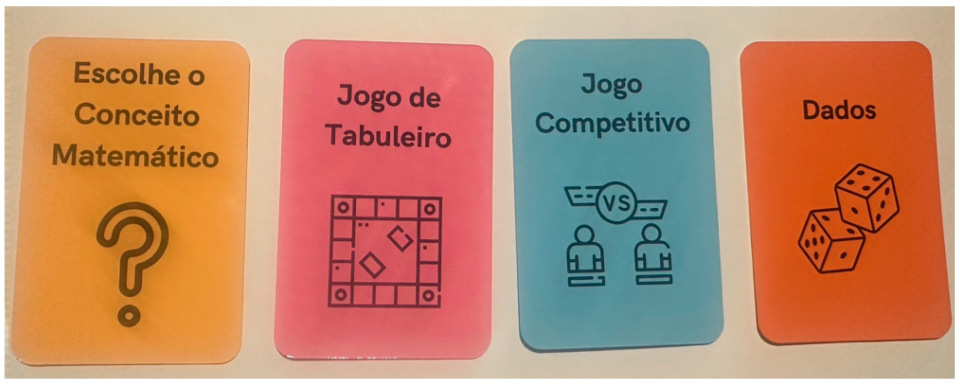
Pitagopólio is a board game inspired by classic progression-based formats and designed to consolidate the understanding of the Pythagorean theorem. The game was developed from the initial set of
CriaMat cards shown in
Figure 5.
The game combines traditional board mechanics with varied mathematical challenges, creating an engaging and structured learning experience.
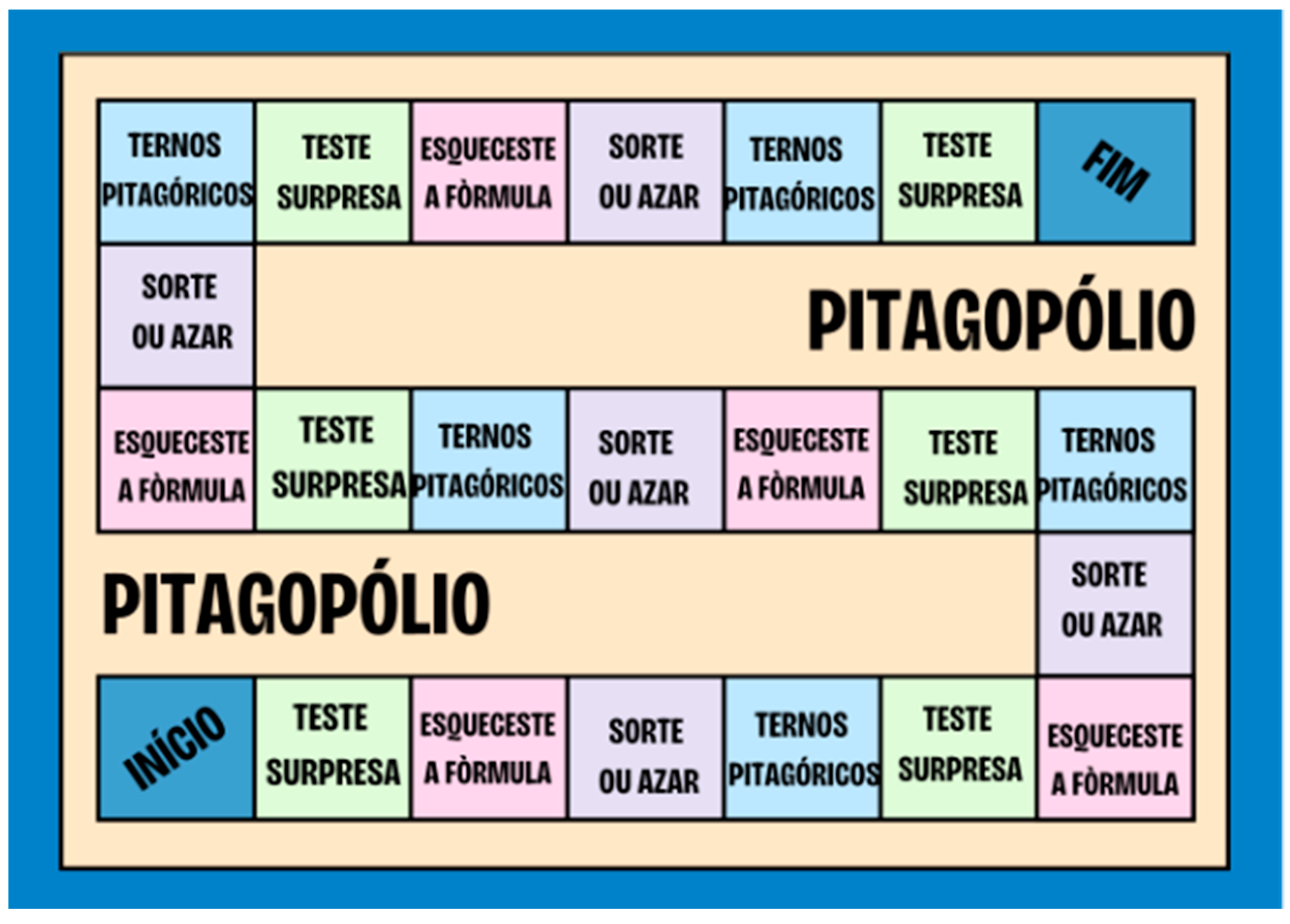
The board (see
Figure 6) consists of different types of squares (Surprise Test, Pythagorean Triples, Luck or Misfortune, You Forgot the Formula and Penalty) which require players to draw cards from the corresponding deck and solve problems, recall formulas, or react to chance events. Players advance using dice and accumulate or lose points depending on their performance on the mathematical tasks or the card contents.
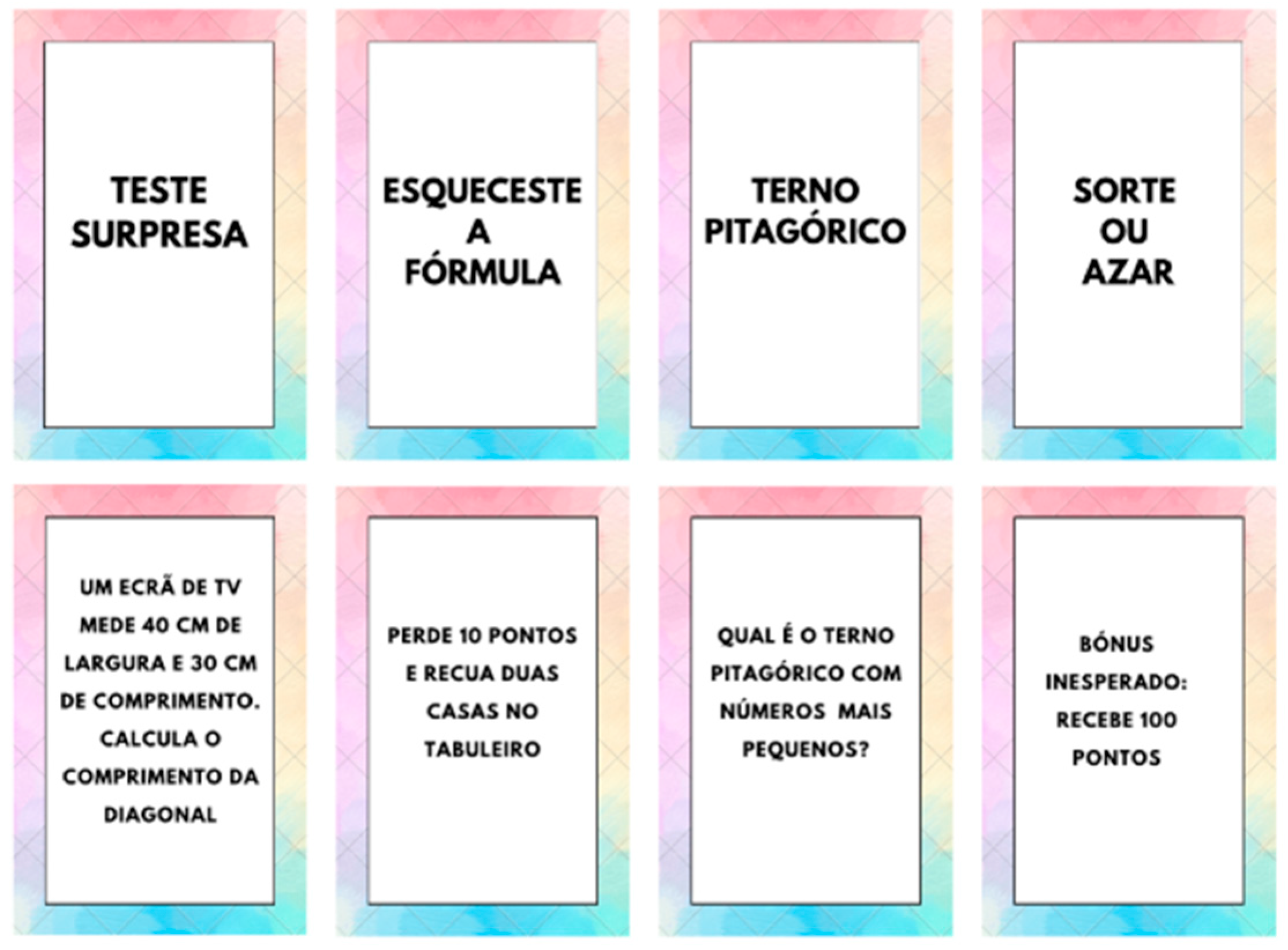
Figure 7 presents examples of cards from the four decks that accompany the board.
The first column of
Figure 7 shows an example of a
Surprise Test card. It contains a problem stating: “A TV screen has sides of 40 cm and 30 cm. What is the length of the diagonal?” The second column shows a card from the
You Forgot the Formula deck, which imposes a 10-point penalty and requires the player to move back two spaces on the board. The third column presents an example of a
Pythagorean Triple card, asking: “What is the Pythagorean triple with the smallest possible numbers?” The fourth column shows a card from the
Luck or Misfortune deck, which awards the player a 100-point bonus.
This game supports both conceptual and procedural knowledge. The Pythagorean Triples squares encourage students to identify integer solutions of the theorem, while the Surprise Test cards offer rapid-fire exercises that build fluency. The inclusion of chance-based elements maintains engagement and balances competition across students with differing proficiency levels.
4.4. Comparative Analysis
All three games were created using CriaMat, yet each reflects a distinct interpretation and learning pathway. Geo-Peddy positions mathematics as a tool for exploration; FTITRA centres mathematics as the core challenge; and Pitagopólio integrates mathematical content into a sequential board-game format. These differences illustrate the flexibility of the CriaMat framework and its capacity to support a wide range of pedagogical goals.
Common strengths across the games include clarity of rules, internal coherence, and a thoughtful integration of mathematical content into gameplay. Students consistently demonstrated autonomy, creativity, and the ability to extend beyond the basic constraints of the CriaMat decks, for example, by incorporating QR codes in Geo-Peddy or using a bell mechanism in FTITRA.
These examples illustrate that, when supported by a structured design tool and given creative freedom, students can produce game-based designs that foster engagement with mathematical content, while also integrating elements of play and originality.
5. Results and Discussion
The analysis of the results was based on observations of students’ attitudes and engagement, as well as feedback collected throughout the activity, including questionnaire responses. Two questionnaires were administered. The first aimed to gather students’ initial impressions of the CriaMat game, while the second, completed after the activity, sought to collect their reflections on the overall experience and to identify any learning outcomes related to the game-creation process.
5.1. Analysis of the Initial Questionnaire
This questionnaire included closed-ended questions using a 5-point Likert scale, as well as several open-ended questions that allowed students to freely express their opinions. Out of a total of 50 students, 49 responses were collected, corresponding to a 98% response rate.
When asked to evaluate their overall experience with the CriaMat game, 40.8% of students gave the maximum rating (5), while 36.7% chose a rating of 4, indicating a highly satisfactory experience. In total, 77.5% of students selected one of the two highest points on the scale, reflecting a strong level of engagement and appreciation for the game. The lower ratings (levels 1 and 2) represented a small minority, 10.2% of all students, which may reflect occasional difficulties, a lack of interest in games, or some discomfort with the proposed dynamics, without undermining the overall positive assessment of CriaMat.
Students were also asked to rate different components of the game using a five-point Likert scale (1 = not interesting at all; 5 = very interesting), in order to identify which elements were most appreciated. The heatmap in
Figure 8 summarises the responses.
The heatmap in
Figure 8 shows a strong positive evaluation, with a higher incidence at the upper levels of the scale (80% or more selecting levels 4 or 5), indicating a favourable reception of
CriaMat by the students. These results reinforce several points: the role of the game in fostering collaborative dynamics and promoting social skills in learning contexts; the way the diversity of elements in
CriaMat helped maintain students’ interest and stimulate their creativity during game development; and the fact that the game rules were clearly understood and well received.
Students’ qualitative responses further highlighted that the CriaMat game significantly enhanced their creativity, as well as their interaction with classmates. Among the answers provided in the open-ended question about what they liked most about CriaMat, the following comments stand out as representative:
“The possibility of using all our creativity to create a game.”
“The interaction with classmates.”
“The creativity.”
“The variety of themes and the fact that it makes us think.”
“Cooperating with classmates.”
These testimonies suggest that students perceived CriaMat as a space for personal expression and collaboration—elements frequently identified in the literature as key drivers of engagement and motivation in the learning process.
When asked what they liked least, there was a noticeable trend of negative feedback regarding the inclusion of mathematical components. Several responses consisted simply of expressions such as “Nothing,” indicating that many students did not identify any negative aspects. However, other answers revealed some resistance to calculations, with various students explicitly identifying the mathematical component as the least appreciated element:
“Having mathematics included.”
“What I liked least about the game was thinking about equations.”
“Having to do calculations.”
When asked about possible improvements to CriaMat, many students replied that “there is nothing else to improve; it’s fine as it is.” Others offered suggestions that reflect their perceptions regarding the clarity of the rules, the diversity of components, the game dynamics, and its applicability in different educational contexts. These suggestions can be grouped into two main categories.
First, several clear and frequently repeated suggestions emerged:
Second, a few isolated comments appeared—representing a minority but still worthy of consideration. Some students indicated that they felt the game involved too much mathematics or that they did not enjoy playing it. Examples include:
“Remove the mathematics”
“Not playing”
This distinction between general trends and isolated observations helps clarify students’ perceptions of the game. It highlights, on the one hand, aspects that can be strengthened and, on the other, limitations that may be addressed or adjusted.
When asked whether they had learned anything new about game creation during their experience with CriaMat, the responses revealed an almost even split: 46.9% of participants stated that they had learned something new about designing games, while 53.1% indicated that they had not.
Some of the comments from students who answered “yes” included:
“During the experience of working on the game, I learned to be more creative, and that mathematics can actually be fun.”
“How to create games.”
“How to use mathematics.”
“How to make our own mathematical games.”
“How to explore my imagination, and that mathematics is not as hard as it seems—it can even be enjoyable.”
“How to work in a group.”
5.2. Analysis of the Second Questionnaire
All 50 students involved in the study participated in this questionnaire, ensuring a 100% response rate.
The first question aimed to gather students’ overall perception of their experience creating a mathematics game using CriaMat. Students were asked to rate this experience on a 5-point Likert scale, ranging from 1 (very negative) to 5 (very positive). The results show a clearly positive evaluation: 40% of students assigned a rating of 4, and 32% gave the maximum rating (5). These figures indicate that more than two-thirds of the participants considered the experience positive or very positive, demonstrating the engagement and enjoyment generated by the activity. Twenty-four percent of students chose a score of 3, suggesting a neutral or moderately positive perception. Only 2% selected a rating of 2 and 2% the minimum rating (1), residual values that point to less positive experiences, possibly related to individual difficulties or personal preferences.
These results support the idea that CriaMat’s playful-pedagogical proposal was, for the most part, well received, successfully stimulating students’ interest and participation. Nevertheless, the presence of a small number of lower ratings may justify the implementation of additional support, active listening, and adjustments to the dynamics, in order to ensure a more inclusive and meaningful experience for all learners.
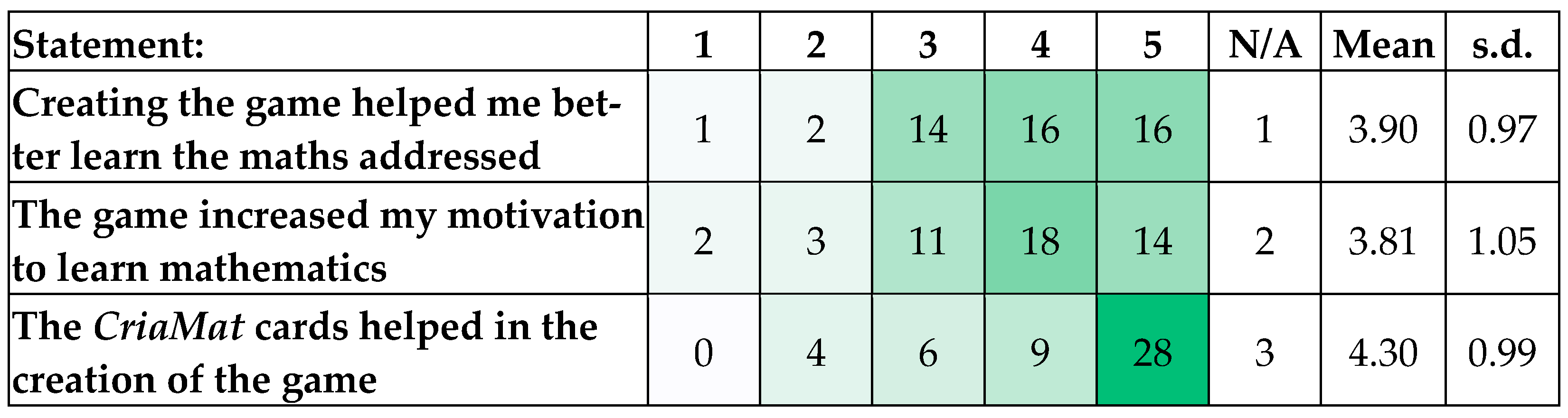
Students were also asked to indicate their level of agreement with three statements related to the game-creation experience, using a 5-point Likert scale (1 = strongly disagree; 5 = strongly agree). The heatmap in
Figure 9 summarises the responses.
The heatmap in
Figure 9 shows a predominantly positive perception (65% or more of responses selecting levels 4 or 5), indicating that students recognised both pedagogical and motivational value in the
CriaMat game, not only as a learning tool, but also as a creative and structured activity that positively influenced their engagement and understanding of mathematical content. Although the proportion of negative responses is relatively small (at most 10% selecting levels 1 or 2), a noticeable number of students selected the neutral option, as reflected in the lower mean values (3.90 and 3.81 for the first two statements). This suggests that, while the overall perception was positive, the impact of the activity may have varied across students, with some experiencing a more neutral or less pronounced effect.
Students were also asked to indicate up to three aspects they liked most or found most positive about creating the game. The purpose of this question was to understand which elements of the CriaMat experience students perceived as most valuable or relevant, allowing them to freely highlight the components that motivated or excited them, or that they found particularly enriching during the creation process.
The responses reveal a broad range of aspects, from the stimulation of creativity and collaboration to engaging with mathematical content in a different and more enjoyable way. References also emerged to the pleasure of experimenting and the satisfaction of seeing their own ideas take shape. These testimonies help clarify the factors that contributed to the success of the activity and that may be strengthened in future implementations. Below are some of the most representative responses:
“Learning mathematics in a fun, playful way.”
“Being able to use creativity to create the game.”
“It encouraged me to like mathematics more.”
“Learning to reason and discuss ideas.”
“A different way of learning the subject.”
“Working as a team.”
This last response was also one of the most representative answers to the question about the main difficulties experienced during the creation of the game, indicating the presence of contradictory opinions regarding this aspect. The following statements illustrate some of the main challenges reported by students:
“Working with the group.”
“We wanted the game to be original, so we took more time to plan everything carefully.”
“Agreeing with others.”
“Lack of availability for everyone to meet together.”
Students were also asked whether they enjoyed the use of educational games during Mathematics lessons. The responses revealed very positive acceptance. Of the 50 students surveyed, 88% answered ‘yes’, expressing appreciation for the use of games as a pedagogical resource. Only 10% selected ‘Maybe’, indicating some hesitancy or neutrality, and 2% stated that they did not enjoy it. These results show that the vast majority of students valued the activity and recognised both the playful and pedagogical benefits of the proposal. The high rate of positive responses suggests a significant emotional and motivational impact, highlighting the potential of educational games to increase students’ interest and engagement in Mathematics classes.
To assess students’ future receptiveness to the integration of educational games in Mathematics lessons, they were also asked whether they would like to continue using such games in future classes. The responses demonstrated overwhelmingly positive attitudes, confirming strong acceptance of playful approaches to teaching Mathematics. A large majority, 82% of the 50 students surveyed, indicated that they would like to continue using educational games in Mathematics lessons. The remaining 18% selected ‘Maybe’, while no student responded negatively. This strong result shows that most students expressed a desire to repeat or maintain this methodology in the future, indicating that their experience with CriaMat was not only successful at the time of implementation but also meaningful enough to generate expectations of continuity and strong acceptance of this pedagogical approach.
5.3. Field Notes Analysis
The analysis of the data collected through the teacher’s field notes (simultaneously one of the researchers) confirms the results presented along the previous sections. The teacher was able to observe that, in general, the students were enthusiastic about the CriaMat game.
Students’ satisfaction, engagement, and involvement were clearly visible in the classroom atmosphere. The researcher’s field notes repeatedly documented a level of “productive noise,” “lively discussions,” and “intense concentration” during the ideation and prototyping phases, contrasting sharply with the passivity often observed in more traditional lessons. When a student writes in the questionnaire that what they liked most was “using creativity,” this statement is corroborated by observations of groups enthusiastically sketching board layouts or inventing complex narratives for their games, as seen in the case of Geo-Peddy. The motivation reported in the questionnaires was therefore not merely a socially desirable response, but a reflection of genuine engagement from the students.
Analysis of the questionnaires showed that although “working as a team/interaction with classmates” was highly valued in the initial questionnaire, the second questionnaire revealed more contradictory opinions. Classroom observations confirm that, while interaction was generally positive, it was also marked by challenges and disagreements, corroborating the ambivalence found in the second questionnaire.
It was also observed that “avoiding the mathematics” was an initial strategy used by several groups. This aligns with some of the responses in the first questionnaire that identified “having mathematics included” as the least appreciated aspect. This does not contradict the overall positive questionnaire results but rather adds nuance to their interpretation. It suggests that the playful structure of CriaMat helped engage students by allowing them to enter the task through more immediately appealing elements, such as creativity and storytelling. As the activity progressed, mathematical content gradually became a functional and unavoidable component of the game-design process. While the questionnaire data reflect a successful integration of mathematics into the activity, classroom observations reveal the gradual and sometimes complex pathway through which students became engaged with the mathematical dimension of the task.
6. Conclusions
As
McGonigal (
2011) argues, school contexts can sometimes resemble a “broken reality”, where errors are penalised and feedback is delayed, limiting students’ willingness to take risks and engage creatively. Within the
CriaMat experience, this dynamic was partially reconfigured. Students were presented with a clear and meaningful challenge—designing a functional mathematical game—and were able to observe tangible outcomes of their work, as illustrated by the games Geo-Peddy, FTITRA, and Pitagopólio. In line with
Kapp’s (
2012) perspective, motivation in this context appeared to stem primarily from autonomy, involvement, and ownership, rather than from external rewards.
After a brief phase of uncertainty, students embraced the role of creators and worked with autonomy and enthusiasm. This suggests that many students possess strong creative potential; they simply need opportunities to express it. The structure provided by CriaMat appears to have supported the emergence of this competence, suggesting that the main barrier to students’ creativity is not a lack of talent, but a lack of opportunities to put it into practice.
Rather than providing evidence of measured learning gains, the findings of this study point to students’ perceived learning and engagement with mathematical content. Questionnaire responses and classroom observations indicate that many students felt that creating a game helped them reflect on and work with mathematical concepts in a different way.
A large group of students recognised that developing the game facilitated their understanding of the mathematical concept. The analysis of the games, particularly Pitagopólio, illustrates this point. Students had to break down the Pythagorean theorem in order to design the squares of the board. The act of creation required them to think about the mathematical concept itself. Mathematics thus became the necessary language for achieving their goal. However, the presence of neutral and less positive responses highlights that this impact was not uniform across all participants. These results reinforce the importance of interpreting the pedagogical value of game design cautiously and acknowledging variability in students’ experiences.
Although the main focus was Mathematics,
CriaMat also supported the development of lifelong skills such as collaboration, communication, autonomy, and critical thinking—skills identified by the
World Economic Forum (
2020) as essential for the twenty-first century. The difficulties reported by students (“working with the group,” “reaching agreement”) show that the process required dialogue and negotiation. Creating a game from scratch obliged teams to discuss ideas, make collective decisions, and find balanced solutions. In the games FTITRA—Tempo de Cálculo and Geo-Peddy, students went beyond mathematical content: they thought about the player experience, created balanced rules, and even integrated technology such as QR codes. As
Pais and Hall (
2024) argue, games can sometimes disrupt the learning process. However, by assigning students the role of creators,
CriaMat transformed this risk into an opportunity: it was the students themselves who ensured coherence and meaningful connections to mathematics.
Designing games can therefore be understood as a pedagogical strategy that encourages students to actively engage with mathematical content by situating it within a meaningful and familiar context. The motivation to develop a game that people will genuinely want to play stimulates students to engage more deeply with mathematics because they realise that without mastering the underlying concepts, their game will lack coherent rules and fair challenges. By translating mathematical properties and rules into game mechanics—such as progression, scoring systems, penalties, or challenges—students are prompted to reinterpret abstract concepts in applied and tangible ways.
Several limitations of this study must be acknowledged. The research involved a relatively small sample and adopted an exploratory case study design. Data analysis was largely descriptive, and no pre-intervention measures, control groups, or objective assessments of mathematical achievement were included. Furthermore, the reliance on self-reported perceptions and the dual role of the teacher as researcher may have influenced the results. These factors limit the extent to which broader generalisations can be made and highlight the need for further research using more robust and comparative designs.
Despite these limitations, this study contributes to the growing body of research on game design as a pedagogical approach in mathematics education. The findings reinforce the ideas of
McGonigal (
2011) and
Kapp (
2012) on the power of playful engagement, as well as those of
Vale and Pimentel (
2004) and
Ferrara (
2012) on the educational value of creation.
CriaMat emerges as a structured, flexible, and engaging tool that supports students in the complex task of creating mathematical games by breaking the process into manageable and motivating steps. More than promoting the use of ready-made games, this approach highlights the educational potential of positioning students as authors and designers, capable of engaging creatively and reflectively with mathematical content when given appropriate support and autonomy.
Author Contributions
Conceptualization, C.D., S.P. and A.H.; Methodology, C.D. and S.P.; Software, C.D., S.P. and A.H.; Validation, C.D.; Formal Analysis, C.D.; Investigation, C.D., S.P. and A.H.; Resources, C.D.; Data Curation, C.D.; Writing—Original Draft Preparation, C.D., S.P. and A.H.; Writing—Review and Editing, S.P. and A.H.; Visualization, S.P. and A.H.; Supervision, S.P. and A.H.; Project administration, C.D.; Funding Acquisition, S.P. and A.H. All authors have read and agreed to the published version of the manuscript.
Institutional Review Board Statement
Ethical review and approval were waived for this study due to this study did not require approval from a Research Ethics Committee according to Portuguese legislation and institutional standards. The research involved the collection of anonymous, non-identifiable and non-sensitive questionnaire data, obtained voluntarily from students, with informed consent from their parents or legal guardians for all participants under the age of 16. In accordance with the General Data Protection Regulation (GDPR—Regulation (EU) 2016/679) and its implementation in Portugal through Law 58/2019, additional ethical review is mandatory only when research involves risks to participants or the processing of personal or special-category data (GDPR Articles 5, 6, and 9; Law 58/2019 Articles 2 and 31). Since this study collected only anonymous opinion data regarding students’ perceptions of a classroom activity, with no personal identifiers, no sensitive data, and no physical or psychological intervention, it does not fall within the categories that require ethics committee assessment under Portuguese law. Furthermore, Portuguese university ethics committees usually evaluate only studies that involve risk, intervention, or identifiable/sensitive personal data. As such, this type of educational research—anonymous questionnaires on learning activities—is not subject to mandatory ethical review in Portugal. For these reasons, the study fully complies with the applicable national and European ethical and data protection standards.
Informed Consent Statement
Informed consent was obtained from all subjects involved in the study.
Data Availability Statement
The raw data supporting the conclusions of this article will be made available by the authors on request.
Conflicts of Interest
The authors declare no conflicts of interest.
References
- Archambault, C. (n.d.). Game of games: Creator and license information. The Playful Paradigm Foundation. Available online: https://www.gameofgames.net/ (accessed on 23 May 2025).
- Bezerra, M. J. (1962). O material didático no ensino da matemática. MEC/CADES. [Google Scholar]
- Dahal, N., Luitel, B. C., & Pant, B. P. (2019). Teacher-students relationship and its potential impact on mathematics learning. Mathematics Education Forum Chitwan, 4(4), 35–53. [Google Scholar] [CrossRef]
- Debrenti, E. (2024). Game-based learning experiences in primary mathematics education. Frontiers in Education, 9, 1331312. [Google Scholar] [CrossRef]
- Dewey, J. (1938). Experience and education. Macmillan. [Google Scholar]
- Dhakal, P. K. (2018). Use of ICT tools in teaching mathematics in higher education: A case of Midwestern university. International Journal of Multidisciplinary Perspectives in Higher Education, 3(1), 81–88. [Google Scholar] [CrossRef]
- Erşen, Z. B., & Ergül, E. (2022). Trends of game-based learning in mathematics education: A systematic review. International Journal of Contemporary Educational Research, 9(3), 603–623. [Google Scholar] [CrossRef]
- Espinoza-Espinosa, D., Jadán-Guerrero, J., Santorum, M., & Nunes, I. (2022). Learning based on Board game to inspire mathematical thinking. In I. L. Nunes (Ed.), Human factors and systems interaction. AHFE 2022 international conference (Vol. 52). AHFE International. [Google Scholar] [CrossRef]
- Ferguson, C. J. (2007). Evidence for publication bias in video game violence effects literature: A meta-analytic review. Aggression and Violent Behavior, 12(4), 470–482. [Google Scholar] [CrossRef]
- Ferrara, J. (2012). Playful design: Creating game experiences in everyday interfaces. Rosenfeld Media. [Google Scholar]
- Freudenthal, H. (1991). Revisiting mathematics education: China lectures. Springer. [Google Scholar] [CrossRef]
- Gobet, F., Retschitzki, J., & de Voogt, A. (2004). Moves in mind: The psychology of board games. Psychology Press. Available online: https://archive.org/details/movesinmindpsych0000gobe/mode/2up (accessed on 23 May 2025).
- Grando, R. C. (2000). O conhecimento matemático e o uso de jogos na sala de aula [Doctoral thesis, Universidade Estadual de Campinas]. Available online: https://hdl.handle.net/20.500.12733/1590391 (accessed on 23 May 2025).
- Grootenboer, P., & Marshman, M. (2016). The affective domain, mathematics, and mathematics education. In P. Grootenboer, & M. Marshman (Eds.), Mathematics, affect and learning: Middle school students’ beliefs and attitudes about mathematics education (pp. 13–33). Springer. [Google Scholar] [CrossRef]
- Hall, A., Pais, S., Morando, P., & Spreafico, M. L. S. (2025). Beyond traditional teaching: Games and origami as tools for mathematics learning. The Proceedings of 19th European Conference on Games Based Learning, 19(1), 368–377. [Google Scholar] [CrossRef]
- Kapp, K. M. (2012). The gamification of learning and instruction: Game-based methods and strategies for training and education. Pfeiffer. [Google Scholar]
- Kishimoto, T. M. (1998). O jogo e a educação infantil. Pioneira. [Google Scholar]
- Kishimoto, T. M. (2010). O jogo e a educação infantil (13th ed.). Pioneira Thomson Learning. [Google Scholar]
- Koster, R. (2013). Theory of fun for game design (2nd ed.). O’Reilly Media. Available online: https://www.oreilly.com/library/view/theory-of-fun/9781449363208/ (accessed on 11 October 2024).
- Malone, T. W., & Lepper, M. R. (1987). Making learning fun: A taxonomy of intrinsic motivations for learning. In R. E. Snow, & M. J. Farr (Eds.), Aptitude, learning, and instruction (Vol. 3, pp. 223–253). Lawrence Erlbaum Associates. Available online: https://ocw.metu.edu.tr/pluginfile.php/2340/mod_resource/content/0/ceit706/week3/MakingLearningFun-ATaxonomyOfIntrinsicMotivationsForLearning.pdf (accessed on 11 October 2024).
- McGonigal, J. (2011). Reality is broken: Why games make us better and how they can change the world. Penguin Press. Available online: https://books.google.pt/books/about/Reality_Is_Broken.html?id=yiOtN_kDJZgC (accessed on 8 June 2025).
- Ministério da Educação, Direção-Geral da Educação [ME/DGE]. (2021). Aprendizagens essenciais de matemática—5.º ano—2.º ciclo do ensino básico. República Portuguesa. Available online: https://www.dge.mec.pt/sites/default/files/Curriculo/Aprendizagens_Essenciais/2_ciclo/ae_mat_5.o_ano.pdf (accessed on 1 March 2025).
- National Council of Teachers of Mathematics [NCTM. (2014). Principles to actions: Ensuring mathematical success for all. NCTM. [Google Scholar]
- Nelson, C. A., de Haan, M., & Thomas, K. M. (2015). Neuroscience of cognitive development: The role of experience and the developing brain. John-Wiley & Sons. [Google Scholar] [CrossRef]
- Niss, M., & Højgaard, T. (2019). The nature of mathematical competencies: Conceptualization and assessment. Springer. [Google Scholar] [CrossRef]
- OECD. (2019). PISA 2018 results (Vol. 1): What students know and can do. OECD Publishing. [Google Scholar]
- Pais, S., & Hall, A. (2024). When games get in the way: Gamification approach for teaching maths—A case study with undergraduate tourism students. Proceedings of the 18th European Conference on Games Based Learning, 18(1), 685–694. [Google Scholar] [CrossRef]
- Polya, G. (1945). How to solve it: A new aspect of mathematical method. Princeton University Press. [Google Scholar]
- Schoenfeld, A. H. (2016). Learning to think mathematically: Problem solving, metacognition, and sense making in mathematics (Reprint). Journal of Education, 196, 1–38. [Google Scholar] [CrossRef]
- Vale, I., & Pimentel, T. (2004). Resolução de problemas. In I. Vale, T. Pimentel, A. Barbosa, L. C. Leal, & P. Abrantes (Eds.), Os números na sala de aula. Associação de Professores de Matemática. Available online: https://quadrante.apm.pt/article/view/22923/16989 (accessed on 5 March 2025).
- Vankúš, P. (2021). Influence of game-based learning in mathematics education on students’ affective domain: A systematic review. Mathematics, 9(9), 986. [Google Scholar] [CrossRef]
- Vygotsky, L. S. (1978). Mind in society: The development of higher psychological processes. Harvard University Press. [Google Scholar] [CrossRef]
- Whitebread, D. (2012). Developmental psychology and early childhood education. SAGE Publications. [Google Scholar]
- World Economic Forum. (2020). The future of Jobs report. Available online: https://www.weforum.org/reports/the-future-of-jobs-report-2020 (accessed on 18 October 2024).
- Yin, R. K. (1994). Case study research: Design and methods. Sage Publications. [Google Scholar]
| Disclaimer/Publisher’s Note: The statements, opinions and data contained in all publications are solely those of the individual author(s) and contributor(s) and not of MDPI and/or the editor(s). MDPI and/or the editor(s) disclaim responsibility for any injury to people or property resulting from any ideas, methods, instructions or products referred to in the content. |