Next Article in Journal
Pathway to Medicine and Health Programs Revisited: Outcomes and Institutional Adaptations in Greater Philadelphia and Beyond
Next Article in Special Issue
Investigating Choice of and Perceived Efficacy of Learning Strategies Used by STEM Students
Previous Article in Journal
Turning the Page: Pre-Class AI-Generated Podcasts Improve Student Outcomes in Ecology and Environmental Biology
Previous Article in Special Issue
Humanizing STEM Education Amidst Environmental Crises: A Case Study of a Rural Hispanic-Serving Institution (HSI) in New Mexico
 
 
Due to scheduled maintenance work on our servers, there may be short service disruptions on this website between 11:00 and 12:00 CEST on March 28th.
Article

Data-Rich Science Instruction: Current Practices and Professional Learning Needs for Middle and High School Earth Science

WestEd, 730 Harrison Street, San Francisco, CA 94107, USA
*
Author to whom correspondence should be addressed.
Educ. Sci. 2026, 16(1), 171; https://doi.org/10.3390/educsci16010171
Submission received: 21 October 2025 / Revised: 12 December 2025 / Accepted: 13 January 2026 / Published: 22 January 2026
(This article belongs to the Special Issue Rethinking Science Education: Pedagogical Shifts and Novel Strategies)

Abstract

Data fluency—the ability and confidence to actively make sense of and use data—is increasingly recognized as essential for students’ civic participation and scientific literacy, yet questions remain about implementing data-rich instruction effectively. This exploratory mixed-methods study examined current practices and professional learning needs through surveys with 155 secondary Earth science educators across the United States and focus groups with 21 participants. Educators reported comprehensive engagement with data practices (91% using 5+ practice categories) but showed critical gaps: only 39% used pre-existing datasets despite their importance for investigating large-scale phenomena, 45% employed dynamic visualization tools that could democratize data exploration, and 18% did not foster dispositions for student data agency. Teachers recognized diverse student assets for data work, including community-based knowledge and problem-solving approaches, with 42% seeking support for community-connected pedagogy. Barriers included accessing relevant datasets (53%), time constraints (42%), and integrating data into lessons (47%)—challenges that reflect systemic rather than individual limitations. These findings reveal that while educators serving diverse communities envision data science as an opportunity to value different strengths and ways of knowing, realizing this transformative potential requires systematic support including accessible tools, relevant datasets, and professional learning that bridges recognition of student assets with classroom implementation.

1. Introduction

1.1. Overview

The role of data in our lives cannot be overstated. Every day, people use data to make decisions and learn about the world: they read consumer reviews, check air quality maps, and use gadgets to track their steps. As the quantity of data in many aspects of our lives grows exponentially, we all need data skills to understand the news (Yarnall & Ranney, 2017), make informed decisions, vote knowledgeably (Gould, 2017; Oppenheimer & Edwards, 2012), and participate in data-centric careers. Thus, data fluency—the ability and confidence to actively make sense of and use data—is key to students’ successful participation in daily life.
To prepare students for a world where data is ubiquitous, educational systems increasingly emphasize data use across disciplines. The Next Generation Science Standards (NGSS Lead States, 2013) emphasizes analyzing and interpreting data, engaging in argument with evidence, and using mathematical and computational thinking to make sense of data (Kastens, 2015). The 2024 joint statement from the National Science Teaching Association, National Council of Teachers of Mathematics, National Council for the Social Studies, Computer Science Teachers Association, and American Statistical Association calling for data integration across all K-12 subjects signals unprecedented consensus about data fluency’s importance.
This expanding emphasis on data learning across disciplines presents a unique opportunity to engage students who have not traditionally excelled in conventional science instruction. Data investigation can value different strengths than laboratory-based science, such as pattern recognition in local contexts, storytelling with evidence, connecting abstract concepts to lived experiences. For students from diverse communities, including those from rural, Indigenous, and immigrant populations, data science offers alternative entry points into scientific thinking. When students analyze data about their own communities—local environmental changes, economic patterns, or health trends—they engage in authentic scientific practice that directly matters to them and their families.
However, realizing this potential requires an understanding of what educators need to implement these approaches effectively. While many teachers have begun integrating data into their instruction, they still need support in the form of tools, resources, and teacher preparation (National Academies of Sciences, Engineering, and Medicine, 2023). Although data use in science education is not new, the confluence of policy mandates, technological advances, and unprecedented data accessibility creates unique opportunities for scale and impact—opportunities to fundamentally reshape who succeeds in science. Significant questions remain about how to leverage these developments as a pathway for engaging all students, particularly those who have not traditionally seen themselves as “science people”.

1.1.1. Earth Science as a Context for Data-Rich Learning

Earth science provides an ideal context for developing data fluency. First, Earth science requires analyzing large-scale datasets that mirror the types of data students will encounter as citizens (e.g., climate trends informing policy to environmental data affecting community health). Working with these authentic datasets prepares students to navigate the complex, real-world data that shapes public decisions. Second, the Next Generation Science Standards explicitly link Earth systems to human activity and societal issues (NGSS Lead States, 2013). This connection enhances student agency: when students use National Aeronautics and Space Administration (NASA) satellite data to investigate local drought or National Oceanic and Atmospheric Administration (NOAA) datasets to understand regional climate change, they engage in the same practices that inform community planning and policy. Third, unprecedented access to public datasets from NASA, NOAA, and United States Geological Survey (USGS) provides authentic data for classroom use, allowing students to investigate community-relevant questions while developing skills for navigating authoritative sources. Finally, Earth science concepts increasingly appear across disciplines—from environmental justice in social studies to climate fiction in English—positioning Earth science data literacy as a cross-curricular competency.

1.1.2. Centering Diverse Voices in Data-Rich Science Education

While data-rich science education expands rapidly, students from rural, Indigenous, and immigrant communities remain underrepresented in these opportunities, despite bringing valuable perspectives and knowledge systems to science work (Bang et al., 2013). Rural students often possess deep observational knowledge of local environmental patterns yet may lack access to technology (National Center for Education Statistics, 2023) and datasets that connect their observations to broader scientific understanding. Indigenous students bring intergenerational knowledge systems about environmental monitoring that align with but are rarely recognized as data practices (Berkes, 2012). Immigrant students navigate multiple information systems and cultural frameworks (Marosi et al., 2021), skills directly applicable to interpreting data from different sources and contexts.
This study intentionally centers educators serving these populations to ensure that emerging data science practices do not replicate existing inequities in STEM education. By understanding the needs and assets of educators working in historically underrepresented communities, we can develop professional learning that leverages rather than overlooks diverse students’ strengths.

1.2. Theoretical Framework: Toward Community-Connected Data Science Education

Understanding how to support data-rich instruction that reaches all students requires examining multiple interconnected dimensions. This study draws on complementary theoretical perspectives to understand how educators can foster data fluency in diverse educational contexts.
Our framework integrates three key lenses. First, we examine data fluency itself through frameworks that characterize the investigative processes, contextual understanding, and critical dispositions students need to work meaningfully with data. Second, we apply the Technological Pedagogical Content Knowledge (TPACK) framework to understand how teachers integrate technology, pedagogy, and Earth science content in data-rich instruction. Third, we draw on funds of knowledge theory to recognize how students’ community-based knowledge systems can serve as assets for data learning.
While we present these frameworks separately for clarity, they work synergistically in practice. Effective data science education requires teachers to simultaneously develop students’ data fluency across all three components, leverage appropriate technologies that support data exploration, and build upon the diverse knowledge and critical perspectives students bring from their communities. This integrated perspective guided our investigation into teachers’ current practices and professional learning needs.

1.2.1. Data Fluency

Central to our investigation is understanding how students develop data fluency through both investigative processes and dispositional orientations. For this study, we define data fluency as the ability and confidence to actively make sense of and use data. Data fluency encompasses not just technical skills in data manipulation and analysis, but also the contextual understanding to interpret data meaningfully and the critical dispositions to question data sources, methods, and implications. This definition recognizes data fluency as both a cognitive and social practice, requiring integration of knowledge, skills, and habits of mind.
We chose “data fluency” over related terms like “data literacy” or “data competency” for two key reasons. First, fluency emphasizes the dynamic, integrated nature of working with data. This is analogous to the way language fluency implies not just vocabulary and grammar knowledge but the ability to communicate meaningfully in context. Second, and critically, fluency implies agency: fluent data users do not just consume or interpret data presented to them, but actively choose what questions to ask, what data to seek or collect, and how to use data to understand their world and advocate for change. This positioning of students as active agents rather than passive recipients aligns with perspectives that view data work as a tool for empowerment and social understanding (D’Ignazio & Klein, 2020; Arastoopour Irgens et al., 2020).
To understand how educators support their middle and high school students in developing this multifaceted fluency, we examined their practices through complementary theoretical lenses that illuminate different aspects of data work. These frameworks help us understand data fluency’s core components: the investigative processes through which students engage with data, the contextual understanding needed for meaningful interpretation, and the critical dispositions or habits of mind that enable students to question and use data purposefully.
We draw on complementary frameworks that characterize data work as iterative cycles of inquiry requiring these interconnected dimensions: investigative processes, contextual understanding, and habits of mind. Both the Pre-K-12 Guidelines for Assessment and Instruction in Statistics Education (Bargagliotti et al., 2020) and H. S. Lee et al.’s (2020) Data Investigation Process emphasize that students must engage in interconnected phases of work with data. H. S. Lee et al.’s (2020) model includes 6 stages which, taken together holistically, help investigators make sense of the world. The stages are: framing the problem, considering and gathering data, processing data, exploring and visualizing data, considering models, and communicating and proposing action. These frameworks position data fluency not as a set of discrete skills but as an integrated practice where each phase informs and is informed by the others.
Contextual knowledge in data inquiry encompasses both domain-specific understanding needed to interpret data meaningfully and awareness of the social, cultural, and environmental factors that shape data collection and interpretation. Making sense of data requires understanding data within their specific contexts (Bargagliotti et al., 2020). As Cobb and Moore (1997, as cited in Bargagliotti et al., 2020) argue, while context obscures structure in mathematics, it provides essential meaning in data analysis. By recognizing contextual knowledge as essential to data fluency, we acknowledge that meaningful data work requires not just technical skills but also deep understanding of the phenomena being studied and the communities affected by it.
Beyond procedural and contextual knowledge, Wild and Pfannkuch (1999) identified key dispositions, including curiosity and awareness, engagement, imagination, skepticism, being logical, propensity to seek deeper meaning, openness, and perseverance, through interviews with statisticians and observations of students engaged in statistical problem solving. In his framework, Gal (2002) includes a critical stance toward data as one key component of the disposition needed for statistical literacy. “A first expectation is that adults hold a propensity to adopt, without external cues, a questioning attitude towards quantitative messages that may be misleading, one-sided, biased, or incomplete in some way” (p. 18). Similarly, H. S. Lee and Tran (2015) outline a set of “habits of mind” for approaching statistical investigations, which include considering the context of the data, embracing uncertainty, and being skeptical. These dispositions and habits of mind are important for data-rich instruction because they help users become informed creators and consumers of data, engage in creative problem-solving with data, and persevere through the numerous challenges of working with data. Fostering data-friendly dispositions presents a valuable learning opportunity for educators and their students, as these dispositions are central to data inquiry.
V. R. Lee et al. (2021) extend this work by emphasizing the humanistic dimensions of data practices. They argue that data work is fundamentally a human activity embedded in social contexts and values, requiring attention to whose questions get asked, whose data gets collected, and whose stories get told. This perspective is particularly relevant for inclusive data science education, as it validates diverse ways of knowing and questioning that students bring from their varied backgrounds and communities.
Together, these frameworks informed our investigation of teachers’ current practices and needs for fostering both the investigative processes and critical dispositions necessary for meaningful data engagement in Earth science.

1.2.2. Funds of Knowledge and Community Data Practices

Inspired by the concept of “funds of knowledge” from Moll et al. (1992), our investigation acknowledges that students bring varied experiences and community knowledge that influence their data interpretation and meaning-making processes. Recognizing these assets can enrich data education by creating more inclusive learning experiences for all students. Asset-based approaches can also help address persistent gaps in STEM education (e.g., racial, gender, socioeconomic) by using home-life experiences as strengths rather than deficits. According to Denton and Borrego (2021) “An assets-based approach would seek to change the curriculum and teaching practices to reflect students’ backgrounds and strengths, ultimately resulting in greater motivation, learning, and retention”.
Some of the knowledge that students bring to their data learning arises from their participation in family and community life. Research has documented that different communities possess sophisticated knowledge systems relevant to data work. Indigenous communities, for instance, maintain complex environmental monitoring practices, tracking seasonal patterns, species behaviors, and ecological changes across generations (Berkes, 2012). Agricultural communities develop detailed observational systems for weather patterns, soil conditions, and crop performance (Nazarea, 1999). While these knowledge systems are not always recognized as “data practice” in formal educational settings, they involve systematic observation, pattern recognition, and evidence-based decision-making—core components of data fluency.
Pedagogical approaches such as place-based education (Smith, 2002) can serve as bridges between community knowledge systems and formal data science education. Place-based approaches ground data investigations in local phenomena that students and their families know intimately. These approaches, which emerged prominently in our participants’ descriptions of their practice, suggest pathways for validating community ways of knowing while building formal data skills.
When students see connections between their communities’ ways of knowing and the data science practices taught in school, it may validate their knowledge while building new skills. Our work queried teachers’ experiences with creating and facilitating data learning that taps into students’ home-life experiences and community connections (e.g., experiences with family farms that inform students’ knowledge about plant growth).

1.2.3. Technological and Pedagogical Content Knowledge

Building on the Technological Pedagogical Content Knowledge (TPACK) framework (Mishra & Koehler, 2006), we examined teachers’ experiences across three interconnected knowledge domains. Domain knowledge encompasses both Earth science content and data inquiry skills. Pedagogical knowledge includes selecting appropriate datasets, scaffolding data activities, and recognizing how dynamic visualizations foster data literacy (Ainsworth, 2018; Konold et al., 2017). Technological pedagogical knowledge involves understanding tool affordances and how technology choices can make diverse knowledge bases visible and valuable: when students map local observations against larger datasets, technology bridges community knowledge and formal data science.

1.2.4. Integrating the Frameworks

These three frameworks work together to support understanding of community-connected data science education. Effective practice requires educators to simultaneously recognize the data-relevant knowledge students bring from their communities, select technologies that allow students to work with data in ways that connect to their experiences, and foster dispositions for data inquiry while respecting the diverse critical lenses that students already possess. This integrated perspective guided our investigation into teachers’ current practices and needs.

1.3. Study Context and Objectives

This study was conducted at the beginning of an ongoing research-based professional learning project called Place-Based Learning to Advance Connections, Education, and Stewardship (PLACES). PLACES is funded by the NASA Science Mission Directorate Science Activation (SciAct) program. SciAct is a community of more than project 50 teams who aim to connect NASA science with the broader community. The PLACES project includes WestEd, GLOBE Mission Earth, the Gulf of Maine Research Institute, NASA Langley Research Center, and Northern Arizona University. It is externally evaluated by Magnolia Consulting.
The primary goal of the four-year project is to develop and disseminate professional learning (PL) to support middle and high school teachers across the United States to incorporate data-rich instruction into Earth science learning, using a place-based approach. PLACES is funded to support educators who work with a wide range of students (e.g., Indigenous learners, recent immigrants) and emphasizes the use of NASA resources, such as publicly available Earth science data, tools, and NASA personnel (e.g., subject matter experts).
The objective of this study is to identify the existing strengths, opportunities, challenges, and supports needed by educators who wish to engage their students in data-rich Earth science learning. The findings were used to help our team prioritize areas of focus for the PLACES professional learning for middle and high school educators. This analysis was an early step in a PL and curriculum design process that aims to create learning opportunities that reach all students by centering the voices of educators who work with a wide range of students (The Centering Voices Workgroup, 2018; Wong et al., 2024).
Beyond the immediate focus of supporting the PLACES project’s PL development, this paper contributes to the broader science education community by examining current needs and practices at a critical moment: as expectations for data fluency expand rapidly in K-12 education. By describing current data practices and needs in middle and high school Earth science learning, these findings can help curriculum developers, professional learning specialists, administrators, and policymakers prioritize their efforts in support of educators who wish to infuse more data learning opportunities into their instruction. Given the nascent state of data science integration in K-12 Earth science education, this study adopts an exploratory approach to map current practices and identify support needs. As data science education is still taking shape in K-12 settings, this initial investigation provides essential baseline information to guide future research and professional learning development.

2. Materials and Methods

2.1. Research Questions

This exploratory mixed-methods study employs a survey and focus group interviews to initially map educators’ current practices and needs, guided by the following research questions: (a) What strengths and assets do educators and students bring to their data-rich science learning? (b) What roadblocks exist that may hinder data-rich science learning? (c) What supports do educators need for engaging students in data-rich science learning?

2.2. Participants

Our team recruited 155 educators to participate in an online survey. These participants self-selected based on their interest in data-rich instruction, likely representing educators more engaged with or interested in data use than the general teaching population. From this group, a subset of 21 survey respondents volunteered and were selected to participate in online focus groups. To align with our goal of developing professional learning for secondary Earth science teachers, we recruited educators from across the United States who work with students in grades 6–12 and have prior experience teaching any Earth science topic at these grade levels. We also ensured that our study sample included teachers who work with a wide range of students (e.g., urban, rural, Indigenous, recent immigrants).
Respondents were recruited from dozens of organizations serving science educators (e.g., National Science Teachers Association, National Earth Science Teachers Association, National Association of Geoscience Teachers, Data Science 4 Everyone, the GLOBE community), those interested in Indigenous Education (e.g., the National Indian Education Association, Institute of Tribal Environmental Professionals), state- and district-level science leaders, and personal contacts of the project’s partnering organizations.
All 155 educators participating in the survey had Earth science teaching experience, and they represented a wide range of educational roles, learning environments, years of teaching experience, and gender, ethnic, and racial identities. Nearly all educators (99%) had experience teaching to middle or high school students, while 1% worked with teachers as instructional coaches. Notably, a large proportion of participants had substantial teaching experience, with 39% reporting 7 or more years of experience and 78% reporting at least 3 years of experience. The majority of respondents were classroom teachers (77%), but the group also included informal educators (17%), administrators (12%), coaches (12%), and other types of educators (6%), some with multiple roles. (See Tables S1–S3 in the Supplementary Materials for additional descriptions of educator, learning environment, and student characteristics).
Survey participants represented a wide variety of educational contexts, including formal or classroom settings (88%), out-of-school settings (19%), and informal settings (17%). Fifteen percent of educators reported that most of their students were rural, 21% said they were primarily suburban, and 35% indicated that most were urban, while some did not specify. Respondents noted that their classes included students who identified as English Language Learners (66%), multilingual (48%), recent immigrants (26%), and/or Indigenous Peoples (38%).

2.3. Data Collection

In spring 2022, the research team administered a 30 minute online survey to gather information about educators’ backgrounds and their experiences with data-rich Earth science learning. The survey included both selected-response and open-ended questions, inviting educators to describe their current classroom data practices, the tools and resources they use for teaching with and about data, the challenges they encounter, their data-related professional learning experiences and needs, and other supports necessary for data-related instruction. The survey is available in the Supplementary Materials.
The survey instrument was developed through a comprehensive approach that integrated the theoretical frameworks described above with empirical findings from our ongoing research. Drawing on Wild and Pfannkuch’s (1999) dispositions for statistical reasoning, H. S. Lee et al.’s (2020) data investigation process, and the humanistic stance articulated by V. R. Lee et al. (2021), we designed items to capture multiple dimensions of data-infused science education. The survey development was directly informed by findings from a prior study by our research team examining professional learning to support middle school science teachers who are working to infuse data practices into their science instruction (Chen et al., 2025), and we adapted aspects of the instruments used in that earlier study to build upon our team’s evolving understanding of these constructs. Throughout the development process, we collaborated with subject-matter experts who brought specialized expertise in earth science, data science, technology integration for data-rich science instruction, and professional learning. This multi-disciplinary team of project collaborators ensured that the survey items were not only theoretically grounded but also practically relevant and scientifically accurate. The resulting instrument thus represents a synthesis of theoretical frameworks, empirical findings from professional learning research, and expert knowledge, designed to capture the complex landscape of data-infused science education.
To gain a more complete understanding of the survey responses, the research team conducted online, semi-structured 75 minute follow-up focus group interviews with 21 of the survey respondents. These interviews were recorded and transcribed. While the interview covered several broader project efforts, the questions most relevant to understanding current practices and needs included:
Can you share an example of data-rich learning from your practice? How did you support this data-rich experience? What did you want your students to take away from the experience?
What is an example of data-rich learning you want to try with your students but haven’t yet? What holds you back?

2.4. Data Analysis

All data were analyzed between Summer 2022 and Summer 2023.

2.4.1. Quantitative Analysis

We conducted a descriptive analysis of all closed-ended survey items using Microsoft Excel for data management, cleaning, and statistical calculations. The original dataset contained 217 responses, of which 155 valid responses remained after excluding duplicates, incomplete surveys, and respondents who did not meet study criteria. We retained responses from teachers with partially completed surveys as long as they answered at least one question about their data-related teaching.
For each survey item, we calculated frequencies and percentages. Given the “check all that apply” format of many items, percentages were calculated on the basis of the number of people who responded to that question. This approach allowed us to account for the variable response rate across different survey sections. Open-ended responses labeled as “other” were recoded to fit existing categories when possible, with two researchers collaboratively coding these responses to ensure consistency.

2.4.2. Qualitative Analysis

We used a thematic analysis approach (Braun & Clarke, 2006) to code and summarize all open-ended survey items and focus group interview responses, identifying themes across responses. All interviews were transcribed. Two researchers conducted an initial review of all transcripts in Google Docs to become familiar with the data, using highlighting and comments to identify potential codes and themes. Transcript text was then transferred to Excel, where rows represented meaningful units of text, tagged with participant identifiers, relevant codes and themes, and potential connections to survey findings. This process was performed iteratively and collaboratively between the two researchers. To select quotes for inclusion in the manuscript, the team used the following criteria: (a) explanatory value—we selected quotes that provided insight into the “why” or “how” behind the quantitative patterns, (b) exemplary practices—in some instances, quotes were used to illustrate particularly innovative, effective, or transferrable approaches that could benefit other educators, even if they were not widely represented in the data, (c) clarity—we selected passages that communicated ideas effectively without requiring extensive additional context, and (d) diversity of perspectives—we aimed to select quotes that represented the range of educators and educational contexts in our sample.
For each quantitative finding presented, we systematically reviewed all tagged excerpts relevant to the finding and selected 1–3 quotes that best served our analytical purposes. Priority was given to quotes that either (a) explained mechanisms underlying quantitative patterns, (b) illustrated promising practices to address identified challenges, (c) provided concrete examples of abstract (or poorly defined) ideas from the survey, or (d) offered insights that could inform professional learning design.

2.4.3. Mixed-Methods Integration

To ensure the validity and trustworthiness of the study, we employed several strategies. Our mixed-methods approach facilitated triangulation between survey and focus group responses. We systematically compared quantitative patterns from the survey with qualitative themes from the focus groups, using qualitative data to provide context for the statistical findings.
Two researchers collaborated throughout the analysis process, discussing interpretations and resolving differences by reviewing the data. We conducted ongoing research team discussions to challenge interpretations of findings. Due to the inherently interpretive nature of this work, we relied on discussion and consensus as the agreement goal for the qualitative data rather than quantitative measures of coder agreement (Saldaña, 2016). We included participant quotes alongside thematic analysis results to illustrate the depth and complexity of the findings and to ensure that participants’ voices were represented with fidelity. Additionally, we acknowledged the subjective nature of reality by recognizing how participants’ perceptions might differ from actual observed events, particularly in data-related teaching practices.
We organized our analysis around five categories that align with both our survey structure and research questions. To understand current practices and existing strengths (research question 1), we examined classroom data practices, data sources, technological tools, and student assets that educators identified. To identify roadblocks (research question 2) and support needed (research question 3), we analyzed gaps in current practices, implementation challenges, and the specific professional learning needs educators expressed. The thematic analysis of qualitative data provided depth and context to the quantitative patterns, revealing nuances within each category.
While our survey instruments explicitly asked about educator and student assets, themes related to community-based knowledge spontaneously and consistently surfaced in both survey open-responses and focus group discussions. Teachers referenced students’ family and community experiences, such as agricultural knowledge or local environmental observations, when discussing the assets students bring to data work. We analyzed these community connections as they appear within student assets and instructional practices, recognizing that students serve as bridges between their communities and classroom learning.

2.5. Ethical Considerations

The survey was conducted anonymously, with contact information collected only from those who voluntarily agreed to be contacted for follow-up focus groups. All participants were informed about the voluntary nature of their participation and their right to skip questions or withdraw at any time without consequence, which was particularly important given that many educators were recruited through professional networks.
During focus groups, we acknowledged that while researchers would maintain strict confidentiality, we encouraged but could not guarantee confidentiality among group members. We initially attempted peer-interviewing to address power dynamics, allowing educators to lead portions of discussions without the presence of a researcher. However, this practice was discontinued early in data collection when participants could not probe responses effectively enough to generate sufficient analytical depth (Wong et al., 2024). We shifted to researcher-led focus groups while remaining attentive to creating comfortable environments for authentic sharing.
All focus group data were stored per IRB protocols on password-protected, encrypted devices. Identifying information was removed from transcripts, and pseudonyms were used throughout reporting.

2.6. Methodological Limitations

We acknowledge several methodological considerations that informed our design decisions and should be considered when interpreting the results of this study.
As an exploratory study, our design prioritized breadth of discovery over depth of measurement. The survey employed a “check all that apply” format for practice-related items, which functionally creates binary data (checked/not checked) for each practice. This format was intentionally chosen to capture the full range of practices educators might be using, rather than measuring the frequency or quality of specific practices. While this limits granularity regarding frequency and depth of implementation, this design decision was appropriate for our needs assessment goals. Our primary objective was to establish baseline presence or absence of data-related instructional practices. Given the evolving landscape of data use in K-12 science education and the emergence of new data types and tools for use by students (V. R. Lee & Wilkerson, 2018), we sought to understand which practices educators were currently implementing.
The binary format enabled comprehensive coverage of multiple data use dimensions while minimizing respondent burden in order to maximize completion rates. Because educators who had engaged with a practice even minimally could select it, positive responses should be interpreted as indicating maximum possible prevalence rather than typical practice, with actual regular implementation likely being lower, while negative responses provide clear evidence about which practices are absent from current teaching. This baseline mapping is a necessary first step before more targeted investigations can be designed. Future studies can build on these exploratory findings to develop more nuanced instruments and examine specific practices in greater depth.
The exploratory nature of this study and the ‘check all that apply’ survey format limit our ability to assess traditional reliability measures. However, the consistency of themes across both data sources strengthens confidence in our findings.
Additionally, while the survey was distributed nationally through multiple professional networks, its anonymous nature prevented verification of participants’ geographic distribution. Recruitment through project partners in Arizona, California, Connecticut, Maine, New Mexico, Ohio, and Washington, D.C. may have resulted in regional overrepresentation that cannot be quantified.
We also recognize that our sample represents educators who were motivated enough to complete a survey about data-rich instruction, suggesting they may have more interest or experience with data use than the broader educator population. This self-selection should be considered when interpreting findings and is discussed more thoroughly in the Limitations section.

2.7. Use of Gen AI

The authors used Claude Opus 4.1 (Anthropic) as a writing assistant to help identify areas for improved clarity and to generate alternative phrasings when refining the manuscript text. All content was reviewed and verified by the authors, with AI assistance limited to editorial support rather than substantive analysis or interpretation.

3. Results

3.1. Summary of Key Findings

Figure 1 contains a summary of key findings. In the sections that follow, we present each finding as an integrated narrative that weaves together our data, illustrative examples from educators, and relevant research literature to provide context for interpretation. This approach allows readers to understand not only what we found but also why these patterns matter for data science education.

3.2. Finding 1: Data Practices in Classrooms

Educators in our sample engage students in a range of data activities, though there appears to be room for greater emphasis on fostering data-friendly dispositions.
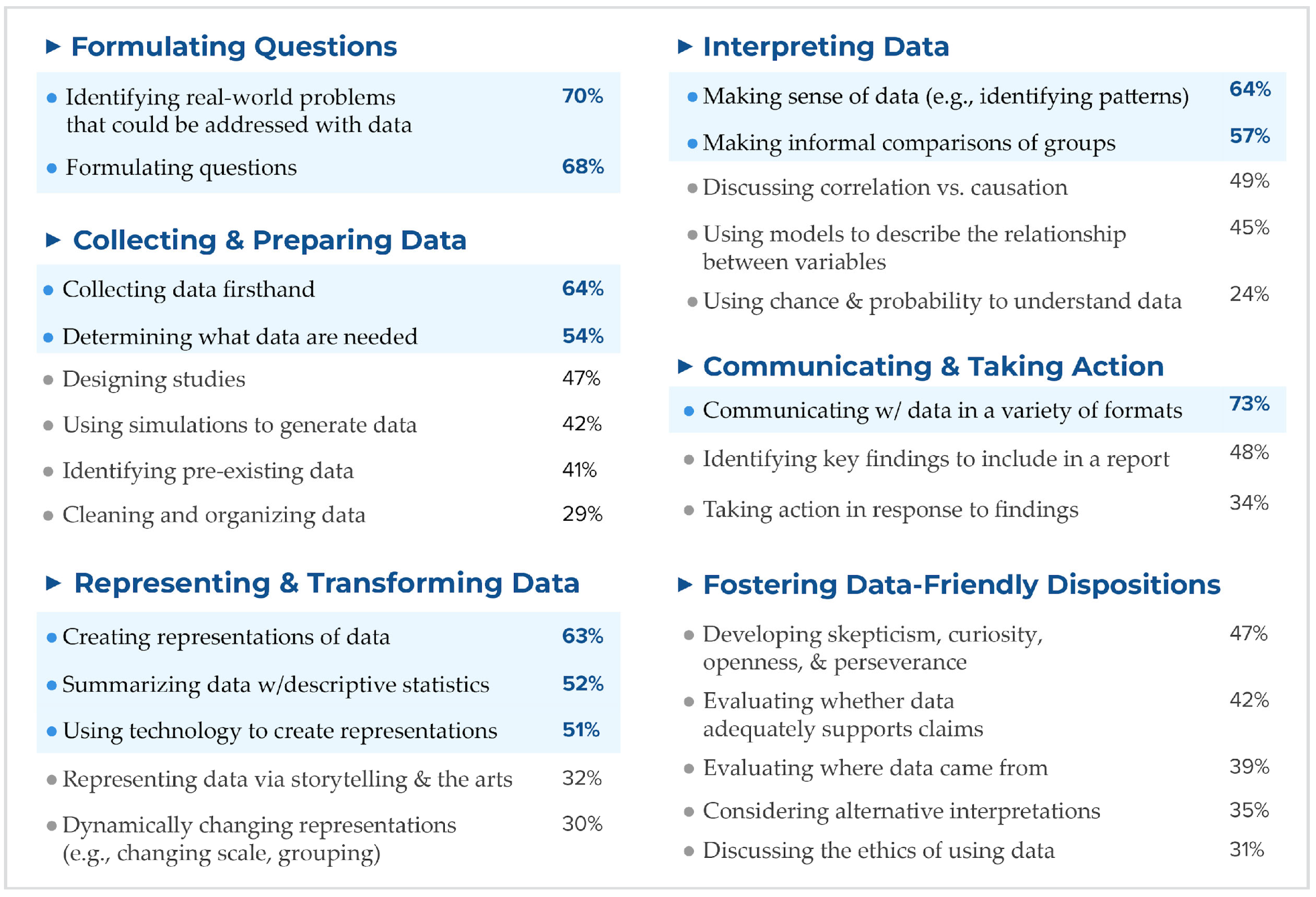
Educators reported that they typically engage their students in various data-related activities during science learning, including formulating questions, collecting and preparing data, representing and transforming data, interpreting data, communicating and taking action with data, and fostering data-friendly dispositions (Figure 2). These categories roughly correspond with different phases of investigative processes and dispositions that support inquiry with data, as outlined in our theoretical framework.
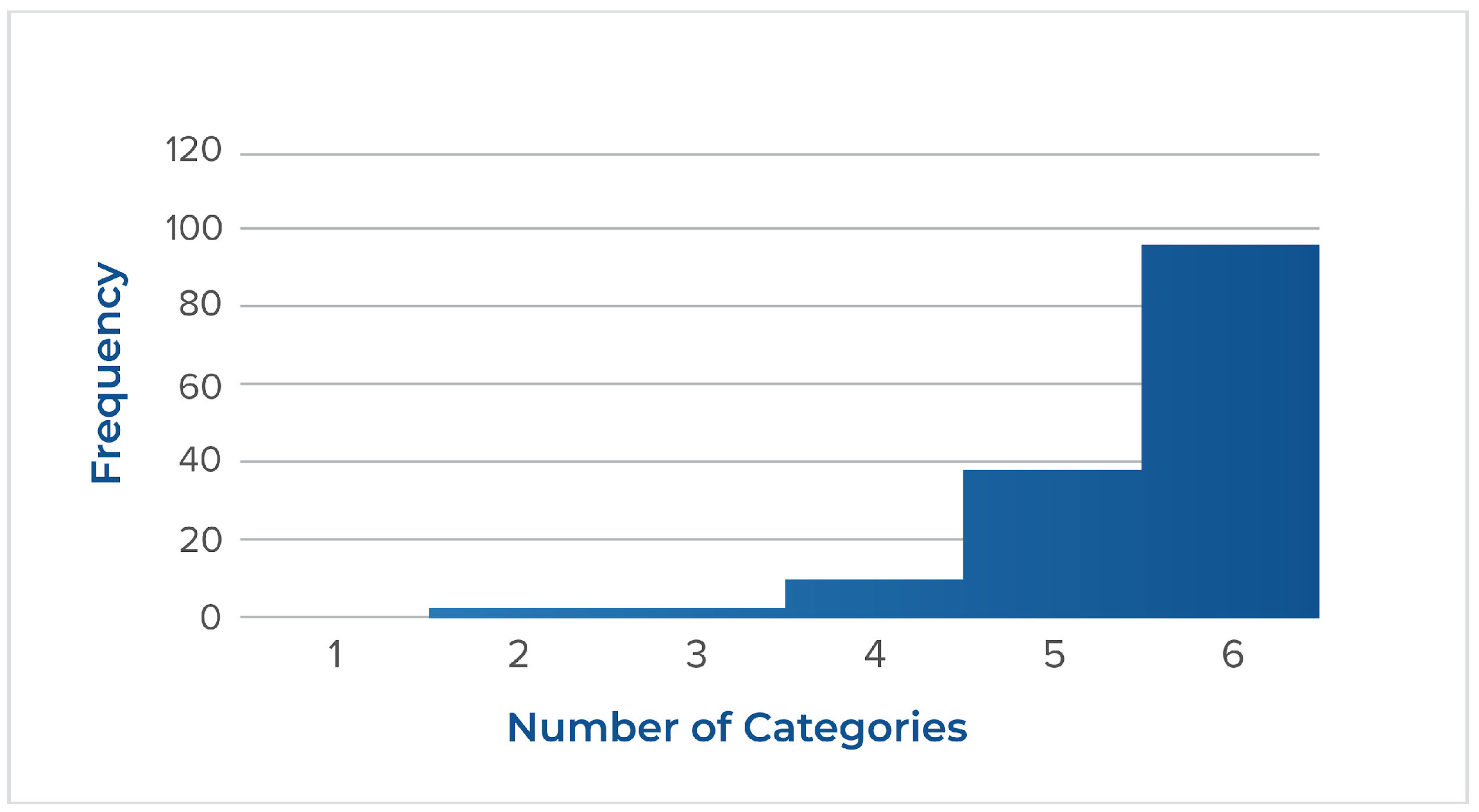
To describe the variety of data practices teachers typically use with their students, we calculated the number of different data practice categories represented in each respondent’s answers (shown in the six headings in Figure 2). Figure 3 depicts the number of categories represented by individuals’ responses to the question “Which data-related practices do you and your students typically engage in during science learning?”
A total of 134 (91%) out of the 148 educators responding to this question selected activities from 5 or more categories. These findings suggest that many teachers may be engaging their students with data as part of a broader sensemaking practice rather than treating the practices as discrete skills to be learned in isolation. As H. S. Lee et al. (2020) note, “By engaging in and connecting various phases [of a data investigation process], investigators can make sense of a real-world issue through data and make evidence-based claims and inferences to propose solutions to a problem.”
Within this generally comprehensive approach, some variation exists in which practices teachers emphasize (Table 1). While representing and interpreting data were nearly universal (97% each), activities that foster data-friendly dispositions, such as developing skepticism, evaluating data sources, and considering alternative interpretations, were somewhat less common (82%). Given that these dispositions are central to critical data literacy, ensuring all educators have strategies for fostering these habits of mind represents an opportunity for professional learning.

3.3. Finding 2: Sources of Data Used by Students

Most educators engage students in first-hand data collection, which can help students learn about data collection and make connections with their communities. However, there may be potential to expand student agency and statistical inquiry by offering more opportunities for students to identify and use pre-existing data to answer their questions.
Sixty-four percent (64%) of educators indicated that they have their students collect first-hand data as part of their science instruction (Figure 2). Teachers reported that this data is obtained through a broad range of activities such as laboratory exercises, field experiences, community and cultural connections, simulations, and probeware (Table 2).
While many teachers describe experiences with first-hand data as “typical” in their science instruction, only 41% of educators typically invited students to identify pre-existing data to help answer questions (Figure 2). When they do use pre-existing data, 50% of teachers reported using full, openly accessible datasets such as Google Earth and data from the National Oceanic and Atmospheric Administration (NOAA); 45% report using data formatted specifically for educators, and 45% report using data from their textbooks or curricular materials (Table 2).
One emerging theme from the focus group interviews was that teachers valued first-hand data collection because it is “real,” helping students see the connections between data, the practices of science, and their communities.
They relate their data with the previous data collected by students in their school only. It is not [the case that] we have collected data from some other place, or we have just borrowed data from somebody. This is the real data collected by students of this school in those years. Comparing those data gives them a great idea about how temperature varies, how rainfall varies, pressure, atmospheric pressure varies, soils, moisture level, and the pH level is changing. And these things are connecting them with their community—how their community’s weather and climate is changing and how it is affecting them and their plans in their agriculture in so many ways.
—Teacher B
The educational significance of the reliance on student-collected data, alone, becomes clear when we consider what research suggests about different data sources. First-hand data can support many aspects of students’ learning, but it often lacks the richness necessary to support the asking and answering of interesting and engaging questions (Macey & Rycroft-Smith, 2022). Students usually cannot collect the quantity or type of data needed to investigate their questions, so it is important for students to be able to access pre-existing data.
One focus group teacher, Teacher C, recounted a scenario in which students were unable to collect enough data to show the pattern they expected because the biological process took place over a much longer timespan than the class could observe:
One data-rich project that I had worked on was with our school garden. … We were trying to see if legumes were going to increase the nitrogen content in the soil. … We used three different raised bed soils, raised bed ones to create transects and planted the ones, and used some nitrogen testing strips to do it. … After doing some more research. … I think it takes a few rotations. You’re supposed to allow the right legumes to go in there and break down again, but it was a good experience for the students, I think.
—Teacher C
First-hand and pre-existing data can complement each other in classroom learning. Some of the teachers we spoke with employed strategies for integrating these data types in their lessons, allowing students to benefit from both kinds of data experiences. In the following example, Teacher D’s students collected data that contributed to ongoing efforts by a local fishery and accessed the fishery’s larger dataset, which combined historical fishery data with weather data.
We worked with our local watershed … [The kids] would tag tiny fish and. … enter it into the greater data system. … Then, we would come back to that same archive of data and track where our fish were. … and look at the tag numbers from years before in that wildlife cycle to see. … How many are coming back up? What could have happened? What’s not happening? Relate that back to historical weather patterns or what’s happening this spring.
—Teacher D
To preserve their students’ sense of connection to data, some educators intentionally selected pre-existing datasets that their students found relevant. In the following excerpt, Teacher E describes the way her students used NASA data about their local region to make predictions about climate.
We try to find data that can connect to everyone, especially in our community. … This is mostly research [from other scientists], not like we’re collecting the data ourselves. I think it’s a good idea that you’re collecting data with your kids. But most of the data we gather are from NASA. … I’m not so sure if you’ve been in this part of the Four Corners. … It is so dry here. And so, and plus in the reservations, our kids have very difficult getting water. Not just for drinking, but for livestock and for all of that. And they can totally relate to the data that we gather from NASA that it’s been dry, and the prediction is that it’s going to be drier. Primarily, we connect it to the climate change unit of our high school biology, which is almost at the end of the semester, but kids, they’re in awe to see that, “Oh my gosh. That’s why we need to read data. That’s why we need to analyze this data, because it affects everyone. Especially here in the Four Corners where everything is so dry.”
—Teacher E
To effectively use pre-existing data, educators need greater access to classroom-ready datasets; data-rich lessons; tools for identifying the alignment among datasets, lesson materials, and standards; and professional learning to help them identify characteristics of datasets that support their instructional goals.
Although public datasets can support learning in ways that student-collected data often cannot, teachers find it challenging to locate suitable datasets for instruction. In response to the question “What challenges do you face in using data in your classroom?” 53% of respondents reported having difficulty accessing data relevant to their content area. During follow-up focus groups, educators reported difficulty finding datasets with the topics, format, and supportive materials necessary for classroom use. Teachers indicated that they need greater access to clean, classroom-ready datasets and tools for identifying the alignment between datasets and other lesson materials with standards (e.g., categorizing of materials by learning standards or searchable features for data resources).
Right now, I think it’s that the data isn’t clearly aligned to a learning goal that I’m working on. … Even if it was, if they had their separate website that was organized by NGSS [Next Generation Science Standards] Learning Standard, right? If they had something like that and I could go to that and be like, okay, here’s this data that’s actually being collected, that is related to the relationship between mass and gravity, or something like that.
—Teacher C
Along with access to datasets, teachers could benefit from professional learning that helps them select datasets with features that align with their instructional goals and pedagogical perspectives. Teachers revealed different perspectives on what “classroom-ready” means for datasets. Teacher F sought “clean and compact” data to reduce student anxiety, particularly for middle schoolers who “get really scared if there’s more than a page of anything”. In contrast, Teacher A valued exposing students to “nasty data that’s a little hard to bump into’ to help them understand that working with data involves a process, including data cleaning. These contrasting views highlight that dataset selection depends on pedagogical goals and student readiness.

3.4. Finding 3: Technological Tools for Sensemaking with Data

Most educators invite students to use technology to create data representations, primarily relying on spreadsheet programs like Excel. However, relatively few teachers engage their students in using tools to dynamically change representations, which research suggests supports sensemaking with data. Both educators and students may benefit from expanding the repertoire of technological tools they use for visualizing, manipulating, and analyzing data.
A majority of teachers (63%) indicated that they typically invite students to create data representations, and 51% indicated that students used technology for this purpose. However, only 30% of educators reported engaging their students in dynamically changing those representations through actions such as changing scale, grouping, adding a mean to a distribution, or creating new variables by combining data (Figure 2). These dynamic data moves leverage technological tools to assist students in making sense of data.
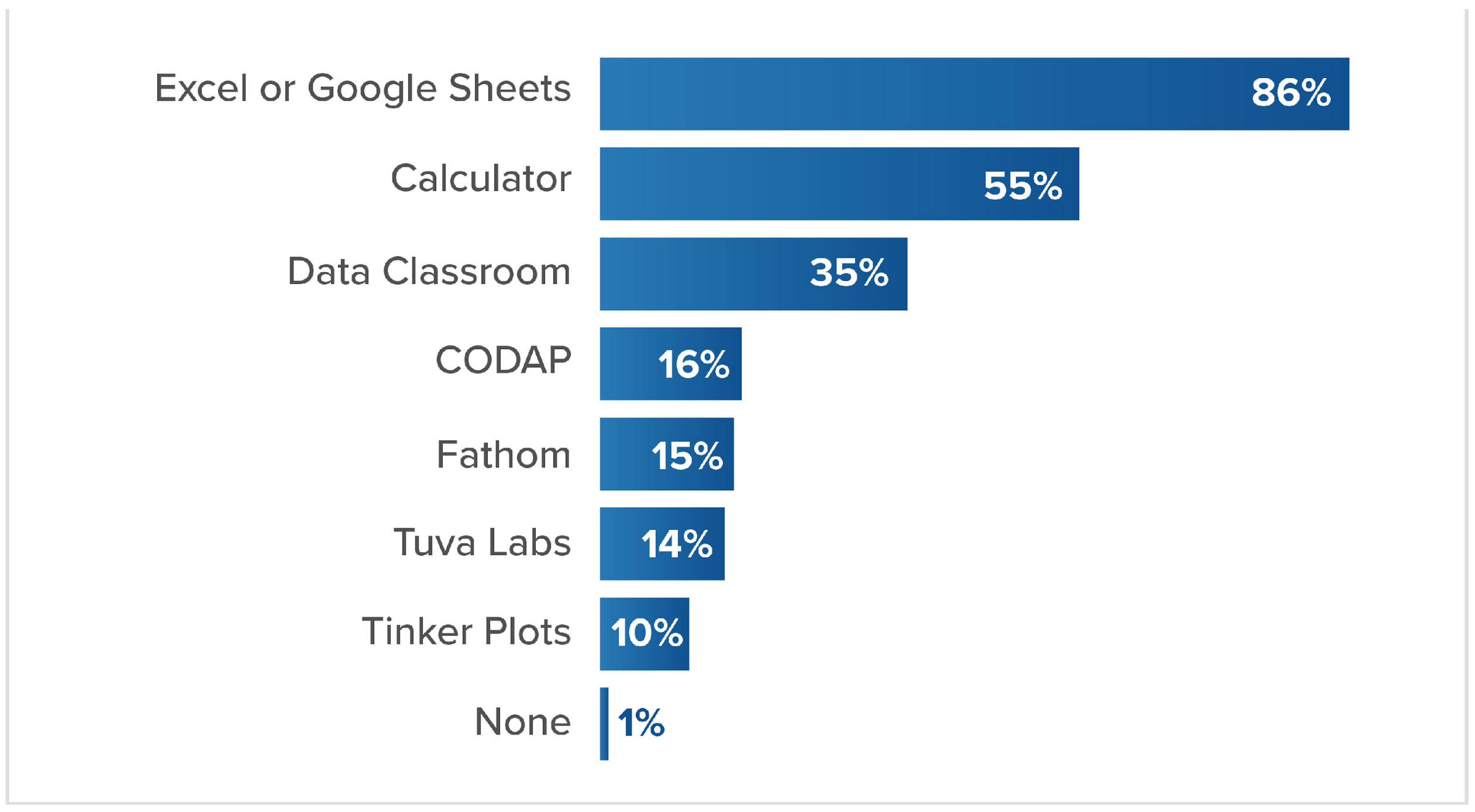
One reason why so few teachers engage students in dynamically changing representations may be the nature of the data analysis tools that are used in the classroom. Almost all survey respondents reported that their students use technological tools for data analysis, such as spreadsheet programs (86%) such as Excel or Google Sheets (Figure 4). However, far fewer educators reported using visualization tools that are specifically designed to allow students to easily create and manipulate a variety of representations such as dot plots, scatter plots, histograms, box plots, and maps, such as DataClassroom, Common Online Data Analysis Platform (CODAP), Fathom, Tuva Labs, and TinkerPlots (Figure 4). Only 45% of educators indicated that they used at least one of these dynamic data visualizations.
The significance of this finding becomes clear when considering research on data visualization in education. Dynamic visualization tools can help students identify patterns, trends, gaps, and outliers; draw connections across multiple representations (Ainsworth, 2018; Ainsworth et al., 2002); and reorganize data in more intuitive ways (Konold et al., 2017)–all essential skills for data fluency.
To help teachers integrate a wider range of data visualization tools into their instruction, PL should focus on supporting teachers’ use of these tools and the pedagogy of using technology to support sensemaking with data. Sixty-two percent (62%) of teachers indicated that they wanted more “training to use specific tools and/or technology” (Table S4).

3.5. Finding 4: Students’ Strengths and Assets for Working with Data

Teachers appear to be aware of the broad range of prior knowledge, skills, and dispositions students bring to their work with data. This awareness may position them to use an asset-based approach to data instruction.
Teachers are keenly aware of the assets that students bring to their work with data. When responding to the question, “What strengths do you and your students bring to the task of using data in science teaching and learning?” survey respondents described their students’ skill with data-related practices; identified dispositions that support working with data; and articulated the value of the connections between classroom work with data and students’ lived experiences, cultural knowledge, and interests. The following responses from three educators exemplify these themes:
Rural youth communities are inherently problem-solvers, and out-of-classroom hands-on investigations resonate [with them]. It also provides a platform for knowledge sharing and discovery and equalizes the traditional teacher-student hierarchy. If I am working in a place where a youth community grew up in and where their family is from, they are the knowledge-holders and I am merely a guide and guest in their land.
—Teacher G, referring to students’ dispositions and cultural knowledge
My students are exposed to a variety of information and so they are already good at generalizing trends from datasets and also creating models (graphs, drawings, etc. to represent data).
—Teacher H, concerning students’ data-related practices
Students are naturally inquisitive and are eager to learn how to collect data “like a scientist.” It brings out their natural curiosity and brings forward their ability to take information and take meaning from it, especially when it stems from a problem that they identified.
—Teacher I, regarding students’ data skills, dispositions, and interests
The wide range of student knowledge, skills, and dispositions that teachers identified as “strengths” is a reflection of teachers’ awareness of the complexity of data fluency: working with data requires the integration of many different knowledge bases, skill sets, and dispositions related to data, statistics, technology, and the context of the investigation. This awareness positions teachers well for what educational research identifies as asset-based instruction. By valuing students’ incoming strengths in so many of these areas, these teachers are well-positioned to build upon those strengths, working from an asset-based perspective rather than a deficit model of instruction. Many educators are already aware of students’ funds of knowledge for working with data, and they are seeking more resources for responsive data pedagogy that meets the needs of students and their communities. Specifically, they are looking for lesson materials and support for building data-focused activities that connect authentically to students’ histories and communities.
Forty-two percent of survey respondents indicated that they wanted “support to build data-focused activities that connect authentically to students’ histories and communities,” and one respondent wrote that they needed “materials that are culturally responsive” (Tables S4 and S5 in the Supplementary Materials).
During focus group interviews, several teachers expressed appreciation for resources that help connect data-rich Earth science to their students’ identities (see Teacher F’s quote) and a desire to find more ways to make those connections in their instruction (see Teacher G’s quote).
One of the best things about NASA is, all of the videos of the NASA experts and the actual scientists [show] that NASA has so many women and people of color in the Earth sciences—‘cause Earth science is so white. … It is impossible to find other videos that are not just white men in the Earth sciences—but we don’t want to keep it that way.
—Teacher F
I’ve really been struggling with how to draw on the Indigenous traditions and their use of data. … [by] tap[ping] into oral tradition, storytelling, to draw in that cultural understanding of science and drawing on native science. … [I want to] have our kiddos see that this is not only ethnic, really solid science, but then [I] also [want them] to see themselves as science in their own Indigenous ethnic skins. … [I want my students to know that] data-based science isn’t just a white man’s gig. … data-based science is Indigenous, it is Hispanic, it is Latinx.
—Teacher G
One of the focus group participants explained that it is important for the data context to be locally and culturally relevant, because it brings meaning to their work and motivates her students.
We listened to the stories from the Salish Kootenai tribes, which [has a] very similar climate to where we live. And they talk about how the climates have been shifting with climate change. So seasons are coming in earlier and then we also will dive into data of ice cores, tree cores. … And those connections have been meaningful. And then that website also has been nice for finding local data, local screen temperature data, because my kids won’t do anything unless they think it revolves around them. So the only success I had with a few kids in that whole unit was they’re like, “I don’t care, I just want to go fishing.” And so we were like, “Yes, find the river where the temperature is going to increase. You can’t go fishing anymore.” We were able to do that.
—Teacher F

3.6. Finding 5: Challenges to Data-Rich Instruction

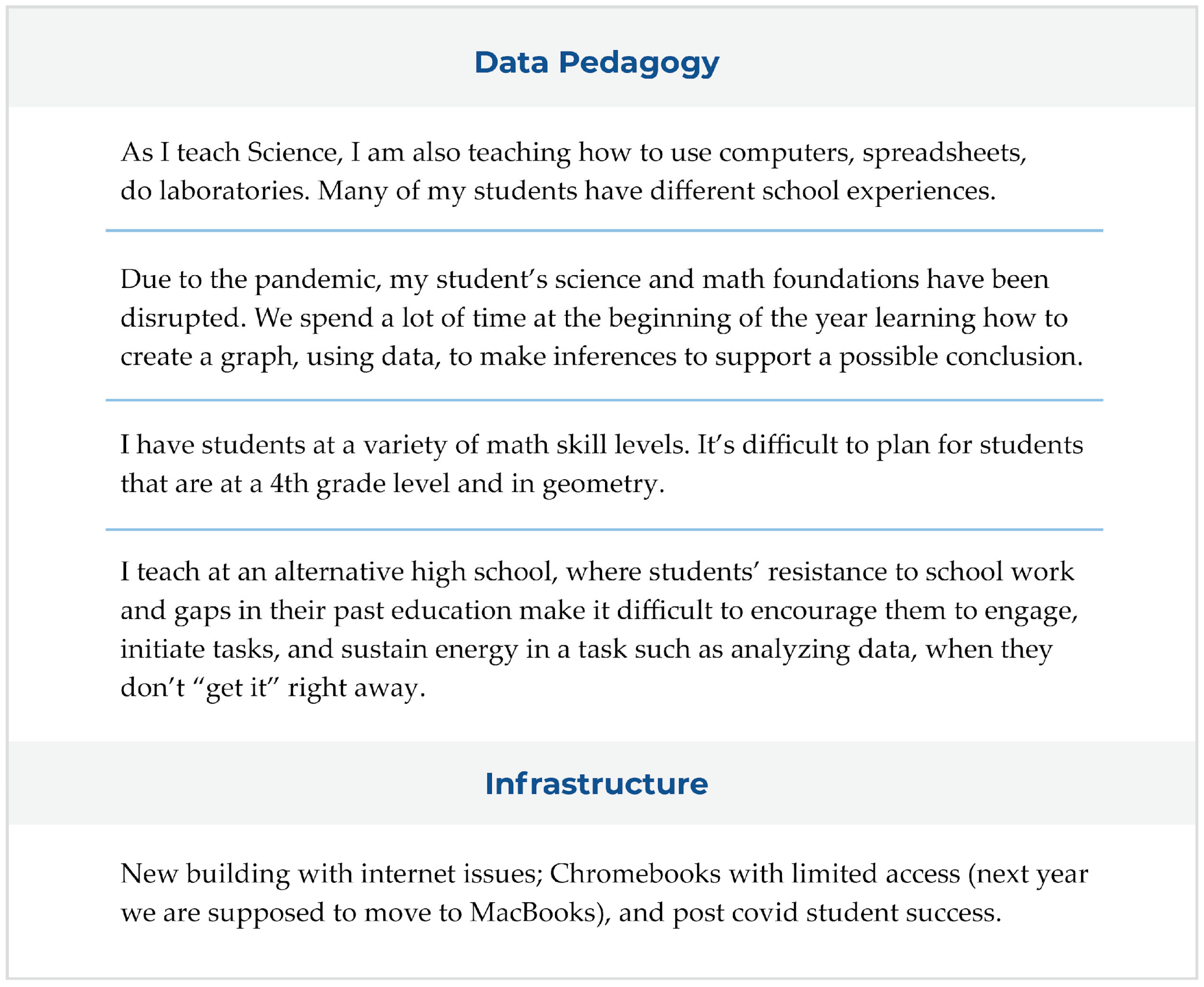
Educators encounter a variety of interrelated challenges when engaging in data-rich instruction. They report needing greater access to support for lesson planning and design, data pedagogy, and infrastructure, including more class time, computers, and internet access.
We asked educators to tell us about the challenges they face when facilitating data-rich instruction in their science classrooms. Their responses are summarized in Table 3 and Figure 5. The areas of need from the closed-ended question fall into three broad categories: data-lesson planning and design, data pedagogy, and systemic challenges. Areas of particularly high need were accessing relevant data (53%), integrating data into lesson plans (47%), deeply understanding datasets to support student learning (42%), and setting aside classroom time for data learning (42%).
Open-ended responses include challenges related to data pedagogy and systemic challenges. Teachers expressed difficulty supporting students with a variety of different skills, maintaining engagement, and handling school-level technology issues (Figure 5).
Often, the challenges are interrelated. Teacher D described the difficulty of meaningfully integrating data into her science instruction on a conceptual level (not just a superficial one). This was both a lesson planning and pedagogical challenge, with time being a limiting factor.
Using data in a classroom and having students work through the process takes time. And often the amount of time it takes for them to actually understand it, instead of just sprinkle it on top of a concept and play with it—for them to really understand, manipulate use and be able to apply the skill takes more time than many of our curriculum maps and schedules really allow. So you have to be very ready to—not sacrifice some subjects but multitask a lot of subjects so that you can cover what you have to cover as well as providing this application of this skill and opportunity for kiddos, time is the limit[ing] factor.
—Teacher D
In an open-ended survey response, Teacher A described the interconnected challenges of finding data, aligning the data with standards, finding data that keeps students engaged, and trying to use data with greater frequency across the school year.
The biggest [challenge] is integrating data into lessons with greater frequency, which typically means for a teacher, greater ease of finding the data, is it relevant data to [the] subject or standard being taught, and that the data is authentic enough to engage students.
—Teacher A
Most educators responding to our survey (72%) indicated that they had attended professional learning focused on data-rich teaching, either within the last 5 years (46%) or over 5 years ago (26%). However, they noted that additional PL and classroom support was still needed. This suggests that many districts have existing infrastructure for professional learning, an asset which can be used to provide further support.
Educators’ requests for PL and other classroom support are summarized in Tables S4 and S5 in the Supplementary Materials. Areas of PL support that were of highest interest to educators included (a) training to use specific tools or technology (62%); (b) support to build data-focused activities that connect authentically to students’ histories and communities (42%); (c) training in accessing data relevant to the content area (42%); and (d) access to data-rich lessons (35%).
Educators also expressed a high degree of interest in PL topics related to planning data-rich lessons and data-specific pedagogy, including (a) resources to develop data-focused lesson plans (54%); (b) support to promote data-focused teaching practices (49%); (c) training to facilitate data-based discourse among students (33%); and (d) support in promoting understanding of data in students of varying abilities (32%).

4. Discussion

Through surveys and focus group interviews with educators, we found that teachers in our self-selected sample are making efforts to integrate data into their instruction across multiple practice areas. Teachers and their students are engaging with various data practices and using technological tools, though opportunities remain for expanding use of pre-existing datasets, dynamic visualization tools, and disposition-building activities. Teachers recognize and value the assets students bring to data work but face interrelated challenges in lesson planning, data pedagogy, and infrastructure that limit implementation.

4.1. Existing Assets for Data-Rich Science Learning (Research Question 1)

Our findings reveal that educators already possess crucial insights for transforming data science education to reach diverse learners. This awareness aligns with funds of knowledge theory (Moll et al., 1992), which posits that recognizing and building upon students’ community-based knowledge creates more equitable learning opportunities. Teachers’ recognition of student assets provides a foundation rarely acknowledged in traditional science instruction. This awareness suggests readiness for pedagogical approaches that position diverse ways of knowing as strengths rather than deficits.
The 42% of educators seeking support for community-connected activities indicates appetite for moving beyond generic data exercises to investigations that matter locally. When Teacher E describes students’ engagement with NASA data about water scarcity in the Four Corners region, or Teacher F connects climate data to students’ fishing practices, they demonstrate how data science can become personally relevant rather than abstractly academic. These examples, emerging from educators serving Indigenous and rural populations, offer models for engaging students who have not traditionally seen themselves in science.

4.2. Barriers to Data-Rich Science Implementation (Research Question 2)

While individual teacher capacity is important, our findings point to systemic factors that shape implementation. The struggle that 53% of educators report in accessing relevant datasets indicates a structural barrier beyond individual teacher knowledge or skills. Finding easily accessible and relevant data requires navigating multiple databases, evaluating data quality and appropriateness for student levels, understanding licensing and access restrictions, and having time to preview and prepare datasets for classroom use. These tasks often fall outside typical teacher preparation and workload expectations. These challenges are particularly acute for educators serving varied communities who need datasets relevant to their students’ contexts—not just generic scientific data but information about local environmental conditions, community health patterns, or regional economic trends.
The time constraints reported by 42% of educators reflect broader tensions in teachers’ professional conditions: they are expected to integrate new kinds of learning like data science, while managing existing curriculum requirements. This tension between innovation and existing obligations is particularly acute for data-rich instruction, which often requires a longer period of time for teachers and students to engage iteratively in several aspects of a data investigative process, such as collecting, analyzing, interpreting, and communicating with or about data.
The interrelated nature of challenges (e.g., finding data, aligning with standards, maintaining student engagement, and managing time) suggests that piecemeal solutions will be insufficient. Systemic support might include curated dataset libraries organized by community context and standards alignment, collaboration time for teachers to develop community-connected investigations, and infrastructure investments ensuring all students have access to appropriate technology.

4.3. Professional Learning Needs Through Theoretical Lenses (Research Question 3)

The professional learning needs identified by educators align directly with our three theoretical frameworks, suggesting systematic patterns in support requirements:
  • Data fluency components: Professional learning must address not just technical competencies but pedagogical approaches for cultivating the critical thinking and skepticism that Wild and Pfannkuch (1999) identify as essential habits of mind.
  • Funds of Knowledge: Teachers recognize students’ community knowledge as valuable (See Section 4.1), but they need concrete strategies for building curricula that systematically leverage these assets.
  • Technological Pedagogical Content Knowledge (TPACK): The 51% of educators requesting training in specific tools reflects the need to develop integrated TPACK for data fluency. The disparity between spreadsheet use (86%) and dynamic visualization tools (45%) suggests teachers need help understanding which tools best support specific data learning objectives and how to integrate them pedagogically.

4.4. Significance of Findings for Science Education Transformation

The patterns identified in this study carry implications beyond addressing immediate professional learning needs.
The finding that 18% of educators do not engage students in disposition-building activities is particularly significant as data becomes ubiquitous in public discourse. These dispositions—skepticism, curiosity, evaluating data sources—are not merely academic skills but essential capacities for democratic participation. When students encounter claims about climate change, public health, or economic trends, they need these critical lenses to evaluate evidence. The gap suggests that just as data fluency becomes essential for civic engagement, a substantial minority of students may not be developing the critical stance necessary to navigate our data-saturated world.
Similarly, the disparity between first-hand data collection (64%) and pre-existing dataset use (39%) represents more than a missed pedagogical opportunity. In an era when scientific and civic questions require understanding large-scale patterns, students who primarily collect their own data miss crucial preparation for real-world data engagement. Pre-existing datasets allow students from diverse communities to investigate questions that matter locally but require data beyond classroom collection: examining historical environmental injustices, comparing their community’s experiences to broader patterns, or tracking changes over generations.
The limited adoption of dynamic visualization tools (45% of educators) matters for who sees themselves as capable of data analysis. When students must wrestle with spreadsheet formulas rather than fluidly exploring patterns through interactive visualizations, data science can feel like an exclusive domain requiring specialized technical skills. Dynamic tools can democratize data exploration, allowing students who might struggle with traditional approaches to discover their capacity for data thinking. This technological gap thus becomes an equity issue, potentially excluding students who could thrive with different tools.

4.5. Implications for the Future of Science Education

This exploratory study provides critical insights at a pivotal moment. Unlike more established science topics with more widely available pedagogical tools and professional learning support, data science education in K-12 is still taking shape. Our findings suggest that educators serving diverse communities are already envisioning how data science could differ from traditional science instruction—valuing different strengths, centering local questions, and recognizing multiple ways of knowing.
The moment is critical. By centering educator voices and student assets now, while practices are still forming, we can help ensure that data science education develops as a field where all students can see themselves as capable contributors to scientific understanding. The alternative—allowing data science to replicate existing patterns of who succeeds in science—would represent a profound missed opportunity at a time when data fluency is becoming essential for full participation in democratic society.

4.6. Limitations and Future Directions

Several limitations should be considered when interpreting these findings. This study relies on self-reported data from self-selected participants who expressed interest in data-rich instruction, likely representing educators with greater commitment to these practices than the general teaching population. Surveys conducted with a broader range of teachers may provide more representative insights. Teachers’ perceptions and definitions of data practices may also vary across respondents. Future studies employing classroom observations could provide a more in-depth understanding of the ways data practices are interpreted and carried out in instruction.
Our analysis was limited to experienced Earth science educators (78% with 3+ years) working with grades 6–12. We could not examine grade-level differences as our survey captured only broad grade bands rather than specific teaching assignments. Future research should explore variations across grade levels, subject areas, and experience levels to determine whether the identified needs generalize to other contexts.
Finally, this exploratory study documents reported practices and needs but cannot address outcomes. Future research should examine whether the professional learning supports identified here actually improve teacher practice and student learning.

5. Conclusions

This exploratory study represents an important first step in understanding how educators approach data-rich instruction and what support they need. As data science becomes central to K-12 education, we have an unprecedented opportunity to shape these practices to engage students who have not traditionally thrived in conventional science settings. While our methods have limitations inherent to exploratory research—such as binary response options and self-selected samples—they provide essential baseline data for a field where such information has been largely absent.
Our findings reveal that educators already recognize how data investigation can leverage different assets than traditional science instruction typically values. Teachers in our study identified sophisticated problem-solving approaches, community-based knowledge systems, and critical perspectives that students from diverse communities bring to data work. This recognition is crucial: data science education does not need to follow the patterns that have historically limited who succeeds in science. Instead, it can be built from the ground up to value diverse ways of knowing and multiple entry points into scientific thinking.
However, realizing this vision requires systematic support. The educators we studied—those who are already interested and engaged in data instruction—still face substantial challenges in accessing appropriate datasets, connecting data to students’ communities, and using tools that make data exploration accessible. If these motivated teachers struggle with implementation, the broader teaching community likely faces even greater obstacles. These initial findings provide a foundation for developing targeted professional learning interventions and more refined research instruments to examine specific aspects of data-rich instruction.
Our findings suggest that community-connected data science represents more than just another pedagogical approach: it offers a fundamentally different pathway into science. When students see their communities’ knowledge reflected in curriculum, when they investigate questions that matter locally, and when their ways of understanding are valued rather than dismissed, science becomes accessible in new ways. The professional learning priorities our educators identified, such as tools for connecting to local contexts, strategies for leveraging community knowledge, and support for asset-based approaches, are not merely technical needs but essential elements for transforming who participates in science.
The moment is critical. Unlike established science practices with decades of entrenched methods, data science education in K–12 is still taking shape. This exploratory investigation provides crucial early evidence of science teachers’ current practices and needs to guide this development. By centering educator voices and student assets now, we can help ensure that data science education develops as a field where all students can see themselves as capable contributors to scientific understanding. Future research can build on these initial findings to examine specific practices in greater depth, test interventions, and track how data science education evolves across diverse educational contexts.

Supplementary Materials

The following supporting information can be downloaded at: https://www.mdpi.com/article/10.3390/educsci16010171/s1, Data Teaching Practices and Needs Survey, Table S1: Characteristics of Educators Who Completed the Survey; Table S2: Learning Environment Characteristics; Table S3: Characteristics of Students in Respondents’ Classes; Table S4: Professional Learning and Classroom Supports Needed; Table S5: Other Professional Learning and Classroom Supports Needed (Open-Ended).

Author Contributions

Conceptualization, N.W., R.E., L.R.P., K.N., K.R.D. and S.D.; Methodology, N.W., R.E., K.N. and S.D.; Formal analysis, N.W., R.E., L.R.P. and K.N.; Investigation, N.W., R.E., K.N. and S.D.; Data curation, N.W., R.E., L.R.P. and K.N.; Writing—original draft, N.W.; Writing—review and editing, R.E., L.R.P., K.N. and K.R.D.; Supervision, N.W.; Project administration, K.R.D.; Funding acquisition, K.R.D. and S.D. All authors have read and agreed to the published version of the manuscript.

Funding

This research was funded by National Aeronautics and Space Administration. The material contained in this document is based upon work supported by National Aeronautics and Space Administration, 80NSSC22M0005. Any opinions, findings, and conclusions or recommendations expressed in this material are those of the author(s) and do not necessarily reflect the views of National Aeronautics and Space Administration.

Institutional Review Board Statement

The study was conducted in accordance with the Declaration of Helsinki and approved by the Institutional Review Board of Institutional Review Board of WestEd (protocol code 2022-01-03) approved on 15 March 2022.

Informed Consent Statement

Informed consent was obtained from all subjects involved in portions of the work deemed as human subjects research, as determined by WestEd’s Institutional Review Board.

Data Availability Statement

The data presented in this study are available upon request from the corresponding author. The data are not publicly available to protect individuals’ privacy.

Acknowledgments

The authors would like to acknowledge Robin Montoya and Lisa Marriner for project management; Karen Lionberger and Sara Salisbury for their expertise in professional learning; Corynn Del Core for graphic design; our partners at GLOBE Mission Earth, the Gulf of Maine Research Institute, Langley Research Center, and the Northern Arizona University’s Center for Science Teaching and Learning; our collaborators at The Concord Consortium; our evaluators at Magnolia Consulting; and all of the study teachers who contributed their expertise. During the preparation of this manuscript, the authors used Claude Opus 4.1 by Anthropic for supporting iterative revision of the text, refining phrasing and word choice, and proofreading. The authors have reviewed and edited the output and take full responsibility for the content of this publication.

Conflicts of Interest

The authors declare no conflicts of interest. The funders had no role in the design of the study; in the collection, analyses, or interpretation of data; in the writing of the manuscript; or in the decision to publish the results.

Abbreviations

The following abbreviations are used in this manuscript:
AIArtificial Intelligence
CODAPCommon Online Data Analysis Platform
NASANational Aeronautics and Space Administration
NGSSNext Generation Science Standards
NOAANational Oceanic and Atmospheric Administration
PhETPhysics Education Technology
PLProfessional learning
PLACESPlace-Based Learning to Advance Connections, Education, and Stewardship
TITexas Instruments
TPACKTechnological and Pedagogical Content Knowledge

References

  1. Ainsworth, S. (2018). Multiple representations and multimedia learning. In F. Fischer, C. E. Hmelo-Silver, S. R. Goldman, & P. Reimann (Eds.), International handbook of the learning sciences (pp. 96–105). Routledge. [Google Scholar] [CrossRef]
  2. Ainsworth, S., Bibby, P., & Wood, D. (2002). Examining the effects of different multiple representational systems in learning primary mathematics. The Journal of the Learning Sciences, 11(1), 25–61. [Google Scholar]
  3. Arastoopour Irgens, G., Knight, S., & Wise, A. (2020). Data literacies and social justice: Exploring critical data literacies through sociocultural perspectives. In M. Gresalfi, & I. S. Horn (Eds.), The interdisciplinarity of the learning sciences, 14th international conference of the learning sciences (ICLS) 2020 (Vol. 1, pp. 406–413). International Society of the Learning Sciences. [Google Scholar]
  4. Bang, M., Warren, B., Rosebery, A., & Medin, D. L. (2013). Desettling expectations in science education. Human Development, 55, 302–318. [Google Scholar] [CrossRef]
  5. Bargagliotti, A., Franklin, C., Arnold, P., Gould, R., Johnson, S., Perez, L., & Spangler, D. A. (2020). Pre-K–12 guidelines for assessment and instruction in statistics education II (GAISE II): A framework for statistics and data science education. American Statistical Association. Available online: https://www.amstat.org/asa/files/pdfs/GAISE/GAISEIIPreK-12_Full.pdf (accessed on 14 October 2025).
  6. Berkes, F. (2012). Sacred ecology: Traditional ecological knowledge and resource management. Routledge. [Google Scholar]
  7. Braun, V., & Clarke, V. (2006). Using thematic analysis in psychology. Qualitative Research in Psychology, 3(2), 77–101. [Google Scholar] [CrossRef]
  8. Chen, P., Wong, N., Elsayed, R., Perez, L., & Daehler, K. R. (2025, March 23–26). Building teachers’ capacity for data-rich instruction: Impact from a professional learning course [Poster Session]. Ninety-Eighth Annual International Conference of the National Association for Research in Science Teaching, National Harbor, MD, USA. [Google Scholar]
  9. Cobb, G., & Moore, D. (1997). Mathematics, statistics, and teaching. American Mathematical Monthly, 104, 801–823. [Google Scholar] [CrossRef]
  10. Denton, M., & Borrego, M. (2021). Funds of knowledge in STEM education: A scoping review. Studies in Engineering Education, 1(2), 71–92. [Google Scholar] [CrossRef]
  11. D’Ignazio, C., & Klein, L. F. (2020). Data feminism. The MIT Press. [Google Scholar]
  12. Gal, I. (2002). Adults’ statistical literacy: Meanings, components, responsibilities. International Statistical Review/Revue Internationale de Statistique, 70(1), 1–25. [Google Scholar] [CrossRef]
  13. Gould, R. (2017). Data literacy is statistical literacy. Statistics Education Research Journal, 16(1), 22–25. [Google Scholar] [CrossRef]
  14. Kastens, K. (2015, May). Data use in the next generation science standards (revised edition) [White paper]. Oceans of Data Institute, Education Development Center, Inc. Available online: https://oceansofdata.org/sites/oceansofdata.org/files/ODI_DataUseInNGSS_Final.pdf (accessed on 14 October 2025).
  15. Konold, C., Finzer, W., & Kreetong, K. (2017). Modeling as a core component of structuring data. Statistics Education Research Journal, 16(2), 191–212. [Google Scholar] [CrossRef]
  16. Lee, H. S., Mojica, G. F., Thrasher, E., & Vaskalis, Z. (2020). The data investigation process. In Invigorating statistics teacher education through professional online learning. Friday Institute for Educational Innovation: NC State University. Available online: http://cdn.instepwithdata.org/DataInvestigationProcess.pdf (accessed on 14 October 2025).
  17. Lee, H. S., & Tran, D. (2015). Statistical habits of mind. In Teaching statistics through data investigations MOOC-Ed. Friday Institute for Educational Innovation: NC State University. Available online: https://www.researchgate.net/publication/381472375_Statistical_habits_of_mind (accessed on 14 October 2025).
  18. Lee, V. R., & Wilkerson, M. (2018). Data use by middle and secondary students in the digital age: A status report and future prospects. National Academies of Sciences, Engineering, and Medicine, Board on Science Education, Committee on Science Investigations and Engineering Design for Grades 6–12. [Google Scholar]
  19. Lee, V. R., Wilkerson, M. H., & Lanouette, K. (2021). A call for a humanistic stance toward K–12 data science education. Educational Researcher, 50(9), 664–672. [Google Scholar] [CrossRef]
  20. Macey, D., & Rycroft-Smith, L. (2022). What does research suggest about teaching statistics using rich data sets? Cambridge Mathematics Espresso, (41). Available online: https://www.cambridgemaths.org/Images/espresso_41_rich_data_sets.pdf (accessed on 11 August 2023).
  21. Marosi, N., Avraamidou, L., & Galani, L. (2021). Culturally relevant pedagogies in science education as a response to global migration. SN Social Sciences, 1, 147. [Google Scholar] [CrossRef]
  22. Mishra, P., & Koehler, M. J. (2006). Technological pedagogical content knowledge: A framework for integrating technology in teacher knowledge. Teachers College Record, 108(6), 1017–1054. [Google Scholar] [CrossRef]
  23. Moll, L. C., Amanti, C., Neff, D., & Gonzalez, N. (1992). Funds of knowledge for teaching: Using a qualitative approach to connect homes and classrooms. Theory into Practice, 31(2), 132–141. [Google Scholar] [CrossRef]
  24. National Academies of Sciences, Engineering, and Medicine. (2023). Foundations of data science for students in grades K-12: Proceedings of a workshop. The National Academies Press. [Google Scholar] [CrossRef]
  25. National Center for Education Statistics. (2023). Rural students’ access to the internet. In Condition of education. U.S. Department of Education, Institute of Education Sciences. Available online: https://nces.ed.gov/programs/coe/indicator/lfc (accessed on 11 December 2025).
  26. Nazarea, V. D. (1999). Ethnoecology: Situated knowledge/located lives. University of Arizona Press. [Google Scholar]
  27. NGSS Lead States. (2013). Next generation science standards: For states, by states. The National Academies Press. [Google Scholar]
  28. Oppenheimer, D., & Edwards, M. (2012). Democracy despite itself: Why a system that shouldn’t work at all works so well. The MIT Press. [Google Scholar] [CrossRef]
  29. Saldaña, J. (2016). The coding manual for qualitative researchers (3rd ed.). Sage Publications Inc. Available online: https://www.sfu.ca/~palys/Saldana-CodingManualForQualResearch-IntroToCodes&Coding.pdf (accessed on 14 October 2025).
  30. Smith, G. A. (2002). Place-Based education: Learning to be where we are. Phi Delta Kappan, 83(8), 584–594. [Google Scholar] [CrossRef]
  31. The Centering Voices Workgroup. (2018). Centering voices of those most impacted in health equity efforts. Available online: https://uwphi.pophealth.wisc.edu/wp-content/uploads/sites/316/2019/04/Centering-Voices-Principles_MATCH_Sept-2018.pdf (accessed on 29 July 2023).
  32. Wild, C. J., & Pfannkuch, M. (1999). Statistical thinking in empirical enquiry. International Statistical Review, 67(3), 223–248. [Google Scholar] [CrossRef]
  33. Wong, N., Elsayed, R., Nilsen, K., Perez, L. R., & Daehler, K. R. (2024). Centering educators’ voices in the development of professional learning for data-rich, place-based science instruction. Education Sciences, 14(4), 356. [Google Scholar] [CrossRef]
  34. Yarnall, L., & Ranney, M. (2017). Fostering scientific and numerate practices in journalism to support rapid public learning. Numeracy, 10(1), 3. [Google Scholar] [CrossRef][Green Version]
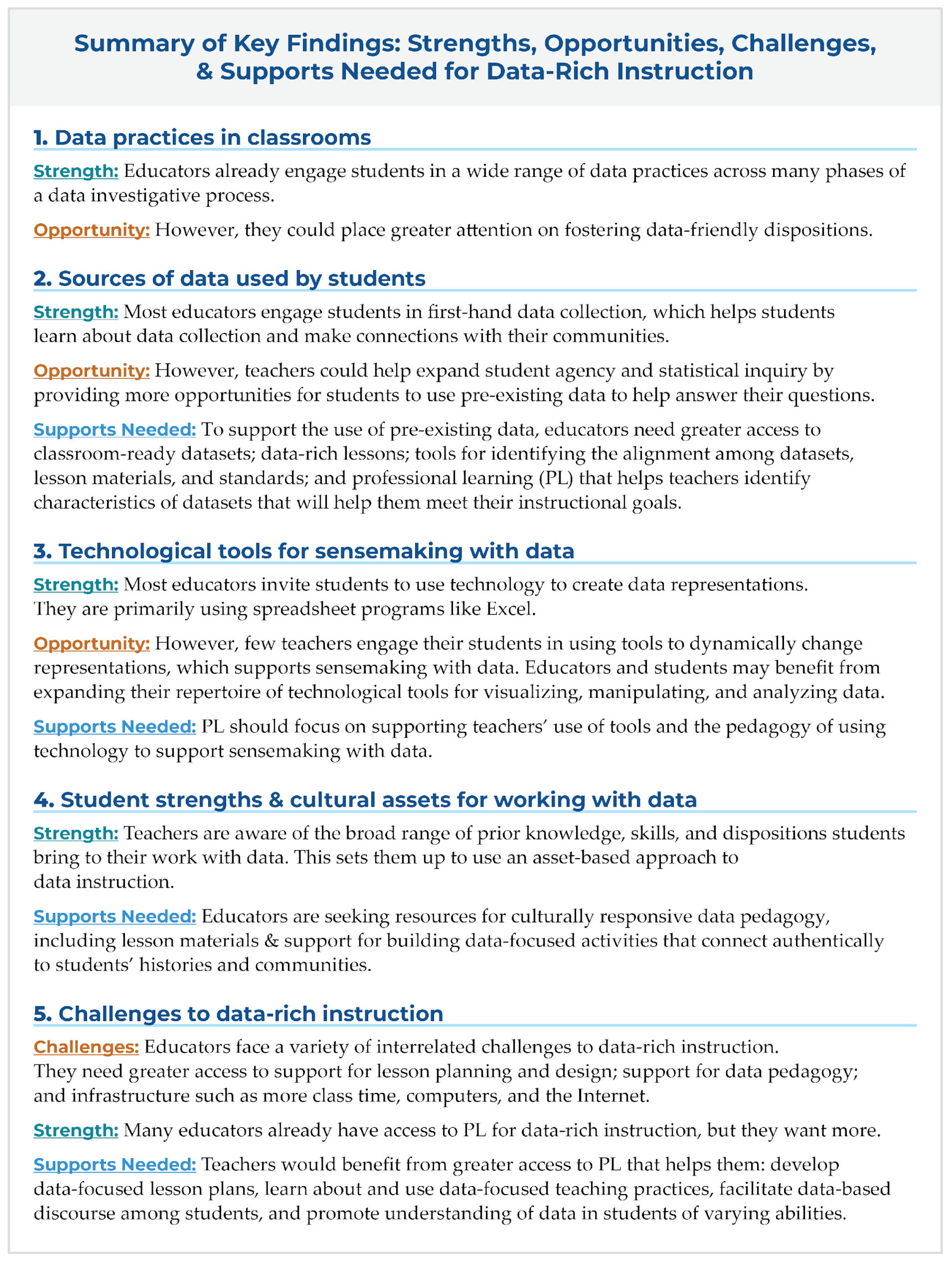
Figure 1. Summary of five key findings highlighting the strengths, opportunities, and supports educators need to implement data-rich instruction effectively.
Education 16 00171 g001
Figure 2. Reported categories of data-related instructional activities that educators engage in during science instruction.
Education 16 00171 g002
Figure 3. Distribution of educators by the number of data-related practice categories they engage in with students during science instruction. (n = 148).
Education 16 00171 g003
Figure 4. Percentage of educators using available technological tools for data representations.
Education 16 00171 g004
Figure 5. Challenges to data-rich instruction, open-ended responses to “other” category.
Education 16 00171 g005
Table 1. Use of Data Practices by Category.
Categoryn%
Formulating questions13289
Collecting and preparing data13994
Representing and transforming data14497
Interpreting data14397
Communicating and taking action13692
Fostering data-friendly dispositions12282
Note. n = 148. Educators were asked, “Which data-related practices do you and your students typically engage in during science learning? Select all that apply”. Response options were grouped into categories of data practices. The tallies in this table show the number of respondents who chose at least one response option from the corresponding category.
Table 2. Sources of Data for Use with Students.
Sourcen%
Data created by students through laboratory activities or other investigations8857
Data collected by students through field experiences, including citizen science opportunities8756
Data created or accessed by students through connections with their community, history, or culture7951
Full datasets that are openly accessible but without any analysis, interpretation, or questions to guide analyses or interpretation provided (e.g., Google Earth, long-term datasets, NOAA)7850
Data from online or computer-based simulations (e.g., Gizmos, PhET simulations, NetLogo simulations)7146
Data formatted and presented specifically for use by educators or consumption by the general public (e.g., Data Nuggets, Mystery Science)7045
Data from the textbook or curricular materials7045
Data published within primary scientific literature5032
Data from probeware2818
Other (please specify)53
None11
Note. n = 155. Educators were asked, “When you use data with students, where do your data come from? Select all that apply”. Open-ended responses to “other” were: “Data Generated by using TI-84/Inspires in Space Based Laboratories,” “data provided by staff scientists,” “Multi-grade level gifted,” “NASA MyDATA [My NASA Data],” and “Tuva”.
Table 3. Challenges to Data-Rich Instruction.
CategoryChallengen%
Data-Lesson Planning and DesignAccessing data relevant to the content area6853
Integrating data into my lesson plans5347
Accessing data-rich lessons6139
Data PedagogyDeeply understanding a dataset, so I can facilitate student learning5442
Promoting understanding of data in students of varying abilities4240
Anticipating common student difficulties when making sense of data5234
Facilitating student use of technologies to access data4033
Facilitating data-based discourse among students4433
InfrastructureSetting aside class time to authentically engage in data-rich learning5442
Other (please specify) 54
Note. n = 129. Educators were asked “What challenges do you face in using data in your classroom? Select all that apply”.
Disclaimer/Publisher’s Note: The statements, opinions and data contained in all publications are solely those of the individual author(s) and contributor(s) and not of MDPI and/or the editor(s). MDPI and/or the editor(s) disclaim responsibility for any injury to people or property resulting from any ideas, methods, instructions or products referred to in the content.