1. Introduction
In the past seventy years, early childhood educators globally have come to realise the benefits of taking young children out into natural surroundings such as forests, parklands, beaches, and reserves (
Sobel, 2014). Educators are rejecting modern educational approaches in favour of methods that return learning to progressive (and often outdoor) approaches (
Alfonso, 2024;
Faber Taylor et al., 2022). Natural environments provide children myriad opportunities to experience and learn about science in the world around them from a very young age. Growing numbers of programs are finding new places for teaching and learning in natural environments. These programs are generally titled forest or nature kindergartens; however, in Australia, they are often known as bush kinder (
Elliott & Chancellor, 2014). Bush kinders emerged in the early 2010s and numbers have grown rapidly (
Speldewinde & Infantino, 2024). The early bush kinder approach to Early Childhood Education and Care (ECEC) drew heavily upon the forest kindergarten approach that has been popular in Nordic countries and the UK for over 50 years (
Elliott & Chancellor, 2014). Bush kinders predominantly involve three- to four-year-old children and regular, often weekly visits to a natural, outdoor location to form part of the ECEC program. The observed benefits of nature-based contexts mean they now form an important part of Australian ECEC programs and curriculum frameworks (
Cutter-Mackenzie-Knowles et al., 2021). Science and, more broadly, STEM teaching and learning opportunities abound in these outdoor environments despite many being considered as informal learning spaces (
Cutter-Mackenzie-Knowles et al., 2021). Informal learning spaces play a significant role in supporting young children’s science development as they provide children with opportunities to develop executive function and self-regulation (
Koepp et al., 2022). Executive function, the skills that allow deliberate control of an individual’s behaviours (
Koepp et al., 2022), can be exhibited in nature-based education contexts as children are generally given free choice to play and engage with nature. The free play often occurs with little or no adult direction and is controlled by what is of interest to the child and their actions (
Hurst et al., 2019).
Forms of science and STEM learning that can occur in the outdoors foster young children’s exploration, questioning, and experimentation whilst often being characterized as social, playful, and engaging learning (
Bell et al., 2009;
Faber Taylor et al., 2022). There are rich science learning opportunities that occur in outdoor, natural contexts where children learn through play, and observe the sky and the changing seasons (
Cutter-Mackenzie-Knowles et al., 2021). Science nature play is often reliant only on what nature provides such as puddles to learn about floating and sinking, small hills to learn about motion, and the abundant animal and plant life present in nature (
Campbell & Speldewinde, 2024). Many of these nature-based teaching and learning opportunities existing in multiple contexts around the world and utilising the natural environment, form part of regular ECEC programs (
Knight, 2016).
Complementing more formalised programs of forest and nature kindergartens are a growing number of nature playgroups arranged by for- and not-for-profit organisations. Nature playgroups provide families with young children opportunities to meet, play, and learn in the outdoors (
Mintoff et al., 2024). They provide rich sensory play experiences that can incorporate activities including storytelling, nature crafts, songs, and nature walks (
Ecoexplorers, 2025). Found to be highly beneficial for children’s development, nature playgroups provide parents with the opportunity to play an important role alongside educators in fostering children’s opportunities to be in the outdoors and experience science in the natural environment (
Alexandre et al., 2022). In some cases, playgroups are wholly parent-run, without an educational purpose or trained facilitator. They take place in a community hall or school facility where there are play facilities, spaces for babies and breastfeeding, and a kitchen area (
Williams et al., 2015). In other instances, playgroups are facilitated by experienced educators (
Williams et al., 2015).
To date, limited consideration of nature playgroups exists among the body of literature devoted to playgroups more generally. This paper applies a place-based education lens as its theoretical framework, considering how children ‘playfully’ experience natural science phenomenon and derive connection to an outdoor space (
Christiansen et al., 2018;
Mann et al., 2021;
Wattchow & Brown, 2011).
Piaget’s (
1983) description of young children’s transition to become ‘little scientists’ also informs this study as accounts of the children’s interactions are captured in vignettes which include participants’ quotes. The data, gathered using ethnographic methods, captures children’s interactions with the science associated with living and non-living things, apparent in the context or ‘place’ of a nature playgroup. Thematic analysis of the science learning occurring in one nature playgroup is undertaken through the lens of the current Australian curriculum framework which designates four domains of knowledge: biological, chemical, physical, and Earth and Space Sciences (
VCAA, 2025). The findings applied to these four themes captured in the data include quotes from the children and facilitators, which highlight the value that facilitated playgroups have in deepening young children’s science knowledge. This paper addresses a gap by considering an example of a facilitated nature playgroup where facilitators apply an ‘emergent curriculum’ where the learning is led by the child and supported by the facilitator (
Speldewinde et al., 2024). It draws on researcher observations and participation in the session to respond to the research question: How can facilitated nature playgroups build science understandings in young children?
2. Playgroups in Australia
Australian playgroups had their origins as a grassroots movement in the early 1970s (
Mosby & Mensinga, 2025). The playgroup movement came about at a time when ‘motherhood was changing in the 1970s, and the influence of feminism’ was growing; yet playgroups were located ‘at the periphery of the ECEC policy, being almost, but not quite, in scope’ (
Townley, 2018, p. 64). Over one third of Australian children of preschool age attend what have been described as informal playgroups with their parents (
Armstrong et al., 2021). Child development, parenting capacity, and community connections are all key facets of Australian playgroups (
Williams et al., 2015). Playgroups gained support through specific state-based playgroup organisations that grew out of a need for a coordinated approach to provide ‘cohesion and networking between these groups and parents wanting to start and join playgroups’ (
Playgroup Victoria, 2025).
As Australia continues to experience a rising population of young children and increasingly elevated rates of developmental vulnerability, playgroups are particularly relevant (
Armstrong et al., 2021). A ‘dual-focused model’ (
Jackson, 2011, p. 29) is widely applied in playgroups which ensures both parents and children’s development and wellbeing is supported. Playgroups have been found to be particularly valuable for mothers to be socially supported by other mothers and provide opportunity for children’s play with similar aged children (
Townley, 2018). Playgroups have proven to be affordable due to the negligible cost to participate (
Williams et al., 2015). Operating for over 50 years (
Stratigos & Fenech, 2018), playgroup gatherings usually occur weekly for two hours during school terms (
Australian Government Department of Social Services, 2016 as cited in
Stratigos & Fenech, 2018). Playgroups are arranged to facilitate children’s play and interactions with peers of a similar age (
Mosby & Mensinga, 2025). Many playgroups are based in indoor spaces, the children are provided toys or tricycles for play purposes while families use the playgroup as an outlet for social, family, or parenting support (
Williams et al., 2015).
There exist three playgroup models in Australia, community playgroups, therapeutic playgroups, and supported playgroups (
Armstrong et al., 2021). Community playgroups are universal parent-led groups held in local communities (
Armstrong et al., 2021). Therapeutic playgroups as those that ‘are facilitated by qualified professionals and target families and children with specific risk factors or identified developmental delays and/or disabilities, tailoring support and information’ (
Armstrong et al., 2021, p. 145).
Mosby and Mensinga (
2025, p. 116) found that there exist organised or ‘structured’ playgroups, also known as supported playgroups, which are facilitated by an individual or group that prepare ‘developmentally appropriate activities for children to socialise, explore, and learn through play-based activities’. Supported playgroups, the focus of this study, are led by paid facilitators and target vulnerable and at-risk families and/or communities (
Commerford & Robinson, 2016). Supported playgroups are often ‘targeted programs for families who experience disadvantage or who may have complex needs’ (
Williams et al., 2015, p. 8)’. Within a supported playgroup, parents can actively engage in the play while supporting their child’s development, and their interactions with other children, while also guiding the child when needed. Direct parent involvement in their child’s play has been found to deepen awareness of strengths, interests, and areas for growth (
Mosby & Mensinga, 2025).
Community playgroups encourage greater civic engagement (
Kane, 2025) and encourage parental co-play (
Chu et al., 2024) and despite inconsistencies existing within the definitions of playgroups (
Williams et al., 2015), such as some cross over between ‘supported’ and ‘therapeutic’ playgroups, we settle here on supported playgroups as those that are led by a paid facilitator although, in the instance described in this paper, not necessarily designed to support families who are at risk or experiencing vulnerability. Because the playgroup under investigation here is a nature playgroup that does not necessarily support at-risk families, we make a distinction with supported playgroups using the term ‘facilitated playgroups’.
3. Nature Playgroups
In early 21st century Australia, changes made to ECEC curriculum and the initiation and later revision of the Early Years Learning Framework (EYLF) (
AGDE, 2022;
DEEWR, 2009) confirmed for many educators and families the benefits of taking preschool children into nature for learning (
Knight, 2016). A movement to embed nature-based approaches to ECEC became popular among Australian educators drawing on inspiration from predecessors in Nordic, New Zealand and United Kingdom contexts, leading to the development of nature kindergartens or as popularly termed in Australia, ‘bush kinders’ (
Christiansen et al., 2018). From its introduction in 2009, the EYLF guided educators to adopt pedagogical practices and principles that incorporate the outdoors as a place of learning (
DEEWR, 2009). The EYLF encouraged educators to regularly provide engaging outdoor experiences as a way for children to learn and acted as a conduit for the growth of nature-based ECEC contexts such as beach kinders. The EYLF upon revision in 2022 placed greater emphasis on educators to use natural learning spaces (
AGDE, 2022). Additionally, many Australian children who attend kindergarten or preschool from the ages of three to five years at ECEC sites, will have attended a playgroup with a parent or family member prior to attending kindergarten (
Armstrong et al., 2021). Encouraged by the shift in preschool teaching and learning, a movement to take playgroups out into natural surroundings became apparent in the 2020s which has seen the growth of the nature playgroup (
Mintoff et al., 2024).
To date, there has been limited consideration in the research literature of Australian playgroups that gather in natural environments such as forests, parklands, or the beach. An early example of a supported playgroup venturing into outdoor environments was reported by
Gahan and Broughton (
2010), who considered a mobile playgroup that used nature spaces because of their flexibility but these were often challenged by lack of water and bathroom facilities, exposure to the weather, and safety concerns in inclement weather. In their scoping review of the literature that focussed on the social and emotional benefits of attending a playgroup,
Mosby and Mensinga (
2025) do not make mention of the outdoors as the rich context it has been found to be for children’s social and emotional development. This is despite this development being a benefit in other ECEC nature-based contexts such as forest schools and nature kindergartens. They make the key point that less time is being spent in the outdoors by young children due to safety concerns (
Mosby & Mensinga, 2025).
Mintoff et al. (
2024) report on the ‘Little Explorers Playgroup (LEP)’ which takes place in a sustainable living centre in Sydney, Australia. LEP was observed to provide young children and their parents with valuable opportunities to engage in Sustainability education and build ‘environmentally responsible attitudes and behaviours’ among families (p. 22). Reporting on another ‘nature play program’, Ward and colleagues (
Ward et al., 2019, p. 278) found that parents and children build mindfulness and ‘strengthen their emotional regulation skills which enabled them to enhance their relationships’.
4. Early Childhood Science Education
Science education in early childhood has been found to be vital for children to build curiosity and understandings of the world around them (
Bjerknes et al., 2025;
Greenfield, 2015). The incorporation of science education as part of a whole of curriculum approach to learning have been found to provide ‘an important foundation for children’s knowledge and interest in science as well as reinforcing and integrating critical language, literacy, and math readiness skills (
Gerde et al., 2013). The aim of science education is to build knowledge of scientific thinking, concepts, and processes (
Jacobsen et al., 2025;
Larimore, 2020). For very young children including toddlers, educators need to be considerate of ‘the role of play partners, utilise props, and focus on accessible concepts’ (
Jacobsen et al., 2025, p. 2). The learning that takes place needs to incorporate and integrate both science content knowledge and science process skills into children’s play (
Siry, 2014). Science process skills such as observing, classifying, comparing, and predicting (
Howitt et al., 2011), form the base upon which science learning for young children can be facilitated (
Zimmerman, 2000). While we acknowledge the differentiation between science content and process, we have elected to focus predominantly on science content knowledge or ‘the product of science’ (
Guarrella, 2021, p. 2) as the focus of this paper.
As a child participates in, and analyses a ‘science’-based play context, they can only construct their initial understandings from objective perceptual appearances (
Fragkiadaki et al., 2023). Children form ‘multiple and complex understandings’ of the world around them based on their everyday experiences (
Fragkiadaki et al., 2023, p. 275). Young children’s development of science understanding is pre-theoretical and emerges through play and the sensory aspects of the experience. What develops as science understandings, without intervention from a more knowledgeable other (adult or other children), may be alternative, partial, incompatible with, or contradictory to the scientifically acceptable understanding (
Taber, 2015;
Fragkiadaki et al., 2023). Research has also demonstrated that teachers can create an orientation towards science by stimulating young children in their own environment to interact with forms of science (
Åkerblom & Thorshag, 2021) while supporting them to progress their science understandings towards conceptual understandings.
Åkerblom and Thorshag (
2021) further point to the importance of science education for preschool children and that science understandings should be explored in a context where the phenomena are experienced and supported by the educator. The early science understandings of young children can be developed and more intricately linked with science concepts and knowledge through exposure to the questions and ideas of more knowledgeable others such as other children, parents, and teachers (
Åkerblom & Thorshag, 2021).
The importance of the role of the educator in early childhood science education cannot be understated (
Greenfield, 2015). While the emphasis of this paper is oriented towards the children’s learning, we point to the importance that trained professionals, with experience in early childhood education, science, and/or outdoor education, can have on young children’s learning experiences (
Larimore, 2020).
Nolan and Raban (
2024) note that ECEC professionals need to engage children in ways that ensure children are interacting with new ideas aligned to content knowledge and a child’s own experience. A valued way educators engage children in science learning is through questioning and the use of question stems such as ‘why’, what’, and ‘how’ that seek to draw attention to science knowledge (
Campbell & Chealuck, 2021). The use of questioning stimulates and focusses children’s attention which can be particularly valuable in science education where a child’s knowledge can assist the educator to scaffold the learning (
Speldewinde et al., 2024).
Larimore (
2020, p. 706), in considering ECEC professionals, also noted that children should ‘have opportunities to figure out natural phenomena around them every day.’ Despite the documented benefits, it has been identified that early childhood educators generally tend to focus less on science than other domains, often due to a lack of confidence, low self-efficacy, and a lack of resources (
Gerde et al., 2013). Yet, it has been found that nature-based learning provides an abundance of resources for educators to support science education (
Campbell & Speldewinde, 2019). The role of the ECEC professional should therefore incorporate time for making connections about what between their existing knowledge and what science they are learning (
Larimore, 2020).
Linked to science learning in ECEC is the relationship between children’s outdoor play and teaching practice (
Campbell & Speldewinde, 2019;
Mawson, 2014). Educators have an important role to play as they support children when in natural environments to experience and understand science concepts through focussing on events such as seasonal changes, natural phenomena, chance meetings with wildlife or domestic animals, and other physical elements of the territory (
Cutter-Mackenzie-Knowles et al., 2021). As children play in natural outdoor spaces with ‘loose parts’ (
Alden, 2022;
Nicholson, 1971), the ground materials such as fallen leaves and sticks, as well as fixed natural structures, early childhood educators and playgroup facilitators are often required to draw upon their own science knowledge to build on children’s science experimentation (
Campbell & Speldewinde, 2019).
As a context for learning, nature abounds with science. Natural environments should not be discounted for their capacity to engage young children’s curiosity and wonder to motivate them to learn natural science as part of an ECEC program (
Bjerknes et al., 2025). From birth, children are investigators of the world around them, and they often develop an interest of what occurs in nature. They build understandings of their surroundings through experiences and nature play (
Worch et al., 2022). Learning through outdoor science play needs to be considered in a multidimensional fashion, one that allows children to lead the learning, at times being supported or scaffolded by educators (
Siry, 2014).
Jacobsen et al. (
2025), in their examination of Norwegian young children’s (toddler’s) science learning in nature, devised three main themes as being relevant to how educators can perceive EC science education. Firstly, informal activities allow for the exploration of science in nature; secondly, socio-emotional aspects such as community and feeling secure are intertwined with science learning and thirdly, the rich and dynamic learning available in natural settings should be introduced progressively. We will return to these three themes later in this paper.
5. Theoretical Framing
Two theoretical perspectives have influenced our considerations in this study. Initially,
Piaget’s (
1950,
1983) developmental theory aided in framing the thinking and his conceptualisation of children as ‘little scientists’. We sought to understand how children dynamically learn science through interacting with and observing the immediate natural world and the impact these experiences have on a child’s sensori-motor development. The context of a nature playgroup presents children and their families with rich opportunities to experience science in nature. Piaget’s work, based upon the assumption that all children develop sequentially, makes the point that individuals draw upon their experiences then link experiences together to form mental representations and operations (
Piaget, 1950). This became an important foundation upon which to first consider how the children being in nature was influencing their science development.
Seeking to deepen our understanding of how natural environments contextually compliment science learning, we could not dismiss the importance of place and place-based education in informing our deliberations. We had witnessed the pedagogical approaches being adopted at the nature playgroup and sought to connect these to theories associated with place-based education (
Wattchow & Brown, 2011). We were particularly drawn to the connection between the learning processes we witnessed and the physical place in which facilitators, family members, and children were located and how these coalesce (
Yemini et al., 2025). In applying the notion of ‘place’ to education, place-based learning refers to how the participation and experience with natural phenomenon connects the learner to an outdoor space (
Wattchow & Brown, 2011). We understood that the nature of ‘place’ had been previously theorised as a setting where the families could come repeatedly and ‘that affords safety, harmony and spiritual’ connection for their children (
Mohammad et al., 2013, p. 507). The fusion of landscapes of the cultural and the human allowed us to concentrate on the world around us and its immediate experiences informed our thinking of how science becomes embedded in the experience of the nature playgroup.
Past research regarding place-based ECEC demonstrates that dwelling in and experiencing ‘place’ provides children with opportunities to synthesise natural and human objects, activities and functions; place becomes the experience of the individual and the personal (
Campbell & Speldewinde, 2019). Children are challenged to better understand their local environmental context when experiencing science taught with a place-based pedagogy (
Buxton, 2010). A nature playgroup becomes
‘an outdoor space and as much as one space differs from another’
‘it is the acknowledgement that the ‘place’ can impact upon the learning experiences’
In addition to Piaget’s work and the theory of place-based education informing our deliberations of how children learn, we sought to understand how nature-based science learning is categorised in the Australian Early Years Learning Framework (EYLF). Aligning our thinking to Australia’s EYLF, we wanted to understand how children can become effective learners through active participation in the learning process. For the young children who we observed in this study, we were keen to comprehend how the process of learning moves from exploring to explaining the science in a child’s immediate world (
Howitt et al., 2011). Emphasised within the EYLF is the consideration of the dynamism, complexity, and holistic nature of learning at a young age (
AGDE, 2022). Place-based playful learning is viewed as a way for children’s natural curiosity, exploring, and learning to emerge and for children’s meaning-making of their world to develop. Where this provided a challenge for us being able to explicitly theoretically frame the study was that science, as a learning domain, is not mentioned within the EYLF. We needed to look further and found a way to frame the science being learned by the children was through the lens of the local school curriculum (
VCAA, 2025). Through the lens of the Victorian Curriculum (
VCAA, 2025) which divides into Science Understanding into four categories of Biological, Chemical, Physical, and Earth and Space to frame our data, we aim to increase understandings of the opportunities that nature playgroups provide for children to develop science understandings.
6. Methodology
This qualitative study drew upon ethnographic methods. Ethnographic research is a qualitative, iterative research method that has been found to be highly beneficial to undertaking studies in nature-based settings (
Speldewinde, 2022). It is valued as a research methodology when seeking to study the everyday lives of group or community members to elicit rich descriptions of social and cultural interactions that take place (
Delamont, 2016). Ethnography provides an interpretation of patterns, systems, and cultural meanings emphasising an insider’s view but often through the lens of the researcher’s eyes (
Madden, 2017). Participant observation is the underlying method of data collection in an ethnographic study which can be supported by interviews and conversations that take place with research informants (
Madden, 2017). Adopting ethnography to undertake research results in accounts of the people, places, and organisations the researchers interacted with over extended periods of time.
This study should not, however, be classed as a full ethnographic account due to the timeframes associated with data collection. A longer-term study where the researcher embeds themselves into the field site was not possible, so the study was informed by research methods relevant to ethnography that have been found to be beneficial in gathering data in complimentary nature-based settings such as nature kindergartens. The research team spent time during fieldwork as participant observers where the researchers were set away from the activities of the adults and children, watching and documenting what was transpiring. At other times, they were actively involved with the play and the learning activities provided by the facilitators. Observations of the playgroup describe what occurred during nature playgroup sessions and constitute first-hand accounts of events as they occurred. Collecting data while being an active participant in the nature playgroup sessions assisted in gaining the children’s and adult’s perspective of the playgroup and their learning.
6.1. Participants
The research fieldwork took place during August and September 2024 and was situated with one nature playgroup located in southern Australia. The nature playgroup session was held for 90 min, five mornings a week, by two degree-trained facilitators with separate groups attending on each day at a privately owned nature reserve which was part of a larger campsite adjacent to a National Park. To conduct the research fieldwork, two researchers (Authors One and Two) attended five weeks of sessions of one weekly nature playgroup and while in attendance, at times observed the activity from a distance and at other times, directly participated in the session interacting and playing with the children and adults. We were informed by the playgroup leaders that the five sessions we attended were a representative cross-section of the program as the weekly focus meant that the same materials were made available for children’s play and play was similar across the week. Over the duration of the five 90 min sessions we observed, between 14 and 16 children attended with at least one family member. Most families would attend one session per week meaning different families would attend across the week. The mean age of the children was between two and three years.
Each nature playgroup session had approximately 15 children aged from birth to 4 years old in attendance. Facilitators were provided with a planner that sequenced the focus of each session and its connection to the curriculum framework. They would set up the site with activities prior to the children’s arrival, and then commence the session by conducting a group activity that children could opt into or decide not to participate in. The children and their family member would gather around a circle as a group and begin by singing a song as an Acknowledgement of Country, a common Australian practice designed to acknowledge the local Indigenous people’s care for the land. Once the group activity was complete, the two facilitators moved amongst the children and encouraged the adults to support the children’s play then, at the session’s end, one facilitator would read a picture story book relating to the day’s activity. A family member was required to remain at the site, playing an active role in each session.
Children, if capable, were allowed to roam around the site while remaining visible to their parent or guardian as the parents maintained ultimate responsibility for their own child. Each session at the nature playgroup had two facilitators who had pre-planned activities that were part of a schedule for each term which provided rich opportunities for children to experience a range of learning domains including STEM, Indigenous Perspectives, Art, Music and Literacy through play-based activities. The activities were scheduled to build knowledge and documentation that set out each session confirmed that the activities had been linked to the EYLF.
University ethics approval was gained for the study (Deakin University Ref no. HAE-24-0401) and procedures put in place following Human Research Ethics protocols. Research participation by adults was voluntary and signed consents by the organisation, its facilitators, and its parents or guardians were obtained using the University’s formats. Children were introduced to us. Children assented to us participating, observing, and being involved in the session using a number of strategies. The children were always given the option of excluding themselves from any observation, discussion, or videoing and we asked the children on all occasions if it was ‘OK for me to be part of your play’ or words to that effect. All names of individuals and places used in this paper are pseudonyms.
6.2. Data Collection
Approximately 25 h was devoted to fieldwork in the nature playgroup in 2024 constituting 12 h spent on-site before and while the playgroup was in session. We would also remain after the session had finished to talk to the families or facilitators. Across the five sessions we observed, we spent between a minimum of 90 min and a maximum of 150 min at the site each visit, generally arriving before the families to discuss aspects of the day with the facilitator, and staying after the session ended to talk with a family or a facilitator. The remaining hours involved conducting interviews although we have not reported on the interviews in this paper. To comprehend how science teaching and learning was occurring at the playgroup, data were generated by drawing upon what
Madden (
2017, p. 25) describes as a ‘toolkit’ of research methods. Field notes were typed into Word Document journals upon returning from the playgroup sessions. The journal text was stimulated by photographs taken during the sessions. These data logs provided documentary evidence of our researcher positionality as participant observers (
Madden, 2017). Images, such as those used in this paper, and the quotes applied here, are drawn from conversations between children, family members, facilitators, and our team. These were captured on handheld voice recorders and the photographs used here were taken in 2024 during playgroup visitations.
In addition to being actively involved in the children’s play, our observations at times were distant from the children and adults. Our positionality meant we could observe from between 5 and 20 metres away without disrupting the activity. Despite our attempts to remain distant and observe, the children called to us to become involved, keen to share a discovery, so we could more closely see what was happening and be a part of their play. Ethnographic research can involve the researcher fluctuating between observer and participant. On occasions, we would actively participate in the playgroup activities (
Speldewinde, 2022). We would be asked to help fill buckets of water, carry equipment, or swing on ropes. As researchers, our appreciation of the growth of the children’s developing science knowledge was supported by the conversations we had with the family members, children, and facilitators in real time.
6.3. Data Analysis
To analyse the data, a deductive thematic analysis approach (
Braun & Clarke, 2006) has been applied. We entered this research not knowing what we would encounter, only armed with the knowledge that a daily playgroup program was facilitated for families with children aged from birth to four years, supported by a qualified facilitator. We collected a breadth of data which we began to analyse after we had attended all five sessions.
As experienced teachers, we were aware of existing curriculum frameworks and of the ways in which children’s science learning can be implemented. We reviewed our journal notes, specifically looking for examples of children exhibiting science learning through their play and through the text and photographs, and we were able to actively develop meaning from the data, seeing the four different categories associated with science understandings being experienced as part of the children’s play. Applying a deductive approach to the analysis, using the definitions that theoretically framed our thinking of science knowledge and the categories of biological, chemical, physical, and Earth and Space sciences as our analysis protocol, allowed for testing, refuting, or confirming our hypothesis, that these very young children were developing their science knowledge while attending the facilitated nature playgroup. Author One developed the vignettes from the data then Author Two, who was present during the fieldwork, validated the data and its applicability to the thematic categories of science knowledge. Through deductive orientation in reflexive thematic analysis, the ‘preexisting theory’ of how science knowledge can be incorporated into a nature playgroup was applied ‘as a lens through which to interpret the data’ (
Braun & Clarke, 2006, p. 8).
With the knowledge that we had witnessed rich science learning occurring, we then selected four examples that exemplified our observations. These four examples were written into vignettes as the way to capture the conversations and activity taking place around us. The vignettes provide a cross-section of how science understandings can be gained through participation in nature playgroups and the significant role that both facilitators and parents play in supporting young children’s science learning. The vignettes are a randomly chosen cross-section of data from many dozens of examples as a support to this paper’s narrative and are representative of the science learning that would occur during the nature playgroup session. They were chosen as they are representative of science learning in action, and how the facilitator’s role in supporting the play ensures the value of children’s participation in a nature playgroup.
7. Findings
Conducting this research at the nature playgroup, it became apparent that each weekly session focus provided opportunities for children to build science understandings. While not necessarily an explicit focus of each session, the planned activities, documented in activity planners, provided the children with a stimulus to play and assisted the children to gather valuable science knowledge. While we acknowledge the differentiation between science content and process mentioned earlier, for the purposes of this paper, we have elected to focus predominantly on science content knowledge here. This focus is influenced by our desire to highlight this important component of science teaching and learning but also, in a less formal education context such as a facilitated playgroup, we witnessed less emphasis being placed by the facilitators on science processes such as observing, classifying, comparing, and predicting (
Howitt et al., 2011), and heavy emphasis on science content knowledge. Our findings have been influenced in part by what was emphasised by the facilitators and return to this in the concluding remarks as an area requiring attention. The critical role played by the facilitators was to support and encourage the children and families to participate in nature play. Often, the science knowledge was incorporated incidentally as part of the children’s fun and play but as often, the facilitator would use questioning techniques, asking ‘why’ or ‘what’ to engage the children in discussion about their experience. To understand how science knowledge development became apparent, four vignettes are provided, one for each of Biological, Chemical, Physical and Earth and Space Science. The vignettes draw on observation and interactions at the nature playgroup.
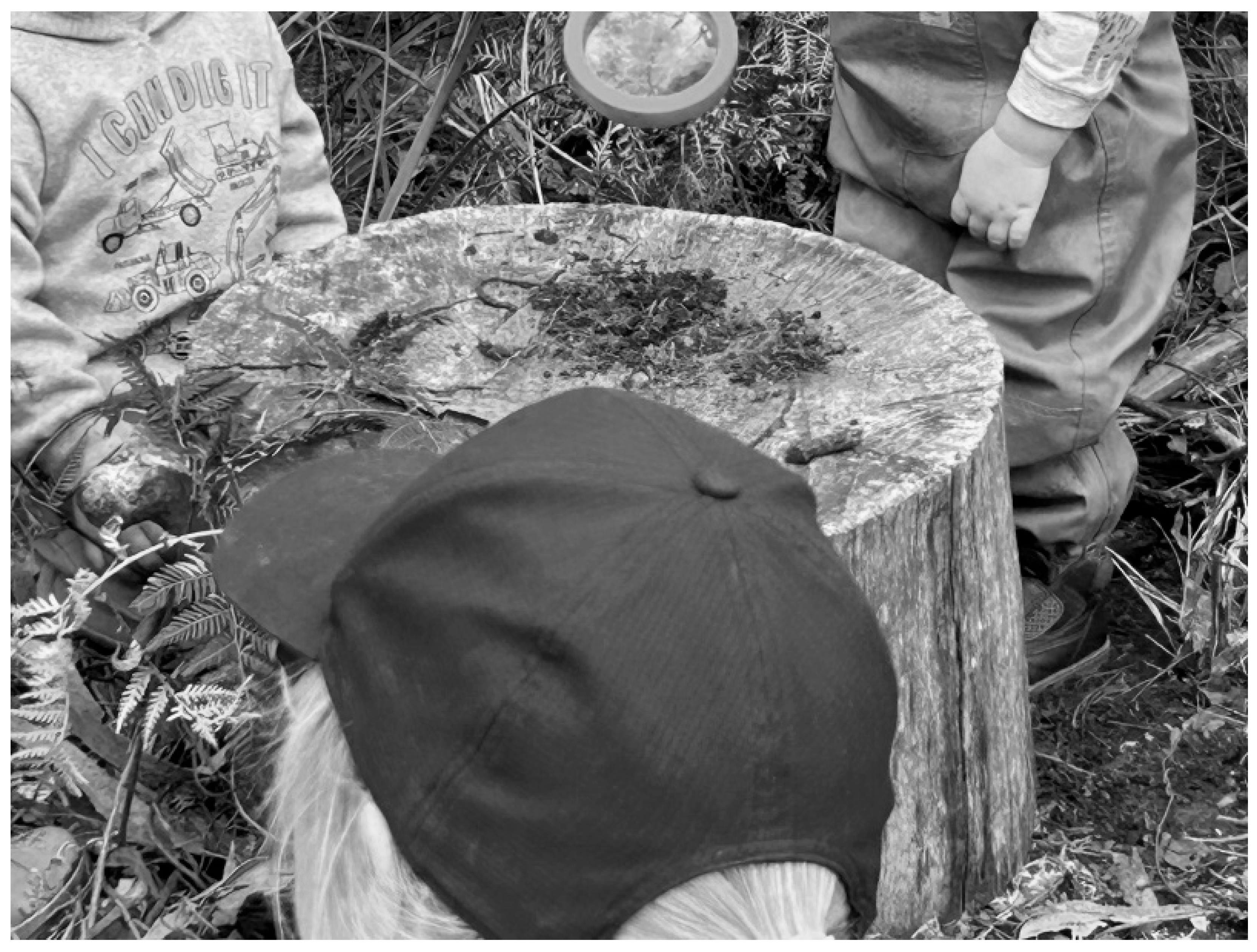
In Vignette 1, we describe our observations of the biological science knowledge gained while children observed small animals they had found living in a dead tree stump.
9. Discussion
The cross-sectional evidence from nature playgroup sessions highlights the extent to which science understandings can be built by children from an early age. The opportunities for these ‘Little Scientists’ (
Piaget, 1950) to learn through directed and spontaneous play aligns with sensori-motor development and children beginning to use their five senses whilst undertaking goal-directed actions to learn. The play in natural surroundings created occasions through which children’s knowledge is aligned to the themes that are captured in curriculum frameworks (
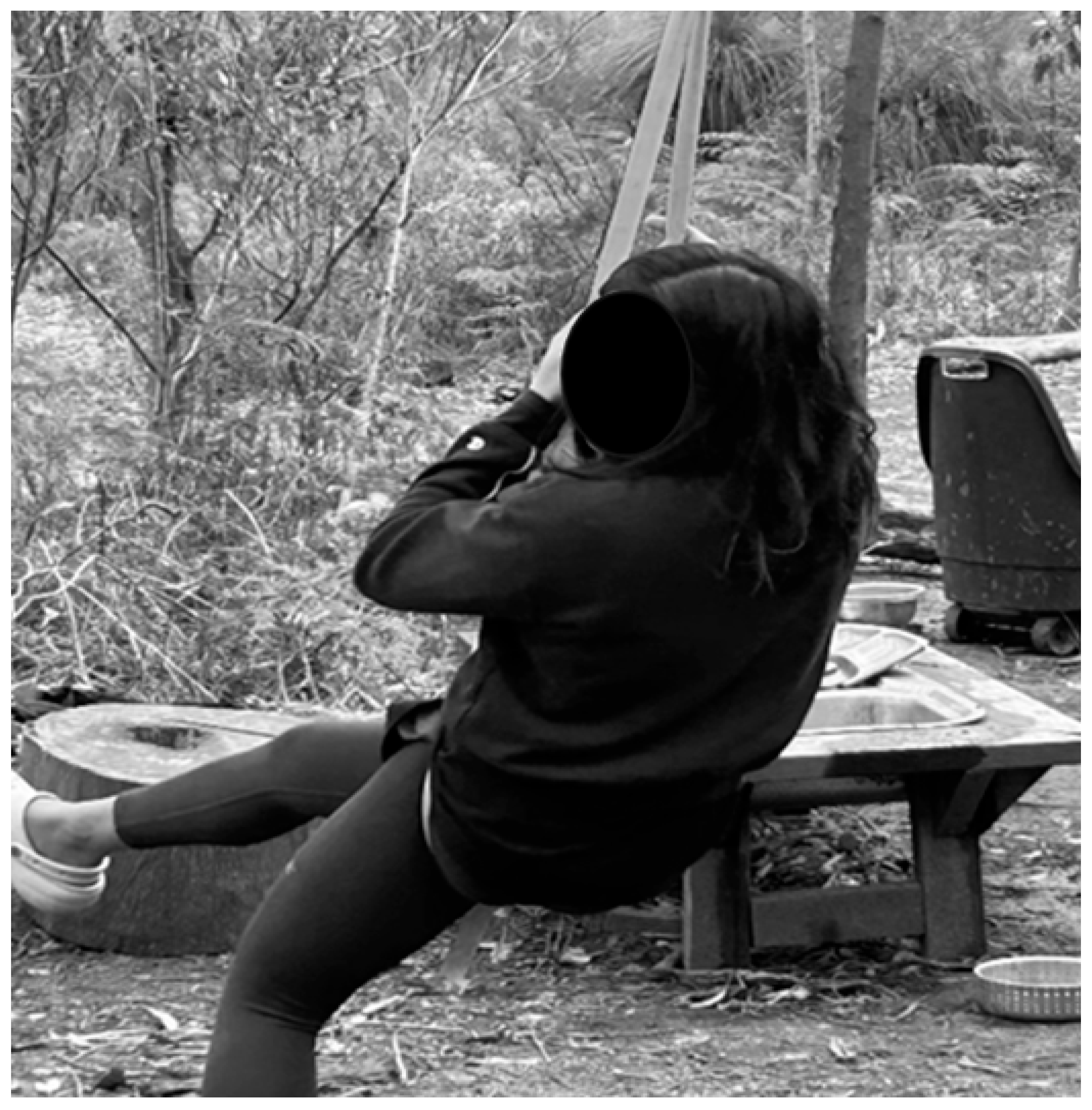
VCAA, 2025) of Biological, Physical, Chemical, and Earth and Space and where they can grow and develop. The four examples provided here as findings demonstrate the richness of a nature playgroup and the ways in which science can be conceptualised even from a very young age. The motion of the swing, the touch and feel of the worm and mud, and the observations of the shadows and running water all provide examples of how science in nature support young children to develop their senses and motor skills. These examples are provided to align with previous insights that children’s curiosity and understandings of the world around them are enhanced when science is introduced from an early age (
Bjerknes et al., 2025;
Greenfield, 2015).
The earlier mention here of
Jacobsen et al.’s (
2025) three themes is also of importance in reflecting on the merits of facilitated playgroups as settings for children’s science learning. The notion of place-based education is worthy of consideration here and the context of the nature playgroup. The children gained connections to nature as they participated and experienced natural phenomenon (
Wattchow & Brown, 2011;
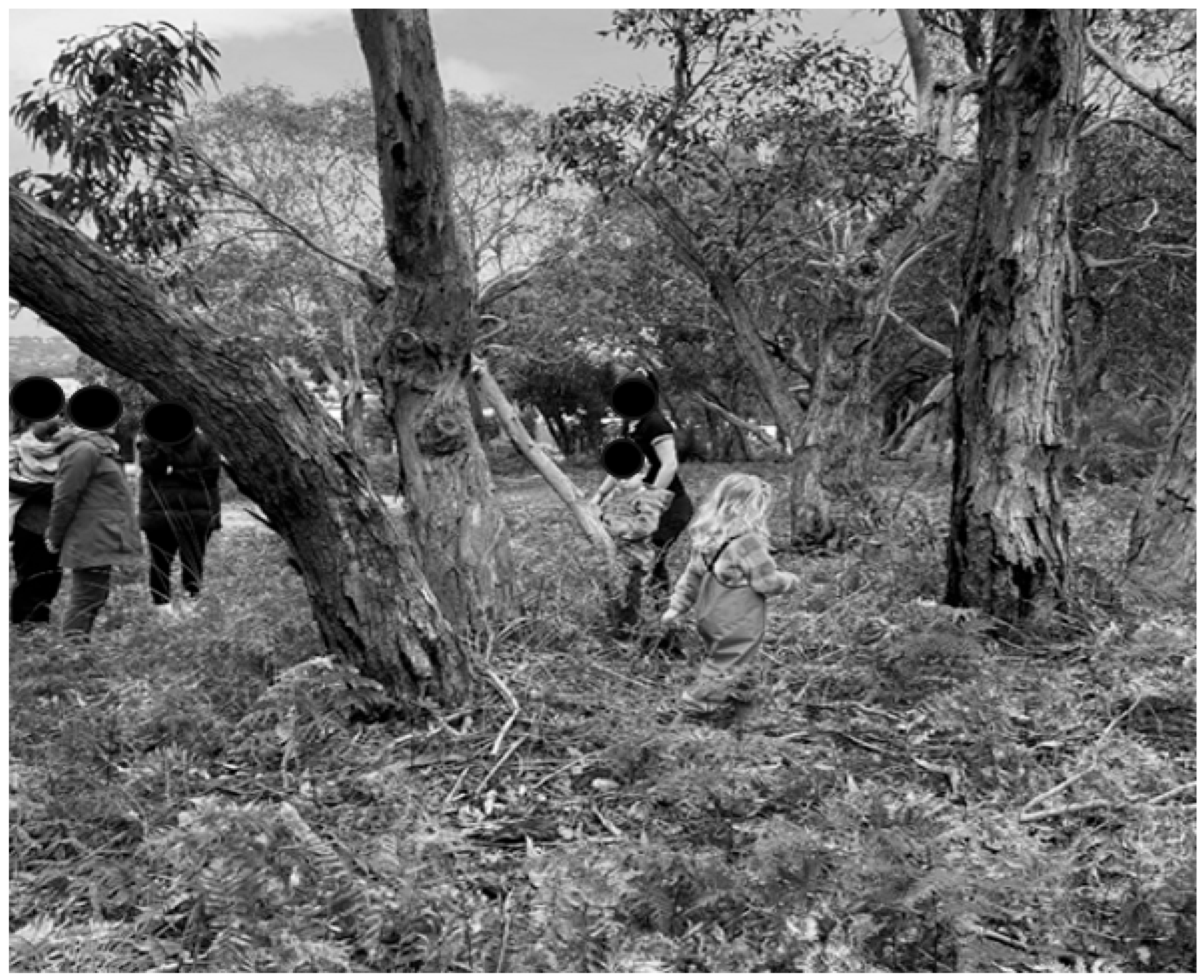
Yemini et al., 2025). The use of the attributes within a nature playgroup setting that included trees to construct a rope swing, the slope, and bare ground to observe water turning to mud and clouds and the sun casting shadows, all supported rich learning activities and elicited opportunities for facilitators to support developing science understandings. As importantly, the children were willing to participate in these activities, supporting the notion that Mohammad and colleagues (
Mohammad et al., 2013) that place-based education affords safe and harmonious connection for children to a place such as a nature playgroup site. All four vignettes describe the connection to place, in this instance, a natural place, and how facilitators can introduce new science concepts as part of the nature playgroup.
This research, while focussed on the children’s play, also has confirmed that the role of facilitators in playgroups is essential as the facilitator brings the additional knowledge to the forefront of discussion and observations. In all four examples, the facilitators adopted questioning (
Campbell & Chealuck, 2021) and examples such as ‘why is it wriggly?’ and ‘what can you feel when you are swinging?’ engaged the children and elicited discussion regarding science knowledge. Facilitated playgroups occasion opportunities for young children to be supported in their play by organised activities which offer science understand development. The determination by the facilitator through pre-planning of the appropriateness of developmentally appropriate activities allowed for the children to explore, socialise, and learn through play-based activities (
Mosby & Mensinga, 2025). The structure of a facilitated playgroup session has the capacity to direct children’s nature-based science learning and for parents to listen to how a facilitator enhances the play with questioning. Parents can draw on this action to further nurture their child’s growth in science knowledge. The questioning and modelling that each facilitator applied such as ‘why do we see clouds in winter?’ or ‘what can you see the water doing?’ have been provided here to not simply create children’s science learning experiences but to elicit children’s responses to their experience (
Campbell & Chealuck, 2021). The building of curiosity through science learning (
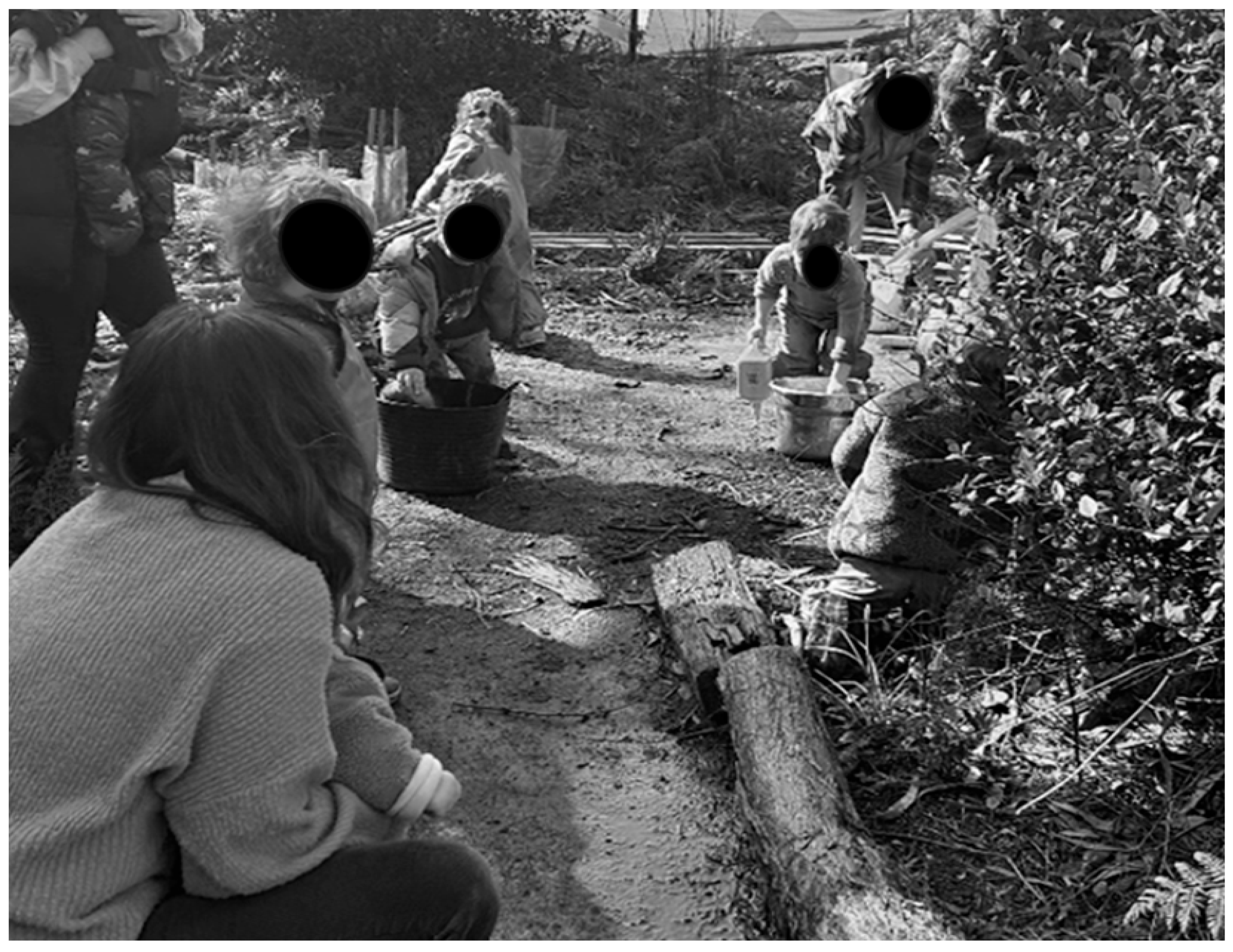
Greenfield, 2015) becomes evident as the conversation and activity ensues. What then becomes critical here is the articulation in a child’s own words of what they are seeing and doing and the valuable experience of the facilitator in linking the child’s words to science understanding. The facilitator plays a critical role through their demonstrations, in building the children’s confidence to test, experiment, and apply what they were observing. The chance to mix water and soil while watching water flow provide valuable science learning for very young children. The children, through stating what they were witnessing, were then demonstrating that they were capable science learners even at a young age. What can be drawn from the findings here is a confirmation of ensuring that incorporating science education as part of a whole of curriculum approach to learning is an important foundation for children’s knowledge and interest in science (
Gerde et al., 2013) and builds knowledge of scientific thinking (
Jacobsen et al., 2025;
Larimore, 2020).
10. Conclusions
To date, the limited attention paid to nature playgroups in empirical research has found them to be highly beneficial to families in connecting them with nature (
Ward et al., 2019). The emergence of playgroups and more specifically, nature playgroups, which grew out of a need to provide social and emotional support for parents, has given rise to this new avenue for science teaching and learning to young children. This study, in responding to the question of how facilitated nature playgroups build science understandings in young children, has captured an example of one playgroup’s capacity to provide young children with rich opportunities to learn science content through nature play. The role of the facilitator has been shown to be critical in working alongside adult family members to provide activities to enrich children’s play. Time spent in nature for children aged from birth to four has been applied in contexts such as Europe and the UK for well over 50 years, yet Australia is only beginning to truly embrace this as a learning context not only for science but other domains.
While this study, using ethnographic research methods, allowed for the appreciation of one playgroup, consideration needs to be given to the implications for other examples of facilitated playgroups which sit outside existing Australian education structures. The emergence of playgroups provides an opportunity for ECEC teaching and learning which can support young children preparation for the more formal structures in place, such as kindergarten. There are several lines of enquiry that the authors consider worthy of future investigation in the domain of research into nature playgroups. For example, investigations into cognitive science content knowledge benefits would make an interesting study along with an account of how nature playgroups promote parental interactions and quality of inquiry-promoting play. Also, a broader sweep of nature playgroups and how these are facilitated is needed to inform future practice. Importantly, while the children played, the facilitators demonstrated an awareness of opportunities to talk to the children about what they were experiencing, often adding to the children’s existing science knowledge. Support is needed for facilitators to develop the requisite knowledge necessary to effectively incorporate simple science knowledge, so they are not solely reliant on their own knowledge when including science education in the facilitated playgroup programs. Professional development programs tailored directly to nature-based learning of science in ECEC both in existing teacher education programs and as standalone training would address this into the future. Importantly, while the children played, the facilitators demonstrated an awareness of opportunities to talk to the children about what they were experiencing, often adding to the children’s existing science knowledge. Carrying this knowledge from the nature playgroup into their future schooling will prove valuable for the children.