1. Introduction
Human capital development is increasingly important in the digital economy, particularly as public-sector and Business-to-Government (B2G) decision-making requires integrated data, policy gap analysis, and evidence-based recommendations (
Alam et al., 2024;
Badakhshan et al., 2024;
Daniels et al., 2025). In the context of labour and education economics, higher education plays an important role in preparing future managers with digital governance skills (
Depasquale et al., 2025;
Wang, 2025). Therefore, digital simulation platforms are not only pedagogical tools but also instruments for developing analytical capacity, workforce readiness, and evidence-based economic decision-making skills (
Martins & Veiga, 2022).
Business-to-Government (B2G) information systems provide a relevant context for developing digital economic governance capacity because they involve bureaucratic processes, public service needs, regulations, cross-sector data integration, and policy-oriented decision-making (
Aufenanger et al., 2025;
Hari Rajan et al., 2025). Understanding B2G systems requires not only technical knowledge but also systemic thinking, data interpretation, and the ability to formulate evidence-based recommendations (
Haritas & Harini, 2025;
Sauer et al., 2025).
However, conventional learning often presents information systems as technological features rather than as integrated systems that connect actors, data, processes, policies, and decisions (
Depasquale et al., 2025;
Wang, 2025). This gap between expected digital governance competencies and available learning experiences underscores the need for an AI-assisted simulation platform that bridges theory, practice, and economic decision-making capacity (
Yan et al., 2025;
Yu et al., 2024).
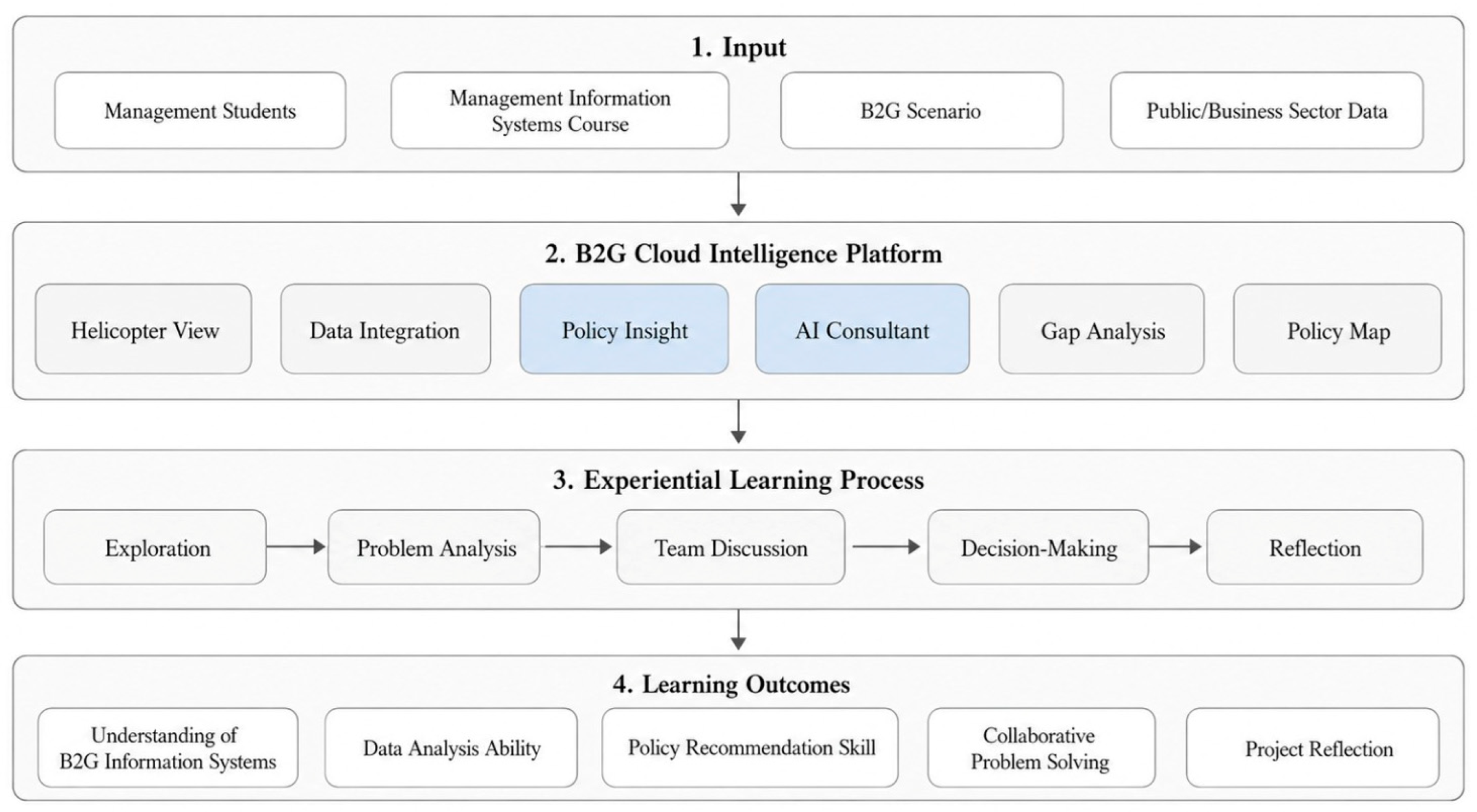
To address this need, this study develops and evaluates B2G Cloud Intelligence as a cloud-based simulation platform for learning B2G information system development among management students (
Medel et al., 2025;
Xia et al., 2025). This platform is designed for Management Information Systems courses. It is used to help students understand the processes of needs analysis, data integration, problem mapping, artificial intelligence-based consulting, and policy recommendation formulation (
Alam et al., 2024;
Badakhshan et al., 2024). The experiential learning approach is used as the basis for learning because it allows students to learn through hands-on experience, problem exploration, group discussions, solution development, and reflection on the process (
Depasquale et al., 2025;
Wang, 2025;
Yan et al., 2025;
Yu et al., 2024).
B2G Cloud Intelligence integrates several key features, namely Helicopter View, Data Integration, Policy Insight, AI Consultant, Gap Analysis, and Policy Map. Helicopter View helps students gain an overview of the conditions and key indicators in B2G scenarios. Data Integration allows students to explore the relationships between data relevant to the problem being analyzed (
Hegarty & Thompson, 2019;
Promma et al., 2025). Policy Insight provides support in understanding policy issues. At the same time, the AI Consultant helps students explore alternative solutions through artificial intelligence-based interactions. Gap Analysis identifies gaps between actual and ideal conditions, while Policy Maps help students develop data-driven recommendations in a more structured manner (
Hegarty & Thompson, 2019;
Promma et al., 2025). As such, the platform serves not only as a learning medium but also as an innovative system that integrates management learning, cloud technology, data analytics, and decision-making support.
Unlike previous research, which mostly discussed digital learning platforms for material delivery, practice questions, or academic evaluation, this study focuses on simulations of B2G information system development that place students in the roles of system analysts and decision-makers (
Ehlert & Brennan, 2025). This research not only presents the platform as a learning tool but also evaluates how students’ interactions with its features can support understanding of the system, data analysis, and policy recommendations (
Yan et al., 2025;
Yu et al., 2024). Evaluation is carried out through the measurement of learning outcomes, user acceptance, and the quality of student learning outputs (
Aufenanger et al., 2025;
Hari Rajan et al., 2025). With this approach, this study seeks to provide evidence that cloud-based simulation platforms can strengthen experiential learning in management education.
From the perspective of future internet systems, the development of B2G Cloud Intelligence is relevant because public-sector information systems increasingly depend on cloud infrastructure, data integration, web-based services, and AI-assisted decision support (
Alam et al., 2024;
Badakhshan et al., 2024). B2G systems require not only technical connectivity between users and platforms, but also the ability to integrate heterogeneous data sources, support analytical workflows, and provide decision-oriented outputs for multiple stakeholders. Therefore, learning environments for Management Information Systems should not only introduce students to information system concepts, but also expose them to internet-based system architectures, cloud-enabled interaction, data-driven analysis, and AI-supported decision-making processes. This study positions B2G Cloud Intelligence as an applied cloud-based learning and decision-support platform that reflects these emerging requirements (
Hegarty & Thompson, 2019;
Martins & Veiga, 2022;
Promma et al., 2025).
This study addresses two research questions. First, how is B2G Cloud Intelligence designed and implemented as an AI-assisted, cloud-based simulation platform to strengthen digital economic governance capacity? Second, to what extent can the use of B2G Cloud Intelligence improve students’ digital skills, data integration capacity, policy analysis, and evidence-based economic decision-making skills? Because the study uses a one-group pretest–posttest design with students from a single university, its findings are positioned as pilot evidence. The study does not directly measure productivity, labour-market performance, public-sector efficiency, or macroeconomic outcomes. Instead, it focuses on foundational competencies that may be relevant for future digital governance capacity, including data integration, policy analysis, and evidence-based decision-making. This positioning is intended to align the scope of the findings with the empirical design used in the study.
The main contribution of this study lies in its pilot evaluation of B2G Cloud Intelligence as an AI-assisted cloud-based simulation platform for developing foundational digital governance competencies in higher education (
Martins & Veiga, 2022). Rather than claiming direct macroeconomic impact or labour-market outcomes, this study examines whether students can improve their understanding of B2G information system flows, cloud-based system architecture, data integration, policy analysis, and system-based decision-making after using the platform. In this sense, the study contributes to labour and education economics by offering preliminary evidence on how digital simulation may support early-stage human capital formation for digital economic governance (
Hegarty & Thompson, 2019;
Promma et al., 2025).
Because the study uses a one-group pretest–posttest design with students from a single university, its findings are positioned as pilot evidence. The study does not directly measure productivity, labour-market performance, public-sector efficiency, or macroeconomic outcomes. Instead, it focuses on foundational competencies that may be relevant for future digital governance capacity, including data integration, policy analysis, and evidence-based decision-making. This positioning is intended to align the scope of the findings with the empirical design used in the study.
3. System Design and Capacity Evaluation
3.1. B2G Cloud Intelligence: System Architecture and Functional Modules
B2G Cloud Intelligence is designed as an AI-assisted cloud-based simulation platform to strengthen digital economic governance capacity. The platform integrates data exploration, problem analysis, artificial intelligence support, gap mapping, and policy recommendation development in a single digital environment. The main purpose of the system is to provide users with a structured simulation of Business-to-Government (B2G) decision-making processes, connecting public-sector data, business information, policy indicators, and analytical tools to support evidence-based recommendations.
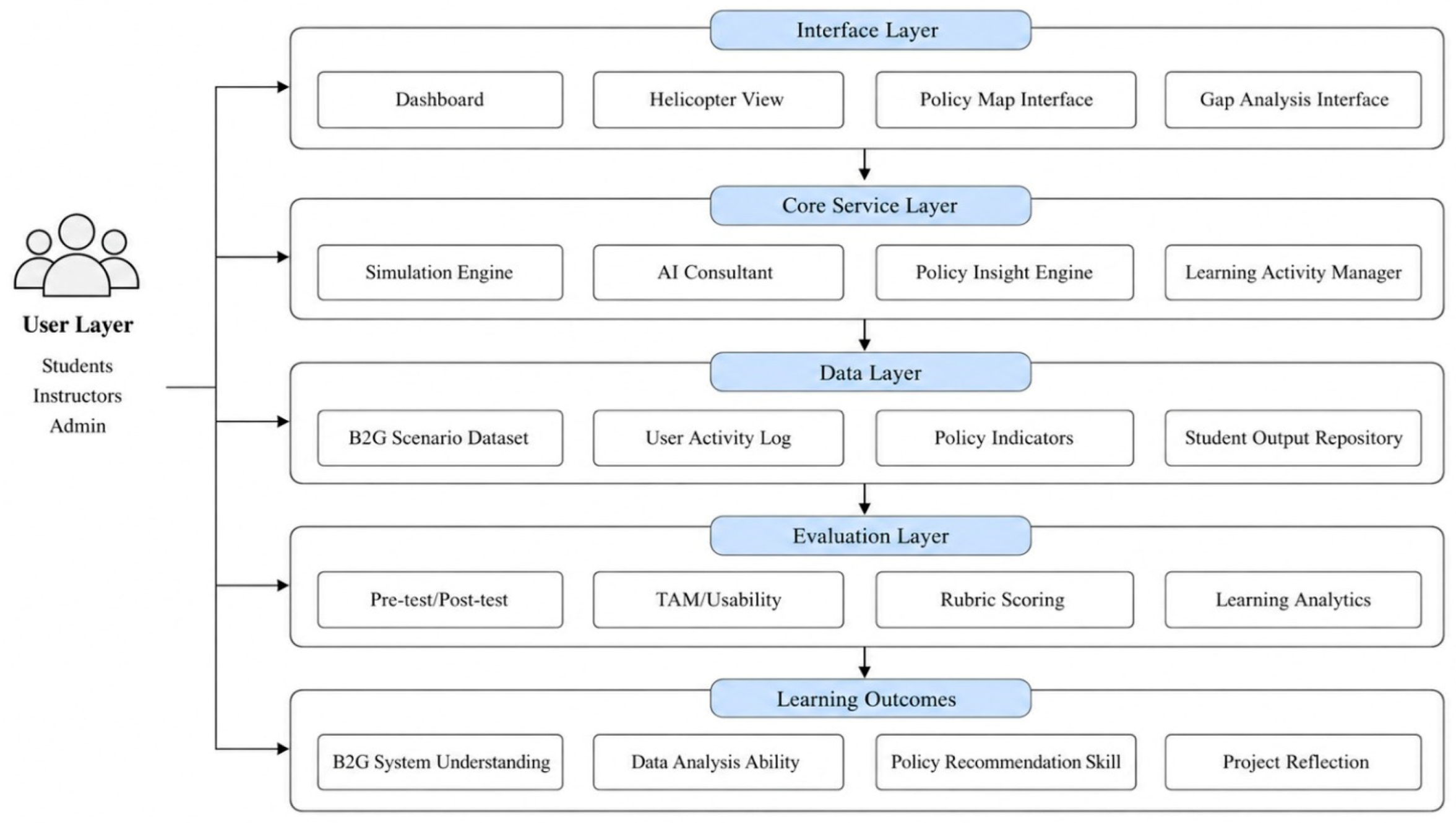
The architecture of B2G Cloud Intelligence is shown in
Figure 2. The system consists of several main layers: user layer, interface layer, core service layer, data layer, evaluation layer, and capacity outcomes. At the user layer, users include students, instructors, and administrators. Students are positioned as future managers and decision-makers who use the platform to analyze B2G scenarios. Instructors facilitate the simulation process, while administrators support technical platform management. The interface layer provides access to the Dashboard, Helicopter View, Policy Map Interface, and Gap Analysis Interface. This layer serves as the entry point for users to explore indicators, understand the problem context, and compile analytical outputs.
The core service layer manages the simulation workflow, AI Consultant, Policy Insight Engine, and learning activity management. The data layer stores B2G scenario datasets, policy indicators, user activity records, and project outputs. The evaluation layer supports pre-test/post-test assessment, usability evaluation, rubric scoring, and learning analytics-oriented monitoring. This layered architecture shows that B2G Cloud Intelligence is not only a pedagogical tool, but also an applied cloud-based system that integrates internet-enabled interaction, AI-supported analysis, and data-driven evaluation to strengthen digital economic governance capacity.
3.2. Simulation Scenario, User Roles, and Evaluation Design
The simulation scenario required students to analyze a B2G digital service case involving public-sector service needs, business-sector data, policy indicators, and user requirements. Each group examined the relationship between service problems, available data, stakeholder roles, and possible policy responses. The expected outputs were a Gap Analysis Report and a Policy Map that summarized the problem context, key indicators, identified gaps, and evidence-based recommendations (
Hegarty & Thompson, 2019).
The simulation trial was carried out in several stages. The first stage included platform orientation, explanation of B2G scenarios, group division, and pre-test implementation. The second stage focused on exploring Helicopter View and Data Integration features to understand initial conditions and relationships among the data. The third stage involved using Policy Insight, AI Consultant, and Gap Analysis to identify problems and develop alternative solutions. The final stage included Policy Map preparation, group presentations, post-test administration, TAM/usability questionnaires, and project output assessment. The evaluation was conducted to measure improvements in digital skills, data integration capacity, policy analysis, user acceptance, and evidence-based economic decision-making skills (
Coffay & Bocken, 2023).
3.3. AI Consultant Configuration and Human Oversight
The AI Consultant module was designed as a guided decision-support feature rather than as an autonomous decision-maker. In the platform workflow, the AI Consultant provides exploratory prompts, analytical suggestions, and alternative interpretations based on the B2G scenario and the information available in the simulation environment. Students use this feature to clarify problems, compare possible explanations, and generate initial recommendation options. The AI Consultant is connected to the Policy Insight and Gap Analysis workflow so that the system’s suggestions can be reviewed against available indicators and scenario context.
To reduce the risk of inaccurate or unsupported recommendations, AI-generated outputs were not treated as final answers. Students were instructed to verify AI suggestions using the Data Integration, Policy Insight, and Gap Analysis modules. Instructors also reviewed the recommendations’ relevance, logic, and consistency during group discussions and project presentations. Therefore, the AI Consultant functioned as a scaffolding and decision-support tool. At the same time, the final interpretation and recommendation remained within the students’ and instructor’s judgement.
5. Results
5.1. Implementation of B2G Cloud Intelligence for Digital Economic Governance Simulation
Data were analyzed using a descriptive, quantitative approach and a before-and-after comparison of platform scores. Pre-test and post-test data were analyzed by calculating the average score, gain score, and difference in improvement in each indicator.
B2G Cloud Intelligence is implemented as a cloud-based simulation platform to support experiential learning in Management Information Systems courses. This platform is used by 4th-semester Management Study Program students in the Business-to-Government (B2G) information system development scenario. The system’s implementation focuses on six main features: Helicopter View, Data Integration, Policy Insight, AI Consultant, Gap Analysis, and Policy Map. Each feature is designed to support different stages of learning, from data exploration and problem understanding to gap analysis and policy recommendation development.
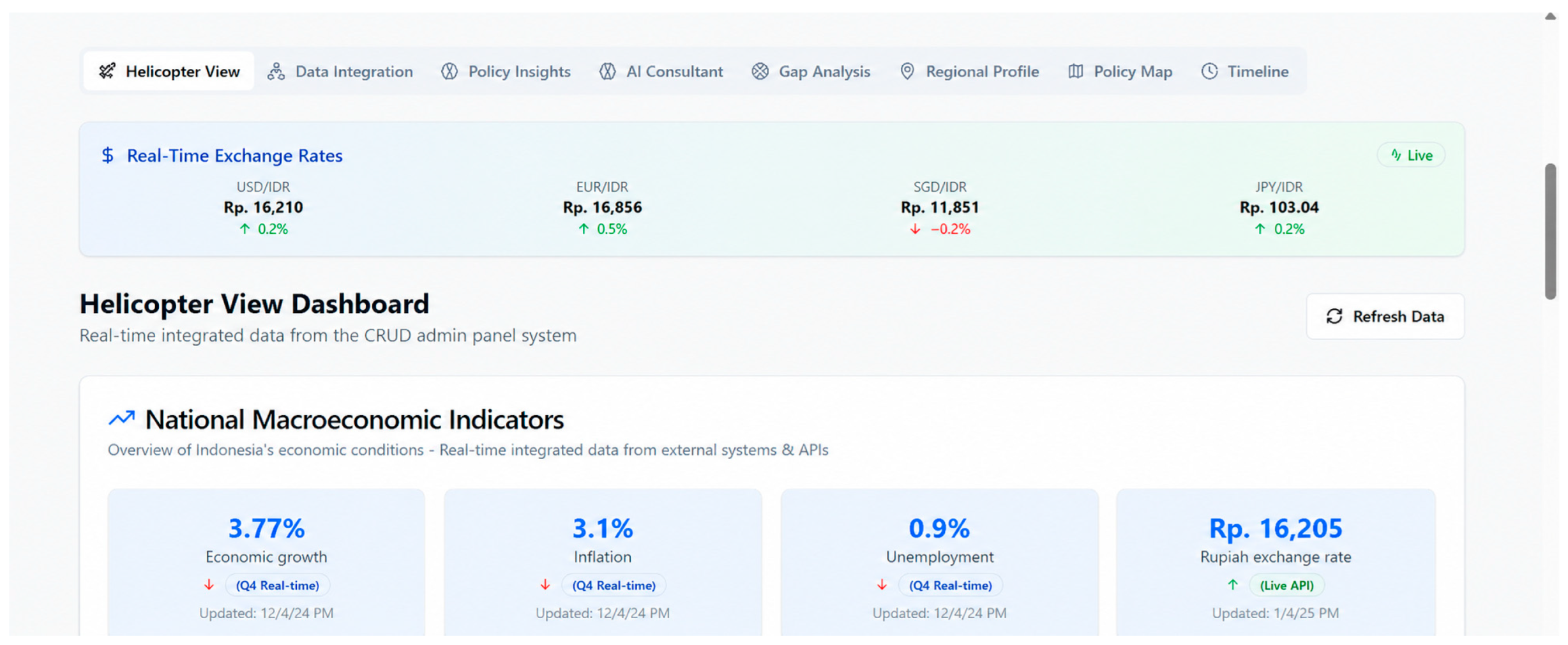
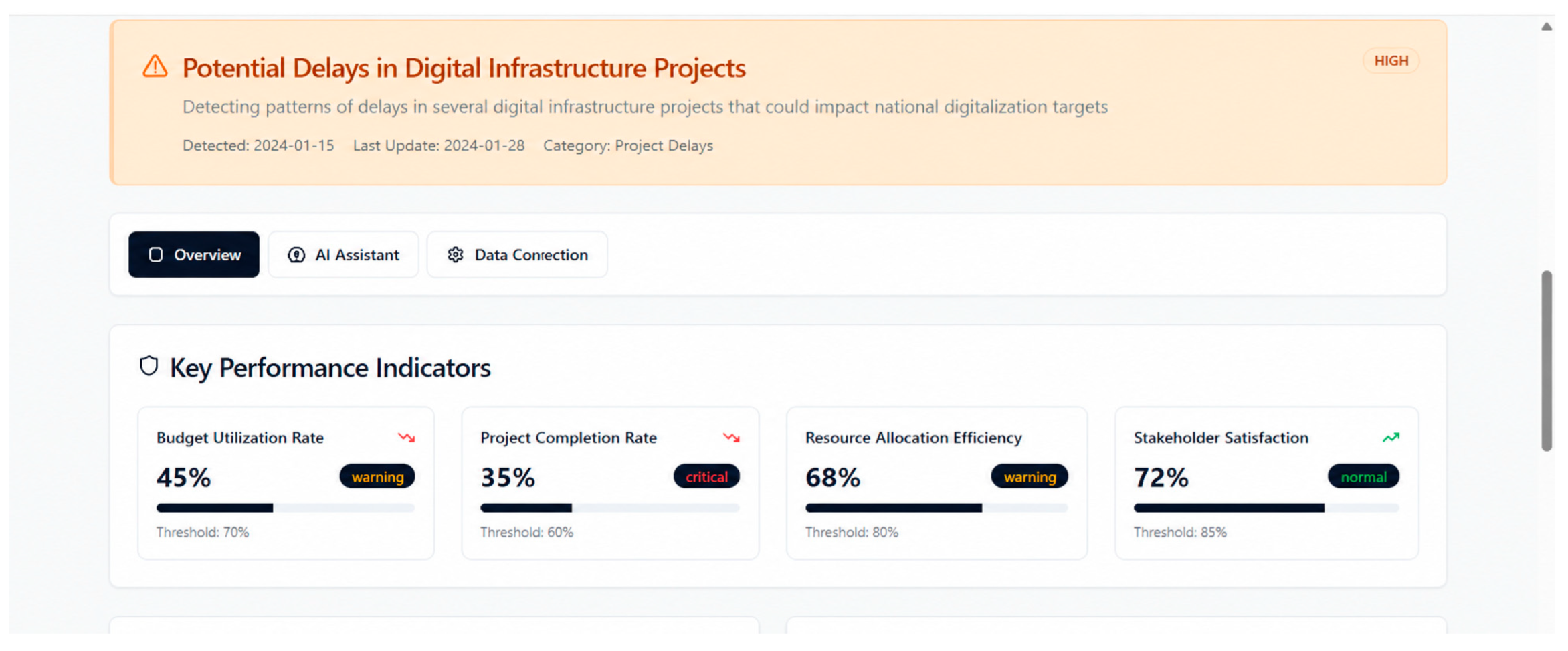
In the initial stage, students use the Helicopter View feature to get a comprehensive overview of the learning categories, key indicators, and context of the B2G scenario being analyzed. This feature helps students understand the initial conditions before conducting a more in-depth data analysis. The Helicopter View used on the platform is shown in
Figure 3.
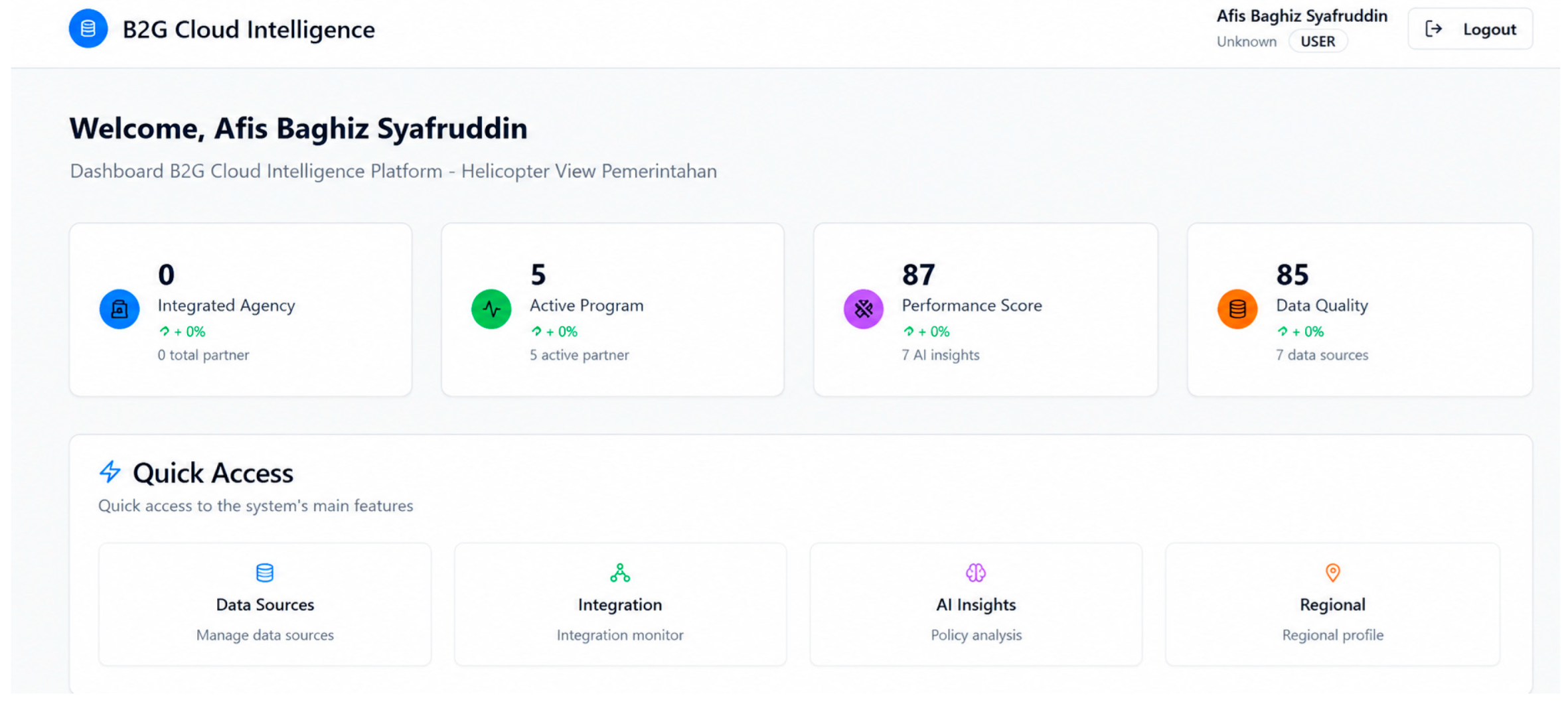
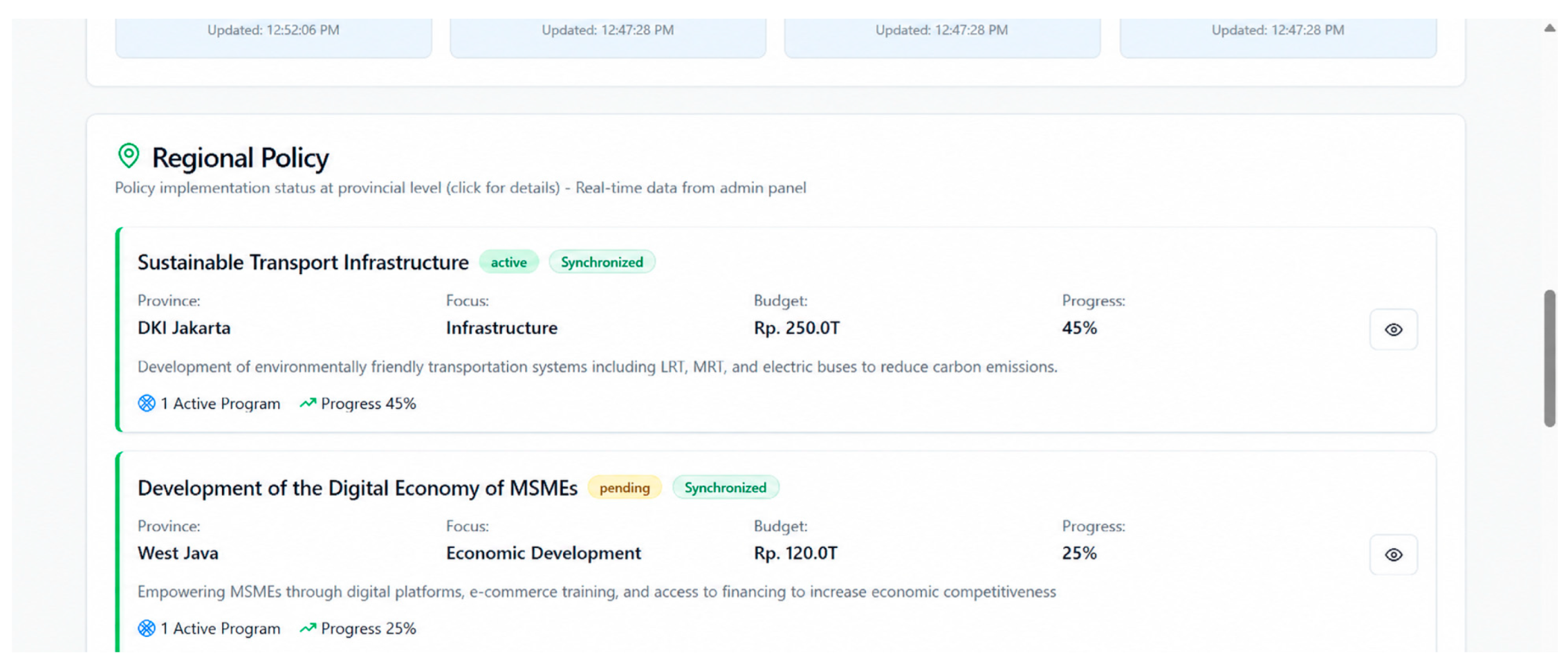
In addition to Helicopter View, the platform provides the main interfaces students use during the learning process. The interface includes data exploration displays, AI-based consulting, gap analysis, and Policy Map compilation. Each interface is designed so that students can gradually move from the exploration stage to the analysis stage and to the preparation of project outputs. An example of what an interface looks like in B2G Cloud Intelligence is presented in
Figure 4.
The platform trial lasted 4 weeks, with 2 sessions per week. In the first week, students participated in platform orientation, explanations of B2G scenarios, group assignments, and pre-tests. The second week was focused on exploring Helicopter View and Data Integration. The third week was used to operate Policy Insight, AI Consultant, and Gap Analysis. In the fourth week, students compile a Policy Map, give group presentations, complete post-tests, and complete the usability/TAM questionnaire. The results of the implementation show that the platform can be used as a learning simulation medium that connects Management Information Systems theory with data-based B2G system analysis practices.
From a system implementation perspective, the trial confirmed that the platform could support a complete cloud-based learning workflow, from user access and data exploration to AI-assisted analysis and project output development. Students were able to move through the main modules in a structured sequence, beginning with Helicopter View and Data Integration, then Policy Insight, AI Consultant, and Gap Analysis, and ending with Policy Map development. This workflow demonstrates the feasibility of using an internet-based simulation platform to support complex learning activities in Management Information Systems education, particularly in topics related to public-sector digital transformation and B2G information system development.
5.2. Improvement in Digital Skills and Economic Decision-Making Capacity
The comparison of pre-test and post-test scores indicates changes in participants’ digital skills and economic decision-making capacity following the use of the platform. The results for each indicator are presented below, highlighting the observed improvements between the pre-test and post-test assessments.
Based on the overall pre-test and post-test averages, the mean normalized gain was 0.54, which falls within the moderate improvement category. However, because the study used a one-group design without a control group, this improvement should be interpreted as pre-post score change rather than definitive causal evidence of platform effectiveness. As shown in
Table 1, the average pre-test score is 60.3, while the average post-test score is 81.7. Thus, the average increase was 21.4 points. The largest increase was in the policy analysis ability indicator, which rose from 62.1 to 84.3, a gain of 22.2 points. Meanwhile, the ability of data integration analysis increased from 59.2 to 80.7, a gain of 21.5 points. These results show that using the platform not only improves students’ conceptual understanding of B2G information systems but also strengthens data analysis and decision-making skills.
Based on
Table 2, the inferential analysis showed statistically significant differences between pre-test and post-test scores across all measured indicators. The overall score increased by 21.4 points, with a mean normalized gain of 0.54, indicating a moderate improvement category. The overall paired-sample test was significant, t(67) = 20.52,
p < 0.001, with a large effect size, dz = 2.49. Nevertheless, these findings should be interpreted carefully because the study did not include a control group. Alternative explanations, such as normal learning progression, instructor guidance, repeated testing, and group discussion, may also have contributed to the observed improvement.
In general, higher scores indicate that cloud-based learning helps students understand the process of developing B2G information systems more practically. Students not only read about the concepts of information systems but also experience the processes of data exploration, problem identification, gap analysis, and the preparation of policy-based recommendations.
5.3. User Acceptance of the AI-Assisted Decision-Support Platform
Platform acceptance and ease of use were measured using a Technology Acceptance Model (TAM)-based usability questionnaire. The questionnaire used a Likert scale from 1 (strongly disagree) to 5 (strongly agree). The variables measured included perceived usefulness, perceived ease of use, learning engagement, and decision support quality. A summary of the results of the usability/TAM questionnaire is presented in
Table 2.
Based on
Table 3, students responded positively to the use of B2G Cloud Intelligence. The perceived usefulness variable had the highest average value (4.31) and the lowest standard deviation (0.52). This shows that students find the platform useful for understanding the B2G information system development process. The learning engagement variable had an average score of 4.27, indicating that the platform can increase student engagement in discussions and problem-solving. The decision support quality variable received an average score of 4.22, indicating that the Policy Insight, AI Consultant, Gap Analysis, and Policy Map features support students in compiling analyses and recommendations. Perceived ease of use received an average score of 4.08, which is still in the good range.
An overall average of 4.22 indicates that students receive the platform very well. These findings show that B2G Cloud Intelligence is not only considered useful but also capable of creating a more engaging learning experience and supporting data-driven decision-making.
5.4. Gap Analysis Report and Policy Map Quality
The quality of student output was assessed through project rubrics with a total score of 100. The outputs assessed included the Gap Analysis Report, Policy Map, and Project Reflection. The assessment rubric covers seven aspects: problem identification; stakeholder and B2G process mapping; data exploration and integration; use of AI Consultant and Policy Insight; gap analysis and quality; policy map and recommendation; and reflection and teamwork.
The assessment results show that students can produce high-quality project outputs. An example of student project results showing the process of construction, analysis, and output preparation based on B2G scenarios is shown in
Figure 5.
In addition, project-based outputs show that students can connect the results of problem analysis, stakeholder mapping, and policy recommendations into a more understandable visual form. The Policy Map compiled by students is one of the proofs that the platform can encourage systemic, collaborative, and data-based thinking. An example of student-project-based output is shown in
Figure 6.
The project output assessment was conducted at the group level. Because students worked collaboratively in 12 groups, the rubric scores represent average group scores rather than individual student scores. Therefore, the results should be interpreted as evidence of group-level analytical output quality, not as individual-level performance measurement. A summary of the results of student output assessment based on the rubric is presented in
Table 4. This table shows student achievement across all aspects of assessment, from problem identification to project reflection.
6. Discussion
The findings of this pilot study should be interpreted within the context of labour and education economics, particularly in relation to early-stage digital skills formation in higher education. B2G Cloud Intelligence is not examined here as a direct intervention for labour-market outcomes, productivity, or public-sector performance. Rather, it is evaluated as a simulation environment that may support foundational competencies relevant to digital economic governance. The increase in pre-test and post-test scores, positive user acceptance, and the quality of the group-level Gap Analysis Reports and Policy Maps suggest that participants developed skills in data integration, policy interpretation, and evidence-based recommendation formulation. However, these findings should be interpreted cautiously because the study used a one-group design without a control group.
6.1. B2G Cloud Intelligence and Human Capital Development
The results suggest that B2G Cloud Intelligence was associated with improvements in students’ foundational digital governance competencies. The increase in the average score from 60.3 in the pre-test to 81.7 in the post-test, with a gain of 21.4 points and a mean normalized gain of 0.54, indicates a moderate improvement after the simulation (
Schnaider, 2023). However, this result should not be interpreted as definitive causal evidence because the study did not include a control group. The observed improvement may have also been influenced by normal course progression, repeated testing, instructor guidance, group discussion, and students’ increasing familiarity with the topic (
Martins & Veiga, 2022).
The improvement in learning outcomes indicates that digital simulation can strengthen the connection between theory and practice in management education (
Lowell & Tagare, 2023). In conventional learning, students often learn information systems through concepts, models, and written case studies (
Borchers et al., 2025). However, such an approach is not always sufficient to help students understand how information systems work in complex organizational situations (
Eddy et al., 2023). B2G Cloud Intelligence provides a more context-rich learning environment by placing students in scenarios that simulate the development of public sector information systems (
Lisbet et al., 2025).
The largest increase was observed in the policy analysis indicator, from 62.1 to 84.3, a gain of 22.2 points. These findings show that B2G Cloud Intelligence not only strengthens students’ technical understanding but also helps them understand the policy dimension in information systems development (
Baum et al., 2025). This is important because the Business-to-Government information system cannot be understood solely as a technological system, but as a socio-technical system that involves stakeholders (
Glaser et al., 2021). These findings support previous research, which confirms that authentic simulations can help students understand complex problems, develop problem-solving skills, and transfer knowledge into the world of work (
Cazan, 2012).
In addition, improvements in data integration, analysis, and system design, along with the use of decision-making indicators, indicate that students gain a more comprehensive learning experience. This reinforces the argument that experiential learning in the context of information systems needs to be designed as a process that combines exploratory, collaborative, and reflective activities (
Bressane et al., 2024). Students not only need to know “what an information system is”, but also need to experience how information systems are used to read problems, formulate decisions, and support managerial processes.
6.2. Digital Skills Formation for Economic Governance
The findings of this study also strengthen the role of cloud-based simulation as an authentic learning environment in higher education. Cloud-based simulations allow students to experience a more flexible, interactive, and contextual learning process than lecture-based learning. In B2G Cloud Intelligence, students use Helicopter View to get a comprehensive overview of the B2G scenario, Data Integration to understand data relationships, Policy Insight to understand policy issues, AI Consultant to explore alternative solutions, Gap Analysis to identify gaps, and Policy Map to make recommendations. This set of features makes the platform not just a digital medium, but a simulation space that supports systemic thinking processes (
Bezanilla et al., 2019).
The results of this study align with previous research indicating that cloud-based simulation can foster digital skills, allowing students to engage with tasks that resemble professional situations (
Widarti et al., 2020). In the B2G context, the authenticity of learning arises because students not only solve problems but also must understand the relationships among data, policies, actors, and decisions. This differs from digital learning, which serves only as a medium for delivering material (
Chrisnawati et al., 2023). B2G Cloud Intelligence encourages students to actively explore problems, discuss in groups, and compile project outputs that reflect the analytical work process.
The Helicopter View feature plays an important role in helping students develop a macro understanding of B2G scenarios. This feature allows students to see more thoroughly the relationship between indicators and the problem’s context before conducting a detailed analysis (
Eddy et al., 2023). In information systems learning, the ability to view problem structures at a macro level is an important basis for understanding system complexity (
Ronft et al., 2025). Meanwhile, Data Integration helps students understand that managerial and policy decisions cannot be made based on a single data source. Students need to read the relationships between data, interpret patterns, and relate them to stakeholder needs (
Foster, 2021).
6.3. AI-Assisted Decision Support and Evidence-Based Policymaking
One of the main contributions of B2G Cloud Intelligence is the integration of AI-based features, particularly AI Consultant and Policy Insight. The questionnaire results showed that decision support quality had an average score of 4.22, placing it in the very good category (
Vlachopoulos & Makri, 2024). In addition, the rubric results show that the use of AI Consultant and Policy Insight aspects received an average score of 13.2 out of 15. These findings show that students can productively use AI featuresß and policy insights to support analysis, rather than simply copying system outputs (
Widarti et al., 2020).
These findings are important because the use of AI in higher education often raises two possibilities (
Yu et al., 2024). On the one hand, AI can expand students’ access to feedback, ideas, and alternative solutions. On the other hand, AI can pose a risk of dependency if students only receive answers without conducting a critical evaluation. In this study, the AI Consultant was positioned as a support mechanism for evidence-based policymaking rather than as an automatic source of final answers (
Wang, 2025). The module helped students generate initial interpretations, compare alternative explanations, and refine policy recommendations. However, students were required to validate AI-generated suggestions using data integration results, policy indicators, group discussion, and instructor feedback. This design was intended to prevent passive reliance on AI and to encourage critical evaluation of AI-supported recommendations (
Imjai et al., 2025).
The role of AI as scaffolding aligns with previous research that emphasizes the importance of instructional support in complex simulation-based learning (
Teutsch et al., 2025). Management students do not always have a strong technical background in information systems development. Therefore, when they face B2G scenarios involving data, policies, actors, and cloud technologies, they may experience a high cognitive load (
Yang et al., 2025). AI Consultant helps reduce initial confusion by providing exploratory direction. In contrast, Policy Insight helps students understand policy issues more systematically.
Nevertheless, the contribution of AI still needs to be placed within the framework of critical learning. AI can help speed up exploration, but students still need to validate the relevance, logic, and data basis of each recommendation (
Nurhasanah et al., 2025). Therefore, the use of AI in B2G Cloud Intelligence should always be accompanied by group discussions, lecturer validation, assessment rubrics, and project reflection (
Nnaji et al., 2026).
6.4. User Acceptance and Feasibility of Cloud-Based B2G Simulation
The results of the usability/TAM questionnaire show that students receive B2G Cloud Intelligence very well. An overall average of 4.22 indicates that the platform is considered useful, fairly easy to use, and able to increase learning engagement and support decision-making. Perceived usefulness received the highest score of 4.31, indicating that students see the platform as a relevant tool for understanding the B2G information system development process. These findings align with the Technology Acceptance Model, which posits that perceived usefulness is an important factor in the acceptance of learning technology (
Calor et al., 2024).
The high perceived usefulness score can be explained by the platform’s characteristics, which not only provide information but also support students in completing analytical tasks (
Garrido-Moreno et al., 2024). Students benefit from the platform because its features are directly aligned with the project’s learning needs and outputs. This reinforces the view that learning technology will be more receptive if users see a clear relationship between the platform’s features and learning objectives (
Inderanata & Sukardi, 2023).
Learning engagement also obtained a high score of 4.27. These findings show that B2G simulation can encourage student involvement in the learning process. This engagement arises not only from the use of technology but also from learning designs that require students to work in groups, discuss, make decisions, and compile project outputs. Thus, engagement in this study is cognitive and social (
Tan & Kocsis, 2024). Students are not only actively clicking on features but also actively interpreting data, constructing arguments, and linking the analysis results to policy recommendations (
Alam et al., 2024).
Meanwhile, perceived ease of use scored 4.08 and was in the good category. Although these results are positive, the score is lower than perceived usefulness and learning engagement. This indicates that students perceive the platform’s benefits but still need guidance in using its features (
Tise et al., 2023). This finding is natural because B2G Cloud Intelligence offers many features and is used to address complex problems. Therefore, the usability aspect needs to be continuously improved through simplifying navigation, reinforcing instructions, providing tutorials, and adding analysis templates (
Schumacher et al., 2026).
These findings provide important implications for the development of learning platforms. The success of the platform is not only determined by the completeness of the features, but also by the quality of the user experience (
Ronft et al., 2025). A useful but overly complex platform can create barriers to learning (
Yang et al., 2025). Conversely, platforms that are easy to use but do not support analysis processes are also not powerful enough for high-level learning. Therefore, the development of B2G Cloud Intelligence needs to maintain a balance between depth of analytical functionality and ease of use (
Li et al., 2025).
6.5. Policy Map Quality and Economic Decision-Making Capacity
The rubric results show that students can produce project outputs of good quality. The average total score of 86.1 out of 100 shows that learning through B2G Cloud Intelligence not only improves test scores but also enhances the quality of learning products. The outputs assessed included the Gap Analysis Report, Policy Map, and Project Reflection. These three outputs reflect students’ ability to understand problems, process data, compile analysis, and reflect on the learning process (
Schnaider, 2023).
The aspect with the highest score was Policy Map and recommendation, with a score of 13.4 out of 15. These findings show that students can organize the results of data exploration and gap analysis into more structured recommendations. In the context of learning about Management Information Systems, Policy Maps play an important role by helping students visualize the relationships among actors, processes, data, problems, gaps, and solutions. The Policy Map also shows that students do not only understand information systems as technical tools, but also as an instrument for decision-making and governance (
Lisbet et al., 2025).
These findings are in line with previous research on project-based learning, which emphasizes that it can improve problem-solving, collaboration, and knowledge-transfer skills (
Eddy et al., 2023;
Imjai et al., 2025). In this study, students work in groups to produce outputs that require coordination, role-sharing, and data-driven argumentation. A reflection and teamwork score of 8.1 out of 10 indicates that students can reflect on the group work process and the decisions made during learning. This is important because experiential learning not only emphasizes activities, but also reflections on those activities (
Ortega-Ochoa et al., 2024).
Although the student’s output is relatively good, several aspects still need improvement. Problem identification received an average score of 12.6 out of 15, while gap analysis quality obtained a score of 12.8 out of 15. This score shows that students still need stronger support in the early stages of problem analysis and gap identification. In B2G scenarios, problems are often complex and not always directly apparent. Students need to distinguish between symptoms, root problems, impacts, and alternative solutions. Therefore, advanced learning needs to provide problem-framing templates, actor matrices, B2G process maps, and more detailed gap-analysis guides (
Razen et al., 2021).
Thus, the quality of student output shows that B2G Cloud Intelligence can support project-based learning. However, its effectiveness will be stronger if it is equipped with more systematic scaffolding (
Aufenanger et al., 2025). The scaffolding is not intended to limit students’ exploration, but rather to help them manage complexity. With the right support, students can more easily connect data, policies, and decisions in one coherent analysis flow (
Yu et al., 2024).
6.6. Implications for Labour and Education Economics
From the perspective of labour and education economics, the findings should be understood as preliminary evidence of early-stage human capital formation through digital skills development, rather than as direct evidence of labour-market outcomes (
Váradi et al., 2024). The economic relevance of the platform lies in the mechanism through which higher education may support the development of competencies needed for digital economic governance, including data literacy, AI-supported analysis, policy interpretation, and evidence-based recommendation formulation (
Zuyeva & Nyssanov, 2022). Future studies should examine whether these foundational competencies are associated with labour-market readiness, professional performance, or reduced digital skill mismatch in public-sector and business environments (
Tsao, 2025).
The study also highlights the role of higher education in preparing future managers and public-sector professionals for data-driven decision-making. By engaging with B2G scenarios, students are exposed to the processes of data integration, policy gap analysis, and recommendation formulation (
Schnaider, 2023). This suggests that digital simulation can contribute not only to educational innovation but also to workforce readiness and institutional capacity for economic development (
Sauer et al., 2025).
6.7. Context and Generalizability
The study was conducted in the context of Indonesian higher education, where students are increasingly expected to develop digital, analytical, and policy-oriented competencies. This context is relevant because digital transformation in public-sector services requires graduates who can understand data flows, digital platforms, and evidence-based decision-making. However, the findings may not be directly generalizable to other universities, professional training contexts, or national settings. Students from different institutions, disciplines, or levels of prior digital experience may respond differently to the platform.
The findings should also be distinguished from evidence involving practicing professionals. Participants in this study were university students, not public officials or labour-market participants. Therefore, the study provides preliminary evidence of foundational competency development in higher education, not direct evidence of professional performance or workplace productivity. Future studies should examine the use of B2G Cloud Intelligence among public-sector employees, local government staff, MSME policy facilitators, or professional trainees to assess whether the platform can support practical governance capacity in real institutional contexts.
6.8. Limitations and Future Research Directions
This study has several limitations. First, it used a one-group pretest–posttest pilot design without a control group. This design can show score differences before and after the simulation. However, it cannot establish that the improvement was caused solely by B2G Cloud Intelligence. Several alternative explanations may have contributed to the observed improvement, including maturation, repeated testing, instructor guidance, group discussion, and normal course progression. Future research should use a quasi-experimental design, a control group, a waitlist-control design, or matched comparison groups to provide stronger evidence of platform effectiveness (
Ronft et al., 2025).
Second, the measured outcomes represent foundational digital governance competencies rather than comprehensive governance capacity. The pre-test and post-test focused on B2G system flows, cloud-based architecture, data integration, policy analysis, and system-based decision-making. These indicators are relevant to digital governance, but they do not fully capture broader governance competencies such as stakeholder negotiation, institutional analysis, political feasibility assessment, policy implementation capacity, or public-sector performance. Future research should include scenario-based assessments, stakeholder mapping, and real-world policy implementation cases.
Third, the study used students from a single university and one course context. Therefore, the findings cannot be generalized to all higher education settings, professional training contexts, or public-sector institutions. Future research should involve a more diverse range of participants, including students from different universities, public-sector employees, local government staff, and MSME policy facilitators (
Medel et al., 2025).
Fourth, the platform activity log data were not analyzed inferentially. Records of feature use, such as Helicopter View, Data Integration, AI Consultant, Gap Analysis, and Policy Map, were used only as supporting descriptive information. Future studies should collect more complete log data, including feature access frequency, duration of use, number of AI Consultant queries, number of Policy Map revisions, and the relationship between usage patterns and assessment outcomes.
Finally, future research should use real public-sector datasets, MSME policy data, or case studies of local government decision-making to examine whether B2G Cloud Intelligence can directly support economic policy analysis and implementation. Such research would allow stronger conclusions regarding the platform’s relevance to labour economics, education economics, and digital economic governance (
Eddy et al., 2023).
7. Conclusions
This study developed and evaluated B2G Cloud Intelligence. This AI-assisted cloud-based simulation platform supports foundational digital governance competencies in higher education. The findings show that students’ average score increased from 60.3 in the pre-test to 81.7 in the post-test, with a gain of 21.4 points and a mean normalized gain of 0.54. The TAM-based usability questionnaire showed positive user acceptance, with an overall average of 4.22. At the same time, the group-level project rubric indicated that students produced Gap Analysis Reports, Policy Maps, and Project Reflections, with an average score of 86.1 out of 100.
The study contributes to labour and education economics by demonstrating how AI-assisted simulation can support the development of digital skills, workforce readiness, and evidence-based economic decision-making. These findings suggest that AI-assisted B2G simulation may help students develop foundational competencies related to B2G system understanding, data integration, policy analysis, and evidence-based recommendation formulation. However, because the study used a one-group pilot design with students from a single university, the results should not be interpreted as causal evidence of workforce readiness, labour-market outcomes, public-sector performance, or macroeconomic impact. The contribution to labour and education economics is therefore preliminary: the study shows how a digital simulation platform can support early-stage digital skills development relevant to future economic governance capacity.