
Article

BRICS Property Returns and Geopolitical Risk: A Dynamic Connectedness and Transmission Analysis of Events

by
Babatunde Lawrence
1 and
Fabian Moodley
2,*
1
Trade Research Entity, North-West University, Gauteng 1174, South Africa
2
School of Economic Science, North-West University, Gauteng 1174, South Africa
*
Author to whom correspondence should be addressed.
Economies 2026, 14(5), 178; https://doi.org/10.3390/economies14050178
Submission received: 2 March 2026 / Revised: 18 April 2026 / Accepted: 8 May 2026 / Published: 13 May 2026

Abstract

This study examines the network dynamics and shock transmission in the relationship between BRICS property market returns and geopolitical risk indicators, applying a time-varying parameter vector autoregression (TVP-VAR) method. The goal of this study is to investigate the dynamic connectedness and shock transmission between geopolitical risk and property returns in BRICS countries, with further insight into how geopolitical events lead to risk transmission. Using monthly data from February 2011 through June 2025 and isolating two tension periods after COVID-19, 2022 and 2024, we investigate geopolitical events and their shock transmissions. The findings illustrates the complexity of shifting geopolitical tensions and their effects on cross-market spillovers. That being, there exists moderate but economically significant systemic interconnectedness, with approximately half of the forecast error variance explained by cross-market shocks. This study further provides robust empirical evidence on the direct effects of geopolitical risk on BRICS property markets and their dynamic interconnectedness. Geopolitical risk especially originating from Russia and China, is found to be the key net transmitter of shocks to the region, whereas Brazil, India, and South Africa are the main net receivers. The results add to the evidence of regime-dependent spillovers, magnified by major geopolitical episodes such as the Russia–Ukraine war and the 2024 expansion of BRICS. Property markets are more vulnerable to geopolitical instability, showing their susceptibility to external risk spread. This study has implications for the sustainability and financial stability literature by emphasising the systemic nature of geopolitical risk in property markets, and it provides practical guidance for portfolio diversification, risk management and policy coordination in the BRICS bloc.
JEL Classification:
G1; G11; C32

1. Introduction

The establishment of the first stock exchange can be traced back to 1884, when the Dow Jones Index was developed (Duarte et al., 2010). Since then, stock exchanges have evolved globally to cater to investors’ risk preferences by introducing more securities that have been classified into different asset markets. These asset markets include the equity, property, bond, commodity, foreign exchange and cryptocurrency markets. Together, the functionality of these asset markets has a direct influence on financial stability within a country, specifically in emerging markets like BRICS (Brazil, Russia, India, China and South Africa) (Rawat & Arif, 2018). That being said, BRICS nations rely on the financial market to assist in stabilising gross domestic product, as it is a direct income-generating tool. Similarly, investors use different asset markets within the BRICS financial market to assist in diversifying their risk as they provide different hedging and volatility characteristics (Subramaniam, 2022; Doğan, 2026). Collectively, both governments and investors rely on the functionality of these asset markets to ensure growth potential and enhanced return perspective, respectively.
Despite the importance of the financial market in emerging markets, its instability has drawn much attention due to the interconnectedness of various asset markets. That being said, Sayed and Charteris (2024) demonstrated that there exists risk transmission among BRICS stock markets, where each stock market is directly connected. Consequently, the connectedness directly hampers investors’ volatility, as the enhanced correlation reduces diversification, thereby increasing portfolio volatility (Balcilar et al., 2018). In light of these adverse effects, Moodley et al. (2024) argue that many investors have turned to asset markets that portray safe-haven characteristics, like the property market, to assist in bridging the interconnectedness of BRICS equity markets. Although the property market is used as a safe-haven investment landscape, Nhlapho (2023) has shown that in emerging markets, these safe-haven characteristics have deteriorated over time due to the inherent financial market volatility caused by factors like geopolitical risk.
The concept of geopolitical risk has gained much attention given the drastic increase in geopolitical tension among countries that dictate economic stability, like the United States (US), China and Russia. These countries significantly contribute to the stabilisation of the world economy, and any geopolitical tension that may arise could negatively hamper the functionality of countries worldwide. Moodley et al. (2024) define geopolitical risk as the increase in uncertainty caused by geopolitical tension arising in each country. The recent Russia–Ukraine war as well as the US–China trade wars have negatively impacted the functionality of BRICS members due to the escalating price increases in oil and trade tariffs. These events have significantly contributed to the functionality of the financial markets in BRICS nations owing to risk propagation and transmission among BRICS asset markets (Rawat & Arif, 2018; Evangelista Fonseca et al., 2024; Akadiri & Ozkan, 2025). Collectively, the BRICS asset markets have been plagued by heightened volatility, which has affected their operations and overall stability, causing investors to reconsider their investments in the BRICS asset markets, particularly the property market, due to forgone hedging abilities (Salisu et al., 2022). Consequently, academics have attempted to understand how these geopolitical factors influence asset market return to assist in mitigating risk.
In doing so, many academics have turned to the commonly known measure of geopolitical uncertainty. This includes the geopolitical index of Caldara and Iacoviello (2022), who construct the index by considering daily articulation of geopolitical risk in the global media. The said index tracks the frequent use of words associated with geopolitical tensions that are used in 11 major international publications. The number of articles that consider geopolitical topics and the associated “hot” words in each article are then used to estimate the said index for each country. The higher the number of mentions of geopolitical topics, the higher the index rating.
Despite a large quantity of studies that exist which use Caldara and Iacoviello’s (2022) geopolitical index, there exist limitations that can be explored (see Lamine & Zribi, 2024; Evangelista Fonseca et al., 2024; Li et al., 2021; Akadiri & Ozkan, 2025). Firstly, the empirical literature is solely focused on BRICS equity, bond, commodity and foreign exchange markets, with no emphasis on the BRICS property market, despite its growing hedging qualities for portfolio optimisation. Secondly, where studies have considered the BRICS property and geopolitical risk, they assume the relationship is time-invariant and use event study methodologies such as VAR, SVAR and GARCH. However, in reality, geopolitical events such as the Russia–Ukraine war cause spikes that permit geopolitical risk to evolve over time (Caldara & Iacoviello, 2022). This results in the effect of geopolitical risk on property market returns to be heterogeneous over time. Thirdly, the majority of studies on BRICS property market returns and geopolitical risk are examined over a specific area and a short period of time, which does not allow for comparative conclusions to be derived between the effects of different peaks associated with geopolitical events and BRICS property market returns.
In line with these limitations, this study’s objective is to examine the connectedness and shock propagation between BRICS property market returns and geopolitical risk. In doing so, the contributions of this research paper are extensive: Firstly, this study focuses the analysis on the time-varying response of BRICS property market returns to geopolitical risk shocks by comparing the transitory and persistent effects of crisis in various key respects. Secondly, this study extends the analysis by examining the dynamic effects of geopolitical risk propagation on BRICS property market returns at different time horizons through the implementation of the TVP-VAR framework. Thirdly, this study covers a large period as compared to previous studies, which is marked by key events such as the Russia–Ukraine war, resulting in significant and sudden changes in geopolitical risks. To the best of our knowledge, this is the first study that examines the in-depth impact of geopolitical risk on the dynamics of BRICS property market returns using a TVP-VAR framework. Lastly, this study not only contributes empirically but also practically. That being said, this study makes pronouncements on the direct effect of geopolitical risk on BRICS property market returns by considering the risk propagation. Therefore, it determines whether geopolitical uncertainty either increases or decreases BRICS returns as well as the interconnectedness of the BRICS property markets. Hence, investors are able to rebalance their portfolios during heightened geopolitical tension, thereby reducing portfolio volatility and increasing return.
The remainder of this paper is outlined as follows: Section 2 provides the literature review. Section 3 provides the methodology that considers the data and empirical model. Section 4 looks at the empirical results associated with the TVP-VAR model. Section 5 then presents the discussion of results, and Section 6 concludes this study.

2. Literature Review

2.1. Theoretical Conceptualisation

The interaction between geopolitical risk and BRICS property market connectedness can be explored through three major theoretical notions. These include risk perception, real options and institutional grounding. Collectively, these notions not only elaborate why investors respond strongly to geopolitical tension but also how their response varies among BRICS countries due to the interconnectedness of asset markets.
According to modern portfolio theory and behavioural finance, investment decisions are not solely dictated by fundamentals but by risk perceptions that dictate investment decisions (Markowitz, 1952). Thus, geopolitical tensions arising from armed conflicts, diplomatic standoffs and armed conflicts result in capital flight and marked shifts towards safer asset markets such as property markets. This enhanced switching into property markets to stabilise portfolio returns causes property markets to move together over time, which is more pronounced in BRICS countries due to enhanced, volatile markets. Investors may withdraw funds even in the absence of fundamental weakness as uncertainty magnifies perceived risks, resulting in self-reinforcing cycles of outflows and market instability (Balcilar et al., 2018). Consequently, risk perception operates as a multidimensional factor that enhances cost of capital, reduces new commitments, and elevates financial fragility during periods of geopolitical stress.
In relation to the behavioural aspect, there exists the real options theory, which suggests in an unstable market, investors often perceive investments as substitutes rather than commitments (Sharma et al., 2025). That being the case, they prefer to substitute their capital allocations when market volatility is elevated by investing in property market instruments (Lo, 2004). This behaviour is evident in the BRICS countries, such that the sanctions imposed on Russia have delayed joint ventures in energy. Agriculture production becomes stagnant in Brazil when unfavourable trade conditions arise. In India, during military tensions, collaborations on defence agreements collapse, whereas in China and South Africa, investments in high-tech industries and mining are suspended when geopolitical tensions rise (Choi & Havel, 2025). Consequently, investors adopt option-like approaches which enhance flexibility, but it negatively affects BRICS nations, especially safe-haven asset markets (property markets). Investors tend to substitute into these markets as a result of the elevated geopolitical tensions causing enhanced risk transmission and connectedness.
Lastly, the institutional theory demonstrates government invention during heightened geopolitical tension that tends to mediate the effect of uncertainty (J. C. Lammers et al., 2014; N. N. Lammers, 2025). For example, China’s governance model permits immediate policy action that assists in mitigating geopolitical tensions by reassuring investors of stability in the short term. India’s and South Africa’s democratic policies provide resilience to enhance geopolitical tension, but such takes time to reflect in financial markets. Similarly, Brazil’s and Russia’s regulatory environments and state-driven models assist in managing geopolitical tension, but enhanced sanctions make it impossible for foreign direct investments. In sum, institutions assist in reducing geopolitical escalation, but the weak inconsistency in policies amplifies uncertainty, which influences the risk transmission and connectedness of BRICS property markets.
Collectively, the three theories demonstrate how geopolitical risk influences investment decisions and causes property markets in BRICS nations to move together over time. To this extent, risk perceptions provide an explanation for the behavioural and financial reactions of investors, while the real options theory demonstrates the substitution effect into property markets, and the institutional theory clarifies why risk transmission and interconnectedness exist in property markets. This multidimensional framework illustrates that geopolitical risk is not temporal but is an inherent systemic factor that influences the connectedness of BRICS property markets.

2.2. Empirical Review

2.2.1. Geopolitical Risk and Property Markets

In line with the theories discussed in the previous sub-section, many academics have found geopolitical risk to be a determinant of property market returns. For example, Bekar (2022) examined the effect of geopolitical risk on Turkey’s housing returns for the period January 2010 to September 2021. The academic incorporated the Caldara and Iacoviello geopolitical risk index with the Cross-Quantilogram methodology and found that Turkey’s housing returns respond differently to geopolitical tension in the short term and long term. The medium and short-term levels of geopolitical risk have no direct effect on property returns in the long term and short term. However, high levels of geopolitical risk have a negative effect on property returns in the short term.
These dynamic effects were further evident in a study by Yuni et al. (2024), who examined the dynamic effect of geopolitical risks and infectious diseases on real estate markets. Using daily data for the period January 2011 to June 2022, the quantile regression demonstrated that geopolitical risk has a time-varying and regime-specific effect on property pricing. More specifically, in a bullish period, geopolitical risk has a positive effect on European, Asia-Pacific, and North American real estate pricing. However, African real estate markets are much more resilient to geopolitical uncertainty under bullish and bearish periods, as the effect is insignificant.
In a similar study, Coën and Desfleurs (2024a) examined the effect of geopolitical risk on United States (US) real estate returns for the period from January 2000 to December 2023. Using the developed geopolitical risk index of Caldara and Lacoviello and the capital asset pricing model, the findings demonstrate that geopolitical risk is a key factor of US real estate market returns. Geopolitical acts have a more dominant effect on US real estate market returns as opposed to geopolitical threats. However, the four-factor model demonstrates that US real estate market returns already factor in geopolitical risk.
Coën and Desfleurs (2024b) conducted a further study on geopolitical risk and real estate market returns in the US market. However, the authors extended their analysis to the US real estate sectors and included economic policy uncertainty. Using the same methodology but a sample period from January 1994 to December 2023, they reproduce their first study results herein and also find that economic policy uncertainty is factored into the US real estate market returns. Collectively the findings of the reviewed empirical evidence demonstrate that developed markets are more prone to geopolitical uncertainty as compared to emerging markets.
Despite this, Silva’s (2025) findings do not align with this notion, as the academic examined the ability of hedging geopolitical risks with real estate investments during the COVID-19 pandemic. Using the Vector Autoregressive (VAR) models and Generalised Autoregressive Conditional Heteroskedasticity (GARCH) models for the period June 2014 to May 2024, it is revealed that the US and European real estate markets are resilient to geopolitical risk. However, Canada’s, China’s and Australia’s real estate markets are sensitive to changes in geopolitical risk. Consequently, incorporating real estate securities associated with US and European markets in a portfolio will assist in hedging geopolitical risk.
These findings were confirmed in a study by Będowska-Sójka et al. (2022), who examined the hedging properties of multi-asset markets against geopolitical tension. Using the wavelet methodology, the findings revealed that equity markets provide less hedging ability during heightened geopolitical tension, but the property, foreign exchange, bond and commodity asset markets assist in hedging geopolitical tension in developed markets.
Alsadan et al. (2025) also refuted the findings in emerging markets. The academics used the Autoregressive Distributed Lag (ARDL) model to determine the effect of geopolitical risk on 55 emerging markets. The findings for the sample period, 1990 to 2023, revealed that geopolitical risk is an important determinant of housing returns in emerging markets, such that it has adverse effects on emerging market housing returns. However, when compared to developed housing markets, the effect is more pronounced in emerging markets, demonstrating the vulnerability of the emerging market property market returns to changes in geopolitical risk. Moreover, the academics, through their study, demonstrate that the effects are magnified during the long term as opposed to the short term, which has key implications for hedging geopolitical uncertainty in emerging markets.
Contrary to this, Bouras et al. (2019) also examined the effect of geopolitical risk on emerging market stock returns. However, the authors use the panel GARCH model for the period November 2011 to June 2017. The findings revealed important observations, such that country-specific geopolitical risk has no significant effect on stock market returns in emerging markets. However, geopolitical risk plays an important part in stock market return volatility, which causes risk transmission over time.
These findings were collaborated by Cosmulese and Zhavoronok (2025), who examined the effect of the Russia–Ukraine war on Romania’s real estate market. Using a multiple linear function, the authors find that the Russia–Ukraine war has a positive impact on the real estate market in Romania, as it causes a higher demand for housing, which causes the pricing of houses to increase. This is owing to the risk transmission that arises when individuals choose to enter Romania for safety reasons.
These sentiments were further echoed in African emerging markets by Moodley and Lawrence (2026) who found that African emerging markets do not reflect resilience to geopolitical risk. The academics examined the dynamic effect of geopolitical risk on BRICS real estate markets. The authors used a Markov regime-switching model for the period February 2011 to June 2025. The findings revealed inconsistences with Yuni et al. (2024), as the academics found that Brazil’s property market return is positively influenced by South Africa’s geopolitical uncertainty in bullish periods, whereas China’s geopolitical uncertainty has a negative effect on Brazil’s property market returns in a bearish period. Similarly, India’s and South Africa’s property market returns are influenced both positively and negatively by Russia’s geopolitical uncertainty during bullish and bearish periods. Collectively, the findings demonstrate that BRICS property market returns are dominated by bearish conditions. The study underscores the importance of controlling for geopolitical tensions in BRICS nations given its adverse effects on BRICS property market returns.

2.2.2. Determinants of Property Market Connectedness

While the literature is extensive on geopolitical risk as a determinant of property market returns in the developed and emerging market settings. No evidence exists to demonstrate if geopolitical risk causes the BRICS property market to be connected. The majority of studies that examine the determinants of property market connectedness look at factors beyond geopolitical risk. For example, Hui and Wang (2018) investigated the idiosyncratic risk and spillover effects in 10 major real estate markets for the period 2001–2004. Using a nuanced risk–return model, they find that idiosyncratic risk significantly affects real estate market return connectedness. The global financial crises enhanced real estate market interconnectedness, which exposes investors to heightened losses.
Coherent with this, Liow and Huang (2018) examined the determinants of volatility connectedness in international real estate markets. The authors use a sample of 10 markets for the period July 2004 to June 2017. Using the Diebold and Yilmaz (2012) connectedness index and the time-varying parameters vector-autoregression (TVP-VAR) model, they find that stock markets, interest rates and economic policy uncertainty enhance property market co-movement. Moreover, financial market events like the global financial crises cause property markets to move over time, enhancing volatility and risk transmission.
These findings are supported by Bossman et al. (2022), who found that financial market events like the COVID-19 pandemic enhance property market connectedness. The authors surveyed the real estate property market returns across the US, Asia and Europe. They applied a quantile-on-quantile regression analysis and found that in addition to the COVID-19 pandemic, property market returns are interconnected during periods marked by stability (bullish).
Demiralay and Kilincarslan (2024) also found that market conditions such as the global financial crises and COVID-19 pandemic influence property market returns. However, they extended their analysis to the US market and examined factors like implied volatility, tail risk and economic policy uncertainty. The results of the Markov regime-switching model demonstrated that all of the identified factors enhance US property market connectedness during bearish periods as opposed to bullish periods.
Despite the literature on BRICS property market connectedness and geopolitical risk being non-existent, there exist two studies that have considered geopolitical risk as a determinant of property market returns outside the BRICS environment.
Mensi et al. (2023) examined the effect of geopolitical risk on the connectedness of G7 real estate investment trusts for the period November 2012 to January 2022. Using the spillover index of Diebold and Yilmaz (2012), the TVP-VAR model, and the quantile regression approach, the authors found that G7 countries’ real estate investment trusts exhibit dynamic connectedness. Prior to the COVID-19 pandemic, the connectedness was much lower than during the COVID-19 pandemic. Japan’s and Italy’s real estate investment trusts are net receivers of spillovers whereas the US and the United Kingdom (UK) are net transmitters of spillovers. Geopolitical risk is a net transmitter to all G7 real estate investment trusts. These observations demonstrate that geopolitical risk enhances property market connectedness among G7 countries.
Milcheva et al. (2025) also examined the effect of geopolitical risk on property market connectedness. However, the academics used a Threshold Generalised Autoregressive Conditional Heteroskedasticity (T-GARCH) framework. The findings are confirmed herein, such that geopolitical risk enhances property market connectedness, but the strength of the co-movement varies among country-specific geopolitical tensions. Moreover, geopolitical risk is a net transmitter of property markets and spillovers, limiting the property market as a hedging tool to geopolitical uncertainty.

2.2.3. Research Gap

Collectively, the above findings demonstrate that geopolitical risk is an important determinant for property market returns across developed and emerging markets. Moreover, academics have also found that it causes stock market crashes if left undocumented or controlled (Aksoy-Hazır & Tan, 2023; Abakah et al., 2025; Stoyanov, 2025). A major downfall of the extensive literature is that it looks at geopolitical risk as a determinant of property market returns and not cross-market connectedness. Although the above findings reveal that geopolitical risk causes risk transmission among multi-asset markets, no direct study exists to confirm if the BRICS property market returns are connected over time as a direct result of geopolitical risk. These limitations are further amplified by the lack of consensus on the hedging ability of property market returns to rising geopolitical risk in developed and emerging market settings. Some studies find that in the developed and emerging markets, it can be used as a hedging tool, while others find the contrary. These limitations impose serious concerns for investors, especially in emerging markets that are prone to financial instability caused by geopolitical risk. At present, BRICS market investors are not well informed about the connectedness of the BRICS property market returns and its hedging possibilities. This exposes investors to heightened portfolio uncertainty, which reduces realised returns, causing extensive losses. Consequently, it is essential that this study be carried out to ensure these implications are alleviated.

3. Methodology

This study implements monthly time-series for the period from February 2011 to June 2025 to examine the effect of geopolitical uncertainty on property returns under the time-varying parameter VAR conditions in BRICS bloc countries. The data frequency and sample period are dictated by the availability of data as only quarterly and monthly data is available, whereas China’s property market data is only available from January 2011. This study explores the dynamic transmission of geopolitical risk shocks through the BRICS property markets using a TVP-VAR framework to study the phenomena in depth. The aim is to quantify time-varying connectedness, determine net transmitters and receivers, and evaluate systemic risk implications for portfolio diversification.

TVP-VAR Model

This study employs Antonakakis et al.’s (2020) TVP-VAR to establish connectedness and geopolitical shock propagation among the selected BRICS countries. The TVP-VAR model with one lag can be expressed as follows:
y t = θ t y t 1 + μ t   where   μ ~ N 0 , E t
v e c θ = v e c θ t 1 + r t   r t ~ N 0 , Q t
where y t , y t 1 and μ t are vectors of the N × 1 dimension, θ t and E t are matrices of the N × N dimension, v e c θ and r t are parameter matrices of the N 2 × 1 dimension, and Q t is an N 2 × N 2 dimensional matrix for sectoral index returns. In line with Antonakakis et al. (2020), the TVP-VAR is estimated and then transformed into a time-varying parameter vector moving average (TVP-VMA) representation using the Wold representation theorem (WRT). WRT is defined as:
x t = i 1 p β i t x t 1 + ε t = j = 1 γ j t ϵ t j + ε t .
Subsequently, the TVP-VMA coefficients are mined to calculate the generalised forecast error variance decomposition (GFEVD) developed by Koop et al. (1996) and Pesaran and Shin (1998), from which the Diebold and Yilmaz connectedness index is constructed. The pairwise directional connectedness from j to i, which portrays the impact of sector j on sector i in terms of its forecast error variance, is derived from the unscaled GFEVD, defined as:
i j , t g J = i i , t 1 t = 1 J 1 l j A t E t l j 2 j = 1 N t = 1 J 1 l i A t t A l l i
φ i j , t g J = i j , t g J j = 1 N i j , t g J
where j = 1 N   φ i j , t g J = 1 and i , j = 1 N φ i j , t g J = N , J represents the forecast horizon and l i is a selection vector that is equal to 1 at the ith position and 0 otherwise. Using the GFEVD, the total connectedness index is constructed as given by:
C t g J = 1 N 1 i 1 N φ i i , t g J
This connectedness approach demonstrates how a geopolitical shock in one country spills over into another country within the BRICS bloc. Assume that country i transmits its shock to the remaining country j, the resulting total directional connectedness to others is given by:
C i j , t g J = j = 1 , i j N φ j i , t g J
Furthermore, the directional connectedness country i receives from country j is termed total directional connectedness from others and is defined as
C i j , t g J = j = 1 , i j N φ i j , t g J
Moreover, the net total directional connectedness, representing country i’s influence on the analysed network, is obtained as the difference between connectedness to others and connectedness from others. This is given as:
C i , t g = C i j , t g J C i j , t g J
A positive C i , t g suggests that country i exerts a greater impact on the network than vice versa, while a negative value suggests that country i is driven by the network. The C i , t g being an aggregated measure tends to mask central underlying dynamics; hence, the need to derive the net pairwise directional connectedness (NPDC), which discloses information about the bilateral transmission process between country i and j:
N P D C i j J = φ j i , t g J φ i j , t g J .
If N P D C i j J   > 0 ( N P D C i j J < 0 ) , variable i drives (is driven by) variable j . These results have important implications for property and investment portfolio managers in the BRICS economies and globally, given that the BRICS economies are continually an investment hub destination for equities, commodities and other varieties of investments.
Monthly geopolitical risk index data from 2011 to 2025 are sourced from recognised financial databases and BBVA Research. In addition to baseline estimation, robustness checks, sub-sample (event-window) analysis, and comparative regime evaluations (2022 and 2024 shocks) are included to enhance inferences. Such an approach provides a holistic view of nonlinear spillovers, structural breaks, and changing interdependencies across different markets.

4. Interpretation of Results

Descriptive Statistics:
Table 1 presents the descriptive statistics for all BRICS stock market indicators. It is evident that the BRICS stock market returns have positive average monthly returns, indicating overall growth over the sample period. Russia (0.0055) and China (0.0040) have the highest average return rates, but Russia shows significantly more volatility (Std. Dev. = 0.0147), suggesting higher levels of market risk and response to shocks. China and India also demonstrate moderate volatility; in contrast, South Africa is relatively stable. Skewness coefficients are overwhelmingly positive, especially with respect to Russia and China, suggesting asymmetric return profiles with occasional very positive returns. But high kurtosis, especially in Russia (13.32) and in China (7.99) indicate fat-tailed distributions and a relatively high probability of extreme variation. Jarque–Bera statistics reject normality for most of the markets (p < 0.01), indicating that the BRICS stock returns are characterised by non-normality but they have high volatility clustering and high tail risk, which justifies the use of nonlinear and time-varying econometric models.
Table 2 shows that Russia has the highest average geopolitical risk (1.1649) and the greatest dispersion (Std. Dev. = 0.9829), which was attributed to its frequent geopolitical tensions and external conflict exposure. China also reveals higher geopolitical risk levels than Brazil, India, and South Africa. The fact that Brazil and South Africa had relatively lower mean values suggests fewer sustained geopolitical disruptions during the sample period. Geopolitical risk indices exhibit strong positive skewness in aggregate and extraordinarily high kurtosis in specific geopolitical areas, such as Russia (25.17) and India (36.77), showcasing extreme spikes during crisis episodes instead of smooth, random fluctuations. The results of the Jarque–Bera tests reject the normality test for all countries (p = 0.000), indicating that geopolitical risk behaves as a shock-driven and episodic variable. These distributional characteristics emphasise the need to employ dynamic connectedness and spillover frameworks to adequately capture such nonlinear means of transmission.
Table 3 reveals the results of ADF and ADF-Break. The test implies that BRICS stock market returns are stationary at levels for all variables apart from South Africa (SA), with the majority of the test statistics being significant at 1% and 5% levels. However, for South Africa’s property market return, the variable is only stationary in the first difference, as indicated by the parenthesis. Consequently, the differenced data is used in this study henceforth. The fact that there is limited contribution of unit roots for the return series suggests that they provide an adequate fit to a VAR-type model and connectedness modelling without further transformation. As far as geopolitical risk indices are concerned, nearly every variable is stationary either at levels or in a state post-structural break. Where initial non-stationarity is identified, first-difference statistics verify integration of order one. Finally, the use of break-adjusted tests enhances robustness, taking into account that there are prominent geopolitical events occurring in the sample period. Taken together, the stationarity results substantiate that this dataset is appropriate for the TVP-VAR-based time-varying and spillover analysis.
Table 4 reports the average dynamic connectedness measures among BRICS property markets and their corresponding geopolitical risk (GPR)vindices, based on the TVP-VAR framework.
The diagonal aspects are notably large across all variables; that is, idiosyncratic shocks dominate each market’s dynamics. China shows the highest degree of own connectedness among property markets, at 69.20%. High own connectedness in China indicates that domestic structural factors, rather than external spillovers, dominate. This is a result of strong state intervention, capital controls, and a relatively closed financial system, which hampers cross-border transmission of shocks. Government policies like housing regulations, credit constraints, and macroprudential controls anchor the dynamics of the property market internally. Moreover, China’s large and diversified real estate sector reduces its dependence on foreign investment flows, thereby shielding it from external volatility. Consequently, shocks are largely generated and absorbed domestically rather than transmitted across BRICS markets, which results in greater idiosyncratic variance and, with it, a higher degree of own connectedness in the TVP-VAR framework. This is followed by Russia (60.59%) and India (59.75%), indicating that returns in property in those countries are driven by domestic factors. GP–South Africa (65.09%) and GP–Russia (54.15%) have the strongest persistence of geopolitical shocks among the GPR indices, highlighting the endogenous nature of geopolitical tensions in these countries.
The FROM spillover column indicates that Brazil (64.01%) and South Africa (49.45%) are the main recipients of shocks due to the system, showing they are highly sensitive to external factors, particularly to geopolitical turmoil from outside. China receives the lowest spillovers (30.80%); therefore, the property market structure is insulated. Regarding the TO spillover row: it is seen that GP-Russia (103.15) is by far the most effective transmitter of shocks, with GP-Brazil (63.98) second and GP-China (63.97) third. This also shows that geopolitical risk emanating from Russia and China has a strong cross-border impact on BRICS property markets.
NET spillover values corroborate these observations further. GP-Russia (57.31), GP-Brazil (15.85), China (12.66), and GP-China (13.70) signal as net transmitters of shocks, whilst Brazil (−58.23), India (−14.98), South Africa (−19.74), and GP-South Africa (−12.64) are net receivers. These findings emphasise the critical importance of geopolitical risk, especially of Russia and China, in determining property market interdependence. The total connectedness index (TCI) is 44.54%, which indicates a moderate but economically significant degree of systemic connectedness, indicating that approximately half the variance of forecast error within the system is explained by cross-market spillovers rather than by its own shocks.
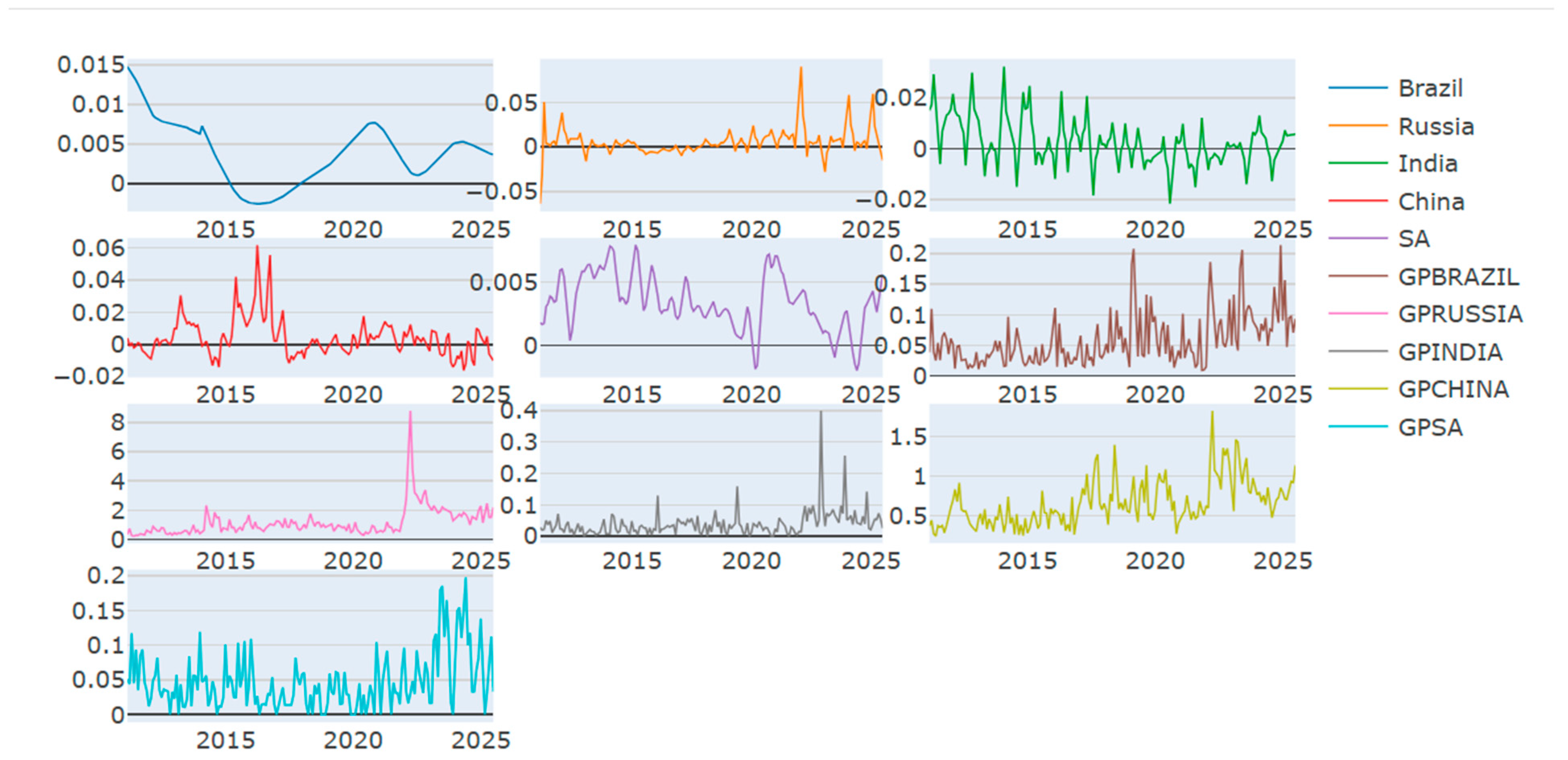
Figure 1 presents the time-series behaviour of property returns, characterised by volatility clustering and abrupt shifts. Elevated volatility periods coincide with significant connectedness spikes from Figure 2A–E, suggesting that geopolitical risk shocks increase the volatility of returns and cross-market spillovers in turn.
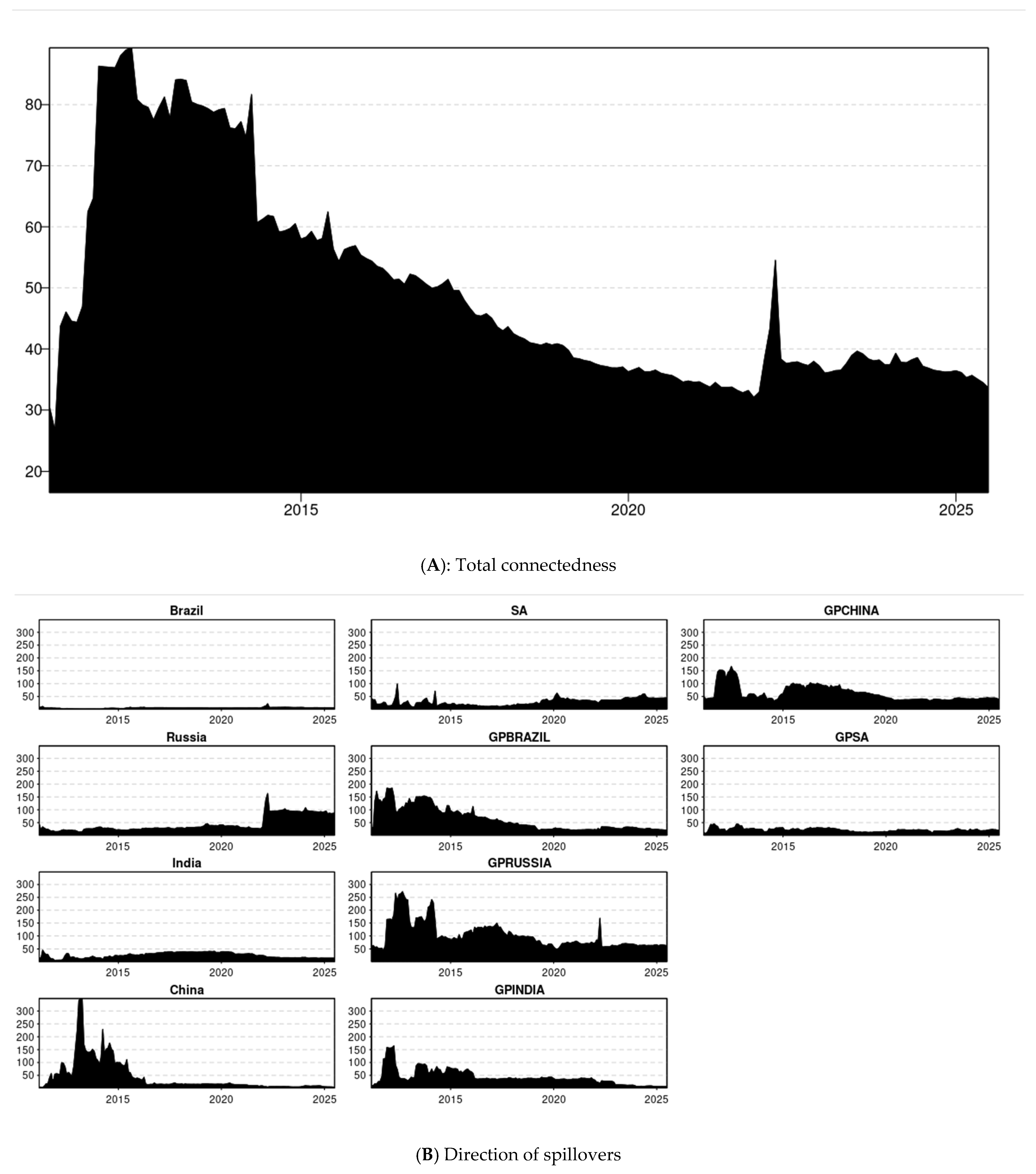
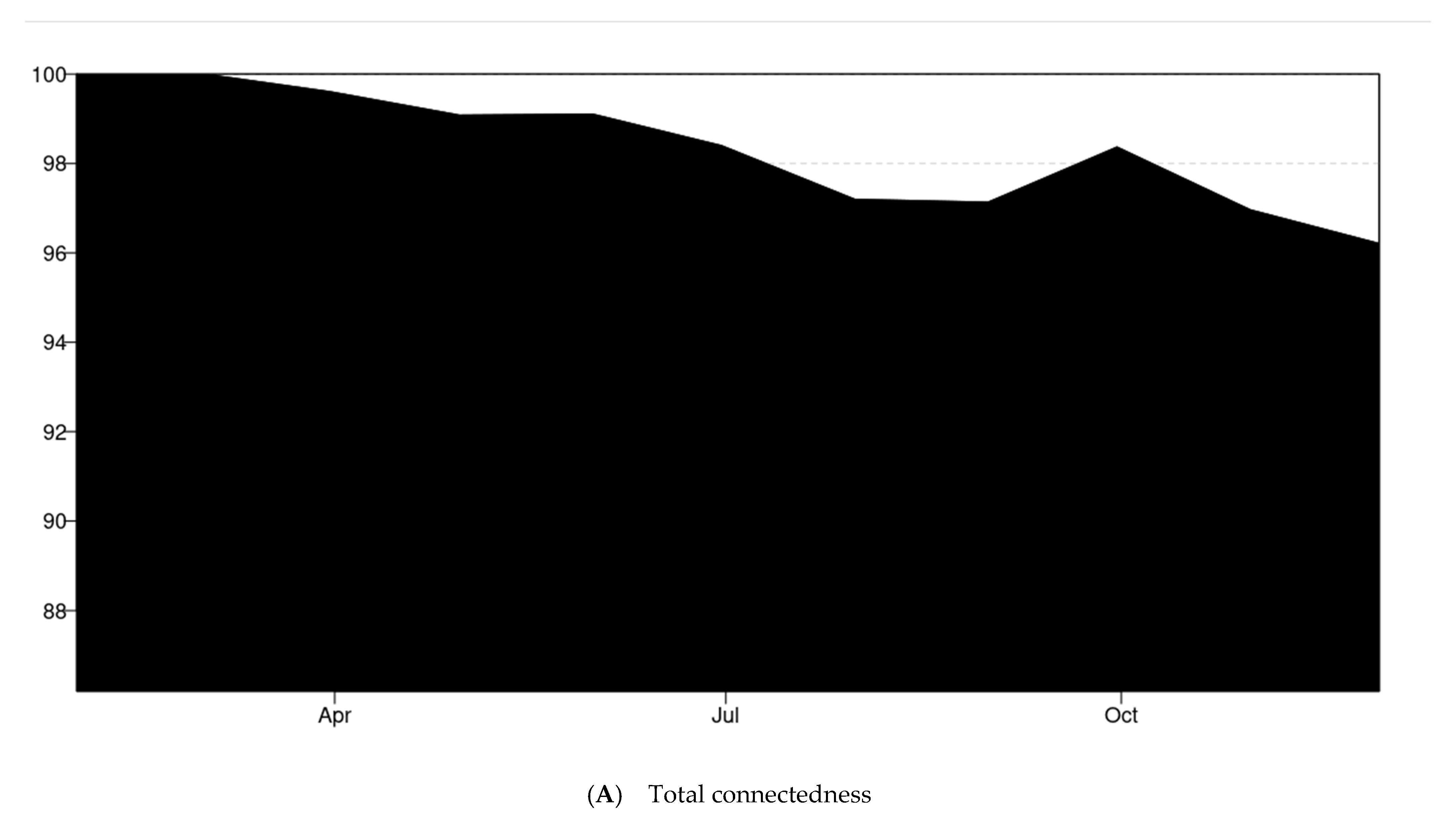
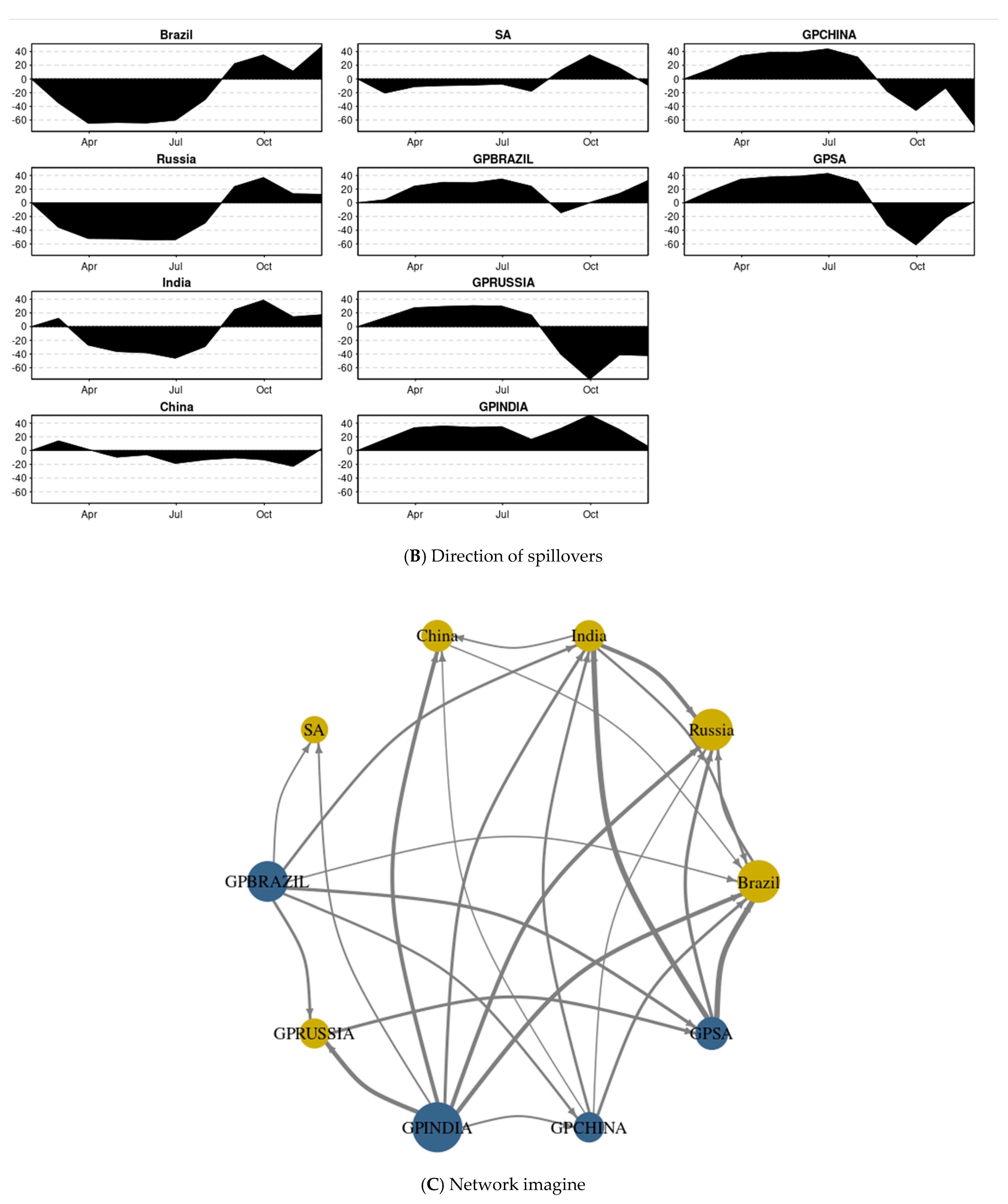
Total connectedness in BRICS property markets and geopolitical risk indices over time is presented in Figure 2A. The volatility is glaring here with a few steep spikes that represent periods of serious spillovers. These episodes are timed at global conditions of extreme uncertainty, geopolitical friction, and economic disruptions, which appear to demonstrate how geopolitical risk multiplies systemic connectivity across time. The nonlinearity shown in the graph affirms this idea and confirms that connectedness is state-dependent and not constant. In Figure 2B, directional spillovers are represented to other markets. GP-Russia and GP-China have been the dominant shock exporters (as illustrated in the graph), confirming their roles as main contributors to systemic risk. These geopolitical risk indices show periodic periods of high to-connectedness and episodes when political conflict affects property market returns in BRICS economies.
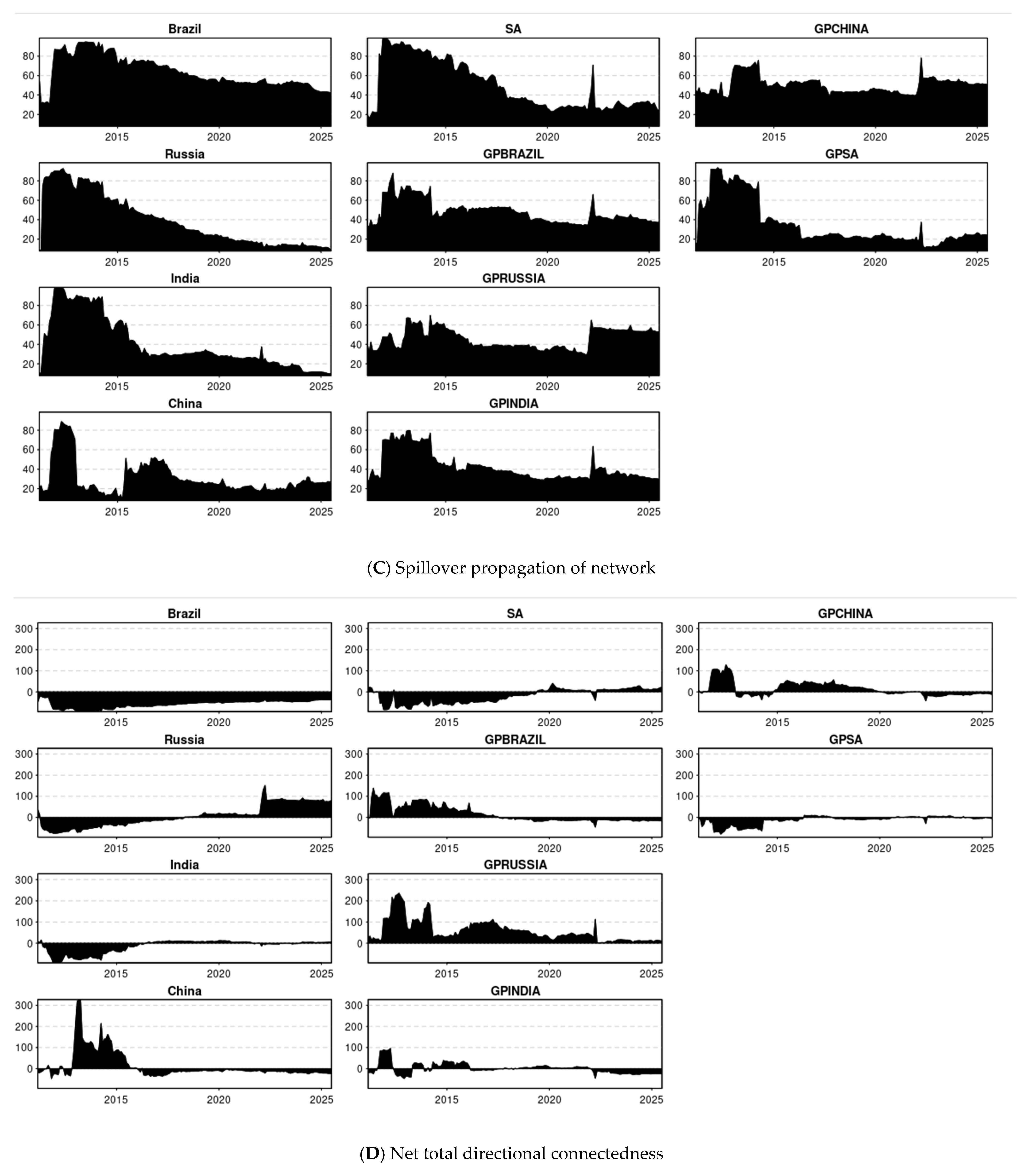
Figure 2C shows the spillovers received from other markets. Brazil and South Africa exhibit persistently high from-connectedness, indicating exposure to external shocks. This observation is consistent with their negative NET spillover figures in Table 1 and implies that the property market in these economies is susceptible to imported geopolitical and financial shocks.
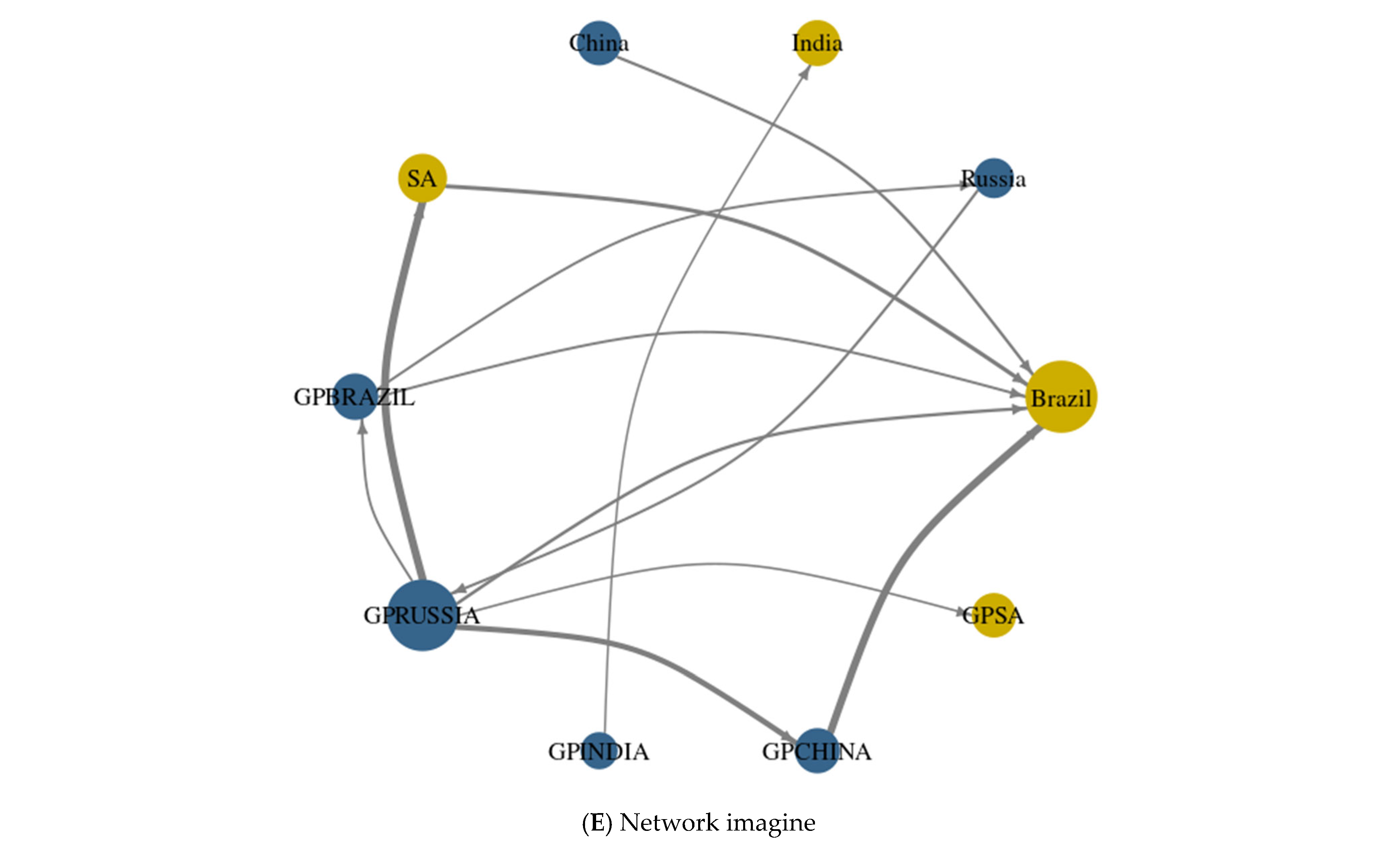
Net total directional connectedness over time is shown in Figure 2D. Positive values for GP-Russia and GP-China mean a net shock transmission continuity, and negative values for Brazil, India, and South Africa indicate their persistent roles as net shock absorbers. The figure reveals asymmetric geopolitical risk transmission among BRICS markets. Figure 2E presents a network image showing a visualisation of the spillover as well. GP-Russia and GP-China are located at the centre of the picture, showing many very strong outgoing ties between them to demonstrate their importance at a systemic level. Brazil and South Africa seem to be pushed more into the peripheries of the scale as net receivers of shocks rather than the main transmitters. Taken together, the findings show that geopolitical risk, especially coming from Russia and China, has been a central determinant of spillovers across BRICS property markets. Domestic factors continue to dominate; however, in times of geopolitical escalation, cross-market transmission is enhanced. These research results can be significant for portfolio diversification, geopolitical risk management, and policy co-ordination in emerging property markets.

4.1. Event Windows and Interpretative Strategies

4.1.1. Interpretative Extrapolation of Geopolitical Events in 2022 with BRICS Connectedness Results

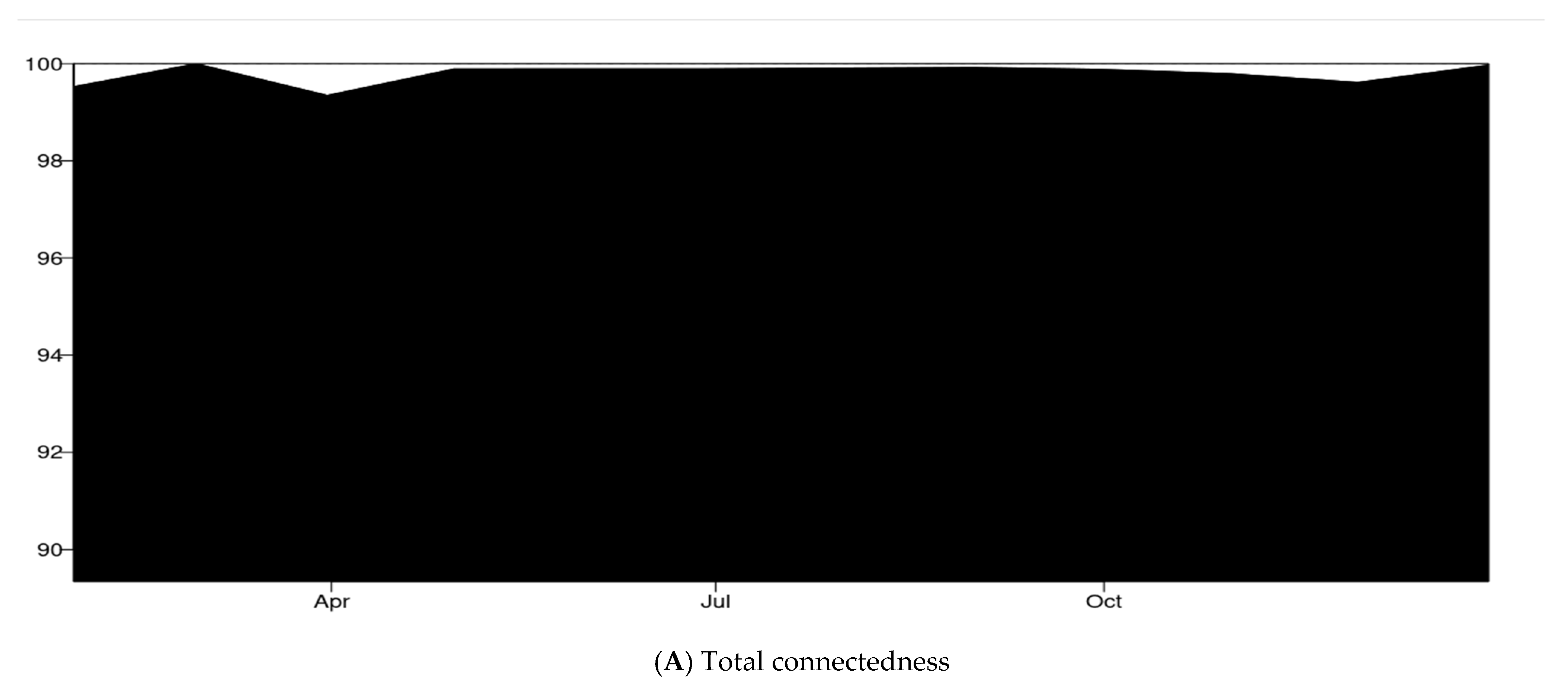
The year 2022 is a critical stress regime for BRICS property markets, as defined by the combined behaviour of the total connectedness index, net directional spillovers, and the network structure. The main geopolitical catalyst was Russia’s full-scale invasion of Ukraine on 24 February 2022, followed up in June 2022 by policy-signalling effects linked with the 14th BRICS Summit. Together, these developments transformed the manner in which geopolitical risks and property returns had previously been transmitting back and forth between markets. The total connectedness graph (Figure 3A) reveals a sudden boom in system-wide connectedness over the span of late February to early March 2022 that makes the war a systemic exogenous shock. In the context of the TVP-VAR, the acceleration indicates that market segmentation had failed; geopolitical risk had rapidly travelled through the BRICS property markets. Most worrying, connectedness remained consistently high over the first half of 2022, an indication that the shock caused by the conflict was not just transient but systemic, via protracted sanctions, energy price volatility, financing constraints, and delayed real estate investment decisions. Around the time of June 2022, a second, milder elevation coincides with the BRICS Summit, which re-ignited the uncertainty regarding economic cooperation and de-dollarisation.
Moreover, the net total directional connectedness (Figure 3B) offers more valuable information regarding the kinds of spillovers. Geopolitical risk emerges as the major net transmitter clearly during the February–March shock window, while BRICS property returns shift quite decisively into net receiver positions. This asymmetry remains in force throughout much of 2022, reflecting the susceptibility of property markets to uncertainty shocks and the absence of feedback effects. The brief moderation observed around the June summit indicates a temporary stabilisation from policy dialogue, though property markets largely remain net receivers, indicating that summit-related signals were insufficient to reverse the prevailing risk environment.
The Network Plot (Figure 3C) visually presents and consolidates these results. Geopolitical risk is a central hub point in 2022, with very high directional spillover on BRICS property returns. We see many dense links in post-February invasion transmission strength; however, the constrained inter-property relationships suggest that property markets were jointly affected by a common external shock, rather than carrying shocks to one another. After June, the network gets a little less dense, but the dominance of geopolitical risk remains intact. In general, the evidence from Figure 3A–C together tells us of 2022, a regime shift. It is a high-connectedness state: a state with strong, persistent, one-directional patterns of transmission from geopolitical risk into BRICS property markets. This strengthens the case for time-varying analyses of connectedness as well as reaffirms that 2022 provides a valuable benchmark year for analysing geopolitical transmission between different dimensions in real estate markets.

4.1.2. Interpretative Extrapolation of Geopolitical Events in 2024 with Connectedness Results

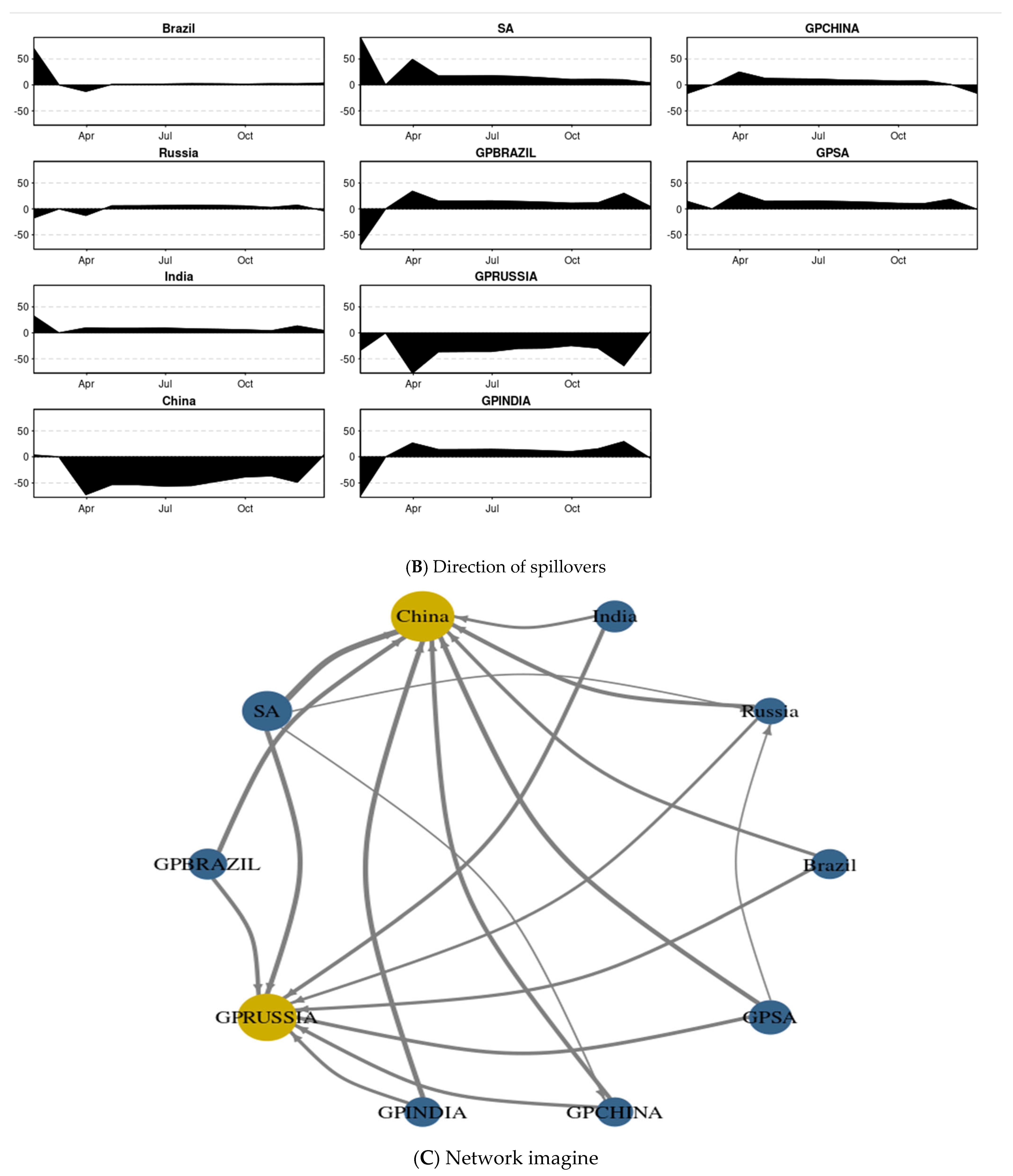
The TVP-VAR connectedness results for 2024 are indicative of a year marked by persistently high systemic connectedness and were largely the result of two significant geopolitical developments: the formal expansion of the BRICS bloc on 1 January 2024 and the 16th BRICS Summit held in Kazan, Russia, in October 2024. Altogether, these events resulted in a high-connected pattern, rather than short-term and rapid shocks. The Total Dynamic Connectedness Graph (Figure 4A) confirms that connections tend to remain near their upper extremities throughout the year, mainly in the early months of 2024. It is this pattern that indicates that the BRICS expansion acted as a structural geopolitical shock as the effects of common information and common risk pricing on BRICS property markets and geopolitical risk measures are enhanced. Expansion did not ignite a single spike but raised the baseline “connection degree” as consumers recalibrated exposure to the bloc, institutional diversity and long-range strategic fit. Total connectedness is only mildly fluctuating after October 2024 and remains elevated, which is consistent with the conclusion that the Kazan Summit reinforced rather than undermined the overall high connectedness scenario.
The net total directional connectedness (Figure 4B) gives further details on the nature of spillovers. The early part of 2024 signals clear transmitter–receiver asymmetries. South Africa, along with Brazil and India at various points, displays net transmitter behaviour, while China and GP-RUSSIA keep their respective net receiver positions. This also matches with a reallocation and repricing mechanism after expansion, whereby relatively open or lightly linked markets transmit shocks to portfolios via portfolio adjustments to be revalued while systemically important and geopolitically exposed ones absorb spillovers. Over the course of the year, which builds to the October summit, this asymmetry persists, and the region’s Russia-related geopolitical risk and China remain the dominant receivers of system-wide uncertainty.
The Network Plot (Figure 4C) visually condenses these conclusions. It is clear the 2024 network structure is fundamentally hub-and-spoke, with China and GP-RUSSIA centralised as well as with various directional links converging on China and GP-RUSSIA. This receiver centrality indicates that geopolitical events in 2024 tended to accentuate spillovers concentrated around these nodes, whereas peripheral BRICS property markets were treated as a second-tier (though only infrequently interspersed) transmitter function. Taken together, the 2024 results suggest that BRICS geopolitical events did not generate episodic volatility alone and that instead, they created a high and unevenly connected structure, wherein geopolitical risk shocks continued to be consistently transmitted and disproportionately picked up by major geopolitically central and systemically large markets.

5. Discussion of Results

The findings of the full sample analysis reveal nuanced and noteworthy results. That being said, China, Russia and India recorded heightened levels of their own connectedness within the BRICS nations. These findings reveal that the property market return of the three BRICS partners is directly influenced by factors within the borders of the republic. These findings align with Gong et al. (2025), Feder-Sempach et al. (2025), Gore et al. (2025) and Moodley and Lawrence (2026), who found that financial market returns are more prone to country-specific shocks as opposed to external events. The authors argue that property markets are more susceptible to domestic risk as property returns are derived from domestic variables such as income growth, inflation, interest rates and employment. Thus, when domestic risk magnifies, it hampers households’ position to purchase housing and firms’ demand for commercial spaces, which directly influences property market return.
Similarly, the findings reveal that Brazil’s and South Africa’s property markets are largely affected by geopolitical shocks, whereas China’s is the least affected. However, of all geopolitical risks, Russia is the highest transmitter of risk to BRICS countries’ property markets. These findings do not come as a shock, as it is evident that China’s financial market is the most developed of all BRICS nations, which demonstrates its resilience to external events like geopolitical risk (Mensi et al., 2014; Dsouza et al., 2025). However, for Brazil and South Africa, this is not evident, as they are an open economy that is largely dependent on global capital, making them more prone to geopolitical uncertainty emanating from BRICS nations (Gopal et al., 2025).
Moreover, despite South Africa approaching the International Criminal Court (ICC) to sanction Israel for the continuous war with Palestine, these events did not trigger widespread controversy, as seen by the findings (Swart, 2025). Similarly, the findings for Russia having the dominant effect on the BRICS property market align with current events. That being said, from all the BRICS nations, Russia is engaged in the highest level of geopolitical risk, which has been in play for many years. The continuous Russia–Ukraine war is a clear example, as it is yet to conclude, given the intervention measures by leading leaders. Consequently, it is not uncommon to find that Russia’s geopolitical risk uncertainty has a greater effect on BRICS property markets, as Gopal et al. (2025) and Zhang et al. (2026) found similar findings.
If one turns to the findings of 2022, the Russia–Ukraine tensions reappear. The total connectedness graph demonstrates a nuanced boom in system-wide connectedness for the period February 2022 to March 2022. These periods coincide with Russia’s full-scale invasion of Ukraine, demonstrating that BRICS property markets are highly connected and prone to risk transmission (Pennaforte, 2025). Similar findings were evident in studies by Alam et al. (2022), Anyikwa and Phiri (2023) and Sahay et al. (2025), as the academics found that BRICS asset-market co-movement increased during the Russia–Ukraine war. During this period, it was further seen that geopolitical risk was a net transmitter of shocks, whereas BRICS property returns were a net receiver of shocks. This reveals BRICS property market susceptibility to geopolitical risk, demonstrating its limited hedging potential during heightened geopolitical tensions. Similar findings were found in studies by Mensi et al. (2023) and Milcheva et al. (2025) in the developed market setting, as geopolitical risk was found to be a net transmitter of shocks to property markets, which reduced their resilience to uncertainty, thereby reducing hedging power.
In 2024, there existed high systemic connectedness between the BRICS property market and geopolitical risk, with the early months of 2024 demonstrating the highest levels of connectedness. These findings coincide with the formal expansion of the BRICS bloc to the BRICS+ bloc as well as the 16th BRICS summit that took place in Russia (Hopewell, 2026). This reveals that the BRICS expansion had a structural shock on BRICS property market returns, highlighting how prone BRICS property markets are to uncertainty and events affecting BRICS nations.
Collectively, the findings reveal that BRICS property market returns are not insulated to geopolitical uncertainty or BRICS-specific events, as such events cause direct spillovers, enhancing BRICS property market connectedness. These findings align with the modern portfolio theory, which highlights enhanced property market co-movement caused by investors switching into property markets to reduce volatility. However, such volatility is not mitigated, as BRICS property markets do not act as a hedging tool against geopolitical uncertainty. Similarly, the contagion theory, which demonstrates risk transmission among asset markets, is further evident herein. Russia’s geopolitical risk has a significant effect on the BRICS property market connectedness. This suggests that Russia’s actions have a detrimental effect on BRICS members’ financial markets, as it causes enhanced co-movement of BRICS property markets, reducing possible diversification benefits.

6. Conclusions

This paper gives us a complete picture of the relationship between the BRICS property market returns and geopolitical risk. Via a TVP-VAR connectedness framework, in this study’s observation, domestic shocks still exert a significant effect on property returns, but cross-market spillovers can constitute a substantial share of system-wide volatility. The total connectedness index demonstrates some moderate but economically significant level of systemic integration in BRICS economies. One of this study’s major contributions is its recognition of geopolitical risk especially from Russia and China, as the most significant source of shock transmission. These economies operate reliably as net transmitters within the network, while Brazil, India, and South Africa predominantly act as net receivers.
The results also suggest that connectedness is greatly time-varying and state-dependent. Events such as the 2022 Russia–Ukraine war and the 2024 BRICS expansion, for example, which resulted in spikes in systemic spillovers, suggest that geopolitical shocks generate systemic spillovers with prolonged rather than immediate or short-lasting disruptions. From the data, it is clear that real estate markets in BRICS are vulnerable to external geopolitical events, which are very sensitive, at least in times of global instability. These results appear to suggest limited diversification benefits available to investors at a time of geopolitical unrest, given cross-market interdependence and geopolitical crises. For policymakers, the findings emphasise the need for coherent monitoring of risk and macroprudential response in relation to the systemic weaknesses to help mitigate this vulnerability. Therefore, there are policy implications for regulators, investors and portfolio managers working in BRICS property markets.
First, the regulators should introduce dynamic macroprudential models that incorporate geopolitical risk indicators, such as the Caldara–Iacoviello index, in existing real-time monitoring systems. For example, countercyclical capital buffers and tighter loan-to-value ratios can be used during periods of high connectedness to lower cross-border systemic exposure. Second, for investors, the results suggest that traditional diversification benefits within the BRICS property markets tend to be limited during geopolitical stress episodes; thus, investors should adopt dynamic asset allocation strategies, shifting exposure toward less connected markets or incorporating alternative asset classes during high-risk regimes (such as 2022 and 2024). The identified transmitter–receiver dynamics can be exploited by a portfolio manager to adjust portfolio weights according to the identified transmitter–receiver dynamics. Markets such as China and Russia identified as net transmitters can be closely monitored as leading indicators of systemic risk, and receiver markets (e.g., Brazil and South Africa) require hedging strategies, including derivatives or geographic diversification. With time-varying connectedness metrics, the use of these types of frameworks can create more robust portfolios and provide investors with more detailed and more effective strategic investment choices.
Taken together, this research contributes to the empirical literature by showing that geopolitical risk is much more than an exogenous disturbance; it represents a key driver of the market relationship and stability of the financial structure, which is fundamental in the context of developing and new market connectivity and stability throughout emerging property markets.

Author Contributions

Conceptualization, F.M. and B.L.; methodology, B.L.; software, B.L.; validation, F.M. and B.L.; formal analysis, F.M. and B.L.; investigation, F.M. and B.L.; resources, F.M.; data curation, F.M.; writing—original draft preparation, F.M. and B.L.; writing—review and editing, F.M. and B.L.; visualization, F.M. and B.L.; supervision, F.M. and B.L.; project administration, F.M. and B.L. All authors have read and agreed to the published version of the manuscript.

Funding

This research received no external funding.

Institutional Review Board Statement

Not applicable.

Informed Consent Statement

Not applicable.

Data Availability Statement

Conflicts of Interest

The authors declare no conflict of interest.

References

  1. Abakah, E. J. A., Abdullah, M., Akinsomi, O., & Tiwari, A. K. (2025). Geopolitical risk and real estate stock crash. Finance Research Letters, 80, 107333. [Google Scholar] [CrossRef]
  2. Akadiri, S. S., & Ozkan, O. (2025). Do the BRIC and Türkiye energy markets respond to unexpected geopolitical risks? Evidence from novel wavelet cross-quantile correlation. Energy Sources, Part B: Economics, Planning, and Policy, 20(1), 2489429. [Google Scholar] [CrossRef]
  3. Aksoy-Hazır, Ç., & Tan, O. F. (2023). The impact of geopolitical risk on cash holdings policy: Evidence from an emerging market. Managerial Finance, 49(9), 1400–1419. [Google Scholar] [CrossRef]
  4. Alam, M. K., Tabash, M. I., Billah, M., Kumar, S., & Anagreh, S. (2022). The impacts of the Russia–Ukraine invasion on global markets and commodities: A dynamic connectedness among G7 and BRIC markets. Journal of Risk and Financial Management, 15(8), 352. [Google Scholar] [CrossRef]
  5. Alsadan, A., Alalmaee, H., Zehri, C., & Ben Youssef, W. A. (2025). Geopolitical shocks and financial fragmentation: Impacts on housing, bond, and stock markets. Review of Development Finance, 15(1), 69–96. [Google Scholar]
  6. Antonakakis, N., Chatziantoniou, I., & Gabauer, D. (2020). Rened measures of dynamic connectedness based on time-varying parameter vector autoregressions. Journal of Risk and Financial Management, 13(4), 84. [Google Scholar] [CrossRef]
  7. Anyikwa, I., & Phiri, A. (2023). Quantile connectedness amongst BRICS equity markets during the COVID-19 pandemic and Russia–Ukraine war. Cogent Economics & Finance, 11(2), 2251300. [Google Scholar] [CrossRef]
  8. Balcilar, M., Bonato, M., Demirer, R., & Gupta, R. (2018). Geopolitical risks and stock market dynamics of the BRICS. Economic Systems, 42(2), 295–306. [Google Scholar] [CrossRef]
  9. Bekar, E. (2022). The relationship between geopolitical risks and housing returns in Türkiye: Evidence from the cross-quantilogram. International Econometric Review, 14(2), 59–71. [Google Scholar] [CrossRef]
  10. Będowska-Sójka, B., Demir, E., & Zaremba, A. (2022). Hedging geopolitical risks with different asset classes: A focus on the Russian invasion of Ukraine. Finance Research Letters, 50, 103192. [Google Scholar] [CrossRef]
  11. Bossman, A., Umar, Z., & Teplova, T. (2022). Modelling the asymmetric effect of COVID-19 on REIT returns: A quantile-on-quantile regression analysis. The Journal of Economic Asymmetries, 26, e00257. [Google Scholar] [CrossRef]
  12. Bouras, C., Christou, C., Gupta, R., & Suleman, T. (2019). Geopolitical risks, returns, and volatility in emerging stock markets: Evidence from a panel GARCH model. Emerging Markets Finance and Trade, 55(8), 1841–1856. [Google Scholar] [CrossRef]
  13. Caldara, D., & Iacoviello, M. (2022). Measuring geopolitical risk. American Economic Review, 112(4), 1194–1225. [Google Scholar] [CrossRef]
  14. Choi, S., & Havel, J. (2025). Geopolitical risk and US foreign portfolio investment: A tale of advanced and emerging markets. Journal of International Money and Finance, 151, 103253. [Google Scholar] [CrossRef]
  15. Coën, A., & Desfleurs, A. (2024a). Geopolitical risk and the dynamics of REITs returns. Finance Research Letters, 64, 105437. [Google Scholar] [CrossRef]
  16. Coën, A., & Desfleurs, A. (2024b). The relative importance of economic policy uncertainty and geopolitical risk on U.S. REITs returns. Journal of Property Investment & Finance, 42(6), 576–590. [Google Scholar]
  17. Cosmulese, C. G., & Zhavoronok, A. (2025). Impact of the war in Ukraine on the real estate market in Romania: Analysis in geopolitical context. Geopolitics Under Globalization, 5(1), 46–56. [Google Scholar] [CrossRef]
  18. Demiralay, S., & Kilincarslan, E. (2024). Uncertainty measures and sector-specific REITs in a regime-switching environment. The Journal of Real Estate Finance and Economics, 69(3), 545–584. [Google Scholar] [CrossRef] [PubMed]
  19. Diebold, F. X., & Yilmaz, K. (2012). Better to give than to receive: Predictive directional measurement of volatility spillovers. International Journal of forecasting, 28(1), 57–66. [Google Scholar] [CrossRef]
  20. Doğan, M. (2026). The asymmetric impact of geopolitical risks on green and conventional real estate markets. Ankara Üniversitesi Gayrimenkul Çalişmalari Dergisi, 1(1), 50–63. [Google Scholar]
  21. Dsouza, S., Singh, N. P., & Oliyide, J. A. (2025). Dynamic connectedness among the BRICS markets and the recent pandemic: An application of TVP-VAR approach. International Journal of Emerging Markets, 20(9), 3721–3743. [Google Scholar] [CrossRef]
  22. Duarte, F. B., Tenreiro Machado, J. A., & Monteiro Duarte, G. (2010). Dynamics of the dow jones and the NASDAQ stock indexes. Nonlinear Dynamics, 61(4), 691–705. [Google Scholar] [CrossRef]
  23. Evangelista Fonseca, S., da Silva, S. E., Roma, C. M. D. S., & Aldo Iquiapaza, R. (2024). Corporate investment, economic policy uncertainty and geopolitical risk in BRICS countries. Advances in Scientific & Applied Accounting, 17(3), 97–110. [Google Scholar]
  24. Feder-Sempach, E., Szczepocki, P., & Bogołębska, J. (2025). BRICS currencies as safe havens and hedges: An empirical analysis of their potential for G7 stock markets before and during the COVID-19 pandemic. Economic and Political Studies, 13(1), 70–97. [Google Scholar] [CrossRef]
  25. Gong, X. L., Lu, J. Y., Xiong, X., & Zhang, W. (2025). Liquidity constraints, real estate regulation, and local government debt risks. Financial Innovation, 11(1), 5. [Google Scholar] [CrossRef]
  26. Gopal, S., Thangaraj, V., R, N. K., & R, R. (2025). Geopolitical shockwaves: The Russia-Ukraine war’s impact on BRICS financial markets. Cogent Economics & Finance, 13(1), 2476096. [Google Scholar]
  27. Gore, S., Chaplot, D., & Nanivadekar, S. (2025). Non-macroeconomic risk and return analysis of stock market vs. real estate in Mumbai. Lex Localis: Journal of Local Self-Government, 23(11), 720–732. [Google Scholar] [CrossRef]
  28. Hopewell, K. (2026). The ties that bind: Reassessing the political significance of the BRICS amid Russia’s war on Ukraine. Globalizations, 1–19. [Google Scholar] [CrossRef]
  29. Hui, E. C., & Wang, Z. (2018). Idiosyncratic risk and spillover effect in REIT returns. International Journal of Strategic Property Management, 22(6), 457–470. [Google Scholar] [CrossRef]
  30. Koop, G., Pesaran, M. H., & Potter, S. M. (1996). Impulse response analysis in nonlinear multivariate models. Journal of econometrics, 74(1), 119–147. [Google Scholar] [CrossRef]
  31. Lamine, A., & Zribi, S. (2024). Do geopolitical risks affect stock market returns and volatilities: An analysis based on the TVP-VAR model. European Journal of Government and Economics, 13(2), 240–261. [Google Scholar] [CrossRef]
  32. Lammers, J. C., Garcia, M. A., Putnam, L. L., & Mumby, D. K. (2014). Institutional theory. In The SAGE handbook of organizational communication: Advances in theory, research, and methods (pp. 195–216). SAGE Publications, Inc. [Google Scholar]
  33. Lammers, N. N. (2025). Adapting to the CSRD: A multiple-case study on implementation and learning [Master’s thesis, Wageningen University & Research]. [Google Scholar]
  34. Li, Y., Huang, J., Gao, W., & Zhang, H. (2021). Analyzing the time-frequency connectedness among oil, gold prices and BRICS geopolitical risks. Resources Policy, 73, 102134. [Google Scholar] [CrossRef]
  35. Liow, K. H., & Huang, Y. (2018). The dynamics of volatility connectedness in international real estate investment trusts. Journal of International Financial Markets, Institutions and Money, 55, 195–210. [Google Scholar] [CrossRef]
  36. Lo, A. W. (2004). The adaptive markets hypothesis: Market efficiency from an evolutionary perspective. Journal of Portfolio Management, 30, 15–29. [Google Scholar]
  37. Markowitz, H. (1952). Modern portfolio theory. Journal of Finance, 7(11), 77–91. [Google Scholar]
  38. Mensi, W., Gubareva, M., Teplova, T., & Kang, S. H. (2023). Spillover and connectedness among G7 real estate investment trusts: The effects of investor sentiment and global factors. The North American Journal of Economics and Finance, 66, 101919. [Google Scholar] [CrossRef]
  39. Mensi, W., Hammoudeh, S., Reboredo, J. C., & Nguyen, D. K. (2014). Do global factors impact BRICS stock markets? A quantile regression approach. Emerging Markets Review, 19, 1–17. [Google Scholar] [CrossRef]
  40. Milcheva, S., Stevenson, S., & Xie, L. (2025). Tail dependence: The impact of risk spillovers on real estate markets in times of economic and geo-political uncertainty. SSRN. [Google Scholar] [CrossRef]
  41. Moodley, F., Ferreira-Schenk, S., & Matlhaku, K. (2024). Time–frequency co-movement of South African asset markets: Evidence from an MGARCH-ADCC wavelet analysis. Journal of Risk and Financial Management, 17(10), 471. [Google Scholar] [CrossRef]
  42. Moodley, F., & Lawrence, B. (2026). The impact of market dynamics and geopolitical uncertainty on property return: A comparative analysis of brics countries. Risks, 14(3), 55. [Google Scholar] [CrossRef]
  43. Nhlapho, R. N. (2023). Country risk components and financial asset markets interdependence: Evidence from South Africa [Ph.D. dissertation, University of KwaZulu-Natal]. [Google Scholar]
  44. Pennaforte, C. (2025). The Ukrainian war as an anti-systemic imperative and its geopolitical consequences: The rise of the Brics influence. Austral: Brazilian Journal of Strategy & International Relations, 14, 94–110. [Google Scholar]
  45. Pesaran, H. H., & Shin, Y. (1998). Generalized impulse response analysis in linear multivariate models. Economics letters, 58(1), 17–29. [Google Scholar] [CrossRef]
  46. Rawat, A. S., & Arif, I. (2018). Does geopolitical risk drive equity price returns of BRIC economies? Evidence from quantile-on-quantile estimations. Journal of Finance and Economics Research, 3(2), 24–36. [Google Scholar] [CrossRef]
  47. Sahay, N., Gupta, N., & Rai, K. (2025). Volatility spillovers between exchange rates and stock markets in the BRICS economies: New evidence from COVID-19 and Russian Ukrainian war. International Journal of System Assurance Engineering and Management, 1–10. [Google Scholar] [CrossRef]
  48. Salisu, A. A., Cuñado, J., & Gupta, R. (2022). Geopolitical risks and historical exchange rate volatility of the BRICS. International Review of Economics & Finance, 77, 179–190. [Google Scholar] [CrossRef]
  49. Sayed, A., & Charteris, A. (2024). Integration among the BRICS stock markets: Filtering out global factors. Investment Analysts Journal, 53(3), 207–230. [Google Scholar] [CrossRef]
  50. Sharma, D. N., Gautam, A. K., & Kumar, P. (2025). Investment-at-risk under geopolitical uncertainty in BRICS countries: An integrated theoretical framework on risk transmission. Institutional Vulnerability, and Strategic Investment Behavior, Bank and Policy, 5(2), 74–83. [Google Scholar]
  51. Silva, R. G. (2025). Hedging geopolitical risks with real estate investments: Evidence from the COVID-19 pandemic [Master’s thesis, Universidade Católica Portuguesa]. [Google Scholar]
  52. Stoyanov, S. B. (2025). Geopolitical risk and the effects on companies’ financial performance. Collection of Papers New Economy, 3(1), 155–169. [Google Scholar]
  53. Subramaniam, S. (2022). Geopolitical uncertainty and sovereign bond yields of BRICS economies. Studies in Economics and Finance, 39(2), 311–330. [Google Scholar] [CrossRef]
  54. Swart, M. (2025). South Africa v Israel: South Africa’s case at the international court of justice. The Round Table, 114(5), 687–689. [Google Scholar] [CrossRef]
  55. Yuni, D. N., Enwo-Irem, I. N., & Urom, C. (2024). Dynamic effects of geopolitical risks and infectious diseases on real estate markets. International Journal of Housing Markets and Analysis, 17(1), 170–191. [Google Scholar] [CrossRef]
  56. Zhang, W., Hamori, S., & Cai, X. (2026). How geopolitical crises influence BRICS financial markets and macroeconomic growth: Insights from the Russia-Ukraine war using GARCH-MIDAS and quantile regression. The Singapore Economic Review, 1–44. [Google Scholar] [CrossRef]
Figure 1. The time-series behaviour of property returns for the BRICS bloc for the full sample period. Source: authors’ own estimation (2026).
Economies 14 00178 g001
Figure 2. (AE) Total connectedness graphs. Notes: source: authors’ own estimation (2026).
Economies 14 00178 g002aEconomies 14 00178 g002bEconomies 14 00178 g002c
Figure 3. (AC) Connectedness graphs for 2022. Notes: source: authors’ own estimation (2026).
Economies 14 00178 g003aEconomies 14 00178 g003b
Figure 4. (AC) Connectedness graphs for 2024. Notes: source: authors’ own estimation (2026).
Economies 14 00178 g004aEconomies 14 00178 g004b
Table 1. BRICS property market returns’ descriptive statistics.
BRAZILRUSSIAINDIACHINASA
Mean0.0038430.0055250.0026940.0039970.003419
Median0.0040620.0037880.0016540.0019980.003330
Maximum0.0147620.0902790.0322640.0617900.007938
Minimum−0.002525−0.064072−0.021725−0.016126−0.001986
Std. Dev.0.0039230.0146690.0088190.0117800.002150
Skewness0.2840561.3074850.5348871.700473−0.093848
Kurtosis2.83909913.319584.0566707.9884472.717989
Jarque–Bera2.513120816.933816.29781262.75120.827229
Probability0.2846310.0000000.0002890.0000000.661256
Observations173173173173173
Notes: source: authors’ own estimation (2026).
Table 2. BRICS geopolitical risks’ descriptive statistics.
GPBRAZILGPRUSSIAGPINDIAGPCHINAGPSA
Mean0.0588841.1648860.0389240.6577370.047326
Median0.0467630.8681970.0312080.5788070.035352
Maximum0.2140928.8011550.3991111.8261390.197954
Minimum0.0089620.2177870.0000000.2385820.000000
Std. Dev.0.0421300.9828720.0420160.2893720.040841
Skewness1.4166753.7413944.7723721.0414741.312541
Kurtosis5.10347125.1700036.766994.1429874.656278
Jarque–Bera89.761543946.5708875.70440.6917069.44733
Probability0.0000000.0000000.0000000.0000000.000000
Observations173173173173173
Notes: source: authors’ own estimation (2026).
Table 3. Unit root and stationarity tests of the BRICS stock market and geopolitical risk index.
CountryADFADF-Break
Panel A: BRICS Stock Market Returns
BRAZIL−2.974331 **−6.390457 ***
RUSSIA−3.434734 **−8.077461 ***
INDIA−10.25301 ***−15.38451 ***
CHINA−4.653640 ***−6.099563 ***
Panel B: BRICS Geopolitical Index
SA−1.921217
(−6.857332) ***
−3.031898
(−7.687794) ***
GPBRAZI−5.934527 ***−10.96698 ***
GPRUSSIA−4.187729 ***−8.758829 ***
GPINDIA−10.25301 ***−15.38451 ***
GPCHINA−5.867857 ***−7.625157 ***
GPSA−7.644280 ***−9.737494 ***
Notes: 1. *** and ** indicate a 1% and 5% significance level, respectively. 2. The parenthesis provides the first difference statistics. 3. Source: authors’ own estimation (2026).
Table 4. Average dynamic connectedness table for BRICS bloc for full sample period.
BrazilRussiaIndiaChinaSouth AfricaGPBRAZILGPRUSSIAGPINDIAGPCHINAGPSOUTH
AFRICA
FROM
Brazil35.992.463.447.8910.56.818.783.9719.290.8864.01
Russia1.3660.591.533.621.9911.56.383.123.92639.41
India0.475.2759.757.351.745.424.79.494.371.4340.25
China0.61.364.3369.23.43.599.692.174.661.0130.8
South Africa0.533.973.093.4350.555.4920.653.336.342.6349.45
GP-BRAZIL0.325.193.933.323.6151.8814.286.536.424.5248.12
GP-RUSSIA0.8713.070.895.041.468.354.154.869.182.1745.85
GP-INDIA0.192.84.576.471.829.958.1557.696.082.2842.31
GP-CHINA0.725.611.562.972.926.2922.975.8949.731.3550.27
GP-SOUTH
AFRICA
0.745.131.923.392.266.637.553.583.7165.0934.91
TO5.7944.8425.2743.4729.7163.98103.1542.9563.9722.28445.38
Inc. Own41.77105.4386.02112.780.26115.85157.31100.64113.787.36cTCI/TCI
NET−58.235.43−14.9812.66−19.7415.8557.310.6413.7−12.6449.49/44.54
NPT0.005.003.006.001.007.008.005.007.003.00
Notes: source: authors’ own estimation (2026).
Disclaimer/Publisher’s Note: The statements, opinions and data contained in all publications are solely those of the individual author(s) and contributor(s) and not of MDPI and/or the editor(s). MDPI and/or the editor(s) disclaim responsibility for any injury to people or property resulting from any ideas, methods, instructions or products referred to in the content.