Article

Does Technology Adoption Improve Agricultural Productivity? Evidence from Smallholder Arabica Coffee Farming in Indonesia


Doctoral Program in Economics, Faculty of Economics and Business, Universitas Jambi, Jambi 36122, Indonesia
*
Author to whom correspondence should be addressed.
Economies 2026, 14(5), 175; https://doi.org/10.3390/economies14050175
Submission received: 24 March 2026 / Revised: 27 April 2026 / Accepted: 4 May 2026 / Published: 12 May 2026
(This article belongs to the Special Issue Economic Indicators Relating to Rural Development (2nd Edition))

Abstract

This study seeks to explain how structural factors, farmers’ capacity, technology adoption, and market orientation jointly shape productivity in smallholder Arabica coffee farming. Primary data were collected from 152 Arabica coffee farmers in Kerinci Regency, Jambi Province, Indonesia, between June and August 2025 and analyzed using Partial Least Squares Structural Equation Modeling (PLS-SEM). The results show that infrastructure and government policy have positive and significant effects on technology adoption. However, infrastructure does not directly affect productivity, whereas government policy shows a negative, significant effect on productivity, suggesting a possible misalignment between policy support and farmers’ practical production needs. In contrast, digital literacy and market orientation are found to be the main determinants that significantly enhance productivity. Technology adoption does not have a significant effect, either directly or as a mediating variable, suggesting a gap between adoption and utilization at the farm level. The moderation analysis reveals that market orientation strengthens the relationship between digital literacy and productivity. Overall, these findings emphasize that productivity improvement is not solely determined by technology, but is more strongly influenced by farmers’ capacity and market orientation.

1. Introduction

The agricultural sector plays a strategic role in Indonesia’s economy, both as a contributor to Gross Domestic Product (GDP) and as a primary source of livelihood for the population. Within this sector, the plantation subsector constitutes a key pillar that not only contributes to economic value added but also plays an important role in enhancing national export performance (Hardiwan et al., 2019).
Among various plantation commodities, coffee occupies a prominent position, as Indonesia is one of the world’s leading exporters and has strong competitiveness in the international market (Andri, 2025). This position indicates that coffee not only has high economic value but also holds significant potential as a leading commodity in strengthening the competitiveness of the agricultural sector.
Nevertheless, this advantage has not been fully accompanied by productivity performance at the farm level. Although Indonesia has a relatively large coffee cultivation area, its productivity remains low compared with that of other major coffee-producing countries. In 2024, Indonesia produced 654,600 tons of coffee from approximately 1.25 million hectares, resulting in a productivity of only 524 kg/ha. This figure is far below Vietnam’s 2766 kg/ha and Brazil’s 2169 kg/ha. Indonesia’s productivity is also lower than that of Colombia and Ethiopia, which recorded 921 kg/ha and 731 kg/ha, respectively (U.S. Department of Agriculture, Foreign Agricultural Service, 2025). This comparison indicates that the main challenge in Indonesian coffee farming is not merely land availability, but the efficiency and productivity of resource use at the farm level.
In addition to productivity issues, commodity structure is also an important aspect in the development of this sector. Indonesia’s coffee production remains dominated by robusta, despite Arabica having a higher economic value. Data from 2024 show that robusta production reached 582,543 tons, while Arabica amounted to 230,803 tons. On the other hand, the economic value, as reflected in market prices, of Arabica is higher than that of Robusta, at US$ 5.62 per kg and US$ 4.41 per kg, respectively (Dirjen Perkebunan Kementan RI, 2025). This indicates that the development of Arabica coffee has strategic potential to increase value added and export competitiveness.
At the regional level, Sumatra Island is the main center of Arabica coffee production in Indonesia, accounting for 67.06 percent of the national total. However, there are considerable variations in productivity across provinces. South Sumatra Province records the highest productivity at 1638 kg/ha. At the same time, Jambi Province has the lowest productivity, at 657 kg/ha (Dirjen Perkebunan Kementan RI, 2025).
Productivity is determined not only by physical input factors but also by farmers’ capacity to access information, manage resources, and respond to market dynamics (Finger, 2012; Nidumolu et al., 2016). Some studies indicate that various factors contribute to improving farm productivity. Digital literacy enhances access to information and the quality of farmers’ decision-making (Liu et al., 2025) while infrastructure supports production efficiency and expands market access (Hidalgo et al., 2023). Meanwhile, Government Policy, represented by extension services, subsidies, and technical assistance, plays an important role in strengthening farmers’ capacity, particularly by enhancing knowledge diffusion, reducing production risks, and improving access to resources and markets (Castillo et al., 2022; Obianefo et al., 2024). However, increased access to these factors is not necessarily accompanied by their optimal utilization at the farm level, indicating a gap between access to and the use of technology in farming practices (Colussi et al., 2024; Dhir & Mishra, 2025; Gouthon et al., 2024; Mogashane et al., 2025; Olorunfemi et al., 2024; Sasmita et al., 2024).
Technology adoption is often regarded as a key mechanism for improving agricultural productivity. However, empirical evidence suggests that the effectiveness of technology is not universal, but rather depends on farmers’ capacity, institutional support, and its suitability to local conditions (Achille & Velamuri, 2025; Adams et al., 2021; Arhin et al., 2024; Cozzi et al., 2025; Erdem & Ağır, 2024; Ghatrehsamani, 2022; Karki Nepal et al., 2025; Poorna et al., 2025; Y. Wang et al., 2025). In addition, market orientation is an important factor in encouraging farmers’ responsiveness to demand and product quality standards (Hunt, 2007; Verhees et al., 2012), although its role as a moderating variable that strengthens the relationship between farmers’ capacity and productivity remains relatively underexplored in the literature.
The relationships among structural factors, farmers’ capacity, technology adoption, market orientation, and productivity can be explained through three theoretical foundations: Diffusion of Innovation Theory (Rogers, 1983), Human Capital Theory (Becker, 1994; Schultz, 1961), and Market Orientation Theory (Kohli & Jaworski, 1990; Narver & Slater, 1990). Diffusion of Innovation Theory explains that the process of technology adoption is influenced by the interaction between the characteristics of the innovation and external conditions, including institutional support and socio-economic contexts (Budiman et al., 2024; Dixit et al., 2023; Ramadan et al., 2025; Vecchio et al., 2020).
Furthermore, Human Capital Theory emphasizes the importance of the quality of human resources in enhancing individuals’ ability to manage resources efficiently. In modern agriculture, digital literacy, as a component of human capital, plays a crucial role in improving farmers’ ability to access information, adopt technology, and enhance farm performance (H. Wang et al., 2025; Y. Wang et al., 2025; Yuan et al., 2025).
Meanwhile, Market Orientation Theory highlights that business performance is influenced by economic actors’ ability to understand market needs and respond proactively to demand dynamics. In agriculture, market orientation contributes to increasing productivity and strengthening the relationship between internal capacity and farm outcomes (Aihounton & Christiaensen, 2024; Álvarez-Coque et al., 2018; Ume, 2023).
Although previous studies have examined agricultural productivity and technology adoption, the existing literature remains mixed on whether technology adoption consistently improves farm performance. One issue is that adoption is not always followed by effective use, especially in smallholder farming. In many cases, technology is used only partially or inconsistently, and this may also be related to limited farmer capacity, weak institutional support, and low market incentives. In addition, many earlier studies examine structural factors, human capital, technology adoption, and market orientation separately. This makes it harder to see how these factors interact to shape productivity. The role of technology adoption as a link between these factors is also rarely discussed, especially when adoption does not always translate into effective use. Market orientation has also not been widely discussed, especially regarding its possible role in the relationship between farmer capacity and productivity (Anang et al., 2023; Ibrahim et al., 2024; Tanti et al., 2022). Therefore, this study develops an integrated analytical framework that links structural factors, farmers’ capacity, technology adoption, and market orientation to explain Arabica coffee farming productivity.
Accordingly, this study makes two main contributions. First, it develops an integrated model that links structural factors, farmers’ capacity, technology adoption, and market orientation to explain Arabica coffee farming productivity. Second, it also examines the role of technology adoption as a mediator and the role of market orientation in the relationship between farmers’ capacity and productivity in smallholder Arabica coffee farming.
Guided by this framework, this study addresses the following overarching research question: how do structural factors, farmers’ capacity, technology adoption, and market orientation jointly influence Arabica coffee farming productivity among smallholder Arabica coffee farmers? To answer this question, the study applies PLS-SEM to primary survey data collected from smallholder Arabica coffee farmers in Kerinci Regency, Jambi Province, Indonesia, between June and August 2025. The remainder of the paper is organized as follows. Section 2 presents the methodology, including the study area, sampling procedure, variable measurement, and data analysis techniques. Section 3 reports the empirical results. Section 4 discusses the findings in relation to theory and prior studies. Section 5 concludes the paper and presents policy implications.

2. Methodology

2.1. Study Area and Population

This study was conducted in Kerinci Regency, Jambi Province. The research location was selected purposively based on several considerations. First, Jambi Province is a region with relatively low Arabica coffee productivity on Sumatra Island. Second, Kerinci Regency has the largest land area, covering 2584 ha, or approximately 67.75% of the total Arabica coffee area in Jambi Province, which totals 3814 ha. Therefore, Kerinci Regency was chosen as the study area because it reflects Arabica coffee farming conditions with substantial resource potential, yet still faces various constraints to improving productivity.
Three main Arabica coffee-producing subdistricts, Kayu Aro, Gunung Tujuh, and Kayu Aro Barat, were selected due to their high concentration of Arabica coffee farmers in Kerinci Regency. The population of this study comprised all Arabica coffee farmers in these three subdistricts, totaling 1519 farmers, distributed as follows: 743 in Kayu Aro, 447 in Kayu Aro Barat, and 329 in Gunung Tujuh.

2.2. Types and Sources of Data

This study uses primary data obtained from a sample of Arabica coffee farmers. Data were collected through structured questionnaires covering respondent characteristics and research variables, including productivity, digital literacy, government policy, infrastructure, technology adoption, and market orientation.
All indicators were measured on a five-point Likert scale (1 = strongly disagree to 5 = strongly agree), except for the productivity variable, which was measured on a ratio scale as coffee production per hectare (kg/ha).

2.3. Sampling Technique

The sample size was determined as 10 percent of the total population, resulting in 152 respondents out of 1519 Arabica coffee farmers. The sample size also satisfies the 10% condition, meaning it does not exceed 10% of the population, thereby maintaining the assumption of independence among observations in sampling without replacement (Radziwill, 2017). In addition, the sample size exceeds the 10-times rule proposed by Hair et al. (2014), which requires a minimum sample size equal to ten times the maximum number of structural paths directed at a particular construct. In this study, the productivity construct receives eight structural paths, implying a minimum requirement of 80 observations.
The sampling technique employed is proportional random sampling, in which samples are selected randomly while accounting for the proportion of farmers in each subdistrict. Randomization was conducted using a Random Number Generator based on the population list. Accordingly, the sample comprises 75 respondents from Kayu Aro, 43 from Kayu Aro Barat, and 34 from Gunung Tujuh.

2.4. Data Collection Techniques

Data were collected through field surveys using structured questionnaires administered directly to the respondents. In addition, a literature review was conducted to establish the theoretical foundation and support the development of the study’s conceptual framework. All respondents participated voluntarily, and the information provided was kept confidential.

2.5. Variable Operationalization

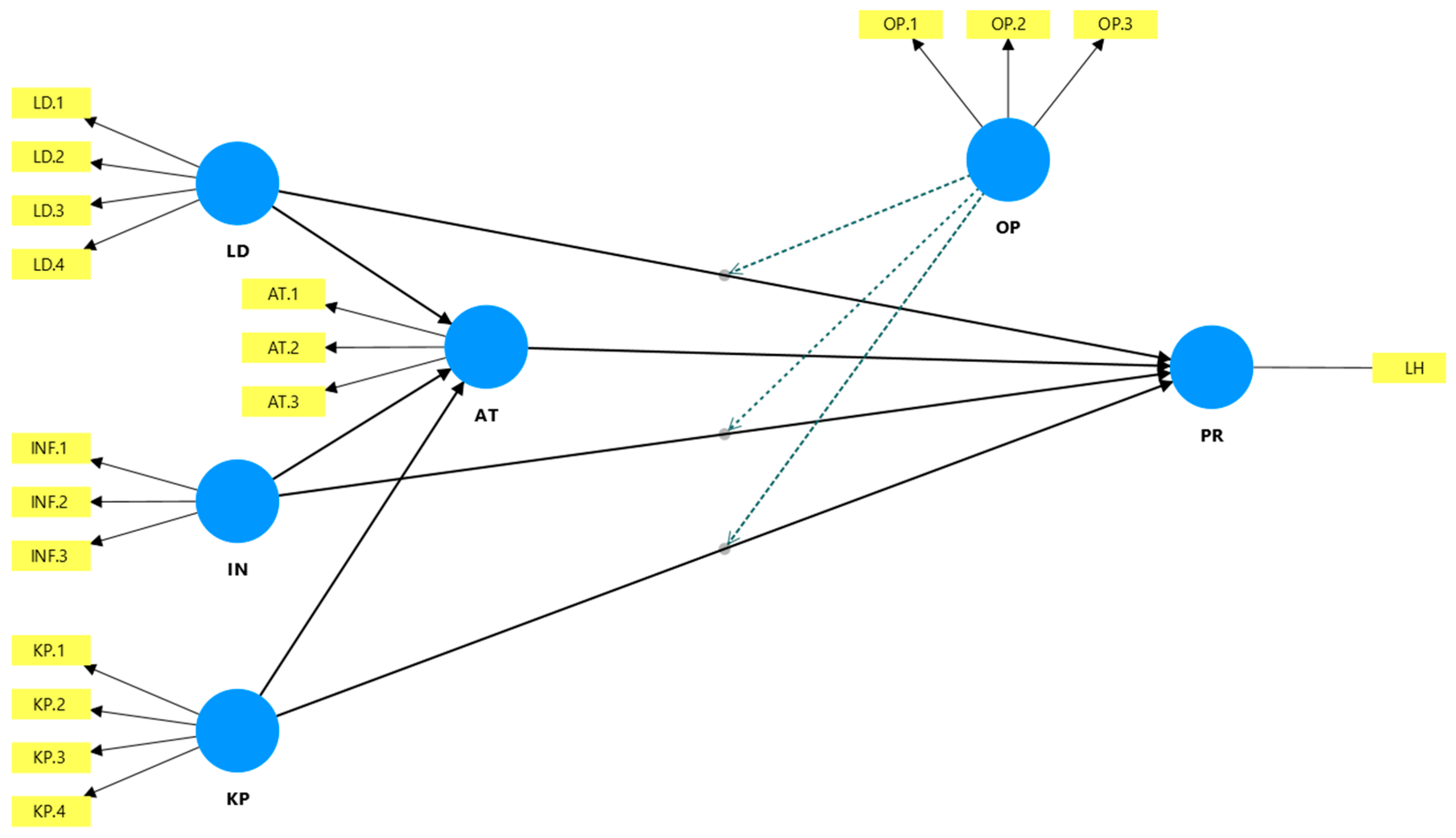
The variables used in this study consist of Coffee Farm Productivity (PR), Digital Literacy (LD), Government Policy (KP), Infrastructure (IN), Technology Adoption (AT), and Market Orientation (OP). The operational definitions of these variables are presented in Table 1.

2.6. Data Analysis Techniques

This study employs Partial Least Squares Structural Equation Modeling (PLS-SEM). PLS-SEM was selected because the research model includes multiple latent constructs, direct, mediating, and moderating effects that need to be estimated simultaneously. This method is appropriate for prediction-oriented research and for examining complex relationships among constructs.
In this model, Coffee Farm Productivity is treated as an observed variable or single-item construct because it is directly measured as a ratio, namely coffee production per hectare (kg/ha). In contrast, the other variables are treated as latent constructs measured through multiple indicators. The model tests the effects of Digital Literacy, Government Policy, and Infrastructure on Coffee Farm Productivity. Technology Adoption is included as a mediating variable, and Market Orientation as a moderating variable. The moderating effect is tested through interaction terms between Market Orientation and each independent variable.
Because the study uses cross-sectional survey data, the results should be interpreted as relationships among variables, not as definite causal effects. The analysis, therefore, focuses on the direction, strength, and significance of the relationships in the model.
The research model is presented in Figure 1.
Based on the theoretical framework and research model, the hypotheses tested in this study are formulated as follows:
H1. 
Infrastructure affects Technology Adoption in Arabica coffee farming.
H2. 
Government Policy affects Technology Adoption in Arabica coffee farming.
H3. 
Digital Literacy affects Technology Adoption in Arabica coffee farming.
H4. 
Technology Adoption affects Coffee Farm Productivity in Arabica coffee farming.
H5. 
Infrastructure affects Coffee Farm Productivity in Arabica coffee farming.
H6. 
Government Policy affects Coffee Farm Productivity in Arabica coffee farming.
H7. 
Digital Literacy affects Coffee Farm Productivity in Arabica coffee farming.
H8. 
Market Orientation affects Coffee Farm Productivity in Arabica coffee farming.
H9. 
Market Orientation moderates the relationship between Infrastructure and Coffee Farm Productivity.
H10. 
Market Orientation moderates the relationship between Government Policy and Coffee Farm Productivity.
H11. 
Market Orientation moderates the relationship between Digital Literacy and Coffee Farm Productivity.
H12. 
Technology Adoption mediates the relationship between Infrastructure and Coffee Farm Productivity.
H13. 
Technology Adoption mediates the relationship between Government Policy and Coffee Farm Productivity.
H14. 
Technology Adoption mediates the relationship between Digital Literacy and Coffee Farm Productivity.

2.7. Evaluation Criteria for the Measurement Model

The evaluation of the measurement model assesses the validity and reliability of reflective constructs. The assessment is based on the following criteria:
  • Convergent validity is assessed using outer loading values and the Average Variance Extracted (AVE). Indicators are considered valid when their outer loading values exceed 0.70, while AVE values should be greater than 0.50.
  • Construct reliability, assessed using Cronbach’s alpha and composite reliability, with a minimum threshold of 0.70 for each.
  • Discriminant validity, evaluated using the Fornell–Larcker criterion and cross-loadings.

2.8. Evaluation Criteria for the Structural Model

The structural model evaluation is conducted to examine the relationships among variables in the model, including:
  • Coefficient of determination (R2) to measure the model’s ability to explain endogenous variables
  • Effect size (f2) to assess the contribution of each variable
  • Predictive relevance (Q2_predict), evaluated using the PLSpredict procedure to assess the model’s out-of-sample predictive capability
  • Multicollinearity test, using the Variance Inflation Factor (VIF)

2.9. Hypothesis Testing

Hypothesis testing is conducted using a bootstrapping approach with 5000 subsamples. The relationships among variables are considered significant at a 5% significance level (p-value < 0.05) under a two-tailed test.
Moderation testing is performed by constructing interaction terms between Market Orientation and each independent variable, namely, Infrastructure, Government Policy, and Digital Literacy, to examine whether Market Orientation strengthens or weakens the relationships between the independent variables and Coffee Farm Productivity.
Mediation testing is conducted by analyzing indirect effects through the Technology Adoption variable. The type of mediation (partial or full) is determined by comparing the significance of the direct and indirect effects.

3. Results

3.1. Measurement Model Evaluation (Outer Model)

3.1.1. Indicator Reliability (Outer Loadings)

The initial indicator reliability test showed that most indicators had outer loadings above 0.70. Two indicators were below the recommended threshold, namely KP.4 (0.648) and LD.1 (0.694). For that reason, both indicators were removed from the model because their explanatory contribution was relatively weak.
After those indicators were removed and the model was estimated again, Table 2 shows that all remaining indicators had outer loadings above 0.70. This means that the retained indicators were acceptable in representing their respective constructs. The loading values range from 0.702 to 0.897 for Technology Adoption (AT), 0.711 to 0.899 for Infrastructure (IN), 0.827 to 0.881 for Government Policy (KP), 0.802 to 0.883 for Digital Literacy (LD), and 0.737 to 0.873 for Market Orientation (OP).

3.1.2. Reliability and Convergent Validity Assessment

The values of Cronbach’s alpha, composite reliability, and Average Variance Extracted (AVE) for each construct are presented in Table 3.
All constructs exhibit Cronbach’s alpha and composite reliability values above 0.70, indicating good internal consistency. In addition, the AVE values for all constructs exceed 0.50, indicating that each construct explains more than half of the variance in its indicators.

3.1.3. Discriminant Validity

The results of the discriminant validity test based on the Fornell–Larcker criterion are presented in Table 4.
The square root of the AVE for each construct is higher than its correlations with other constructs, indicating adequate discriminant validity. This finding is further supported by the cross-loadings results (Appendix A), which show that each indicator has the highest loading on its corresponding construct.

3.2. Structural Model Evaluation (Inner Model)

3.2.1. Multicollinearity Test

The Variance Inflation Factor (VIF) values for each relationship in the structural model are presented in Table 5.
All VIF values range from 1.858 to 3.733, which are below the recommended threshold. This indicates that there are no multicollinearity issues in the structural model.

3.2.2. Explanatory Power of the Model

The coefficients of determination (R2) for each endogenous variable are presented in Table 6.
The R2 value of 0.438 for the Technology Adoption (AT) construct indicates that Infrastructure, Government Policy, and Digital Literacy explain a moderate amount of the variance in technology adoption. Meanwhile, the R2 value of 0.340 for the Coffee Farm Productivity (PR) construct suggests that the model has moderate explanatory power.

3.2.3. Effect Size (f2)

Table 7 shows that Infrastructure has a relatively larger effect on Technology Adoption (f2 = 0.201) compared to other variables, indicating a moderate contribution. In contrast, Digital Literacy provides a negligible contribution to the variance in technology adoption (f2 = 0.001).
For the Coffee Farm Productivity construct, Market Orientation shows the most dominant contribution (f2 = 0.150), followed by Digital Literacy (f2 = 0.059) and Government Policy (f2 = 0.054), both of which have relatively small effects. Infrastructure does not show a meaningful contribution to Coffee Farm Productivity (f2 = 0.000).
Regarding the moderating variables, the interaction between Market Orientation and Digital Literacy shows a relatively stronger effect size (f2 = 0.108) than the other interaction terms, suggesting a stronger role in this relationship.

3.2.4. Predictive Relevance (Q2_predict)

The Q2_predict values for each indicator of the endogenous variables are presented in Table 8.
Table 8 shows that all endogenous indicators have positive Q2_predict values, indicating that the model is predictive. These findings suggest that the model not only explains the relationships among variables but also demonstrates adequate predictive capability.

3.2.5. Path Coefficient Testing

The estimation results for each path coefficient, along with the corresponding hypothesis tests, are presented in Table 9.
Infrastructure (β = 0.458; p < 0.01) and Government Policy (β = 0.252; p < 0.05) have positive and significant effects on Technology Adoption. In contrast, Digital Literacy does not have a significant effect on Technology Adoption (β = 0.019; p > 0.05).
For the Coffee Farm Productivity construct, Market Orientation (β = 0.488; p < 0.01) and Digital Literacy (β = 0.341; p < 0.01) show positive and significant effects. Conversely, Technology Adoption (β = 0.102; p > 0.05) and Infrastructure (β = −0.013; p > 0.05) do not exhibit significant effects on Coffee Farm Productivity. Government Policy shows a negative and significant effect on Coffee Farm Productivity (β = −0.359; p < 0.01).
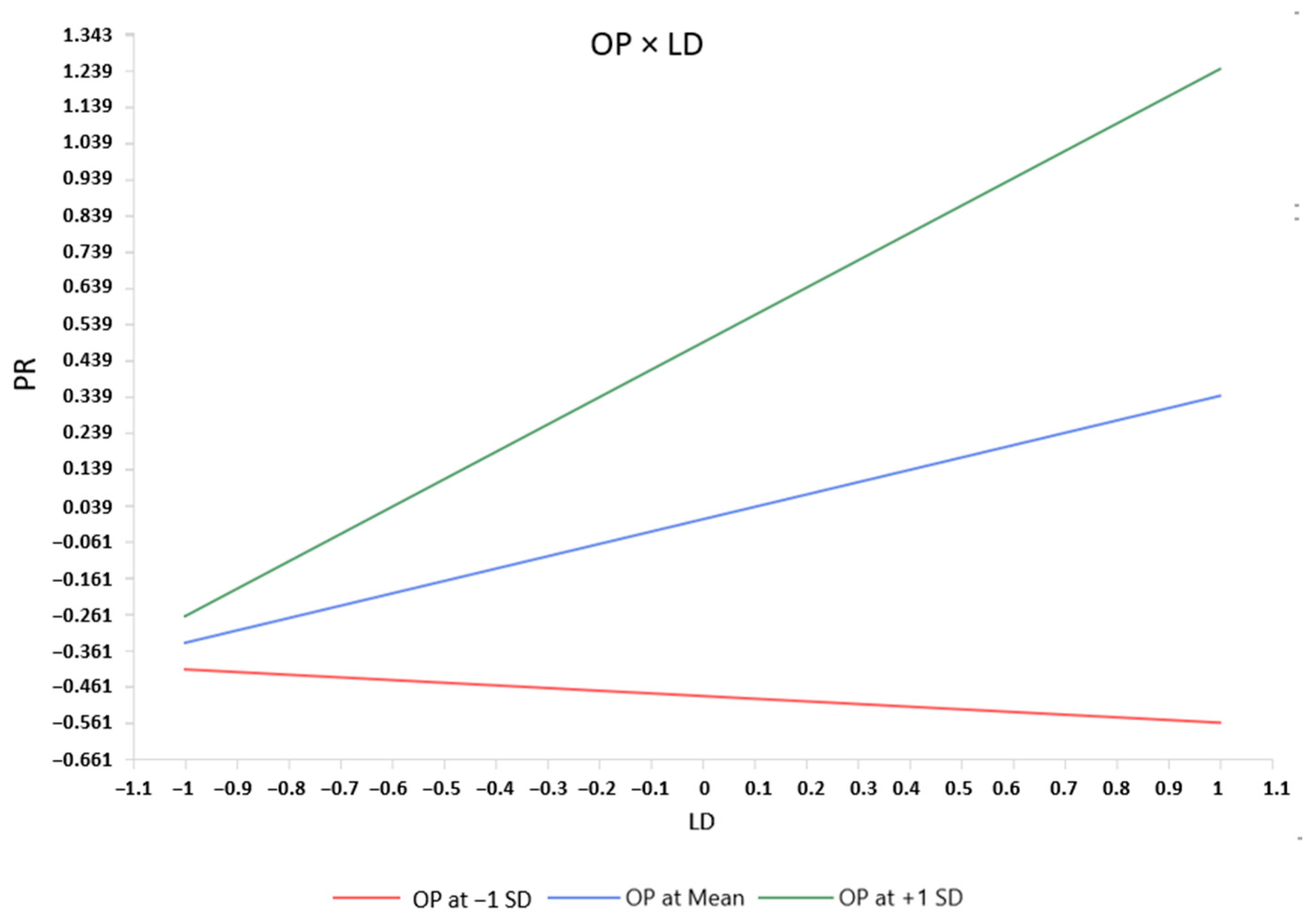
The moderation results show that the interaction between Market Orientation and Digital Literacy is positive and significant for Coffee Farm Productivity (β = 0.414; p < 0.01). This means that a stronger Market Orientation is associated with a stronger relationship between Digital Literacy and Coffee Farm Productivity. In contrast, the interaction between Market Orientation and Infrastructure is not significant (β = −0.110; p > 0.05), and the interaction between Market Orientation and Government Policy is also not significant (β = −0.190; p > 0.05). Thus, Market Orientation only moderates the relationship between Digital Literacy and Coffee Farm Productivity. Still, it does not moderate the relationships between Infrastructure and Coffee Farm Productivity or between Government Policy and Coffee Farm Productivity.
To provide a clearer visual representation of the significant moderating effect, a simple slope plot of the interaction between Digital Literacy and Market Orientation was generated (Figure 2).
As shown in Figure 2, the relationship between Digital Literacy and Coffee Farm Productivity becomes stronger as Market Orientation increases. When Market Orientation is high, the slope of the relationship between Digital Literacy and Coffee Farm Productivity is steeper and positive. In contrast, when Market Orientation is low, the relationship is weak and slightly negative. This confirms that Market Orientation has a positive, strengthening, moderating effect on the relationship between Digital Literacy and Coffee Farm Productivity.
The mediation test results indicate that none of the indirect effects through Technology Adoption are significant (p > 0.05). Therefore, Technology Adoption does not mediate the relationships between Infrastructure, Government Policy, and Digital Literacy and Coffee Farm Productivity. This means that although Infrastructure and Government Policy significantly promote Technology Adoption, these effects do not translate into increased Coffee Farm Productivity.

4. Discussion

The results suggest that productivity improvement does not depend solely on the availability of technology or infrastructure, but is more strongly shaped by farmers’ capacity to use information and respond to market dynamics. This finding implies that technology adoption alone is insufficient to guarantee productivity gains.
From the perspective of Technology Adoption, Infrastructure and Government Policy are found to have positive and significant effects. This suggests that external enabling conditions play a critical role in facilitating farmers’ access to technology and information. In line with Diffusion of Innovation Theory, the adoption process is strongly influenced by institutional support and environmental factors (Dixit et al., 2023; Miller et al., 2008; Ramadan et al., 2025; Zossou et al., 2020). Infrastructure reduces physical and informational barriers, while Government Policy, through extension services, subsidies, and technical assistance, lowers adoption costs and risks. This confirms that Technology Adoption is largely driven by systemic support rather than purely individual initiative (Achille & Velamuri, 2025; Arhin et al., 2024).
However, Digital Literacy does not have a significant effect on Technology Adoption. This finding indicates that individual capacity alone is insufficient to drive adoption without adequate structural support. Although farmers may possess basic digital skills, their adoption decisions remain constrained by access to infrastructure, institutional facilitation, and socio-economic conditions. This suggests that Technology Adoption emerges from the interaction between internal capabilities and external enabling environments rather than being determined solely by human capital (Cozzi et al., 2025; Setiawan et al., 2024).
In contrast, at the productivity level, Digital Literacy and Market Orientation exhibit positive, significant effects, whereas Technology Adoption and Infrastructure do not. This indicates that access to infrastructure and technology functions primarily as an enabling condition, whose effectiveness depends on farmers’ cognitive and strategic capacities. In other words, productivity gains are realized not through access to technology per se, but through the ability to utilize information and respond to market signals effectively (Zamzami et al., 2025).
The negative direct effect of Government Policy on productivity may be understood from the specific forms of policy support measured in this study, namely fertilizer subsidies, government training, and equipment or seed assistance. These forms of support may encourage farmers to adopt agricultural technology, as reflected in the positive effect of Government Policy on Technology Adoption. However, their contribution to productivity may remain limited when the support is not fully aligned with the actual production constraints faced by smallholder Arabica coffee farmers.
For example, subsidies and equipment assistance may reduce access barriers. Still, this does not automatically increase yields. The effect may remain limited when farmers do not receive technical guidance tailored to local conditions, proper support in using inputs, regular extension services, or assistance in improving post-harvest quality. Earlier studies also show that support programs for smallholders often yield limited results when they are poorly targeted or do not align with farmers’ actual needs in the field (LaFevor et al., 2021; Mgendi et al., 2021; Ruben, 2024). For that reason, the negative relationship between Government Policy and productivity should not be read as showing that policy support is harmful. It may instead indicate that current policy support has not been fully aligned with farmers’ production needs.
From a theoretical perspective, this finding reinforces Human Capital Theory by highlighting the role of cognitive capacity in transforming available resources into productive outcomes. Digital Literacy enhances farmers’ ability to access, process, and apply information, thereby improving decision quality and farm performance (Griffin et al., 2008; Raza et al., 2025; Wann et al., 2024; Yuan et al., 2025). Conversely, in the absence of such capacity, technologies tend to be underutilized, resulting in a persistent gap between access and effective use at the farm level (Mariman et al., 2024; Mogashane et al., 2025; Olorunfemi et al., 2024; Sasmita et al., 2024).
Consistent with this, the study also finds that Technology Adoption does not mediate the relationships between Infrastructure, Government Policy, and Digital Literacy and Coffee Farm Productivity. The insignificance of all indirect paths indicates that improvements in these factors are not automatically translated into higher Coffee Farm Productivity through Technology Adoption. This highlights a critical disconnect between adoption and actual utilization, suggesting that adoption does not necessarily reflect effective use.
This disconnect can be explained by the nature of Technology Adoption measured in this study. Technology Adoption is measured through farmers’ self-reported use of modern fertilizers or pesticides, agricultural machinery, and post-harvest technology. Although these indicators capture practical use rather than mere awareness, they do not fully capture how intensively, consistently, or correctly the technologies are applied. In coffee farming, using technology does not always raise productivity. The result depends on how farmers use it in the field. Earlier studies also show that technology use does not always improve productivity (Clay et al., 2018; Makate & Makate, 2019; Nakano & Magezi, 2020; Wambua et al., 2021). This may happen when farmers still lack technical support, regular guidance, or market incentives.
These findings extend the Diffusion of Innovation perspective by demonstrating that adoption alone is not sufficient to improve performance. Instead, they underscore the importance of Human Capital Theory, in which the effectiveness of technology depends on farmers’ ability to manage and use it in their specific context.
Furthermore, Market Orientation plays a significant role as both a direct determinant of productivity and a moderator of the relationship between Digital Literacy and productivity. Market Orientation not only directly improves productivity but also strengthens the effect of Digital Literacy on productivity. This suggests that farmers who are more responsive to market signals, such as price information, demand preferences, and quality standards, are better able to translate their digital knowledge into productive outcomes (Bernard et al., 2017; Ogutu et al., 2014; Ume, 2023).
The significant moderating effect further indicates that the benefits of Digital Literacy are amplified when combined with a strong Market Orientation. This implies that cognitive capacity alone is not sufficient; it must be complemented by an economic orientation that enables farmers to align production decisions with market demand. In this sense, Market Orientation functions as a strategic mechanism that converts individual capacity into economic performance, consistent with studies emphasizing the role of market orientation in improving farm and marketing performance (Dahmiri et al., 2024; Okello & Luttah, 2022; Ramos-Sandoval et al., 2016).
However, Market Orientation does not significantly moderate the effects of Infrastructure and Government Policy on productivity. Earlier studies also show that market-oriented behavior among smallholders often depends on supporting conditions such as infrastructure, access to credit, training, and institutional support. They also show that training or policy support may not improve productivity when it does not match local production conditions (Hossain et al., 2025; Mgendi et al., 2021; Yaseen et al., 2018). In other words, market-oriented farmers may be better able to use digital information for productive decisions. Still, Market Orientation cannot fully compensate for infrastructure limitations or policy support that is not sufficiently aligned with farmers’ production needs.
From a policy perspective, these findings highlight the need to shift from an input-based approach to capacity-oriented, market-integrated interventions. Programs that focus solely on infrastructure provision and physical assistance are unlikely to be effective unless accompanied by efforts to enhance farmers’ Digital Literacy and their ability to respond to market dynamics. At the same time, although Technology Adoption in this study is measured through farmers’ self-reported use of modern inputs, agricultural machinery, and post-harvest technology, it does not capture more detailed aspects of actual utilization, such as frequency, intensity, consistency, and technical correctness of technology use.

5. Conclusions

This study examines how structural factors, farmers’ capacity, Technology Adoption, and Market Orientation jointly shape Arabica coffee farming productivity within an integrated analytical framework. The results indicate that farmers’ capacity and Market Orientation more strongly determine productivity improvement than structural factors or Technology Adoption.
Empirically, Infrastructure and Government Policy promote Technology Adoption. However, Infrastructure does not directly affect productivity, while Government Policy shows a negative direct effect on productivity. In contrast, Digital Literacy and Market Orientation are the main positive determinants of productivity. Moreover, Technology Adoption does not have a significant effect, either directly or as a mediating mechanism, suggesting a gap between adoption and utilization at the farm level.
These findings suggest that the effectiveness of policy and technology in enhancing productivity is contextual and highly dependent on farmers’ capacity and Market Orientation. The added value of this study lies in demonstrating that Technology Adoption does not always function as a mediating mechanism in improving productivity among smallholder Arabica coffee farmers. Instead, productivity gains require adequate supporting conditions, particularly farmers’ digital capacity, effective technology utilization, and market responsiveness. This contributes to the existing literature by shifting attention from technology adoption as a standalone solution toward the conditions under which adoption can generate tangible productivity impacts.
The implications of this study highlight that agricultural development policies should move beyond the provision of inputs and technology toward more practical, capacity-oriented, and market-integrated interventions. Digital literacy training should be designed as hands-on farm-level training that helps coffee farmers use digital tools to access price information, weather forecasts, pest and disease information, cultivation guidance, fertilizer recommendations, and post-harvest handling knowledge. Market connection should be strengthened by linking farmers with cooperatives, collectors, roasters, exporters, and specialty coffee buyers, while improving access to quality standards, grading systems, price information, collective marketing, traceability, and cooperative-based processing facilities. In addition, policy support should be more precisely adapted to the actual production constraints of Arabica coffee farming, including input suitability, plant condition, soil quality, pest and disease problems, post-harvest facilities, road access, electricity availability, and farmers’ technical capacity.
Future research should include more detailed indicators of actual technology utilization to better distinguish between Technology Adoption and effective technology use at the farm level, including frequency, intensity, consistency, and technical correctness of technology use. In addition, future studies should incorporate more context-specific production variables, such as agroclimatic conditions, soil quality, plant age, and farm management practices. Longitudinal approaches are also needed to capture the dynamic relationships among variables and to better understand how technology contributes to productivity over time.

Author Contributions

Conceptualization, H.S. and H.H.; methodology, J.J.; software, J.J.; validation, H.S., H.H.; formal analysis, J.J., S.H.; investigation, S.H.; resources, H.S.; data curation, H.S.; writing—original draft preparation, H.S., H.H.; writing—review and editing, J.J., S.H.; visualization, S.H.; supervision, H.H.; project administration, H.S.; funding acquisition, H.S. All authors have read and agreed to the published version of the manuscript.

Funding

This research received no external funding.

Data Availability Statement

The data supporting the findings of this study are available from the corresponding author (H.S.), upon reasonable request.

Conflicts of Interest

The authors declare no conflict of interest.

Appendix A

Table A1. Cross-loading.
ATINKPLDOPPROP × INOP × KPOP × LD
AT.10.8520.5930.4990.5120.4590.3300.116−0.032−0.010
AT.20.8970.5950.4900.3720.4820.3360.114−0.0210.157
AT.30.7020.2930.3620.3240.5500.204−0.039−0.167−0.177
INF.10.5240.8990.5970.5550.4200.2600.3820.2190.261
INF.20.5440.8360.4520.5200.3420.2930.3200.1830.215
INF.30.4740.7110.5120.4860.5020.1900.153−0.156−0.067
KP.10.5440.5590.8810.6090.6700.3120.120−0.0930.117
KP.20.4450.5590.8270.7360.5590.2290.166−0.093−0.119
KP.30.4030.4850.8350.5430.5670.1550.034−0.142−0.154
LD.20.5370.5840.7670.8830.5640.3340.090−0.110−0.091
LD.30.3500.5580.5580.8020.4820.2170.2770.003−0.172
LD.40.3380.4790.5230.8820.3950.2480.1650.050−0.056
LH0.3640.3060.2850.3220.4751.0000.1620.0910.220
OP.10.6010.3930.5840.4490.8730.3660.103−0.102−0.056
OP.20.4760.5380.5850.5540.8380.4540.178−0.0040.070
OP.30.3470.2730.5830.3760.7370.3270.2990.0890.081
OP × IN0.0960.3560.1300.1910.2300.1621.0000.6790.631
OP × KP−0.0690.115−0.126−0.038−0.0110.0910.6791.0000.801
OP × LD0.0200.179−0.040−0.1210.0410.2200.6310.8011.000

References

  1. Achille, A. A., & Velamuri, V. K. (2025). Drivers and barriers to the adoption of digital farming technology: Evidence from Nigeria. International Journal of Sustainable Agricultural Management and Informatics, 11(3), 308–330. [Google Scholar] [CrossRef]
  2. Adams, A., Jumpah, E. T., & Caesar, L. D. (2021). The nexuses between technology adoption and socioeconomic changes among farmers in Ghana. Technological Forecasting and Social Change, 173, 121133. [Google Scholar] [CrossRef]
  3. Aihounton, G., & Christiaensen, L. (2024). Does agricultural intensification pay in the context of structural transformation? Food Policy, 122, 102571. [Google Scholar] [CrossRef]
  4. Anang, B. T., Dagunga, G., & Bosompem, M. (2023). Predictors of inoculant-based technology adoption by smallholder soybean farmers in northern Ghana: Implications for soil fertility management. Agriculture & Food Security, 12(1), 29. [Google Scholar] [CrossRef]
  5. Andri, K. B. (2025). Tren 2025: Peluang dan daya saing kopi. Available online: https://perkebunan.brmp.pertanian.go.id/berita/tren-2025-peluang-dan-daya-saing-kopi (accessed on 27 March 2025).
  6. Arhin, I., Yeboah, E., Liu, X., Liu, A., Chen, X., & Li, X. (2024). Integrating farmers’ perception of sustainable agricultural technologies towards the development of sustainable tea production in China. International Journal of Agricultural Sustainability, 22(1), 2303886. [Google Scholar] [CrossRef]
  7. Álvarez-Coque, J. M. G., Ramos-Sandoval, R., & Mas-Verdú, F. (2018). Do research and extension services improve small farmers’ perceived performance? New Medit, XVII(4), 7–19. [Google Scholar] [CrossRef]
  8. Becker, G. S. (1994). Human capital: A theoretical and empirical analysis, with special reference to education (3rd ed.). The University of Chicago Press. [Google Scholar]
  9. Bernard, T., de Janvry, A., Mbaye, S., & Sadoulet, E. (2017). Expected product market reforms and technology adoption by senegalese onion producers. American Journal of Agricultural Economics, 99(4), 1096–1115. [Google Scholar] [CrossRef]
  10. Borrella, I., Mataix, C., & Carrasco-Gallego, R. (2015). Smallholder farmers in the speciality coffee industry: Opportunities, constraints and the businesses that are making it possible. IDS Bulletin, 46(3), 29–44. [Google Scholar] [CrossRef]
  11. Budiman, I., Wagemakers, A., Derks, M., Sahara, & Moore, S. (2024). Socio-environmental systems in technology adoption in animal husbandry in South-East Asia: A framework synthesis approach. NJAS: Impact in Agricultural and Life Sciences, 96(1), 2349518. [Google Scholar] [CrossRef]
  12. Castillo, M., Pérez-Silva, R., Chamorro, C., & Sepúlveda, M. (2022). Public policies, sustainability, and smallholder producers’ access to the market. The productive alliance programme in Chile: A case study. Frontiers in Sustainable Food Systems, 6, 1020049. [Google Scholar] [CrossRef]
  13. Clay, D. C., Bro, A. S., Church, R. A., Ortega, D. L., & Bizoza, A. R. (2018). Farmer incentives and value chain governance: Critical elements to sustainable growth in Rwanda’s coffee sector. Journal of Rural Studies, 63, 200–213. [Google Scholar] [CrossRef]
  14. Colussi, J., Sonka, S., Schnitkey, G. D., Morgan, E. L., & Padula, A. D. (2024). A comparative study of the influence of communication on the adoption of digital agriculture in the United States and Brazil. Agriculture, 14(7), 1027. [Google Scholar] [CrossRef]
  15. Cozzi, E., Menozzi, D., Maesano, G., Canavari, M., & Mora, C. (2025). Digital technology adoption among italian farmers: An extended technology acceptance model approach in the horticultural sector. Bio-Based and Applied Economics, 14(4), 29–43. [Google Scholar] [CrossRef]
  16. Dahmiri, D., Junaidi, J., Johannes, J., Yacob, S., & Indrawijaya, S. (2024). The impact of market orientation on marketing performance: Exploring the moderating role of competitive advantage. Business: Theory and Practice, 25(1), 164–174. [Google Scholar] [CrossRef]
  17. Dhir, S. B., & Mishra, G. (2025). Digital agriculture mission: Unlocking opportunities and overcoming challenges for farmers using smartphones. Journal of Information, Communication and Ethics in Society. ahead-of-print. [CrossRef]
  18. Dirjen Perkebunan Kementan RI. (2025). Statistik perkebunan 2023–2025. Dirjen Perkebunan Kementan RI. (Laporan statistik resmi pemerintah). [Google Scholar]
  19. Dixit, K., Aashish, K., & Kumar Dwivedi, A. (2023). Antecedents of smart farming adoption to mitigate the digital divide–extended innovation diffusion model. Technology in Society, 75, 102348. [Google Scholar] [CrossRef]
  20. Erdem, M., & Ağır, H. B. (2024). Enhancing dairy farm welfare: A holistic examination of technology adoption and economic performance in Kahramanmaraş province, Turkey. Sustainability, 16(7), 2989. [Google Scholar] [CrossRef]
  21. Finger, R. (2012). Modeling the sensitivity of agricultural water use to price variability and climate change—An application to Swiss maize production. Agricultural Water Management, 109, 135–143. [Google Scholar] [CrossRef]
  22. Ghatrehsamani, S. (2022). The status of precision agricultural technology adoption in Missourian farms. In 2022 ASABE Annual International Meeting, Houston, TX, USA, 17–20 July 2022. American Society of Agricultural and Biological Engineers. [Google Scholar] [CrossRef]
  23. Gouthon, M., Gouroubera, M. W., Tama-Imorou, C., & Moumouni-Moussa, I. (2024). Digital inequalities among smallholder farmers in Benin: Determinants of attitude, material access, skills and usage. Information Development. [Google Scholar] [CrossRef]
  24. Griffin, T. W., Dobbins, C. L., Vyn, T. J., Florax, R. J. G. M., & Lowenberg-DeBoer, J. M. (2008). Spatial analysis of yield monitor data: Case studies of on-farm trials and farm management decision making. Precision Agriculture, 9(5), 269–283. [Google Scholar] [CrossRef]
  25. Hair, J. F., Jr., Sarstedt, M., Hopkins, L., & Kuppelwieser, V. G. (2014). Partial least squares structural equation modeling (PLS-SEM): An emerging tool in business research. European Business Review, 26, 106–121. [Google Scholar] [CrossRef]
  26. Hardiwan, D., Amir, A., Junaidi, J., & Delis, A. (2019). The linkages and impact of plantation-based sectors on economy and poverty in Jambi province, Indonesia: Miyazawa’s input-output model. Agricultural and Resource Economics: International Scientific E-Journal, 5(3), 5–19. [Google Scholar] [CrossRef]
  27. Hidalgo, F., Quiñones-Ruiz, X. F., Birkenberg, A., Daum, T., Bosch, C., Hirsch, P., & Birner, R. (2023). Digitalization, sustainability, and coffee. Opportunities and challenges for agricultural development. Agricultural Systems, 208, 103660. [Google Scholar] [CrossRef]
  28. Hossain, M., Mendiratta, V., Mabiso, A., & Songsermsawas, T. (2025). Training, credit, and infrastructure for improving market access among small-scale producers in the Philippines. Food Policy, 132, 102853. [Google Scholar] [CrossRef]
  29. Hunt, A. R. (2007). Consumer interactions and influences on farmers’ market vendors. Renewable Agriculture and Food Systems, 22(1), 54–66. [Google Scholar] [CrossRef]
  30. Ibrahim, A. M. M., Hassan, A. O., Idris, A. A. M., Gorafi, Y. S. A., Tsujimoto, H., & Tahir, I. S. A. (2024). Key factors influencing the adoption of improved wheat production technologies in the irrigated, heat-prone, arid environments of Sudan. Sustainability, 16(15), 6600. [Google Scholar] [CrossRef]
  31. Karki Nepal, A., Choudhary, D., Pandit, N. R., & Khanal, N. (2025). Impact of training and digital extension services on agricultural technology adoption and rice yields. PLoS ONE, 20(12), e0337456. [Google Scholar] [CrossRef]
  32. Kassahun, T. (2021). Adoption of garden coffee production technology package by smallholder farmers in Ethiopia. African Journal of Food, Agriculture, Nutrition and Development, 21(05), 17989–18004. [Google Scholar] [CrossRef]
  33. Kohli, A. K., & Jaworski, B. J. (1990). Market orientation: The construct, research propositions, and managerial implications. Journal of Marketing, 54(2), 1. [Google Scholar] [CrossRef]
  34. LaFevor, M., Ponette-González, A., Larson, R., & Mungai, L. (2021). Spatial targeting of agricultural support measures: Indicator-Based assessment of coverages and leakages. Land, 10(7), 740. [Google Scholar] [CrossRef]
  35. Liu, H., Chen, Z., Wen, S., Zhang, J., & Xia, X. (2025). Impact of digital literacy on farmers’ adoption behaviors of green production technologies. Agriculture, 15(3), 303. [Google Scholar] [CrossRef]
  36. Magesa, M., Jonathan, J., & Urassa, J. (2023). Digital literacy of smallholder farmers in Tanzania. Sustainability, 15(17), 13149. [Google Scholar] [CrossRef]
  37. Makate, C., & Makate, M. (2019). Interceding role of institutional extension services on the livelihood impacts of drought tolerant maize technology adoption in Zimbabwe. Technology in Society, 56, 126–133. [Google Scholar] [CrossRef]
  38. Mariman, M., Gultom, D. T., Ibnu, M., Sayekti, W. D., & Yanfika, H. (2024). Pengaruh tingkat pemanfaatan media komunikasi inovasi baru (cyber extension) dalam mewujudkan keberdayaan petani kopi di kabupaten Lampung Barat. Suluh Pembangunan: Journal of Extension and Development, 6(2), 148–159. [Google Scholar] [CrossRef]
  39. Mgendi, G., Mao, S., & Qiao, F. (2021). Is a training program sufficient to improve the smallholder farmers’ productivity in Africa? Empirical evidence from a Chinese agricultural technology demonstration center in Tanzania. Sustainability, 13(3), 1527. [Google Scholar] [CrossRef]
  40. Miller, M. J., Mariola, M. J., & Hansen, D. O. (2008). EARTH to farmers: Extension and the adoption of environmental technologies in the humid tropics of Costa Rica. Ecological Engineering, 34(4), 349–357. [Google Scholar] [CrossRef]
  41. Mogashane, C., Loki, O., & Mazwane, S. (2025). Farmer’s perception and adoption of digital technologies as information sources for farming activities in the city of Tshwane, Gauteng. South African Journal of Agricultural Extension (SAJAE), 53(3), 137–159. [Google Scholar] [CrossRef]
  42. Mukasa, D., Rusinamhodzi, L., van Asten, P. J. A., Amwonya, D., Sseguya, H., Okiror, F. A., Kirungi, D., Wodada, W., Komakech, V., Margiotta, S., & Jassogne, L. (2025). A stepwise approach to facilitate adoption of climate smart practices for smallholder coffee production in Uganda. International Journal of Agricultural Sustainability, 23(1), 2513790. [Google Scholar] [CrossRef]
  43. Nakano, Y., & Magezi, E. F. (2020). The impact of microcredit on agricultural technology adoption and productivity: Evidence from randomized control trial in Tanzania. World Development, 133, 104997. [Google Scholar] [CrossRef]
  44. Narayana, M. R. (2014). Are subsidies for coffee farmers inclusive in India? Evidence and implications from a household survey. Agrarian South: Journal of Political Economy, 3(2), 239–273. [Google Scholar] [CrossRef]
  45. Narver, J. C., & Slater, S. F. (1990). The effect of a market orientation on business profitability. Journal of Marketing, 54(4), 20–35. [Google Scholar] [CrossRef]
  46. Ngango, J., & Kim, S. G. (2019). Assessment of technical efficiency and its potential determinants among small-scale coffee farmers in Rwanda. Agriculture, 9(7), 161. [Google Scholar] [CrossRef]
  47. Nidumolu, U. B., Lubbers, M., Kanellopoulos, A., van Ittersum, M. K., Kadiyala, D. M., & Sreenivas, G. (2016). Engaging farmers on climate risk through targeted integration of bio-economic modelling and seasonal climate forecasts. Agricultural Systems, 149, 175–184. [Google Scholar] [CrossRef]
  48. Obianefo, C. A., Obiekwe, N. J., Okoroji, N. O., Shah, Z. A., Uchemba, U. V., & Osegbue, E. G. (2024). Usability of E-extension technology and growth of agricultural productivity in southeast Nigeria: ADP extension worker’s survey. Sarhad Journal of Agriculture, 40(2), 659–671. [Google Scholar] [CrossRef]
  49. Ogutu, S. O., Okello, J. J., & Otieno, D. J. (2014). Impact of information and communication technology-based market information services on smallholder farm input use and productivity: The case of Kenya. World Development, 64, 311–321. [Google Scholar] [CrossRef]
  50. Okello, D. O., & Luttah, F. J. (2022). Effects of market orientation on farmer resilience and dairy farm performance in emerging economy. Cogent Business & Management, 9(1), 2010481. [Google Scholar] [CrossRef]
  51. Olorunfemi, O. D., Mamiane, T. A., & Matiwane, M. B. (2024). Investigating access and use of digital tools for agriculture among rural farmers: A case study of Nkomazi Municipality, South Africa. Open Agriculture, 9(1), 20220380. [Google Scholar] [CrossRef]
  52. Poorna, T. K., Senthilkumar, M., Manimekalai, R., Saravanan, P. A., & Vanitha, G. (2025). Exploring the factors influencing the adoption of smart farming technologies in agriculture—A bibliometric analysis literature review. Plant Science Today, 12(3), 1–14. [Google Scholar] [CrossRef]
  53. Radziwill, N. M. (2017). Statistics (The easier way) with R. Lapis Lucera. [Google Scholar]
  54. Ramadan, E., Abdalla, S., Al Ahbabi, A., Gibreel, T., & Al Hosani, N. (2025). Towards sustainable urban agriculture in the arid GCC states: Drivers of technology adoption among small-scale farmers. City and Environment Interactions, 28, 100222. [Google Scholar] [CrossRef]
  55. Ramos-Sandoval, R., García-Álvarez-Coque, J. M., & Mas-Verdú, F. (2016). Innovation behaviour and the use of research and extension services in small-scale agricultural holdings. Spanish Journal of Agricultural Research, 14(4), e0106. [Google Scholar] [CrossRef]
  56. Raza, A., Abdullah, F. N., & Wahid, A. (2025). Assessment of digital technologies in agriculture with particular reference to Digital Dera Initiative in Punjab, Pakistan. Agrobiological Records, 20, 18–26. [Google Scholar] [CrossRef]
  57. Rogers, E. M. (1983). Diffusion of innovations (3rd ed.). The Free Press. Available online: https://teddykw2.wordpress.com/wp-content/uploads/2012/07/everett-m-rogers-diffusion-of-innovations.pdf (accessed on 9 February 2025).
  58. Ruben, R. (2024). What smallholders want: Effective strategies for rural poverty reduction. Sustainability, 16(13), 5525. [Google Scholar] [CrossRef]
  59. Sasmita, H. O., Saleh, A., Priatna, W. B., & Muljono, P. (2024). Digital communication competence and technology adoption: Drivers of performance among small-scale millennial farmers in Indonesia. Edelweiss Applied Science and Technology, 8(6), 5360–5374. [Google Scholar] [CrossRef]
  60. Schultz, T. W. (1961). Investment in human capital. The American Economic Review, 51(1), 1–17. [Google Scholar]
  61. Setiawan, D., Junaidi, J., Jefri, M., Zulfanetti, Z., & Fitri, L. E. (2024). Integrating religiosity with technology acceptance model (TAM) and technology organization environment (TOE) frameworks: A study on ICT adoption in micro and small enterprises. Pakistan Journal of Commerce and Social Sciences, 18(3), 651–675. [Google Scholar] [CrossRef]
  62. Tanti, P. C., Jena, P. R., Aryal, J. P., & Rahut, D. B. (2022). Role of institutional factors in climate-smart technology adoption in agriculture: Evidence from an Eastern Indian state. Environmental Challenges, 7, 100498. [Google Scholar] [CrossRef]
  63. Ume, C. (2023). The role of improved market access for small-scale organic farming transition: Implications for food security. Journal of Cleaner Production, 387, 135889. [Google Scholar] [CrossRef]
  64. U.S. Department of Agriculture, Foreign Agricultural Service. (2025). Coffee: World markets and trade. United States Department of Agriculture. (Laporan pasar/perdagangan). Available online: https://www.fas.usda.gov/sites/default/files/2025-06/coffee.pdf (accessed on 4 July 2025).
  65. Vecchio, Y., Agnusdei, G. P., Miglietta, P. P., & Capitanio, F. (2020). Adoption of precision farming tools: The case of Italian farmers. International Journal of Environmental Research and Public Health, 17(3), 869. [Google Scholar] [CrossRef]
  66. Verhees, F. J. H. M., Lans, T., & Verstegen, J. A. A. M. (2012). The influence of market and entrepreneurial orientation on strategic marketing choices: The cases of Dutch farmers and horticultural growers. Journal on Chain and Network Science, 12(2), 167–180. [Google Scholar] [CrossRef]
  67. Wambua, D. M., Gichimu, B. M., & Ndirangu, S. N. (2021). Smallholder coffee productivity as affected by socioeconomic factors and technology adoption. International Journal of Agronomy, 2021, 8852371. [Google Scholar] [CrossRef]
  68. Wang, H., Mao, Y., Zhou, M., & Li, X. (2025). Farmers’ digital literacy and its impact on agricultural green total factor productivity: Evidence from China. Sustainability, 17(20), 9255. [Google Scholar] [CrossRef]
  69. Wang, Y., Xu, G., Cao, J., Chen, Y., & Wu, J. (2025). Does digital literacy affect farmers’ adoption of agricultural social services? An empirical study based on China land economic survey data. PLoS ONE, 20(4), e0320318. [Google Scholar] [CrossRef]
  70. Wann, T., Khongtim, J., & Chyne, R. C. (2024). Assessing the impact of information literacy on farmers’ decision-making processes: A mixed-methods approach. IFLA Journal, 50(3), 463–478. [Google Scholar] [CrossRef]
  71. Yana, S., Maryam, Hafasnuddin, Rusmina, C., & Mukhdasir. (2026). A review of local commodity development and export strategies for coffee, cocoa, and major agricultural products. World Development Sustainability, 8, 100295. [Google Scholar] [CrossRef]
  72. Yaseen, A., Bryceson, K., & Mungai, A. N. (2018). Commercialization behaviour in production agriculture. Journal of Agribusiness in Developing and Emerging Economies, 8(3), 579–602. [Google Scholar] [CrossRef]
  73. Yuan, Y., Sun, L., She, Z., & Chen, S. (2025). Influence of digital literacy on farmers’ adoption behavior of low-carbon agricultural technology: Chain intermediary role based on capital endowment and adoption willingness. Sustainability, 17(5), 2187. [Google Scholar] [CrossRef]
  74. Zamzami, Z., Junaidi, J., & Elfindri, E. (2025). Financing from agricultural supply stores as a solution for increasing productivity and welfare of potato farmers. Agricultural and Resource Economics: International Scientific E-Journal, 11(1), 148–182. [Google Scholar] [CrossRef]
  75. Zossou, E., Arouna, A., Diagne, A., & Agboh-Noameshie, R. A. (2020). Learning agriculture in rural areas: The drivers of knowledge acquisition and farming practices by rice farmers in West Africa. The Journal of Agricultural Education and Extension, 26(3), 291–306. [Google Scholar] [CrossRef]
Figure 1. Research Model.
Economies 14 00175 g001
Figure 2. Simple slope plot of the moderating effect of Market Orientation (OP) on the relationship between Digital Literacy (LD) and Coffee Farm Productivity (PR).
Economies 14 00175 g002
Table 1. Operational Definition of Variables.
NoVariable NameOperational DefinitionIndicatorsMeasurement ScaleSupporting Literature
1Coffee Farm Productivity (PR)The level of coffee output produced by farmers per unit of land area per yearLH: Coffee production (kg) per hectare Ratio(Ngango & Kim, 2019; Wambua et al., 2021)
2Digital Literacy (LD)Farmers’ ability to use information technology to access and utilize agricultural informationLD.1: Smartphone use
LD.2: Internet access
LD.3: Use of agricultural applications
LD.4: ICT training
Likert (1–5)(Liu et al., 2025; Magesa et al., 2023; Yuan et al., 2025)
3Government Policy (KP)Government support in the form of programs, regulations, or assistanceKP.1: Fertilizer subsidies
KP.2: Training
KP.3: Equipment/seed assistance
KP.4: Licensing
Likert (1–5)(Mukasa et al., 2025; Narayana, 2014; Tanti et al., 2022)
4Infrastructure (IN)Availability and quality of facilities supporting farming activitiesIN.1: Road quality
IN.2: Electricity availability
IN.3: Processing facilities
Likert (1–5)(Hidalgo et al., 2023; Hossain et al., 2025; Yana et al., 2026)
5Technology Adoption (AT)Farmers’ self-reported use of agricultural technology in Arabica coffee farming practices.AT.1: Modern fertilizers/pesticides
AT.2: Agricultural machinery
AT.3: Post-harvest technology
Likert (1–5)(Adams et al., 2021; Kassahun, 2021; Wambua et al., 2021)
6Market Orientation (OP)The extent to which farmers pay attention to market needs and dynamicsOP.1: Price knowledge
OP.2: Marketing activities
OP.3: Market collaboration
Likert (1–5)(Borrella et al., 2015; Kohli & Jaworski, 1990; Narver & Slater, 1990)
Note: The references indicate the supporting literature used to guide the operationalization of each construct. The indicators were adapted to the empirical context of smallholder Arabica coffee farming in Indonesia.
Table 2. Indicator Outer Loadings.
Initial ModelRevised Model
AT.1 ← AT0.8470.852
AT.2 ← AT0.9000.897
AT.3 ← AT0.7070.702
IN.1 ← IN0.8990.899
IN.2 ← IN0.8360.836
IN.3 ← IN0.7120.711
KP.1 ← KP0.8550.881
KP.2 ← KP0.8370.827
KP.3 ← KP0.7480.835
KP.4 ← KP0.648Removed
LD.1 ← LD0.694Removed
LD.2 ← LD0.8680.883
LD.3 ← LD0.7910.802
LD.4 ← LD0.8500.882
LH ← PR1.0001.000
OP × IN → OP × IN1.0001.000
OP × KP → OP × KP1.0001.000
OP × LD → OP × LD1.0001.000
OP.1 ← OP0.8730.873
OP.2 ← OP0.8380.838
OP.3 ← OP0.7370.737
Note: AT = Technology Adoption; IN = Infrastructure; KP = Government Policy; LD = Digital Literacy; OP = Market Orientation; PR = Coffee Farm Productivity.
Table 3. Construct Reliability and Convergent Validity.
Cronbach’s AlphaComposite Reliability (rho_a)Composite Reliability (rho_c)Average Variance Extracted (AVE)
AT0.7620.8120.8600.675
IN0.7500.7620.8590.671
KP0.8080.8340.8850.719
LD0.8230.8750.8920.733
OP0.7530.7730.8580.669
Table 4. Discriminant Validity Based on the Fornell–Larcker Criterion.
ATINKPLDOPPR
AT0.821
IN0.6300.819
KP0.5560.6330.848
LD0.4970.6360.7420.856
OP0.5840.5080.7120.5730.818
PR0.3640.3060.2850.3220.4751.000
Table 5. Variance Inflation Factor (VIF) Values.
VIF
AT → PR2.075
IN → AT1.858
IN → PR2.664
KP → AT2.464
KP → PR3.581
LD → AT2.480
LD → PR2.993
OP → PR2.407
OP × IN → PR2.371
OP × KP → PR3.733
OP × LD → PR3.518
Table 6. Coefficient of Determination (R2).
R-SquareR-Square Adjusted
AT0.4380.427
PR0.3400.303
Table 7. Effect Sizes (f2).
Construct Relationshipf-Square
AT → PR0.008
IN → AT0.201
IN → PR0.000
KP → AT0.046
KP → PR0.054
LD → AT0.000
LD → PR0.059
OP → PR0.150
OP × IN → PR0.010
OP × KP → PR0.024
OP × LD → PR0.108
Table 8. Predictive Relevance Evaluation Results (PLSpredict).
Q2_predict
AT.10.350
AT.20.348
AT.30.077
LH0.238
Table 9. Results of Hypothesis Testing for the Structural Model.
HypothesisConstruct RelationshipOriginal Sample (O)Sample Mean (M)STDEVT Statisticsp ValuesDecision
H1IN → AT0.4580.4590.0984.6700.000Supported
H2KP → AT0.2520.2520.1002.5320.011Supported
H3LD → AT0.0190.0220.0790.2350.814Not supported
H4AT → PR0.1020.1030.1140.8930.372Not supported
H5IN → PR−0.013−0.0100.1090.1210.904Not supported
H6KP → PR−0.359−0.3490.1252.8680.004Supported
H7LD → PR0.3410.3280.1252.7210.007Supported
H8OP → PR0.4880.4800.1034.7230.000Supported
H9OP × IN → PR−0.110−0.1140.1110.9920.321Not supported
H10OP × KP → PR−0.190−0.1990.1161.6390.101Not supported
H11OP × LD → PR0.4140.4250.1233.3650.001Supported
H12IN → AT → PR0.0500.0510.0520.9750.330Not supported
H13KP → AT → PR0.0350.0350.0380.9270.354Not supported
H14LD → AT → PR0.0030.0020.0130.2590.796Not supported
Disclaimer/Publisher’s Note: The statements, opinions and data contained in all publications are solely those of the individual author(s) and contributor(s) and not of MDPI and/or the editor(s). MDPI and/or the editor(s) disclaim responsibility for any injury to people or property resulting from any ideas, methods, instructions or products referred to in the content.