4.1. Quantitative Results
Section 4.1 summarises the data examination process, including descriptive analysis and interpretation of findings in relation to the empirical literature. Data were collected using an online questionnaire and analysed using SPSS (version 29.0), where responses were coded, sorted, and evaluated. During the coding process, binary variables were assigned to facilitate analysis (
Tenuche, 2018). Descriptive statistics were used to summarise the data and identify relationships (
Kaur et al., 2018), while inferential techniques were applied to assess trends, associations, and the strength of relationships among variables.
Descriptive Statistics
Respondents’ Department
Table 1 below displays the various university departments in which the respondents were involved in the VAT apportionment function.
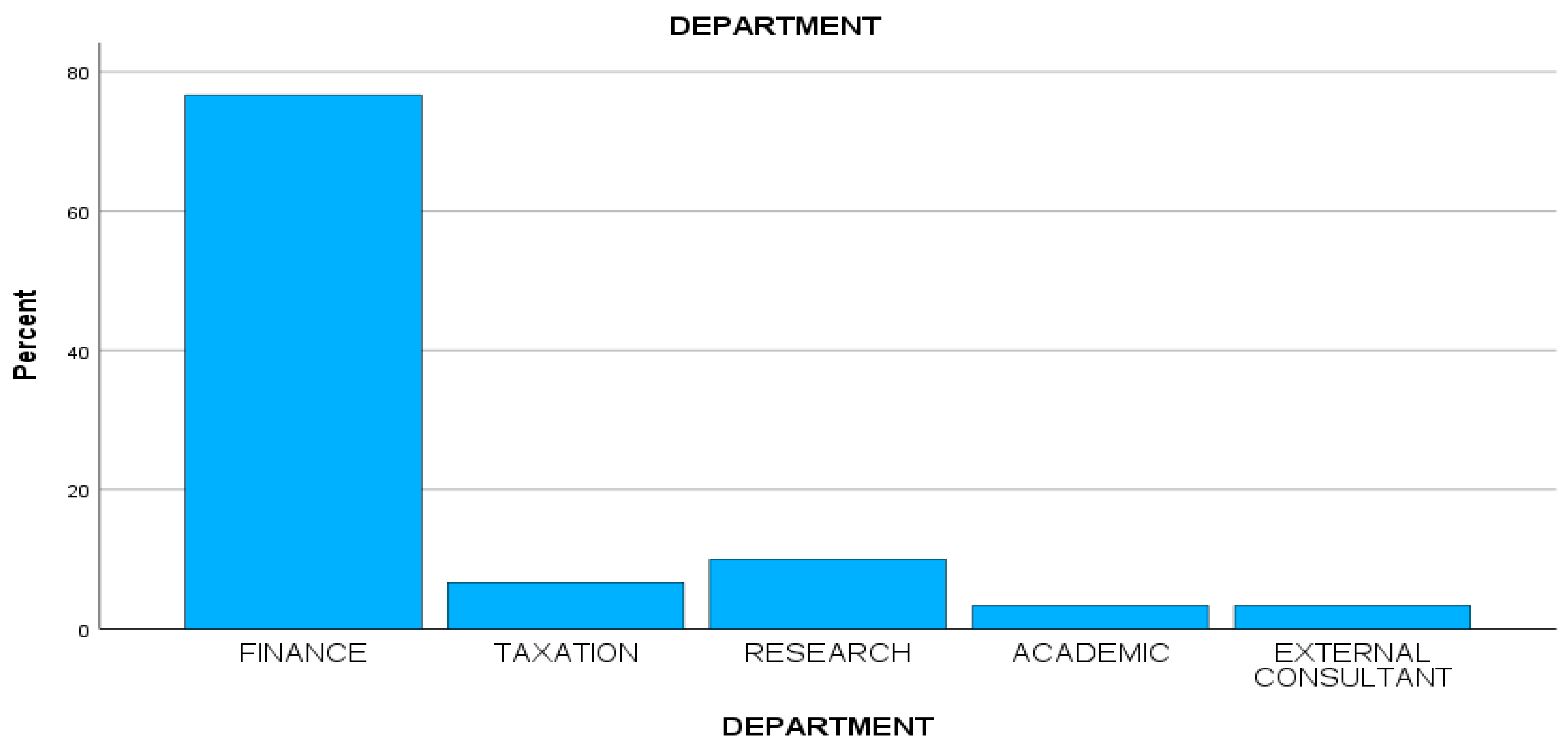
Table 1 indicates that 62.16% (n = 23) of respondents were employed in the university finance department, 10.81% (n = 4) in taxation, 10.81% (n = 4) in research, 8.10% (n = 3) were academic staff, and 8.10% (n = 3) were external consultants. Finance staff, including managers and accountants, are responsible for initiating project codes and providing grant-related information for VAT treatment purposes. Taxation staff determine the VAT status of transactions, facilitate apportionment calculations, and process VAT returns. Research staff evaluate project contract terms to assess potential VAT implications. External consultants provide support in annual VAT apportionment processes as well as ad hoc VAT-related assignments.
The bar graph below displays the various departments that respondents worked in.
The graph in
Figure 2 shows that most respondents worked in the finance department.
Analysis of Knowledge of the VCR and Training:
Research aim 1—“To explore the perspectives of university taxation and finance professionals on the apportionment and application of the VAT Class Ruling (VCR) within selected universities in South Africa.”
The first set of questions concerned knowledge of the VCR, training provided during its implementation, and the scheduling of ongoing training. The table below provides a statistical analysis of knowledge of the VCR and training.
Table 2 presents the descriptive statistics (mean and standard deviation) for the key variables, highlighting both central tendency and variation in the data. Most variables were measured using a five-point Likert scale, except for Knowledge of the VCR, which was measured on a three-point scale. A mean score of 2.2 for Knowledge of the VCR indicates a moderate level of knowledge, while the standard deviation of 0.84 reflects dispersion around the mean (
Sykes et al., 2016). Training on VCR implementation recorded a mean of 2.9, indicating a moderate response level (
Bougie & Sekaran, 2020), with a standard deviation of 1.0 suggesting variability in responses (
Sykes et al., 2016). Ongoing training recorded a mean of 3.2 and a standard deviation of 0.9, indicating greater variability in responses and relatively poorer perceptions of continued training availability.
The frequency distribution in
Table 3 for Knowledge of the VCR indicates that eight respondents (26.7%) reported very good knowledge, eight (26.7%) reported good knowledge, and 14 (46.7%) reported moderate knowledge. Overall, the findings suggest that staff demonstrated a fair understanding of the ruling. However, the presence of limited knowledge implies that implementation support and ongoing training may be inadequate. Insufficient training may contribute to the misapplication of research definitions and incorrect coding of cost centres, which could result in inappropriate input tax deductions. Responsibility also lies with university finance and taxation management to ensure that staff are adequately trained on VAT apportionment requirements. A proper understanding of the VCR further requires familiarity with the relevant sections of the VAT Act (
Hassan, 2024).
The frequency table below (
Table 3) analyses training statistics during VCR implementation.
Implementation Training and Ongoing Training:
In terms of training during the implementation of the VCR, three respondents (10%) rated it as very good, five (16.7%) as good, 13 (43.3%) as moderate, eight (26.7%) as poor, and one (3.3%) as very poor, indicating an overall moderate level of training. These findings suggest that finance and taxation managers should have allocated more time to training staff on VAT legislation and the implications of the VCR for project VAT treatment. SARS primarily provided written guidelines, with no formal training manuals issued by SARS, USAF, or PWC. However, some universities, such as UKZN and the University of the Free State, developed decision-tree diagrams to assist staff in applying the VCR.
Ongoing training was rated as very good by one respondent (3.3%), good by six (20%), moderate by 11 (36.7%), poor by 11 (36.7%), and very poor by one (3.3%), indicating overall poor provision of continuous training. Budgetary and time constraints, together with frequent changes in VAT legislation and research contract structures, underscore the need for regular and structured training to ensure the correct and consistent application of the VCR.
Aim number 2: To identify the key challenges perceived by stakeholders in the implementation and compliance with the VCR.
Aim number 3: “To suggest alternative strategies that could be employed to enhance the application of the Input Tax VCR within the selected universities in South Africa.”
Apportionment % Suitability and Improvement of the VCR:
The analysis revealed that 53.3% of respondents agreed with the current apportionment ratio of 12.5%, while 46.7% disagreed. Respondents who supported the current rate indicated comfort with the prescribed calculation and expressed caution regarding potential SARS audits. In contrast, those who were dissatisfied noted that previous apportionment rates ranged between 20–30%, and argued that the capped 12.5% restricts deductible input VAT, particularly in cases where expenditure cannot be fully allocated to taxable, exempt, or non-supplies. A fair and equitable apportionment ratio is essential, particularly given that VAT was the second largest contributor to the tax fiscus in 2019 (
Swanepoel, 2024). However,
Jeewa (
2016) argues that the apportionment ratio should be increased to alleviate financial pressure, especially for research-intensive universities.
With regard to improvements to the VCR, 56.7% of respondents indicated that the ruling requires revision, while 43.3% did not share this view. This means more respondents are in favour of the improvement of the current VCR. Further, respondents highlighted ambiguities in the regulations, outdated provisions, and the need for a more modern and practical apportionment method. The VCR, introduced in 2012 and extended to 2026, was initially intended as a temporary measure.
B. Smith (
2019) notes that although the ruling was initially renewed within nine months, its long-term sustainability remains uncertain, and VAT administration in South Africa requires reform to enhance fairness, clarity, and effectiveness.
Analysis of Varied Input Method and Annual Apportionment Calculation:
Most respondents (80%) confirmed the use of the varied input-based method, while 20% indicated that they were unaware of the method. This distribution suggests a generally high level of awareness, although a notable minority of participants may still lack familiarity with the approach. The method is considered suitable for universities where the majority of VAT relates to either taxable or exempt supplies, with only a small proportion attributable to mixed-use supplies (
Marais, 2014).
Regarding compliance requirements, 56.7% of respondents confirmed that VAT apportionment is calculated annually, while 43.3% disagreed. This split indicates mixed levels of understanding or application of the requirements under the VCR, rather than conclusive evidence of widespread non-compliance. While such discrepancies could potentially expose institutions to penalties in terms of the Tax Administration Act (
Jeewa, 2016), this inference should be interpreted with caution. The relatively low standard deviations for both variables indicate that responses were closely clustered around the mean, reflecting limited dispersion in the data (
Sykes et al., 2016).
Analysis of VAT Treatment of Educational Services:
The exemption of educational services was supported by 83.3% of respondents, aligning with Section 12(h) of the VAT Act (
Jugdhaw, 2018). This high level of support suggests that most participants are aware of, and in agreement with, the current legislative treatment of educational services as exempt supplies.
Zero-rating, however, was supported by 46.7% of respondents, while 53.3% were opposed. This relatively balanced distribution indicates divergent views among participants, rather than a clear consensus, and may reflect varying interpretations of the feasibility or desirability of zero-rating within the higher education context. It is therefore more appropriate to interpret these findings as evidence of mixed perceptions, as opposed to a definitive lack of acceptance.
The standard rating of educational services was rejected by 80% of respondents, with only 20% in favour. This strong opposition suggests that most respondents do not support the imposition of VAT at the standard rate on educational services, which may be influenced by concerns about affordability and access to education. Overall, while the findings point to clear support for exemption, conclusions regarding alternative VAT treatments should be drawn cautiously, as the data reflect differing perspectives rather than uniform agreement.
Despite this, standard rating has been argued to reduce administrative complexity and enable full VAT claims on research and third-stream income sources (
Jeewa, 2016).
4.2. Qualitative Analysis
Interviews were transcribed and analysed thematically using NVivo. The recorded data, captured in Microsoft Word, were imported into the software and coded into nodes aligned with the key research themes. After each interview, the data were transcribed and coded with reference to preceding interviews, and the process ceased once data saturation was reached (
Phesa et al., 2024). In line with
Fusch and Ness (
2015), saturation occurred when further coding produced no new themes or insights, as responses became repetitive. An iterative approach guided both data collection and analysis, enabling continuous comparison of emerging codes, themes, and their interrelationships. Word frequency counts assisted in identifying recurring perspectives on the VAT Class Ruling, particularly in relation to application challenges and potential improvement strategies. Parent and child nodes were used to structure the analysis, enabling systematic comparison of similar responses. Thematic analysis was applied to organise and streamline the data and to determine the recurrence of key themes. The qualitative findings were used to corroborate the quantitative results, thereby strengthening the reliability of the study and enabling the researcher to test the study’s propositions with greater confidence.
Thematic map:
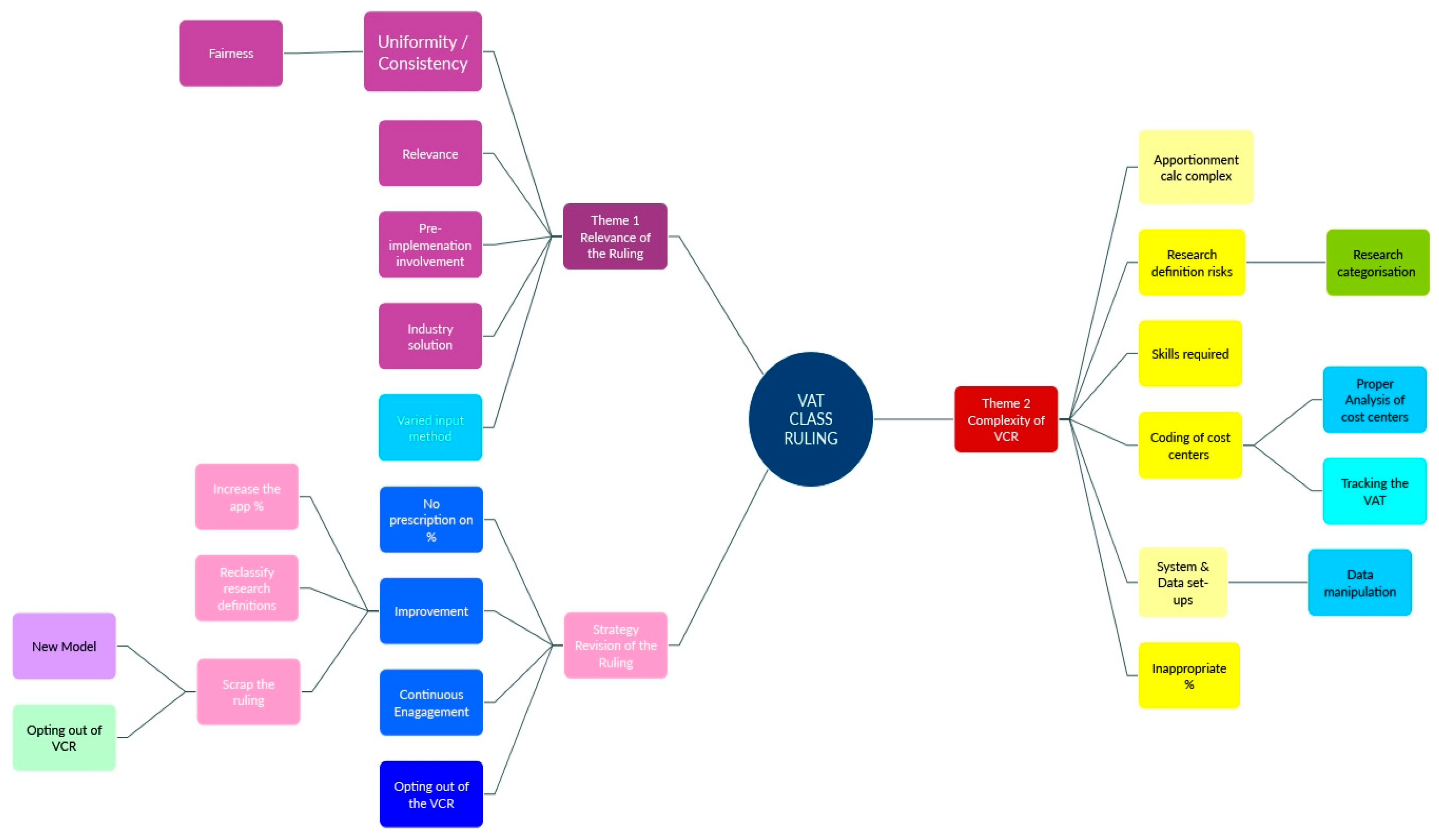
The qualitative data analysis followed a structured process using NVivo 20. Data were uploaded and reviewed, and 150 significant elements were identified and aligned with the research questions. A thematic map consisting of three main themes and 25 sub-themes was developed.
Familiarisation with the data enabled deeper insight, while coding generated multiple codes derived from key phrases (
Dawadi, 2020). Themes were subsequently developed by grouping related codes to identify recurring patterns (
Naeem et al., 2023). A systematic structure of master, main, and sub-themes was then constructed (
Dawadi, 2020). Relevant extracts were exported to Microsoft Word to facilitate cross-referencing and verification.
Themes were further refined through a process of merging, modification, and removal where necessary (
Mvunabandi et al., 2023). In line with
Braun and Clarke (
2021), the researchers actively engaged in the construction and interpretation of themes. The final thematic map provided a visual representation of the findings and supported the interpretation and answering of the research questions.
Figure 3 shows two important dimensions, which are (1)
perceived relevance of the VAT class ruling and (2) operational complexity of VAT compliance (VCR). As shown in
Figure 3, most respondents demonstrated a general awareness of the VAT class ruling; however, varying levels of technical understanding were evident, particularly regarding input tax apportionment and its practical implementation. This suggests that while awareness is widespread, depth of comprehension remains uneven.
Key Themes:
Figure 4.
Word Similarity.
Figure 4.
Word Similarity.
Analysis of the themes derived from the interviews and Frequency of interview data:
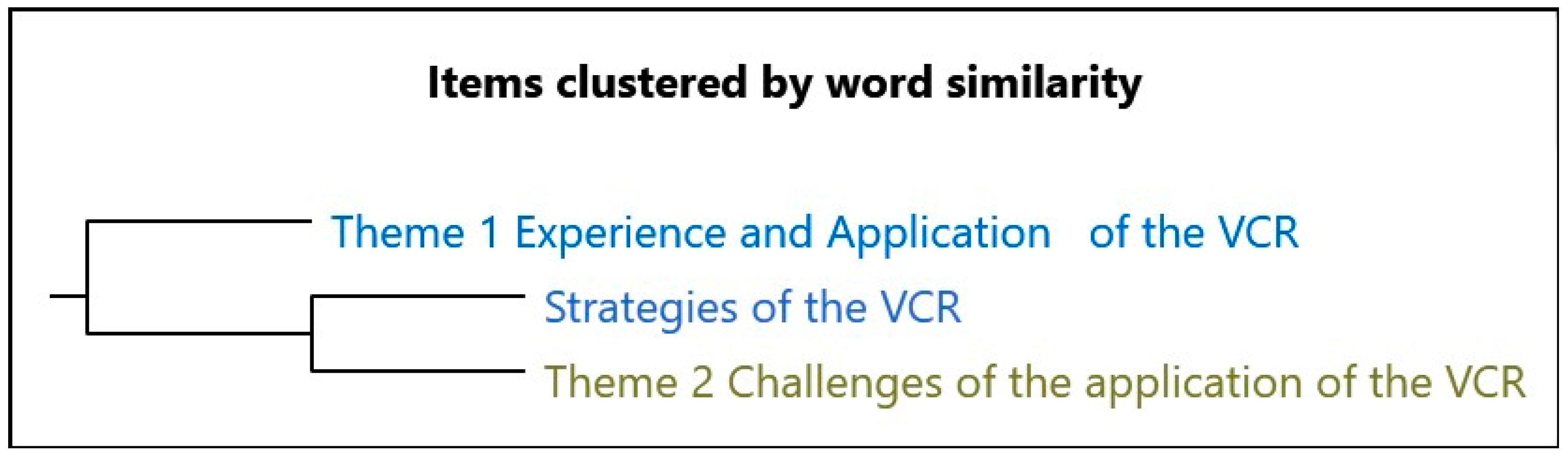
As per
Figure 4 above, interview data strengthened and validated the quantitative findings. The results indicate a strong relationship between the relevance of the ruling, the challenges experienced, and the proposed improvement strategies. Data validation was achieved through open-ended responses, which captured participants’ experiences regarding the application of the VAT Class Ruling, the associated challenges, and potential strategies for improvement.
Theme One: Relevance of the Ruling.
The South African Revenue Service issues rulings to ensure uniformity and compliance. As shown in
Table 4 below, findings show five of ten interviewees viewed the VCR as relevant, aligning with questionnaire results. Some noted it captures university supplies and removes the need for separate rulings. However, application challenges persist, indicating partial effectiveness and areas for improvement.
The next discussion outlines the sub-themes that emanate from the main theme.
Role in the Implementation of the VCR:
Most respondents were involved in either the pre-implementation or post-implementation phases of the VAT Class Ruling. Six respondents reported direct engagement, providing valuable insight into the rationale behind its rollout. Meetings were held with the South African Revenue Service, and some participants assisted with apportionment calculations during the testing phase.
One respondent explained:
“There was an analysis of different rates and what universities did. There was a need to educate SARS on what the sector is doing.”
The findings indicate that PwC undertook extensive work to develop and standardise fixed apportionment ratios and was subsequently appointed as tax advisor to the Finance Executive Forum (FEF). The Tax Task Team (TTT) also reported to this forum. The implementation of the VCR increased administrative requirements, as cost centres required detailed VAT analysis and accurate recording within universities’ internal software systems.
Industry Solution:
Three respondents viewed the VCR as an effective industry solution for the education sector, as it helped to streamline the VAT apportionment methodology. One participant noted:
“There were different tax treatments for universities and there was a need to limit the risks. The process involved an approach to SARS for an industry solution.”
Consequently, PwC engaged with the South African Revenue Service to develop a uniform approach, which was subsequently adopted for all 26 universities in collaboration with Universities South Africa.
Consistency and Uniformity:
Three respondents reported that the VCR promoted consistency and uniformity among universities and universities of technology in South Africa. This standardisation avoided the need for 26 separate rulings across institutions. This view, noting that SARS, in consultation with HESA, implemented the ruling to simplify VAT apportionment within the higher education sector.
Varied input-based method:
Eight interviewees expressed satisfaction with the varied input-based apportionment method. One participant stated:
“I am very happy with the input-based method.”
Participants further explained that this method is more suitable for universities, as the turnover-based method previously distorted apportionment calculations due to the sector’s unique funding structure, which is heavily reliant on tuition fees, government subsidies, and research grants.
Fairness:
Opinions on fairness were mixed. Five out of ten respondents indicated that the VCR promotes fairness, with one participant noting:
“SARS and USAF sought to create a system that was fair for universities.”
Conversely, other interviewees argued that the ruling disadvantages universities. One respondent stated:
“The VCR was a temporary ruling that became permanent, and universities are prejudiced by it.”
These findings indicate differing perceptions of fairness, reflecting the varied impact of the VCR across institutions and highlighting ongoing debates regarding its equity and long-term implications.
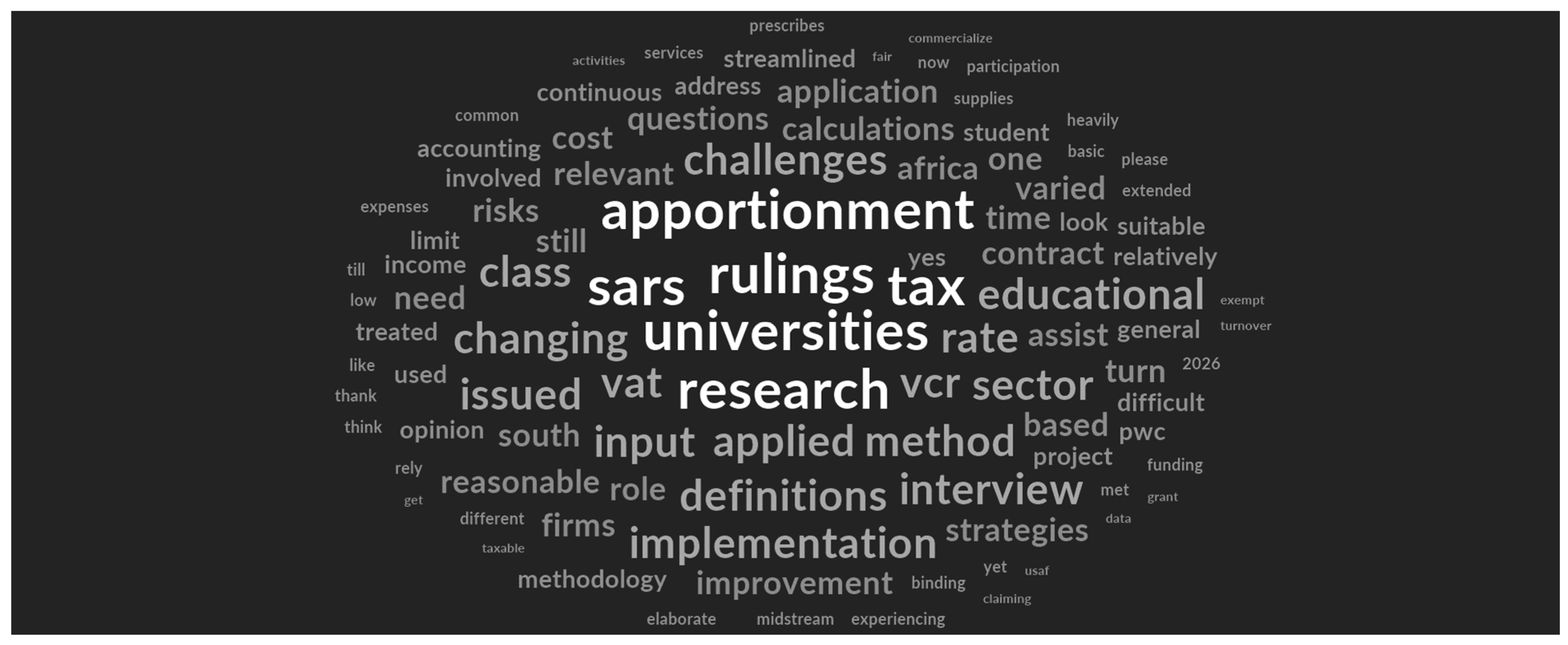
The word cloud below displays the most frequently cited words under Figure 5. Figure 5—The word cloud analysis revealed that “Apportionment,” “Ruling,” “SARS,” “Tax,” “Universities,” and “Research” were the most frequently cited terms. This aligns with participants’ sentiments, emphasizing that the VCR directly affects VAT apportionment, which is perceived as complex for universities to manage. The prominence of these terms highlights the central focus of interviewees on compliance requirements, administrative challenges, and the sector-specific application of the ruling. It further reflects the interplay between university funding structures, research activities, and tax obligations under the guidance of SARS. Overall, the findings underscore the critical role of the VCR in shaping and standardising VAT practices across the higher education sector.
Theme Two: Complexities that arise from the application of the VCR.
The second theme focused on complexities. Open-ended questions were designed to determine whether any challenges arose from the application of the VCR. The findings revealed that most of the reported challenges were related to the complexity of applying the VAT apportionment ruling.
Table 5 below summarises respondents’ views and their frequency distribution.
Inappropriate Apportionment %:
The frequency distribution in
Table 5 shows that nine out of ten interviewees considered the 12.5% apportionment rate to be inappropriate. One respondent stated:
“A higher % should be set. The ruling is more attributable to taxable supplies, more expenses, then the better the ratio.”
Another participant noted:
“Doesn’t work as a gain, especially for bigger universities claiming 20%.”
The findings indicate that the 12.5% rate is perceived as too low, particularly when compared to previous rates ranging between 20% and 30%, thereby potentially disadvantaging larger, research-intensive universities.
Research Categorisation:
Nine respondents argued that the VCR’s research definitions are ambiguous, misleading, and unclear. They noted that the definitions of basic and applied research are not sufficiently descriptive. One interviewee stated:
“There is an extremely blunt categorization of research.”
Another participant added:
“Research definition by SARS is very narrow.”
Herron (
2017) similarly found inconsistencies in the VAT treatment of different types of research activities, highlighting variability in interpretation and application across institutions.
System and Data Set-ups:
Four respondents highlighted challenges related to system configuration, as VAT must be correctly set up within in-house software systems. One participant noted:
“There are system limitations, and it is a high cost to amend the systems.”
The complexity arises from multiple VAT indicators and the data-intensive nature of system configuration and maintenance.
Coding of Cost Centres:
A few respondents noted that coding research-related cost centres is difficult due to ambiguity in the VCR, supporting, who argued that universities are often not adequately equipped for VAT accounting. Proper analysis and continuous tracking of cost centres are essential, particularly for projects with changing VAT status over time.
Apportionment Methodology:
Three respondents reported difficulties in applying the methodology to between 20,000 and 30,000 cost centres. One participant stated:
“Apportionment calculation is not easy.”
Smit (
2009) noted that categorising inputs and allocating VAT is complex, particularly within historically government-subsidised universities. The process is also time-consuming, as staff often lack the capacity to review and classify tax cases for research purposes accurately.
Skills Required:
Four respondents agreed that universities lack sufficient internal expertise, requiring tax professionals for effective VAT administration. One participant stated:
“VCR requires legal and tax skills plus practical implementation & knowledge. Limited skills—only tax manager, no oversight.”
Nelson (
2016) supports this view, noting that universities often rely on expensive consulting firms to calculate annual apportionment ratios, highlighting the skills gap and associated cost implications.
Theme Three: Strategies to Enhance the Application of the VCR.
Theme three related to strategies to improve the VCR. The table below displays the frequency results of the respondents’ insights on strategies that will add value to it.
Improvement of the VCR:
As shown in
Table 6, six respondents indicated that the VCR requires improvement to ensure a fair and more effective ruling. One participant stated:
“The ruling could be streamlined and improved by, first, ongoing, close monitoring of the situation by USAF, TTT and PWC within the registered universities.”
Respondents further suggested that SARS should issue a dedicated VAT guide on apportionment for universities. These findings align with the conclusion that additional legislative guidance is required, or alternatively, that VAT in the educational sector should be simplified.
Increase in the Apportionment %:
Six respondents argued that the apportionment percentage should be increased. One participant stated:
“12.5% is not a real basis. Some universities have little research. No scientific basis.”
This suggests that the current percentage may disadvantage universities that are primarily teaching-focused rather than those engaged in large-scale or commercial research activities. These findings are consistent with
Schneider (
2013), who argued that the apportionment ratio should reflect a reasonable and balanced outcome rather than an excessive or arbitrary one.
Continuous Engagement with SARS and USAF:
Five respondents emphasised the need for regular engagement between universities, SARS, and USAF. One participant noted:
“USAF and the tax task team were appointed for oversight role with appropriate knowledge.”
Concerns were raised regarding whether USAF and the Tax Task Team (TTT) sufficiently challenge SARS, with some respondents suggesting that USAF may lack adequate competence to fully perform this oversight role.
Integrated Discussion of Findings:
The preceding sections presented the empirical findings from both the quantitative and qualitative phases. This section integrates these results in line with the study’s objectives, providing a consolidated and analytically strengthened interpretation of the findings.
Aim 1: Perspectives on Apportionment and VCR Application.
The study sought to explore the perspectives of university taxation and finance professionals regarding the apportionment and application of the VAT Class Ruling (VCR) within selected South African universities.
Findings from both data sets consistently indicate a generally strong level of understanding of the VCR. Quantitative results show that 53% of respondents reported a very good understanding, while 47% indicated a moderate level. This is reinforced by the qualitative findings, where most participants demonstrated awareness of the ruling and broadly agreed on its continued relevance. As one respondent noted, “The ruling is still relevant, a temporary measure which became permanent.”
However, while awareness is widespread, qualitative evidence suggests that depth of understanding varies, particularly regarding technical aspects such as apportionment. This indicates that knowledge is uneven, which may contribute to inconsistencies in application despite general familiarity with the ruling.
Both data sets also converge on the perceived appropriateness of the apportionment method. The majority of qualitative respondents expressed satisfaction with the varied input-based method, and this is supported quantitatively, with 80% confirming its use. This strong alignment suggests that the method is both widely adopted and contextually appropriate within universities, where exempt supplies dominate and taxable activities are limited (
Marais, 2014).
The findings further indicate that the VCR has achieved its intended purpose of promoting uniformity, consistency, and fairness across institutions, supporting established VAT principles (
Nelson, 2016).
Aim 2: Challenges in Implementation and Compliance.
While the VCR is perceived as relevant and appropriate, the integrated findings reveal several key drivers of VAT compliance burden. Importantly, by combining quantitative patterns with qualitative frequency and emphasis, the study is able to assess the relative prominence of these challenges.
Across both data sets, input tax apportionment emerges as the most dominant and consistently cited challenge, particularly in relation to its computational complexity and application across large institutional datasets. Qualitative responses frequently highlighted the administrative intensity of apportionment calculations, especially where institutions manage between 20,000 and 30,000 cost centres.
This is supported by broader system-related challenges identified in both phases. A substantial proportion of respondents reported difficulties with system setup and cost centre coding, indicating that system limitations are a secondary but closely related driver of compliance burden. These systems often require manual adjustments to accommodate VAT requirements, increasing administrative effort and the risk of error.
Skills and institutional capacity constraints also emerged as a significant theme, although less dominant than apportionment and system challenges. Respondents emphasised the need for specialised expertise in tax, legal interpretation, and data management, suggesting that human capital limitations further exacerbate technical complexity.
These relationships can be summarised through an integrated (joint) interpretation of the findings.
As shown in
Table 7, this integrated perspective demonstrates that while multiple factors contribute to VAT compliance costs,
input tax apportionment is comparatively the most prominent driver, followed by system-related challenges and skills constraints.
In addition, the apportionment ratio of 12.5% was widely perceived as too low, particularly for research-intensive universities, where it may not accurately reflect input usage (
Eager, 2024). Research categorisation further compounds these challenges, as ambiguous definitions create uncertainty in VAT treatment. These findings are consistent with
Nelson (
2016) and
Eager (
2024), reinforcing the structural nature of these compliance difficulties.
Aim 3: Strategies for Improvement.
The integration of findings also highlights several targeted strategies to address the identified challenges. Respondents across both phases consistently emphasised the need to revise the apportionment percentage, improve the design of the VCR, and enhance system capabilities.
Given that apportionment has been identified as the primary driver of compliance burden, many recommendations directly focus on improving its application. These include increasing the apportionment rate, introducing more flexible methods, and refining its alignment with institutional realities.
At the same time, system improvements and capacity-building interventions were identified as critical supporting measures. Respondents highlighted the need for training workshops, improved system integration, and clearer guidance, particularly in relation to research classification.
A recurring theme is the importance of ongoing engagement between SARS and universities. As one participant noted, “there is a need for a discussion to take place between SARS and universities who want a change.” This reflects the need for a collaborative and adaptive regulatory approach.
These findings support
Eager (
2024) and
Hassan (
2024), who advocate for VAT simplification, sector-specific guidance, and continuous stakeholder engagement.
Summary:
Taken together, the integrated findings demonstrate that while the VCR has been effective in promoting consistency and supporting compliance, its implementation is shaped by a hierarchy of challenges. Input tax apportionment stands out as the most significant contributor to compliance burden, reinforced by system limitations and, to a lesser extent, skills constraints and definitional ambiguities.
By combining quantitative trends with quantified qualitative insights, the study provides a more robust understanding of these dynamics without relying on regression analysis. The findings therefore highlight that improving VAT compliance in universities requires both technical refinements to apportionment and broader institutional and regulatory support mechanisms.