
Why Non-Performing Assets Persist: Uncovering the Structural and Macroeconomic Drivers of India’s Banking Stress

 , , , , and
Abstract
1. Introduction
2. Literature Review & Hypothesis Development
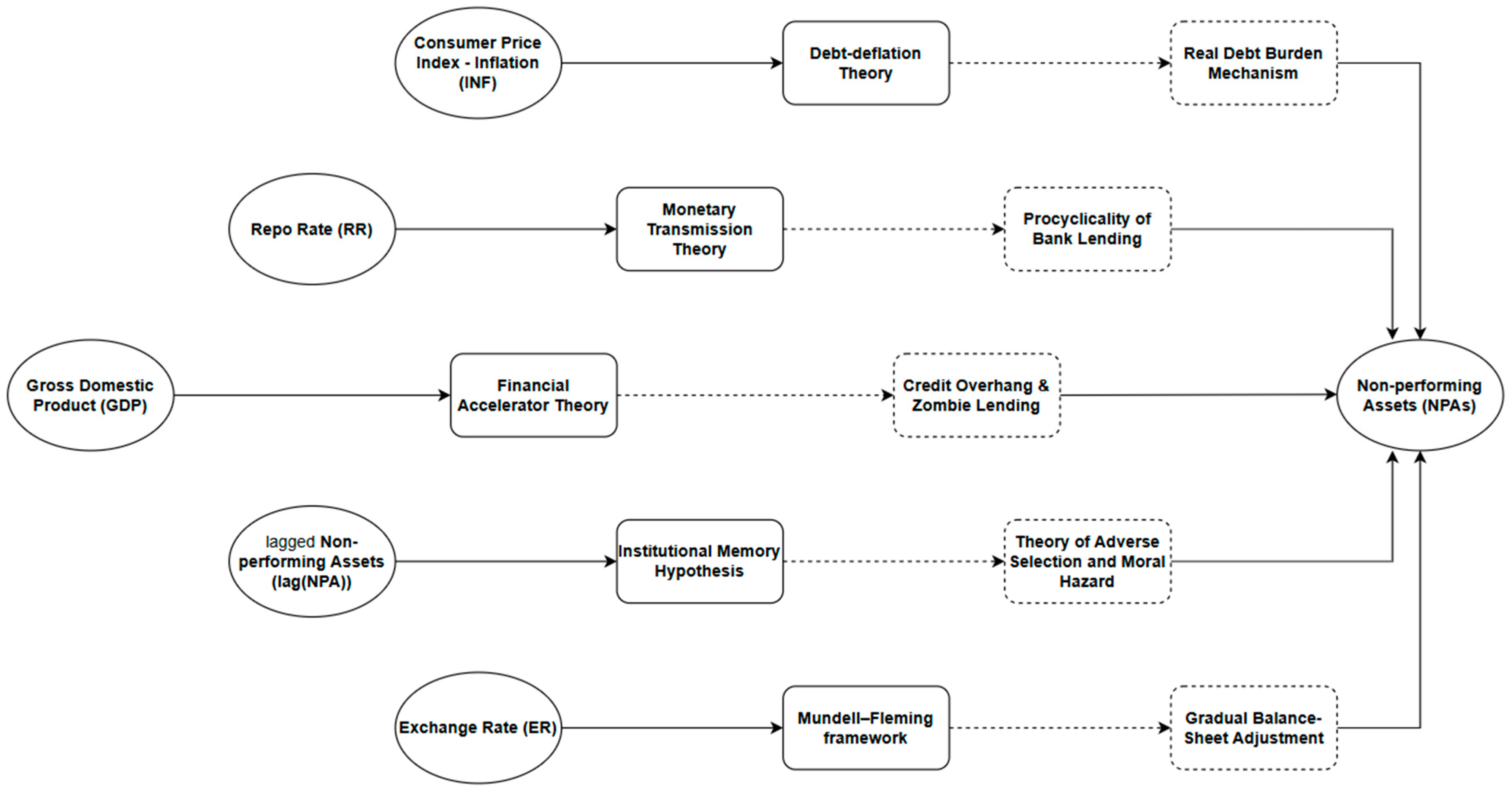
2.1. Theoretical Background
2.2. Macroeconomic Factors and NPAs
2.2.1. GDP Growth and NPAs
2.2.2. Inflation and NPAs
2.2.3. Exchange Rate Movements and NPAs
2.2.4. Repo Rate and NPAs
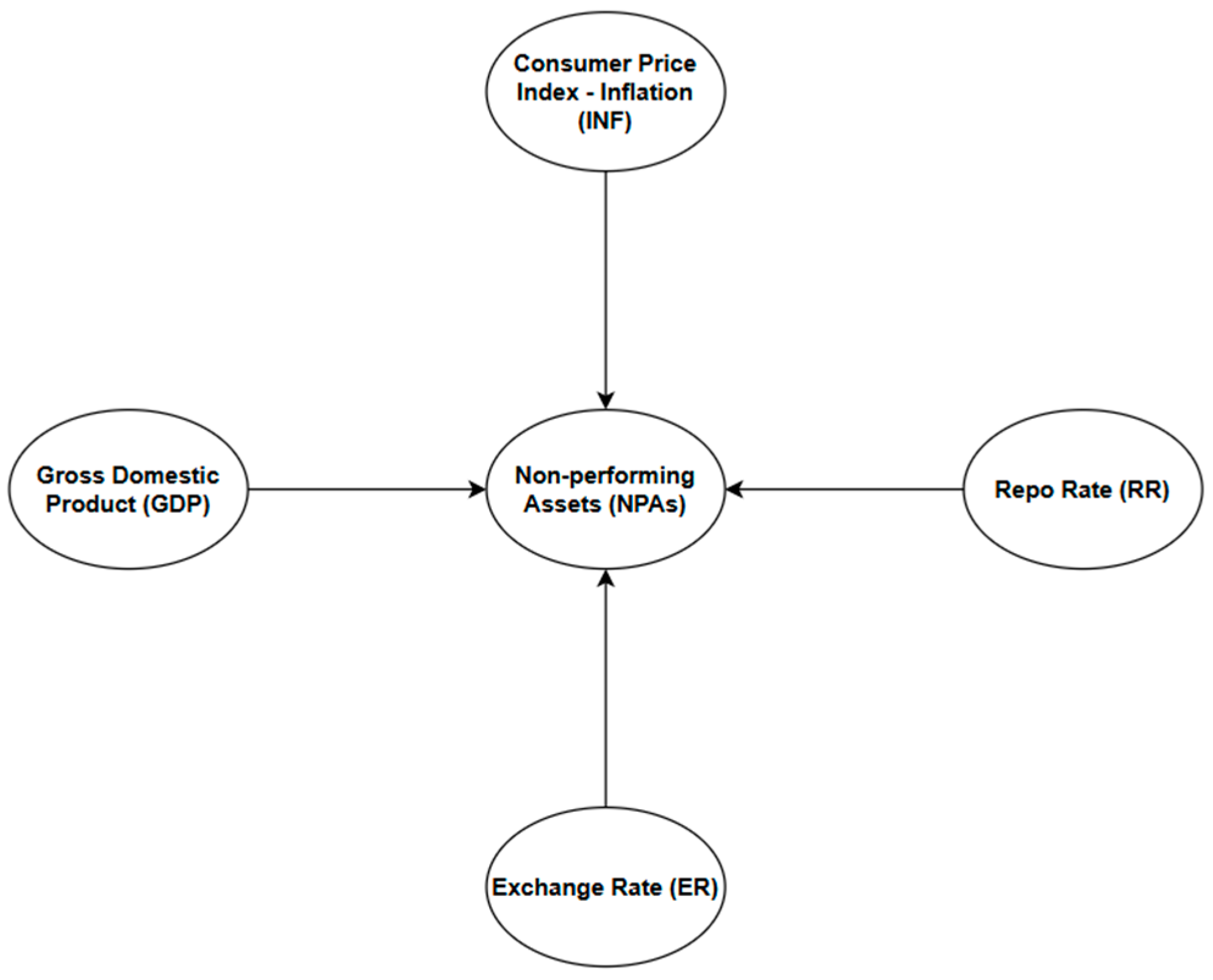
2.3. Research Gap and Hypotheses Development
3. Research Methodology
3.1. Data Description and Sources
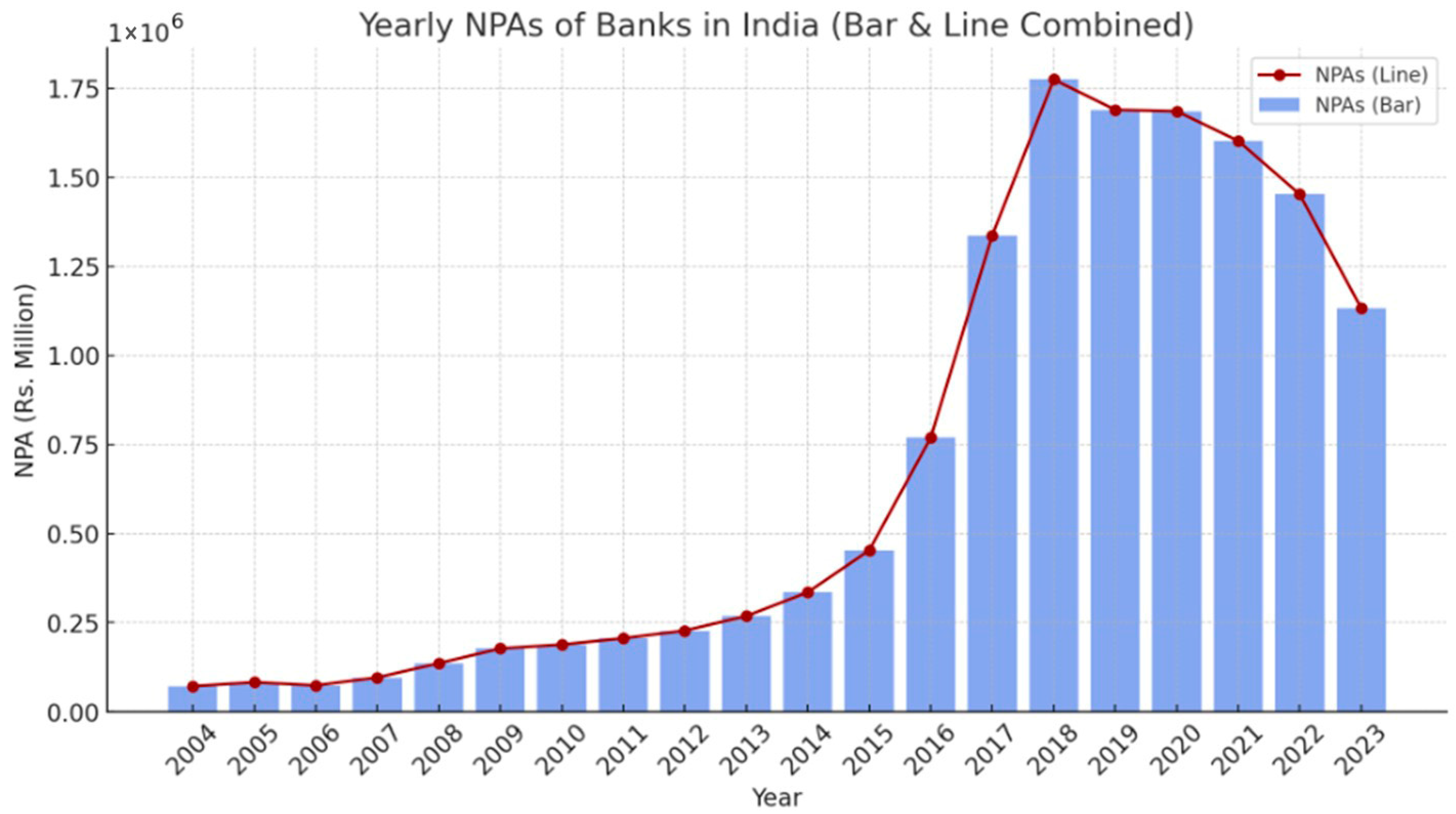
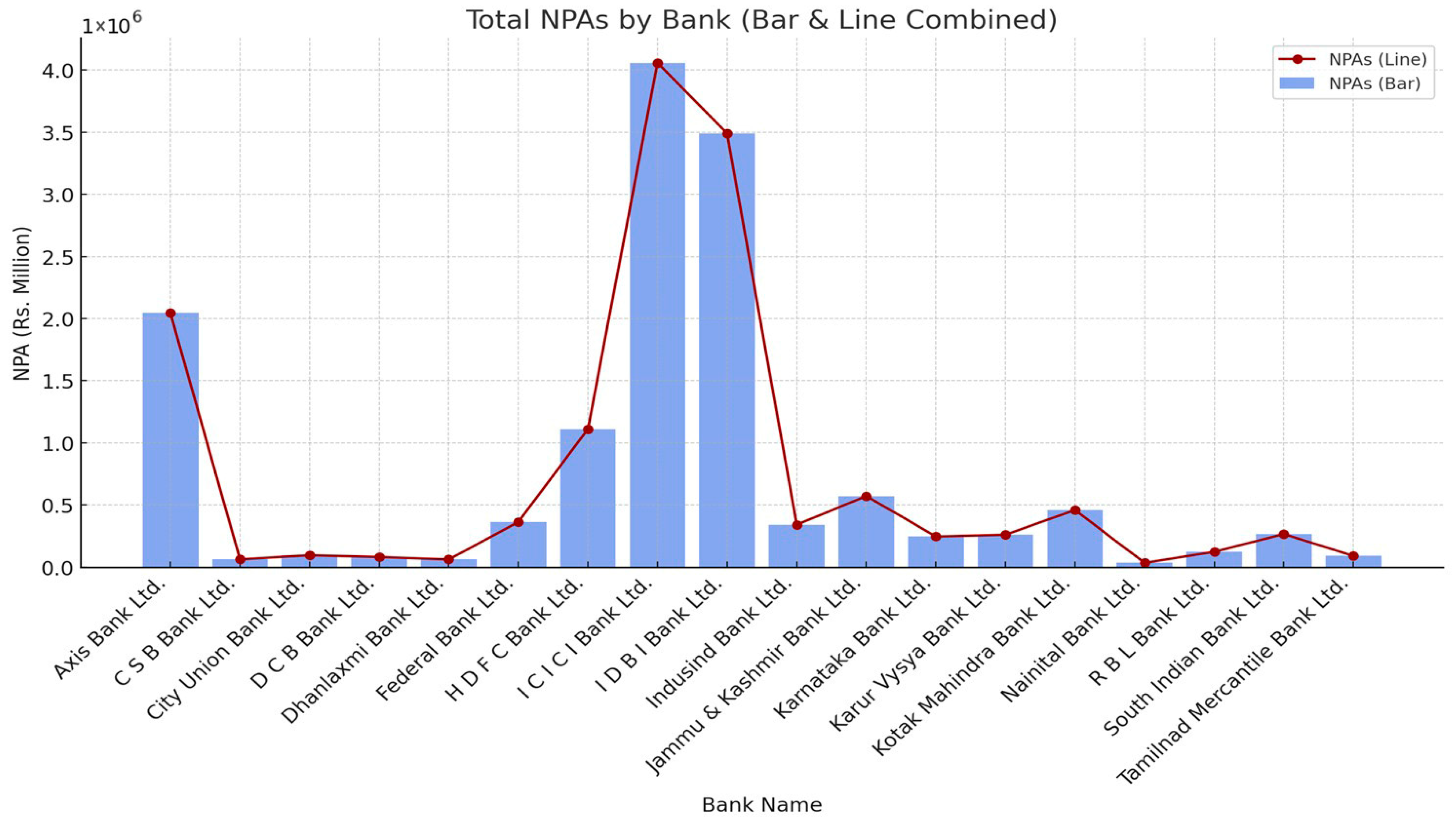
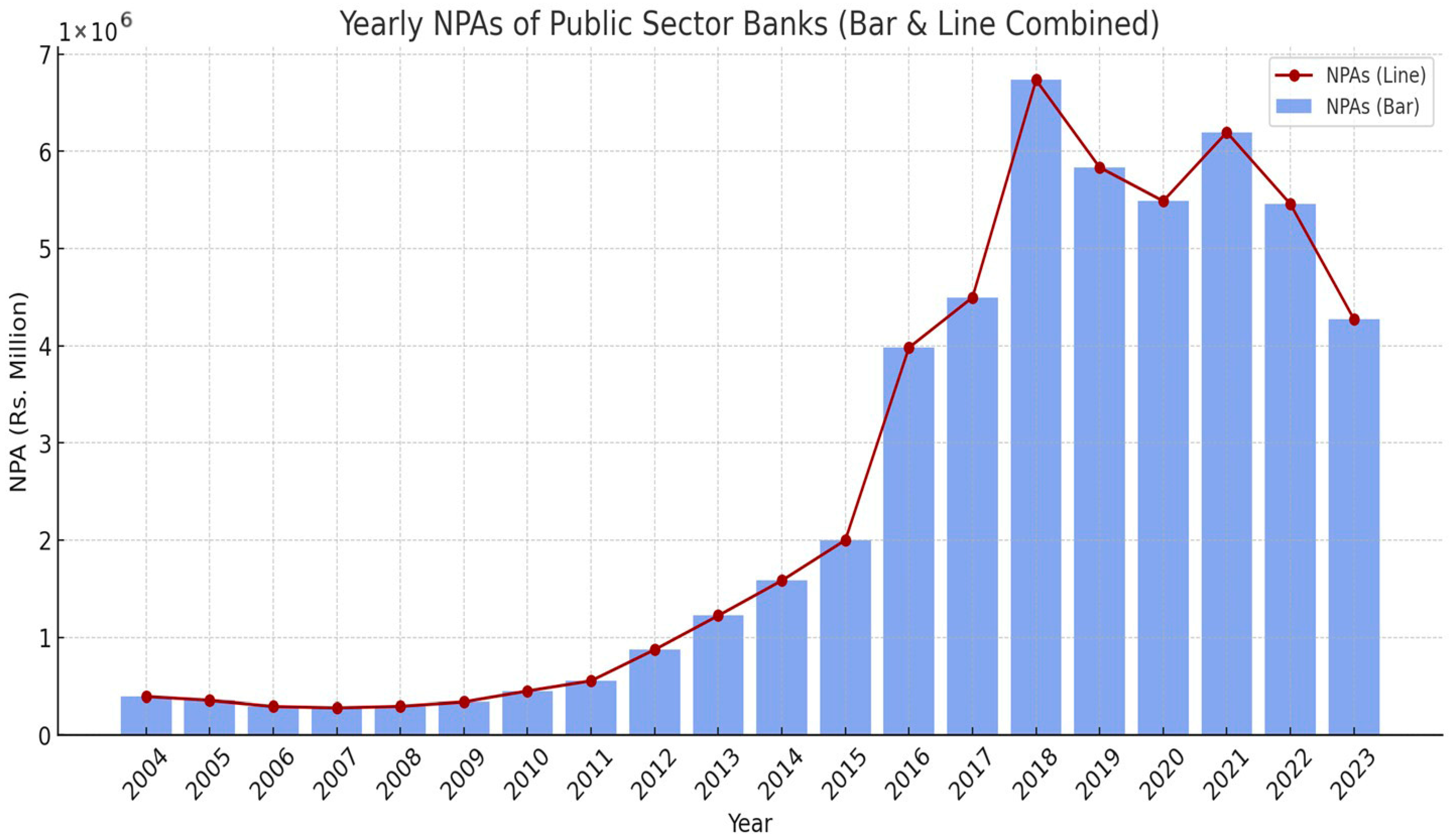
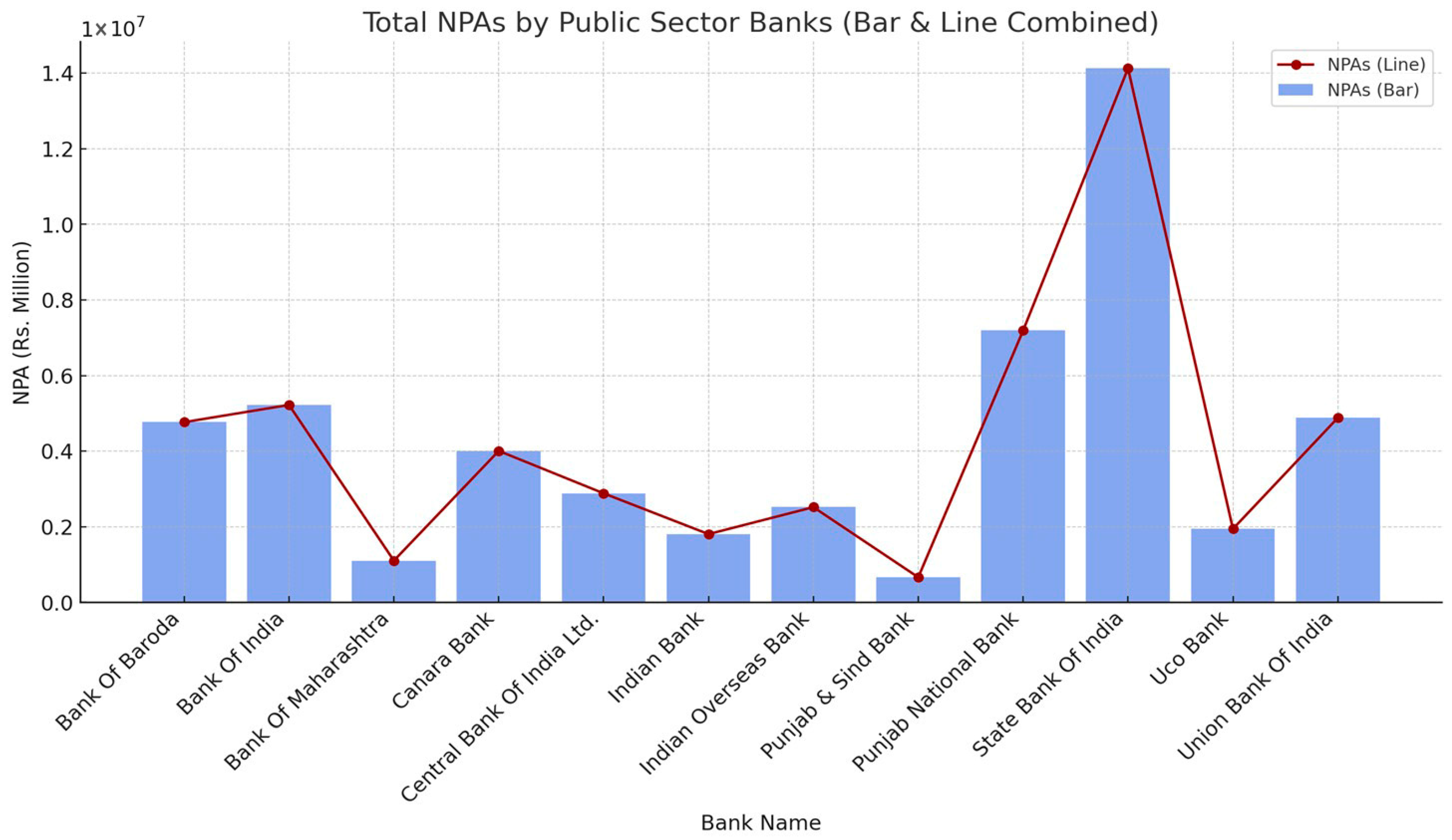
Trends and Patterns in Non-Performing Assets
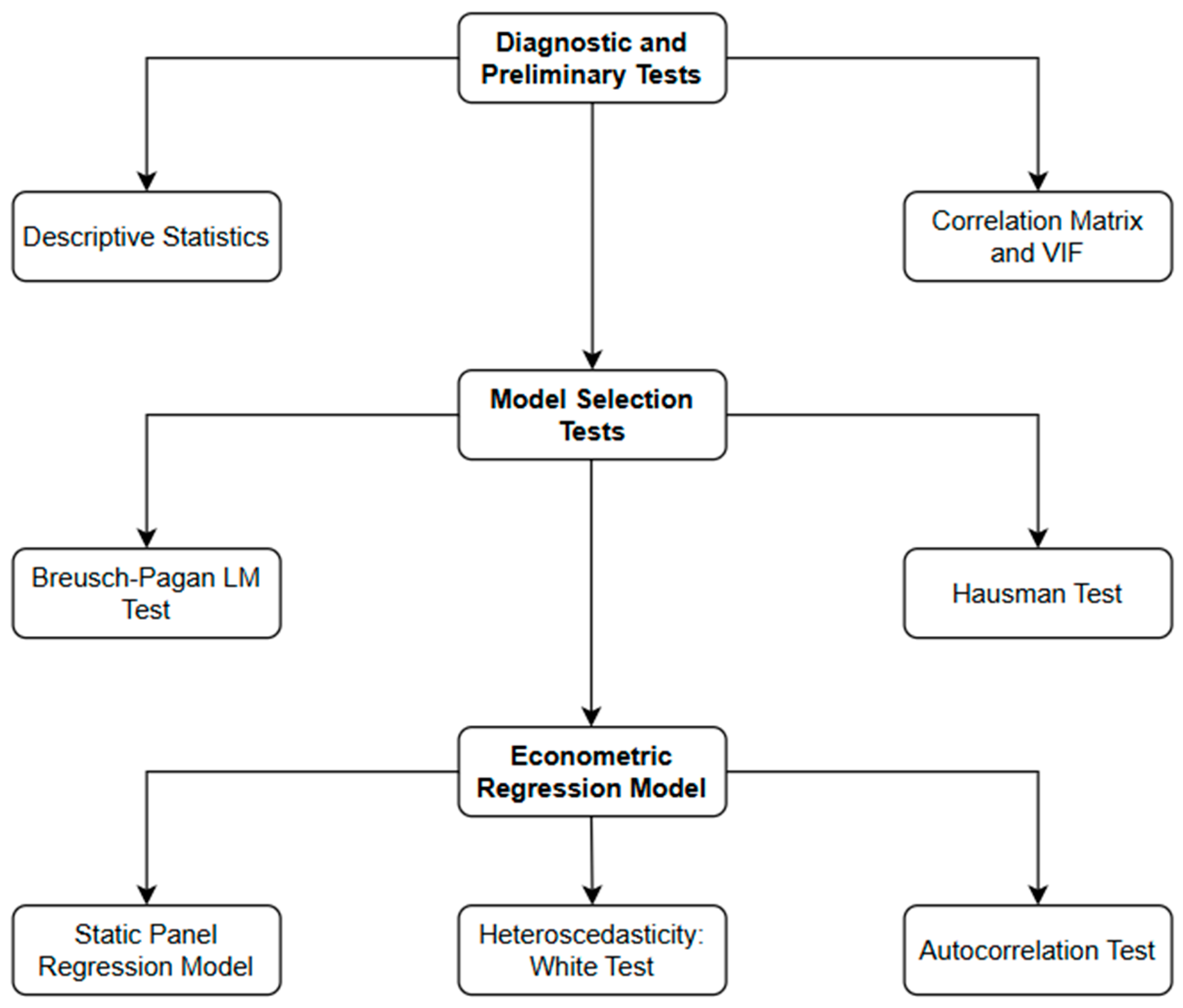
3.2. Econometric Analysis Techniques
4. Results and Discussion
4.1. Preliminary Tests
4.2. Model Selection Tests
4.3. Econometric Regression Model
4.4. Discussion
5. Conclusions and Recommendations
5.1. Theoretical Implications
5.2. Practical Implications
5.3. Limitations and Future Research Directions
Author Contributions
Funding
Data Availability Statement
Conflicts of Interest
Appendix A



| Sr. No. | Public Sector Bank | Sr. No. | Private Sector Bank |
|---|---|---|---|
| 1 | Bank of Baroda | 1 | Axis Bank Ltd. |
| 2 | Bank of India | 2 | C S B Bank Ltd. |
| 3 | Bank of Maharashtra | 3 | City Union Bank Ltd. |
| 4 | Canara Bank | 4 | D C B Bank Ltd. |
| 5 | Central Bank of India Ltd. | 5 | Dhan Laxmi Bank Ltd. |
| 6 | Indian Bank | 6 | Federal Bank Ltd. |
| 7 | Indian Overseas Bank | 7 | H D F C Bank Ltd. |
| 8 | Punjab & Sind Bank | 8 | I C I C I Bank Ltd. |
| 9 | Punjab National Bank | 9 | I D B I Bank Ltd. |
| 10 | State Bank of India | 10 | IndusInd Bank Ltd. |
| 11 | Uco Bank | 11 | Jammu & Kashmir Bank Ltd. |
| 12 | Union Bank of India | 12 | Karnataka Bank Ltd. |
| 13 | Karur Vysya Bank Ltd. | ||
| 14 | Kotak Mahindra Bank Ltd. | ||
| 15 | Nainital Bank Ltd. | ||
| 16 | R B L Bank Ltd. | ||
| 17 | South Indian Bank Ltd. | ||
| 18 | Tamilnad Mercantile Bank Ltd. |
| LM Test | |||
| Null (no rand. effect) | Cross-section | Period | Both |
| Breusch-Pagan | 4289.772 | 0.057 | 4289.828 |
| (0.000) | (0.812) | (0.000) | |
| Hausman Test | |||
| Test Summary | Chi-Sq. Statistic | Chi-Sq. d.f. | Prob. |
| Cross-section random | 0.000 | 4.000 | 1.000 |
References
- Acharya, V. V. (2020). Improving monetary transmission through the banking channel: The case for external benchmarks in bank loans. Vikalpa, 45(1), 32–41. [Google Scholar] [CrossRef]
- Adeosun, O. T., & Shittu, A. I. (2022). Small–medium enterprise formation and Nigerian economic growth. Review of Economics and Political Science, 7(4), 286–301. [Google Scholar] [CrossRef]
- Adu, D. A. (2024). How do board and ownership characteristics affect bank risk-taking? New evidence from sub-Saharan Africa. Journal of Banking Regulation, 25(3), 209–233. [Google Scholar] [CrossRef]
- Agha, E., Oluyombo, O., & Aworinde, O. (2023). Bank governance, asset quality, and risk. Do macro-prudential policy and macroeconomic factors matter? Evidence from Nigeria’s banking sector. International Journal of Professional Business Review, 8(8), 47. [Google Scholar] [CrossRef]
- Aleena, J., Geetha, E., & Kishore, L. (2025). Impact of macroeconomic factors on bank stock returns: Empirical evidence from India. Investment Management & Financial Innovations, 22(1), 416. [Google Scholar] [CrossRef]
- Al Maruf, A., Kowsar, M., Mohiuddin, M., & Mohna, H. A. (2024). Behavioral factors in loan default prediction a literature review on psychological and socioeconomic risk indicators. American Journal of Advanced Technology and Engineering Solutions, 4(1), 43–70. [Google Scholar] [CrossRef]
- Angela, I. T. (2025). Macroeconomic and institutional determinants of non-performing loans a conceptual and global review. Available online: https://ssrn.com/abstract=5593250 (accessed on 12 October 2025). [CrossRef]
- Anigbo, A. J. (2022). Regulatory framework of commercial banks and its operational efficiency in lending to small medium (SMEs) in Nigeria. University of South Wales. [Google Scholar]
- Asiamah, S., Appiah, K. O., & Badu, E. A. (2024). Do board characteristics moderate capital adequacy regulation and bank risk-taking nexus in Sub-Saharan Africa? Asian Journal of Economics and Banking, 8(1), 100–120. [Google Scholar] [CrossRef]
- Athari, S. A., Irani, F., & Hadood, A. A. (2023). Country risk factors and banking sector stability: Do countries’ income and risk-level matter? Evidence from global study. Heliyon, 9(10), e20398. [Google Scholar] [CrossRef]
- Berger, A. N., & Udell, G. F. (2004). The institutional memory hypothesis and the procyclicality of bank lending behavior. Journal of Financial Intermediation, 13, 458–495. [Google Scholar] [CrossRef]
- Bernanke, B. S., Gertler, M., & Gilchrist, S. (1999). The financial accelerator in a quantitative business cycle framework. Handbook of Macroeconomics, 1, 1341–1393. [Google Scholar] [CrossRef]
- Brunnermeier, M., Correia, S., Luck, S., Verner, E., & Zimmermann, T. (2025). The debt-inflation channel of the German (Hyper) inflation. American Economic Review, 115(7), 2111–2150. [Google Scholar] [CrossRef]
- Candra, K. (2025). The impact of exchange rate fluctuations on Indonesia’s export-import performance. Available online: https://ssrn.com/abstract=5258411 (accessed on 17 May 2025). [CrossRef]
- Chakrabarti, P., & Kaur, J. (2024). Zombie-lending during the pandemic in India: Did the central bank reduce credit misallocation concerns of forbearance? Journal of Policy Modeling, 46(1), 153–170. [Google Scholar] [CrossRef]
- Chattopadhyay, S., & Bose, S. (2023). Bank credit and macroeconomic performances: A TOPSIS-based comparative annual ranking of states in India. In Inclusive developments through socio-economic indicators: New theoretical and empirical insights. Emerald Publishing Limited. [Google Scholar] [CrossRef]
- Chen, B., Yang, J., & Zhang, C. (2021). Corporate investment and financing with uncertain growth opportunities. International Review of Finance, 21(3), 821–842. [Google Scholar] [CrossRef]
- Cuppers, M. (2025). The effects of inflation on European peer-to-peer loan performance: The moderating role of the debt-to-income ratio [Master’s thesis, Tilburg University]. [Google Scholar]
- Das, S. K. (2023). NPAs in India’s banks: Trends and determinants. Journal of Money and Business, 3(2), 147–158. [Google Scholar] [CrossRef]
- Dell’ariccia, G., Igan, D., Laeven, L., & Tong, H. (2016). Credit booms and macrofinancial stability. Economic Policy, 31(86), 299–355. [Google Scholar] [CrossRef]
- DeLong, J. B., Summers, L. H., Feldstein, M., & Ramey, V. A. (2012). Fiscal policy in a depressed economy [with comments and discussion]. In Brookings papers on economic activity (pp. 233–297). The Johns Hopkins University. Available online: https://www.jstor.org/stable/23287218 (accessed on 31 March 2026).
- Demirkılıç, S. (2021). Balance sheet effects of foreign currency debt and real exchange rate on corporate investment: Evidence from Turkey. Emerging Markets Review, 47, 100796. [Google Scholar] [CrossRef]
- Dhananjaya, K. (2024). Corporate debt vulnerability and non-performing assets in India. Global Business Review, 25(2), 444–467. [Google Scholar] [CrossRef]
- El Ghorab, N. M. (2025). The impact of currency depreciation on Egyptian exports: A firm-level study. The American University in Cairo. [Google Scholar]
- Emonena, O. L. (2025). Financial soundness and banks’ performance: A theoretical review. International Journal of Finance, Accounting and Management Studies, 1(4), 104–121. [Google Scholar]
- Fallanca, M. G., Forgione, A. F., & Otranto, E. (2020). Forecasting the macro determinants of bank credit quality: A non-linear perspective. The Journal of Risk Finance, 21(4), 423–443. [Google Scholar] [CrossRef]
- Filipović, M. (2024). Impact of inflation on citizens borrowing. Sveučilište u Zagrebu, Sveučilište u Zagrebu Ekonomski fakultet. Available online: https://urn.nsk.hr/urn:nbn:hr:148:805133 (accessed on 31 March 2026).
- Frankel, J. A. (2005). Mundell-fleming lecture: Contractionary currency crashes in developing countries. IMF Staff Papers, 52(2), 149–192. [Google Scholar] [CrossRef]
- Frésard, L., & Phillips, G. M. (2024). Product markets, competition and corporate finance: A review and directions for future research. In Handbook of corporate finance (pp. 591–646). Edward Elgar Publishing. [Google Scholar] [CrossRef]
- Glen, J. D. (1992). Real exchange rates in the short, medium, and long run. Journal of International Economics, 33(1–2), 147–166. [Google Scholar] [CrossRef]
- Goyal, A., & Verma, A. (2018). Slowdown in bank credit growth: Aggregate demand or bank non-performing assets? Margin: The Journal of Applied Economic Research, 12(3), 257–275. [Google Scholar] [CrossRef]
- Haas, A. (2023). Monetary policy in a tightening cycle. Available online: https://al-haas.github.io/files/Haas_JMP.pdf (accessed on 31 March 2026).
- Ibrahim Amoo, B. (2024). Examines debt servicing on economic growth in Nigeria. Available online: https://ssrn.com/abstract=5057198 (accessed on 31 March 2026).
- Iversen, R. R., Napolitano, L., & Furstenberg, F. F. (2011). Middle-income families in the economic downturn: Challenges and management strategies over time. Longitudinal and Life Course Studies, 2(3), 286–300. [Google Scholar] [CrossRef]
- Jaiswal, A., & Parhi, A. (2025). Managing non-performing assets in India: Integrating governance reforms, predictive analytics, and artificial intelligence for sustainable banking. Future of Research in Management and AI, 4, 56. [Google Scholar] [CrossRef]
- Jobst, A., & Lin, H. (2016). Negative interest rate policy (NIRP): Implications for monetary transmission and bank profitability in the euro area. International Monetary Fund. [Google Scholar]
- Jonsson, M., & Reslow, A. (2015). Interest and inflation rates through the lens of the theory of Irving Fisher. In Sveriges riksbank economic review (p. 5). Sveriges Riksbank. [Google Scholar]
- Kapasi, J., & Khan, S. G. (2025). A study on non-performing assets in banks and its impact on the performance of the banking sector. European Economics Letters, 15(3), 2431. [Google Scholar]
- Karikari, N. K., Gyan, K. K., Khan, M. A. H., & Kusi, B. A. (2023). Institutional quality and social cost of intermediation in Africa: Does the level of financial market development matter? International Journal of Finance & Economics, 28(2), 1899–1910. [Google Scholar] [CrossRef]
- Keloharju, M., & Niskanen, M. (2001). Why do firms raise foreign currency denominated debt? Evidence from Finland. European Financial Management, 7(4), 481–496. [Google Scholar] [CrossRef]
- Lakayil, C., & Shree, M. (2024). Repo rate hike in the post-covid period and its impact on the lending rate of banks in India. Journal of Lifestyle and SDGS Review Учредители: Editora Alumniin, 4(4), e03541. [Google Scholar] [CrossRef]
- Lovicu, G. P., Lim, J., Faferko, A., Gao, A., Suthakar, A., & Twohig, D. (2023). Fixed-rate housing loans: Monetary policy transmission and financial stability risks. Available online: https://www.rba.gov.au/publications/bulletin/2023/mar/fixed-rate-housing-loans-monetary-policy-transmission-and-financial-stability-risks.html (accessed on 31 March 2026).
- Madani, M. N., Hernawan, M. A., & Haryanti, E. (2025). The role of economic information and asymmetry as moderating variables in credit risk and credit pricing determination. Indonesian Journal Economic Review (IJER), 5(2), 293–302. [Google Scholar] [CrossRef]
- Mahesh, R., Bajpe, S., & Kumari, A. (2024, November 21–23). Macroeconomic determinants of bank NPAs: Insights for a sustainable financial system. 2024 3rd Edition of IEEE Delhi Section Flagship Conference (DELCON), New Delhi, India. [Google Scholar] [CrossRef]
- Maphosa, M. (2020). Lending booms and bank fragility: The South African experience [Doctoral dissertation, Stellenbosch University]. [Google Scholar]
- Marzouki, M. M., & Mahmoud, M. (2025). Financial stability and financial distortions: A saddle path equilibrium between the crowding out effect and the financial accelerator. International Journal of Banking, Finance and Insurance Technologies, 3(1), 1–28. [Google Scholar] [CrossRef]
- Matlani, J. (2025). India’s banking sector: A performance assessment and stability outlook. Available online: https://ssrn.com/abstract=5319212 (accessed on 31 March 2026).
- Miao, W., Ma, Y., & Huo, Y. (2026). Lender of last resort and financial systemic risks in times of economic stability: Evidence from 55 countries. International Journal of Financial Studies, 14(1), 9. [Google Scholar] [CrossRef]
- Mittal, N. (2025). NPA crisis and its resolution focus on management efficiency. Available online: https://www.ies.gov.in/pdfs/Nishchal-Mittal-march25.pdf (accessed on 31 March 2026).
- Mose, N., & Thomi, J. (2022). Inflation and saving: A puzzle. Developing Country Studies, 12(6), 61–74. [Google Scholar] [CrossRef]
- Munir, N., Mustafa, A., Safdar, S., & Khan, A. (2025). Monetary policy, interest rates and financial stability in a high-inflation environment. Journal of Asian Development Studies, 14(3), 131–141. [Google Scholar] [CrossRef]
- Naili, M., & Lahrichi, Y. (2022). The determinants of banks’ credit risk: Review of the literature and future research agenda. International Journal of Finance & Economics, 27(1), 334–360. [Google Scholar] [CrossRef]
- Nouraie, E., Raeispour Rajabali, A., Jalaee, S. A., & Zeynalzade, R. (2025). Impact of monetary policies on the exchange-rate pass-through. Environmental Energy and Economic Research, 9(1), eS100. [Google Scholar] [CrossRef]
- Nuti, D. M. (2023). Wage indexation. Collected Works of Domenico Mario Nuti, Volume II: Economic Systems, Democracy and Integration, 2, 105. [Google Scholar] [CrossRef]
- Nwaguru, W. E., Felix, O. E., & Chidozirim, A. S. (2025). Interest rate deregulation and non-performing loans in Nigeria. Journal of Philosophy, Policy and Strategic Studies, 1(5), 65–79. [Google Scholar]
- Ogujiuba, K., & Maponya, L. (2026). The effect of macroprudential indicators on the repo rate: Evidence from South Africa. Cogent Economics & Finance, 14(1), 2616509. [Google Scholar] [CrossRef]
- Palani, P. M. (2025). The relationship of international loans to credit wall (worthiness): A review. Spanish Journal of Innovation and Integrity, 38, 1–7. [Google Scholar]
- Pérez Caldentey, E. (2024). Analysis of developing countries’ external financial vulnerability. Economic Commission for Latin America and the Caribbean (ECLAC). Available online: https://www.econbiz.de/Record/analysis-of-developing-countries-external-financial-vulnerability-p%C3%A9rez-caldentey-esteban/10015437322?sid=1445558788 (accessed on 31 March 2026).
- Prasad, S., Thirumalaisamy, R., Ramasamy, V., Jayaraj, S., Abouraia, M., & Rengasamy, D. (2025). Impact of macroeconomic factors on non-performing assets of Indian scheduled commercial banks. In AI and IoT: Driving business success and sustainability in the digital age: Volume 2 (pp. 1057–1070). Springer. [Google Scholar] [CrossRef]
- Salah, A. R. M. (2025). The impact of inflation on purchasing power and living standards. Shorouk Academy—Department of Engineering. [Google Scholar] [CrossRef]
- Sardana, V., Singhania, S., & Mohapatra, A. K. (2025). Macroeconomic perspectives in banking: A systematic review and conceptual framework. South Asian Journal of Business and Management Cases, 14(2), 87–105. [Google Scholar] [CrossRef]
- Sharma, G., & Kajaria, S. (2024). Behind the balance sheets: The hidden risks of non-performing assets in India. Available online: https://papers.ssrn.com/sol3/papers.cfm?abstract_id=5228870 (accessed on 3 November 2024). [CrossRef]
- Singh, K. (2026). Performance and returns volatility of banks in India: Public versus private sector. Journal of Economic and Administrative Sciences, 42(1), 68–87. [Google Scholar] [CrossRef]
- Singh, P. (2024). Macro and bank specific factors explaining non-performing assets of commercial banks: A cross-country analysis. International Journal of Indian Culture and Business Management, 31(4), 436–449. [Google Scholar] [CrossRef]
- Sinha, J. K. (2024). Unraveling the Enigma of the Indian economic slowdown: Exploring the underlying determinants. Archives of Humanities & Social Sciences Research, 1(2), 1–10. [Google Scholar]
- Talha, E. A. (2025). Talha, elwaleed ahmed, monetary policy dilemma in developing economies: Is inflation more sensitive to demand pressures or supply shocks? Available online: https://ssrn.com/abstract=5391623 (accessed on 14 May 2025). [CrossRef]
- Tenderere, M., & Mishi, S. (2025). Interest rates and capital flows: An application of the Mundell-Fleming model in emerging markets. Africa’s Public Service Delivery and Performance Review, 13(1), 904. [Google Scholar] [CrossRef]
- Tung, F. (2020). Financing failure: Bankruptcy lending, credit market conditions, and the financial crisis. Yale Journal on Regulation, 37, 651. [Google Scholar]
- Ullah, W., Zubir, A. S. M., & Ariff, A. M. (2024). Exploring the moderating effect of regulatory quality on the relationship between financial development and economic growth/economic volatility for developed and developing countries. Borsa Istanbul Review, 24(5), 934–944. [Google Scholar] [CrossRef]
- Umeaduma, C. M.-G. (2024). Impact of monetary policy on small business lending, interest rates, and employment growth in developing economies. The International Journal of Engineering Technologies and Management Research, 8, 27–41. [Google Scholar]
- Van Greuning, H., & Bratanovic, S. B. (2020). Analyzing banking risk: A framework for assessing corporate governance and risk management. World Bank Publications. [Google Scholar] [CrossRef]
- Zafar, Q., Wongsurawat, W., & Camino, D. (2019). The determinants of leverage decisions: Evidence from Asian emerging markets. Cogent Economics & Finance. [Google Scholar] [CrossRef]
- Zeb, A., Shuhai, N., & Ullah, O. (2024). Inflationary dynamics under fiscal and monetary asymmetries: A nonlinear investigation in Pakistan. SN Business & Economics, 4(12), 149. [Google Scholar] [CrossRef]


| Determinants | Variables | Measurement | Sources |
|---|---|---|---|
| Dependent variable | |||
| Bank Specific Variables | Non-Performing Assets (NPA) | Logarithmic value of Closing balance gross NPA | Prowess IQ (CMIE) |
| Independent variable | |||
| Macroeconomic Indicators | Consumer Price Index (CPI) | Consumer Price Index, All items | International Financial Statistics (IFS) |
| Gross Domestic Product (GDP) | Constant Prices | World Bank Group | |
| Monetary Policy Conditions | Repo Rate (RR) | Annual Average Repo Rate | International Financial Statistics (IFS) |
| Exchange Rate (ER) | Lending Rate of the Central Bank to Commercial Banks | International Financial Statistics (IFS) | |
| NPA (%) | GDP (%) | INF (%) | RR (%) | ER | |
|---|---|---|---|---|---|
| Mean | 9.871 | −1.290 | 1.963 | 10.244 | 4.067 |
| Median | 9.864 | −1.161 | 1.894 | 10.088 | 4.136 |
| Maximum | 14.619 | 0.000 | 2.770 | 13.312 | 4.420 |
| Minimum | 4.561 | −2.801 | 1.134 | 8.330 | 3.674 |
| Observations | 600 | 600 | 600 | 600 | 600 |
| NPA | GDP | INF | RR | ER | VIF | |
|---|---|---|---|---|---|---|
| NPA | 1.000 | NA | ||||
| GDP | −0.059 | 1.000 | 1.130 | |||
| INF | −0.255 | −0.069 | 1.000 | 1.162 | ||
| RR | −0.404 | −0.122 | 0.328 | 1.000 | 2.124 | |
| ER | 0.525 | −0.136 | −0.341 | −0.690 | 1.000 | 2.184 |
| Variables | Regression Model | Heteroscedasticity: White Test | Autocorrelation Test |
|---|---|---|---|
| GDP | −0.044 * | 0.044 * | 0.021 * |
| INF | −0.445 *** | −0.445 ** | −0.100 * |
| RR | −0.108 *** | −0.108 * | −0.026 * |
| ER | 4.011 *** | 4.011 *** | −0.009 * |
| Constant | −4.520 *** | −4.520 *** | 0.929 * |
| Lag(NPA) | - | - | 0.973 *** |
| Adjusted R-squared | 0.749 | 0.749 | 0.971 |
| F-statistic | 447.618 | 447.618 | 3805.464 |
| Durbin-Watson stat | 0.611 | 0.611 | 1.433 |
| Observations | 600 | 600 | 600 |
| No. of Banks | 30 | 30 | 30 |
Disclaimer/Publisher’s Note: The statements, opinions and data contained in all publications are solely those of the individual author(s) and contributor(s) and not of MDPI and/or the editor(s). MDPI and/or the editor(s) disclaim responsibility for any injury to people or property resulting from any ideas, methods, instructions or products referred to in the content. |
© 2026 by the authors. Licensee MDPI, Basel, Switzerland. This article is an open access article distributed under the terms and conditions of the Creative Commons Attribution (CC BY) license.
Share and Cite
Rehman, F.u.; Ahsan, M.A.; Asghar, B.; Alshebami, A.S.; Alzain, E.; Seraj, A.H.A. Why Non-Performing Assets Persist: Uncovering the Structural and Macroeconomic Drivers of India’s Banking Stress. Economies 2026, 14, 123. https://doi.org/10.3390/economies14040123
Rehman Fu, Ahsan MA, Asghar B, Alshebami AS, Alzain E, Seraj AHA. Why Non-Performing Assets Persist: Uncovering the Structural and Macroeconomic Drivers of India’s Banking Stress. Economies. 2026; 14(4):123. https://doi.org/10.3390/economies14040123
Chicago/Turabian StyleRehman, Faiz ur, Mohammad Ammar Ahsan, Bilal Asghar, Ali Saleh Alshebami, Elham Alzain, and Abdullah Hamoud Ali Seraj. 2026. "Why Non-Performing Assets Persist: Uncovering the Structural and Macroeconomic Drivers of India’s Banking Stress" Economies 14, no. 4: 123. https://doi.org/10.3390/economies14040123
APA StyleRehman, F. u., Ahsan, M. A., Asghar, B., Alshebami, A. S., Alzain, E., & Seraj, A. H. A. (2026). Why Non-Performing Assets Persist: Uncovering the Structural and Macroeconomic Drivers of India’s Banking Stress. Economies, 14(4), 123. https://doi.org/10.3390/economies14040123