Article

Why Non-Performing Assets Persist: Uncovering the Structural and Macroeconomic Drivers of India’s Banking Stress


by
Faiz ur Rehman
1,
Mohammad Ammar Ahsan
1,
Bilal Asghar
2,
Ali Saleh Alshebami
3,
Elham Alzain
3,* and
Abdullah Hamoud Ali Seraj
4
1
Department of Commerce, Aligarh Muslim University, Aligarh 202002, India
2
Department of Business, Al Fayha College, Al Jubail 31961, Saudi Arabia
3
Applied College, King Faisal University, Al-Ahsa 31982, Saudi Arabia
4
Management Department, College of Business Administration, King Faisal University, Al-Ahsa 31982, Saudi Arabia
*
Author to whom correspondence should be addressed.
Economies 2026, 14(4), 123; https://doi.org/10.3390/economies14040123
Submission received: 4 March 2026 / Revised: 31 March 2026 / Accepted: 2 April 2026 / Published: 7 April 2026

Abstract

Rising non-performing assets (NPAs) remain a persistent threat to banking stability in emerging economies, including India. This study examines the role of conventional macroeconomic determinants in shaping NPA dynamics using annual panel data from 30 Indian banks over the period 2003–2022. Employing Robust Least Squares and dynamic modelling techniques, the analysis evaluates the impact of GDP growth, inflation, exchange rate movements, and repo rates, while addressing heteroscedasticity, autocorrelation, and bank-level heterogeneity. The findings indicate that currency depreciation significantly increases NPAs, whereas inflation and tighter monetary policy exert a moderating effect. GDP, however, does not exhibit a significant influence, suggesting limited macroeconomic transmission to banking asset quality. To ensure appropriate model specification, stationarity tests are conducted, guiding the inclusion of dynamic elements in the analysis. Once the model is adjusted accordingly, the results consistently highlight the relative importance of macroeconomic factors without yielding conflicting interpretations. While broader theoretical perspectives such as institutional memory and balance-sheet effects are acknowledged for contextual relevance, they are not empirically tested in this study. Overall, the findings emphasize that conventional macroeconomic variables play a meaningful, though selective, role in explaining NPA behaviour, offering clearer and more consistent insights for policy and banking practice.

1. Introduction

The condition of banks’ assets remains a central concern for regulatory authorities in financial systems where banks serve as the primary intermediaries. Ensuring financial stability and promoting sound bank management make asset quality an essential focus (Emonena, 2025). Between 2011 and 2017, India experienced a marked slowdown in economic growth alongside stagnant private investment (Sinha, 2024). Historically, strong economic performance had coincided with annual bank credit growth of at least 15 percent, however, by 2016, credit expansion had fallen to below 5 percent (Chattopadhyay & Bose, 2023). A frequently cited explanation for this slowdown is the surge in non-performing assets (NPAs), particularly among corporate loans. Although public sector banks (PSBs) accounted for most NPAs, yet this raises a puzzle that corporate debt stress was concentrated mainly in infrastructure firms, and the severity of distress varied across banks and borrowers (Dhananjaya, 2024). Furthermore, India’s average debt-to-equity ratio remained below 1, and corporate leverage levels were lower compared to many emerging economies (Zafar et al., 2019).
Weak demand for credit was also evident in the persistent decline of business credit from non-bank sources until 2016 (Goyal & Verma, 2018). At the same time, macroeconomic policy faced prolonged inflationary pressures driven by supply shocks (Talha, 2025). Despite sluggish growth, interest rates remained high, and fiscal consolidation measures were introduced to contain deficit. The decline in asset quality significantly impaired the financial intermediation process (Karikari et al., 2023), thereby heightening financial fragility and constraining economic growth (Ullah et al., 2024). Compounding these risks were issues of deliberate defaults and governance weaknesses within the banking sector (Van Greuning & Bratanovic, 2020).
Large accumulations of NPAs, especially within PSBs, thus emerged as a significant threat to India’s financial stability (Das, 2023). Understanding the macroeconomic context is crucial where GDP growth, real interest rates, inflation, and public debt-to-GDP ratios influence borrowers’ repayment capacity and banks’ asset quality. Bank-specific characteristics such as loan growth, returns on assets and equity, loan-to-asset ratios, capital buffers, and operational efficiency also contribute to NPA formation (Angela, 2025). Higher GDP growth generally supports repayment, whereas elevated real interest rates and inflation reduce borrowing incentives and increase the likelihood of both intentional and unintentional defaults (Al Maruf et al., 2024).
Previous research on NPAs in India and other emerging economies has highlighted both macroeconomic and bank-level determinants. Studies have found strong links between economic cycles, credit booms, and subsequent loan defaults, emphasizing GDP growth, interest rates, and inflation as major predictors of asset quality (Fallanca et al., 2020; Maphosa, 2020; Dell’ariccia et al., 2016). Others have drawn attention to bank-specific factors such as ownership structure, management efficiency, capital adequacy, and risk-taking behavior (Asiamah et al., 2024; Adu, 2024). Research on India has also pointed to the role of institutional weaknesses, governance issues in PSBs, and sectoral lending patterns particularly to infrastructure and large corporations in shaping NPA outcomes (Mittal, 2025; Matlani, 2025; Jaiswal & Parhi, 2025). However, existing studies often examine macroeconomic or bank-specific factors in isolation, provide limited insights on differential effects across public and private banks, and seldom explore the combined influence of inflation, monetary policy, and exchange rate volatility in the Indian context (K. Singh, 2026; Aleena et al., 2025; Sardana et al., 2025).
Against this backdrop, the present study addresses several critical gaps. It examines how key macroeconomic variables as GDP growth, inflation, exchange rate movements, and repo rate changes affect NPAs differently across public and private banks. It also evaluates the interaction between inflation and interest rates in shaping repayment behavior in an economy prone to inflationary pressures and currency volatility. Additionally, the study investigates the limited explored role of countercyclical lending in mitigating NPA accumulation during economic downturns, and assesses how exchange rate fluctuations influence NPAs in banks with foreign currency exposures.
This study analyses the macroeconomic determinants of NPAs using an annual panel dataset covering April 2003 to March 2022, compiled from Prowess, the World Bank, and International Financial Statistics. After conducting descriptive diagnostics, correlation analysis, and VIF checks, panel suitability was confirmed through the Breusch-Pagan LM test, followed by the Hausman test to select between Fixed and Random Effects. The final regression model estimated using robust standard errors to correct for heteroskedasticity and serial correlation captures both temporal patterns and bank-specific heterogeneity, providing a reliable framework to assess how macroeconomic conditions influence NPAs in India.

2. Literature Review & Hypothesis Development

2.1. Theoretical Background

Non-performing assets (NPAs) have been a major concern regarding financial stability and performance, particularly in banking sectors that are highly dependent on credit intermediation (Kapasi & Khan, 2025). The current literature has identified the importance of understanding the underlying causes of NPAs to offer effective policy recommendations. The previous literature has analyzed NPAs using different econometric approaches and models, indicating strong links between NPAs, macroeconomic variables, and institutional variables (P. Singh, 2024; Mahesh et al., 2024). The findings from the empirical analysis have indicated that banking system stability, concentration ratios, and macroeconomic variables are significant factors that affect asset quality, profitability, and default risk (Agha et al., 2023; Athari et al., 2023). Researchers have made efforts to predict banking sector performance using important macroeconomic variables, indicating that NPAs are highly sensitive to the overall economic environment.

2.2. Macroeconomic Factors and NPAs

2.2.1. GDP Growth and NPAs

The negative relationship between GDP growth and NPAs is, in a nutshell, based on real business cycle theory and the financial accelerator approach. When the economy is in a state of growth, increased income, employment, and profitability of firms will improve debt-servicing capacity, thus lowering the probability of default (Ibrahim Amoo, 2024). Increased output growth will also improve cash flows, collateral values, and creditworthiness of debtors (Palani, 2025). From a theoretical standpoint, positive productivity shocks will raise future income streams, thus lowering credit risk premia and ensuring sound loan performance (Naili & Lahrichi, 2022).
On the other hand, economic downturns create a downward pressure on household income and business revenues (Iversen et al., 2011). The financial accelerator mechanism argues that when economic conditions deteriorate, the net worth of borrowers declines, thus worsening credit constraints and default risk (Marzouki & Mahmoud, 2025). Moreover, lower GDP growth creates uncertainty, lowers investment, and may lead firms to delay expansion or operation decisions, thus further lowering their capacity to repay loans (Chen et al., 2021). This vicious cycle is further strengthened in a less-diversified credit market economy and a bank-based system. Thus, the theoretical framework confirms the strong negative correlation, where economic growth is a stabilizing factor in asset quality, and recession further worsens financial distress and accelerates the appearance of NPAs.
H1. 
Gross Domestic Product growth is negatively associated with non-performing assets.

2.2.2. Inflation and NPAs

Theoretical relationships between inflation and NPAs are more intricate, with compensating mechanisms that yield positive or negative effects depending on the institutional setup (Zeb et al., 2024). In the traditional monetary model of the economy, inflation is associated with a fall in the value of money and the purchasing power of households (Salah, 2025). In an economy with sticky nominal wages or incomplete indexation, inflation will result in a rise in the cost of living without a corresponding rise in income (Nuti, 2023), thereby impairing the capacity of debtors to repay their loans (Filipović, 2024). In this scenario, the higher inflation rate can be considered as a cost of consumption and savings (Mose & Thomi, 2022).
In corporate finance theory, inflation raises the cost of factors, creates distortions in relative prices, and lowers the profit margins of firms, especially when product markets are under imperfect competition (Frésard & Phillips, 2024). Firms with long-term contracts may not be able to change their product prices correspondingly (Miao et al., 2026), resulting in a fall in real revenues and increased problems in debt servicing. In addition, inflation creates information asymmetry and uncertainty of prices, which reduces the banks’ ability to assess credit risk accurately (Madani et al., 2025).
Moreover, in some theoretical frameworks, especially where fixed-rate loans are used, moderate inflation can decrease the cost of debt, thus making it easier to repay (Cuppers, 2025; Lovicu et al., 2023). The debt-deflation theory implies an inverse relationship in this case (Brunnermeier et al., 2025). However, in an economy where inflation, supply constraints, and financial risks are prevalent, the conventional relationship is positive, implying that inflation can increase default risk and deteriorate asset quality (Munir et al., 2025).
H2. 
Inflation is positively associated with non-performing assets.

2.2.3. Exchange Rate Movements and NPAs

The exchange rate pass-through affects the NPAs in several theoretical channels. These include balance sheet mismatches, exchange rate exposure, and competitiveness (Nouraie et al., 2025). The Mundell-Fleming model explains how exchange rate changes affect trade balances, economic output, and capital flows (Tenderere & Mishi, 2025). In the case of banks and debtors with foreign currency denominated debt, the exchange rate depreciation will increase the value of the domestic currency (Keloharju & Niskanen, 2001). This will result in pressures to repay the debt. This is especially the case in economies where firms borrow foreign currencies due to low international interest rates.
The balance sheet theory also helps to clarify the process through which currency depreciation weakens the financial condition of firms with currency mismatches, reducing their net worth and intensifying the financial accelerator effect (Demirkılıç, 2021). NPAs rise when banks’ credit risk rises in tandem with the deterioration of borrowers’ balance sheets (Sharma & Kajaria, 2024). Exchange rate volatility further hampers business planning, investment, and export performance in industries that use imported goods (Candra, 2025). Although depreciation may have a positive theoretical impact on exporters, firms with unhedged exposures or dependence on imported raw materials are likely to be negatively affected, thereby reducing their creditworthiness (El Ghorab, 2025). On the other hand, exchange rate appreciation can ease the repayment problem of borrowers with foreign currency exposures but can also negatively affect export-oriented industries, which may result in an increase in sector-specific NPAs (Prasad et al., 2025).
H3. 
Exchange rate is negatively associated with non-performing assets.

2.2.4. Repo Rate and NPAs

The repo rate-NPAs nexus is incorporated in monetary transmission theory and credit cycle theories. The repo rate is the main policy instrument used to manage short-term interest rates, liquidity, and borrowing costs in the economy (Ogujiuba & Maponya, 2026). As the repo rate increases, the lending rate also rises (Lakayil & Shree, 2024), thus increasing the cost of debt-servicing for households and companies (Ibrahim Amoo, 2024). According to the burden of debt hypothesis, higher interest rates raise non-performing assets (NPAs) by decreasing disposable income, decreasing company profitability, and making repayment more difficult (Nwaguru et al., 2025).
In terms of credit cycle, a low-interest-rate environment encourages banks to extend credit at a rapid pace, at times with a less stringent credit standard and thus exposing themselves to a higher risk of lending to riskier borrowers (Umeaduma, 2024). This procyclical approach to lending is fueled by moral hazard, optimism, and competition. As a result, when interest rates are subsequently increased, borrowers who had been enjoying cheap credit become suddenly financially distressed, thus increasing the risk of default (Tung, 2020). Additionally, a high policy rate reduces economic activity by suppressing investment and consumption (DeLong et al., 2012).
On the other hand, a reduction in the repo rate may ease the burden of repayment as well as ensure credit growth (Jobst & Lin, 2016), but if persisted for a longer period, it may lead to risk-taking behavior and set the stage for the next NPA cycle (Prasad et al., 2025). Therefore, monetary tightening will lead to an increase in pressures from NPAs, whereas an accommodative policy may lead to a decrease in pressures from NPAs in the short term but an increase in the medium term (Haas, 2023).
H4. 
Repo rate is negatively associated with non-performing assets.

2.3. Research Gap and Hypotheses Development

Although there has been extensive research on NPAs, there are still some research gaps in the existing literature. The existing literature has mainly focused on the macroeconomic and bank-level factors individually, without taking into account the relative significance of the factors for public and private sector banks. There has been limited research on emerging economies like India, where the inflationary patterns, exchange rate volatility, and policies influence the repayment behavior in a way that is different from developed economies. Additionally, the significance of counter cyclical lending in mitigating NPAs during a recession has not been extensively researched. The existing literature acknowledges the significance of exchange rate risks but has not investigated their individual impact on banks that are highly exposed to foreign exchange risks. The proposed study will address the research gaps by investigating the relative significance of GDP, inflation, repo rate, and exchange rate changes on NPAs.
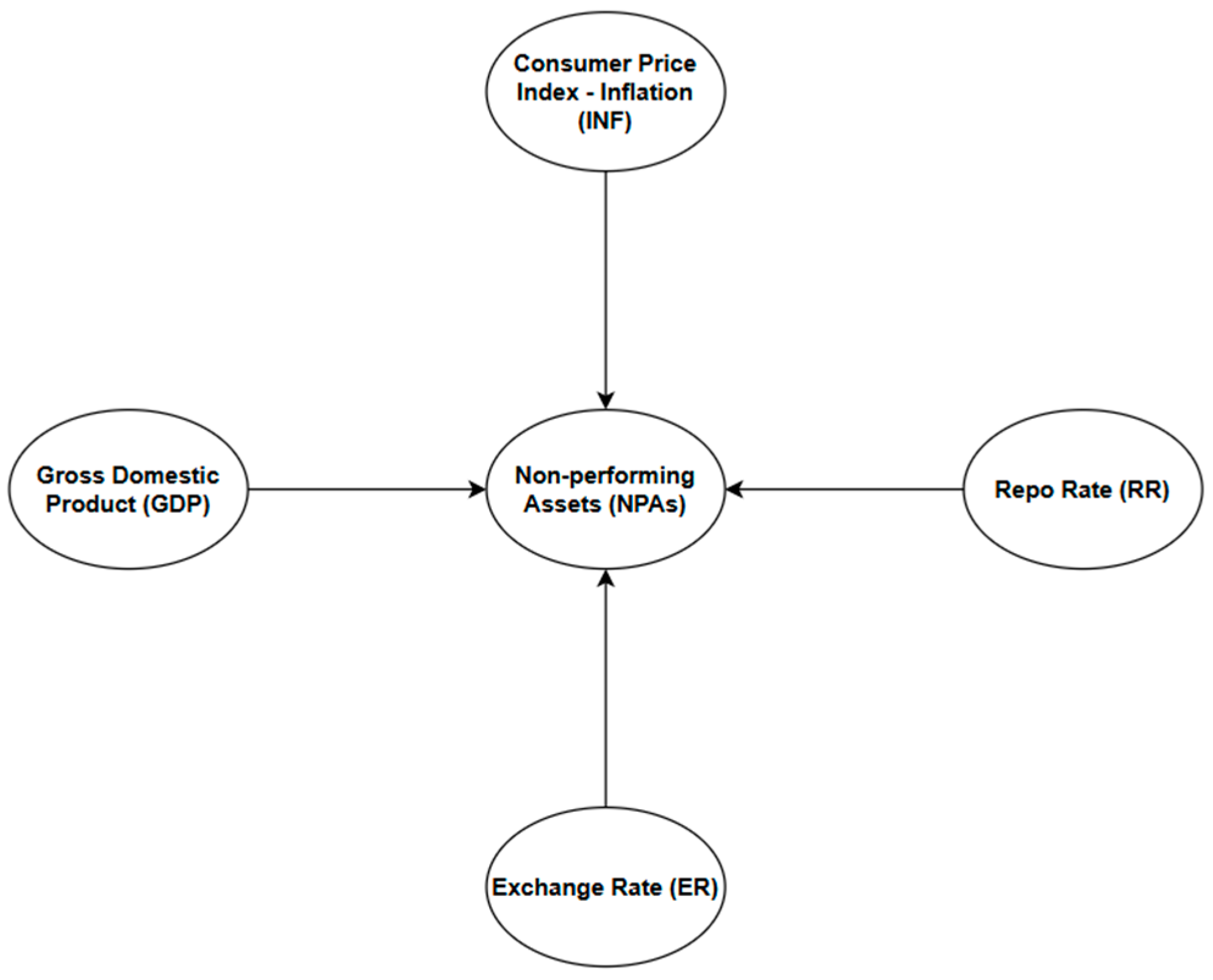
The hypotheses are grounded in established empirical findings yet extend the inquiry into less-explored dimensions of macroeconomic–banking interactions (see Figure 1).

3. Research Methodology

3.1. Data Description and Sources

The resaerch examines the macroeconomic factors influencing non-performing assets (NPAs) in the Indian banking industry using an annual dataset of almost two decades, from April 2003 to March 2022 (see Table 1). The data on gross NPAs was obtained from the Prowess Database, which is a trustworthy source of financial information of companies and the banking industry in India. The macroeconomic variables were obtained from international sources to make them trustworthy and comparable. The annual real Gross Domestic Product (GDP), measured at constant prices, was obtained from the World Bank Group, which represents the overall performance of the economy, and this has a significant impact on the loan repayment capacity. The monetary policy conditions were measured by the annual average repo rate, which was obtained from the International Financial Statistics (IFS), and this is the benchmark rate at which the central bank lends money to commercial banks. The exchange rate data, also sourced from the IFS, includes the average annual exchange rate of the Indian rupee against major currencies, which is the measure of the external sector that may influence the repayment behavior, particularly of the foreign currency exposed accounts. In addition, the monthly Consumer Price Index (CPI) inflation rate was sourced from the IFS but was later transformed into annual averages to ensure consistency with the frequency of other variables. The annual inflation rate was derived by calculating the average of the monthly CPI inflation rates for a financial year using a standard aggregation formula. Overall, the sources of the data enable the study to combine both domestic and external macroeconomic variables, offering a rich and multi-dimensional perspective on the determinants of NPAs in the Indian banking industry.

Trends and Patterns in Non-Performing Assets

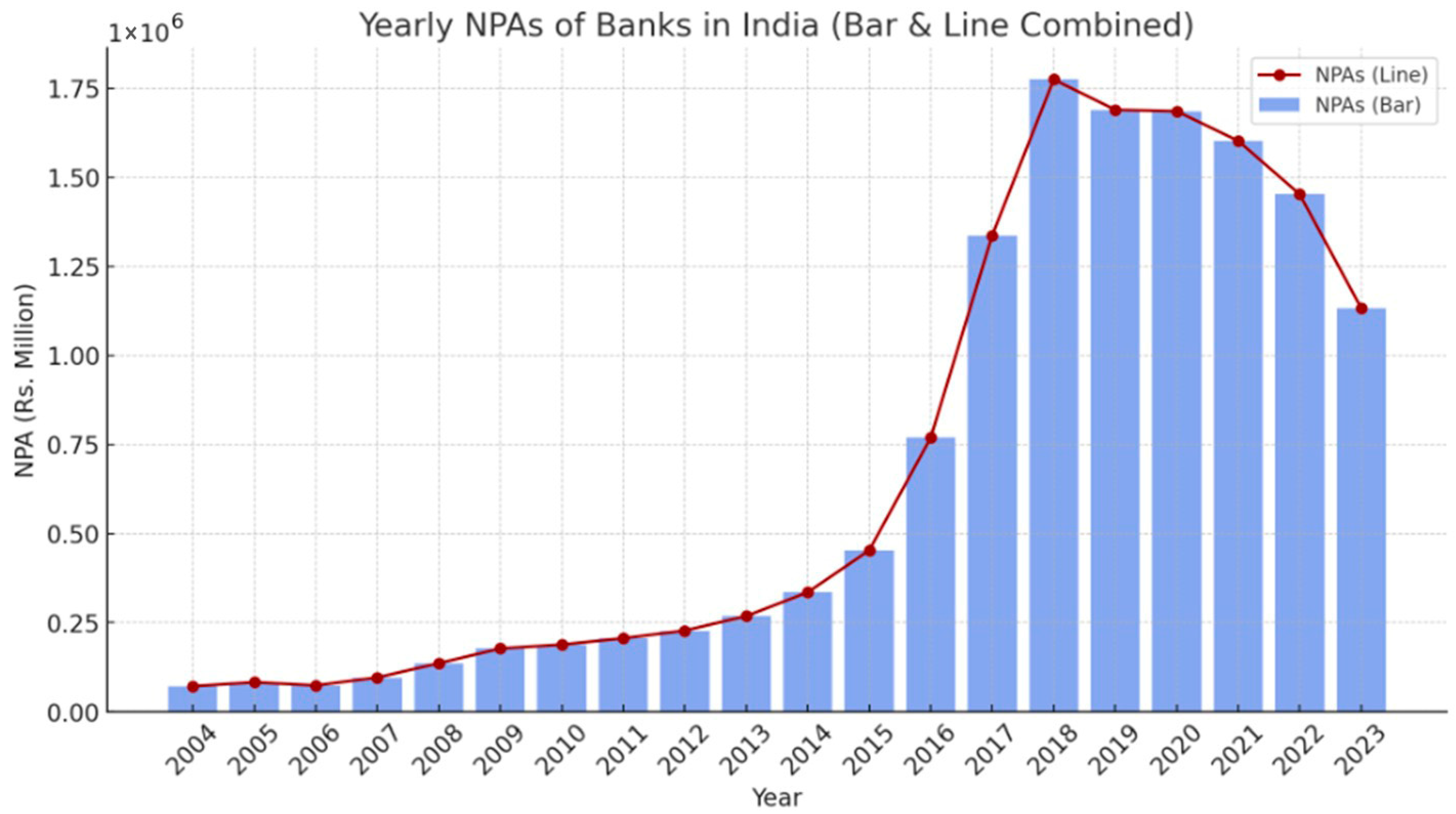
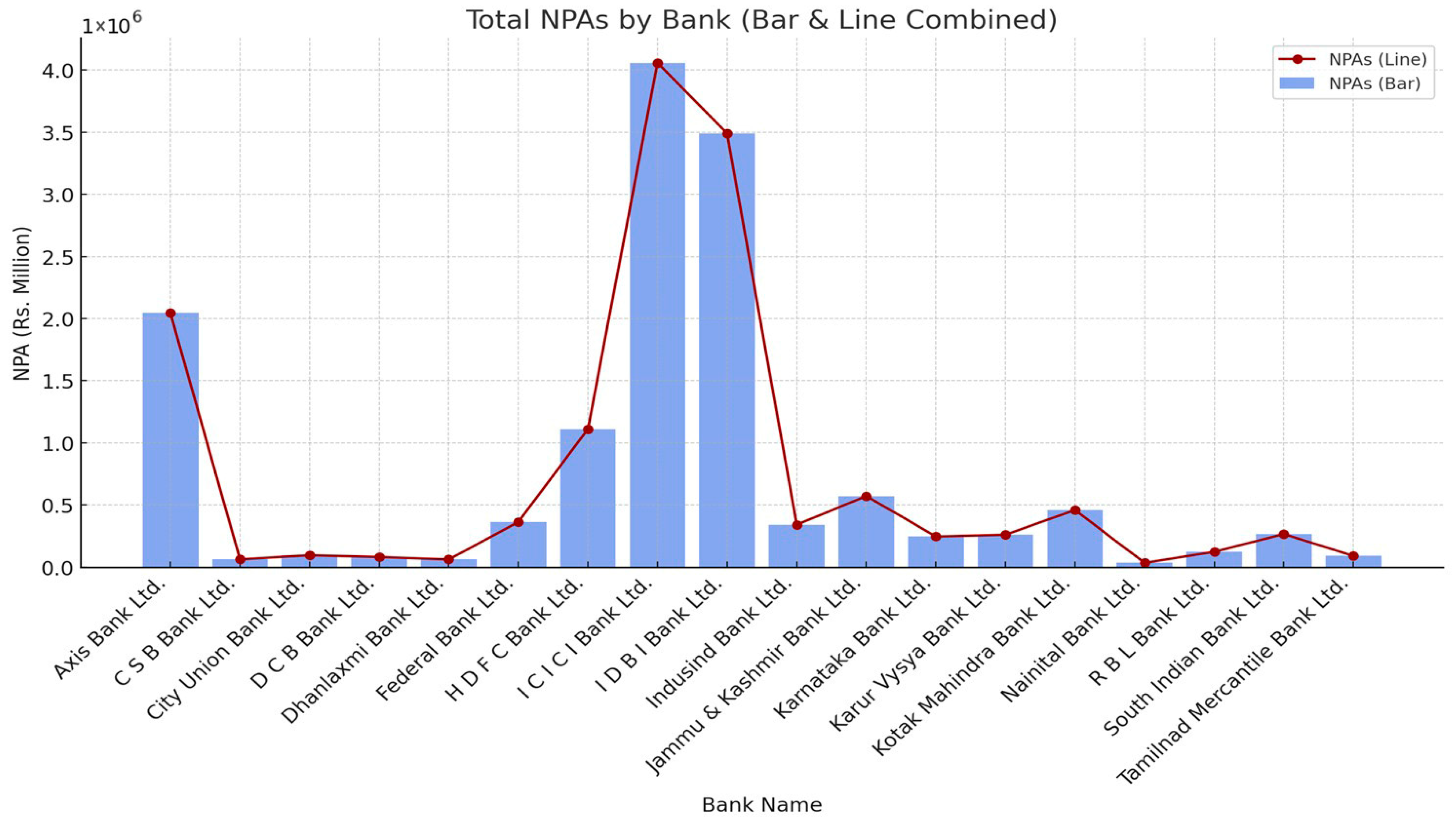
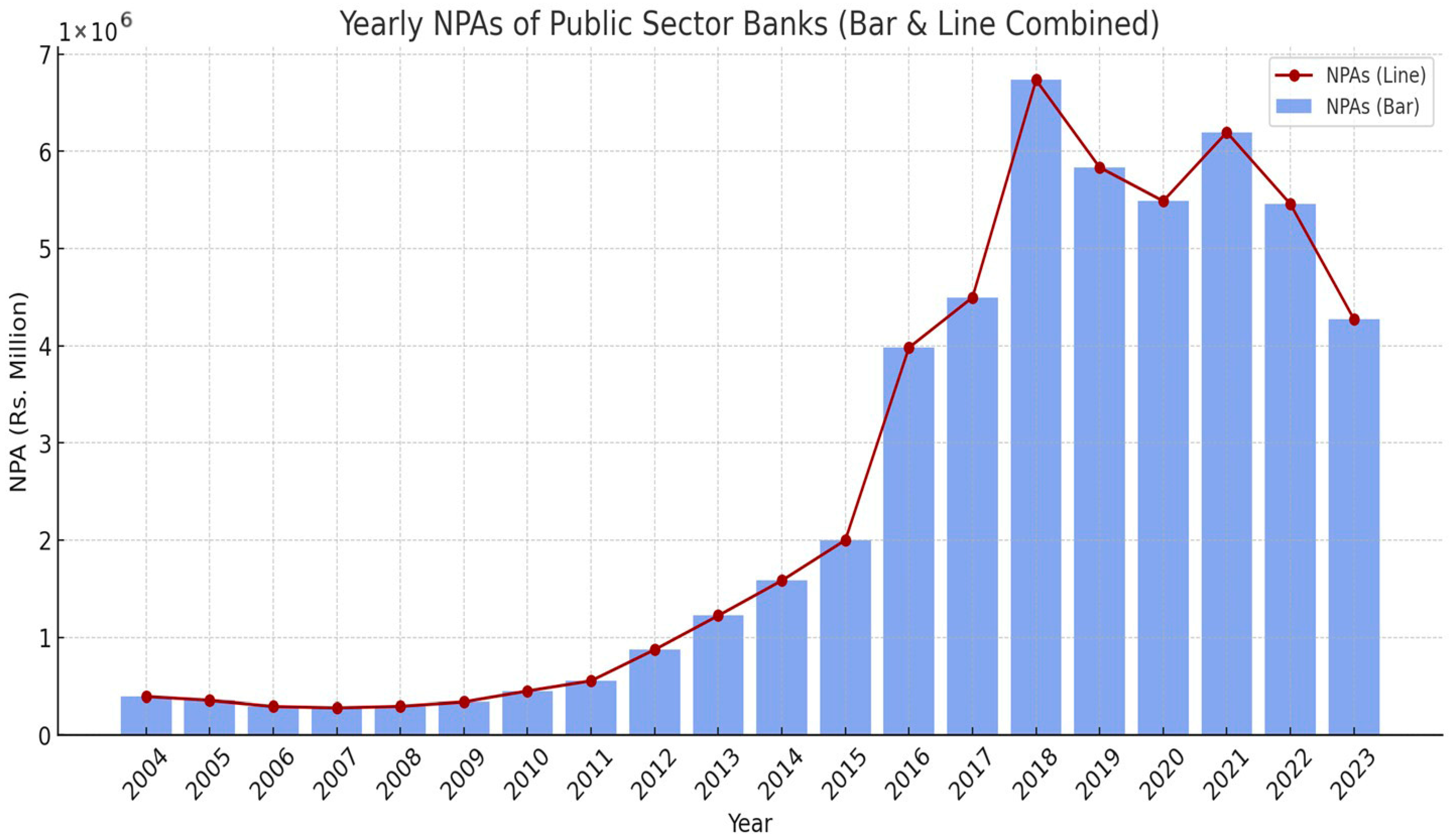
The graphical evidence presented above indicates the significant variation in non-performing assets in the Indian banking sector. The annual variation of NPA indicates a stable phase from 2004 to 2011, and then a sudden increase from 2012 to 2017–2018, which is in line with the stress experienced by the Indian corporate sector. However, from 2019, a gradual decrease is observed, which indicates better recovery channels, increased provisioning, and government measures like the Insolvency and Bankruptcy Code (as depicted in Figure A1 and Figure A3 of Appendix A).
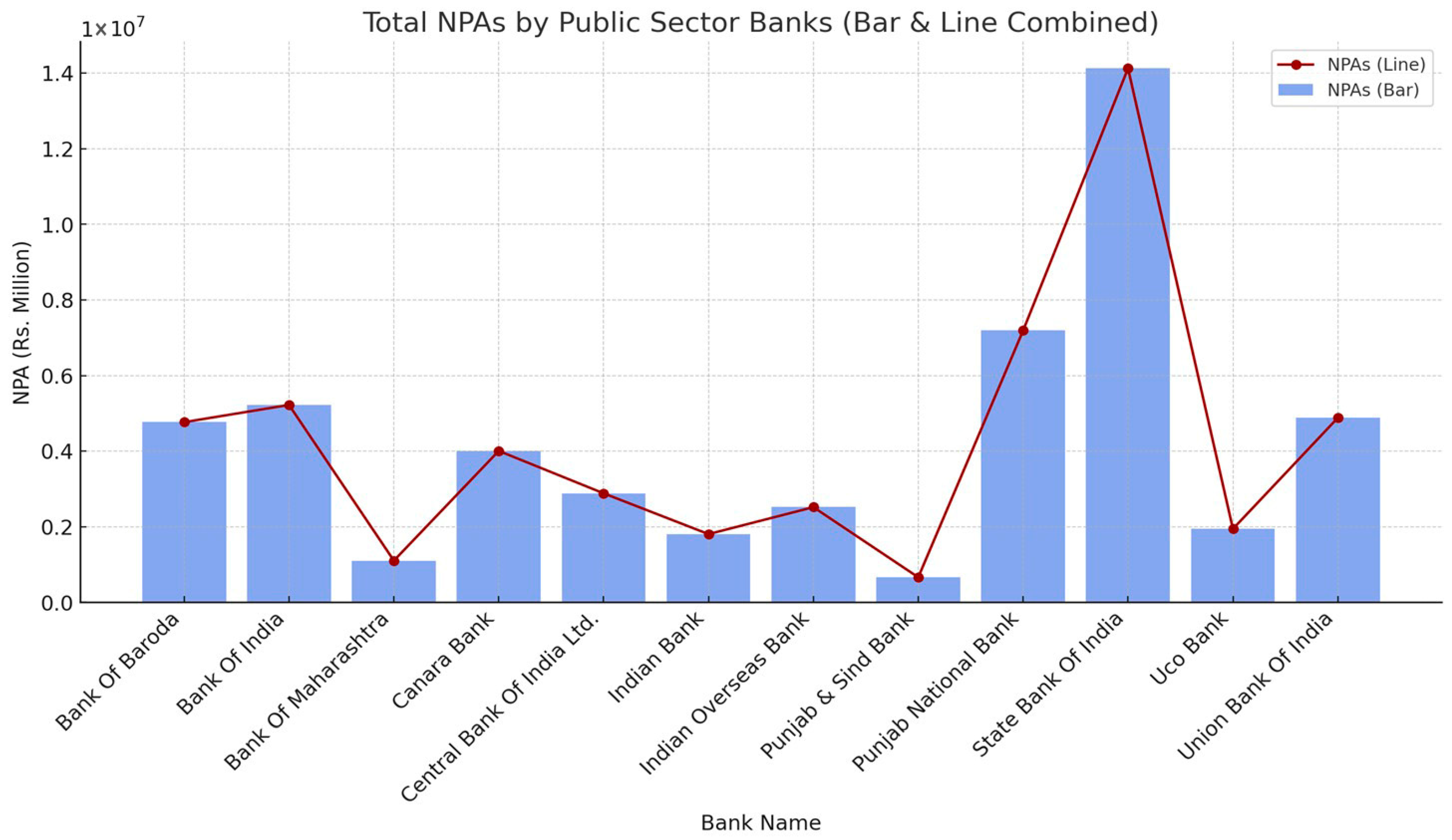
Analysis of the dispersal of banks indicates a certain degree of diversity, where a few banks, especially large public sector banks such as State Bank of India, Punjab National Bank, and Bank of Baroda, account for a disproportionately large share of the total NPAs, thus establishing sectoral concentration of asset quality stress. On the other hand, most private sector banks indicate a substantially lower level of NPAs, with only sporadic instances of sharp increases in banks such as ICICI Bank or Axis Bank. When the public sector banks are taken together, the graph indicates a sharper rise in NPAs than the overall banking system, thus establishing the dominant role of PSBs in the NPA problem in India. The bank-level comparison in PSBs further accentuates this trend, where a large degree of variation is identified based on credit portfolios, governance, and exposure to infrastructure and large corporate loans (see Figure A2 and Figure A4 of Appendix A). Taken together, these graphical interpretations identify that the NPA issue in India has been time-sensitive, peaking in the mid-2010s, and institution-sensitive, where the burden of deteriorating asset quality is largely on public sector banks.

3.2. Econometric Analysis Techniques

The raw data was carefully processed to build a structured and analyzable panel dataset. This step was assisted by MS Excel and includes data cleaning, synchronization of time points, verification of consistency in units of measurement, and handling of small missing observations if necessary. Variables were arranged in a standardized format to ensure comparability across banks and over time. To improve statistical properties and ensure econometric analysis, appropriate transformations were applied if necessary. A balanced panel structure that captures both cross-sectional and time-series information is captured in the final dataset.
The empirical model is specified as a panel regression estimated through Robust Least Squares:
NPAit = αi + β1GDPit + β2RRit + β3ERit + β4INFit + ϵit
In this equation, NPAit is the non-performing assets of bank i at time t. The variable αit is the unobservable bank-specific effect, which captures the intrinsic properties of each bank that are time-invariant, such as the quality of bank management. The coefficients β1, β2, β3, and β4 capture the marginal effects of GDP growth rate, repo rate (RR), exchange rate (ER), and CPI inflation (INF), respectively, on NPAs. The beta coefficient captures the change in NPAs that will result as a consequence of a one-unit change in the macroeconomic variable, holding other variables constant. Finally, the εit is the error term that plays the role of idiosyncratic shocks.
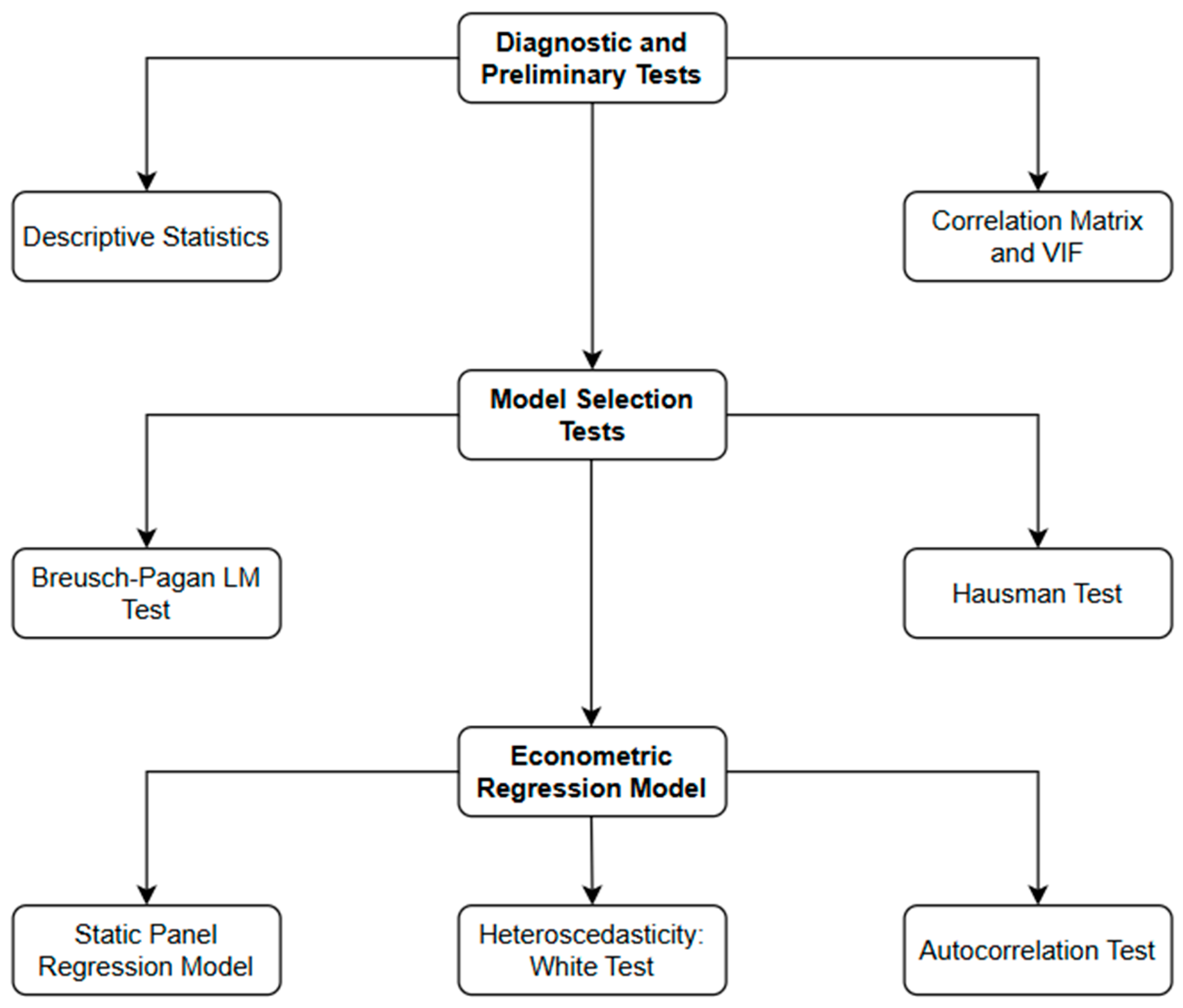
The methodological approach adopted in this study is a structured sequence of diagnostic and econometric steps to ensure the reliability and validity of the empirical findings. The analysis begins with descriptive statistics and preliminary diagnostics to gain insight into the basic features of the data. The measures of central tendency and dispersion, such as mean, standard deviation, minimum, and maximum values, were calculated to gain insight into the data distribution. To gain insight into the possible associations and directional relationships between the variables, a correlation matrix was constructed. Furthermore, the Variance Inflation Factor (VIF) was calculated to diagnose the presence of multicollinearity. The VIF values revealed that none of the explanatory variables suffer from problematic multicollinearity, thus validating their suitability for inclusion in the regression models (see Figure 2).
Given the panel structure of the dataset, the Breusch–Pagan Lagrange Multiplier (LM) test was subsequently employed to determine whether panel estimation techniques were more appropriate than pooled Ordinary Least Squares (OLS). The LM test evaluates whether unobserved cross-sectional heterogeneity across banks is statistically significant. A significant LM statistic provides evidence that pooled OLS would be inadequate and that panel modelling is required to correctly capture bank-specific effects. Following confirmation of panel effects, the Hausman specification test was conducted to decide between the Fixed Effects (FE) and Random Effects (RE) estimators. This test examines whether unobserved individual effects are correlated with the regressors. A significant Hausman statistic indicates such correlation and supports the Fixed Effects model, whereas an insignificant statistic favours the Random Effects approach. Conducting this test ensures that the chosen model is both consistent and efficient, given the characteristics of the data.
Based on the outcomes of the LM and Hausman tests, the appropriate panel regression model was estimated to evaluate the impact of macroeconomic variables on non-performing assets (see Figure 2). The regression framework accounts for both temporal dynamics and cross-sectional heterogeneity among banks. To enhance the robustness of statistical inference, robust standard errors were applied to address potential heteroskedasticity and serial correlation in the error structure. The final estimation thus provides a reliable assessment of the magnitude and direction of macroeconomic influences on the asset quality of Indian banks.

4. Results and Discussion

4.1. Preliminary Tests

The descriptive statistics show that there is a fairly stable macroeconomic environment, with a narrow dispersion of inflation and exchange rate, while NPAs and interest rates have a wider dispersion, indicating times of financial stress and monetary contraction. The GDP is persistently negative, indicating a recessionary dominated era or a transformation-based measure that limits its explanatory power (see Table 2). The correlation analysis reveals that the exchange rate is the most significant macroeconomic variable influencing NPAs, which is positively correlated (r = 0.525), indicating that a depreciation of the currency has a substantial impact on credit risk, which could be attributed to the rise in import costs. The interest rate is moderately negatively correlated with NPAs (r = −0.404), which is counterintuitive and could be attributed to policy endogeneity, where monetary policy tightening follows an improvement in asset quality or a slowdown in credit growth. Inflation shows a weak negative correlation with NPAs (r = −0.255), as expected from the theoretical explanation that inflation may reduce the effective cost of borrowing. Correlations between inter-independent variables are below the critical multicollinearity level (|r| < 0.70), with the exception of the strong negative correlation between the exchange rate and interest rates (r = −0.690), indicating joint monetary policies against exchange rate pressures. However, all VIF values remain comfortably below 3, confirming the absence of multicollinearity concerns (see Table 3). Overall, the statistical patterns suggest that external-sector dynamics, rather than domestic real-sector performance, exert the strongest influence on banking system asset quality, and the dataset is structurally robust for regression-based inference.

4.2. Model Selection Tests

The Breusch-Pagan Lagrange Multiplier (LM) test overwhelmingly confirms the significance of cross-sectional random effects, as evident from the remarkably large test statistic (4289.772) and its highly significant p-value (0.000), which is well below the usual 1%, 5%, and 10% significance levels (see Table A2 of Appendix A). This result leads to the rejection of the null hypothesis of “no random effects” in the cross-section dimension, implying that unobserved heterogeneity across entities (such as firms, banks, or countries) is substantial and systematically influences the dependent variable. On the other hand, the test for time-specific random effects, LM, provides a very small test statistic (0.057) and an insignificant p-value (0.812), indicating the absence of time-specific random effects, and that the contribution of time shocks to unobserved heterogeneity is insignificant. The joint LM test (Both = 4289.828, p = 0.000) confirms that the panel data model captures statistically significant cross-sectional but not period variation. This pattern indicates that most of the unobserved variance originates from differences across units rather than across time.
The Hausman test further helps in understanding the choice of the model. With the chi-square statistic of 0.000, degrees of freedom = 4, and the p-value of 1.000 (referring to Table A2 of Appendix A), the value is significantly above any standard cut-off point (0.10, 0.05, or 0.01), and hence the random effects estimator is not significantly different from the fixed effects estimator. Consequently, the random-effects model is both efficient and consistent for this dataset. A p-value of 1.000 is an extreme but theoretically possible outcome suggests that the estimated covariance structure between regressors and unobserved heterogeneity is effectively zero. This implies that the regressors in your model exhibit no detectable correlation with the unobserved individual effects, reinforcing the theoretical appropriateness of the random-effects specification.

4.3. Econometric Regression Model

The outcome of the Robust Least Squares estimation shows that there is a stable and consistent model, with inflation, interest rate, and exchange rate identified as the main drivers of non-performing assets (NPAs) in the baseline and heteroscedasticity-corrected models. Inflation and the interest rate carry negative and statistically significant coefficients, suggesting that higher inflation and tighter monetary policy coincide with reductions in NPAs. This can be theoretically justified by the fact that inflation reduces the real debt burden, while higher interest rates often occur during phases of stricter lending standards or post-crisis credit discipline. In contrast, the exchange rate has a large and highly significant positive coefficient, suggesting that a depreciation of the currency has a substantial positive effect on NPAs, which is likely driven by the deterioration of balance-sheet positions of firms with foreign currency liabilities or import dependencies. GDP, however, remains statistically insignificant across all models, highlighting that real economic activity does not meaningfully influence asset quality within the sample, possibly because the dataset is recession-dominated or because structural banking vulnerabilities overshadow macro-output fluctuations (see Table 4).
The magnitude, sign, and significance of the coefficients remain unchanged when the White heteroscedasticity correction is applied, indicating that heteroscedasticity is not a significant issue in the data. This robustness enhances the results’ validity and implies that the presence of non-constant error variance is not the cause of the macroeconomic factors’ influence. The explanatory power of the baseline and White-corrected models remains high, suggesting that approximately three-quarters of the variation in NPAs is captured by the included macroeconomic variables. The large F-statistic also verifies joint significance, while the small Durbin-Watson statistic indicates strong autocorrelation in the residuals (see Table 4), which shows that NPAs are serially correlated and change gradually over time rather than reacting to economic conditions instantly.
The autocorrelation-adjusted model, which introduces lagged NPA as an additional explanatory variable, fundamentally reshapes the dynamics. The lagged NPA coefficient is extraordinarily high and statistically significant, indicating that NPAs are strongly persistent and path-dependent. This means that past banking sector conditions exert overwhelming influence on current asset quality, overshadowing the impact of contemporaneous macroeconomic factors. Indeed, once the lagged NPA is included, all macroeconomic variables lose statistical significance, demonstrating that short-run macroeconomic shocks have minimal incremental effect compared to the inertia embedded within the banking system. This model also exhibits exceptional explanatory power, implying that nearly all variation in NPAs can be explained by its own historical values. The Durbin–Watson statistic improves substantially, indicating that the inclusion of lagged NPA mitigates (though does not completely eliminate) autocorrelation (see Table 4).
Taken together, the results reveal a banking system where NPAs are highly persistent and primarily driven by their own historical trajectory rather than by contemporaneous macroeconomic shifts. Currency depreciation remains an important macroeconomic driver only in the absence of autocorrelation controls, suggesting its impact is more long-run than immediate. Inflation and interest rate effects appear stabilizing, but their influence is overshadowed when past NPAs are accounted for. The insignificance of GDP across all specifications reinforces the notion that structural banking characteristics dominate the determination of asset quality. Overall, the findings provide a coherent picture: NPAs are deeply entrenched, evolve slowly, and are shaped far more by institutional and balance-sheet dynamics than by short-term economic cycles.

4.4. Discussion

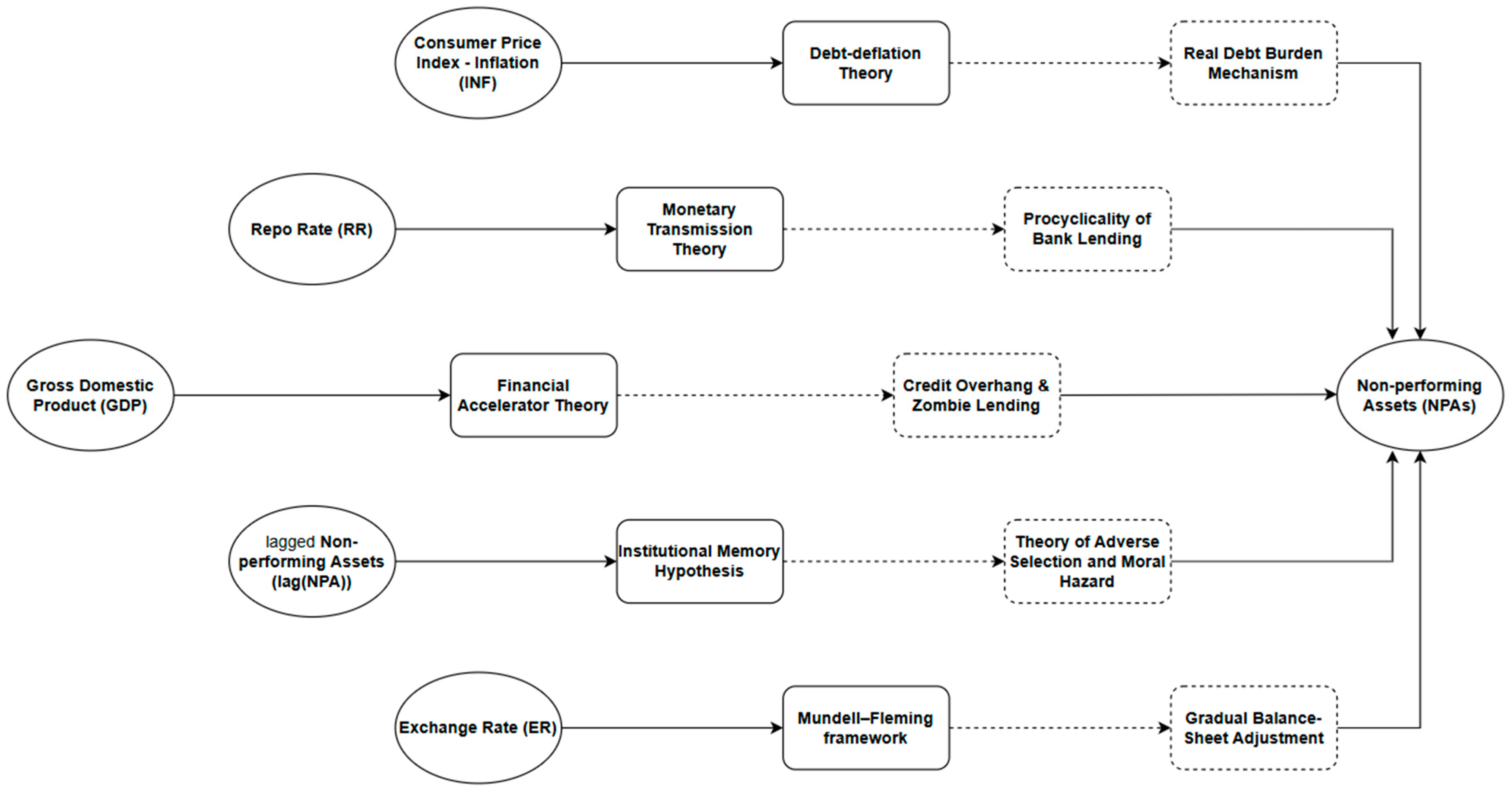
The results of this study provide conclusive proof that the path of non-performing assets (NPAs) in the Indian banking sector is driven by deep-seated structural forces that significantly overwhelm the impact of current macroeconomic trends. This is consistent with the institutional memory theory postulated by Berger and Udell (2004), which asserts that banks tend to build up risk over time because of lending behavior (Anigbo, 2022), governance trends, and past credit choices (see Figure 3). Under this framework, the NPAs in India are not only a function of the annual economic cycle but also a function of past lending trends over time, as reflected in the extremely high degree of persistence exhibited by the lagged NPA coefficient. The result that GDP has a weak impact on NPAs in all specifications is consistent with the notion of the financial accelerator theory (Bernanke et al., 1999), which asserts that in an economy with structural financial frictions, the change in output does not have a proportional and immediate impact on improving the credit repayment behavior (see Figure 3). The result that the coefficient of GDP is always insignificant implies that economic growth in the short run has little impact on improving credit risk that has been deeply ingrained in the economy, especially when the balance sheets of borrowers have deteriorated (Adeosun & Shittu, 2022). This is consistent with the literature on credit overhangs and zombie lending, where banks continue to lend to borrowers with poor credit quality, thereby reducing the transmission of GDP growth to improvements in asset quality (Chakrabarti & Kaur, 2024).
The important role of exchange rate changes in the baseline models is consistent with the balance sheet channel of external vulnerability (see Figure 3), which captures how a depreciation of the currency reduces borrower net worth by increasing the domestic currency value of foreign-denominated liabilities (Pérez Caldentey, 2024). This channel, based on the Mundell-Fleming model and balance sheet effect in emerging markets, helps to explain why the exchange rate has a large positive coefficient (Frankel, 2005), since a depreciation increases the debt burden of firms that depend on imported inputs or external borrowing, thus increasing the probability of default and non-performing assets. However, the fact that the loss of significance that existed previously when lagged NPAs are included suggests that exchange rate effects are more medium-term in nature rather than the instantaneous type, which is consistent with the existing literature on balance sheet effects in emerging markets (Glen, 1992). The negative relationship between inflation and NPAs in the baseline model can be explained by the debt deflation theory (Jonsson & Reslow, 2015) and the real debt burden channel (see Figure 3). A moderate level of inflation will help to reduce the burden of existing debt, making it easier to repay. This is in line with theoretical arguments that a moderate level of inflation can act as a stabilizer by reducing the burden of debt repayment (Munir et al., 2025). However, the relationship does not exist once persistence is accounted for, indicating that the inflation channel is at the margin and is driven by deep structural factors, once again emphasizing the dominance of historical credit dynamics.
Similarly, the negative relationship between repo rates and NPAs in the baseline model reflects the credit discipline channel of monetary policy. According to the monetary transmission theory, higher policy rates often coincide with periods of stricter credit evaluation and cautious lending, which can improve the average quality of loans issued and reduce NPAs (Acharya, 2020). This aligns with the procyclicality of bank lending (see Figure 3), where banks tighten standards during periods of perceived risk, leading to improved asset quality despite higher borrowing costs. The fact that repo rate effects lose significance under autocorrelation control suggests that monetary policy influences are short-lived compared to the long-term inertia embedded in bank balance sheets. The dominance of the lagged NPA term also supports the theory of adverse selection and moral hazard in banking (see Figure 3). High NPA levels reduce bank profitability, weaken capital positions, and induce risk-averse lending behaviour. This dynamic can lead to repeated cycles of lending to safer but less productive borrowers, thereby failing to resolve legacy portfolio risks. Over time, such behaviour creates a persistence trap where the past condition of bank assets overwhelmingly dictates future outcomes, exactly reflected in the near-unity coefficient on lagged NPAs.
Overall, the results present a coherent theoretical narrative: while macroeconomic variables influence NPA dynamics through well-established channels such as the financial accelerator, balance-sheet effects, and monetary transmission, these effects are overshadowed by internal and historical factors embedded within the banking system. The extremely strong persistence of NPAs demonstrates that asset-quality deterioration reflects institutional memory, governance weaknesses, slow resolution mechanisms, and risk accumulation over time rather than immediate responses to macroeconomic fluctuations. Thus, the study provides empirical confirmation of theoretical predictions from credit cycle theory, financial fragility frameworks, and emerging market balance-sheet models. It highlights that India’s NPA challenge is overwhelmingly structural and path-dependent, requiring institutional reforms, improved credit governance, and early-warning mechanisms rather than reliance on cyclical macroeconomic improvements. In doing so, the findings extend existing theory by demonstrating that in emerging market banking systems, macro variables matter but structural inertia matters far more.

5. Conclusions and Recommendations

This study examines the influence of conventional macroeconomic variables on non-performing assets (NPAs) in the Indian banking system over a two-decade period using Robust Least Squares and dynamic modelling techniques. The empirical results show that exchange rate movements, inflation, and monetary policy initially exhibit a measurable impact on NPAs, while GDP does not demonstrate a significant effect. However, after conducting stationarity tests and incorporating the appropriate dynamic specification, the findings reveal that the significance of these macroeconomic variables diminishes once the persistence of NPAs is accounted for. The lagged NPA variable remains highly significant, indicating strong path dependence in asset quality. This suggests that while macroeconomic factors contribute to short-term variations, they are not the primary drivers of NPAs in the presence of persistent banking sector dynamics.
Accordingly, the study concludes that NPAs in India are predominantly influenced by structural and institutional factors, such as legacy asset quality and internal banking practices, rather than solely by contemporaneous macroeconomic conditions. While theoretical perspectives like institutional memory and balance-sheet effects provide useful context, they are not directly tested in this analysis. Overall, the results offer a clear and consistent conclusion that distinguishes between the limited role of conventional macroeconomic determinants and the dominant influence of structural persistence in shaping NPA behaviour.

5.1. Theoretical Implications

This research work has made several theoretical contributions, particularly in the area of credit risk, financial cycles, and the role of emerging markets in banking. First, the observation that the dominant persistence is common in the data offers empirical support for the institutional memory hypothesis, as it shows that lending activity has a long-run effect. This offers support for the view that credit risk is more than cyclical and is instead driven by institutional memory, behavioral, and portfolio considerations. Second, the observation that GDP is a weak factor offers support for the financial accelerator theory’s predictions that countries with strong financial frictions have a weak transmission channel from output growth to credit quality upgrades. Third, the fact that the exchange rate effect is large in the static models offers evidence for balance sheet channel and Mundell-Fleming models, which show that the impact of external risks on the creditworthiness of borrowers in emerging markets is large. Finally, the result that macroeconomic significance is lost in the dynamic model suggests that credit cycle models and moral hazard need to be rebalanced for emerging markets, where structural inertia and resolution systems are more important. Collectively, this study enriches theoretical understanding by demonstrating that asset quality in emerging markets operates under a hybrid regime dominated by both balance-sheet effects and institutional inertia.

5.2. Practical Implications

The practical implications of the findings are refined to emphasize actionable measures within the direct control of banking institutions rather than broad macroeconomic management. The strong persistence of NPAs highlights the need for banks to focus on structural improvements, particularly strengthening credit appraisal systems, enhancing early warning mechanisms, and improving internal risk monitoring frameworks. These measures are especially critical for public sector banks, where legacy asset quality issues remain more pronounced. Given the observed impact of exchange rate movements, banks should actively manage currency-related risks by adopting robust hedging strategies and closely monitoring borrowers with foreign currency exposure. This can help mitigate vulnerabilities arising from external shocks. Further, the results suggest the importance of maintaining prudent lending practices, particularly during periods of favorable economic conditions. Banks should avoid excessive risk-taking in low-interest environments by reinforcing credit discipline and ensuring rigorous borrower evaluation. Finally, strengthening internal recovery and resolution processes is essential. Banks should improve coordination with existing resolution frameworks, such as the Insolvency and Bankruptcy Code, to accelerate the resolution of stressed assets and reduce the persistence of NPAs. Overall, the implications underscore the need for institution-level interventions that directly address the key drivers identified in the study.

5.3. Limitations and Future Research Directions

The findings of this study are highly relevant; however, they are subject to certain limitations that also open avenues for future research. First, the analysis relies primarily on macro-level variables and does not incorporate borrower-level, industry-level, or bank-specific governance factors, which may also influence NPA dynamics. In particular, differences across bank types such as public and private sector banks are not explicitly modeled, although prior evidence suggests that asset quality and risk management practices may vary significantly across these groups.
Second, the use of annual data may mask short-term fluctuations and crisis-driven shocks. The study does not explicitly account for structural breaks arising from major events such as the global financial crisis, the COVID-19 pandemic, or geopolitical disruptions, which may have introduced regime shifts in NPA behavior. Future research could employ higher-frequency data and formal structural break tests to better capture these dynamics.
Third, the analysis does not incorporate global macroeconomic factors and cross-border spillovers, which may be increasingly relevant in a globally integrated financial system. Comparative studies across emerging economies would help assess the generalizability of the persistence observed in the Indian context.
Finally, extending the dataset beyond 2022 would provide further insights into post-pandemic adjustments and structural changes in the banking sector. Overall, future research integrating bank-level heterogeneity, structural break analysis, and broader macro-financial linkages would offer a more comprehensive understanding of NPA dynamics.

Author Contributions

Conceptualization, F.u.R. and M.A.A.; methodology, F.u.R.; software, F.u.R. and M.A.A.; validation, B.A., A.S.A. and E.A.; formal analysis, F.u.R.; investigation, F.u.R.; resources, M.A.A.; data curation, M.A.A.; writing—original draft preparation, M.A.A.; writing—review and editing, M.A.A.; visualization, M.A.A.; supervision, A.S.A. and A.H.A.S.; project administration, A.S.A.; funding acquisition, A.S.A. All authors have read and agreed to the published version of the manuscript.

Funding

This work was supported by the Deanship of Scientific Research, Vice Presidency for Graduate Studies and Scientific Research, King Faisal University, Saudi Arabia [KFU261694].

Data Availability Statement

The data are available from the author upon request.

Conflicts of Interest

The author declares no conflicts of interest.

Appendix A

Figure A1. Yearly NPAs of Private sector banks in India (Authors’ Compilation).
Economies 14 00123 g0a1
Figure A2. Total NPAs of Private sector banks in India (Authors’ Compilation).
Economies 14 00123 g0a2
Figure A3. Yearly NPAs of Public sector banks in India (Authors’ Compilation).
Economies 14 00123 g0a3
Figure A4. Total NPAs of Public sector banks in India (Authors’ Compilation).
Economies 14 00123 g0a4
Table A1. List of public and private sector banks considered for the study.
Sr. No.Public Sector BankSr. No.Private Sector Bank
1Bank of Baroda1Axis Bank Ltd.
2Bank of India2C S B Bank Ltd.
3Bank of Maharashtra3City Union Bank Ltd.
4Canara Bank4D C B Bank Ltd.
5Central Bank of India Ltd.5Dhan Laxmi Bank Ltd.
6Indian Bank6Federal Bank Ltd.
7Indian Overseas Bank7H D F C Bank Ltd.
8Punjab & Sind Bank8I C I C I Bank Ltd.
9Punjab National Bank9I D B I Bank Ltd.
10State Bank of India10IndusInd Bank Ltd.
11Uco Bank11Jammu & Kashmir Bank Ltd.
12Union Bank of India12Karnataka Bank Ltd.
13Karur Vysya Bank Ltd.
14Kotak Mahindra Bank Ltd.
15Nainital Bank Ltd.
16R B L Bank Ltd.
17South Indian Bank Ltd.
18Tamilnad Mercantile Bank Ltd.
(Source: Authors’ Compilation).
Table A2. Results of LM and Hausman Test.
LM Test
Null (no rand. effect)Cross-sectionPeriodBoth
Breusch-Pagan4289.7720.0574289.828
(0.000)(0.812)(0.000)
Hausman Test
Test SummaryChi-Sq. StatisticChi-Sq. d.f.Prob.
Cross-section random0.0004.0001.000
(Source: E-views Output).

References

  1. Acharya, V. V. (2020). Improving monetary transmission through the banking channel: The case for external benchmarks in bank loans. Vikalpa, 45(1), 32–41. [Google Scholar] [CrossRef]
  2. Adeosun, O. T., & Shittu, A. I. (2022). Small–medium enterprise formation and Nigerian economic growth. Review of Economics and Political Science, 7(4), 286–301. [Google Scholar] [CrossRef]
  3. Adu, D. A. (2024). How do board and ownership characteristics affect bank risk-taking? New evidence from sub-Saharan Africa. Journal of Banking Regulation, 25(3), 209–233. [Google Scholar] [CrossRef]
  4. Agha, E., Oluyombo, O., & Aworinde, O. (2023). Bank governance, asset quality, and risk. Do macro-prudential policy and macroeconomic factors matter? Evidence from Nigeria’s banking sector. International Journal of Professional Business Review, 8(8), 47. [Google Scholar] [CrossRef]
  5. Aleena, J., Geetha, E., & Kishore, L. (2025). Impact of macroeconomic factors on bank stock returns: Empirical evidence from India. Investment Management & Financial Innovations, 22(1), 416. [Google Scholar] [CrossRef]
  6. Al Maruf, A., Kowsar, M., Mohiuddin, M., & Mohna, H. A. (2024). Behavioral factors in loan default prediction a literature review on psychological and socioeconomic risk indicators. American Journal of Advanced Technology and Engineering Solutions, 4(1), 43–70. [Google Scholar] [CrossRef]
  7. Angela, I. T. (2025). Macroeconomic and institutional determinants of non-performing loans a conceptual and global review. Available online: https://ssrn.com/abstract=5593250 (accessed on 12 October 2025). [CrossRef]
  8. Anigbo, A. J. (2022). Regulatory framework of commercial banks and its operational efficiency in lending to small medium (SMEs) in Nigeria. University of South Wales. [Google Scholar]
  9. Asiamah, S., Appiah, K. O., & Badu, E. A. (2024). Do board characteristics moderate capital adequacy regulation and bank risk-taking nexus in Sub-Saharan Africa? Asian Journal of Economics and Banking, 8(1), 100–120. [Google Scholar] [CrossRef]
  10. Athari, S. A., Irani, F., & Hadood, A. A. (2023). Country risk factors and banking sector stability: Do countries’ income and risk-level matter? Evidence from global study. Heliyon, 9(10), e20398. [Google Scholar] [CrossRef]
  11. Berger, A. N., & Udell, G. F. (2004). The institutional memory hypothesis and the procyclicality of bank lending behavior. Journal of Financial Intermediation, 13, 458–495. [Google Scholar] [CrossRef]
  12. Bernanke, B. S., Gertler, M., & Gilchrist, S. (1999). The financial accelerator in a quantitative business cycle framework. Handbook of Macroeconomics, 1, 1341–1393. [Google Scholar] [CrossRef]
  13. Brunnermeier, M., Correia, S., Luck, S., Verner, E., & Zimmermann, T. (2025). The debt-inflation channel of the German (Hyper) inflation. American Economic Review, 115(7), 2111–2150. [Google Scholar] [CrossRef]
  14. Candra, K. (2025). The impact of exchange rate fluctuations on Indonesia’s export-import performance. Available online: https://ssrn.com/abstract=5258411 (accessed on 17 May 2025). [CrossRef]
  15. Chakrabarti, P., & Kaur, J. (2024). Zombie-lending during the pandemic in India: Did the central bank reduce credit misallocation concerns of forbearance? Journal of Policy Modeling, 46(1), 153–170. [Google Scholar] [CrossRef]
  16. Chattopadhyay, S., & Bose, S. (2023). Bank credit and macroeconomic performances: A TOPSIS-based comparative annual ranking of states in India. In Inclusive developments through socio-economic indicators: New theoretical and empirical insights. Emerald Publishing Limited. [Google Scholar] [CrossRef]
  17. Chen, B., Yang, J., & Zhang, C. (2021). Corporate investment and financing with uncertain growth opportunities. International Review of Finance, 21(3), 821–842. [Google Scholar] [CrossRef]
  18. Cuppers, M. (2025). The effects of inflation on European peer-to-peer loan performance: The moderating role of the debt-to-income ratio [Master’s thesis, Tilburg University]. [Google Scholar]
  19. Das, S. K. (2023). NPAs in India’s banks: Trends and determinants. Journal of Money and Business, 3(2), 147–158. [Google Scholar] [CrossRef]
  20. Dell’ariccia, G., Igan, D., Laeven, L., & Tong, H. (2016). Credit booms and macrofinancial stability. Economic Policy, 31(86), 299–355. [Google Scholar] [CrossRef]
  21. DeLong, J. B., Summers, L. H., Feldstein, M., & Ramey, V. A. (2012). Fiscal policy in a depressed economy [with comments and discussion]. In Brookings papers on economic activity (pp. 233–297). The Johns Hopkins University. Available online: https://www.jstor.org/stable/23287218 (accessed on 31 March 2026).
  22. Demirkılıç, S. (2021). Balance sheet effects of foreign currency debt and real exchange rate on corporate investment: Evidence from Turkey. Emerging Markets Review, 47, 100796. [Google Scholar] [CrossRef]
  23. Dhananjaya, K. (2024). Corporate debt vulnerability and non-performing assets in India. Global Business Review, 25(2), 444–467. [Google Scholar] [CrossRef]
  24. El Ghorab, N. M. (2025). The impact of currency depreciation on Egyptian exports: A firm-level study. The American University in Cairo. [Google Scholar]
  25. Emonena, O. L. (2025). Financial soundness and banks’ performance: A theoretical review. International Journal of Finance, Accounting and Management Studies, 1(4), 104–121. [Google Scholar]
  26. Fallanca, M. G., Forgione, A. F., & Otranto, E. (2020). Forecasting the macro determinants of bank credit quality: A non-linear perspective. The Journal of Risk Finance, 21(4), 423–443. [Google Scholar] [CrossRef]
  27. Filipović, M. (2024). Impact of inflation on citizens borrowing. Sveučilište u Zagrebu, Sveučilište u Zagrebu Ekonomski fakultet. Available online: https://urn.nsk.hr/urn:nbn:hr:148:805133 (accessed on 31 March 2026).
  28. Frankel, J. A. (2005). Mundell-fleming lecture: Contractionary currency crashes in developing countries. IMF Staff Papers, 52(2), 149–192. [Google Scholar] [CrossRef]
  29. Frésard, L., & Phillips, G. M. (2024). Product markets, competition and corporate finance: A review and directions for future research. In Handbook of corporate finance (pp. 591–646). Edward Elgar Publishing. [Google Scholar] [CrossRef]
  30. Glen, J. D. (1992). Real exchange rates in the short, medium, and long run. Journal of International Economics, 33(1–2), 147–166. [Google Scholar] [CrossRef]
  31. Goyal, A., & Verma, A. (2018). Slowdown in bank credit growth: Aggregate demand or bank non-performing assets? Margin: The Journal of Applied Economic Research, 12(3), 257–275. [Google Scholar] [CrossRef]
  32. Haas, A. (2023). Monetary policy in a tightening cycle. Available online: https://al-haas.github.io/files/Haas_JMP.pdf (accessed on 31 March 2026).
  33. Ibrahim Amoo, B. (2024). Examines debt servicing on economic growth in Nigeria. Available online: https://ssrn.com/abstract=5057198 (accessed on 31 March 2026).
  34. Iversen, R. R., Napolitano, L., & Furstenberg, F. F. (2011). Middle-income families in the economic downturn: Challenges and management strategies over time. Longitudinal and Life Course Studies, 2(3), 286–300. [Google Scholar] [CrossRef]
  35. Jaiswal, A., & Parhi, A. (2025). Managing non-performing assets in India: Integrating governance reforms, predictive analytics, and artificial intelligence for sustainable banking. Future of Research in Management and AI, 4, 56. [Google Scholar] [CrossRef]
  36. Jobst, A., & Lin, H. (2016). Negative interest rate policy (NIRP): Implications for monetary transmission and bank profitability in the euro area. International Monetary Fund. [Google Scholar]
  37. Jonsson, M., & Reslow, A. (2015). Interest and inflation rates through the lens of the theory of Irving Fisher. In Sveriges riksbank economic review (p. 5). Sveriges Riksbank. [Google Scholar]
  38. Kapasi, J., & Khan, S. G. (2025). A study on non-performing assets in banks and its impact on the performance of the banking sector. European Economics Letters, 15(3), 2431. [Google Scholar]
  39. Karikari, N. K., Gyan, K. K., Khan, M. A. H., & Kusi, B. A. (2023). Institutional quality and social cost of intermediation in Africa: Does the level of financial market development matter? International Journal of Finance & Economics, 28(2), 1899–1910. [Google Scholar] [CrossRef]
  40. Keloharju, M., & Niskanen, M. (2001). Why do firms raise foreign currency denominated debt? Evidence from Finland. European Financial Management, 7(4), 481–496. [Google Scholar] [CrossRef]
  41. Lakayil, C., & Shree, M. (2024). Repo rate hike in the post-covid period and its impact on the lending rate of banks in India. Journal of Lifestyle and SDGS Review Учредители: Editora Alumniin, 4(4), e03541. [Google Scholar] [CrossRef]
  42. Lovicu, G. P., Lim, J., Faferko, A., Gao, A., Suthakar, A., & Twohig, D. (2023). Fixed-rate housing loans: Monetary policy transmission and financial stability risks. Available online: https://www.rba.gov.au/publications/bulletin/2023/mar/fixed-rate-housing-loans-monetary-policy-transmission-and-financial-stability-risks.html (accessed on 31 March 2026).
  43. Madani, M. N., Hernawan, M. A., & Haryanti, E. (2025). The role of economic information and asymmetry as moderating variables in credit risk and credit pricing determination. Indonesian Journal Economic Review (IJER), 5(2), 293–302. [Google Scholar] [CrossRef]
  44. Mahesh, R., Bajpe, S., & Kumari, A. (2024, November 21–23). Macroeconomic determinants of bank NPAs: Insights for a sustainable financial system. 2024 3rd Edition of IEEE Delhi Section Flagship Conference (DELCON), New Delhi, India. [Google Scholar] [CrossRef]
  45. Maphosa, M. (2020). Lending booms and bank fragility: The South African experience [Doctoral dissertation, Stellenbosch University]. [Google Scholar]
  46. Marzouki, M. M., & Mahmoud, M. (2025). Financial stability and financial distortions: A saddle path equilibrium between the crowding out effect and the financial accelerator. International Journal of Banking, Finance and Insurance Technologies, 3(1), 1–28. [Google Scholar] [CrossRef]
  47. Matlani, J. (2025). India’s banking sector: A performance assessment and stability outlook. Available online: https://ssrn.com/abstract=5319212 (accessed on 31 March 2026).
  48. Miao, W., Ma, Y., & Huo, Y. (2026). Lender of last resort and financial systemic risks in times of economic stability: Evidence from 55 countries. International Journal of Financial Studies, 14(1), 9. [Google Scholar] [CrossRef]
  49. Mittal, N. (2025). NPA crisis and its resolution focus on management efficiency. Available online: https://www.ies.gov.in/pdfs/Nishchal-Mittal-march25.pdf (accessed on 31 March 2026).
  50. Mose, N., & Thomi, J. (2022). Inflation and saving: A puzzle. Developing Country Studies, 12(6), 61–74. [Google Scholar] [CrossRef]
  51. Munir, N., Mustafa, A., Safdar, S., & Khan, A. (2025). Monetary policy, interest rates and financial stability in a high-inflation environment. Journal of Asian Development Studies, 14(3), 131–141. [Google Scholar] [CrossRef]
  52. Naili, M., & Lahrichi, Y. (2022). The determinants of banks’ credit risk: Review of the literature and future research agenda. International Journal of Finance & Economics, 27(1), 334–360. [Google Scholar] [CrossRef]
  53. Nouraie, E., Raeispour Rajabali, A., Jalaee, S. A., & Zeynalzade, R. (2025). Impact of monetary policies on the exchange-rate pass-through. Environmental Energy and Economic Research, 9(1), eS100. [Google Scholar] [CrossRef]
  54. Nuti, D. M. (2023). Wage indexation. Collected Works of Domenico Mario Nuti, Volume II: Economic Systems, Democracy and Integration, 2, 105. [Google Scholar] [CrossRef]
  55. Nwaguru, W. E., Felix, O. E., & Chidozirim, A. S. (2025). Interest rate deregulation and non-performing loans in Nigeria. Journal of Philosophy, Policy and Strategic Studies, 1(5), 65–79. [Google Scholar]
  56. Ogujiuba, K., & Maponya, L. (2026). The effect of macroprudential indicators on the repo rate: Evidence from South Africa. Cogent Economics & Finance, 14(1), 2616509. [Google Scholar] [CrossRef]
  57. Palani, P. M. (2025). The relationship of international loans to credit wall (worthiness): A review. Spanish Journal of Innovation and Integrity, 38, 1–7. [Google Scholar]
  58. Pérez Caldentey, E. (2024). Analysis of developing countries’ external financial vulnerability. Economic Commission for Latin America and the Caribbean (ECLAC). Available online: https://www.econbiz.de/Record/analysis-of-developing-countries-external-financial-vulnerability-p%C3%A9rez-caldentey-esteban/10015437322?sid=1445558788 (accessed on 31 March 2026).
  59. Prasad, S., Thirumalaisamy, R., Ramasamy, V., Jayaraj, S., Abouraia, M., & Rengasamy, D. (2025). Impact of macroeconomic factors on non-performing assets of Indian scheduled commercial banks. In AI and IoT: Driving business success and sustainability in the digital age: Volume 2 (pp. 1057–1070). Springer. [Google Scholar] [CrossRef]
  60. Salah, A. R. M. (2025). The impact of inflation on purchasing power and living standards. Shorouk Academy—Department of Engineering. [Google Scholar] [CrossRef]
  61. Sardana, V., Singhania, S., & Mohapatra, A. K. (2025). Macroeconomic perspectives in banking: A systematic review and conceptual framework. South Asian Journal of Business and Management Cases, 14(2), 87–105. [Google Scholar] [CrossRef]
  62. Sharma, G., & Kajaria, S. (2024). Behind the balance sheets: The hidden risks of non-performing assets in India. Available online: https://papers.ssrn.com/sol3/papers.cfm?abstract_id=5228870 (accessed on 3 November 2024). [CrossRef]
  63. Singh, K. (2026). Performance and returns volatility of banks in India: Public versus private sector. Journal of Economic and Administrative Sciences, 42(1), 68–87. [Google Scholar] [CrossRef]
  64. Singh, P. (2024). Macro and bank specific factors explaining non-performing assets of commercial banks: A cross-country analysis. International Journal of Indian Culture and Business Management, 31(4), 436–449. [Google Scholar] [CrossRef]
  65. Sinha, J. K. (2024). Unraveling the Enigma of the Indian economic slowdown: Exploring the underlying determinants. Archives of Humanities & Social Sciences Research, 1(2), 1–10. [Google Scholar]
  66. Talha, E. A. (2025). Talha, elwaleed ahmed, monetary policy dilemma in developing economies: Is inflation more sensitive to demand pressures or supply shocks? Available online: https://ssrn.com/abstract=5391623 (accessed on 14 May 2025). [CrossRef]
  67. Tenderere, M., & Mishi, S. (2025). Interest rates and capital flows: An application of the Mundell-Fleming model in emerging markets. Africa’s Public Service Delivery and Performance Review, 13(1), 904. [Google Scholar] [CrossRef]
  68. Tung, F. (2020). Financing failure: Bankruptcy lending, credit market conditions, and the financial crisis. Yale Journal on Regulation, 37, 651. [Google Scholar]
  69. Ullah, W., Zubir, A. S. M., & Ariff, A. M. (2024). Exploring the moderating effect of regulatory quality on the relationship between financial development and economic growth/economic volatility for developed and developing countries. Borsa Istanbul Review, 24(5), 934–944. [Google Scholar] [CrossRef]
  70. Umeaduma, C. M.-G. (2024). Impact of monetary policy on small business lending, interest rates, and employment growth in developing economies. The International Journal of Engineering Technologies and Management Research, 8, 27–41. [Google Scholar]
  71. Van Greuning, H., & Bratanovic, S. B. (2020). Analyzing banking risk: A framework for assessing corporate governance and risk management. World Bank Publications. [Google Scholar] [CrossRef]
  72. Zafar, Q., Wongsurawat, W., & Camino, D. (2019). The determinants of leverage decisions: Evidence from Asian emerging markets. Cogent Economics & Finance. [Google Scholar] [CrossRef]
  73. Zeb, A., Shuhai, N., & Ullah, O. (2024). Inflationary dynamics under fiscal and monetary asymmetries: A nonlinear investigation in Pakistan. SN Business & Economics, 4(12), 149. [Google Scholar] [CrossRef]
Figure 1. Hypothesised Model of the Study (Authors’ Compilation).
Economies 14 00123 g001
Figure 2. Econometric methodology flowchart (Authors’ Compilation).
Economies 14 00123 g002
Figure 3. Theory-based pathways influencing NPA formation (Authors’ Compilation).
Economies 14 00123 g003
Table 1. Variable Description and Data Sources.
DeterminantsVariablesMeasurementSources
Dependent variable
Bank Specific VariablesNon-Performing Assets (NPA)Logarithmic value of Closing balance gross NPAProwess IQ (CMIE)
Independent variable
Macroeconomic IndicatorsConsumer Price Index (CPI)Consumer Price Index, All itemsInternational Financial Statistics (IFS)
Gross Domestic Product (GDP)Constant PricesWorld Bank Group
Monetary Policy Conditions Repo Rate (RR)Annual Average Repo RateInternational Financial Statistics (IFS)
Exchange Rate (ER)Lending Rate of the Central Bank to Commercial BanksInternational Financial Statistics (IFS)
(Source: Authors’ Compilation).
Table 2. Results of Descriptive Statistics.
NPA (%)GDP (%)INF (%)RR (%)ER
Mean9.871−1.2901.96310.2444.067
Median9.864−1.1611.89410.0884.136
Maximum14.6190.0002.77013.3124.420
Minimum4.561−2.8011.1348.3303.674
Observations600600600600600
(Source: E-views Output).
Table 3. Results of Multicollinearity Tests.
NPAGDPINFRRERVIF
NPA1.000 NA
GDP−0.0591.000 1.130
INF−0.255−0.0691.000 1.162
RR−0.404−0.1220.3281.000 2.124
ER0.525−0.136−0.341−0.6901.0002.184
(Source: E-views Output).
Table 4. Results of Robust Least Square Estimation.
VariablesRegression ModelHeteroscedasticity: White TestAutocorrelation Test
GDP−0.044 *0.044 *0.021 *
INF−0.445 ***−0.445 **−0.100 *
RR−0.108 ***−0.108 *−0.026 *
ER4.011 ***4.011 ***−0.009 *
Constant−4.520 ***−4.520 ***0.929 *
Lag(NPA)--0.973 ***
Adjusted R-squared0.7490.7490.971
F-statistic447.618447.6183805.464
Durbin-Watson stat0.6110.6111.433
Observations600600600
No. of Banks303030
Note: ***, ** and * denotes level of significance at 1%, 5% and 10%. (Source: E-views Output).
Disclaimer/Publisher’s Note: The statements, opinions and data contained in all publications are solely those of the individual author(s) and contributor(s) and not of MDPI and/or the editor(s). MDPI and/or the editor(s) disclaim responsibility for any injury to people or property resulting from any ideas, methods, instructions or products referred to in the content.