
Article

Fully Native DPL-Based Conductor Sizing Optimization for Distribution Networks in DIgSILENT PowerFactory

by
Víctor Mario Vélez-Marín
1,2,
Oscar Danilo Montoya
3,4,* and
Jesús C. Hernández
1
1
Department of Electrical Engineering, University of Jaen, Campus Las Lagunillas s/n, Edificio A3, 23071 Jaén, Spain
2
Department of Electrical Engineering, Faculty of Engineering, Universidad Tecnológica de Pereira, Pereira 660003, Colombia
3
Grupo de Compatibilidad e Interferencia Electromagnética (GCEM), Facultad de Ingeniería, Universidad Distrital Francisco José de Caldas, Bogotá 110231, Colombia
4
Department of Automatics, Electrical Engineering and Electronic Technology, Universidad Politécnica de Cartagena, 30202 Cartagena, Spain
*
Author to whom correspondence should be addressed.
Technologies 2026, 14(8), 477; https://doi.org/10.3390/technologies14080477

Submission received: 27 June 2026 / Revised: 24 July 2026 / Accepted: 29 July 2026 / Published: 2 August 2026
(This article belongs to the Special Issue Innovative Power System Technologies—Second Edition)

Abstract

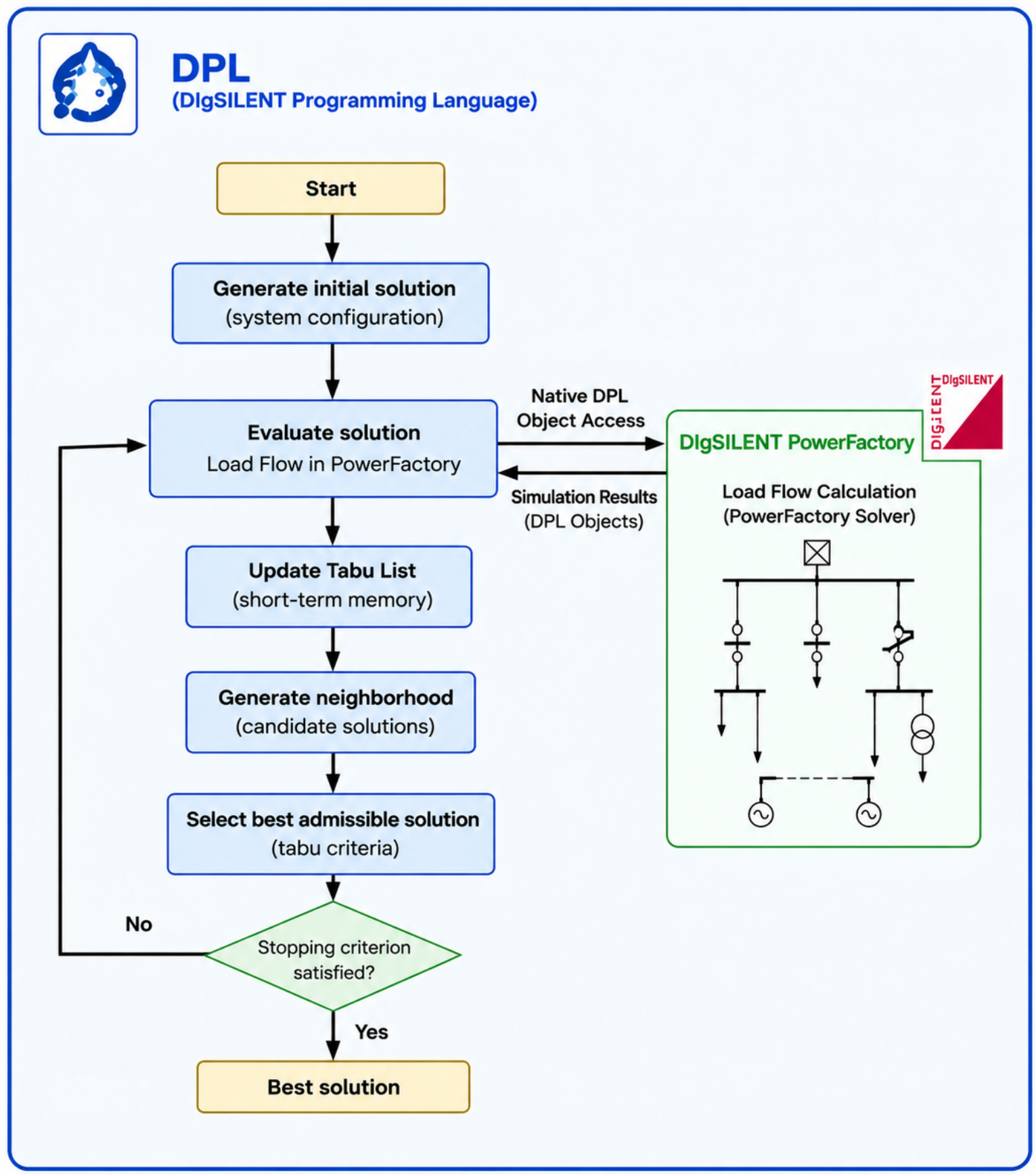
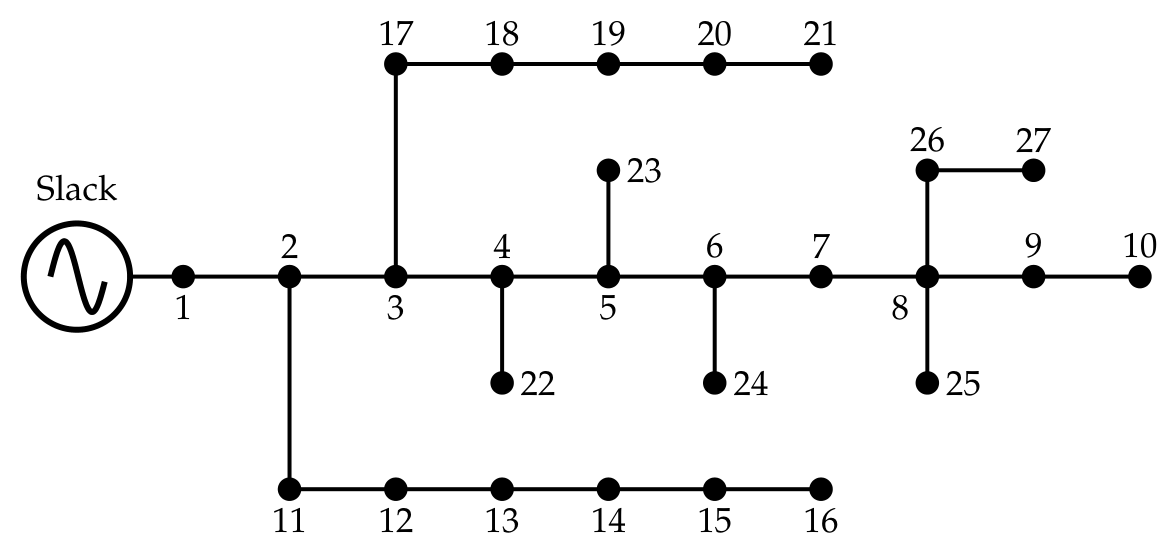
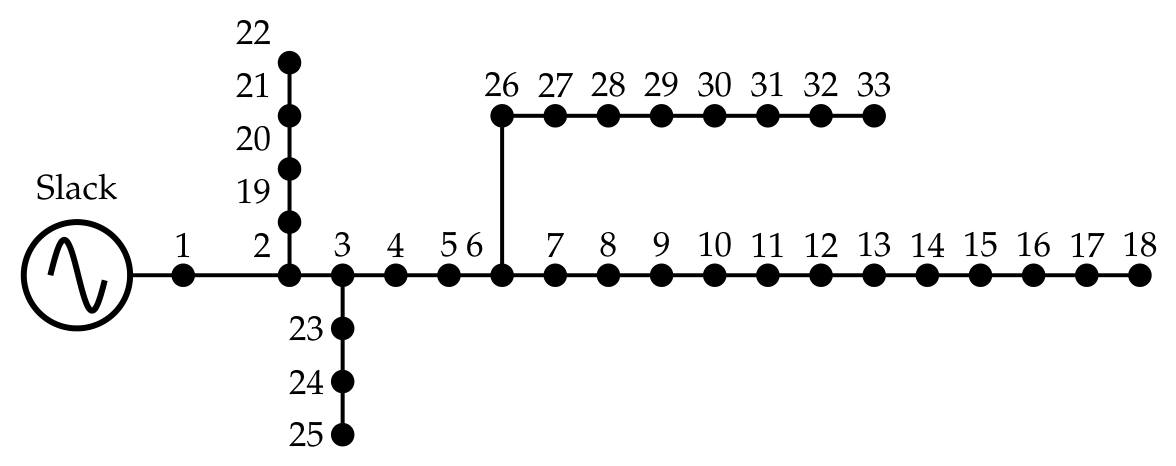
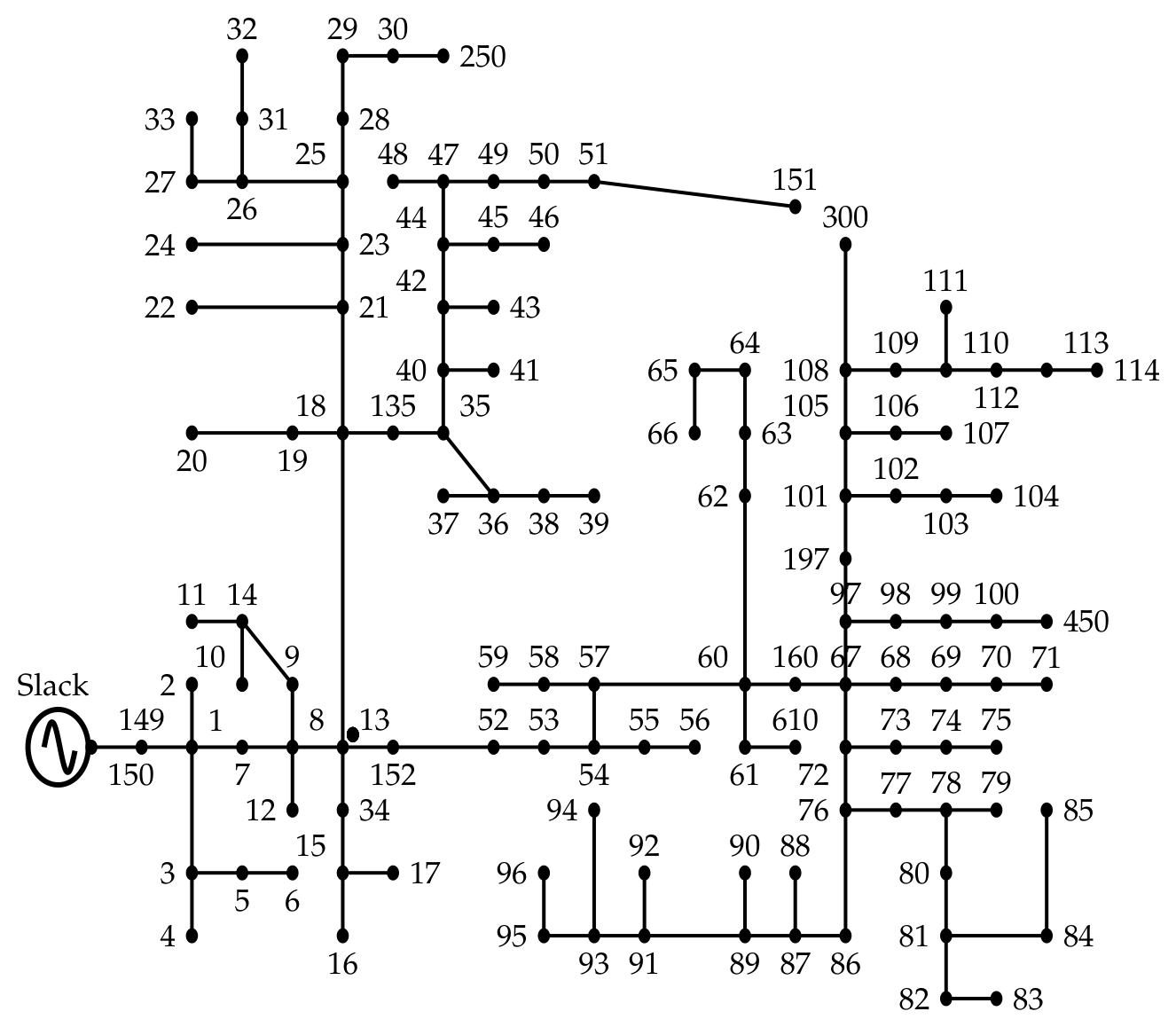
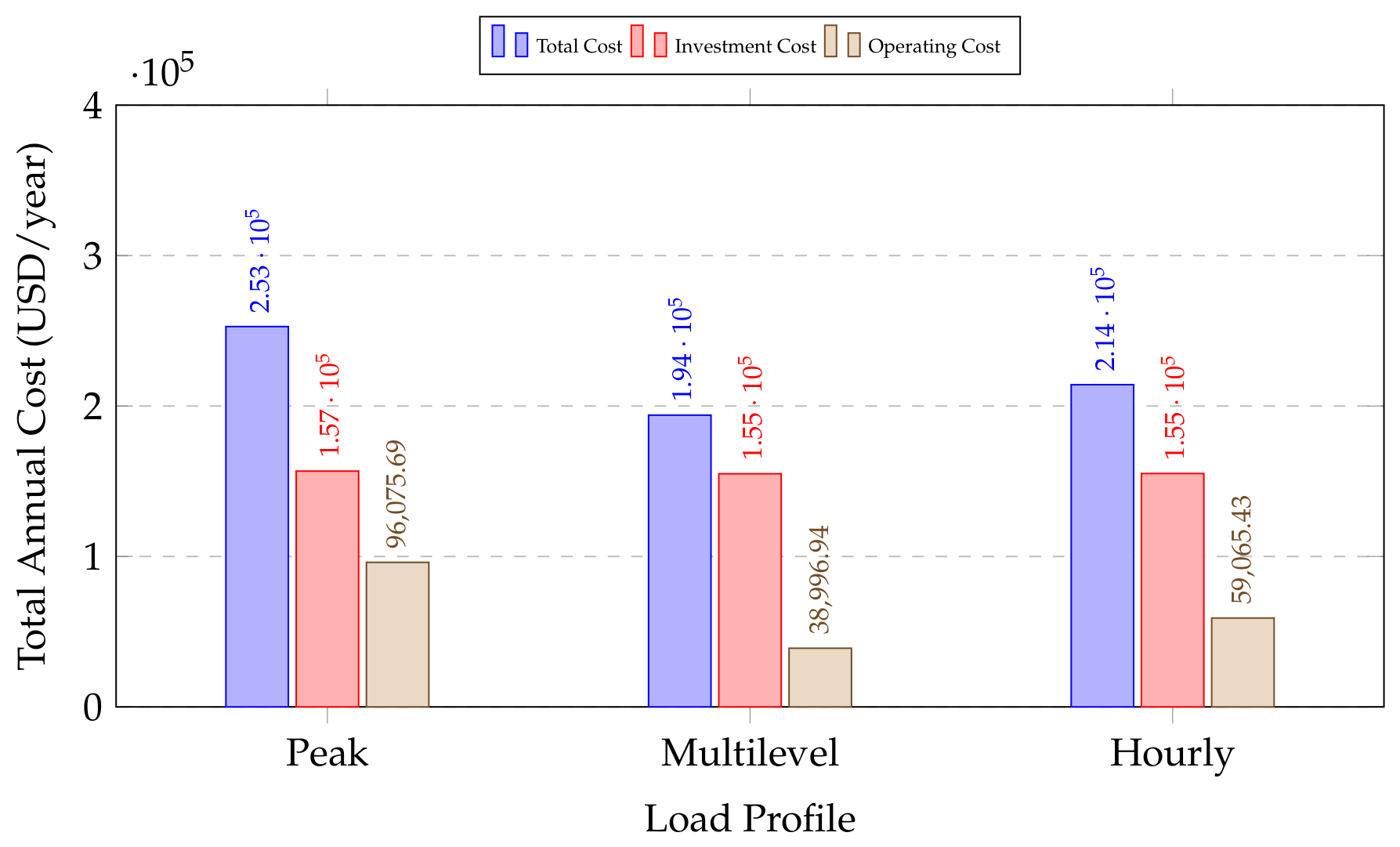
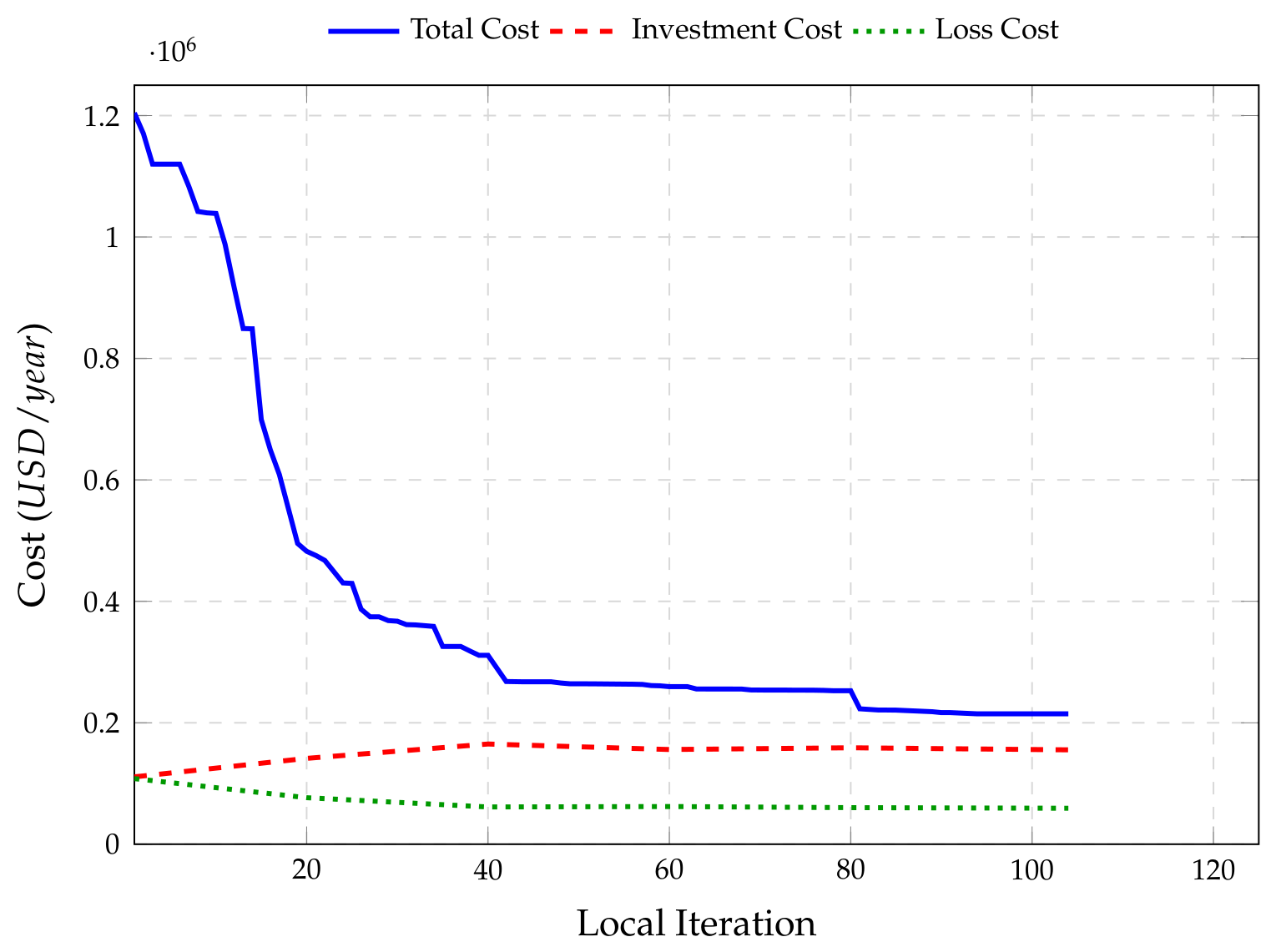
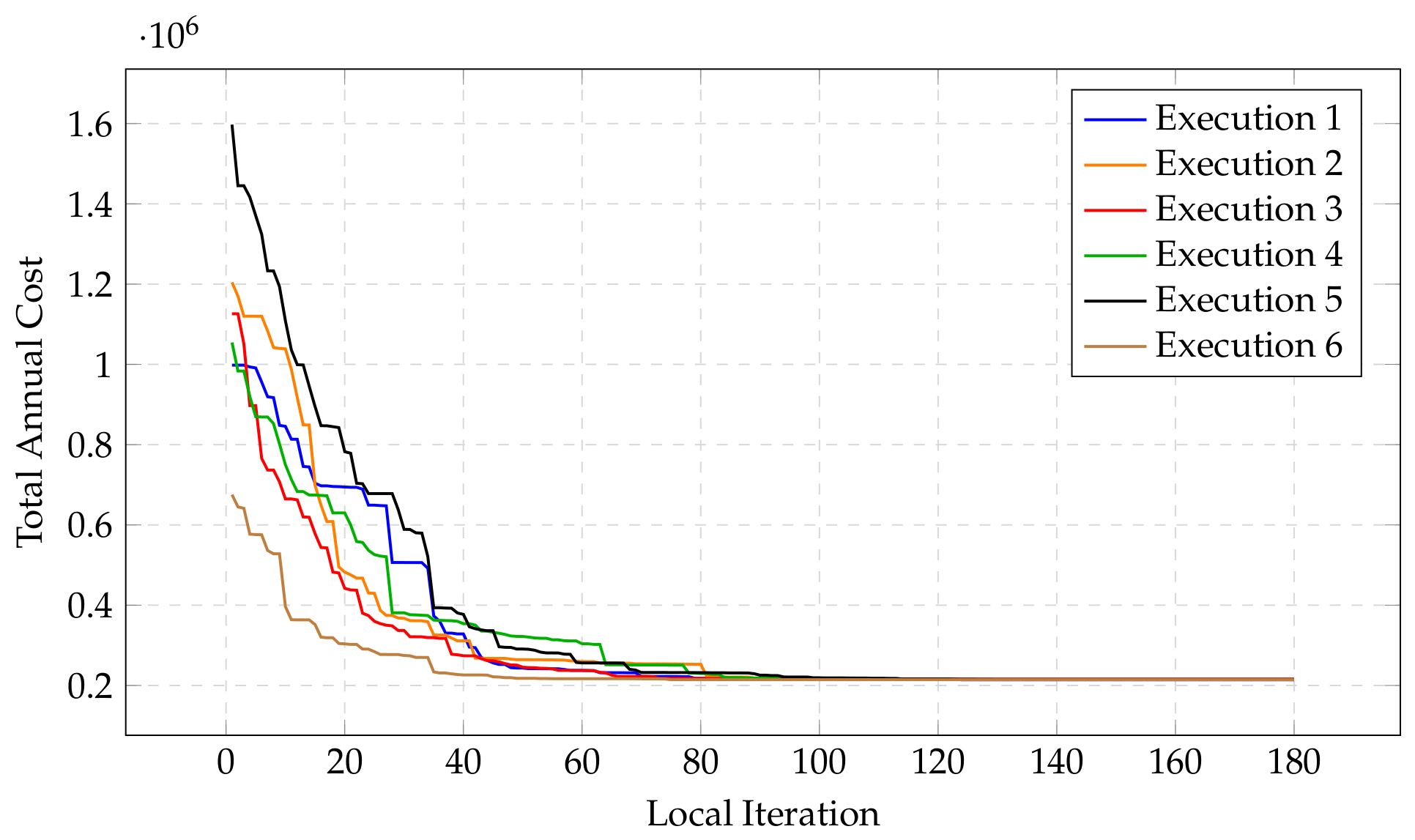
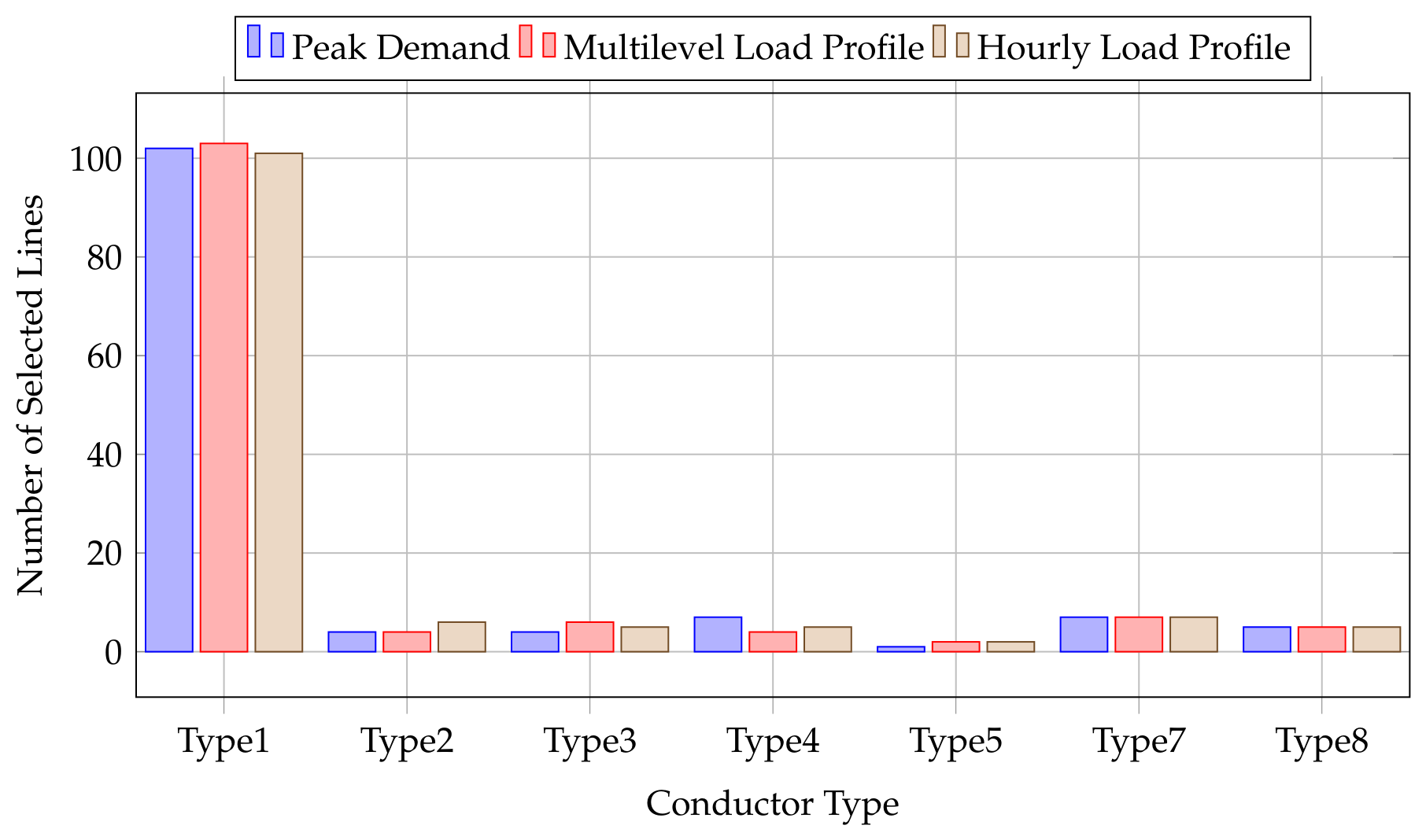
This paper presents a fully native optimization framework, implemented within DIgSILENT PowerFactory, which is aimed at solving the optimal conductor sizing problem (OCSP) in electrical distribution systems under realistic operating conditions. Our methodology integrates a tabu search algorithm (TSA) directly with the three-phase power flow routines and database objects available in the DigSILENT programming language (DPL), thereby eliminating the need for external data exchange and synchronization between independent optimization and network simulation environments. Our framework considers balanced and unbalanced operating conditions while incorporating peak demand, multilevel demand, and hourly demand load profiles. The optimization process minimizes annual investment and operating costs while satisfying voltage regulation and conductor ampacity constraints. The methodology was validated using a 27-bus benchmark system and the IEEE 33- and 123-bus distribution systems under different operating scenarios. The numerical results indicate that chronological demand scenarios significantly influence conductor allocation decisions and annual operating costs. Compared to the conventional peak demand load profile, the multilevel and hourly load profiles produced lower annual costs by distributing conductor sizing decisions across multiple operating states instead of considering worst-case loading conditions. Additionally, the unbalanced scenarios increased the operating losses and modified the conductor selection patterns due to unequal phase loading and current asymmetries. The proposed TSA-DPL implementation maintained stable convergence behavior and low statistical dispersion under all the evaluated benchmark systems and operating conditions. Even for the IEEE 123-bus feeder under unbalanced hourly operating conditions, the standard deviation remained below 0.70% of the average annual cost, confirming the robustness and repeatability of the methodology. Although the detailed three-phase chronological simulations increased the computational requirements, the proposed implementation demonstrated computational applicability to the evaluated benchmark systems. Overall, the proposed TSA-DPL framework constitutes a robust native implementation for realistic conductor sizing studies in modern three-phase distribution systems.
Keywords: tabu search metaheuristic algorithm; three-phase distribution networks; unbalanced electrical systems; conductor sizing; DIgSILENT Program Language (DPL); optimal conductor selection; metaheuristic optimization tabu search metaheuristic algorithm; three-phase distribution networks; unbalanced electrical systems; conductor sizing; DIgSILENT Program Language (DPL); optimal conductor selection; metaheuristic optimization