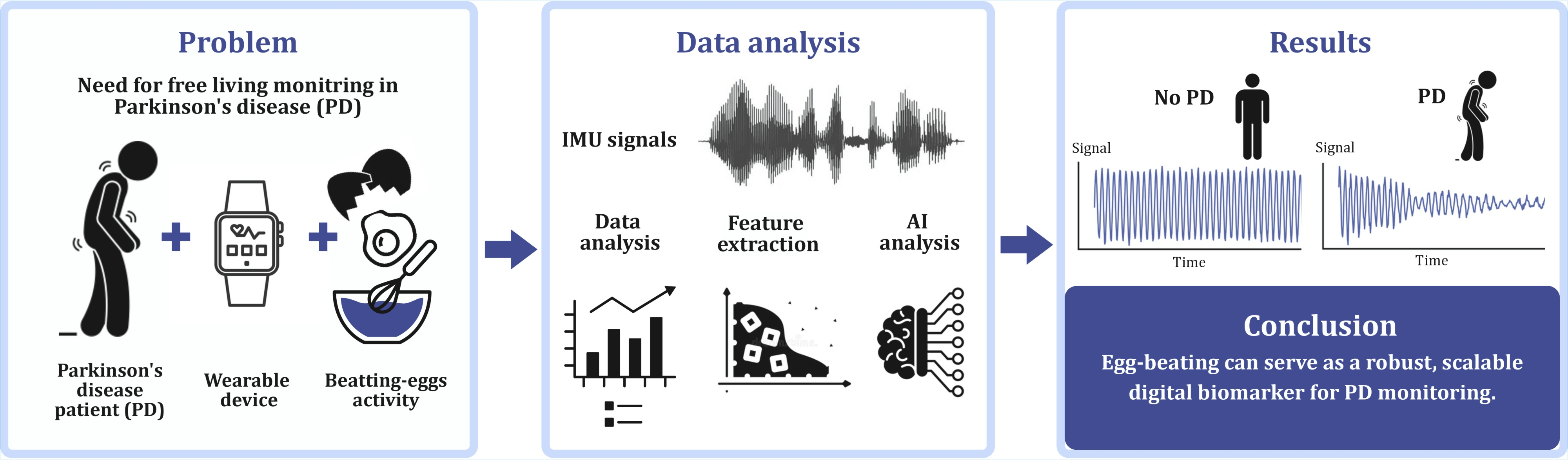


Machine Learning Assessment of Parkinson’s Disease Using a Novel Free-Living Egg-Beating Motor Task

 ,
,  , , , and
Abstract
1. Introduction
Wearables and Machine Learning for Motor Assessment
2. Materials and Methods
2.1. Study Design
2.2. Data Acquisition Device
2.3. Data Collection
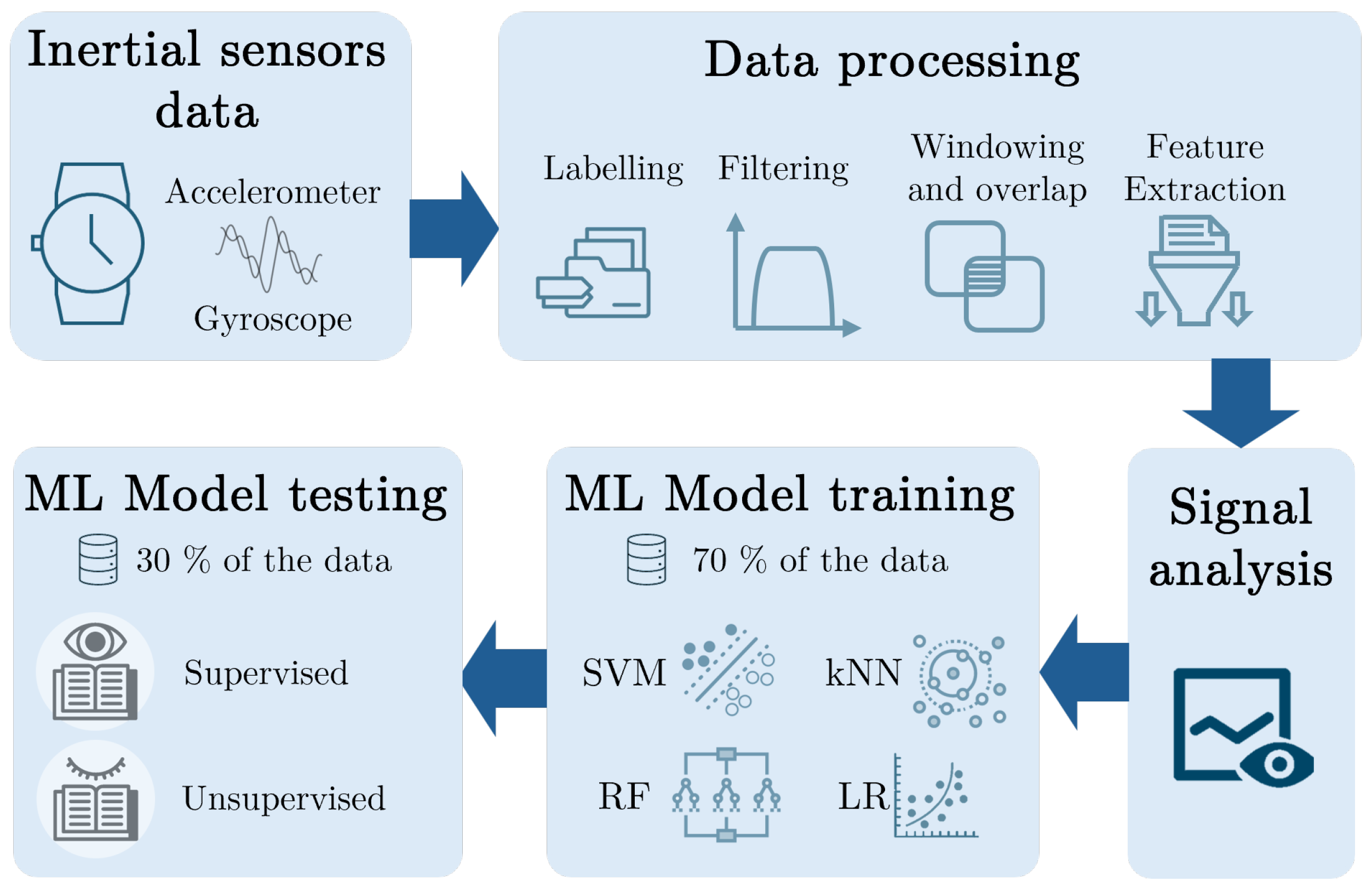
2.4. Signal Processing and Machine Learning Models
| Algorithm 1 Signal Processing and Machine Learning Workflow. |
Perform signal processing (MATLAB) and ML implementation (Python) for each participant do Compare home recordings with supervised baseline Discard inconsistent or missing sessions end for Label data by context (supervised/unsupervised) and group (PD/HC) Apply Butterworth high-pass filter (3rd order, 0.5 Hz) for each window size and overlap do Segment signals (sliding window) Extract time- and frequency-domain features Compute RMS magnitude (accelerometer, gyroscope) end for Remove correlated features () using training data Split dataset (70% train, 30% test) at participant level for each model (kNN, SVM, RF, LR) do Perform random search (10 iterations) Evaluate performance (Accuracy, Precision, Recall, F1, AUC) end for Select optimal segmentation and best-performing model |
3. Results
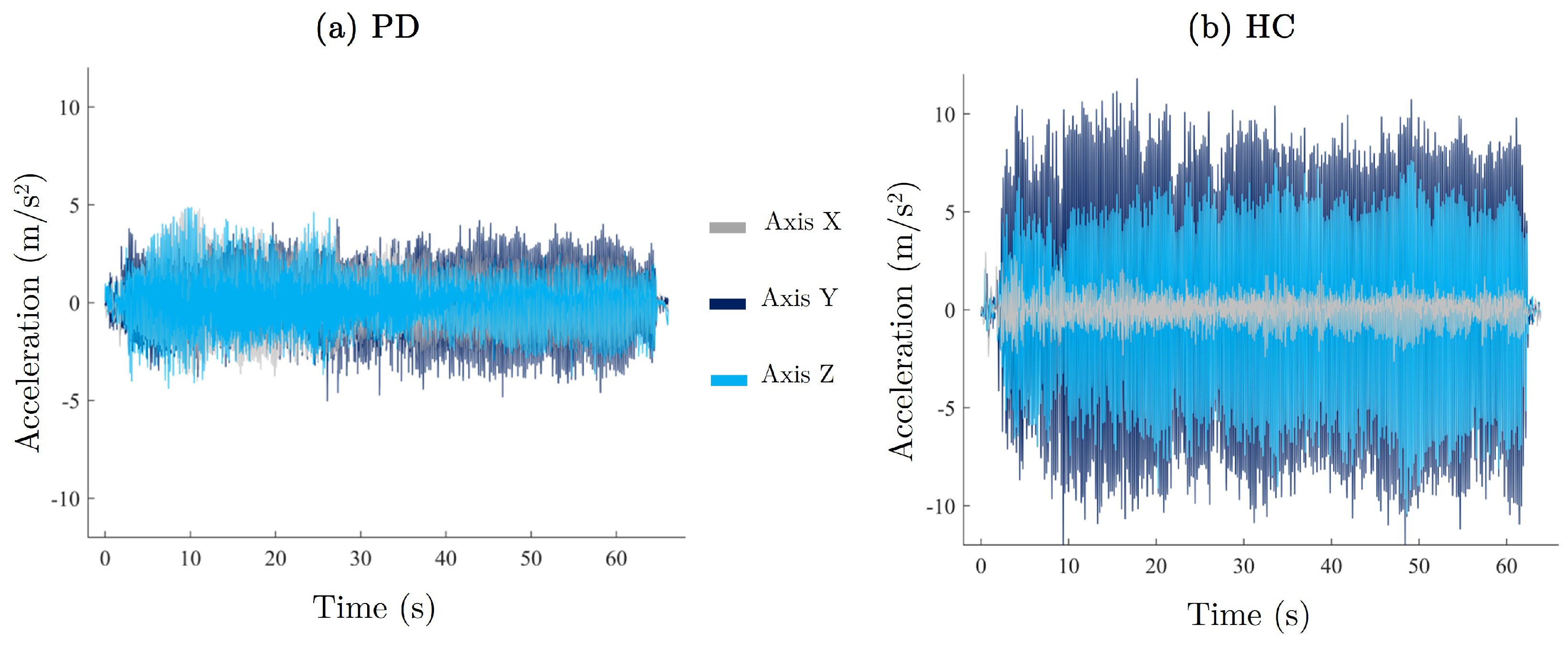
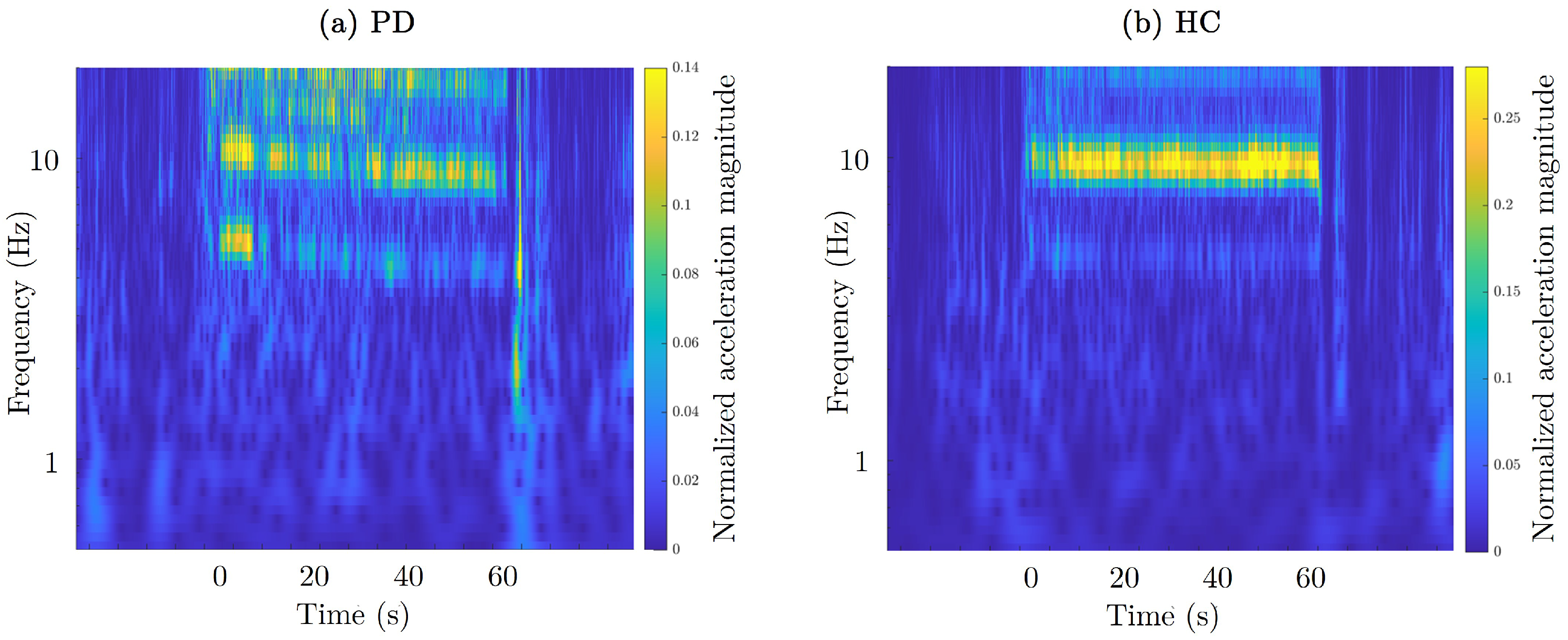
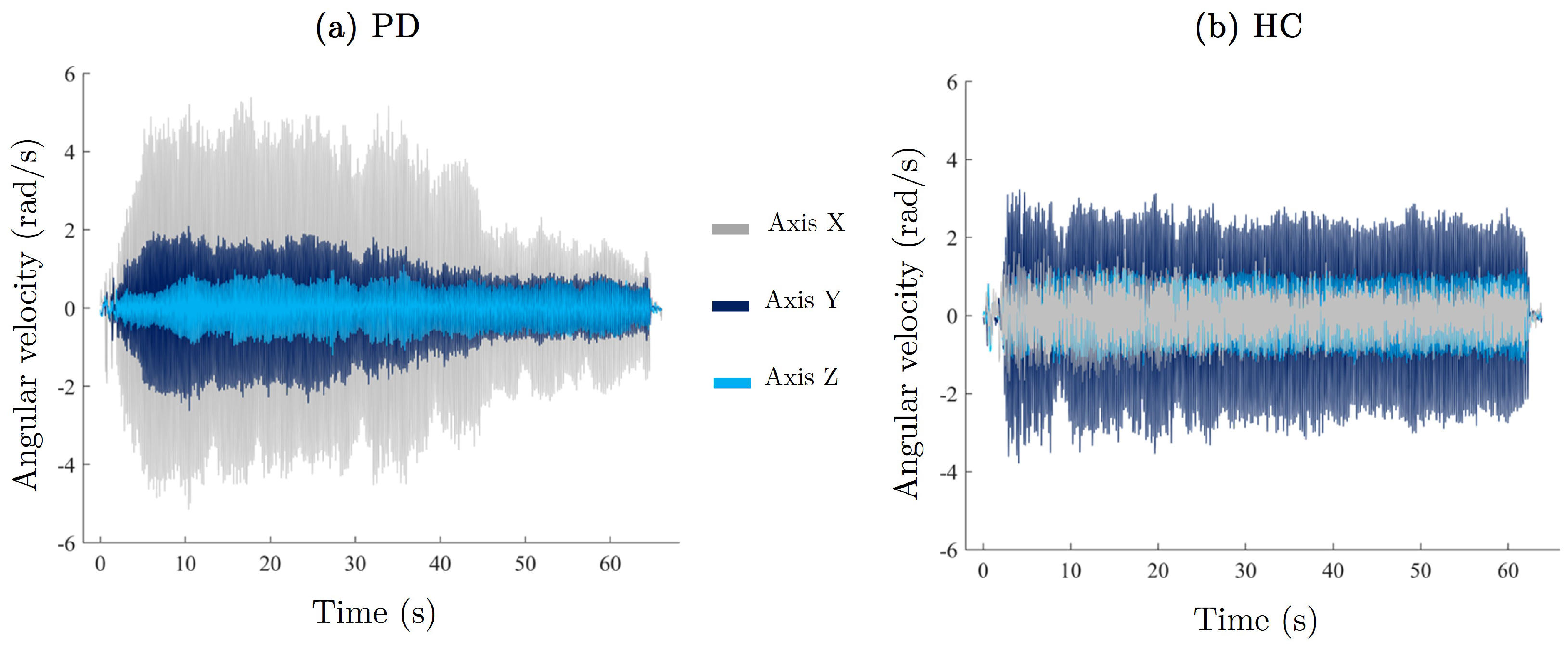
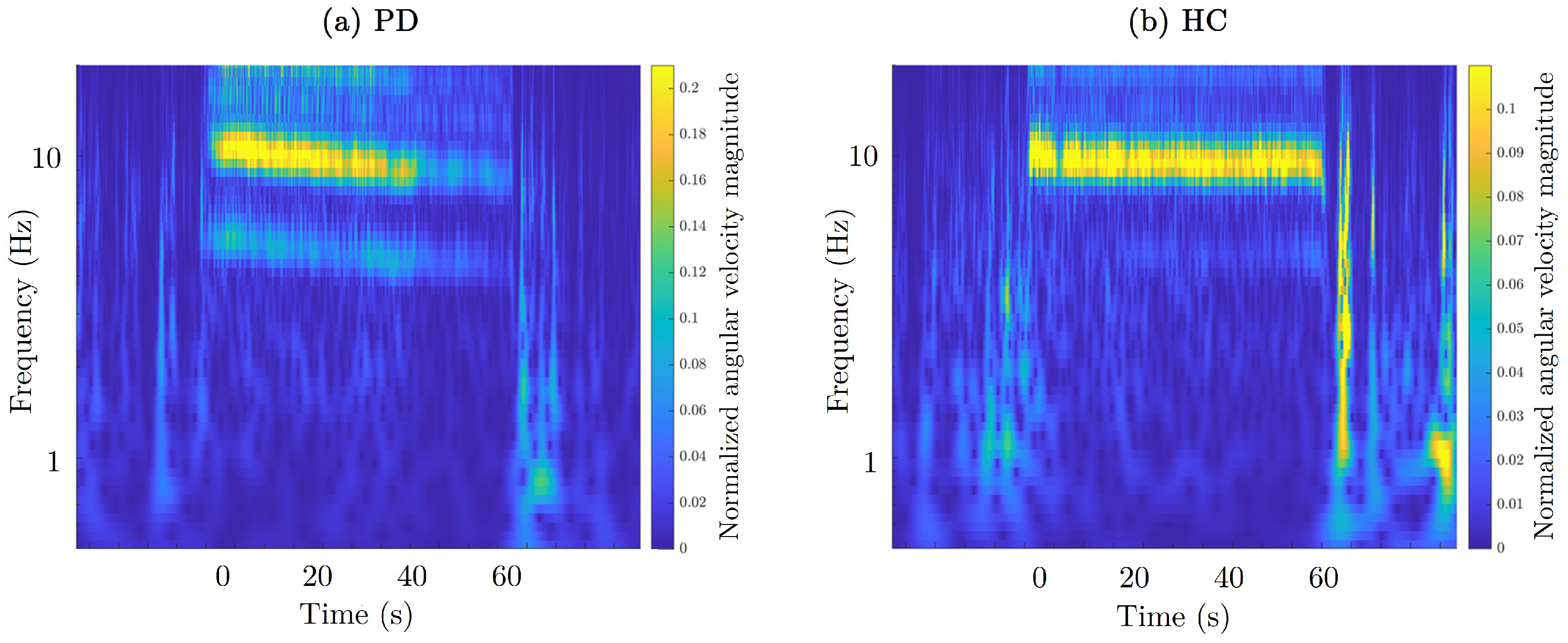
3.1. Signal Analysis
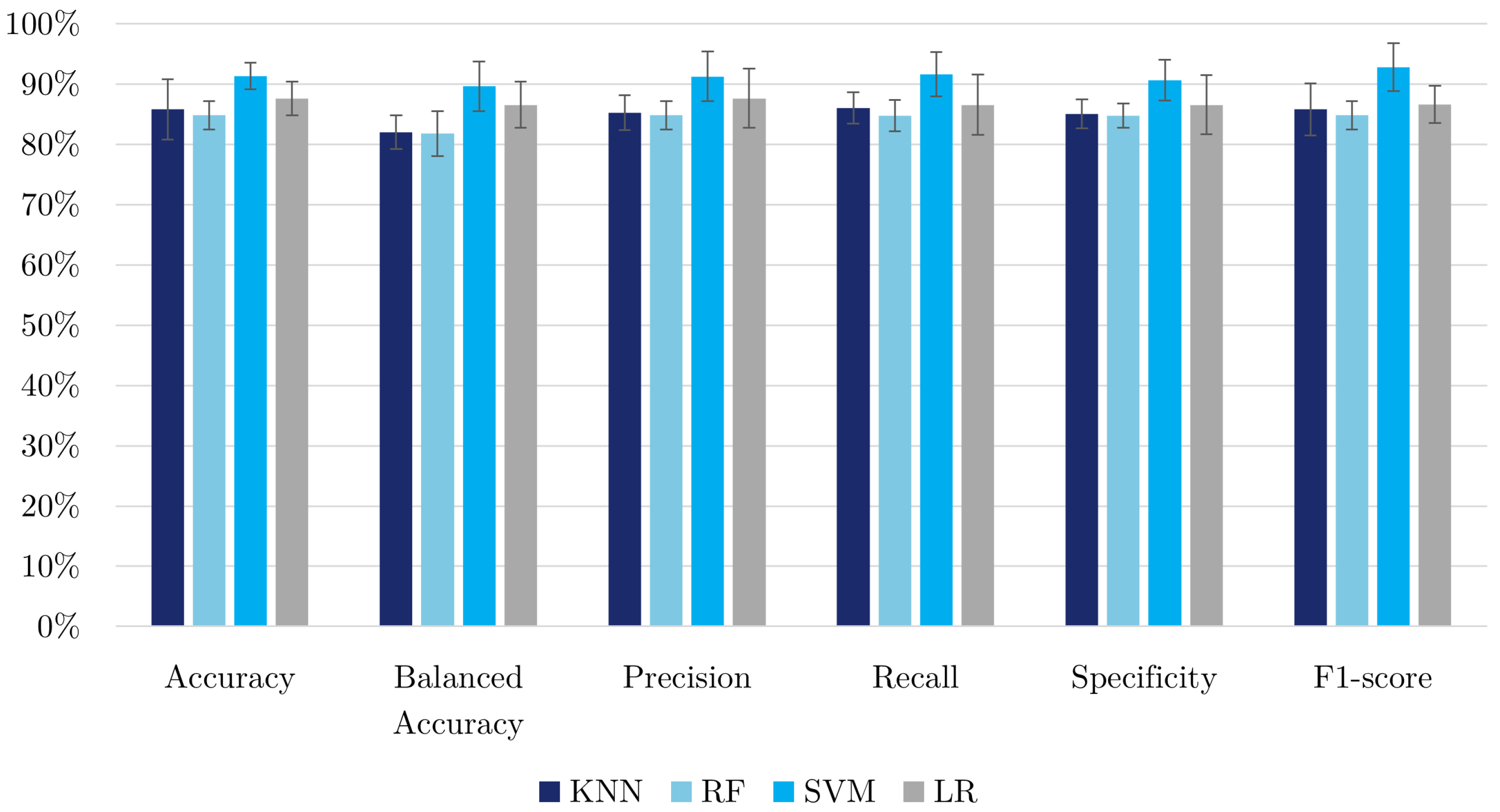
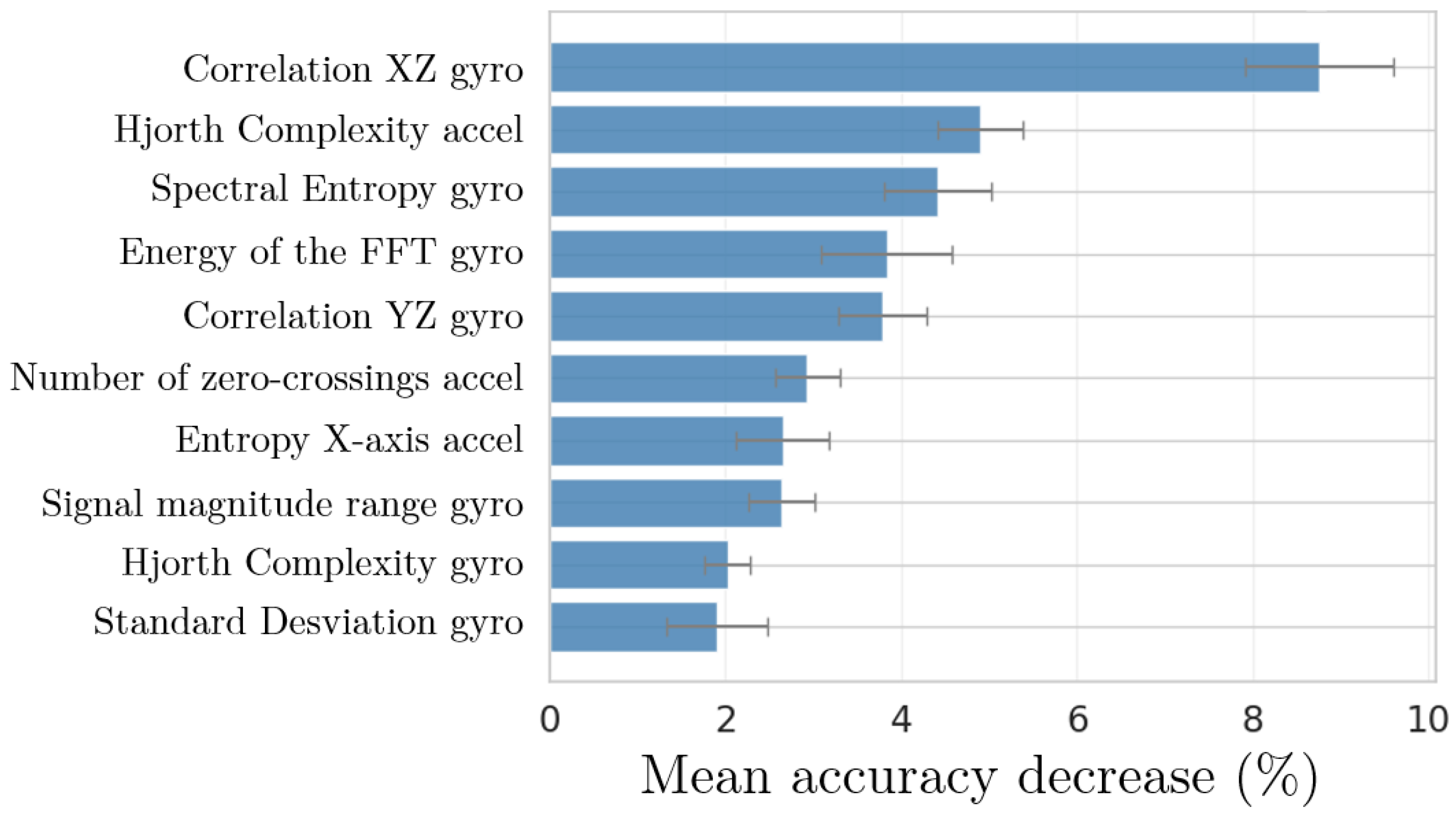
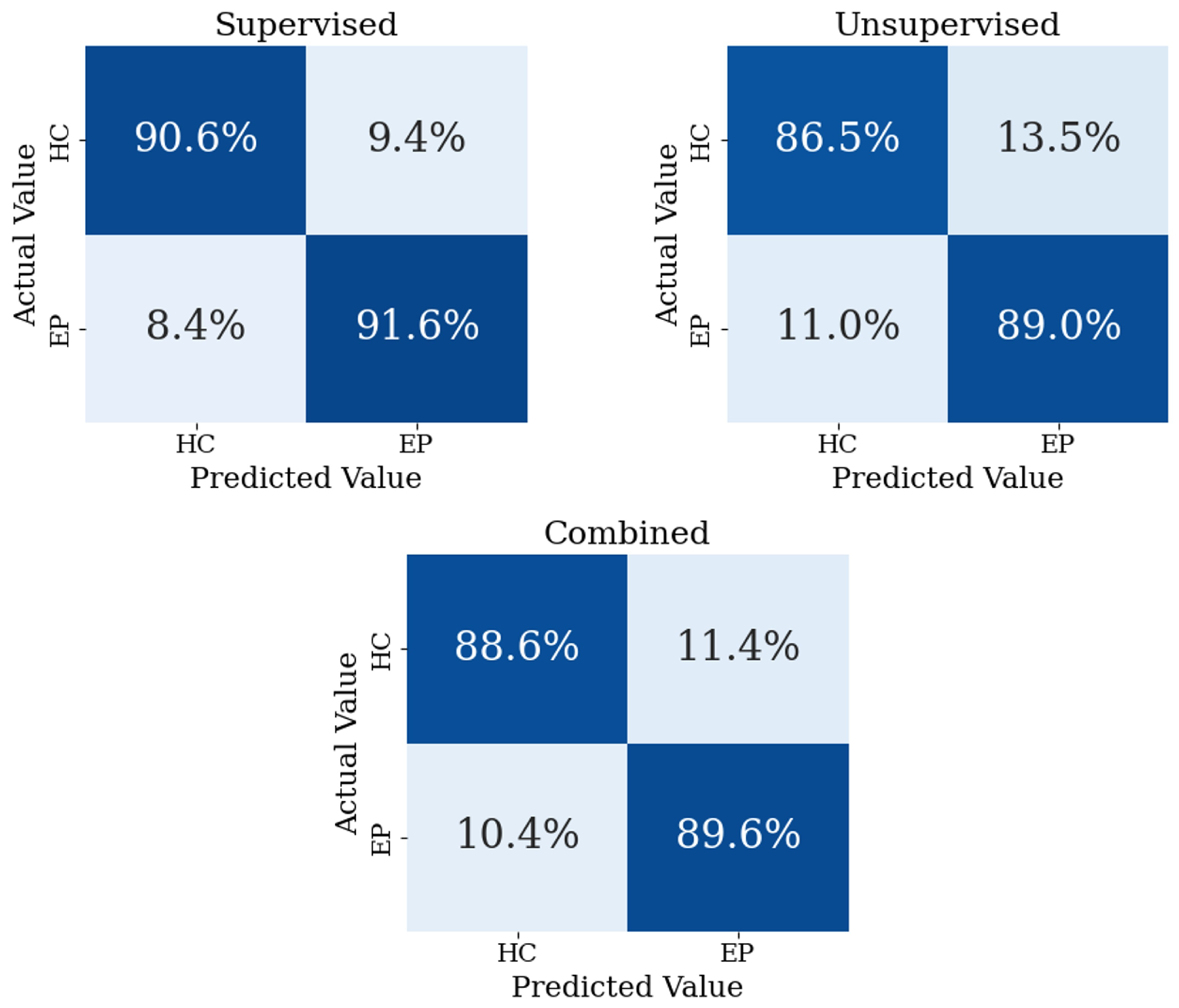
3.2. ML Analysis
4. Discussion
Limitations and Future Work
5. Conclusions
Supplementary Materials
Author Contributions
Funding
Institutional Review Board Statement
Informed Consent Statement
Data Availability Statement
Acknowledgments
Conflicts of Interest
Abbreviations
| AI | Artificial Intelligence |
| AUC-ROC | Area under the curve—Receiver operating characteristic |
| CNN | Convolutional Neural Network |
| F | Female |
| FFT | Fast Fourier Transform |
| HC | Healthy control |
| IMU | Inertial Measurement Unit |
| kNN | k-Nearest Neighbours |
| LR | Logistic regression |
| M | Male |
| ML | Machine Learning |
| MEMS | Microelectromechanical systems |
| UKPDSBB | United Kingdom Parkinson’s Disease Society Brain Bank |
| MDS | Movement Disorder Society |
| PD | Parkinson’s disease |
| PSD | Power Spectral Density |
| RMS | Root mean square |
| RF | Random Forest |
| SD | Standard deviation |
| SVM | Support Vector Machine |
References
- Poewe, W.; Seppi, K.; Tanner, C.M.; Halliday, G.M.; Brundin, P.; Volkmann, J.; Schrag, A.E.; Lang, A.E. Parkinson disease. Nat. Rev. Dis. Primers 2017, 3, 17013. [Google Scholar] [CrossRef]
- Luo, Y.; Qiao, L.; Li, M.; Wen, X.; Zhang, W.; Li, X. Global, regional, national epidemiology and trends of Parkinson’s disease from 1990 to 2021: Findings from the Global Burden of Disease Study 2021. Front. Aging Neurosci. 2025, 16, 1498756. [Google Scholar] [CrossRef]
- Su, D.; Cui, Y.; He, C.; Yin, P.; Bai, R.; Zhu, J.; Lam, J.S.T.; Zhang, J.; Yan, R.; Zheng, X.; et al. Projections for prevalence of Parkinson’s disease and its driving factors in 195 countries and territories to 2050: Modelling study of Global Burden of Disease Study 2021. BMJ 2025, 388, e080952. [Google Scholar] [CrossRef]
- Leite Silva, A.B.R.; Gonçalves de Oliveira, R.W.; Diógenes, G.P.; de Castro Aguiar, M.F.; Sallem, C.C.; Lima, M.P.P.; de Albuquerque Filho, L.B.; Peixoto de Medeiros, S.D.; Penido de Mendonça, L.L.; de Santiago Filho, P.C.; et al. Premotor, nonmotor and motor symptoms of Parkinson’s Disease: A new clinical state of the art. Ageing Res. Rev. 2023, 84, 101834. [Google Scholar] [CrossRef]
- Váradi, C. Clinical Features of Parkinson’s Disease: The Evolution of Critical Symptoms. Biology 2020, 9, 103. [Google Scholar] [CrossRef] [PubMed]
- Kumaresan, M.; Khan, S. Spectrum of Non-Motor Symptoms in Parkinson’s Disease. Cureus 2021, 13, e13275. [Google Scholar] [CrossRef]
- Virameteekul, S.; Revesz, T.; Jaunmuktane, Z.; Warner, T.T.; De Pablo-Fernández, E. Clinical Diagnostic Accuracy of Parkinson’s Disease: Where Do We Stand? Mov. Disord. 2023, 38, 558–566. [Google Scholar] [CrossRef] [PubMed]
- Tolosa, E.; Garrido, A.; Scholz, S.W.; Poewe, W. Challenges in the diagnosis of Parkinson’s disease. Lancet Neurol. 2021, 20, 385–397. [Google Scholar] [CrossRef]
- Armstrong, M.J.; Okun, M.S. Diagnosis and Treatment of Parkinson Disease: A Review. JAMA 2020, 323, 548. [Google Scholar] [CrossRef]
- Kulcsarova, K.; Skorvanek, M.; Postuma, R.B.; Berg, D. Defining Parkinson’s Disease: Past and Future. J. Park. Dis. 2024, 14, S257–S271. [Google Scholar] [CrossRef]
- Gibb, W.R.; Lees, A.J. The relevance of the Lewy body to the pathogenesis of idiopathic Parkinson’s disease. J. Neurol. Neurosurg. Psychiatry 1988, 51, 745–752. [Google Scholar] [CrossRef] [PubMed]
- Postuma, R.B.; Berg, D.; Stern, M.; Poewe, W.; Olanow, C.W.; Oertel, W.; Obeso, J.; Marek, K.; Litvan, I.; Lang, A.E.; et al. MDS clinical diagnostic criteria for Parkinson’s disease. Mov. Disord. 2015, 30, 1591–1601. [Google Scholar] [CrossRef]
- Polvorinos-Fernández, C.; Sigcha, L.; Borzì, L.; Olmo, G.; Asensio, C.; López, J.M.; de Arcas, G.; Pavón, I. Evaluating Motor Symptoms in Parkinson’s Disease Through Wearable Sensors: A Systematic Review of Digital Biomarkers. Appl. Sci. 2024, 14, 10189. [Google Scholar] [CrossRef]
- Seng, K.P.; Ang, L.M.; Peter, E.; Mmonyi, A. Machine Learning and AI Technologies for Smart Wearables. Electronics 2023, 12, 1509. [Google Scholar] [CrossRef]
- Varghese, J.; Alen, C.M.v.; Fujarski, M.; Schlake, G.S.; Sucker, J.; Warnecke, T.; Thomas, C. Sensor Validation and Diagnostic Potential of Smartwatches in Movement Disorders. Sensors 2021, 21, 3139. [Google Scholar] [CrossRef]
- LeMoyne, R.; Mastroianni, T. Implementation of a Smartwatch with Machine Learning for Ascertaining Efficacy of Deep Brain Stimulation for Parkinson’s Disease Treatment. In Proceedings of the 2024 E-Health and Bioengineering Conference (EHB); IEEE: New York, NY, USA, 2024; pp. 1–4. [Google Scholar] [CrossRef]
- Shawen, N.; O’Brien, M.K.; Venkatesan, S.; Lonini, L.; Simuni, T.; Hamilton, J.L.; Ghaffari, R.; Rogers, J.A.; Jayaraman, A. Role of data measurement characteristics in the accurate detection of Parkinson’s disease symptoms using wearable sensors. J. NeuroEng. Rehabil. 2020, 17, 52. [Google Scholar] [CrossRef] [PubMed]
- Gutowski, T.; Stodulska, O.; Ćwiklińska, A.; Gutowska, K.; Kopeć, K.; Betka, M.; Antkiewicz, R.; Koziorowski, D.; Szlufik, S. Machine Learning-Based Assessment of Parkinson’s Disease Symptoms Using Wearable and Smartphone Sensors. Sensors 2025, 25, 4924. [Google Scholar] [CrossRef]
- Shah, V.V.; McNames, J.; Mancini, M.; Carlson-Kuhta, P.; Nutt, J.G.; El-Gohary, M.; Lapidus, J.A.; Horak, F.B.; Curtze, C. Digital Biomarkers of Mobility in Parkinson’s Disease During Daily Living. J. Park. Dis. 2020, 10, 1099–1111. [Google Scholar] [CrossRef] [PubMed]
- Tsakanikas, V.; Ntanis, A.; Rigas, G.; Androutsos, C.; Boucharas, D.; Tachos, N.; Skaramagkas, V.; Chatzaki, C.; Kefalopoulou, Z.; Tsiknakis, M.; et al. Evaluating Gait Impairment in Parkinson’s Disease from Instrumented Insole and IMU Sensor Data. Sensors 2023, 23, 3902. [Google Scholar] [CrossRef]
- Trabassi, D.; Serrao, M.; Varrecchia, T.; Ranavolo, A.; Coppola, G.; De Icco, R.; Tassorelli, C.; Castiglia, S.F. Machine Learning Approach to Support the Detection of Parkinson’s Disease in IMU-Based Gait Analysis. Sensors 2022, 22, 3700. [Google Scholar] [CrossRef]
- Sousani, M.; Rojas, R.F.; Preston, E.; Ghahramani, M. Integrating IMU Sensors and Dual-Task Timed Up and Go to Identify Biomarkers for Early Stage Parkinson’s Disease Detection. IEEE Sens. J. 2025, 25, 38217–38229. [Google Scholar] [CrossRef]
- Meigal, A.Y.; Gerasimova-Meigal, L.I.; Reginya, S.A.; Soloviev, A.V.; Moschevikin, A.P. Gait Characteristics Analyzed with Smartphone IMU Sensors in Subjects with Parkinsonism under the Conditions of “Dry” Immersion. Sensors 2022, 22, 7915. [Google Scholar] [CrossRef]
- Ruiz-Vitte, A.; Comesaña, A.; Muñoz-Arcentales, A.; Larraga-García, B.; Alonso, A.; Rocon, E.; Gutiérrez, A. Activity recognition in patients with tremor: Integrating time–length windows for enhanced detection. Comput. Biol. Med. 2025, 193, 110305. [Google Scholar] [CrossRef] [PubMed]
- Li, Z.; Zhao, Y.; Qi, J.; Wang, X.; Yang, Y.; Yang, P. Effective Severity Assessment of Parkinson’s Disease using Wearable Sensors in Free-living IoT Environment. In Proceedings of the 2023 IEEE 29th International Conference on Parallel and Distributed Systems (ICPADS); IEEE: New York, NY, USA, 2023; pp. 900–906. [Google Scholar] [CrossRef]
- Wang, X.; Peng, X.; Xu, Z.; Xu, M.; Yang, Y.; Zhou, M.; Zhao, Z.; Yue, P.; Yang, P. PDWearML: Leveraging Daily Activities for Fast Parkinson’s Disease Severity Assessment with Wearable Machine Learning. IEEE Trans. Biomed. Eng. 2026, 1–13. [Google Scholar] [CrossRef]
- Bologna, M.; Espay, A.J.; Fasano, A.; Paparella, G.; Hallett, M.; Berardelli, A. Redefining Bradykinesia. Mov. Disord. 2023, 38, 551–557. [Google Scholar] [CrossRef]
- Del Din, S.; Godfrey, A.; Mazzà, C.; Lord, S.; Rochester, L. Free-living monitoring of Parkinson’s disease: Lessons from the field. Mov. Disord. 2016, 31, 1293–1313. [Google Scholar] [CrossRef]
- Polvorinos-Fernández, C.; Sigcha, L.; Centeno-Cerrato, M.; de Arcas, G.; Grande, M.; Marín, M.; Pareés, I.; Martínez-Castrillo, J.C.; Pavón, I. Evaluation of Free-Living Motor Symptoms in Patients with Parkinson Disease Through Smartwatches: Protocol for Defining Digital Biomarkers. JMIR Res. Protoc. 2025, 14, e72820. [Google Scholar] [CrossRef]
- Hoehn, M.M.; Yahr, M.D. Parkinsonism: Onset, progression, and mortality. Neurology 1967, 17, 427. [Google Scholar] [CrossRef] [PubMed]
- Locatelli, P.; Alimonti, D.; Traversi, G.; Re, V. Classification of Essential Tremor and Parkinson’s Tremor Based on a Low-Power Wearable Device. Electronics 2020, 9, 1695. [Google Scholar] [CrossRef]
- Polvorinos-Fernández, C.; Centeno-Cerrato, M.; Sigcha, L.; Grande, M.; Marín, M.; de Arcas, G.; Pavón, I. BIOCLITE: Smartwatch Dataset for Parkinson’s Disease in Supervised and Unsupervised Contexts. 2025. Available online: https://zenodo.org/records/16408199 (accessed on 7 June 2026). [CrossRef]
- Winter, D.A. Kinetics: Forces and Moments of Force. In Biomechanics and Motor Control of Human Movement; John Wiley & Sons, Ltd.: Hoboken, NJ, USA, 2009; Chapter 5; pp. 107–138. [Google Scholar] [CrossRef]
- Sun, S.; Cao, Z.; Zhu, H.; Zhao, J. A Survey of Optimization Methods From a Machine Learning Perspective. IEEE Trans. Cybern. 2020, 50, 3668–3681. [Google Scholar] [CrossRef]
- Evers, L.J.; Raykov, Y.P.; Krijthe, J.H.; Silva de Lima, A.L.; Badawy, R.; Claes, K.; Heskes, T.M.; Little, M.A.; Meinders, M.J.; Bloem, B.R. Real-Life Gait Performance as a Digital Biomarker for Motor Fluctuations: The Parkinson@Home Validation Study. J. Med. Internet Res. 2020, 22, e19068. [Google Scholar] [CrossRef]



| Work | Year | Participants | Evaluated Activity | Main Findings |
|---|---|---|---|---|
| Varghese et al. [15] | 2021 | 260 PD, 89 HC | Resting tremor, postural tremor, finger pointing, gait | A gradient boosting decision tree model applied to smartwatch data can successfully distinguish PD patients from HC, achieving accuracies between 80% and 88%. |
| LeMoyne and Mastroianni [16] | 2024 | 1 PD | Resting tremor | Smartwatch-based inertial sensing combined with ML for evaluating the efficacy of deep brain stimulation in PD treatment, achieving 90% classification accuracy. |
| Shawen et al. [17] | 2020 | 13 PD | Functional tasks, fine upper extremity tasks, gross upper extremity tasks, and tasks used in clinical assessment | Data from wrist-worn sensors using RF models to identify tremor and bradykinesia in PD patients, reporting AUC-ROC values of up to 0.79 for tremor and 0.68 for bradykinesia. |
| Gutowski et al. [18] | 2025 | 241 PD | Resting tremor, postural tremor, pronation–supination. | ML models integrating data from wearable devices and smartphones can estimate the severity of multiple motor symptoms in PD, achieving correlations with clinical ratings of up to . |
| Shah et al. [19] | 2020 | 29 PD, 27 HC | Gait | Turning and gait indicators discriminate PD from HC, with AUC = 0.87–0.89. |
| Tsakanikas et al. [20] | 2023 | 19 PD | Gait | IMU-based devices can lead to accurate detection of gait impairment with AUC values of 0.93 using a SVM and RF. |
| Trabassi et al. [21] | 2022 | 64 PD, 64 HC | Gait | IMU-derived data and SVM model achieved an accuracy of 86% in distinguishing PD from HC. |
| Sousani et al. [22] | 2025 | 28 PD, 34 HC | TUG test, cognitive and motor dual-task TUG | IMU data combined with SVM and LR achieved 95% accuracy. |
| Meigal et al. [23] | 2022 | 5 PD | Gait (extended TUG) | Smartphone head-mounted IMU used to extract step timing and acceleration features during an extended TUG. |
| PD Patients | HC | |
|---|---|---|
| Sample size | 22 | 16 |
| Mean ± SD age (years) | 65.2 ± 9.2 | 60.5 ± 7.0 |
| Range age (years) | 45–79 | 49–73 |
| Disease duration (years) | 2–11 | N/A |
| Gender | 10 F, 12 M | 10 F, 6 M |
| Category | Features |
|---|---|
| Temporal statistics | RMS, amplitude level, mean, standard deviation, range, interquartile range, first quartile, third quartile, variance, median, kurtosis, absolute maximum, absolute minimum, skewness |
| Energy and movement intensity | Signal energy, dominant-band energy, signal magnitude area, absolute average variation, Shannon entropy, approximate entropy |
| Signal changes and peaks | Smoothness, zero-crossing count, peak-to-average ratio, mean square root of local maxima, standard deviation of local maxima, absolute maximum of local maxima |
| Jerk statistics | RMS, mean, standard deviation, kurtosis, skewness, range, maximum, global |
| Frequency statistics | Dominant frequency, dominant frequency (1–4 Hz), dominant frequency (4–8 Hz), dominant jerk frequency, spectral power, spectral power density (PSD), PSD (1–8 Hz), PSD (0.2–4 Hz), maximum PSD, dominant PSD frequency, second maximum PSD, second dominant PSD frequency, spectral entropy, average of first five FFT (Fast Fourier Transform) components, FFT energy |
| Other metrics | Hjorth parameters, Lyapunov exponent, inter-axis correlation, absolute maximum inter-axis correlation, delay of first correlation maximum, signal magnitude vector |
| Window Size | Overlap | Accuracy | Precision | Recall | Specificity | F1-Score |
|---|---|---|---|---|---|---|
| 128 | 0 | 82.0% | 82.0% | 81.9% | 81.9% | 82.0% |
| 25 | 81.4% | 81.4% | 81.3% | 81.3% | 81.4% | |
| 50 | 81.7% | 81.7% | 81.7% | 81.7% | 81.7% | |
| 75 | 81.5% | 81.9% | 81.6% | 81.6% | 81.4% | |
| 256 | 0 | 83.1% | 83.2% | 83.1% | 83.1% | 83.1% |
| 25 | 82.0% | 82.1% | 82.1% | 82.1% | 82.0% | |
| 50 | 82.7% | 82.7% | 82.6% | 82.6% | 82.7% | |
| 75 | 82.4% | 82.5% | 82.4% | 82.4% | 82.4% | |
| 512 | 0 | 83.2% | 83.6% | 83.2% | 83.2% | 83.1% |
| 25 | 83.5% | 83.0% | 83.6% | 83.6% | 83.5% | |
| 50 | 84.2% | 84.1% | 84.0% | 83.7% | 84.3% | |
| 75 | 83.2% | 83.3% | 83.1% | 83.1% | 83.2% |
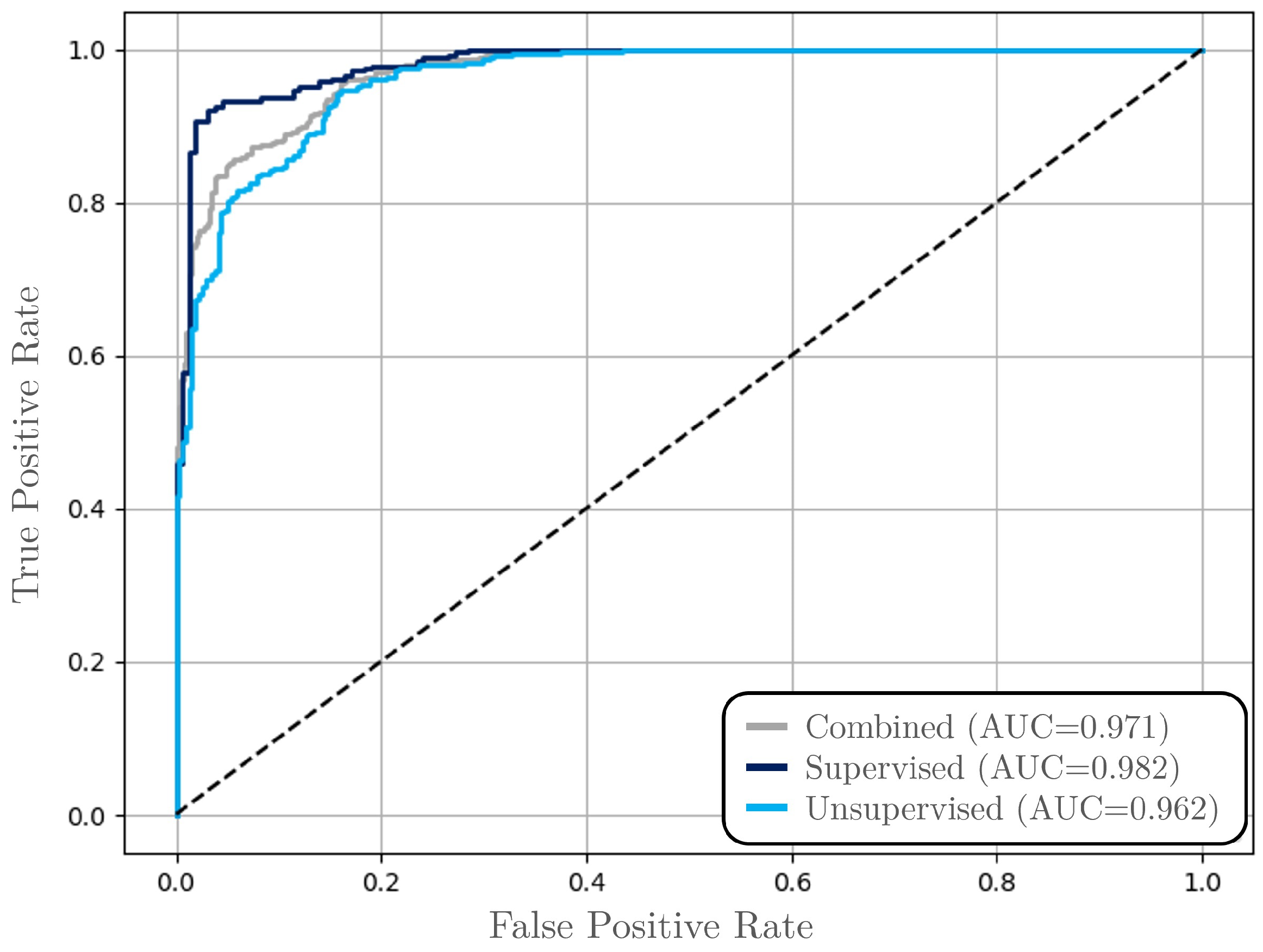
| Context | Accuracy | Balanced Accuracy | Precision | Recall | Specificity | F1-Score |
|---|---|---|---|---|---|---|
| Supervised | ||||||
| Unsupervised | ||||||
| Combined |
Disclaimer/Publisher’s Note: The statements, opinions and data contained in all publications are solely those of the individual author(s) and contributor(s) and not of MDPI and/or the editor(s). MDPI and/or the editor(s) disclaim responsibility for any injury to people or property resulting from any ideas, methods, instructions or products referred to in the content. |
© 2026 by the authors. Licensee MDPI, Basel, Switzerland. This article is an open access article distributed under the terms and conditions of the Creative Commons Attribution (CC BY) license.
Share and Cite
Polvorinos-Fernández, C.; Sigcha, L.; Valero, M.M.; Grande, M.; de Arcas, G.; Pavón, I. Machine Learning Assessment of Parkinson’s Disease Using a Novel Free-Living Egg-Beating Motor Task. Technologies 2026, 14, 345. https://doi.org/10.3390/technologies14060345
Polvorinos-Fernández C, Sigcha L, Valero MM, Grande M, de Arcas G, Pavón I. Machine Learning Assessment of Parkinson’s Disease Using a Novel Free-Living Egg-Beating Motor Task. Technologies. 2026; 14(6):345. https://doi.org/10.3390/technologies14060345
Chicago/Turabian StylePolvorinos-Fernández, Carlos, Luis Sigcha, Mayca Marín Valero, Miriam Grande, Guillermo de Arcas, and Ignacio Pavón. 2026. "Machine Learning Assessment of Parkinson’s Disease Using a Novel Free-Living Egg-Beating Motor Task" Technologies 14, no. 6: 345. https://doi.org/10.3390/technologies14060345
APA StylePolvorinos-Fernández, C., Sigcha, L., Valero, M. M., Grande, M., de Arcas, G., & Pavón, I. (2026). Machine Learning Assessment of Parkinson’s Disease Using a Novel Free-Living Egg-Beating Motor Task. Technologies, 14(6), 345. https://doi.org/10.3390/technologies14060345