Article

Engineering Optimisation of Combined Soil Preparation for Ridge-Based Peanut Production and Residue Biodegradation

by
Farmon M. Mamatov
1,*,
Fakhriddin U. Karshiev
2,
Nargiza B. Ravshanova
1,
Sanjar Zh. Toshtemirov
1,
Uchkun Kodirov
1,
Nurbek Sh. Rashidov
1,
Golib D. Shodmonov
1,
Nodir I. Saidov
1,
Mokhichekhra F. Begimkulova
1 and
Allamurod Ismatov
3
1
Department of Agricultural Engineering, Karshi State Technical University, Karshi 180100, Uzbekistan
2
Department of Agricultural Engineering, Termez State University, Termez 190111, Uzbekistan
3
Storage and Processing of Products, Department of Production, Samarkand State University of Veterinary Medicine, Samarkand 140103, Uzbekistan
*
Author to whom correspondence should be addressed.
Technologies 2026, 14(4), 203; https://doi.org/10.3390/technologies14040203
Submission received: 10 February 2026 / Revised: 17 March 2026 / Accepted: 21 March 2026 / Published: 29 March 2026
(This article belongs to the Special Issue Sustainable Technologies and Waste Valorisation Technologies)

Abstract

Sustainable ridge-based peanut production following winter wheat requires soil preparation technologies capable of simultaneously ensuring precise ridge formation, reduced energy consumption and efficient in situ utilisation of crop residues. This study aimed to develop and experimentally validate a combined soil preparation technology integrating shallow tillage, deep loosening and ridge formation within a single field pass, and to quantify its technological and biological performance. Field experiments were conducted using a prototype combined machine with analytically justified geometric parameters of the working tools, followed by multifactor optimisation and statistical modelling. Technological performance was assessed by soil fragmentation degree and draft resistance, while biological effects were evaluated using residue incorporation (Pz), biodegradation coefficient after 60 days (k60) and dehydrogenase activity after 30 days (DHA30). The results showed statistically significant nonlinear relationships between tool parameters and technological responses, with coefficients of determination exceeding 0.94 for soil fragmentation and 0.97 for draft resistance. The proposed technology increased residue incorporation efficiency by 15–20%, enhanced biodegradation intensity (k60) by up to 18%, and reduced energy consumption due to single-pass operation compared with conventional multi-pass systems. A strong relationship between Pz and biological indicators confirmed the key role of residue placement in controlling microbial processes. These findings demonstrate that integrated control of soil processing and residue placement enables energy-efficient single-pass technologies for ridge-based peanut production systems.

1. Introduction

Technological solutions to achieve sustainable intensification of agricultural production must enable the maintenance of soil fertility, resolution of better resource use efficiency, and stable crop productivity against an increasingly variable environment. Intensive soil cultivation practices common in many agricultural systems have exacerbated structural degradation, depletion of soil organic matter and biological activity that collectively limit long-term stability and productivity of agroecosystems [1,2,3,4]. Therefore, the design of soil cultivating technologies with less mechanical disturbance and optimal agronomic performance is one of the key aims in both modern agricultural engineering and soil science.
Soil management systems that are based around conservation practices have been strongly advocated for as a way to combat such issues. Soil aggregation, organic carbon accumulation in the soil matrix, water infiltration and microbial activity can be increased with reduced tillage intensity coupled with better management of plant residues [5,6,7,8,9,10]. In particular, the biological degradation of plant residues allows for nutrient cycling and the formation of stable fractions such as organic matter pools that impact long-term soil fertility and resilience in ecosystems [11,12,13].
Nonetheless, the adoption of conservation tillage systems faces technical challenges linked to a significant volume of crop residues remaining on the soil surface. The accumulation of residue may hinder soil preparation operations, decrease the effectiveness of ordinary tillage implements, and exacerbate variations in seedbed formation [14,15,16,17]. These limitations are particularly important in straw-producing crop rotations with substantial stubble residuals and slower decomposition rates compared to field conditions [18,19]. In this situation, the effectiveness of preparation technologies in the soil depends primarily on how effectively the residues are broken down and utilised.
Peanut (Arachis hypogaea L.) production is a particularly challenging scenario of soil preparation technology. To enable the proper development of underground pods and efficient harvesting, this crop needs to be formed into well-structured ridges and a finely honed seedbed [20,21,22]. Lots of straw residues remain at the soil surface when peanut is grown after winter wheat and they need to be chopped and integrated into the soil before ridge formation and sowing operations [23,24,25]. This is usually done using multi-pass soil preparation systems that consist of multiple operations (e.g., residue chopping, disc tilling, land ripping, and ridging) in sequence. While such strategies may help achieve satisfactory conditions for seedbed fixation, they involve a significant increase in fuel consumption, operating costs and the risk of soil compaction [26,27,28].
One of the promising areas in the engineering aspect is the development of integrated soil preparation systems, which will allow several technological operations to be performed at once. The use of one technological operation for residue fragmentation, soil loosening, ridge formation and incorporation of residues could allow the number of field passes to be minimised, energy consumption to be lowered and operating performance to be increased [29,30,31]. Moreover, mechanical fragmentation of crop residues increases the specific area and contacted surfaces with soil microorganisms that could intensify biological processes involved in decomposition and enhance enzymatic activity of the soil [32,33,34,35,36,37].
However, much of the current technology for soil preparation is focused on mechanical processing of soils, and the interaction between residues mechanically fragmented in situ and subsequent biological transformation processes has barely been drawn upon. In particular, the potential for combining mechanical soil preparation with conditions conducive to in situ biodegradation of plant residues has only been poorly integrated into the design of ridge-forming tillage systems [38].
As a result, the technological gap addressed in this study lies in the absence of soil preparation systems that simultaneously ensure (i) controlled incorporation of crop residues into the biologically active soil layer, (ii) formation of stable ridge geometry required for peanut cultivation, and (iii) optimisation of energy consumption within a single-pass operation. Existing approaches typically consider these processes separately and do not explicitly account for the interaction between mechanical residue placement and subsequent in situ biodegradation. This limitation prevents the development of integrated engineering solutions that link machine parameters with both technological performance and biological transformation processes in soil.
The aim of the present study is to develop and experimentally evaluate a comprehensive technology for the preparation of soil for ridge-based peanut cropping after winter wheat, including crop residue fragmentation, soil loosening, ridge formation, and stimulation of in situ biodegradation of plant residues within one technological operation.
The study is based on the following hypotheses. First, the integration of residue fragmentation and ridge formation will improve residue incorporation efficiency compared to conventional systems. Second, mechanical fragmentation and mixing will enhance biodegradation and soil enzymatic activity. Third, the integrated system will reduce energy consumption while maintaining favourable soil physical and biological properties.
To ensure a transparent and quantitatively verifiable evaluation of the proposed hypotheses, the performance of the developed technology was assessed using the following criteria: soil fragmentation degree (F < 50, F < 25), draft resistance (R), specific load indicator (q), completeness of residue incorporation (Pz), biodegradation coefficients (k30, k60), soil organic carbon (SOC), and dehydrogenase activity (DHA30). These indicators jointly characterise the technological, energetic and biological performance of the system.

2. Concept and Design of the Combined Soil Preparation Technology

A combined system for soil treatment after wheat and before peanuts (prior to sowing of the second crop) that integrates several technological operations as a single pass in the field was developed during this research. Usually, in practice conditions a series of independent tillage operations—straw cutting, disc cultivation, soil loosening and ridge formation—is used for soil preparation. While these multi-pass systems can achieve satisfactory seedbed conditions, they lead to much greater fuel consumption, increased time of field operation, and risk of soil compaction due to multiple machinery passes over the entire area [26,27,28]. Thus, the engineering goal of the proposed system is to combine residue processing, soil loosening, soil redistribution and ridge-forming in a single technological operation.
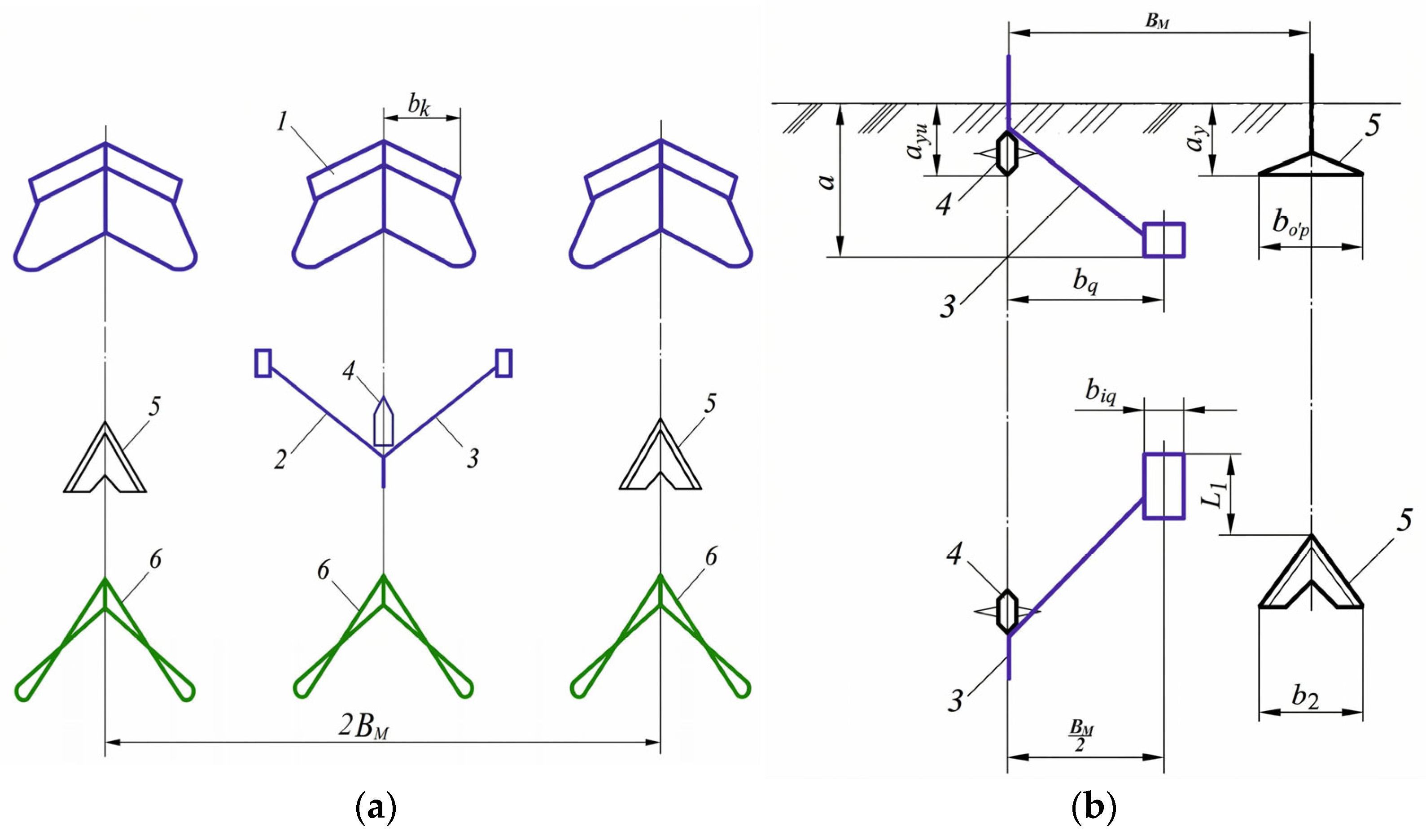
The structure of the combined unit for soil preparation is based on a sequential arrangement of working elements with complementary technological functions. Figure 1 presents the layout of working elements of a combined soil preparation implement.
The combined unit, illustrated in Figure 1a, is composed of N units of working elements distributed along the working width BM. The first group of elements (1)—through organised interaction with plant residues on the soil surface—performs its primary function. These components decompose wheat straw residues after winter wheat harvesting. Mechanical fragmentation shortens residue length and enhances the contact area between plant residues and microorganisms in the soil, thereby facilitating their subsequent biological decomposition [32,33,34,35].
In the central zone of the implement, dust-loosening members stand behind residue-crumbling elements. These working bodies penetrate into the upper layer of soil and carry out loosening and mixing with coarse plant residues. The loosening of soil increases the aeration of the cultivated layer and ensures a good distribution and incorporation of organic matter in the soil matrix. Closer contact of soil microorganisms with organic substrates induces biological activity and enhances plant residue decay in agricultural soils [32,33,34].
The last group of active elements produces ridge formation. Ridge-forming bodies (5) redefine the loosened ground into ridges appropriate for peanut growing. In peanut production systems, ridge formation is an important technical operation because pod development occurs underground and a loose and well-aerated soil environment is needed [20,21,22]. Furthermore, the existence of a ridge geometry provides better soil drainage conditions and minimises the risk of soil crust formation during the growing period.
In the design of vibro-impact machines, the geometric parameters of working elements as well as their configuration must be taken into account. Most geometrical shapes are presented in Figure 1b. The transverse frame spacing between the elements is determined by bk, bq and b2 parameters; installation angle α of working bodies indicates their orientation to machine movement direction. The intensity of soil disturbance and residue incorporation are defined as the parameters a and b, respectively for the depth where element penetration occurs.
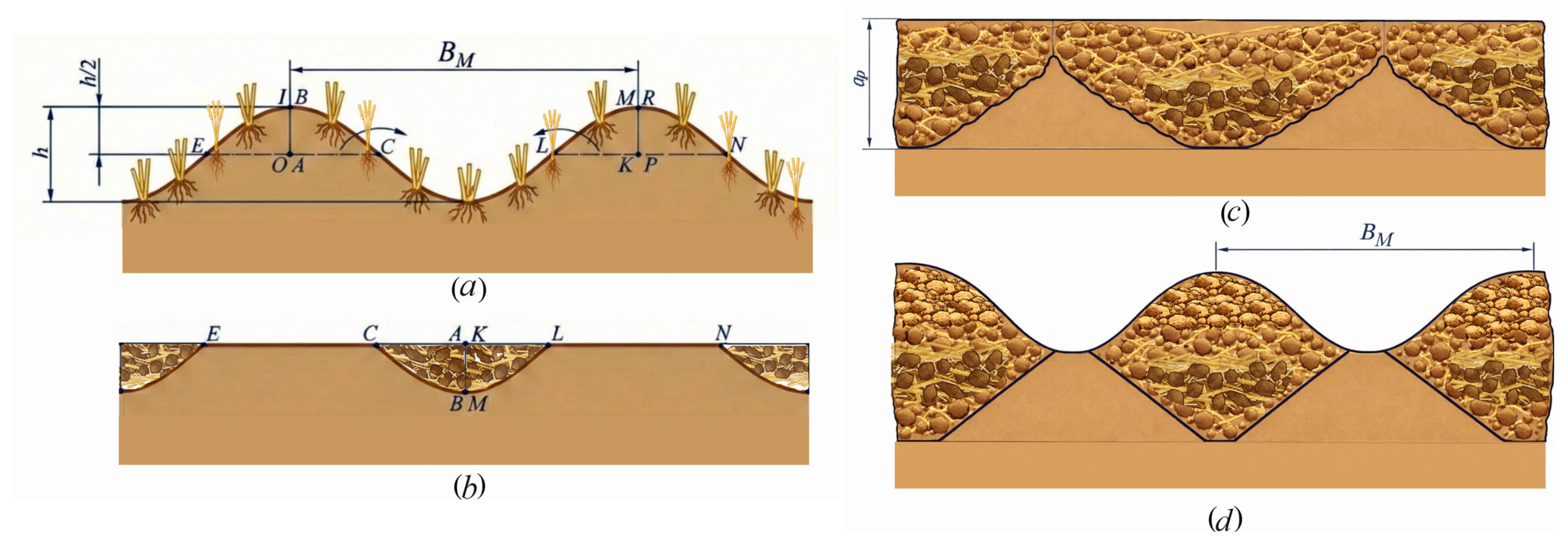
Figure 2 shows the technological process of ridge formation during the operation of the combined implement.
The process of superficial microrelief in soil variation when working elements pass over a field is shown in Figure 2a. Inter-row zones deposit soil particles and plant residues into the forming ridges. The working width BM specifies the ridge spacing as well as the surface area of the soil profile which is formed by the implement.
Figure 2b shows the redistribution of soil in the cultivated layer, where working elements displace and transfer the loosened volume laterally along an upward (ridges) path; its cross-section preserves stable geometry. Simultaneously, the disordered plant residues are incorporated into the upper soil layer and distributed on the body of the ridge.
The soil profile before and after processing is presented in Figure 2c,d: The surface of the unprocessed field remains relatively uniform, and plant residues are scattered non-uniformly on its surface. Once the combined implement passes, the soil forms structured ridges with fixed height ap; plant residues are mixed into the cultivated layer of the soil.
The proposed system performs multiple operations in comparison with traditional soil preparation technologies. Table 1 shows the comparison between traditional multi-pass soil preparation systems and the proposed combined technology.
The proposed combined soil preparation technology integrates residue fragmentation, soil loosening, residue incorporation, and ridge formation within a single technological operation. Such an integrated approach reduces the number of field operations, decreases energy consumption, and minimises soil compaction caused by repeated machinery traffic across the field [26,27,28,29,30,31]. At the same time, the combined mechanical processing of soil and plant residues creates favourable conditions for microbial activity and accelerates the biodegradation of crop residues within the cultivated soil horizon [35,36,37,38].

3. Theoretical Modelling and Analytical Justification of Working Tool Parameters

The analytical relationships presented in this section are used as an engineering design framework for selecting the principal geometric and installation parameters of the working tools prior to experimental validation. They define the working widths, installation angles, tillage depths, and spatial arrangement of shallow and deep tillage elements and are subsequently used to interpret the experimental results. The proposed relationships are applicable to medium-textured sierozem soils within the moisture and bulk density ranges observed in Section 4. Therefore, the analysis should be regarded as a design-oriented approximation rather than a universal predictive model, in accordance with the applicability limits reported in [10,11,12,13].

3.1. Parameters of the Inclined-Shank Subsoiler

The inclined-shank subsoiler is designed to disrupt the compacted subsoil layer within the ridge zone and to create a loosened region beneath the ridge, improving subsoil permeability and reducing resistance of subsequent tools [7,8,16].
The main parameters include the shank height Hq, inclination angles βk and βb, chisel rake angle αi, and the width and length of the working surface (bi, li), which determine soil deformation and draft requirement [12,13].
The working width is determined from the condition that the loosened zone covers the ridge-forming area:
b q = B M 2 .
For BM = 60 cm, bq = 30 cm, which corresponds to typical ridge tillage designs [9,16].
The vertical clearance is defined from the condition of uninterrupted soil and residue flow:
H = h 1 + h 2 + a max ,
where h1 is the frame clearance, h2 is the maximum height of loosened soil, and amax is the working depth. For h1 = 30 cm, h2 = 8.75 cm, and amax = 35 cm, H = 75 cm, ensuring stable operation [12].
The rake angle is determined from minimisation of soil wedge resistance and can be expressed as [13,16]:
α i = arctan f 2 + 1 f
where f is the soil–tool friction coefficient. For f = 0.5, αi ≈ 31°43′; therefore, αi = 32° is adopted.
The chisel width is estimated from the condition of effective subsoil failure [12,13]:
b i 4.2 + cot α i 2 a h K k r 2 0.1 T e τ k 1 + 3 tan α i + φ 2.5
where Te is the compressive resistance, τk is the shear resistance, h is the ridge height, and Kkr is the depth ratio coefficient. For a = 35 cm, Kkr = 0.85, αi = 27°, φ = 25°, Te/τk = 100, and h = 15 cm, the minimum width is 6.16 cm; therefore, bi = 7 cm is adopted.
The working surface length is determined from soil failure conditions along the tool face [12,13]:
l q i a q i sin 2 α i + ψ ρ sin ψ υ 2 sin α i g sin α i + ψ tan φ cos α i + ψ sin α i sin α i + ψ + sin ψ tan φ
where ρ is soil density, υ is the soil wedge velocity, ψ is the shear angle, φ is the internal friction angle, and g is gravitational acceleration. For the given conditions, li = 0.170–0.176 m at υ = 1.39–1.95 m s−1, consistent with reported values.
The selected parameters were used for subsequent experimental evaluation.

3.2. Parameters of the Universal Sweep Share

The universal sweep share loosens the upper soil layer and destroys the shallow compacted horizon, forming a uniform base for ridge formation [7,9,16].
The key parameters are working width, length, and rake angle αi, which control cutting efficiency and draft resistance.
The working width is determined as [9,18]:
b o p a a a y u B M a a
For BM = 60 cm, a = 14.7 cm, and ayu = 12 cm, the minimum width is 11.19 cm; therefore, bop = 11.5 cm is adopted.
The wing opening angle is defined from residue cutting conditions [16,18]:
2 γ o p = π 2 φ 1
where φ1 is the friction angle of residues. For φ1 = 30°, the opening angle is 60°, ensuring stable cutting without clogging.
The rake angle is determined as [7,9]:
β o p = arcsin   sin Φ + sin 2 Φ + 2 + 1 2 cos Φ 1 + cos Φ 2 + 1 2 cos Φ
where Φ = φ1 + φ2. For φ1 = 25° and φ2 = 35°, αi = 25°, which corresponds to standard values for shallow sweep tools.
These parameters ensure effective loosening with acceptable draft and were used in further analysis.

3.3. Parameters of the Chisel-Type Loosener with Wings

The winged chisel extends the loosening zone laterally while maintaining moderate draft resistance and is widely used in combined tillage systems [8,12,16].
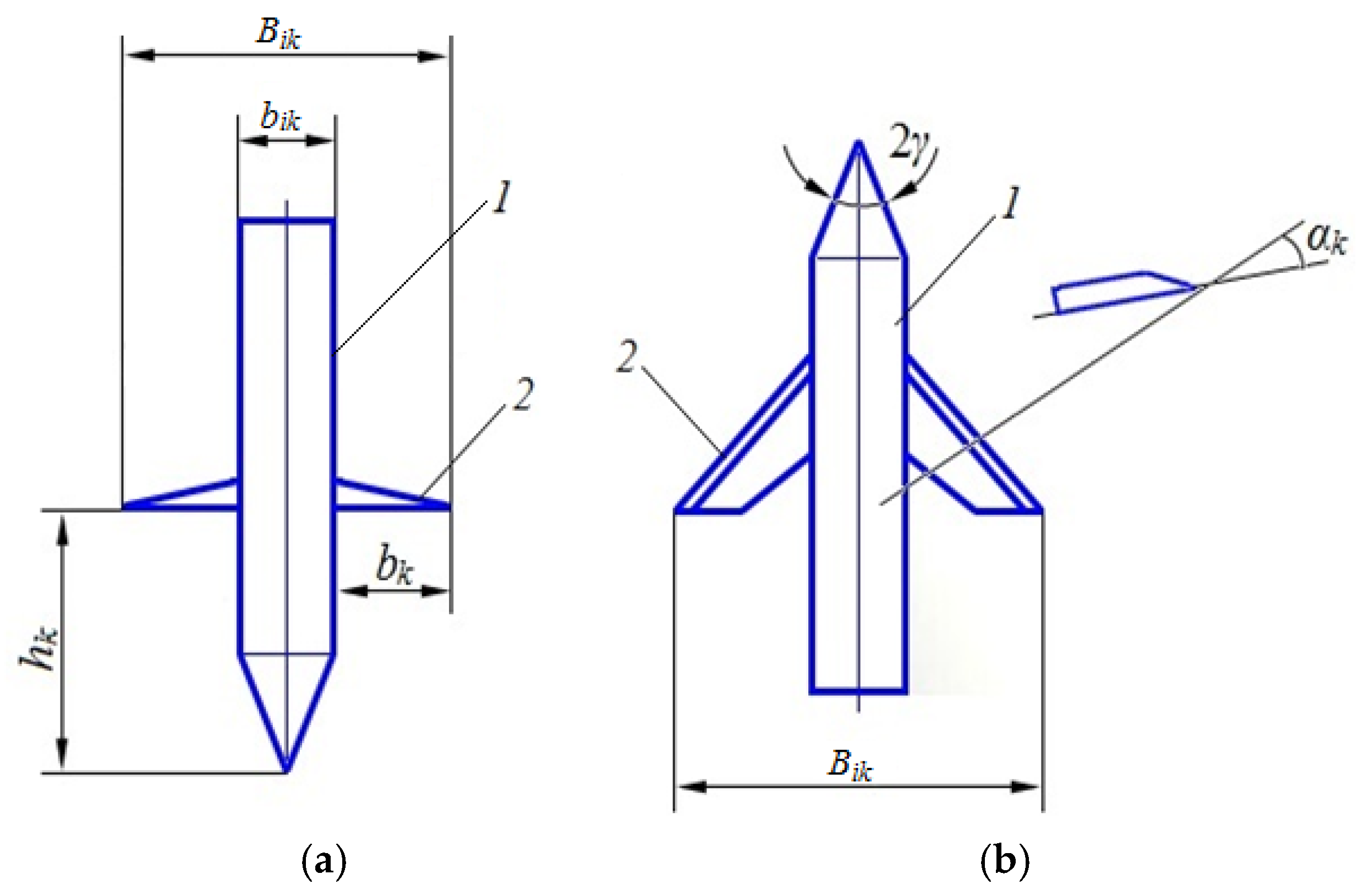
The main parameters include chisel width bik, total working width Bk, wing width Bik, and wing position hk (Figure 3).
The chisel width is determined from the condition of limiting soil deformation [12,13]:
b i k = a a cos 2 γ + φ 2
For aa = 14.7 cm, 2γ = 30°, and φ = 25°, bik = 4.21 cm; therefore, bik = 4.5 cm is adopted.
The rake angle is taken as 27°, ensuring stable soil lifting with acceptable energy consumption.
The total working width is determined as [12]:
B k = a a a k B M 2 a a
where ak is the wing working depth. For BM = 60 cm, aa = 14.7 cm, and ak = 8 cm, Bk = 13.67 cm; therefore, Bk = 14 cm is adopted.
The wing width is determined as:
B i k = B k b i k 2
For Bk = 16 cm and bik = 4.5 cm, Bik = 5.75 cm; therefore, Bik = 6 cm is adopted.
This configuration ensures a continuous loosening zone beneath the ridge with an acceptable draft requirement. The selected parameters were used in subsequent experimental studies and optimisation.

4. Materials and Methods

This section describes the study site and soil conditions, the laboratory–field measurement system, the experimental design, and the analytical and statistical procedures used to evaluate the performance of the developed combined tillage machine. The symbols and abbreviations used below are consistent with the Nomenclature section. The methodological framework followed established approaches for testing combined and multifunctional tillage implements under field conditions [7,12,13,21]. For consistent interpretation of the engineering responses presented later, the following comparative indicators were used. Soil fragmentation degree, F (%), was defined as the mass fraction of soil aggregates smaller than a specified threshold size obtained by sieve analysis. Depending on the experiment, two indices were used: F < 50, the proportion of aggregates smaller than 50 mm, and F < 25, the proportion of aggregates smaller than 25 mm. Fragmentation efficiency was calculated as η = F/R, where R is the measured draft resistance of the corresponding tool. To compare the mechanical loading of different tool configurations, a specific load indicator was calculated as
q = R b a ,
where b is tool working width (m) and a is working depth (m).
For the experiment in which the vertical position of the wing element was varied, an auxiliary indicator was also used: qh = R/(b · h), where h is the installation height of the wing relative to the chisel cutting edge. These derived indicators were used only for comparative evaluation and did not modify the primary measurements.

4.1. Experimental Site, Soil Conditions and Field Measurements

Field experiments were carried out in 2024 on farmers’ fields in the Kashkadarya region, Republic of Uzbekistan, using a New Holland 60/70 tractor (CNH Industrial N.V., Turin, Italy) at operating speeds of 5–7 km h−1. The soils were medium-textured sierozems typical of irrigated agricultural areas of southern Uzbekistan. During the experimental period, the groundwater table was located at a depth of 10–12 m. Crop residue and weed height on the soil surface was measured with a ruler with an accuracy of ±1 cm. For each plot, 30 readings were taken at the beginning, middle and end of the plot. Surface residue mass was determined by frame sampling from an area of 1 m2 followed by weighing with an accuracy of ±5 g. These measurements were performed in three field replications [12,21]. Tool working depth was checked after each pass using a depth gauge; fifty measurements were taken for each treatment, and the measurement error did not exceed ±0.5 cm. Unincorporated residues and weeds were assessed according to O‘zDSt 3412:2019, Agricultural machinery testing. Machines and implements for surface tillage. Programme and test methods (Uzbek Agency for Standardization, Metrology and Certification, Tashkent, Uzbekistan). For paired mouldboard bodies, the standard procedure was followed directly. For plots treated with inclined-shank subsoilers and chisel-type loosening tools, residues remaining on the soil surface were collected from strips 5 m long and equal in width to the implement working width, then weighed with an accuracy of ±10 g. Soil physical and mechanical properties were determined for the 0–10, 10–20, 20–30 and 30–40 cm layers. The average stubble height before tillage was 15.4 cm, and the surface residue load was 1.5 kg m−2. Soil strength was characterised by the cone index (CI), determined in accordance with the ASAE Standard S313.3 (Soil Cone Penetrometer; American Society of Agricultural Engineers, St. Joseph, MI, USA). The CI values for the four depth intervals were 1.21, 1.64, 2.38 and 2.76 MPa, respectively. The corresponding soil bulk density values were 1.21, 1.28, 1.31 and 1.53 g cm−3, and gravimetric moisture contents were 13.1, 14.9, 17.3 and 17.1%, respectively. Soil fragmentation was evaluated by sieve analysis. Samples were collected in five replications from an area of 1 m2 across the full working depth. The soil was successively sieved through 100, 50 and 25 mm sieves. The fractions retained on each sieve and the fraction passing through the 25 mm sieve were weighed with an accuracy of ±10 g, and the proportions of aggregates >100 mm, 100–50 mm, 50–25 mm and <25 mm were calculated.

4.2. Experimental Equipment and Measurement System

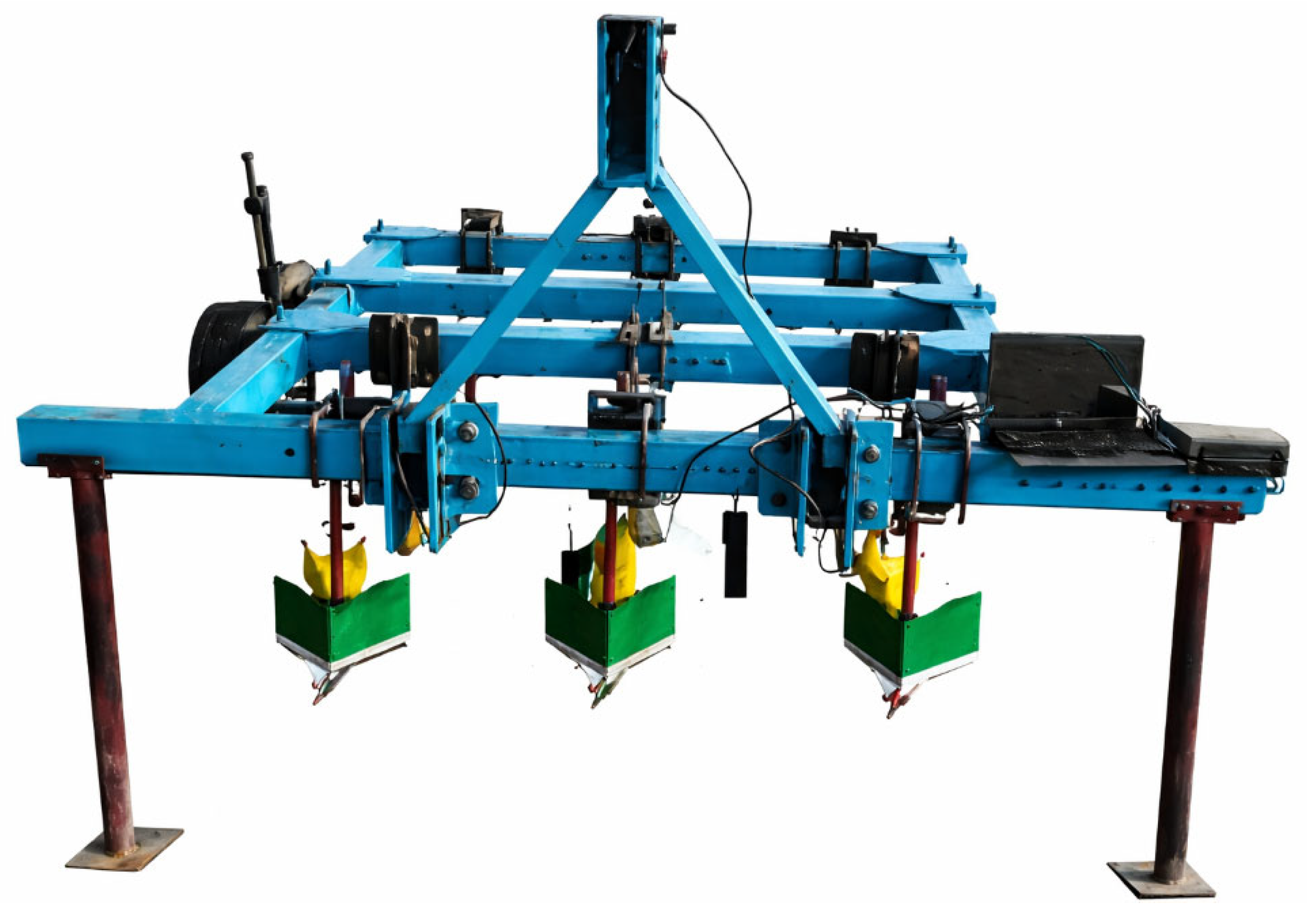
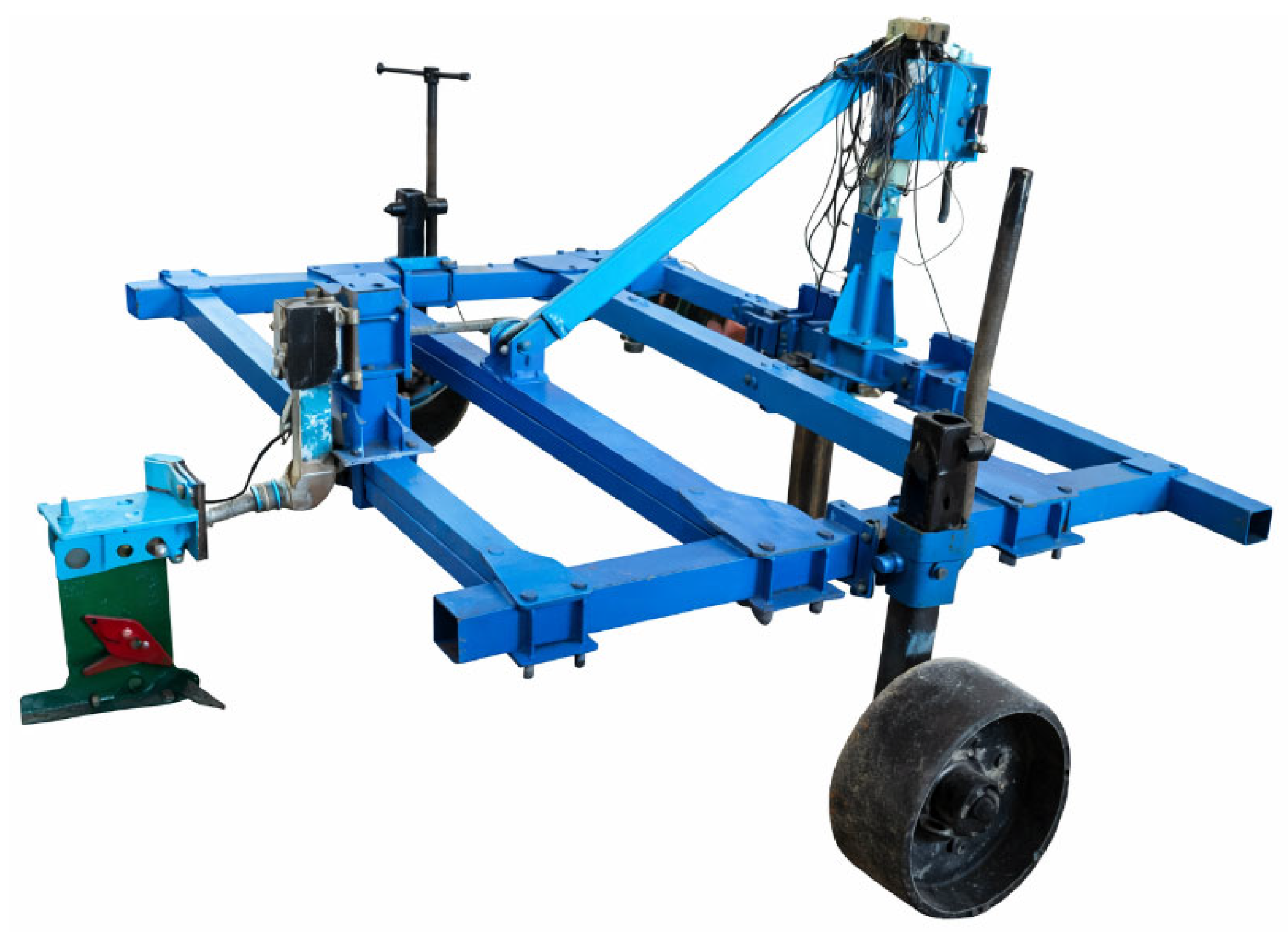
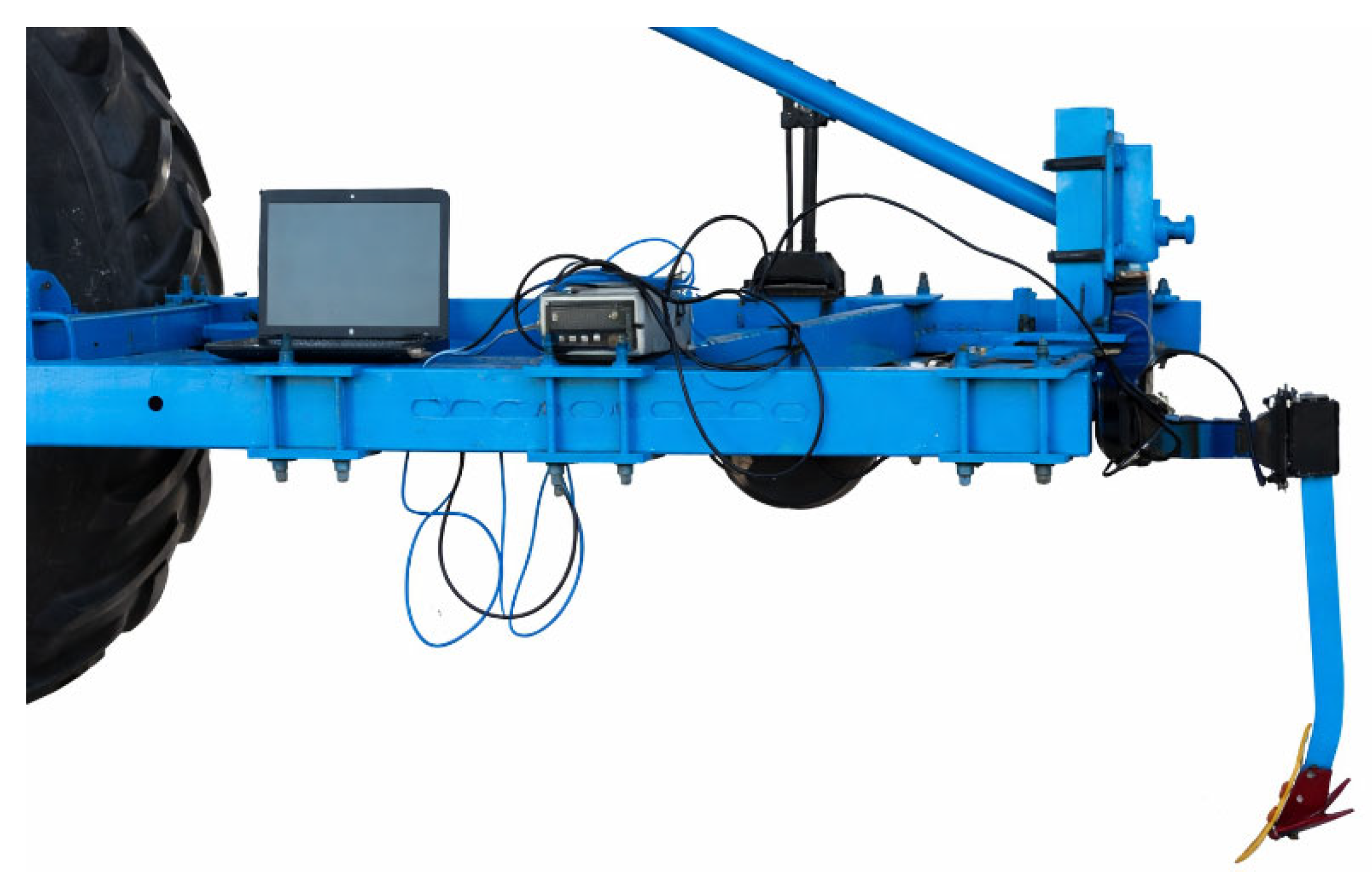
The general arrangement of the laboratory–field test facility is shown in Figure 4. The facility, manufactured at Karshi State Technical University, was designed to determine the draft resistance of individual working tools and to evaluate their technological performance under field conditions. The measurement system consisted of a tractor and three-point linkage, an experimental frame with adjustable mounts for the tools, force-measuring elements, a signal-conditioning and data-acquisition unit, and a subsequent numerical processing stage. The force-measuring elements included strain-gauge pins and an L-shaped strain-gauge beam. The supporting structure comprised a frame, hitch system, longitudinal and transverse beams, and support wheels. Adjustable brackets allowed control of tool position and mutual arrangement. As illustrated in Figure 5 and Figure 6, the L-shaped strain-gauge beam was used to determine the draft resistance of the inclined-shank subsoiler and the chisel-type loosener with wings. Before and after the experimental programme, the strain-gauge system was calibrated. The lower right and left strain-gauge pins were loaded from 0 to 10 kN with a step of 1.0 kN, whereas the upper pin was loaded from 0 to 5 kN with a step of 1.0 kN. The calibration error did not exceed 1.9%. Signals from the strain-gauge beam and pins were recorded using an EMA-P-IP-153 measuring device (custom measurement system for strain gauge data acquisition). The recorded signals were converted to actual force values using the calibration coefficients obtained during the preliminary calibration procedure.

4.3. Experimental Design

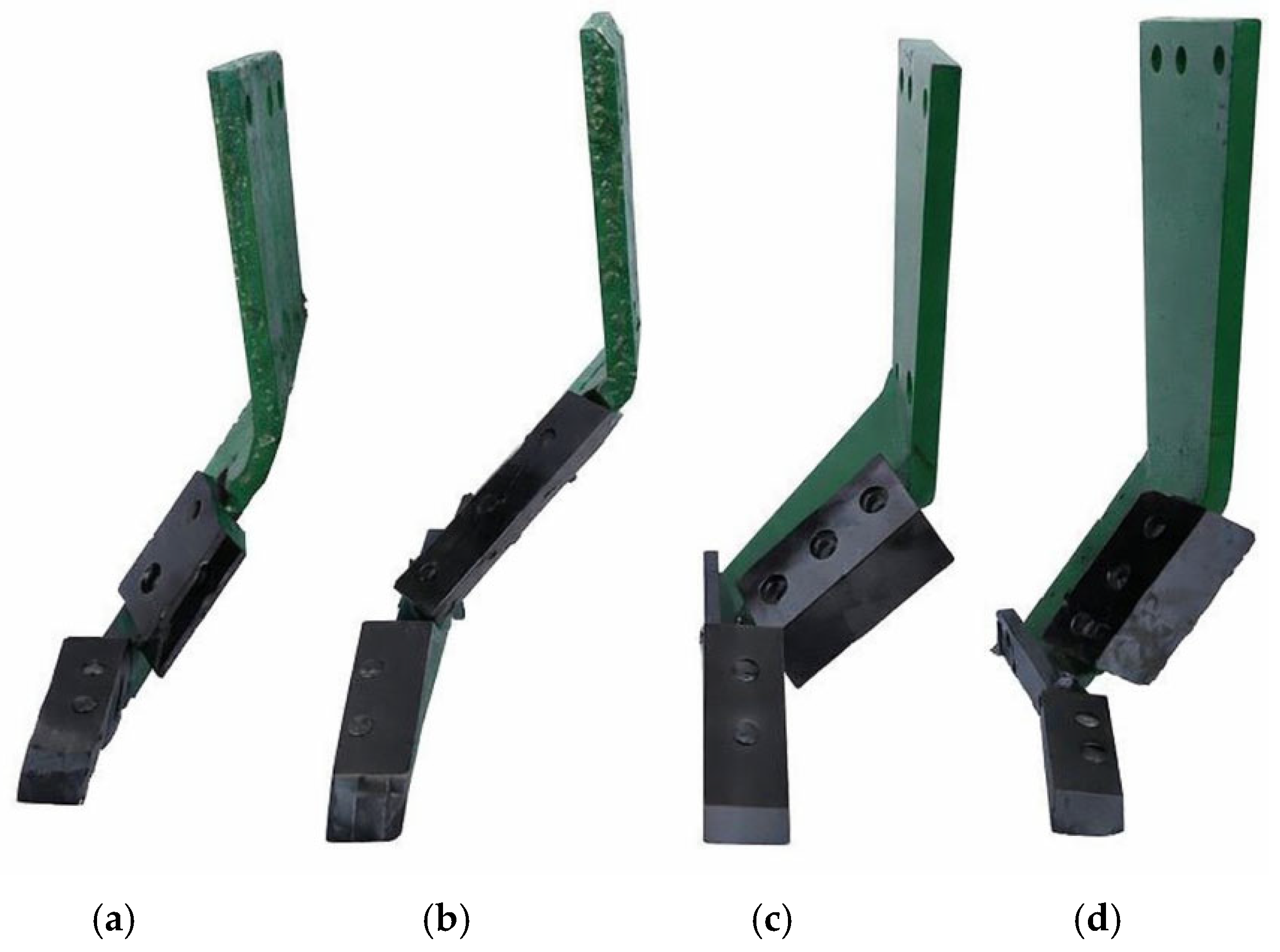
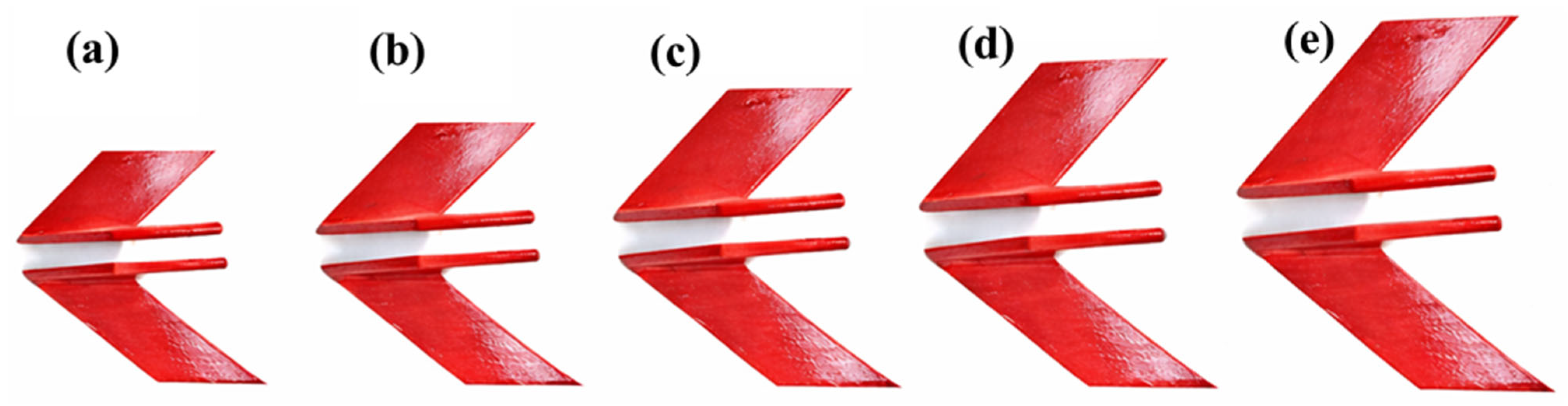
The experimental programme consisted of two stages. In the first stage, single-factor experiments were carried out to determine the effects of selected geometric and operating parameters of the inclined-shank subsoiler, the chisel-type loosener with wings, the universal sweep share, and operating speed on soil fragmentation and draft resistance. The main response variables were the proportion of soil fractions of specified size classes and the draft resistance of the corresponding tool. To evaluate the influence of subsoiler working width, tools with different widths were manufactured; these variants are shown in Figure 7. In the second stage, a multifactor experiment was performed to optimise the main parameters of the chisel-type loosener with wings. Four factors were selected: chisel width (X1), wing working width (X2), longitudinal distance between the winged loosener and the subsoiler shank (X3), and operating speed (X4). The coding scheme and natural levels of these factors are given in Table 2. Coded variables were used only within the response surface design; all final engineering interpretation was based on the corresponding physical variables. The optimisation criteria were F < 25, which was required to be at least 80%, and draft resistance, which was minimised. A Hartley-3 design was used because it allows the construction of second-order models including linear, quadratic and two-factor interaction terms and is widely used in the optimisation of agricultural machine parameters [13,21].
Table 2 presents the transformation between natural and coded values used in the response surface modelling. The central points corresponded to the nominal configuration of the chisel-type loosener with wings, and the selected step sizes ensured a symmetric exploration of the design space.

4.4. Statistical Analysis and Model Adequacy

All data were processed using methods of mathematical statistics and design of experiments. Calculations were performed in Statistica 10.0 (StatSoft Inc., Tulsa, OK, USA), Mathcad 15 (PTC Inc., Needham, MA, USA), and PLANEXP 3.0 (experimental design software). Homogeneity of variance was tested using Cochran’s test. Normality was checked using the Shapiro–Wilk test applied both to the primary measured variables and to the residuals of the fitted regression models. The null hypothesis of normality was accepted at p > 0.05. In all analysed cases, no significant deviation from normality was detected, supporting the use of parametric methods. The significance of regression coefficients was assessed using Student’s t-test at the 95% confidence level, and model adequacy was verified using Fisher’s test. Coefficients of determination (R2) were calculated for all fitted relationships. Empirical models were estimated by the least-squares method. For the multifactor experiment, second-order regression equations were fitted including linear, quadratic and pairwise interaction terms. Reproducibility was additionally assessed from the variances of parallel runs. The obtained models were verified using control test series that were not included in the main fitting dataset. The optimisation of factor combinations under the constraint F < 25 ≥ 80% and minimum draft resistance was carried out by constrained numerical search within the factor space followed by local refinement using PLANEXP tools [13,21]. To avoid overparameterisation, only statistically significant regression coefficients (p < 0.05) were retained in the final models.

4.5. Assessment of In Situ Biodegradation and Soil-Based Valorisation of Incorporated Wheat Residues and Weeds

To complement the engineering evaluation, a biological assessment block was included to quantify the in situ biodegradation of incorporated residues and the related changes in soil biological and chemical indicators. The underlying assumption was that the developed machine influences biodegradation indirectly through residue placement, degree of soil–residue contact, aeration conditions and local moisture regime, rather than through any separate biomass-processing operation.

4.5.1. Initial Mass of Incorporated Biomass

The initial areal mass of incorporated biomass, m0 (kg m−2), was determined using the same field accounting procedure as for Pz in Section 4.1. It was calculated as m0 = m1m2, where m1 is the mass of residues and weeds present on the soil surface before tillage and m2 is the mass remaining on the surface after tillage.

4.5.2. Residual Biomass After Incorporation

Residual biomass was determined 30 and 60 days after incorporation. Soil monoliths were collected from the 0–12 cm layer, corresponding to the main incorporation zone formed by the shallow working elements of the combined machine. The monoliths were manually disaggregated; visible plant residues and weed fragments were separated from the soil matrix, washed when necessary, and dried to constant mass. The remaining residue mass was expressed as m30 and m60 (kg m−2). The residual biomass measurements were performed in three independent field replications (n = 3) for each sampling time (30 and 60 days).

4.5.3. Biodegradation Coefficient

Biodegradation intensity was characterised by a dimensionless coefficient, kt, calculated for each observation time t as kt = (m0mt)/m0, where m0 is the initially incorporated biomass and mt is the residual biomass at time t. Accordingly, k30 and k60 were calculated using m30 and m60. Higher values indicate greater in-soil transformation of incorporated residues.

4.5.4. Soil Organic Carbon, Total Nitrogen and C/N Ratio

Soil-based valorisation was assessed through changes in soil organic carbon (SOC, Corg) and total nitrogen (Ntotal) in the 0–12 cm layer before treatment and 60 days after incorporation. The C/N ratio was calculated from these measurements and used as an integrated indicator of the balance between carbon input, nitrogen availability and microbial demand. Because an increase in residue mass loss does not necessarily imply increased SOC storage, SOC and Ntotal were interpreted together with k30 and k60. Soil organic carbon (SOC) was determined using the Walkley–Black dichromate oxidation method, while total nitrogen (Ntotal) was determined using the Kjeldahl method, in accordance with standard soil analysis protocols. All analyses were carried out in the laboratory of Karshi State Technical University (Uzbekistan).

4.5.5. Dehydrogenase Activity

Soil dehydrogenase activity was used as the principal biological indicator of microbial oxidative activity in response to incorporated residues. Soil samples were taken from the 0–12 cm layer at 30 and 60 days after incorporation. Dehydrogenase activity was determined by the colorimetric reduction of 2,3,5-triphenyltetrazolium chloride (TTC) to triphenylformazan (TPF) under controlled incubation conditions, followed by spectrophotometric quantification of TPF. Activity was calculated as DHA = (CTPF · V)/(m · t), where CTPF is the concentration of triphenylformazan in the extract (mg mL−1), V is extract volume (mL), m is oven-dry soil mass (g), and t is incubation time (h). The results were expressed as mg TPF g−1 h−1. Dehydrogenase activity was determined using the reduction of 2,3,5-triphenyltetrazolium chloride (TTC) to triphenylformazan (TPF) under controlled incubation conditions. Soil samples were incubated with 3% TTC solution at 37 °C for 24 h. After incubation, TPF was extracted using ethanol and quantified spectrophotometrically at a wavelength of 485 nm. The results were expressed as mg TPF g−1 h−1. All measurements were performed in three biological replications (n = 3).

4.5.6. Vertical Distribution of Incorporated Residues

To verify the spatial placement of residues within the cultivated layer, one representative operating variant corresponding to the recommended machine setting was analysed for vertical residue distribution. Residue mass was measured separately in the 0–5, 5–10 and 10–15 cm layers. Plant fragments were manually separated, dried to constant mass, and expressed as areal biomass for each layer. This analysis was used to determine whether residues were concentrated near the surface or redistributed deeper into the loosened soil layer, which is relevant for interpreting variation in kt and dehydrogenase activity.

4.5.7. Statistical Processing of Biological Data

The biological and residue-related variables m0, m30, m60, k30, k60, SOC, Ntotal, C/N ratio and dehydrogenase activity were processed using the same statistical framework as the engineering data. Mean values, standard deviations, 95% confidence intervals and coefficients of variation were calculated. Pairwise comparisons between operating variants were performed using Student’s t-test at the 95% confidence level. Correlations between residue incorporation completeness (Pz) and the biodegradation indicators k30, k60 and dehydrogenase activity were also analysed to quantify the technological–biological linkage under the investigated field conditions. All calculations were performed in Statistica 10.0.

5. Results

This section presents the results of single-factor and multifactor experimental investigations aimed at quantifying the influence of the geometric and operating parameters of the main working tools of the combined machine on soil fragmentation quality and draft resistance, and at identifying their rational ranges for practical implementation. All experimental data were obtained under the field and soil conditions described in Section 4. The reported dependences and regression relationships are valid for medium-textured sierozem soils within the moisture and bulk density ranges observed during the experiments.

5.1. Statistical Significance of Main Factors, Multivariate Effects and Model Adequacy

Prior to performing variance analysis and regression modelling, the distributional assumptions underlying parametric statistical methods were rigorously verified. The normality of residuals for all response variables was assessed using the Shapiro–Wilk test, which confirmed that the residuals did not significantly deviate from a normal distribution (p > 0.05). The homogeneity of variances was additionally evaluated using Cochran’s test, indicating no statistically significant heteroscedasticity across experimental conditions. These results justify the application of parametric ANOVA, MANOVA and regression-based inference. To ensure a comprehensive and statistically robust interpretation of the experimental data, the influence of engineering parameters was analysed at three complementary levels: (i) univariate analysis of variance (ANOVA) for individual response variables, (ii) multivariate analysis of variance (MANOVA) for the combined system response, and (iii) regression modelling with statistical significance testing of coefficients. Importantly, regression modelling was performed only after confirming the statistical significance of the investigated factors at the ANOVA and MANOVA levels.
At the first stage, the statistical significance of geometric and operational parameters was evaluated for each response variable using ANOVA at a 95% confidence level. The adequacy of the developed regression models was assessed using Fisher’s criterion together with lack-of-fit tests. The results are summarised in Table 3.
The consistently high coefficients of determination (R2 > 0.94) indicate a strong explanatory capacity of the developed models. Draft resistance exhibited particularly stable behaviour (R2 > 0.96), whereas soil fragmentation demonstrated slightly greater variability, which is consistent with the inherently stochastic nature of soil aggregate-size distribution under field conditions. To account for the interdependence between technological and biological responses, a multivariate analysis of variance (MANOVA) was conducted for the combined set of variables (F < 25, R, Pz, k60, DHA30). The results are presented in Table 4.
The MANOVA results demonstrate that all principal factors exert statistically significant effects on the combined system response (p < 0.05). The strongest multivariate influence was observed for operating speed (X4) and tool geometry parameters (X1 and X2), confirming their dominant role in controlling both mechanical soil transformation and biologically relevant processes associated with residue placement and decomposition. The statistically significant interaction term (X1 × X4) indicates that the effect of tool geometry is condition-dependent, thereby supporting the hypothesis of coupled technological–biological system behaviour. Following confirmation of factor significance, regression modelling was performed and the contribution of individual factors was further quantified using ANOVA and Student’s t-test. The results are summarised in Table 5.
The results confirm that both linear and nonlinear effects significantly influence the response variables. The statistical significance of quadratic terms substantiates the use of second-order regression models and reflects the inherently nonlinear nature of soil–tool interaction processes. Among the investigated factors, operating speed (X4) and tool geometry parameters (X1, X2) exhibited the highest statistical significance, indicating their primary role in governing soil fragmentation and draft resistance. External validation of the developed models using independent experimental data demonstrated that the relative prediction error did not exceed 4.8% for soil fragmentation and 5.6% for draft resistance. These results confirm the robustness, predictive reliability and practical applicability of the proposed models within the investigated parameter space.

5.2. Influence of Subsoiler Working Width and Chisel Width

This subsection presents the experimental results on the influence of the working width of the inclined-shank subsoiler and the width of its chisel on soil fragmentation degree and draft resistance at operating speeds of 5 and 7 km h−1.
The effect of the working width of the inclined-shank subsoiler on tillage quality, draft force and derived efficiency indicators is summarised in Table 6.
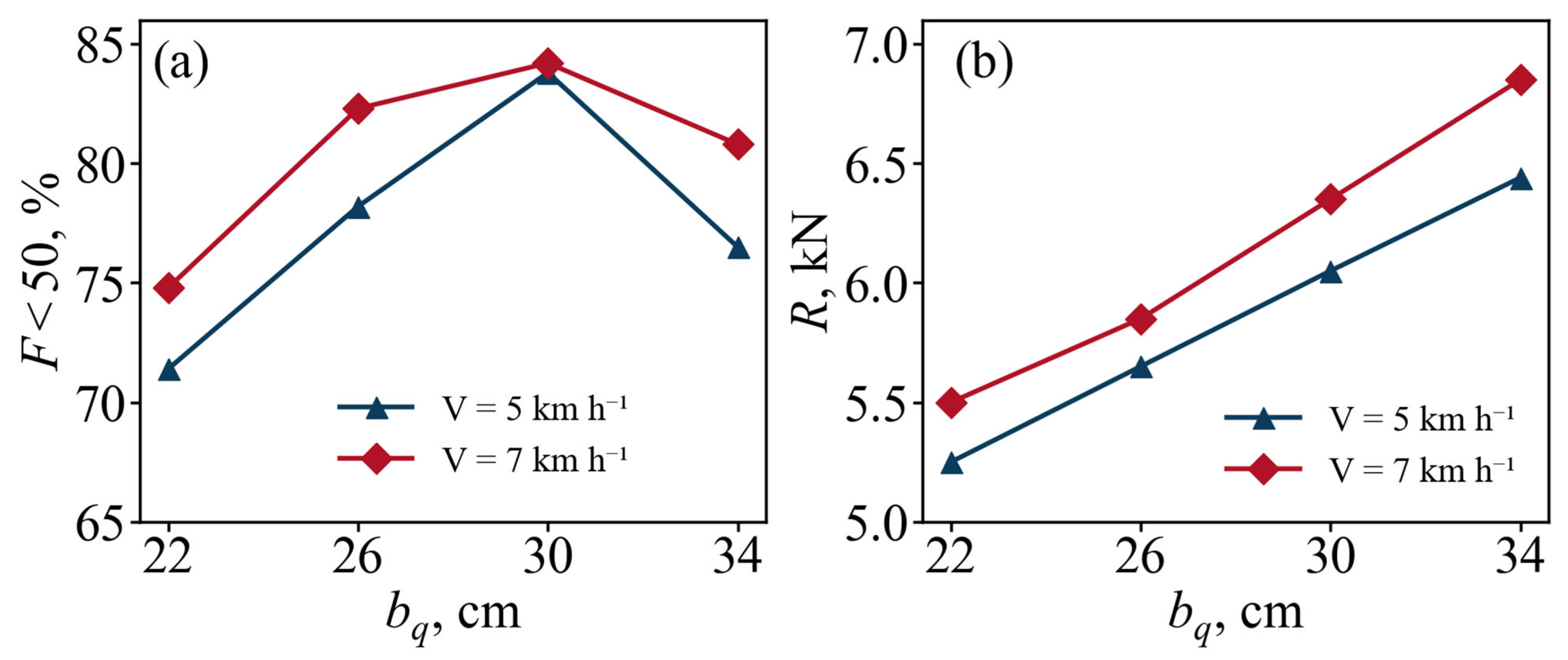
A graphical interpretation of the variation in soil fragmentation degree and draft resistance as a function of the subsoiler working width is given below in Figure 8.
As shown in Figure 8a, soil fragmentation increased with subsoiler working width up to 30 cm, after which a decline was observed, indicating an optimum near 30 cm. At smaller widths the active deformation zone was insufficiently developed, whereas at excessive widths the efficiency of soil disintegration deteriorated. In contrast, draft resistance increased monotonically with working width (Figure 8b) due to the larger volume of soil involved in deformation. The experimental relationships are approximated by Equations (13) and (14) for soil fragmentation degree and by Equations (15) and (16) for draft resistance of the subsoiler at operating speeds of 5 and 7 km h−1, respectively.
Y 1 = 0.1875 x 2 + 11 x 77.25 ,   R 2 = 1
Y 2 = 0.2188 x 2 + 12.75 x 104.13 ,   R 2 = 0.9324
Y 1 = 0.0023 x 2 0.0175 x + 4.7431 ,   R 2 = 0.9989
Y 2 = 0.0002 x 2 + 0.108 x + 2.9491 ,   R 2 = 1
All regression relationships presented above are additionally interpreted in terms of real engineering parameters, while the polynomial expressions are given in analytical form for clarity of approximation of the experimental data. Based on the combined analysis of fragmentation and draft resistance, the rational working width of the inclined-shank subsoiler was established as 30 cm.
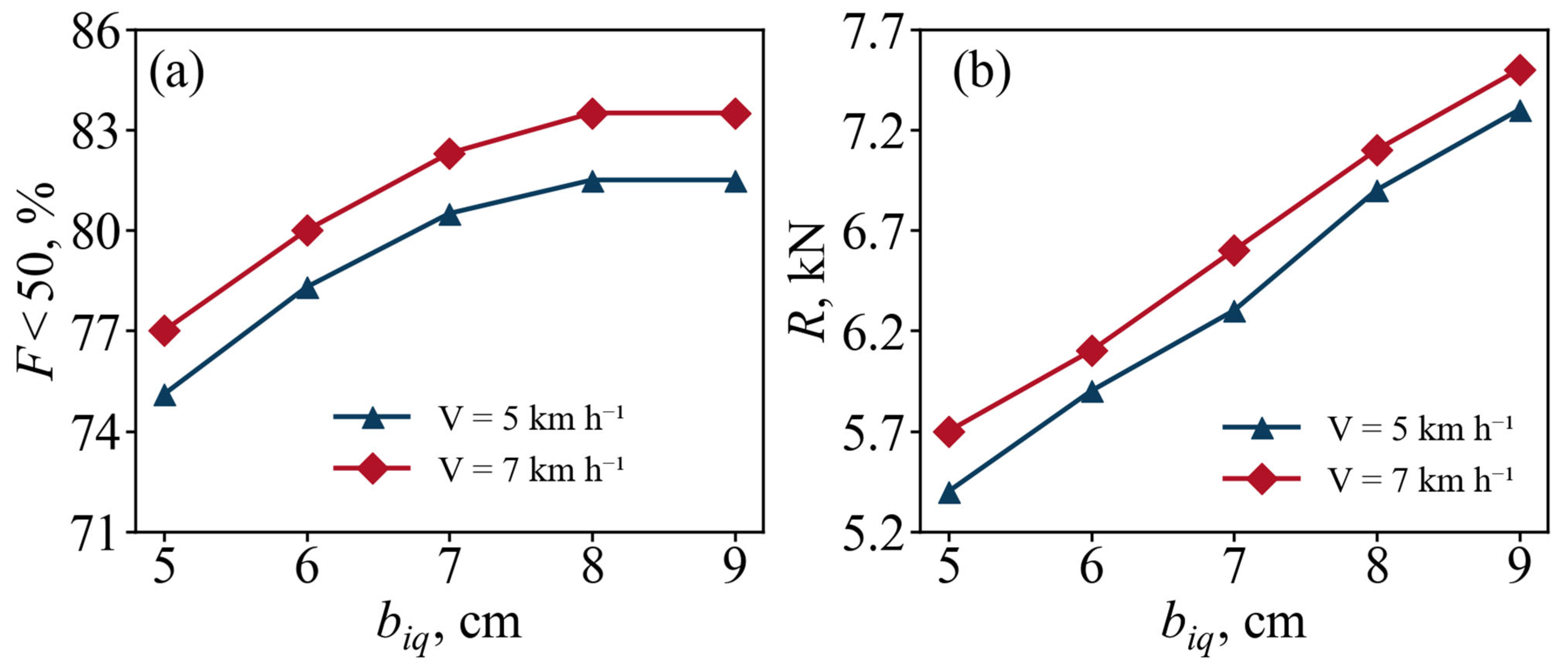
To evaluate the influence of the chisel width of the subsoiler, additional experiments were carried out with chisel widths ranging from 5 to 9 cm. The corresponding results are presented in Table 7.
The corresponding graphical dependences are shown in Figure 9.
The results demonstrate that increasing the chisel width from 5 to 7 cm produced a marked increase in soil fragmentation degree. Further enlargement of the chisel width led only to marginal improvements in this quality indicator. In contrast, draft resistance increased almost linearly over the entire investigated range of chisel widths. This behaviour is associated with the progressive increase in the contact area between the chisel surface and the soil and with the larger soil mass subjected to compression and shear. The obtained experimental dependences are approximated by Equations (17) and (18) for soil fragmentation degree and by Equations (19) and (20) for draft resistance.
Y 1 = 0.5357 x 2 + 9.15 x + 42.571 ,   R 2 = 0.9982
Y 2 = 0.5143 x 2 + 8.85 x + 45.549 ,   R 2 = 0.999
Y 1 = 0.0071 x 2 + 0.584 x + 2.6043 ,   R 2 = 0.9993
Y 2 = 0.0043 x 2 + 0.406 x + 3.5454 ,   R 2 = 0.9987
On the basis of the combined assessment of technological quality and energy demand, the rational chisel width of the inclined-shank subsoiler was established as not less than 7 cm.

5.3. Influence of Chisel Width of the Winged Sweep Share

This subsection presents the experimental results on the influence of the chisel width of the winged sweep share on soil fragmentation quality and draft resistance at operating speeds of 5 and 7 km h−1.
The corresponding results are summarised in Table 8.
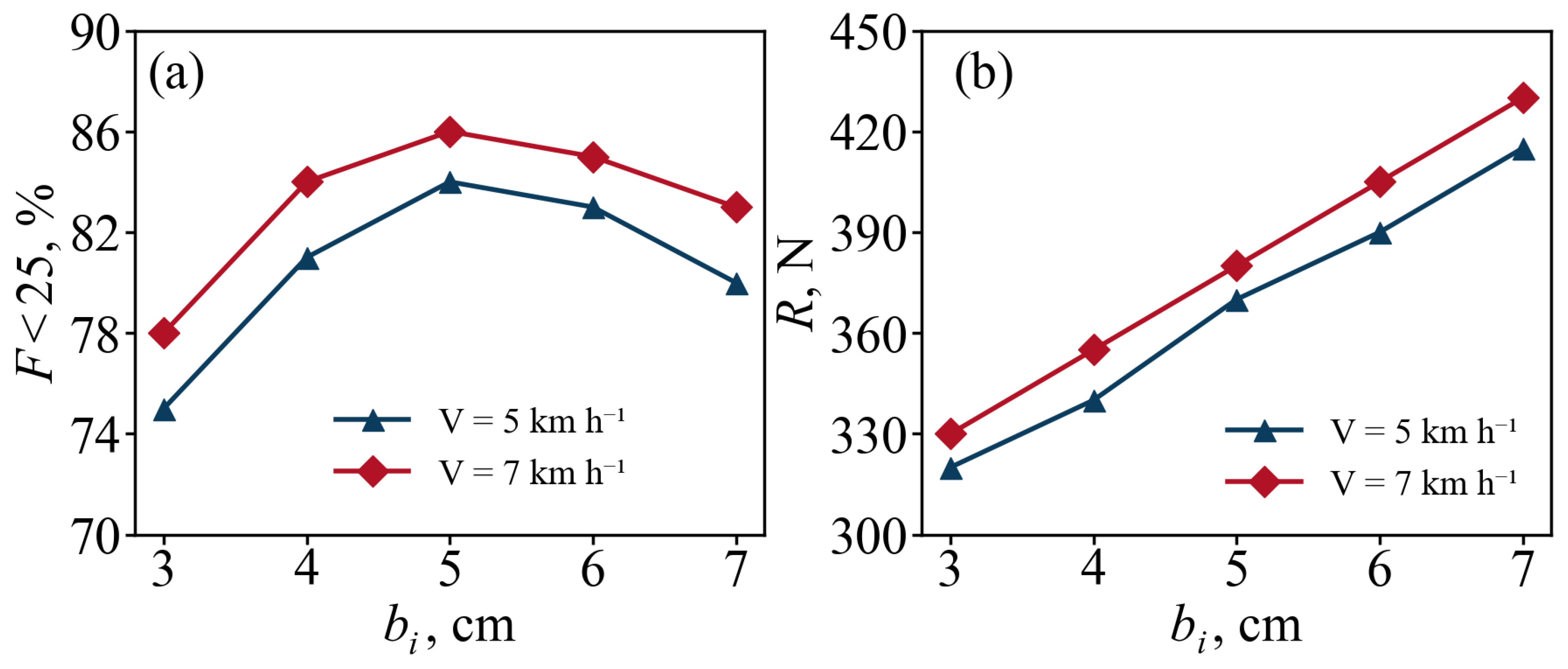
A graphical representation of the obtained results is given in Figure 10.
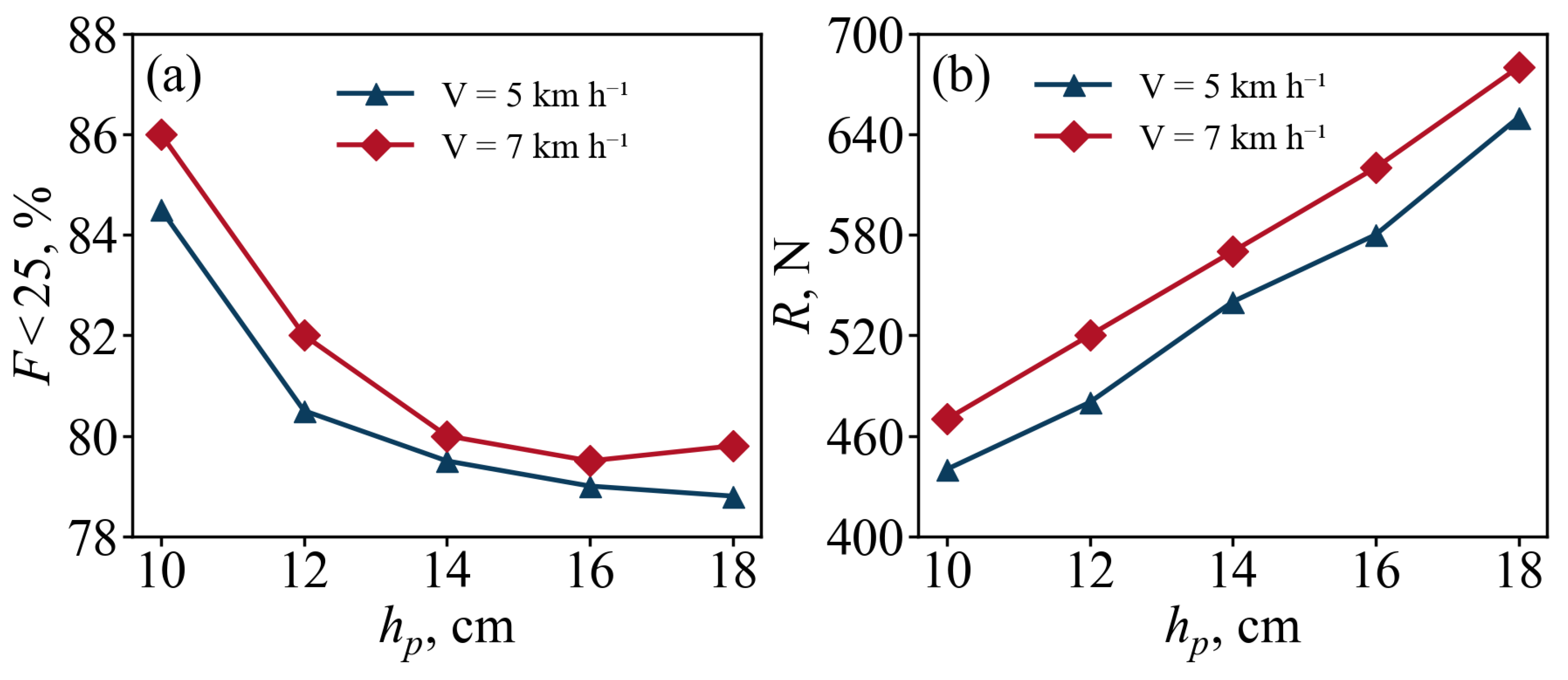
The experimental data indicate that an increase in the chisel width from 3 to 5 cm led to a pronounced increase in the soil fragmentation degree and to the attainment of maximum values of this indicator. A further increase in the chisel width to 6–7 cm resulted in a reduction in fragmentation quality. This extreme behaviour is caused by the accumulation of larger soil clods in front of the working surface at excessive chisel widths and by the reduced intensity of their secondary destruction in the deformation zone. The draft resistance of the winged sweep share increased with chisel width according to a relationship close to linear, reflecting the increasing soil mass involved in deformation. The experimental dependences are approximated by Equations (21) and (22) for soil fragmentation degree and by Equations (23) and (24) for draft resistance.
Y 1 = 1.3571 x 2 + 14.671 x + 46.486 ,   R 2 = 0.9764
Y 2 = 1.5714 x 2 + 16.914 x + 38.457 ,   R 2 = 0.9954
Y 1 = 1 × 10 13 x 2 + 25 x + 255 ,   R 2 = 1
Y 2 = 24 x + 247 ,   R 2 = 0.9965
Based on the obtained results, the rational chisel width of the winged sweep share ensuring a favourable balance between technological quality and energy consumption was established as not less than 4.5 cm.

5.4. Influence of Wing Working Width of the Winged Sweep Share

This subsection presents the results of the experimental investigation of the influence of the working width of the wings of the sweep share on soil fragmentation degree and draft resistance at operating speeds of 5 and 7 km h−1. At the first mention, the design variants of the wing elements are illustrated in Figure 11.
The experimental results are presented in Table 9.
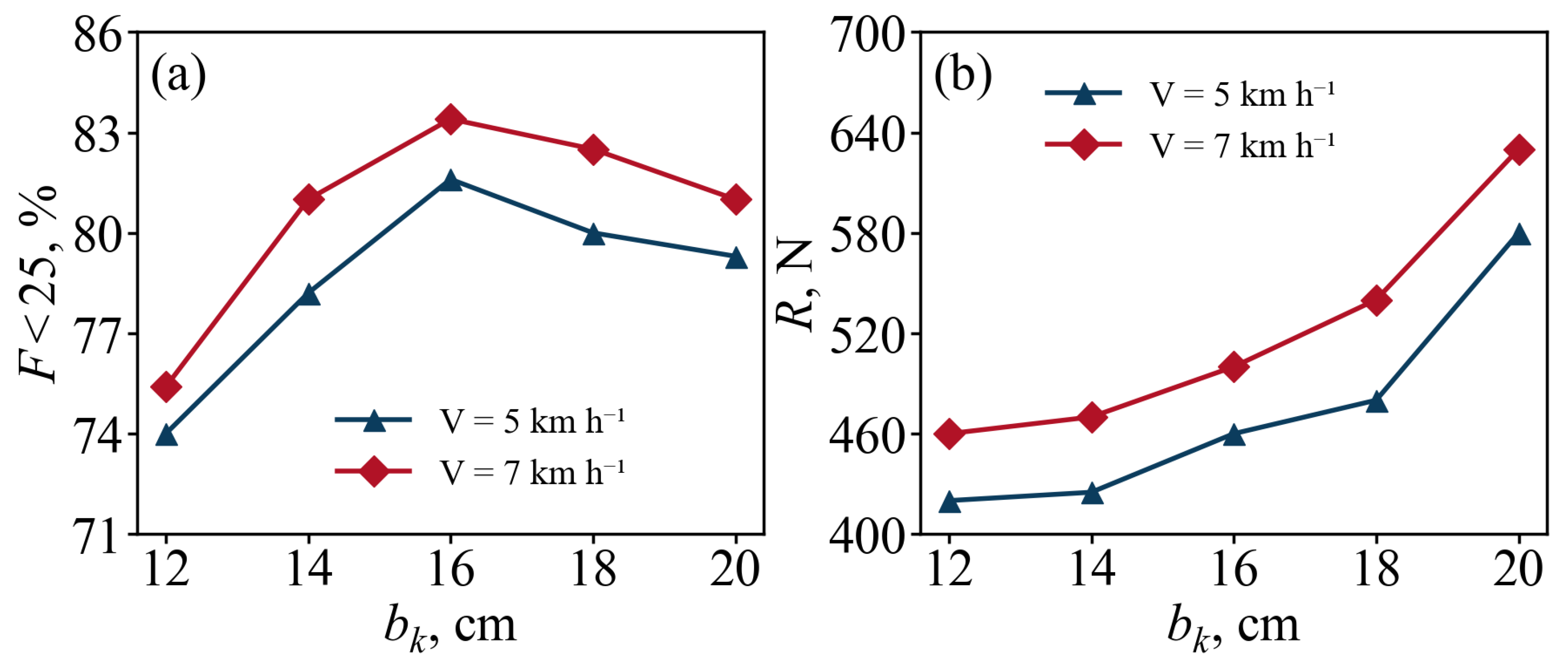
The corresponding graphical dependences are shown in Figure 12.
The results demonstrate that an increase in wing working width within the range of 120–160 mm led to an increase in soil fragmentation degree and to the formation of a distinct maximum. A further increase to 180–200 mm resulted in a decrease in fragmentation quality. This effect is attributed to the formation of partially undeformed soil zones at excessive wing widths and to insufficient shear deformation of some soil aggregates. Draft resistance increased with increasing wing working width according to a nonlinear relationship close to a concave parabola, which reflects the progressive enlargement of the active deformation zone. The experimental dependences are approximated by Equations (25) and (26) for soil fragmentation degree and by Equations (27) and (28) for draft resistance, where R1 and R2 are the draft resistance values of the winged sweep share at operating speeds of 5 and 7 km h−1, respectively, and x = bk is the wing working width, mm.
Y 1 = 0.3196 x 2 + 10.874 x 8.9314 ,   R 2 = 0.9781
Y 2 = 0.25 x 2 + 8.65 x + 6.2 ,   R 2 = 0.945
R 1 = 0.01429 x 2 3.6214 x + 440.286 ,   R 2 = 0.996
R 2 = 0.01429 x 2 3.5714 x + 455.286 ,   R 2 = 0.997
Based on the obtained data, the rational wing working width of the winged sweep share was determined as not less than 16 cm.

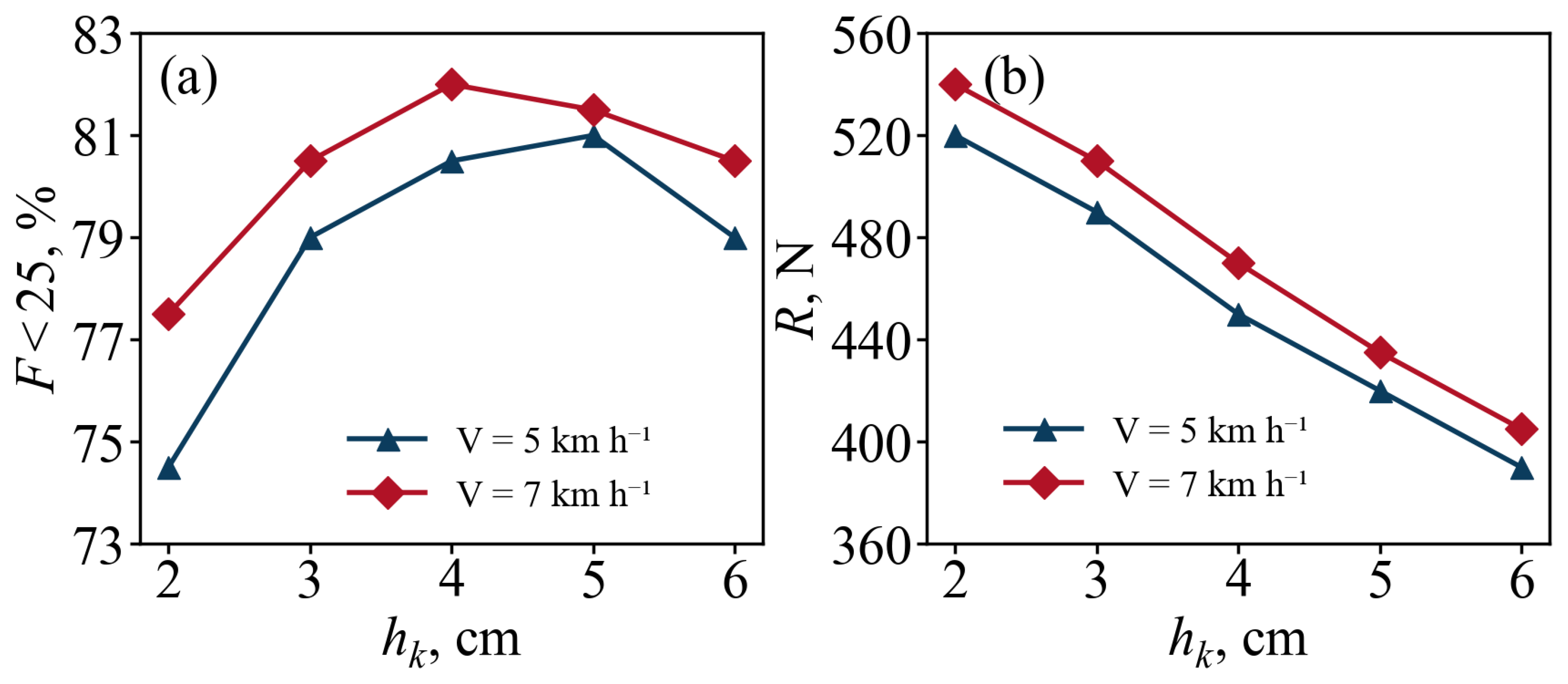
5.5. Influence of Wing Installation Height

This subsection presents the experimental results on the influence of the vertical installation height of the wings relative to the cutting edge of the sweep share chisel on soil fragmentation degree and draft resistance at operating speeds of 5 and 7 km h−1.
The results are given in Table 10.
A graphical representation of the obtained dependences is shown in Figure 13.
The experimental results show that increasing the wing installation height from 2 to 5 cm led to a noticeable increase in soil fragmentation degree and to the attainment of its maximum values. A further increase to 6 cm resulted in a decrease in fragmentation quality. This behaviour is associated with a change in the geometry of the soil deformation zone formed by the combined action of the chisel and wing elements and with a redistribution of loads between these components. At the same time, draft resistance decreased almost linearly with increasing wing installation height, which can be explained by a reduction in the effective soil volume involved in active deformation. On the basis of the combined analysis of quality and energy indicators, the rational installation height of the wings relative to the chisel cutting edge was established within the range of 4–5 cm.

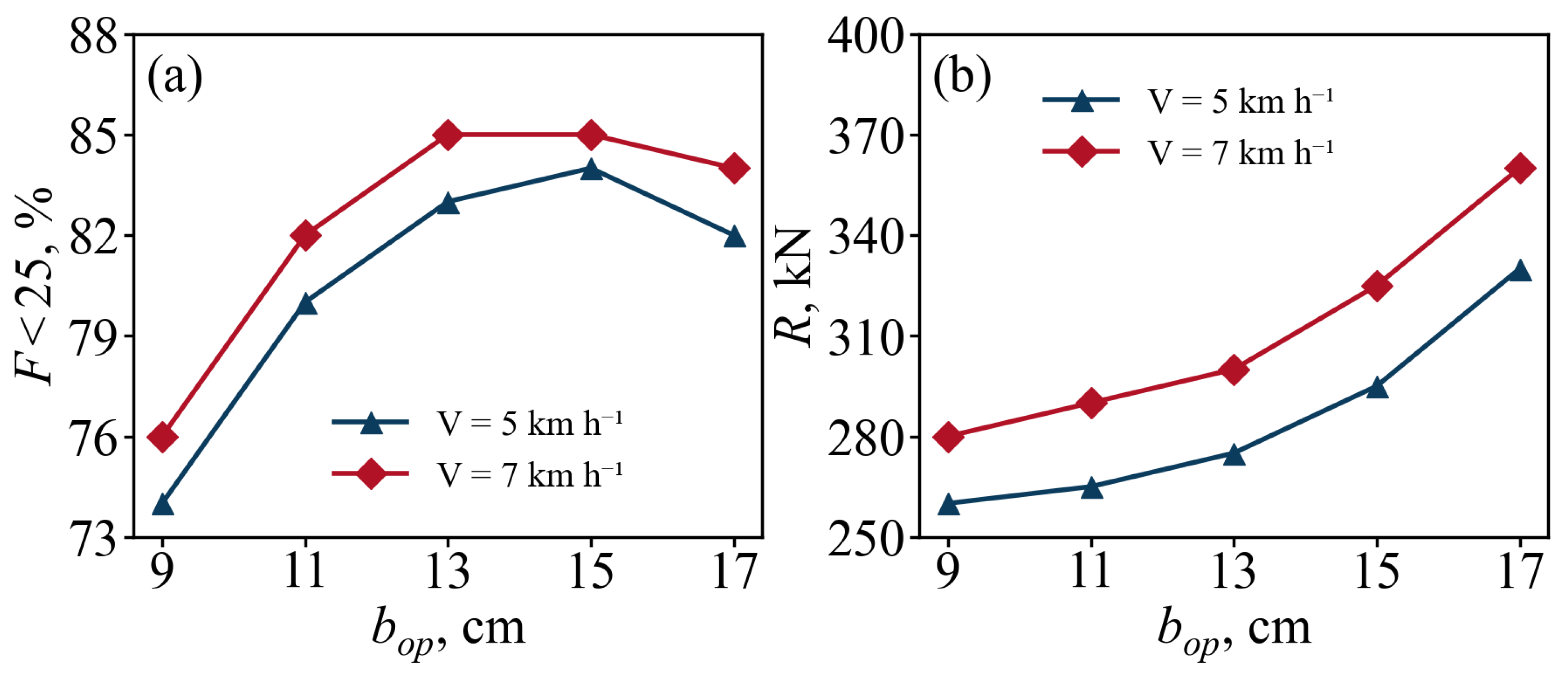
5.6. Influence of Sweep Share Working Width and Operating Depth

This subsection presents the experimental results on the influence of the working width of the sweep share and its operating depth on soil fragmentation quality and draft resistance at operating speeds of 5 and 7 km h−1.
The effect of the working width of the sweep share is summarised in Table 11.
A graphical interpretation of the results is given in Figure 14.
The experimental data show that increasing the working width of the sweep share within the range of 9–15 cm led to an increase in soil fragmentation degree and to the formation of a maximum. A further increase to 17 cm caused a slight reduction in fragmentation quality. Draft resistance increased according to a nonlinear dependence close to a concave parabola, reflecting the increasing soil mass involved in deformation and the extension of the contact zone.
To evaluate the influence of operating depth, additional experiments were performed. The corresponding results are presented in Table 12.
The graphical dependences are shown in Figure 15.
The results demonstrate that increasing operating depth led to a reduction in soil fragmentation degree and to a substantial increase in draft resistance. At depths exceeding 12 cm, the increase in draft resistance became disproportionate to any achievable improvement in fragmentation quality. Therefore, under the investigated soil and operating conditions, the rational operating depth of the sweep share should not exceed 12 cm.

5.7. Influence of Longitudinal Distance Between the Subsoiler and the Winged Sweep Share

This subsection presents the experimental results on the influence of the longitudinal distance between the inclined-shank subsoiler and the winged sweep share on soil fragmentation degree and draft resistance at operating speeds of 5 and 7 km h−1.
The corresponding results are summarised in Table 13.
A graphical interpretation of the obtained dependences is given in Figure 16.
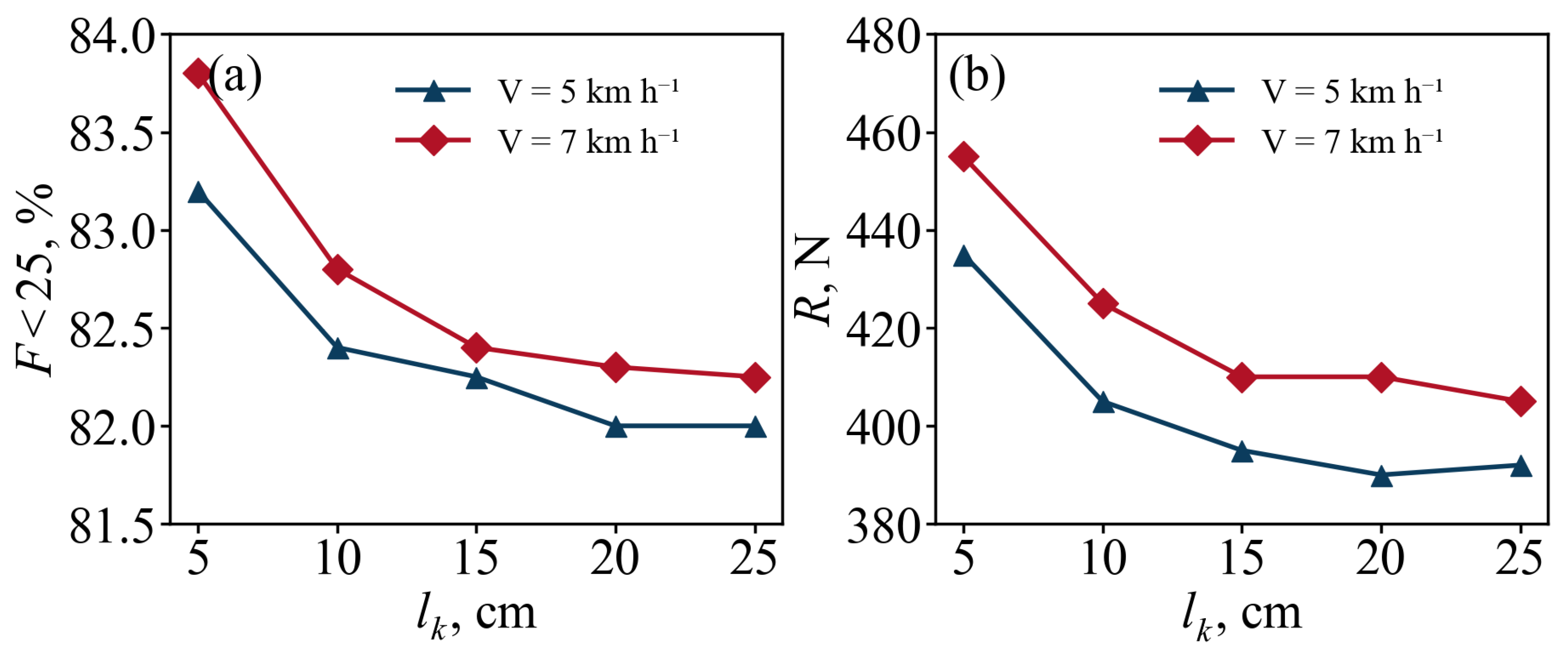
The experimental results indicate that increasing the longitudinal distance between the subsoiler shank and the winged sweep share from 5 to 20 cm led to only minor changes in soil fragmentation degree, whereas draft resistance decreased according to a nonlinear trend. This behaviour reflects the gradual weakening of the interaction between the soil flow fields generated by the subsoiler and the sweep share. The obtained experimental dependences are approximated by Equations (29) and (30) for soil fragmentation degree and by Equations (31) and (32) for draft resistance.
Y 1 = 0.3571 x 2 14.814 x + 331 ,   R 2 = 0.9705
Y 2 = 0.4429 x 2 18.386 x + 384 ,   R 2 = 0.9501
Y 1 = 0.004 x 2 0.176 x + 83.92 ,   R 2 = 0.9545
Y 2 = 0.0059 x 2 0.2487 x + 84.83 ,   R 2 = 0.9705
On the basis of the combined analysis, the rational longitudinal distance between the inclined-shank subsoiler and the winged sweep share was established within the range of 15–20 cm.

5.8. Multivariate Optimisation of Working Tool Parameters

To determine rational combinations of the parameters of the chisel-type loosener with wings, multifactor experimental studies were carried out using a Hartley-3 experimental design.
The output criteria for optimisation were the soil fragmentation degree Y1, defined as the proportion of fractions smaller than 25 mm, %, which was required to be not less than 80%, and the draft resistance of the working tool Y2, kN, which was to be minimised.
The influencing factors were selected as the chisel width X1, the wing working width X2, the longitudinal distance between the winged loosener and the subsoiler shank X3, and the operating speed of the unit X4.
Based on statistical processing of the experimental data, second-order regression equations describing the influence of the selected factors on the output criteria were obtained.
The regression models for soil fragmentation degree and draft resistance are represented by Equations (33) and (34).
Y = 81.602 + 0.674 X 1 + 0.870 X 2 1.343 X 3 + 1.811 X 4 2.397 X 1 2 + 0.461 X 1 X 2 + 0.550 X 1 X 3 0.513 X 1 X 4 1.132 X 2 2 + 0.000 X 2 X 3 + 0.000 X 2 X 4 + 1.875 X 3 2 0.956 X 3 X 4 0.637 X 4 2
Y = 38.633 + 34.667 X 1 + 50.833 X 2 32.500 X 3 + 92.833 X 4 + 27.539 X 1 2 + 0.000 X 1 X 2 13.542 X 1 X 3 + 3.458 X 1 X 4 + 27.873 X 2 2 92.375 X 2 X 3 13.875 X 2 X 4 + 32.206 X 3 2 7.625 X 3 X 4 + 41.873 X 4 2
To determine the combinations of factors satisfying the imposed constraint on soil fragmentation degree and ensuring minimum draft resistance, the obtained regression equations were solved jointly using constrained numerical optimisation. The optimal combinations are presented in Table 14.
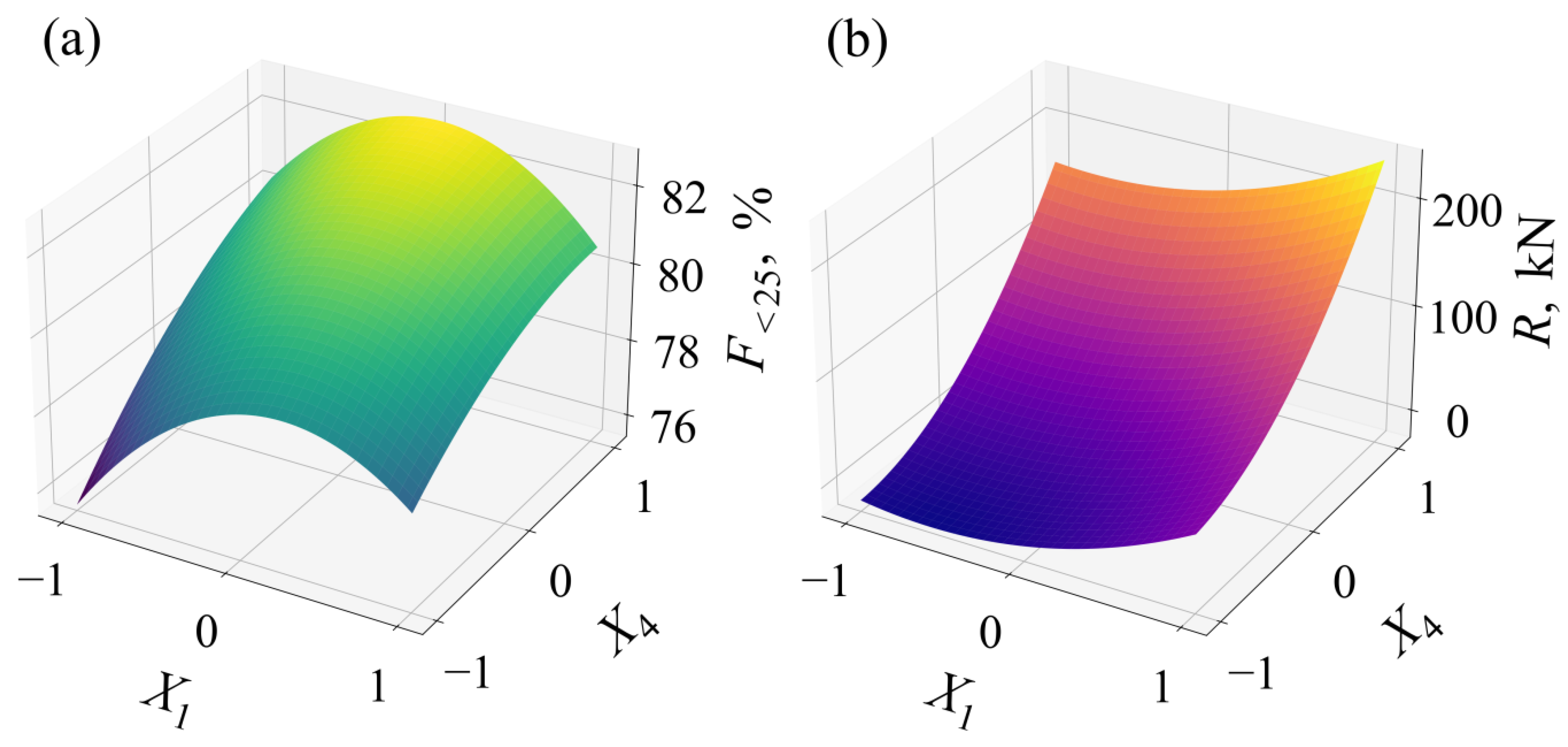
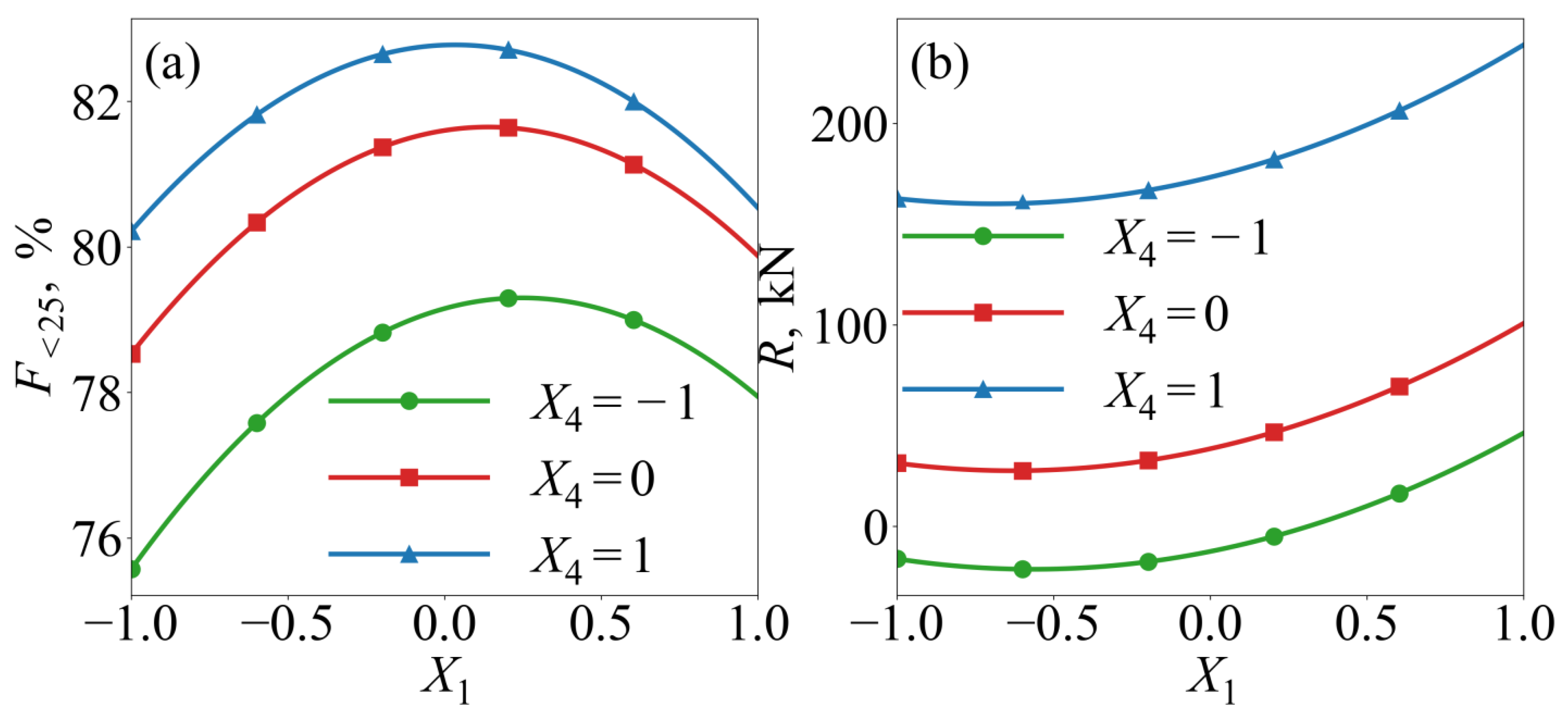
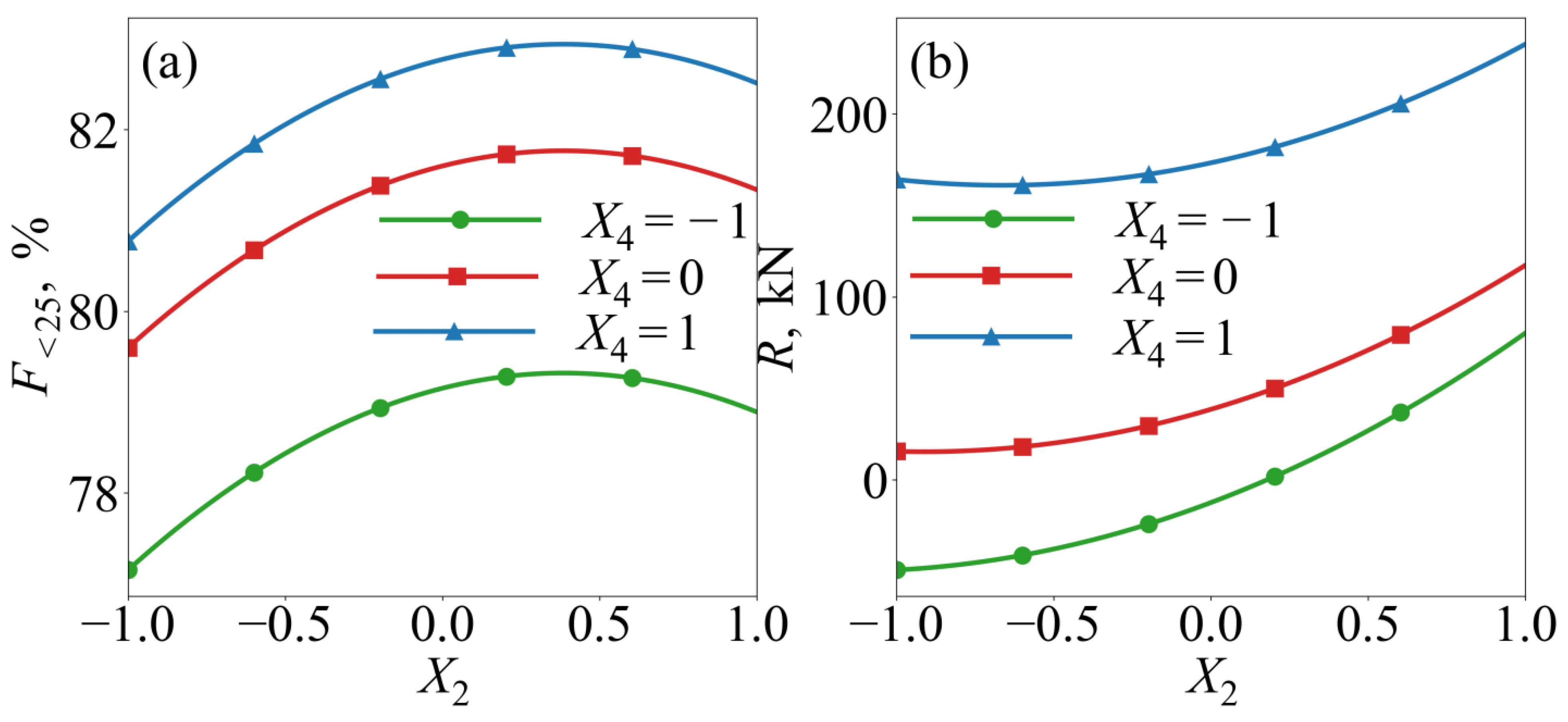
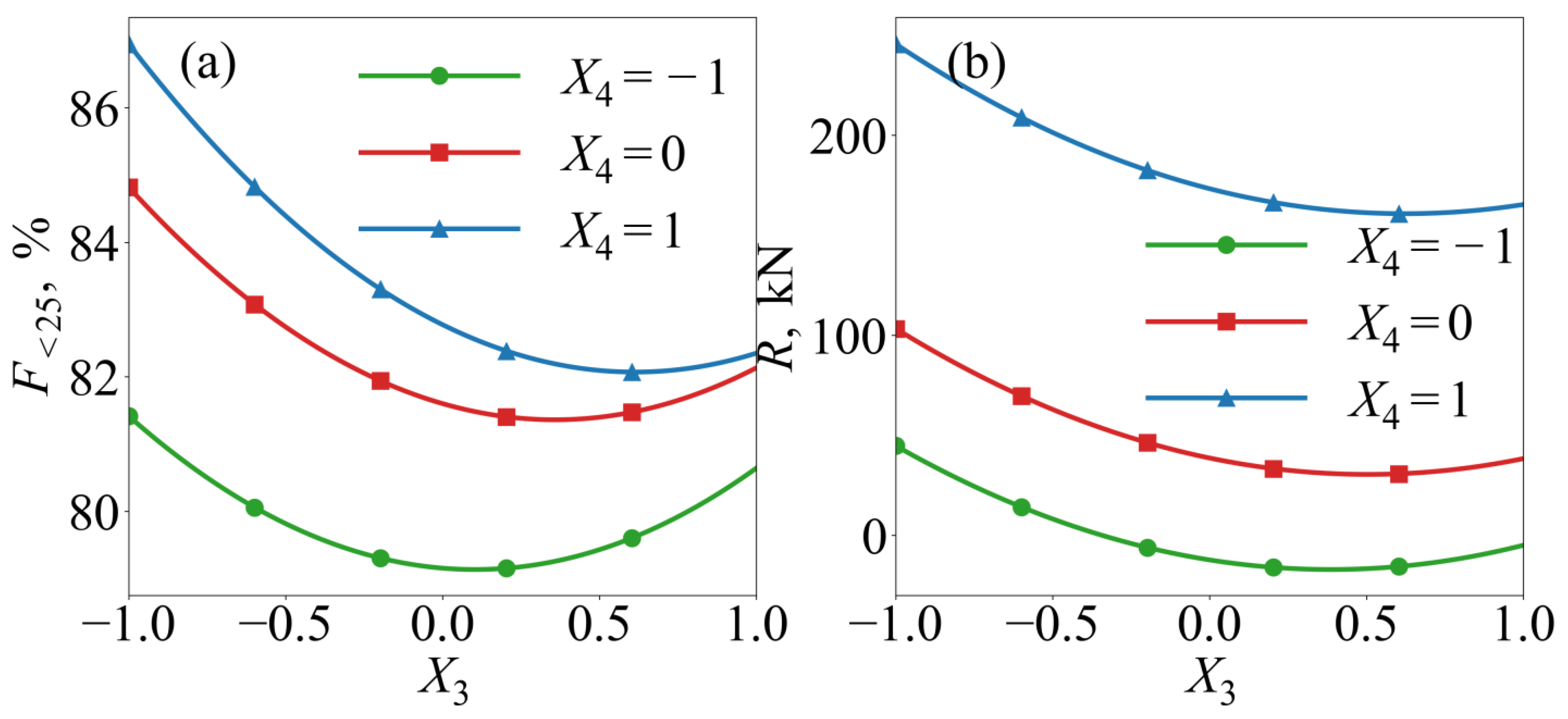
To visualise the influence of the main factors on the output criteria, partial dependences and response surfaces were constructed, Figure 17, Figure 18 and Figure 19.
The multi-criteria optimisation results show that, within the operating speed range of 5–7 km h−1, the rational parameter ranges of the chisel-type loosener with wings are as follows: chisel width 4.3–5.6 cm, wing working width 12.49–14.32 cm, and longitudinal distance between the winged loosener and the subsoiler shank 15.96–20.56 cm. At these parameter values, soil fragmentation degree reaches 91.68–93.12%, while draft resistance of the chisel-type loosener with wings varies from 2.45 to 3.24 kN. These results confirm the effectiveness of the selected parameter combinations and are fully consistent with the preliminary analytical substantiation presented in Section 3. Figure 20 presents the corresponding three-dimensional response surfaces.
The three-dimensional response surfaces shown in Figure 20 were generated using the experimentally validated second-order regression models given by Equations (33) and (34). The surfaces represent model-based approximations and illustrate the combined influence of the structural parameter of the working tool (chisel width X1) and the operating parameter (travel speed X4) on soil fragmentation quality and draft resistance, respectively, while the remaining factors were fixed at their central coded levels (X2 = 0 and X3 = 0). The obtained surfaces reveal a pronounced nonlinear response of both indicators to variations in X1 and X4, confirming the significant interaction between geometric and kinematic parameters of the working tool and providing a quantitative basis for subsequent multi-criteria optimisation of the technological parameters of the combined soil preparation machine.

5.9. Influence of Combined Soil Preparation on In Situ Biodegradation and Valorisation of Wheat Residues and Weeds

The influence of the combined soil preparation technology on in situ biodegradation and the subsequent soil-based valorisation of incorporated wheat residues and weeds was assessed by integrating the technological indicators of residue incorporation and redistribution presented in Section 5.2, Section 5.3, Section 5.4, Section 5.5, Section 5.6, Section 5.7 and Section 5.8 with the biological and biochemical response variables. The analysis was explicitly focused on how the combined machine modifies the physical contact between residues and soil and the vertical placement of biomass within the cultivated layer and, consequently, alters the micro-environment controlling microbial activity and organic matter transformation. The assessment was performed for the control treatment, corresponding to conventional soil preparation at a forward speed of 7 km h−1, and for the combined soil preparation technology operated at forward speeds of 5 and 7 km h−1.
The technological performance of residue incorporation and the initial amount of biomass transferred into the cultivated layer are summarised in Table 15.
Relative to the control variant, the amount of biomass incorporated into the soil profile increased by 12.1% at an operating speed of 5 km h−1 and by 14.3% at 7 km h−1. From a technological perspective, this difference is of practical importance, since the mass of organic material physically introduced into the soil matrix sets the upper limit of the substrate pool that can subsequently be involved in microbial transformation processes.
The spatial arrangement of plant residues immediately after incorporation is summarised in Table 16.
Under the control treatment, a pronounced accumulation of residues was observed in the upper 0–5 cm soil layer, where more than half of the total incorporated biomass was retained. In contrast, the combined soil preparation technology produced a substantially more homogeneous distribution of residues within the 0–10 cm layer and a noticeably larger proportion of biomass located in the 5–10 cm horizon. The associated reduction in the stratification index (SI) provides quantitative confirmation that the combined approach effectively decreases the surface concentration of plant residues and enlarges the contact interface between organic fragments and soil aggregates. From a biological viewpoint, such redistribution is of particular relevance, because it improves the accessibility of organic residues to soil microorganisms and extracellular enzymes, while simultaneously creating more favourable aeration and moisture conditions within the principal zone of microbial activity.
The temporal patterns of residue mass loss and microbial functioning during the first 60 days following incorporation are presented in Table 17.
The obtained mass-loss coefficients consistently demonstrate a higher intensity of in situ biodegradation under the combined soil preparation regime. After 30 days, the biodegradation coefficient (k30) increased from 0.285 in the control variant to 0.414 and 0.447 when the combined technology was applied at 5 and 7 km h−1, respectively. After 60 days, this contrast became even more evident, with k60 values reaching 0.577–0.607 for the combined treatments, whereas the corresponding value for the control remained at 0.442.
The higher biodegradation rates were accompanied by a substantial increase in dehydrogenase activity. At 30 days, DHA30 in the combined treatments exceeded the control by approximately 30–41%, indicating the markedly higher oxidative and respiratory activity of the soil microbial community. Although dehydrogenase activity decreased slightly by day 60 in all treatments, which is consistent with the gradual depletion of readily available substrates, it remained consistently higher under combined soil preparation. This behaviour reflects sustained microbial involvement in residue transformation and confirms that the technological modification of residue placement and soil structure exerts a persistent influence on microbial functioning.
Changes in soil organic carbon and total nitrogen in the 0–12 cm layer are presented in Table 18.
As expected for a relatively short observation period of 60 days, variations in bulk SOC and total nitrogen were moderate. Nevertheless, the combined soil preparation resulted in a consistent positive shift in SOC relative to the control, with the highest increase observed for the operating speed of 7 km h−1. At the same time, total nitrogen showed a slight increase under the combined technology, and the C/N ratio remained nearly unchanged across treatments. This indicates that the enhanced decomposition of residues did not lead to accelerated nitrogen depletion, but rather proceeded under balanced microbial utilisation of carbon and nitrogen.
Taken together, the results demonstrate that the combined soil preparation technology creates more favourable physical conditions for in situ biodegradation by simultaneously increasing the mass of incorporated residues, improving their vertical distribution within the biologically active soil layer and reducing surface accumulation. These technological effects translated into higher microbial oxidative activity and accelerated residue mass loss during the first 60 days after incorporation. Importantly, the concurrent increase in soil organic carbon indicates that a part of the residue-derived carbon was retained within the soil matrix, reflecting an initial stage of soil-based valorisation rather than a purely mineralisation-dominated turnover.
Overall, the obtained results provide clear evidence of a technological–biological linkage: improved residue incorporation and redistribution achieved by the combined machine directly enhance microbial activity and the efficiency of early-stage residue transformation, thereby contributing both to the agronomic functionality of soil preparation and to short-term improvement of soil organic matter status.
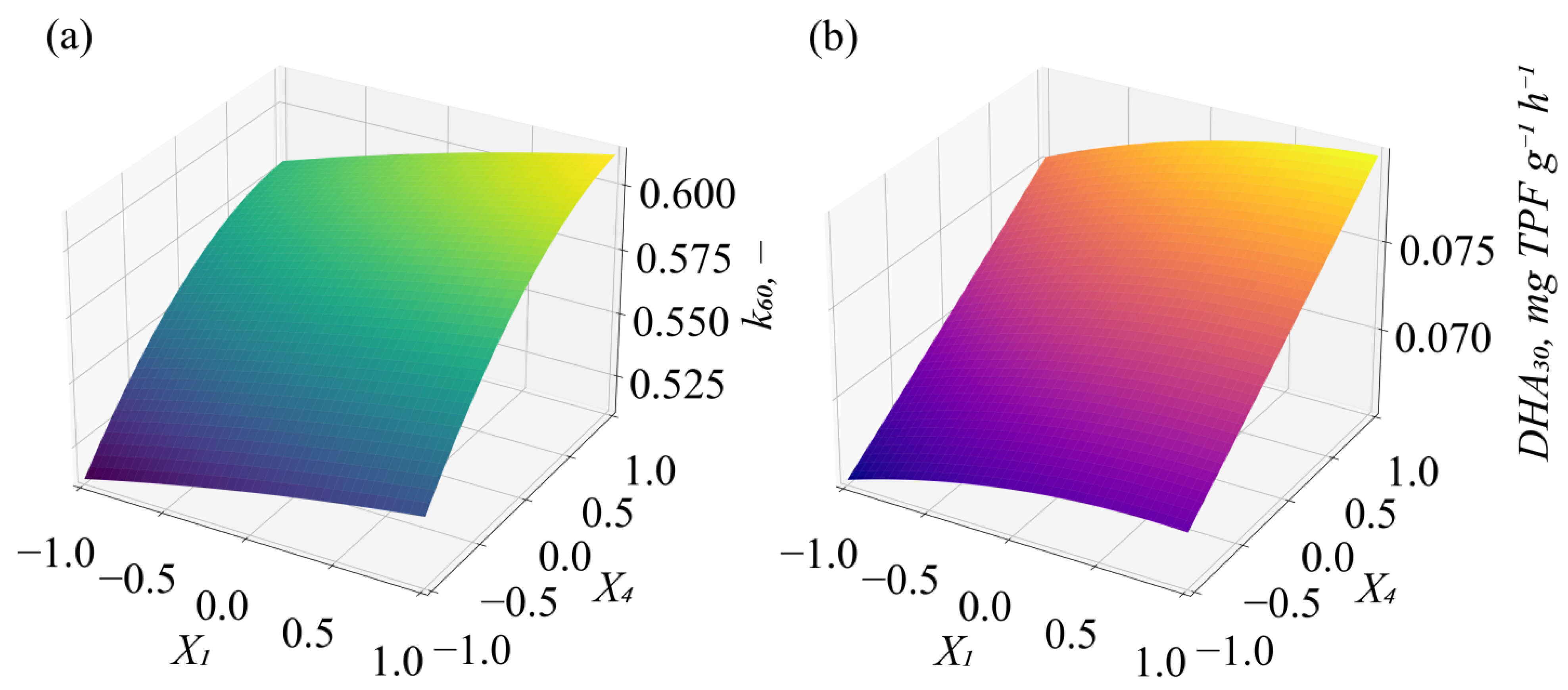
To quantify this technological–biological linkage within the same optimisation domain used for the engineering analysis in Section 5.8, the biological response variables were additionally approximated by second-order response surface models using the same set of coded engineering factors. These models represent a phenomenological mapping of biological responses onto the engineering optimisation space and implicitly account for the technological mediators of residue incorporation completeness and vertical redistribution analysed above. The coded factors were defined as follows: X1 is chisel width, cm; X2 is expander working width, mm; X3 is longitudinal distance between the expander and the subsoiler shank, mm; and X4 is operating speed, km h−1. The biodegradation coefficient after 60 days, k60, and the dehydrogenase activity after 30 days, DHA30, are described by the following regression models.
k 60 = 0.576587 + 0.014843 X 1 + 0.035565 X 2 0.023640 X 3 + 0.035086 X 4 0.001919 X 1 2 0.010728 X 2 2 + 0.009101 X 3 2 0.014669 X 4 2 + 0.006725 X 1 X 2 0.001538 X 1 X 3 + 0.002158 X 1 X 4 0.008161 X 2 X 3 + 0.012105 X 2 X 4 0.002114 X 3 X 4 ,   R 2 = 0.918  
DHA 30 = 0.073007 + 0.001876 X 1 + 0.005244 X 2 0.003742 X 3 + 0.005355 X 4 0.000889 X 1 2 0.000079 X 2 2 0.001143 X 3 2 + 0.000072 X 4 2 + 0.000477 X 1 X 2 0.000580 X 1 X 3 + 0.000443 X 1 X 4 0.001062 X 2 X 3 + 0.002097 X 2 X 4 + 0.000549 X 3 X 4 ,   R 2 = 0.842
It should be emphasised that the physical mechanism linking the engineering optimisation factors X1X4 with the biological responses k60 and DHA30 is mediated by intermediate technological indicators, namely the residue incorporation completeness (Pz) and the vertical stratification of incorporated residues within the cultivated layer (SI). Consequently, Equations (35) and (36) describe empirical response surfaces of biological performance within the admissible engineering optimisation domain of the combined soil preparation machine rather than a direct mechanistic model of residue decomposition or microbial metabolism.
The optimisation factors X1X4 determine the geometry and operating regime of the working tools and, therefore, primarily control the spatial placement of residues, the degree of soil–residue contact, as well as the local aeration and moisture conditions. These technologically formed conditions subsequently govern microbial activity and residue turnover. Accordingly, the biodegradation coefficient after 60 days (k60) and the dehydrogenase activity after 30 days (DHA30) should be interpreted as biologically meaningful responses to a technologically controlled soil environment, and not as direct functional outcomes of the engineering variables.
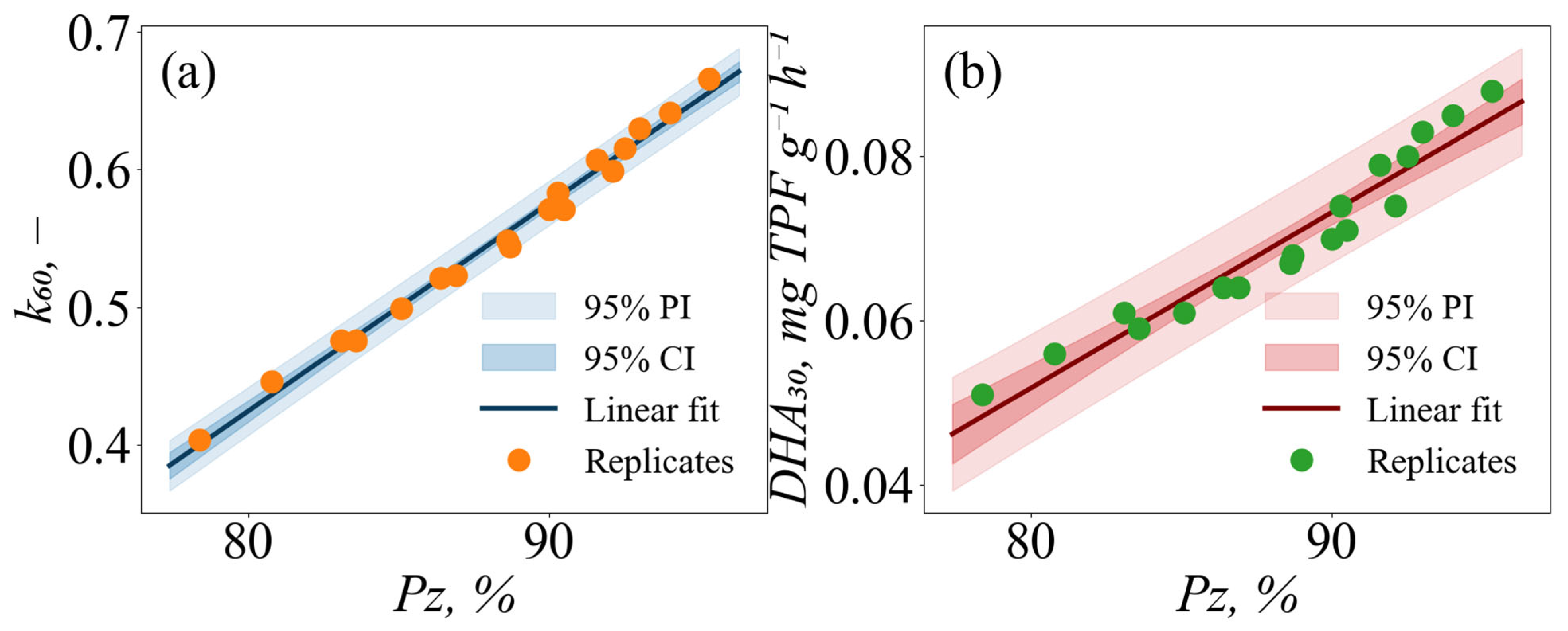
To quantify the technological–biological linkage, linear regression models were established between the residue incorporation completeness (Pz) and the two key biological indicators, namely k60 and DHA30 (Figure 21). Hereafter, CS-1–CS-5 denote five experimental operating variants of the combined soil preparation machine corresponding to different combinations of the engineering optimisation factors X1X4, whereas the control treatment corresponds to conventional soil preparation performed at an operating speed of 7 km h−1.
The fitted linear models are: for panel (a) k60 = 0.01513 · Pz − 0.7857, R2 = 0.990; for panel (b) DHA30 = 2.1414 × 10⁻³ · Pz − 0.1195, R2 = 0.933. Shaded bands indicate the 95% confidence interval for the mean response and the 95% prediction interval for individual observations. Points represent individual experimental replicates (Rep1–Rep3) obtained for the control treatment and for the five operating variants of combined soil preparation (CS-1–CS-5).
The very high coefficients of determination for both regressions indicate that the completeness of residue incorporation is a dominant technological driver of the observed biological responses under the investigated field conditions. The almost linear increase of k60 with increasing Pz demonstrates that a higher proportion of residues physically embedded into the soil matrix directly enhances the overall intensity of in situ biodegradation. A similar, although slightly more variable, response was observed for DHA30, which reflects the inherently higher short-term variability of enzymatic activity in field soils.
To visualise the biological response within the engineering optimisation domain, three-dimensional response surfaces of k60 and DHA30 were constructed as functions of the coded optimisation factors X1 and X4 at the central levels of X2 and X3, using the second-order regression models (35) and (36) (Figure 22).
The response surfaces reveal a pronounced nonlinear behaviour and interaction between tool geometry (X1) and operating speed (X2). However, these surfaces represent an empirical projection of biological indicators onto the engineering design space. Their physical interpretation arises from technologically induced changes in residue placement and stratification, as reflected by Pz and SI, rather than from any direct causal interaction between the working tool parameters and microbial or enzymatic processes.
Statistical significance of differences between the control treatment and the combined soil preparation variants was evaluated using one-way analysis of variance (ANOVA) followed by pairwise comparison of means at a confidence level of 95%. Differences in Pz, m0, k30, k60 and DHA30 between treatments were considered statistically significant at p < 0.05.

6. Field Validation of the Prototype Machine

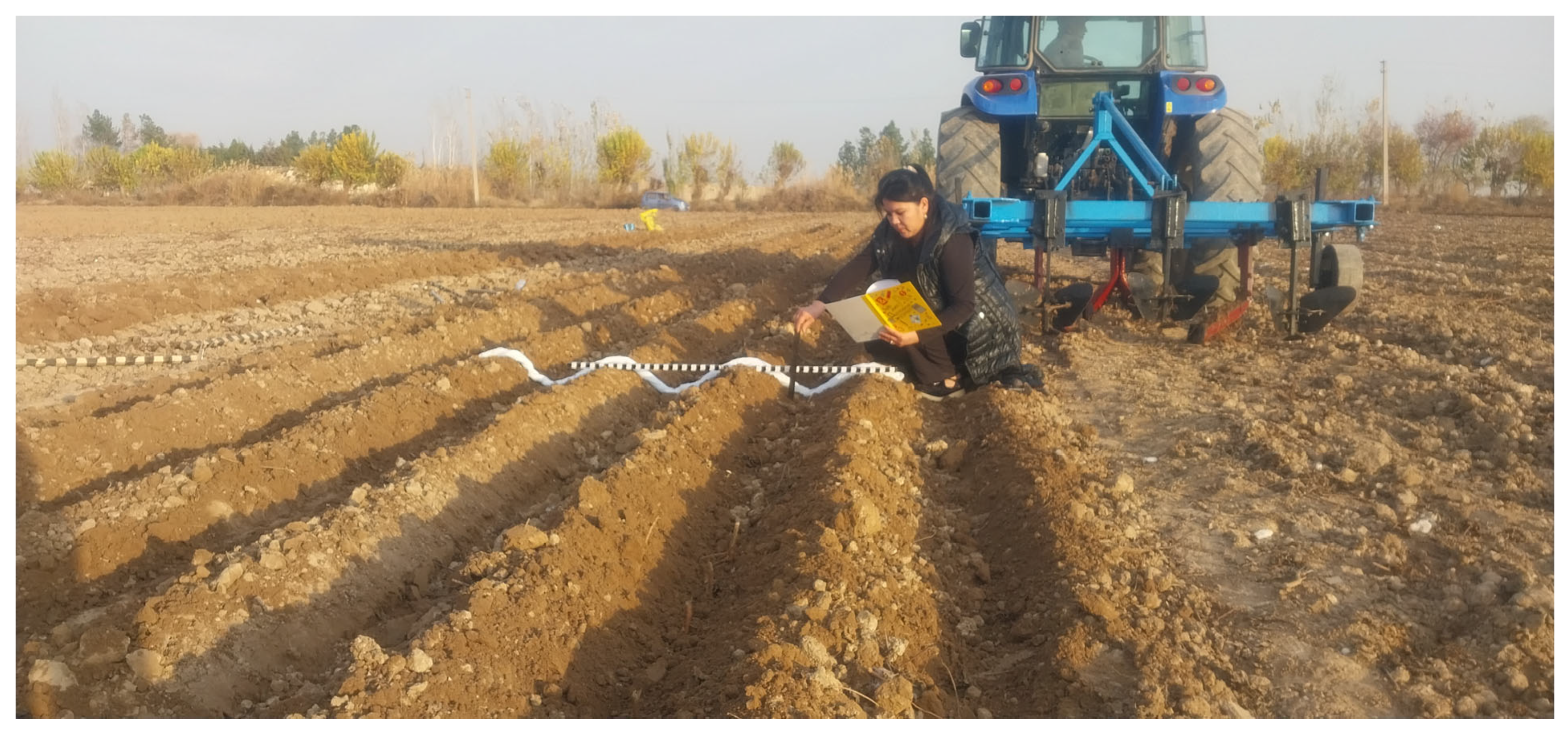
For experimental verification of the proposed technological scheme and of the analytically and experimentally substantiated parameters of the main working tools, a full-scale prototype of the combined machine for field preparation after winter wheat harvesting for ridge sowing of peanut was manufactured. The general view of the operating process of the prototype machine is shown in Figure 23.
Field- and farm-scale validation tests of the prototype were conducted on commercial farms in the Kashkadarya region of the Republic of Uzbekistan under soil and climatic conditions comparable to those described in Section 4. The validation programme was designed to confirm the technological feasibility of the proposed integrated working scheme and to verify the practical applicability of the parameter ranges obtained in Section 3 and Section 5.
During the validation trials, the main technological and operational performance indicators of the machine were evaluated, including soil fragmentation degree, completeness of crop residue incorporation, row spacing, depth of the formed irrigation furrows, ridge height, effective field capacity and fuel consumption. The applied validation methodology followed commonly accepted procedures for field performance assessment of multifunctional tillage machines [7,12,21].
The assessment of quality and energy performance indicators was performed in accordance with relevant international standards for agricultural machinery testing and energy management, including ISO 50001:2018 (energy management systems and performance assessment principles), ISO 5698:2020 (terminology and classification of agricultural machinery), ISO 25119:2019 (safety-related control systems for tractors and machinery), and ISO 14982:1998 (test methods and acceptance criteria for agricultural and forestry machinery) [39,40,41,42].
Prior to the beginning of the validation tests, the physical and mechanical properties of the soil were determined at depth intervals of 0–10, 10–20, 20–30 and 30–40 cm. The gravimetric soil moisture contents were 12.6, 15.4, 16.5 and 17.6%, the bulk densities were 1.12, 1.16, 1.25 and 1.29 g cm−3, and the cone index (CI) values were 2.86, 2.94, 3.35 and 3.44 MPa, respectively.
In addition to operational observations, direct in situ control of ridge geometry was carried out immediately after machine operation using a flexible profile gauge (Figure 23). The recorded transverse ridge cross-sections were subsequently used to determine ridge height and to assess the transverse shape stability of the formed ridges along the entire working width of the machine.
The detailed quantitative results of the field validation tests and the corresponding compliance assessment with agrotechnical requirements are summarised in Table 19.
The obtained experimental data confirm that the developed prototype machine is capable of performing the complete technological sequence of surface levelling, shallow loosening, strip deep loosening and ridge formation within a single field pass. Under production conditions, the machine ensured stable formation of ridges with the prescribed geometric parameters and uniform working depth along the entire working width.
The achieved soil fragmentation degree and the completeness of crop residue incorporation satisfied the established agronomic requirements for ridge-based peanut cultivation. At the same time, the operational indicators, including field capacity and fuel consumption, demonstrated that the integrated technological scheme allows a reduction in total energy input compared with conventional multi-pass soil preparation practices reported for similar field conditions [7,12].
To complement the quantitative indicators, the agronomic and technological outcome of ridge formation was additionally documented during the vegetation period.
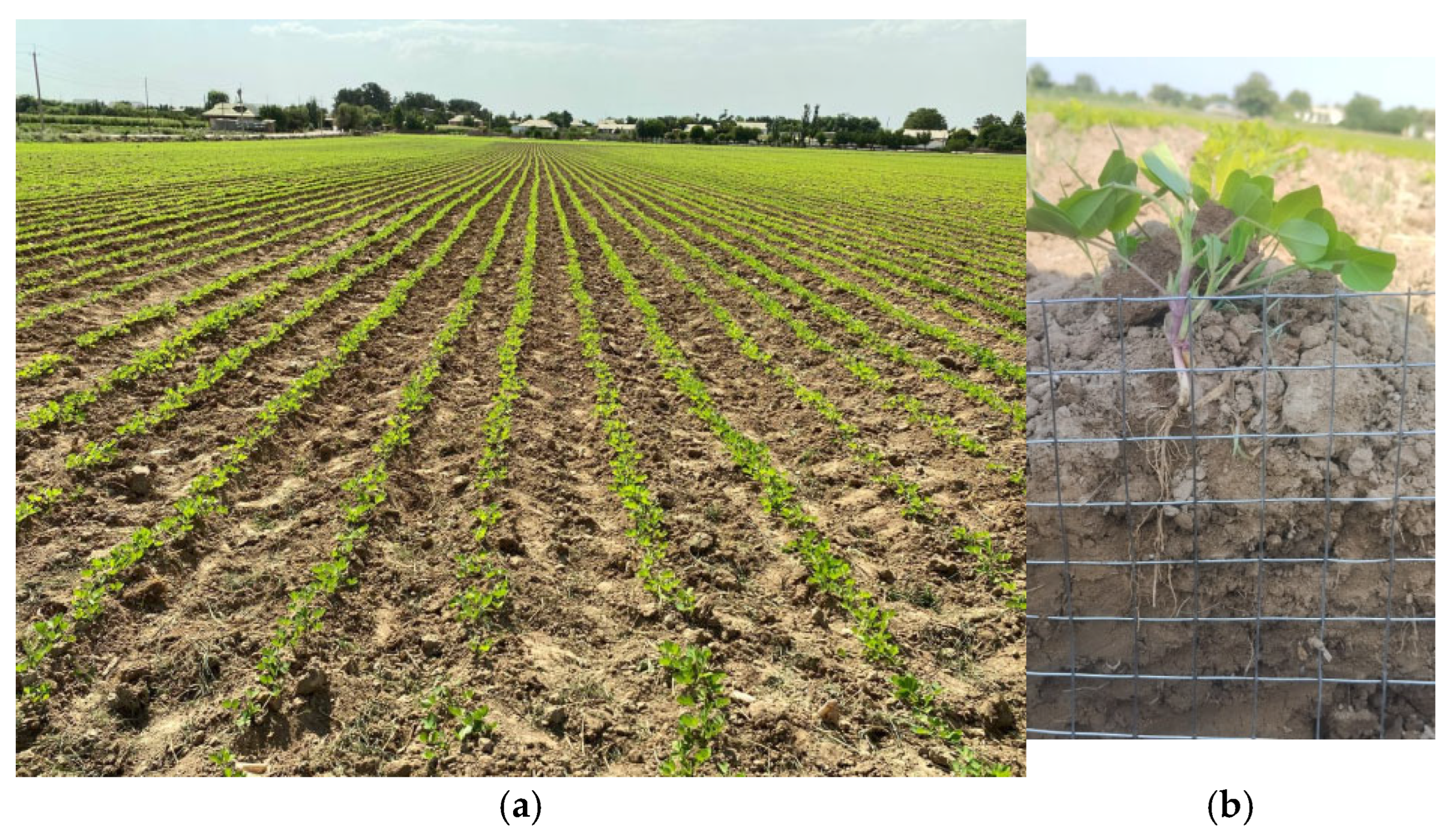
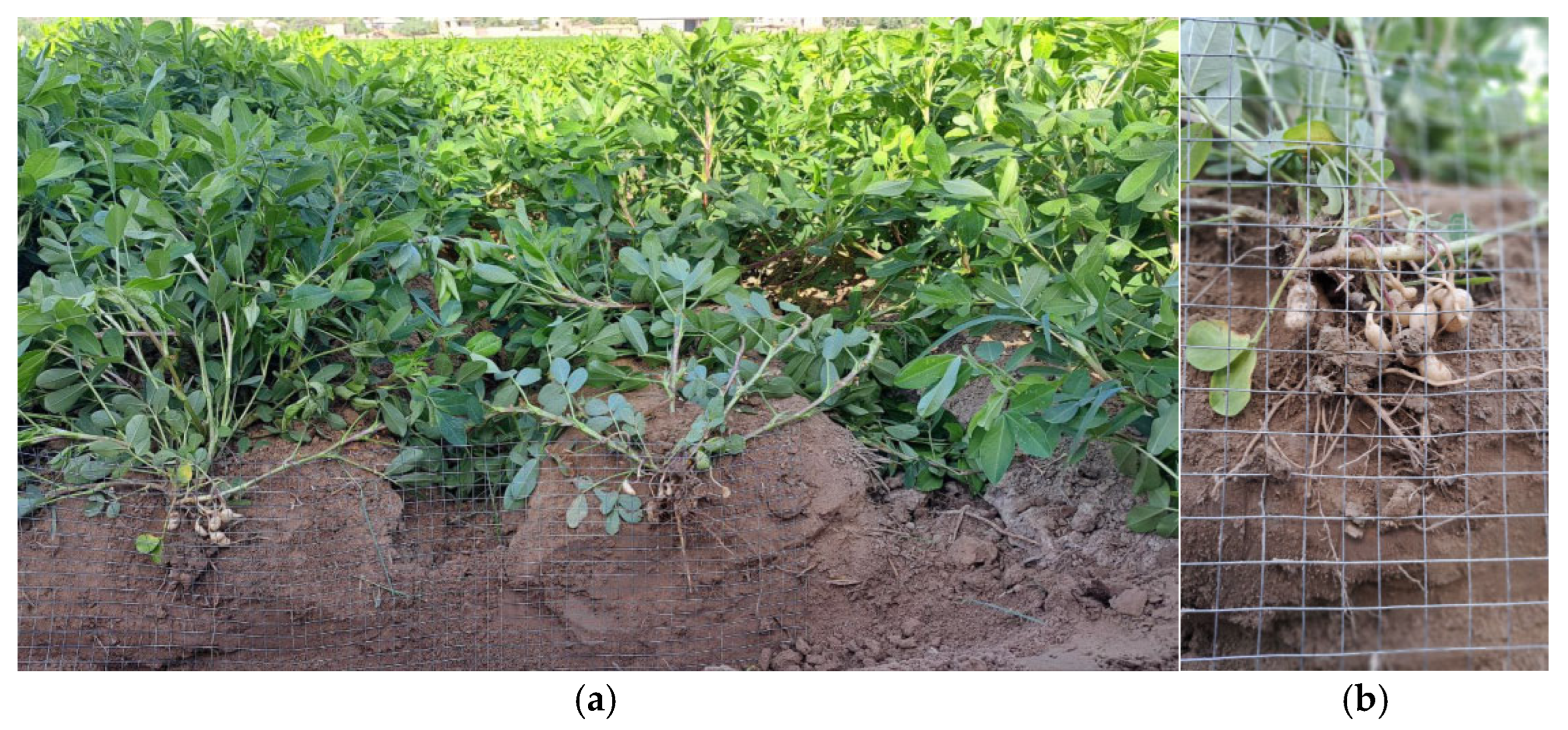
The visual assessment of ridge continuity, root-zone structure and plant development during field validation is illustrated in Figure 24 and Figure 25.
The visual evidence in Figure 24 confirms stable ridge continuity and uniform row spacing, as well as the formation of a clearly structured cultivated layer. This indicates consistent depth control and stable interaction between the loosening and ridging tools during machine operation.
The visual evidence in Figure 25 confirms that the ridge geometry formed by the prototype combined machine provides a stable and well-defined root zone and pod formation zone inside the ridge profile, indicating favourable structural conditions for peanut development under field conditions. This spatial configuration is agronomically important for peanut cultivation and, at the same time, indirectly reflects the favourable soil structural conditions created by the combined loosening and ridging system, which are relevant for the subsequent in situ biodegradation and valorisation of incorporated wheat residues discussed in Section 5.
From an engineering perspective, the validation results also demonstrate the stability of the technological process with respect to moderate variations in operating speed and soil conditions. No cases of excessive clogging of the working bodies or unstable depth control were observed during the validation runs, which confirms the adequacy of the adopted geometric layout and adjustment ranges of the working tools.
Overall, the field validation confirmed that the proposed combined machine corresponds to a prototype level of technological readiness and is suitable for further engineering refinement and adaptation for industrial manufacturing under ridge-based peanut production conditions.

7. Discussion

The results obtained in this study confirm that the integration of shallow tillage, deep loosening, and ridge formation within a single technological operation provides a measurable improvement in both technological and biological performance indicators. In particular, the observed increase in residue incorporation efficiency (Pz) and biodegradation intensity (k60) demonstrates that controlled placement of plant residues in the biologically active soil layer is a key factor governing subsequent microbial processes. These findings are consistent with recent studies highlighting the strong dependence of residue decomposition dynamics on soil structural conditions and residue–soil contact interfaces [34,35,36,37,38].
From an engineering perspective, the proposed combined system aligns with the general trend toward multifunctional soil-processing machines aimed at reducing the number of field passes and improving energy efficiency. Similar concepts of integrated tillage systems have been reported in earlier works on combined machines for row crops and ridge-based systems [4,7,8,9,16,17,18,19,20]. However, unlike most existing designs, which primarily focus on mechanical performance and field productivity, the present study explicitly links tool geometry and spatial arrangement with biological indicators such as DHA and SOC-related processes. This integration represents an important advancement, as recent research has emphasised that soil preparation technologies should be evaluated not only in terms of draft resistance and fragmentation quality but also with regard to their influence on soil biological functioning and organic matter turnover [35,37].
The observed nonlinear relationships between tool parameters and soil fragmentation or draft resistance are in agreement with analytical and experimental studies of soil–tool interaction, which demonstrate that soil deformation processes are inherently nonlinear and strongly dependent on tool geometry and operational conditions [12,13,14,15]. In particular, the sensitivity of draft resistance to rake angle, working depth, and tool spacing corresponds well with findings reported for combined and strip-tillage systems, where overlapping deformation zones significantly affect energy consumption and soil disturbance patterns [21,22,23]. At the same time, the results of this study confirm that appropriate coordination of working bodies can reduce redundant soil deformation and thus lower overall energy demand, which is consistent with earlier investigations of integrated tillage units [10,11,12].
A specific feature of ridge-based peanut production is the strong dependence of crop performance on soil structure and ridge geometry. Previous agronomic studies have demonstrated that inadequate soil preparation leads to reduced harvesting efficiency, increased pod losses, and unstable crop performance [24,28]. The present results show that the proposed system ensures stable ridge formation while simultaneously improving residue incorporation, thereby addressing both mechanical and agronomic requirements. Moreover, the enhanced uniformity of residue distribution observed in this study can contribute to improved water retention and nutrient cycling, which are critical factors under water-limited conditions typical of many peanut-growing regions [26,30,31,32].
An important contribution of this work is the demonstrated linkage between technological parameters and biological activity indicators. The increase in DHA30 and k60 suggests that mechanical fragmentation and incorporation of residues enhance microbial accessibility and accelerate decomposition processes. Similar synergistic effects between tillage intensity, residue management, and microbial activity have been reported in rice and maize systems, where combined tillage and residue incorporation significantly modify microbial community structure and enzymatic activity [34,35]. The present study extends these findings to ridge-based peanut systems and confirms that engineering control of residue placement can be used as a tool to regulate soil biological processes.
Despite these positive results, several limitations of the present study should be acknowledged. First, the analytical models used for parameter substantiation are based on classical soil mechanics assumptions and are valid only within a limited range of soil textures and moisture conditions. As noted in previous studies, soil–tool interaction is highly sensitive to soil heterogeneity, and the applicability of analytical relationships may decrease under extreme conditions such as high moisture or highly compacted soils [13,14,15]. Second, the experimental validation was conducted under specific field conditions in the Kashkadarya region, which may limit the direct transferability of the results to other agroecological zones with different soil types and climatic conditions.
Another limitation concerns the statistical modelling approach. Although high coefficients of determination were obtained, further work is required to strengthen the statistical validation of the regression models, including more rigorous analysis of factor interactions and transformation of variables where nonlinear behaviour is observed. Additionally, the study did not include a detailed energy balance analysis in accordance with international standards such as ISO 50001, Energy management systems—Requirements with guidance for use (International Organization for Standardization (ISO), Geneva, Switzerland, 2018), which would allow for a more comprehensive assessment of the energy efficiency of the proposed technology.
Finally, while the present study establishes a clear link between technological parameters and biological indicators, it does not explicitly consider long-term effects on soil organic matter dynamics, carbon sequestration, and sustainability of agroecosystems. Future research should focus on multi-season experiments, integration with crop yield data, and the use of advanced modelling approaches (e.g., DEM-based simulations and coupled bio-physical models) to further elucidate the interactions between soil mechanics, residue management, and biological processes.

8. Conclusions

This study developed and experimentally validated a combined soil preparation technology and a multifunctional machine for ridge-based peanut cultivation following winter wheat. The proposed system integrates shallow tillage, deep loosening, and ridge formation within a single pass, ensuring coordinated soil redistribution, subsoil decompaction, and a reduction in field operations and associated energy demand.
The results demonstrate that machine performance is governed by pronounced nonlinear relationships between tool geometry and both soil fragmentation quality and draft resistance. The optimal balance between technological effectiveness and energy input was achieved within the following parameter ranges: subsoiler working width of 30 cm; chisel width not less than 7 cm; winged sweep share chisel width of 4.5–5.0 cm; wing working width of at least 16 cm; and wing installation height of 4–5 cm. These values were confirmed through multifactor experimental optimisation and statistically validated response surface models.
A central finding of this study is that the influence of engineering parameters on biological performance is indirect and mediated by technologically controlled variables, primarily the completeness of residue incorporation and the vertical distribution of biomass within the cultivated soil layer. The strong functional relationships identified between residue incorporation completeness and both the biodegradation coefficient and dehydrogenase activity indicate that residue placement within the soil profile is the dominant technological factor controlling in situ biodegradation under the studied conditions.
Compared with conventional soil preparation, the proposed combined technology provides a more uniform distribution of plant residues within the biologically active soil layer and reduces their accumulation on the surface. This leads to improved soil–residue contact, enhanced aeration and moisture conditions, and consequently more favourable micro-environmental conditions for microbial activity and biomass valorisation.
Field-scale validation confirmed stable ridge geometry, consistent row spacing, and reliable depth control without clogging, demonstrating the operational stability of the developed prototype. These results indicate that the proposed technology has reached a level of technological maturity suitable for further engineering optimisation and potential industrial application in ridge-based peanut production systems.

Author Contributions

Conceptualization of the combined soil preparation technology and overall research design, F.M.M. and F.U.K.; development of the theoretical model and analytical justification of working tool parameters, F.M.M. and N.B.R.; experimental methodology and organisation of field investigations, S.Z.T. and U.K.; field experiments and data acquisition, S.Z.T., U.K., N.S.R., G.D.S., N.I.S., M.F.B. and A.I.; statistical processing, regression modelling and optimisation analysis, F.U.K. and N.B.R.; interpretation of experimental results and engineering recommendations, F.M.M., F.U.K. and N.B.R.; writing—original draft preparation, F.M.M. and N.B.R.; writing—review and editing, all authors. All authors have read and agreed to the published version of the manuscript.

Funding

This research received no external funding.

Data Availability Statement

The experimental data supporting the findings of this study are available from the corresponding author upon reasonable request.

Conflicts of Interest

The authors declare no conflicts of interest.

Nomenclature

The following symbols and abbreviations are used throughout the manuscript to ensure clarity and consistency of notation.
Rdraft resistance of the working tool, N.
qspecific draft, defined as q = R/(b × a), N m−2.
R/bspecific load indicator used as an auxiliary comparative parameter, N m−1
bworking width of the tool, m
aworking depth, m.
hinstallation height of the wing element relative to the chisel cutting edge, m.
voperating speed of the unit, km h−1
Fsoil fragmentation degree, %.
F < 50proportion of soil aggregates smaller than 50 mm, %
F < 25proportion of soil aggregates smaller than 25 mm, %
ηfragmentation efficiency, defined as η = F/R, % N−1
Pzcompleteness of incorporation of crop residues and weeds, %
m0initial mass of incorporated biomass, kg m−2
m1mass of biomass before tillage, kg
m2mass of biomass remaining on the soil surface after tillage, kg.
mtresidual biomass at time t, kg m−2
ktbiodegradation coefficient, defined as kt = m0/mt, dimensionless
SOCsoil organic carbon, %
Ntotaltotal nitrogen, %
C/Ncarbon-to-nitrogen ratio, dimensionless
DHAdehydrogenase activity, mg TPF g−1 h−1
CTPFconcentration of triphenylformazan in the extract, mg mL−1
Vextract volume, mL
mmass of oven-dry soil, g
tincubation time, h
CIcone index, MPa
X1chisel width (coded variable)
X2wing working width (coded variable)
X3longitudinal distance between tools (coded variable)
X4operating speed (coded variable)
Δvariation interval of the factor in experimental design
βregression coefficients in the response surface models
R2coefficient of determination, dimensionless
pprobability value used in statistical hypothesis testing

References

  1. Pashchenko, V.F.; Syromyatnikov, Y.U.N. The transporting ability of the rotor of the soil-cultivating loosening and separating vehicle. Tract. Agric. Mach. 2019, 86, 67–74. [Google Scholar] [CrossRef]
  2. Tubbs, R. The future of peanut agronomic research—The sky is not the limit. Peanut Sci. 2019, 46, 99–113. [Google Scholar] [CrossRef]
  3. Leininger, S.; Krutz, L.; Sarver, J.; Gore, J.; Henn, A.; Bryant, C.; Atwill, R.L.; Spencer, G. Establishing irrigation thresholds for furrow-irrigated peanuts. Crop Forage Turfgrass Manag. 2019, 5, 180059. [Google Scholar] [CrossRef]
  4. Mirzaev, B.; Mamatov, F.; Chuyanov, D.; Ravshanov, H.; Shodmonov, G.; Tavashov, R.; Fayzullayev, X. Combined machine for preparing soil for cropping of melons and gourds. IOP Conf. Ser. Earth Environ. Sci. 2019, 403, 012158. [Google Scholar] [CrossRef]
  5. Syromyatnikov, Y.N.; Orekhovskaya, A.A.; Dzjasheev, A.; Tikhonov, E.A.; Kalimullin, M.N.; Ivanov, A.A.; Sokolova, V.A. Improving stability of movement of machine section for soil preparation and seeding. J. Phys. Conf. Ser. 2021, 2094, 042027. [Google Scholar] [CrossRef]
  6. Syromyatnikov, Y.N.; Orekhovskaya, A.A.; Dzjasheev, A.; Kalimullin, M.N.; Tikhonov, E.A.; Luchinovich, A.A.; Bielykh, A.V. Cultivator points of the rotary tillage loosening and separating machine of the stratifier. J. Phys. Conf. Ser. 2021, 2094, 042024. [Google Scholar] [CrossRef]
  7. Maiviatov, F.; Ravshanov, K.; Mamatov, S.; Temirov, I.; Kuvvatov, D.; Abdullayev, A. Combined machine for preparing the soil for re-sowing crops. IOP Conf. Ser. Earth Environ. Sci. 2021, 868, 012066. [Google Scholar] [CrossRef]
  8. Ravshanov, K.; Mamatov, F.; Mukimov, B.; Sultonov, R.; Abdullayev, A.; Murtazaeva, G. Study on combined machine for the subsurface soil treatment. IOP Conf. Ser. Earth Environ. Sci. 2021, 939, 012065. [Google Scholar] [CrossRef]
  9. Mamatov, F.; Mirzaev, B.; Toshtemirov, S.; Hamroyev, O.; Razzaqov, T.; Avazov, I. Development of a machine to prepare the soil for cotton sowing on ridges. IOP Conf. Ser. Earth Environ. Sci. 2021, 939, 012064. [Google Scholar] [CrossRef]
  10. Syromyatnikov, Y.; Troyanovskaya, I.; Zagidullin, R.; Tikhonov, E.; Orekhovskaya, A.; Voinash, S. Soil density in traditional mouldboard tillage. Acta Technol. Agric. 2023, 26, 159–165. [Google Scholar] [CrossRef]
  11. Syromyatnikov, Y.; Voinash, S.; Troyanovskaya, I.; Zagidullin, R.; Tikhonov, E.; Orekhovskaya, A. Chisel tillage under spring barley in the forest-steppe. Acta Technol. Agric. 2024, 27, 30–34. [Google Scholar] [CrossRef]
  12. Syromyatnikov, Y.; Orekhovskaya, A.; Klyosov, D.; Vodolazskaya, N.; Syromyatnikov, P.; Sementsov, V. Field tests of the experimental installation for soil processing. J. Terramech. 2022, 100, 81–86. [Google Scholar] [CrossRef]
  13. Gunko, I.; Hrybyk, R. Simulation of the soil processing unit with recommendations for selecting working bodies. Eng. Energy Transp. AIC 2022, 4, 27–35. [Google Scholar] [CrossRef]
  14. Yang, Y.; Hu, Z.; Gu, F.; Ding, Q. Simulation and experimental study of the tillage mechanism for optimal design of wheat rotary strip–tiller blades. Agriculture 2023, 13, 632. [Google Scholar] [CrossRef]
  15. Zhang, J.; Xia, M.; Chen, W.; Yuan, D.; Wu, C.; Zhu, J. Simulation analysis and experiments for blade–soil–straw interaction under deep ploughing based on the discrete element method. Agriculture 2023, 13, 136. [Google Scholar] [CrossRef]
  16. Mirzaev, B.; Mamatov, F.; Kodirov, U.; Chuyanov, D. Machine for processing and preparing the soil for sowing potatoes on ridges. E3S Web Conf. 2021, 304, 03011. [Google Scholar] [CrossRef]
  17. Maxamov, X.; Tovashov, R.; Tovashov, B.; Jabborov, F. Combination machine for soil cultivation and sowing grain. E3S Web Conf. 2021, 264, 04049. [Google Scholar] [CrossRef]
  18. Chuyanov, D.; Shodmonov, G.; Ergashov, G.; Choriyev, I. Combination machine for soil preparation and sowing of gourds. E3S Web Conf. 2021, 264, 04035. [Google Scholar] [CrossRef]
  19. Shaimardanov, B.; Berdimuradov, P.T. Innovative ridge tillage of soil with simultaneous sowing of industrial crops and drip irrigation installation. E3S Web Conf. 2023, 401, 04017. [Google Scholar] [CrossRef]
  20. Mamatov, F.; Mirzaev, B.; Maxamov, X.; Tovashov, R. Ridge forming machine for sowing cereals on sloping fields. E3S Web Conf. 2023, 401, 04051. [Google Scholar] [CrossRef]
  21. Yang, H.; Wang, Q.; He, J.; Wang, C.; Li, H.; Li, Y.; Lin, H.; Wang, Q.; Li, H.; Wang, L. Current status and future directions for combined tillage and sowing technology and equipment. Appl. Sci. 2024, 14, 11707. [Google Scholar] [CrossRef]
  22. Zheng, S.; Lu, T.; Liu, J.; Tian, Y.; Han, M.; Tai, M.; Gao, S.; Liu, T.; Wang, D.; Zhao, Z. Discrete element-based design of a high-speed rotary tiller for saline-alkali land. Agriculture 2025, 15, 269. [Google Scholar] [CrossRef]
  23. Qiu, B.; Zhang, Q.; Yang, H.; He, J.; Wang, Q.; Li, H.; Tan, L.; Wang, X.; Lin, H. Design and experiment of monomer profiling strip tillage machine with straw-strip-collecting and subsoiling functions. Agriculture 2025, 15, 1771. [Google Scholar] [CrossRef]
  24. Filho, A.L.d.B.; Carneiro, F.M.; Souza, J.B.C.; de Almeida, S.L.H.; Lena, B.P.; Silva, R.P.da. Does the soil tillage affect the quality of the peanut picker? Agronomy 2023, 13, 1024. [Google Scholar] [CrossRef]
  25. Shi, Y.; Jiang, Y.; Wang, X.; Yu, H.; Liu, H.; Chen, J. Innovation of strip fertilization planting for rice straw crushing with back-throwing and interrow-laying. Plant Methods 2022, 18, 62. [Google Scholar] [CrossRef]
  26. Goes, G.F.; Sousa, G.G.D.; Sales, J.R.S.; Machado, P.I.M.; Saraiva, K.R.; da Silva, A.R.A.; Leite, K.N.; Simplício, A.A.F.; Lopes, F.B.; Mendonça, A.M. Irrigation with brackish water in the production of maize intercropped with peanut. Rev. Ambiente Água 2025, 20, 3067. [Google Scholar] [CrossRef]
  27. Akcura, S.; Tas, I.; Kökten, K.; Kaplan, M.; Bengü, A.Ş. Effects of irrigation intervals and irrigation levels on oil content and fatty acid composition of peanut cultivars. Not. Bot. Horti Agrobot. Cluj-Napoca 2021, 49, 2224. [Google Scholar] [CrossRef]
  28. Oliva-Cruz, M.; Cabañas-López, J.R.; Altamirano-Tantalean, M.A.; Juarez-Contreras, L.; Vigo, C.N. Agronomic behavior of peanut (Arachis hypogaea L.) cultivars under three planting densities in northeast Peru. Agronomy 2024, 14, 1905. [Google Scholar] [CrossRef]
  29. De Santis, M.A.; Campaniello, D.; Tozzi, D.; Giuzio, L.; Corbo, M.; Bevilacqua, A.; Sinigaglia, M.; Flagella, Z. Agronomic response to irrigation and biofertilizer of peanut (Arachis hypogaea L.) grown under Mediterranean environment. Agronomy 2023, 13, 1566. [Google Scholar] [CrossRef]
  30. Rathore, V.S.; Nathawat, N.S.; Bhardwaj, S.; Yadav, B.M.; Kumar, M.; Santra, P.; Kumar, P.; Reager, M.L.; Yadava, N.D.; Yadav, O.P. Optimization of deficit irrigation and nitrogen fertilizer management for peanut production in an arid region. Sci. Rep. 2021, 11, 82968. [Google Scholar] [CrossRef]
  31. Dong, J.; Shen, X.; Li, Q.; Xue, Z.; Hou, X.; Miao, H.; Ning, H. Irrigation and fertilization scheduling for peanut cultivation under mulched drip irrigation in a desert–oasis area. Plants 2024, 13, 144. [Google Scholar] [CrossRef]
  32. Zhao, S.; Du, X.; Chen, J.; Chen, D.; Luo, Z.; Bi, B.; Liu, H.; Lin, L.; Wei, H. Optimizing irrigation regimes for peanuts in water-scarce regions: A case study in Western Liaoning, China. Water 2025, 17, 178. [Google Scholar] [CrossRef]
  33. Balba, C.M.; Baltazar, T.P.; Dacones, R.C.; Solis, D.D., Jr.; Gatan, M. Peanut production in Central Luzon, Philippines: An assessment of farmer practices, challenges, and profitability. Agric. Sci. 2025, 7, 95–105. [Google Scholar] [CrossRef]
  34. Wang, X.; Huang, J.; Tan, Y.; Yang, L.; Li, Y.; Xia, B.; Li, H.; Deng, X. Synergistic Effects of Deep Rotary Tillage and Microbial Decomposition Agents on Straw Decomposition, Soil Nutrient Dynamics, and Microbial Communities in Rice Systems. Agriculture 2025, 15, 1447. [Google Scholar] [CrossRef]
  35. Guan, Y.; Xu, B.; Zhang, X.; Yang, W. Tillage Practices and Residue Management Manipulate Soil Bacterial and Fungal Communities and Networks in Maize Agroecosystems. Microorganisms 2022, 10, 1056. [Google Scholar] [CrossRef] [PubMed]
  36. Stegarescu, G.; Rusu, T.; Moraru, P.I.; Bogdan, I.; Pop, A.I.; Moraru, I. Effect of Crop Residue Decomposition on Soil Aggregate Stability and Related Soil Properties. Agriculture 2020, 10, 527. [Google Scholar] [CrossRef]
  37. Tang, H.; Zhang, Z.; Zhang, Y.; Zhao, J.; Liu, J.; Li, J. Tillage with Crop Residue Returning Management Promotes Soil Microbial Biomass Turnover and Organic Pool Metabolism. Agronomy 2024, 14, 265. [Google Scholar] [CrossRef]
  38. Sousa, D.C.; Lima, R.; Ferreira, P.; Alves, A. Soil Management and Topsoil Quality as Determinants of Plant Residue Decomposition Kinetics. Agronomy 2025, 15, 2687. [Google Scholar] [CrossRef]
  39. ISO 50001:2018; Energy Management Systems—Requirements with Guidance for Use. International Organization for Standardization: Geneva, Switzerland, 2018. Available online: https://www.iso.org/standard/69426.html (accessed on 27 January 2026).
  40. ISO 5698:2020; Agricultural Machinery—Vocabulary. International Organization for Standardization: Geneva, Switzerland, 2020. Available online: https://www.iso.org/standard/73319.html (accessed on 27 January 2026).
  41. ISO 25119:2019; Tractors and Machinery for Agriculture and Forestry—Safety-Related Parts of Control Systems. International Organization for Standardization: Geneva, Switzerland, 2019. Available online: https://www.iso.org/standard/68211.html (accessed on 27 January 2026).
  42. ISO 14982:1998; Agricultural and Forestry Machinery—Electromagnetic Compatibility (EMC)—Test Methods and Acceptance Criteria. International Organization for Standardization: Geneva, Switzerland, 1998. Available online: https://www.iso.org/standard/26277.html (accessed on 27 January 2026).
Figure 1. Arrangement of the working elements of a combined soil preparation unit: (a) transverse arrangement of residue-fragmenting, soil loosening, and ridge-forming elements along the working width BM; (b) geometric parameters and relative positioning of the working elements in the longitudinal plane.
Technologies 14 00203 g001
Figure 2. Schematic illustration of ridge formation in operation of combined soil preparation system: (a) changing soil surface profile at the time of ridge formation; (b) redistribution of soil at working width BM; (c) initial state of the soil surface prior to processing; (d) formation profile of the ridge with incorporated plant residues.
Technologies 14 00203 g002
Figure 3. Parameters of the chisel-type loosener with wings: (a) rear view; (b) top view, where 1 denotes the chisel, and 2 denotes the wing elements of the loosener.
Technologies 14 00203 g003
Figure 4. General view of the laboratory–field test facility.
Technologies 14 00203 g004
Figure 5. Installation of the L-shaped strain-gauge beam on the laboratory–field test facility for determining the draft resistance of the subsoiler.
Technologies 14 00203 g005
Figure 6. Measurement of the draft resistance of the chisel-type loosener with wings using the L-shaped strain-gauge beam.
Technologies 14 00203 g006
Figure 7. Subsoilers with different working widths: (a) 22 cm; (b) 26 cm; (c) 30 cm; (d) 34 cm.
Technologies 14 00203 g007
Figure 8. Dependence of soil fragmentation degree (F < 50%) and draft resistance of the inclined-shank subsoiler on its working width: (a) soil fragmentation degree; (b) draft resistance.
Technologies 14 00203 g008
Figure 9. Dependence of the inclined-shank subsoiler performance on the chisel width (biq): (a) soil fragmentation degree (F < 50%); (b) draft resistance (R).
Technologies 14 00203 g009
Figure 10. Dependence of the winged sweep share performance on the chisel width (bi): (a) soil fragmentation degree (F < 25%); (b) draft resistance (R).
Technologies 14 00203 g010
Figure 11. Right and left wings of the sweep share with different working widths: (a) 120 mm; (b) 140 mm; (c) 160 mm; (d) 180 mm; (e) 200 mm.
Technologies 14 00203 g011
Figure 12. Dependence of the winged sweep share performance on the wing working width bk: (a) soil fragmentation degree (F < 25%); (b) draft resistance.
Technologies 14 00203 g012
Figure 13. Influence of wing installation height hk relative to the chisel cutting edge on soil fragmentation degree and draft resistance of the winged sweep share: (a) soil fragmentation degree; (b) draft resistance.
Technologies 14 00203 g013
Figure 14. Influence of the working width of the sweep share bop on soil fragmentation degree and its draft resistance: (a) soil fragmentation degree; (b) draft resistance.
Technologies 14 00203 g014
Figure 15. Influence of sweep share operating depth on soil fragmentation degree and its draft resistance: (a) soil fragmentation degree; (b) draft resistance.
Technologies 14 00203 g015
Figure 16. Dependence of soil fragmentation degree (F < 25%) and draft resistance of the winged sweep share on the longitudinal distance between the subsoiler shank and the sweep share: (a) soil fragmentation degree; (b) draft resistance.
Technologies 14 00203 g016
Figure 17. Influence of factor X1 on soil fragmentation degree and draft resistance of the chisel-type loosener with wings: (a) soil fragmentation degree; (b) draft resistance.
Technologies 14 00203 g017
Figure 18. Influence of factor X2 on soil fragmentation degree and draft resistance of the chisel-type loosener with wings: (a) soil fragmentation degree; (b) draft resistance.
Technologies 14 00203 g018
Figure 19. Influence of factor X3 on soil fragmentation degree and draft resistance of the chisel-type loosener with wings: (a) soil fragmentation degree; (b) draft resistance.
Technologies 14 00203 g019
Figure 20. Three-dimensional response surfaces of the main performance indicators as functions of X1 and X4: (a) F < 25, % (Equation (33)); (b) R, kN (Equation (34)) at X2 = 0 and X3 = 0.
Technologies 14 00203 g020
Figure 21. Relationships between residue incorporation completeness (Pz) and (a) the biodegradation coefficient after 60 days (k60) and (b) dehydrogenase activity after 30 days (DHA30) under combined soil preparation.
Technologies 14 00203 g021
Figure 22. Three-dimensional response surfaces of (a) the biodegradation coefficient after 60 days (k60) and (b) dehydrogenase activity after 30 days (DHA30) as functions of the coded factors X1 (chisel width) and X4 (operating speed) at the central levels of X2 and X3, obtained from the regression models (35) and (36).
Technologies 14 00203 g022
Figure 23. In situ procedure for verification of ridge geometry during the field validation trials: recording of the transverse ridge profile using a flexible profile gauge immediately after machine operation.
Technologies 14 00203 g023
Figure 24. Field validation of ridge uniformity and root-zone structure after one-pass operation of the prototype combined machine: (a) general view of uniform ridge rows and plant establishment along the field; (b) cross-sectional view of the formed ridge showing the rooting zone and structural stability of the cultivated layer.
Technologies 14 00203 g024
Figure 25. Field validation of plant development and pod formation inside the ridge formed by the prototype machine: (a) canopy development and ridge surface stability during the vegetation period; (b) distribution of the pod formation zone and root system within the ridge profile.
Technologies 14 00203 g025
Table 1. Comparison of conventional multi-pass soil preparation systems and the proposed combined technology.
ParameterConventional Multi-Pass SystemProposed Combined Technology
Number of field passes3–4 operationsSingle operation
Fuel consumptionHighReduced
Soil compaction riskIncreased due to repeated trafficReduced
Residue incorporationPartial and unevenUniform incorporation
Operational productivityLowerHigher
Biological residue decompositionLimited stimulationEnhanced
Table 2. Coding scheme and experimental domain of the optimisation variables.
No.FactorUnitCoded SymbolVariation Interval (Δ)−10+1
1Chisel width of the chisel-type tool with wingmmX11456
2Working width of the expander (wing width)mmX220140160180
3Longitudinal distance between the expander and the subsoiler shankmmX320130150170
4Operating speed of the unitkm h−1X41.55.06.07.0
Table 3. Statistical significance and adequacy of the principal models describing soil fragmentation and draft resistance.
Experimental Series/ResponseMain Factor(s)F-ValueR2Adj. R2Lack-of-Fit, p
Subsoiler working width → F < 50b, v42.80.9410.9260.214
Subsoiler working width → Rb, v118.60.9780.9720.331
Subsoiler chisel width → F < 50b, v36.90.9280.9110.287
Subsoiler chisel width → Rb, v104.20.9710.9640.354
Winged sweep share → F < 25b, v51.40.9520.9390.198
Winged sweep share → Rb, v133.70.9820.9770.402
Wing installation height → F < 50h, v31.60.9170.8960.271
Wing installation height → Rh, v96.40.9690.9610.366
Multifactor model for F < 25X1X429.40.9630.9480.184
Multifactor model for RX1X437.80.9720.9600.229
Note: All models are statistically significant at p < 0.05; lack-of-fit is not significant.
Table 4. Multivariate analysis of variance (MANOVA) for the combined system response.
Source of VariationWilks’ λF-Valuep-Value
X10.4219.870.002
X20.39811.260.001
X30.7123.940.021
X40.35613.42<0.001
X1 × X40.5336.180.008
Overall model0.28715.76<0.001
Note: Lower values of Wilks’ λ indicate stronger multivariate effects.
Table 5. Combined ANOVA and regression coefficient significance for multifactor models.
Source/CoefficientF-Value (F < 25)F-Value (R)t-Value (F < 25)t-Value (R)
X114.8221.373.854.97
X219.5417.924.414.26
X34.218.642.162.93
X416.7726.154.025.74
X123.574.11
X224.263.74
X423.944.63
X1 × X48.9311.743.083.46
X2 × X42.442.67
Quadratic terms (overall)12.3515.48
Note: All listed effects are statistically significant at p < 0.05.
Table 6. Effect of the working width of the subsoiler with an inclined-shank on quality, draft and derived efficiency indicators.
No.Working Width of Subsoiler, bq (cm)Operating Speed, v (km h−1)Tillage Depth (cm)Soil Fragmentation Degree, F < 50 (%)Draft Force, R (kN)Specific Load Indicator, R/bq (kN cm−1)Fragmentation Efficiency, F/R (% kN−1)
122534.771.45.250.23913.60
226534.978.25.650.21713.85
330535.283.86.050.20213.85
434535.676.56.440.18911.88
522734.874.85.500.25013.60
626735.282.35.850.22514.07
730735.484.26.350.21213.26
834735.180.86.850.20211.80
Note: Two derived indicators are introduced for comparative analysis. The indicator R/bq represents a specific load per unit working width and is used as an auxiliary parameter for comparing tool configurations. It is not equivalent to the specific draft defined as q = R/(b · a).
Table 7. Effect of the chisel width of the subsoiler with an inclined-shank on soil fragmentation and draft, including derived efficiency indicators.
No.Chisel Width, biq (cm)Operating Speed, v (km h−1)Tillage Depth (cm)Soil Fragmentation Degree, F < 50 (%)Draft Force, R (kN)Specific Load Indicator, R/biq (kN cm−1)Fragmentation Efficiency, F/R (% kN−1)
15534.975.15.401.08013.91
26535.178.35.900.98313.27
37535.380.56.300.90012.78
48535.881.56.900.86311.81
59536.181.57.300.81111.16
65735.077.05.701.14013.51
76735.280.06.101.01713.11
87735.482.36.600.94312.47
98735.983.57.100.88811.76
109736.383.57.500.83311.13
Note: The additional indicators R/biq and F/R allow the chisel width to be assessed not only in terms of absolute soil fragmentation and draft force, but also in terms of load per unit tool width and the efficiency of soil disintegration relative to energy demand. This representation facilitates a more robust identification of rational chisel widths under different operating speeds when comparing alternative geometric configurations of the subsoiler working element.
Table 8. Effect of the chisel width of the winged sweep share with expander on soil fragmentation and draft, including derived efficiency indicators.
No.Chisel Width, bi (cm)Operating Speed, v (km h−1)Tillage Depth (cm)Soil Fragmentation Degree, F < 25 (%)Draft Force, R (N)Specific Load Indicator, R/bi (N cm−1)Fragmentation Efficiency, F/R (% N−1)
13510.275.2320106.670.235
24510.281.434085.000.239
35510.384.237074.000.228
46510.483.139065.000.213
57510.980.141559.290.193
63710.478.1330110.000.237
74710.584.435588.750.238
85710.586.238076.000.227
96711.485.340567.500.211
107711.983.243061.430.194
Note: The additional indicators R/bi and F/R provide a comparative assessment of the winged sweep share chisel width in terms of load per unit tool width and fragmentation efficiency per unit draft. This representation makes it possible to distinguish geometrical configurations that ensure high fragmentation quality with a relatively lower energetic penalty under identical operating speeds.
Table 9. Effect of the working width of the expander of the winged sweep share on soil fragmentation and draft, including derived efficiency indicators.
No.Expander Working Width, bk (mm)Operating Speed, v (km h−1)Tillage Depth (cm)Soil Fragmentation Degree, F < 25 (%)Draft Force, R (N)Specific Load Indicator, R/bk (N mm−1)Fragmentation Efficiency, F/R (% N−1)
112057.874.12101.7500.354
214057.578.32151.5360.364
316056.281.52301.4380.354
418056.180.12451.3610.327
520056.079.52901.4500.274
612077.775.32301.9170.327
714077.381.12401.7140.338
816076.283.52501.5630.334
918076.082.52701.5000.306
1020075.681.23151.5750.258
Note: The additional indicators R/bk and F/R make it possible to compare expander widths in terms of load intensity per unit expander width and fragmentation efficiency per unit draft. This representation improves the discrimination of geometrical configurations that provide a favourable compromise between soil disintegration quality and energy demand under identical operating speeds.
Table 10. Effect of the installation height of the expander relative to the chisel edge on soil fragmentation and draft of the winged sweep share, including derived efficiency indicators.
No.Expander Installation Height, hk (cm)Operating Speed, v (km h−1)Tillage Depth (cm)Soil Fragmentation Degree, F < 50 (%)Draft Force, R (N)Specific Load Indicator, R/hk (N cm−1)Fragmentation Efficiency, F/R (% N−1)
12510.874.5520260.000.143
23510.479.1485161.670.163
34510.180.5445111.250.181
4559.781.242084.000.193
5659.279.338063.330.209
62711.077.5540270.000.144
73710.980.5500166.670.161
84710.282.2470117.500.175
9579.781.543587.000.187
10679.180.540066.670.201
Note: The additional indicators R/hₖ and F/R enable an assessment of the influence of the expander vertical position on both load intensity and fragmentation efficiency. Such representation highlights the operating region in which increasing the expander height reduces draft demand more rapidly than it degrades soil fragmentation quality, thereby supporting a more energy-efficient adjustment of the winged sweep share.
Table 11. Effect of the working width of the sweep share on soil fragmentation and draft, including derived efficiency indicators.
No.Working Width of Sweep Share, bop (mm)Operating Speed, v (km h−1)Tillage Depth (cm)Soil Fragmentation Degree, F < 50 (%)Draft Force, R (N)Specific Load Indicator, R/bop (N mm−1)Fragmentation Efficiency, F/R (% N−1)
190511.774.12602.8890.285
2110511.980.32652.4090.303
3130512.183.22752.1150.303
4150512.284.12951.9670.285
5170511.882.23301.9410.249
690711.876.12803.1110.272
7110712.082.12902.6360.283
8130712.284.53002.3080.282
9150712.385.23252.1670.262
10170712.184.13602.1180.234
Note: The additional indicators R/bop and F/R enable the sweep share width to be evaluated in terms of load intensity per unit working width and fragmentation efficiency per unit draft. This form of presentation highlights the width range in which increasing the sweep share span yields diminishing gains in soil fragmentation while causing a disproportionate growth of draft demand under identical operating speeds.
Table 12. Effect of the tillage depth of the sweep share on soil fragmentation and draft, including derived efficiency indicators.
No.Tillage Depth, hp (cm)Operating Speed, v (km h−1)Soil Fragmentation Degree, F < 50 (%)Draft Force, R (N)Specific Load Indicator, R/hp (N cm−1)Fragmentation Efficiency, F/R (% N−1)
110585.044044.000.193
212580.548040.000.168
314579.555039.290.145
416579.058036.250.136
518578.865036.110.121
610786.047047.000.183
712782.052043.330.158
814780.057040.710.140
916779.562038.750.128
1018779.767537.500.118
Note: The additional indicators R/hp and F/R characterise, respectively, the growth of mechanical load per unit increase in working depth and the efficiency of soil fragmentation relative to draft demand. This representation allows the depth range to be identified in which further deepening of the sweep share results mainly in increased energy consumption with only marginal improvement (or even deterioration) of soil fragmentation quality.
Table 13. Effect of the longitudinal distance between the inclined-shank subsoiler and the winged sweep share on soil fragmentation and draft, including derived efficiency indicators.
No.Longitudinal Distance, lk (cm)Operating Speed, v (km h−1)Tillage Depth (cm)Soil Fragmentation Degree, F < 25 (%)Draft Force, R (N)Specific Load Indicator, R/lk (N cm−1)Fragmentation Efficiency, F/R (% N−1)
1.559.883.243587.000.191
210510.182.440540.500.204
315510.182.339526.330.208
420510.282.539019.500.212
52559.382.339015.600.211
65710.083.845591.000.184
710710.582.842542.500.195
815710.182.441027.330.201
920710.182.3541020.500.201
102579.682.240516.200.203
Note: The derived indicators R/lk and F/R characterise, respectively, the intensity of draft demand per unit longitudinal spacing between the interacting tools and the efficiency of soil fragmentation relative to energy input. This form of presentation highlights the spacing range in which an increase in the distance mainly reduces mechanical interaction between tools and draft load, while the fragmentation level remains practically unchanged, thereby supporting a rational layout of the working elements.
Table 14. Optimal combinations of the control factors for the chisel-type tool with expander obtained from the joint optimisation of soil fragmentation and draft.
No.Operating Speed, X4 (Coded)Operating Speed, v (km h−1)Chisel Width, X1 (Coded)Chisel Width, b (cm)Expander Working Width, X2 (Coded)Expander Working Width, B (mm)Longitudinal Distance, X3 (Coded)Longitudinal Distance, l (mm)
11.00007.0−0.25324.750.6914173.830.0845151.69
20.00006.0−0.72864.270.5314170.63−0.6075137.85
3−1.00005.00.17325.170.4195168.39−0.7615134.77
Note: The table reports the optimal factor combinations obtained by the simultaneous solution of the regression models for soil fragmentation and draft force. Both coded variables (X1X4) and their corresponding natural values are provided to ensure direct applicability of the optimisation results to machine adjustment and experimental validation. The presented solutions represent alternative operating regimes within the admissible design space that satisfy the imposed quality constraint on soil fragmentation while minimising draft demand.
Table 15. Residue incorporation performance and initial incorporated biomass (mean ± SD, n = 3).
Treatment/Operating ModeForward Speed, km h−1Working Depth, cmPz, %Surface Residue Remaining After Pass, m2/m1, %m0, kg m−2m0, t ha−1CV of m0, %95% CI of m0, kg m−2
Conventional soil preparation (control)710–1280.1 ± 2.419.9 ± 2.41.202 ± 0.03612.023.001.202 ± 0.089
Combined soil preparation511–1389.8 ± 1.910.2 ± 1.91.347 ± 0.02813.472.121.347 ± 0.071
Combined soil preparation711–1391.6 ± 1.78.4 ± 1.71.374 ± 0.02513.741.861.374 ± 0.063
Table 16. Vertical distribution of incorporated residues at Day 0, fraction of m0 (mean ± SD, n = 3).
Treatment/Operating ModeForward Speed, km h−10–5 cm, % of m05–10 cm, % of m010–15 cm, % of m0Stratification Index SI = (0–5)/(10–15)
Conventional soil preparation (control)752.3 ± 3.034.6 ± 2.613.1 ± 1.93.99
Combined soil preparation542.6 ± 2.841.8 ± 3.015.6 ± 2.12.73
Combined soil preparation740.9 ± 2.643.5 ± 2.915.6 ± 2.02.62
Table 17. In situ biodegradation and dehydrogenase activity at 30 and 60 days (mean ± SD, n = 3).
Treatment/Operating ModeForward Speed, km h−1m30, kg m−2k30DHA30, mg TPF g−1 h−1m60, kg m−2k60DHA60, mg TPF g−1 h−1
Conventional soil preparation (control)70.86 ± 0.050.285 ± 0.0320.056 ± 0.0050.67 ± 0.050.442 ± 0.0380.047 ± 0.004
Combined soil preparation50.79 ± 0.040.414 ± 0.0300.073 ± 0.0060.57 ± 0.040.577 ± 0.0360.061 ± 0.005
Combined soil preparation70.76 ± 0.040.447 ± 0.0280.079 ± 0.0060.54 ± 0.040.607 ± 0.0350.066 ± 0.005
Table 18. Soil organic carbon and total nitrogen in the 0–12 cm layer (mean ± SD, n = 3).
Treatment/Operating ModeForward Speed, km h−1TimeSOC (Corg), %Ntotal, %C/N
Conventional soil preparation (control)7Before treatment1.24 ± 0.030.112 ± 0.00311.1
Conventional soil preparation (control)760 days1.25 ± 0.030.112 ± 0.00311.2
Combined soil preparation5Before treatment1.25 ± 0.030.112 ± 0.00311.2
Combined soil preparation560 days1.28 ± 0.030.114 ± 0.00311.2
Combined soil preparation7Before treatment1.25 ± 0.030.113 ± 0.00311.1
Combined soil preparation760 days1.30 ± 0.030.115 ± 0.00311.3
Table 19. Field performance of the prototype machine for peanut seedbed preparation, including compliance indicators.
No.Performance IndicatorUnitAgrotechnical RequirementTest ResultDeviation from RequirementCompliance
1Operating speedkm h−15–75–70Yes
2Tillage depth under ridges, mean valuecm30–3533.2+3.2/−1.8 (within range)Yes
Coefficient of variation in depth%<105.63−4.37Yes
3Soil fraction content after loosening: <50 mm%5.9
Soil fraction content after loosening: 50–25 mm%11.8
Soil fraction content after loosening: <25 mm%>8082.3+2.3Yes
4Weed and residue burial rate%>9090.7+0.7Yes
5Ridge heightcm30 ± 231.4+1.4Yes
6Row spacingcm60 ± 360.8+0.8Yes
7Field capacity (effective time)ha h−11.71
Field capacity (shift time)ha h−11.27
8Fuel consumptionkg ha−123.5
Note: The additional columns “Deviation from requirement” and “Compliance” provide a direct quantitative verification of conformity of the prototype machine with agrotechnical standards. This extended presentation allows rapid identification of indicators that determine technological reliability of ridge formation and soil loosening quality, while separating regulated quality criteria from operational characteristics (capacity and fuel consumption) that are primarily used for techno-economic assessment.
Disclaimer/Publisher’s Note: The statements, opinions and data contained in all publications are solely those of the individual author(s) and contributor(s) and not of MDPI and/or the editor(s). MDPI and/or the editor(s) disclaim responsibility for any injury to people or property resulting from any ideas, methods, instructions or products referred to in the content.