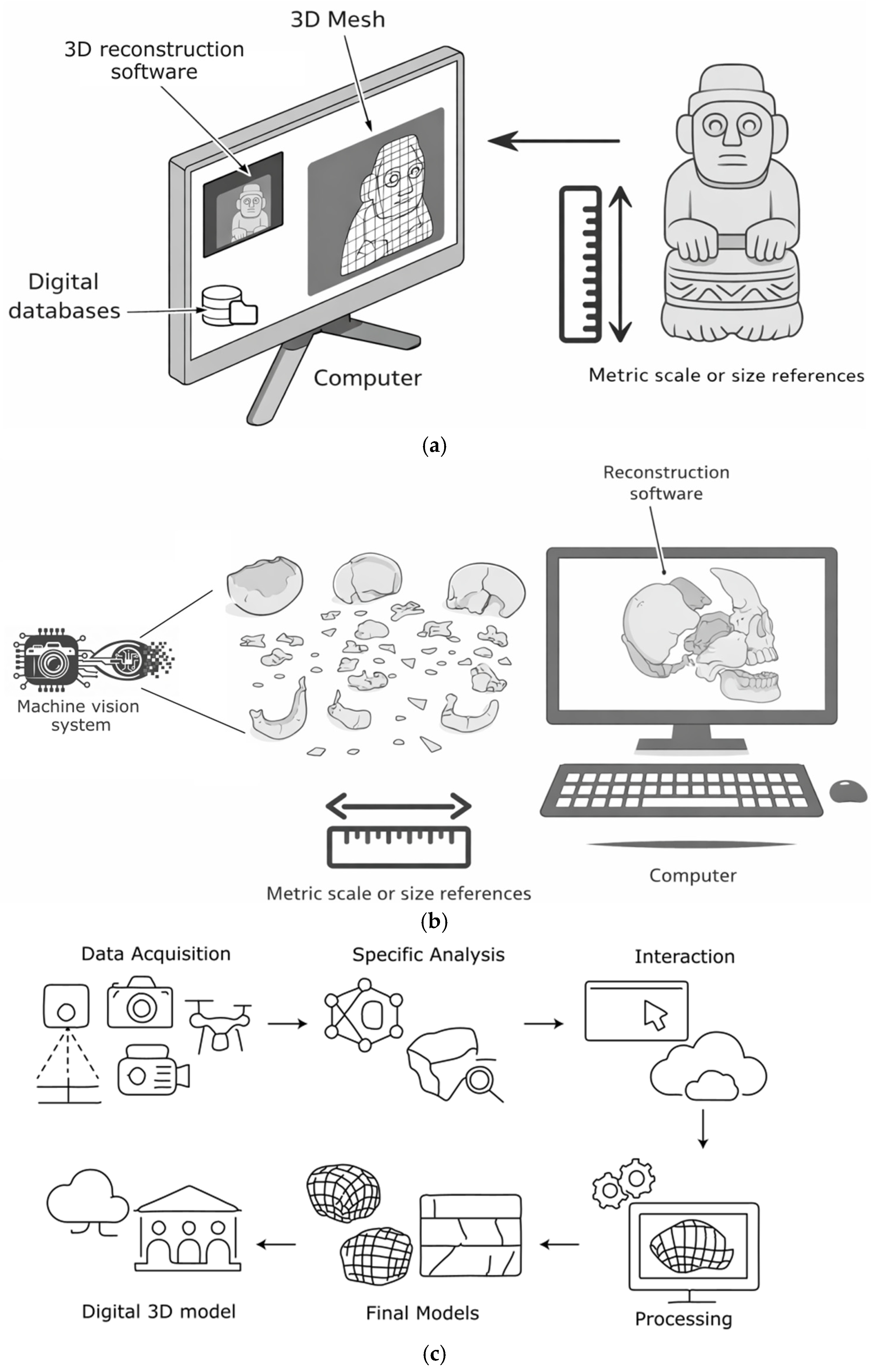

Reconstructing Archaeological Evidence with Digital Technologies: Emerging Trends, Challenges, and Prospects

 , , ,
, , ,
Abstract
1. Introduction
2. Methodology
2.1. Inclusion Criteria
2.2. Exclusion Criteria
3. Theoretical Background
3.1. Photogrammetry
3.2. 3D Modelling
3.3. Digital Restoration
3.4. Virtual Archaeology
4. Results
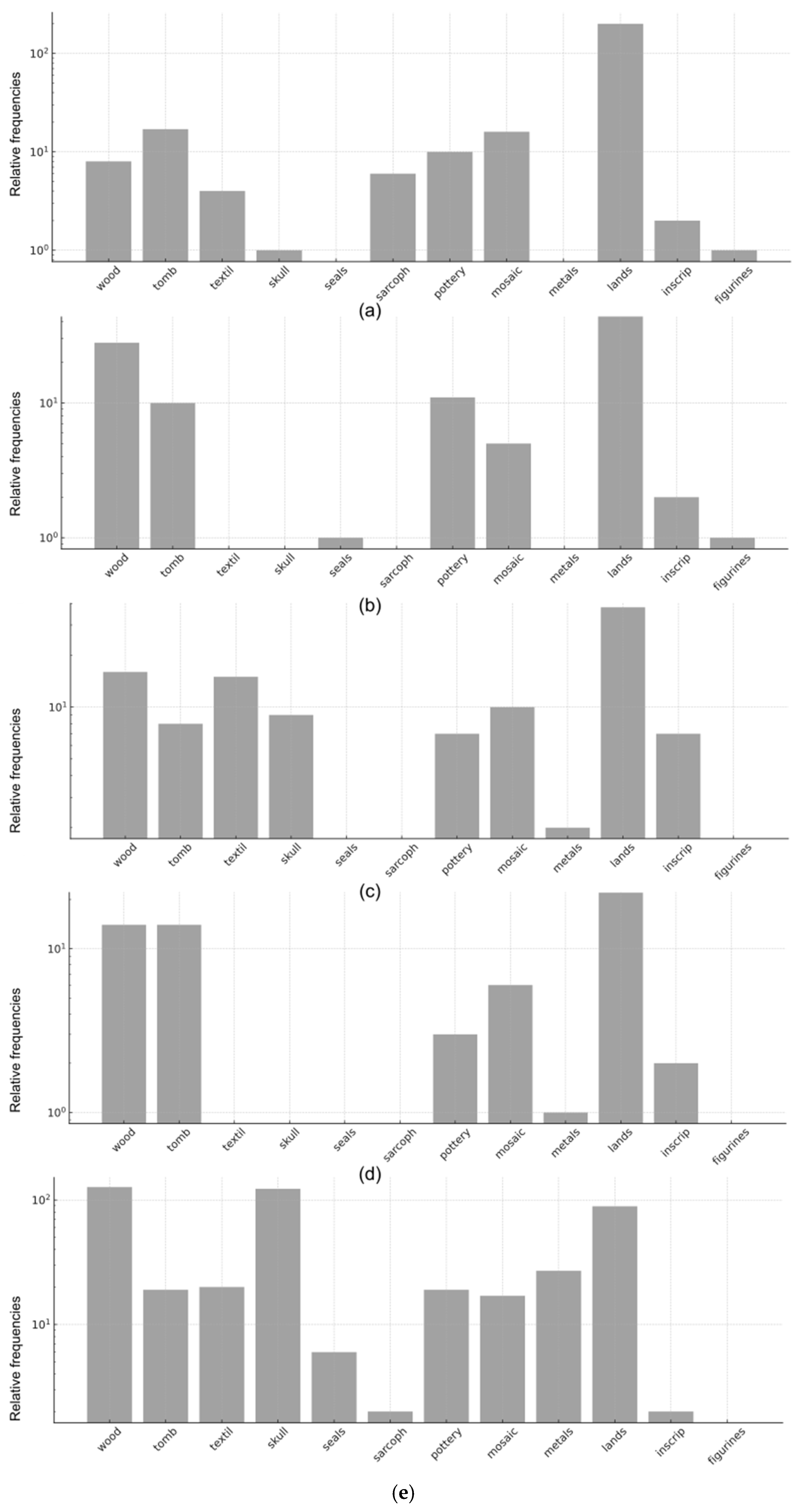
4.1. Bibliometric Analysis
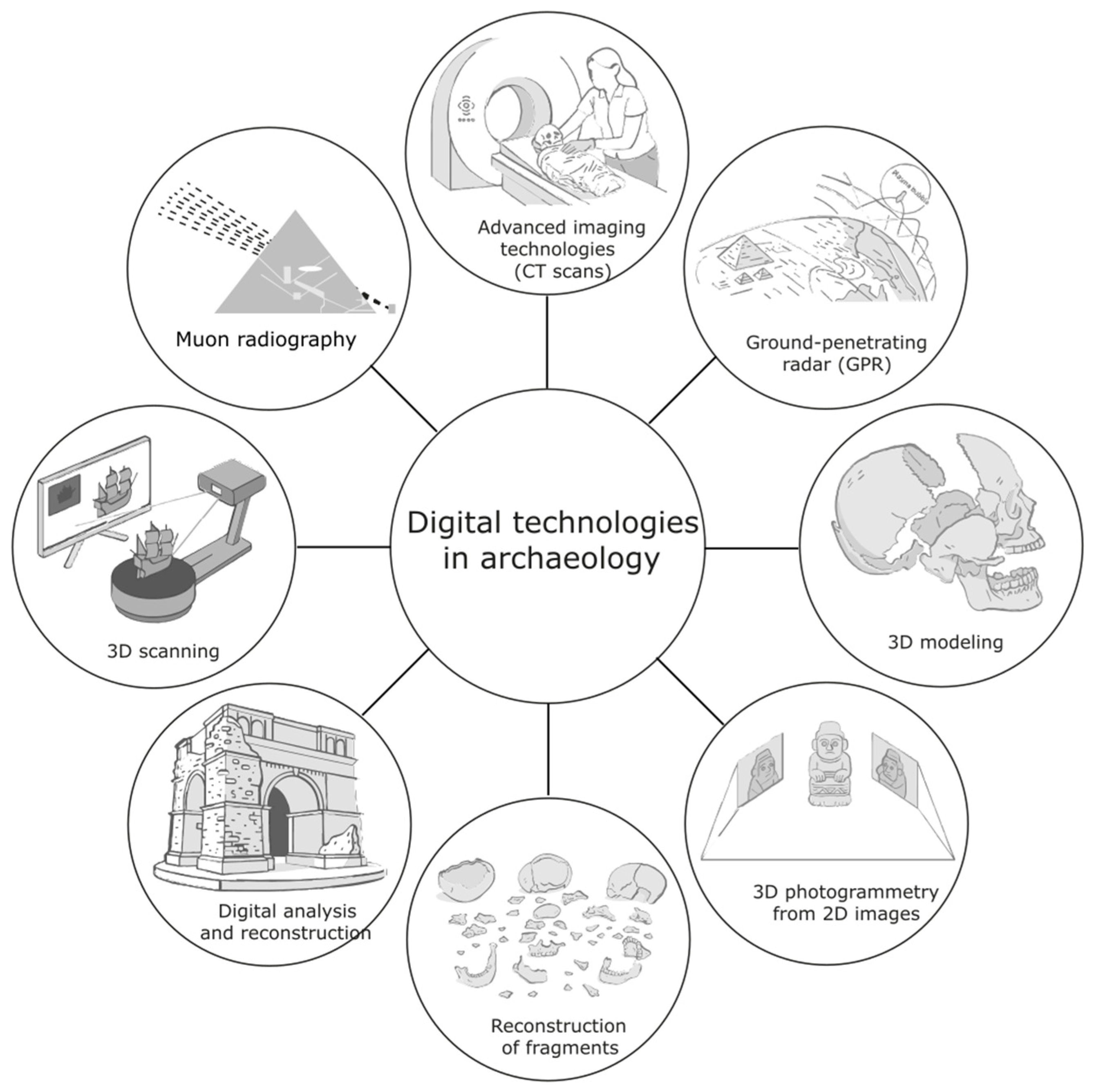
4.2. Digital Technologies for the Reconstruction of Archaeological Evidence
4.2.1. Reconstruction of Archaeological Artifacts
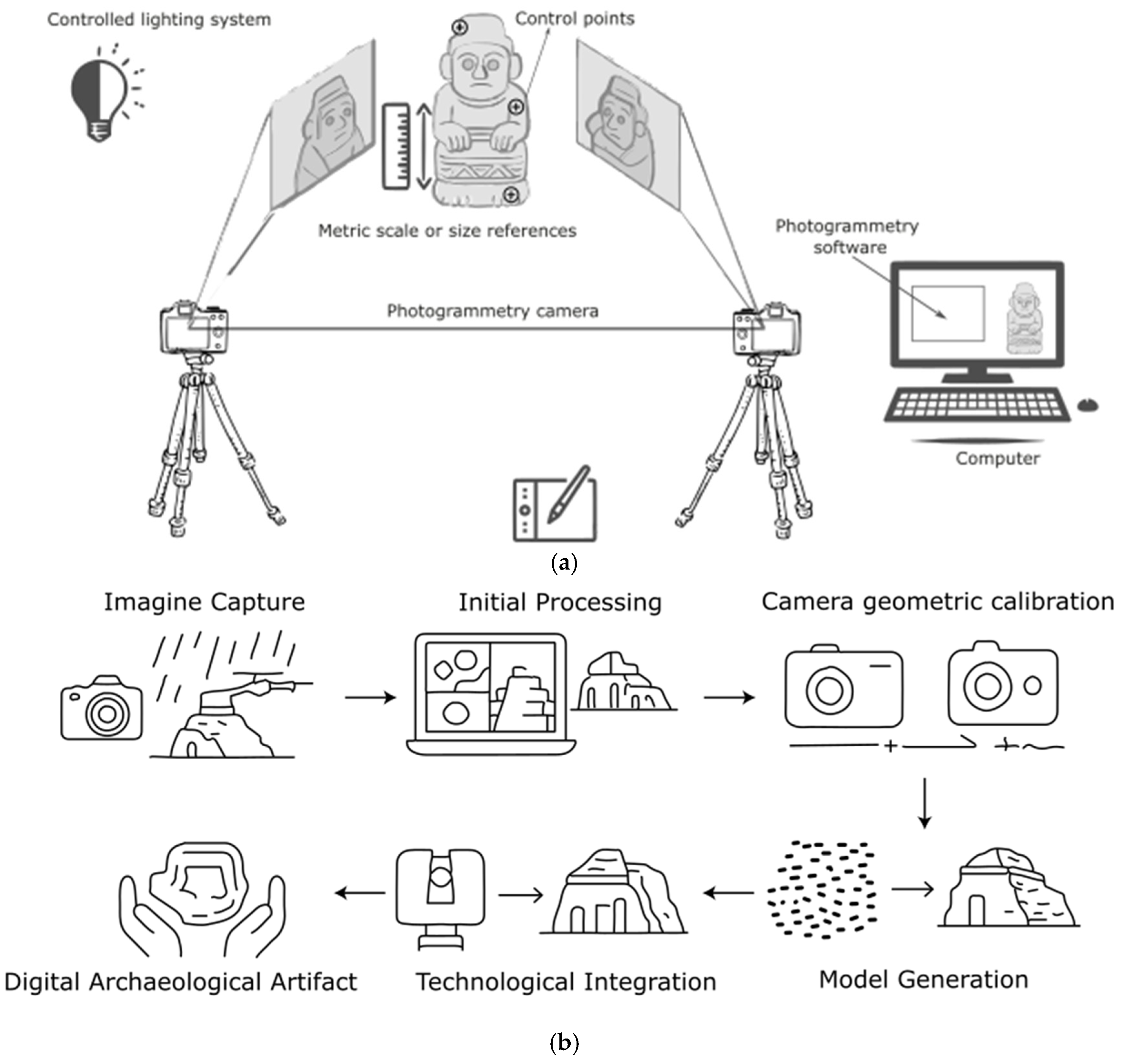
Photogrammetry
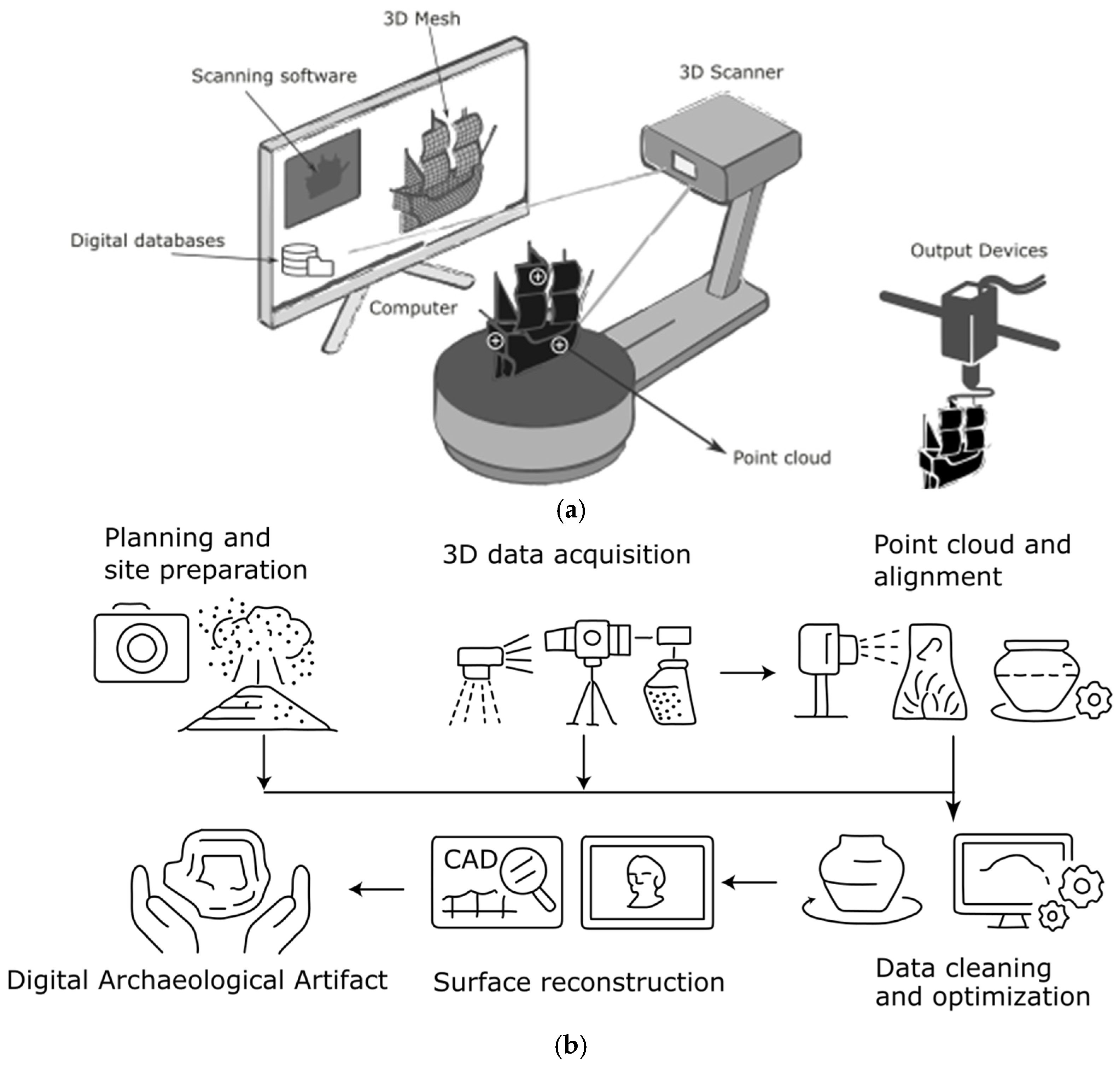
3D Scanning
3D Modeling and Reconstruction
Digital Analysis and Restoration
Advanced Imaging Technologies
4.2.2. Reconstruction of Archaeological Sites
Geographic Information System (GIS) and Geodesic Positioning Technologies
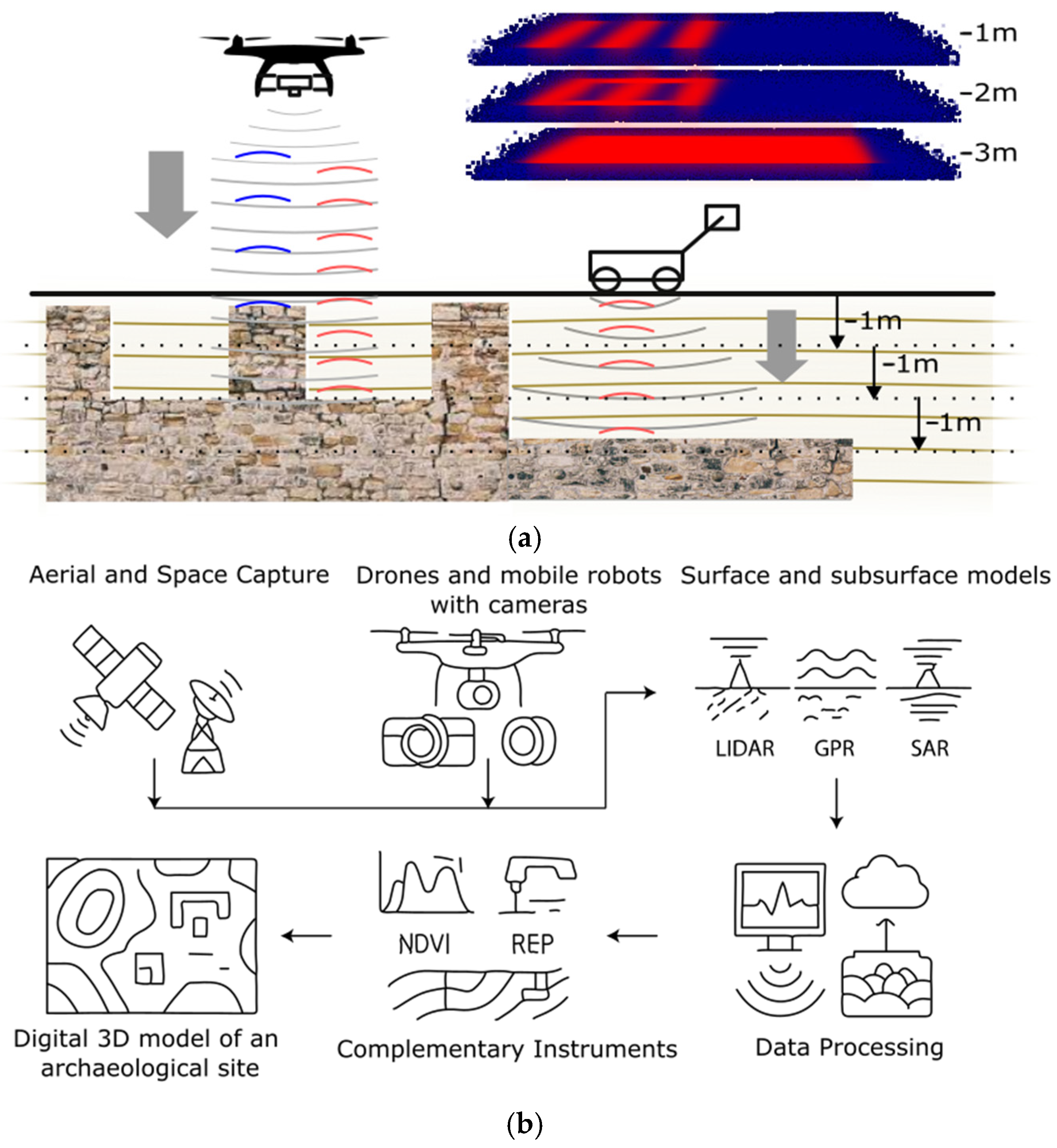
Radar Scanning
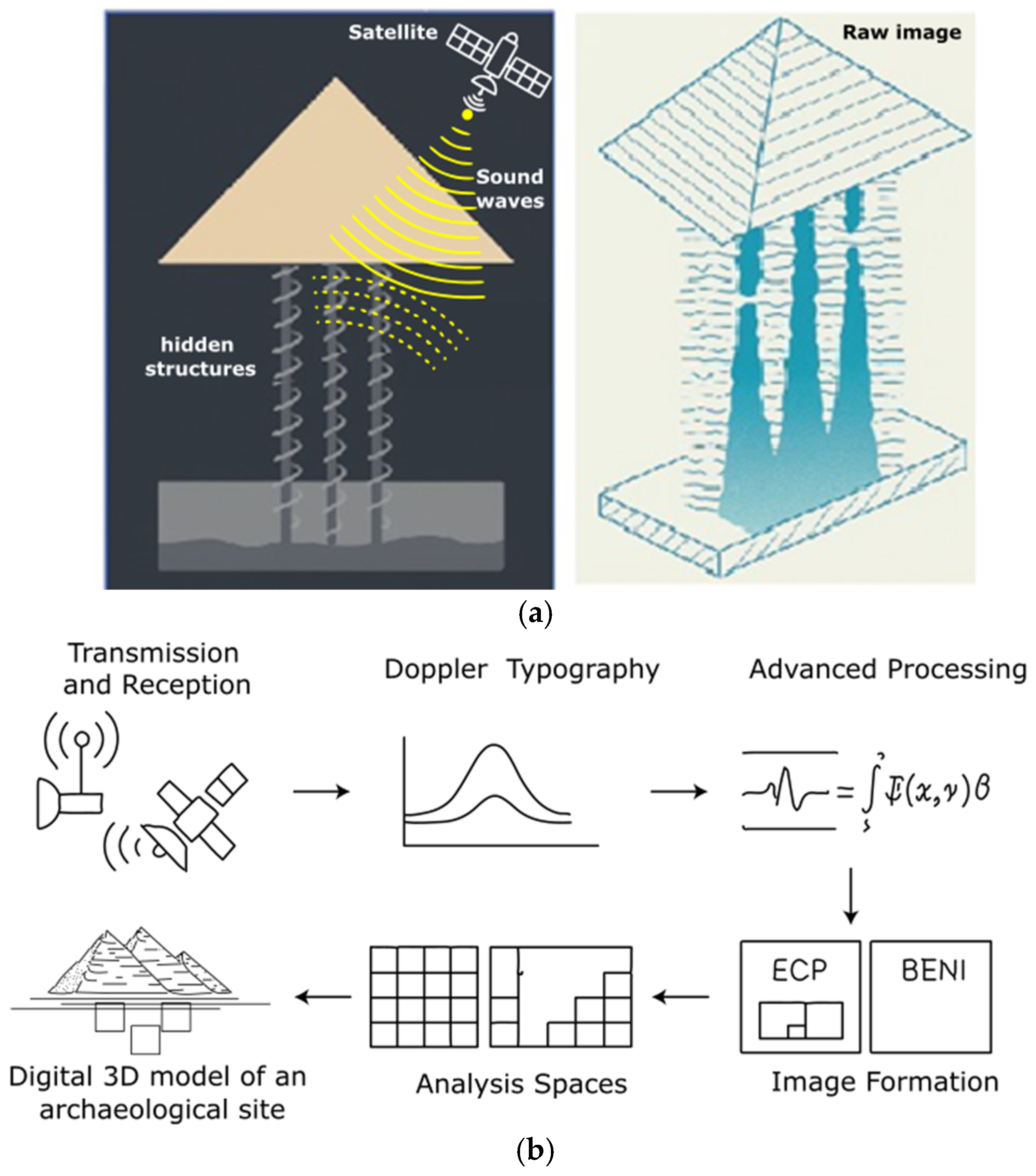
Radar Doppler Tomography
LiDAR Scanning System
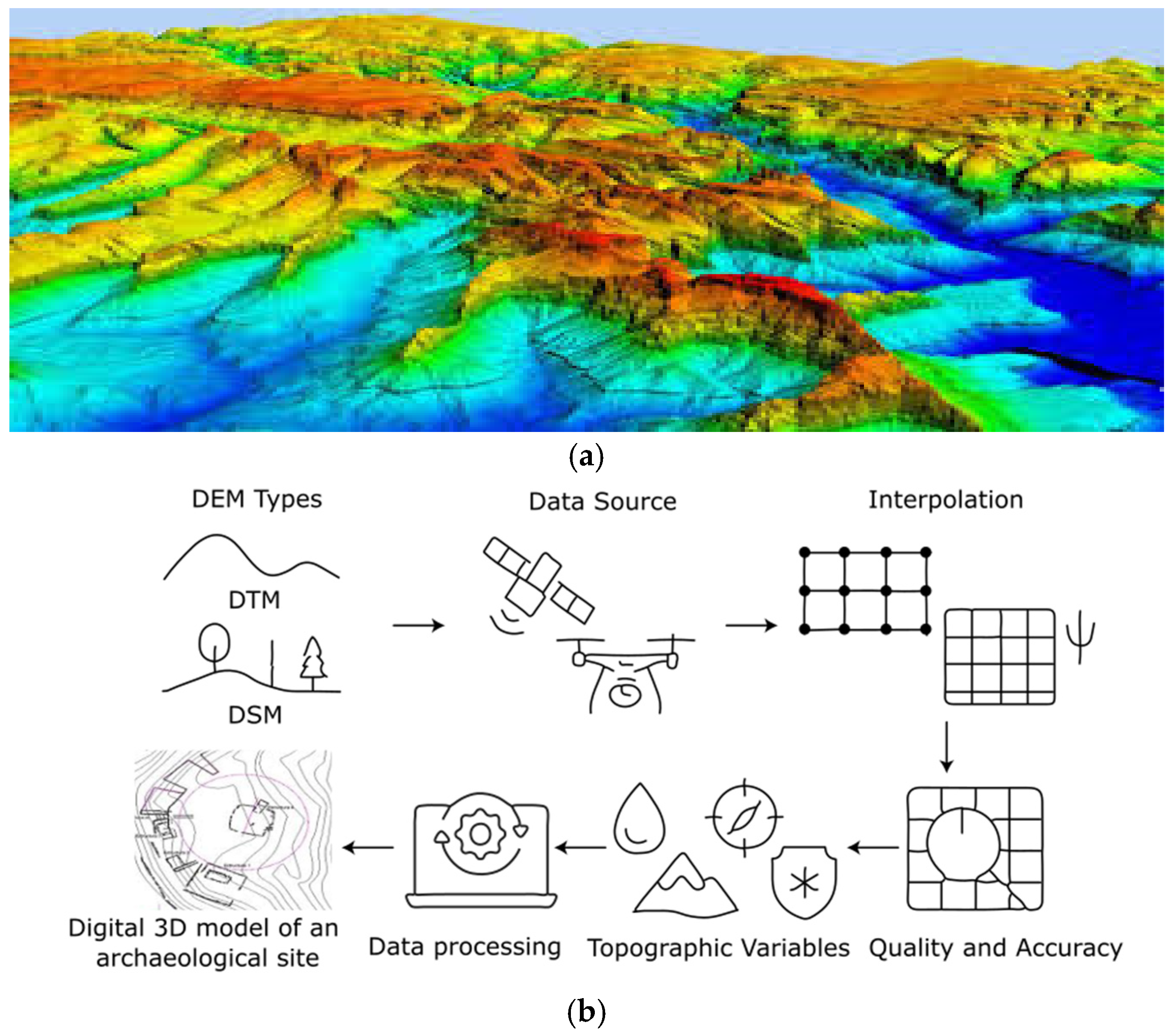
Digital Elevation Models (DEMs)
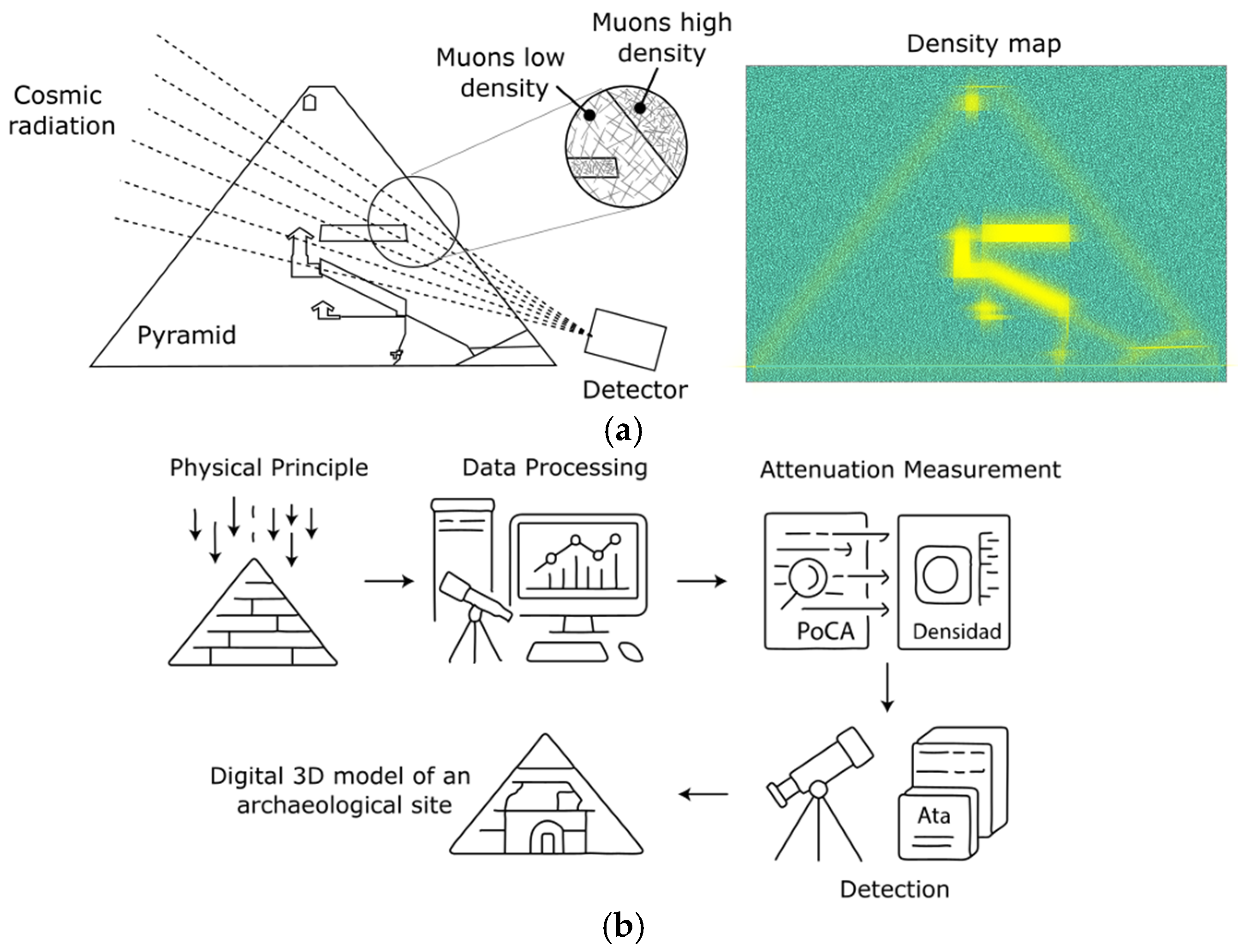
Muon Radiography
4.2.3. Visualization
Virtual Reality (VR) and Augmented Reality (AR)
4.3. Impacts of Digital Technologies in the Reconstruction of Archaeological Artifacts
4.3.1. Documentation and Preservation
4.3.2. Restoration and Reconstruction
4.3.3. Accessibility and Dissemination
4.3.4. Management and Monitoring
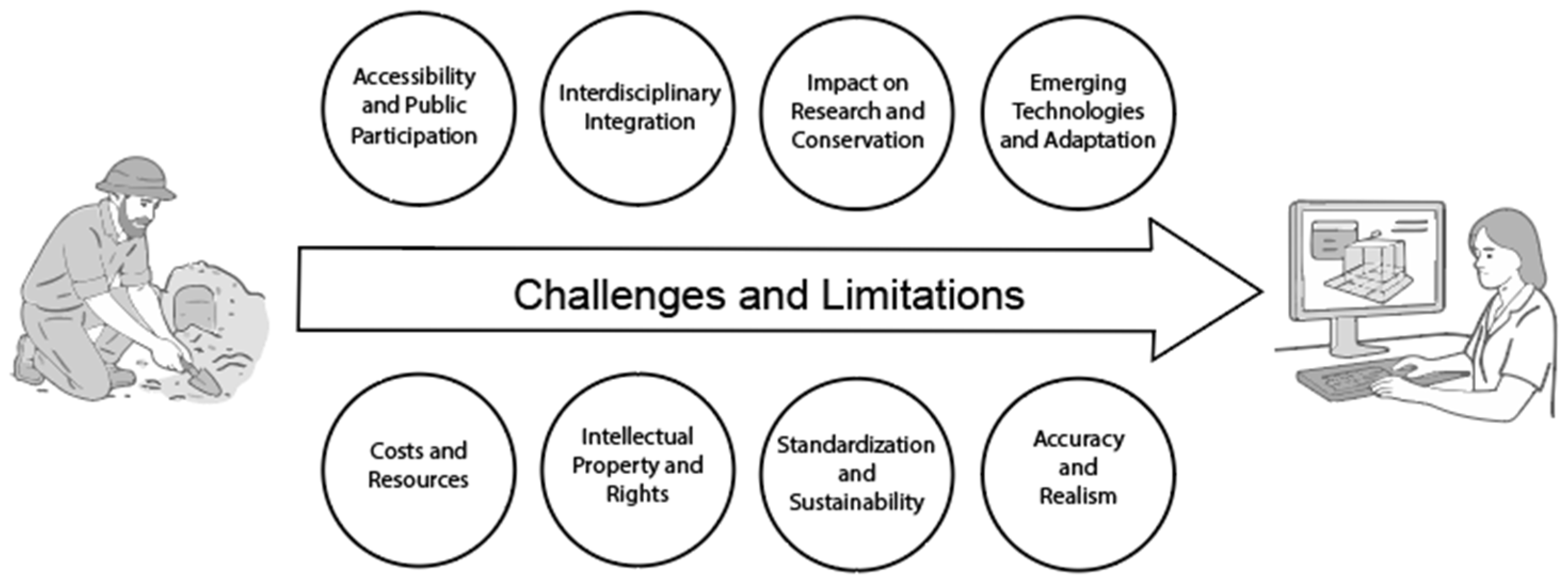
4.4. Challenges and Limitations in the Implementation of Digital Technologies for the Reconstruction of Archaeological Artifacts
4.4.1. Limitations
Costs and Resources
Intellectual Property and Rights
Standardization and Sustainability
Accuracy and Realism
4.4.2. Challenges
Accessibility and Public Participation
Interdisciplinary Integration
Impact on Research and Conservation
Emerging Technologies and Adaptation
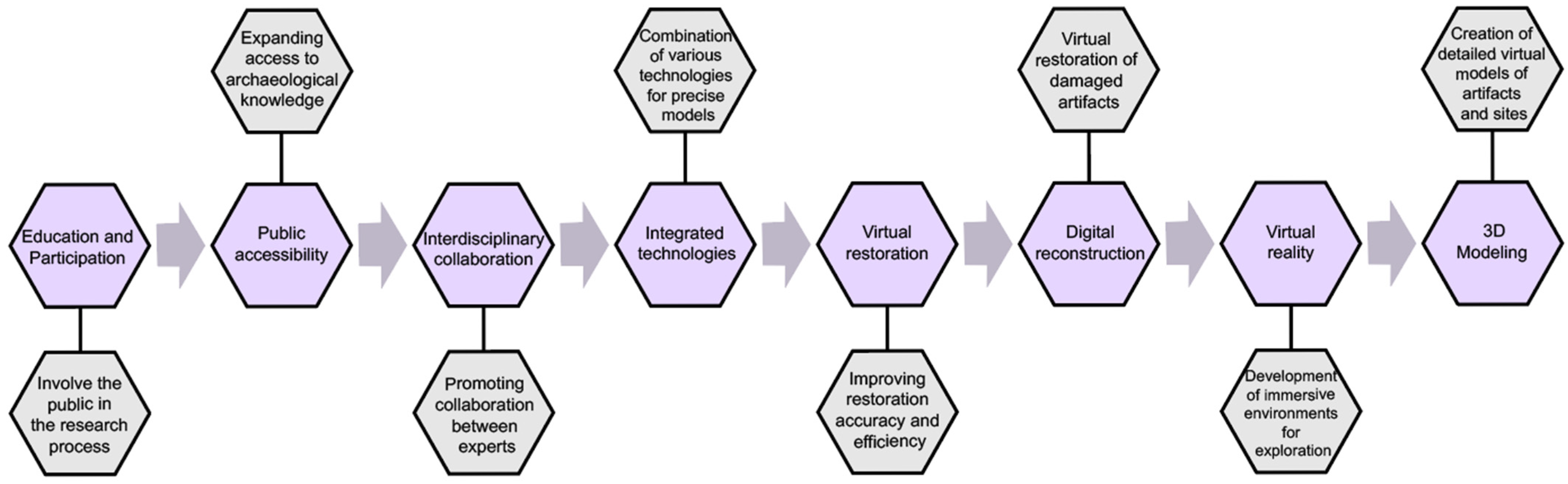
4.5. Future Directions
4.5.1. 3D Modeling and Virtual Reality
4.5.2. Digital Reconstruction and Restoration
4.5.3. Integration of Technologies and Interdisciplinary Collaboration
4.5.4. Accessibility and Knowledge Dissemination
4.5.5. Strategic Recommendations for Practical Implementation
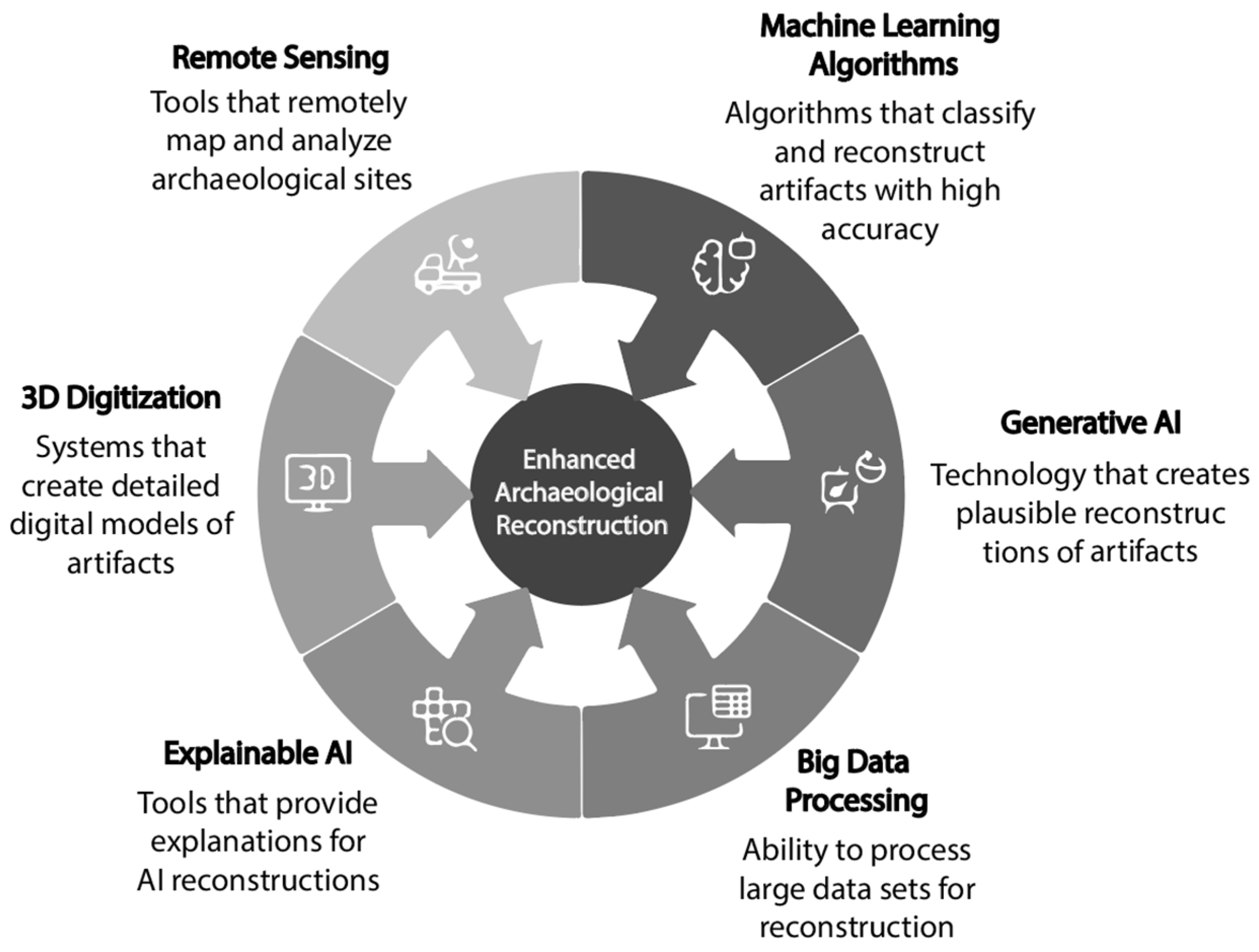
4.6. Artificial Intelligence in the Reconstruction of Archaeological Evidence
4.6.1. Artifact Classification and Reconstruction
4.6.2. 3D Data Acquisition and Processing
4.6.3. Automated Analysis and Interpretation
4.6.4. Challenges and Considerations
4.6.5. Case Studies and Applications
5. Discussion
5.1. Interdisciplinarity as a Driver and Challenge of Digital Reconstruction
5.2. Access and Infrastructure Gaps as Conditions for Use
5.3. Authenticity, Fidelity, and Paradata in the Digital Era
5.4. Immersive, Educational, and Participatory Potential of Digital Technologies
6. Conclusions
Author Contributions
Funding
Institutional Review Board Statement
Informed Consent Statement
Data Availability Statement
Acknowledgments
Conflicts of Interest
Abbreviations
| GIS | Geographic information system |
| SDG | Sustainable development goal |
| RQ | Research questions |
| SfM | Structure from motion |
| VR | Virtual reality |
| AR | Augmented reality |
| UAVs | Unmanned aerial vehicles |
| HMD | Head-mounted display |
Appendix A

| Preferred Reporting Items for Systematic Reviews and Meta-Analyses Extension for Scoping Reviews (PRISMA-ScR) Checklist | |||
|---|---|---|---|
| Section | Item | PRISMA-ScR Checklist Item | Reported on Page # |
| TITLE | |||
| Title | 1 | Identify the report as a scoping review. | 1 |
| ABSTRACT | |||
| Structured summary | 2 | Provide a structured summary that includes (as applicable): background, objectives, eligibility criteria, sources of evidence, charting methods, results, and conclusions that relate to the review questions and objectives. | 1 |
| INTRODUCTION | |||
| Rationale | 3 | Describe the rationale for the review in the context of what is already known. Explain why the review questions/objectives lend themselves to a scoping review approach. | 1, 2, 3, 4 |
| Objectives | 4 | Provide an explicit statement of the questions and objectives being addressed with reference to their key elements (e.g., population or participants, concepts, and context) or other relevant key elements used to conceptualize the review questions and/or objectives. | 4 |
| METHODS | |||
| Protocol and registration | 5 | Indicate whether a review protocol exists; state if and where it can be accessed (e.g., a Web address); and if available, provide registration information, including the registration number. | 3, 4 |
| Eligibility criteria | 6 | Specify characteristics of the sources of evidence used as eligibility criteria (e.g., years considered, language, and publication status), and provide a rationale. | 4.5 |
| Information sources * | 7 | Describe all information sources in the search (e.g., databases with dates of coverage and contact with authors to identify additional sources), as well as the date the most recent search was executed. | 5 |
| Search | 8 | Present the full electronic search strategy for at least 1 database, including any limits used, such that it could be repeated. | 5 |
| Selection of sources of evidence † | 9 | State the process for selecting sources of evidence (i.e., screening and eligibility) included in the scoping review. | 5 |
| Data charting process ‡ | 10 | Describe the methods of charting data from the included sources of evidence (e.g., calibrated forms or forms that have been tested by the team before their use, and whether data charting was done independently or in duplicate) and any processes for obtaining and confirming data from investigators. | 4 |
| Data items | 11 | List and define all variables for which data were sought and any assumptions and simplifications made. | 4 |
| Critical appraisal of individual sources of evidence § | 12 | If done, provide a rationale for conducting a critical appraisal of included sources of evidence; describe the methods used and how this information was used in any data synthesis (if appropriate). | 4 |
| Synthesis of results | 13 | Describe the methods of handling and summarizing the data that were charted. | 12 |
| RESULTS | |||
| Selection of sources of evidence | 14 | Give numbers of sources of evidence screened, assessed for eligibility, and included in the review, with reasons for exclusions at each stage, ideally using a flow diagram. | 5–11 |
| Characteristics of sources of evidence | 15 | For each source of evidence, present characteristics for which data were charted and provide the citations. | - |
| Critical appraisal within sources of evidence | 16 | If done, present data on critical appraisal of included sources of evidence (see item 12). | - |
| Results of individual sources of evidence | 17 | For each included source of evidence, present the relevant data that were charted that relate to the review questions and objectives. | - |
| Synthesis of results | 18 | Summarize and/or present the charting results as they relate to the review questions and objectives. | 12, 13 |
| DISCUSSION | |||
| Summary of evidence | 19 | Summarize the main results (including an overview of concepts, themes, and types of evidence available), link to the review questions and objectives, and consider the relevance to key groups. | 12, 13 |
| Limitations | 20 | Discuss the limitations of the scoping review process. | 13 |
| Conclusions | 21 | Provide a general interpretation of the results with respect to the review questions and objectives, as well as potential implications and/or next steps. | 37 |
| FUNDING | |||
| Funding | 22 | Describe sources of funding for the included sources of evidence, as well as sources of funding for the scoping review. Describe the role of the funders of the scoping review. | 38 |
References
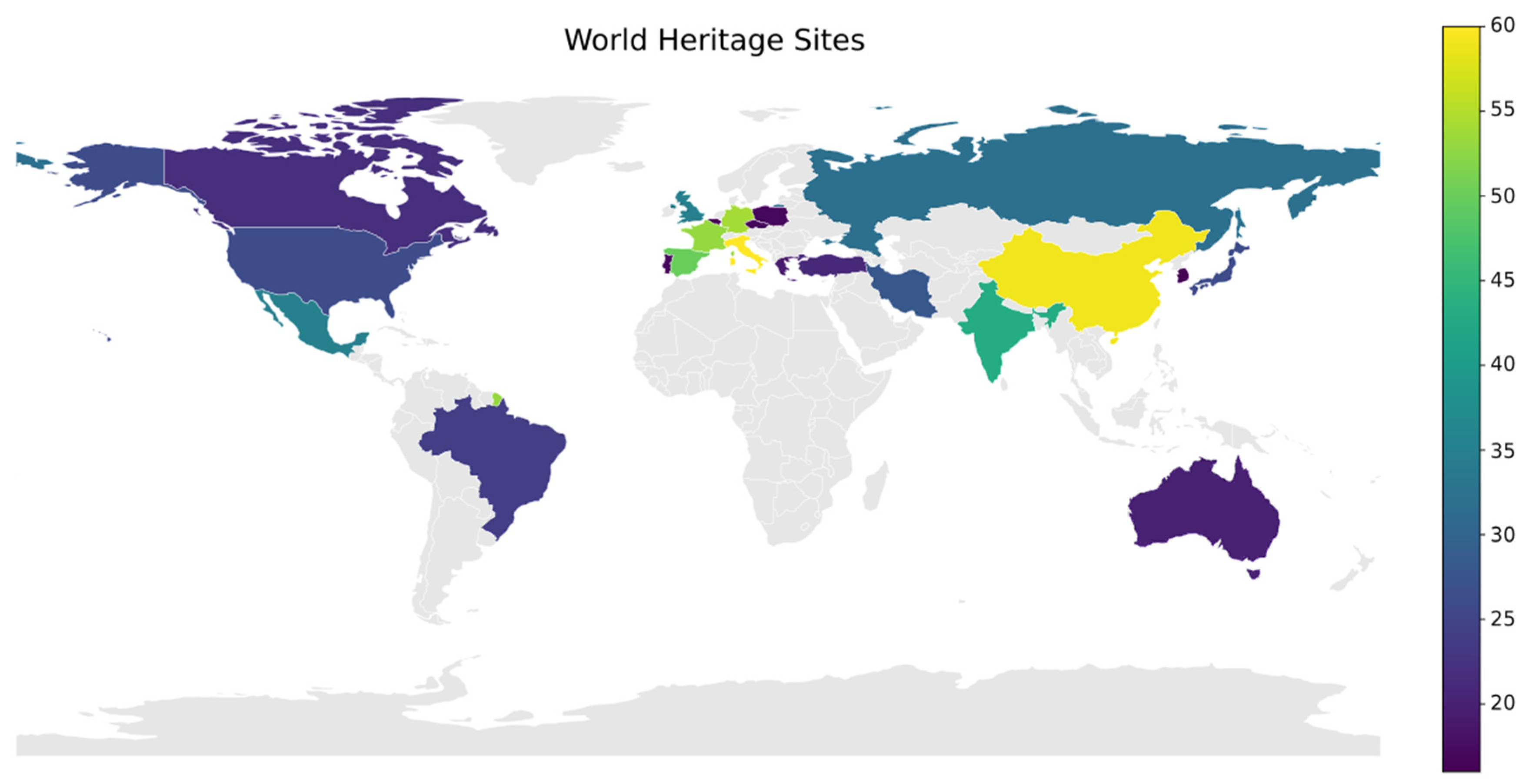
- UNESCO. Number of World Heritage Properties in Each State Party. UNESCO World Heritage Centre. 2026. Available online: https://whc.unesco.org/en/statesparties/stats/ (accessed on 19 February 2026).
- Gigilashvili, D.; Lukesova, H.; Gulbrandsen, C.F.; Harijan, A.; Hardeberg, J.Y. Computational Techniques for Virtual Reconstruction of Fragmented Archaeological Textiles. Herit. Sci. 2023, 11, 259. [Google Scholar] [CrossRef]
- Semiautomatic Fragments Matching and Virtual Reconstruction: A Case Study on Ceramics. Available online: https://www.researchgate.net/publication/298710569_Semiautomatic_fragments_matching_and_virtual_reconstruction_A_case_study_on_ceramics (accessed on 18 September 2025).
- Pavelka, K.; Pavelka, K.; Běloch, L. A Reconstruction of the Shrine of the Prophet Nahum: An Analysis of 3D Documentation Methods and Data Transfer Technology for Virtual and Augmented Realities. Appl. Sci. 2025, 15, 1000. [Google Scholar] [CrossRef]
- Fregonese, L.; Giordani, N.; Adami, A.; Bachinsky, G.; Taffurelli, L.; Rosignoli, O.; Helder, J. Physical and virtual reconstruction for an integrated archaeological model: 3d print and maquette. Int. Arch. Photogramm. Remote Sens. Spat. Inf. Sci. 2019, 42, 481–487. [Google Scholar] [CrossRef]
- Nencini, E.; Maino, G. From the Physical Restoration for Preserving to the Virtual Restoration for Enhancing. In Proceedings of the International Conference on Image Analysis and Processing—ICIAP 2011, Ravenna, Italy, 14–16 September 2011; Maino, G., Foresti, G.L., Eds.; Lecture Notes in Computer Science; Springer: Berlin/Heidelberg, Germany, 2011; Volume 6978, pp. 700–709. [Google Scholar] [CrossRef]
- Decay Assessment in Historic Buildings with Texture-Based Classification Techniques: From Digital Survey to Hbim. Available online: https://iris.poliba.it/handle/11589/280040 (accessed on 18 September 2025).
- Miranda, Á.R.; Melón, J.M.V.; Calparsoro, E.; Iñañez, J.G. Study, revalorization and virtual musealization of a ceramic kiln based on information gathered from old excavations. Digit. Appl. Archaeol. Cult. Herit. 2017, 7, 1–9. [Google Scholar] [CrossRef]
- Scopigno, R.; Cignoni, P.; Callieri, M.; Ganovelli, F.; Impoco, G.; Pingi, P.; Ponchio, F. Using optically scanned 3D data in the restoration of Michelangelo’s David. In Optical Metrology for Arts and Multimedia; Salimbeni, R., Ed.; SPIE: Munich, Germany, 2003; pp. 44–53. [Google Scholar] [CrossRef]
- Gomes, L.; Bellon, O.R.P.; Silva, L. 3D Reconstruction Methods for Digital Preservation of Cultural Heritage: A survey—ScienceDirect. Pattern Recognit. Lett. 2014, 50, 3–14. [Google Scholar] [CrossRef]
- Yastikli, N. Documentation of Cultural Heritage Using Digital Photogrammetry and Laser Scanning. J. Cult. Herit. 2007, 8, 423–427. [Google Scholar] [CrossRef]
- Catulo, R.; Falcão, A.P.; Bento, R.; Ildefonso, S. Simplified Evaluation of Seismic Vulnerability of Lisbon Heritage City Centre Based on a 3DGIS-Based Methodology. J. Cult. Herit. 2018, 32, 108–116. [Google Scholar] [CrossRef]
- Samavati, T.; Soryani, M. Deep Learning-Based 3D Reconstruction: A Survey. Artif. Intell. Rev. 2023, 56, 9175–9219. [Google Scholar] [CrossRef]
- Liu, S.; Yang, M.; Xing, T.; Yang, R. A Survey of 3D Reconstruction: The Evolution from Multi-View Geometry to NeRF and 3DGS. Sensors 2025, 25, 5748. [Google Scholar] [CrossRef]
- Raco, F. From survey to integrated digital documentation of the cultural heritage of museums: A protocol for the anastylosis of archaeological finds. J. Cult. Herit. 2023, 64, 176–186. [Google Scholar] [CrossRef]
- Gu, B. Digital Solutions for Cultural Heritage Protection: Korea’s ODA Contributions to the BIMP-EAGA. SUVANNABHUMI 2025, 17, 33–52. [Google Scholar] [CrossRef]
- Nappi, M.L.; Chivăran, C.; Capece, S.; Buono, M. Fruition of Invisible Archaeological Knowledge Through Digital Technologies. In International Conference Florence Heri-Tech: The Future of Heritage Science and Technologies; Springer: Cham, Switzerland, 2022. [Google Scholar]
- Ocón, D. Digitalising endangered cultural heritage in Southeast Asian cities: Preserving or replacing? Int. J. Herit. Stud. 2021, 27, 975–990. [Google Scholar] [CrossRef]
- Jeffrey, S. A new Digital Dark Age? Collaborative web tools, social media and long-term preservation. World Archaeol. 2012, 44, 553–570. [Google Scholar] [CrossRef]
- Stuermer, M.; Abu-Tayeh, G.; Myrach, T. Digital Sustainability: Basic Conditions for Sustainable Digital Artifacts and Their Ecosystems. Sustain. Sci. 2017, 12, 247–262. [Google Scholar] [CrossRef] [PubMed]
- Li, R.; Liu, C. Chapter Photogrammetry for Remote Sensing. In Manual of Geospatial Science and Technology, 2nd ed.; CRC Press: Boca Raton, FL, USA, 2010; Available online: https://www.taylorfrancis.com/chapters/mono/10.1201/9781420087345-24/chapter-photogrammetry-remote-sensing-john-bossler-james-campbell-robert-mcmaster-chris-rizos (accessed on 18 September 2025).
- Ey-Chmielewska, H.; Chruściel-Nogalska, M.; Frączak, B. Photogrammetry and Its Potential Application in Medical Science on the Basis of Selected Literature. Adv. Clin. Exp. Med. 2015, 24, 737–741. [Google Scholar] [CrossRef]
- Habib, A.; Jarvis, A.; Detchev, G.; Stensaas, D.; Moe, D.; Christopherson, J. Standards and Specifications for the Calibration and Stability of Amateur Digital Cameras for Close-Range Mapping Applications. In Proceedings of the XXIst ISPRS Congress Technical Commission I, Beijing, China, 3–11 July 2008. [Google Scholar]
- Close Range Photogrammetry: Fundamentals, Principles and Applications in Structures. Available online: https://www.researchgate.net/publication/313501444_Close_Range_Photogrammetry_Fundamentals_Principles_and_Applications_in_Structures (accessed on 18 September 2025).
- Udin, W.S.; Ahmad, A. Assessment of Photogrammetric Mapping Accuracy Based on Variation Flying Altitude Using Unmanned Aerial Vehicle. IOP Conf. Ser. Earth Environ. Sci. 2014, 18, 012027. [Google Scholar] [CrossRef]
- Shahid, I.G.; Phang, S.K.; Chew, W.J. Fast 3D Mapping Solution with UAV. J. Phys. Conf. Ser. 2023, 2523, 012019. [Google Scholar] [CrossRef]
- Redweik, P. Photogrammetry. In Sciences of Geodesy—II; Xu, G., Ed.; Springer: Berlin/Heidelberg, Germany, 2013; pp. 133–183. [Google Scholar] [CrossRef]
- Chong, A.K.; Milburn, P.; Newsham-West, R.; Voert, M. High-accuracy photogrammetric technique for hu-man spine measurement. Photogramm. Rec. 2009, 24, 264279. [Google Scholar] [CrossRef]
- Thomas, A.S.; Hassan, M.F.; Ismail, A.E.; Haq, R.H.A.; Arifin, A.M.T.; Ahmad, M.F. Portable Mini Turntable for Close-Range Photogrammetry: A Preliminary Study. IOP Conf. Ser. Mater. Sci. Eng. 2019, 607, 012011. [Google Scholar] [CrossRef]
- Qin, R.; Gruen, A. The role of machine intelligence in photogrammetric 3D modeling—An overview and perspectives. Int. J. Digit. Earth 2021, 14, 15–31. [Google Scholar] [CrossRef]
- Yang, Q.; Li, A.; Liu, Y.; Wang, H.; Leng, Z.; Deng, F. Machine learning-based optimization of photogrammetric JRC accuracy. Sci. Rep. 2024, 14, 26608. [Google Scholar] [CrossRef] [PubMed]
- Mandić, L.; Pibernik, J.; Kurečić, M.S.; Cmrk, A. Optimization of 3D Model for Computer Games. In Proceedings of the 2024 International Symposium ELMAR, Zadar, Croatia, 16–18 September 2024; IEEE: New York, NY, USA, 2024; pp. 355–358. [Google Scholar] [CrossRef]
- From Photography to 3D Models and Beyond: Visualizations in Archaeology—Archaeopress—Torrossa. Available online: https://www.torrossa.com/en/resources/an/5687771# (accessed on 18 September 2025).
- Virtual Reality, 3D Recreations and 3D Printing in Social Sciences Education: Creating and Interacting with Virtual Worlds. IGI Global Scientific Publishing. Available online: https://www.igi-global.com/gateway/chapter/306716 (accessed on 18 September 2025).
- Läufer. Available online: https://ocs.editorial.upv.es/index.php/HEAD/HEAd23/paper/view/16225 (accessed on 18 September 2025).
- Paul, T.; Rohil, M.K. Advanced 3D Modeling for Augmented Reality Visualizations in Engineering Educa-tion: Issues, Challenges, and Future. In Proceedings of the 2023 International Conference on Modeling, Simulation & Intelligent Computing (MoSICom), Dubai, United Arab Emirates, 7–9 December 2023; IEEE: New York, NY, USA, 2023; pp. 345–350. [Google Scholar] [CrossRef]
- Tubic, D.; Hebert, P.; Deschenes, J.-D.; Laurendeau, D. A unified representation for interactive 3D modeling. In Proceedings of the 2nd International Symposium on 3D Data Processing, Visualization and Transmission, 3DPVT 2004, Thessaloniki, Greece, 6–9 September 2004; IEEE: New York, NY, USA, 2004; pp. 175–182. [Google Scholar] [CrossRef]
- Chickerur, S.; Kumar, M.A. Image Restoration: Past, Present and Future. Recent Pat. Comput. Sci. 2010, 3, 108–126. [Google Scholar] [CrossRef]
- Snider, M. Using Cinematographic Tools for Historic House Digital Restorations. In Proceedings of the 2020 Intermountain Engineering, Technology and Computing (IETC), Orem, UT, USA, 2–3 October 2020; IEEE: New York, NY, USA, 2020; pp. 1–6. [Google Scholar] [CrossRef]
- Pandey, M.; Rawat, G.; Kanti, P. Image Restoration Application and Methods for Different Images: A Review. In Proceedings of the 2022 International Conference on Advances in Computing, Communication and Materials (ICACCM), Dehradun, India, 10–11 November 2022; IEEE: New York, NY, USA, 2022; pp. 1–4. [Google Scholar] [CrossRef]
- Lechuga-S, E.; Valdiviezo-N, J.C.; Urcid, G. Multispectral image restoration of historical documents based on LAAMs and mathematical morphology. In Optics and Photonics for Information Processing VIII; Awwal, A.A.S., Iftekharuddin, K.M., Matin, M.A., Márquez, A., Eds.; SPIE: San Diego, CA, USA, 2014; p. 921604. [Google Scholar] [CrossRef]
- DeVries, R.P.; Sereno, P.C.; Vidal, D.; Baumgart, S.L. Reproducible Digital Restoration of Fossils Using Blender. Front. Earth Sci. 2022, 10, 833379. [Google Scholar] [CrossRef]
- Liu, J.; Li, T.; Yu, Z.; Lyu, S.; Fu, Q.; Yu, X. Hyperspectral identification of mineral pigments in Thangka paintings for cultural heritage conservation. npj Herit. Sci. 2025, 13, 649. [Google Scholar] [CrossRef]
- Croci, S.; Aydin, T.O.; Stefanoski, N.; Gross, M.; Smolic, A. Advanced tools and framework for historical film restoration. J. Electron. Imaging 2017, 26, 011021. [Google Scholar] [CrossRef]
- Sandak, J.; Sandak, A.; Legan, L.; Retko, K.; Kavčič, M.; Kosel, J.; Poohphajai, F.; Diaz, R.H.; Ponnuchamy, V.; Sajinčič, N.; et al. Nondestructive evaluation of heritage object coatings with four hyperspectral imaging systems. Coatings 2021, 11, 244. [Google Scholar] [CrossRef]
- Lutteroth, J.; Kuroczyński, P.; Bajena, I.P. Digital 3D reconstructions of synagogues for an innovative approach on Jewish architectural heritage in East Central Europe. Virtual Archaeol. Rev. 2025, 16, 144–160. [Google Scholar] [CrossRef]
- Xhako, A.; Katzourakis, A.; Evdaimon, T.; Zidianakis, E.; Partarakis, N.; Zabulis, X. Reviving Antiquity in the Digital Era: Digitization, Semantic Curation, and VR Exhibition of Contemporary Dresses. Computers 2024, 13, 57. [Google Scholar] [CrossRef]
- Knopf, G.K.; Nelson, A.J. ARCHAEO-SCAN: Portable 3D shape measurement system for archaeological field work. In Machine Vision and Its Optomechatronic Applications; Kaneko, S., Cho, H., Knopf, G.K., Tutsch, R., Eds.; SPIE: Philadelphia, PA, USA, 2004; p. 51. [Google Scholar] [CrossRef]
- Agha, R.A.A.; Monnet, W. A virtual & an augmented reality application of the Rashid Agha’s diwakhana in the citadel of erbil using 360° 3D Lidar. In Proceedings of the Second International Conference on Data Science, E-Learning and Information Systems, Dubai, United Arab Emirates, 2–5 December 2019; ACM: New York, NY, USA, 2019; pp. 1–9. [Google Scholar] [CrossRef]
- Papas, N.; Tsongas, K.; Karolidis, D.; Tzetzis, D. The integration of 3D technologies and finite element analysis (FEA) for the restoration of an ancient terra sigillata plate. Digit. Appl. Archaeol. Cult. Herit. 2023, 28, e00260. [Google Scholar] [CrossRef]
- Spengler, A.; Pascoe, K.; Kapono, C.; Kane, H.; Burns, J. MEGA Vision: Integrating Reef Photogrammetry Data into Immersive Mixed Reality Experiences. Int. Arch. Photogramm. Remote Sens. Spat. Inf. Sci. 2024, 48, 409–414. [Google Scholar] [CrossRef]
- Shih, N.-J.; Wu, Y.-C. Augmented Reality- and Geographic Information System-Based Inspection of Brick Details in Heritage Warehouses. Appl. Sci. 2024, 14, 8316. [Google Scholar] [CrossRef]
- Stamnas, A.; Kaimaris, D.; Georgiadis, C.; Patias, P. Comparing 3d Digital Technologies for Archaeological Fieldwork Documentation. The Case of Thessaloniki Toumba Excavation, Greece. Int. Arch. Photogramm. Remote Sens. Spatial Inf. Sci. 2021, XLVI-M-1-2021, 713–720. [Google Scholar] [CrossRef]
- Simou, S.; Baba, K.; Nounah, A. The integration of 3D technology for the conservation and restoration of ruined archaeological artifacts. Hist. Sci. Technol. 2022, 12, 150–168. [Google Scholar] [CrossRef]
- Wen, G. A Grid Model for Digital Modeling of Cultural Relics Based on Virtual Reality Technology. In Proceedings of the 2023 International Conference on Networking, Informatics and Computing (ICNETIC), Palermo, Italy, 29–31 May 2023; IEEE: New York, NY, USA, 2023; pp. 674–678. [Google Scholar] [CrossRef]
- Zhang, M.; Li, H.; Lei, L. Technical application of virtual reality 3D image reconstruction technology in archaeology. In Proceedings of the Fourth International Conference on Image Processing and Intelligent Control (IPIC 2024), Kuala Lumpur, Malaysia, 10–12 May 2024; Du, K., Zain, A.B.M., Eds.; SPIE: Washington, DC, USA, 2024; p. 50. [Google Scholar] [CrossRef]
- Thompson, A.D.R.; Williams, M. Reflectance transformation imaging (RTI) of a little known south-eastern copper plate. Southeast. Archaeol. 2016, 35, 70–80. [Google Scholar] [CrossRef]
- Moullou, D.; Vital, R.; Sylaiou, S.; Ragia, L. Digital Tools for Data Acquisition and Heritage Management in Archaeology and Their Impact on Archaeological Practices. Heritage 2023, 7, 107–121. [Google Scholar] [CrossRef]
- Waagen, J. New technology and archaeological practice. Improving the primary archaeological recording process in excavation by means of UAS photogrammetry. J. Archaeol. Sci. 2019, 101, 11–20. [Google Scholar] [CrossRef]
- Barrile, V.; Fotia, A.; Bilotta, G. Geomatics and augmented reality experiments for the cultural heritage. Appl. Geomat. 2018, 10, 569–578. [Google Scholar] [CrossRef]
- Sebar, L.E.; Grassini, S.; Parvis, M.; Lombardo, L. A low-cost automatic acquisition system for photogrammetry. In Proceedings of the 2021 IEEE International Instrumentation and Measurement Technology Conference (I2MTC), Glasgow, UK, 17–20 May 2021; IEEE: New York, NY, USA, 2021; pp. 1–6. [Google Scholar] [CrossRef]
- Rodríguez-Martín, M.; Rodríguez-Gonzálvez, P. Suitability of Automatic Photogrammetric Reconstruction Configurations for Small Archaeological Remains. Sensors 2020, 20, 2936. [Google Scholar] [CrossRef]
- Kaya, Y.; Şenol, H.İ.; Polat, N. Three-dimensional modeling and drawings of stone column motifs in Harran Ruins. Mersin Photogramm. J. 2021, 3, 48–52. [Google Scholar] [CrossRef]
- Balletti, C.; Guerra, F.; Scocca, V.; Gottardi, C. 3d Integrated Methodologies for the Documentation and the Virtual Reconstruction of an Archaeological Site. Int. Arch. Photogramm. Remote Sens. Spat. Inf. Sci. 2015, 40, 215–222. [Google Scholar] [CrossRef]
- Yordanov, V.; Mostafavi, A.; Scaioni, M. Distance-Training for Image-Based 3d Modelling of Archeological Sites in Remote Regions. Int. Arch. Photogramm. Remote Sens. Spat. Inf. Sci. 2019, 42, 1165–1172. [Google Scholar] [CrossRef]
- Klapa, P.; Mitka, B.; Zygmunt, M. Application of Integrated Photogrammetric and Terrestrial Laser Scanning Data to Cultural Heritage Surveying. IOP Conf. Ser. Earth Environ. Sci. 2017, 95, 032007. [Google Scholar] [CrossRef]
- Magnani, M.; Douglass, M.; Schroder, W.; Reeves, J.; Braun, D.R. The Digital Revolution to Come: Photogrammetry in Archaeological Practice. Am. Antiq. 2020, 85, 737–760. [Google Scholar] [CrossRef]
- Maté-González, M.Á.; Yali, R.; Rodríguez-Hernández, J.; González-González, E.; Aguirre de Mata, J. Comparison of NeRF- and SfM-Based Methods for Point Cloud Reconstruction for Small-Sized Archaeological Artifacts. Remote Sens. 2025, 17, 2535. [Google Scholar] [CrossRef]
- Calicchia, P.; De Simone, S.; Camassa, A.; Tati, A.; Petrucci, F. Integration of Non-Destructive Acoustic Imaging Investigation with Photogrammetric and Morphological Analysis to Study the “Graecia Vetus” in the Chigi Palace of Ariccia. Heritage 2022, 5, 3762–3784. [Google Scholar] [CrossRef]
- Harjoko, A.; Hujja, R.M.; Awaludin, L. Low-cost 3D surface reconstruction using Stereo camera for small object. In Proceedings of the 2017 International Conference on Signals and Systems (ICSigSys), Bali, Indonesia, 16–18 May 2017; IEEE: New York, NY, USA, 2017; pp. 285–289. [Google Scholar] [CrossRef]
- Bottino, A.; Laurentini, A. Retrieval of Shape from Silhouette. In Proceedings of the Advances in Imaging and Electron Physics; Elsevier: Amsterdam, The Netherlands, 2006; Volume 139, pp. 1–73. [Google Scholar] [CrossRef]
- Perez-Cortes, J.-C.; Perez, A.J.; Saez-Barona, S.; Guardiola, J.-L.; Salvador, I. A System for In-Line 3D Inspection without Hidden Surfaces. Sensors 2018, 18, 2993. [Google Scholar] [CrossRef] [PubMed]
- Tychola, K.A.; Vrochidou, E.; Papakostas, G.A. Comparison of Photogrammetric Reconstruction Methods: The Case of an Archaeological Site with Two Software and Geovisualization Modelling Techniques. In Advances in Geospatial Technologies; Batchi, M., Moumane, A., Eds.; IGI Global: Hershey, PN, USA, 2024; pp. 73–130. [Google Scholar] [CrossRef]
- Kalinowski, P.; Füldner, K.; Mittmann, M.; Schierbaum, A.; Luhmann, T. High Accuracy 3d Digitisation of the Goethe Elephant Skull Using Hand-Held 3d Scanning Systems and Structure from Motion—A Comparative Case Study. Int. Arch. Photogramm. Remote Sens. Spat. Inf. Sci. 2022, 46, 275–281. [Google Scholar] [CrossRef]
- Nurdini, M.; Manunggal, T.T.; Samsi, A. The 3D scanner prototype utilize object profile imaging using line laser and octave software. In Proceedings of the Second International Seminar on Photonics, Optics, and Its Applications (ISPhOA 2016), Bali, Indonesia, 24–25 August 2016; Hatta, A.M., Nasution, A.M.T., Eds.; SPIE: Washington, DC, USA, 2016; p. 1015017. [Google Scholar] [CrossRef]
- Elloumi, N.; Makhlouf, A.B.; Alshuqayran, N.M.; Louhichi, B. Enhancement of B-Spline surface rebuilding for deformed CAD model reconstruction. Int. J. Model. Simul. Sci. Comput. 2024, 15, 2550005. [Google Scholar] [CrossRef]
- Dostal, C.; Yamafune, K. Photogrammetric texture mapping: A method for increasing the Fidelity of 3D models of cultural heritage materials. J. Archaeol. Sci. Rep. 2018, 18, 430–436. [Google Scholar] [CrossRef]
- Bayram, B.; Nemli, G.; Özkan, T.; Oflaz, O.E.; Kankotan, B.; Çetin, İ. Comparison of Laser Scanning and Photogrammetry and Their Use for Digital Recording of Cultural Monument Case Study: Byzantine Land Walls-Istanbul. ISPRS Ann. Photogramm. Remote Sens. Spat. Inf. Sci. 2015, 2, 17–24. [Google Scholar] [CrossRef]
- Wachowiak, M.J.; Karas, B.V. 3d Scanning and Replication for Museum and Cultural Heritage Applications. J. Am. Inst. Conserv. 2009, 48, 141–158. [Google Scholar] [CrossRef]
- Kersten, T.P.; Lindstaedt, M. Image-Based Low-Cost Systems for Automatic 3D Recording and Modelling of Archaeological Finds and Objects. In Progress in Cultural Heritage Preservation; Ioannides, M., Fritsch, D., Leissner, J., Davies, R., Remondino, F., Caffo, R., Eds.; Lecture Notes in Computer Science; Springer: Berlin/Heidelberg, Germany, 2012; Volume 7616, pp. 1–10. [Google Scholar] [CrossRef]
- Morita, M.; Bilmes, G. Applications of low-cost 3D imaging techniques for the documentation of heritage objects. Opt. Pura Apl. 2018, 51, 50026:1–50026:11. [Google Scholar] [CrossRef]
- Kantaros, A.; Douros, P.; Soulis, E.; Brachos, K.; Ganetsos, T.; Peppa, E.; Alysandratou, E. 3D Imaging and Additive Manufacturing for Original Artifact Preservation Purposes: A Case Study from the Archaeological Museum of Alexandroupolis. Heritage 2025, 8, 80. [Google Scholar] [CrossRef]
- McPherron, S.P.; Gernat, T.; Hublin, J.-J. Structured light scanning for high-resolution documentation of in situ archaeological finds. J. Archaeol. Sci. 2009, 36, 19–24. [Google Scholar] [CrossRef]
- Galeazzi, F. Towards the definition of best 3D practices in archaeology: Assessing 3D documentation techniques for intra-site data recording. J. Cult. Herit. 2016, 17, 159–169. [Google Scholar] [CrossRef]
- Göldner, D.; Karakostis, F.A.; Falcucci, A. Practical and technical aspects for the 3D scanning of lithic artefacts using micro-computed tomography techniques and laser light scanners for subsequent geometric morphometric analysis. Introducing the StyroStone protocol. PLoS ONE 2022, 17, e0267163. [Google Scholar] [CrossRef] [PubMed]
- Laycock, S.D.; Bell, G.D.; Corps, N.; Mortimore, D.B.; Cox, G.; May, S.; Finkel, I. Using a Combination of Micro—Computed Tomography, CAD and 3D Printing Techniques to Reconstruct Incomplete 19th-Century Cantonese Chess Pieces. J. Comput. Cult. Herit. 2015, 7, 1–6. [Google Scholar] [CrossRef]
- Kim, S.H.; Jo, Y.H.; Song, J.; Kim, D.S.; Kim, H.S. A Study on Convergence Modeling of Cul-Tural Artifact Using X-Ray Computed Tomography and Three-Dimensional Scanning Technologies. Int. Arch. Photogramm. Remote Sens. Spat. Inf. Sci. 2023, 48, 851–856. [Google Scholar] [CrossRef]
- López-Herrera, J.; López-Cuervo, S.; Pérez-Martín, E.; Maté-González, M.Á.; Izquierdo, C.V.; Peñarroya, J.M.; Herrero-Tejedor, T.R. Evaluation of 3D Models of Archaeological Remains of Almenara Castle Using Two UAVs with Different Navigation Systems. Heritage 2025, 8, 22. [Google Scholar] [CrossRef]
- Niu, W.; Lu, C.; Zou, Q.; Luo, Y.; Wang, X.; Xiang, H.; Zhang, F.; Gao, X.; Xing, S.; Wei, X.; et al. Dynamically documenting archaeological excavations based on 3D modeling: A case study of the excavation of the #3 fossil of hominin cranium from Yunxian, Hubei, China. Herit. Sci. 2024, 12, 279. [Google Scholar] [CrossRef]
- Counts, D.B.; Averett, E.W.; Garstki, K. A fragmented past: (re)constructing antiquity through 3D artefact modelling and customised structured light scanning at Athienou-Malloura, Cyprus. Antiquity 2016, 90, 206–218. [Google Scholar] [CrossRef]
- Fazio, L.; Brutto, M.L. 3D survey for the archaeological study and virtual reconstruction of the “Sanctuary of Isis” in the ancient Lilybaeum (Italy). Virtual Archaeol. Rev. 2020, 11, 1. [Google Scholar] [CrossRef]
- Pepe, M.; Costantino, D. Techniques, Tools, Platforms and Algorithms in Close Range Photogrammetry in Building 3D Model and 2D Representation of Objects and Complex Architectures. Comput. Aided Des. Appl. 2020, 18, 42–65. [Google Scholar] [CrossRef]
- Giovannini, E.C. Workflow FOR An Evidence-Based Virtual Reconstruction: The Marbles of the Ciborium of the Early Medieval Monte Sorbo Church. Int. Arch. Photogramm. Remote Sens. Spat. Inf. Sci. 2020, 43, 1395–1402. [Google Scholar] [CrossRef]
- Danielová, M.; Kumke, H.; Peters, S. 3D Reconstruction and Uncertainty Modelling Using Fuzzy Logic of Archaeological Structures: Applied to the Temple of Diana in Nemi, Italy. Cartographica 2016, 51, 137–146. [Google Scholar] [CrossRef]
- Portalés, C.; Lerma, J.L.; Pérez, C. Photogrammetry and augmented reality for cultural heritage applications. Photogramm. Rec. 2009, 24, 316–331. [Google Scholar] [CrossRef]
- Al Shawabkeh, R.; Arar, M. Virtual reality as a tool to enhance the efficiency and reliability of the virtual reconstruction process for heritage/archaeological sites: The case of Umm Al-Jimal in Jordan. Digit. Appl. Archaeol. Cult. Herit. 2024, 33, e00325. [Google Scholar] [CrossRef]
- Gavryushkina, M. The potential and problems of volumetric 3D modeling in archaeological stratigraphic analysis: A case study from Chlorakas-Palloures, Cyprus. Digit. Appl. Archaeol. Cult. Herit. 2021, 21, e00184. [Google Scholar] [CrossRef]
- Mancini, A.; Clini, P.; Bozzi, C.A.; Malinverni, E.S.; Pierdicca, R.; Nespeca, R. Remote Touch Interaction with High Quality Models Using an Autostereoscopic 3D Display. In Proceedings of the Augmented Reality, Virtual Reality, and Computer Graphics, Ugento, Italy, 12–15 June 2017; De Paolis, L.T., Bourdot, P., Mongelli, A., Eds.; Lecture Notes in Computer Science; Springer International Publishing: Cham, Switzerland, 2017; Volume 10325, pp. 478–489. [Google Scholar] [CrossRef]
- González-Quevedo, E.R.G.; Godoy, S.T.H.; Ortega, R.F.; Herrera, U.M.G.; Domínguez, J.G.; Prada, A.M.; Belando, A.J.L.; Roksandic, M.; de Armas, Y.C. The Use of 3D Photogrammetry in the Analysis, Visualization, and Dis-semination of the Indigenous Archaeological Heritage of the Greater Antilles. Open Archaeol. 2021, 7, 435–453. [Google Scholar] [CrossRef]
- Aggelakopoulou, E.; Ksinopoulou, E.; Eleftheriou, V. Evaluation of Mortar Mix Designs for the Conservation of the Acropolis Monuments. J. Cult. Herit. 2022, 55, 300–308. [Google Scholar] [CrossRef]
- Di Angelo, L.; Di Stefano, P.; Guardiani, E. A Review of Computer-Based Methods for Classification and Reconstruction of 3D High-Density Scanned Archaeological Pottery. J. Cult. Herit. 2022, 56, 10–24. [Google Scholar] [CrossRef]
- Touzeau, A.; Amiot, R.; Blichert-Toft, J.; Flandrois, J.-P.; Fourel, F.; Grossi, V.; Martineau, F.; Richardin, P.; Lécuyer, C. Diet of Ancient Egyptians Inferred from Stable Isotope Systematics. J. Archaeol. Sci. 2014, 46, 114–124. [Google Scholar] [CrossRef]
- Chen, L.; Ren, C.; Li, L.; Wang, Y.; Zhang, B.; Wang, Z.; Li, L. A Comparative Assessment of Geostatistical, Machine Learning, and Hybrid Approaches for Mapping Top-Soil Organic Carbon Content. ISPRS Int. J. Geo-Inf. 2019, 8, 174. [Google Scholar] [CrossRef]
- Al-Ruzouq, R.; Venkatachalam, S.; Abueladas, A.; Dabous, S.A. Geomatics for economic archaeological documentation and management. Appl. Geomat. 2018, 10, 341–360. [Google Scholar] [CrossRef]
- Gavalas, D.; Kasapakis, V.; Kavakli, E.; Koutsabasis, P.; Catapoti, D.; Vosinakis, S. ARtefact: A Conceptual Framework for the Integrated Information Management of Archaeological Excavations. In Proceedings of the International Conference on Extended Reality, Lecce, Italy, 6–8 July 2022; De Paolis, L.T., Arpaia, P., Sacco, M., Eds.; Lecture Notes in Computer Science; Springer Nature: Cham, Switzerland, 2022; Volume 13446, pp. 211–223. [Google Scholar] [CrossRef]
- Stampouloglou, M.; Toska, O.; Tapinaki, S.; Kontogianni, G.; Skamantzari, M.; Georgopoulos, A. Archaeological anastylosis of two Macedonian tombs in a 3D virtual environment. Virtual Archaeol. Rev. 2020, 11, 26. [Google Scholar] [CrossRef]
- Mandelli, A.; Gobeil, C.; Greco, C.; Rossi, C. Digital Twin And 3d Documentation of a Theban Tomb at Deir Al-Medina (Egypt) Using A Multi-Lenses Photogrammetric Approach. Int. Arch. Photogramm. Remote Sens. Spat. Inf. Sci. 2021, 43, 591–597. [Google Scholar] [CrossRef]
- Pietroni, E. Virtual Restoration and Virtual Reconstruction in Cultural Heritage. Information 2021, 12, 167. [Google Scholar] [CrossRef]
- Liva, G. Digital identities. Technologies for the Conservation, Reconstruction and Fruition of the Sculptural Heritage. Disegnarecon 2021, 14, 12-1. [Google Scholar] [CrossRef]
- Tanasi, D.; Stroud, K.; Cardona, D.; Calderone, D.; Trapani, P.; Pirone, F. Digital preservation and archaeoas-tronomical insights: 3D digitization of megalithic heritage in the Maltese Archipelago. J. Appl. Geophys. 2024, 227, 105434. [Google Scholar] [CrossRef]
- Cucci, C.; De Vos, J.; Arnold, M. Reflectance Transformation Imaging and Its Applications to Archaeology and Art History. J. Archaeol. Method Theory 2018, 25, 222–260. [Google Scholar] [CrossRef]
- France, F.G.; Emery, D.; Toth, M.B. The Convergence of Information Technology, Data, and Management in a Library Imaging Program. Libr. Q. 2010, 80, 33–59. [Google Scholar] [CrossRef]
- Mari, M.; Filippidis, G. Non-Linear Microscopy: A Well-Established Technique for Biological Applications towards Serving as a Diagnostic Tool for in situ Cultural Heritage Studies. Sustainability 2020, 12, 1409. [Google Scholar] [CrossRef]
- Loewenwarter, A.J.; Misch, M.L.; Jacobsen, K.; Kelly, M.; Toth, M.B. Digital Archiving of Civil War Graffiti for Research & Access. Arch. Conf. 2021, 18, 107–112. [Google Scholar] [CrossRef]
- Frohwerk, E.; Dürr, A.-M.; Fiebich, M.; Zöller, N.; Mahnken, A.H. Radiology meets archaeology: Digital restoration and 3D printing using CT data. In RöFo-Fortschritte auf dem Gebiet der Röntgenstrahlen und der Bildgebenden Verfahren; Georg Thieme KG: Stuttgart, Germany, 2024; Volume 196, pp. 607–612. [Google Scholar] [CrossRef]
- Limongiello, M.; Musmeci, D.; Radaelli, L.; Chiumiento, A.; Di Filippo, A.; Limongiello, I. Parametric GIS and HBIM for Archaeological Site Management and Historic Reconstruction Through 3D Survey Integration. Remote Sens. 2025, 17, 984. [Google Scholar] [CrossRef]
- Tapete, D.; Casagli, N.; Luzi, G.; Fanti, R.; Gigli, G.; Leva, D. Integrating radar and laser-based remote sensing techniques for monitoring structural deformation of archaeological monuments. J. Archaeol. Sci. 2013, 40, 176–189. [Google Scholar] [CrossRef]
- Delbart, N.; Beaubien, E.; Kergoat, L.; Le Toan, T. Comparing Land Surface Phenology with Leafing and Flowering Observations from the PlantWatch Citizen Network. Remote Sens. Environ. 2015, 160, 273–280. [Google Scholar] [CrossRef]
- Ii, M.M.; LeCompte, M.; Garland, A.; Hayden, L. ISAR and Aerial LIDAR Comparison to Observe and Quantify the Terrain and Environment of the Historical Native North Carolina Settlements. In Proceedings of the 2006 IEEE International Symposium on Geoscience and Remote Sensing, Denver, CO, USA, 31 July–4 August 2006; IEEE: New York, NY, USA, 2006; pp. 4096–4099. [Google Scholar] [CrossRef]
- Borie, C.; Parcero-Oubiña, C.; Kwon, Y.; Salazar, D.; Flores, C.; Olguín, L.; Andrade, P. Beyond Site Detection: The Role of Satellite Remote Sensing in Analysing Archaeological Problems. A Case Study in Lithic Resource Procurement in the Atacama Desert, Northern Chile. Remote Sens. 2019, 11, 869. [Google Scholar] [CrossRef]
- Kaimaris, D. Aerial Remote Sensing Archaeology—A Short Review and Applications. Land 2024, 13, 997. [Google Scholar] [CrossRef]
- Cigna, F.; Balz, T.; Tapete, D.; Caspari, G.; Fu, B.; Abballe, M.; Jiang, H. Exploiting satellite SAR for archaeological prospection and heritage site protection. Geo-Spat. Inf. Sci. 2014, 27, 526–551. [Google Scholar] [CrossRef]
- Doneus, M.; Verhoeven, G.; Atzberger, C.; Wess, M.; Ruš, M. New ways to extract archaeological information from hyperspectral pixels. J. Archaeol. Sci. 2014, 52, 84–96. [Google Scholar] [CrossRef]
- Kwartnik-Pruc, A. The Possibility of Using Remote Sensing Techniques in Geometric Surveying of Caves. In Proceedings of the 13th SGEM GeoConference on Informatics, Geoinformatics and Remote Sensing, Sofia, Bulgária, 16–22 June 2013. [Google Scholar] [CrossRef]
- Cucci, C.; Picollo, M.; Chiarantini, L.; Uda, G.; Fiori, L.; De Nigris, B.; Osanna, M. Remote-sensing hyperspectral imaging for applications in archaeological areas: Non-invasive investigations on wall paintings and on mural inscriptions in the Pompeii site. Microchem. J. 2020, 158, 105082. [Google Scholar] [CrossRef]
- Agapiou, A.; Sarris, A. Working with Gaussian Random Noise for Multi-Sensor Archaeological Prospection: Fusion of Ground Penetrating Radar Depth Slices and Ground Spectral Signatures from 0.00 m to 0.60 m below Ground Surface. Remote Sens. 2019, 11, 1895. [Google Scholar] [CrossRef]
- Agapiou, A.; Lysandrou, V.; Sarris, A.; Papadopoulos, N.; Hadjimitsis, D. Fusion of Satellite Multispectral Images Based on Ground-Penetrating Radar (GPR) Data for the Investigation of Buried Concealed Archaeological Remains. Geosciences 2017, 7, 40. [Google Scholar] [CrossRef]
- Ermida, S.L.; Soares, P.; Mantas, V.; Göttsche, F.-M.; Trigo, I.F. Google Earth Engine Open-Source Code for Land Surface Temperature Estimation from the Landsat Series. Remote Sens. 2020, 12, 1471. [Google Scholar] [CrossRef]
- Biondi, F.; Malanga, C. Synthetic Aperture Radar Doppler Tomography Reveals Details of Undiscovered High-Resolution Internal Structure of the Great Pyramid of Giza. Remote Sens. 2022, 14, 5231. [Google Scholar] [CrossRef]
- Aziz, N.H.A.; Hadi, M.F.A.; Rahman, N.H.A.; Alias, A.J.; AL-Hiealy, M.R.J. Detection and Classification of Target’s Speed and Size Using LTE-Based Passive Forward Scattering Radar. J. Phys. Conf. Ser. 2022, 2250, 012008. [Google Scholar] [CrossRef]
- Swiercz, E. Influence of significant radar system parameters on resolution of image in Doppler Radar Tomography. Przegląd Elektrotechniczny 2016, 92, 104–107. [Google Scholar] [CrossRef][Green Version]
- Swiercz, E. Application of the reassignment of time-frequency distributions to Doppler radar tomography imaging of a rotating multi-point object. In Proceedings of the 2016 17th International Radar Symposium (IRS), Krakow, Poland, 10–12 May 2016; IEEE: New York, NY, USA, 2016; pp. 1–5. [Google Scholar] [CrossRef]
- Jiang, G.; Cheng, B.-B.; Chen, P.; An, J.-F.; Zhang, J. T-Ray Tomography Using Single-Tone Doppler Radar at 662 GHz. J. Infrared Millim. Waves 2015, 34, 505–512. [Google Scholar]
- Martorella, M. (Ed.) Radar tomography. In Multidimensional Radar Imaging; Institution of Engineering and Technology: Hertfordshire, UK, 2019; pp. 141–187. [Google Scholar] [CrossRef]
- Amiri, R.; Shahzadi, A. Micro-Doppler based target classification in ground surveillance radar systems. Digit. Signal Process. 2020, 101, 102702. [Google Scholar] [CrossRef]
- Zhang, Z.; Pouliquen, P.O.; Waxman, A.; Andreou, A.G. Acoustic micro-Doppler radar for human gait imaging. J. Acoust. Soc. Am. 2007, 121, EL110–EL113. [Google Scholar] [CrossRef]
- Serrano, A.; Morrison, R.L. BENI: Bandwidth Enhanced Noncoherent Imaging of Rotating Objects. In Proceedings of the 2022 IEEE Radar Conference (RadarConf22), New York City, NY, USA, 21–25 March 2022; IEEE: New York, NY, USA, 2022; pp. 1–6. [Google Scholar] [CrossRef]
- Štular, B.; Lozić, E.; Eichert, S. Airborne LiDAR-Derived Digital Elevation Model for Archaeology. Remote Sens. 2021, 13, 1855. [Google Scholar] [CrossRef]
- Ismail, Z.; Jaafar, J. DEM derived from photogrammetric generated DSM using morphological filter. In Proceedings of the 2013 IEEE 4th Control and System Graduate Research Colloquium, Shah Alam, Malaysia, 19–20 August 2013; IEEE: New York, NY, USA, 2013; pp. 103–106. [Google Scholar] [CrossRef]
- Varol, B.; Tuzcu, A.; Yilmaz, E.O.; Maktav, D.; Bayburt, S. Accuracy assessment of digital elevation models obtained from different data and methods. In Proceedings of the 2017 8th International Conference on Recent Advances in Space Technologies (RAST), Istanbul, Turkey, 19–22 June 2017; IEEE: New York, NY, USA, 2017; pp. 177–182. [Google Scholar] [CrossRef]
- Imran, S.M.; Talari, R. Assessment of Vertical Accuracy of Various Open-Source Digital Elevation Models Over Prakasam District (India). In Sustainable Design and Eco Technologies for Infrastructure; Ghai, R., Chang, L.-M., Sharma, R., Chandrappa, A.K., Eds.; Lecture Notes in Civil Engineering; Springer Nature: Singapore, Singapore, 2024; Volume 441, pp. 449–461. [Google Scholar] [CrossRef]
- Makineci, H.B.; Karabörk, H. Evaluation Digital Elevation Model Generated by Synthetic Aperture Radar Data. Int. Arch. Photogramm. Remote Sens. Spat. Inf. Sci. 2016, 41, 57–62. [Google Scholar] [CrossRef]
- Habib, M.; Bashir, B.; Alsalman, A.; Bachir, H. Evaluating the impact of DEM interpolation algorithms on relief index for soil resource management. Open Geosci. 2024, 16, 20220667. [Google Scholar] [CrossRef]
- Yunika, A.; Kok, M.; De Gijt, J.G.; Huizinga, J.; Ginting, S. Effect of noises removal and spatial resolutions of Digital Surface Model (DSM) in flood inundation model. IOP Conf. Ser. Mater. Sci. Eng. 2019, 615, 012060. [Google Scholar] [CrossRef]
- Gousie, M.B. The Case for 3D Visualization in DEM Assessment. In Advances in Spatial Data Handling: Geospatial Dynamics, Geosimulation and Exploratory Visualization; Timpf, S., Laube, P., Eds.; Advances in Geographic Information Science; Springer Berlin/Heidelberg, Germany, 2013; pp. 27–43. [Google Scholar] [CrossRef]
- Favalli, M.; Fornaciai, A. Visualization and comparison of DEM-derived parameters. Application to volcanic areas. Geomorphology 2017, 290, 69–84. [Google Scholar] [CrossRef]
- Trevisani, S.; Cavalli, B. Improving DEM Terrain Representation: A Comparison of DEM Sources and Their Impact on Geomorphological Analyses. Environ. Earth Sci. 2023, 82, 198. [Google Scholar] [CrossRef]
- Yakar, M. Digital Elevation Model Generation by Robotic Total Station Instrument. Exp. Tech. 2009, 33, 52–59. [Google Scholar] [CrossRef]
- Gamal, M.; Aly, S.; Geeraerts, D.; Hecht, A.; Kouzes, R.; Mahrouss, A.; Mostafanezhad, I.; Saftoiu, A.; Stanca, D.; Tytgat, M.; et al. The ScIDEP Muon Radiography Project at the Egyptian Pyramid of Khafre. arXiv 2025, arXiv:2503.21959. [Google Scholar] [CrossRef]
- Morishima, K.; Kuno, M.; Nishio, A.; Kitagawa, N.; Manabe, Y.; Moto, M.; Takasaki, F.; Fujii, H.; Satoh, K.; Kodama, H.; et al. Discovery of a big void in Khufu’s Pyramid by observation of cosmic-ray muons. Nature 2017, 552, 386–390. [Google Scholar] [CrossRef]
- Saracino, G.; Ambrosino, F.; Bonechi, L.; Cimmino, L.; D’Alessandro, R.; D’Errico, M.; Noli, P.; Scognamiglio, L.; Strolin, P. Applications of muon absorption radiography to the fields of archaeology and civil engineering. Philos. Trans. R. Soc. Math. Phys. Eng. Sci. 2019, 377, 20180057. [Google Scholar] [CrossRef]
- Aleksandrov, A.; Bagulya, A.; Baklagin, S.; Chernyavsky, M.; Galkin, V.; Grachev, V.; Konovalova, N.; Managadze, A.; Polukhina, N.; Roganova, T.; et al. Experiments on muon radiography with emulsion track detectors. EPJ Web Conf. 2016, 125, 02022. [Google Scholar] [CrossRef]
- Buontempo, S.; D’Auria, L.; De Lellis, G.; Festa, G.; Gasparini, P.; Iacobucci, G.; Marotta, A.; Martini, M.; Miele, G.; Migliozzi, P.; et al. Perspectives for the radiography of Mt. Vesuvius by cosmic ray muons. Earth Planets Space 2010, 62, 131–137. [Google Scholar] [CrossRef][Green Version]
- Lefevre, B.; Vogel, J.; Gomez, H.; Attié, D.; Gallego, L.; Gonzales, P.; Lesage, B.; Mas, P.; Pomarède, D. 3D Reconstruction of a Nuclear Reactor by Muon Tomography: Structure Validation and Anomaly Detection. PRX Energy 2025, 4, 013002. [Google Scholar] [CrossRef]
- D’Errico, M.; Ambrosino, F.; Baccani, G.; Bonechi, L.; Bross, A.; Bongi, M.; Caputo, A.; Ciaranfi, R.; Cimmino, L.; Ciulli, V.; et al. Muon radiography applied to volcanoes imaging: The MURAVES experiment at Mt. Vesuvius. J. Instrum. 2020, 15, C03014. [Google Scholar] [CrossRef]
- Arbol, P.M.R.; Garcia, P.G.; Gonzalez, C.D.; OrioAlonso, A. Non-destructive testing of industrial equipment using muon radiography. Philos. Trans. R. Soc. Math. Phys. Eng. Sci. 2019, 377, 20180054. [Google Scholar] [CrossRef]
- Yu, B.; Zhao, Z.; Wang, X.; Zeng, Z.; Yi, H.; Wu, D.; Cheng, J. Preliminary analysis of imaging performance in cosmic-ray muon radiography. In Proceedings of the 2013 IEEE Nuclear Science Symposium and Medical Imaging Conference (2013 NSS/MIC), Seoul, Republic of Korea, 27 October–2 November 2013; IEEE: New York, NY, USA, 2013; pp. 1–4. [Google Scholar] [CrossRef]
- Su, N.; Liu, Y.-Y.; Wang, L.; Cheng, J.-P. Muon radiography simulation for underground palace of Qinshihuang Mausoleum. Acta Phys. Sin. 2022, 71, 064201. [Google Scholar] [CrossRef]
- Peña-Rodríguez, J. Direct density estimation using muon radiography. J. Appl. Phys. 2025, 138, 014901. [Google Scholar] [CrossRef]
- Avgitas, T.; Elles, S.; Goy, C.; Karyotakis, Y.; Marteau, J. Muography applied to archaelogy. arXiv 2022, arXiv:2203.00946. [Google Scholar] [CrossRef]
- Baccani, G.; Bonechi, L.; Borselli, D.; Ciaranfi, R.; Cimmino, L.; Ciulli, V.; D’Alessandro, R.; Fratticioli, C.; Melon, B.; Noli, P.; et al. The MIMA project. Design, construction and performances of a compact hodoscope for muon radiography applications in the context of Archaeology and geophysical prospections. J. Instrum. 2018, 13, P11001. [Google Scholar] [CrossRef]
- Cimmino, L.; Baccani, G.; Noli, P.; Amato, L.; Ambrosino, F.; Bonechi, L.; Bongi, M.; Ciulli, V.; D’Alessandro, R.; D’Errico, M.; et al. 3D Muography for the Search of Hidden Cavities. Sci. Rep. 2019, 9, 2974. [Google Scholar] [CrossRef] [PubMed]
- Rahaman, H.; Champion, E.; Bekele, M. From photo to 3D to mixed reality: A complete workflow for cultural heritage visualisation and experience. Digit. Appl. Archaeol. Cult. Herit. 2019, 13, e00102. [Google Scholar] [CrossRef]
- Elmeligy, D. Space, Place and Digital Media: Link to the World Portal for Cultural Heritage Through 3d Virtual Reconstruction “Towards Better Multiple Techniques Approach”. Alex. Eng. J. 2009, 48. Available online: https://www.researchgate.net/publication/279978890_Space_place_and_digital_media_link_to_the_world_por-tal_for_cultural_heritage_through_3d_virtual_reconstruction_Towards_better_multiple_techniques_approach (accessed on 18 September 2025).
- Lee, Y.Y.; Choi, J.; Ahmed, B.; Kim, Y.H.; Lee, J.H.; Son, M.G.; Lee, K.H. A SAR-based interactive digital exhibition of Korean cultural artifacts. In Proceedings of the 2015 Digital Heritage, Granada, Spain, 28 September 2015; IEEE: New York, NY, USA, 2015; pp. 655–658. [Google Scholar] [CrossRef]
- Lasaponara, R.; Masini, N. Living in the Golden Age of Digital Archaeology. In Computational Science and Its Applications—ICCSA; Gervasi, O., Murgante, B., Misra, S., Rocha, A.M.A.C., Torre, C.M., Taniar, D., Apduhan, B.O., Stankova, E., Wang, S., Eds.; Lecture Notes in Computer Science; Springer International Publishing: Cham, Switzerland, 2016; Volume 9787, pp. 597–610. [Google Scholar] [CrossRef]
- Battini, C.; Landi, G. 3D Tracking Based Augmented Reality for Cultural Heritage Data Management. Int. Arch. Photogramm. Remote Sens. Spat. Inf. Sci. 2015, 40, 375–379. [Google Scholar] [CrossRef]
- Cantoni, V.; Dondi, P.; Lombardi, L.; Nugrahaningsih, N.; Porta, M.; Setti, A. A Multi-Sensory Approach to Cultural Heritage: The Battle of Pavia Exhibition. IOP Conf. Ser. Mater. Sci. Eng. 2018, 364, 012039. [Google Scholar] [CrossRef]
- Anthis, Z.; Basiakoulis, A.; Efstathiou, K.; Efstathiou, M. Sound of Reason: Using AI to build a Digital Twin after the Kanon of Pythagoras in school settings. In Proceedings of the 2024 IEEE Smart World Congress (SWC), Nadi, Fiji, 2–7 December 2024; IEEE: New York, NY, USA, 2024; pp. 2157–2162. [Google Scholar] [CrossRef]
- Zhang, J.; Wang, G.; Chen, H.; Huang, H.; Shi, Y.; Wang, Q. Internet of Things and Extended Reality in Cultur-al Heritage: A Review on Reconstruction and Restoration, Intelligent Guided Tour, and Immersive Experiences. IEEE Internet Things J. 2025, 12, 19018–19042. [Google Scholar] [CrossRef]
- Dawn, S.; Biswas, P. Technologies and Methods for 3D Reconstruction in Archaeology. In Advances in Signal Processing and Intelligent Recognition Systems; Thampi, S.M., Marques, O., Krishnan, S., Li, K.-C., Ciuonzo, D., Kolekar, M.H., Eds.; Communications in Computer and Information Science; Springer: Singapore, Singapore, 2019; Volume 968, pp. 443–453. [Google Scholar] [CrossRef]
- Douglass, M.J.; Day, Z.R.; Brunette, J.C.; Bleed, P.; Scott, D. Virtual Reconstruction as Archaeological Observation: Embracing New Ways of Treating Sites, Places and Landscapes. Adv. Archaeol. Pract. 2019, 7, 127–139. [Google Scholar] [CrossRef]
- Belhi, A.; Bouras, A.; Al-Ali, A.K.; Foufou, S. A machine learning framework for enhancing digital experiences in cultural heritage. J. Enterp. Inf. Manag. 2023, 36, 734–746. [Google Scholar] [CrossRef]
- Chen, J. Optimizing LiDAR Point Clouds for Mobile Digital Twin Restoration of Cultural Heritage with Trustworthy Validation. Int. J. Interact. Mob. Technol. IJIM 2025, 19, 164–178. [Google Scholar] [CrossRef]
- Van Nguyen, S. Reconstruction of 3D digital heritage objects for VR and AR applications: Methods and workflows. J. Comput. Cult. Herit. 2022, 15, 5. [Google Scholar] [CrossRef]
- Pervolarakis, Z.; Zidianakis, E.; Katzourakis, A.; Evdaimon, T.; Partarakis, N.; Zabulis, X.; Stephanidis, C. Three-Dimensional Digitization of Archaeological Sites—The Use Case of the Palace of Knossos. Heritage 2023, 6, 904–927. [Google Scholar] [CrossRef]
- Stylianidis, E.; Vital, R.; Sylaiou, S. 3D Documentation and Visualization of Cultural Heritage Buildings through the Application of Geospatial Technologies. Heritage 2022, 5, 2818–2832. [Google Scholar] [CrossRef]
- Pan, X.; Schiffer, T.; Schröttner, M.; Havemann, S.; Hecher, M.; Berndt, R.; Fellner, D.W. A Scalable Repository Infrastructure for CH Digital Object Management. In Proceedings of the 2012 18th International Conference on Virtual Systems and Multimedia, Milan, Italy, 2–5 September 2012. [Google Scholar]
- Kimura, A. Difficulties in Launching Digitization at Museums: The Case of Lithuanian Municipal Museums. Mus. Soc. 2022, 20, 236–249. [Google Scholar] [CrossRef]
- Sokol, O.L.; Salerno, V. Bienes “públicos” y lo digital en la arqueología argentina. Rev. Mus. Antropol. 2023, 16, 363–376. [Google Scholar] [CrossRef]
- Borůvková, B. Ethical Aspects of Digital Reconstruction of the Historical Cultural Heritage. Digit. Present. Preserv. Cult. Sci. Herit 2025, 15, 217–226. [Google Scholar] [CrossRef]
- Staropoli, L.; Acevedo, V.J.; Ávido, D.N.; Vitores, M. Reflexiones en la práctica de la arqueología digital: La construcción y comunicación del patrimonio cultural virtual. Virtual Archaeol. Rev. 2023, 14, 118–135. [Google Scholar] [CrossRef]
- Huggett, J. A Manifesto for an Introspective Digital Archaeology. Open Archaeol. 2015, 1, 86–95. [Google Scholar] [CrossRef]
- Machidon, O.-M.; Postelnicu, C.-C.; Girbacia, F.-S. 3D Reconstruction as a Service—Applications in Virtual Cultural Heritage. In Augmented Reality, Virtual Reality, and Computer Graphics; De Paolis, L.T., Mongelli, A., Eds.; Lecture Notes in Computer Science; Springer International Publishing: Cham, Switzerland, 2016; Volume 9769, pp. 261–268. [Google Scholar] [CrossRef]
- García-Molina, D.F.; López-Lago, S.; Hidalgo-Fernandez, R.E.; Triviño-Tarradas, P. Digitalization and 3D Documentation Techniques Applied to Two Pieces of Visigothic Sculptural Heritage in Merida Through Structured Light Scanning. J. Comput. Cult. Herit. 2021, 14, 1–19. [Google Scholar] [CrossRef]
- Jo, Y.H.; Hong, S. Three-Dimensional Digital Documentation of Cultural Heritage Site Based on the Convergence of Terrestrial Laser Scanning and Unmanned Aerial Vehicle Photogrammetry. ISPRS Int. J. Geo-Inf. 2019, 8, 53. [Google Scholar] [CrossRef]
- Milojevic, D.; Laugerotte, C.; Dunham, P.; Warzee, N. Computers and 3D Image Synthesis as Tools for Archaeology. In Proceedings of the EUROCON 2005—The International Conference on Computer as a Tool, Belgrade, Serbia and Montenegro, 21–24 November 2005; IEEE: New York, NY, USA, 2005; pp. 1036–1039. [Google Scholar] [CrossRef]
- Labba, C.; Alcouffe, A.; Crubézy, E.; Boyer, A. IArch: An AI Tool for Digging Deeper into Archaeological Data. In Proceedings of the 2023 IEEE 35th International Conference on Tools with Artificial Intelligence (ICTAI), Atlanta, GA, USA, 6–8 November 2023; IEEE: New York, NY, USA, 2023; pp. 22–29. [Google Scholar] [CrossRef]
- Sertalp, E.; Moraes, C.; Bütün, E. Facial reconstruction of a deformed skull from the Roman period of Julypolis. Herit. Sci. 2024, 12, 2. [Google Scholar] [CrossRef]
- Pierdicca, R.; Frontoni, E.; Malinverni, E.S.; Colosi, F.; Orazi, R. Virtual reconstruction of archaeological heritage using a combination of photogrammetric techniques: Huaca Arco Iris, Chan Chan, Peru. Digit. Appl. Archaeol. Cult. Herit. 2016, 3, 80–90. [Google Scholar] [CrossRef]
- Georgopoulos, A. 3D virtual reconstruction of archaeological monuments. Mediterr. Archaeol. Archaeom. 2014, 14, 155–164. Available online: https://www.maajournal.com/index.php/maa/article/view/816 (accessed on 18 September 2025).
- Pisani, S.; Miller, A.; Hall, M. Digitally Restoring Artefacts Using 3D Modelling Techniques for Immersive Learning Opportunities. In Proceedings of the 2022 8th International Conference of the Immersive Learning Research Network (iLRN), Vienna, Austria, 30 May–4 June 2022; IEEE: New York, NY, USA, 2022; pp. 1–8. [Google Scholar] [CrossRef]
- Sylaiou, S.; Tsifodimou, Z.-E.; Evangelidis, K.; Stamou, A.; Tavantzis, I.; Skondras, A.; Stylianidis, E. Redefining Archaeological Research: Digital Tools, Challenges, and Integration in Advancing Methods. Appl. Sci. 2025, 15, 2495. [Google Scholar] [CrossRef]
- Vats, S.; Mehta, S. Revolutionizing Archaeological Discoveries: The Role of Artificial Intelligence and Machine Learning in Site Analysis. In Proceedings of the 2024 15th International Conference on Computing Communication and Networking Technologies (ICCCNT), Kamand, India, 24–28 June 2024; IEEE: New York, NY, USA, 2024; pp. 1–5. [Google Scholar] [CrossRef]
- Forte, M. Exploring Multiverses: Generative AI and Neuroaesthetic Perspectives. Heritage 2025, 8, 102. [Google Scholar] [CrossRef]
- Martina, T.; Giada, P.; Alex, B.; Alex, S. Debating AI in Archaeology: Applications, implications, and ethical considerations. Internet Archaeol. 2024, 67, 8. [Google Scholar] [CrossRef]
- Zeer, M.; Odeh, M. Exploring the Intersection of Archaeology and Artificial Intelligence. In Intelligence-Driven Circular Economy: Regeneration Towards Sustainability and Social Responsibility; Hannoon, A., Mahmood, A., Eds.; Studies in Computational Intelligence; Springer Nature: Cham, Switzerland, 2025; Volume 1174, pp. 387–395. [Google Scholar] [CrossRef]
- Canedo, D.; Fonte, J.; Seco, L.G.; Vázquez, M.; Dias, R.; Pereiro, T.D.; Hipólito, J.; Menéndez-Marsh, F.; Georgieva, P.; Neves, A.J.R. Uncovering Archaeological Sites in Airborne LiDAR Data with Data-Centric Artificial Intelligence. IEEE Access 2023, 11, 65608–65619. [Google Scholar] [CrossRef]
- Lee, B. DHQ: Digital Humanities Quarterly: Compounded Mediation: A Data Archaeology of the Newspaper Navigator Dataset. Digit. Humanit. Q. 2021, 15, 3055–3062. [Google Scholar]
- Gualandi, M.L.; Gattiglia, G.; Anichini, F. An Open System for Collection and Automatic Recognition of Pottery through Neural Network Algorithms. Heritage 2021, 4, 140–159. [Google Scholar] [CrossRef]
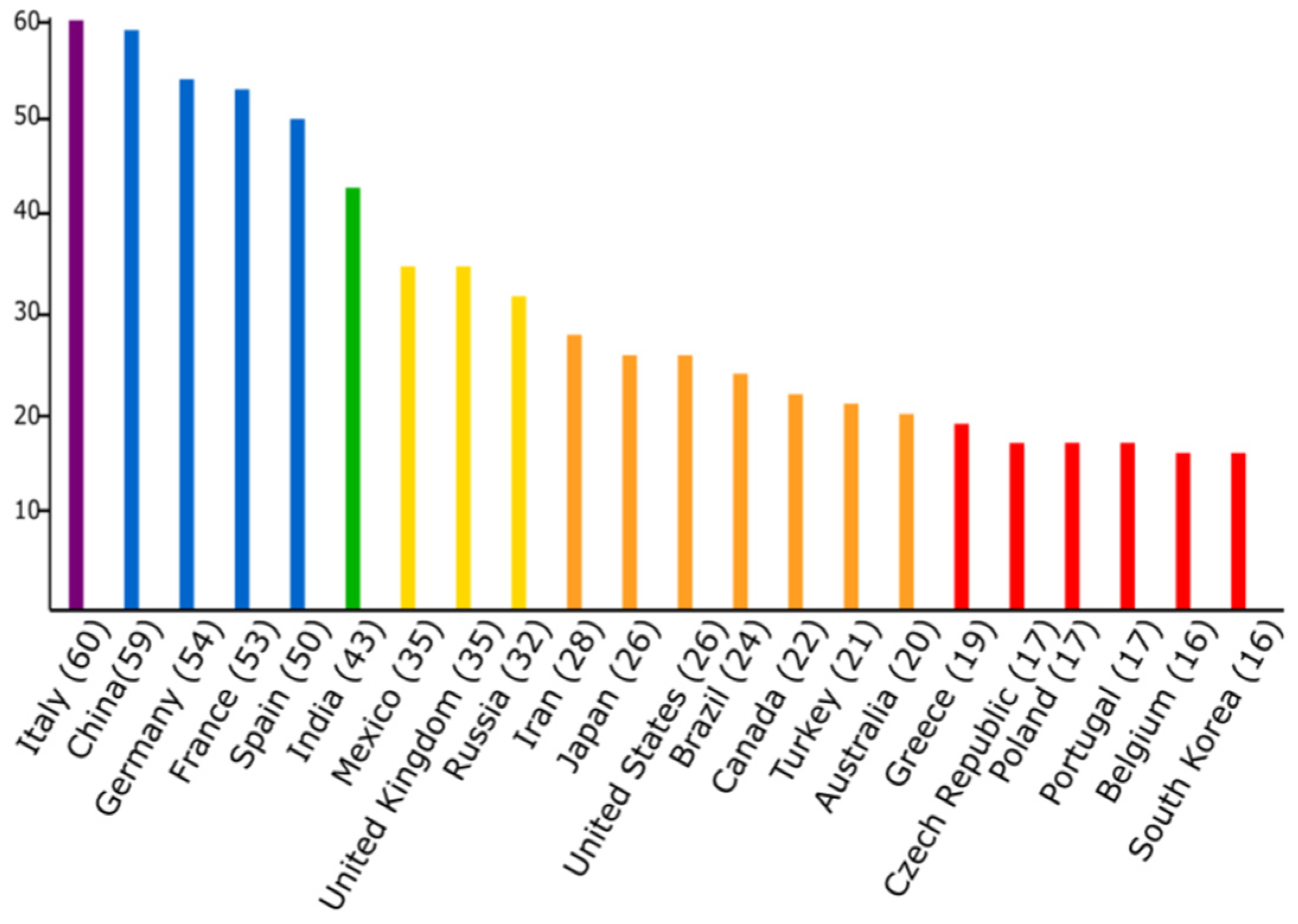
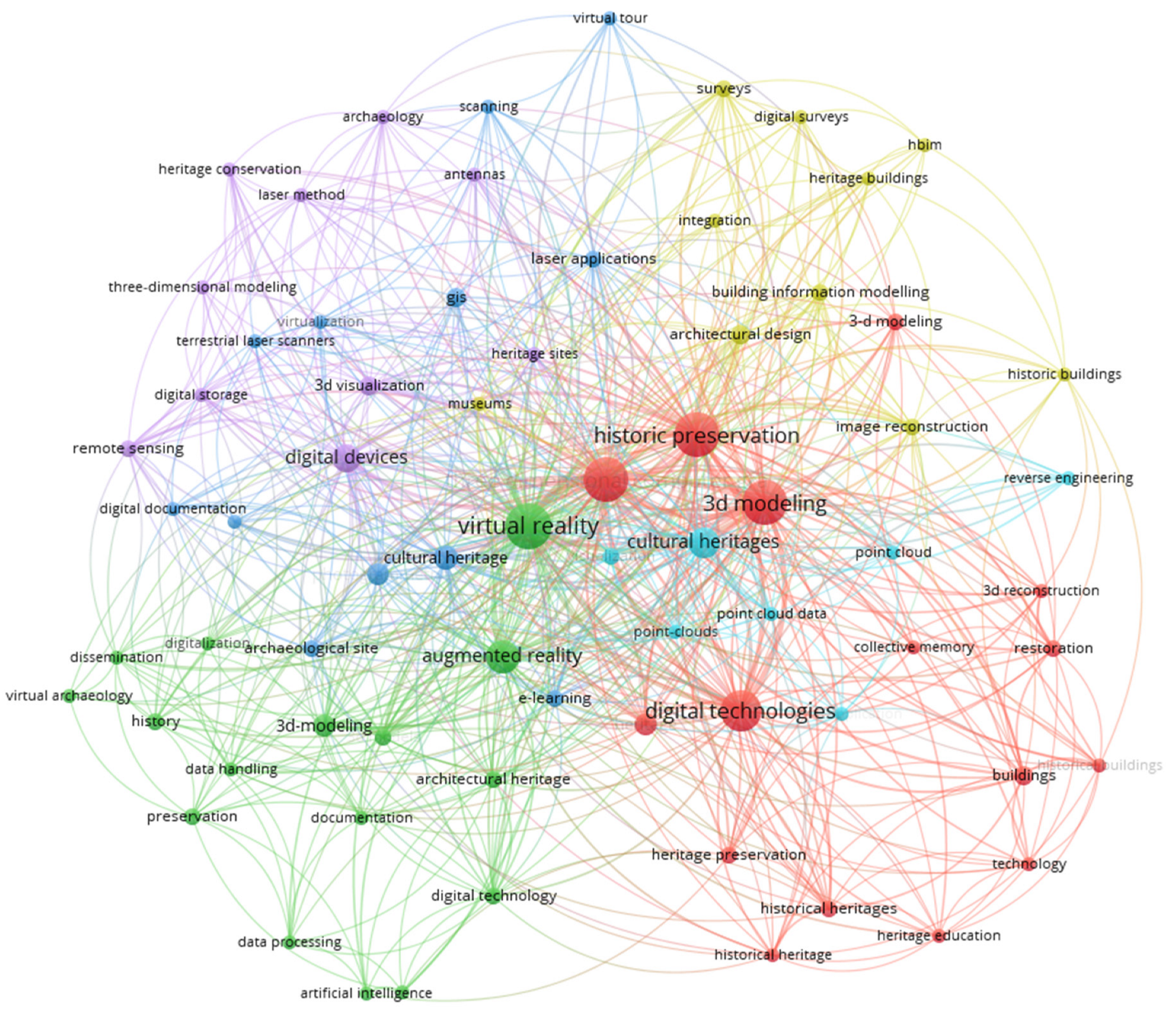
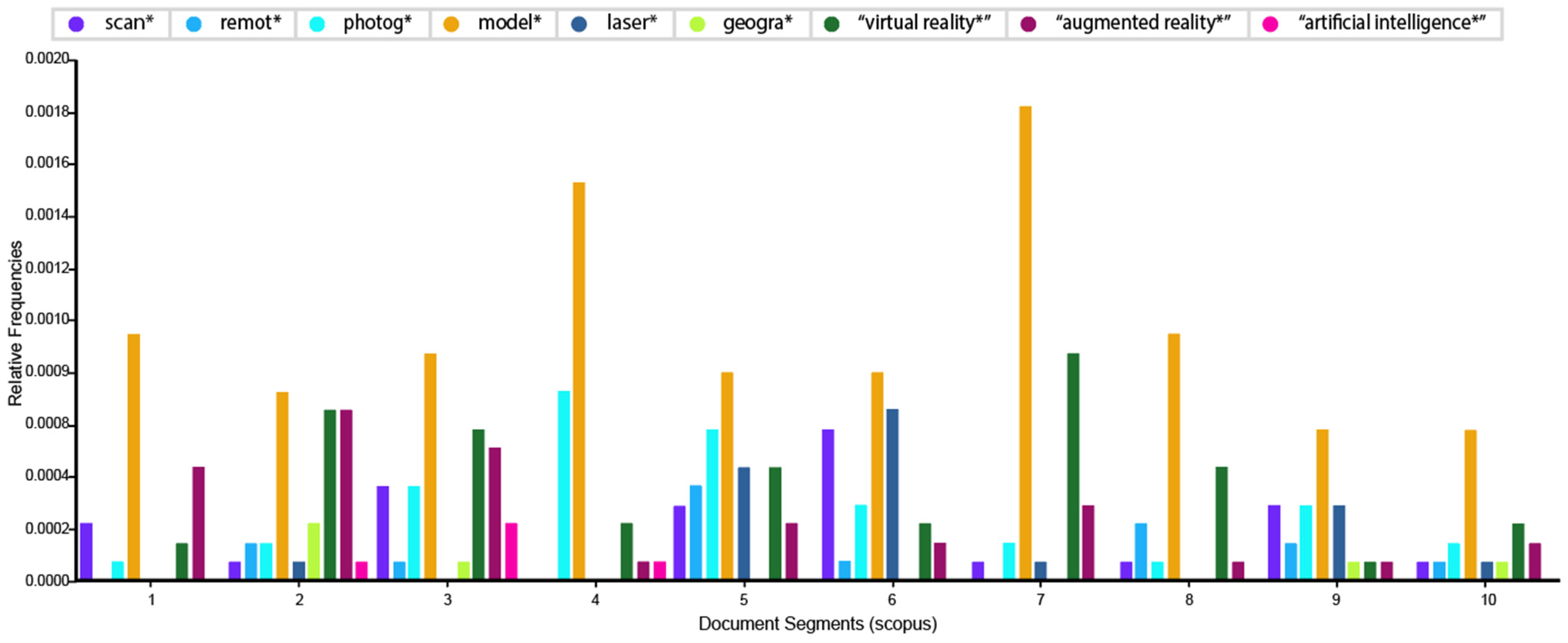

| Quality Assessment Questions Answer | Answer |
|---|---|
| Does the article describe digital technologies used in the reconstruction of archaeological evidence? | (+1) Yes/(+0) No |
| Does the article present case studies or real-world applications in archaeological contexts? | (+1) Yes/(+0) No |
| Does the article highlight the impacts of digital technologies on the research, preservation, or documentation of archaeological heritage? | (+1) Yes/(+0) No |
| Is the journal or conference in which the paper was published indexed in SJR? | (+1) if it is ranked Q1, (+0.75) if it is ranked Q2, (+0.50) if it is ranked Q3, (+0.25) if it is ranked Q4, (+0.0) if it is not ranked |
| Database | String | Studies Number |
|---|---|---|
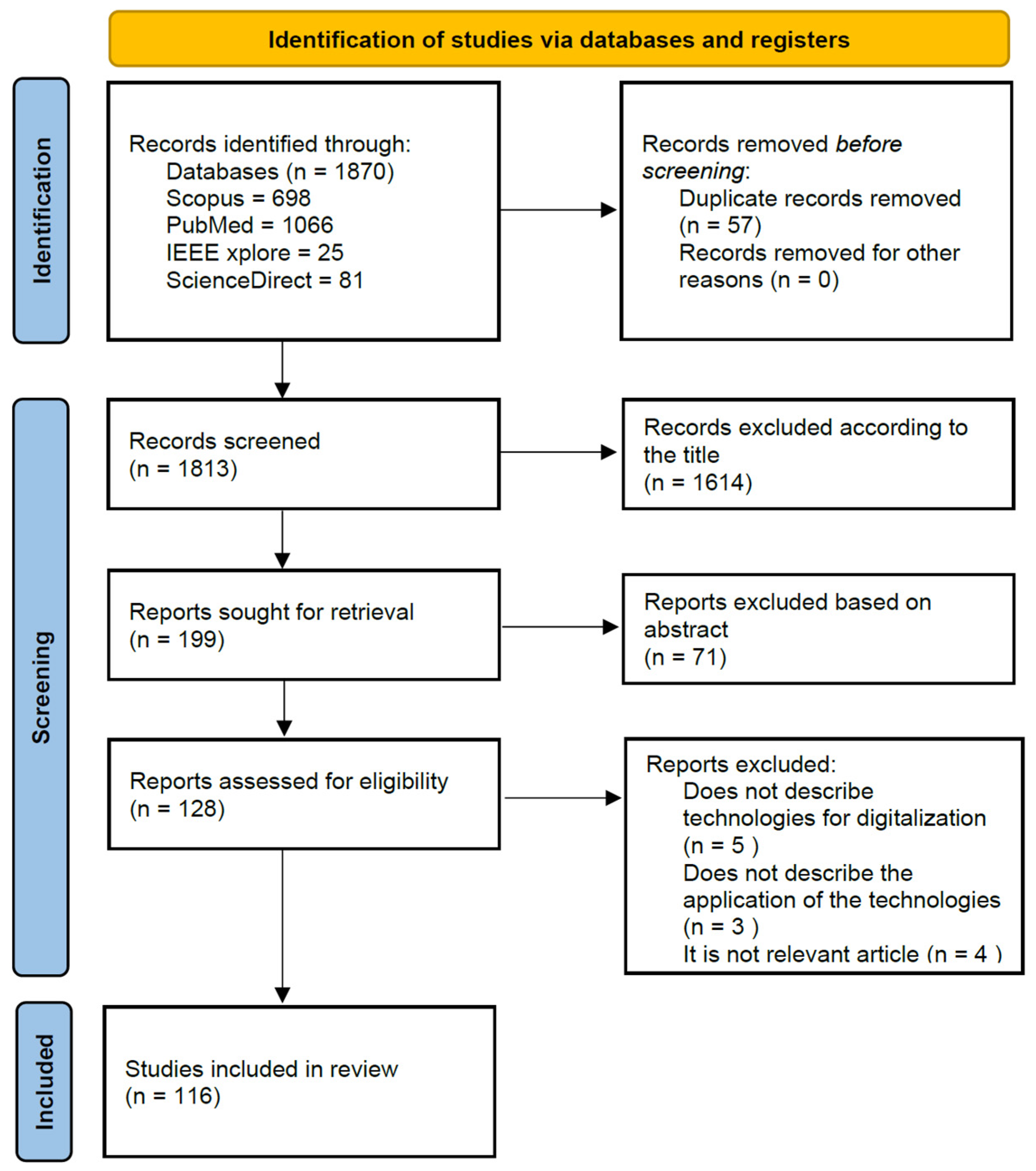
| SCOPUS | TITLE ((“digital technology” OR “digital tools”) AND (“archaeology” OR “archaeological” OR “cultural heritage”)) | 698 |
| PubMed | Search: (digital technology) AND (cultural heritage)) | 1066 |
| IEEE Xplore | search: digital technology cultural heritage | 25 |
| ScienceDirect | Title, abstract, keywords: digital technology cultural heritage, archaeology | 81 |
| Total | 1870 |
| Technology | Main Application | Benefits |
|---|---|---|
| Technologies for reconstruction of archaeological artifacts | ||
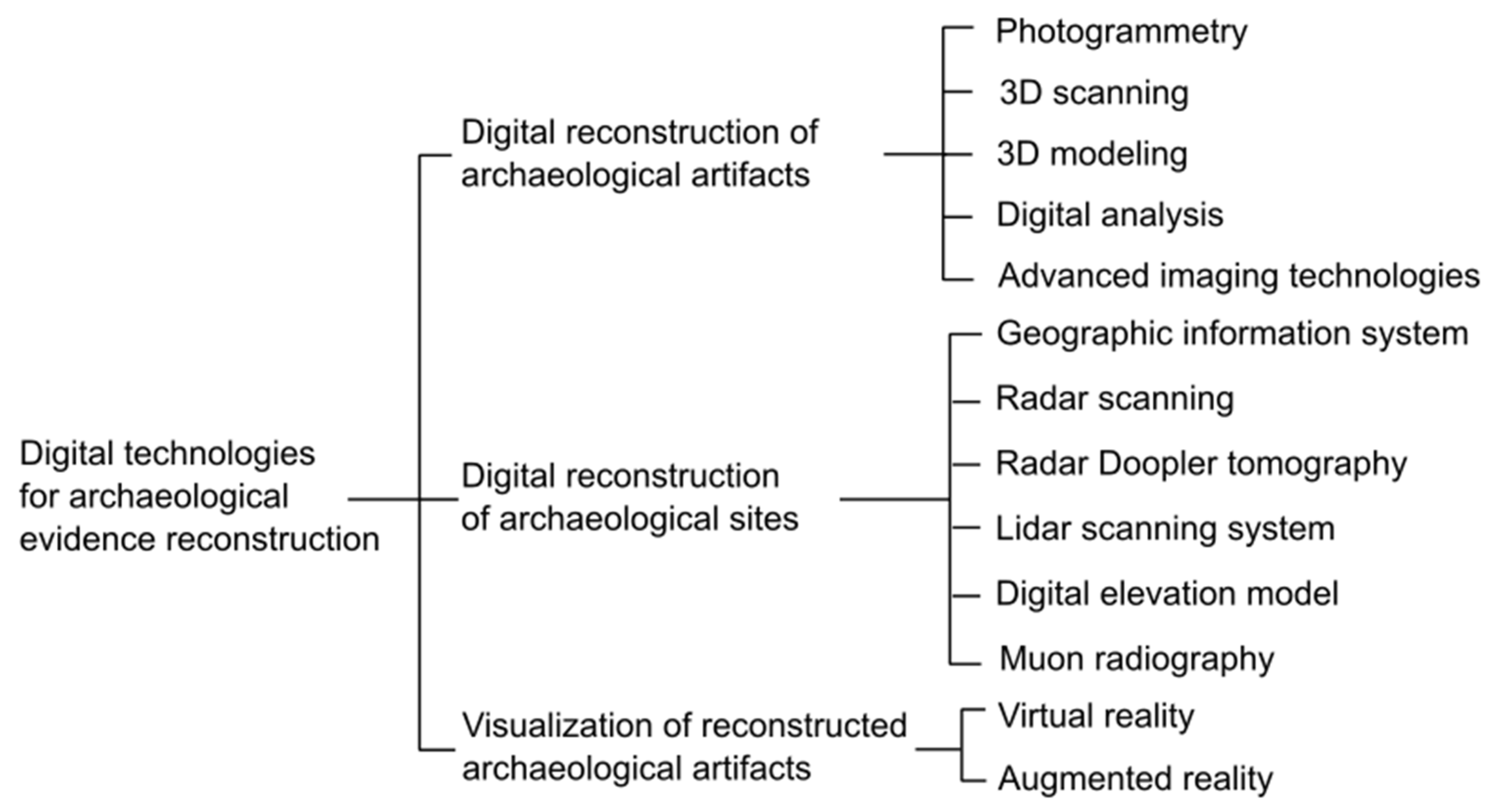
| Photogrammetry | 3D models of artifacts and sites | High accuracy and detail |
| 3D Scanning | Detailed geometry capture | Manipulable and analyzable models |
| CAD Modeling | Reconstruction of fragmented objects | Integration of missing parts |
| Physical Simulation | Reproduction of material behavior | Realism in reconstruction |
| RTI (Reflectance Transformation Imaging) | Analysis of surface details | Enhancement of fine features |
| PTM (Polynomial Texture Mapping) | Representation of heterogeneous materials | Realistic visualization |
| Automatic Reconstruction | Fragment assembly | Efficiency in reconstruction |
| Reconstruction of archaeological sites | ||
| Geographic Information System (GIS) | Spatial analysis of archaeological sites | Integration of geographic data |
| Remote Sensors and Radar Scanning | Remote terrain data capture | Broad and non-invasive coverage |
| Radar Doppler Tomography | Subsurface and structural visualization | Detection of underground anomalies |
| Digital Elevation Models (DEM) | Representation of terrain relief | Accurate geospatial analysis |
| Muon radiography | Study the internal large objects’ structure | Accurate geospatial analysis |
| Visualization | ||
| Virtual Reality (VR) | Virtual Reality (VR) | Virtual Reality (VR) |
| Augmented Reality (AR) | Augmented Reality (AR) | Augmented Reality (AR) |
| Technology | Geometric Accuracy | Texture/Color Accuracy | Cost | Ease of Use |
|---|---|---|---|---|
| Laser Scanning | High | Low | High | Moderate |
| Structured Light Scanning | High | High | Moderate | Moderate |
| Micro-CT | Very High | High (internal structures) | Very High | Low |
| Characteristic | LiDAR (Light Detection and Ranging) | DEM (Digital Elevation Model) |
|---|---|---|
| Nature | Active remote sensing technology that emits laser pulses and measures their return. | Processed digital model representing the elevation of the Earth’s surface. |
| Main Output | High-resolution 3D point cloud (includes terrain and objects). | Continuous surface in raster/grid format with elevation values. |
| Level of Detail | Very high, capable of capturing micro-topography and hidden structures. | Lower detail, resolution depends on the input data source. |
| Accuracy | Centimeter-level in optimal conditions. | Typically decimeter to meter level, depending on the source. |
| Data Sources | Laser pulses from airborne or terrestrial sensors. | Derived from LiDAR, photogrammetry, radar, or satellite imagery. |
| Cost | High (specialized equipment and intensive data processing). | More cost-effective, with free or low-cost datasets often available. |
| Applications in Archaeology | Detection of hidden structures, high-resolution 3D modeling, detailed documentation. | Terrain reconstruction, spatial analysis in GIS, heritage management and planning support. |
| Impact Area | Description |
|---|---|
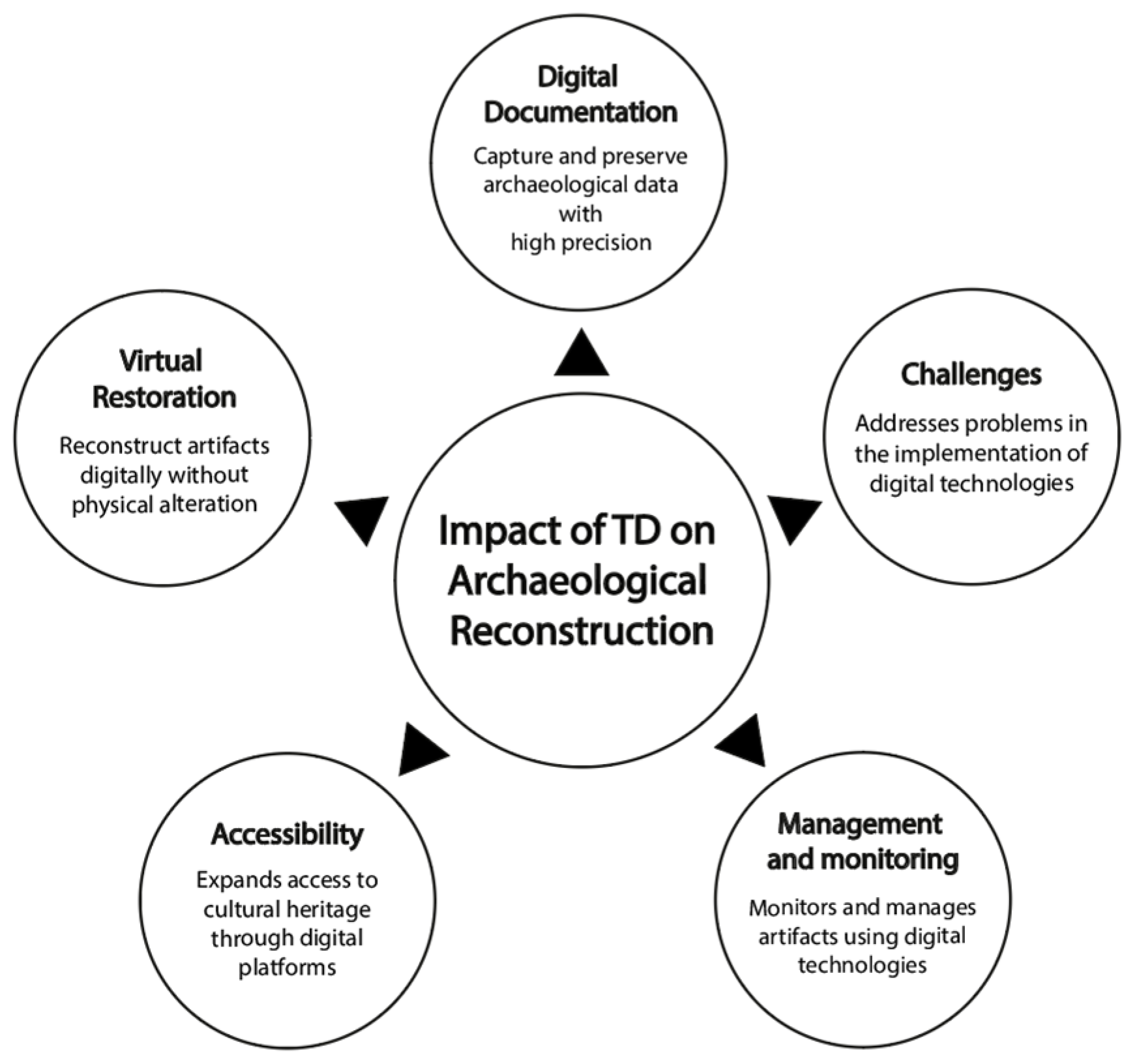
| Documentation and Study | Enhanced precision and detail through photogrammetry and 3D modeling. Non-invasive techniques protect artifacts. |
| Recreation and Restoration | Creation of 3D models for virtual reconstruction of damaged pieces. Allows for hypothesis testing without physical intervention. |
| Accessibility and Diffusion | Increased public access to archaeological knowledge through digital platforms. Supports education and sustainable tourism. Transdisciplinary Studies. |
| Challenges and Considerations | Risk of data loss due to rapid technological changes (digital dark age). Need for balance between traditional and digital methods. |
| Challenges | Solutions |
|---|---|
| Lack of standardization and interoperability | Standardization of 3D digital modeling and computer vision techniques [171] |
| Technical complexity | Open source and affordable tools [172] |
| Ethical considerations | Integrated approaches combining different software [3] |
| Data integrity and realism | Machine learning for data enrichment [173] |
| Public engagement and communication | Narrative strategies for public engagement [7] |
| Resource intensity | Federated learning for trustworthiness [174] |
| Aspect | Details |
|---|---|
| Innovative Methods and Tools | 3D Modelling and VR: Creation of detailed digital reconstructions for research and public engagement. Digital Refitting: Enhanced accuracy and efficiency in reconstructing fragments using software tools. |
| Applications and Benefits | Preservation and Conservation: Digital documentation and restoration mitigate risks of physical handling. Public Engagement and Education: Interactive tools enhance user experience and accessibility to heritage pieces. |
| Challenges and Considerations |
|
| Future Directions |
|
| Aspect | Description |
|---|---|
| Detection and Classification | Advanced Algorithms: Use of sophisticated algorithms like Convolutional Neural Networks (CNN) for artifact classification. Ceramic Recognition: Tools like ArchAIDE for recognizing archaeological ceramics based on shapes and decorations. |
| Reconstruction of Fragmented Objects | 3D Modeling: AI enables reconstruction of fragmented objects using 2D and 3D data acquisition techniques. Simulation Generation: AI generative models create simulations for interpreting archaeological data. |
| Data Analysis and Validation | Explainable AI: Tools like IArch allow archaeologists to analyze data without programming skills, validating existing hypotheses. False Positive Reduction: Techniques like LiDAR help reduce false positives in site identification. |
| Preservation and Documentation | 3D Digitization: Creation of digital twins for detailed preservation and documentation of artifacts. Data Availability: Ensures archaeological data is accessible for future research. |
Disclaimer/Publisher’s Note: The statements, opinions and data contained in all publications are solely those of the individual author(s) and contributor(s) and not of MDPI and/or the editor(s). MDPI and/or the editor(s) disclaim responsibility for any injury to people or property resulting from any ideas, methods, instructions or products referred to in the content. |
© 2026 by the authors. Licensee MDPI, Basel, Switzerland. This article is an open access article distributed under the terms and conditions of the Creative Commons Attribution (CC BY) license.
Share and Cite
Flor-Unda, O.; Jácome, P.; Gomez, K.; Rivera, M.; Estrella, C.; Villao, F.; Toapanta, C.; Palacios-Cabrera, H. Reconstructing Archaeological Evidence with Digital Technologies: Emerging Trends, Challenges, and Prospects. Technologies 2026, 14, 152. https://doi.org/10.3390/technologies14030152
Flor-Unda O, Jácome P, Gomez K, Rivera M, Estrella C, Villao F, Toapanta C, Palacios-Cabrera H. Reconstructing Archaeological Evidence with Digital Technologies: Emerging Trends, Challenges, and Prospects. Technologies. 2026; 14(3):152. https://doi.org/10.3390/technologies14030152
Chicago/Turabian StyleFlor-Unda, Omar, Patricio Jácome, Karman Gomez, Mario Rivera, Cristina Estrella, Freddy Villao, Carlos Toapanta, and Héctor Palacios-Cabrera. 2026. "Reconstructing Archaeological Evidence with Digital Technologies: Emerging Trends, Challenges, and Prospects" Technologies 14, no. 3: 152. https://doi.org/10.3390/technologies14030152
APA StyleFlor-Unda, O., Jácome, P., Gomez, K., Rivera, M., Estrella, C., Villao, F., Toapanta, C., & Palacios-Cabrera, H. (2026). Reconstructing Archaeological Evidence with Digital Technologies: Emerging Trends, Challenges, and Prospects. Technologies, 14(3), 152. https://doi.org/10.3390/technologies14030152