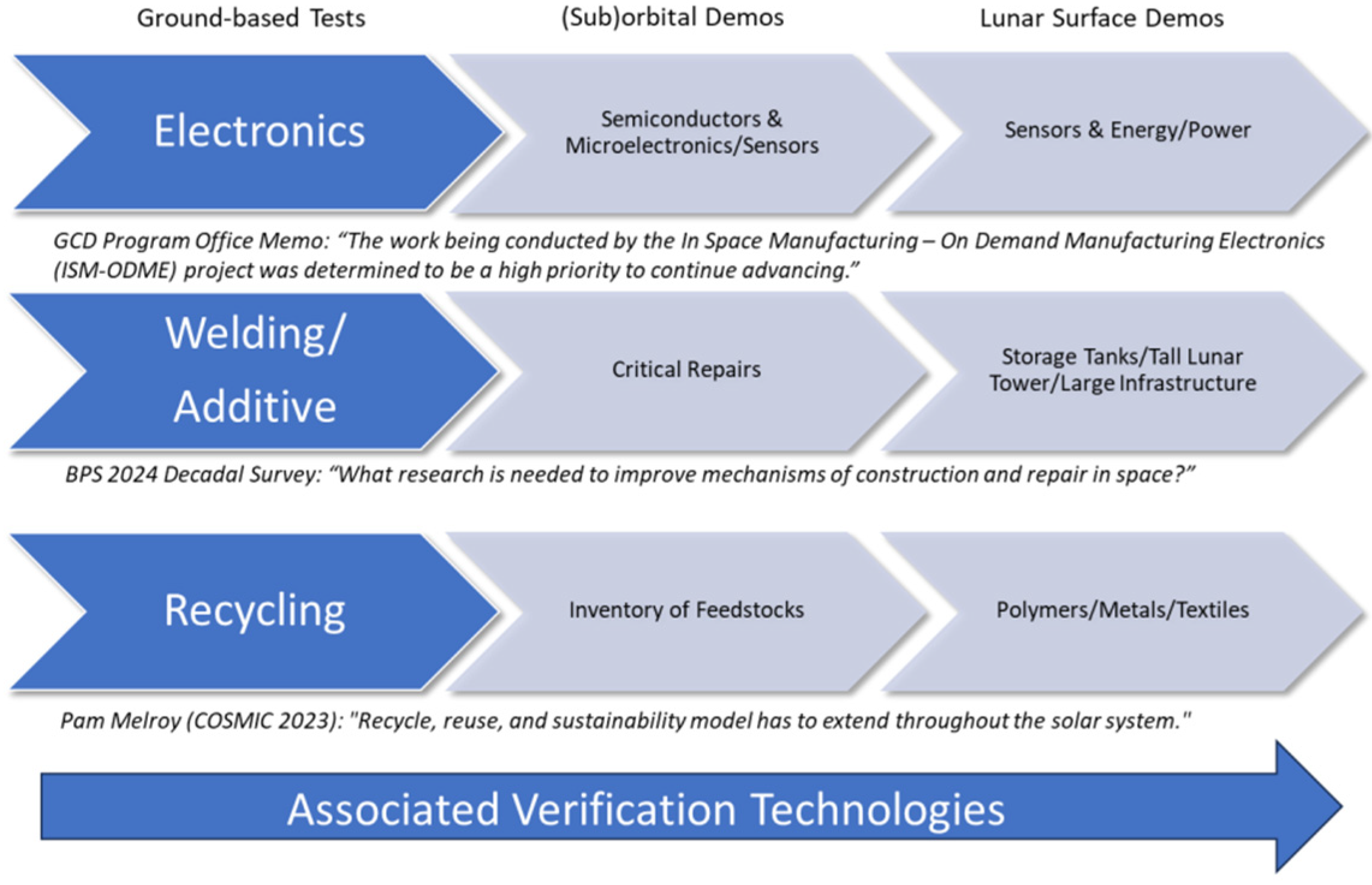


Additive Manufacturing in Space: Process Physics, Qualification, and Future Directions




Abstract
1. Introduction
2. Process Physics Under Microgravity and Vacuum
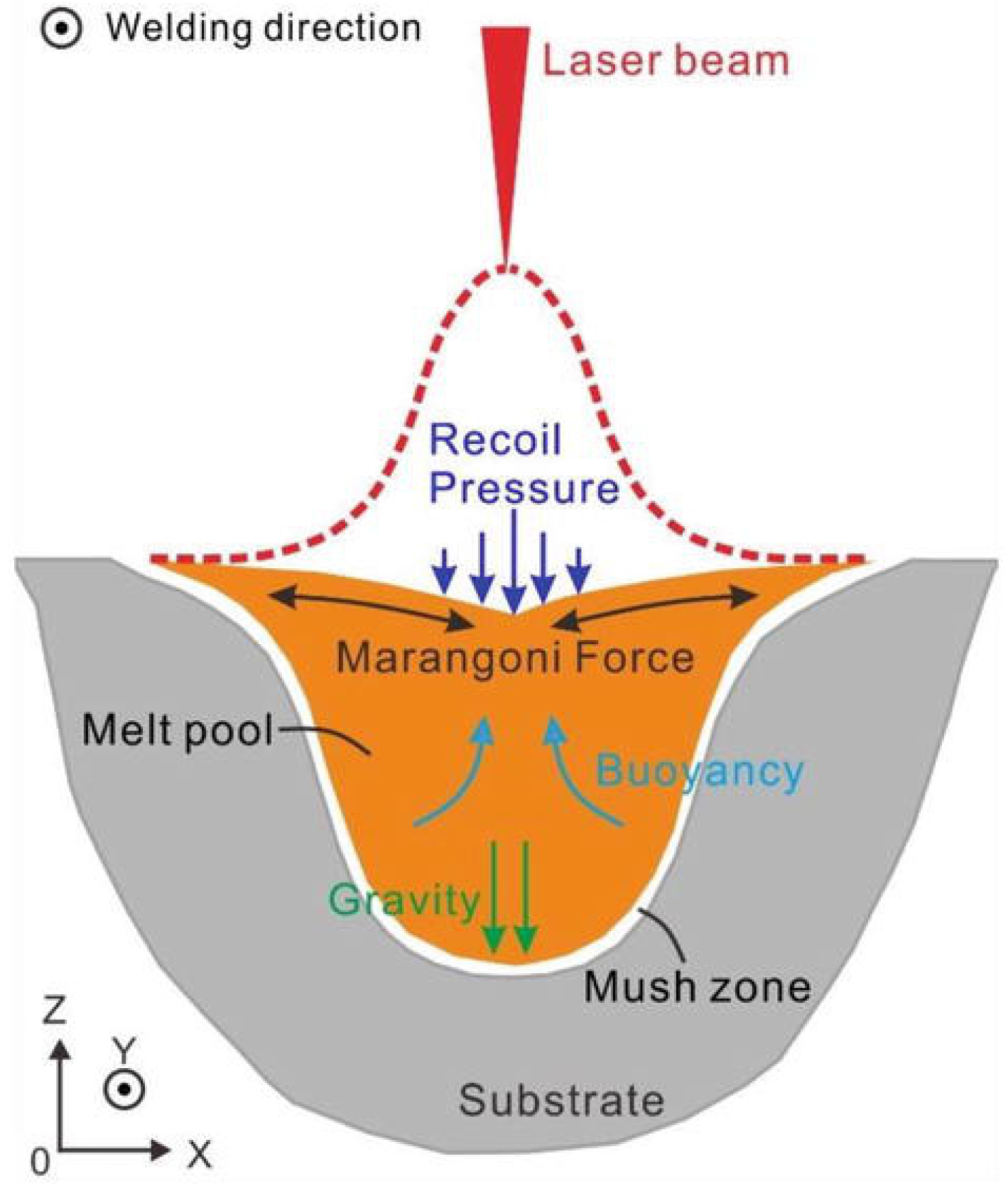
2.1. Melt Pool Behavior, Surface Tension and Buoyancy Effects
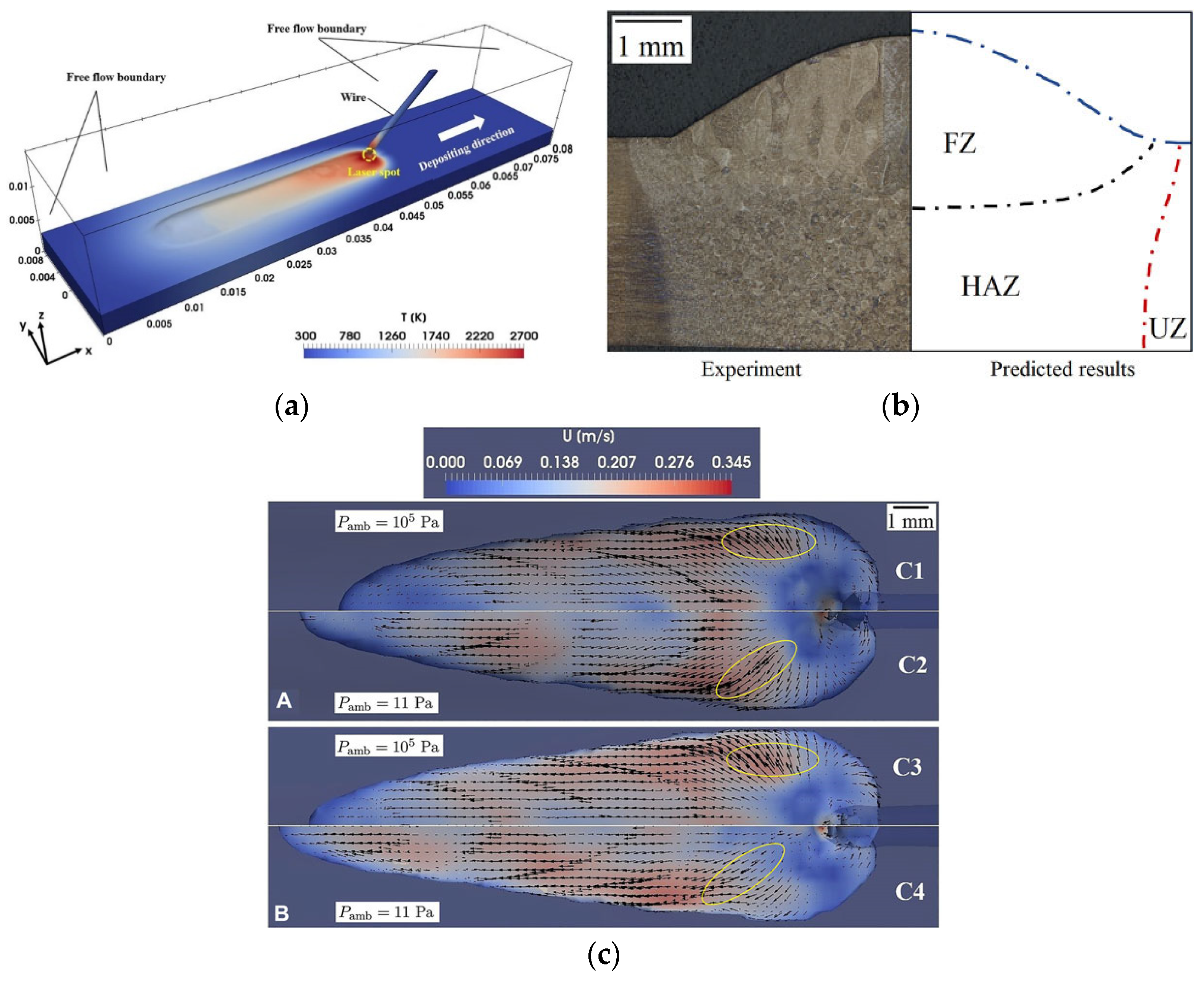
2.1.1. Gravity-Dependent Melt Pool Flow Regimes
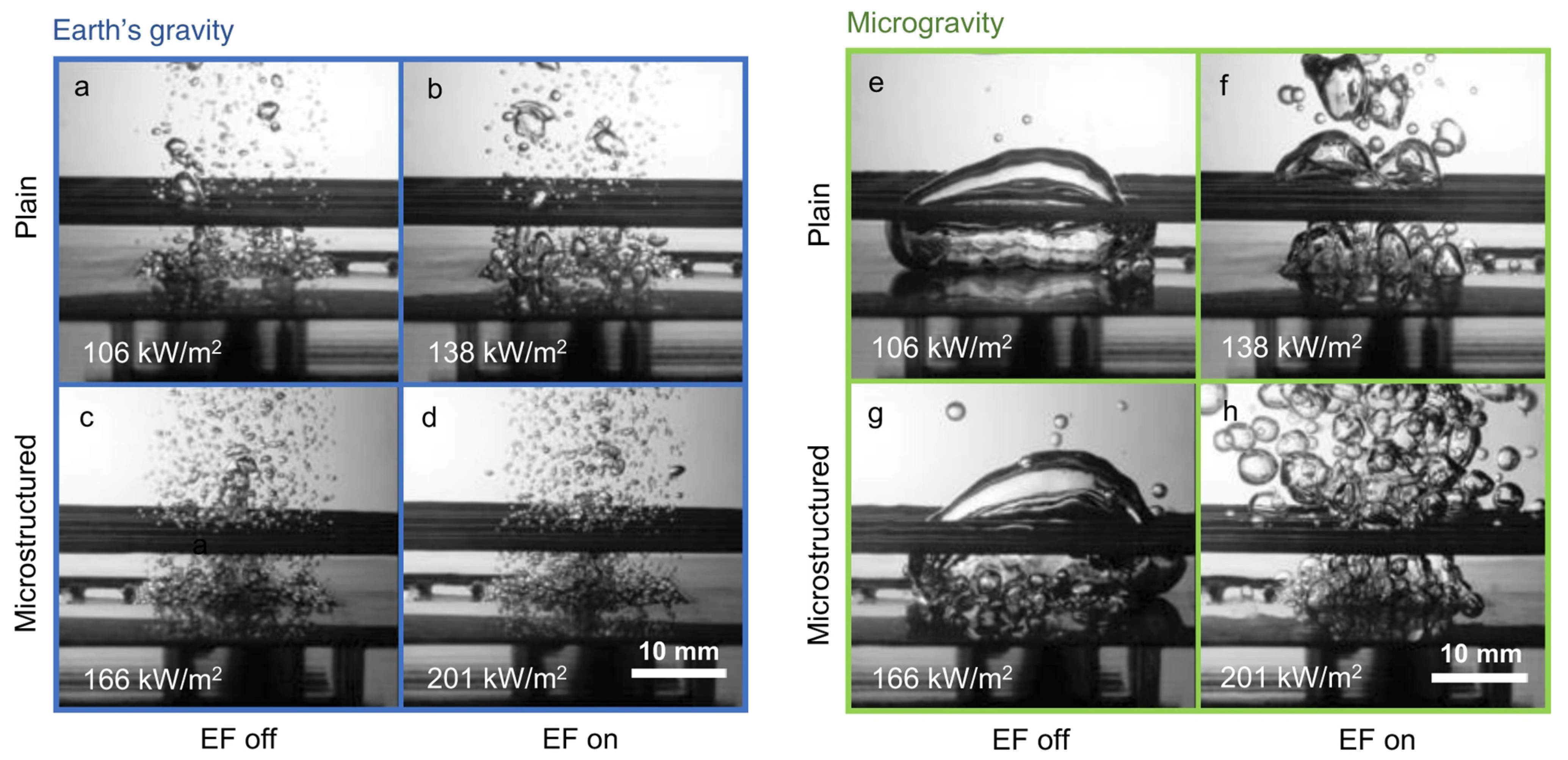
2.1.2. Heat Transfer and Thermal Transport
2.1.3. Implications for Solidification, Microstructure, and Defect Formation
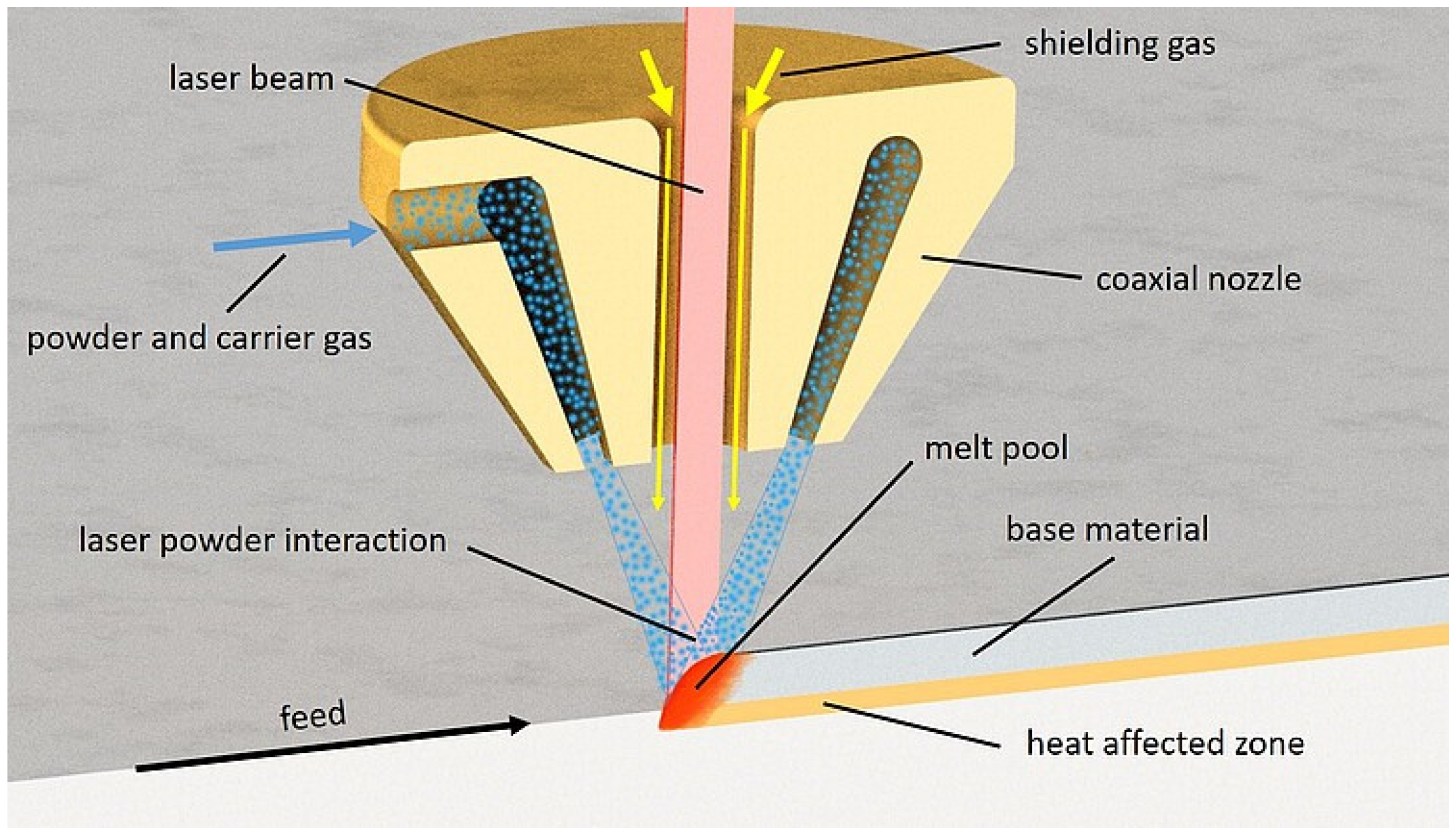
2.2. Powder Handling and Feedstock Management

| Feedstock Type | Examples/Systems | Microgravity Stability | Key Advantages | Major Limitations | Overall Suitability |
|---|---|---|---|---|---|
| Metal powders | LPBF, powder-DED [55] | Very low | High material versatility; fine feature resolution | Powder lofting, electrostatics, safety hazards, recoating impossible, contamination risk | Poor |
| Regolith powders | ISRU sintering, lunar PBF concepts [56] | Low (micro-g), Moderate (partial-g) | In situ resource utilization, high-temperature stability | Needs vacuum containment; poor flow in micro-g; cohesion; dust hazards | Low–Moderate (depends on gravity) |
| Metal wire | ESA Metal Printer (Airbus/AddUp [57], WAAM | Very high | No loose particles, controlled feed, good for microgravity, sealed melt zone | Limited alloy selection; lower resolution | Excellent |
| Polymer filament | Zero-G Printer, AMF [49,58] | Very high | Fully stable in micro-g; low-power; safe operation | Limited thermal/mechanical properties | Excellent |
| Polymer pellets or granules | FDM pellet extruders (ground), potential ISS designs [59] | High when enclosed | Lower-cost feedstock; scalable material supply | Must be fully enclosed; pellet bridging possible | Good |
| UV-curable resins | CMM [51,60], DCUBED UV extrusion systems | High (sealed cartridges) | No powder handling; fine resolution; adaptable chemistry | Bubble retention; cure kinetics modified in micro-g | Excellent |
| Pre-ceramic polymers | CMM ceramic green-body printing [60] | High | Ceramic component capability; stable flow | Thermal decomposition gases may not escape in micro-g | Very good |
| Thermoset pastes/viscous slurries | Regolith geopolymer extrusion [61] | Moderate–High when confined | ISRU potential; no powder lofting | High viscosity; gas entrapment; water management | Good |
2.3. Defect Formation, Dimensional Stability, and Monitoring Under Microgravity
3. Qualification, Standards, and Verification
3.1. AM Standards
3.2. Certification Strategies and Space-Based Verification
4. Digital Twins
5. Emerging Trends and Future Directions for Addressing Key Challenges
5.1. Autonomous and AI-Assisted Fabrication
5.2. New Energy Sources and Compact Hardware
5.3. ISRU and Habitat Construction
5.4. Closed-Loop In-Space Manufacturing and Recycling
- Process robustness and repeatability: Current systems have been validated at demonstration scales, but the reliability of AM processes under continuous microgravity operation is unproven.
- Structural validation: Large-scale components fabricated in orbit require rigorous testing to ensure structural integrity, load-bearing capacity, and defect tolerance.
- Inspection and certification: In situ non-destructive evaluation methods are still limited, and formal certification pathways for human-rated structures do not yet exist.
- Integration of recycling pathways: Mechanical and biological recycling methods must be seamlessly integrated into AM workflows while maintaining material quality and safety.
- Autonomous operation and coordination: Distributed networks of fabrication units need robust autonomy, error detection, and adaptive control mechanisms to operate without continuous human oversight.
5.5. Challenges and Research Gaps
- Autonomous and AI-assisted fabrication can mitigate variability in material behavior and improve process repeatability.
- ISRU and habitat construction address raw material supply limitations and reduce dependence on Earth-launched feedstock.
- Closed-loop in-space recycling tackles resource efficiency, waste management, and feedstock regeneration.
- New energy sources and compact hardware enable reliable, scalable AM under environmental and operational constraints.
5.6. Outlook
6. Conclusions
Author Contributions
Funding
Data Availability Statement
Acknowledgments
Conflicts of Interest
Abbreviations
| ABS | acrylonitrile butadiene styrene |
| ACS | attitude control system |
| AI | Artificial intelligence |
| AM | Additive manufacturing |
| AMF | Additive Manufacturing Facility |
| CC | Contour Crafting |
| CFD | Computational fluid dynamics |
| CT | computed tomography |
| DED | directed energy deposition |
| DT | digital twins |
| HDPE | high-density polyethylene |
| IMQCAM | Institute for Model-based Qualification and Certification of Additive Manufacturing |
| ISM | In-Space Manufacturing |
| ISRU | in situ resource utilization |
| ISS | International Space Station |
| NDE | non-destructive evaluation |
| PBF | powder bed fusion |
| SPC | statistical process control |
| STRI | Space Technology Research Institutes |
| SwRI | Southwest Research Institute |
| ORU | Orbital Replacement Units |
| OSAM | Orbit Servicing, Assembly, and Manufacturing |
References
- NASA-STD-6030. Additive Manufacturing Requirements for Spaceflight Systems. NASA, Office of the Chief Engineer. 21 April 2021. Available online: https://standards.nasa.gov/standard/NASA/NASA-STD-6030 (accessed on 29 October 2025).
- European Cooperation for Space Standardization (ECSS). ECSS-Q-ST-70-80C: Processing and Quality Assurance Requirements for Metallic Powder Bed Fusion Technologies for Space Applications. European Space Agency. 30 July 2021. Available online: https://ecss.nl/standard/ecss-q-st-70-80c-processing-and-quality-assurance-requirements-for-metallic-powder-bed-fusion-technologies-for-space-applications-30-july-2021/ (accessed on 29 October 2025).
- ISO/ASTM 52920:2023; Additive Manufacturing—Qualification Principles—Requirements for Industrial Additive Manufacturing Processes and Production Sites. Edition 1. International Organization for Standardization (ISO): Geneva, Switzerland; ASTM International: West Conshohocken, PA, USA, 2023. Available online: https://www.iso.org/standard/76911.html (accessed on 29 October 2025).
- Prisăcariu, E.G.; Dumitrescu, O.; Roșu, R.A. Additive Manufacturing in Space: Technologies, Flight Heritage, and Materials. Technologies, 2026; under review. [Google Scholar]
- Namkoog, D.; Jacqmin, D.; Szaniszlo, A. Effect of Microgravity on Material Undergoing Melting and Freezing-The TES Experiment, NASA Technical Memorandum 106845, AIAA-95-0614, Reno, Nevada. 12 January 1995. Available online: https://ntrs.nasa.gov/api/citations/19950013536/downloads/19950013536.pdf (accessed on 6 February 2026).
- Cawley, J.D. Powder Agglomeration in a Microgravity Environment, NASA Lewis Research Center, Cleveland, Ohio, NASA-CR-197000, October 1994. Available online: https://ntrs.nasa.gov/api/citations/19950007692/downloads/19950007692.pdf (accessed on 6 February 2026).
- Wang, Z.; Liu, H.; Zhang, X.; Chang, Y. Exploring Microgravity Liquid Printing Based on Resin Solidification for Outer Space Applications. 2023. Available online: https://www.researchgate.net/publication/374304581 (accessed on 20 November 2025).
- de Rubeis, T.; Ciccozzi, A.; Giusti, L.; Ambrosini, D. The 3D printing potential for heat flow optimization: Influence of block geometries on heat transfer processes. Sustainability 2022, 14, 15830. [Google Scholar] [CrossRef]
- Hedayati, R.; Stulova, V. 3D printing for space habitats: Requirements, challenges, and recent advances. Aerospace 2023, 10, 653. [Google Scholar] [CrossRef]
- Marangoni Force. Available online: https://www.sciencedirect.com/topics/engineering/marangoni-force (accessed on 10 November 2025).
- Su, X.; Zhang, P.; Huang, Y. Research Progress of Metal Additive Manufacturing Technology and Application in Space: A Review. Metals 2024, 14, 1373. [Google Scholar] [CrossRef]
- Gu, H.; Li, L. Computational Fluid Dynamic Simulation of Gravity and Pressure Effects in Laser Metal Deposition for Potential Additive Manufacturing in Space. Int. J. Heat Mass Transf. 2019, 140, 51–65. [Google Scholar] [CrossRef]
- Xiao, X.; Lu, C.; Fu, Y.; Ye, X.; Song, L. Progress on experimental study of melt pool flow dynamics in laser material processing. In Liquid Metals; Chelladurai, S.S., Gnanasekaran, S., Mayilswamy, S., Eds.; IntechOpen: London, UK, 2021; Chapter 1. [Google Scholar] [CrossRef]
- Huang, J.; Qi, L.; Luo, J.; Hou, X. Insights into the impact and solidification of metal droplets in ground-based investigation of droplet deposition 3D printing under microgravity. Appl. Therm. Eng. 2021, 183, 116176. [Google Scholar] [CrossRef]
- Arunachalam, P.; Sidharth, A.; Niketh, P.; Venkateshwaran, M.; Amirthalingam, M.; Subbiah, S. Effect of microgravity on the metal droplet transfer and bead characteristics in the directed energy deposition-arc process. J. Manuf. Sci. Eng. 2024, 146, 121003. [Google Scholar] [CrossRef]
- Rieder, H.; Dillhöfer, A.; Spies, M.; Bamberg, J.; Hess, T. Ultrasonic online monitoring of additive manufacturing processes based on selective laser melting. AIP Conf. Proc. 2015, 1650, 184–191. [Google Scholar]
- Di Marco, P.; Grassi, W. Pool boiling in microgravity: Assessed results and open issues. In Proceedings of the 3rd European Thermal Sciences Conference, Heidelberg, Germany, 10–13 September 2000; pp. 81–90. [Google Scholar]
- Raj, R.; Kim, J.; McQuillen, J. Pool boiling heat transfer on the International Space Station: Experimental results and model verification. J. Heat Transf. 2012, 134, 101504. [Google Scholar] [CrossRef]
- Zocca, A.; Wilbig, J.; Waske, A.; Günster, J.; Widjaja, M.P.; Neumann, C.; Clozel, M.; Meyer, A.; Ding, J.; Zhou, Z.; et al. Challenges in the Technology Development for Additive Manufacturing in Space. Chin. J. Mech. Eng. Addit. Manuf. Front. 2022, 1, 100018. [Google Scholar] [CrossRef]
- Rashed, K.; Kafi, A.; Simons, R.; Peracchi, S.; Pastuovic, Z.; Easton, C.D.; Bateman, S. Investigation of effects induced by 57 MeV 56Fe ions and 9 MeV protons on additively manufactured PEKK for space application. Polym. Test. 2024, 132, 108354. [Google Scholar] [CrossRef]
- Reitz, B.; Lotz, C.; Gerdes, N.; Linke, S.; Olsen, E.; Pflieger, K.; Sohrt, S.; Ernst, M.; Taschner, P.; Neumann, J.; et al. Additive Manufacturing Under Lunar Gravity and Microgravity. Microgravity Sci. Technol. 2021, 33, 25. [Google Scholar] [CrossRef]
- Leibniz University Hannover. Laser-Based Additive Manufacturing of Metal Parts from Powder in Microgravity. Available online: https://www.hitec.uni-hannover.de/en/large-scale-equipment/einstein-elevator/projects/current-projects-detail-view/projects/laser-based-additive-manufacturing-of-metal-parts-from-powder-in-microgravity (accessed on 19 November 2025).
- Xiao, B.; Zhang, Y. Marangoni and buoyancy effects on direct metal laser sintering with a moving laser beam. Numer. Heat Transf. A 2007, 51, 715–733. [Google Scholar] [CrossRef]
- Wang, L.; Liu, H.; Wang, L.; Zhao, W.; Lu, B. Effect of Gravitational Acceleration on Space Metal Laser Direct-Writing Additive Manufacturing Process. Addit. Manuf. Front. 2025, 4, 200237. [Google Scholar] [CrossRef]
- Ransenigo, C.; Tocci, M.; Palo, F.; Ginestra, P.; Ceretti, E.; Gelfi, M.; Pola, A. Evolution of Melt Pool and Porosity during Laser Powder Bed Fusion of Ti6Al4V Alloy: Numerical Modelling and Experimental Validation. Lasers Manuf. Mater. Process. 2022, 9, 481–502. [Google Scholar] [CrossRef]
- Lane, B.; Heigel, J.; Ricker, R.; Zhirnov, I.; Khromschenko, V.; Weaver, J.; Phan, T.; Stoudt, M.; Mekhontsev, S.; Levine, L. Measurements of Melt Pool Geometry and Cooling Rates of Individual Laser Traces on IN625 Bare Plates. Integr. Mater. Manuf. Innov. 2020, 9, 10. [Google Scholar] [CrossRef] [PubMed]
- Wilke, S.K.; Al-Rubkhi, A.; Koyama, C.; Ishikawa, T.; Oda, H.; Topper, B.; Tsekrekas, E.M.; Möncke, D.; Alderman, O.L.G.; Menon, V.; et al. Microgravity Effects on Nonequilibrium Melt Processing of Neodymium Titanate: Thermophysical Properties, Atomic Structure, Glass Formation and Crystallization. npj Microgravity 2024, 10, 26. [Google Scholar] [CrossRef]
- Baehr, S.; Fritz, F.; Adami, S.; Ammann, T.; Adams, N.A.; Zaeh, M.F. Investigations on the Heat Balance of the Melt Pool during PBF-LB/M under Various Process Gases. Metals 2024, 14, 1058. [Google Scholar] [CrossRef]
- Dela Cruz, M.L.; Yakubov, V.; Li, X.; Ferry, M. Microstructure Evolution in Laser Powder Bed Fusion-Built Fe–Mn–Si Shape Memory Alloy. Microstructures 2023, 3, 2023012. [Google Scholar] [CrossRef]
- Berto, A.; Azzolin, M.; Bortolin, S.; Miscevic, M.; Lavieille, P.; Del Col, D. Condensation Heat Transfer in Microgravity Conditions. npj Microgravity 2023, 9, 32. [Google Scholar] [CrossRef]
- Noori Rahim Abadi, S.M.A.; Hagqvist, P.; Sikström, F.; Choquet, I. CFD-Based Feasibility Study of Laser-Directed Energy Deposition with a Metal Wire for On-Orbit Manufacturing. Front. Space Technol. 2022, 3, 880012. [Google Scholar] [CrossRef]
- Mudawar, I.; Devahdhanush, V.S.; Darges, S.J.; Hasan, M.M.; Nahra, H.K.; Balasubramaniam, R.; Mackey, J.R. Heat Transfer and Interfacial Flow Physics of Microgravity Flow Boiling in Single-Side-Heated Rectangular Channel with Subcooled Inlet Conditions—Experiments Onboard the International Space Station. Int. J. Heat Mass Transf. 2023, 207, 123998. [Google Scholar] [CrossRef]
- Garivalis, A.I.; Liu, B.; Wei, J.; Di Marco, P. Enhancing Pool Boiling in Microgravity Using Micro-Fins and an Electrostatic Field under Different Liquid Subcooling. Exp. Therm. Fluid Sci. 2024, 155, 111179. [Google Scholar] [CrossRef]
- Garivalis, A.I.; Manfredini, G.; Saccone, G.; Di Marco, P.; Kossolapov, A.; Bucci, M. Critical Heat Flux Enhancement in Microgravity Conditions Coupling Microstructured Surfaces and Electrostatic Field. npj Microgravity 2021, 7, 37. [Google Scholar] [CrossRef]
- Nukiyama, S. The Maximum and Minimum Values of the Heat Transmitted from Metal to Boiling Water Under Atmospheric Pressure. Int. J. Heat Mass Transf. 1984, 27, 959–970. [Google Scholar] [CrossRef]
- Unal, C.; Sadasivan, P.; Nelson, R.A. On the Hot-Spot-Controlled Critical Heat Flux Mechanism in Saturated Pool Boiling: Part II—The Influence of Contact Angle and Nucleation Site Density. J. Heat Transf. 1993, 115, 813–816. [Google Scholar] [CrossRef]
- Jiang, H.; Li, S.; Zhang, L.; He, J.; Zhao, J. Effect of Microgravity on the Solidification of Aluminum–Bismuth–Tin Immiscible Alloys. npj Microgravity 2019, 5, 26. [Google Scholar] [CrossRef] [PubMed]
- Sarker, A.; Saha, S. Gravity- and Composition-Modulated Solidification and Mechanical Properties of Al–Cu Nanostructures. Comput. Mater. Sci. 2026, 265, 114504. [Google Scholar] [CrossRef]
- Zhang, G.; Luo, X.; Li, Y.; Liu, S. Comparative Study of Gravity Effects in Directional Solidification of Al–3.5 wt.% Si and Al–10 wt.% Cu Alloys. npj Microgravity 2024, 10, 114. [Google Scholar] [CrossRef] [PubMed]
- Williams, T.J.; Beckermann, C. Benchmark Al–Cu Solidification Experiments in Microgravity and on Earth. Metall. Mater. Trans. A 2023, 54, 405–422. [Google Scholar] [CrossRef]
- Zimmermann, G.; Sturz, L.; Pickmann, C.; Schaberger-Zimmermann, E.; Roosz, A.; Rónaföldi, A.; Veres, Z.; Gandin, C.-A.; Reinhart, G.; Nguyen-Thi, H.; et al. Structures in Grain-Refined Directionally Solidified Hypoeutectic Al–Cu Alloys: Benchmark Experiments under Microgravity Onboard the International Space Station. Materialia 2024, 36, 102171. [Google Scholar] [CrossRef]
- Roósz, A.; Rónaföldi, A.; Li, Y.; Mangelinck-Noël, N.; Zimmermann, G.; Nguyen-Thi, H.; Svéda, M.; Veres, Z. Microstructure Analysis of Al–7 wt.% Si Alloy Solidified on Earth Compared to Similar Experiments in Microgravity. Crystals 2022, 12, 1226. [Google Scholar] [CrossRef]
- Akamatsu, S.; Bottin-Rousseau, S.; Witusiewicz, V.T.; Hecht, U.; Plapp, M.; Ludwig, A.; Mogeritsch, J.; Şerefoğlu, M.; Bergeon, N.; Mota, F.L.; et al. Microgravity Studies of Solidification Patterns in Model Transparent Alloys Onboard the International Space Station. npj Microgravity 2023, 9, 83. [Google Scholar] [CrossRef]
- Hu, Z.; Chen, H.; Yang, Z.; Yan, W. Critical role of electrostatic forces in powder spreading in micro laser powder bed fusion. Addit. Manuf. 2025, 109, 104848. [Google Scholar] [CrossRef]
- D’Angelo, O.; Kuthe, F.; Liu, S.-J.; Wiedey, R.; Bennett, J.M.; Meisnar, M.; Barnes, A.; Kranz, W.T.; Voigtmann, T.; Meyer, A. A gravity-independent powder-based additive manufacturing process tailored for space applications. Addit. Manuf. 2021, 47, 102349. [Google Scholar] [CrossRef]
- Clark, I.O.; Johnson, E.J. Microgravity Particle Dynamics. Available online: https://ntrs.nasa.gov/api/citations/19970000395/downloads/19970000395.pdf (accessed on 13 November 2025).
- Piscopo, G.; Atzeni, E.; Saboori, A.; Salmi, A. An overview of the process mechanisms in the laser powder directed energy deposition. Appl. Sci. 2023, 13, 117. [Google Scholar] [CrossRef]
- European Space Agency (ESA). ESA Launches First Metal 3D Printer to ISS. Available online: https://www.esa.int/Science_Exploration/Human_and_Robotic_Exploration/ESA_launches_first_metal_3D_printer_to_ISS (accessed on 3 November 2025).
- Snyder, M.P. Additive Manufacturing Facility (AMF). NASA Technical Report NTRS 20160011465. 2016. Available online: https://ntrs.nasa.gov/citations/20160011465 (accessed on 8 January 2026).
- National Aeronautics and Space Administration (NASA). Space Station Research Explorer, 3D Printing in Zero-G. Available online: https://www.nasa.gov/mission/station/research-explorer/investigation/?#id=1039 (accessed on 3 November 2025).
- Redwire Technology. Ceramics Manufacturing: Increasing Capability and Scaling. Newsroom. 2020. Available online: https://rdw.com/newsroom/ceramics-manufacturing/ (accessed on 29 October 2025).
- Wall, M. Made in Space Makes Ceramic Turbine Part in Orbit in Another 3D Printing Milestone. Space.com 2020. Available online: https://www.space.com/made-in-space-3d-print-ceramic-turbine-part (accessed on 8 January 2026).
- Sertoglu, K. Redwire 3D Prints First Set of Ceramic Components on Board the ISS. 3D Print. Ind. 2020. Available online: https://3dprintingindustry.com/news/redwire-3d-prints-first-set-of-ceramic-components-on-board-the-iss-180764/ (accessed on 8 January 2026).
- National Aeronautics and Space Administration (NASA). Particle Dispertion System for Microgravity Environments. Available online: https://techport.nasa.gov/projects/12239 (accessed on 13 November 2025).
- Directed Energy Deposition. Available online: https://www.sciencedirect.com/topics/materials-science/directed-energy-deposition (accessed on 3 November 2025).
- Laser Powder Bed Fusion. Available online: https://www.sciencedirect.com/topics/materials-science/laser-powder-bed-fusion (accessed on 5 November 2025).
- ASTM D695-15; Standard Test Methods for Compressive Properties of Rigid Plastics. ASTM International: West Conshohocken, PA, USA, 2015.
- Johnston, M.M.; Werkheiser, M.J.; Cooper, K.G.; Snyder, M.P.; Edmunson, J.E. 3D Printing in Zero-G ISS Technology Demonstration. NASA Technical Report. 2014. Available online: https://ntrs.nasa.gov/citations/20140011672 (accessed on 8 January 2026).
- Fused Deposition Modeling. Available online: https://www.sciencedirect.com/topics/engineering/fused-deposition-modeling (accessed on 3 November 2025).
- Chen, J.-Y.; Lo, T.-H.; Feng, C.; Lai, P.-C.; Ruan, J.-L.; Wu, C.-T.; Yu, S.-S. 3D Printing of Ceramics with Controllable Green-Body Configuration Assisted by the Polyvinyl Alcohol-Based Physical Gels. Adv. Eng. Mater. 2023, 25, 2300445. [Google Scholar] [CrossRef]
- Ricciotti, L.; Apicella, A.; Perrotta, V.; Aversa, R. Geopolymer materials for extrusion-based 3D-printing: A review. Polymers 2023, 15, 4688. [Google Scholar] [CrossRef]
- ISO/ASTM 52900; Additive Manufacturing—General Principles—Fundamentals and Vocabulary. 2nd ed. ISO: Geneva, Switzerland, 2021. Available online: https://www.iso.org/obp/ui/#iso:std:iso-astm:52900:ed-2:v1:en (accessed on 14 January 2026).
- National Aeronautics and Space Administration (NASA). NASA-STD-6016C with Change 1: Standard Materials and Processes Requirements for Spacecraft. NASA. 2023. Available online: https://standards.nasa.gov/sites/default/files/standards/NASA/C-w/Change-1/1/2023-11-15-NASA-STD-6016C-w-Chg-1-Final_0.pdf (accessed on 14 January 2026).
- ASTM F3187-16; Standard Guide for Directed Energy Deposition of Metals. ASTM International: West Conshohocken, PA, USA, 2016.
- ASTM F3303-18; Additive Manufacturing—Process Characteristics and Performance—Metal Powder Bed Fusion. ASTM International: West Conshohocken, PA, USA, 2018.
- MSFC-STD-3716; Standard for Additively Manufactured Spaceflight Hardware by Laser Powder Bed Fusion in Metals. National Aeronautics and Space Administration (NASA) Marshall Space Flight Center: Huntsville, AL, USA, 2017.
- Tuegel, E.J.; Ingraffea, A.R.; Eason, T.G.; Spottswood, S.M. Reengineering aircraft structural life prediction using a digital twin. Int. J. Aerosp. Eng. 2011, 2011, 154798. [Google Scholar] [CrossRef]
- Kantaros, A.; Piromalis, D.; Tsaramirsis, G.; Papageorgas, P.; Tamimi, H. 3D printing and implementation of digital twins: Current trends and limitations. Appl. Syst. Innov. 2021, 5, 7. [Google Scholar] [CrossRef]
- DebRoy, T.; Zhang, W.; Turner, J.; Babu, S.S. Building digital twins of 3D printing machines. Scr. Mater. 2017, 135, 119–124. [Google Scholar] [CrossRef]
- Mukherjee, T.; DebRoy, T. A digital twin for rapid qualification of 3D printed metallic components. Appl. Mater. Today 2019, 14, 59–65. [Google Scholar] [CrossRef]
- Knapp, G.L.; Mukherjee, T.; Zuback, J.S.; Wei, H.L.; Palmer, T.A.; De, A.; DebRoy, T. Building blocks for a digital twin of additive manufacturing. Acta Mater. 2017, 135, 390–399. [Google Scholar] [CrossRef]
- Musgrave, G.E.; Larsen, A.M.; Sgobba, T. (Eds.) Safety Design for Space Systems; Butterworth-Heinemann: Oxford, UK, 2009. [Google Scholar]
- Pecht, M. Qualification for product development. In Proceedings of the 2008 International Conference on Electronic Packaging Technology & High Density Packaging, Shanghai, China, 28–31 July 2008. [Google Scholar] [CrossRef]
- Dordlofva, C. Qualification Aspects in Design for Additive Manufacturing: A Study in the Space Industry. Ph.D. Thesis, Luleå University of Technology, Luleå, Sweden, 2020. [Google Scholar]
- Romano, S.; Brandão, A.; Gumpinger, J.; Gschweitl, M.; Beretta, S. Qualification of AM parts: Extreme value statistics applied to tomographic measurements. Mater. Des. 2017, 131, 32–48. [Google Scholar] [CrossRef]
- Orme, M.E.; Gschweitl, M.; Ferrari, M.; Madera, I.; Mouriaux, F. Designing for Additive Manufacturing: Lightweighting Through Topology Optimization Enables Lunar Spacecraft. ASME J. Mech. Des. 2017, 139, 100905. [Google Scholar] [CrossRef]
- Lewandowski, J.J.; Seifi, M. Metal additive manufacturing: A review of mechanical properties. Annu. Rev. Mater. Res. 2016, 46, 151–186. [Google Scholar] [CrossRef]
- Bundesanstalt für Materialforschung und-prüfung (BAM). Powder-Based Additive Manufacturing in Space. Available online: https://www.bam.de/Content/EN/Interviews/materials-interview-jens-guenster-powder-based-additive-manufacturing-in-space-2.html (accessed on 14 November 2025).
- National Aeronautics and Space Administration (NASA). In-Space Manufacturing Brochure. 2023. Available online: https://ntrs.nasa.gov/api/citations/20230013381/downloads/ISM%20Brochure%2020230913.pdf (accessed on 14 November 2025).
- Courtright, Z.S. In-Space Manufacturing Portfolio Plan: Baseline, NASA Technical Report NTRS 20250004020. 2025. Available online: https://ntrs.nasa.gov/api/citations/20250004020/downloads/ISM%20Portfolio%20Plan%20Baseline%20for%20Public%20Release%20R1c.pdf (accessed on 8 January 2026).
- Taufik, M.; Jain, P.K. Additive manufacturing with interdisciplinary applications. In Advances in Materials and Agile Manufacturing; Kumar, N., Singh, G., Trehan, R., Davim, J.P., Eds.; Springer: Singapore, 2024; pp. 183–210. [Google Scholar]
- Weinand, S.; Rosenberger, P. Digital-twin-software areas of application, chances and challenges. In Proceedings of the IEEE 21st International Symposium on Computational Intelligence and Informatics (CINTI), Budapest, Hungary, 18–20 November 2021; pp. 241–246. [Google Scholar]
- Stadtfeld, G.M.; Lienemann, R.; Gruchmann, T. An analysis of digital twin technologies enhancing supply chain viability: Empirical evidence from multiple cases. Prod. Plan. Control 2024, 36, 1792–1808. [Google Scholar] [CrossRef]
- Chitra, L.; Kumar, V.R.; Devabalaji, K.R.; Geethi, P.; Poornima, P.; Kumar, K.K. Digital twin technology for process control stations. In Proceedings of the 2nd International Conference Advances in Computation, Communication and Information Technology (ICAICCIT), Faridabad, India, 28–29 November 2024; Volume 1, pp. 636–641. [Google Scholar]
- Tudorache, L.; Babur, Ö.; Lucas, S.; Brand, M. Current approaches to digital twins in additive manufacturing: A systematic literature review. Prog. Addit. Manuf. 2025, 10, 10819–10853. [Google Scholar] [CrossRef]
- International Measurement Quantification and Calibration Association (IMQCAM). Available online: https://www.imqcam.org/ (accessed on 13 November 2025).
- Copernical. Digital Twin News. Available online: https://www.copernical.com/news-public/item/37685-2023-04-19-11-55-17 (accessed on 13 November 2025).
- Rensselaer Polytechnic Institute. Towards Digital Twin Fatigue. Available online: https://mse.rpi.edu/seminars/2025/towards-digital-twin-fatigue (accessed on 13 November 2025).
- European Space Agency (ESA). Development of a Digital Twin for Advanced Manufacturing Processes. Available online: https://nebula.esa.int/content/development-digital-twin-advanced-manufacturing-processes (accessed on 13 November 2025).
- Pak, P.; Barati Farimani, A. AdditiveLLM: Large Language Models Predict Defects in Metals Additive Manufacturing. Addit. Manuf. Lett. 2025, 14, 100292. [Google Scholar] [CrossRef]
- Ouerghemmi, C.; Ertz, M. Integrating Large Language Models into Digital Manufacturing: A Systematic Review and Research Agenda. Computers 2025, 14, 318. [Google Scholar] [CrossRef]
- Khan, M.T.; Chen, L.; Feng, W.; Moon, S. Large Language Model–Powered Decision Support for a Metal Additive Manufacturing Knowledge Graph. arXiv 2025, arXiv:2505.20308. [Google Scholar] [CrossRef]
- Booz Allen Hamilton Inc. Booz Allen Deploys the Power of Generative AI in Space; Booz Allen Hamilton Newsroom: McLean, VA, USA, 2024; Available online: https://newsroom.boozallen.com/news-releases/news-release-details/booz-allen-deploys-power-generative-ai-space (accessed on 30 January 2026).
- Booz Allen Hamilton Inc.; Meta Platforms, Inc. Booz Allen and Meta Successfully Demonstrate AI Vision Language Model for Space. Business Wire 2025, April 25. Available online: https://www.businesswire.com/news/home/20250425316143/en/Booz-Allen-and-Meta-Successfully-Demonstrate-AI-Vision-Language-Model-for-Space (accessed on 30 January 2026).
- Carrasco, A.; Rodriguez-Fernandez, V.; Linares, R. Fine-Tuning Large Language Models for Autonomous Spacecraft Control: A Case Study Using Kerbal Space Program. arXiv 2024, arXiv:2408.08676. [Google Scholar] [CrossRef]
- Maranto, D. LLMSat: A Large Language Model-Based Goal-Oriented Agent for Autonomous Space Exploration. arXiv 2024, arXiv:2405.01392. [Google Scholar] [CrossRef]
- He, R.; Zhang, L.; Lyu, M.; Lyu, L.; Xue, C. Using Large Language Models for Aerospace Code Generation: Methods, Benchmarks, and Potential Values. Aerospace 2025, 12, 498. [Google Scholar] [CrossRef]
- Adams, N.; Peffer, B.M.; Blanco, E.; Gutierrez, R.; Rodrigu, O. Design and Feasibility of an Autonomous Wire Bender Payload for On-Orbit Truss Fabrication. Available online: https://cosmicspace.org/wp-content/uploads/2025/04/C3-Space-Bender-FinalReport.pdf (accessed on 8 January 2026).
- Nikooharf, M.H.; Shirinbayan, M.; Arabkoohi, M.; Bahlouli, N.; Fitoussi, J.; Benfriha, K. Machine learning in polymer additive manufacturing: A review. Int. J. Mater. Form. 2024, 17, 52. [Google Scholar] [CrossRef]
- Xiao, S.; Li, J.; Wang, Z.; Chen, Y.; Tofighi, S. Advancing Additive Manufacturing Through Machine Learning Techniques: A State-of-the-Art Review. Future Internet 2024, 16, 419. [Google Scholar] [CrossRef]
- Mahmoud, D.; Magolon, M.; Boer, J.; Elbestawi, M.A.; Mohammadi, M.G. Applications of Machine Learning in Process Monitoring and Controls of L-PBF Additive Manufacturing: A Review. Appl. Sci. 2021, 11, 11910. [Google Scholar] [CrossRef]
- Axinte, D. Portable robotised machine tools for in-situ inspection and remanufacture. Int. J. Mach. Tools Manuf. 2024, 195, 104115. [Google Scholar] [CrossRef]
- Chen, L.; Yao, X.; Liu, K.; Tan, C.; Moon, S.K. Multisensor Fusion-Based Digital Twin in Additive Manufacturing for In-Situ Quality Monitoring and Defect Correction. Proc. Des. Soc. 2023, 3, 2755–2764. [Google Scholar] [CrossRef]
- Liu, Y.; Ren, H.; Zhang, Q.; Yuan, P.; Ma, H.; Li, Y.; Zhang, Y.; Ning, J. Monitoring and Control of the Direct Energy Deposition (DED) Additive Manufacturing Process Using Deep Learning Techniques: A Review. Materials 2025, 19, 89. [Google Scholar] [CrossRef] [PubMed] [PubMed Central]
- Pandiyan, V.; Cui, D.; Richter, R.A.; Parrilli, A.; Leparoux, M. Real-time monitoring and quality assurance for laser-based directed energy deposition: Integrating co-axial imaging and self-supervised deep learning framework. J. Intell. Manuf. 2025, 36, 909–933. [Google Scholar] [CrossRef]
- He, H.; Zhu, Z.; Zhang, Y.; Zhang, Z.; Famakinwa, T.; Yang, R. Machine condition monitoring for defect detection in fused deposition modelling process: A review. Int. J. Adv. Manuf. Technol. 2024, 132, 3149–3178. [Google Scholar] [CrossRef]
- Roach, D.J.; Rohskopf, A.; Leguizamon, S.; Appelhans, L.; Cook, A.W. Invertible neural networks for real-time control of extrusion additive manufacturing. Addit. Manuf. 2023, 74, 103742. [Google Scholar] [CrossRef]
- Bhundiya, H.G.; Marshall, M.A.; Cordero, Z.C. Fabrication Time Diagrams for In-Space Manufacturing of Large Reticulated Structures. ASME J. Manuf. Sci. Eng. 2024, 146, 121004. [Google Scholar] [CrossRef]
- Pereira, A.G.; Barbosa, G.F.; Filho, M.G.; Shiki, S.B.; Silva, A.L.D. Quality Control in Extrusion-Based Additive Manufacturing: A Review of Machine Learning Approaches. IEEE Trans. Cybern. 2025, 55, 2522–2534. [Google Scholar] [CrossRef] [PubMed]
- Qin, J.; Hu, F.; Liu, Y.; Witherell, P.; Wang, C.C.; Rosen, D.W.; Simpson, T.W.; Lu, Y.; Tang, Q. Research and Application of Machine Learning for Additive Manufacturing. Addit. Manuf. 2022, 52, 102691. [Google Scholar] [CrossRef]
- Siddiqui, R.; Qaisar, R.; Elmoselhi, A.; Khan, N.A. Digital twin modelling in microgravity: A framework for predictive and personalised space medicine. Life Sci. Space Res. 2025, 48, 37–39. [Google Scholar] [CrossRef]
- Morcos, P.; Vela, B.; Acemi, C.; Elwany, A.; Karaman, I.; Arróyave, R. Data-augmented modeling in laser powder bed fusion: A Bayesian approach. Addit. Manuf. 2024, 96, 104545. [Google Scholar] [CrossRef]
- Dharmadhikari, S.; Menon, N.; Basak, A. A reinforcement learning approach for process parameter optimization in additive manufacturing. Addit. Manuf. 2023, 71, 103556. [Google Scholar] [CrossRef]
- Vagenas, S.; Al-Saadi, T.; Panoutsos, G. Multi-layer process control in selective laser melting: A reinforcement learning approach. J. Intell. Manuf. 2024, 37, 281–298. [Google Scholar] [CrossRef]
- Cypko, M.; Straube, U.; Andrews, R.J.; Amft, O. Digital health for space: Towards Prevention, Training, Empowerment and Autonomy. In Advancing Human-Computer Interaction for Space Exploration (SpaceCHI 2025); Open Access Series in Informatics (OASIcs); Schloss Dagstuhl—Leibniz-Zentrum für Informatik: Wadern, Germany, 2025; Volume 130, pp. 33:1–33:12. [Google Scholar] [CrossRef]
- Rai, M.C.; Nair, M.H.; Schaefer, D.; Detry, R.; Poozhiyil, M.; Rybicka, J.; Dulanty, S.; Gotz, J.; Roa, M.A.; Lampariello, R.; et al. Robotic upcycling and recycling: Unraveling the era of sustainable in-space manufacturing. CEAS Space J. 2025, 17, 455–469. [Google Scholar] [CrossRef]
- Gunasegaram, D.R.; Murphy, A.B.; Barnard, A.; DebRoy, T.; Matthews, M.J.; Ladani, L.; Gu, D. Towards developing multiscale-multiphysics models and their surrogates for digital twins of metal additive manufacturing. Addit. Manuf. 2021, 46, 102089. [Google Scholar] [CrossRef]
- Liu, N.; Li, X.; Rajanna, M.; Reutzel, E.; Sawyer, B.; Rao, P.; Lua, J.; Phan, N.; Phan, N. Deep Neural Operator Enabled Digital Twin Modeling for Additive Manufacturing. arXiv 2024, arXiv:2405.09572. [Google Scholar] [CrossRef]
- Lotz, C.; Wessarges, Y.; Hermsdorf, J.; Ertmer, W.; Overmeyer, L. Novel active driven drop tower facility for microgravity experiments investigating production technologies on the example of substrate-free additive manufacturing. Adv. Space Res. 2018, 61, 1967–1974. [Google Scholar] [CrossRef]
- Karkaria, V.; Goeckner, A.; Zha, R.; Chen, J.; Zhang, J.; Zhu, Q.; Cao, J.; Gao, R.X.; Chen, W. Towards a digital twin framework in additive manufacturing: Machine learning and bayesian optimization for time series process optimization. J. Manuf. Syst. 2024, 75, 322–332. [Google Scholar] [CrossRef]
- Tsubaki, S.; Fujii, S.; Yamamoto, M.; Kanamori, H.; Hoshino, T.; Hosoda, S.; Wada, Y. Self-Sufficient Production of Lunar Regolith Gravels on the Moon by Ultrarapid Microwave Sintering. ACS Omega 2024, 9, 22488–22494. [Google Scholar] [CrossRef] [PubMed] [PubMed Central]
- Solar Power Technologies for Future Planetary Science Missions, JPL D-101316, 2017. Available online: https://science.nasa.gov/wp-content/uploads/2023/09/Solar_Power_Tech_Report_FINAL.pdf (accessed on 15 January 2025).
- Lotz, C.; Froböse, T.; Wanner, A.; Overmeyer, L.; Ertmer, W. Einstein-Elevator: A New Facility for Research from μg to 5 g. Gravitational Space Res. 2020, 5, 11–27. [Google Scholar] [CrossRef]
- Pacurar, R.; Berce, P. Advanced Insights into Laser-Based Metal Additive Manufacturing: From Microstructural Control to Functional Performance. Metals 2026, 16, 69. [Google Scholar] [CrossRef]
- Thermal Vacuum. Available online: https://www.nasa.gov/reference/jsc-thermal-vacuum/ (accessed on 15 January 2025).
- Liu, Z.; Li, J.; Yang, X.; Ding, Y.; Meng, S. Sintering of lunar regolith simulants using a domestic microwave: A rapid and energy-efficient strategy for construction material fabrication. J. Eur. Ceram. Soc. 2025, 45, 117047. [Google Scholar] [CrossRef]
- Sun, W.; Dang, F.; Zhou, Y.; Wen, S.; Zhou, C.; Shi, Y.; Ding, L. Additive Manufacturing of Lunar Regolith: A Review. Addit. Manuf. Front. 2025, 4, 200225. [Google Scholar] [CrossRef]
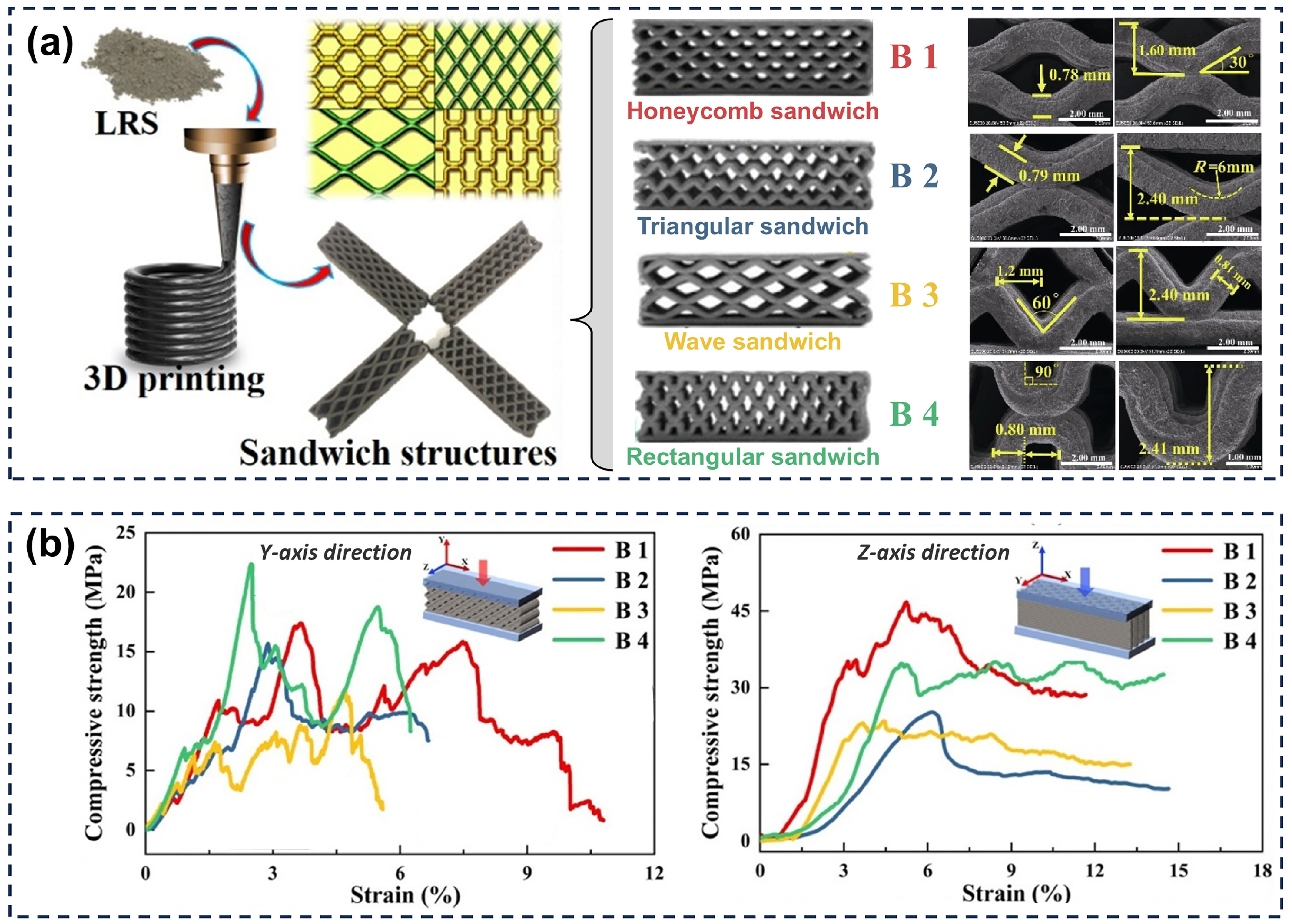
- Ma, S.; Jiang, Y.; Fu, S.; He, P.; Sun, C.; Duan, X.; Jia, D.; Colombo, P.; Zhou, Y. 3D-Printed Lunar Regolith Simulant-Based Geopolymer Composites with Bio-Inspired Sandwich Architectures. J. Adv. Ceram. 2023, 12, 510–525. [Google Scholar] [CrossRef]
- Khoshnevis, B. Automated construction by contour crafting—Related robotics and information technologies. Autom. Constr. 2004, 13, 5–19. [Google Scholar] [CrossRef]
- Leach, N.; Carlson, A.; Khoshnevis, B.; Thangavelu, M. Robotic Construction by Contour Crafting: The Case of Lunar Construction. Int. J. Archit. Comput. 2012, 10, 423–438. [Google Scholar] [CrossRef]
- Kim, Y.-J.; Chung, T.; Jin, H.; Lee, J.; Shin, H.-S. Vacuum sintering of lunar regolith simulant into homogeneous blocks: Outgassing behavior and optimized heating strategy. Case Stud. Constr. Mater. 2025, 23, e05314. [Google Scholar] [CrossRef]
- Zhou, C.; Gao, Y.; Zhou, Y.; She, W.; Shi, Y.; Ding, L.; Miao, C. Properties and Characteristics of Regolith-Based Materials for Extraterrestrial Construction. Engineering 2024, 37, 173–197. [Google Scholar] [CrossRef]
- Farries, K.W.; Visintin, P.; Smith, S.T.; van Eyk, P. Sintered or melted regolith for lunar construction: State-of-the-art review and future research directions. Constr. Build. Mater. 2021, 296, 123627. [Google Scholar] [CrossRef]
- National Aeronautics and Space Administration (NASA). On-Orbit Servicing, Assembly, and Manufacturing–1 (OSAM-1). Available online: https://www.nasa.gov/mission/on-orbit-servicing-assembly-and-manufacturing-1/ (accessed on 29 October 2025).
- National Aeronautics and Space Administration (NASA). OSAM-2/Archinaut One. Available online: https://www.nasa.gov/mission/on-orbit-servicing-assembly-and-manufacturing-2-osam-2/ (accessed on 29 October 2025).
- NASA TechPort. Project 93903: OSAM Technology Development. Available online: https://techport.nasa.gov/projects/93903 (accessed on 29 October 2025).
- Jiang, Y.; Li, F.; Zhou, S.; Liu, L. Investigating the microscopic, mechanical, and thermal properties of vacuum-sintered BH-1 lunar regolith simulant for lunar in-situ construction. Case Stud. Constr. Mater. 2025, 22, e04132. [Google Scholar] [CrossRef]
- Arney, D.; Mulvaney, J.; Williams, C. In-Space Servicing, Assembly, and Manufacturing (ISAM) State of Play. Available online: https://www.nasa.gov/wp-content/uploads/2023/10/isam-state-of-play-2023.pdf (accessed on 15 January 2025).
- Agarwal, A.; Mehra, S.; Wilson, I.; Liang, A.; Ding, A.; Oh, J.; Xu, P.; Han, J.; Holiday, E.; Khushani, V. Solutions for Space Waste: Biodegradation of Polyurethane by Pestalotiopsis Microspora in Microgravity. Int. J. Sci. Res. (IJSR) 2025, 14, 224–231. [Google Scholar] [CrossRef]
- Antony Jose, S.; Jackson, J.; Foster, J.; Silva, T.; Markham, E.; Menezes, P.L. In-Space Manufacturing: Technologies, Challenges, and Future Horizons. J. Manuf. Mater. Process. 2025, 9, 84. [Google Scholar] [CrossRef]
- Condruz, M.R.; Matache, G.; Paraschiv, A.; Frigioescu, T.F.; Badea, T. Microstructural and Tensile Properties Anisotropy of Selective Laser Melting Manufactured IN 625. Materials 2020, 13, 4829. [Google Scholar] [CrossRef]
- Huangfu, B.; Liu, Y.; Liu, X.; Wu, X.; Bai, H. Anisotropy of Additively Manufactured Metallic Materials. Materials 2024, 17, 3653. [Google Scholar] [CrossRef] [PubMed]
- Mohr, M.; Dong, Y.; Bracker, G.P.; Hyers, R.W.; Matson, D.M.; Zboray, R.; Frison, R.; Dommann, A.; Neels, A.; Xiao, X.; et al. Electromagnetic levitation containerless processing of metallic materials in microgravity: Thermophysical properties. npj Microgravity 2023, 9, 34. [Google Scholar] [CrossRef]
- Mohr, M.; Fecht, H. Investigating Thermophysical Properties Under Microgravity: A Review. Adv. Eng. Mater. 2021, 23, 2170006. [Google Scholar] [CrossRef]
- Ben Amor, S.; Elloumi, N.; Eltaief, A.; Louhichi, B.; Alrasheedi, N.H.; Seibi, A. Digital twin implementation in additive manufacturing. Processes 2024, 12, 1062. [Google Scholar] [CrossRef]
- National Aeronautics and Space Administration (NASA). NASA Technical Report 20240010508. Available online: https://ntrs.nasa.gov/citations/20240010508 (accessed on 20 November 2025).
- Ely, L.; Gradl, P.; Park, A. Additive Manufacturing in Space: Failing Upward. NASA Technical Report. 2023. Available online: https://ntrs.nasa.gov/api/citations/20230010140/downloads/Additive%20Manufacturing%20in%20Space%20Failing%20Upward%20Additive%20Manufacturing.pdf (accessed on 8 January 2026).
- Hedayati, R.; Stulova, V. 3D Printing of Habitats on Mars: Effects of Low Temperature and Pressure. Materials 2023, 16, 5175. [Google Scholar] [CrossRef] [PubMed] [PubMed Central]
- Litegrav. How Microgravity Is Reshaping Materials Science. Available online: https://www.litegrav.ai/resources/how-microgravity-is-reshaping-materials-science (accessed on 20 November 2025).
- Mariani, M.; Bertolini, F.; Isachenkov, M.; Galassi, C.; Lecis, N.; Grande, A.M.; Sala, G. Binder jetting of lunar regolith. In Proceedings of the 75th International Astronautical Congress (IAC), Milan, Italy, 14–18 October 2024. [Google Scholar]
- Wu, C.; Yu, Z.; Shao, R.; Li, J. A comprehensive review of extraterrestrial construction, from space concrete materials to habitat structures. Eng. Struct. 2024, 318, 118723. [Google Scholar] [CrossRef]
- Lim, S.; Prabhu, V.L.; Anand, M.; Taylor, L.A. Extra-terrestrial construction processes—Advancements, opportunities and challenges. Adv. Space Res. 2017, 60, 1413–1429. [Google Scholar] [CrossRef]





| Parameter | Terrestrial Gravity (1 g) | Microgravity |
|---|---|---|
| Melt pool area [24] | 0.538 mm2 | 0.551 mm2 (μg) |
| Maximum internal flow velocity (melt pool) [24] | ~1.022 mm/s (normal g, Y-direction) | ~0.419 mm/s (μg, Y-direction) − ~59% |
| Gravity effect on melt pool flow regimes [12] | Buoyancy present; stronger convective contribution | Buoyancy suppressed; dominated by surface tension |
| Melt pool morphology/dimensions (LPBF) [25] | Width ≈ 84.4 ± 12.6 μm, Depth ≈ 68.0 ± 10.0 μm | N/A |
| Cooling rate (terrestrial) [26,27] | 104–106 K/s typical | Lower in microgravity levitation experiments (≈40–110 °C/s lower) |
| Melt pool convection vs. surface tension effects [12] | Buoyancy & Marangoni both contribute | Surface tension dominates in μg (irregular tracks predicted) |
| Alloy System | Solidification Characteristics | Grain Morphology | Microstructural Metrics | |
|---|---|---|---|---|
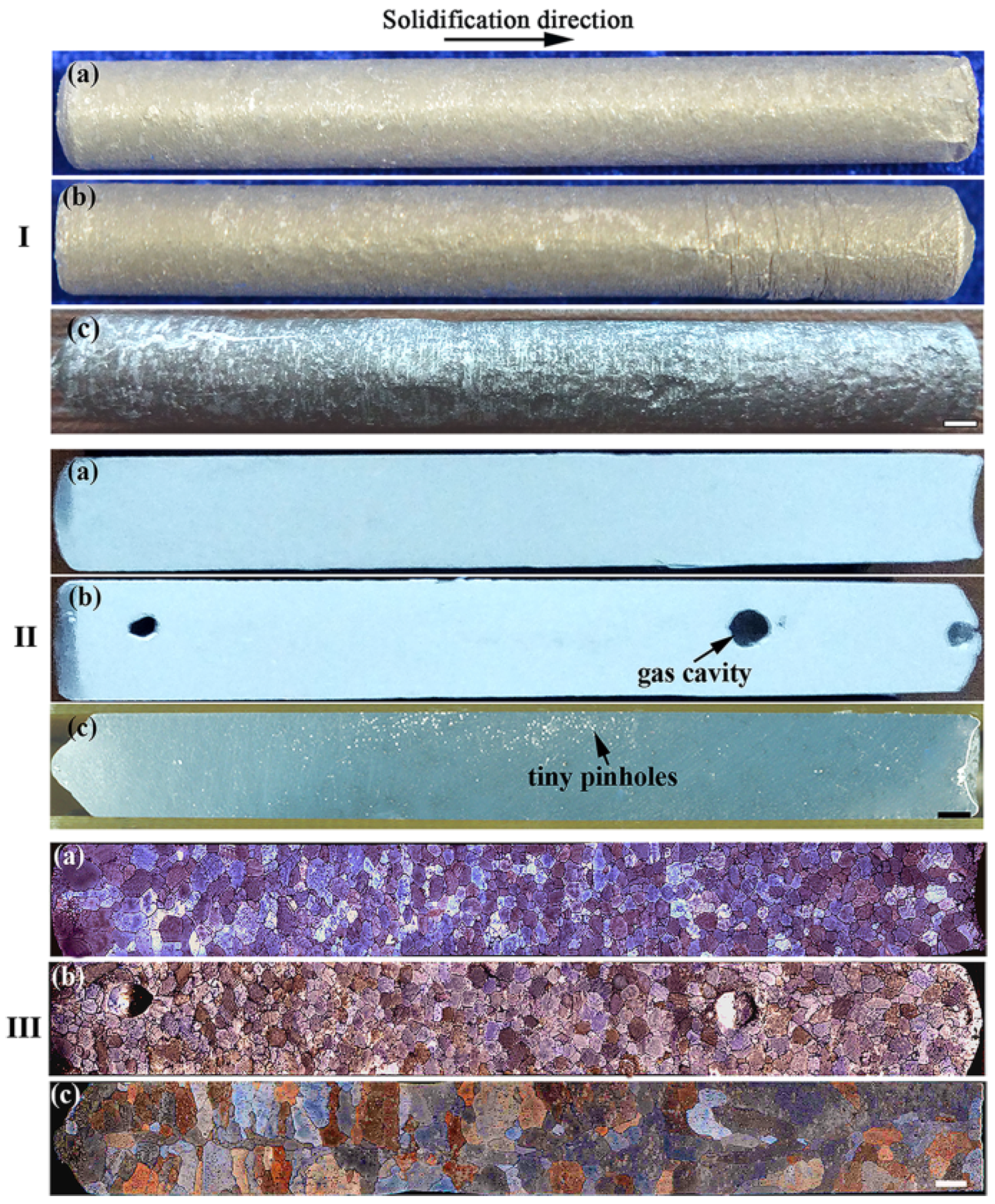
| Al–3.6 wt% Bi–1 wt% Sn [40] | ISS microgravity vs. terrestrial | Suppressed macro-segregation and melt convection | Equiaxed dominant in μg; up to ~32% columnar in gravitational sample | Space sample shows equiaxed α-Al grains with no visible gas cavities; larger porosity and phase-segregated microstructure on Earth |
| Al–4, 10, 20 wt% Cu (grain-refined) [41] | ISS microgravity | Purely diffusive solidification, minimal convection | Entirely equiaxed dendritic grains in μg; columnar only under some Earth 1g conditions | No significant macrosegregation; equiaxed grain structure with no large porosity |
| Al–7 wt% Si [42] | ISS microgravity vs. 1 g | Diffusion-controlled growth, suppressed convection | Equiaxed and PCET observed in grain-refined samples | Microgravity eliminates buoyant melt flow, allowing analysis of CET and dendritic structure |
| Al–3.5 wt% Si [39] | Drop tube microgravity vs. 1 g | Elimination of thermosolutal convection | Columnar vs. equiaxed grain variations | Under μg, dendrites are more parallel and less randomly oriented; DAS and eutectic content differ |
| Al–10 wt% Cu (drop tube) [39] | Drop tube microgravity vs. 1 g | Suppressed convection aided diffusive solidification | Predominantly equiaxed dendrites | μg samples show differences in dendrite arm spacing (DAS) and solidification morphology |
| Model transparent alloys [43] | ISS microgravity | Pure diffusion-controlled growth | Uniform growth patterns without convective distortion | Transparent alloy studies indicate absence of convective flow significantly alters pattern formation |
| Aspect | Space-Specific AM Needs | ASTM F42/ISO/ASTM 52900 |
|---|---|---|
| Environment | Must account for vacuum, microgravity, extreme thermal cycles, radiation | Terrestrial conditions; no explicit guidance for space environments |
| Material Performance | Long-term stability under space conditions, outgassing, radiation resistance | General material behavior; mechanical properties under standard Earth conditions |
| Part Qualification | Critical for flight hardware; requires formal verification for launch and operation | Provides general testing and characterization methods, not space certification |
| Design Considerations | Launch loads, thermal stresses, fatigue under orbital conditions | Focuses on design for manufacturability, but not space-specific loads |
| Process Control/Reproducibility | Must guarantee reliability across multiple builds for mission-critical parts | Emphasizes repeatability and process parameters but under terrestrial manufacturing tolerances |
| Inspection/Testing | Non-destructive testing for space-qualified components; verification in vacuum/thermal conditions | Recommends general testing methods (CT, mechanical tests) but not tailored to space flight |
| Category | Challenge | Description | Potential Solutions |
|---|---|---|---|
| Material behavior | Microgravity effects | Materials can exhibit brittleness, anisotropy, and unpredictable thermophysical properties due to lack of gravity-driven convection, sedimentation, and void formation | Conduct long-duration microgravity experiments (ISS, orbital platforms) to generate benchmark data; develop predictive material models and digital twins |
| Feedstock availability | Transporting sufficient material from Earth is impractical; in situ resource utilization (ISRU) is underdeveloped | Develop ISRU methods for lunar and Martian regolith; investigate binder synthesis from local materials; standardize feedstock properties | |
| Process & Equipment | Temperature and pressure extremes | Low temperatures and near-vacuum conditions affect curing, binder behavior, and process stability | Design integrated machine–process–material systems; develop binders compatible with low pressure/temperature; optimize habitat location |
| Process monitoring & automation | Limited real-time feedback, adaptive control, and predictive modeling; underutilization of AI/ML | Implement sensor networks, automated control, and AI/ML-driven process optimization; develop digital twin frameworks | |
| Energy and thermal management | AM processes are energy-intensive; spacecraft or lunar base power constraints limit scalability | Develop energy-efficient processes; optimize thermal control; explore solar or alternative energy sources | |
| Environmental hazards | Meteoroid impacts | Threat to equipment, unfinished structures, and printed parts, especially during early construction | Design protective shielding for printers and habitats; implement autonomous repair or fail-safe mechanisms |
| Experimental & Research | Limited microgravity platforms | Parabolic flights, sounding rockets, and orbital missions provide short or infrequent testing opportunities | Increase access to long-duration microgravity experiments; develop Earth-based simulators that closely mimic space conditions |
| Certification & Safety | Qualification and certification | Extensive coupon- and part-level testing is required; time-consuming and costly | Develop physics-based predictive models to reduce testing; adopt NASA-STD-6030 framework for consistent risk assessment |
| Standardization & Data | Lack of standardization | Insufficient standards for feedstock, process parameters, and data formats hinder interoperability, digital twin integration, and reproducibility | Standardize data formats; integrate digital twin protocols |
| Economic & Logistical | Cost and logistics | High transport costs, limited storage, and immature recycling systems challenge sustainable in-space AM | Optimize payload efficiency; develop recycling and reuse systems; evaluate economic feasibility and mission logistics |
Disclaimer/Publisher’s Note: The statements, opinions and data contained in all publications are solely those of the individual author(s) and contributor(s) and not of MDPI and/or the editor(s). MDPI and/or the editor(s) disclaim responsibility for any injury to people or property resulting from any ideas, methods, instructions or products referred to in the content. |
© 2026 by the authors. Licensee MDPI, Basel, Switzerland. This article is an open access article distributed under the terms and conditions of the Creative Commons Attribution (CC BY) license.
Share and Cite
Dumitrescu, O.; Prisăcariu, E.G.; Roșu, R.A.; Cozzoni, E. Additive Manufacturing in Space: Process Physics, Qualification, and Future Directions. Technologies 2026, 14, 121. https://doi.org/10.3390/technologies14020121
Dumitrescu O, Prisăcariu EG, Roșu RA, Cozzoni E. Additive Manufacturing in Space: Process Physics, Qualification, and Future Directions. Technologies. 2026; 14(2):121. https://doi.org/10.3390/technologies14020121
Chicago/Turabian StyleDumitrescu, Oana, Emilia Georgiana Prisăcariu, Raluca Andreea Roșu, and Enrico Cozzoni. 2026. "Additive Manufacturing in Space: Process Physics, Qualification, and Future Directions" Technologies 14, no. 2: 121. https://doi.org/10.3390/technologies14020121
APA StyleDumitrescu, O., Prisăcariu, E. G., Roșu, R. A., & Cozzoni, E. (2026). Additive Manufacturing in Space: Process Physics, Qualification, and Future Directions. Technologies, 14(2), 121. https://doi.org/10.3390/technologies14020121