
Enhanced Fall-Risk Protection in Building Projects Using a BIM-Based Algorithmic Approach

 , , , , , and
Abstract
1. Introduction
1.1. Construction Accidents
1.2. Causes and Locations of Fall Accidents
1.3. Regulations and Equipment for Fall Prevention
1.4. Algorithms in Safety Support
1.5. Algorithm and BIM-Based Construction Safety and Fall Prevention Support
2. Methods and Procedures
2.1. Initial Information
- -
- the minimum and maximum size of the railings;
- -
- size range of the railings;
- -
- length of the side of the shafts;
- -
- distance between columns themselves and the ends of the railings;
- -
- the height distribution of handrails;
- -
- number of equipment (balusters, posts, railings according to their sizes).
- -
- Always use the correct object type for the building structure during modeling. This means that in the authoring tool, the modeler must use the wall tool for walls, the slab column tool for columns, etc. It is essential because the information content of the model elements can vary depending on the different objects. The program uses this information to identify elements and their geometries.
- -
- Standardized classification systems must be used to have more identification possibilities. During the research, the Uniclass system was used to support the filtering and grouping of elements.
- -
- It is also essential that the spatial positioning (e.g., building level) and the connection of the model elements are as accurate as possible within the capabilities of the modeling tool. This is important not only for the graphical representation but also for the investigations that the algorithm will perform (e.g., mapping of walls or pillars that cut the edges of the slab).
- -
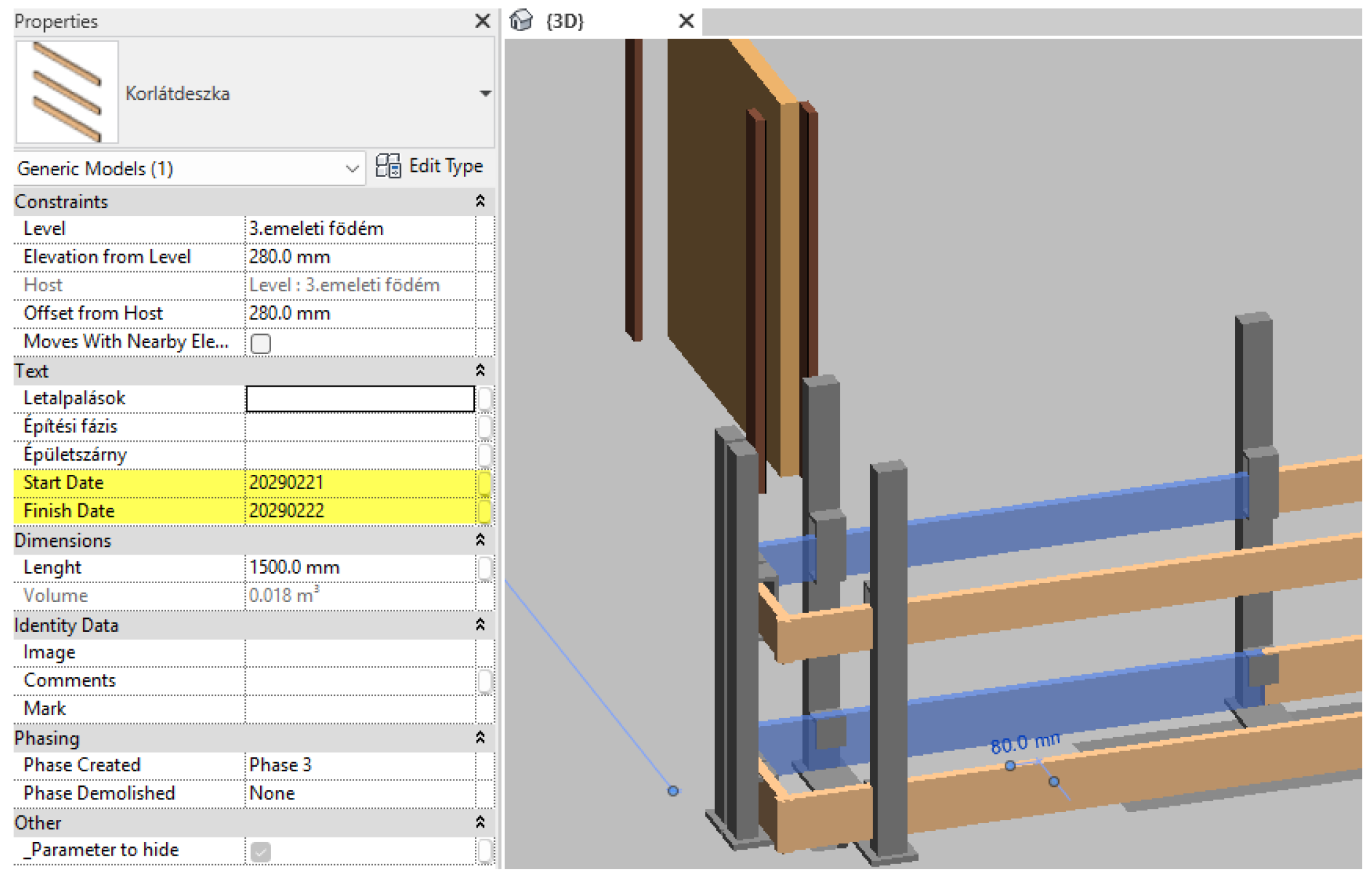
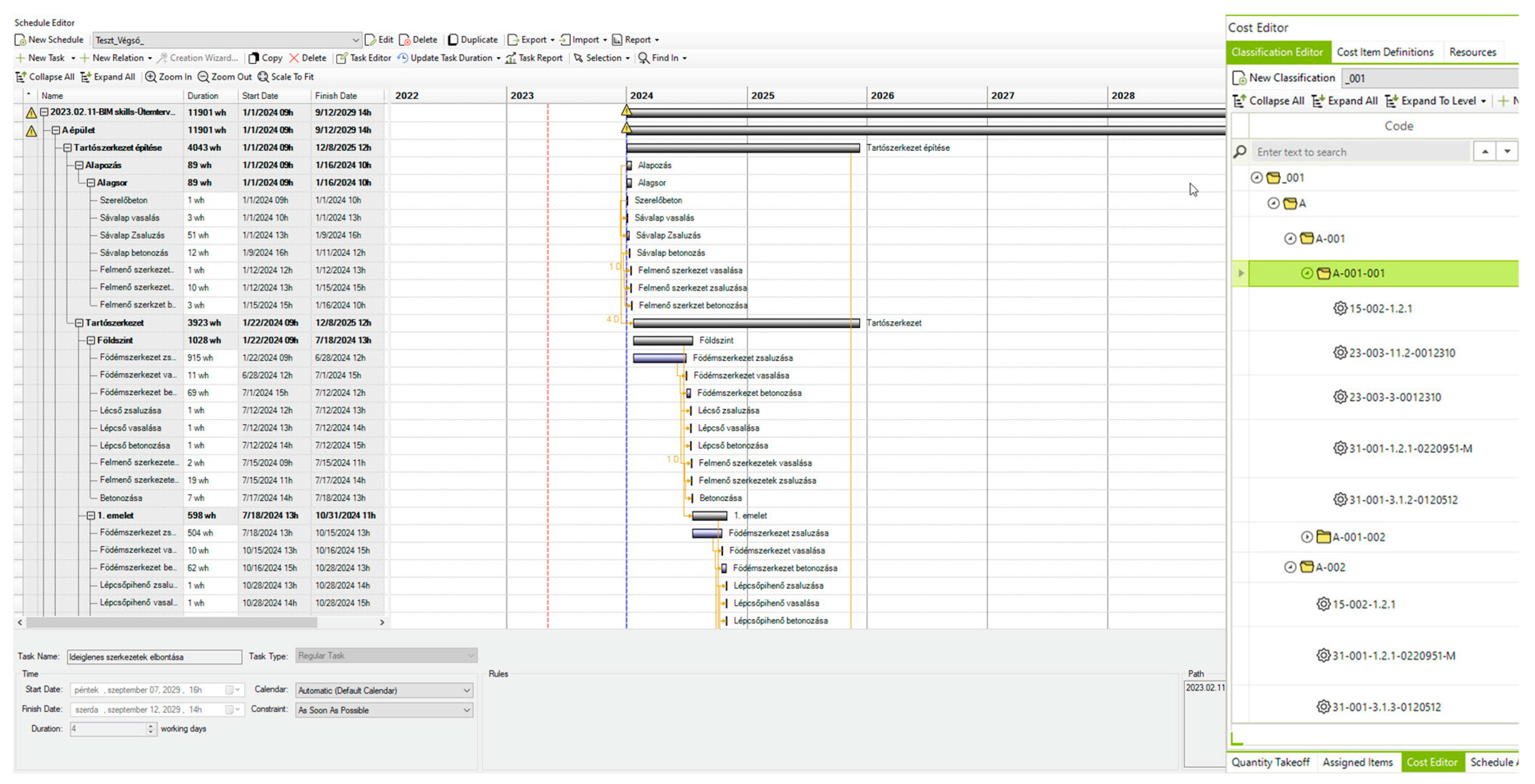
- In cases where the full functionality of the fall protection algorithm is to be used, it is essential to separate the model elements according to the real construction and to link them to the information of the construction schedule. The development of a model-based construction schedule may be an additional task; however, it shall be performed in the case of on-site accident prevention model use.
2.2. Methodological and Logical Description of the Algorithm
2.2.1. The BIM Model Used
2.2.2. Safety Components Warehouse
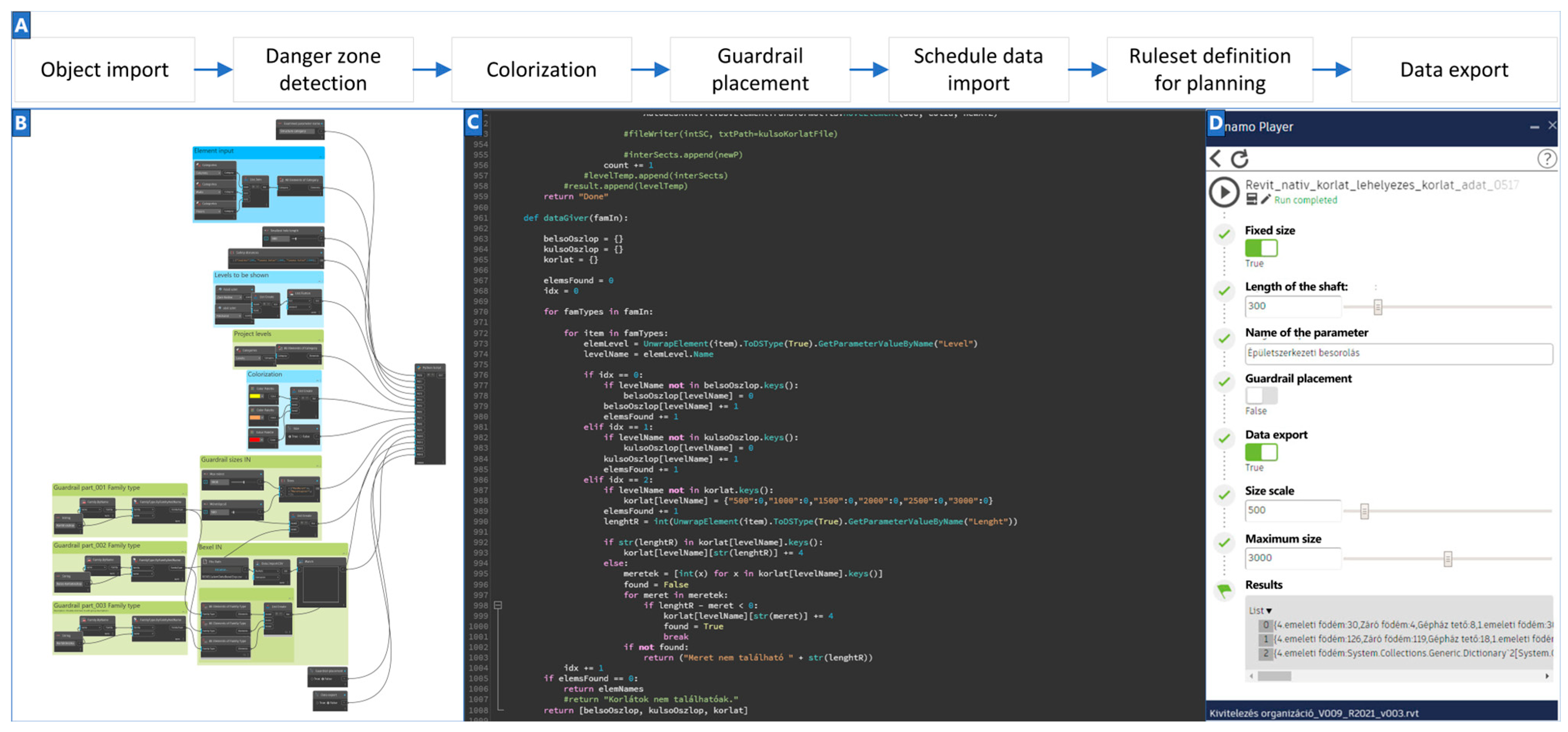
2.2.3. Operation of the Algorithm
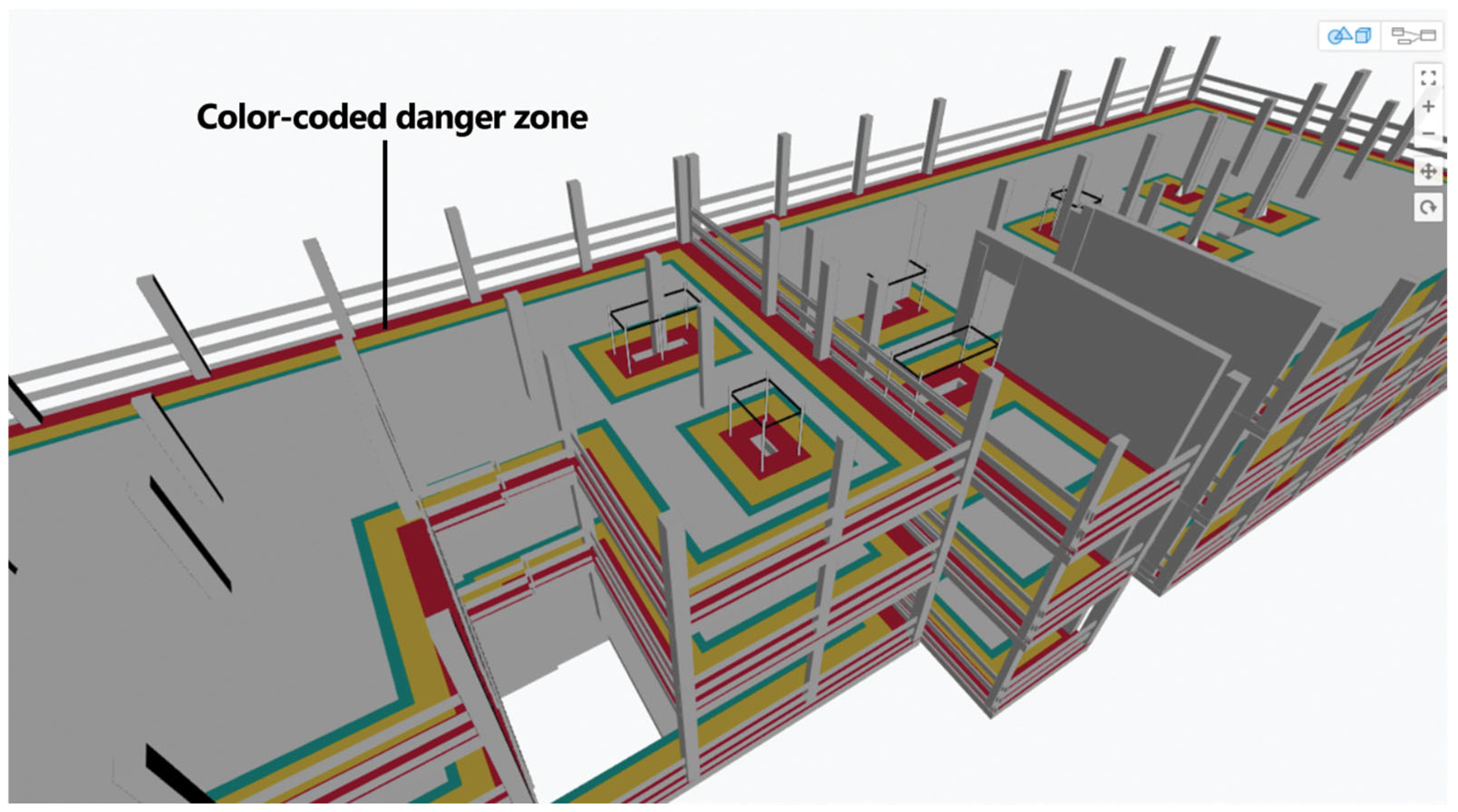
Preliminary Analysis of Internal Openings
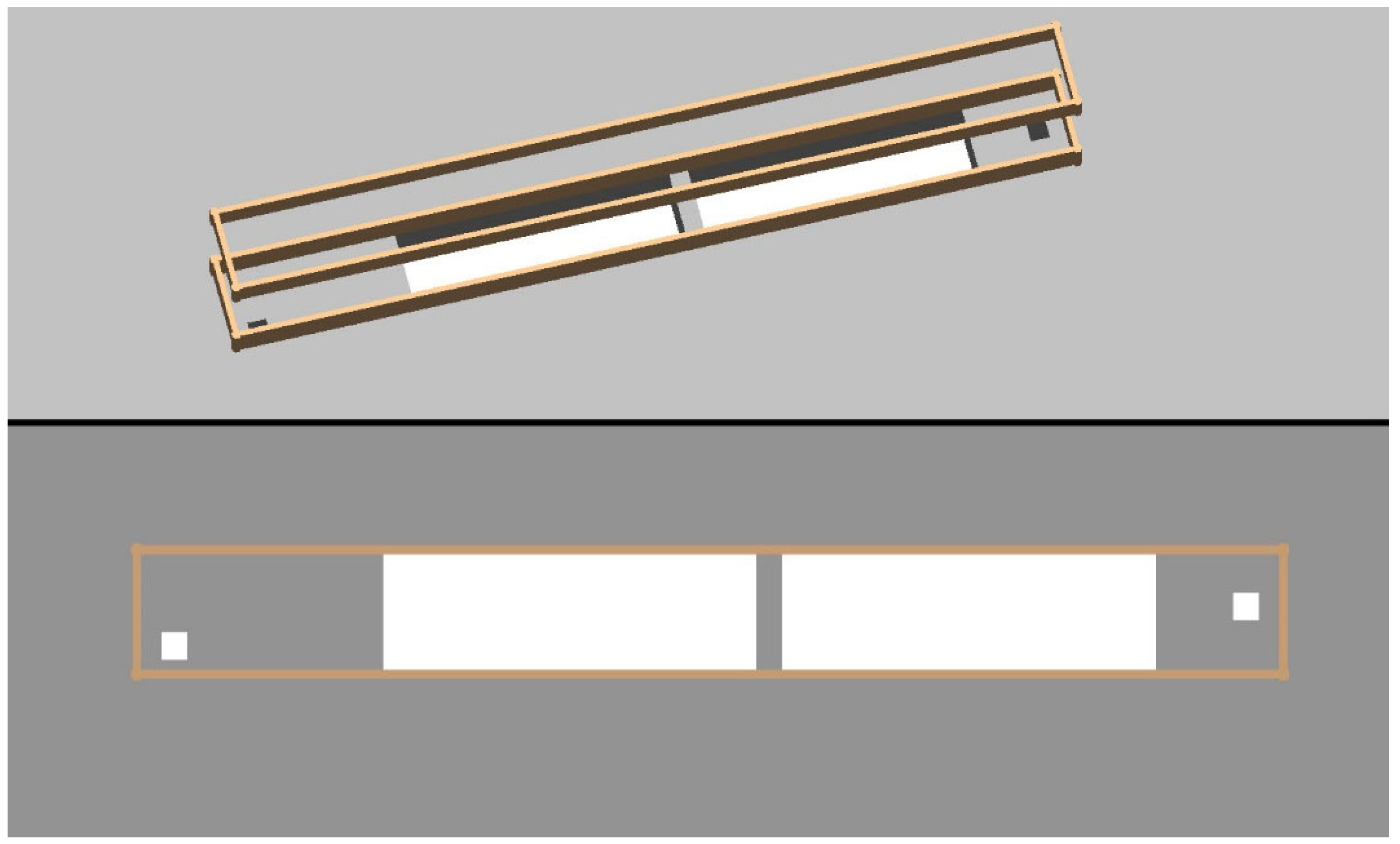
Covering of Internal Openings, Railing of External–Internal Slab Edges
- -
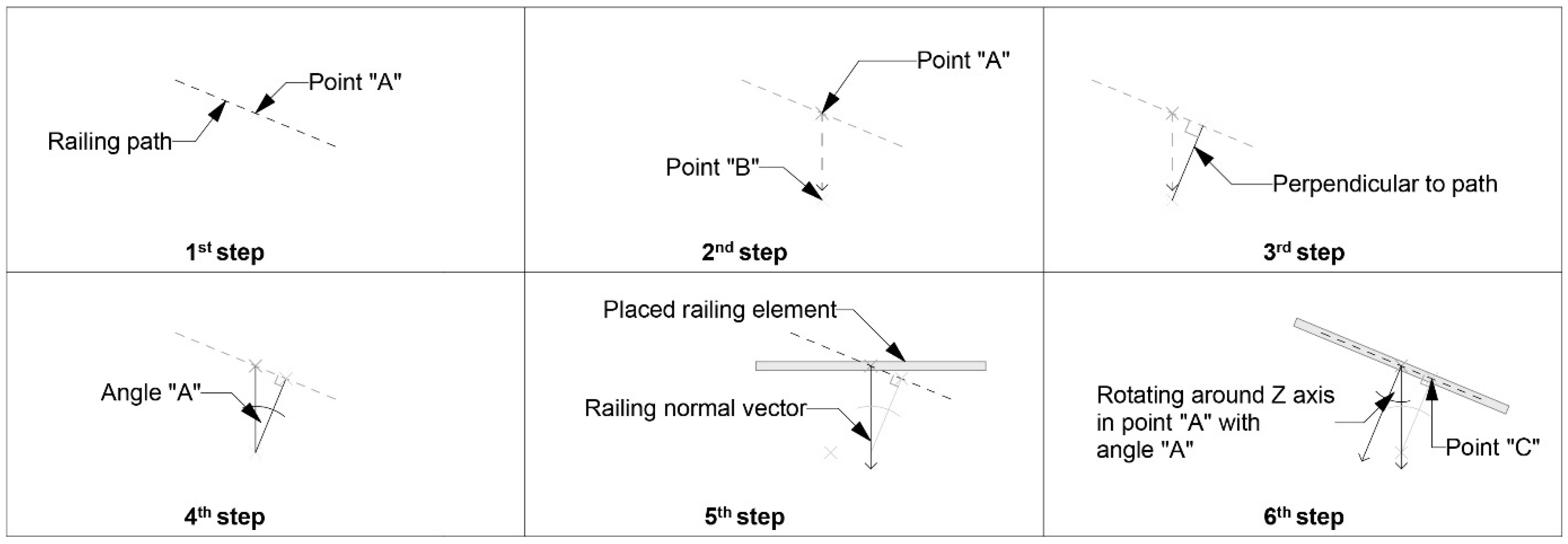
- The algorithm finds the center point of the slab contour segments (Point “A”) and then shifts it in the direction of the Y axis (Point “B”). If the generated point (Point “B”) is on the starting line, it is shifted from the center point in the direction of the X-axis.
- -
- The algorithm then connects the new point (Point “B”) and the center point (Point “A”) (2nd step) and then creates a perpendicular from Point B to the initial line (3rd step). After this process, it determines the angle enclosed by the two new segments (from Point “A” to Point “B” and the perpendicular segment) (4th step). If the edge of the slab is parallel to the X or Y axis (shown as a horizontal or vertical line in the figure), the angle will always be 0 degrees. In this case, it is necessary to examine whether the new point (Point “B”) falls within the slab area. If it does not, the algorithm has to add 180 degrees to the rotation angle. If that new point (Point “B”) is offset in a direction parallel to the Y axis, then an additional 90 degrees must be added to the rotation value.
- -
- The angle of rotation is then added to or subtracted from the angle between the lines. The process of adding or subtracting depends on whether the intersection point generated by the perpendicular alignment (Point “C”) is to the right or left of the new point (Point “B”) of the normal vector (the angle of the straight lines must be an angle less than 180 degrees).
Optimization-Oriented Use of Safety Elements
Data Exports Using the Algorithm
- -
- total quantity required for the whole building;
- -
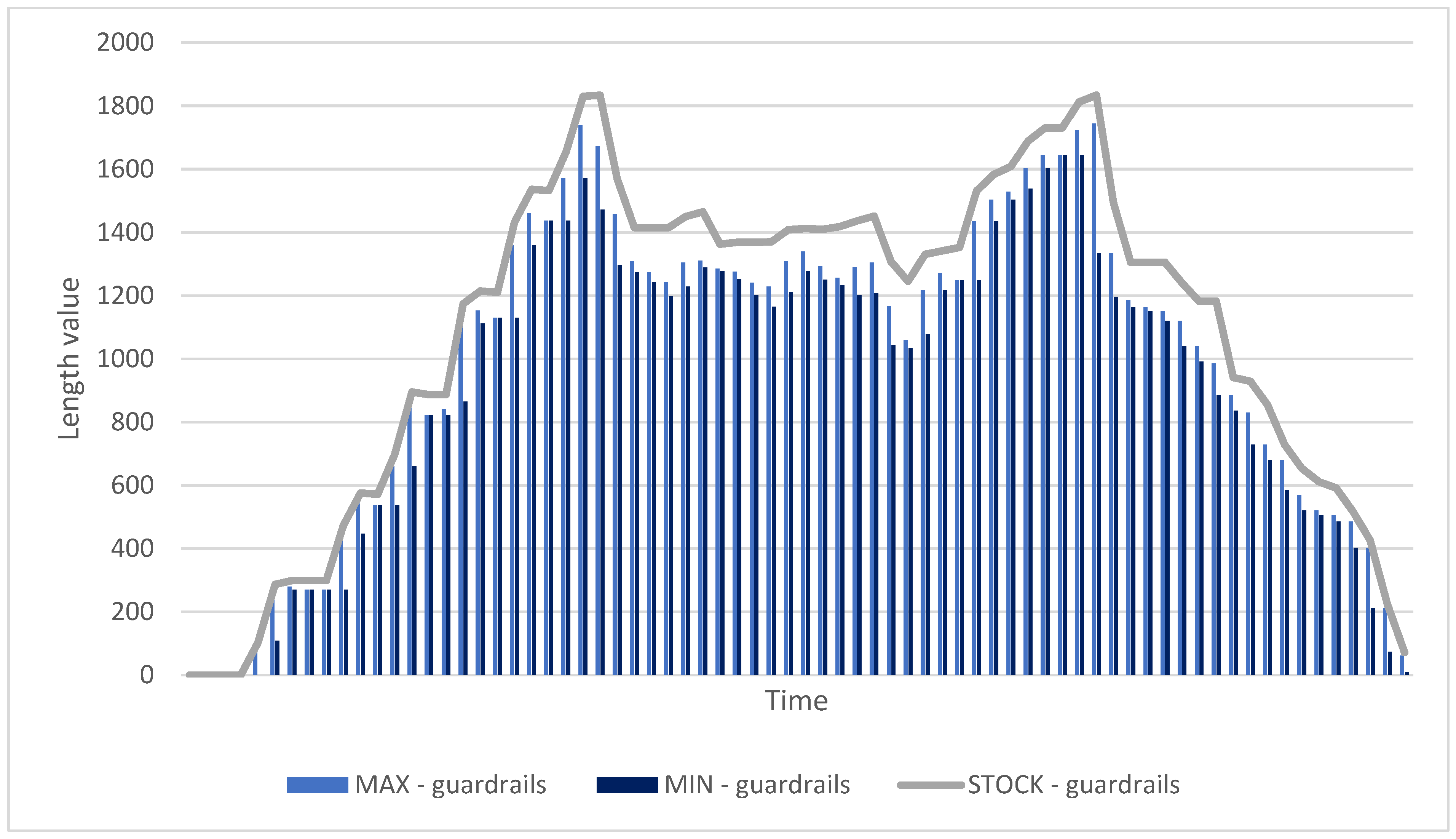
- the quantity for a certain moment in time;
- -
- quantity for a time interval;
2.2.4. Planning the Scheduling of Safety Equipment—How the Supplementary Development Works
2.2.5. Model and Data Updates
3. Results
4. Discussion
5. Conclusions
Author Contributions
Funding
Data Availability Statement
Conflicts of Interest
References
- Zhou, Z.; Goh, Y.M.; Li, Q. Overview and analysis of safety management studies in the construction industry. Saf. Sci. 2015, 72, 337–350. [Google Scholar] [CrossRef]
- Lombardi, M.; Fargnoli, M.; Parise, G. Risk Profiling from the European Statistics on Accidents at Work (ESAW) Accidents′ Databases: A Case Study in Construction Sites. Int. J. Environ. Res. Public. Health 2019, 16, 4748. [Google Scholar] [CrossRef]
- Shafique, M.; Rafiq, M. An Overview of Construction Occupational Accidents in Hong Kong: A Recent Trend and Future Perspectives. Appl. Sci. 2019, 9, 2069. [Google Scholar] [CrossRef]
- Mosly, I. Safety Performance in the Construction Industry of Saudi Arabia. Int. J. Constr. Eng. Manag. 2015, 4, 238–247. [Google Scholar] [CrossRef]
- Ajslev, J.Z.N.; Nimb, I.E.E. Virtual design and construction for occupational safety and health purposes—A review on current gaps and directions for research and practice. Saf. Sci. 2022, 155, 105876. [Google Scholar] [CrossRef]
- Gürcanli, G.E.; Müngen, U. Analysis of Construction Accidents in Turkey and Responsible Parties. Ind. Health 2013, 51, 581–595. [Google Scholar] [CrossRef] [PubMed]
- Japan Industrial Safety and Health Association. Industrial Accidents Statistics in Japan; Japan Industrial Safety and Health Association: Tokyo, Japan, 2021. [Google Scholar]
- Health and Safety Executive (HSE). Construction Statistics in Great Britain, 2022. Great Britain, Annual Statistics, Data Up to March 2022, November 2022. Available online: https://www.ons.gov.uk/businessindustryandtrade/constructionindustry/articles/constructionstatistics/2022 (accessed on 11 May 2023).
- EUROSTAT. Accidents at Work-Statistics by Economic Activity—Statistics Explained; EUROSTAT: Luxembourg, 2023. [Google Scholar]
- U.S. BUREAU OF LABOR STATISTICS. Number and Rate of Fatal Work Injuries, by Private Industry Sector; U.S. BUREAU OF LABOR STATISTICS: Washington, DC, USA, 2023.
- Simutenda, P.; Zambwe, M.; Mutemwa, R. Types of occupational accidents and their predictors at construction sites in Lusaka city. Occup. Environ. Health, 2022; preprint. [Google Scholar] [CrossRef]
- Fass, S.; Yousef, R.; Liginlal, D.; Vyas, P. Understanding causes of fall and struck-by incidents: What differentiates construction safety in the Arabian Gulf region? Appl. Ergon. 2017, 58, 515–526. [Google Scholar] [CrossRef] [PubMed]
- Kadiri, Z.O.; Nden, T.; Avre, G.K.; Oladipo, T.O.; Edom, A.; Samuel, P.O.; Ananso, G.N. Causes and Effects of Accidents on Construction Sites (A Case Study of Some Selected Construction Firms in Abuja F.C.T Nigeria). IOSR J. Mech. Civ. Eng. 2014, 11, 66–72. [Google Scholar] [CrossRef]
- Ho, S.-C.; Wang, L.-Y.; Ho, C.-K.; Yang, C.-Y. Fatal occupational injuries in Taiwan, 1994–2005. Occup. Environ. Med. 2010, 67, 251–255. [Google Scholar] [CrossRef]
- Fard, M.M.; Terouhid, S.A.; Kibert, C.J.; Hakim, H. Safety concerns related to modular/prefabricated building construction. Int. J. Inj. Contr. Saf. Promot. 2017, 24, 10–23. [Google Scholar] [CrossRef] [PubMed]
- Huang, X.; Hinze, J. Analysis of Construction Worker Fall Accidents. J. Constr. Eng. Manag. 2003, 129, 262–271. [Google Scholar] [CrossRef]
- Chi, C.-F.; Chang, T.-C.; Ting, H.-I. Accident patterns and prevention measures for fatal occupational falls in the construction industry. Appl. Ergon. 2005, 36, 391–400. [Google Scholar] [CrossRef] [PubMed]
- Junjia, Y.; Alias, A.H.; Haron, N.A.; Bakar, N.A. A Bibliometrics-Based Systematic Review of Safety Risk Assessment for IBS Hoisting Construction. Buildings 2023, 13, 1853. [Google Scholar] [CrossRef]
- U.S. BUREAU OF LABOR STATISTICS. Fatal and Nonfatal Falls, Slips, and Trips In the Construction Industry; U.S. BUREAU OF LABOR STATISTICS: Washington, DC, USA, 2021.
- Bakai, N.; Máder, P.M.; Horkai, A.; Etlinger, J.; Zagorácz, M.B.; Rák, O.; Bachmann, B. Determination of intervention areas to prevent and reduce work accidents in the construction industry-supported by statistical data analyses, (original: Az építőipari munkabalesetek megelőzésére és csökkentésére irányuló beavatkozási területek-statisztikai adatelemzéssel történő - meghatározása). Hung. Constr. Ind. Orig. Magy. Épip. 2021, 70, 90–99. [Google Scholar]
- Choi, J.; Gu, B.; Chin, S.; Lee, J.-S. Machine learning predictive model based on national data for fatal accidents of construction workers. Autom. Constr. 2020, 110, 102974. [Google Scholar] [CrossRef]
- Chatzimichailidou, M.; Ma, Y. Using BIM in the safety risk management of modular construction. Saf. Sci. 2022, 154, 105852. [Google Scholar] [CrossRef]
- Gharaie, E.; Lingard, H.; Cooke, T. Causes of Fatal Accidents Involving Cranes in the Australian Construction Industry. Constr. Econ. Build. 2015, 15, 1–12. [Google Scholar] [CrossRef]
- Construction (Design and Management) Regulations (CDM). 2007. Available online: https://www.legislation.gov.uk/uksi/2007/320/regulation/27/made (accessed on 30 May 2024).
- Managing health and safety in construction. In Construction (Design and Management) Regulations 2015: Guidance on Regulations; HSE Books: Sudbury, ON, Canada, 2015.
- U.S. Department of Labor, Occupational Safety and Health Administration. Fall Protection in Construction. U.S. 2015. Available online: https://www.osha.gov/sites/default/files/publications/OSHA3146.pdf (accessed on 17 May 2023).
- Jokkaw, N.; Suteecharuwat, P.; Weerawetwat, P. Measurement of Construction Workers’ Feeling by Virtual Environment (VE) Technology for Guardrail Design in High-Rise Building Construction Projects. Eng. J. 2017, 21, 161–177. [Google Scholar] [CrossRef]
- Baruffi, D.; Costella, M.F.; Pravia, Z.M.C. Experimental Analysis of Guardrail Structures for Occupational Safety in Construction. Open Constr. Build. Technol. J. 2021, 15, 141–151. [Google Scholar] [CrossRef]
- Building Regulations (Part K Amendment) Regulations 2011. 2012. Available online: https://ec.europa.eu/growth/tools-databases/tris/en/index.cfm/search/?trisaction=search.detail&year=2011&num=308&dLang=EN (accessed on 5 April 2023).
- Health and Safety Executive. Health and Safety in Construction; HSG150; Health and Safety Executive: Merseyside, UK, 2006; ISBN 978-0-7176-6182-2.
- Occupational Safety and Health Administration. 1910.29—Fall Protection Systems and Falling Object Protection, Criteria and Practices; Occupational Safety and Health Administration: Washington, DC, USA, 2016.
- The Hungarian Government. The Minimum Occupational Safety Requirements to be Implemented at Construction Sites and During Construction Processes; The Hungarian Government: Budapest, Hungary, 2002; Volume 4. Available online: https://net.jogtar.hu/jogszabaly?docid=a0200004.scm (accessed on 13 November 2025).
- Fudickar, S.; Lindemann, A.; Schnor, B. Threshold-Based Fall Detection on Smart Phones; SciTePress: Setúbal, Portugal, 2014. [Google Scholar]
- Kuspinar, A.; Hirdes, J.P.; Berg, K.; McArthur, C.; Morris, J.N. Development and validation of an algorithm to assess risk of first-time falling among home care clients. BMC Geriatr. 2019, 19, 264. [Google Scholar] [CrossRef]
- Choi, A.; Kim, T.H.; Yuhai, O.; Jeong, S.; Kim, K.; Kim, H.; Mun, J.H. Deep Learning-Based Near-Fall Detection Algorithm for Fall Risk Monitoring System Using a Single Inertial Measurement Unit. IEEE Trans. Neural Syst. Rehabil. Eng. 2022, 30, 2385–2394. [Google Scholar] [CrossRef] [PubMed]
- Zheng, L.; Zhao, J.; Dong, F.; Huang, Z.; Zhong, D. Fall Detection Algorithm Based on Inertial Sensor and Hierarchical Decision. Sensors 2022, 23, 107. [Google Scholar] [CrossRef]
- Zhang, Q.; Liu, Z.; Yang, S. Enhancing construction workers’ health and safety: Mechanisms for implementing Construction 4.0 technologies in construction organizations. Eng. Constr. Archit. Manag. 2025, 32, 68–103. [Google Scholar] [CrossRef]
- Oral, M.; Alboga, Ö.; Aydınlı, S.; Erdis, E. Usability of large language models for building construction safety risk assessment. Eng. Constr. Archit. Manag. 2025; ahead-of-print. [Google Scholar] [CrossRef]
- Badhan, S.J.; Samsami, R. Artificial Intelligence (AI) in Construction Safety: A Systematic Literature Review. Buildings 2025, 15, 4084. [Google Scholar] [CrossRef]
- Ni, X.; Perera, W.L.; Kühnel, C.; Vollrath, C. Vision-based Warning System for Maintenance Personnel on Short-Term Roadwork Site. arXiv 2022, arXiv:2210.01689. [Google Scholar]
- Lee, S.; Koo, B.; Yang, S.; Kim, J.; Nam, Y.; Kim, Y. Fall-from-Height Detection Using Deep Learning Based on IMU Sensor Data for Accident Prevention at Construction Sites. Sensors 2022, 22, 6107. [Google Scholar] [CrossRef]
- Wang, C.C.; Wang, M.; Sun, J.; Mojtahedi, M. A Safety Warning Algorithm Based on Axis Aligned Bounding Box Method to Prevent Onsite Accidents of Mobile Construction Machineries. Sensors 2021, 21, 7075. [Google Scholar] [CrossRef] [PubMed]
- Navon, R.; Kolton, O. Algorithms for Automated Monitoring and Control of Fall Hazards. J. Comput. Civ. Eng. 2007, 21, 21–28. [Google Scholar] [CrossRef]
- Malekitabar, H.; Ardeshir, A.; Sebt, M.H.; Stouffs, R. Construction safety risk drivers: A BIM approach. Saf. Sci. 2016, 82, 445–455. [Google Scholar] [CrossRef]
- Eastman, C.; Teicholz, P.; Sacks, R.; Liston, K. BIM Handbook: A Guide to Building Information Modeling for Owners, Managers, Designers, Engineers and Contractors. 2012, Volume 12. Available online: https://epress.lib.uts.edu.au/journals/index.php/AJCEB/article/view/2749 (accessed on 8 May 2023).
- Melzner, J.; Zhang, S.; Teizer, J.; Bargstädt, H.-J. A case study on automated safety compliance checking to assist fall protection design and planning in building information models. Constr. Manag. Econ. 2013, 31, 661–674. [Google Scholar] [CrossRef]
- Riaz, Z.; Arslan, M.; Kiani, A.K.; Azhar, S. CoSMoS: A BIM and wireless sensor based integrated solution for worker safety in confined spaces. Autom. Constr. 2014, 45, 96–106. [Google Scholar] [CrossRef]
- Rodrigues, F.; Baptista, J.S.; Pinto, D. BIM Approach in Construction Safety—A Case Study on Preventing Falls from Height. Buildings 2022, 12, 73. [Google Scholar] [CrossRef]
- Abed, H.R.; Hatem, W.A.; Jasim, N.A. Adopting BIM Technology in Fall Prevention Plans. Civ. Eng. J. 2019, 5, 2270–2281. [Google Scholar] [CrossRef]
- Haji, M.D.; Behnam, B.; Sebt, M.H.; Ardeshir, A.; Katooziani, A. BIM-Based Safety Leading Indicators Measurement Tool for Construction Sites. Int. J. Civ. Eng. 2023, 21, 265–282. [Google Scholar] [CrossRef]
- Zhang, S.; Teizer, J.; Lee, J.-K.; Eastman, C.M.; Venugopal, M. Building Information Modeling (BIM) and Safety: Automatic Safety Checking of Construction Models and Schedules. Autom. Constr. 2013, 29, 183–195. [Google Scholar] [CrossRef]
- Newaz, M.T.; Ershadi, M.; Carothers, L.; Jefferies, M.; Davis, P. A review and assessment of technologies for addressing the risk of falling from height on construction sites. Saf. Sci. 2022, 147, 105618. [Google Scholar] [CrossRef]
- Zhang, S.; Sulankivi, K.; Kiviniemi, M.; Romo, I.; Eastman, C.M.; Teizer, J. BIM-based fall hazard identification and prevention in construction safety planning. Saf. Sci. 2015, 72, 31–45. [Google Scholar] [CrossRef]
- Hong, S.M.; Kim, B.C.; Kwon, T.W.; Kim, J.H.; Kim, J.J. A Study on Prevention of Construction Opening Fall Accidents Introducing Image Processing. J. KIBIM 2016, 6, 39–46. [Google Scholar] [CrossRef]
- Rey-Merchán, M.D.C.; Gómez-de-Gabriel, J.M.; Fernández-Madrigal, J.A.; López-Arquillos, A. Improving the prevention of fall from height on construction sites through the combination of technologies. Int. J. Occup. Saf. Ergon. 2022, 28, 590–599. [Google Scholar] [CrossRef] [PubMed]
- Pereira, F.; González García, M.d.l.N.; Poças Martins, J. BIM for Safety: Applying Real-Time Monitoring Technologies to Prevent Falls from Height in Construction. Appl. Sci. 2025, 15, 2218. [Google Scholar] [CrossRef]
- Enhancing Individual Worker Risk Awareness: A Location-Based Safety Check System for Real-Time Hazard Warnings in Work-Zones. Available online: https://www.mdpi.com/2075-5309/14/1/90 (accessed on 17 December 2025).
- Cheng, M.-Y.; Vu, Q.-T.; Teng, R.-K. Real-time risk assessment of multi-parameter induced fall accidents at construction sites. Autom. Constr. 2024, 162, 105409. [Google Scholar] [CrossRef]
- Wang, T.-K.; Qin, C. Integration of BIM, Bayesian Belief Network, and Ant Colony Algorithm for Assessing Fall Risk and Route Planning. In Construction Research Congress 2018; American Society of Civil Engineers: New Orleans, LA, USA, 2018; pp. 207–220. [Google Scholar] [CrossRef]
- Khan, N.; Ali, A.K.; Skibniewski, M.J.; Lee, D.Y.; Park, C. Excavation Safety Modeling Approach Using BIM and VPL. Adv. Civ. Eng. 2019, 2019, 1–15. [Google Scholar] [CrossRef]
- Park, S.; Kim, I. BIM-Based Quality Control for Safety Issues in the Design and Construction Phases. ArchNet-IJAR Int. J. Archit. Res. 2015, 9, 111. [Google Scholar] [CrossRef]
- Hossain, M.M.; Ahmed, S. Developing an automated safety checking system using BIM: A case study in the Bangladeshi construction industry. Int. J. Constr. Manag. 2022, 22, 1206–1224. [Google Scholar] [CrossRef]
- Johansen, K.W.; Schultz, C.; Teizer, J. BIM-based Fall Hazard Ontology and Benchmark Model for Comparison of Automated Prevention through Design Approaches in Construction Safety. In Proceedings of the 29th EG-ICE International Workshop on Intelligent Computing in Engineering, Aarhus, Denmark, 6–8 July 2022; pp. 408–417. [Google Scholar] [CrossRef]
- Singh, S.P.; Mansuri, L.E.; Patel, D.A.; Chauhan, S. Harnessing BIM with risk assessment for generating automated safety schedule and developing application for safety training. Saf. Sci. 2023, 164, 106179. [Google Scholar] [CrossRef]
- Simon, D.; Rák, O.; Bakai, N. Az Építőipari Munkabalesetek Megelőzését Célzó, BIM Alapú Virtuális Valóság Felhasználási Lehetőségeinek Vizsgálata. Magy. Építőipar 2024, 73, 5–10. [Google Scholar]



| Height | Unprotected Gap Size | Toe-Kick Height | |
|---|---|---|---|
| USA | min. 107 cm (±8 cm) | max. 48 cm | min. 9 cm + 5 mm clearance. |
| UK | min. 95 cm | max. 47 cm | Undefined |
| Hungary | min. 100 cm | max. 30 cm | min. 12 cm + 0 mm clearance. |
| Name | Function |
|---|---|
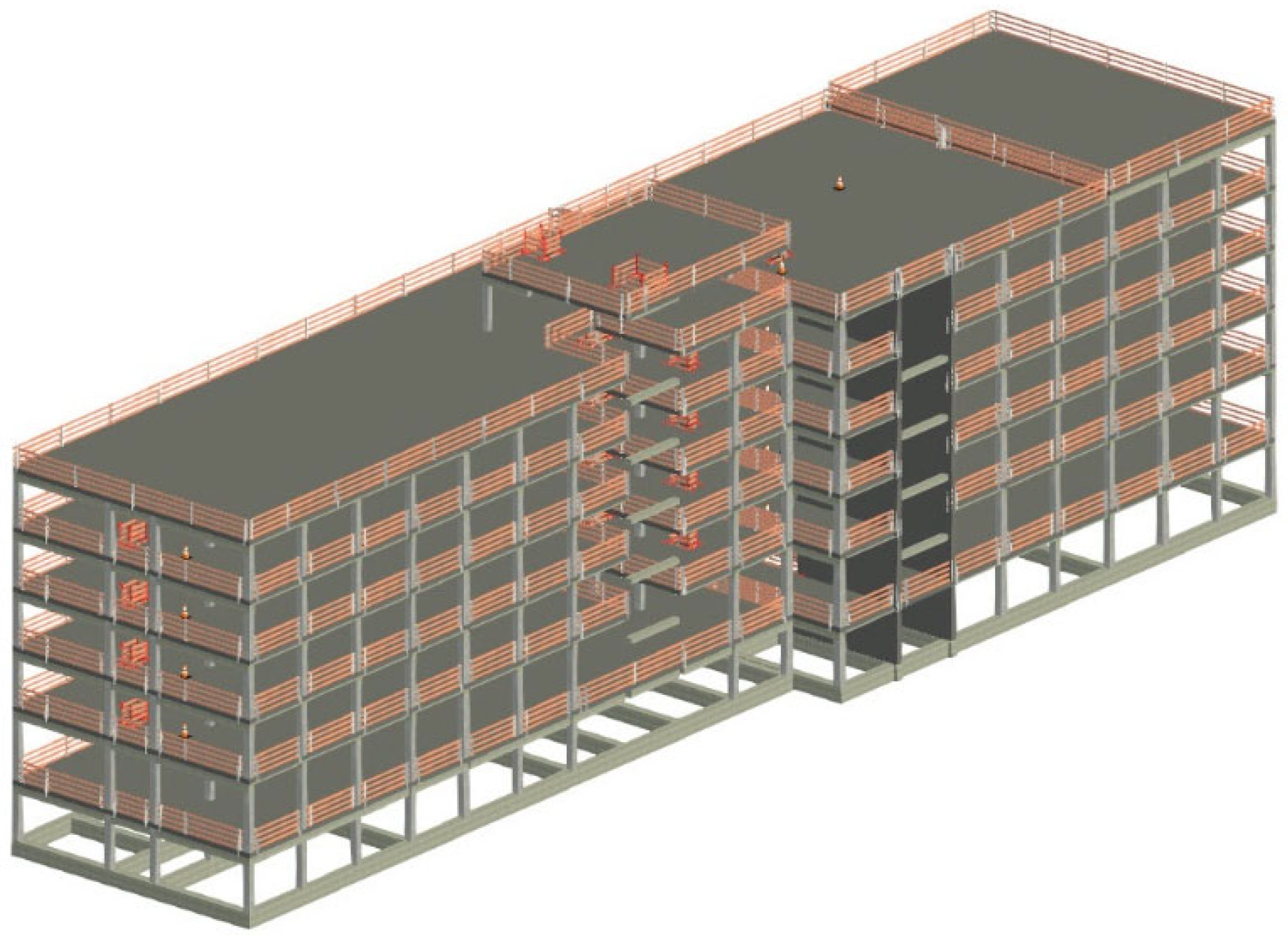
| External handrail post | The support for the safety barriers is to be installed along the outer edges of the slab. |
| Internal handrail post | The support for the safety barriers is to be installed along internal slab edges (shafts). |
| Handrail | Elements connecting the external and internal balusters. |
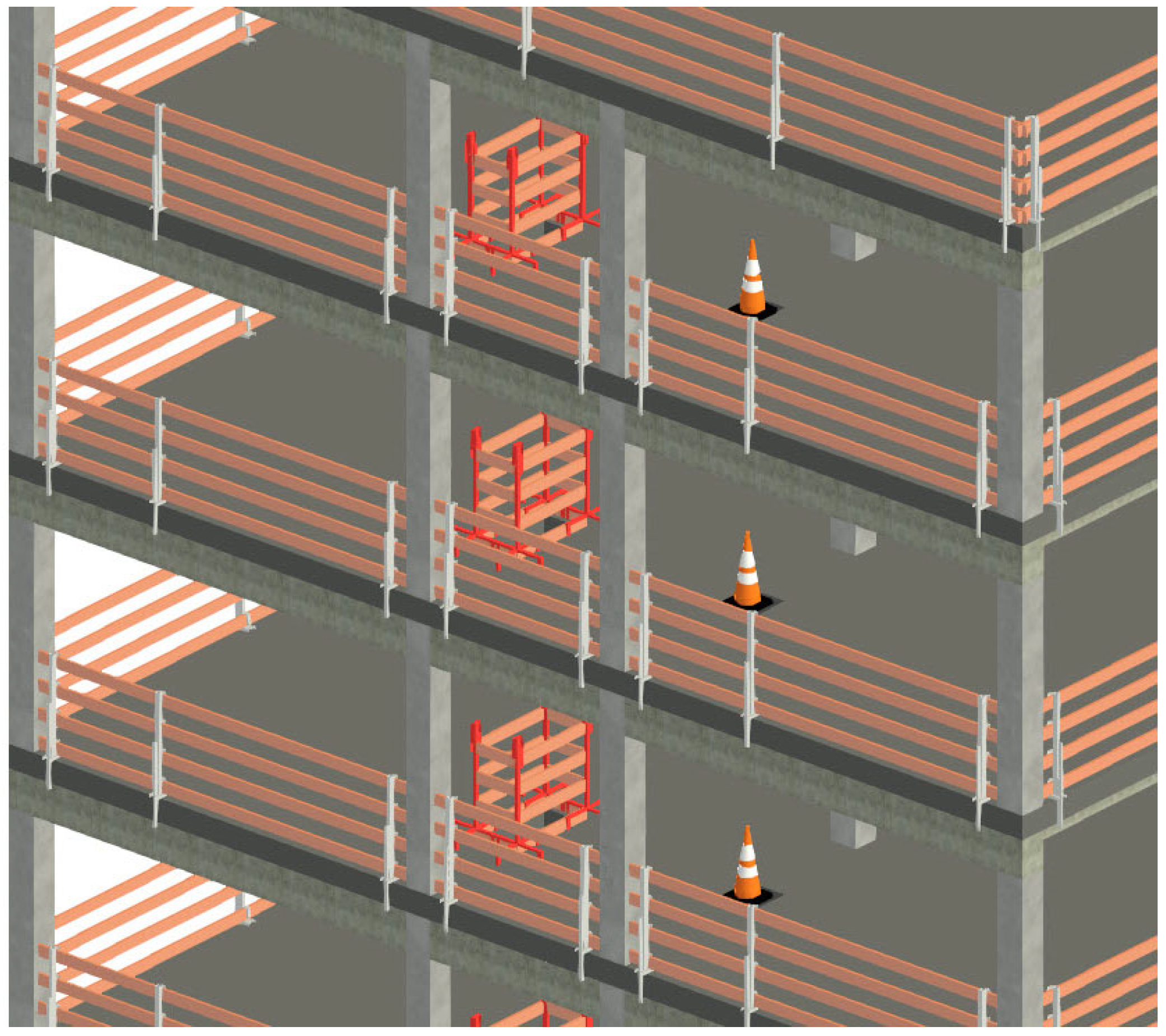
| Covering posts | Small (currently 30 × 30 cm but can be modified) internal slab edges (shafts) can be fitted with covering elements. |
Disclaimer/Publisher’s Note: The statements, opinions and data contained in all publications are solely those of the individual author(s) and contributor(s) and not of MDPI and/or the editor(s). MDPI and/or the editor(s) disclaim responsibility for any injury to people or property resulting from any ideas, methods, instructions or products referred to in the content. |
© 2026 by the authors. Licensee MDPI, Basel, Switzerland. This article is an open access article distributed under the terms and conditions of the Creative Commons Attribution (CC BY) license.
Share and Cite
Zagorácz, M.B.; Rák, O.; Máder, P.M.; Rácz, V.N.; Bakai, N.; Etlinger, J.; Jászberényi, T. Enhanced Fall-Risk Protection in Building Projects Using a BIM-Based Algorithmic Approach. Technologies 2026, 14, 52. https://doi.org/10.3390/technologies14010052
Zagorácz MB, Rák O, Máder PM, Rácz VN, Bakai N, Etlinger J, Jászberényi T. Enhanced Fall-Risk Protection in Building Projects Using a BIM-Based Algorithmic Approach. Technologies. 2026; 14(1):52. https://doi.org/10.3390/technologies14010052
Chicago/Turabian StyleZagorácz, Márk Balázs, Olivér Rák, Patrik Márk Máder, Viktor Norbert Rácz, Nándor Bakai, József Etlinger, and Tünde Jászberényi. 2026. "Enhanced Fall-Risk Protection in Building Projects Using a BIM-Based Algorithmic Approach" Technologies 14, no. 1: 52. https://doi.org/10.3390/technologies14010052
APA StyleZagorácz, M. B., Rák, O., Máder, P. M., Rácz, V. N., Bakai, N., Etlinger, J., & Jászberényi, T. (2026). Enhanced Fall-Risk Protection in Building Projects Using a BIM-Based Algorithmic Approach. Technologies, 14(1), 52. https://doi.org/10.3390/technologies14010052