


Abstract
This article investigates the use of digital technologies for visualizing educational content in programming education, with a particular focus on developing logical thinking skills. In the context of rapid GenAI development—where AI can both support and hinder cognitive engagement—the study proposes a new instructional model (MDLTP). The model integrates visualization-based learning, scaffolding, spiral learning, and GenAI-supported tools into a unified end-to-end digital ecosystem tailored to novice programmers. The purpose of this study is to develop and evaluate a digital instructional model that effectively fosters logical thinking in novice programmers through visualization technologies and GenAI-supported tools. The novelty of the study lies in the systematic alignment of Bloom’s taxonomy with digital tools, the structured integration of algorithm-visualization technologies into a MOOC + Moodle environment, and the defined pedagogical boundaries for appropriate GenAI use in early-stage cognitive development. Statistical analysis of learning outcomes and survey data from 329 students confirms the effectiveness of the proposed approach in enhancing motivation, comprehension, and logical reasoning.
1. Introduction
The high level of digitalization of the global economy, along with the development of innovative technologies—from the metaverse and artificial intelligence to quantum computing and computer architecture—highlights the significant role of computer science in today’s world. Moreover, the ability to program is increasingly regarded as a fundamental skill that everyone must acquire in the 21st century [1]. Computer programs are now deeply embedded in human life and can be utilized everywhere; they enable access to social media platforms, such as Facebook and Instagram, optimize traffic flow on roads, facilitate bill payments, support digital services, and allow consumers to order goods from virtually anywhere in the world. These applications have driven a fundamental transformation of modern society, which depends on developers to design and advance digital technologies [2]. According to UNESCO (2023), AI-driven digitalization requires educational systems worldwide to strengthen cognitive skills such as logical and algorithmic thinking to prepare learners for emerging technological demands [3].
This trend is also reflected in global statistics. According to LinkedIn, as of the second quarter of 2025, Software Engineer ranks as the world’s #1 most in-demand profession [4]. Data from the analytics platform Statista indicate that in 2023, the global ICT sector employed no fewer than 60 million people, of whom 26.3 million—44%—were programmers [5,6]. The World Bank (2022) similarly emphasizes that digital and computational thinking skills have become essential competencies for the global workforce, reinforcing the growing need for effective programming education [7].
However, despite demand for programmers, programming is widely regarded as a challenging subject to both learn and teach. If the learning process is poorly organized, students may develop the belief that they are incapable of software development [8].
The difficulty of learning and teaching programming lies in its multifaceted nature: writing a program is essentially a logical problem requiring well-developed logical thinking skills. This process includes understanding the problem, identifying an algorithm for its solution, designing the program architecture, writing the code, and debugging the program. For most students, learning to program—or, in other words, “developing the logic necessary to solve a problem”—represents a significant challenge [9,10]. Dijkstra describes programmer thinking as the highest level of abstraction in human thought, referring to it as logical thinking [11]. A student’s ability to develop software largely depends on the proper development of these logical thinking skills. Therefore, programming students must cultivate strong logical thinking in order to become sought-after software developers. Research also highlights the importance of studying programming as a tool for the development of human thought [12] and shows that it is most effective when introduced as early as school [13].
Indeed, logic is the foundation of all computer science and computing [14] and serves as a tool in many fields, ranging from artificial intelligence to software development [15,16,17,18,19]. Consequently, knowledge of logic and well-developed logical thinking are essential not only for the success of programmers and developers but also for educators who teach programming [20,21,22]. For this reason, many researchers argue that it is justified to study various areas of logic in both school and university.
Moreover, an approach to teaching programming that emphasizes the development of logical thinking has proven to be more effective than traditional methods based on step-by-step video tutorials or methodological guidelines [15,21,23,24].
Numerous studies [25,26,27,28] also support the use of more natural teaching methods and models in programming education, which are based on principles such as “scaffolding” [29,30,31], “spiral learning” [32,33], and “the iterative approach” [34,35].
These approaches, combined with modern techniques and end-to-end digital technologies, foster the development of a logically sound thought process and ensure a clearer understanding of program logic [36,37,38]. OECD (2021) further reports that visualization technologies, interactive simulations, and structured digital learning ecosystems significantly improve learners’ ability to understand abstract concepts and develop logical reasoning skills [39].
The rapid development of GenAI and its integration into the educational process create certain challenges. By providing students with ready-made solutions, GenAI can lead to negative consequences that directly affect the development of programmers’ logical thinking and their ability to program independently [40].
A survey conducted among 155 IT students of L. N. Gumilyov Eurasian National University found that 6.4% of those who used GenAI felt uncertain about their knowledge, as they had relied on GenAI to obtain a ready-made solution.
Furthermore, a comparative study on the impact of GenAI on experienced and novice programmers [41] revealed that GenAI negatively affected metacognitive skills such as self-control, awareness, and avoidance of the illusion of competence among novice programmers, while benefiting more experienced students who were able to use it effectively. Similar findings were reported in another study [42] analyzing students’ mental processes during the stages of program development (formulation, development, analysis, and solution refinement). It was noted that more independent and experienced students use GenAI for deeper exploration and analysis, thereby demonstrating stronger critical thinking and self-efficacy. Overall, research shows that most students rely on ready-made solutions, which hinders the development of independent thinking and problem-solving skills, particularly among novice programmers [43]. International sociological studies report similar results. According to Statista [44], among 35,978 experienced developers, 82% used GenAI for writing code, and 68% used it to find answers during program development. However, in another survey of 24,496 developers [45], 66% expressed doubts about the reliability of GenAI’s results. Furthermore, in a report evaluating GenAI’s ability to solve complex problems, only 3% of 37,021 developers rated GenAI as excellent in this regard, while 12% considered it very poor at solving complex problems [46].
Based on these surveys and literature findings, the following conclusions can be drawn:
- Developing logical thinking is essential in programming education, as it prepares students to become highly qualified software developers;
- The potential negative effects of GenAI on independent thinking and problem-solving skills among novice programmers should be carefully considered;
- Training methods aimed at fostering logical thinking should incorporate modern visualized approaches and thought-modeling techniques that help students structure their reasoning in accordance with program logic;
- To enhance motivation and support the development of logical thinking, end-to-end digital technologies—including GenAI tools—should be integrated into AI-supported learning environments.
To investigate an approach for teaching programming to AI-driven learners through the use of end-to-end digital technologies and a visualized method for modeling thought processes, this study addresses the following research questions:
- Q1: Which end-to-end educational technologies and approaches are most effective for developing programmers’ logical thinking?
- Q2: What methodology can be applied to integrate digital technologies into a digital educational ecosystem to enhance learner engagement, ensure fairness, and improve the effectiveness of developing students’ logical thinking?
- Q3: How can GenAI tools be used to enhance the effectiveness of programming instruction while fostering logical thinking among AI-driven students?
2. A Review of Approaches to Developing Programmers’ Logical Thinking
To select the most appropriate methods and techniques for developing logical thinking, it is first necessary to define the characteristics and structure of a programmer’s logical thinking skills. According to [21], these skills include analyzing the conditions of a task or problem, identifying a solution, designing a solution algorithm, and carrying out the coding process itself [47].
Logical thinking also entails students’ ability to draw reasoned conclusions in accordance with the rules of logic and to demonstrate the validity of these conclusions based on prior knowledge [48].
It is generally understood as reasoning according to a specific pattern, allowing one to derive conclusions about the results obtained by applying logical operations to initial concepts [49]. Finally, as noted in [50], “to think logically is to think in steps”.
One approach to developing logical thinking skills is to model the thought process using flowcharts that illustrate the relationships between algorithm blocks and program commands [21]. Flowcharts help visualize problem-solving algorithms, while the graphical features of digital visualization tools can highlight the correspondence between algorithm blocks and program commands through graphic lines or color coding. This makes it possible to visualize both the algorithm and program tracing, i.e., the step-by-step execution of commands. Such an approach supports the understanding and analysis of each command as well as the overall logical structure of the program. In an experiment, Daungcharone K. and Thongkoo K. found that students with high-level logical thinking skills were more successful than others in transitioning from block-based programming to text-based coding in PHP and mastering the course [21].
In [8], the authors examine the difficulties encountered in the learning and teaching of object-oriented programming. Among the key challenges, they highlight students’ struggles in understanding basic OOP concepts such as object, class, and method; core programming paradigms including encapsulation, inheritance, and polymorphism; as well as the issues related to application design and analysis. These difficulties are closely tied to the logical operations such as abstraction, decomposition, and aggregation, underscoring the importance of developing programmers’ logical thinking. To address these challenges, the authors recommend methodologies that simplify comprehension of the material, such as structuring and visualization. Examples include flowcharts, design patterns, UML modeling, and other visualization technologies that facilitate the perception of complex concepts.
Researchers developing effective teaching methods in STEM education also emphasize active learning through visualization and the structuring of educational information using diagrams. Studies have shown that information is retained when it is first processed by working memory and then transferred to long-term memory. During learning, it is essential to avoid cognitive overload—a state in which the brain, due to a large information flow or multiple concurrent tasks, is unable to process incoming material in working memory, resulting in poor retention. To prevent this, complex content should be divided into smaller chunks and represented schematically. Such an approach enables working memory to process the material effectively, facilitating its transfer to long-term memory and ensuring both memorization and clear comprehension of the content [23,51,52].
Further research has demonstrated that skillful integration of GenAI tools into the learning process, along with mind mapping techniques, significantly improves learning outcomes [53], compared to approaches in which students are required to construct mind maps independently without AI support. These findings highlight the potential of rationally integrating AI into educational activities.
A review of research on methods for modeling programmers’ thought processes shows that interactive flowcharts, design patterns, UML modeling, mind mapping, and similar approaches are effective [21,23,24,53,54]. A wide range of digital tools is available to support these methods, from online platforms for developing mind maps and algorithmic flowcharts to AI-based tools that generate interactive flowcharts with step-by-step demonstrations of program command tracing.
Tools for visualizing educational content are effective in modeling the programmers’ logical thinking and can be used in teaching novice programmers as well as web and mobile application developers. Examples include PythonTutor [55], Visual Go [56], Microsoft Visio [21], Graphviz, Textografo, Visual Paradigm Online, SmartDraw [52]. These tools can be used in teaching various programming languages, including block-based programming, and are suitable for both beginners and learners acquiring professional programming skills. They enable the creation of elements essential for developing logical thinking, from simple flowcharts to complex diagrams required for teaching object-oriented programming, web development, and mobile application development using design patterns and UML diagrams. Many of them also provide ready-made tools for program tracing, step-by-step visualization of algorithms, and program code demonstration, which clarify program logic in detail. Research has shown that visualized demonstrations of program logic accelerate students’ understanding of fundamental programming constructs and their effective application to more complex problems, while rapidly adapting their thinking to program logic—essentially, enabling students to think like a computer [57].
Thus, for the effective development of a programmer’s logical thinking, a step-by-step approach should be employed, aligned with the main stages of program writing and supported by digital technologies that visualize the thought process. Such an approach enables the parallel representation of algorithmic blocks and corresponding program commands.
However, prior work has not yet clarified the extent, stages, and techniques through which GenAI can be most effectively integrated into the educational process. Overall, existing studies provide strong evidence that visualization techniques—flowcharts, UML models, mind maps, and structured representations—significantly support the development of logical thinking by reducing cognitive load, clarifying program structure, and strengthening students’ step-by-step reasoning.
At the same time, several important gaps remain. Most studies examine individual tools in isolation rather than within a unified pedagogical framework, and limited attention has been given to integrating these techniques into end-to-end digital ecosystems such as LMS or MOOC platforms. Furthermore, although the potential of GenAI is widely acknowledged, clear pedagogical guidance is lacking regarding when, how, and under what conditions GenAI should be used without causing overreliance.
This paper addresses these gaps by proposing a comprehensive instructional model (MDLTP) that systematically integrates visualization methods, cognitive scaffolding, spiral learning principles, and well-defined GenAI usage boundaries. The model aligns these components with Bloom’s taxonomy and demonstrates how they can function together within a unified digital educational ecosystem.
3. Integrating GenAI’s Educational Impact into a Model for Developing Programmers’ Logical Thinking
Generative artificial intelligence (GenAI) models, such as ChatGPT 5.0, have been actively studied in education, science, and the professional world in recent years. Particular attention has been paid to their impact on the learning process, student experiences, and their role within the academic environment. Empirical studies show that although GenAI adoption is high, it can negatively affect the development of independent decision-making and logical thinking among novice programmers, leading to a dependency on AI [58,59,60,61]. With the rapid advancement of GenAI, the TPACK model, which describes the intersection of pedagogical, technological, and content knowledge, must be expanded to rationally integrate subject-matter logic and digital tools [62].
Research indicates that the implementation of GenAI in knowledge-building processes accelerates explanation, reasoning, analysis, and error correction [63,64,65,66,67]. The generation of analogies helps link new concepts to prior knowledge, thereby enhancing algorithmic and logical thinking [68]. Personalized feedback and reflective “why”/“how” questions strengthen rational decision-making skills in experienced IT students [69]. Moreover, for advanced programmers, GenAI supports tasks such as explaining algorithm design, analyzing complex coding errors, and justifying architectural tradeoffs.
At the same time, the risk of “chatting and cheating” highlights the need to shift to assessment formats that emphasize logic and argumentation [70,71,72]. Authentic assessment approaches, including project-based tasks, practical assignments, and requirements for explanation and justification, make it possible to evaluate chains of reasoning and assess logical evidence [72]. In a digital environment, students often face challenges related to motivation, self-management, and technical barriers [73]. GenAI can help mitigate these difficulties by offering just-in-time explanations, step-by-step guidance, and comparison of alternative solutions. As noted by the authors of [74], tutoring that accounts for student characteristics such as level, pace, and error profile ensures effective adaptation.
Thus, the review of studies demonstrates that GenAI can significantly enhance the development of logical thinking in IT specialists through personalized explanations, analogies, and systematic error analysis that deepen algorithmic reasoning. However, to achieve this potential, GenAI must be integrated rationally into the educational process with careful consideration of the risks and its possible negative impact on novice programmers, in order to effectively develop logical thinking and prepare students for an AI-driven future.
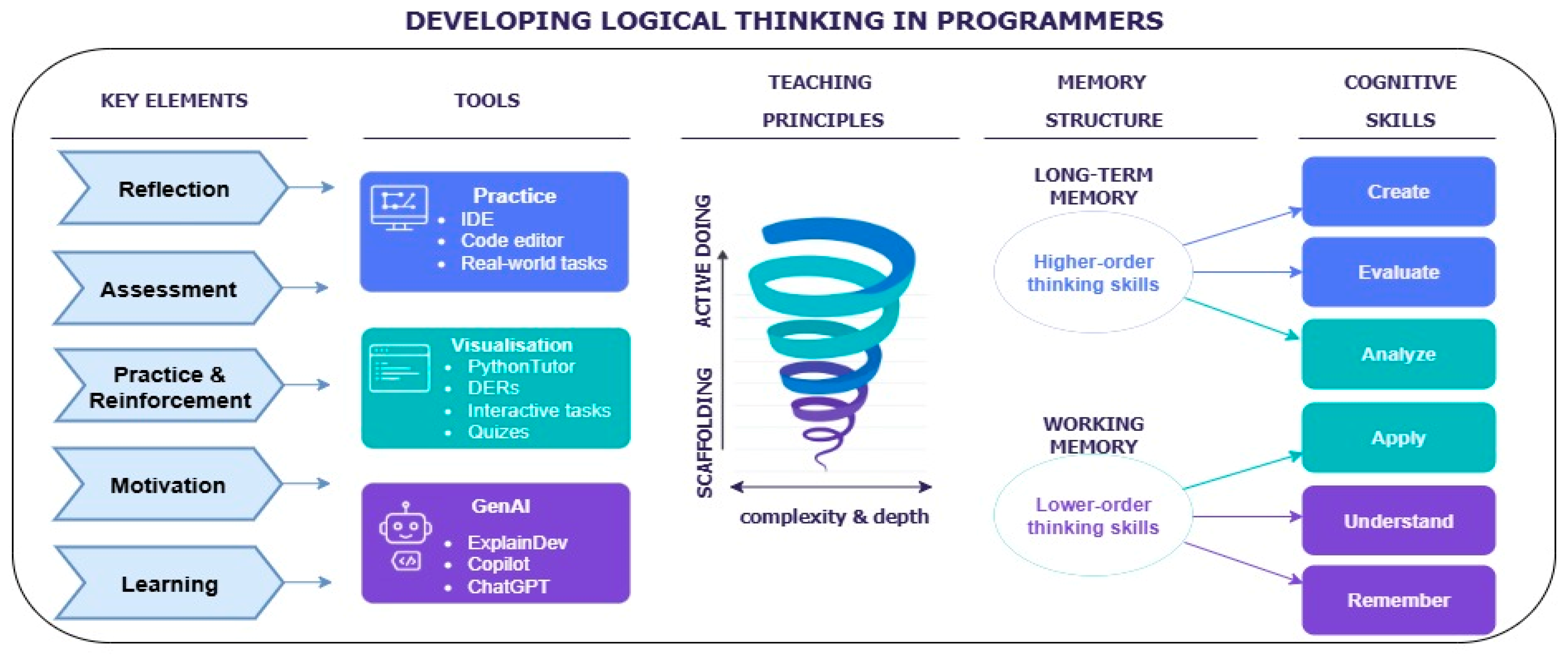
It is reasonable to assume that the development of programmers’ thinking should be aligned with Bloom’s taxonomy, which classifies cognitive skills into six levels [75,76,77]. Both lower-order skills (remembering, understanding, applying) and higher-order skills (analyzing, evaluating, creating) are most effectively developed through the application of principles and techniques for modeling cognitive operations that account for the transfer of units of instructional information into working and long-term memory. Under these conditions, students are more likely to demonstrate creative, constructive, and independent activity [23] (Figure 1).
Figure 1.
A Model for Developing Logical Thinking in Programmers (MDLTP).
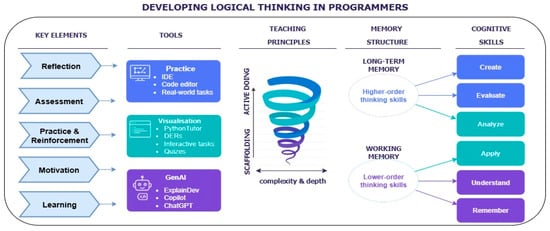
Figure 1 presents a model for the development of logical thinking in IT students studying programming. The model illustrates an approach to fostering logical thinking during the learning process by incorporating optimal digital tools and instructional principles across the main stages of the pedagogical cycle: Learning–Motivation–Practice and Reinforcement–Assessment–Reflection. A distinctive feature of the model is the organization of digital learning content in accordance with the principles of scaffolding and spiral structuring, combined with the mandatory visualization of instructional material, which most effectively meets the cognitive needs of digitally native learners [78].
The MDLTP is aimed at the step-by-step and comprehensive formation of knowledge and skills, taking into account the functioning of human memory—not only at the reproductive level, but also at the constructive and creative levels. In this way, instructional information is firmly consolidated in long-term memory, enabling learners to make independent decisions in implementing program logic and optimizing products, which represents the highest level of cognitive activity for a programmer [75].
To develop programmers’ thinking in accordance with program logic, the MDLTP provides for the use of digital tools that visualize the operation of algorithms and program code. The same objective is addressed by modern GenAI tools, whose use is permissible at the stages of “understanding” and “memorization.” Specifically, they can serve as an alternative means of step-by-step explanation of algorithms and program execution, as well as a source of reference information on commands and language syntax.
Overall, it should be emphasized that the MDLTP places particular focus on increasing motivation in learning programming logic, namely, enabling programmers to “think like a computer.” Once this skill is successfully mastered, the effectiveness of software development is significantly enhanced [57,77].
The methodological framework for implementing the MDLTP is presented in the matrix (Table 1). The matrix for the development of students’ logical thinking in programming reflects the progression of core cognitive skills according to Bloom’s taxonomy, from remembering and understanding to the creative thinking skills required for independently developing complete software products. The matrix illustrates the step-by-step application of appropriate digital tools for visualizing learning content, alongside suitable instructional principles, with the aim of fostering programmers’ cognitive skills. It also takes into account the specific role of GenAI at each stage of cognitive development. For example, to optimally combine the principles of active doing with GenAI tools at the early stages of activating students’ cognitive activity, simple programming tasks are proposed. These are completed within a programming environment, after which students test their code using tools such as Copilot or ExplainDev. To implement the principle of spiral learning, students are first asked to solve a problem for a specific case with predefined values, and then to generalize their program to accommodate a broader range of values and possible scenarios.
Table 1.
Matrix for the Development of Students’ Logical Thinking in Programming Education.
The methodological approach presented in the matrix conceptualizes programming education as an integrative system in which cognitive development, digital resources, and GenAI complement one another, ensuring the sustainable development of students’ logical thinking. The MDLTP enables the learning process to be structured according to gradually increasing cognitive complexity—from understanding to analysis and the creation of a complete product. Each level is aligned with specific programmer skills, digital tools, and instructional principles, while GenAI functions as an intelligent tutor that supports coherence across the educational process.
Importantly, the MDLTP model addresses the shortcomings identified in previous research. It overcomes the fragmentation of earlier approaches by integrating visualization tools, scaffolding, and spiral learning into a coherent instructional framework. Unlike prior work, which examined digital resources in isolation, the model positions them within an end-to-end digital ecosystem (MOOC + LMS), ensuring continuity throughout the learning stages. Furthermore, the model defines the appropriate points at which GenAI can be used without hindering independent reasoning, thereby addressing the lack of clear pedagogical guidance noted in the literature.
To make the relationship between the MDLTP model and the Matrix more explicit, this study clarifies that the Matrix serves as the operationalization of the MDLTP framework. The “cognitive skills” defined in the MDLTP model correspond directly to Bloom’s taxonomy levels represented in the Matrix. For example, the MDLTP stages of “Understanding,” “Application,” and “Analysis” align with the Bloom levels Understand, Apply, and Analyze, which structure the progression of learning activities in the Matrix.
In addition to this cognitive alignment, the Matrix reflects the pedagogical logic of the MDLTP model. Each stage of the MDLTP process—Learning, Motivation, Practice, Assessment, and Reflection—is paired with concrete instructional tools in the Matrix. Visual DERs and flowcharts support the Learning stage; interactive exercises and simulators enhance Motivation and Practice; LMS-based quizzes and diagnostics represent the Assessment stage; and self-analysis tasks support Reflection.
Finally, the role of GenAI is integrated consistently across both structures: in the MDLTP model, GenAI functions as a controlled assistant at lower cognitive levels, and the Matrix specifies the exact tools and stages at which this assistance is pedagogically appropriate. Thus, the Matrix provides a practical, tool-based implementation of the theoretical MDLTP model, addressing the lack of such integrated frameworks noted in the previous literature.
4. Implementation of the MDLTP Within the Digital Educational Ecosystem of L. N. Gumilyov Eurasian National University
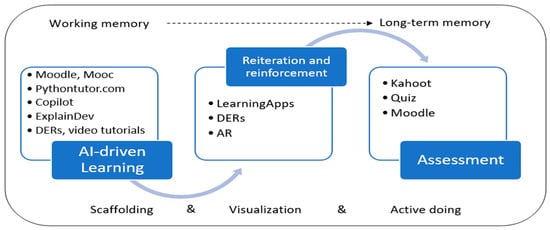
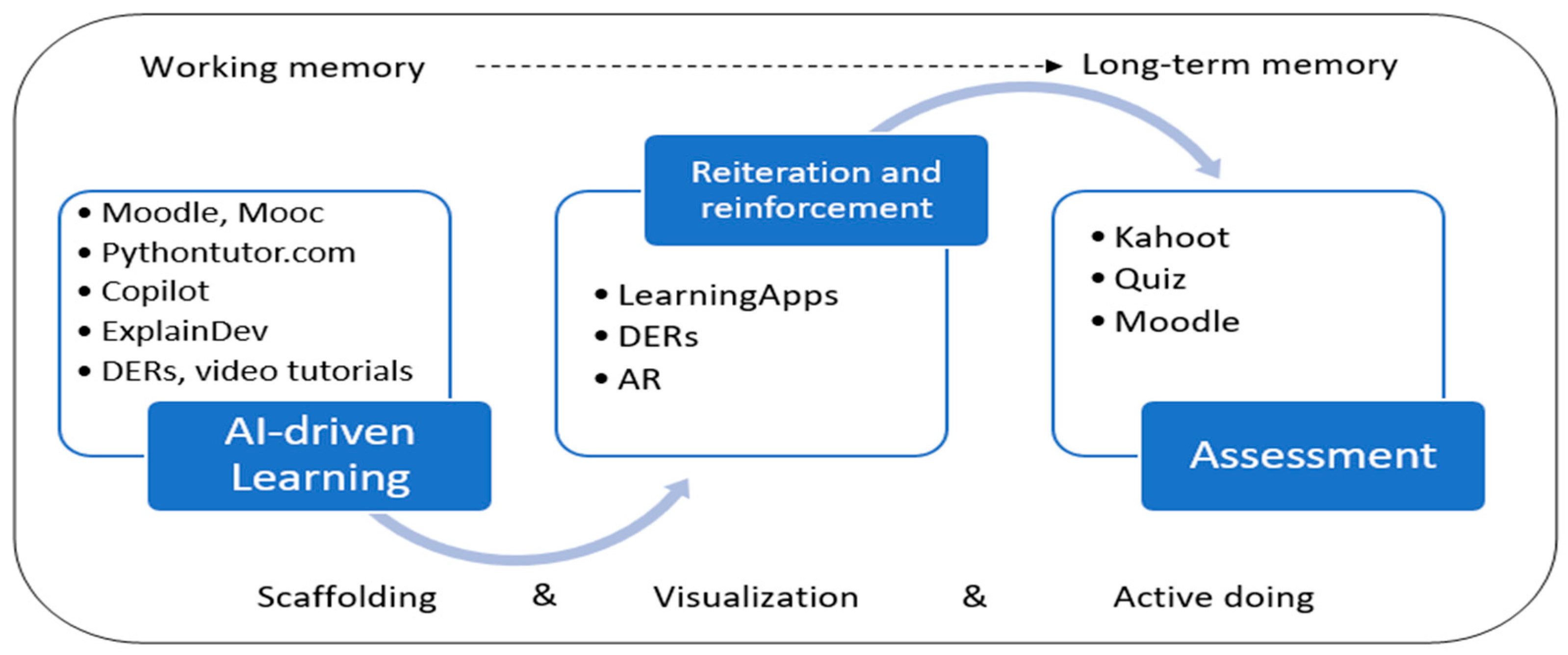
The structure of the digital educational ecosystem for programming instruction is designed in accordance with the MDLTP concept and is aimed at ensuring equity, fairness, engagement, and effectiveness in the learning process. The digital ecosystem is implemented using the MOOC and Moodle platforms and includes the following learning components (Figure 2):
Figure 2.
Components of the Digital Ecosystem for Programming Education.
- massive online video lectures on programming (Figure 3);
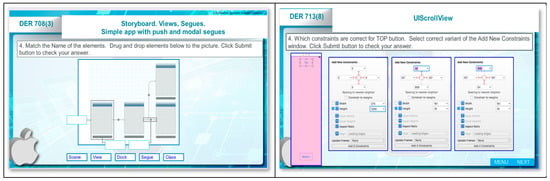
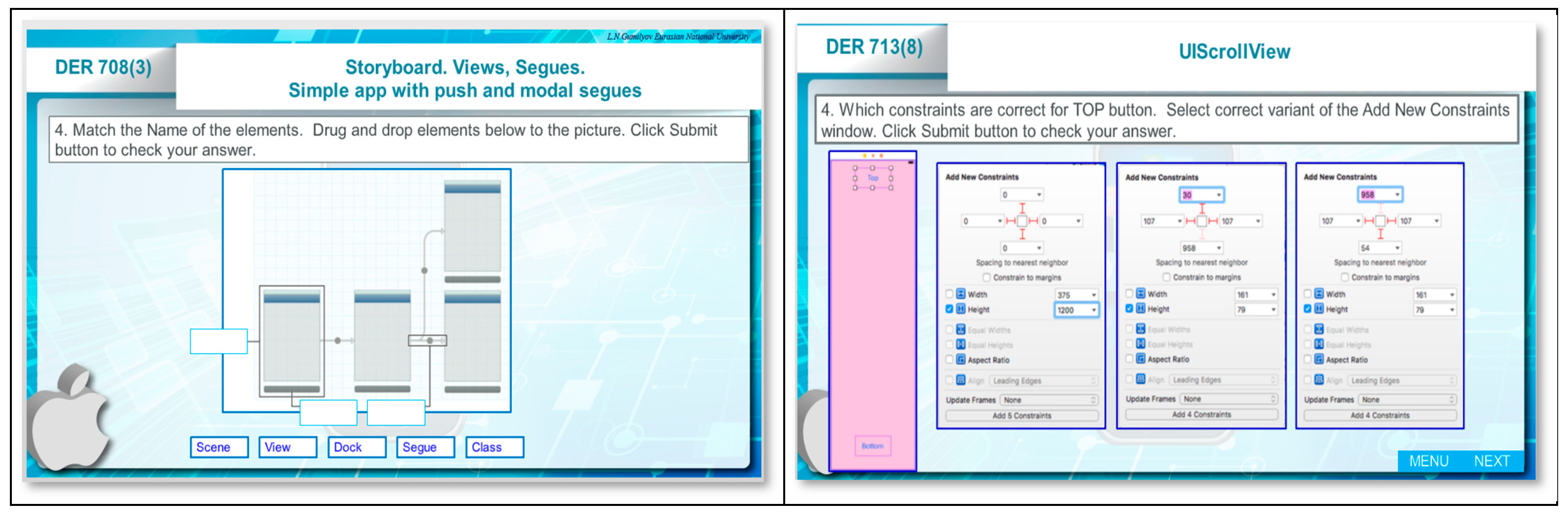
- digital educational resources for disciplines related to programming and software development technologies (Figure 4);
- interactive training exercises with iterative repetition;
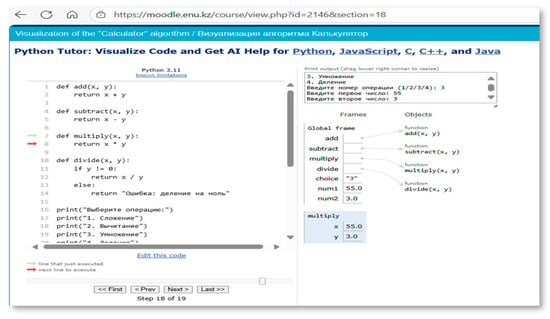
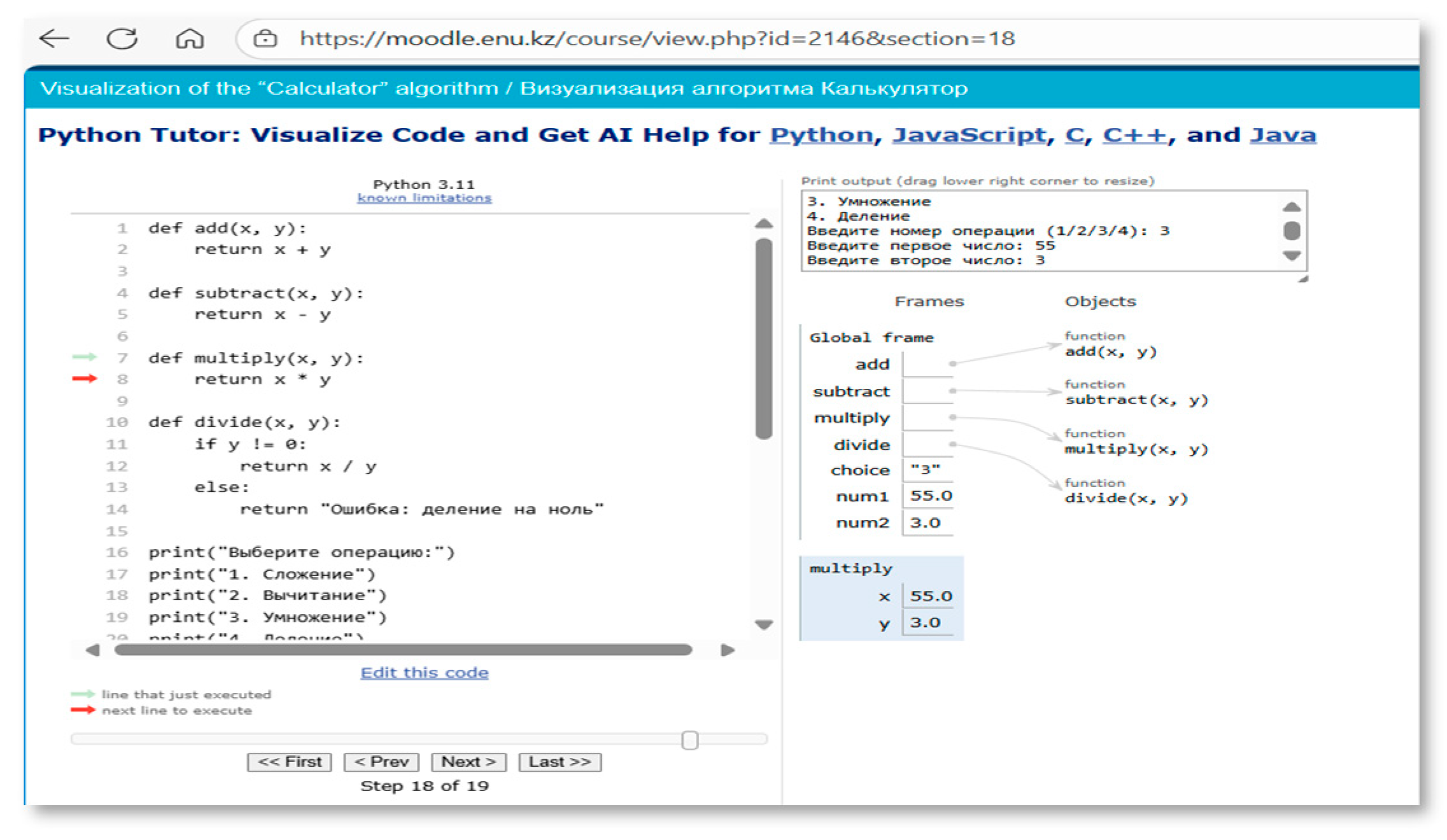
- interactive demonstrations of problem-solving algorithms using PythonTutor (Figure 5);
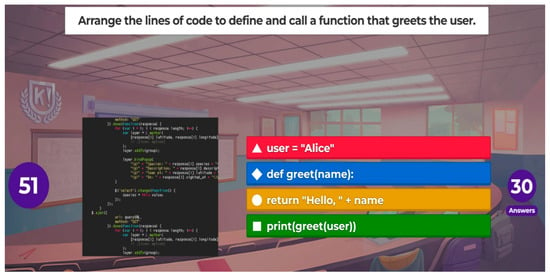
- interactive Kahoot tests (Figure 8);
- project-based programming assignments.
Figure 3.
Massive Online Video Lectures on Programming via the MOOC Platform.
Figure 4.
Digital Educational Resources (DERs) on Programming Published in Moodle.
Figure 5.
Visualization of Code Execution for a Calculator Program Using PythonTutor.com Integrated into the Moodle Platform.
Figure 6.
“Explain with Copilot” Chatbot in Visual Studio Code.
Figure 7.
Step-by-Step Explanation of a Calculator Program Algorithm Using ChatGPT.
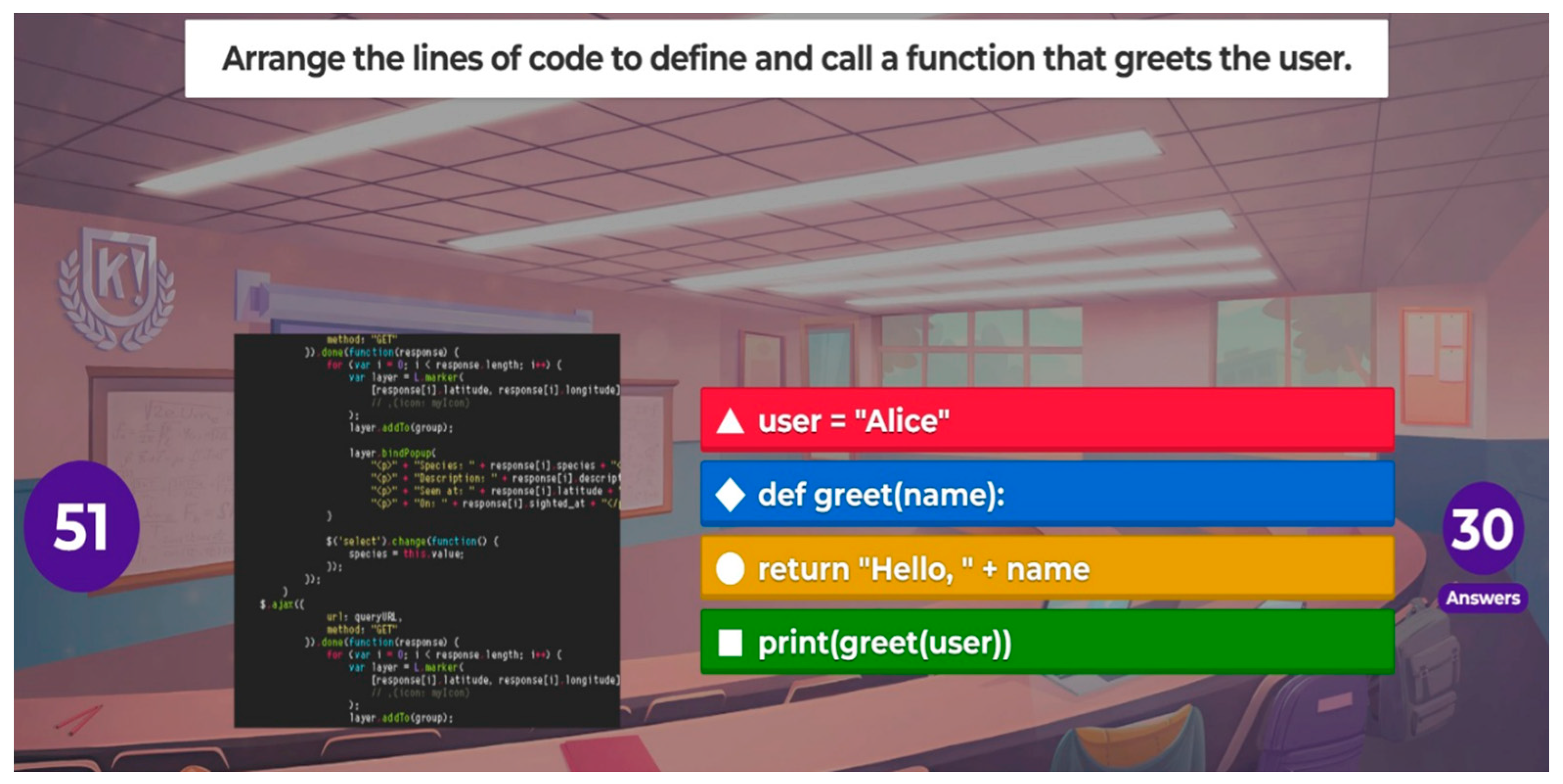
Figure 8.
Kahoot Task of the “Puzzle” Type Requiring Students to Assemble Program Code.
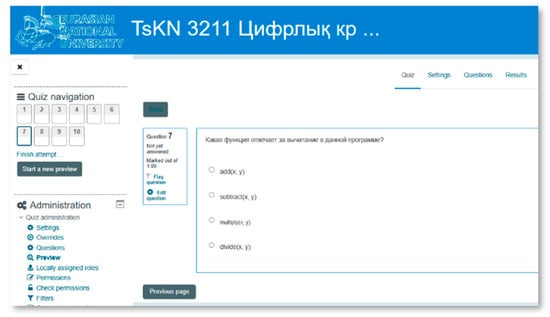
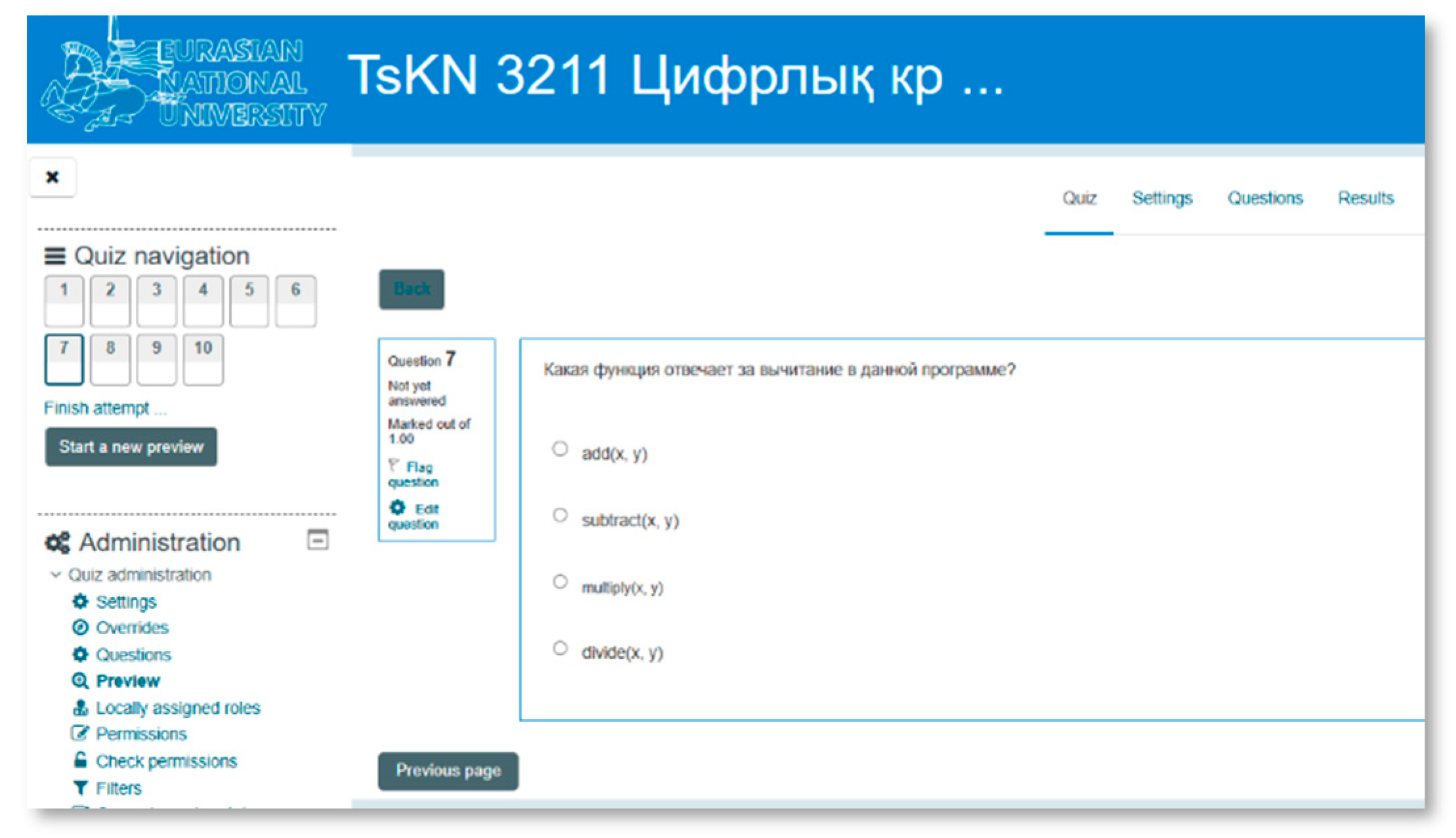
Figure 9.
“Multiple Choice” Questions in the Mid-Term Test with Proctoring Settings in Moodle.
Figure 10.
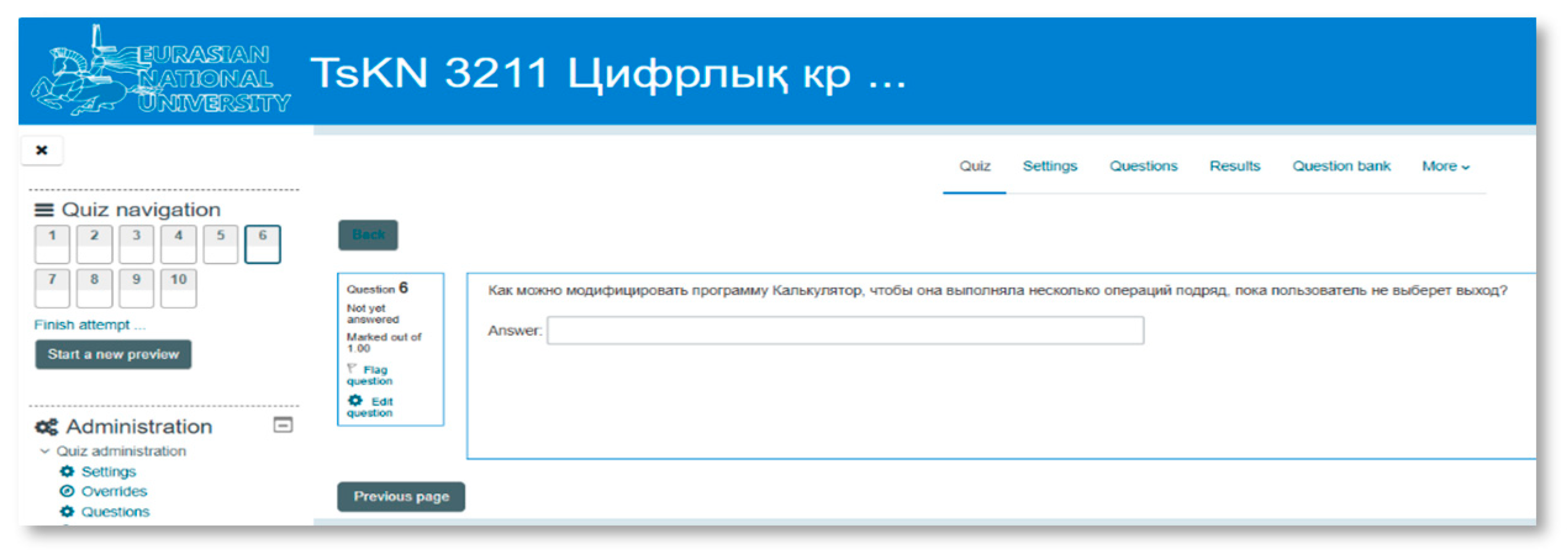
“Open-Ended” Questions in the Mid-Term Test in Moodle.
These components of the digital educational ecosystem are aimed at developing both declarative and procedural knowledge in programming, that is, the cognitive activities required for successful software development, from understanding the problem to code implementation, testing, debugging, and program optimization.
The accessibility of all ecosystem components ensures full student engagement in the educational process and equal access to learning materials. Fairness in the learning process is achieved through a transparent system of knowledge and skills assessment, which includes Kahoot tests, generative sampling from a database of test questions by course topic in the LMS Moodle, interactive exercises with three attempts for task completion, and practice of programming skills, and the provision of correct answers once all attempts are exhausted. All assignments are evaluated by digital tools and the Moodle platform, independent of the instructor’s subjective judgment, thereby enhancing the transparency and fairness of the assessment process. Student motivation is fostered through well-structured, high-quality content, its visualization, and the application of scaffolding principles in the early stages of learning fundamental topics, with step-by-step demonstrations of program execution progressing from simple to more complex and generalized examples. Weekly Kahoot tests in a game-based format further increase learning motivation and strengthen students’ teamwork and interpersonal communication skills.
The visualization and structured presentation of learning content through digital educational resources (DERs) integrated into the LMS Moodle enable information to be delivered in portions, avoiding overload of working memory and thus allowing the digital generation to assimilate information more effectively [23,76,77]. In addition, these resources include practical tasks in the form of interactive simulators with iterative repetition, designed to reinforce the retention of basic constructs and to enhance understanding of algorithm logic (Figure 4).
Since the main difficulty in learning programming lies in the logical challenges of understanding how a program operates and how an algorithm solves a problem [57,75], step-by-step explanations of algorithmic problem solving and program execution are particularly effective. One such digital tool is PythonTutor, which provides step-by-step visualization of program execution and can be integrated into the LMS Moodle (Figure 5).
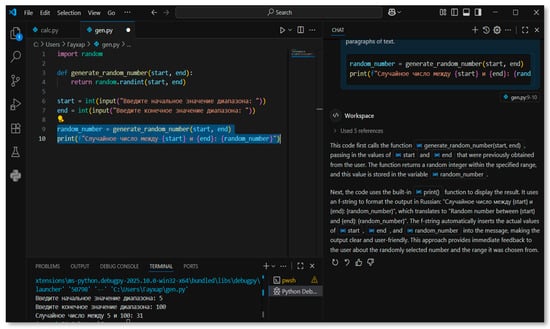
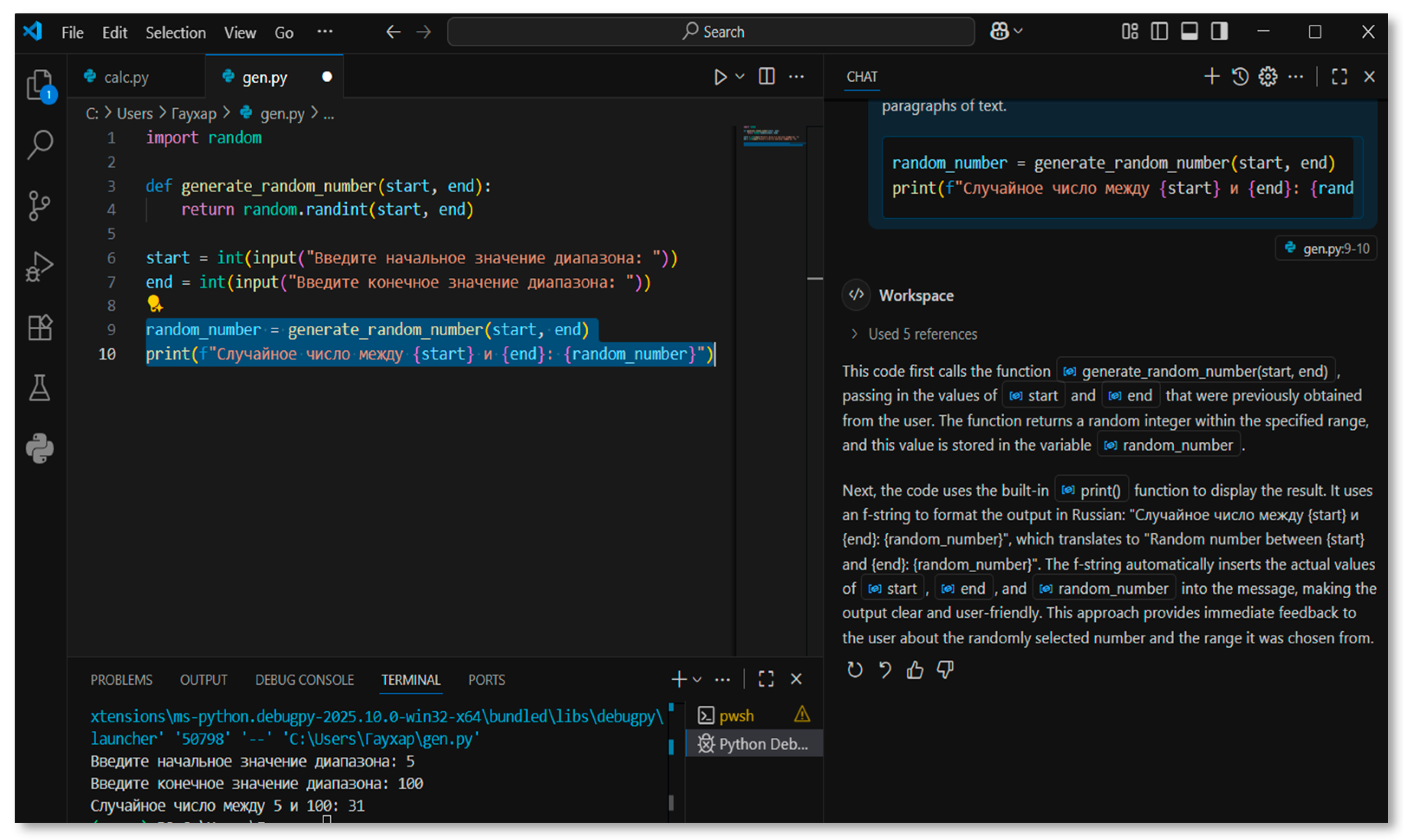
In addition, to enhance explanatory possibilities and to support cognitive development at the levels of understanding, remembering, and applying, students are encouraged to use GenAI-based intelligent support for a deeper comprehension of problem-solving algorithms. For example, tools such as Copilot and ExplainDev can be applied directly within the Visual Studio Code programming environment to provide code explanations (Figure 6).
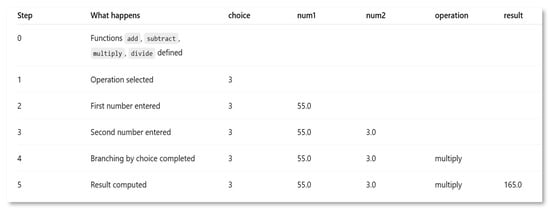
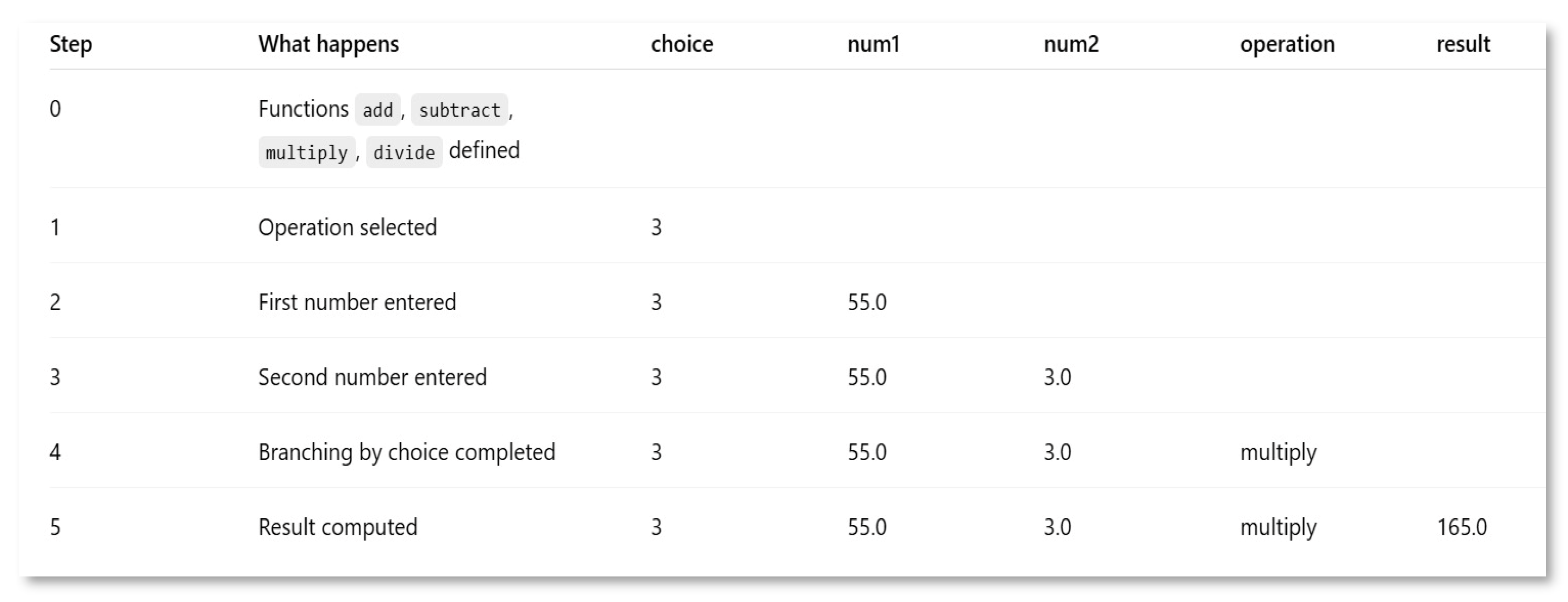
In addition to Copilot and ExplainDev, students are encouraged to use ChatGPT for step-by-step code explanations with tracing. This functionality illustrates the logical sequence of computations and clearly represents the internal state of variables and the program after each executed command or step (Figure 7).
Through program execution visualization, students are able to understand and monitor the functioning of algorithms, which contributes to the development of their thinking in alignment with program logic.
For ongoing, mid-term, and final assessments, a number of interactive tools are employed, including Kahoot, LearningApps, and the testing features of Moodle. As observed during the experiment, Kahoot is the most preferred tool among students for formative assessment. In addition to evaluating knowledge in a game-based format, it also increases overall student engagement. This effect is explained by its interactivity, gamified scenarios, and variety of task formats. The most suitable task types for programming include “Type Answer,” “Puzzle,” “Pin Answer,” “Drop Answer,” among others (Figure 8).
Transparency and fairness in knowledge assessment within the digital ecosystem of L. N. Gumilyov Eurasian National University are ensured through the use of Moodle’s proctoring settings and random sampling of test questions from the course question bank, either across the entire course or within specific sections. This functionality in Moodle makes it possible to conduct assessments covering multiple sections during mid-term or final examinations (Figure 9 and Figure 10).
Teaching programming through the visualization of learning content using digital educational resources, step-by-step demonstrations of completed programming projects, program tracing, and the application of scaffolding and spiral principles in the design of instructional materials—with an emphasis on developing logical cognitive operations—enables students to more fully master software development in accordance with program logic [54,75].
The visualization-based approach to programming instruction implemented within the university’s digital educational ecosystem is aimed not only at enhancing the transparency, accessibility, and fairness of educational processes but also at increasing student motivation and improving overall learning effectiveness.
Due to institutional constraints and the unified structure of the MOOC + Moodle course, it was not feasible to form separate control groups during this semester. Therefore, the implementation of the MDLTP model was carried out within a single cohort. Baseline data from previous course iterations, together with performance indicators and student perception surveys, were used to triangulate the findings and evaluate the model’s effectiveness in an authentic educational environment.
5. Results of the Survey and Analysis
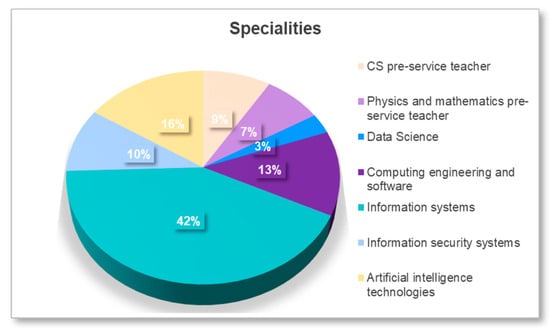
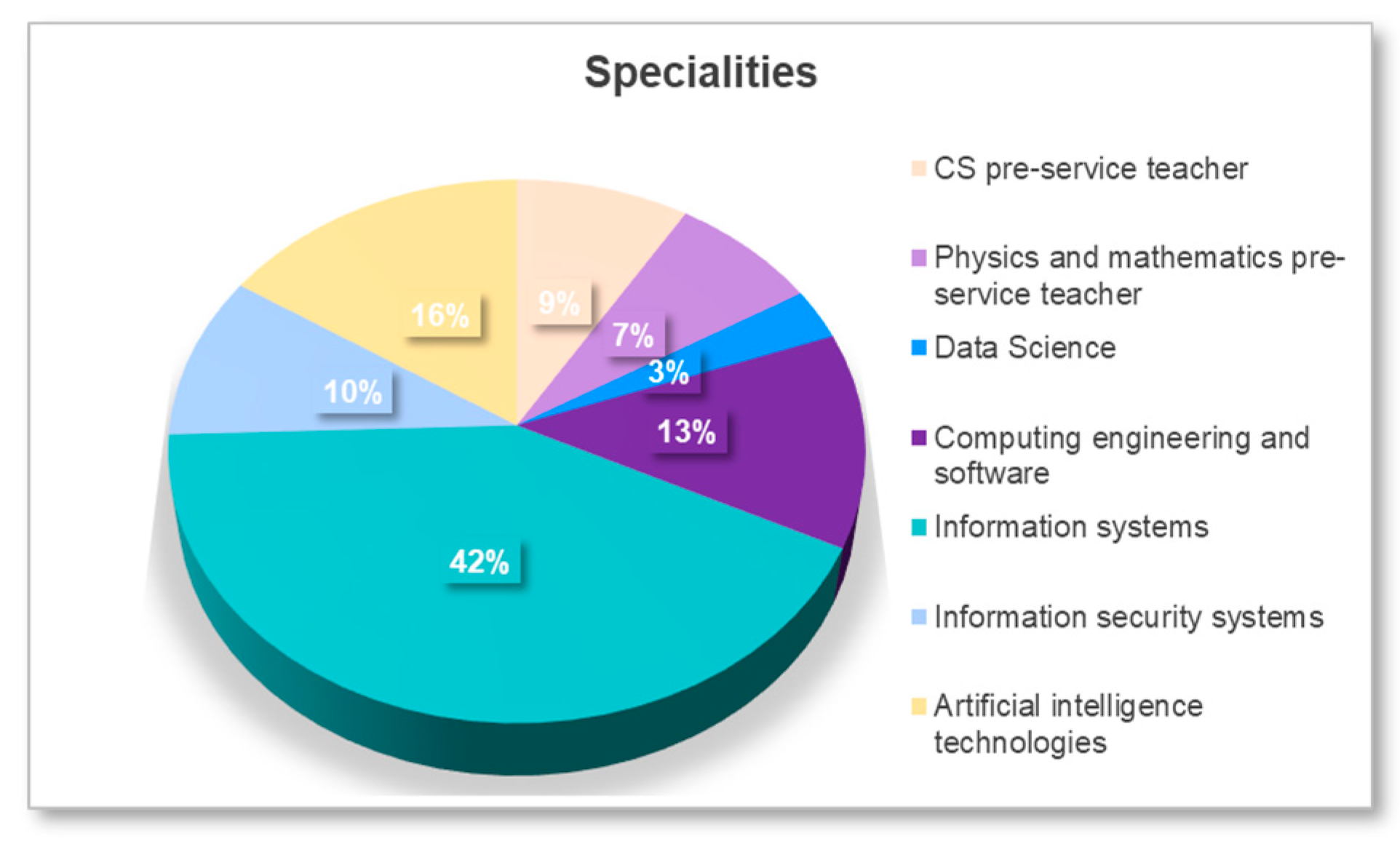
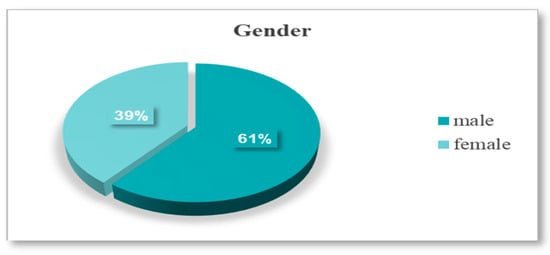
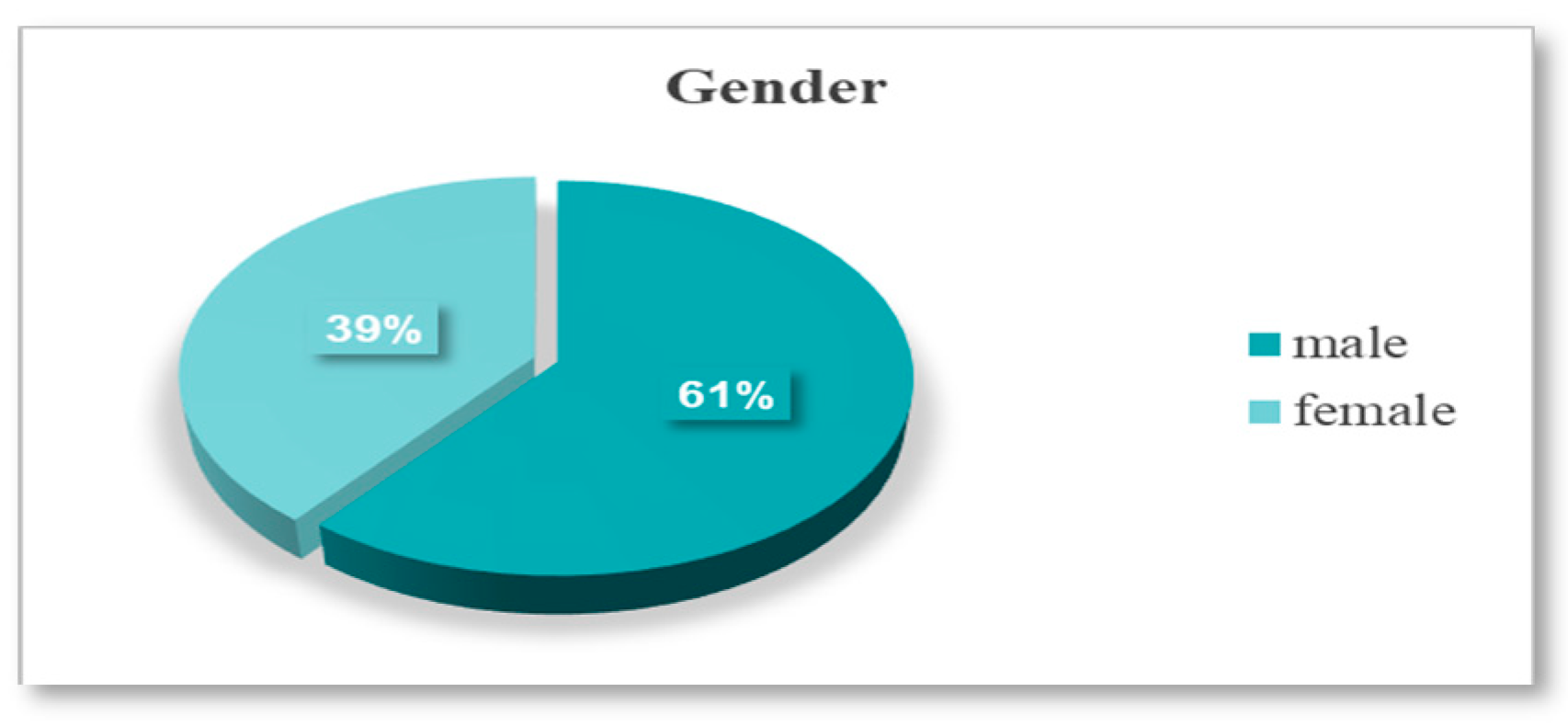
The study involved students from the following specialties: CS Pre-Service Teacher, Physics and Mathematics Pre-Service Teacher, Data Science, Computer Engineering and Software, Information Systems, Information Security Systems, and Artificial Intelligence Technologies—a total of 329 participants (Figure 11), of whom 61% were male and 39% female (Figure 12).
Figure 11.
Distribution of Respondents by Specialization.
Figure 12.
Distribution of Respondents by Gender.
The primary objectives of the study were to assess the effectiveness and student perception of digital tools for programming instruction, to determine the extent to which their use enhances the accessibility and comprehensibility of learning materials related to programming logic, and to examine the degree of utilization and the impact of GenAI on the development of students’ own logical thinking in learning programming.
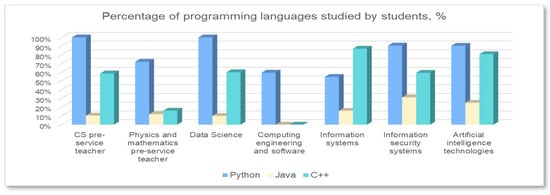
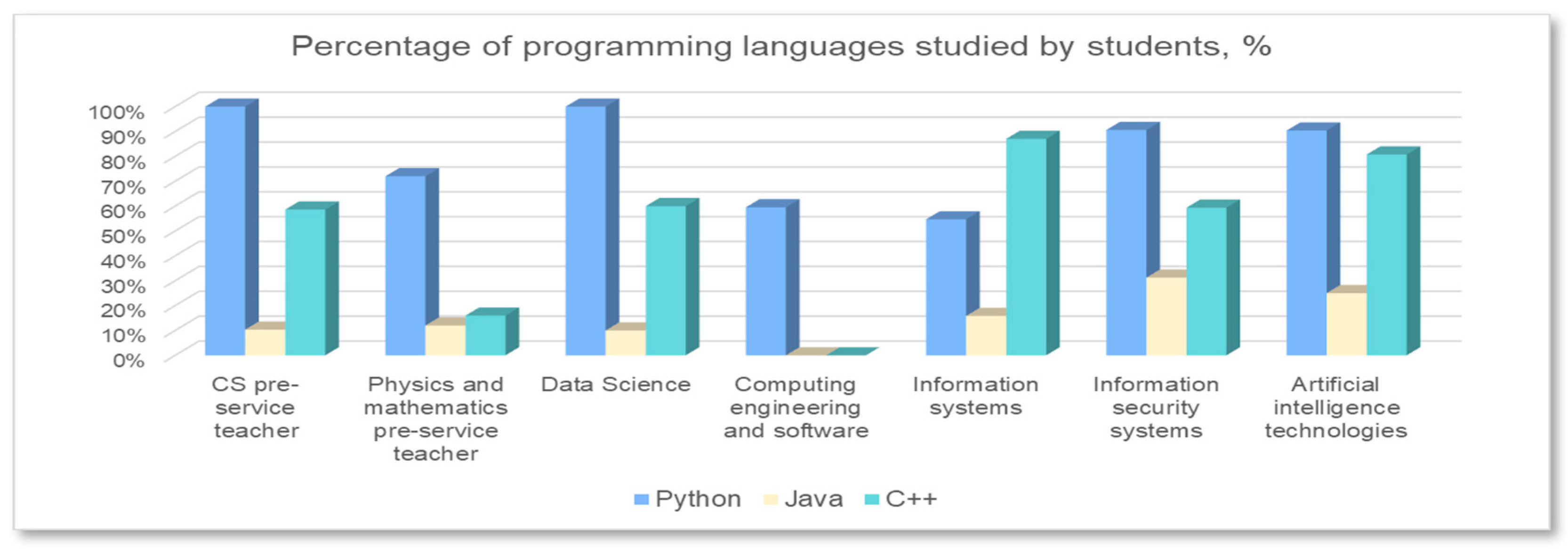
During the course of study, students worked with various programming languages, with Python and C++ proving to be the most in demand. The relative share of each language across specializations is presented in Figure 13.
Figure 13.
Programming Languages Studied by Students across Specializations.
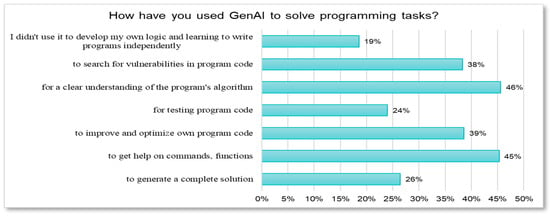
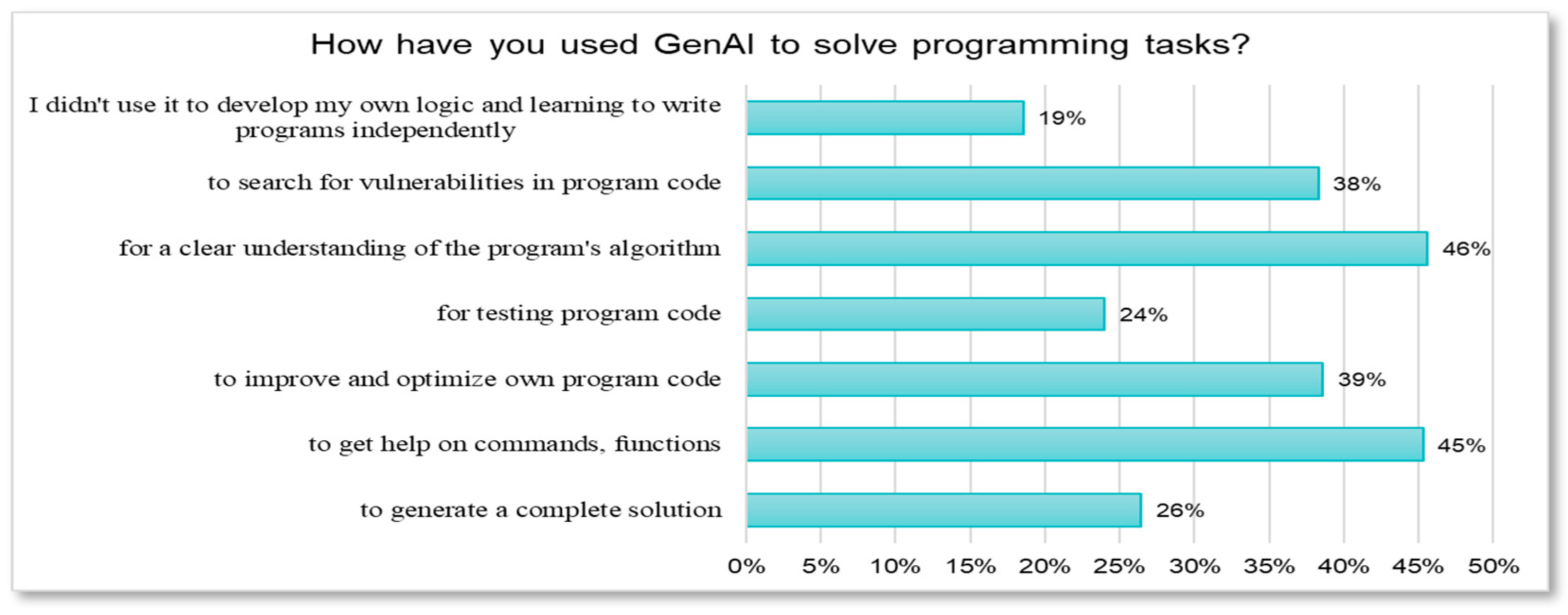
In response to the question “How did you use AI when solving programming tasks?”, 26% indicated that they used GenAI to obtain ready-made solutions (Figure 14). The remaining participants reported using GenAI to acquire actual knowledge and to better understand programming logic. The most frequent uses of GenAI were for obtaining explanations of problem-solving algorithms (46%) and for consulting reference information on programming language commands and functions (45%). The second most common uses, selected by 38% and 39% of students, respectively, reflected more advanced programming skills: analyzing program code for vulnerabilities and improving or optimizing developed code. This demonstrates the positive impact of GenAI in enhancing programmers’ logical thinking skills. In this context, GenAI serves as an independent alternative tutor, substituting for real-world stakeholders or employers who are typically invited as experts with practical software development experience to advise students on code optimization. Additionally, 24% of respondents noted that they used GenAI for a similar purpose—program code testing—most likely to obtain quick feedback on code quality, which is an important aspect of the learning process. Finally, 19% of students reported not using GenAI at all, as they preferred to develop programs independently and master programming logic on their own.
Figure 14.
Answers to questions about the pattern of GenAI usage.
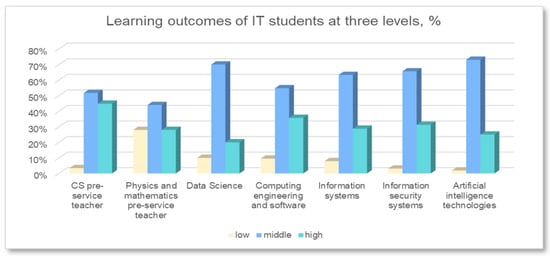
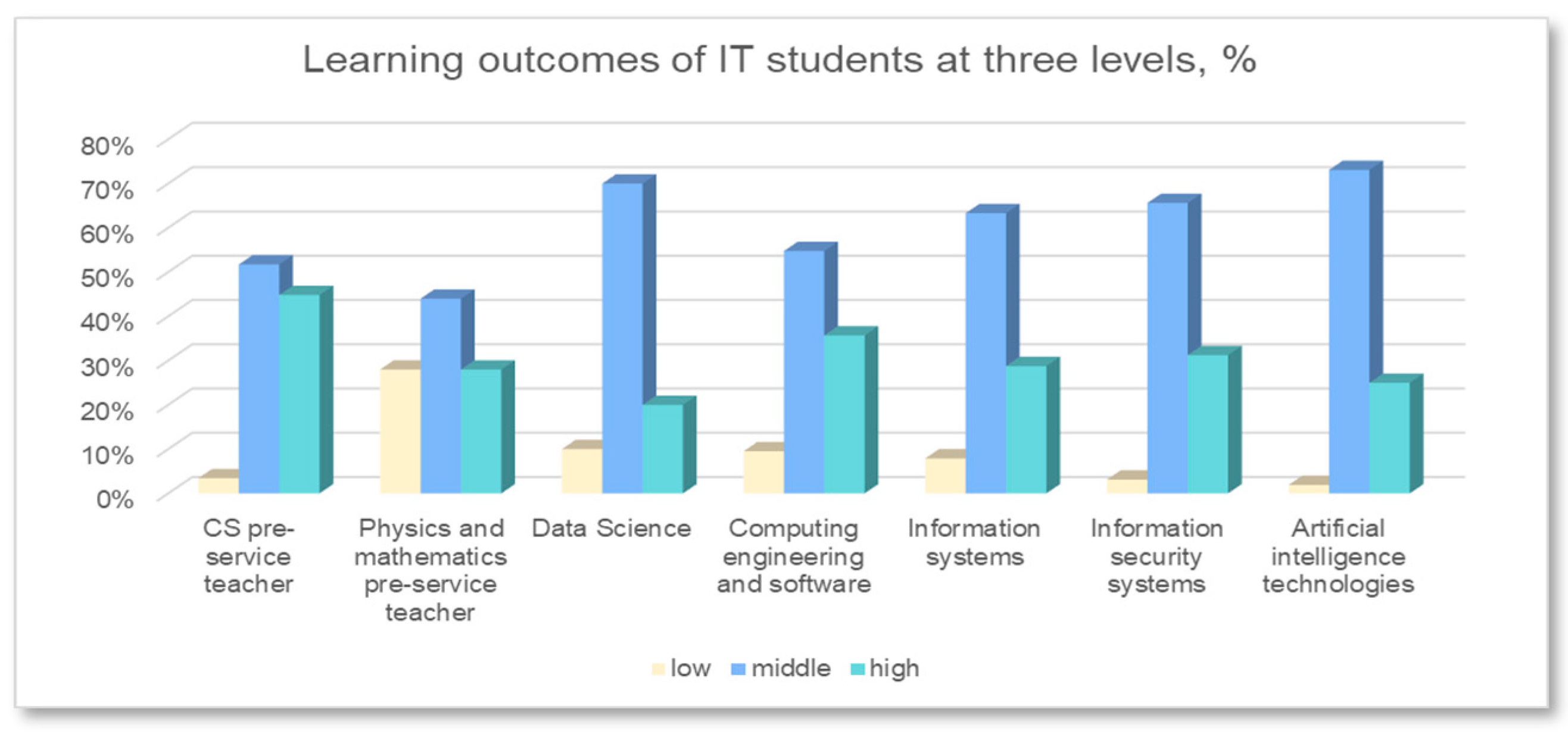
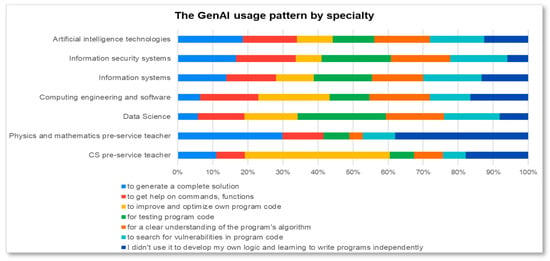
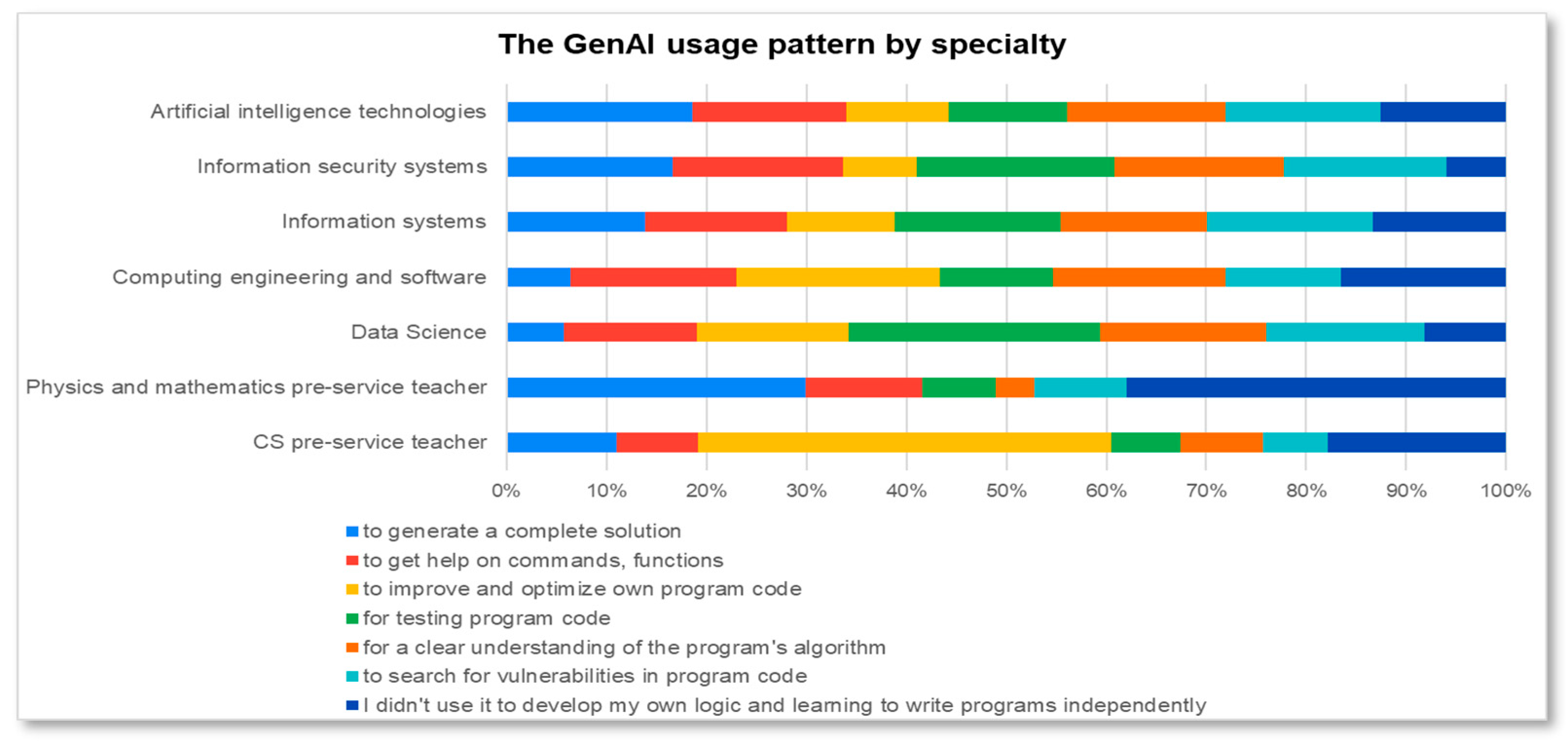
Analysis of academic outcomes based on current, mid-term, and final assessments, as well as the evaluation of practical skills through project analysis and interviews, demonstrates a generally favorable level of student knowledge (Figure 15). Pre-service physics and mathematics teachers, however, showed comparatively lower results. This can be explained by several factors: first, unlike IT specializations, students in this field are not required to take programming upon university admission; second, they relied more heavily on GenAI for support (Figure 16). The best results were observed among pre-service computer science teachers, AI engineers, and software developers, who used GenAI primarily for understanding algorithms and for optimization purposes. This confirms students’ aspirations to acquire more advanced skills and to develop independent logical reasoning (Figure 16). For example, pre-service computer science teachers most frequently applied GenAI to improve and optimize program code.
Figure 15.
Learning outcomes chart.
Figure 16.
Diagram of the GenAI usage pattern by specialty.
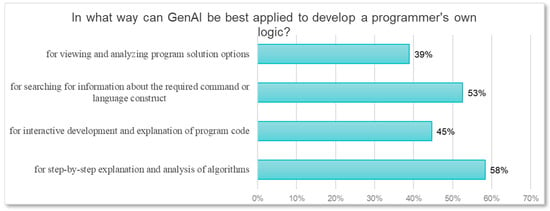
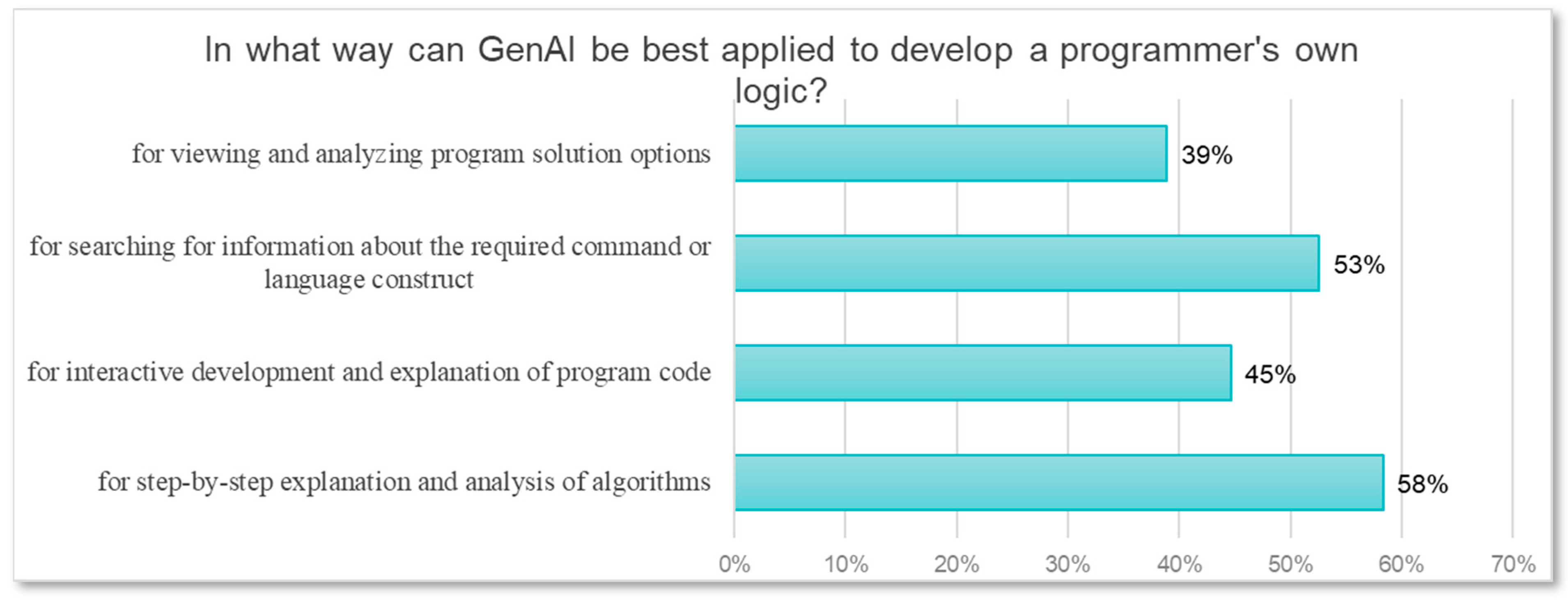
To evaluate students’ perceptions and assessments of the potential and applications of GenAI tools, they were asked the question: “How can GenAI best be used to develop one’s own programming logic?” (Figure 17). The majority of respondents (58%) indicated that GenAI is most convenient for obtaining step-by-step demonstrations of program algorithms. In addition, 53% considered it a useful tool for quickly retrieving information on commands and library functions, while 45% found it convenient for interactive explanations of program code.
Figure 17.
GenAI use cases for developing programmer logic.
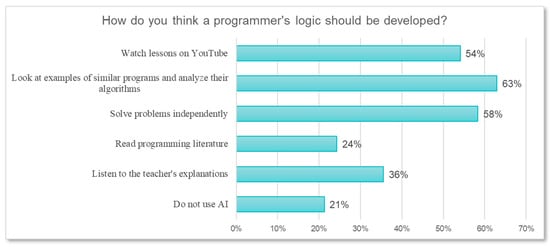
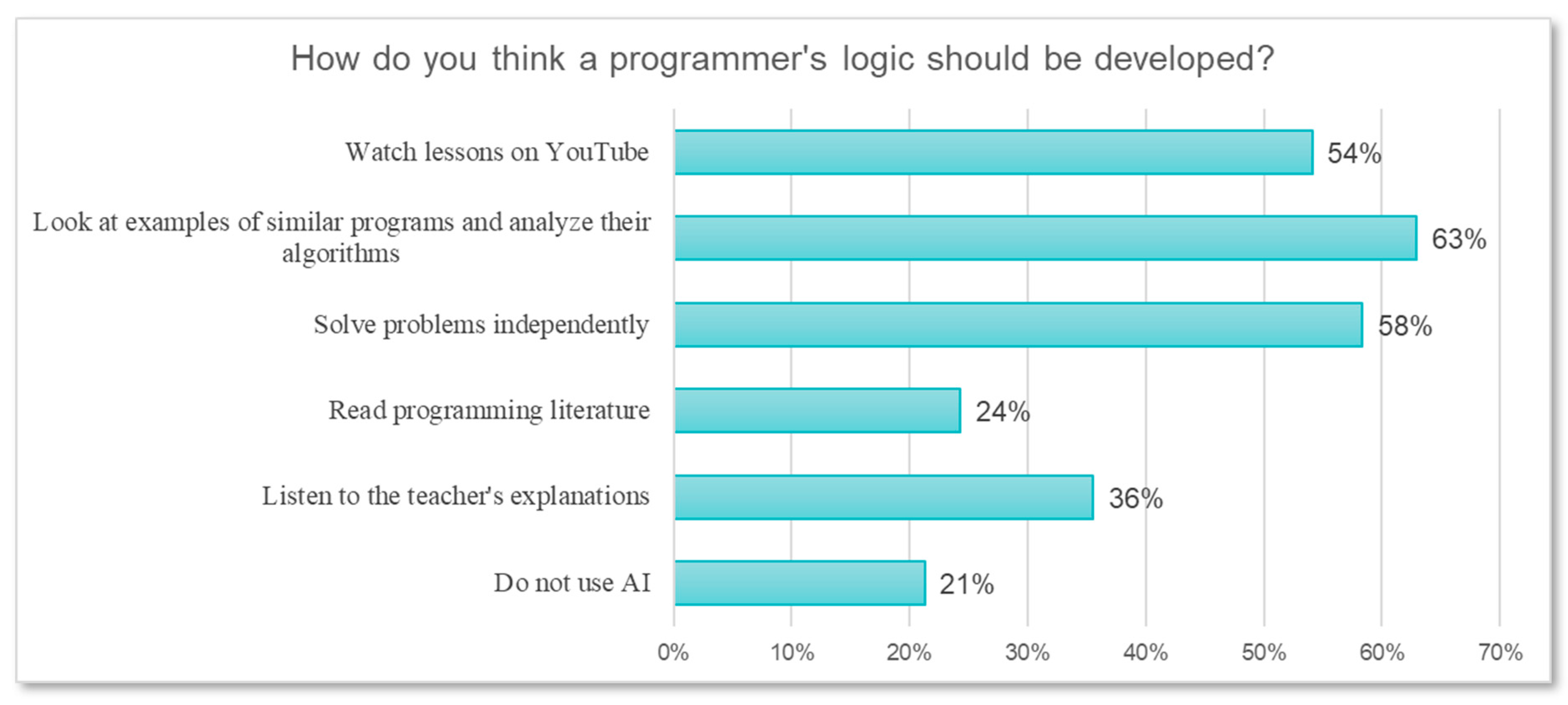
According to the study, most students believe that the development of logical thinking is facilitated by cognitive activities (Figure 18), such as algorithm analysis, independent problem solving, watching video lectures, instructor explanations, and reading programming literature. This indicates that students are both conscious and motivated to learn programming independently, while using GenAI primarily as a facilitator and expert.
Figure 18.
Students’ opinions on the best way to develop logical thinking in programmers.
It should be noted that students are motivated to master programming logic and actively use various digital tools and resources, including GenAI, integrated within the digital ecosystem for programming education, as evidenced by the survey results (Figure 17 and Figure 18). The majority support end-to-end educational technologies aimed at fostering independent logical thinking, while the use of GenAI is viewed primarily as an additional tool for visualization and demonstration of learning content, as well as a source of knowledge-based content. At the same time, 21% of respondents expressed negative views or advocated for restricting the use of GenAI (Figure 18).
Overall, the survey showed that most students have a positive attitude toward the use of digital educational tools within the digital ecosystem of programming instruction and consider them effective for visualizing complex algorithms and understanding programming logic.
6. Discussion
This study set out to explore how visualization technologies, end-to-end digital tools, and GenAI-supported resources can contribute to the development of logical thinking in novice programmers. The findings provide several important insights that extend beyond the descriptive results and highlight broader pedagogical implications, methodological considerations, and limitations of the current research.
Regarding Q1, the study confirms that visualization-based instruction—through DERs, PythonTutor, interactive simulations, and game-based activities—plays a central role in shaping students’ ability to understand and internalize programming logic. These results align with existing literature suggesting that structured visualization reduces cognitive load and supports the transition from surface-level knowledge to deeper logical reasoning. However, the present findings expand previous research by demonstrating that visualization is most effective when embedded within a broader ecosystem that integrates scaffolding and spiral learning rather than being used as an isolated tool. This suggests that the effectiveness of visualization technologies depends not only on the tools themselves but also on how they are pedagogically orchestrated.
Regarding Q2, the study’s implementation of the MDLTP model demonstrates that integrating digital technologies into a unified LMS-based ecosystem can enhance fairness, transparency, and engagement. Importantly, the results point to the methodological strength of combining multiple tools—MOOC content, DERs, simulations, Kahoot assessments, and LMS-managed workflows—into a coherent structure grounded in Bloom’s taxonomy and cognitive-development principles. This indicates that digital technologies contribute most effectively when they create continuity across learning stages (Learning → Motivation → Practice → Assessment → Reflection), which supports the cyclical development of logical thinking. At the same time, the study highlights the challenge of balancing technological complexity with students’ readiness; non-IT majors, for example, benefited less from the same ecosystem, suggesting that differentiated or adaptive pathways may be needed.
Regarding Q3, the findings offer a nuanced understanding of GenAI’s dual impact. While students widely use GenAI tools for explanations, error analysis, and code optimization, the risk of overreliance remains present, especially among beginners. The study contributes to current debates by proposing clear pedagogical boundaries: GenAI can be beneficial at the levels of “remember” and “understand,” but unrestricted use may hinder independent reasoning at higher cognitive levels. This reinforces the need for controlled integration of GenAI and aligns with current scholarship advocating for authenticity-based assessment rather than answer-retrieval tasks. A notable new insight is that GenAI, when used alongside visualization tools, tends to shift from being a “solution-provider” toward functioning as a “conceptual tutor,” offering explanations rather than shortcuts. This suggests that intentional scaffolding can mitigate some of the risks associated with AI dependence.
A key limitation of the study is the absence of control groups, which restricts the ability to isolate the specific contributions of visualization technologies or GenAI. Although triangulation with baseline data and perception surveys provides contextual validity, future studies should employ randomized or quasi-experimental designs to quantify the distinct effects of each technological component. Additionally, long-term retention of logical thinking skills was not assessed; follow-up studies measuring delayed learning outcomes would strengthen the evidence base.
Overall, the discussion highlights that the success of the MDLTP model lies not in any single tool—visualization, LMS, or GenAI—but in their systematic combination within a pedagogically coherent structure. The study contributes to the ongoing re-evaluation of programming pedagogy in the GenAI era and provides a foundation for developing instructional frameworks that support logical thinking while adapting to rapidly evolving AI-augmented learning environments.
7. Limitations
This study has several limitations that should be taken into account when interpreting the findings. First, due to institutional constraints and the unified structure of the MOOC + Moodle course, no control groups (e.g., “no visualization,” “no GenAI,” or alternative instructional configurations) could be formed. This limits the ability to isolate the independent effects of specific technologies. Second, the research was conducted within a single university and involved one cohort of students, which reduces the generalizability of the results to other educational contexts. Third, long-term retention of logical thinking skills was not assessed; therefore, the durability of learning gains remains unknown. Finally, students’ use of GenAI tools varied in frequency and purpose, which may have introduced individual differences that were not fully controlled. Future studies should incorporate randomized or quasi-experimental designs and longitudinal measurements to provide a more robust evaluation of the MDLTP model.
8. Conclusions
This study set out to develop and evaluate a digital instructional model (MDLTP) aimed at fostering logical thinking in novice programmers through visualization technologies, end-to-end digital tools, and controlled use of GenAI resources. The findings demonstrate that the integration of these technologies—when grounded in scaffolding, spiral learning, and Bloom’s cognitive taxonomy—significantly improves students’ comprehension of programming logic and strengthens their ability to reason algorithmically.
The results show that visualization-based tools such as PythonTutor, DERs, and interactive simulators are particularly effective when embedded within a coherent digital ecosystem such as the MOOC + Moodle environment. This ecosystem ensures equal access, reinforces motivation, and supports the continuous development of cognitive skills across the stages of learning. The study also clarifies the pedagogical boundaries for the safe and productive use of GenAI, emphasizing that it functions most effectively as a conceptual guide at early cognitive stages rather than as a provider of complete solutions.
Overall, the research contributes a novel, systematically structured model of programming instruction that unites cognitive development, digital visualization, and AI-assisted learning into a single framework. By aligning technological tools with pedagogically sound principles, the MDLTP model offers a sustainable path for cultivating logical thinking and preparing students for effective learning and professional activity in an increasingly AI-driven society.
Author Contributions
Methodology, G.A., Y.K., and A.N.; Software, G.B., Y.K., and A.N.; Validation, A.O.; Data curation, Y.K. and A.K.; Visualization, G.A., Y.K., and A.N.; All authors have read and agreed to the published version of the manuscript.
Funding
This research has been/was/is funded by the Committee of Science of the Ministry of Science and Higher Education of the Republic of Kazakhstan (Grant №BR28713531 Intelligent digital system of higher and postgraduate education organizations Smart.EDU).
Institutional Review Board Statement
Not applicable.
Informed Consent Statement
Not applicable.
Data Availability Statement
The original contributions presented in this study are included in the article. Further inquiries can be directed to the corresponding authors.
Conflicts of Interest
The authors declare no conflicts of interest.
References
- Popat, S.; Starkey, L. Learning to Code or Coding to Learn? A Systematic Review. Comput. Educ. 2019, 128, 365–376. [Google Scholar] [CrossRef] [Scilit]
- Yim, I.H.Y.; Su, J. Artificial Intelligence (AI) Learning Tools in K-12 Education: A Scoping Review. J. Comput. Educ. 2025, 12, 93–131. [Google Scholar] [CrossRef] [Scilit]
- The Most In-Demand Jobs on LinkedIn Right Now. Available online: https://www.linkedin.com/business/talent/blog/talent-strategy/most-in-demand-jobs (accessed on 29 September 2025).
- UNESCO. AI and Education: Guidance for Policy-Makers; UNESCO Publishing: Paris, France, 2023. [Google Scholar]
- Employment in the IT Industry—Statistics & Facts. Available online: https://www.statista.com/topics/5275/employment-in-the-it-industry/ (accessed on 29 September 2025).
- Sherif, A. Tech Organizations Experiencing Skills Shortage Worldwide 2015–2023. Available online: https://www.statista.com/statistics/1269776/worldwide (accessed on 29 September 2025).
- World Bank. Digital Skills for the Future Workforce; World Bank: Washington, DC, USA, 2022. [Google Scholar]
- Gutiérrez, L.E.; Guerrero, C.A.; López-Ospina, H.A. Ranking of Problems and Solutions in the Teaching and Learning of Object-Oriented Programming. Educ. Inf. Technol. 2022, 27, 7205–7239. [Google Scholar] [CrossRef] [Scilit] [PubMed]
- Albán Bedoya, I.; Ocaña-Garzón, M. Educational Programming as a Strategy for the Development of Logical-Mathematical Thinking. In Proceedings of the XV Multidisciplinary International Congress on Science and Technology, Quito, Ecuador, 14–18 June 2021; Springer International Publishing: Cham, Switzerland, 2021; pp. 309–323. [Google Scholar]
- Saret, L.E. The Programming Logic Course in the Data Processing Curriculum. J. Inf. Syst. Educ. 1988, 1, 2–8. [Google Scholar]
- Lengauer, C. A Personal View of Edsger W. Dijkstra and His Stance on Software Construction. In Edsger Wybe Dijkstra: His Life, Work, and Legacy; ACM: New York, NY, USA, 2022; pp. 205–214. [Google Scholar]
- Mayer, R.E.; Dyck, J.L.; Vilberg, W. Learning to Program and Learning to Think: What’s the Connection? Commun. ACM 1986, 29, 605–610. [Google Scholar] [CrossRef] [Scilit]
- Buitrago Flórez, F.; Casallas, R.; Hernández, M.; Reyes, A.; Restrepo, S.; Danies, G. Changing a Generation’s Way of Thinking: Teaching Computational Thinking through Programming. Rev. Educ. Res. 2017, 87, 834–860. [Google Scholar] [CrossRef] [Scilit]
- Shapiro, S.; Kouri Kissel, T. Classical Logic. In Stanford Encyclopedia of Philosophy; Metaphysics Research Lab, Stanford University Philosophy Department: Stanford, CA, USA, 2018. [Google Scholar]
- Varga, K.P.; Várterész, M. Computer Science, Logic, Informatics Education. J. Univ. Comput. Sci. 2006, 12, 1405–1410. [Google Scholar]
- Kfoury, A. Mathematical Logic in Computer Science. arXiv 2018, arXiv:1802.03292. [Google Scholar] [CrossRef] [Scilit]
- Buss, S.R.; Kechris, A.S.; Pillay, A.; Shore, R.A. The Prospects for Mathematical Logic in the Twenty-First Century. Bull. Symb. Log. 2001, 7, 169–196. [Google Scholar] [CrossRef] [Scilit]
- Myers, J.P. The Central Role of Mathematical Logic in Computer Science. ACM SIGCSE Bull. 1990, 22, 22–26. [Google Scholar] [CrossRef] [Scilit]
- Halpern, J.Y.; Harper, R.; Immerman, N.; Kolaitis, P.G.; Vardi, M.Y.; Vianu, V. On the Unusual Effectiveness of Logic in Computer Science. Bull. Symb. Log. 2001, 7, 213–236. [Google Scholar] [CrossRef] [Scilit]
- Bakır, S.; Öztekin-Biçer, E. Logical Thinking and Cognitive Development Levels of Pre-Service Science Teachers. Eğitim Bilim. Araştırmaları Derg.—J. Educ. Sci. Res. 2015, 5, 149–164. Available online: http://ebad-jesr.com/ (accessed on 29 September 2025).
- Daungcharone, K.; Thongkoo, K. The Effects of Thinking Process Model Technique on Logical Thinking Skills Influencing Programming Achievement. In Proceedings of the 2022 Joint International Conference on Digital Arts, Media and Technology with ECTI Northern Section Conference on Electrical, Electronics, Computer and Telecommunications Engineering (ECTI DAMT & NCON), Online, 26–28 January 2022; IEEE: Bangkok, Thailand, 2022; pp. 134–138. [Google Scholar]
- Isroqmi, A.; Retta, A.M.; Nopriyanti, T.D. Analysis of Students’ Logical Thinking Skills in Computer Programming Learning. In Proceedings of the Sriwijaya University Learning and Education International Conference (SULE-IC), Palembang, Indonesia, 17–18 October 2018; Volume 3, No. 1. pp. 485–493. [Google Scholar]
- Mastascusa, E.J.; Snyder, W.J.; Hoyt, B.S. Effective Instruction for STEM Disciplines: From Learning Theory to College Teaching; John Wiley & Sons: Hoboken, NJ, USA, 2011. [Google Scholar]
- Van Niekerk, J.; Webb, P. The Effectiveness of Brain-Compatible Blended Learning Material in the Teaching of Programming Logic. Comput. Educ. 2016, 103, 16–27. [Google Scholar] [CrossRef] [Scilit]
- Chen, Y.; Xiao, S.; Song, Y.; Li, Z.; Sun, L.; Chen, L. MindScratch: A Visual Programming Support Tool for Classroom Learning Based on Multimodal Generative AI. Int. J. Hum.–Comput. Interact. 2025, 41, 13650–13668. [Google Scholar] [CrossRef] [Scilit]
- Zabasta, A.; Kazymyr, V.; Kunicina, N.; Velihorskyi, O. Digital Learning Ecosystem: Online Concept for Engineering Education. In Proceedings of the 2024 IEEE 65th International Scientific Conference on Power and Electrical Engineering of Riga Technical University (RTUCON), Riga, Latvia, 10–12 October 2024; IEEE: New York, NY, USA, 2024; pp. 1–7. [Google Scholar]
- Imran, M.; Almusharraf, N. Google Gemini as a Next Generation AI Educational Tool: A Review of Emerging Educational Technology. Smart Learn. Environ. 2024, 11, 22. [Google Scholar] [CrossRef] [Scilit]
- Mendoza, K.Z.V.; Zambrano, M.M.B.; Baquerizo, A.S.M. Emerging Technologies and Its Role in Modern Education. Estud. Perspect. Rev. Cient. Acad. 2024, 4, 3052–3073. [Google Scholar]
- Tikva, C.; Tambouris, E. The Effect of Scaffolding Programming Games and Attitudes towards Programming on the Development of Computational Thinking. Educ. Inf. Technol. 2023, 28, 6845–6867. [Google Scholar] [CrossRef] [Scilit]
- Angeli, C. The Effects of Scaffolded Programming Scripts on Pre-Service Teachers’ Computational Thinking: Developing Algorithmic Thinking through Programming Robots. Int. J. Child–Comput. Interact. 2022, 31, 100329. [Google Scholar] [CrossRef] [Scilit]
- Salleh, S.M.; Shukur, Z.; Judi, H.M. Scaffolding Model for Efficient Programming Learning Based on Cognitive Load Theory. Int. J. Pure Appl. Math. 2018, 118, 77–83. [Google Scholar]
- Aimicheva, G.; Kopeyev, Z.; Ordabayeva, Z.; Tokzhigitova, N.; Akimova, S. A Spiral Model Teaching Mobile Application Development in Terms of the Continuity Principle in School and University Education. Educ. Inf. Technol. 2020, 25, 1875–1889. [Google Scholar] [CrossRef] [Scilit]
- Shariati, K.; Peikani, S.; Karimi Moonaghi, H.; Ghazanfarpour, M. Application of Spiral Programming Model in Medical Education: A Review. Med. Educ. Bull. 2021, 2, 233–241. [Google Scholar]
- Maida, S.; Kashmala, P.; Awais, H.; Khaldoon, K. Project-Based Iterative Teaching Model for Introductory Programming Course. Nile J. Commun. Comput. Sci. 2023, 5, 10–41. [Google Scholar] [CrossRef] [Scilit]
- Lazarinis, F.; Karatrantou, A.; Panagiotakopoulos, C.; Daloukas, V.; Panagiotakopoulos, T. Strengthening the Coding Skills of Teachers in a Low Dropout Python MOOC. Adv. Mob. Learn. Educ. Res. 2022, 2, 187–200. [Google Scholar] [CrossRef] [Scilit]
- Bruner, J.S. The Process of Education; Harvard University Press: Cambridge, MA, USA, 1960. [Google Scholar]
- Araujo, L.G.J.; Bittencourt, R.A.; Santos, D. An Analysis of a Media-Based Approach to Teach Programming to Middle School Students. In Proceedings of the 49th ACM Technical Symposium on Computer Science Education, Baltimore, MD, USA, 21–24 February 2018; ACM: New York, NY, USA, 2018; pp. 1005–1010. [Google Scholar] [CrossRef] [Scilit]
- Joshi, G.; Desai, P. Building Software Testing Skills in Undergraduate Students Using Spiral Model Approach. In Proceedings of the 2016 IEEE Eighth International Conference on Technology for Education (T4E), Mumbai, India, 2–4 December 2016; IEEE: New York, NY, USA, 2016; pp. 244–245. [Google Scholar]
- OECD. OECD Digital Education Outlook 2021: Pushing the Frontiers with AI, Blockchain and Robots; OECD Publishing: Paris, France, 2021. [Google Scholar] [CrossRef] [Scilit]
- Prather, J.; Leinonen, J.; Kiesler, N.; Gorson Benario, J.; Lau, S.; MacNeil, S.; Zingaro, D. Beyond the Hype: A Comprehensive Review of Current Trends in Generative AI Research, Teaching Practices, and Tools. In Proceedings of the 2024 Working Group Reports on Innovation and Technology in Computer Science Education, Milan, Italy, 8 July 2024; pp. 300–338. [Google Scholar]
- Prather, J.; Reeves, B.N.; Leinonen, J.; MacNeil, S.; Randrianasolo, A.S.; Becker, B.A.; Briggs, B. The Widening Gap: The Benefits and Harms of Generative AI for Novice Programmers. In Proceedings of the 2024 ACM Conference on International Computing Education Research—Volume 1 (ICER ’24), Chicago, IL, USA, 13–15 August 2024; ACM: New York, NY, USA, 2024; pp. 469–486. [Google Scholar]
- Zhong, T.; Zhu, G.; Lim, K.Y.; Ong, Y.S. Generative AI as a Tool or Leader? Exploring AI-Augmented Thinking in Student Programming Tasks. arXiv 2024, arXiv:2411.19490. [Google Scholar] [CrossRef] [Scilit]
- Rahe, C.; Maalej, W. How Do Programming Students Use Generative AI? Proc. ACM Softw. Eng. 2025, 2, 978–1000. [Google Scholar] [CrossRef] [Scilit]
- Statista. Most Popular Uses of AI in the Development Workflow Among Developers Worldwide as of 2024. Available online: https://www.statista.com/statistics/1401409/popular-ai-uses-in-development-workflow-globally/ (accessed on 29 September 2025).
- Statista. Challenges to Working with Artificial Intelligence (AI) Tools Among Developers Worldwide in 2024. Available online: https://www.statista.com/statistics/1484066/challenges-ai-in-development-workflow-globally/ (accessed on 29 September 2025).
- Statista. Ability of Artificial Intelligence (AI) in Handling Complex Tasks in the Development Workflow Among Developers Worldwide as of 2024. Available online: https://www.statista.com/statistics/1483211/popular-ai-uses-in-development-workflow-globally/ (accessed on 29 September 2025).
- Papadakis, S.; Orfanakis, V. Comparing Novice Programming Environments for Use in Secondary Education: App Inventor for Android vs. Alice. Int. J. Technol. Enhanc. Learn. 2018, 10, 44–72. [Google Scholar] [CrossRef] [Scilit]
- Kurniawati, L.; Fatimah, B.S. Problem Solving Learning Approach Using Search, Solve, Create and Share (SSCS) Model and the Student’s Mathematical Logical Thinking Skills. In Proceedings of the International Conference on Research, Implementation and Education of Mathematics and Sciences (ICRIEMS), Yogyakarta, Indonesia, 18–20 May 2014; pp. 18–20. [Google Scholar]
- Milková, E.; Hulkova, A. Algorithmic and Logical Thinking Development: Base of Programming Skills. WSEAS Trans. Comput. 2013, 12, 41–51. [Google Scholar]
- Ambrose, S.A.; Bridges, M.W.; DiPietro, M.; Lovett, M.C.; Norman, M.K. How Learning Works: Seven Research-Based Principles for Smart Teaching; Jossey-Bass: San Francisco, CA, USA, 2010. [Google Scholar]
- Shneiderman, B.; Mayer, R. Syntactic/Semantic Interactions in Programmer Behavior: A Model and Experimental Results. Int. J. Comput. Inf. Sci. 1979, 8, 219–238. [Google Scholar] [CrossRef] [Scilit]
- Ellson, J.; Gansner, E.R.; Koutsofios, E.; North, S.C.; Woodhull, G. Graphviz and Dynagraph—Static and Dynamic Graph Drawing Tools. In Graph Drawing Software; Springer: Berlin/Heidelberg, Germany, 2004; pp. 127–148. [Google Scholar]
- Ye, X.; Zhang, W.; Zhou, Y.; Li, X.; Zhou, Q. Improving Students’ Programming Performance: An Integrated Mind Mapping and Generative AI Chatbot Learning Approach. Humanit. Soc. Sci. Commun. 2025, 12, 558. [Google Scholar] [CrossRef] [Scilit]
- Bokan, M.; Abdimalikkyzy, J.; Babaeva, A.; Keldibekova, A.; Makpyr, S.; Smagulov, Y. Enhancing Logical Thinking Skills of Future Informatics Teachers through Artificial Intelligence. Qubahan Acad. J. 2025, 5, 543–551. [Google Scholar] [CrossRef] [Scilit]
- Hassan, M.; Zeng, G.; Zilles, C. Evaluating How Novices Utilize Debuggers and Code Execution to Understand Code. In Proceedings of the 2024 ACM Conference on International Computing Education Research—Volume 1 (ICER ’24), Chicago, IL, USA, 13–15 August 2024; ACM: New York, NY, USA, 2024; pp. 65–83. [Google Scholar]
- Jalalitabar, M.; Wang, Y.; Hu, Q. Teaching Programming Concepts with Visualization: A Systematic Overview and Lessons Learned. In Proceedings of the 2024 IEEE Integrated STEM Education Conference (ISEC), Princeton, NJ, USA, 14–16 March 2024; IEEE: New York, NY, USA, 2024; pp. 1–7. [Google Scholar]
- Daungcharone, K.; Thongkoo, K. Using the Thinking Process Model Technique to Enhance Students’ Computer Programming Skills. J. Digit. Educ. Learn. Eng. 2025, 1, 41–57. [Google Scholar]
- Adarkwah, M.A.; Amponsah, S.; Wyk, M.M.; Huang, R.; Tlili, A.; Shehata, B.; Metwally, A.H.S.; Wang, H. Awareness and Acceptance of ChatGPT as a Generative Conversational AI for Transforming Education by Ghanaian Academics: A Two-Phase Study. J. Appl. Learn. Teach. 2023, 6, 2. [Google Scholar]
- Albayati, H. Investigating Undergraduate Students’ Perceptions and Awareness of Using ChatGPT as a Regular Assistance Tool: A User Acceptance Perspective Study. Comput. Educ. Artif. Intell. 2024, 6, 100203. [Google Scholar] [CrossRef] [Scilit]
- Baidoo-Anu, D.; Owusu Ansah, L. Education in the Era of Generative Artificial Intelligence (AI): Understanding the Potential Benefits of ChatGPT in Promoting Teaching and Learning. J. AI 2023, 7, 52–62. [Google Scholar] [CrossRef] [Scilit]
- Basgen, B.; Brown, H.; Burns, J.; Weiss, J.; Crawford, S.; Mendolia-Moore, T.; Weil, D.; Reinitz, B.; McCormack, M.; Pelletier, K.; et al. Higher Education Generative AI Readiness Assessment. EDUCAUSE Library 2024. Available online: https://library.educause.edu/resources/2024/4/higher-education-generative-ai-readiness-assessment (accessed on 29 September 2025).
- Mishra, P.; Warr, M.; Islam, R. TPACK in the Age of ChatGPT and Generative AI. J. Digit. Learn. Teach. Educ. 2023, 39, 235–251. [Google Scholar] [CrossRef] [Scilit]
- Chen, B.; Zhu, X.; Díaz del Castillo, H.F. Integrating Generative AI in Knowledge Building. Comput. Educ. Artif. Intell. 2023, 5, 100184. [Google Scholar] [CrossRef] [Scilit]
- Chiu, T.K.F. The Impact of Generative AI (GenAI) on Practices, Policies and Research Direction in Education: A Case of ChatGPT and Midjourney. Interact. Learn. Environ. 2023, 32, 6187–6203. [Google Scholar] [CrossRef] [Scilit]
- Chiu, T.K.F. Future Research Recommendations for Transforming Higher Education with Generative AI. Comput. Educ. Artif. Intell. 2024, 6, 100197. [Google Scholar] [CrossRef] [Scilit]
- Ciampa, K.; Wolfe, Z.M.; Bronstein, B. ChatGPT in Education: Transforming Digital Literacy Practices. J. Adolesc. Adult Lit. 2023, 67, 186–195. [Google Scholar] [CrossRef] [Scilit]
- Cooper, G. Examining Science Education in ChatGPT: An Exploratory Study of Generative Artificial Intelligence. J. Sci. Educ. Technol. 2023, 32, 444–452. [Google Scholar] [CrossRef] [Scilit]
- Bhavya, B.; Xiong, J.; Zhai, C. Analogy Generation by Prompting Large Language Models: A Case Study of InstructGPT. arXiv 2022, arXiv:2210.04186. [Google Scholar]
- Lin, X. Exploring the Role of ChatGPT as a Facilitator for Motivating Self-Directed Learning among Adult Learners. Adult Learn. 2023, 35, 156–166. [Google Scholar] [CrossRef] [Scilit]
- Cotton, D.R.E.; Cotton, P.A.; Shipway, J.R. Chatting and Cheating: Ensuring Academic Integrity in the Era of ChatGPT. Innov. Educ. Teach. Int. 2023, 61, 228–239. [Google Scholar] [CrossRef] [Scilit]
- Rudolph, J.; Tan, S.; Tan, S. ChatGPT: Bullshit Spewer or the End of Traditional Assessments in Higher Education? J. Appl. Learn. Teach. 2023, 6, 342–363. [Google Scholar] [CrossRef] [Scilit]
- Salinas-Navarro, D.E.; Vilalta-Perdomo, E.; Michel-Villarreal, R.; Montesinos, L. Using Generative Artificial Intelligence Tools to Explain and Enhance Experiential Learning for Authentic Assessment. Educ. Sci. 2024, 14, 83. [Google Scholar] [CrossRef] [Scilit]
- Pozdnyakova, O.; Pozdnyakov, A. Adult Students’ Problems in the Distance Learning. Procedia Eng. 2017, 178, 243–248. [Google Scholar] [CrossRef] [Scilit]
- Hollander, J.; Sabatini, J.; Graesser, A.; Greenberg, D.; O’Reilly, T.; Frijters, J. Importance of Learner Characteristics in Intelligent Tutoring for Adult Literacy. Discourse Process. 2023, 60, 397–409. [Google Scholar] [CrossRef] [Scilit]
- Sopakitiboon, T.; Tuampoemsab, S.; Howimanporn, S.; Chookaew, S. Implementation of New-Product Creativity through an Engineering Design Process to Foster Engineering Students’ Higher-Order Thinking Skills. Int. J. Eng. Pedagog. 2023, 13, 4–15. [Google Scholar] [CrossRef] [Scilit]
- Seetao, C.; Sukmak, P.; Lohakan, M.; Klinbumrung, K. The Outcome of STEM Education-Based Learning Using an Engineering Design Process with Training Packages for Industrial Internet of Things (IIoT) in Vocational Thailand. Int. J. Learn. Teach. Educ. Res. 2025, 24, 277–297. [Google Scholar] [CrossRef] [Scilit]
- Wu, T.T.; Sarwono, E.; Huang, Y.M. Incorporating Computational Thinking into Virtual Laboratories to Enhance Learning Motivation, Engagement, and Higher-Order Thinking Skills. J. Comput. Assist. Learn. 2025, 41, e70017. [Google Scholar] [CrossRef] [Scilit]
- Nurbekova, Z.; Grinshkun, V.; Aimicheva, G.; Nurbekov, B.; Tuenbaeva, K. Project-Based Learning Approach for Teaching Mobile Application Development Using Visualization Technology. Int. J. Emerg. Technol. Learn. 2020, 15, 130–143. [Google Scholar] [CrossRef] [Scilit]




Disclaimer/Publisher’s Note: The statements, opinions and data contained in all publications are solely those of the individual author(s) and contributor(s) and not of MDPI and/or the editor(s). MDPI and/or the editor(s) disclaim responsibility for any injury to people or property resulting from any ideas, methods, instructions or products referred to in the content. |
© 2025 by the authors. Licensee MDPI, Basel, Switzerland. This article is an open access article distributed under the terms and conditions of the Creative Commons Attribution (CC BY) license.