Article

Experimental Investigation of Thermal Contact Resistance at Flat/Curved Surface Interfaces Under Various Temperature, Pressure, and Surface Roughness Levels


1
China Aerodynamics Research and Development Center, Mianyang 621000, China
2
School of Energy and Power Engineering, Huazhong University of Science and Technology, Wuhan 430074, China
*
Author to whom correspondence should be addressed.
Technologies 2026, 14(1), 41; https://doi.org/10.3390/technologies14010041
Submission received: 12 November 2025 / Revised: 16 December 2025 / Accepted: 29 December 2025 / Published: 6 January 2026

Abstract

Thermal contact resistance (TCR) plays a pivotal role in heat transfer across diverse engineering applications. The present work systematically investigates TCR for two representative contact configurations, namely flat and hinge-type curved surfaces, under varied conditions of temperature, pressure, and surface roughness. A high-precision steady-state heat flux experimental system was designed, integrating heating, cooling, and pressure-loading subsystems to ensure controlled operation conditions. The experimental results revealed that TCR decreases with rising contact temperature and pressure, while it increases significantly with surface roughness. And the surface roughness exerts the most dominant influence. The effect of pressure on TCR is relatively minor at smaller surface roughness, whereas the pressure dependence becomes more significant at larger roughness. Empirical correlations for TCR as functions of contact pressure, roughness, and temperature were formulated for both flat and curved surface contacts based on the experimental data. The maximum fitting errors of the correlations are 6% for flat surface contact and 9.2% for curved surface contact, which demonstrates the reliability of the fitting results. These relationships enable the theoretical calculation of TCR for both flat and curved surface contacts under varying operating conditions.

1. Introduction

Thermal contact resistance (TCR) between components emerged as a critical factor in design, manufacturing, and application of diverse fields, including thermal management of electronic devices [1,2], thermal protection in aerospace [3], and industrial manufacturing [4,5,6]. Owing to limitations in material properties and machining precision, component surfaces are inevitably uneven. When two components come into contact, the contact surfaces interact only at discrete, randomly distributed points, while non-contacting regions form microcavities filled with air or other media. The thermal conductivity of these microcavities is typically lower than that of the solid components, resulting in localized TCR [7]. This phenomenon leads to an uneven heat flux distribution across the contact interface, with elevated flux at actual contact points and reduced flux across microcavities. It is estimated that even under relatively favorable contact conditions with applied pressure, the true contact area between two solid surfaces constitutes only 1–2% of the nominal area [8].
Sun et al. [9] emphasized the critical role of TCR in thermal protection systems of hypersonic vehicles. Underestimation of the TCR can lead to serious safety problems due to thermal protection failure under conditions where the front end of the vehicle may exceed 2000 °C, caused by aerodynamic heating, while overestimation of the TCR can lead to an excessive increase in insulation material and compromise the performance of the vehicle. Jeong et al. [10] explored the TCR of a finned tube heat exchanger with a tube diameter of 7 mm by combining experiment and numerical calculations. The results showed that the TCR between fins and tubes accounted for 15–25% of the total thermal resistance, indicating that the influence of contact thermal resistance cannot be neglected during the design process of a finned tube heat exchanger.
Theoretical analysis, numerical simulation, and experimental measurement have become important research methodologies of TCR [11,12]. For rough contacting surfaces, interfacial thermal resistance arises from three mechanisms [9]: constriction resistance at solid contact points, thermal resistance of the interstitial medium, and radiative resistance across microcavities. However, deriving theoretical solutions for TCR remains challenging. First, accurate characterization of surface topography is difficult due to material-specific variations and manufacturing process dependencies. Second, the interface deformation mechanism, including elastic/plastic deformation and thermal expansion, exhibits complex pressure and temperature-dependent behavior. Analyzing the deformation of the contact surface is crucial for solving the TCR under different contact pressures and thermal loading conditions [13]. In order to accurately predict TCR, scholars have made many efforts and proposed some classical theoretical models. Greenwood and Williamson [14] proposed a G-W model based on probabilistic statistical analysis, which describes the elastic contact behavior of rough surfaces by modeling the rough surfaces as Gaussian-distributed spherical asperities. Cooper et al. [15] introduced the CMY (Cooper, Mikic, and Yovanovich) plastic contact model based on the assumption that the average height of the convex points on the contact surface is Gaussian distributed. Instead of utilizing the probabilistic analysis to model the size and number of microcontacts of Gaussian surfaces, Bahrami et al. [16] introduced a scale analysis method to predict the TCR of rough surface contacts in vacuum. With the advancement in computational capabilities, numerical simulation has also been adopted to calculate TCR. Ren et al. [17] simulated TCR for 3D C/C-SiC needled composite pairs over a wide temperature and pressure ranges, and 3D optical microscopy was used to measure the morphology data of the contact surfaces to generate the surface morphologies used for numerical simulations Siddappa et al. [18] carried out a rough surface deformation and contact heat transfer analysis based on the 3D finite element method, which was validated by steady state experimental results. In addition, experimental measurement is also a main tool to investigate TCR, which is an irreplaceable means to verify the accuracy of theoretical models. Shen et al. [19] developed a high-efficiency prediction method for TCR under rough surfaces.
Based on whether the interfacial heat flux varies over time, TCR measurement methods are generally categorized into steady-state and transient techniques [20]. The essence of steady-state measurement lies in establishing a quasi-steady-state one-dimensional heat flux between two contacting samples. This is achieved by generating a temperature gradient between the upper and lower samples through heating and cooling devices, thereby inducing axial heat transfer. Due to the reliability and accuracy, steady-state methods have been extensively employed in TCR experimental studies [21,22]. However, these methods exhibit notable limitations. The time required to reach steady state is about 8 h [9], which is very unsatisfactory. And the intrusive measurements using sensors such as thermocouples will inevitably affect the temperature distribution of the sample [23]. Transient measurement techniques primarily include infrared thermography measurements [24,25], laser-flash measurements [26,27], photoacoustic techniques [28], 3-omega [29,30], and transient thermo-reflectance [31,32]. Although transient methods offer faster response speeds and broader measurement ranges compared to steady-state approaches, the theoretical derivation is more complex [20]. Zhang et al. [33] implemented a 3D Weierstrass–Mandelbrot function for surface characterization, developing a TCR model considering fully plastic, elastoplastic, and elastic deformation modes. Wang et al. [34] investigated the impact of contact pressure and microhardness on the TCR. Dillig et al. [35] experimentally characterized TCR within a solid oxide fuel cell stack in the temperature range of 150–800 °C. The results revealed that at a typical operating temperature of 800 °C, the heat transfer coefficient is 383 W/(m·K) when TCR is considered, rather than about 1685 W/(m·K) when TCR is neglected, indicating the significant effect of TCR. TCR is an important uncertainty in the heat transfer process of various kinds of engineering problems, potentially leading to inefficient heat transfer or even dangerous overheating of the system [36].
Despite extensive research involving theoretical models, experiments, and numerical simulations on thermal contact resistance (TCR), there remains neither a fully accurate predictive model for all conditions nor a universally accepted empirical correlation derived from experimental data. Cui et al. [2] developed a multiscale model of thermal contact resistance (TCR) between two rough surfaces for electronic packaging. Chen et al. [37] numerically investigated the high-temperature thermal contact resistance of HTA–C/ZrB2-SiC considering radiation effects. However, their models were limited to a flat surface contact situation. For engineering problems involving unique working conditions or specific contact surfaces, experimental investigation is often necessary to obtain accurate thermal contact resistance (TCR) values. In this study, a rational and feasible experimental scheme for contact heat transfer measurement was designed, and a dedicated TCR measurement system was developed to achieve high-precision measurement of TCR for two typical contact configurations: flat surfaces and hinge-type curved surfaces. By systematically varying temperature, contact pressure, and surface roughness, TCR values for both configurations were measured across a range of operating conditions. Finally, correlation equations relating TCR to key parameters were derived through regression analysis of the experimental data.

2. Materials and Methods

2.1. Experimental Systems for TCR Measurement

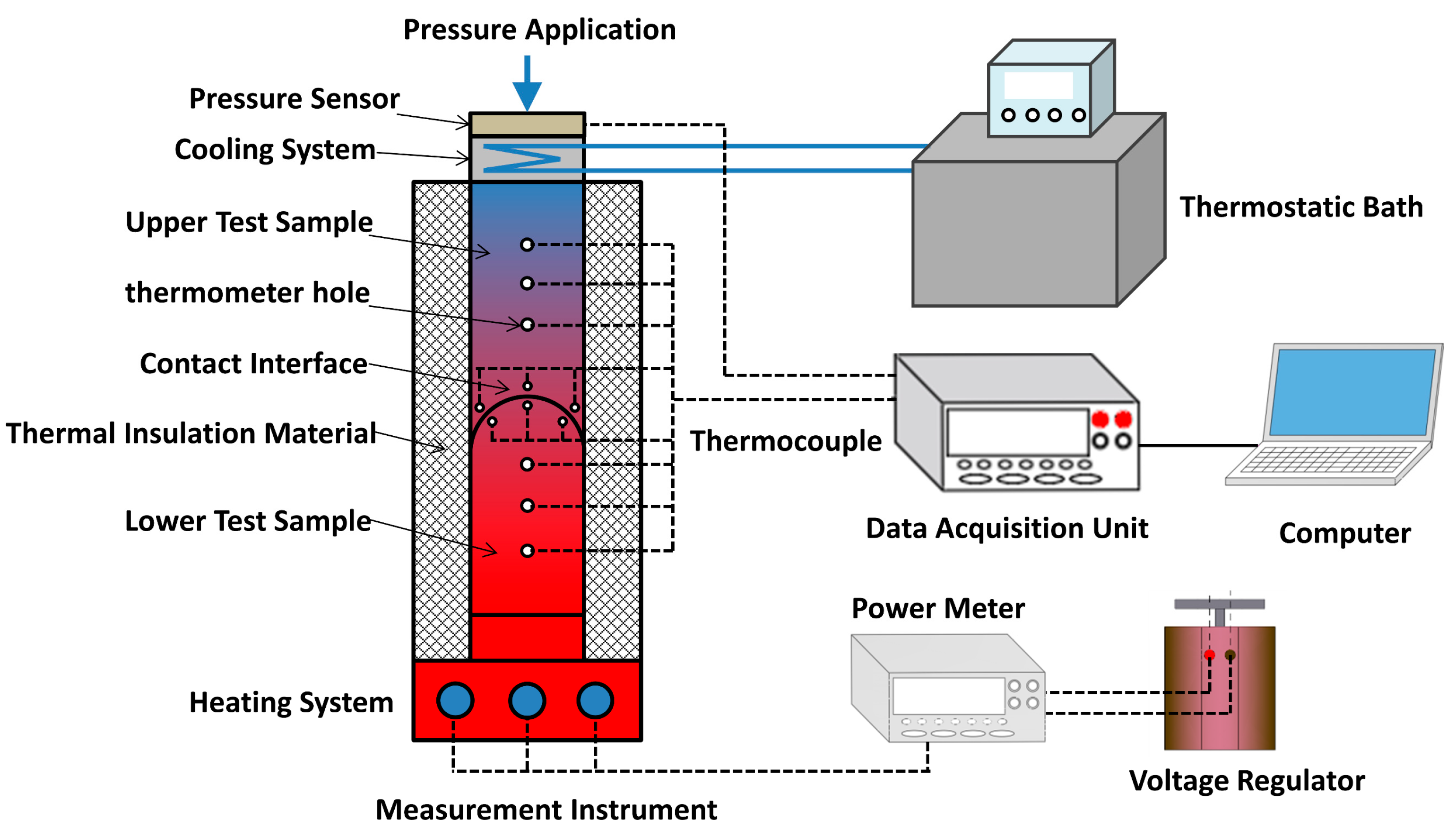
According to the ASTM 5470 [38] (Standard Test Method for Thermal Transmission Properties of Thermally Conductive Electrical Insulation Materials), the present experimental platform employs the steady-state heat flux method to measure TCR at typical contact surfaces. The designed TCR testing system for flat and hinge-type curved surfaces is illustrated in Figure 1 and Figure 2, respectively. The experimental system includes upper and lower test samples. The tested samples are 42GrMoA. The samples with different surface roughness were fabricated by a contracted third-party manufacturer via CNC machines (Xinruibo Precision Machinery Processing Factory, Wuhan, China). Temperature measuring holes are machined at equal intervals in each sample. The temperature inside each hole is recorded by K-type thermocouples (OMEGA TT-K-30) and data collectors under different working conditions at steady state. The temperature of the upper and lower surfaces of the contact interface is derived based on the law of heat transfer, and finally, the TCR under different working conditions can be calculated. A heating module is a customized copper base block with electric heating rods regulated by a voltage controller and power meter, positioned below the lower test sample to achieve stable interfacial temperatures up to 350 °C. The maximum temperature in the system is above 350 °C as the heating power is placed at the lower sample end. A cooling device is arranged above the upper test sample, and a cold plate combined with a constant temperature bath is employed to adjust the cooling capacity. Contact pressure is applied via a screw-driven mechanism and monitored by a pressure sensor. Thereby, TCR testing under different contact pressures can be achieved. By replacing the test samples with varying surface roughness, TCR characterization at different roughness levels can be accomplished.
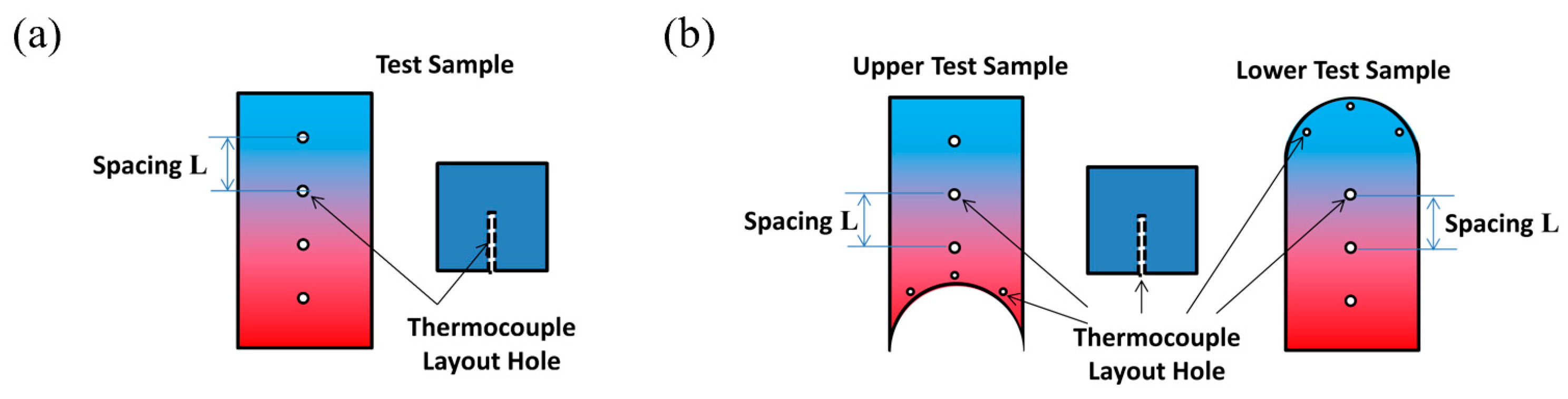
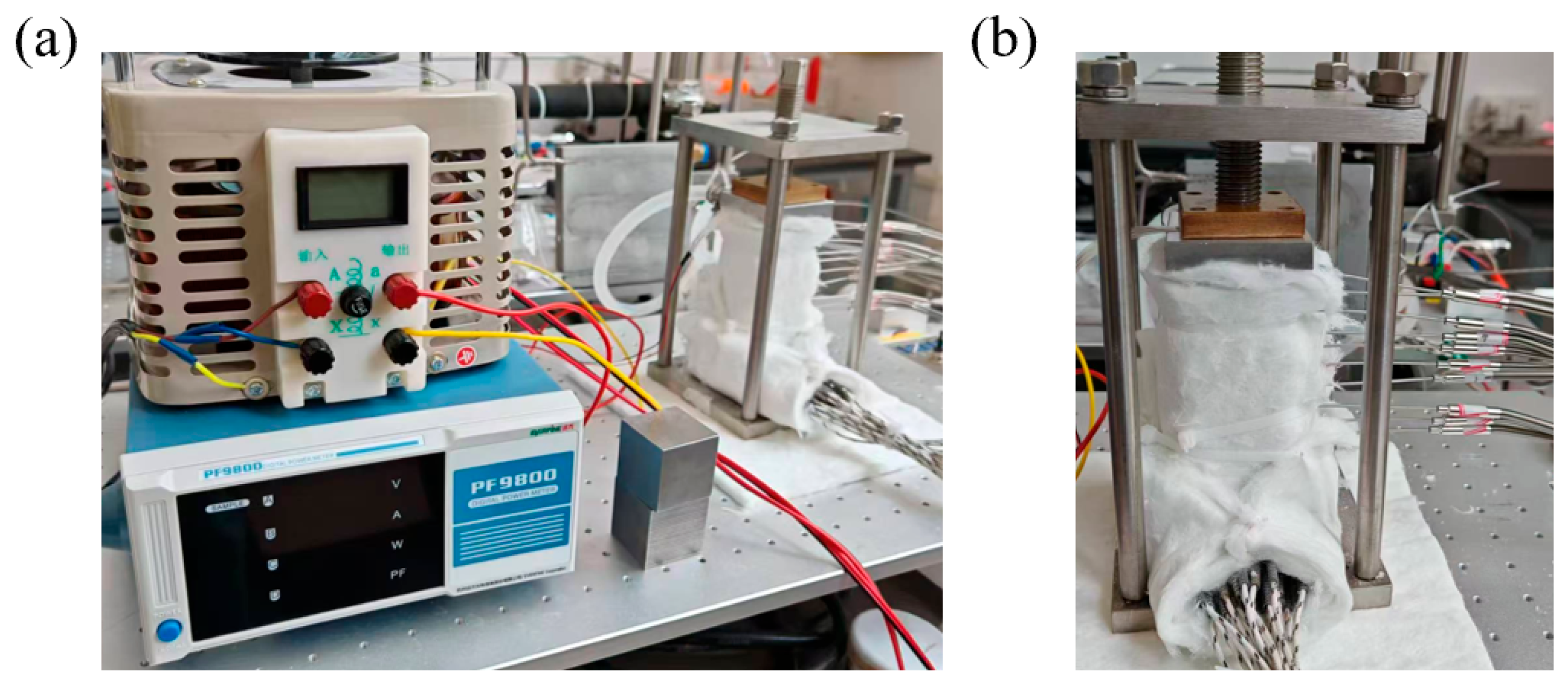
The TCR measurement samples and thermocouple arrangement with flat surface contact are shown in Figure 3, while those with hinge-type curved surface contact are illustrated in Figure 4. The diameter of the thermocouple holes is controlled within 1–2 mm to minimize measurement errors caused by the thermocouple holes. To minimize heat loss to the environment, the testing setup is thermally insulated by high-temperature-resistant insulation cotton of adequate thickness. The physical photograph of the experiment setup is shown in Figure 4.

2.2. Theory for TCR Measurement

2.2.1. TCR Under Flat Surface Contact

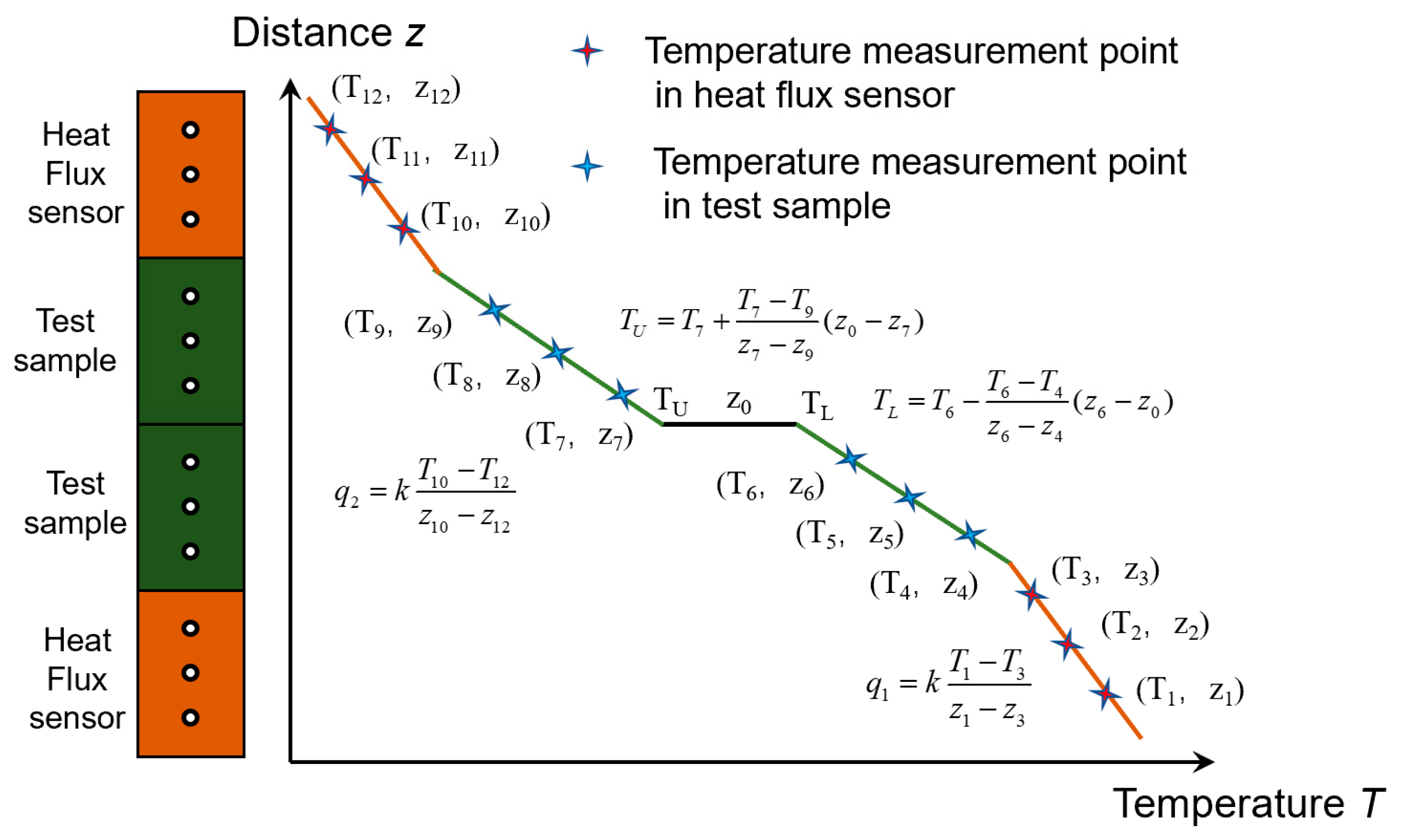
As shown in Figure 5, based on the temperature of the thermocouples spaced at defined intervals on the upper and lower heat flux meters, along with the known thermal conductivity of the heat flow meter material, the lower and upper heat fluxes (q1 and q2) can be calculated by Fourier’s law of heat conduction:
q 1 = k T 1 T 3 z 1 z 3 = k Δ T 1 Δ L 1
q 2 = k T 10 T 12 z 10 z 12 = k Δ T 2 Δ L 2
The interfacial heat flux q can be calculated through the average heat flux method as
q = q 1 + q 2 2
The temperature difference ΔTc at the contact interface between the test samples can be derived from multiple temperature measurement points on the samples using Fourier’s law of heat conduction:
T L = T 6 T 6 T 4 z 6 z 4 ( z 6 z 0 )
T U = T 7 + T 7 T 9 z 7 z 9 ( z 0 z 7 )
Δ T c = T L T U
Ti (i = 1–12) from Equations (1)–(6) represent the temperature values at distinct locations on heat flux meters and test samples measured by the thermocouples. TL and TU represent the temperature of the lower and upper contact surfaces, respectively. The thermal conductivity of the heat flux meters exhibits temperature dependence. ΔT1 and ΔT2 correspond to the temperature differences between two thermocouples on the upper and lower heat flux meters. ΔL1 and ΔL2 represent the axial spacings between the thermocouples on the respective heat flux meters. Thereby, the TCR can be calculated as the interfacial temperature difference divided by the interfacial heat flux:
R = Δ T c q
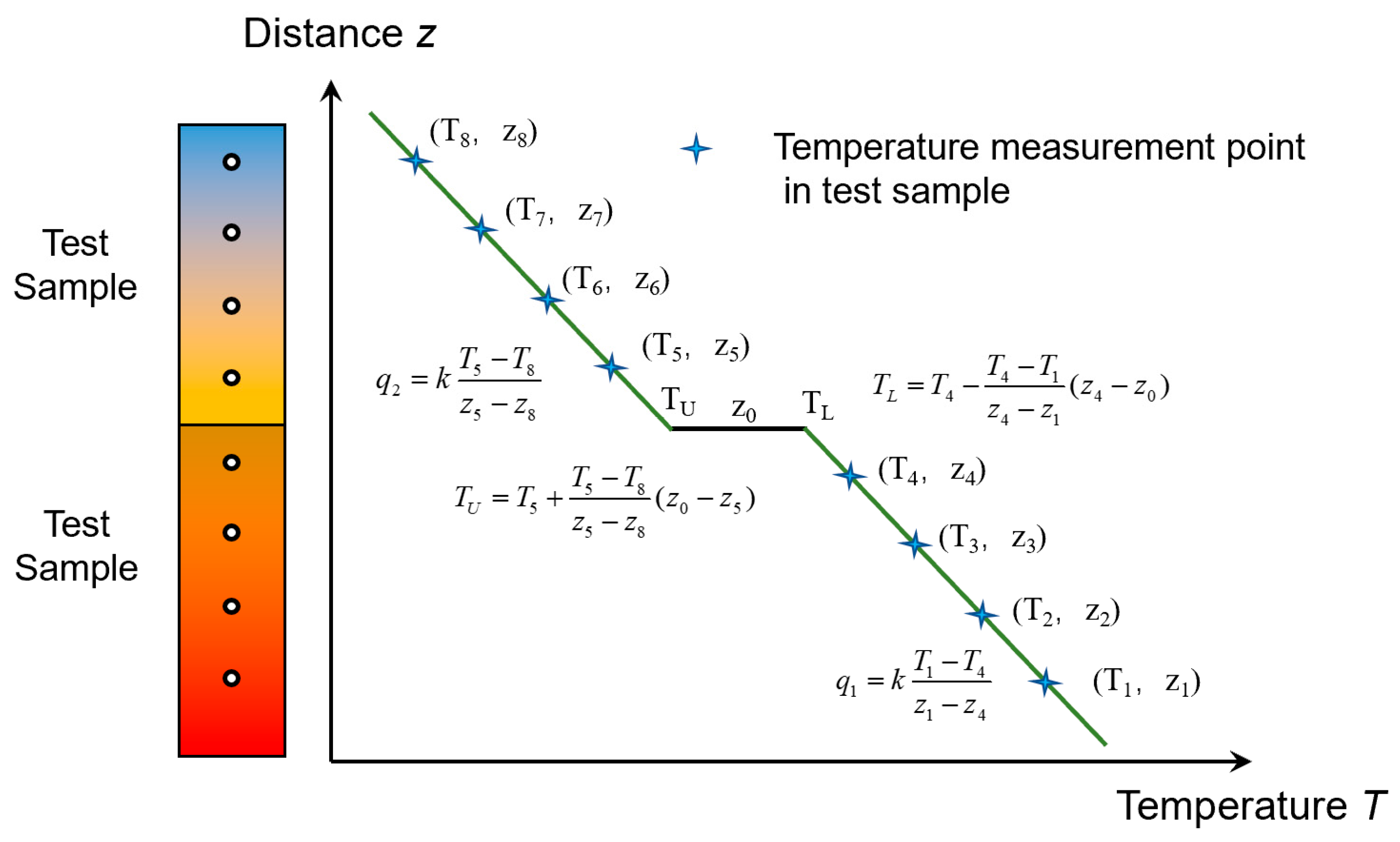
When the thermal conductivity of the test sample material is known, the experimental system can be significantly simplified by eliminating the heat flux meters. The test samples can also function as heat flux meters when simplifying the TCR measurement, as in Figure 6. Based on the temperature of thermocouples spaced at a certain distance between the upper and lower test samples and the known thermal conductivity of the test sample material, the heat flux q1 and q2 can be calculated using Fourier’s law of thermal conductivity. The average heat flux method is used to calculate the heat flux q passing through the sample interface. Based on Fourier’s law of thermal conductivity, the temperatures of the contact surfaces of the upper and lower test pieces are derived, while the temperature difference and interface thermal resistance of the test sample contact interface are calculated using Equations (6) and (7). The calculation procedure is as follows:
q 1 = k T 1 T 4 z 1 z 4 = k Δ T 1 Δ L 1
q 2 = k T 5 T 8 z 5 z 8 = k Δ T 2 Δ L 2
T L = T 4 T 4 T 1 z 4 z 1 ( z 4 z 0 )
T U = T 5 + T 5 T 8 z 5 z 8 ( z 5 z 0 )

2.2.2. TCR Under Hinge-Type Curved Surface Contact

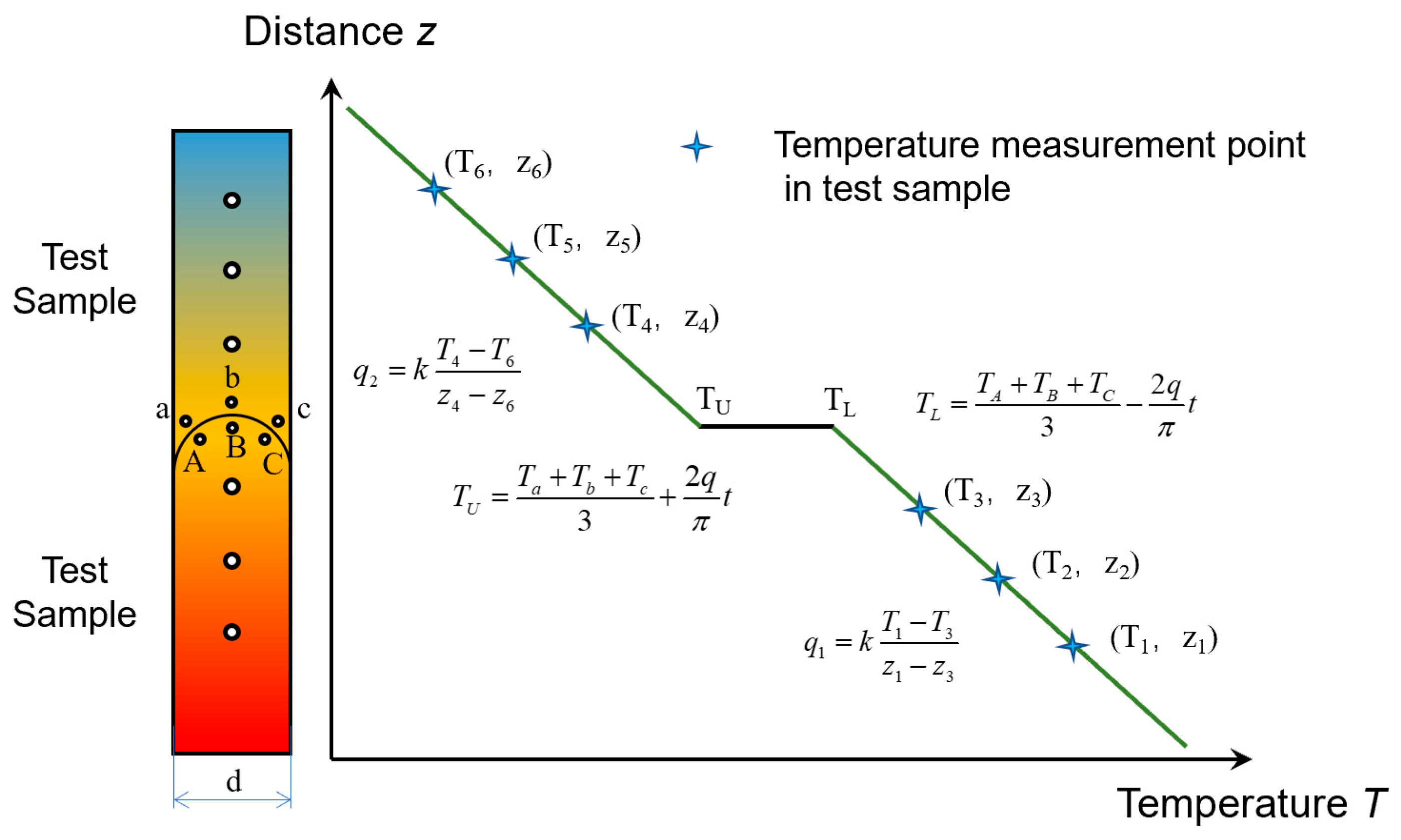
When testing contact heat transfer between metal hinge joints, the contact surfaces are semi-cylindrical. Here, the test samples can also function as heat flux sensors. By processing the contact surface of the lower test piece into a convex semi-cylindrical surface and the upper test piece into a concave cylindrical surface, the upper and lower test pieces achieve cylindrical surface contact, similar to a hinge-type curved surface contact. As illustrated in Figure 7, based on the temperature of thermocouples spaced a certain distance between the upper and lower test samples and the known thermal conductivity of the test sample material, Fourier’s law of thermal conductivity is used to calculate the heat flux q1 and q2, and the average heat flux method is used to calculate the heat flux q passing through the sample interface. Three thermocouples are evenly arranged at a small distance from the cylindrical contact surface of the upper and lower test samples to collect temperature, and the approximate average temperature of the contact surface of the upper and lower test pieces can be obtained according to Equations (14) and (15). Furthermore, the temperature difference ΔTc at the contact interface of the test sample and the TRC can be obtained through Equations (6) and (7), respectively.
q 1 = k T 1 T 3 z 1 z 3 = k Δ T 1 Δ L 1
q 2 = k T 4 T 6 z 4 z 6 = k Δ T 2 Δ L 2
T U = T a + T b + T c 3 + 2 q π t
T L = T A + T B + T C 3 2 q π t

2.2.3. Uncertainty Analysis

Experimental uncertainties typically originate from systematic deviations and transient measurement inconsistencies. The error in the thermal conductivity mainly results from the difference between the theoretical thermal conductivity of the material and its actual thermal conductivity. Furthermore, Table 1 presents detailed data on the instrument uncertainties related to the test data. According to the error propagation formula, in the process of heat transfer, the maximum uncertainties of the TCR between the planar interface and the curved surface interface are approximately 13.75% and 6.48%, respectively.
U R R = U k m k m 2 + U T C T C 2 + U Δ T 1 Δ T 1 + Δ T 2 2 + U Δ T 2 Δ T 1 + Δ T 2 2 + U Δ L 1 Δ T 1 Δ T 1 Δ L 2 + Δ L 1 Δ T 2 2 + U Δ L 2 Δ T 2 Δ T 1 Δ L 2 + Δ L 1 Δ T 2 2

2.3. Experimental Workflow

This study aims to achieve high-precision measurement of TCR at typical interfacial surfaces under various operating conditions, including temperature, contact pressure, and surface roughness. The correlation between TCR and these parameters can be obtained. The measurement procedures for each experimental condition are as follows: (1) After inspecting and debugging the experimental system, install the test samples into the testing system. Adjust the screw press based on the pressure sensor readings to set the contact surface pressure to the specified value. (2) Turn on the heating and cooling devices. Set the heater to the heating power corresponding to the target temperature of the contact interface. Once the system temperature stabilizes, calculate the temperature at the contact interface using Fourier’s law. Fine-tune the heating power until the interface temperature remains within ±1 °C of the target value. (3) After the system achieves full stability, record the temperature data from all measurement points and pressure sensor readings for 5 min. (4) Save the experimental data for subsequent analysis and processing of results. To verify the reliability of the experimental methodology and uncertainty analysis, three repeated experiments were conducted.

3. Results and Discussion

3.1. TCR Under Flat Surface Contact

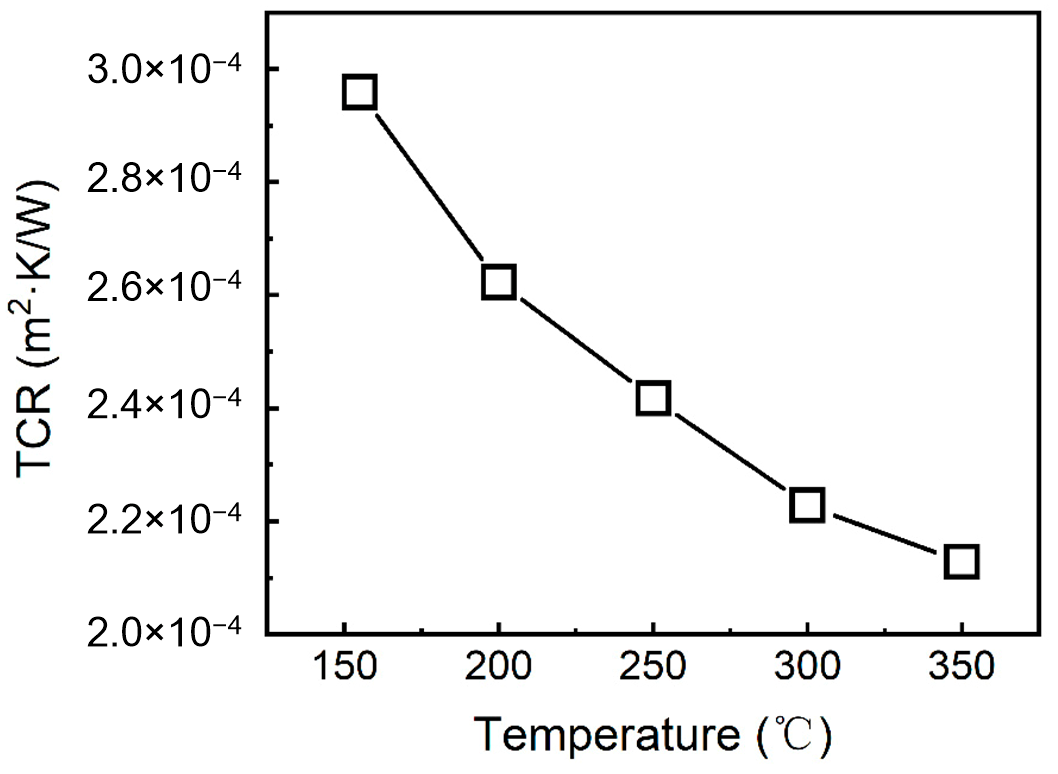
By averaging the three repeated experimental datasets of TCR for both flat and hinge-type curved contact surfaces, the experimental mean values and relative errors of TCR under various operating conditions are obtained. The effects of temperature, contact pressure, and surface roughness on TCR under flat surface contact conditions are investigated. Figure 8 shows the variation in TCR with temperature for the test samples with a surface roughness of Ra 3.2 under a contact pressure of 1.541 MPa in a flat surface contact configuration. TCR gradually declines with the increase in temperature, as higher temperature facilitates the material contact due to thermal expansion, and the heat conductivity of the air inside the contact gap is also augmented at higher temperatures.
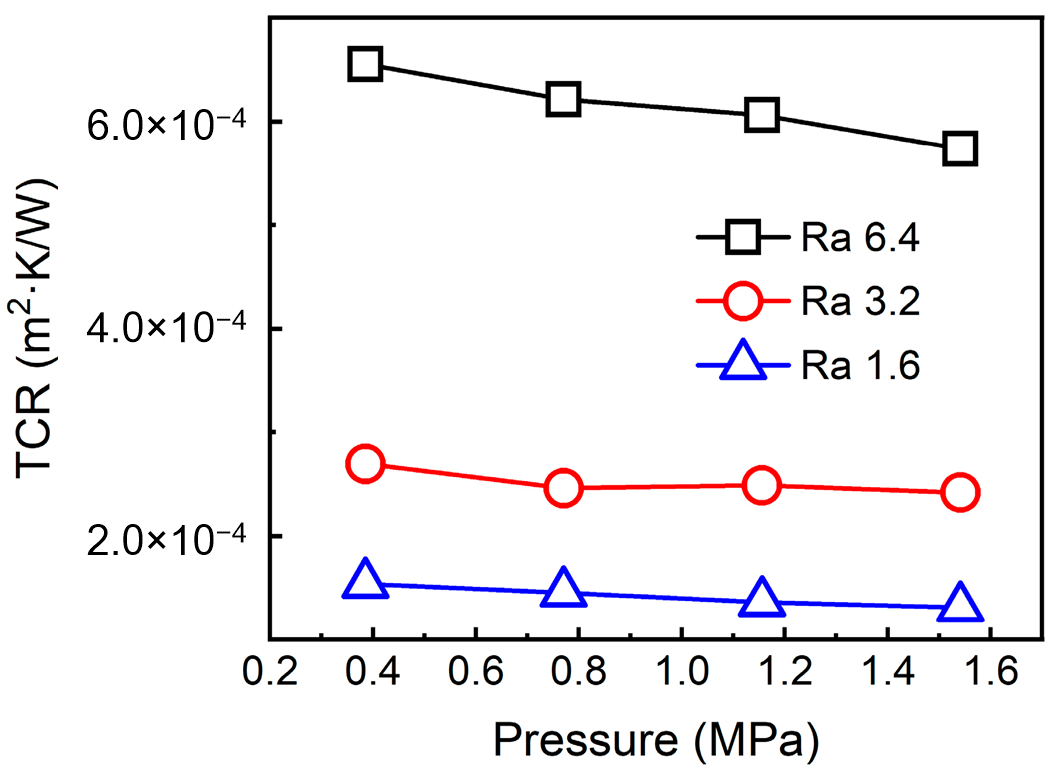
Figure 9 shows the variation in TCR with contact pressure under three surface roughness levels in flat contact configurations. TCR generally decreases as contact pressure increases, as higher applied pressure improves the material contact. For the smaller surface roughnesses of Ra 3.2 and Ra 1.6, the effect of contact pressure on TCR is less pronounced, whereas for the larger surface roughness of Ra 6.4, the effect of contact pressure is more significant. The establishment of efficient heat conduction pathways at the interface is hindered by high surface roughness. External pressure significantly improves interfacial contact conditions, thereby enhancing heat transfer and reducing thermal contact resistance (TCR), particularly under higher applied pressure. When surface roughness (Ra) is lower, the initial interfacial contact condition is already relatively good, so the effect of pressure on further reducing TCR becomes less pronounced.
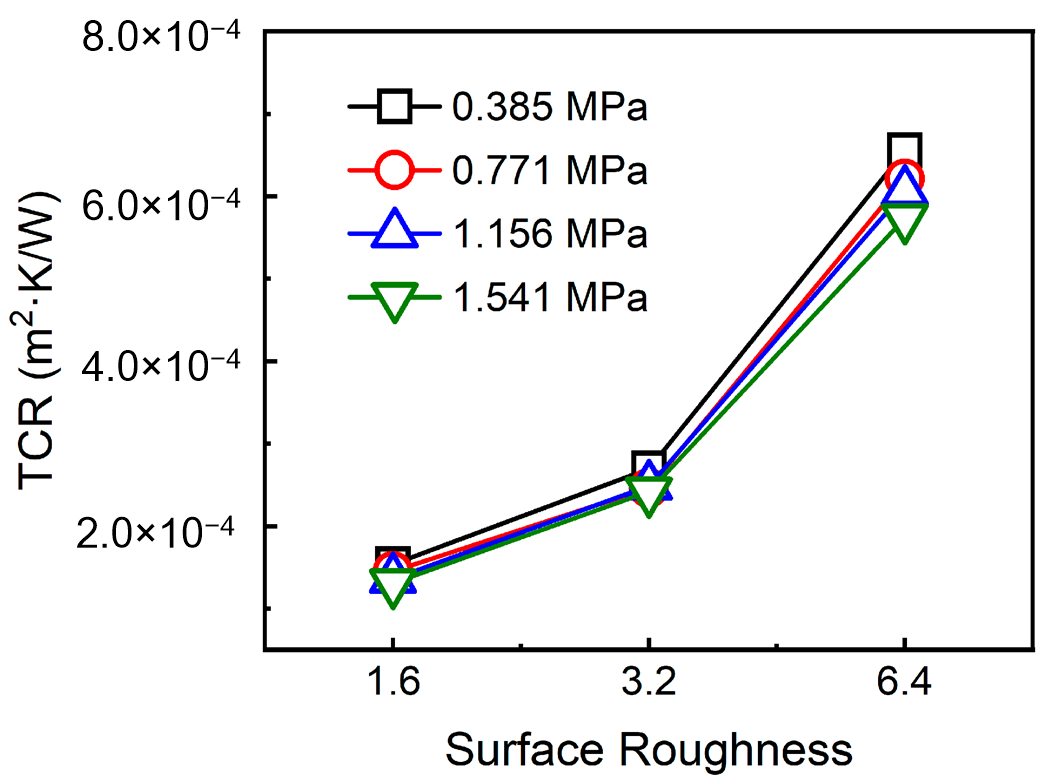
Figure 10 demonstrates the variation in TCR with surface roughness under different contact pressures in flat surface contact configurations. TCR increases significantly with higher surface roughness, as higher roughness leads to worse surface-to-surface contact. Compared to the effects of contact temperature and pressure, surface roughness exhibits the most significant influence on TCR, indicating that reducing the surface roughness of the contact interface is the most effective method to minimize TCR in flat surface contact scenarios.

3.2. TCR Under Hinge-Type Curved Surface Contact

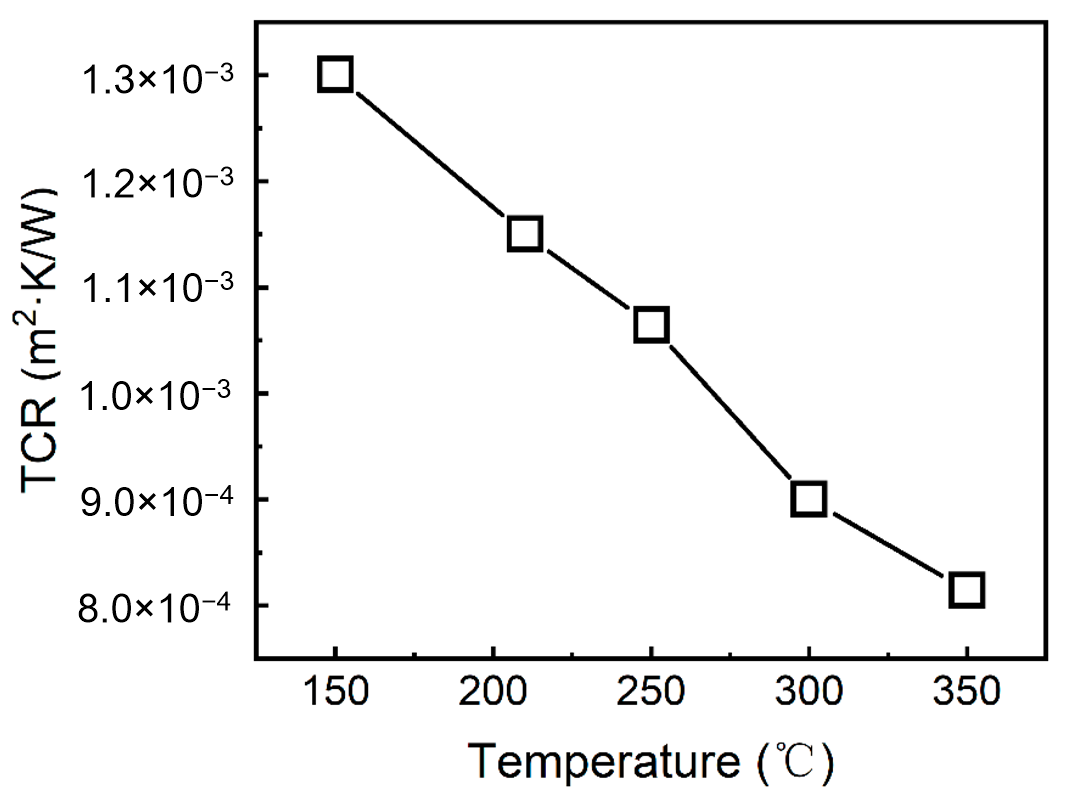
Here, the effects of temperature, pressure, and surface roughness on TCR in a hinge-type curved contact configuration were investigated. Figure 11 illustrates the variation in TCR with temperature for the test samples with a surface roughness of Ra 3.2 under a contact pressure of 1.541 MPa in curved contact scenarios. It is evident that TCR decreases significantly with increasing temperature in a curved contact configuration.
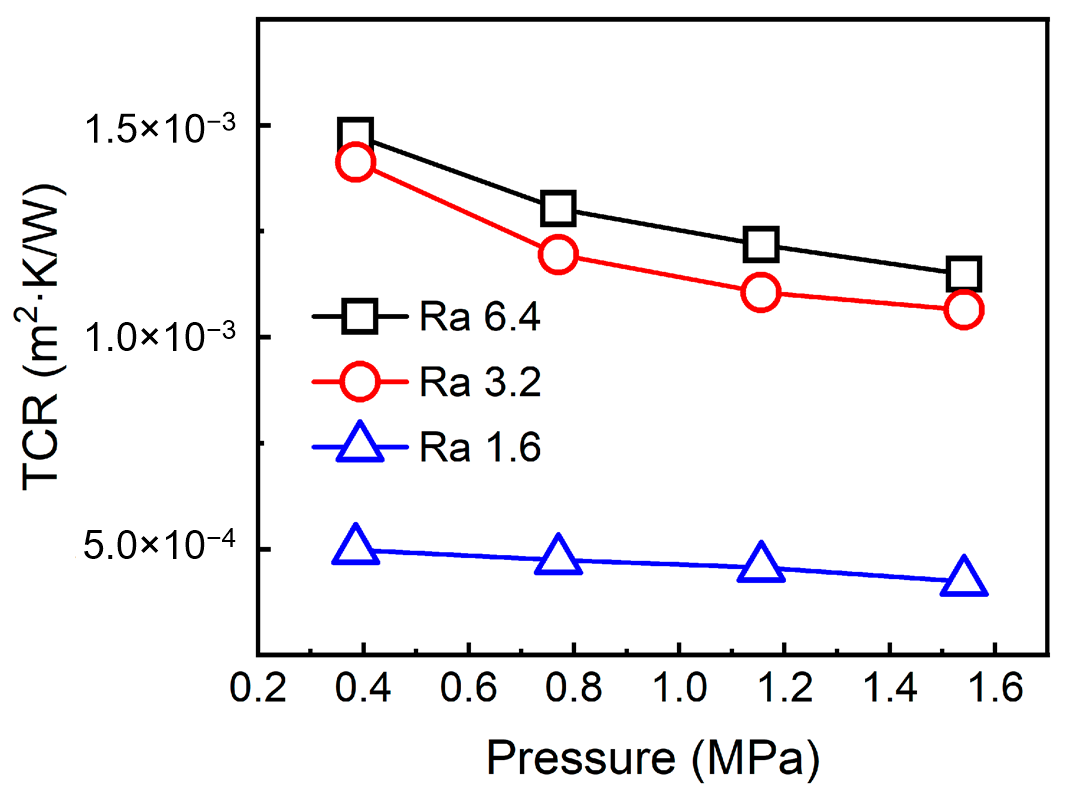
Figure 12 illustrates the variation in TCR with contact pressure under three surface roughness levels in hinge-type curved contact configurations. TCR generally decreases as contact pressure increases. For a smaller surface roughness of Ra 1.6, the influence of pressure on TCR is less pronounced, whereas for larger surface roughness values of Ra 6.4 and Ra 3.2, the effect of pressure is more significant.
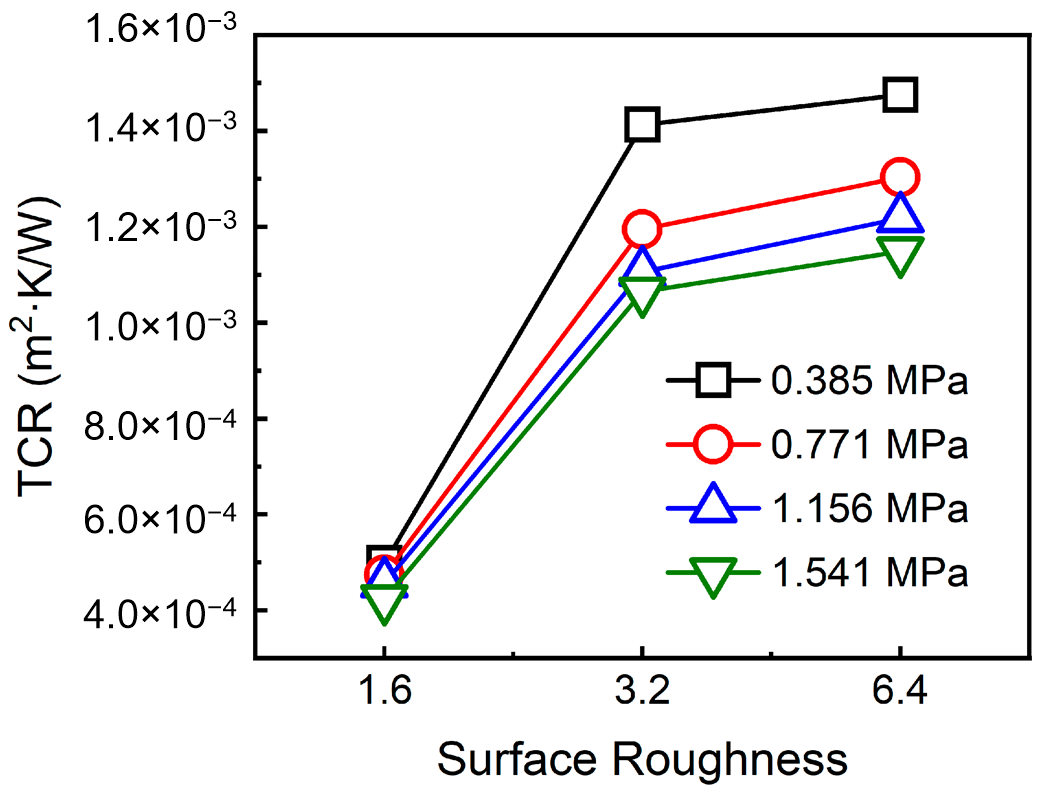
Figure 13 illustrates the variation in TCR with surface roughness under four different contact pressures in a curved surface contact configuration. TCR increases significantly with higher surface roughness. Furthermore, compared to the effects of contact temperature and contact pressure, surface roughness exhibits the most pronounced effect on TCR, which indicates that reducing the surface roughness of the contact interface is the most effective approach to minimize TCR for both curved and flat surface contacts.

3.3. Correlation Fitting of TCR Under Flat Surface Contact

Based on the experimental data of TCR, a relationship for the TCR for flat surface contact as a function of pressure, surface roughness, and temperature is formulated. Via the polynomial regression method, the fitted TCR results for flat surface contact are expressed by the following equation:
T C R = 4.37   × 10 6 × σ × R a 2 + 2.405 × 10 5 × σ × R a 4.218 × 10 5 × σ 6.372 × 10 8 × T × R a 2 +   2.59 × 10 7 × T × R a 4.946 × 10 7 × T + 4.18 × 10 5 × R a 3 0.0004391 × R a 2 +   0.001438 × R a 0.00113
where σ denotes the contact pressure, R a represents the surface roughness, and T stands for the contact temperature. The specific fitted values and corresponding errors are listed in Table 2.
Furthermore, the experimental data and fitted values are compared in Figure 14. The maximum error is observed to be 6.28%, with a minimum error of 0.012%, and all errors remain below 10%, demonstrating the reliability of the fitting results.

3.4. Correlation Fitting of TCR Under Curved Surface Contact

According to the experimental data of TCR, a relationship for the TCR for hinge-type curved surface contact as a function of pressure, surface roughness, and temperature is formulated. The fitted TCR results for curved surface contact are expressed by the following equation:
T C R = 2.133 × 10 7 × σ × T × R a + 6.76 × 10 7 × σ × T + 3.333 × 10 5 × σ × R a 2 0.0003788 × σ × R a                                                 +   0.0001768 × σ + 8.712 × 10 10 × T 2 × R a + 4.223 × 10 9 × T 2 + 2.78 × 10 7 × T × R a 2                                                   3.21 × 10 6 × T × R a 2.255 × 10 7 × T + 2.592 × 10 5 × R a 3 0.0004794 × R a 2                                                 +   0.002857 × R a 0.002099
where σ denotes the contact pressure, R a represents the surface roughness, and T stands for the contact temperature. The specific fitted values and corresponding errors are listed in Table 3.
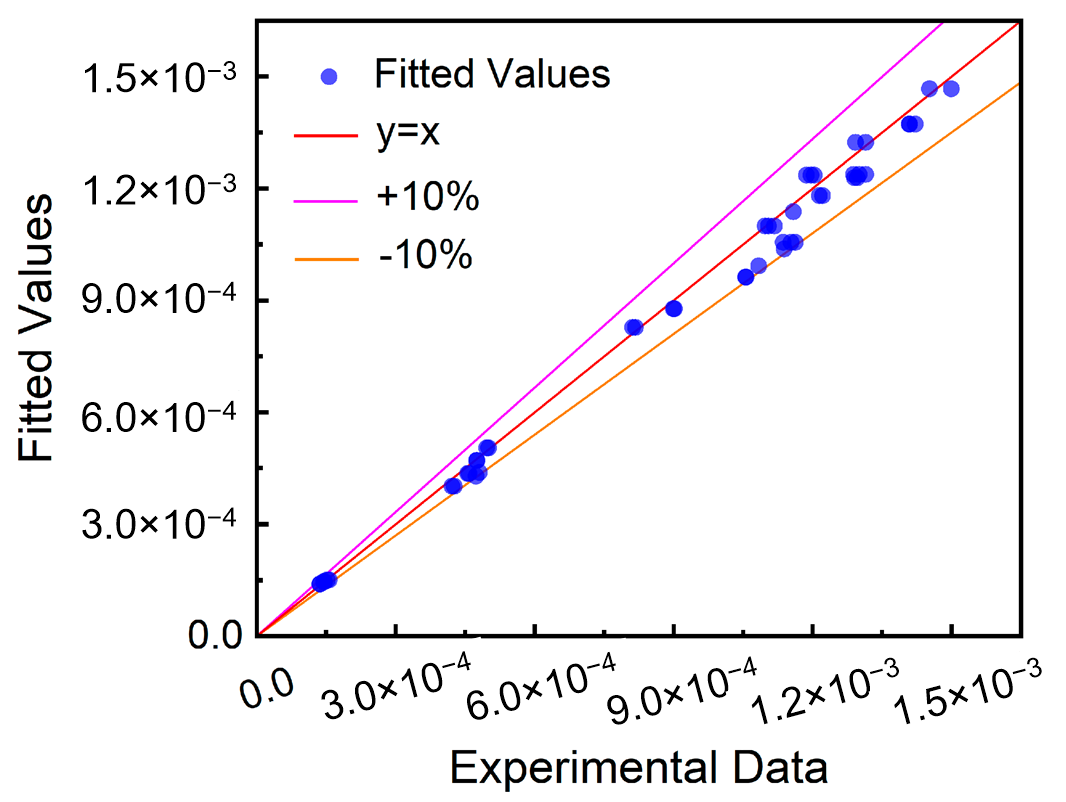
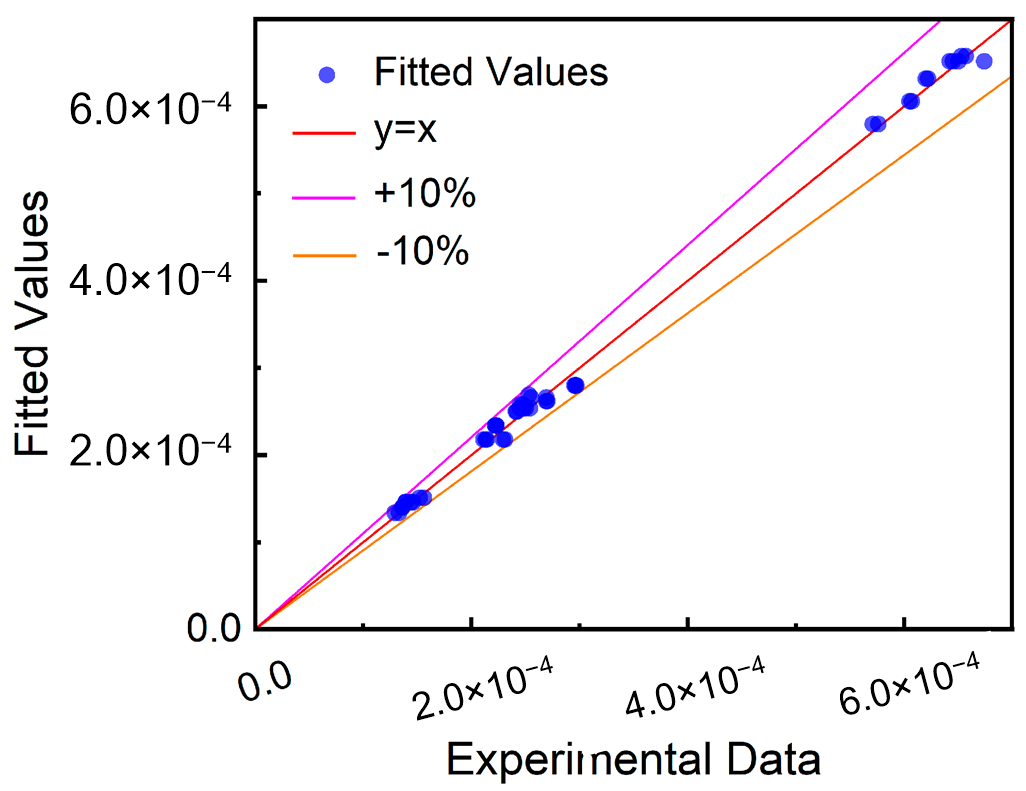
Furthermore, the experimental data and fitted values are compared in Figure 15. It can be observed that the maximum fitting error is 9.20%, the minimum error is 0.225%, and all relative errors remain below 10%, thereby demonstrating the reliability of the fitting results.

4. Conclusions

In this study, an experimental measurement protocol for contact heat transfer is designed, and a TCR testing system is constructed to achieve high-precision TCR measurements for two typical contact surfaces: a flat surface and a hinge-type curved surface. The effects of temperature, contact pressure, and surface roughness on TCR for both contact surfaces were systematically investigated. The results demonstrate that under both flat and curved surface contact conditions, TCR decreases with increasing contact temperature and pressure but increases significantly with higher surface roughness. Notably, surface roughness exhibits the most pronounced effect on TCR. For smaller surface roughness, the effect of pressure on TCR is relatively minor, whereas for larger roughness, the pressure dependence becomes more significant. The introduction of more surface roughness introduces a higher amount of air pockets, which lowers the trans-surface heat transfer performance. For curved surfaces, the mismatch of the contact surfaces is rather significant, and the efficient heat conduction pathway cannot be effectively established. Based on the experimental study on the TCR for curved surface contact and flat surface contact, the TCR for curved surface contact is much larger than that for flat surface contact. Furthermore, empirical relationships for TCR as functions of contact pressure, roughness, and temperature were formulated for both flat and curved surface contacts based on the experimental data. For flat surface contact, the fitted equation yields a maximum error of 6.28% and a minimum error of 0.012%. For curved surface contact, the maximum and minimum errors are 9.20% and 0.225%, respectively. All fitting errors are within 10%, validating the reliability of the fitting results. These relationships enable the theoretical calculation of TCR for both flat and curved surface contacts under varying operating conditions. Here, our present study is focused on TCR for curved surface contact and flat surface with original contact conditions. Actually, when TIMs (Thermal Interface Materials) are employed, the TCR will be decreased due to reduced air pockets in the interface of rough surfaces and improved surface-to-surface contact [39]. The TIMs may decrease the impact of the surface roughness on the TCR. The TCR, considering TIMs, will be investigated in our future studies.

Author Contributions

Conceptualization, G.J.; Methodology, G.J.; Software, G.J.; Validation, G.J., W.C., J.C. and W.Y.; Formal analysis, G.J. and J.C.; Resources, W.C.; Writing—original draft, G.J.; Writing—review & editing, J.C. and W.Y.; Supervision, W.C.; Funding acquisition, W.C. All authors have read and agreed to the published version of the manuscript.

Funding

This work was supported by the Research Project on Technology of China (No.2022G02000 220007).

Institutional Review Board Statement

Not applicable.

Informed Consent Statement

Not applicable.

Data Availability Statement

The datasets used and/or analyzed during the current study are available from the corresponding author upon reasonable request.

Conflicts of Interest

The authors declare no conflicts of interest.

References

  1. Grujicic, M.; Zhao, C.L.; Dusel, E.C. The effect of thermal contact resistance on heat management in the electronic packaging. Appl. Surf. Sci. 2005, 246, 290–302. [Google Scholar] [CrossRef]
  2. Cui, T.; Li, Q.; Xuan, Y.; Zhang, P. Multiscale simulation of thermal contact resistance in electronic packaging. Int. J. Therm. Sci. 2014, 83, 16–24. [Google Scholar] [CrossRef]
  3. Fried, E.; Costello, F.A. Interface Thermal Contact Resistance Problem in Space Vehicles. ARS J. 1962, 32, 237–243. [Google Scholar] [CrossRef]
  4. Cheng, J.; Zhou, Z.; Liu, Z.; Zhang, Y.; Tan, J. Thermo-mechanical coupling analysis of a high-speed actuating mechanism based on a new thermal contact resistance model. Appl. Therm. Eng. 2018, 140, 487–497. [Google Scholar] [CrossRef]
  5. Taler, D.; Ocłoń, P. Thermal contact resistance in plate fin-and-tube heat exchangers, determined by experimental data and CFD simulations. Int. J. Therm. Sci. 2014, 84, 309–322. [Google Scholar] [CrossRef]
  6. Tang, D.; Li, D.; Peng, Y.; Du, Z. A new approach in evaluation of thermal contact conductance of tube–fin heat exchanger. Appl. Therm. Eng. 2010, 30, 1991–1996. [Google Scholar] [CrossRef]
  7. Jain, A. Thermal contact resistance between geometrically imperfect surfaces with two-dimensional arbitrarily-shaped gaps. Int. J. Heat Mass Transf. 2026, 257, 128077. [Google Scholar] [CrossRef]
  8. Madhusudana, C.V.; Madhusudana, C. Thermal Contact Conductance; Springer: Cham, Switzerland, 1996. [Google Scholar]
  9. Sun, D.; You, E.; Zhang, T.; Xu, J.; Wang, X.; Ren, X.; Tao, W. A review of thermal contact conductance research of conforming contact surfaces. Int. Commun. Heat Mass Transf. 2024, 159, 108065. [Google Scholar] [CrossRef]
  10. Jeong, J.; Kim, C.N.; Youn, B. A study on the thermal contact conductance in fin–tube heat exchangers with 7 mm tube. Int. J. Heat Mass Transf. 2006, 49, 1547–1555. [Google Scholar] [CrossRef]
  11. Zhang, P.; Gao, H.; Hu, S.; Chen, H.; Chen, M.; Lai, M. Experimental study of influence factors on thermal contact resistance with theoretical model correlation. Int. Commun. Heat Mass Transf. 2025, 169, 109926. [Google Scholar] [CrossRef]
  12. Tang, K.; Wen, M.; Zhang, Y.; Ge, X. Experimental study on the measurement of interfacial thermal contact resistance of layered porous materials. Case Stud. Therm. Eng. 2025, 76, 107363. [Google Scholar] [CrossRef]
  13. Gou, J.-J.; Ren, X.-J.; Dai, Y.-J.; Li, S.; Tao, W.-Q. Study of thermal contact resistance of rough surfaces based on the practical topography. Comput. Fluids 2018, 164, 2–11. [Google Scholar] [CrossRef]
  14. Greenwood, J.A.; Williamson, J.B.P.P. Contact of nominally flat surfaces. Proc. R. Soc. Lond. 1966, 295, 300–319. [Google Scholar] [CrossRef]
  15. Cooper, M.G.; Mikic, B.B.; Yovanovich, M.M. Thermal contact conductance. Int. J. Heat Mass Transf. 1969, 12, 279–300. [Google Scholar] [CrossRef]
  16. Bahrami, M.; Culham, J.R.; Yovanovich, M.M. Modeling Thermal Contact Resistance: A Scale Analysis Approach. J. Heat Transf. 2005, 126, 896–905. [Google Scholar] [CrossRef]
  17. Ren, X.-J.; Dai, Y.-J.; Gou, J.-J.; Tao, W.-Q. Numerical prediction of thermal contact resistance of 3D C/C-SiC needled composites based on measured practical topography. Int. J. Heat Mass Transf. 2019, 131, 176–188. [Google Scholar] [CrossRef]
  18. Siddappa, P.G.; Tariq, A. Metal and dielectric contact heat transfer and enhancement study using finite element approach. Heat Mass Transf. 2020, 56, 2893–2908. [Google Scholar] [CrossRef]
  19. Shen, F.; Li, Y.-H.; Güler, M.A.; Wu, H.-D.; Shen, W.-W.; Ke, L.-L. A high-efficiency prediction method for thermal contact resistance of rough surfaces. Int. Commun. Heat Mass Transf. 2025, 167, 109325. [Google Scholar] [CrossRef]
  20. Xian, Y.; Zhang, P.; Zhai, S.; Yuan, P.; Yang, D. Experimental characterization methods for thermal contact resistance: A review. Appl. Therm. Eng. 2018, 130, 1530–1548. [Google Scholar] [CrossRef]
  21. Tariq, A.; Asif, M. Experimental investigation of thermal contact conductance for nominally flat metallic contact. Heat Mass Transf. 2016, 52, 291–307. [Google Scholar] [CrossRef]
  22. Asif, M.; Tariq, A. Correlations of Thermal Contact Conductance for Nominally Flat Metallic Contact in Vacuum. Exp. Heat Transf. 2016, 29, 456–484. [Google Scholar] [CrossRef]
  23. Zhang, P.; Xuan, Y.; Li, Q. A high-precision instrumentation of measuring thermal contact resistance using reversible heat flux. Exp. Therm. Fluid Sci. 2014, 54, 204–211. [Google Scholar] [CrossRef]
  24. Fieberg, C.; Kneer, R. Determination of thermal contact resistance from transient temperature measurements. Int. J. Heat Mass Transf. 2008, 51, 1017–1023. [Google Scholar] [CrossRef]
  25. Burghold, E.M.; Frekers, Y.; Kneer, R. Determination of time-dependent thermal contact conductance through IR-thermography. Int. J. Therm. Sci. 2015, 98, 148–155. [Google Scholar] [CrossRef]
  26. Parker, W.J.; Jenkins, R.J.; Butler, C.P.; Abbott, G.L. Flash Method of Determining Thermal Diffusivity, Heat Capacity, and Thermal Conductivity. J. Appl. Phys. 1961, 32, 1679–1684. [Google Scholar] [CrossRef]
  27. Chen, J.; Zhang, W.; Feng, Z.; Cai, W. Determination of thermal contact conductance between thin metal sheets of battery tabs. Int. J. Heat Mass Transf. 2014, 69, 473–480. [Google Scholar] [CrossRef]
  28. Cola, B.A.; Xu, J.; Cheng, C.; Xu, X.; Fisher, T.S.; Hu, H. Photoacoustic characterization of carbon nanotube array thermal interfaces. J. Appl. Phys. 2007, 101, 054313. [Google Scholar] [CrossRef]
  29. Cahill, D.G. Thermal conductivity measurement from 30 to 750 K: The 3ω method. Rev. Sci. Instrum. 1990, 61, 802–808. [Google Scholar] [CrossRef]
  30. Kuthati, S.; Pattamatta, A. Thermal conductivity and thermal interface resistance measurements of thin films using 3ω method. Int. J. Micro-Nano Scale Transp. 2014, 4, 85–105. [Google Scholar] [CrossRef]
  31. Feng, X.; King, C.; Narumanchi, S. General multilayer heat transfer model for optical-based thermal characterization techniques. Int. J. Heat Mass Transf. 2016, 93, 695–706. [Google Scholar] [CrossRef]
  32. Dongmei, B.; Huanxin, C.; Shanjian, L.; Limei, S. Measurement of thermal diffusivity/thermal contact resistance using laser photothermal method at cryogenic temperatures. Appl. Therm. Eng. 2017, 111, 768–775. [Google Scholar] [CrossRef]
  33. Zhang, J.; Liu, Y.; Yan, K.; Fang, B. A fractal model for predicting thermal contact conductance considering elasto-plastic deformation and base thermal resistances. J. Mech. Sci. Technol. 2019, 33, 475–484. [Google Scholar] [CrossRef]
  34. Wang, Z.; Chen, L.; Yuan, W.; Xu, W.; Yan, P. Thermal contact resistance on cylindrical flux channel with high contact ratio. Appl. Therm. Eng. 2024, 249, 123380. [Google Scholar] [CrossRef]
  35. Dillig, M.; Biedermann, T.; Karl, J. Thermal contact resistance in solid oxide fuel cell stacks. J. Power Sources 2015, 300, 69–76. [Google Scholar] [CrossRef]
  36. Zhou, T.; Zhao, Y.; Rao, Z. Fundamental and estimation of thermal contact resistance between polymer matrix composites: A review. Int. J. Heat Mass Transf. 2022, 189, 122701. [Google Scholar] [CrossRef]
  37. Chen, M.; Li, Q.; Zhang, P. Numerical prediction of high temperature thermal contact resistance of HTA–C/ZrB2-SiC with radiation effects. Int. Commun. Heat Mass Transf. 2021, 120, 105058. [Google Scholar] [CrossRef]
  38. ASTM D5470-17(2024); Standard Test Method for Thermal Transmission Properties of Thermally Conductive Electrical Insulation Materials. ASTM International: West Conshohocken, PA, USA, 2024.
  39. Sudhindra, S.; Kargar, F.; Balandin, A.A. Noncured Graphene Thermal Interface Materials for High-Power Electronics: Minimizing the Thermal Contact Resistance. Nanomaterials 2021, 11, 1699. [Google Scholar] [CrossRef]
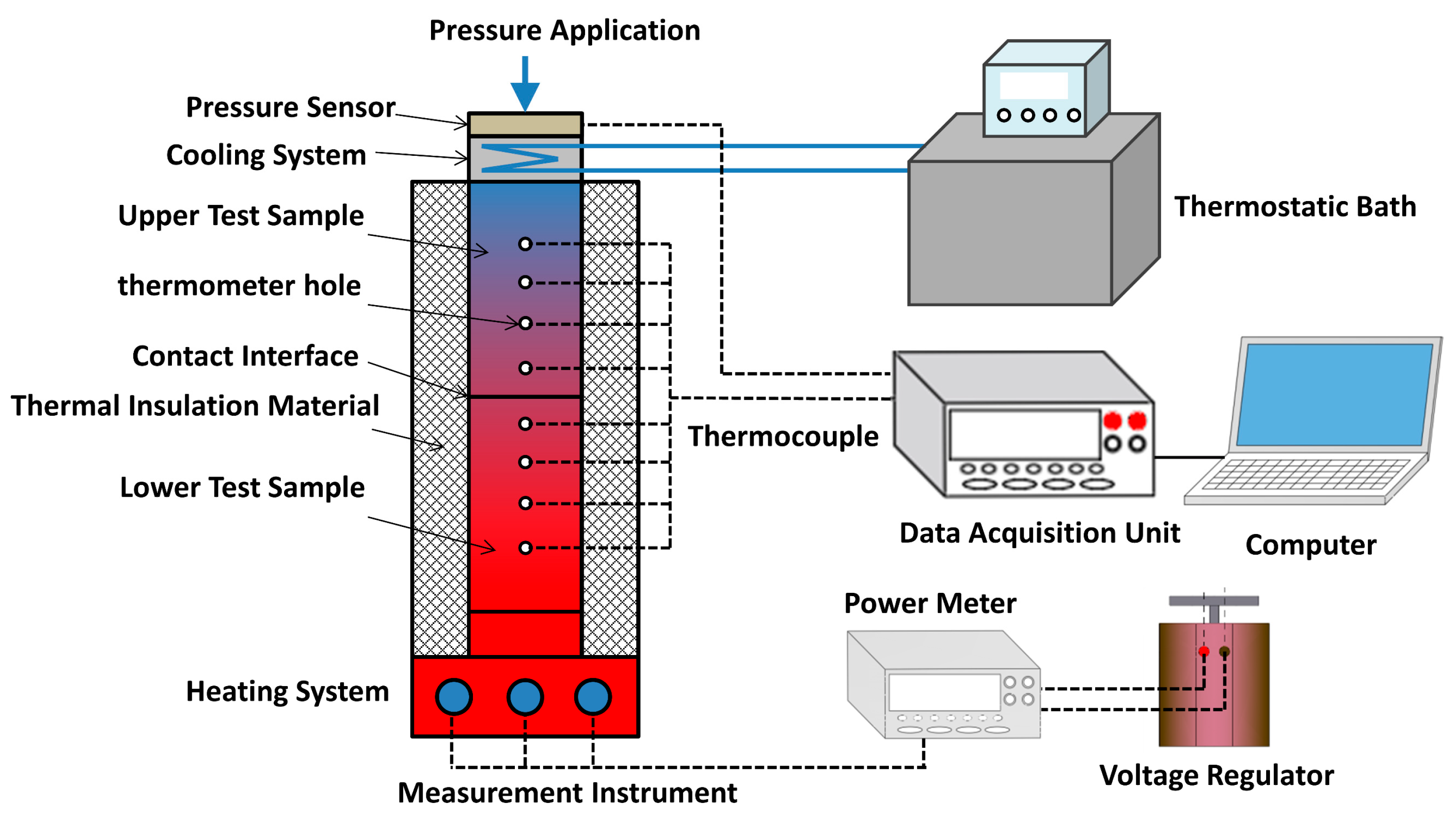
Figure 1. TCR testing system for flat surface.
Technologies 14 00041 g001
Figure 2. TCR testing system for hinge-type curved surface.
Technologies 14 00041 g002
Figure 3. Schematic diagrams of thermocouple layout for flat surface contact (a) and hinge-type curved surface contact (b).
Technologies 14 00041 g003
Figure 4. Physical photograph of the experiment setup (a) Front view of the experimental setup (b) Side view of the experimental setup.
Technologies 14 00041 g004
Figure 5. Schematic diagram for TCR measurement.
Technologies 14 00041 g005
Figure 6. Schematic diagram for TCR measurement when the thermal conductivity of the test sample material is known.
Technologies 14 00041 g006
Figure 7. Schematic diagram for TCR measurement under hinge-type curved surface contact (letters (a–d, A–C) are the test points).
Technologies 14 00041 g007
Figure 8. Variation in TCR with temperature for the flat surface contact samples with a surface roughness of Ra 3.2 under a pressure of 1.541 MPa.
Technologies 14 00041 g008
Figure 9. Variation in TCR with contact pressure for the flat surface contact samples with different surface roughness.
Technologies 14 00041 g009
Figure 10. Variation in TCR with surface roughness for the flat surface contact samples under different contact pressures.
Technologies 14 00041 g010
Figure 11. Variation in TCR with temperature for the hinge-type curved surface contact samples with a surface roughness of Ra 3.2 under a pressure of 1.541 MPa.
Technologies 14 00041 g011
Figure 12. Variation in TCR with contact pressure for the hinge-type curved surface contact samples with different surface roughness.
Technologies 14 00041 g012
Figure 13. Variation in TCR with surface roughness for the hinge-type curved surface contact samples under different contact pressures.
Technologies 14 00041 g013
Figure 14. Error comparison between the fitted TCR values and experimental data for flat surface contact.
Technologies 14 00041 g014
Figure 15. Error comparison between the fitted TCR values and experimental data for curved surface contact.
Technologies 14 00041 g015
Table 1. Accuracy of experimental instruments.
InstrumentParametersUncertainty
K-type thermocoupleTemperature±0.3 °C
CNCLength±0.01 mm
Table 2. Comparison between the experimental data and fitted values for flat surface contact.
Contact Pressure (Mpa)Surface RoughnessTemperature (°C)Experimental Data (m2·K/W)Fitted Values (m2·K/W)Errors (%)
1.541244Ra3.21550.0002950.000285.101667
1.541244Ra3.21550.0002970.000285.586198
1.541244Ra3.21550.0002960.000285.192335
1.541244Ra3.21900.0002530.0002696.280748
1.541244Ra3.22000.0002550.0002664.105838
1.541244Ra3.22000.0002690.0002661.212068
1.541244Ra3.22500.0002420.000253.107345
1.541244Ra3.22500.0002410.000253.704189
0.770622Ra3.22500.0002450.0002585.048817
0.770622Ra3.22500.0002470.0002584.368537
0.385311Ra3.22500.000270.0002623.062687
0.385311Ra3.22500.0002690.0002622.775843
1.155933Ra3.22500.0002480.0002542.220118
1.155933Ra3.22500.0002450.0002543.649702
1.155933Ra3.22500.0002540.0002540.012309
1.155933Ra3.22500.000250.0002541.339393
1.155933Ra3.22500.0002460.0002543.106561
1.541244Ra3.23000.0002230.0002344.867285
1.541244Ra3.23000.0002230.0002344.851607
1.541244Ra3.23000.0002220.0002345.265853
1.541244Ra3.23000.0002220.0002345.302227
1.541244Ra3.23500.0002290.0002184.891591
1.541244Ra3.23500.0002310.0002185.485126
1.541244Ra3.23500.0002130.0002182.220641
1.541244Ra3.23500.0002140.0002182.082544
1.541244Ra3.23500.0002110.0002183.307422
1.541244Ra6.42000.000650.0006520.412386
1.541244Ra6.42000.0006740.0006523.269997
1.541244Ra6.42000.0006450.0006521.197093
1.541244Ra6.42000.0006420.0006521.564424
1.541244Ra6.42500.0005760.000580.666474
1.541244Ra6.42500.0005710.000581.590133
1.155933Ra6.42500.0006050.0006060.171718
1.155933Ra6.42500.0006070.0006060.226751
0.770622Ra6.42500.0006220.0006321.482408
0.770622Ra6.42500.000620.0006321.852322
0.385311Ra6.42500.0006530.0006580.637951
0.385311Ra6.42500.0006570.0006580.075473
1.541244Ra1.62000.0001390.0001465.250535
1.541244Ra1.62000.0001390.0001465.392687
1.541244Ra1.62500.0001330.0001340.889921
1.541244Ra1.62500.0001290.0001344.138883
1.155933Ra1.62500.0001360.000142.865752
1.155933Ra1.62500.0001360.000142.934143
0.770622Ra1.62500.0001460.0001460.571249
0.770622Ra1.62500.0001440.0001461.083798
0.385311Ra1.62500.0001560.0001512.867068
0.385311Ra1.62500.0001520.0001510.259426
Table 3. Comparison between the experimental data and fitted values for curved surface contact.
Contact Pressure (Mpa)Surface RoughnessTemperature (°C)Experimental Data (m2·K/W)Fitted Values (m2·K/W)Errors (%)
1.541244Ra3.21500.0012880.0012383.857707
1.541244Ra3.21500.0013140.0012385.768154
1.541244Ra3.21500.00130.0012384.733202
1.541244Ra3.22100.0011620.0010569.101191
1.541244Ra3.22100.0011360.0010566.988042
1.541244Ra3.22100.0011530.0010568.349777
1.541244Ra3.22500.0010830.0009938.709762
1.541244Ra3.22500.0010550.0009638.709762
1.541244Ra3.22500.0010560.0009638.814321
1.155933Ra3.22500.0011170.00111.527048
1.155933Ra3.22500.0011040.00110.363849
1.155933Ra3.22500.0010970.00110.225063
0.770622Ra3.22500.0012030.0012362.786986
0.770622Ra3.22500.0011860.0012364.261228
0.770622Ra3.22500.0011960.0012363.347082
0.385311Ra3.22500.0014210.0013733.372707
0.385311Ra3.22500.0014090.0013732.608754
0.385311Ra3.22500.0014080.0013732.542018
1.541244Ra3.23000.0009010.0008782.550721
1.541244Ra3.23000.0008990.0008782.372261
1.541244Ra3.23500.0008170.0008281.320038
1.541244Ra3.23500.0008110.0008282.080871
1.541244Ra1.62000.000480.0004398.371112
1.541244Ra1.62000.0004730.0004299.196447
1.541244Ra1.62500.0004210.0004024.483076
1.541244Ra1.62500.0004260.0004025.724321
1.155933Ra1.62500.0004550.0004364.062092
1.155933Ra1.62500.0004580.0004364.798945
0.770622Ra1.62500.0004750.0004710.835908
0.770622Ra1.62500.0004740.0004710.625273
0.385311Ra1.62500.00050.0005050.953514
0.385311Ra1.62500.0004960.0005051.891743
1.541244Ra6.42000.0012960.0012295.151328
1.541244Ra6.42000.001290.0012294.723979
1.541244Ra6.42500.0011580.0011381.758587
1.541244Ra6.42500.0011380.0010388.827705
1.155933Ra6.42500.0012140.0011812.741115
1.155933Ra6.42500.0012210.0011813.292543
0.770622Ra6.42500.0013140.0013240.791273
0.770622Ra6.42500.0012920.0013242.501128
0.385311Ra6.42500.0014990.0014682.075889
0.385311Ra6.42500.0014520.0014681.085568
Disclaimer/Publisher’s Note: The statements, opinions and data contained in all publications are solely those of the individual author(s) and contributor(s) and not of MDPI and/or the editor(s). MDPI and/or the editor(s) disclaim responsibility for any injury to people or property resulting from any ideas, methods, instructions or products referred to in the content.