

Deep Learning in Cardiovascular Tissue Engineering: A Review on Current Advances and Future Perspectives
 , ,
, ,  and
and
Abstract
1. Introduction
1.1. The Importance of Cardiac Regeneration: Context and Global Impact of Cardiovascular Diseases
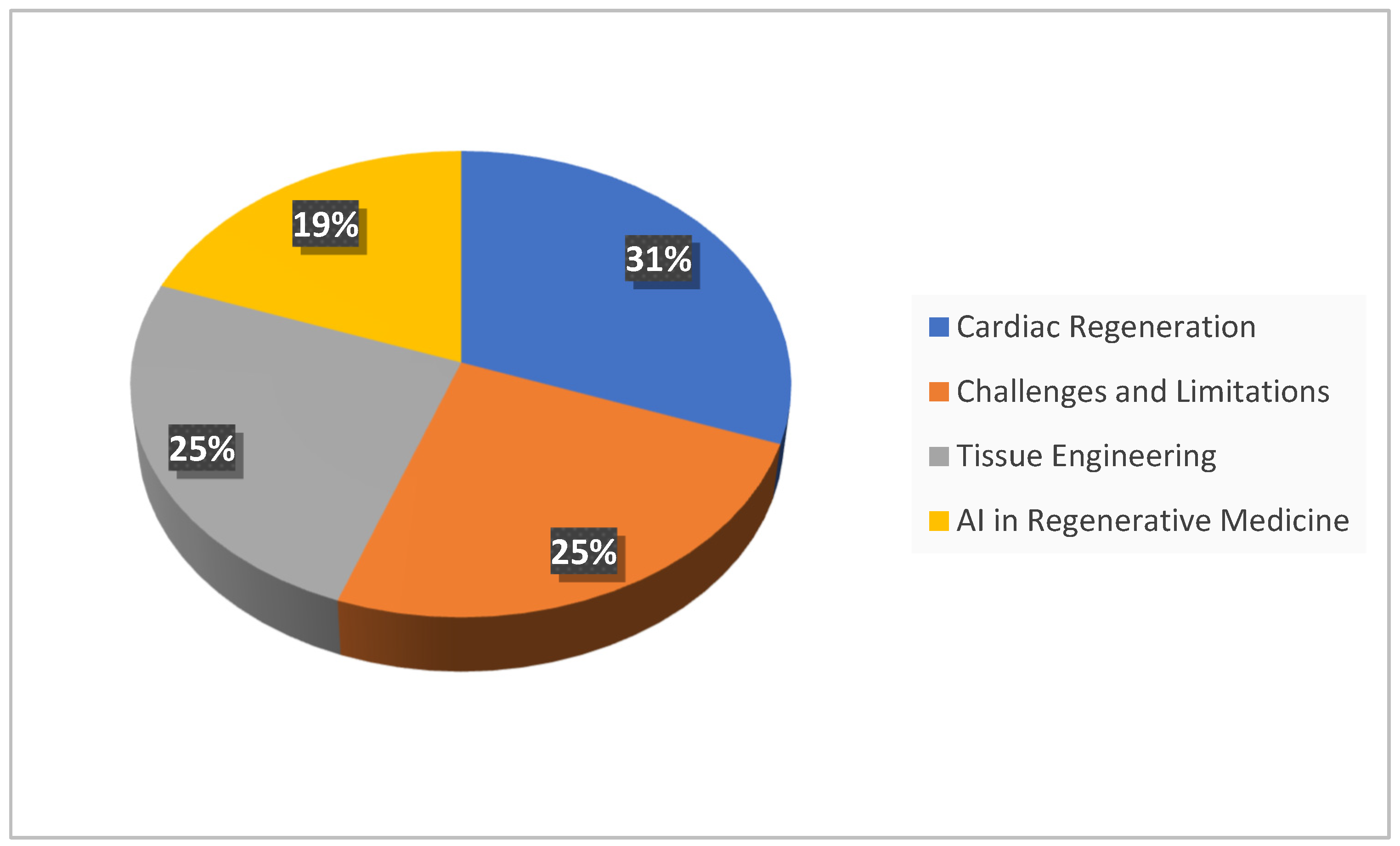
- Cardiovascular tissue engineering, which looks at fundamental approaches to cardiac tissue engineering, including scaffold design and optimization, recellularization, and the application of bioreactors for tissue engineering. Unresolved issues also include examining the integration of a scaffold into native tissue, vascularization of the scaffold and biocompatibility, and the scaffold’s mechanical stability.
- Deep learning in tissue engineering which seeks to understand how information technologies are working with AI-enhanced regenerative medicine. This review discusses DL solutions for scaffold design and modeling, analysis of cell interactions, custom-tailored treatments, and optimization of regenerative medicine, which these technologies would most certainly advance in a more effective clinical outcome.
- -
- Myocardial infarction, where cardiac tissue is replaced by fibrotic scar, limiting contractile function;
- -
- Ischemic cardiomyopathy, which leads to chronic ventricular dysfunction due to extensive tissue damage and remodeling;
- -
- Congenital myocardial defects, where bioengineered tissues may assist in reconstructing missing or malformed cardiac segments.
1.2. Current Limitations of Heart Transplantation and the Need for Alternative Approaches
- Acute and chronic rejection—Antibody-mediated rejection is a major cause of graft failure, necessitating more effective desensitization strategies [19];
- Opportunistic infections and malignancies—Immunosuppressive therapy significantly increases the risk of severe infections and cancer development [20].
- Direct cellular reprogramming—Studies have demonstrated the ability to convert fibroblasts into cardiomyocytes, eliminating the need for transplantation [21];
- Advanced nanotherapies—The targeted delivery of microRNAs and exosomes has shown potential for stimulating cardiac regeneration and reducing immune rejection [22].
1.3. Tissue Engineering’s Function and Developments in Decellularized Scaffolds
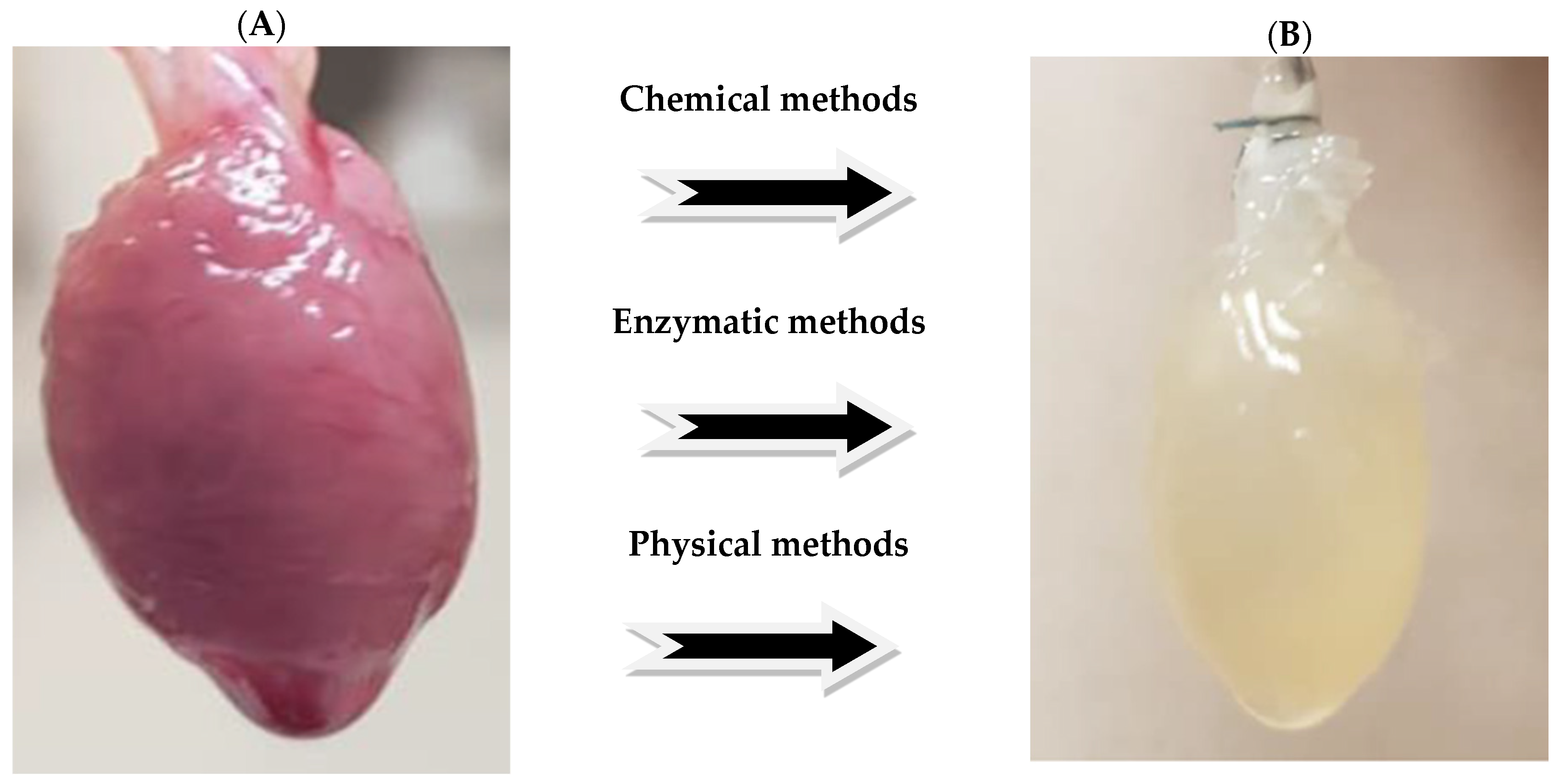
- Physical methods—Repeated freeze–thaw cycles, variable pressure perfusion, and laser irradiation. These techniques are very effective in breaking down cellular membranes, but capsules and collagen, and proteoglycans, can be affected [27].
- Chemical methods—Anionic detergents like SDS and Triton X-100, and weak acids and bases, can effectively extract cells’ structures via chemical methods. However, if one is not careful during excessive treatment, the mechanical strength of the scaffold may be compromised as well [28].
- Enzymatic methods—Using DNase and RNase processes to get rid of residual genetic material whilst keeping the ECM itself’s biological components intact [29].
- Placing growth or differentiation factors in combination with the scaffolds to induce angiogenesis and cell multiplication.
- Bioreactors serve as a device for mechanical and electrical stimulation, which helps to achieve alignment and maturation of cardiomyocytes [30].
1.4. The Potential of Deep Learning in Optimizing Regenerative Therapies
- Predicting scaffold biochemical and mechanical behavior with neural networks that relate material composition to function [34].
- Improving 3D bioprinting with AI-based algorithms that modify construction parameters for better cell and growth factor distribution [31].
- Assessing cell distribution within scaffolds with deep learning techniques to achieve enhanced recellularization homogeneity [25].
- Emulating AI cell behavior predictions and cardiomyocyte maturation in decellularized scaffolds through cell-ECM modeling [29].
- Altering cell culture settings by automatically controlling fluidic and oxygen supply and tissue-specific growth factor concentrations [30].
- AI-driven simulation of optimal electrical and mechanical stimuli for cardiomyocyte maturation [35].
- Automated classification and isolation of live stem cells from microscopic images using convolutional neural networks [36].
- Predicting cellular differentiation rates with AI models to anticipate the efficiency of stem cell conversion into specific tissues [37].
- Optimizing gene therapy delivery by using AI to improve viral vector and nanoparticle efficiency in genome editing applications [38].
- Personalizing regenerative treatments, correlating clinical data with the effectiveness of regenerative therapies for individualized patient care [39].
2. Cardiovascular Tissue Engineering: Current Status
2.1. Principles of Tissue Engineering in Cardiac Regeneration
2.2. Decellularized Extracellular Matrix (dECM): Properties and Applications
- Enrichment in key ECM proteins, such as collagen, laminin, fibronectin, and proteoglycans, which support cell adhesion and cardiomyocyte differentiation [47].
- Fibrillar collagen structure, ensuring uniform mechanical stress distribution, is essential for cardiomyocyte maturation [45].
- Removal of cellular antigens significantly reduces the risk of post-implantation immune rejection [48].
- Effective removal of foreign DNA and RNA, minimizing the risk of adverse immune reactions [47].
- Supports endothelial cell migration and proliferation, facilitating post-implantation revascularization [50].
- Chemical crosslinking strategies, improving mechanical stability and increasing scaffold durability in biological environments [49].
- Incorporation of RGD peptides (arginine-glycine-aspartic acid) to enhance cellular interactions and adhesion [48].
- Bioactive growth factor integration, accelerating stem cell maturation and differentiation into cardiomyocytes [46].
- Potential for combination with advanced technologies, such as 3D bioprinting and cell-based therapies, to enable personalized cardiac regeneration solutions [47].
- Loss of structural integrity due to the decellularization process, which affects mechanical stability and resistance to myocardial stress [44].
- Weaker mechanical properties compared to native cardiac tissue, potentially leading to insufficient contractile strength for myocardial integration [23].
- Fragility of dECM scaffolds, limiting their use in bioprinting and surgical handling, and requiring crosslinking and stiffness optimization [48].
- High variability in composition, influenced by tissue source (myocardium, pericardium, blood vessels) and decellularization method [45].
- Lack of standardized ECM composition, making it difficult to compare results across studies and hindering clinical translation [23].
- Potential loss of essential ECM proteins (fibronectin, laminin) and growth factors during decellularization, reducing scaffold regenerative potential [46].
- Absence of a pre-existing vascular network, affecting oxygen diffusion and implanted cell survival [46].
- Limited integration with host tissue due to insufficient angiogenic signaling [48].
- Emerging technologies, such as pro-angiogenic growth factor injections or pre-vascularized bioprinting, are being explored to overcome these limitations [51].
- Complex and multi-step decellularization protocols, increasing processing time and production costs for clinical applications [49].
- Challenges in scaffold sterilization, as many chemical and physical methods may alter mechanical and biochemical properties [45].
- Lack of standardized production methods, limiting scalability for clinical use [46].
2.3. Recellularization Methods—Stem Cells, iPSC-Derived Cardiomyocytes, Bioactivation of Scaffolds
- High immunological compatibility, as they can be generated from a patient’s somatic cells [54];
- High scalability, enabling the production of large numbers of cardiomyocytes for regenerative therapies [61];
- Use in pharmacological screening, as they serve as an ideal experimental model for toxicity testing [56].
- MSCs grafted into a decellularized scaffold improved left ventricular function by 38% in animal models [66].
- iPSC-CMs cultured on fibrillar scaffolds showed a 75% improvement in sarcomeric organization and exhibited spontaneous contractility after 14 days [59].
- Biomimetic scaffolds based on ECM and biodegradable polymers are essential for creating an optimal microenvironment for iPSC-CMs [55].
- Cardiac ECM-based scaffolds increased junctional protein expression by 80%, improving cellular cohesion and contractility [65].
- Collagen- and fibrin-based scaffolds improved cardiomyocyte maturation by 60% compared to 2D cultures [25].
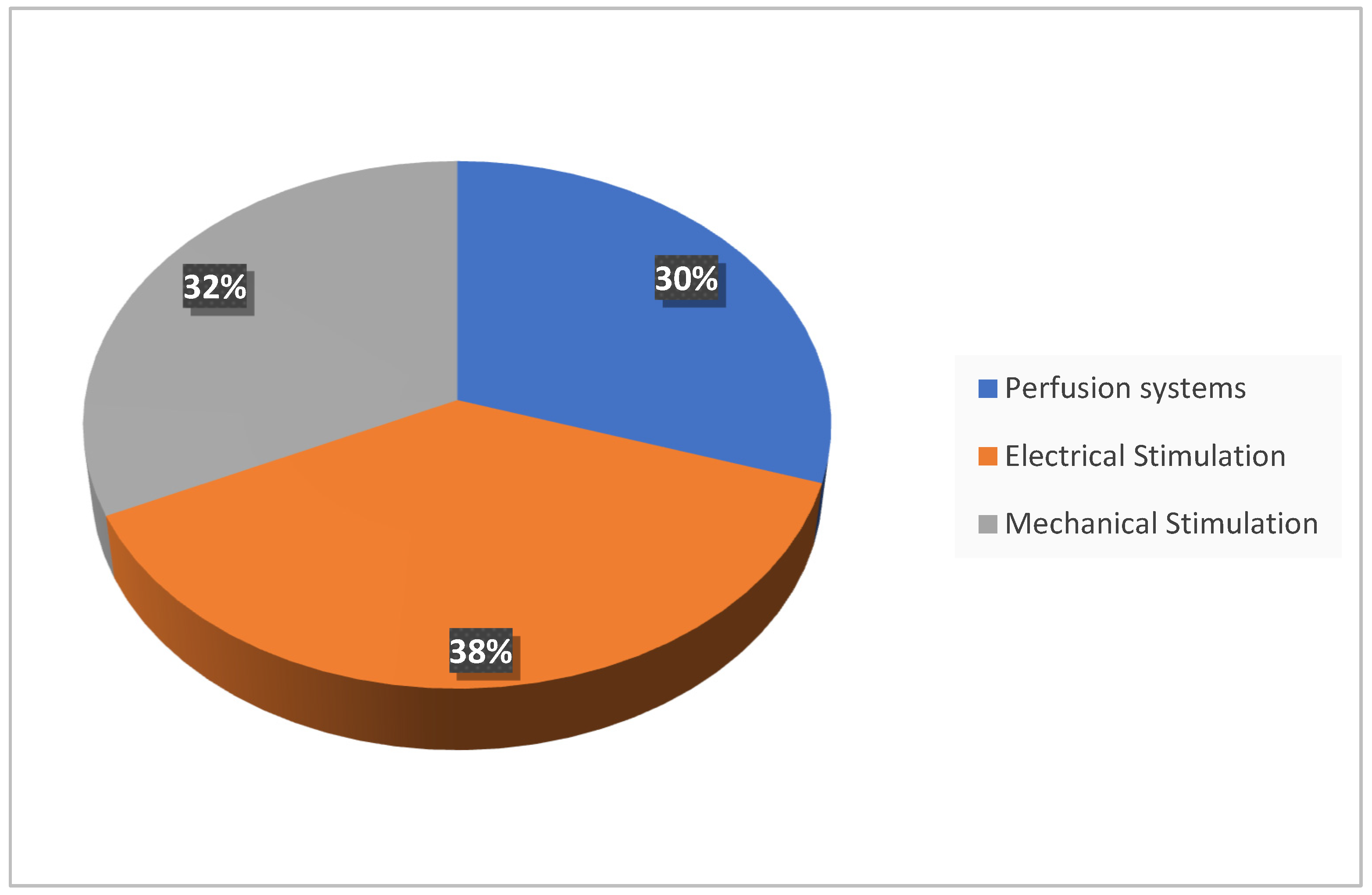
2.4. Bioreactors for Cardiac Maturation: Perfusion, Electrical, and Mechanical Stimulation
2.4.1. Perfusion Bioreactors for Cardiac Tissue Maturation
2.4.2. Electrical Stimulation Bioreactors for Cardiac Tissue Engineering
2.4.3. Mechanical Stimulation Bioreactors for Cardiac Tissue Maturation
2.5. Challenges in Cardiovascular Tissue Engineering
3. Deep Learning in Tissue Engineering: A New Frontier
3.1. How Can Deep Learning Support Cardiac Regeneration?
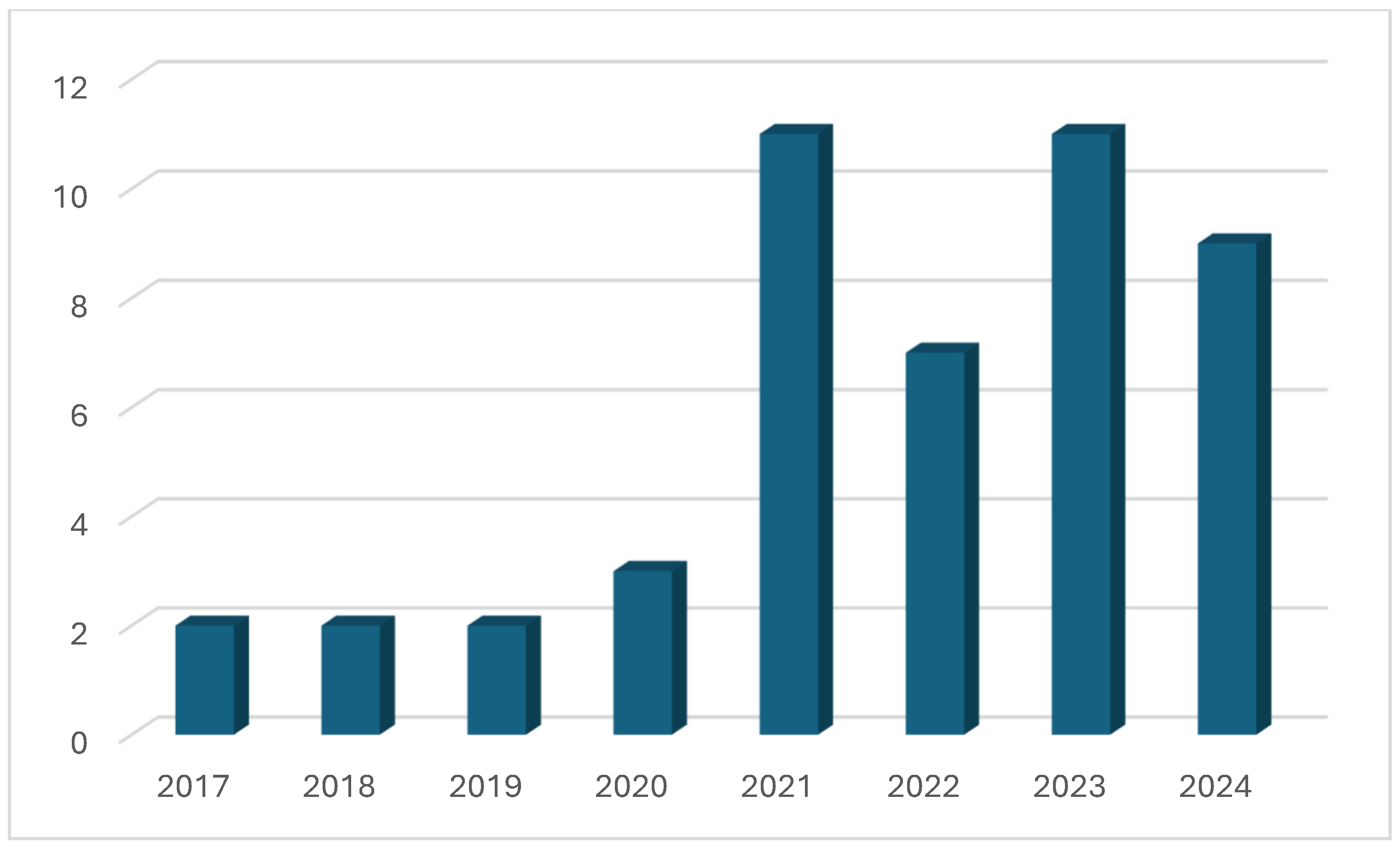
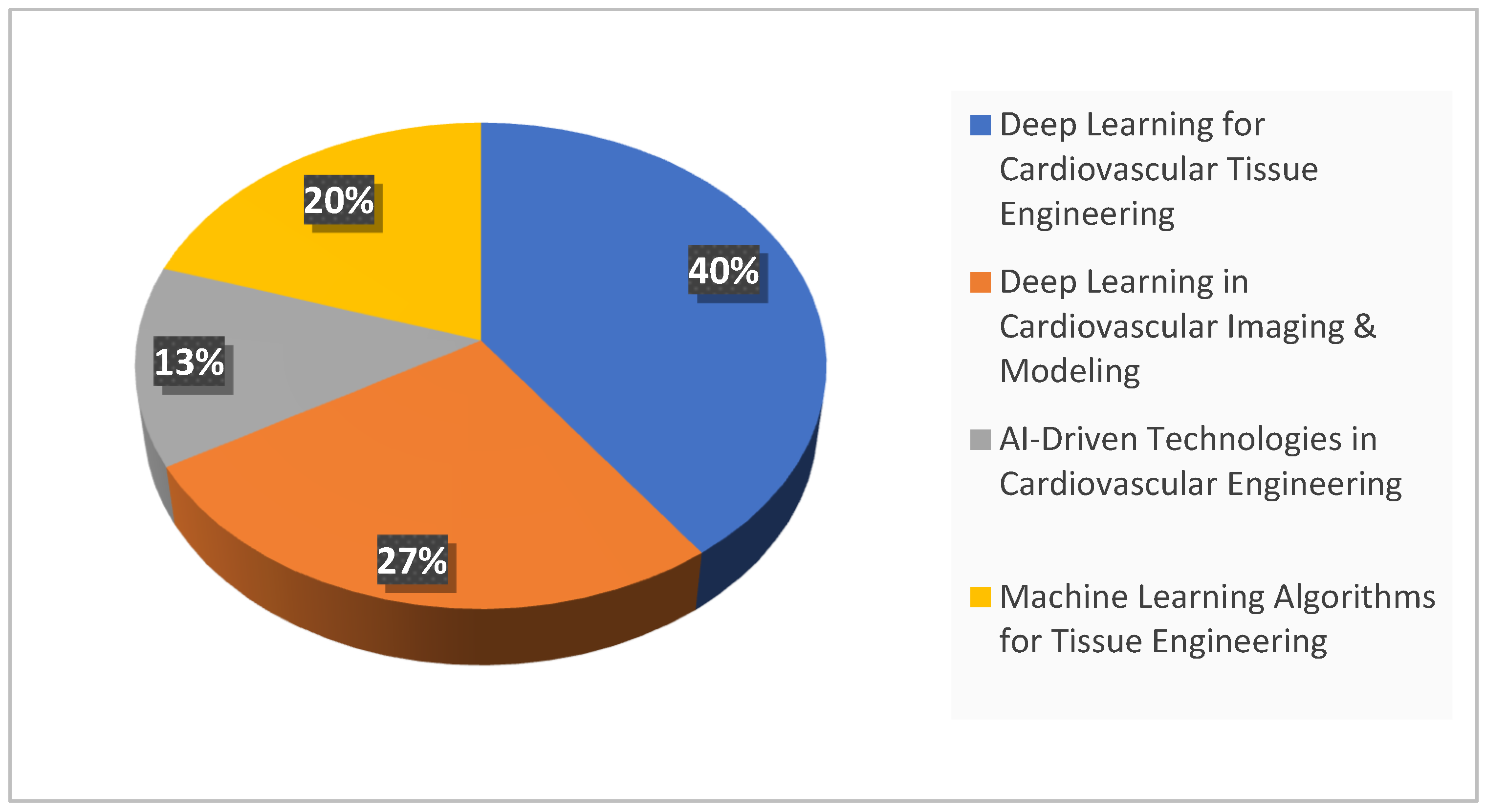
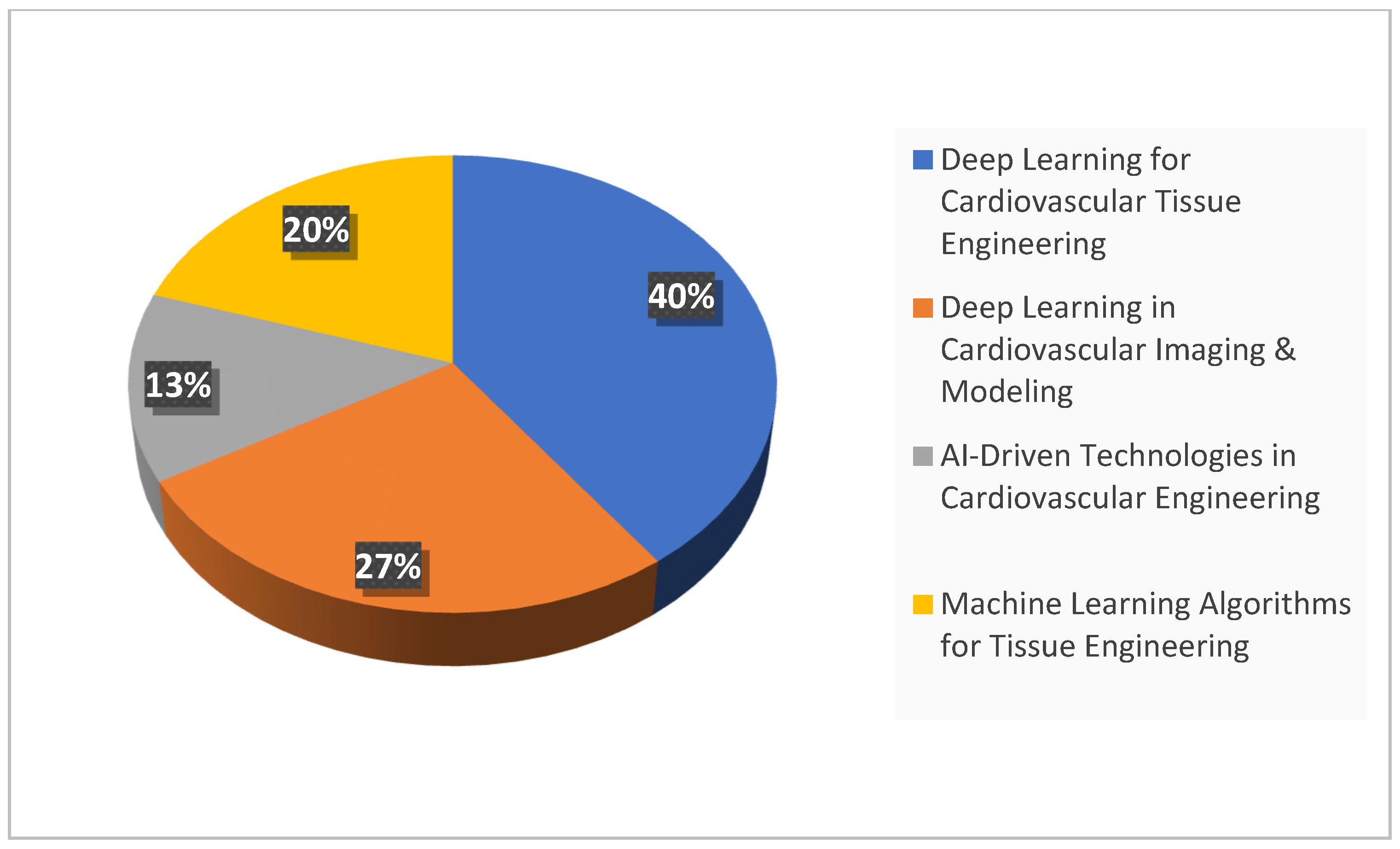
3.2. Recent Applications
4. Integrating Deep Learning into Tissue Engineering Processes
4.1. AI-Driven Optimization of Scaffold Design
4.2. Personalized Treatment Approaches in Regenerative Medicine
5. Challenges and Limitations of Deep Learning in Tissue Engineering
- Limited access to large, well-annotated datasets—The performance of DL algorithms is highly dependent on the volume and quality of training data. In cardiovascular tissue engineering, access to such data is restricted due to several factors:
- ○
- Limited availability of tissue samples, as bioengineered tissues are obtained through advanced recellularization and 3D bioprinting techniques, and relevant experimental data are scattered across specialized laboratories.
- ○
- Complex and subjective data annotation, requiring expertise in cell biology and cardiovascular pathology, making the process costly and time-consuming.
- ○
- Data heterogeneity, resulting from variability in decellularization, recellularization, and bioreactor methods, making it difficult to develop generalizable DL models.
- ○
- Potential solutions include establishing international consortia for data collection and standardization, developing public databases, and implementing semi-supervised learning techniques to reduce reliance on manual labeling.
- Need for interpretable models for clinical application—Deep learning models are often regarded as “black boxes”, which limits their acceptance by medical professionals. In cardiovascular tissue engineering, interpretability is crucial because of the following:
- ○
- Clinicians must understand how and why an AI model recommends specific recellularization protocols or scaffold optimizations.
- ○
- Regulatory bodies require scientific justification and auditing of AI models before they can be implemented in regenerative medicine.
- Ethical and regulatory barriers to AI use in regenerative medicine, raising several concerns:
- ○
- Patient data protection is in compliance with GDPR and HIPAA regulations, ensuring confidentiality and data security.
- ○
- Human oversight in AI-driven decisions, preventing errors that could impact patient safety.
- ○
- Clear definition of legal responsibility in cases where AI-driven recellularization protocols fail to ensure scaffold integration.
- ○
- Close collaboration among AI experts, biomedical researchers, and regulatory authorities is necessary to develop a transparent ethical framework for AI use in tissue engineering.
- High costs and implementation complexity, requiring significant investments in infrastructure and computational resources:
- ○
- Training DL models requires high-performance processors (GPUs or TPUs), which may be unaffordable for smaller research laboratories.
- ○
- Generating experimental data involves costly cell cultures, bioreactor tests, and histological analyses.
- ○
- Integrating AI into biomedical workflows is challenging due to a lack of AI expertise in most research centers.
- ○
- Potential solutions include leveraging transfer learning, cloud computing for distributed processing, and developing open-source AI platforms specifically for tissue engineering applications.
- Challenges specific to AI-driven scaffold and bioreactor optimization:
- ○
- Optimizing biomimetic scaffolds by predicting mechanical and biochemical behavior requires extensive experimental validation.
- ○
- Simulating tissue maturation in bioreactors involves modeling cellular responses to mechanical and electrical stimuli, yet generalizing these models across different scaffold types remains a challenge.
- ○
- Researchers are exploring multimodal learning algorithms, which integrate microscopic imaging with experimental data, improving predictive accuracy for tissue regeneration.
6. Future Directions and Conclusions
Author Contributions
Funding
Data Availability Statement
Conflicts of Interest
Abbreviations
| 3 D | Three-Dimensional |
| AI | Artificial Intelligence |
| API | Application Programming Interface |
| BERT | Bidirectional Encoder Representations from Transformers |
| CFD | Computational Fluid Dynamics |
| CMR | Cardiovascular Magnetic Resonance |
| CNN | Convolutional Neural Network |
| CT | Computed Tomography |
| DCD | Donation after Circulatory Death |
| dECM | Decellularized Extracellular Matrix |
| DL | Deep Learning |
| ECM | Extracellular Matrix |
| ESC | Embryonic Stem Cell |
| FGF | Fibroblast Growth Factor |
| GAN | Generative Adversarial Network |
| GPU | Graphics Processing Unit |
| iPSC | Induced Pluripotent Stem Cell |
| iPSC-CM | Induced Pluripotent Stem Cell-derived Cardiomyocyte |
| lncRNAs | Long Non-Coding RNAs |
| LSTM | Long Short-Term Memory |
| ML | Machine Learning |
| MSC | Mesenchymal Stem Cell |
| NLP | Natural Language Processing |
| RGD | Arginine–Glycine–Aspartic Acid (Peptide Sequence) |
| RL | Reinforcement Learning |
| RNA | Ribonucleic Acid |
| RNN | Recurrent Neural Network |
| scRNA | Single-Cell RNA Sequencing |
| SEM | Scanning Electron Microscopy |
| SVM | Support Vector Machine |
| TGF-β | Transforming Growth Factor Beta |
| TPU | Tensor Processing Unit |
| VAE | Variational Autoencoder |
| VEGF | Vascular Endothelial Growth Factor |
| XAI | Explainable AI |
References
- Vacanti, C.A.; Langer, R.; Schloo, B.; Vacanti, J.P. Synthetic polymers seeded with chondrocytes provide a template for new cartilage formation. Plast. Reconstr. Surg. 1991, 88, 753–759. [Google Scholar] [CrossRef]
- Suganya, R.; Swathi, B.; Palukuru, S.A.; Eshani, T. Exploring Heart Disease: Perspectives and Visualizations. Int. J. Sci. Res. Comput. Sci. Eng. Inf. Technol. 2024, 10, 143–149. [Google Scholar]
- Cicha, I.; Alexiou, C. Cardiovascular applications of magnetic particles. J. Magn. Magn. Mater. 2021, 518, 167428. [Google Scholar] [CrossRef]
- Deszcz, I. Stem Cell-Based Therapy and Cell-Free Therapy as an Alternative Approach for Cardiac Regeneration. Stem Cells Int. 2023, 2023, 2729377. [Google Scholar] [CrossRef]
- Shokrollahi, P.; Omidi, Y.; Cubeddu, L.X.; Omidian, H. Conductive polymers for cardiac tissue engineering and regeneration. J. Biomed. Mater. Res. Part B Appl. Biomater. 2023, 111, 1979–1995. [Google Scholar] [CrossRef]
- Scafa Udriște, A.; Niculescu, A.G.; Iliuță, L.; Bajeu, T.; Georgescu, A.; Grumezescu, A.M.; Bădilă, E. Progress in biomaterials for cardiac tissue engineering and regeneration. Polymers 2023, 15, 1177. [Google Scholar] [CrossRef] [PubMed]
- Zheng, Z.; Tang, W.; Li, Y.; Ai, Y.; Tu, Z.; Yang, J.; Fan, C. Advancing cardiac regeneration through 3D bioprinting: Methods, applications, and future directions. Heart Fail. Rev. 2024, 29, 599–613. [Google Scholar] [CrossRef] [PubMed]
- Zebrowski, D.C.; Becker, R.; Engel, F.B. Towards regenerating the mammalian heart: Challenges in evaluating experimentally induced adult mammalian cardiomyocyte proliferation. Am. J. Physiol.-Heart Circ. Physiol. 2016, 310, H1045–H1054. [Google Scholar] [CrossRef] [PubMed]
- de Wit, L.; Fang, J.; Neef, K.; Xiao, J.A.; Doevendans, P.; Schiffelers, R.M.; Sluijter, J.P. Cellular and molecular mechanism of cardiac regeneration: A comparison of newts, zebrafish, and mammals. Biomolecules 2020, 10, 1204. [Google Scholar] [CrossRef]
- Vasu, S.; Zhou, J.; Chen, J.; Johnston, P.V.; Kim, D.H. Biomaterials-based approaches for cardiac regeneration. Korean Circ. J. 2021, 51, 943–960. [Google Scholar] [CrossRef]
- Li, H.; Bao, M.; Nie, Y. Extracellular matrix–based biomaterials for cardiac regeneration and repair. Heart Fail. Rev. 2021, 26, 1231–1248. [Google Scholar] [CrossRef]
- Leach, J.P.; Martin, J.F. Cardiomyocyte proliferation for therapeutic regeneration. Curr. Cardiol. Rep. 2018, 20, 63. [Google Scholar] [CrossRef]
- Yuan, T.; Krishnan, J. Non-coding RNAs in cardiac regeneration. Front. Physiol. 2021, 12, 650566. [Google Scholar] [CrossRef] [PubMed]
- Stehlik, J.; Kobashigawa, J.; Hunt, S.A.; Reichenspurner, H.; Kirklin, J.K. Honoring 50 years of clinical heart transplantation in circulation: In-depth state-of-the-art review. Circulation 2018, 137, 71–87. [Google Scholar] [CrossRef] [PubMed]
- Crespo-Leiro, M.G.; Costanzo, M.R.; Gustafsson, F.; Khush, K.K.; Macdonald, P.S.; Potena, L.; Stehlik, J.; Zuckermann, A.; Mehra, M.R. Heart transplantation: Focus on donor recovery strategies, left ventricular assist devices, and novel therapies. Eur. Heart J. 2022, 43, 2237–2246. [Google Scholar] [CrossRef]
- Sohn, S.; Buskirk, M.V.; Buckenmeyer, M.J.; Londono, R.; Faulk, D. Whole organ engineering: Approaches, challenges, and future directions. Appl. Sci. 2020, 10, 4277. [Google Scholar] [CrossRef]
- Khush, K.K.; Hsich, E.; Potena, L.; Cherikh, W.S.; Chambers, D.C.; Harhay, M.O.; Hayes, D.; Perch, M.; Sadavarte, A.; Toll, A.; et al. The International Thoracic Organ Transplant Registry of the International Society for Heart and Lung Transplantation: Thirty-eighth adult heart transplantation report—2021; focus on recipient characteristics. J. Heart Lung Transplant. 2021, 40, 1035–1049. [Google Scholar] [CrossRef]
- Truby, L.K.; Casalinova, S.; Patel, C.B.; Agarwal, R.; Holley, C.L.; Mentz, R.J.; Milano, C.; Bryner, B.; Schroder, J.N.; Devore, A.D. Donation after circulatory death in heart transplantation: History, outcomes, clinical challenges, and opportunities to expand the donor pool. J. Card. Fail. 2022, 28, 1456–1463. [Google Scholar] [CrossRef]
- Chih, S.; Patel, J. Desensitization strategies in adult heart transplantation—Will persistence pay off? J. Heart Lung Transplant. 2016, 35, 962–972. [Google Scholar] [CrossRef]
- Boulet, J.; Cunningham, J.W.; Mehra, M.R. Cardiac xenotransplantation: Challenges, evolution, and advances. Basic Transl. Sci. 2022, 7, 716–729. [Google Scholar]
- Ebrahimi, B. In vivo reprogramming for heart regeneration: A glance at efficiency, environmental impacts, challenges and future directions. J. Mol. Cell. Cardiol. 2017, 108, 61–72. [Google Scholar] [CrossRef]
- Lu, X.; Xu, Z.; Shu, F.; Wang, Y.; Han, Y.; Yang, X.; Shi, P.; Fan, C.; Wang, L.; Yu, F.; et al. Reactive oxygen species responsive multifunctional fusion extracellular Nanovesicles: Prospective treatments for acute heart transplant rejection. Adv. Mater. 2024, 36, 2406758. [Google Scholar] [CrossRef] [PubMed]
- Bejleri, D.; Davis, M.E. Decellularized extracellular matrix materials for cardiac repair and regeneration. Adv. Healthc. Mater. 2019, 8, 1801217. [Google Scholar] [CrossRef] [PubMed]
- Zhang, X.; Chen, X.; Hong, H.; Hu, R.; Liu, J.; Liu, C. Decellularized extracellular matrix scaffolds: Recent trends and emerging strategies in tissue engineering. Bioact. Mater. 2022, 10, 15–31. [Google Scholar] [CrossRef]
- Hochman-Mendez, C.; Pereira de Campos, D.B.; Pinto, R.S.; Mendes, B.J.D.S.; Rocha, G.M.; Monnerat, G.; Weissmuller, G.; Sampaio, L.C.; Carvalho, A.B.; de Carvalho, A.C.C.; et al. Tissue-engineered human embryonic stem cell-containing cardiac patches: Evaluating recellularization of decellularized matrix. J. Tissue Eng. 2020, 11, 2041731420921482. [Google Scholar] [CrossRef] [PubMed]
- Yang, J.; Dang, H.; Xu, Y. Recent advancement of decellularization extracellular matrix for tissue engineering and biomedical application. Artif. Organs 2022, 46, 549–567. [Google Scholar] [CrossRef]
- Hsieh, D.J.; Srinivasan, P.; Yen, K.C.; Yeh, Y.C.; Chen, Y.J.; Wang, H.C.; Tarng, Y.W. Protocols for the preparation and characterization of decellularized tissue and organ scaffolds for tissue engineering. BioTechniques 2021, 70, 107–115. [Google Scholar] [CrossRef]
- Wang, B.; Qinglai, T.; Yang, Q.; Li, M.; Zeng, S.; Yang, X.; Xiao, Z.; Tong, X.; Lei, L.; Li, S. Functional acellular matrix for tissue repair. Mater. Today Bio 2023, 18, 100530. [Google Scholar] [CrossRef]
- Barbulescu, G.I.; Bojin, F.M.; Ordodi, V.L.; Goje, I.D.; Barbulescu, A.S.; Paunescu, V. Decellularized extracellular matrix scaffolds for cardiovascular tissue engineering: Current techniques and challenges. Int. J. Mol. Sci. 2022, 23, 13040. [Google Scholar] [CrossRef]
- Zhao, G.; Zhang, X.; Lu, T.J.; Xu, F. Recent advances in electrospun nanofibrous scaffolds for cardiac tissue engineering. Adv. Funct. Mater. 2015, 25, 5726–5738. [Google Scholar] [CrossRef]
- Zhang, Y.; Zhang, C.; Li, Y.; Zhou, L.; Dan, N.; Min, J.; Chen, Y.; Wang, Y. Evolution of biomimetic ECM scaffolds from decellularized tissue matrix for tissue engineering: A comprehensive review. Int. J. Biol. Macromol. 2023, 246, 125672. [Google Scholar] [CrossRef]
- Nosrati, H.; Nosrati, M. Artificial intelligence in regenerative medicine: Applications and implications. Biomimetics 2023, 8, 442. [Google Scholar] [CrossRef]
- Bagherpour, R.; Bagherpour, G.; Mohammadi, P. Application of Artificial Intelligence in tissue engineering. Tissue Eng. Part B Rev. 2024, 31, 31–43. [Google Scholar] [CrossRef]
- Guo, J.L.; Januszyk, M.; Longaker, M.T. Machine learning in tissue engineering. Tissue Eng. Part A 2023, 29, 2–19. [Google Scholar] [CrossRef] [PubMed]
- Saini, G.; Segaran, N.; Mayer, J.L.; Saini, A.; Albadawi, H.; Oklu, R. Applications of 3D bioprinting in tissue engineering and regenerative medicine. J. Clin. Med. 2021, 10, 4966. [Google Scholar] [CrossRef]
- Mulaudzi, P.E.; Abrahamse, H.; Crous, A. Insights on three dimensional organoid studies for stem cell therapy in regenerative medicine. Stem Cell Rev. Rep. 2024, 20, 509–523. [Google Scholar] [CrossRef]
- Sniecinski, I.; Seghatchian, J. Artificial intelligence: A joint narrative on potential use in pediatric stem and immune cell therapies and regenerative medicine. Transfus. Apher. Sci. 2018, 57, 422–424. [Google Scholar] [CrossRef]
- Tricomi, B.J.; Dias, A.D.; Corr, D.T. Stem cell bioprinting for applications in regenerative medicine. Ann. N. Y. Acad. Sci. 2016, 1383, 115–124. [Google Scholar] [CrossRef] [PubMed]
- Tadevosyan, K.; Iglesias-García, O.; Mazo, M.M.; Prósper, F.; Raya, A. Engineering and assessing cardiac tissue complexity. Int. J. Mol. Sci. 2021, 22, 1479. [Google Scholar] [CrossRef]
- Theus, A.S.; Tomov, M.L.; Cetnar, A.; Lima, B.; Nish, J.; McCoy, K.; Mahmoudi, M.; Serpooshan, V. Biomaterial approaches for cardiovascular tissue engineering. Emergent Mater. 2019, 2, 193–207. [Google Scholar] [CrossRef]
- Shinoka, T. What is the best material for extracardiac Fontan operation? J. Thorac. Cardiovasc. Surg. 2017, 153, 1551–1552. [Google Scholar] [CrossRef] [PubMed]
- Watanabe, T.; Hatayama, N.; Guo, M.; Yuhara, S.; Shinoka, T. Bridging the Gap: Advances and Challenges in Heart Regeneration from In Vitro to In Vivo Applications. Bioengineering 2024, 11, 954. [Google Scholar] [CrossRef] [PubMed]
- Asl, S.K.; Rahimzadegan, M.; Asl, A.K. Progress in cardiac tissue engineering and regeneration: Implications of gelatin-based hybrid scaffolds. Int. J. Biol. Macromol. 2024, 261, 129924. [Google Scholar] [CrossRef]
- Kc, P.; Hong, Y.; Zhang, G. Cardiac tissue-derived extracellular matrix scaffolds for myocardial repair: Advantages and challenges. Regen. Biomater. 2019, 6, 185–199. [Google Scholar] [CrossRef]
- Yao, Q.; Zheng, Y.W.; Lan, Q.H.; Kou, L.; Xu, H.L.; Zhao, Y.Z. Recent development and biomedical applications of decellularized extracellular matrix biomaterials. Mater. Sci. Eng. C 2019, 104, 109942. [Google Scholar] [CrossRef]
- Kafili, G.; Kabir, H.; Jalali Kandeloos, A.; Golafshan, E.; Ghasemi, S.; Mashayekhan, S.; Taebnia, N. Recent advances in soluble decellularized extracellular matrix for heart tissue engineering and organ modeling. J. Biomater. Appl. 2023, 38, 577–604. [Google Scholar] [CrossRef] [PubMed]
- Mendibil, U.; Ruiz-Hernandez, R.; Retegi-Carrion, S.; Garcia-Urquia, N.; Olalde-Graells, B.; Abarrategi, A. Tissue-specific decellularization methods: Rationale and strategies to achieve regenerative compounds. Int. J. Mol. Sci. 2020, 21, 5447. [Google Scholar] [CrossRef]
- Qiao, S.; Peijie, T.; Nan, J. Crosslinking strategies of decellularized extracellular matrix in tissue regeneration. J. Biomed. Mater. Res. Part A 2024, 112, 640–671. [Google Scholar] [CrossRef]
- Parmaksiz, M.; Dogan, A.; Odabas, S.; Elçin, A.E.; Elçin, Y.M. Clinical applications of decellularized extracellular matrices for tissue engineering and regenerative medicine. Biomed. Mater. 2016, 11, 022003. [Google Scholar] [CrossRef]
- Roacho-Pérez, J.A.; Garza-Treviño, E.N.; Moncada-Saucedo, N.K.; Carriquiry-Chequer, P.A.; Valencia-Gómez, L.E.; Matthews, E.R.; Gomez-Flores, V.; Delgado-Gonzalez, P.; Delgado-Gallegos, J.L.; Islas, J.F.; et al. Artificial scaffolds in cardiac tissue engineering. Life 2022, 12, 1117. [Google Scholar] [CrossRef]
- Garciamendez-Mijares, C.E.; Kaplan, D.L.; Wang, D.; González, F.Z.; Li, G.; Tang, G.; Guo, J.; Sahoo, J.K.; Lian, L.; Cai, L.; et al. Rapid Volumetric Bioprinting of Decellularized Extracellular Matrix Bioinks. Adv. Mater. 2024, 36, 2304846. [Google Scholar] [CrossRef]
- Truskey, G.A. Advancing cardiovascular tissue engineering. F1000Research 2016, 5, 1045. [Google Scholar] [CrossRef] [PubMed]
- Guan, X.; Xu, W.; Zhang, H.; Wang, Q.; Yu, J.; Zhang, R.; Chen, Y.; Xia, Y.; Wang, J.; Wang, D. Transplantation of human induced pluripotent stem cell-derived cardiomyocytes improves myocardial function and reverses ventricular remodeling in infarcted rat hearts. Stem Cell Res. Ther. 2020, 11, 73. [Google Scholar] [CrossRef] [PubMed]
- Pang, L. Toxicity testing in the era of induced pluripotent stem cells: A perspective regarding the use of patient-specific induced pluripotent stem cell–derived cardiomyocytes for cardiac safety evaluation. Curr. Opin. Toxicol. 2020, 23, 50–55. [Google Scholar] [CrossRef]
- Svystonyuk, D.A.; Mewhort, H.E.; Fedak, P.W. Using acellular bioactive extracellular matrix scaffolds to enhance endogenous cardiac repair. Front. Cardiovasc. Med. 2018, 5, 35. [Google Scholar] [CrossRef]
- Karakikes, I.; Ameen, M.; Termglinchan, V.; Wu, J.C. Human induced pluripotent stem cell–derived cardiomyocytes: Insights into molecular, cellular, and functional phenotypes. Circ. Res. 2015, 117, 80–88. [Google Scholar] [CrossRef] [PubMed]
- Ovics, P.; Regev, D.; Baskin, P.; Davidor, M.; Shemer, Y.; Neeman, S.; Ben-Haim, Y.; Binah, O. Drug development and the use of induced pluripotent stem cell-derived cardiomyocytes for disease modeling and drug toxicity screening. Int. J. Mol. Sci. 2020, 21, 7320. [Google Scholar] [CrossRef]
- Machiraju, P.; Greenway, S.C. Current methods for the maturation of induced pluripotent stem cell-derived cardiomyocytes. World J. Stem Cells 2019, 11, 33. [Google Scholar] [CrossRef]
- Tan, Y.; Richards, D.; Xu, R.; Stewart-Clark, S.; Mani, S.K.; Borg, T.K.; Menick, D.R.; Tian, B.; Mei, Y. Silicon nanowire-induced maturation of cardiomyocytes derived from human induced pluripotent stem cells. Nano Lett. 2015, 15, 2765–2772. [Google Scholar] [CrossRef]
- Perea-Gil, I.; Gálvez-Montón, C.; Prat-Vidal, C.; Jorba, I.; Segú-Vergés, C.; Roura, S.; Soler-Botija, C.; Iborra-Egea, O.; Revuelta-López, E.; Fernández, M.A.; et al. Head-to-head comparison of two engineered cardiac grafts for myocardial repair: From scaffold characterization to pre-clinical testing. Sci. Rep. 2018, 8, 6708. [Google Scholar] [CrossRef]
- Tzatzalos, E.; Abilez, O.J.; Shukla, P.; Wu, J.C. Engineered heart tissues and induced pluripotent stem cells: Macro-and microstructures for disease modeling, drug screening, and translational studies. Adv. Drug Deliv. Rev. 2016, 96, 234–244. [Google Scholar] [CrossRef]
- Kane, C.; Couch, L.; Terracciano, C.M. Excitation–contraction coupling of human induced pluripotent stem cell-derived cardiomyocytes. Front. Cell Dev. Biol. 2015, 3, 59. [Google Scholar] [CrossRef]
- Lee, W.H.; Chen, W.-Y.; Shao, N.-Y.; Xiao, D.; Qin, X.; Baker, N.; Bae, H.R.; Wei, T.-T.; Wang, Y.; Shukla, P.; et al. Comparison of non-coding RNAs in exosomes and functional efficacy of human embryonic stem cell-versus induced pluripotent stem cell-derived cardiomyocytes. Stem Cells 2017, 35, 2138–2149. [Google Scholar] [CrossRef] [PubMed]
- Suh, T.C.; Amanah, A.Y.; Gluck, J.M. Electrospun scaffolds and induced pluripotent stem cell-derived cardiomyocytes for cardiac tissue engineering applications. Bioengineering 2020, 7, 105. [Google Scholar] [CrossRef] [PubMed]
- Fong, A.H.; Romero-López, M.; Heylman, C.M.; Keating, M.; Tran, D.; Sobrino, A.; Tran, A.Q.; Pham, H.H.; Fimbres, C.; Gershon, P.D.; et al. Three-dimensional adult cardiac extracellular matrix promotes maturation of human induced pluripotent stem cell-derived cardiomyocytes. Tissue Eng. Part A 2016, 22, 1016–1025. [Google Scholar] [CrossRef] [PubMed]
- Iseoka, H.; Miyagawa, S.; Fukushima, S.; Saito, A.; Masuda, S.; Yajima, S.; Ito, E.; Sougawa, N.; Takeda, M.; Harada, A.; et al. Pivotal role of non-cardiomyocytes in electromechanical and therapeutic potential of induced pluripotent stem cell-derived engineered cardiac tissue. Tissue Eng. Part A 2018, 24, 287–300. [Google Scholar] [CrossRef]
- Visone, R.; Talò, G.; Lopa, S.; Rasponi, M.; Moretti, M. Enhancing all-in-one bioreactors by combining interstitial perfusion, electrical stimulation, on-line monitoring and testing within a single chamber for cardiac constructs. Sci. Rep. 2018, 8, 16944. [Google Scholar] [CrossRef]
- Lux, M.; Andrée, B.; Horvath, T.; Nosko, A.; Manikowski, D.; Hilfiker-Kleiner, D.; Haverich, A.; Hilfiker, A. In vitro maturation of large-scale cardiac patches based on a perfusable starter matrix by cyclic mechanical stimulation. Acta Biomater. 2016, 30, 177–187. [Google Scholar] [CrossRef]
- Putame, G.; Gabetti, S.; Carbonaro, D.; Di Meglio, F.; Romano, V.; Sacco, A.M.; Belviso, I.; Serino, G.; Bignardi, C.; Morbiducci, U.; et al. Compact and tunable stretch bioreactor advancing tissue engineering implementation. Application to engineered cardiac constructs. Med. Eng. Phys. 2020, 84, 1–9. [Google Scholar] [CrossRef]
- Massai, D.; Pisani, G.; Isu, G.; Ruiz, A.R.; Cerino, G.; Galluzzi, R.; Pisanu, A.; Tonoli, A.; Bignardi, C.; Audenino, A.L.; et al. Bioreactor platform for biomimetic culture and in situ monitoring of the mechanical response of in vitro engineered models of cardiac tissue. Front. Bioeng. Biotechnol. 2020, 8, 733. [Google Scholar] [CrossRef]
- Gagliardi, T.M.; Chelikani, R.; Yang, Y.; Tuozzolo, G.; Yuan, H. Development of a novel, high-throughput screening tool for efficient perfusion-based cell culture process development. Biotechnol. Prog. 2019, 35, e2811. [Google Scholar] [CrossRef] [PubMed]
- Cruz-Moreira, D.; Visone, R.; Vasques-Nóvoa, F.; Barros, A.S.; Leite-Moreira, A.; Redaelli, A.; Moretti, M.; Rasponi, M. Assessing the influence of perfusion on cardiac microtissue maturation: A heart-on-chip platform embedding peristaltic pump capabilities. Biotechnol. Bioeng. 2021, 118, 3128–3137. [Google Scholar] [CrossRef]
- Nokhbatolfoghahaei, H.; Bohlouli, M.; Adavi, K.; Paknejad, Z.; Rad, M.R.; Khani, M.M.; Salehi-Nik, N.; Khojasteh, A. Computational modeling of media flow through perfusion-based bioreactors for bone tissue engineering. Proc. Inst. Mech. Eng. Part H J. Eng. Med. 2020, 234, 1397–1408. [Google Scholar] [CrossRef] [PubMed]
- Uzarski, J.S.; Bijonowski, B.M.; Wang, B.; Ward, H.H.; Wandinger-Ness, A.; Miller, W.M.; Wertheim, J.A. Dual-purpose bioreactors to monitor noninvasive physical and biochemical markers of kidney and liver scaffold recellularization. Tissue Eng. Part C Methods 2015, 21, 1032–1043. [Google Scholar] [CrossRef]
- de Bournonville, S.; Lambrechts, T.; Vanhulst, J.; Luyten, F.P.; Papantoniou, I.; Geris, L. Towards self-regulated bioprocessing: A compact benchtop bioreactor system for monitored and controlled 3D cell and tissue culture. Biotechnol. J. 2019, 14, 1800545. [Google Scholar] [CrossRef] [PubMed]
- Stoppel, W.L.; Kaplan, D.L.; Black, L.D., III. Electrical and mechanical stimulation of cardiac cells and tissue constructs. Adv. Drug Deliv. Rev. 2016, 96, 135–155. [Google Scholar] [CrossRef]
- Wanjare, M.; Huang, N.F. Regulation of the microenvironment for cardiac tissue engineering. Regen. Med. 2017, 12, 187–201. [Google Scholar] [CrossRef]
- Carlos-Oliveira, M.; Lozano-Juan, F.; Occhetta, P.; Visone, R.; Rasponi, M. Current strategies of mechanical stimulation for maturation of cardiac microtissues. Biophys. Rev. 2021, 13, 717–727. [Google Scholar] [CrossRef]
- Hong, Y.; Zhao, Y.; Li, H.; Yang, Y.; Chen, M.; Wang, X.; Luo, M.; Wang, K. Engineering the maturation of stem cell-derived cardiomyocytes. Front. Bioeng. Biotechnol. 2023, 11, 1155052. [Google Scholar] [CrossRef]
- Dou, W.; Daoud, A.; Chen, X.; Wang, T.; Malhi, M.; Gong, Z.; Mirshafiei, F.; Zhu, M.; Shan, G.; Huang, X.; et al. Ultrathin and flexible bioelectronic arrays for functional measurement of iPSC-cardiomyocytes under cardiotropic drug administration and controlled microenvironments. Nano Lett. 2023, 23, 2321–2331. [Google Scholar] [CrossRef]
- Visone, R.; Talò, G.; Occhetta, P.; Cruz-Moreira, D.; Lopa, S.; Pappalardo, O.A.; Redaelli, A.; Moretti, M.; Rasponi, M. A microscale biomimetic platform for generation and electro-mechanical stimulation of 3D cardiac microtissues. APL Bioeng. 2018, 2, 046102. [Google Scholar] [CrossRef]
- Roshanbinfar, K.; Vogt, L.; Greber, B.; Diecke, S.; Boccaccini, A.R.; Scheibel, T.; Engel, F.B. Electroconductive biohybrid hydrogel for enhanced maturation and beating properties of engineered cardiac tissues. Adv. Funct. Mater. 2018, 28, 1803951. [Google Scholar] [CrossRef]
- Bravo-Olín, J.; Martínez-Carreón, S.A.; Francisco-Solano, E.; Lara, A.R.; Beltran-Vargas, N.E. Analysis of the role of perfusion, mechanical, and electrical stimulation in bioreactors for cardiac tissue engineering. Bioprocess Biosyst. Eng. 2024, 47, 767–839. [Google Scholar] [CrossRef] [PubMed]
- Fukuda, R.; Gunawan, F.; Ramadass, R.; Beisaw, A.; Konzer, A.; Mullapudi, S.T.; Gentile, A.; Maischein, H.-M.; Graumann, J.; Stainier, D.Y. Mechanical forces regulate cardiomyocyte myofilament maturation via the VCL-SSH1-CFL axis. Dev. Cell 2019, 51, 62–77. [Google Scholar] [CrossRef]
- Song, M.; Jang, Y.; Kim, S.J.; Park, Y. Cyclic stretching induces maturation of human-induced pluripotent stem cell-derived cardiomyocytes through nuclear-mechanotransduction. Tissue Eng. Regen. Med. 2022, 19, 781–792. [Google Scholar] [CrossRef]
- Besser, R.R.; Ishahak, M.; Mayo, V.; Carbonero, D.; Claure, I.; Agarwal, A. Engineered microenvironments for maturation of stem cell derived cardiac myocytes. Theranostics 2018, 8, 124. [Google Scholar] [CrossRef]
- Tenreiro, M.F.; Almeida, H.V.; Calmeiro, T.; Fortunato, E.; Ferreira, L.; Alves, P.M.; Serra, M. Interindividual heterogeneity affects the outcome of human cardiac tissue decellularization. Sci. Rep. 2021, 11, 20834. [Google Scholar] [CrossRef] [PubMed]
- Stoian, A.; Adil, A.; Biniazan, F.; Haykal, S. Two decades of advances and limitations in organ recellularization. Curr. Issues Mol. Biol. 2024, 46, 9179–9214. [Google Scholar] [CrossRef] [PubMed]
- Kasravi, M.; Ahmadi, A.; Babajani, A.; Mazloomnejad, R.; Hatamnejad, M.R.; Shariatzadeh, S.; Bahrami, S.; Niknejad, H. Immunogenicity of decellularized extracellular matrix scaffolds: A bottleneck in tissue engineering and regenerative medicine. Biomater. Res. 2023, 27, 10. [Google Scholar] [CrossRef]
- Uriarte, J.J.; Uhl, F.E.; Enes, S.E.R.; Pouliot, R.A.; Weiss, D.J. Lung bioengineering: Advances and challenges in lung decellularization and recellularization. Curr. Opin. Organ Transplant. 2018, 23, 673–678. [Google Scholar] [CrossRef]
- Scarritt, M.E.; Pashos, N.C.; Bunnell, B.A. A review of cellularization strategies for tissue engineering of whole organs. Front. Bioeng. Biotechnol. 2015, 3, 43. [Google Scholar] [CrossRef]
- Zambon, J.P.; Atala, A.; Yoo, J.J. Methods to generate tissue-derived constructs for regenerative medicine applications. Methods 2020, 171, 3–10. [Google Scholar] [CrossRef]
- Rajab, T.K.; O’Malley, T.J.; Tchantchaleishvili, V. Decellularized scaffolds for tissue engineering: Current status and future perspective. Artif. Organs 2020, 44, 1031–1043. [Google Scholar] [CrossRef]
- Kc, P.; Shah, M.; Liao, J.; Zhang, G. Prevascularization of decellularized porcine myocardial slice for cardiac tissue engineering. ACS Appl. Mater. Interfaces 2017, 9, 2196–2204. [Google Scholar] [CrossRef]
- Anderson, J.M. Future challenges in the in vitro and in vivo evaluation of biomaterial biocompatibility. Regen. Biomater. 2016, 3, 73–77. [Google Scholar] [CrossRef]
- Zhu, M.; Li, W.; Dong, X.; Yuan, X.; Midgley, A.C.; Chang, H.; Wang, Y.; Wang, H.; Wang, K.; Ma, P.X.; et al. In vivo engineered extracellular matrix scaffolds with instructive niches for oriented tissue regeneration. Nat. Commun. 2019, 10, 4620. [Google Scholar] [CrossRef]
- Ma, Q.; Wang, X.; Feng, B.; Liang, C.; Wan, X.; El-Newehy, M.; Abdulhameed, M.M.; Mo, X.; Wu, J. Fiber configuration determines foreign body response of electrospun scaffolds: In vitro and in vivo assessments. Biomed. Mater. 2024, 19, 025007. [Google Scholar] [CrossRef] [PubMed]
- Yu, Y.; Zhang, W.; Liu, X.; Wang, H.; Shen, J.; Xiao, H.; Mei, J.; Chai, Y.; Wen, G. Extracellular matrix scaffold-immune microenvironment modulates tissue regeneration. Compos. Part B Eng. 2022, 230, 109524. [Google Scholar] [CrossRef]
- Saleh, L.S.; Bryant, S.J. The host response in tissue engineering: Crosstalk between immune cells and cell-laden scaffolds. Curr. Opin. Biomed. Eng. 2018, 6, 58–65. [Google Scholar] [CrossRef] [PubMed]
- Dulany, K.; Hepburn, K.; Goins, A.; Allen, J.B. In vitro and in vivo biocompatibility assessment of free radical scavenging nanocomposite scaffolds for bone tissue regeneration. J. Biomed. Mater. Res. Part A 2020, 108, 301–315. [Google Scholar] [CrossRef]
- Sumayya, A.S.; Muraleedhara Kurup, G. Biocompatibility of subcutaneously implanted marine macromolecules cross-linked bio-composite scaffold for cartilage tissue engineering applications. J. Biomater. Sci. Polym. Ed. 2018, 29, 257–276. [Google Scholar] [CrossRef]
- Gajendiran, M.; Choi, J.; Kim, S.J.; Kim, K.; Shin, H.; Koo, H.J.; Kim, K. Conductive biomaterials for tissue engineering applications. J. Ind. Eng. Chem. 2017, 51, 12–26. [Google Scholar] [CrossRef]
- Yang, D.; Xiao, J.; Wang, B.; Li, L.; Kong, X.; Liao, J. The immune reaction and degradation fate of scaffold in cartilage/bone tissue engineering. Mater. Sci. Eng. C 2019, 104, 109927. [Google Scholar] [CrossRef]
- Li, W.; Dai, F.; Zhang, S.; Xu, F.; Xu, Z.; Liao, S.; Zeng, L.; Song, L.; Ai, F. Pore size of 3D-printed polycaprolactone/polyethylene glycol/hydroxyapatite scaffolds affects bone regeneration by modulating macrophage polarization and the foreign body response. ACS Appl. Mater. Interfaces 2022, 14, 20693–20707. [Google Scholar] [CrossRef] [PubMed]
- Abdulghani, S.; Mitchell, G.R. Biomaterials for in situ tissue regeneration: A review. Biomolecules 2019, 9, 750. [Google Scholar] [CrossRef]
- Corona, B.T.; Greising, S.M. Challenges to acellular biological scaffold mediated skeletal muscle tissue regeneration. Biomaterials 2016, 104, 238–246. [Google Scholar] [CrossRef] [PubMed]
- Wu, P.; Xi, X.; Li, R.; Sun, G. Engineering polysaccharides for tissue repair and regeneration. Macromol. Biosci. 2021, 21, 2100141. [Google Scholar] [CrossRef] [PubMed]
- Lee, E.; Kim, H.J.; Shaker, M.R.; Ryu, J.R.; Ham, M.S.; Seo, S.H.; Kim, D.H.; Lee, K.; Jung, N.; Choe, Y.; et al. High-performance acellular tissue scaffold combined with hydrogel polymers for regenerative medicine. ACS Biomater. Sci. Eng. 2019, 5, 3462–3474. [Google Scholar] [CrossRef]
- Vedhanayagam, M.; Raja, I.S.; Molkenova, A.; Atabaev, T.S.; Sreeram, K.J.; Han, D.W. Carbon dots-mediated fluorescent scaffolds: Recent trends in image-guided tissue engineering applications. Int. J. Mol. Sci. 2021, 22, 5378. [Google Scholar] [CrossRef]
- Bermejillo Barrera, M.D.; Franco-Martínez, F.; Díaz Lantada, A. Artificial intelligence aided design of tissue engineering scaffolds employing virtual tomography and 3D convolutional neural networks. Materials 2021, 14, 5278. [Google Scholar] [CrossRef]
- Anwar, S.M.; Majid, M.; Qayyum, A.; Awais, M.; Alnowami, M.; Khan, M.K. Medical image analysis using convolutional neural networks: A review. J. Med. Syst. 2018, 42, 226. [Google Scholar] [CrossRef] [PubMed]
- Cullell-Dalmau, M.; Otero-Viñas, M.; Manzo, C. Research techniques made simple: Deep learning for the classification of dermatological images. J. Investig. Dermatol. 2020, 140, 507–514. [Google Scholar] [CrossRef] [PubMed]
- Xing, F.; Xie, Y.; Su, H.; Liu, F.; Yang, L. Deep learning in microscopy image analysis: A survey. IEEE Trans. Neural Netw. Learn. Syst. 2017, 29, 4550–4568. [Google Scholar] [CrossRef]
- de Haan, K.; Rivenson, Y.; Wu, Y.; Ozcan, A. Deep-learning-based image reconstruction and enhancement in optical microscopy. Proc. IEEE 2019, 108, 30–50. [Google Scholar] [CrossRef]
- Tsinganos, P.; Skodras, A.; Cornelis, J.; Cornelis, B.; Jansen, B. Hilbert sEMG data scanning for hand gesture recognition based on deep learning. Neural Comput. Appl. 2020, 33, 2645–2666. [Google Scholar] [CrossRef]
- Jakhar, K.; Hooda, N. Big Data Deep Learning Framework using Keras: A Case Study of Pneumonia Prediction. In Proceedings of the 2018 4th International Conference on Computing Communication and Automation (ICCCA), Greater Noida, India, 14–15 December 2018; pp. 1–5. [Google Scholar]
- Rafieyan, S.; Vasheghani-Farahani, E.; Baheiraei, N.; Keshavarz, H. MLATE: Machine learning for predicting cell behavior on cardiac tissue engineering scaffolds. Comput. Biol. Med. 2023, 158, 106804. [Google Scholar] [CrossRef]
- Loerakker, S.; Ristori, T. Computational modeling for cardiovascular tissue engineering: The importance of including cell behavior in growth and remodeling algorithms. Curr. Opin. Biomed. Eng. 2019, 15, 1–9. [Google Scholar] [CrossRef]
- Jeyaraman, M.; Jeyaraman, N.; Ratna, H.V.K.; Venkatesan, A.; Ramasubramanian, S.; Yadav, S. Leveraging Artificial Intelligence and Machine Learning in Regenerative Orthopedics: A Paradigm Shift in Patient Care. Cureus 2023, 15, e49756. [Google Scholar] [CrossRef]
- Santoro, D.; Ciano, T.; Ferrara, M. A comparison between machine and deep learning models on high stationarity data. Sci. Rep. 2024, 14, 19409. [Google Scholar] [CrossRef] [PubMed]
- Razavi, Z.-S.; Afkhami, H.; Tahmasebi-Ghorabi, S.; Soltani, M.; Farasati-Far, B.; Karimi-Rouzbahani, A.; Pazoki-Toroudi, H.; Afkhami, H.; Soltani, M.; Afkhami, H.; et al. Advancements in tissue engineering for cardiovascular health: A biomedical engineering perspective. Front. Bioeng. Biotechnol. 2024, 12, 1385124. [Google Scholar] [CrossRef]
- Shiri, F.; Perumal, T.; Mustapha, N.; Mohamed, R. A Comprehensive Overview and Comparative Analysis on Deep Learning Models: CNN, RNN, LSTM, GRU. J. Artif. Intell. 2023, 6, 301–360. [Google Scholar]
- Wang, P.; Shen, H.; Liu, H.; Shi, X.; Ning, H.; Sun, Y. 3D printing of tissue engineering scaffolds: A focus on vascular regeneration. Bio-Des. Manuf. 2021, 4, 344–378. [Google Scholar] [CrossRef] [PubMed]
- Atta Mills, E.F.E.; Deng, Z.; Zhong, Z.; Li, J. Data-driven prediction of soccer outcomes using enhanced machine and deep learning techniques. J. Big Data 2024, 11, 170. [Google Scholar] [CrossRef]
- Alsinglawi, B.; Alnajjar, F.; Novoa, M.; Karajeh, O.; Darwish, O.; Alorjani, M.; Mubin, O. Predicting Length of Stay for Cardiovascular Hospitalizations in the Intensive Care Unit: Machine Learning Approach. In Proceedings of the Annual International Conference of the IEEE Engineering in Medicine and Biology Society, Montreal, QC, Canada, 20–24 July 2020; pp. 5442–5445. [Google Scholar]
- Bonciog, D.D.; Ordodi, V.L.; Lascu, M.R.; Mâţiu-Iovan, L. Automation of Decellularization Process Using Artificial Neural Networks. In Proceedings of the 2023 17th International Conference on Engineering of Modern Electric Systems (EMES), Oradea, Romania, 9–10 June 2023; pp. 1–4. [Google Scholar]
- Bonciog, D.D.; Lascu, M.R.; Mâțiu-Iovan, L.; Ordodi, V.L. Automation and Optimization of Rat Heart Decellularization Using a Vibrating Fluid Column. Sensors 2023, 23, 4045. [Google Scholar] [CrossRef]
- Bonciog, D.D.; Ordodi, V.L.; Lascu, M.R.; Mâţiu-Iovan, L.; Ciobanu, D.C. Software Optimization used to Automate Decellularization. In Proceedings of the 2022 International Symposium on Electronics and Telecommunications (ISETC), Timisoara, Romania, 10–11 November 2022; pp. 1–5. [Google Scholar]
- Bonciog, D.D.; Ordodi, V.L.; Lascu, M.R.; Mâțiu-Iovan, L.; Ciobanu, D.C. Software Validation For Automatic Heart Decellularization. In Proceedings of the 2021 16th International Conference on Engineering of Modern Electric Systems (EMES), Oradea, Romania, 10–11 June 2021; pp. 1–4. [Google Scholar]
- Bonciog, D.D.; Lascu, M.R.; Mâțiu-Iovan, L.; Ionel, R.; Burian, C.A.; Ordodi, V.L. Modified Langendorff experimental device for rat heart decellularization with a vibrating fluid column. In Proceedings of the 2020 International Symposium on Electronics and Telecommunications (ISETC), Timisoara, Romania, 5–6 November 2020; pp. 1–4. [Google Scholar]
- Sermesant, M.; Delingette, H.; Cochet, H.; Ayache, N.; Jaïs, P. Applications of artificial intelligence in cardiovascular imaging. Nat. Rev. Cardiol. 2021, 18, 600–609. [Google Scholar] [CrossRef]
- Wang, G.; Ye, J.C.; De Man, B. Deep learning for tomographic image reconstruction. Nat. Mach. Intell. 2020, 2, 737–748. [Google Scholar] [CrossRef]
- Arzani, A.; Wang, J.-X.; Sacks, M.S.; Shadden, S.C. Machine Learning for Cardiovascular Biomechanics Modeling: Challenges and Beyond. Ann. Biomed. Eng. 2022, 50, 615–627. [Google Scholar] [CrossRef] [PubMed]
- Lu, H.; Yao, Y.; Wang, L.; Yan, J.; Tu, S.; Xie, Y.; He, W. Research Progress of Machine Learning and Deep Learning in Intelligent Diagnosis of the Coronary Atherosclerotic Heart Disease. Comput. Math. Methods Med. 2022, 2022, 3016532. [Google Scholar] [CrossRef] [PubMed]
- Wu, C.A.; Zhu, Y.; Woo, Y.J. Advances in 3D Bioprinting: Techniques, Applications, and Future Directions for Cardiac Tissue Engineering. Bioengineering 2023, 10, 842. [Google Scholar] [CrossRef]
- Kalkunte, N.; Cisneros, J.; Zoldan, J.; Castillo, E. A review on machine learning approaches in cardiac tissue engineering. Front. Biomater. Sci. 2024, 3, 1358508. [Google Scholar] [CrossRef]
- Barbulescu, G.I.; Paunescu, V.; Buica, T.P.; Bojin, F.M.; Baderca, F.; Goje, I.D.; Hoinoiu, T.; Ordodi, V.L.; Gavriliuc, O.I. Innovative Biotechnology for Generation of Cardiac Tissue. Appl. Sci. 2021, 11, 5603. [Google Scholar] [CrossRef]
- Barbulescu, G.I.; Goje, I.D.; Ordodi, V.L.; Heredea, R.E.; Olteanu, G.E.; Buica, T.P.; Bojin, F.M.; Paunescu, V. Optimization of Complete Rat Heart Decellularization Using Artificial Neural Networks. Micromachines 2022, 13, 79. [Google Scholar] [CrossRef]
- Omigbodun, F.T.; Osa-Uwagboe, N.; Udu, A.G.; Oladapo, B.I. Leveraging Machine Learning for Optimized Mechanical Properties and 3D Printing of PLA/cHAP for Bone Implant. Biomimetics 2024, 9, 587. [Google Scholar] [CrossRef]
- Rego Rodríguez, F.A.; Germán Flores, L.; Vitón-Castillo, A.A. Artificial intelligence and machine learning: Present and future applications in health sciences. Semin. Med. Writ. Educ. 2022, 1, 9. [Google Scholar] [CrossRef]
- Gharibshahian, M.; Torkashvand, M.; Bavisi, M.; Aldaghi, N.; Alizadeh, A. Recent advances in artificial intelligent strategies for tissue engineering and regenerative medicine. Ski. Res. Technol. 2024, 30, e70016. [Google Scholar] [CrossRef]
- Yang, S.; Liu, Q.; Ling, X.; Zhu, F.; Zhao, P. Intelligent Health Care: Applications of Deep Learning in Computational Medicine. Front. Genet. 2021, 12, 607471. [Google Scholar] [CrossRef] [PubMed]
- Mishra, C.; Gupta, D.L. Deep Machine Learning and Neural Networks: An Overview. IAES Int. J. Artif. Intell. (IJ-AI) 2017, 6, 66. [Google Scholar] [CrossRef]
- Tang, S.; Baykaner, T.; Rogers, A.J.; Rubin, D.L.; Fazal, M.; Clopton, P.; Narayan, S.M.; Kapoor, R.; Wang, P.J.; Razeghi, O.; et al. Machine Learning-Enabled Multimodal Fusion of Intra-Atrial and Body Surface Signals in Prediction of Atrial Fibrillation Ablation Outcomes. Circ. Arrhythmia Electrophysiol. 2022, 15, e010850. [Google Scholar] [CrossRef] [PubMed]
- Klie, A.; Laub, D.; Talwar, J.V.; Stites, H.; Jores, T.; Solvason, J.J.; Farley, E.K.; Carter, H. Predictive analyses of regulatory sequences with EUGENe. Nat. Comput. Sci. 2023, 3, 946–956. [Google Scholar] [CrossRef]
- Razeghi, O.; Narayan, S.M.; Rubin, D.L.; Fazal, M.; Roney, C.H.; Lee, A.; Clopton, P.; Kapoor, R.; Rogers, A.J.; Niederer, S.; et al. Atrial fibrillation ablation outcome prediction with a machine learning fusion framework incorporating cardiac computed tomography. J. Cardiovasc. Electrophysiol. 2023, 34, 1164–1174. [Google Scholar] [CrossRef]
- Liu, R.; Wu, S.; Yu, H.Y.; Zeng, K.; Liang, Z.; Li, S.; Hu, Y.; Yang, Y.; Ye, L. Prediction model for hepatocellular carcinoma recurrence after hepatectomy: Machine learning-based development and interpretation study. Heliyon 2023, 9, e22458. [Google Scholar] [CrossRef]
- Che, G.; Wang, W.; Tang, K.; Yin, J.; Sheng, J.; Wang, X.; Wang, X.; Chen, Y.; Chen, Y.; Li, Q.; et al. Circumventing drug resistance in gastric cancer: A spatial multi-omics exploration of chemo and immuno-therapeutic response dynamics. Drug Resist. Updates Rev. Comment. Antimicrob. Anticancer. Chemother. 2024, 74, 101080. [Google Scholar] [CrossRef]
- Goshisht, M.K. Machine Learning and Deep Learning in Synthetic Biology: Key Architectures, Applications, and Challenges. ACS Omega 2024, 9, 9921–9945. [Google Scholar] [CrossRef] [PubMed]
- Yan, R.; Yin, Z.; Fan, C.; Chen, X.; Wang, T. Potential applications of deep learning in single-cell RNA sequencing analysis for cell therapy and regenerative medicine. Stem Cells 2021, 39, 511–521. [Google Scholar] [CrossRef] [PubMed]
- Mackay, B.S.; Kanczler, J.; Mills, B.; Grant-Jacob, J.A.; Oreffo, R.O.C.; Marshall, K.; Eason, R.W. The future of bone regeneration: Integrating AI into tissue engineering. Biomed. Phys. Eng. Express 2021, 7, 052002. [Google Scholar] [CrossRef] [PubMed]



| Method | Mechanism of Action | Advantages | Disadvantages | References and Experimental Findings |
|---|---|---|---|---|
| Chemical (SDS, Triton X-100, CHAPS, Acids/Bases) | Ionic and non-ionic detergents solubilize cell membranes and remove DNA and intracellular proteins. | ✔ Efficient removal of cells and antigens. ✔ Preserves ECM structure at optimal concentrations. | • High concentrations may degrade collagen and bioactive proteins. • Requires extensive washing steps to eliminate toxic residues. | A study on porcine cardiac tissue treated with 1% SDS for 12 h demonstrated complete cell removal while maintaining ECM structural integrity [45]. Using 0.5% SDS for 9 h resulted in the preservation of key ECM components [47]. A comparison of SDS and Triton X-100 showed that SDS efficiently removes cells but leads to the loss of essential structural proteins, whereas Triton X-100 preserves ECM composition more effectively [46]. A combined SDS and DNase protocol improved DNA removal by 98% [49]. Treatment with SDS followed by extensive PBS washing reduced scaffold cytotoxicity, facilitating cell repopulation [23]. |
| Enzymatic (DNase, RNase, Trypsin, Collagenase) | Enzymes selectively degrade genetic material and cellular proteins. | ✔ Preserves ECM structure and bioactivity. ✔ Reduces scaffold antigenicity. | • High concentrations may damage structural proteins. • Requires optimization for different tissue types. | A study on porcine heart valves treated with Trypsin and EDTA for 48 h resulted in incomplete cell removal and exposed collagen to immune responses [49]. A protocol using DNase and RNase after freeze–thaw lysis improved DNA clearance by 98% [47]. A comparison of collagenase and DNase in cardiac ECM decellularization found that this method better preserved ECM protein composition than SDS [46]. In human cardiac tissue, DNase and RNase treatment at controlled temperatures effectively removed DNA without compromising collagen integrity [48]. RNase-based decellularization prevented immune activation upon implantation, outperforming chemical methods [28]. A DNase/Collagenase protocol enabled efficient recellularization with mesenchymal stem cells, highlighting potential regenerative applications [50]. |
| Physical (Temperature, Pressure, Perfusion, Sonication, Agitation, Electroporation) | Mechanical stress disrupts cell membranes, facilitating intracellular content removal. | ✔ No need for toxic chemical agents. ✔ Preserves ECM biomechanical integrity. | • May result in incomplete cell removal. • Can damage collagen fiber structure. | Repeated freeze–thaw cycles at −80 °C for 16 h effectively removed cellular material but caused structural disruptions in ECM [23]. High hydrostatic pressure decellularization completely removed cells from aortic roots, but led to structural alterations [51]. Perfusion with hypotonic solutions followed by controlled sonication achieved efficient cell removal, though it weakened ECM protein networks [47]. Low-frequency ultrasonic waves (sonication) improved cell debris removal while maintaining ECM stiffness [28]. A combined electrostimulation and agitation method accelerated cell removal while preserving ECM architecture [46]. In cardiac tissue decellularization, low-voltage electrostimulation increased nuclear clearance rates but negatively impacted elastic fibers [49]. |
| Deep Learning Technique | Application in Scaffold Integration Prediction | Advantages | Limitations | Studies & References |
|---|---|---|---|---|
| CNN (Convolutional Neural Networks) | Analysis of histological and microstructural images to assess scaffold integration. | High accuracy in pattern recognition. | Requires large, well-annotated datasets. | [34,117,119,123] |
| RNN (Recurrent Neural Networks) | Predicting scaffold behavior based on patient evolution (time-series models). | Captures temporal dependencies between patient data and scaffold performance. | Prone to vanishing gradient issues. | [119,122,124,125] |
| GANs (Generative Adversarial Networks) | Synthetic generation of scaffold structures for simulation and in silico validation. | Enables realistic simulations for scaffold optimization. | Risk of mode collapse and overfitting. | [120,121,123] |
| Autoencoders | Detecting anomalies in scaffold integration and tissue remodeling. | Identifies micro-failures in scaffold adaptation. | Needs high-quality, balanced training data. | [118,124,125] |
| Hybrid CNN + LSTM | Combining spatial and temporal analysis for scaffold evolution in vivo. | Merges visual and sequential analysis for more precise modeling. | Requires significant computational power. | [50,116,124] |
| Graph Neural Networks (GNNs) | Modeling molecular and cellular interactions affecting scaffold integration. | Maps complex biological relationships. | High model complexity, requires domain-specific datasets. | [117,119,120] |
| Explainable AI (XAI) in Deep Learning | Enhancing clinician trust in AI-driven scaffold prediction models. | Provides interpretability for scaffold evaluation decisions. | Still in early research stages for tissue engineering. | [121,122,125] |
Disclaimer/Publisher’s Note: The statements, opinions and data contained in all publications are solely those of the individual author(s) and contributor(s) and not of MDPI and/or the editor(s). MDPI and/or the editor(s) disclaim responsibility for any injury to people or property resulting from any ideas, methods, instructions or products referred to in the content. |
© 2026 by the authors. Licensee MDPI, Basel, Switzerland. This article is an open access article distributed under the terms and conditions of the Creative Commons Attribution (CC BY) license.
Share and Cite
Bonciog, D.-D.; Berdich, A.; Mâțiu-Iovan, L.; Ordodi, V.L. Deep Learning in Cardiovascular Tissue Engineering: A Review on Current Advances and Future Perspectives. Technologies 2026, 14, 29. https://doi.org/10.3390/technologies14010029
Bonciog D-D, Berdich A, Mâțiu-Iovan L, Ordodi VL. Deep Learning in Cardiovascular Tissue Engineering: A Review on Current Advances and Future Perspectives. Technologies. 2026; 14(1):29. https://doi.org/10.3390/technologies14010029
Chicago/Turabian StyleBonciog, Dumitru-Daniel, Adriana Berdich, Liliana Mâțiu-Iovan, and Valentin Laurențiu Ordodi. 2026. "Deep Learning in Cardiovascular Tissue Engineering: A Review on Current Advances and Future Perspectives" Technologies 14, no. 1: 29. https://doi.org/10.3390/technologies14010029
APA StyleBonciog, D.-D., Berdich, A., Mâțiu-Iovan, L., & Ordodi, V. L. (2026). Deep Learning in Cardiovascular Tissue Engineering: A Review on Current Advances and Future Perspectives. Technologies, 14(1), 29. https://doi.org/10.3390/technologies14010029