


Abstract
This study presents a numerical and experimental analysis of vertical-axis Cycloidal rotors () versus Savonius rotors (), with and without coupling to a Gorlov rotor (), designed to operate under low wind speed conditions of 2.5 m/s. Using transient Computational Fluid Dynamics (CFD), numerical mesh stability was evaluated as a function of rotor power, achieving convergence with 8,199,923 nodes and a stable angular momentum after 10 s. In the experimental phase, electrical characterization was conducted by coupling the rotors to a direct current generator, allowing for the determination of the optimal electrical load as a function of rotational speed (RPM). The results show that electrical power output and power coefficient (Cp) increased with rotational speed, reaching a maximum of 39.22 mW and Cp = 0.126 for the Cycloidal rotor (), which exhibited the best overall performance. When coupling a Gorlov rotor with a torsion angle of 90° (), maximum power of 52.45 mW and Cp = 0.168 were obtained for the hybrid configuration -, confirming the aerodynamic and electrical performance improvement due to geometric coupling compared to a standalone Savonius rotor. The comparison between the numerical and experimental results showed consistent trends in Cp values, with slight deviations attributed to friction and alignment effects during physical testing. This study proposes an integrated methodology in renewable energy technologies that combines 3D transient CFD simulation with experimental characterization under variable electrical load conditions to determine the optimal operating power of novel Cycloidal rotors for low-wind-speed applications.
1. Introduction
A global increase in energy demand of approximately 30% is expected over the next twenty-five years, between 2015 and 2040 [1]. One viable option to meet this demand is the use and development of renewable energy sources. In 2012, renewable sources contributed 0.24 Gtoe, increasing to 0.95 Gtoe in 2021. Similarly, around 7.4% of total electricity production worldwide came from renewable sources in 2016, rising to 12.8% in 2021 [2]. To meet global energy needs sustainably by 2030, the International Energy Agency (IEA) estimates that annual investment in renewable energy must exceed one trillion dollars [3].
Electricity generation from wind exceeds that from solar sources.
Wind energy has significant potential for clean electricity generation on a global scale and is rapidly expanding. The worldwide installed wind power capacity was 283.00 GW in 2012, rising to 845.00 GW in 2021, achieving a 29% increase in just nine years [2,3].
Vertical-axis wind turbines represent an increasingly competitive alternative within the renewable energy sector, especially in urban, decentralized, and offshore applications. Their potential depends on achieving a suitable balance between aerodynamic efficiency, operational flexibility, and affordable costs. In recent years, various technological advances have significantly increased their performance. In the aerodynamic field, the blades have demonstrated significant improvements, achieving increases of up to 78.6% in the power coefficient. Complementarily, intelligent systems based on artificial intelligence have enabled the dynamic optimization of geometries and airflow, resulting in substantial increases in the power coefficient under specific operating conditions. Furthermore, urban-oriented design has also shown significant progress. Hybrid helical rotors, for example, can increase efficiency by up to 30% in urban areas characterized by turbulent flows and variable wind speeds, according to publications from 2018 to 2025 [4].
Consequently, the research is focused on improving wind energy exploration through a new blade design in vertical-axis wind turbines and hybridization to harness a range of low wind speeds. The advances reported in this area have been grouped into three sections: Section 1.1, Section 1.2 and Section 1.3.
1.1. Types of Vertical-Axis Wind Turbines
Wind energy technologies can be mainly classified according to rotor orientation into horizontal-axis wind turbines (HAWT) and vertical-axis wind turbines (VAWT). HAWTs achieve higher efficiency and are the most widely used, although they require greater investment. In contrast, VAWTs offer certain advantages, such as ease of operation, no need for wind orientation, lower economic investment compared to HAWTs, and even aesthetic integration into architectural designs, making them suitable for residential use. VAWTs are further classified into two groups: Savonius-type, which operate at low wind speeds and exhibit excellent self-starting capabilities, and Darrieus-type, which operate based on lift forces. Various modifications have been made to Savonius VAWTs to improve their efficiency, obtaining Cp values between 0.12 and 0.18 in Savonius rotors [5].
1.2. Rotor Geometry Modifications
Roy Sukanta et al. [6] experimentally analyzed different rotor geometries at a wind speed of 7.8 m/s, finding that a newly developed geometry achieved 31% efficiency, comparable to the Modified Bach type at 30% efficiency. Kunio Irabu et al. [7] modified a Savonius rotor experimentally, achieving 27% efficiency at 6.00 m/s wind speed. Sukanta Roy et al. [8] modified a Savonius rotor and added wind concentrators, achieving a Cp of 0.41 at a tip speed ratio (TSR) of 0.95 experimentally.
1.3. Integration of CFD in Rotor Design
Combining Savonius and Darrieus rotors improves self-starting capability. Tomar et al. [9] implemented this combination in 2D CFD models, enhancing efficiency by 12%. Yeşilyurt et al. reported that this combination can reach a TSR of 2.00 with a Cp of 0.42 [10]. CFD has been used to optimize active flow control in Savonius-type turbines, achieving a maximum Cp of 0.62 at a TSR of 1.01, surpassing the theoretical Betz limit [11]. Using this technique, modifications have been proposed at the rotor hub, midsection, and blade tips, resulting in a 20.76% improvement over standard Savonius rotors at the same TSR [12], with power coefficient increases from 9.37% to 12.50% [13], including the use of wind lenses [14], employing Savonius as a starter rotor for Darrieus geometries [15], and combining Savonius and Gorlov rotors at 2 m/s wind speeds, obtaining Cp values from 0.18 to 0.39 at varying TSRs [16].
The structure of this study follows a logical and systematic research sequence. Section 2 describes the methodology, starting with the design of three rotor configurations: a Cycloidal rotor, a Savonius rotor, and a blade profile based on NACA 0018 geometry. This section defines the geometric parameters and physical properties of each profile, followed by the numerical setup used for CFD simulations and the materials utilized during the experimental phase. In Section 3, the results are presented, which include numerical stability analysis, electrical characterization of the motor and turbine prototypes, and a comparison between simulated and experimental data for model validation. Finally, Section 4 summarizes the main conclusions and highlights the contributions of this study to the advancement of small-scale wind energy technologies. The main contributions of this study can be summarized as follows:
- A systematic analysis is conducted to evaluate how variations in twist angle affect the aerodynamic performance of Cycloidal and Savonius rotors. This analysis employs a combined approach of computational simulation and experimental validation.
- A performance assessment of a Cycloidal rotor is provided, benchmarking it against previously reported designs, including Gorlov-based rotor configurations. This assessment highlights the Cycloidal rotor’s potential advantages, especially at low wind speeds.
- An electrical characterization is performed under variable electrical loads, offering insights into the electromechanical efficiency and practical applicability of the proposed rotor systems for small-scale wind energy conversion.
2. Materials and Methods
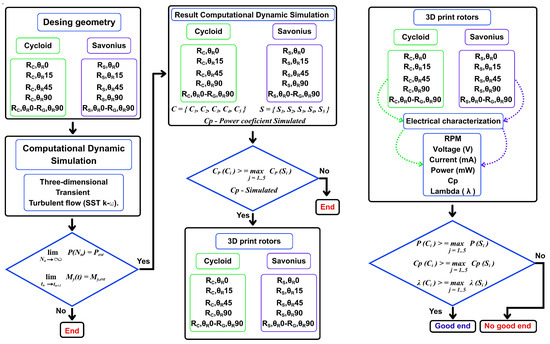
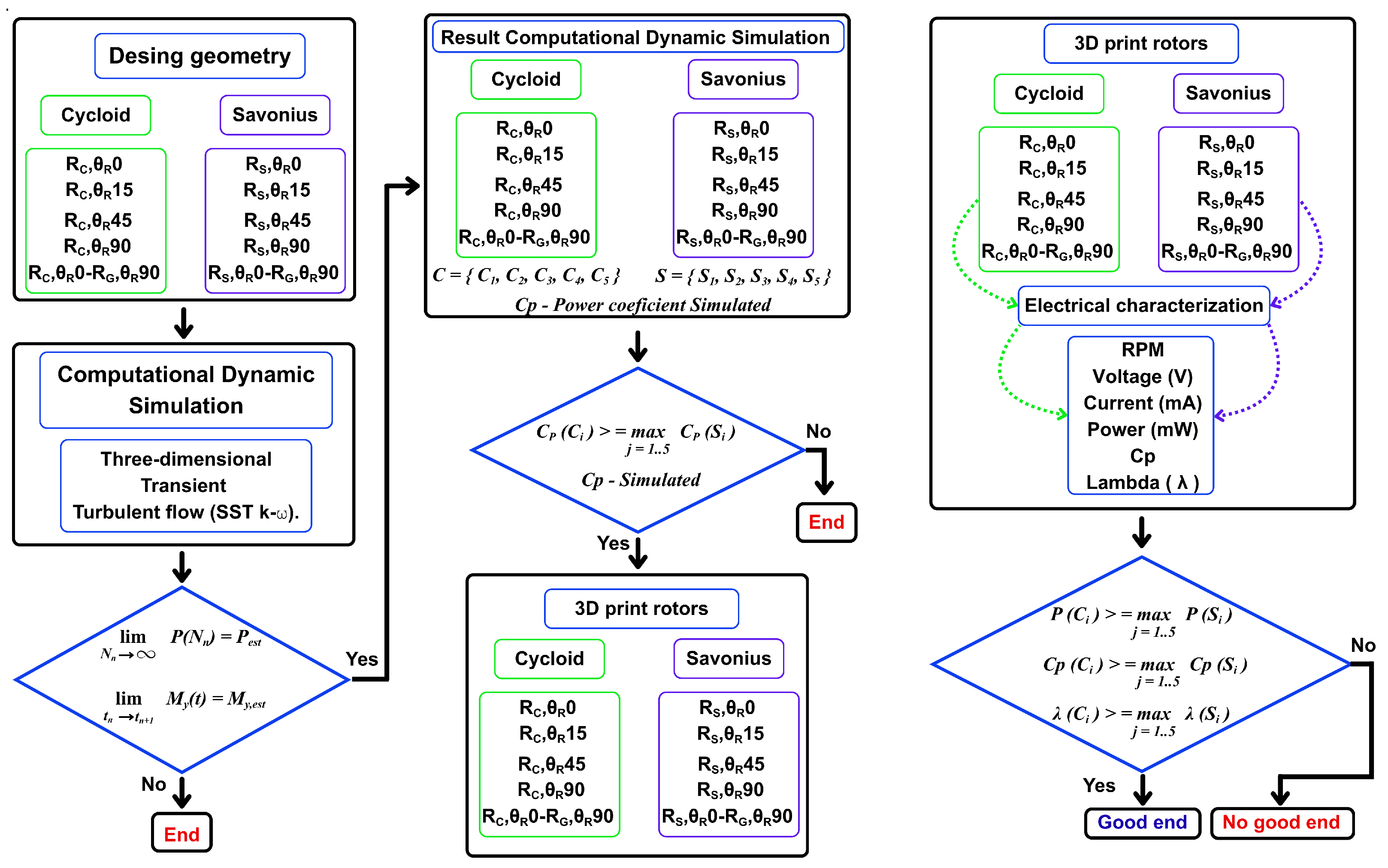
This section is structured as shown in Figure 1. It begins with the design of the turbine rotors, including the Cycloidal and Savonius types, as well as a combination of a Cycloidal rotor with a Gorlov-type geometry, which is compared to a Savonius rotor with a Gorlov-type geometry. The designs are then imported into CFD software, ANSYS FLUENT 2022, for transient-state analysis under turbulent flow. The analysis includes verifying the number of mesh nodes based on power output and stabilizing the momentum behavior along the Y axis over the simulation time. The rotor designs were 3D printed for electrical characterization. Finally, the simulation results are compared with the experimental results.
Figure 1.
The methodology diagram used in this investigation.
2.1. Rotor Design
This study focused on the design, construction and characterization of a new vertical rotor. It is based on a blade with a geometric profile generated from the parametric equations of a Cycloid topology, capable of operating at low wind speeds starting from 2.50 m/s. For the experiments, a vertical Savonius rotor was used as a reference, and in a second stage, a Gorlov rotor was added. The performance of the and the Cycloidal-Gorlov rotor () was compared with that of the and the Savonius-Gorlov rotor ().
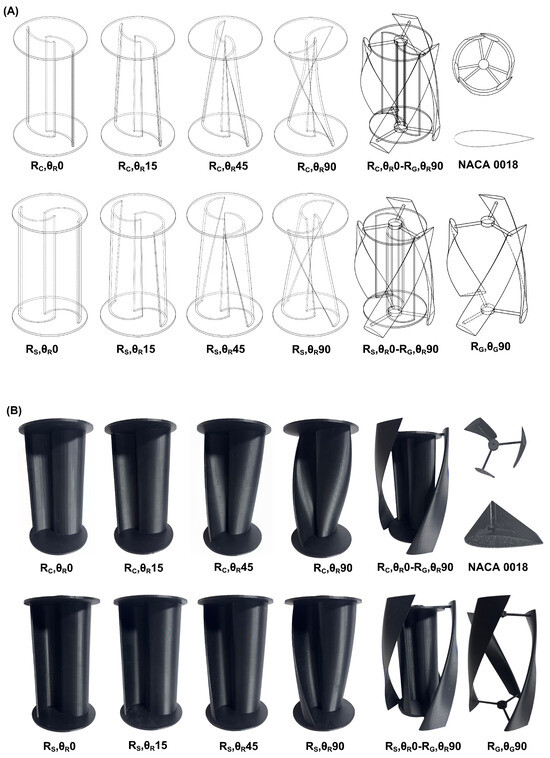
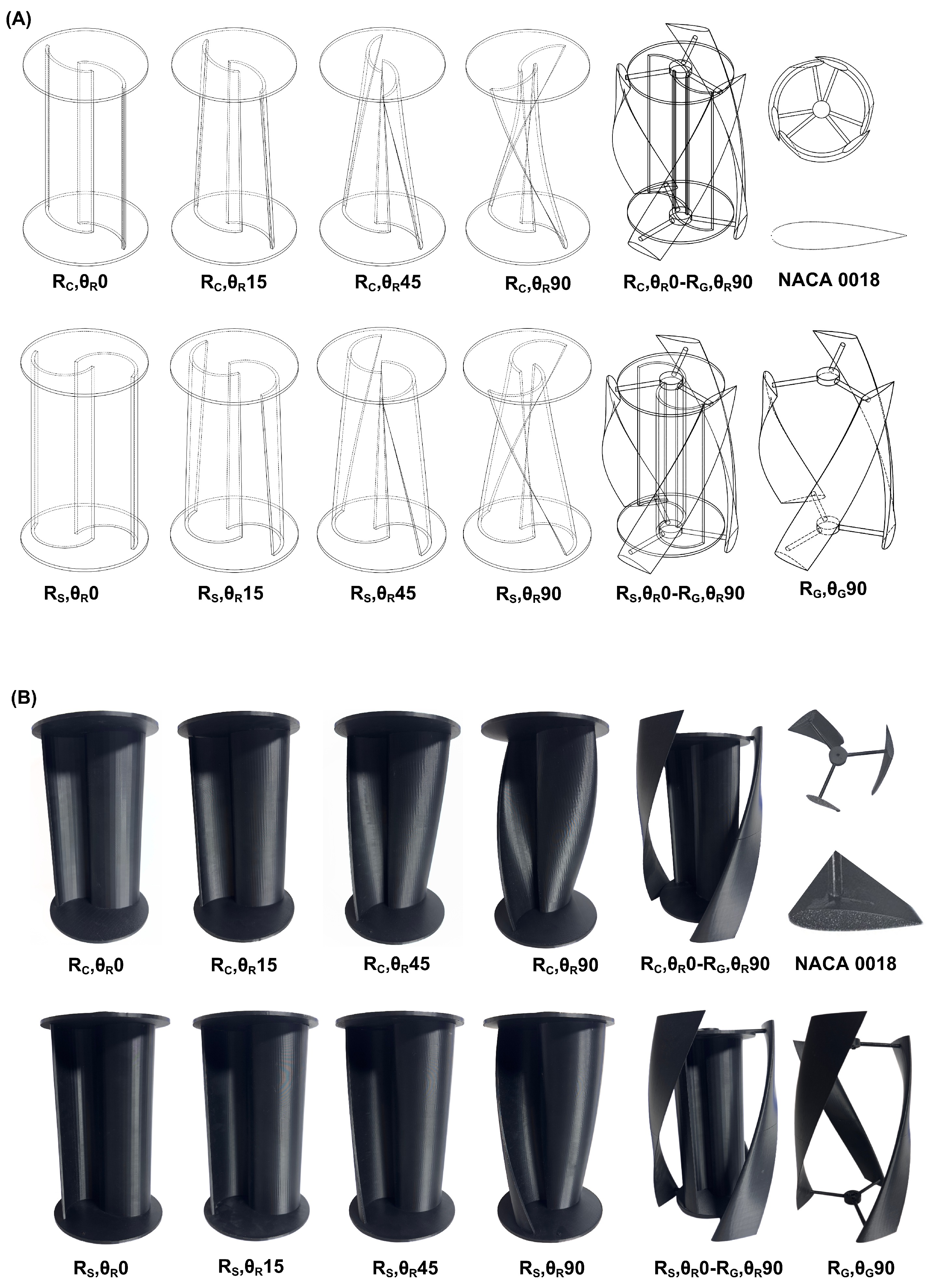
The geometric profiles are shown in Figure 2A, and the 3D-printed geometries are shown in Figure 2B. The configurations considered were as follows: : Cycloidal rotor with a blade rotation angle of , : Cycloidal rotor with a blade rotation angle of , : Cycloidal rotor with a blade rotation angle of , : Cycloidal rotor with a blade rotation angle of , -: Rotor combination; Cycloidal rotor with = , and Gorlov rotor with = . The Gorlov blade profile was constructed using a NACA 0018 airfoil.
Figure 2.
Models of Cycloidal and Savonius Vertical Rotors; , , , , -, , , , , and -. (A) Geometric models used for CFD simulation. (B) 3D-printed rotors for electrical testing and characterization.
For the Savonius configurations: : Savonius rotor with a blade rotation angle of , : Savonius rotor with a blade rotation angle of , : Savonius rotor with a blade rotation angle of , : Savonius rotor with a blade rotation angle of , -: Rotor combination; Savonius rotor with = and Gorlov rotor with = .
This range of geometries allowed for a systematic evaluation of the effects of blade rotation angles and rotor combinations on aerodynamic and electrical performance.
The generating equations for the experimental system were as follows:
2.1.1. Blade Profile for the Cycloidal Rotor
2.1.2. Blade Profile for the Savonius Rotor
2.1.3. Blade Profile with NACA 0018 Geometry
A symmetric NACA 0018 profile was considered. The profile contour is defined by:
where is the half thickness at each point x, x is the position along the chord with , c is the chord length (0.1 m), and t is the maximum thickness (18%).
2.2. Geometric Parameters and Physical Properties of the Profiles
For the profiles described in Figure 2, the following physical and geometric parameters were considered in the Table 1:
Table 1.
Physical and geometric parameters.
2.3. Numerical Setup
A numerical simulation was performed to evaluate the airflow surrounding the rotors evaluated in this manuscript. The software used was ANSYS FLUENT 2022 with the Dynamic Mesh and 6DOF model.
To study the processes of VAWT rotor aerodynamics, the Reynolds-Averaged Navier-Stokes equations (RANS) of an incompressible fluid are used. The equation for conservation of mass, or continuity equation, can be written as shown in Equation (6).
The Equation (6) is the general form of the mass conservation equation and is valid for incompressible as well as compressible flows. Where is density, t is time, and the field velocity v.
In fluid dynamics, the momentum equation, usually expressed as Equation (7), is derived from the principle of conservation of momentum within a defined control volume. By accounting for the various forces acting on the fluid, such as pressure, viscous forces, and external forces, the momentum equation quantifies the momentum change rate within the control volume. Hence, researchers can gain insights into the dynamic behaviour of the fluid, aiding in the analysis and design of vertical axis wind turbine systems.
where v is the the static pressure, is the stress tensor (described in Equation (8)) and is the gravitational body force.
The stress tensor is given by Equation (8), where is the molecular viscosity, I is the unit tensor, and the second term on the right-hand side is the effect of volume dilation.
According to Nasef [18], the experiments performed with four turbulence models, namely Standard , RNG , Realizable , and SST used to describe the turbulence in the flow around the Savonius rotor. The results indicate that SST turbulence model is suitable for simulating the flow pattern around the Savonius rotor than other models for both stationary and rotating cases. Because the SST model is widely used in CFD to model turbulent flow in wind turbines [19], the SST SST turbulence model was specifically used. More details about turbulence model assessment can be found in the work of Menter [20]. The equations for the kinetic energy of turbulence showed in Equation (9) and the specific dissipation rate in Equation (10) are as follows:
The model constants are: , , , , . In the Equations (9) and (10), is the production term of turbulent kitenic energy, given by:
According to [19] the last term in Equation (10) represents the destruction rate of . The SST model effectively blends the robust and accurate formulation of the model in the near-wall region with the free-stream independence of the model in the far field. This combination makes the SST model suitable for a wide range of flows, including those with adverse pressure gradients and separation, providing better prediction of flow behaviour and aerodynamic performance.
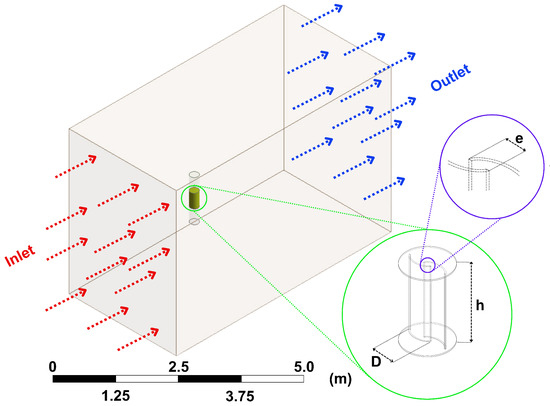
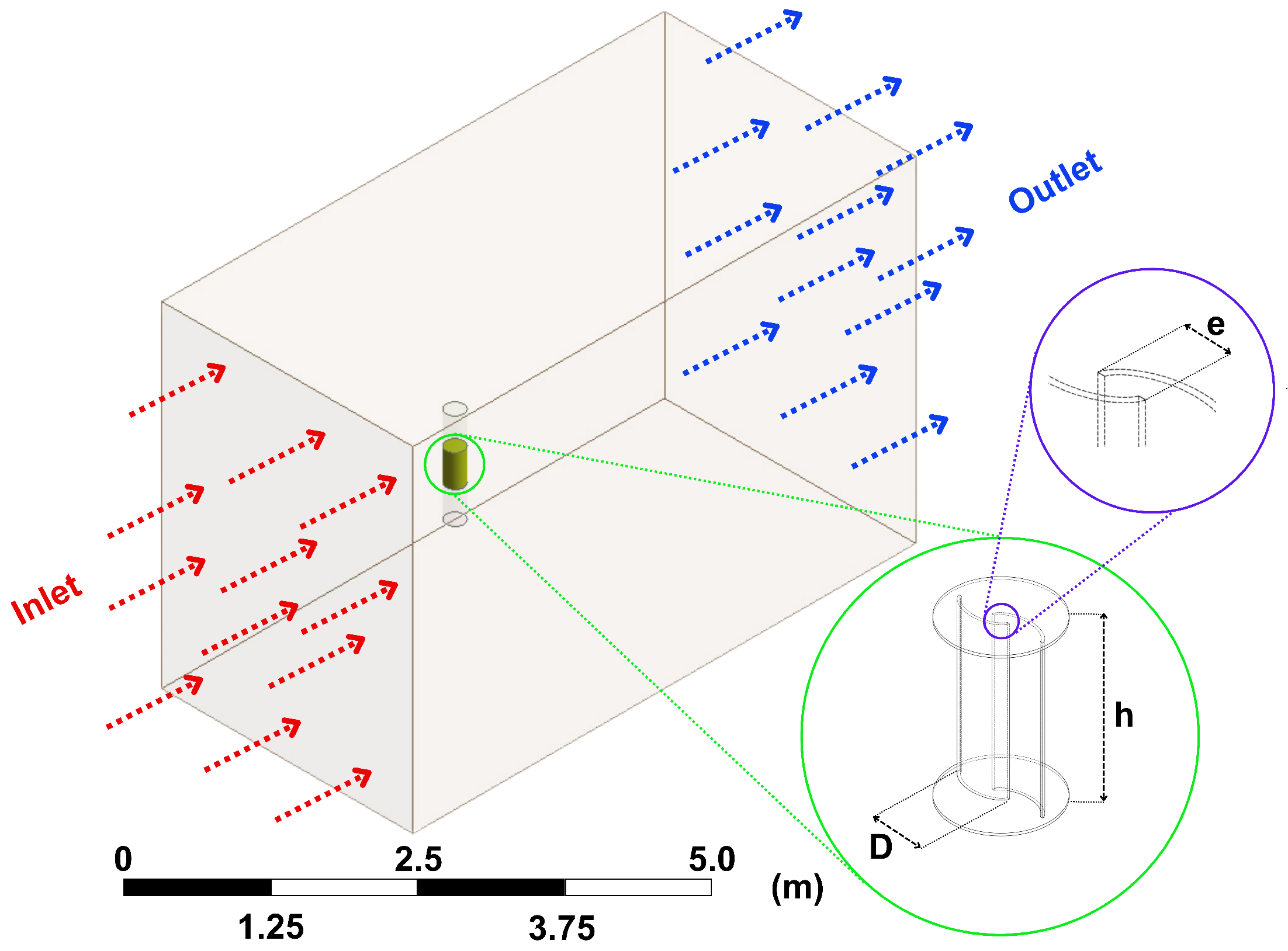
The dimensions of the generated virtual models are presented in Figure 3. The control volume considered has a length of 30D, a height of 20D, and a width of 15D [19].
Figure 3.
The control volume and boundary conditions are defined in the computational domain. The rotor has a diameter of 0.13 m (D), a height of 0.24 m (h), and an overlap ratio of 0.15, defined as the ratio e/D.
The simulation was conducted using ANSYS FLUENT 2022, assuming a three dimensional, transient, and turbulent flow model Shear Stress Transport (SST) .
For the boundary conditions, an inlet velocity of 2.50 m/s and the inlet turbulence intensity (5%) and turbulence viscosity ratio (10), consistent with common wind-tunnel conditions were applied for the airflow, while a pressure outlet of 0.00 Pa was set at the exit for all virtual models. A time step of 0.01 s and a total simulation duration of 20 s were chosen to achieve a stable state. Data were collected for the following parameters: tangential velocity (to calculate angular velocity) and torque (to calculate mechanical power).
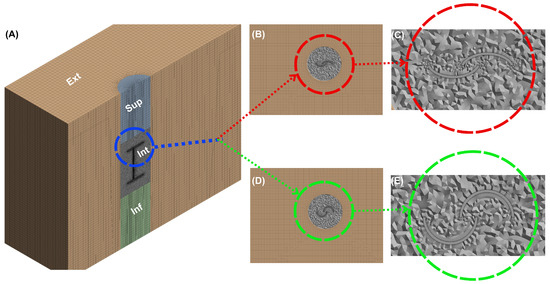
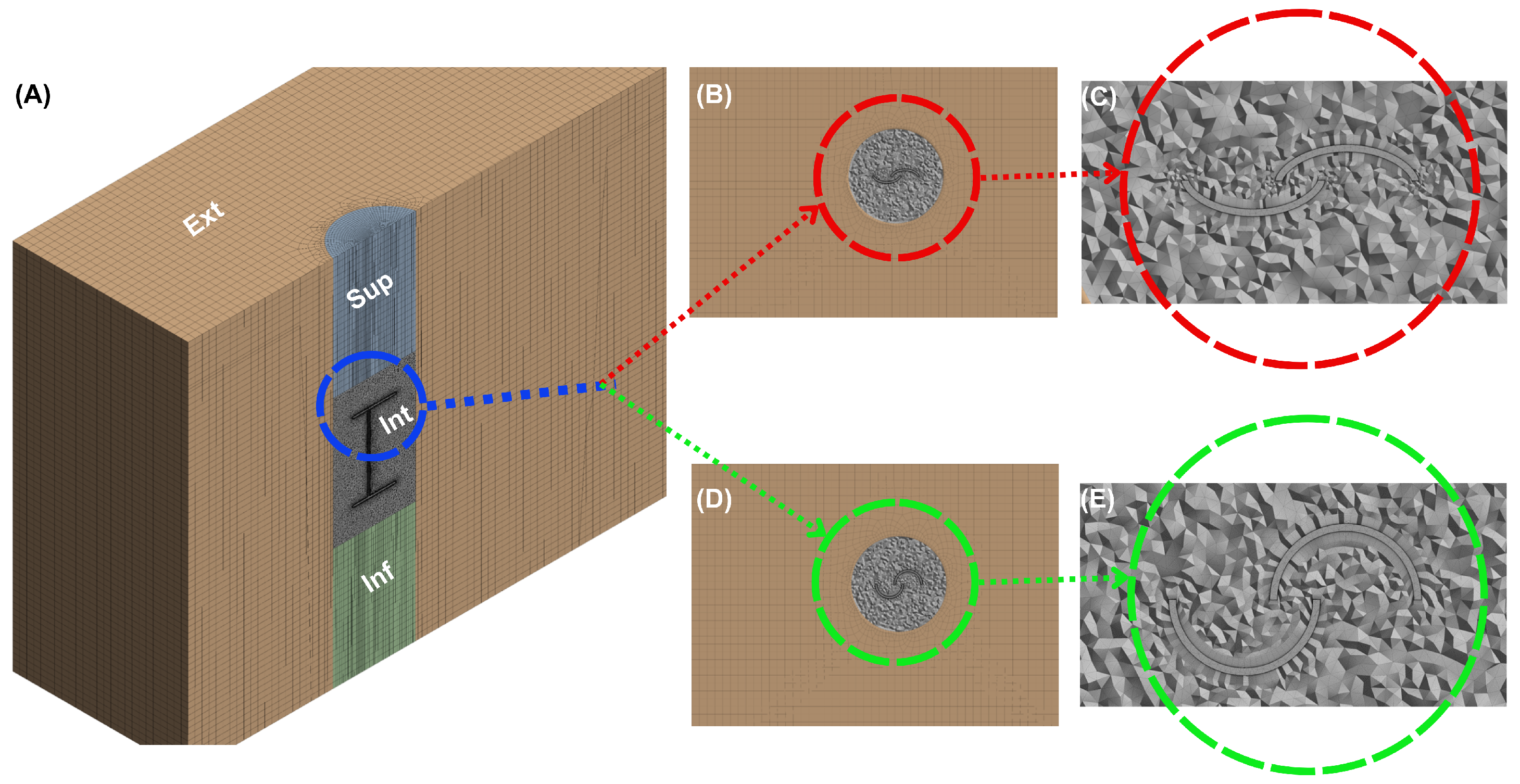
For meshing, quadratic elements were utilized, as depicted in Figure 4. A hybrid mesh was employed, featuring hexahedral elements (shown in Figure 4A) for the external, upper, and lower zones, and tetrahedral elements for the rotor region (internal). Additionally, a 20 inflation layers were created on the rotor profile (illustrated in Figure 4B,D) to capture the boundary layer effect, maintained value of 1.0, and further refinement was implemented in the rotor region (as shown in Figure 4C,E). This resulted in approximately 3,368,000 elements and 8,199,923 nodes within the control volume.
Figure 4.
3D Mesh of the models: (A) Sectioned view of the mesh. (B,C) Cycloidal rotor, (D,E) Savonius rotor.
The simulation was executed on a 13th-generation Intel i9-13900K processor with 32 cores, 32 GB of RAM, and an NVIDIA GeForce RTX 4060 GPU. The total simulation time required for each virtual model was approximately 168 h.
The equation used in this paper for calculating the power coefficient is shown below [21]:
The tip–speed ratio represents the ratio of the linear velocity at the tip of the blade to the incoming wind speed, and is generally expressed as , defined by Equation [21]:
2.4. Experimental Study
The rotors and blades were fabricated using a Creality K1 MAX 3D printer, which was supplied with 1.75 mm Hyper ABS filament from Creality. A test bench was utilized to characterize the angular velocity, voltage, and current of the turbines. This test bench included a DIY Brushless Power Motor AC/DC generator from HOgardenME, operating within a voltage range of 9 V to 72 V. Data acquisition was facilitated by a GIGA R1 WiFi board from Arduino, alongside an Arm® Cortex®-M7 microcontroller from Arduino for sensor integration. Program execution was carried out on an Arm® Cortex®-M4 from Arduino, supported by an auxiliary coprocessor. The sensors used in this setup included a T-Goon 3001-FS for measuring wind speed, a DIYmall DC 0–25 V sensor for voltage, an ACS712 from DKARDU for current monitoring, and a 3144E Hall effect sensor to measure angular velocity in RPM.
3. Results
Stabilizing the number of mesh nodes in relation to rotor power is essential for achieving a balance between computational accuracy and resource demand.
3.1. Simulation Stability
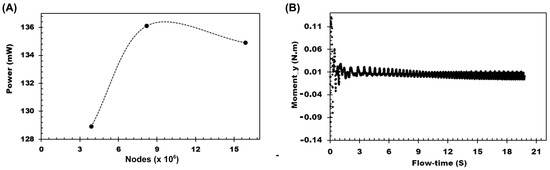
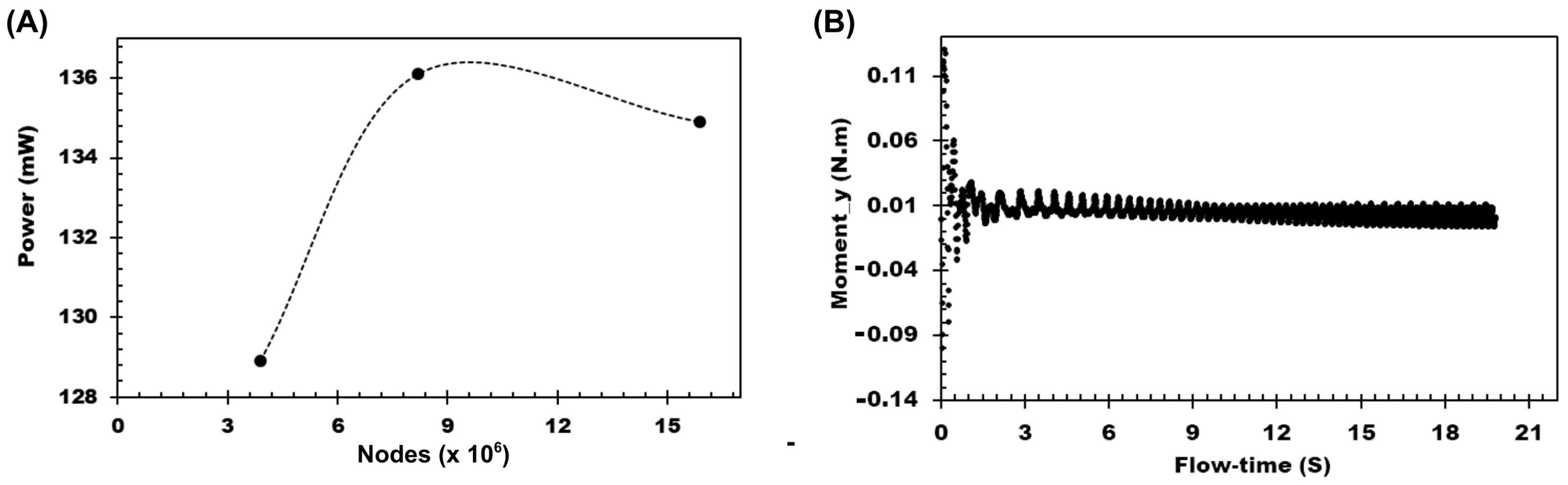
Excessively increasing the number of nodes can lead to numerical errors. Therefore, it is important to identify a significant physical variable to determine the optimal number of nodes quantitatively. In this study, the key variable is the mechanical power P of the rotor, as illustrated in Figure 5A, which was calculated as:
where the angular velocity was calculated using the numerical results of tangential velocity obtained from the simulation with an input velocity of 2.5 m/s, and r is the radius of the rotor Savonius, from the following equation:
Figure 5.
Determination of the number of nodes and simulation time for the rotor. (A) Maximum power versus the number of nodes. (B) Stabilization of the torque generated by the rotor over time.
The analysis focuses on the rotor without an electrical load and neglects friction in the system due to mountings, under ideal conditions. The Torque T was obtained from the numerical simulation, and the criterion for selecting the number of elements was based on a variation of less than 1% between the maximum power values. This criterion was achieved with 8,199,923 nodes. Where, according to Figure 4, the maximum element size for the Int (interior), Sup (superior), and inf (inferior) zones was 7.5 mm, for the Ext (exterior) zone, a maximum element size of 22.5 mm was assigned, and for the rotor surface, a maximum element size of 3.5 mm. Another critical factor is the stability of the process over time, for which momentum was examined, as shown in Figure 5B. Initially, during the first few seconds of the simulation, angular momentum fluctuated between −0.09 and 0.16 along the Y-direction, but stable behavior was achieved after 10 s. The results obtained using CFD for calculating the Cp of the Savonius rotor without twist angle are very similar to those reported in the literature [22], which allows for validating the methodology implemented in the numerical simulation.
3.2. Electrical Characterization of the Motor
It is essential to determine the electrical characteristics of the generator motor by operating it at various rotational speeds under a variable electrical load.
One of the most significant results is the electrical characterization of the motor-generator. The rotor is coupled to the motor-generator, and the electrical energy produced is delivered to a variable load. In the first stage, the electrical output of the motor-generator is connected in parallel with a variable resistor with a minimum resistance of 3.7 ohms. The voltage is then measured in parallel with this resistor, and the current is subsequently measured in series. The variable resistor is progressively increased to measure the voltage and current again, until the rotor eventually stops due to the increased load imposed by the resistance.
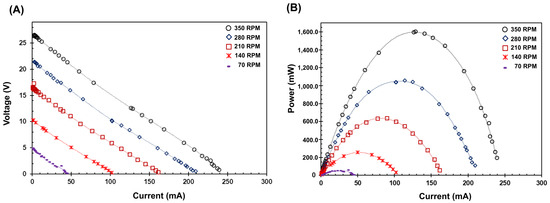
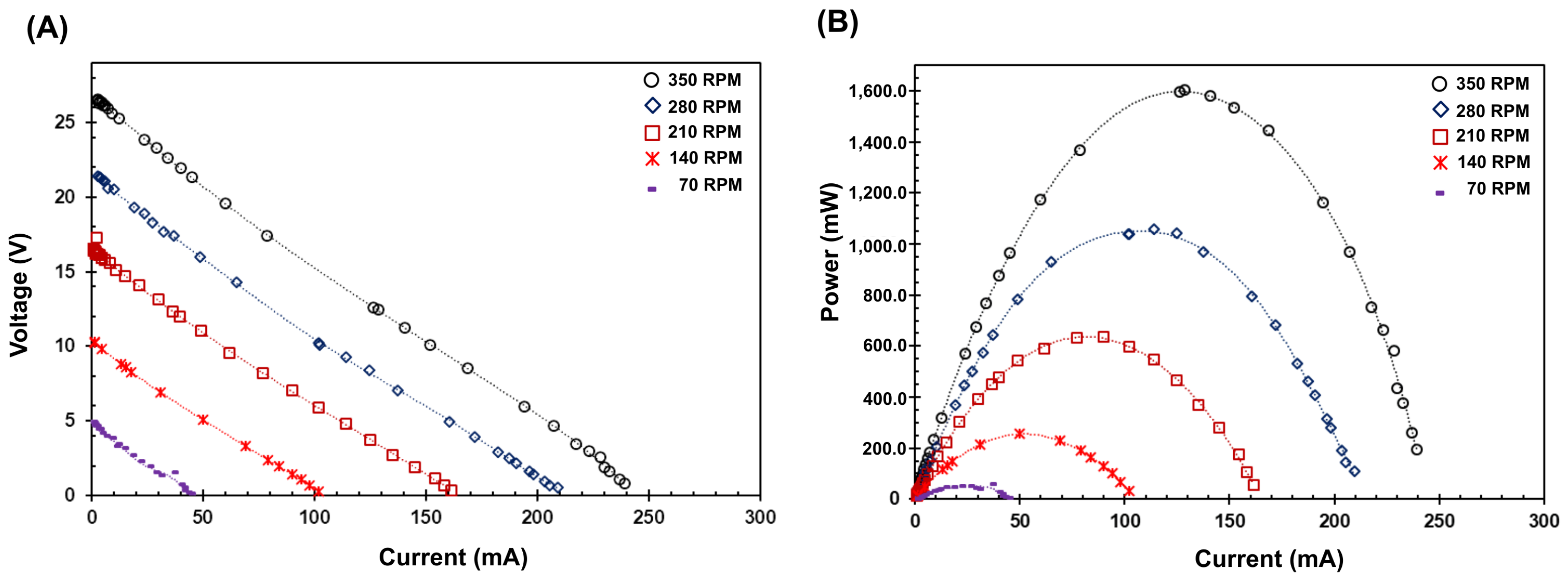
This allows for evaluating its performance in terms of voltage, current, and electric power, as illustrated in Figure 6. When the turbine is characterized at a wind speed of 2.5 m/s, it rotates at an average of 140 RPM, in the initial stage of characterization, the generator motor, rotating at 140 RPM and connected to a 7130 Ω resistor, produces a maximum voltage of 10.30 V and a minimum current of 0.00 mA, if is connected to a 3.70 Ω resistor, the voltage drops significantly to 0.30 V, while the maximum current reaches 102.00 mA, as shown in Figure 6A. The variation in electrical load with different resistances provides insight into the voltage and current values that the motor can deliver while maintaining a constant RPM. If the generator motor operates at 280 RPM, we can expect maximum voltages of 21.91 V at 2.68 mA and maximum currents of 209.40 mA at 0.53 V (Figure 6A). A key factor in this process is determining the optimal electrical load to connect to the motor, using the rotor’s RPM as a reference. The electrical power can then be calculated based on the measured voltage and current values, as shown in Figure 6B, for instance, while rotating at 140 RPM, the maximum power output is 255.00 mW, occurring at the peak of the power curve, where the motor supplies a current of 50.00 mA. Referring to Figure 6A, the corresponding available voltage is determined to be 5.10 V. These are the optimal electrical parameters of voltage, current, and power expected when the rotor operates at 140 RPM. The electric power output increases as RPM rises, with values of 634.50 mW, 1057.70 mW, and 1603.60 mW when the generator motor operates at 210 RPM, 280 RPM, and 350 RPM, respectively. This pattern indicates that higher RPM leads to greater electrical power output, along with increased voltage and current availability. Understanding this characterization helps in determining the optimal electrical load. For example, if the generator motor is spinning at 350 RPM and connected to a device requiring 244.30 mA, the available voltage will be 3.53 V. If the device needs 10.00 V to operate, it would not function correctly under these conditions. Therefore, it is essential that any device connected to the motor meets the available operating parameters. For instance, a device with a power requirement of 1603.60 mW would access 128.70 mA and 12.46 V.
Figure 6.
Electrical Characterization of the Motor. (A) Voltage and current as functions of varying electrical load at a constant RPM. (B) Power and current as a function of the applied electrical load on the generator motor.
3.3. Electrical Characterization of Turbines
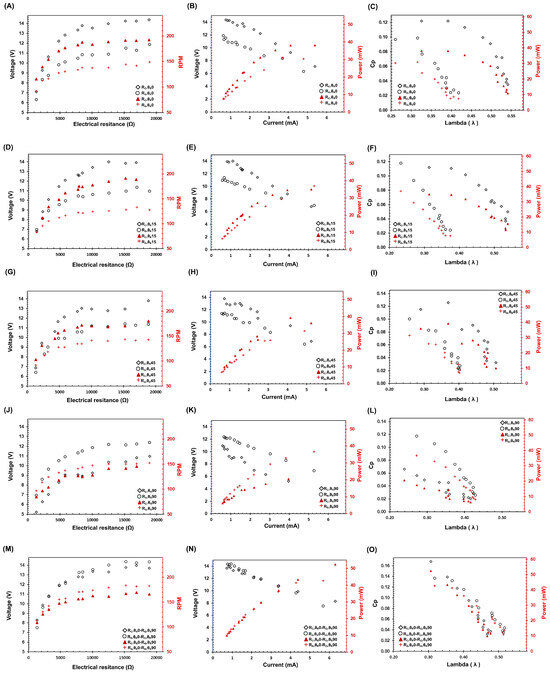
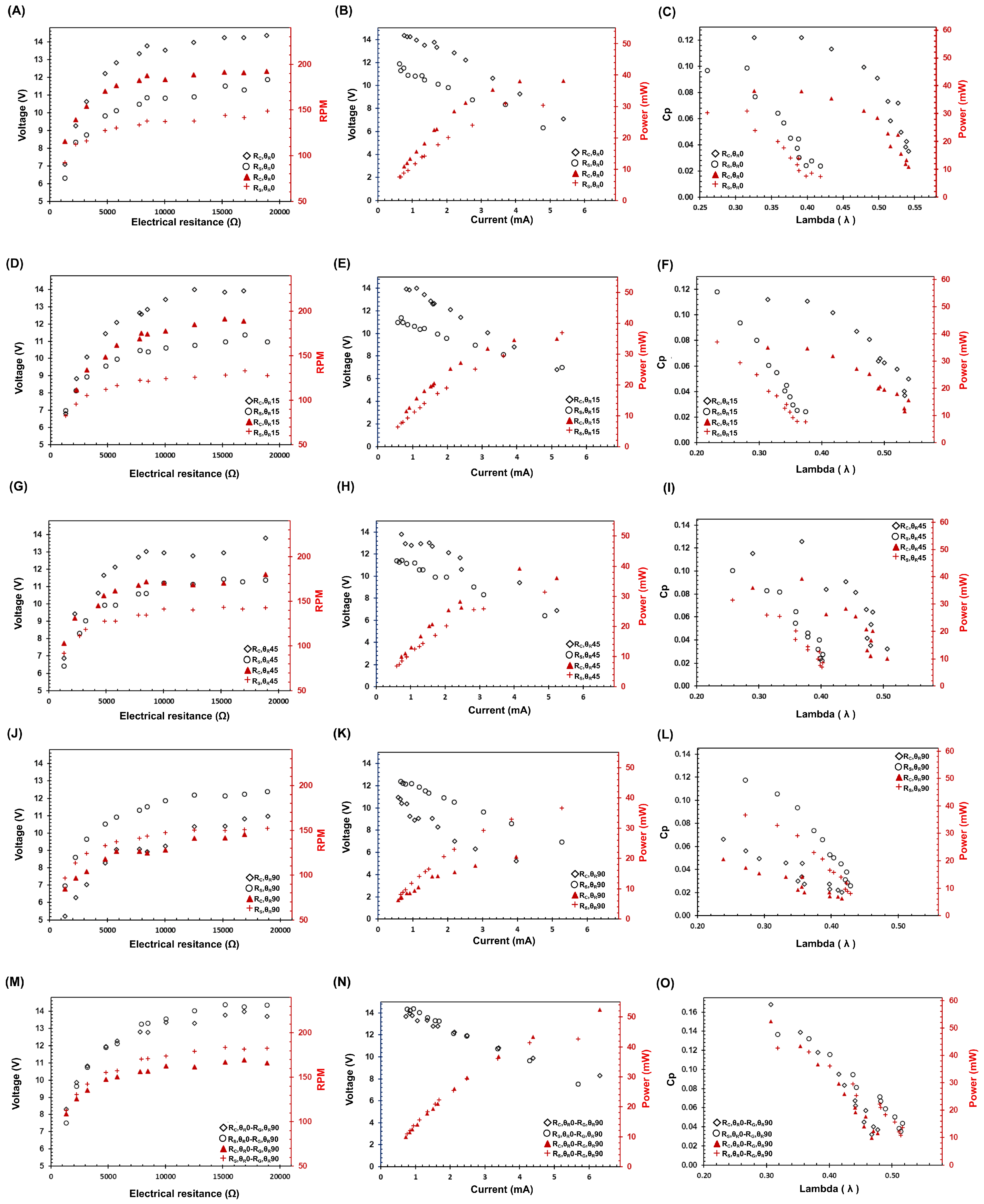
In several studies, the characterization of Savonius turbines, such as flow control using suction cavities [11], Zephyr-type wind rotors [23], hybrid configurations with J-shaped Darrieus blades and NACA 0021 airfoil profiles [24], elliptical deflectors [25], and Darrieus–Savonius hybrid rotors [26], focus on evaluating aerodynamic performance based on the power coefficient, the power generated by the turbine, or the tip speed ratio, which are essential parameters to determine rotor efficiency. In the present study, we propose incorporating electrical characterization of the rotor to determine the optimal operating load as a function of its rotational speed. At a constant wind speed of 2.5 m/s, as shown in Figure 7A, the rotor reaches 192 RPM, supplying 14.36 V at 0.76 mA, values which are higher than those obtained by the rotor , which reaches a maximum of 149 RPM with an available voltage of 11.88 V at 0.63 mA (Figure 7A). The trend indicates that higher electrical resistance values result in higher voltage, and as voltage increases, the current tends to decrease. Figure 7B shows that the maximum electrical power achieved is 38.11 mW for , and 30.83 mW for . Similarly, high Cp values are obtained: 0.122 for , compared to 0.097 for , as illustrated in Figure 7C. Previous research [27] has reported rotor designs incorporating twist angle configurations. In this study, both the rotor and the rotor were designed and manufactured with a 15° torsion angle (). The results (Figure 7D) show that can supply up to 13.99 V at 185 RPM, outperforming , which provides a maximum of 11.38 V at 128 RPM. However, the present electrical characterization reveals that voltage alone is not sufficient to determine rotor performance. As shown in Figure 7E, reaches a maximum current of 5.29 mA, higher than , which reaches 5.15 mA. Consequently, considering the product of voltage and current, exhibits higher electrical power (Figure 7F), reaching 36.92 mW, compared to 34.99 mW for . This observation is corroborated by the Cp values, which are 0.118 for , and 0.112 for . When increasing the torsion angle to 45°, as shown in Figure 7G, Figure 7H, and Figure 7I, the rotor demonstrates superior performance, achieving maximum values of 13.81 V at 180 RPM (Figure 7G), 39.22 mW at 4.16 mA (Figure 7H), and Cp = 0.125 (Figure 7I), compared to , which reaches 11.40 V at 143 RPM, 31.41 mW at 4.89 mA, and Cp = 0.101. With a final torsion angle of 90°, the characterization shown in Figure 7J,K,L reveals that the rotor , achieves better performance than , supplying a maximum of 12.38 V at 152 RPM (Figure 7J), 36.66 mW at 5.28 mA (Figure 7K), and Cp = 0.117 Figure 7L). In contrast, reaches only 10.96 V at 148 RPM, 20.66 mW at 3.96 mA, and Cp = 0.066. Studies such as [28] report that adding a rotor (Figure 2A) with an NACA 0018 geometry and applying torsion to the airfoil improves turbine performance. This hypothesis is confirmed in Figure 7M–O, where the Savonius–Gorlov hybrid rotor - shows higher voltage output, reaching 14.36 V at 183 RPM, compared to -, which provides 13.97 V at 170 RPM (Figure 7M). However, the best overall performance is achieved by -, which delivers a maximum power of 52.45 mW at 6.31 mA (Figure 7N) and Cp = 0.168 (Figure 7O), outperforming -, which reaches 42.69 mW at 5.69 mA (Figure 7N) and Cp = 0.137 (Figure 7O).
Figure 7.
Electrical characterization of turbines with various rotors at a constant wind speed of 2.5 m/s. (A,D,G,J,M), Voltage vs. Electrical resistance; (B,E,H,K,N), Voltage vs. current; (C,F,I,L,O), Cp vs. Lambda.
3.4. Computational Fluid Dynamics Data and Experimentally Characterized
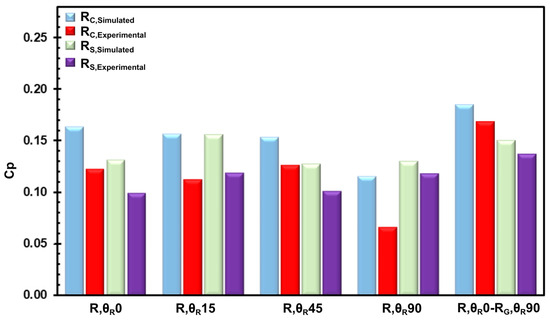
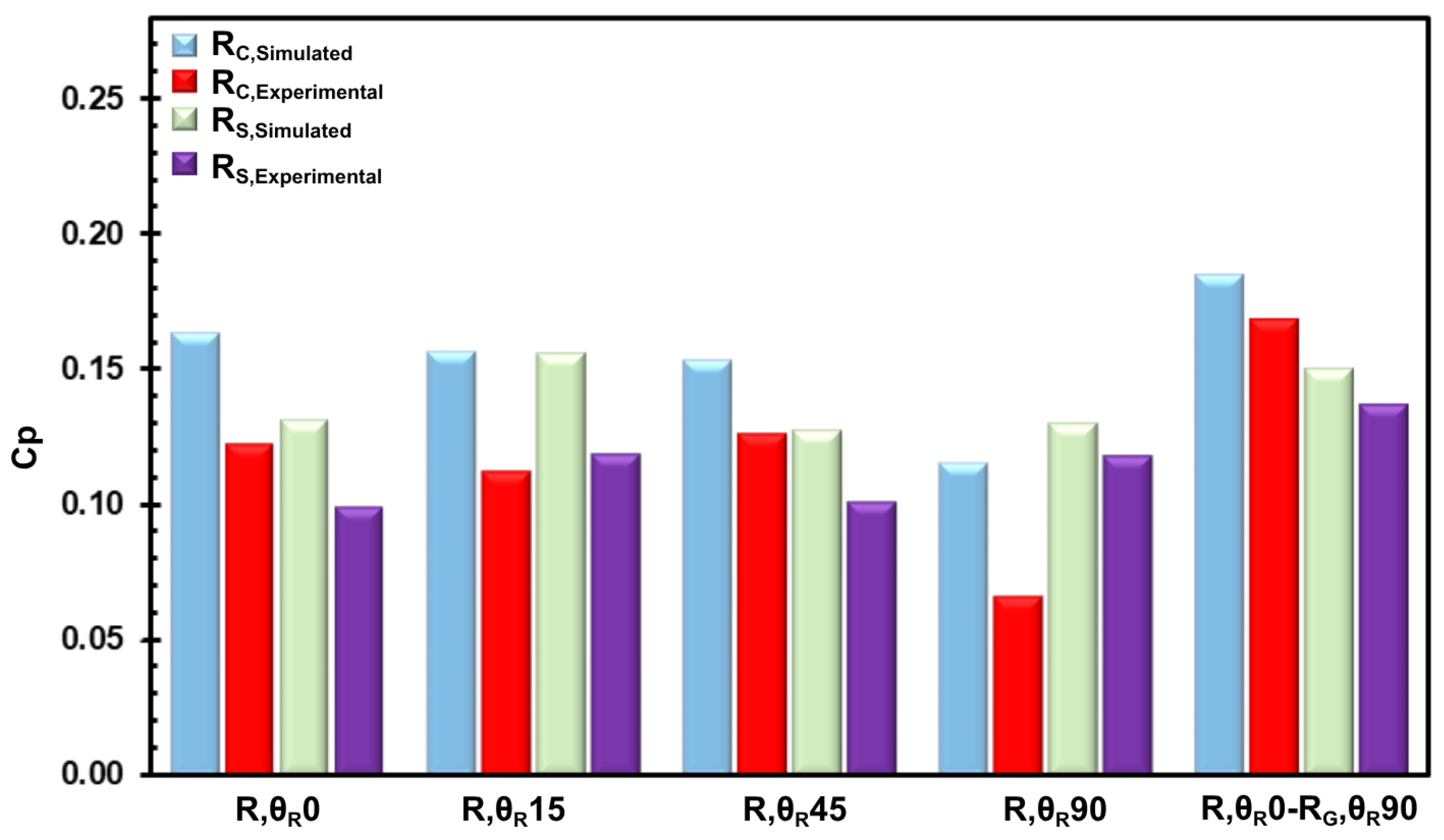
The characterization of the turbines was conducted in two stages: first, data acquisition through computational fluid dynamics simulations, and second, data acquisition through electrical characterization. In both stages, the analyses were based on the physical properties of the rotors. Figure 8 displays the consolidated power coefficient results for each evaluated rotor. Starting with the rotors featuring a torsion angle of 0° (), the Cp value of the rotor , shown in blue, is 0.16, which is higher than the numerical value of 0.13 for the rotor . In the experimental results, the rotor , represented in red, has a Cp of 0.12, again higher than the experimental rotor , depicted by the purple bar, which has a Cp of 0.10.
Figure 8.
Power coefficients obtained for the turbine with different rotors (Rc: Cycloidal and Rs: Savonius), determined from computational fluid dynamics data and experimentally characterized through electrical methods.
The rotors with a torsion angle of 15° (), the simulated performance is quite similar, with both the rotor and the rotor achieving a Cp of 0.16. However, in the experimental results, the rotor attained a Cp of 0.12, surpassing the rotor , which reached a Cp of 0.11.
When analyzing the rotors with a torsion angle of 45° (), the numerical simulation shows that, the rotor achieved a Cp value of 0.15, which is higher than, the 0.13 obtain recorded a Cp of 0.13, greater than, the rotor , which had a Cp of 0.10.
The rotors with a torsion angle of 90° (), the rotor outperformed the others, achieving Cp values of 0.13 and 0.12 for and , respectively. In comparison, the rotor had Cp values of 0.12 and 0.07 for and , respectively.
Lastly, when the rotor with a torsion angle of 90° () was coupled with the and rotor at a 0° torsion angle (), the rotor showed the best performance in both numerical and experimental stages, with Cp values of 0.18 and 0.17 for and , respectively. In contrast, the rotor achieved Cp values of 0.15 and 0.14 for and , respectively.
The coefficient of performance values reported in the literature (Table 2) range from 0.21 to 0.65 for modified or hybrid Savonius rotor configurations. This is particularly true for designs that incorporate deflectors, blade torsion, or combinations with Darrieus or Gorlov rotors. In this study, the Cp values obtained (0.097–0.168) align with the expected range for experimental investigations conducted at low wind speeds (2.5 m/s). Although the simulated and experimental CP values are similar, we believe the main differences arise from friction losses, system misalignment, and the variable electrical load applied in the turbine, factors not considered in the simulation.
Table 2.
Comparison of reported performance values of VAWTs in this study and published literature.
These findings demonstrate that the rotor combined with the rotor (-) provides strong performance under real operating conditions, emphasizing its effectiveness in areas with low wind and its applicability for distributed power generation.
4. Conclusions
It is recommended to allocate sufficient time to the computational fluid dynamics (CFD) process, given its complexity and the level of detail required to obtain reliable results. Each rotor requires approximately 5 h for simulation setup, 168 h for the solution, and 3 h for post-processing. These timeframes ensure model stability, numerical convergence, and accurate interpretation of the flow fields. Regarding 3D printing, it is advisable to operate the printer at 50% of its maximum speed (300 mm/s) to ensure better dimensional quality and prevent defects associated with higher speeds. Likewise, a 30% infill is recommended for the blades to balance strength and weight, while the top and bottom end caps should be printed at 100% density to guarantee structural rigidity and proper mechanical coupling during rotor assembly.
The generator-motor system can operate up to 1050 RPM; however, since this study focuses on low wind speeds (2.5 m/s), the rotors achieved 184 RPM under electrical load and up to 450 RPM without load, corresponding to 17.5% of the motor’s maximum speed. Considering that real wind speeds can reach up to 8.33 m/s, designing the rotors based on 2.5 m/s represents approximately 30% of the operational range, confirming the suitability of the employed generator-motor system for this study. During electrical characterization of the turbines, one of the most relevant variables is the maximum electrical power. The results show the following ranking:
: 39.22 mW > : 38.11 mW > : 36.96 mW > : 36.66 mW > : 34.99 mW > : 30.83 mW > : 31.42 mW > : 20.66 mW.
This value indicates that the turbine with the highest power output is . When coupling a Gorlov rotor to the Cycloidal and Savonius rotors, the performance remains superior for the Cycloidal-based system:
: 52.45 mW > : 42.69 mW.
Another significant variable is the tip-speed ratio (), defined as the ratio between the rotor’s tangential speed and the wind speed (see Figure 7). Maximum values were observed as follows:
: 0.54 = : 0.54 > : 0.51 > : 0.43 > : 0.42 = : 0.42 > : 0.40 > : 0.37.
Considering this variable, the Cycloidal rotors ( o ) exhibit the best performance. For systems with a coupled Gorlov rotor, the tip-speed ratios are:
: 0.48 and : 0.51.
However, the most significant variable is considered to be the power coefficient (Cp), representing the ratio of electrical power to wind power. Maximum Cp values were obtained as follows:
: 0.13 > : 0.12 = : 0.12 = : 0.12 > : 0.11 > : 0.10 = : 0.10 > : 0.07.
Thus, the rotor providing the highest Cp is . When coupled with a Gorlov rotor, the Cp values are:
-: 0.17 > -: 0.14.
From these results, it can be concluded that the rotor with the best overall performance, considering both maximum power and maximum Cp, is . Similarly, when a Gorlov rotor is coupled, the best system is -.
Finally, when the simulated and experimental Cp results were compared, a consistent trend was observed: Rotors showing high simulated Cp values also exhibited high experimental Cp values. However, there is no strict linear correlation between the simulation and experimental results, likely due to additional factors in the experimental setup, such as shaft alignment and mechanical friction.
In this research, the wind speed was maintained at 2 m/s; future work aims to characterize the cycloid rotor by varying the speed, blade diameter, overlap ratio, and to implement artificial intelligence for rotor operation optimization.
Author Contributions
M.A.L.V.: Investigation, methodology, formal analysis, data curation, and writing of the original draft. J.E.E.G.-D.: funding acquisition, review and editing of the manuscript. J.M.O.-R.: formal analysis, data curation, visualization, review and editing of the manuscript. L.E.R.: conceptualization, investigation, methodology, formal analysis, data curation, visualization, and editing of the manuscript. J.A.F.: conceptualization, data curation, visualization, validation, review and editing of the manuscript and supervision. J.R.R.: validation, writing, and review. All authors have read and agreed to the published version of the manuscript.
Funding
The authors declare that no funds, grants, or other support were received during the preparation of this manuscript.
Institutional Review Board Statement
Not applicable.
Informed Consent Statement
Not applicable.
Data Availability Statement
The data used to support the findings of this study are available from the corresponding author upon request.
Acknowledgments
The authors of this work would like to acknowledge Carlos Molina López, and Luis Sergio Dominguez for the experimental guidance. The authors acknowledge ChatGPT (OPENAI), based on the GPT-5.2 for its assistance in polishing this manuscript’s language.
Conflicts of Interest
The authors have no relevant financial or non-financial interests to disclose.
References
- Zhao, J.; Patwary, A.K.; Qayyum, A.; Alharthi, M.; Bashir, F.; Mohsin, M.; Hanif, I.; Abbas, Q. The determinants of renewable energy sources for the fueling of green and sustainable economy. Energy 2022, 238, 122029. [Google Scholar] [CrossRef] [Scilit]
- Yolcan, O.O. World energy outlook and state of renewable energy: 10-Year evaluation. Innov. Green Dev. 2023, 2, 100070. [Google Scholar] [CrossRef] [Scilit]
- Bin Abu Sofian, A.D.A.; Lim, H.R.; Siti Halimatul Munawaroh, H.; Ma, Z.; Chew, K.W.; Show, P.L. Machine learning and the renewable energy revolution: Exploring solar and wind energy solutions for a sustainable future including innovations in energy storage. Sustain. Dev. 2024, 32, 3953–3978. [Google Scholar] [CrossRef] [Scilit]
- Bošnjaković, M.; Santa, R.; Topić Božič, J.; Muhič, S. The Future of Vertical-Axis Wind Turbines: Opportunities, Challenges, and Sustainability Perspectives. Energies 2025, 18, 6369. [Google Scholar] [CrossRef] [Scilit]
- Dewan, A.; Gautam, A.; Goyal, R. Savonius wind turbines: A review of recent advances in design and performance enhancements. Mater. Today Proc. 2021, 47, 2976–2983. [Google Scholar] [CrossRef] [Scilit]
- Roy, S.; Saha, U.K. Wind tunnel experiments of a newly developed two-bladed Savonius-style wind turbine. Appl. Energy 2015, 137, 117–125. [Google Scholar] [CrossRef] [Scilit]
- Irabu, K.; Roy, J.N. Characteristics of wind power on Savonius rotor using a guide-box tunnel. Exp. Therm. Fluid Sci. 2007, 32, 580–586. [Google Scholar] [CrossRef] [Scilit]
- Roy, S.; Mukherjee, P.; Saha, U.K. Aerodynamic Performance Evaluation of a Novel Savonius-Style Wind Turbine Under an Oriented Jet. In Proceedings of the ASME 2014 Gas Turbine India Conference, New Delhi, India, 15–17 December 2014; Volume V001T08A001. [Google Scholar] [CrossRef] [Scilit]
- Tomar, S.S.; Dewan, A. Enhancing efficiency of hybrid vertical axis turbine: Effect of various internal and external blades, collapsed rotor and reduced internal rotor velocity. Renew. Energy 2025, 255, 123791. [Google Scholar] [CrossRef] [Scilit]
- Yeşilyurt, M.K.; Mustafaoğlu, M. A numerical aerodynamic analysis of a vertical axis wind turbine in a wind tunnel. Gümüşhane Üniversitesi Fen Bilim. Derg. 2025, 15, 590–607. [Google Scholar] [CrossRef] [Scilit]
- Abdullah, M.; Zainol Abidin, M.S.; Ismail, F. New strategy for enhancing Savonius turbine efficiency through delayed flow separation with advanced flow control. Energy 2025, 333, 137309. [Google Scholar] [CrossRef] [Scilit]
- Tayari, S.; Bouabidi, A.; Louhichi, B.; Ennetta, R. Experimental Investigation of the Effects of the Phase-Shift Angle on the Performance of a Savonius Wind Turbine. Results Eng. 2025, 28, 107703. [Google Scholar] [CrossRef] [Scilit]
- Shahriare, S.; Rony, M.; Das, P. Enhanced Aerodynamic Performance of Savonius Wind Turbines Through Blade Design Modifications: A CFD Study. Wind Energy 2025, 28, e70042. [Google Scholar] [CrossRef] [Scilit]
- Bekhti, A.; Debbache, M.; Fares, M.; Tata, M.; Hamane, D.; Boudis, A. Aerodynamic analysis of a small-scale Savonius wind turbine incorporated with wind lenses: A CFD approach for wake pattern and power prediction. Wind Eng. 2025, 49, 933–948. [Google Scholar] [CrossRef] [Scilit]
- Soetanto, M.F.; Syaiful; Astor, Y.; Kastawan, I.M.W.; Wibowo, S.S.; Subardjah, A.M. Numerical study of optimization of Savonius slenderness ratio as a starter darrieus wind turbine at low wind speed. AIP Conf. Proc. 2025, 3141, 050012. [Google Scholar] [CrossRef] [Scilit]
- Singh, D.; Kumar, R.; Sinha, S. Design and performance characterization of hybrid vertical axis wind turbine with Savonius and Gorlov blades in low wind regimes: Integrating CFD simulations and experimental approach. Proc. Inst. Mech. Eng. Part C J. Mech. Eng. Sci. 2025, 239, 4890–4902. [Google Scholar] [CrossRef] [Scilit]
- González-Durán, J.E.E.; Olivares-Ramírez, J.M.; Luján-Vega, M.A.; Soto-Osornio, J.E.; García-Guendulain, J.M.; Rodriguez-Resendiz, J. Experimental and Numerical Analysis of a Novel Cycloid-Type Rotor versus S-Type Rotor for Vertical-Axis Wind Turbine. Technologies 2024, 12, 54. [Google Scholar] [CrossRef] [Scilit]
- Nasef, M.; El-Askary, W.; AbdEL-hamid, A.; Gad, H. Evaluation of Savonius rotor performance: Static and dynamic studies. J. Wind Eng. Ind. Aerodyn. 2013, 123, 1–11. [Google Scholar] [CrossRef] [Scilit]
- Priyadumkol, J.; Muangput, B.; Namchanthra, S.; Zin, T.; Phengpom, T.; Chookaew, W.; Suvanjumrat, C.; Promtong, M. CFD modelling of vertical-axis wind turbines using transient dynamic mesh towards lateral vortices capturing and Strouhal number. Energy Convers. Manag. X 2025, 26, 101022. [Google Scholar] [CrossRef] [Scilit]
- Menter, F. Zonal Two Equation k-w Turbulence Models For Aerodynamic Flows. In Proceedings of the 23rd Fluid Dynamics, Plasmadynamics, and Lasers Conference, Orlando, FL, USA, 6–9 July 1993; American Institute of Aeronautics and Astronautics: Reston, VA, USA, 1993. [Google Scholar] [CrossRef] [Scilit]
- Chen, S.; Song, C.; Qian, Z.; Wu, A.; Zhu, Y.; Xia, J.; Wang, J.; Yang, Y.; Chen, X.; Yuan, Y.; et al. Improvement of Modified Rotor on Aerodynamic Performance of Hybrid Vertical Axis Wind Turbine. Energies 2025, 18, 3357. [Google Scholar] [CrossRef] [Scilit]
- Al-Kayiem, H.H.; Bhayo, B.A.; Assadi, M. Comparative critique on the design parameters and their effect on the performance of S-rotors. Renew. Energy 2016, 99, 1306–1317. [Google Scholar] [CrossRef] [Scilit]
- Lajnef, M.; Mosbahi, M.; Abid, H.; Driss, Z.; Sinagra, M.; Amato, E.; Tucciarelli, T. Experimental and numerical investigation of Zephyr-type wind turbine. Wind Eng. 2025, 49, 1103–1118. [Google Scholar] [CrossRef] [Scilit]
- Kashani, N.; Mirhosseini, M.; Ahmadi, R.; Mirzaeian, H. Performance Improvement of Hybrid Vertical Axis Wind Turbines Equipped with J-Shaped Blades. Energy Sci. Eng. 2025, 13, 4433–4444. [Google Scholar] [CrossRef] [Scilit]
- Fatahian, E.; Ismail, F.; Ishak, M.H.H.; Chang, W.S. Flow dynamics and performance enhancement of drag-type savonius wind turbine with a novel elliptic-shaped deflector. Appl. Sci. Res. 2024, 114, 643–675. [Google Scholar] [CrossRef] [Scilit]
- Ghafoorian, F.; Mirmotahari, S.R.; Eydizadeh, M.; Mehrpooya, M. A systematic investigation on the hybrid Darrieus-Savonius vertical axis wind turbine aerodynamic performance and self-starting capability improvement by installing a curtain. Next Energy 2025, 6, 100203. [Google Scholar] [CrossRef] [Scilit]
- Lajnef, M.; Mosbahi, M.; Derbel, M.; Driss, Z.; Pantano, A.; Tucciarelli, T.; Sinagra, M.; Picone, C. Performance investigation of a twisted Savonius wind rotor. Adv. Res. Fluid Mech. Therm. Sci. 2025, 128, 1–18. [Google Scholar] [CrossRef] [Scilit]
- Kumar, Y.; Roga, S.; Wanmali, N.K. Experimental analysis of hybrid VAWT and the effect of semi-cylindrical attachment to the trailing edge. Energy Sustain. Dev. 2023, 74, 115–126. [Google Scholar] [CrossRef] [Scilit]
- Ayadi, A.; Rabeh, N.; Marzougui, J.; Ennetta, R.; Driss, Z. Investigation of the blade tip geometry for improved performance of a Savonius rotor. Results Eng. 2025, 27, 106745. [Google Scholar] [CrossRef] [Scilit]
- Wang, B.; Bai, X.; Lei, G.; Zhang, W.; Ji, R. Effect Analysis of the V-Angle and Straight Edge Length on the Performance of V-Shaped Blades for a Savonius Hydrokinetic Turbine. J. Mar. Sci. Eng. 2025, 13, 1240. [Google Scholar] [CrossRef] [Scilit]
- Sumiati, R.; Dinata, U.G.S.; Saputra, D.A.; Herlambang, Y.D. Enhancing Savonius Rotor Performance with Zigzag in Concave Surface–CFD Investigation. CFD Lett. 2025, 17, 100–114. [Google Scholar] [CrossRef] [Scilit]
- Soetanto, M.F.; Astor, Y.; Wibowo, S.S.; Syaiful; Zuhri, M.R.; Luthfi, M. Tapered Bladed of Vertical Axis Wind Turbine for Powering Street Lights in Urban Areas in Indonesia with Wind Speed of 2–4 m/s. Int. J. Integr. Eng. 2024, 16, 228–237. [Google Scholar] [CrossRef] [Scilit]
- Abdelsattar, S.; Abu Bakar, N.A.; Kamaruddin, N. Performance of Savonius turbines with tubercles inspired by humpback whales. J. Adv. Res. Appl. Sci. Eng. Technol. 2023, 31, 68–78. [Google Scholar] [CrossRef] [Scilit]
- Santoso, E.; Awika, I.S.; Ariwiyono, N. Experimental Study Influence of High Fin on NACA Airfoil 0018 on Performance of H-Type Darrieus Wind Turbine. IOP Conf. Ser. Earth Environ. Sci. 2023, 1265, 012010. [Google Scholar] [CrossRef] [Scilit]

Disclaimer/Publisher’s Note: The statements, opinions and data contained in all publications are solely those of the individual author(s) and contributor(s) and not of MDPI and/or the editor(s). MDPI and/or the editor(s) disclaim responsibility for any injury to people or property resulting from any ideas, methods, instructions or products referred to in the content. |
© 2026 by the authors. Licensee MDPI, Basel, Switzerland. This article is an open access article distributed under the terms and conditions of the Creative Commons Attribution (CC BY) license.