
Intelligent Fault Detection in the Mechanical Structure of a Wheeled Mobile Robot

 , ,
, ,  ,
,  , , , and
Abstract
1. Introduction
- We present the comparative verification of a MEMS accelerometer array against a reference IEPE accelerometer using a TIRA electrodynamic shaker, demonstrating its suitability for fault detection in mobile robot mechanical frame structures across the 20–120 Hz frequency range;
- We develop and experimentally validate the periodic testing methodology on a mobile bare-bones robot employing a self-induced vibration excitation method. We use a progressive degradation approach that includes four distinct fault categories representing coupling misalignment gaps of 0 m (baseline), 100 m, 250 m, and 500 m. This systematic approach models realistic mechanical degradation trajectories, enabling the detection of incipient faults at earlier stages to minimize catastrophic failures—a critical capability for predictive maintenance strategies;
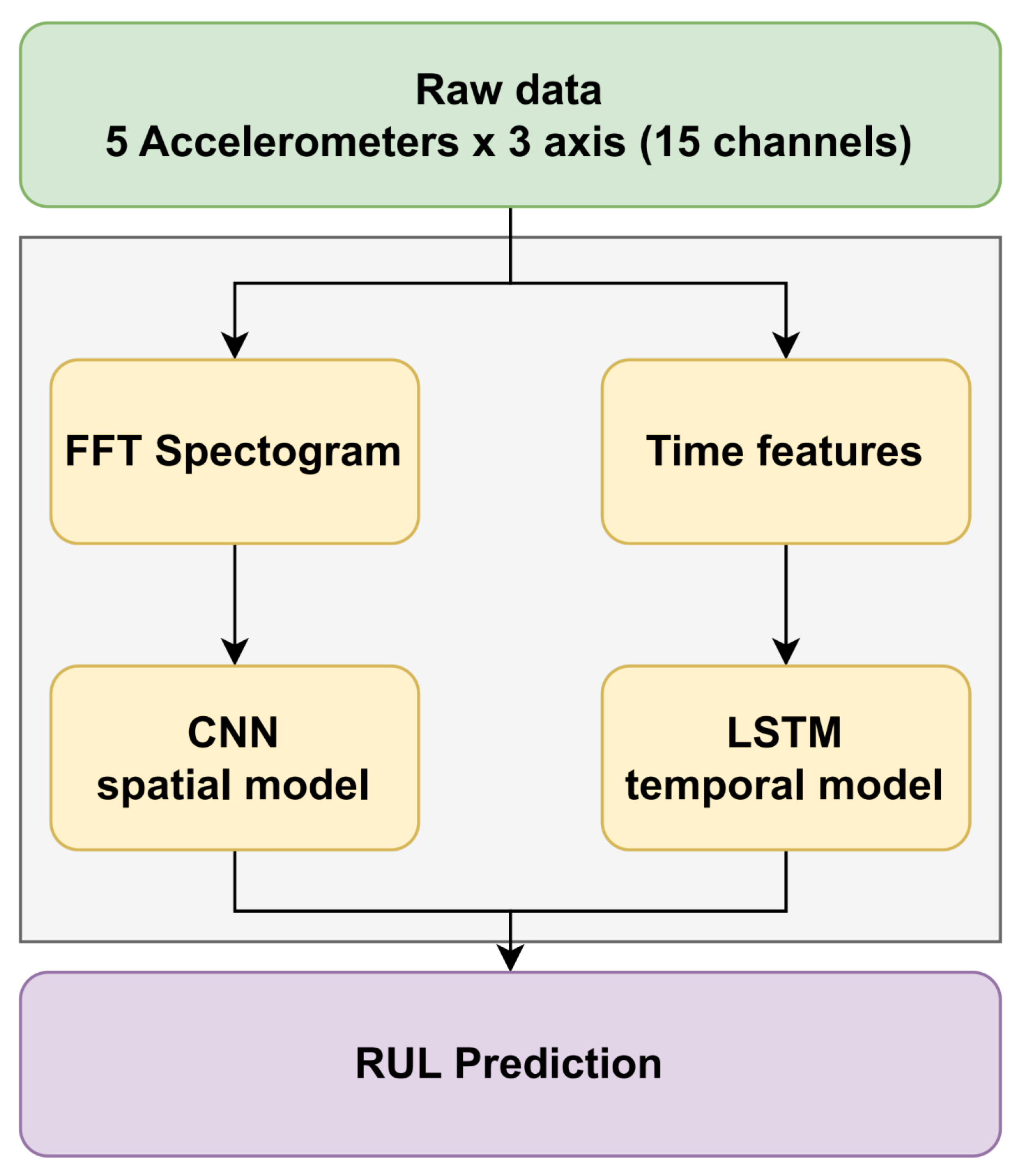
- We propose an early feature-level fusion strategy employing five strategically positioned MEMS accelerometers (fifteen channels: five sensors × three axes) to capture spatially distributed vibration patterns across the robot’s mechanical frame structure. The multi-sensor architecture implements two parallel processing pathways: (i) a spectrogram-based CNN pipeline that stacks all 15 channels into unified frequency-domain methods [34,35], enabling convolutional filters to learn cross-sensor spatial–spectral correlations through implicit weight optimization, and (ii) a time-domain [36,37] LSTM pipeline that concatenates 160-dimensional feature vectors (eight statistical features × twenty signals, including triaxial magnitudes) to temporal sequences, allowing recurrent layers to model degradation dynamics across spatially fused representations. This early fusion approach preserves raw inter-sensor correlations that are critical for identifying spatially distributed failure modes, while the five-sensor redundancy provides five times more training data channels compared to single-sensor configurations, addressing the data-hungry nature of deep learning architectures and ensuring robust convergence in RUL prediction tasks [38].
2. Materials and Methods
- Modal Analysis of the Robot Structure (Section 2.1): This examines the natural vibration frequencies and mode shapes of the robot structure through finite element analysis. This stage seeks to establish the dynamic characteristics of the structure and to inform the selection of excitation frequencies and sensor bandwidths for the subsequent experimental validation;
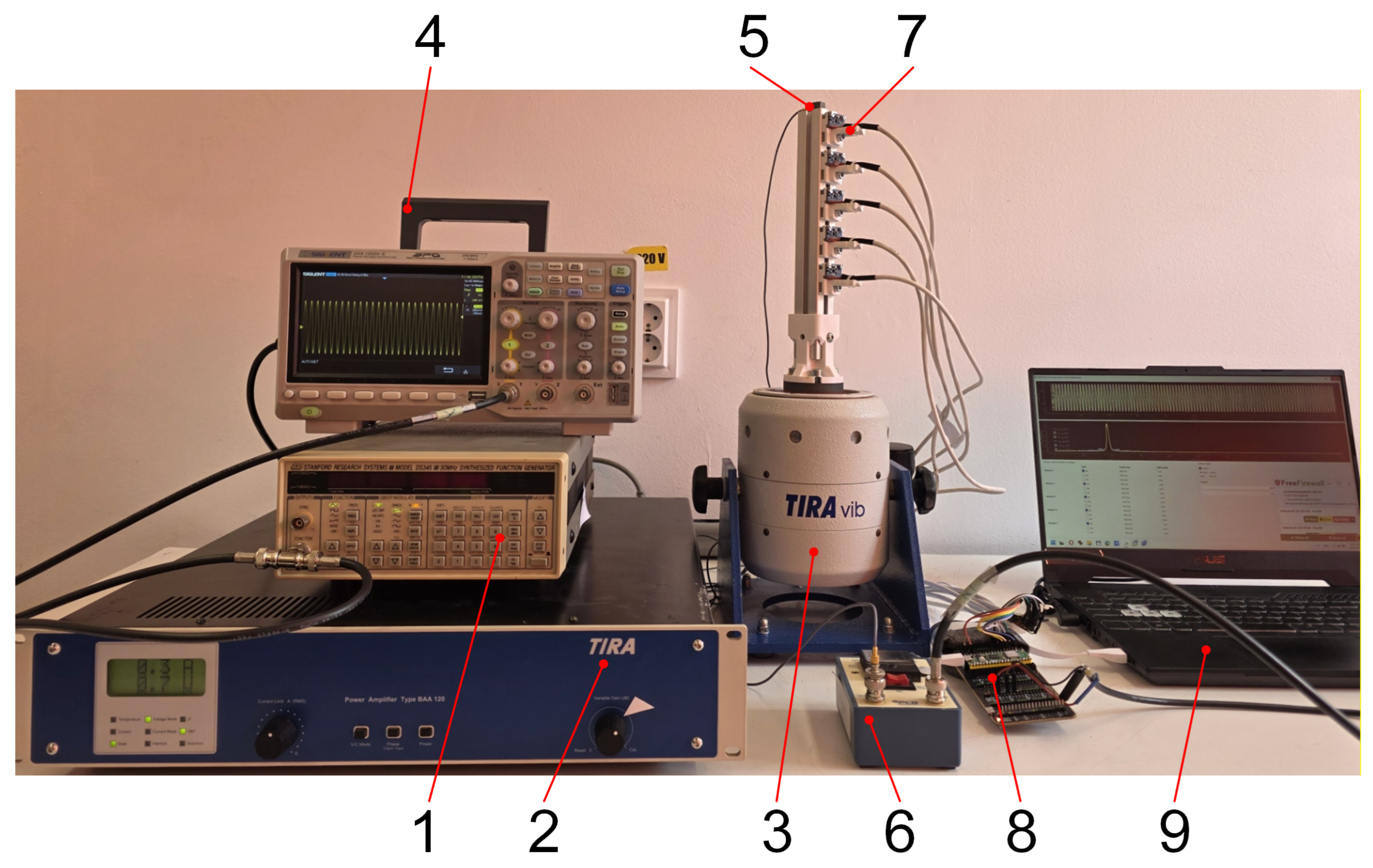
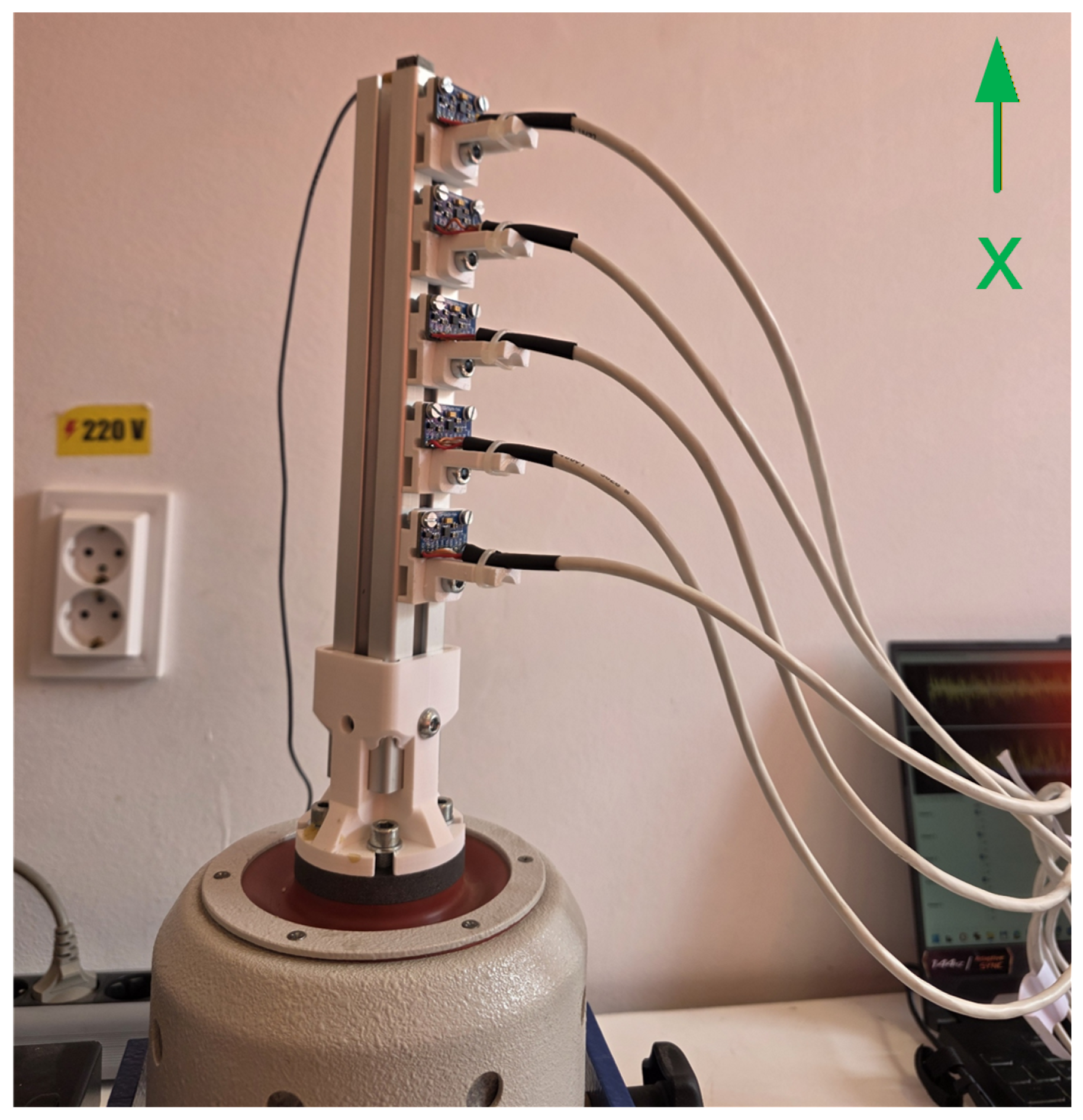
- Verification Platform for the Vibration-Monitoring Array (Section 2.2): This evaluates the performance of low-cost MEMS accelerometers in relation to a reference IEPE accelerometer using a laboratory testbed. This stage aims to assess whether the MEMS sensors can provide sufficiently accurate and consistent measurements for use in machine-learning model training and evaluation;
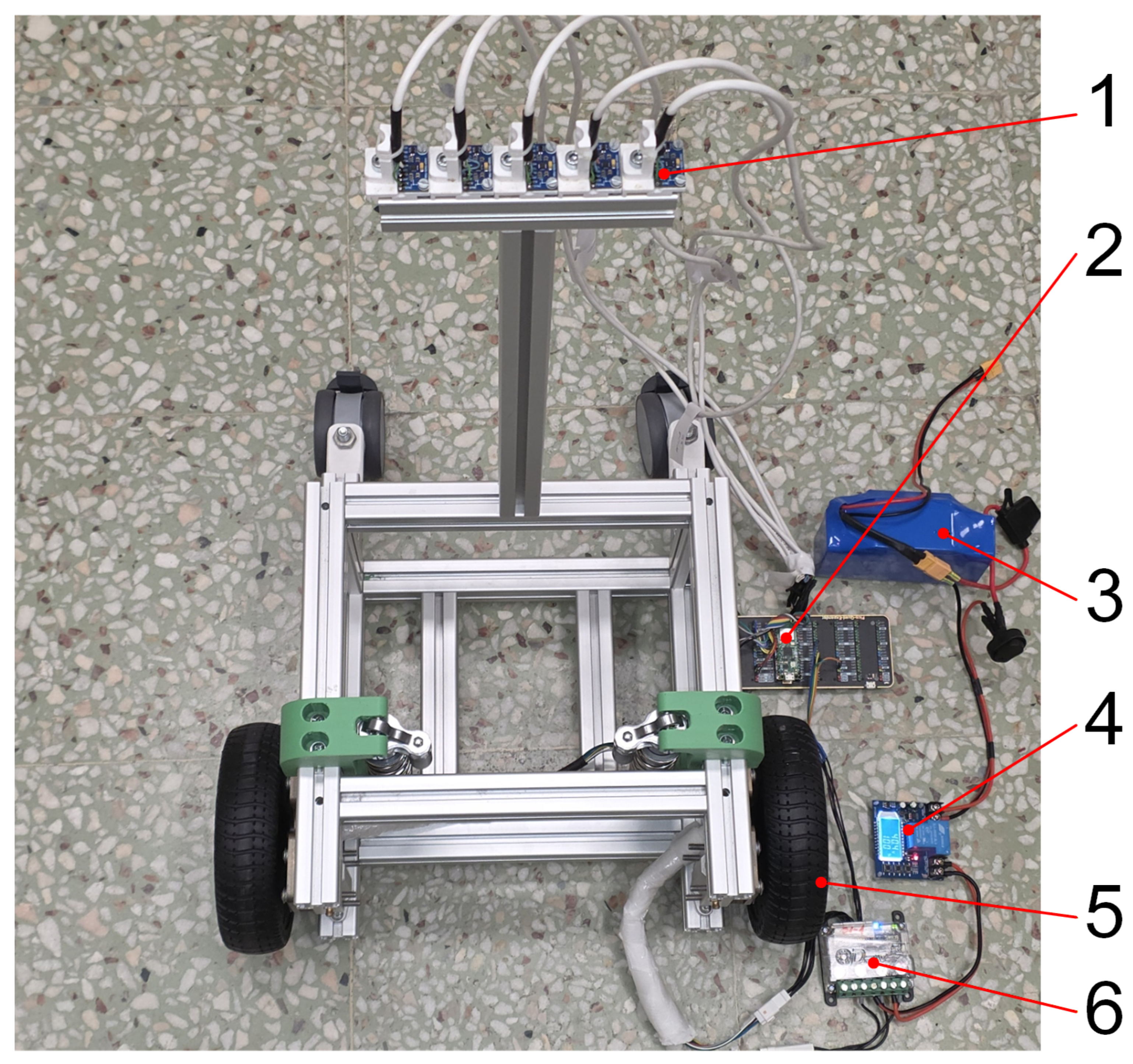
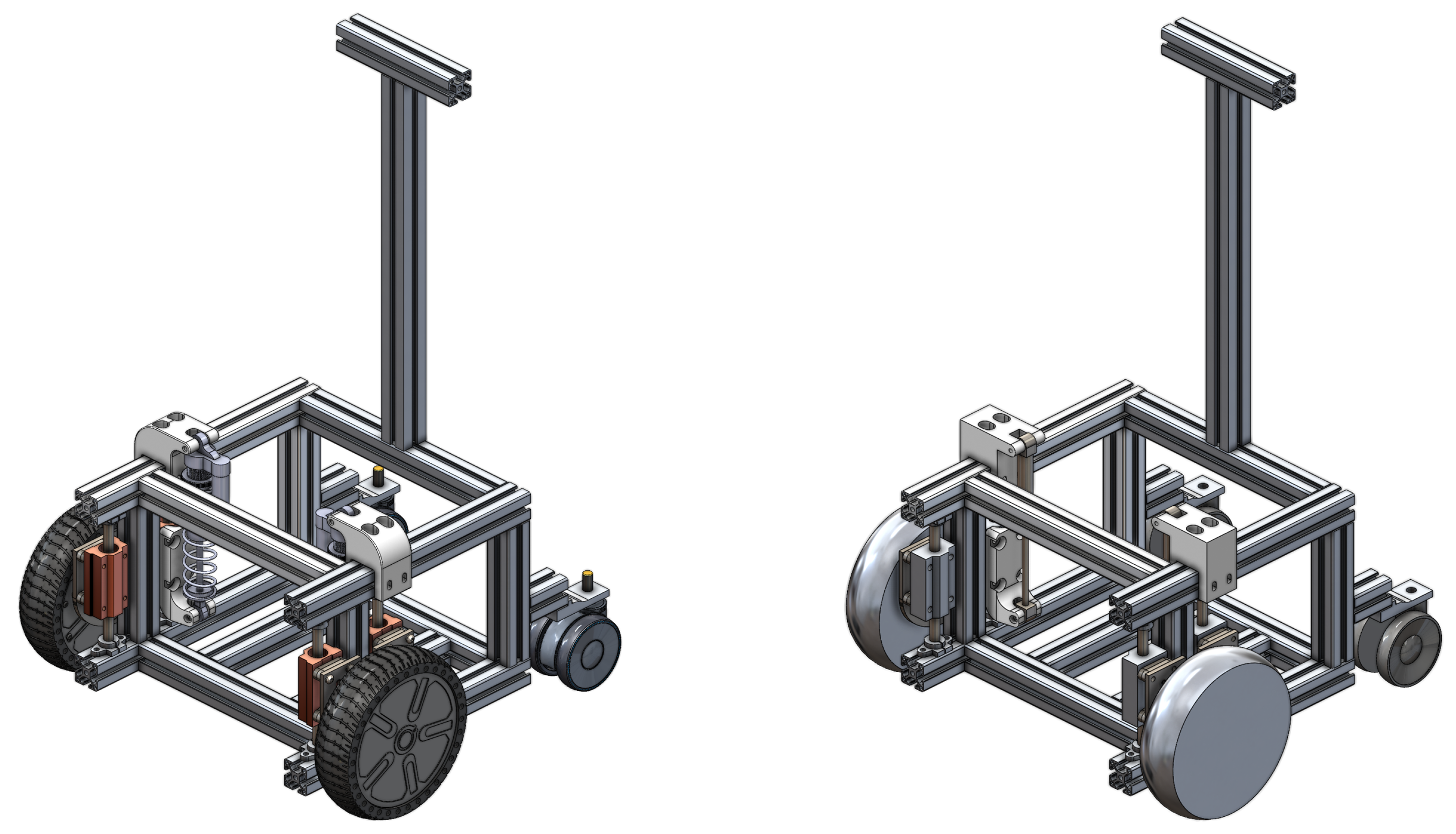
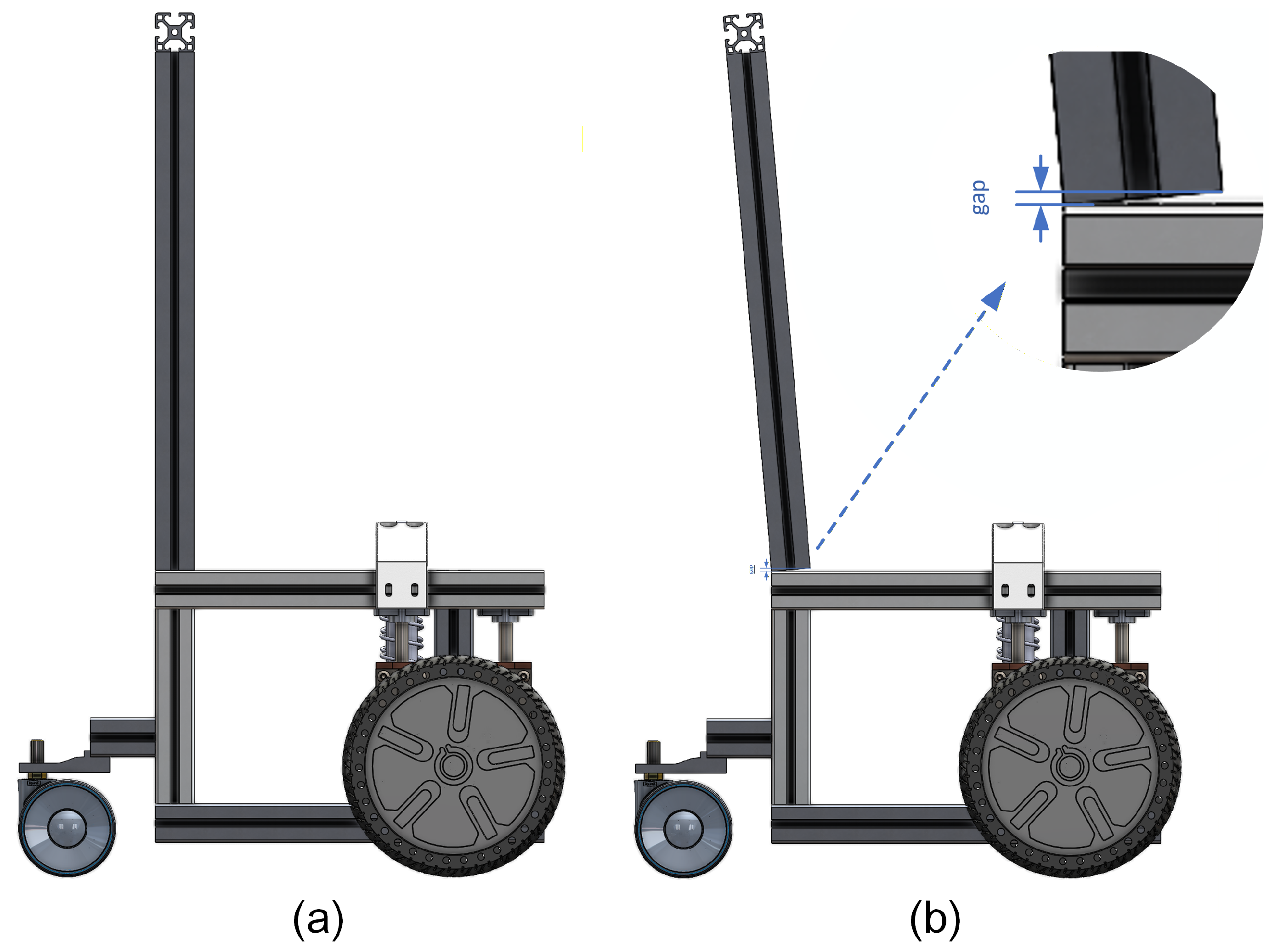
- Wheeled Robot Experimental Platform (Section 2.3): This describes the bare-bone wheeled robot configuration and the controlled introduction of mechanical degradation via progressive bolted-joint gaps (0, 100, 250, and 500 m). This stage is designed to generate vibration datasets representing different structural health states for experimental validation using all five MEMS sensors;
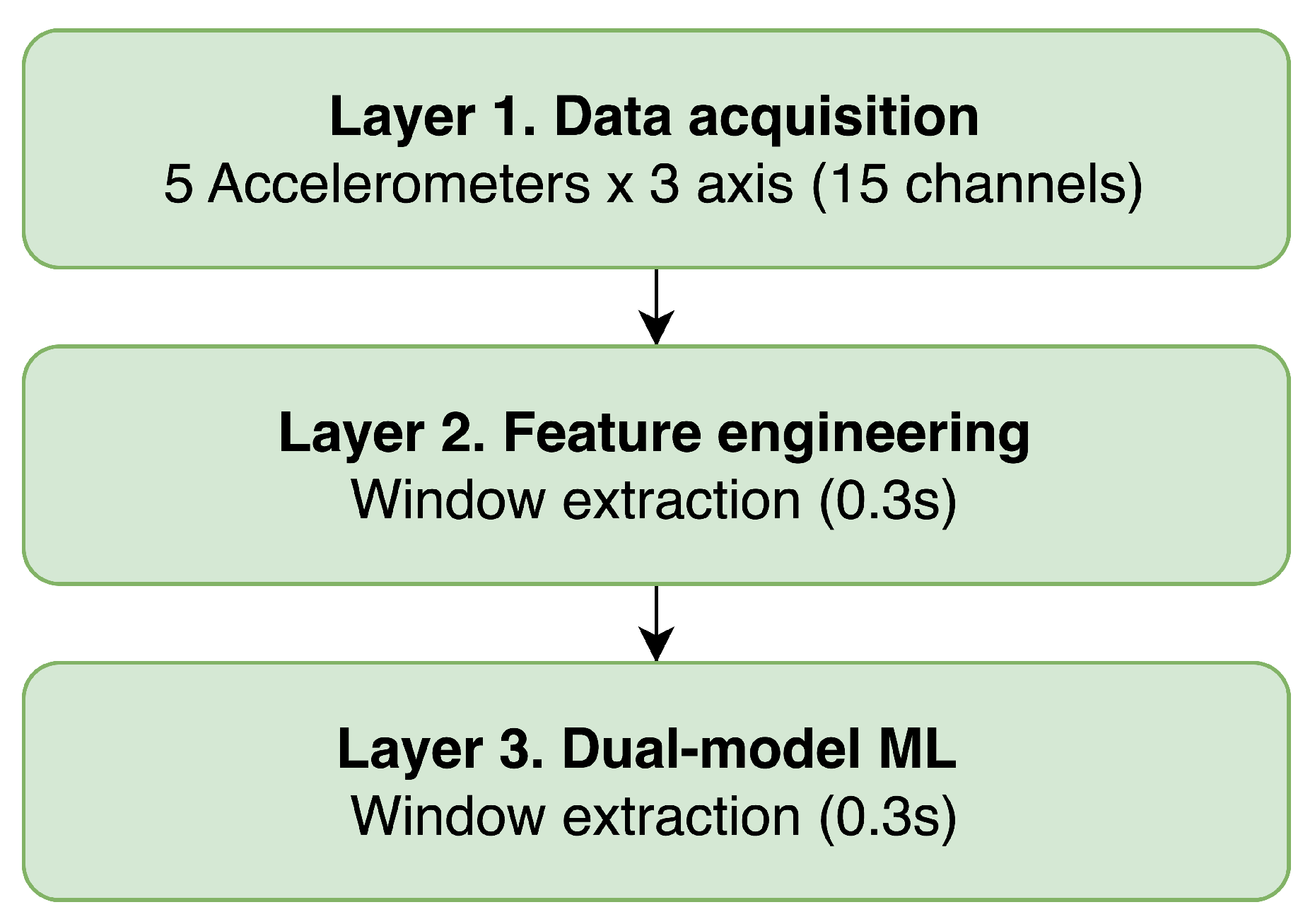
- Multi-Model RUL Prediction Pipeline (Section 2.4): This presents the multi-layer software architectures that process raw multi-sensor vibration data to RUL predictions through CNN and LSTM models with early fused features. This stage demonstrates an attempt to combine spatial information from distributed accelerometers with temporal degradation patterns;
- Proposed Operational Diagnostic Workflow (Section 2.5): This outlines a proposed pre-operational diagnostic protocol with defined decision thresholds (OK, INFO, WARNING, and DANGER) that translate RUL predictions to practical maintenance considerations.
2.1. Modal Analysis of the Robot Structure
2.2. Verification Platform for the Vibration-Monitoring Array
2.2.1. Accelerometer-Based Vibration-Monitoring Array
2.2.2. Embedded Processing Unit
2.2.3. Verification Platform Structure
2.2.4. Vibration Signal Analysis Methods
2.3. Wheeled Robot Experimental Platform
2.3.1. Platform Description
2.3.2. Experimental Procedure
2.4. Multi-Model RUL Prediction Pipeline
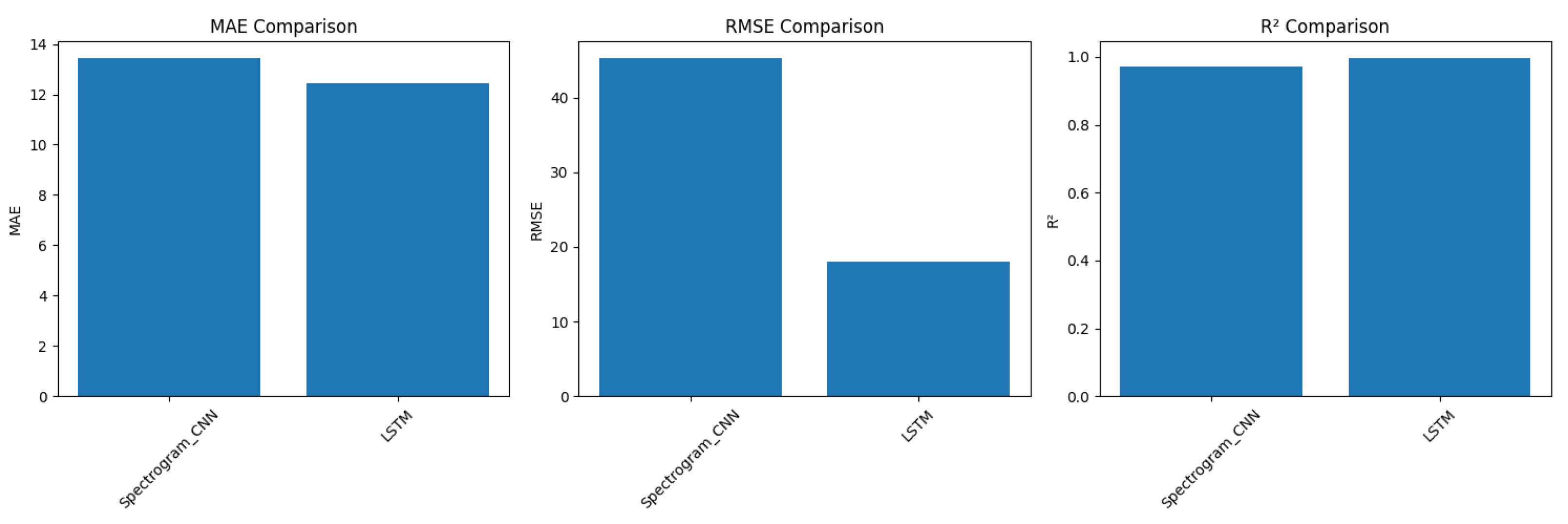
- A spectrogram–CNN architecture that uses a convolutional neural network composed of three convolutional blocks with increasing filter sizes (32, 64, and 128), where each block uses 3 × 3 convolutional layers with ReLU activation and the same padding, followed by batch normalization, max pooling with a (2, 1) window to preserve the temporal resolution, and progressively higher dropout rates to mitigate overfitting. The extracted feature maps are aggregated using global average pooling and passed through two fully connected layers with 256 and 128 neurons, respectively, each employing ReLU activation, batch normalization, and dropout for regularization, before a final linear output layer with a single neuron produces the continuous regression output;
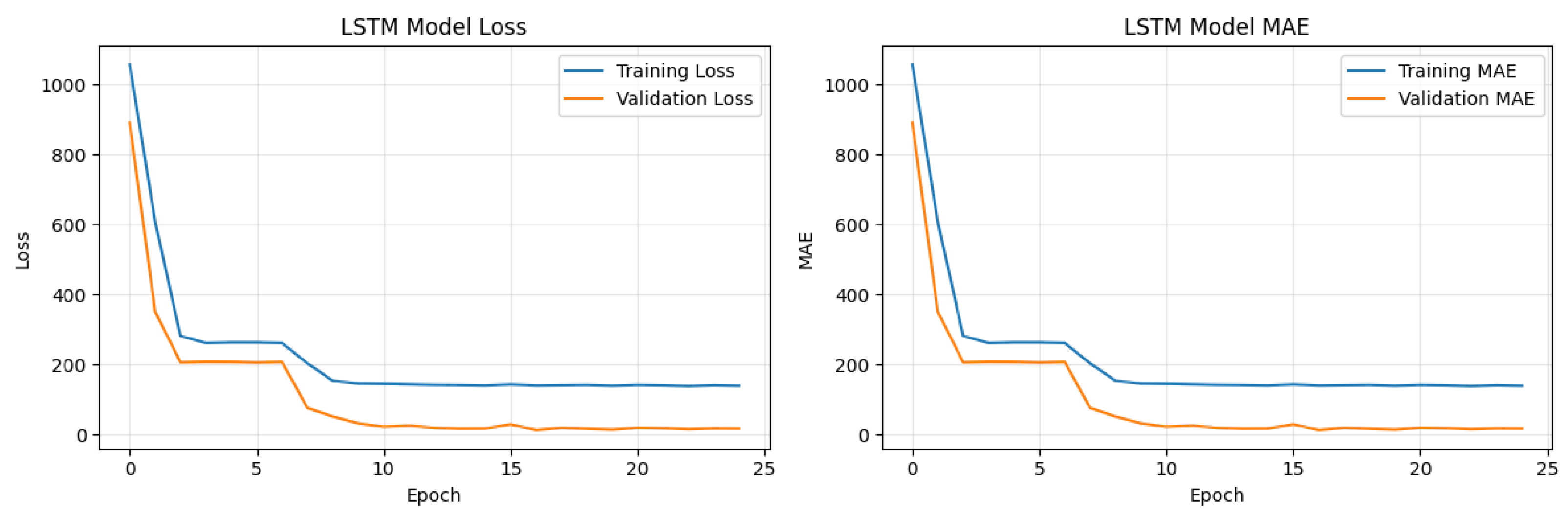
- A feature–LSTM architecture with a first LSTM layer of 128 units that returns sequences to capture temporal dependencies, followed by a second LSTM layer with 64 units, a fully connected dense layer with 64 neurons using ReLU activation for nonlinear feature extraction, a dropout layer with a rate of 0.4 to reduce overfitting, and a final dense output layer with a single neuron and linear activation for continuous value prediction.
2.5. Proposed Operational Diagnostic Workflow
- Healthy/mild degradation (OK, INFO): The robot proceeds to the next operational phase;
- Moderate degradation (WARNING): Additional visual inspection is performed before proceeding;
- Severe degradation (DANGER): The robot is taken offline, and maintenance is required before further testing.
3. Results
3.1. Modal Analysis Results
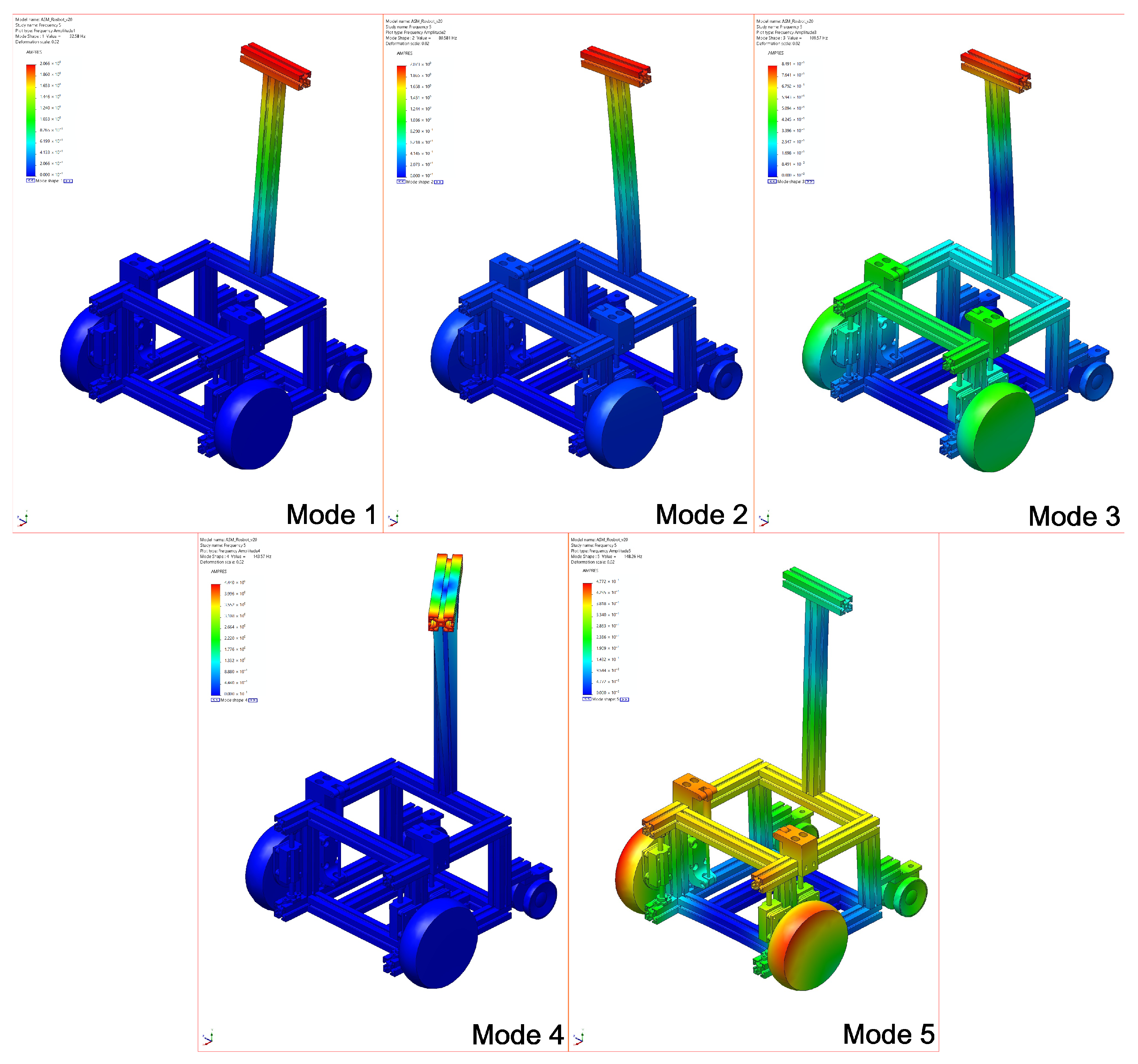
- Mode 1 (≈32 Hz): Vibrations with elevated amplitudes near 32 Hz could potentially be associated with structural looseness, such as bolt relaxation in the vertical aluminum profiles, since this mode corresponds to the fundamental lateral sway. However, other factors (e.g., external excitations) should also be investigated;
- Mode 2 (≈80 Hz): Given that vibrations near 80 Hz are predominantly vertical, an amplitude increase might suggest issues such as wheel suspension degradation or tire imbalance, which could excite the chassis’s vertical bending mode. Further diagnostic measurements would be required to isolate the root cause;
- Mode 5 (≈148 Hz): Increased amplitudes around 148 Hz appear to be consistent with high-speed motor operation harmonics. A resonance peak in this range may provide an indication of developing motor mount fatigue or shaft misalignment, potentially coupling energy into this lateral shear mode. Nonetheless, additional sensor data and time-series analysis are recommended to differentiate between operational variations and actual fault conditions.
3.2. MEMS Accelerometer Array Performance Results
3.2.1. Frequency Response Function Results
3.2.2. Coherence Analysis Results
3.2.3. Uncertainty Analysis Results
3.3. The Multi-Model RUL Prediction Pipeline—Experimental Results
3.3.1. The FFT Spectrogram Model
3.3.2. The Time Feature LSTM Model
4. Discussion
4.1. Scope and Limitations: Fault-Type Specificity
4.2. Environmental Conditions and Testing Protocol Limitations
4.3. MEMS Sensor Validation and Data Acquisition
5. Conclusions
6. Patents
Author Contributions
Funding
Institutional Review Board Statement
Data Availability Statement
Acknowledgments
Conflicts of Interest
Abbreviations
| CAD | Computer-Aided Design |
| CNN | Convolutional Neural Network |
| DLPF | Digital Low-Pass Filter |
| EMI | Electromagnetic Interference |
| FEM | Finite Element Method |
| FFT | Fast Fourier Transform |
| FRF | Frequency Response Function |
| IEPE | Integrated Electronic Piezoelectric |
| IIoT | Industrial Internet-of-Things |
| IMU | Inertial Measurement Unit |
| LSTM | Long Short-Term Memory |
| LVBD | Low-Voltage Battery Disconnect |
| MAE | Mean Absolute Error |
| MAPE | Mean Absolute Percentage Error |
| MCM | Multi-Chip Module |
| ML | Machine Learning |
| MSE | Mean Square Error |
| R2 | R-Squared (Coefficient of Determination) |
| ReLU | Rectified Linear Unit |
| RMS | Root Mean Square |
| RMSE | Root-Mean-Square Error |
| RUL | Remaining Useful Life |
| SMAPE | Symmetric Mean Absolute Percentage Error |
| SPI | Serial Peripheral Interface |
| USB | Universal Serial Bus |
References
- Unger, H.; Markert, T.; Müller, E. Evaluation of use cases of autonomous mobile robots in factory environments. Procedia Manuf. 2018, 17, 254–261. [Google Scholar] [CrossRef] [Scilit]
- Kyrarini, M.; Lygerakis, F.; Rajavenkatanarayanan, A.; Sevastopoulos, C.; Nambiappan, H.R.; Chaitanya, K.K.; Babu, A.R.; Mathew, J.; Makedon, F. A Survey of Robots in Healthcare. Technologies 2021, 9, 8. [Google Scholar] [CrossRef] [Scilit]
- Chand, R.; Sharma, B.; Kumar, S.A. Systematic review of mobile robots applications in smart cities with future directions. J. Ind. Inf. Integr. 2025, 45, 100821. [Google Scholar] [CrossRef] [Scilit]
- Sabry, A.H.; Amirulddin, U.A.B.U. A review on fault detection and diagnosis of industrial robots and multi-axis machines. Results Eng. 2024, 23, 102397. [Google Scholar] [CrossRef] [Scilit]
- Anghel, D.; Stroia, M.D.; Spunei, E.; Liuba, G. Evaluation of Automatic Speed Regulation Performance of Micro-Hydro Units by Monitoring Vibrations in Bearings and Turbine Housing. UPB Sci. Bull. Ser. D Mech. Eng. 2024, 86, 223–234. [Google Scholar]
- Popa, G.; Andrei, M.; Tudor, E.; Vasile, I.; Ilie, G. Fast Detection of the Stick–Slip Phenomenon Associated with Wheel-to-Rail Sliding Using Acceleration Sensors: An Experimental Study. Technologies 2024, 12, 134. [Google Scholar] [CrossRef] [Scilit]
- Coanda, P.; Avram, M.; Comeaga, D.; Gramescu, B.; Constantin, V.; Nita, E. A Review of Fault Detection Methods in Smart Pneumatic Systems and Identification of Key Failure Indicators. In Innovations in Mechatronics Engineering II; Springer: Cham, Switzerland, 2022; pp. 132–142. [Google Scholar] [CrossRef] [Scilit]
- Raouf, I.; Lee, H.; Kim, H.S. Mechanical fault detection based on machine learning for robotic RV reducer using electrical current signature analysis: A data-driven approach. J. Comput. Des. Eng. 2022, 9, 417–433. [Google Scholar] [CrossRef] [Scilit]
- Cui, G.; Li, B.; Tian, W.; Liao, W.; Zhao, W. Dynamic modeling and vibration prediction of an industrial robot in manufacturing. Appl. Math. Model. 2022, 105, 114–136. [Google Scholar] [CrossRef] [Scilit]
- Sandu, A.; Bogatu, L.; Ionascu, G.; Manea, E.; Gheorghe, V. Modeling, simulation and experimental research for MEMS cantilevers of complex geometry. MATEC Web Conf. 2019, 290, 08002. [Google Scholar] [CrossRef] [Scilit]
- Jiao, Y.; Chen, X.; Peng, Y.; Mao, X.; Guo, Q. Autonomous modal analysis method for industrial robots considering dynamic spatial sensitivity and excitation randomness. Sci. Rep. 2025, 15, 12581. [Google Scholar] [CrossRef] [Scilit]
- Hassan, I.U.; Panduru, K.; Walsh, J. An In-Depth Study of Vibration Sensors for Condition Monitoring. Sensors 2024, 24, 740. [Google Scholar] [CrossRef] [Scilit] [PubMed]
- Wang, T.; Meng, H.; Zhang, F.; Qin, R. Fault Detection of Wheelset Bearings through Vibration-Sound Fusion Data Based on Grey Wolf Optimizer and Support Vector Machine. Technologies 2024, 12, 144. [Google Scholar] [CrossRef] [Scilit]
- Wang, X.B.; Luo, L.; Tang, L.; Yang, Z.X. Automatic representation and detection of fault bearings in in-wheel motors under variable load conditions. Adv. Eng. Inform. 2021, 49, 101321. [Google Scholar] [CrossRef] [Scilit]
- Wang, Z.; Zhang, M.; Chen, H.; Li, J.; Li, G.; Zhao, J.; Yao, L.; Zhang, J.; Chu, F. A generalized fault diagnosis framework for rotating machinery based on phase entropy. Reliab. Eng. Syst. Saf. 2025, 256, 110745. [Google Scholar] [CrossRef] [Scilit]
- Wang, S.; Chen, Y.; Dong, S.; Zhang, W.; Yang, Y.; Peng, Z. Cumulative spectrum distribution entropy for rotating machinery fault diagnosis. Mech. Syst. Signal Process. 2024, 206, 110905. [Google Scholar] [CrossRef] [Scilit]
- Zhang, X.; Chen, W.; Chen, B.; Zhang, Z.; Wang, B. A fault diagnosis method for rotating machinery by multi-mode feature entropy and mutual cooperation broad learning system. IEEE Sens. J. 2023, 24, 4722–4736. [Google Scholar] [CrossRef] [Scilit]
- Min, F.; Wang, G.; Liu, N. Collision detection and identification on robot manipulators based on vibration analysis. Sensors 2019, 19, 1080. [Google Scholar] [CrossRef] [Scilit]
- Dixon, W.; Walker, I.; Dawson, D.; Hartranft, J. Fault detection for wheeled mobile robots with parametric uncertainty. In Proceedings of the 2001 IEEE/ASME International Conference on Advanced Intelligent Mechatronics, Como, Italy, 8–12 July 2001; IEEE: Piscataway, NJ, USA, 2001; pp. 1245–1250. [Google Scholar] [CrossRef] [Scilit]
- Yang, Y.; Zhao, J.; Xu, X.; Cao, K.; Yuan, S.; Xie, L. Unsupervised Anomaly Detection for Autonomous Robots via Mahalanobis SVDD with Audio-IMU Fusion. arXiv 2025, arXiv:2505.05811. [Google Scholar] [CrossRef] [Scilit]
- Zhang, L.; Zhou, F.; Duan, P.; Yuan, X. Fault diagnosis of mobile robot based on dual-graph convolutional network with prior fault knowledge. Adv. Eng. Inform. 2024, 62, 102865. [Google Scholar] [CrossRef] [Scilit]
- Klimenda, F.; Cizek, R.; Suszynski, M. Measurement of a vibration on a robotic vehicle. Sensors 2022, 22, 8649. [Google Scholar] [CrossRef] [Scilit] [PubMed]
- Wang, L.; Su, J. Adaptive online terrain classification method for mobile robot based on vibration signals. Int. J. Adv. Robot. Syst. 2022, 19, 17298814211062035. [Google Scholar] [CrossRef] [Scilit]
- Pookkuttath, S.; Elara, M.R.; Sivanantham, V.; Ramalingam, B. AI-Enabled Predictive Maintenance Framework for Autonomous Mobile Cleaning Robots. Sensors 2022, 22, 13. [Google Scholar] [CrossRef] [Scilit] [PubMed]
- Tabandeh, S.; Vedurmudi, A.P.; Söderblom, H.; Pourjamal, S.; Harris, P.; Luo, Y.; Gruber, M.; Vaa, M.I.; Johansen, M.; Koval, M.; et al. Sensor network metrology: Current state and future directions. Meas. Sens. 2025, 38, 101798. [Google Scholar] [CrossRef] [Scilit]
- Galetto, M.; Schiavi, A.; Genta, G.; Prato, A.; Mazzoleni, F. Uncertainty evaluation in calibration of low-cost digital MEMS accelerometers for advanced manufacturing applications. CIRP Ann. 2019, 68, 535–538. [Google Scholar] [CrossRef] [Scilit]
- Iqbal, A.; Mian, N.S.; Longstaff, A.; Fletcher, S. Performance Evaluation of Low-Cost Vibration Sensors in Industrial IoT Applications. Int. J. Autom. Technol. 2022, 16, 329–339. [Google Scholar] [CrossRef] [Scilit]
- Fidali, M.; Augustyn, D.; Ochmann, J.; Uchman, W. Evaluation of the Diagnostic Sensitivity of Digital Vibration Sensors Based on Capacitive MEMS Accelerometers. Sensors 2024, 24, 4463. [Google Scholar] [CrossRef] [Scilit]
- Surucu, O.; Gadsden, S.A.; Yawney, J. Condition Monitoring using Machine Learning: A Review of Theory, Applications, and Recent Advances. Expert Syst. Appl. 2023, 221, 119738. [Google Scholar] [CrossRef] [Scilit]
- Raj, K.K.; Kumar, S.; Kumar, R.R.; Andriollo, M. Enhanced Fault Detection in Bearings Using Machine Learning and Raw Accelerometer Data: A Case Study Using the Case Western Reserve University Dataset. Information 2024, 15, 259. [Google Scholar] [CrossRef] [Scilit]
- Urrea, C.; Domínguez, C. Fault Diagnosis in a Four-Arm Delta Robot Based on Wavelet Scattering Networks and Artificial Intelligence Techniques. Technologies 2024, 12, 225. [Google Scholar] [CrossRef] [Scilit]
- Khumprom, P.; Davila-Frias, A.; Grewell, D.; Buakum, D. A Hybrid Evolutionary CNN-LSTM Model for Prognostics of C-MAPSS Aircraft Dataset. In Proceedings of the 2023 Annual Reliability and Maintainability Symposium (RAMS), Orlando, FL, USA, 23–26 January 2023; pp. 1–8. [Google Scholar] [CrossRef] [Scilit]
- Wei, J.; Meng, L.; Du, J.; Yin, Z. Remaining Useful Life Prediction of Turbofan Engines based on CNN-LSTM Hybrid Model. In Proceedings of the 2024 3rd International Conference on Cloud Computing, Big Data Application and Software Engineering (CBASE), Hangzhou, China, 11–13 October 2024; pp. 153–157. [Google Scholar] [CrossRef] [Scilit]
- Mian, T.; Choudhary, A.; Fatima, S.; Panigrahi, B.K. Mel-spectrogram based Approach for Fault Detection in Ball Bearing using Convolutional Neural Network. In Proceedings of the ICECC ’23: 2023 6th International Conference on Electronics, Communications and Control Engineering, Fukuoka, Japan, 24–26 March 2023; Association for Computing Machinery: New York, NY, USA, 2023; pp. 283–289. [Google Scholar] [CrossRef] [Scilit]
- Xie, Y.; Zhang, T. Fault Diagnosis for Rotating Machinery Based on Convolutional Neural Network and Empirical Mode Decomposition. Shock Vib. 2017, 2017, 3084197. [Google Scholar] [CrossRef] [Scilit]
- Fajar, M.; Hakim, T.M.I.; Wirawan, A.; Suseno, P.A.P.; Soemaryanto, A.R.; Pramutadi, A.M. Comparative Analysis of LSTM Variants for Fault Detection and Classification in Aircraft Control Surfaces. Int. J. Progn. Health Manag. 2025, 4231. [Google Scholar] [CrossRef] [Scilit]
- Dong, J.; Li, Z.; Zheng, Y.; Luo, J.; Zhang, M.; Yang, X. Real-time fault detection for IIoT facilities using GA-Att-LSTM based on edge-cloud collaboration. Front. Neurorobotics 2024, 18, 1499703. [Google Scholar] [CrossRef] [Scilit]
- Hasan, A.; Tahavori, M.; Midtiby, H.S. Model-Based Fault Diagnosis Algorithms for Robotic Systems. IEEE Access 2023, 11, 2250–2258. [Google Scholar] [CrossRef] [Scilit]
- Xuan, J.; Zhu, T.; Peng, G.; Sun, F.; Dong, D. A Review on the Inertial Measurement Unit Array of Microelectromechanical Systems. Sensors 2024, 24, 7140. [Google Scholar] [CrossRef] [Scilit] [PubMed]
- Ru, X.; Gu, N.; Shang, H.; Zhang, H. MEMS Inertial Sensor Calibration Technology: Current Status and Future Trends. Micromachines 2022, 13, 879. [Google Scholar] [CrossRef] [Scilit]
- Besnea, D.; Rizescu, C.I.; Spanu, A.; Moraru, E.; Rizescu, D.; Constantin, V.; Panait, I. Research regarding the influence of different printing strategies on the mechanical characteristics of some FDM manufactured structures. IOP Conf. Ser. Mater. Sci. Eng. 2022, 1262, 012032. [Google Scholar] [CrossRef] [Scilit]
- Miles, J.H. Estimation of signal coherence threshold and concealed spectral lines applied to detection of turbofan engine combustion noise. J. Acoust. Soc. Am. 2011, 129, 3068–3081. [Google Scholar] [CrossRef] [Scilit]
- Rahman, A.G.A.; Ong, Z.C.; Ismail, Z. Enhancement of coherence functions using time signals in Modal Analysis. Measurement 2011, 44, 2112–2123. [Google Scholar] [CrossRef] [Scilit]





| Mode Number | Natural Frequency (Rad/s) | Natural Frequency (Hz) |
|---|---|---|
| 1 | 204.71 | 32.58 |
| 2 | 506.31 | 80.58 |
| 3 | 688.47 | 109.57 |
| 4 | 902.10 | 143.57 |
| 5 | 931.53 | 148.26 |
| Sensor | Mean Sensitivity Ratio | Standard Deviation | Expanded Uncertainty | Relative Expanded Uncertainty |
|---|---|---|---|---|
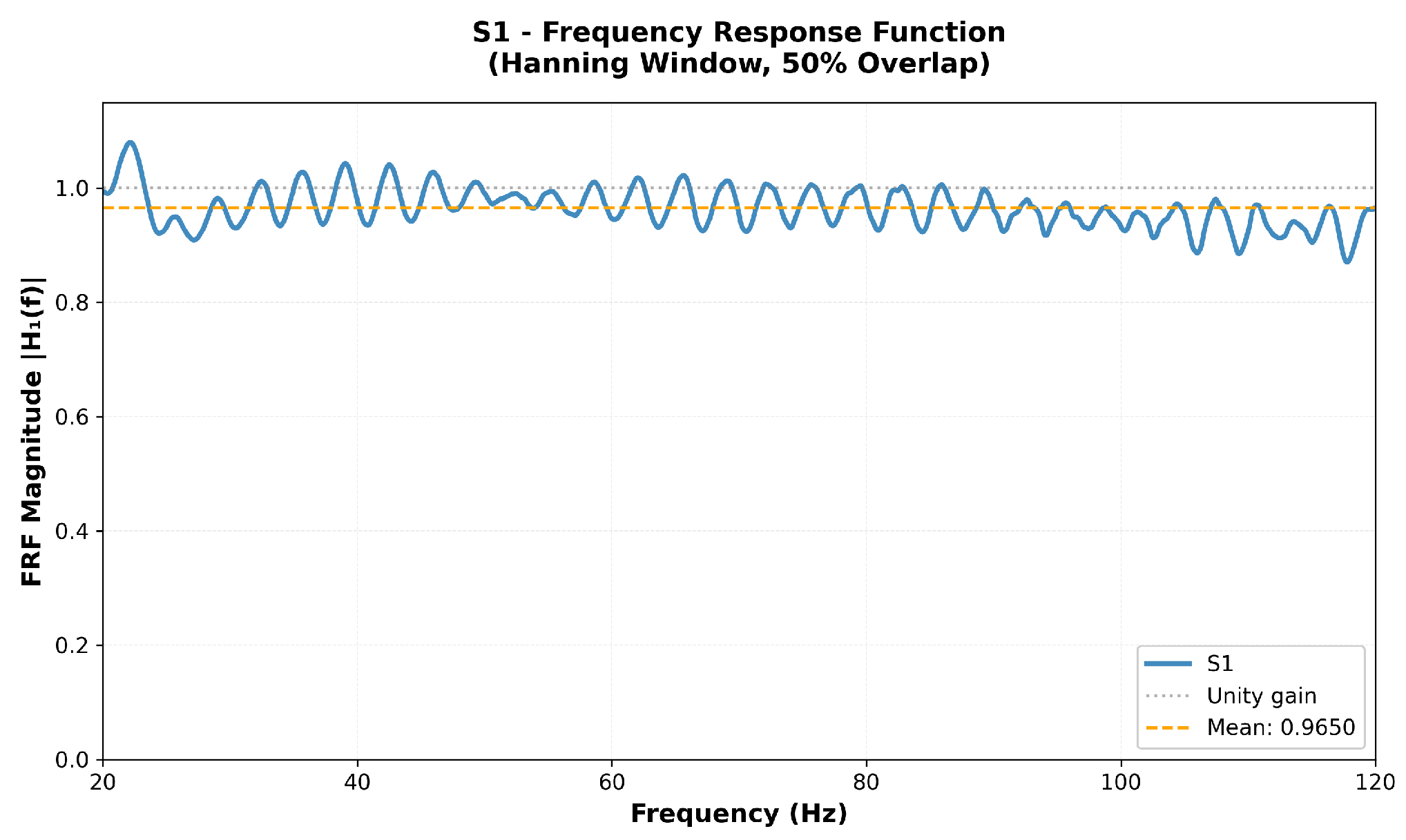
| S1_ax | 0.9650 | 0.0348 | ±0.0696 | 7.21% |
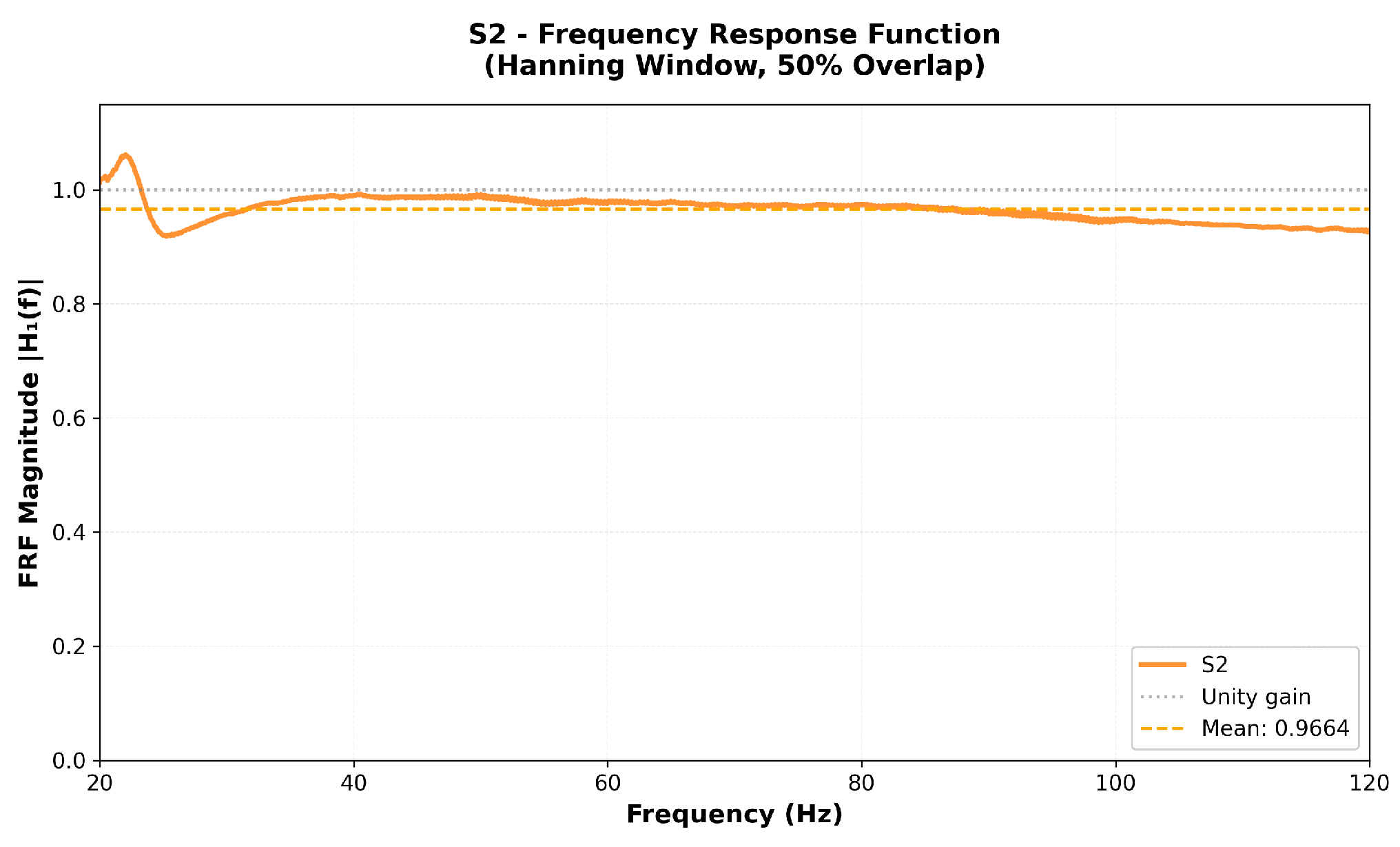
| S2_ax | 0.9664 | 0.0232 | ±0.0463 | 4.79% |
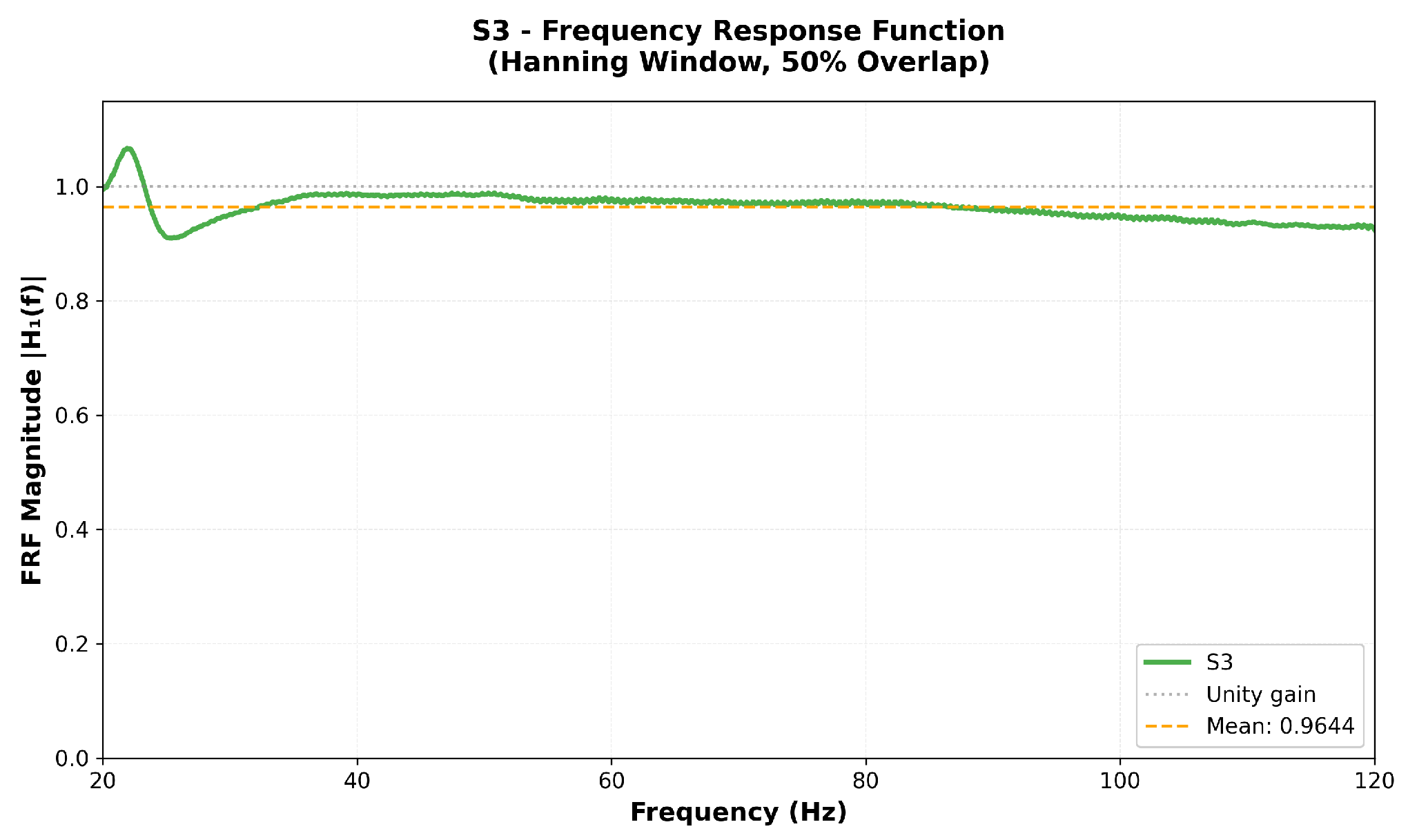
| S3_ax | 0.9644 | 0.0237 | ±0.0475 | 4.92% |
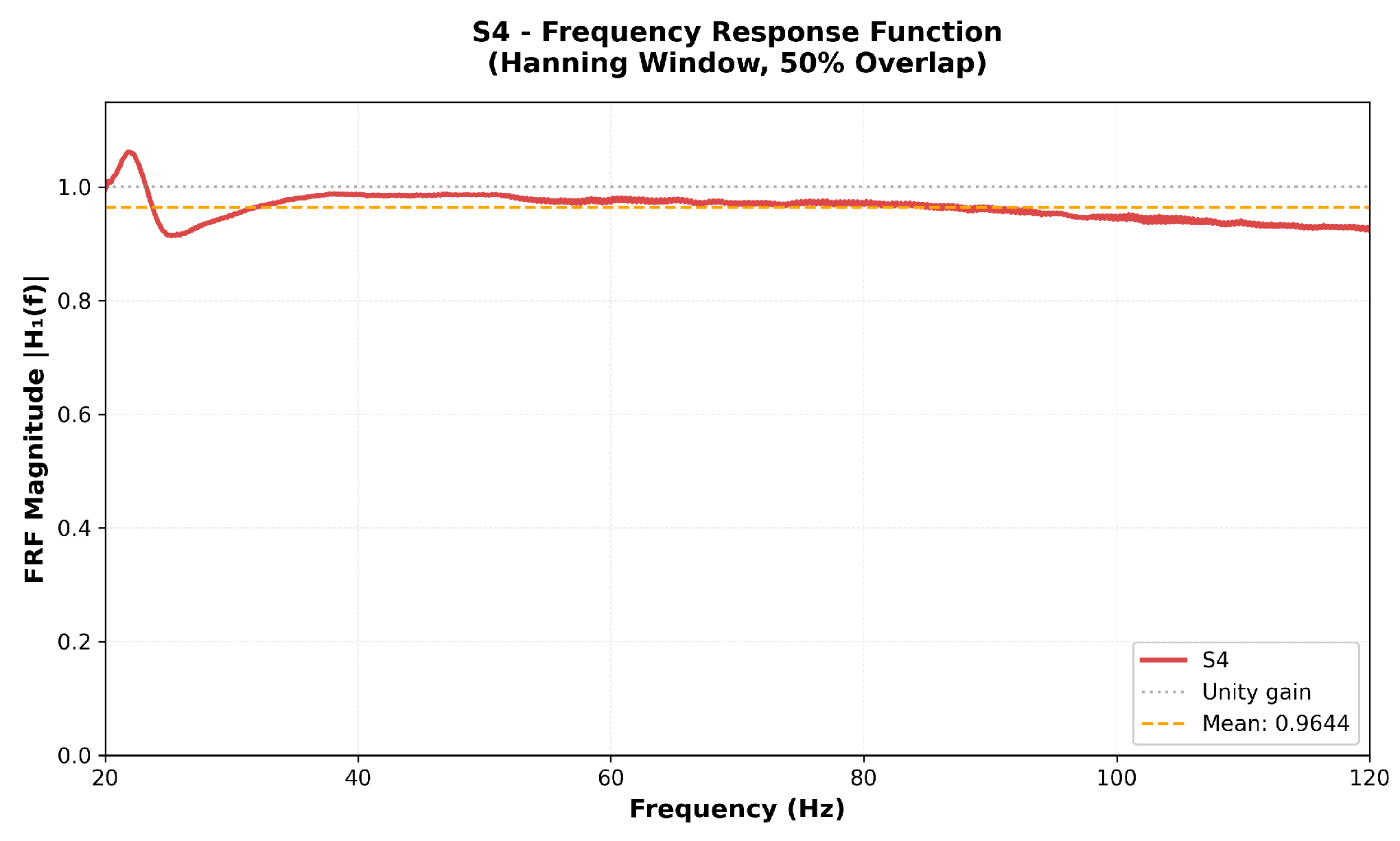
| S4_ax | 0.9644 | 0.0234 | ±0.0468 | 4.86% |
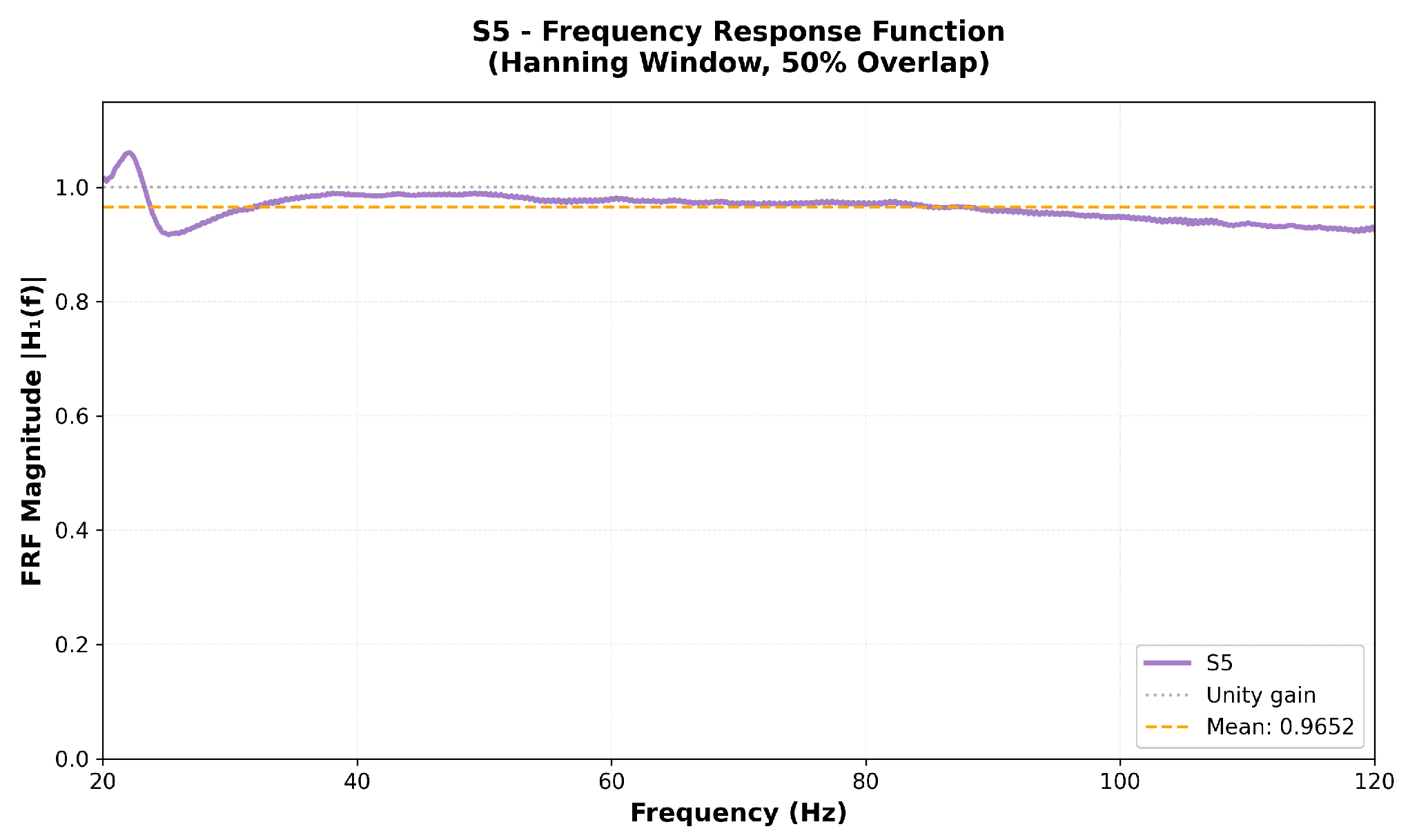
| S5_ax | 0.9652 | 0.0237 | ±0.0473 | 4.90% |
Disclaimer/Publisher’s Note: The statements, opinions and data contained in all publications are solely those of the individual author(s) and contributor(s) and not of MDPI and/or the editor(s). MDPI and/or the editor(s) disclaim responsibility for any injury to people or property resulting from any ideas, methods, instructions or products referred to in the content. |
© 2026 by the authors. Licensee MDPI, Basel, Switzerland. This article is an open access article distributed under the terms and conditions of the Creative Commons Attribution (CC BY) license.
Share and Cite
Gheorghe, V.I.; Cartal, L.A.; Comeagă, C.D.; Mocanu, B.-C.; Rotaru, A.; Nistor, M.-I.; Vartic, M.-V.; Tăbușcă, Ș.A. Intelligent Fault Detection in the Mechanical Structure of a Wheeled Mobile Robot. Technologies 2026, 14, 25. https://doi.org/10.3390/technologies14010025
Gheorghe VI, Cartal LA, Comeagă CD, Mocanu B-C, Rotaru A, Nistor M-I, Vartic M-V, Tăbușcă ȘA. Intelligent Fault Detection in the Mechanical Structure of a Wheeled Mobile Robot. Technologies. 2026; 14(1):25. https://doi.org/10.3390/technologies14010025
Chicago/Turabian StyleGheorghe, Viorel Ionuț, Laurențiu Adrian Cartal, Constantin Daniel Comeagă, Bogdan-Costel Mocanu, Alexandra Rotaru, Mircea-Iulian Nistor, Mihai-Vlad Vartic, and Ștefana Arina Tăbușcă. 2026. "Intelligent Fault Detection in the Mechanical Structure of a Wheeled Mobile Robot" Technologies 14, no. 1: 25. https://doi.org/10.3390/technologies14010025
APA StyleGheorghe, V. I., Cartal, L. A., Comeagă, C. D., Mocanu, B.-C., Rotaru, A., Nistor, M.-I., Vartic, M.-V., & Tăbușcă, Ș. A. (2026). Intelligent Fault Detection in the Mechanical Structure of a Wheeled Mobile Robot. Technologies, 14(1), 25. https://doi.org/10.3390/technologies14010025