Article

Firm Performance and Corporate Social Responsibility: The Moderating Role of Board Skills

by
Rihem Soussi Fathallah
1,
Hamza Nizar
2,3,
Houssam Bouzgarrou
4 and
Abdulrahman Alomair
5,*
1
Institute of Higher Commercial Studies of Sousse, University of Sousse, Sousse 4054, Tunisia
2
Faculty of Law, Economics and Management, University of Jendouba, Jendouba 8100, Tunisia
3
PRESTIGE Labo, IHEC Carthage, University of Carthage, Carthage 1054, Tunisia
4
Higher Institute of Finance and Taxation of Sousse, University of Sousse, Sousse 4000, Tunisia
5
Accounting Department, Business School, King Faisal University, Al-Ahsa 31982, Saudi Arabia
*
Author to whom correspondence should be addressed.
Int. J. Financial Stud. 2026, 14(6), 138; https://doi.org/10.3390/ijfs14060138
Submission received: 4 April 2026 / Revised: 9 May 2026 / Accepted: 13 May 2026 / Published: 1 June 2026

Abstract

Purpose: This study examines the association between firm profitability and corporate social responsibility (CSR), with a particular focus on the moderating role of board skills, specifically those with financial and industry expertise. Design/methodology/approach: Based on a sample of 42,623 observations from 2002 to 2021, we use panel regression analysis with robust standard errors are clustered at the firm level. Findings: The results show that firm profitability is positively associated with CSR performance. However, the positive effect is less likely in the presence of board with financial and industry expertise. Indeed, boards dominated by financially and industry experienced directors tend to prioritize short-term financial returns over long-term CSR initiatives. Originality/value: This study offers a novel contribution to stakeholder and legitimacy theory perspectives by show that the association between financial performance and CSR depends significantly on the expertise embedded within the boardroom. While financial and industry expertise can bring valuable oversight, it may not adequately support CSR initiatives. In this regard, firms may need directors with additional skills and perspectives—such as sustainability or stakeholder management expertise—to better address CSR issues and balance financial objectives with long-term societal and legitimacy concerns. Practical implications: Policy and decision makers should carefully consider the composition of the board when seeking to align profitability with corporate social responsibility (CSR) outcomes. While financial and industry expertise are valuable for oversight, an overrepresentation of such skills on the board may inadvertently undermine long-term CSR commitments.

1. Introduction

Corporate Social Responsibility (CSR) has transitioned from a peripheral activity to a central component of global business strategy (Morales-Parragué et al., 2022). Data from the OECD1 shows that as of 2025, the majority of the world’s largest companies now report on CSR metrics, with approximately 12,900 firms representing 91% of global market capitalization disclosing CSR-related data. This disclosure is largely driven by investor demand; according to Morgan Stanley’s 20252 “Sustainable Signals” report, 77% of global institutional investors say they actively integrate CSR factors into their investment decisions. Furthermore, 84% of investors state that CSR integration helps them identify higher-quality companies, and 64% believe it improves risk-adjusted returns. However, the global CSR landscape is becoming more complex. The OECD notes that while Europe leads with 98% of its major companies disclosing CSR data under regulations like the CSRD, the United States has seen political pushback, with some states passing anti-CSR legislation, creating a fragmented regulatory environment. Despite this political resistance in the US, global CSR assets under management remained above $30 trillion in 2025, and the majority of US institutional investors (60%) continue to consider CSR factors in their portfolios, suggesting that market forces are outpacing political opposition. Overall, while regulatory approaches to CSR vary significantly across jurisdictions, investor demand and market momentum remain the primary drivers of corporate CSR disclosure globally, indicating that CSR is no longer a choice but an expectation in modern capital markets.
The theoretical and empirical evidence regarding CSR is controversial. On the one hand, the agency theory suggests that CSR is embedded with high agency costs (Friedman, 1970; Jensen & Meckling, 2019). Specifically, managers and controlling shareholders may use firm resources to draw on the benefits of control (e.g., personal reputation) through CSR activities (Masulis & Reza, 2015; Barnea & Rubin, 2010). On the other hand, the stakeholder theory (Freeman, 1984) shows that CSR is value constructive for financial and non-financial stakeholders. CSR contributes to enhancing a firm’s value and competitiveness (Hakimi et al., 2025; Renneboog et al., 2008). It can benefit companies by offering strategic product market differentiation (Lins et al., 2017), higher financial performance (Hasan et al., 2018), and eventually, insurance against event risks (Godfrey et al., 2009).
In this context, a substantial body of studies has focused on whether CSR enhances firm performance, often framing CSR as a strategic investment capable of generating financial and competitive advantages (Gillan et al., 2021; Bahta et al., 2021). However, considerably less attention has been devoted to the reverse relationship, whether superior firm performance enables firms to engage more actively in CSR initiatives. This question is particularly important in an international context, where institutional environments, governance systems, and ESG reporting standards vary considerably across countries. Such variation provides an ideal setting for examining how financial success translates into CSR engagement under differing regulatory and stakeholder pressures. The association between firm performance and CSR is supported by the following theoretical perspectives. First, the resource-based view suggests that financially successful firms possess the slack resources necessary to support CSR investments (Uyar et al., 2024). While some CSR initiatives, such as environmental technology upgrades and sustainability infrastructure, require substantial financial commitments, others, including governance improvements, disclosure enhancements, and community engagement, are less capital-intensive (P. T. Lin et al., 2015). Second, stakeholder theory posits that highly profitable firms face greater scrutiny and heightened expectations from investors, customers, employees, and regulators (Aracil Fernández & Forcadell Martínez, 2024). Third, legitimacy theory suggests that firms use CSR to maintain social acceptance, protect corporate reputation, and reinforce their license to operate (Burlea & Popa, 2013). Together, these perspectives indicate that strong financial performance may both enable and motivate CSR engagement.
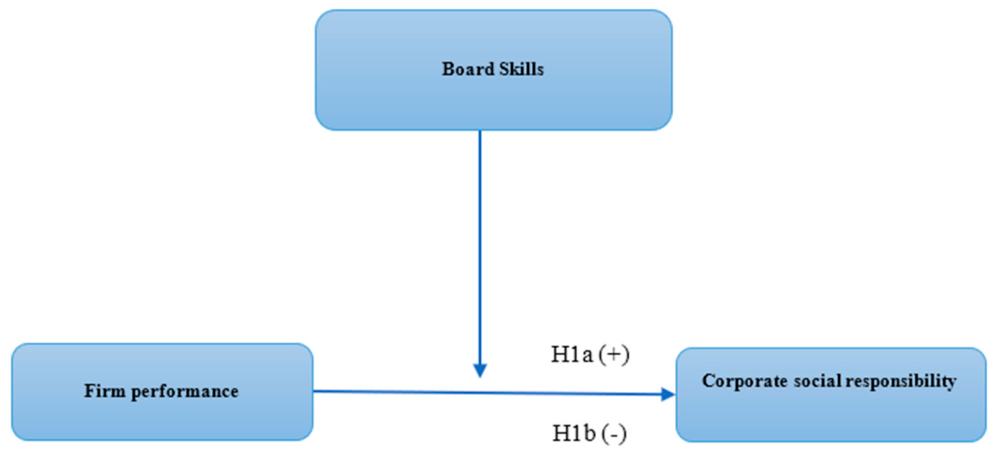
The primary objective of this paper is to examine the association between firm performance and CSR using an international panel of 42,623 firm-year observations from 2002 to 2021. We also investigate whether this relationship is moderated by board expertise, focusing specifically on directors’ financial and industry-specific skills (conceptual framework is presented in Figure 1). Our findings indicate that profitability positively influences CSR engagement, suggesting that more profitable firms have greater slack resources to allocate toward socially responsible initiatives. The positive association between firm performance and CSR is less likely in the presence of a board with financial and industry expertise. Boards dominated by directors with financial and industry backgrounds tend to focus more on firm short-term profitability, efficiency and operational resilience, which can weaken the positive influence of financial performance on CSR.

2. Literature Review and Hypothesis Development

Firm Profitability and Corporate Social Responsibility

While prior research has extensively examined whether corporate social responsibility (CSR) affects firm performance (Miller et al., 2020; Tang et al., 2012), considerably less attention has been devoted to the reverse relationship, whether superior financial performance enables firms to engage more actively in CSR initiatives. This reverse-causality perspective is particularly important because strong financial performance may either provide firms with the resources necessary to support CSR investments (Ruggiero & Cupertino, 2018) or, alternatively, reinforce managerial preferences for short-term financial objectives (Xu & Yang, 2023). Understanding these competing theoretical perspectives is therefore essential for explaining when and why profitable firms increase their commitment to CSR.
A substantial body of research has explored the CSR–performance link from a unidirectional perspective, emphasizing how CSR affects firm-level outcomes like profitability, innovation, and reputational capital (Hasan et al., 2018; Bahta et al., 2021). However, the reverse correlation, where firm performance acts as a driver of CSR engagement, has received comparatively less scholarly attention (Otero-González et al., 2021).
On one hand, drawing on the resource-based view, firms with strong financial performance are better positioned to engage in corporate social responsibility (CSR) because profitability generates slack resources, including surplus financial and human capital. These resources provide the flexibility needed to undertake social and environmental initiatives, particularly those requiring substantial long-term investment, without compromising core operations. Accordingly, slack resources constitute a key mechanism through which superior financial performance can translate into greater CSR engagement (Vitale et al., 2023).
In addition, stakeholder theory provides an additional explanation for why profitable firms may engage more actively in corporate social responsibility (CSR). As firms become more financially successful, they typically attract greater attention from investors, customers, employees, regulators, and other stakeholders. This heightened visibility often increases expectations for ethical conduct, social responsibility, and environmental stewardship (Forcadell et al., 2023). Moreover, stakeholder theory suggests that profitable firms are better positioned to address the increasing expectations of diverse stakeholders by undertaking substantive social and environmental initiatives (García-de-Madariaga & Rodríguez-de-Rivera-Cremades, 2010). Consequently, financially successful firms may expand their CSR activities to meet stakeholder demands and strengthen their relationships with key constituencies (Jamali, 2008).
In this context, CSR extends beyond a mere response to external pressures and becomes a strategic mechanism for preserving long-term legitimacy and organizational sustainability. CSR embodies both ethical responsibility and business opportunity, enabling firms to reconcile moral obligations with sustainable value creation (Kalra, 2024).
Complementing this perspective, the resource-based view suggests that profitable firms are better positioned to engage in CSR because superior financial performance generates slack resources that can be allocated to discretionary social and environmental initiatives (Hasan et al., 2018). These resources provide firms with the financial flexibility required to undertake CSR investments, particularly those involving substantial upfront costs and long-term returns.
Empirical evidence consistently supports this proposition. Firms with stronger financial performance, especially higher return on assets, tend to exhibit greater CSR engagement (Wang et al., 2016; Hasan et al., 2018; Swandari & Sadikin, 2016). Reduced financial constraints enable managers to invest more confidently in CSR initiatives, while stronger profitability also enhances firms’ willingness to disclose their social and environmental activities (Islam et al., 2021).
Taken together, both theoretical arguments and empirical findings indicate that firm profitability provides the resources, incentives, and strategic capacity necessary for meaningful CSR engagement. Accordingly, we propose the following hypothesis:
H1a. 
Firm profitability is positively associated with corporate social responsibility performance.
In contrast to the positive perspective, an alternative stream of research suggests that higher profitability may, under certain circumstances, reduce corporate social responsibility (CSR) engagement. Financial success does not automatically translate into greater social investment, as CSR decisions are shaped not only by resource availability but also by managerial incentives, shareholder expectations, and strategic priorities (Babalola, 2012).
Agency theory offers a key explanation for this negative relationship. Shareholders may view CSR as a discretionary expenditure that diverts resources from value-maximizing activities (Borghesi et al., 2014). When firms generate strong profits, investors often prefer that excess cash be distributed through dividends, share repurchases, or reinvestment in core operations rather than allocated to CSR initiatives (Y. Zhang & Gimeno, 2016). This pressure can encourage managers to limit CSR spending, particularly when its financial benefits are uncertain.
Short-term financial priorities further reinforce this tendency. Managers of highly profitable firms frequently face pressure to sustain earnings growth and deliver immediate returns. Because many CSR initiatives require substantial upfront investment while generating benefits only over the long term, they may be viewed as less attractive than projects with quicker and more measurable financial payoffs (Charlo et al., 2017). Consequently, firms may prioritize short-term profitability over broader social and environmental commitments.
This argument is also consistent with Jensen’s free cash flow theory (Jensen, 1986), which suggests that excess financial resources can intensify agency conflicts. In such situations, CSR may be perceived as a non-essential expenditure or as a managerial tool that does not necessarily maximize shareholder value (Barnea & Rubin, 2010). Moreover, highly profitable firms may face lower legitimacy pressures, reducing the strategic need to invest heavily in CSR (Aragón-Correa & Rubio-López, 2007).
Taken together, these arguments indicate that profitability may, in some cases, discourage CSR engagement rather than promote it. Accordingly, we propose the following competing hypothesis:
H1b. 
Firm profitability is negatively associated with corporate social responsibility performance.

3. Research Design

3.1. Sample Selection and Data

This study employs an international panel dataset comprising 42,623 firm-year observations from 57 countries over the period 2002–2021. The sample period begins in 2002, when the necessary ESG data first became consistently available, and ends in 2021, the latest reporting year available at the time of data collection. The initial sample includes all publicly listed non-financial firms with available data in both Compustat and Refinitiv Eikon. Firm-level financial and accounting data were obtained from Compustat, while corporate social responsibility (CSR) was measured using the Asset4 Environmental, Social, and Governance (ESG) data available from the Refinitiv Eikon database. Following prior literature, firms in the financial sector were excluded because their distinct regulatory environment and accounting practices make them less comparable to non-financial firms. The two databases were matched using unique firm identifiers. Duplicate observations were removed, and firm-year observations with missing values for the dependent, independent, or control variables were excluded. All continuous variables were winsorized at the 1st and 99th percentiles to mitigate the influence of extreme values and potential outliers. This standard procedure reduces the impact of unusually large observations while preserving the overall distribution of the data. The final sample consists of 42,623 firm-year observations across nine Industry Classification Benchmark (ICB) sectors.
Panel A of Table 1 displays the geographical composition of the sample dataset. U.S.-based entities constitute the largest proportion at 31.49%, followed by Japanese firms at 8.04%. Ukrainian companies represent the smallest cohort with a 0.026% share. Panel B presents the temporal distribution, revealing an upward trend from 0.209% in 2002 to a peak of 13.474% in 2020. Regarding the sector-level distributions, Panel C of Table 1 reports the ratios of the sample ranged between 1.964% (Utilities) and 19.792% (Industrials).

3.2. Variable Definitions

3.2.1. Corporate Social Responsibility

Our corporate social responsibility (CSR) is measured using Refinitiv Eikon’s overall ESG score, which captures firms’ environmental, social, and governance performance (Govindan et al., 2021). The environmental dimension incorporates performance metrics related to eco-innovation, emission reduction, and resource efficiency. The social component assesses workforce conditions, human rights compliance, community engagement, and product safety standards. The governance dimension evaluates board management quality, shareholder rights protection, and strategic CSR integration. Because the governance dimension may overlap conceptually with governance-related explanatory variables, we conduct an additional robustness test using the combined environmental and social (ES) score, excluding the governance component. The results remain qualitatively unchanged, suggesting that our findings are not driven by mechanical overlap between the dependent and independent variables.

3.2.2. Firm Performance

Our independent variable is firm profitability, measured by Return on Assets (ROA). Consistent with (Utomo & Simanungkalit, 2024), ROA is calculated using the following formula:
ROA = I n c o m e   b e f o r e   t a x T o t a l   A s s e t s
According to Astuti et al. (2025), Return on Assets is widely recognized as a key indicator of how efficiently management converts company assets into earnings, making it a crucial measure for assessing corporate performance and success.

3.2.3. Control Variables

Consistent with prior research (e.g., Wang et al., 2016; Barnea & Rubin, 2010; Chen et al., 2021; Smith & Huang, 2023), we include several firm- and country-level control variables that may influence CSR engagement. LEVERAGE is measured as total debt divided by total assets. A negative relationship is expected, as highly leveraged firms face greater financial constraints and may have fewer slack resources available for discretionary CSR activities (Simionescu & Gherghina, 2014). FIRM_SIZE is calculated as the natural logarithm of total assets. Larger firms are expected to exhibit higher CSR engagement because they possess greater resources and face increased stakeholder scrutiny (Hossain & Karim, 2023).
CEO_DUALITY is a dummy variable equal to one if the chief executive officer also serves as board chair, and zero otherwise. A negative association is anticipated, as CEO duality may weaken board independence and reduce oversight of CSR-related decisions (Karagiannopoulou et al., 2026). BOARD_GENDER is measured as the proportion of female directors on the board. A positive effect is expected because gender-diverse boards often enhance monitoring quality and promote stronger attention to social and environmental issues (Zahid et al., 2025). BOARD_SIZE represents the total number of directors on the board. Larger boards may provide broader expertise and stronger oversight, although excessively large boards may also suffer from coordination challenges (Zahid et al., 2025).
GDP is measured as the natural logarithm of gross domestic product per capita. Firms operating in more developed economies are generally expected to demonstrate stronger CSR engagement due to greater institutional development and stakeholder awareness. Finally, AUDIT_COMMITTEE and GOVERNANCE_COMMITTEE are binary variables indicating the existence of an audit committee and a corporate governance committee, respectively. Positive coefficients are expected for both variables, as these governance mechanisms enhance oversight, transparency, and alignment with stakeholder interests, thereby supporting stronger CSR engagement (Cavaco & Crifo, 2010; L. Zhang & Su, 2023).

3.3. Model Specification and Empirical Analysis

To examine the effect of firm profitability on corporate social responsibility, following the ordinary least squares (OLS) method using this model:
CSRit = α0 + α1 ROAit + α2 LEVERAGEit + α3 FIRM_SIZEit + α4 CEO_DUALITYit + α5 BOARD_GENDERit + α6 BOARD_SIZEit + α7 GDPit + α8 AUDIT_COMMITTEEit + α9 GOVERNANCE_COMMITTEEit + COUNTRY FIXED EFFECT + YEAR FIXED EFFECT + INDUSTRY FIXED EFFECT + εit
where corporate social responsibility is the dependent variable proxied by the ESG score and denotes CSR. Firm profitability, measured by return on assets (ROA), serves as the primary independent variable. The analysis also includes several control variables: firm leverage (LEVERAGE), firm size (FIRM_SIZE), CEO duality (CEO_DUALITY), board gender diversity (BOARD_GENDER), board size (BOARD_SIZE), gross domestic product (GDP), the presence of an audit committee (AUDIT_COMMITTEE), and the presence of a governance committee (GOVERNANCE_COMMITTEE).
To examine the relationship between firm profitability and corporate social responsibility, this study employs panel data regression models with firm-level observations across countries and years. Consistent with prior literature, all estimations include country, year, and industry fixed effects to control for time-invariant country characteristics, global temporal shocks, and sector-specific heterogeneity. By accounting for these sources of unobserved heterogeneity, the fixed-effects specification helps reduce omitted variable bias and strengthen the internal validity of the estimated relationships. Robust standard errors are clustered at the firm level to account for serial correlation and heteroscedasticity within firms over time, thereby ensuring reliable statistical inference.

3.4. Descriptive Statistics

Table 2 presents summary statistics for all variables included in the primary analysis, based on a sample of 42,623 observations spanning the period 2002–2021. Robust standard errors are clustered at the firm level to account for serial correlation and heteroscedasticity within firms over time, thereby ensuring reliable statistical inference. Prior to estimation, all continuous variables are winsorized at the 1st and 99th percentiles to mitigate the influence of extreme observations and outliers. In terms of firm profitability, the average value of return on assets (ROA) was 0.067. Also, about the dependent variable, the corporate social responsibility (CSR) average value is 43.918. The descriptive statistics results for all other controls generally align with findings from previous studies (Otero-González et al., 2021).

3.5. Correlation Matrix

Table 3 displays the Pearson correlation matrix for the dependent, independent, and control variables. The correlation matrix and variance inflation factor (VIF) analyses are computed using the final winsorized estimation sample. All correlation coefficients remain below the 0.8 threshold. This finding is further supported by variance inflation factor (VIF) values ranging from 1.07 to 1.34, well below the critical value of 10. The results indicate no evidence of severe multicollinearity among the explanatory variables, supporting the reliability of the regression estimates. This empirical framework provides a rigorous basis for assessing the relationship between profitability and CSR engagement.

4. Empirical Analysis

This section set out to expose the sample empirical analysis, additional tests and robustness check of the findings to test the connection between profitability and corporate social responsibility, as well as the board skills moderator effect.

4.1. The Effect of Firm Performance on Corporate Social Responsibility

The findings presented in Table 4 provide robust empirical support for a positive association between firms’ financial performance and corporate social responsibility practices. Specifically, the results shown in Table 4 demonstrate that higher return on assets (ROA), a widely recognized indicator of firm profitability, is significantly and positively associated with enhanced CSR performance. Economically, the estimated coefficient suggests that a one-standard-deviation increase in profitability is associated with an approximately 0.35 increase in CSR engagement, after controlling for the full set of firm-level, governance, and country-level variables. This result indicates that the positive association is not only statistically significant but also economically meaningful, thereby confirming our first hypothesis (H1a). This outcome suggests that firms with stronger financial performance possess greater capacity to allocate resources toward social and environmental initiatives.
From a theoretical perspective, this positive association is consistent with the resource-based view, which posits that profitable firms generate slack resources that can be allocated to discretionary activities such as corporate social responsibility. Greater financial flexibility enables firms to undertake social and environmental initiatives without compromising their core operations.
This finding is also aligned with stakeholder theory. Financially successful firms typically attract greater attention from investors, customers, employees, regulators, and local communities, thereby increasing expectations for responsible corporate behavior. In response, profitable firms may engage more actively in CSR to strengthen stakeholder relationships, enhance corporate legitimacy, and preserve their long-term license to operate.
Overall, our findings indicate that more profitable firms tend to exhibit higher levels of CSR engagement. This result supports the view that financial performance provides both the resources and the strategic incentives necessary for meaningful CSR investment. It is also consistent with prior studies (including Otero-González et al., 2021), which document that financially stronger firms are generally more inclined to undertake socially responsible activities.

4.2. Additional Analysis: The Moderating Role of Board Skills

Board skills play a critical role in shaping corporate social responsibility (CSR) performance (C. C. Lin & Nguyen, 2022). Directors with industry-specific expertise are better equipped to understand sector-specific risks, regulatory challenges, and stakeholder expectations related to social and environmental issues, thereby potentially enhancing the effectiveness of CSR initiatives (Shafeeq Nimr Al-Maliki et al., 2023). Similarly, financial expertise strengthens board oversight by enabling directors to evaluate the economic implications of CSR investments and assess whether such initiatives are aligned with long-term value creation for both shareholders and other stakeholders (Pahuja & Agrawal, 2023). Accordingly, boards possessing substantial financial and industry expertise are better positioned to process complex information, make informed strategic decisions, and engage effectively with diverse stakeholders, all of which may enhance CSR performance (C. C. Lin & Nguyen, 2022).
Conversely, agency theory suggests that while boards possessing financial and industry expertise are often presumed to enhance strategic decision-making, such competencies may paradoxically bias managerial attention toward shareholder value maximization (Barnea & Rubin, 2010). This perspective is further supported by the managerial opportunism hypothesis (Prior et al., 2008), which posits that managers may sometimes advance firm short-term profitability over long-term CSR initiatives (Barnea & Rubin, 2010; Prior et al., 2008).
In this study, we argue that the positive effect of CSR on firm performance is moderated by board skills. Following Nizar et al. (2025), board skills are measured as the percentage of directors possessing either industry-specific expertise or financial expertise. Industry expertise refers to directors with substantial professional or board experience in the firm’s primary industry, while financial expertise captures directors with backgrounds in accounting, finance, banking, or related fields.
The results reported in Table 5 indicate that board skills moderate the relationship between firm profitability and CSR engagement. Although both profitability and board skills exhibit positive direct associations with CSR, the negative and statistically significant interaction term suggests that board expertise attenuates the positive profitability-CSR association. This finding suggests that while financial and industry expertise are important, they may not be sufficient to fully support CSR. Boards dominated by directors with financial and industry backgrounds tend to focus more on firm short-term profitability, efficiency and operational resilience, which can weaken the positive influence of financial performance on CSR. This implies that firms facing complex social, environmental, and stakeholder-related challenges require a broader mix of board competencies. Firms may need directors with additional skills and perspectives—such as sustainability or stakeholder management expertise—to better address CSR issues and balance financial objectives with long-term societal and legitimacy concerns. This interpretation should be viewed as theoretically grounded rather than conclusive. The logic to this is that the strength of this moderating effect may vary across institutional environments, where governance practices and stakeholder expectations differ.

4.3. Robustness Check

4.3.1. Alternative Metrics of Firm Performance

To ensure the robustness of our results, we re-estimate our core model using three different profitability metrics Semykina and Wooldridge (2010). A robust finding should hold across conceptually related but distinct measures of a company’s profitability level. This test helps to alleviate concerns that the findings are attributable to measurement error or peculiarities inherent to a specific accounting metric. In Table 6, we replace our primary measure, return on assets (ROA), with first the return on equity (ROE), which is calculated as the ratio of net income to shareholders’ equity (Jihadi et al., 2021). ROE shifts the focus from the efficiency of all assets to the return generated specifically for equity shareholders, capturing a different dimension of profitability. Second the Net profit margin (NPM) is calculated as the ratio of net income to net sales revenue (Khabibah et al., 2025). NPM assesses a firm’s operational efficiency by showing the percentage of revenue that translates into profit, independent of the firm’s asset base or leverage. Third, Tobin’s Q is employed as a market-based performance measure that captures firm valuation, investor expectations, and future growth opportunities, thereby complementing the accounting-based profitability measures used in the baseline analysis (Farooq & Ahmad, 2023; Astuti et al., 2025).
The robust results with Tobin’s Q are particularly noteworthy. They suggest that the positive relationship holds not only for traditional accounting measures (ROA, ROE, and NPM) but also for a forward-looking market-based measure. This implies that the market’s anticipation of future earnings is also associated with higher CSR commitment. The fact that all three alternative proxies confirm our core finding significantly reinforces the robustness of the positive effect that firm profitability has on CSR commitments.

4.3.2. Alternative Metrics of CSR

To further assess the robustness of our findings, we examine whether the positive relationship between firm profitability and corporate social responsibility extends to alternative CSR dimensions. Specifically, we re-estimate our baseline model using four alternative dependent variables: Environmental Pillar Score, Social Pillar Score, Governance Pillar Score, and the combined Environmental and Social (ES) Performance score. As reported in Table 7, firm profitability remains positively and statistically significantly associated with all four CSR measures. These results indicate that the positive association of profitability is not confined to the aggregate ESG score, but is consistently observed across its individual pillars and the non-governance dimensions. Collectively, these findings reinforce our main conclusions and provide further evidence that more profitable firms are better positioned to invest in a broad range of sustainability and social responsibility initiatives.

4.3.3. Endogeneity Concerns

Entropybalancing
To mitigate endogeneity concerns arising from selection bias and observable differences between treated and control firms, we employ the entropy balancing technique (Hainmueller, 2012). This method re-weights the control group to achieve perfect balance on a set of pre-treatment covariates, ensuring that the groups are comparable on these observed dimensions. This approach improves covariate balance and mitigates bias arising from observable firm characteristics. However, as with other matching-based techniques, it cannot fully eliminate concerns related to unobserved heterogeneity or reverse causality. Compared to propensity score matching, entropy balancing achieves superior covariate balance across key statistical moments, including the mean, variance, and skewness. Following the protocol established by Hainmueller (2012), we confirm convergence for the balanced covariates across all three moments. The multivariate regression results reported in Table 8 reinforce our primary findings, demonstrating a consistent and statistically significant positive impact of a company’s profitability on corporate social responsibility (CSR). This robustness check substantiates our main conclusions by showing that the association holds regardless of the balancing method employed.
Two-Stage Least Squares (2SLS)
To further address endogeneity concerns, we complement the entropy balancing analysis with an instrumental variable approach based on two-stage least squares (2SLS). While entropy balancing mitigates selection bias arising from observable firm characteristics, it cannot fully eliminate endogeneity stemming from unobserved heterogeneity, reverse causality, or simultaneity. Therefore, employing both approaches provides a more comprehensive assessment of the robustness of our findings. Specifically, we instrument firm profitability (ROA) using two widely accepted instruments: the one-period lag of ROA and the average profitability of peer firms within the same industry-year, excluding the focal firm. The lagged ROA captures the persistence of firm performance while remaining predetermined with respect to current CSR decisions. Peer profitability reflects common industry-level economic conditions that affect a firm’s profitability but are unlikely to directly influence its CSR engagement beyond their effect on firm profitability. The diagnostic tests strongly support the validity and relevance of the instruments. First, the underidentification test is highly significant (LM = 1449.78, p < 0.001), confirming that the instruments are strongly correlated with firm profitability. Second, the weak identification statistic is 5812.31, which far exceeds the Stock-Yogo critical value of 19.93, indicating that weak instruments are not a concern. Finally, the Durbin-Wu-Hausman test rejects the null hypothesis that profitability is exogenous (F = 14.58, p < 0.001), confirming the appropriateness of the instrumental variable approach. Together, these results provide strong support for the validity and strength of the selected instruments. The 2SLS results, reported in Table 8 (Columns 2 and 3), remain fully consistent with our baseline and entropy balancing estimates. Firm profitability continues to exhibit a positive and statistically significant effect on CSR.
Taken together, both the entropy balancing and instrumental variable analyses provide compelling evidence that our main findings are robust to both observable and unobservable sources of endogeneity, thereby strengthening the causal interpretation of the positive relationship between profitability and CSR.

5. Conclusions

The primary aim of this research is to examine the impact of firm financial performance on corporate social responsibility (CSR), providing insights into how profitable firms develop and sustain CSR practices over time and across countries. Using an international sample of 42,623 firm-year observations from 2002 to 2021, we find that stronger financial performance is associated with higher levels of CSR engagement. This result suggests that profitable firms possess greater financial flexibility and organizational resources, enabling them to invest more extensively in socially responsible activities. The finding is consistent with stakeholder theory, which posits that highly profitable firms attract greater scrutiny and expectations from investors, customers, employees, regulators, and society at large. Consequently, financially successful firms are better positioned, and often more motivated, to meet these expectations through sustained CSR engagement.
Additional analyses reveal that the positive relationship between profitability and CSR becomes weaker in firms with boards possessing greater financial and industry expertise. Specifically, the negative interaction term indicates that board skills influence how profitability is translated into CSR investment.
Our findings carry several important implications. First, firms seeking to strengthen their CSR engagement may benefit from appointing directors with broader perspectives, especially those with expertise in sustainability, ethics, or stakeholder management. Nomination board committee may benefit from incorporating members with broader expertise (e.g., sustainability expertise), as this can enhance the quality of strategic oversight, strengthen consideration of sustainability and ethical issues, and improve alignment between corporate strategy and CSR objectives. Policy makers interested in promoting CSR may consider encouraging or requiring more diverse board expertise, or designing governance guidelines that support broader stakeholder-focused decision-making. Managers should provide board members with financial and industry expertise, evidence-based business cases showing how CSR initiatives drive long-term value and strengthen risk management. This helps shift their attention away from narrow short-term performance objectives toward a more balanced and responsible strategic perspective.
This research is not free from limitations. First, the sample is unbalanced across countries, industries, and years, reflecting differences in data availability and disclosure practices. Second, although our empirical approach incorporates extensive controls and multiple robustness tests, including entropy balancing and additional endogeneity analyses, the study does not permit definitive causal inference, and reverse causality cannot be entirely ruled out. Future research could extend our study by examining the moderating role of other dimensions of board expertise, such as sustainability, technological, or international experience. These forms of expertise may further influence how boards’ skills navigate the tension between shareholder value maximization and broader stakeholder accountability.

Author Contributions

Conceptualization, R.S.F.; Methodology, R.S.F.; Software, R.S.F.; Validation, R.S.F. and H.B.; Formal analysis, R.S.F.; Investigation, R.S.F. and H.B.; Resources, R.S.F., and H.B.; Data curation, R.S.F. and H.B.; Writing—original draft, R.S.F.; Writing—review & editing, H.B. and H.N.; Visualization, H.B. and A.A.; Supervision, H.B., H.N. and A.A.; Project administration, H.N., H.B. and A.A.; Funding acquisition, A.A. All authors have read and agreed to the published version of the manuscript.

Funding

This work was supported by the Deanship of Scientific Research, Vice Presidency for Graduate Studies and Scientific Research, King Faisal University, Saudi Arabia [Grant No. KFU262572].

Institutional Review Board Statement

Not applicable.

Informed Consent Statement

Not applicable.

Data Availability Statement

The data presented in this study is available upon reasonable request due to privacy reasons.

Conflicts of Interest

The authors declare no conflicts of interest.

Appendix A. Variables Definitions

VariablesDefinitions
Dependent Variable
CSRThe composite Environmental, Social, and Governance (ESG) scores are derived from Thomson Reuters Asset4. The environmental component (E) incorporates metrics related to resource efficiency, emissions control, and environmental innovation. The social dimension (S) encompasses labor practices, human rights compliance, community engagement, and product responsibility standards. The governance factor (G) includes board oversight, shareholder rights, and corporate responsibility strategy.
Independent Variables
ROAIncome before tax over total assets.
ROEIncome before taxes over shareholders equity.
NET PROFIT MARGINThe net income after taxes over net sales.
TOBINS’QIs the ratio of market value of the company over total assets.
Moderating Variable
BOARD SKILLS The proportion of directors possessing either industry-specific expertise or substantial financial qualifications.
Control Variables
LEVEVERAGETotal debt over total assets.
FIRM_SIZENatural logarithm of total assets.
CEO_DUALITYCEO duality which takes 1 if CEO and board chair are the same person, 0 if not.
BOARD_GENDERProportion of female directors on board.
BOARD_SIZENumber of directors on board.
GDPNatural logarithm of gross domestic product per capita.
AUDIT_COMMITTEEA binary indicator that denotes the presence of an Audit committee within a firm
GOVERNANCE_COMMITTEEA binary indicator that denotes the presence of a corporate governance committee within a firm

Notes

1
Global Corporate Sustainability Report 2025|OECD. https://www.oecd.org/en/publications/global-corporate-sustainability-report-2025_bc25ce1e-en.html (accessed on 12 December 2025).
2
2025_Sustainable_Signals_Individual_Investors_2025_report.pdf. https://www.morganstanley.com/content/dam/msdotcom/en/assets/pdfs/2025_Sustainable_Signals_Individual_Investors_2025_report.pdf (accessed on 12 December 2025).

References

  1. Aracil Fernández, E. M., & Forcadell Martínez, F. J. (2024). The firm under the spotlight: How stakeholder scrutiny drives CSR and reinforces financial performance. Available online: https://repositorio.comillas.edu/xmlui/handle/11531/61459 (accessed on 12 December 2025).
  2. Aragón-Correa, J. A., & Rubio-López, E. A. (2007). Proactive corporate environmental strategies: Myths and misunderstandings. Long Range Planning, 40(3), 357–381. [Google Scholar] [CrossRef]
  3. Astuti, A. W., Tekle, K. C., Lema, A. A., & Magfiroh, D. (2025). Evaluating corporate financial performance: A profitability ratio approach. Jurnal Ekonomi Teknologi dan Bisnis (JETBIS), 4(11), 633–647. [Google Scholar] [CrossRef]
  4. Babalola, Y. A. (2012). The impact of corporate social responsibility on firms’ profitability in Nigeria. European Journal of Economics, Finance and Administrative Sciences, 45(1), 39–50. [Google Scholar]
  5. Bahta, D., Yun, J., Islam, M. R., & Ashfaq, M. (2021). Corporate social responsibility, innovation capability and firm performance: Evidence from SME. Social Responsibility Journal, 17(6), 840–860. [Google Scholar] [CrossRef]
  6. Barnea, A., & Rubin, A. (2010). Corporate social responsibility as a conflict between shareholders. Journal of Business Ethics, 97(1), 71–86. [Google Scholar] [CrossRef]
  7. Borghesi, R., Houston, J. F., & Naranjo, A. (2014). Corporate socially responsible investments: CEO altruism, reputation, and shareholder interests. Journal of Corporate Finance, 26, 164–181. [Google Scholar] [CrossRef]
  8. Burlea, A. S., & Popa, I. (2013). Legitimacy theory. Encyclopedia of Corporate Social Responsibility, 21(6), 1579–1584. [Google Scholar]
  9. Cavaco, S., & Crifo, P. (2010). Complementarity between CSR practices and corporate performance: An empirical study. In P. Crifo, & J.-P. Ponssard (Eds.), Corporate social responsibility: From compliance to opportunity. Available online: https://www.fundacionseres.org/Lists/Informes/Attachments/1105/Complementarity%20between%20CSR%20Practices_0.pdf (accessed on 12 December 2025).
  10. Charlo, M. J., Moya, I., & Muñoz, A. M. (2017). Financial performance of socially responsible firms: The short-and long-term impact. Sustainability, 9(9), 1622. [Google Scholar] [CrossRef]
  11. Chen, C. C., Khan, A., Hongsuchon, T., Ruangkanjanases, A., Chen, Y. T., Sivarak, O., & Chen, S. C. (2021). The role of corporate social responsibility and corporate image in times of crisis: The mediating role of customer trust. International Journal of Environmental Research and Public Health, 18(16), 8275. [Google Scholar] [CrossRef] [PubMed]
  12. Farooq, M., & Ahmad, N. (2023). Nexus between board characteristics, firm performance and intellectual capital: An emerging market evidence. Corporate Governance: The International Journal of Business in Society, 23(6), 1269–1297. [Google Scholar] [CrossRef]
  13. Forcadell, F. J., Lorena, A., & Aracil, E. (2023). The firm under the spotlight: How stakeholder scrutiny shapes corporate social responsibility and its influence on performance. Corporate Social Responsibility and Environmental Management, 30(3), 1258–1272. [Google Scholar]
  14. Freeman, R. B. (1984). Longitudinal analyses of the effects of trade unions. Journal of Labor Economics, 2(1), 1–26. [Google Scholar] [CrossRef]
  15. Friedman, M. (1970). The social responsibility of business is to increase its profits. Oxford University Press. [Google Scholar]
  16. García-de-Madariaga, J., & Rodríguez-de-Rivera-Cremades, F. (2010). Corporate social responsibility and the classical theory of the firm: Are both theories irreconcilable? Innovar, 20(37), 5–19. [Google Scholar]
  17. Gillan, S. L., Koch, A., & Starks, L. T. (2021). Firms and social responsibility: A review of ESG and CSR research in corporate finance. Journal of Corporate Finance, 66, 101889. [Google Scholar] [CrossRef]
  18. Godfrey, P. C., Merrill, C. B., & Hansen, J. M. (2009). The relationship between corporate social responsibility and shareholder value: An empirical test of the risk management hypothesis. Strategic Management Journal, 30(4), 425–445. [Google Scholar]
  19. Govindan, K., Kilic, M., Uyar, A., & Karaman, A. S. (2021). Drivers and value-relevance of CSR performance in the logistics sector: A cross-country firm-level investigation. International Journal of Production Economics, 231, 107835. [Google Scholar] [CrossRef]
  20. Hainmueller, J. (2012). Entropy balancing for causal effects: A multivariate reweighting method to produce balanced samples in observational studies. Political Analysis, 20(1), 25–46. [Google Scholar] [CrossRef]
  21. Hakimi, A., Boussaada, R., & Karmani, M. (2025). Corporate social responsibility and firm performance: A threshold analysis of European firms. European Journal of Management and Business Economics, 34(3), 282–299. [Google Scholar] [CrossRef]
  22. Hasan, I., Kobeissi, N., Liu, L., & Wang, H. (2018). Corporate social responsibility and firm financial performance: The mediating role of productivity. Journal of Business Ethics, 149(3), 671–688. [Google Scholar]
  23. Hossain, S. I., & Karim, Z. (2023). Effects of firm-specific variables on corporate social responsibility: An empirical study. International Journal of Business & Economics (IJBE), 8(2), 212–226. [Google Scholar] [CrossRef]
  24. Islam, S. M. T., Ghosh, R., & Khatun, A. (2021). Slack resources, free cash flow and corporate social responsibility expenditure: Evidence from an emerging economy. Journal of Accounting in Emerging Economies, 11(4), 533–551. [Google Scholar] [CrossRef]
  25. Jamali, D. (2008). A stakeholder approach to corporate social responsibility: A fresh perspective into theory and practice. Journal of Business Ethics, 82(1), 213–231. [Google Scholar] [CrossRef]
  26. Jensen, M. C. (1986). Agency costs of free cash flow, corporate finance, and takeovers. The American Economic Review, 76(2), 323–329. [Google Scholar]
  27. Jensen, M. C., & Meckling, W. H. (2019). Theory of the firm: Managerial behavior, agency costs and ownership structure. In Corporate governance (pp. 77–132). Gower. [Google Scholar]
  28. Jihadi, M., Vilantika, E., Hashemi, S. M., Arifin, Z., Bachtiar, Y., & Sholichah, F. (2021). The effect of liquidity, leverage, and profitability on firm value: Empirical evidence from Indonesia. The Journal of Asian Finance, Economics and Business, 8(3), 423–431. [Google Scholar]
  29. Kalra, P. (2024). Corporate social responsibility and stakeholder theory: An integrated review. Journal of Management & Entrepreneurship, 10, 30–40. [Google Scholar]
  30. Karagiannopoulou, S., Andronikidis, A., Zournatzidou, G., & Giannarakis, G. (2026). The impact of CEO duality and board gender diversity on environmental and social performance and CSR controversies. EuroMed Journal of Business, 1–23. [Google Scholar] [CrossRef]
  31. Khabibah, A., Harjanti, A. E., & Risnawati, H. (2025). The effect of capital structure, company size, net profit margin, and corporate social responsibility on company value. InFestasi, 21(1), 12–24. [Google Scholar] [CrossRef]
  32. Lin, C. C., & Nguyen, T. P. (2022). Board attributes and corporate social responsibility performance: Evidence from Vietnam. Cogent Business & Management, 9(1), 2087461. [Google Scholar] [CrossRef]
  33. Lin, P. T., Li, B., & Bu, D. (2015). The relationship between corporate governance and community engagement: Evidence from the Australian mining companies. Resources Policy, 43, 28–39. [Google Scholar] [CrossRef]
  34. Lins, K. V., Servaes, H., & Tamayo, A. (2017). Social capital, trust, and firm performance: The value of corporate social responsibility during the financial crisis. The Journal of Finance, 72(4), 1785–1824. [Google Scholar] [CrossRef]
  35. Masulis, R. W., & Reza, S. W. (2015). Agency problems of corporate philanthropy. The Review of Financial Studies, 28(2), 592–636. [Google Scholar] [CrossRef]
  36. Miller, S. R., Eden, L., & Li, D. (2020). CSR reputation and firm performance: A dynamic approach. Journal of Business Ethics, 163(3), 619–636. [Google Scholar] [CrossRef]
  37. Morales-Parragué, M., Araya-Castillo, L., Molina-Luque, F., & Moraga-Flores, H. (2022). Scientometric analysis of research on corporate social responsibility. Sustainability, 14(4), 2291. [Google Scholar] [CrossRef]
  38. Nizar, H., Uyar, A., Lakhal, F., & Karaman, A. S. (2025). Does the corporate lifecycle affect board structure? International evidence. Corporate Governance: An International Review, 33(5), 1223–1250. [Google Scholar] [CrossRef]
  39. Otero-González, L., Durán-Santomil, P., Rodriguez-Gil, L. I., & Lado-Sestayo, R. (2021). Does a company’s profitability influence the level of CSR development? Sustainability, 13(6), 3304. [Google Scholar] [CrossRef]
  40. Pahuja, S., & Agrawal, A. (2023). Board attributes and corporate social responsibility: A systematic literature review and future research perspectives. Indian Journal of Corporate Governance, 16(1), 108–138. [Google Scholar] [CrossRef]
  41. Prior, D., Surroca, J., & Tribó, J. A. (2008). Are socially responsible managers really ethical? Exploring the relationship between earnings management and corporate social responsibility. Corporate Governance: An International Review, 16(3), 160–177. [Google Scholar] [CrossRef]
  42. Renneboog, L., Ter Horst, J., & Zhang, C. (2008). Socially responsible investments: Institutional aspects, performance, and investor behavior. Journal of Banking & Finance, 32(9), 1723–1742. [Google Scholar] [CrossRef]
  43. Ruggiero, P., & Cupertino, S. (2018). CSR strategic approach, financial resources and corporate social performance: The mediating effect of innovation. Sustainability, 10(10), 3611. [Google Scholar] [CrossRef]
  44. Semykina, A., & Wooldridge, J. M. (2010). Estimating panel data models in the presence of endogeneity and selection. Journal of Econometrics, 157(2), 375–380. [Google Scholar] [CrossRef]
  45. Shafeeq Nimr Al-Maliki, H., Salehi, M., & Kardan, B. (2023). The relationship between board characteristics and social responsibility with firm innovation. European Journal of Management and Business Economics, 32(1), 113–129. [Google Scholar] [CrossRef]
  46. Simionescu, L. N., & Gherghina, Ă. C. (2014). Corporate social responsibility and corporate performance: Empirical evidence from a panel of the Bucharest Stock Exchange listed companies. Management & Marketing, 9(4), 439–458. [Google Scholar]
  47. Smith, K. T., & Huang, Y. S. (2023). A shift in corporate prioritization of CSR issues. Corporate Communications: An International Journal, 28(1), 68–85. [Google Scholar] [CrossRef]
  48. Swandari, F., & Sadikin, A. (2016). The effect of ownership structure, profitability, leverage, and firm size on corporate social responsibility (CSR). Binus Business Review, 7(3), 315–320. [Google Scholar] [CrossRef]
  49. Tang, Z., Hull, C. E., & Rothenberg, S. (2012). How corporate social responsibility engagement strategy moderates the CSR–financial performance relationship. Journal of management Studies, 49(7), 1274–1303. [Google Scholar] [CrossRef]
  50. Utomo, T., & Simanungkalit, R. M. (2024). Effect of profitability, business risk, and intellectual capital on company value. Jurnal Riset Akuntansi Terpadu, 17(2), 101–109. [Google Scholar] [CrossRef]
  51. Uyar, A., Lakhal, F., Kuzey, C., & Karaman, A. S. (2024). Do stockholders appreciate CSR? The role of firm visibility, financial slack, and monitoring. Management International, 28(spécial), 92–111. [Google Scholar] [CrossRef]
  52. Vitale, G., Cupertino, S., & Taticchi, P. (2023). Analysing the role of available organisational slack resources in affecting environmental performance. A structural equation modelling approach. Measuring Business Excellence, 27(3), 341–363. [Google Scholar] [CrossRef]
  53. Wang, Q., Dou, J., & Jia, S. (2016). A meta-analytic review of corporate social responsibility and corporate financial performance: The moderating effect of contextual factors. Business & Society, 55(8), 1083–1121. [Google Scholar]
  54. Xu, X., & Yang, J. (2023). Does managerial short-termism always matter in a firm’s corporate social responsibility performance? Evidence from China. Heliyon, 9(3), e14240. [Google Scholar] [CrossRef] [PubMed]
  55. Zahid, Z., Zhang, J., Ali, F., & Shahzad, F. (2025). Board diversity and firm performance in Chinese manufacturing firms: Moderating role of CEO duality. BRQ Business Research Quarterly, 28(4), 825–847. [Google Scholar] [CrossRef]
  56. Zhang, L., & Su, W. (2023). Corporate social responsibility, internal control, and firm financial performance. Frontiers in Psychology, 13, 977996. [Google Scholar] [CrossRef] [PubMed]
  57. Zhang, Y., & Gimeno, J. (2016). Earnings pressure and long-term corporate governance: Can long-term-oriented investors and managers reduce the quarterly earnings obsession? Organization Science, 27(2), 354–372. [Google Scholar] [CrossRef]
Figure 1. The theoretical background of the study and developed hypotheses.
Ijfs 14 00138 g001
Table 1. Sample distribution.
Panel A. Sample Distribution per Country
Country NPercentage
Argentina860.202
Australia19374.544
Austria1870.439
Belgium2780.652
Bermuda1430.335
Brazil1060.249
Canada19544.584
Cayman Islands420.099
Chile2260.530
China32357.590
Colombia450.106
Cyprus320.075
Denmark3280.770
Egypt480.113
Finland3880.910
France10042.356
Germany11492.696
Greece1260.296
Hong Kong11452.686
Hungary380.089
India9032.119
Indonesia3260.765
Ireland3830.899
Isle of Man110.026
Italy3600.845
Japan34298.045
South Korea7341.722
Kuwait280.066
Luxembourg1390.326
Macau330.077
Malaysia5101.197
Mexico3000.704
Morocco100.023
Netherlands4651.091
New Zealand3180.746
Norway2800.657
Oman130.030
Panama130.030
Peru990.232
Philippines2000.469
Poland2150.504
Portugal810.190
Qatar110.026
Russia2930.687
Saudi Arabia990.232
Singapore5451.279
South Africa8592.015
Spain3010.706
Sweden9252.170
Switzerland8742.051
Thailand4050.950
Turkey1020.239
Ukraine110.026
United Arab Emirates220.052
United Kingdom34037.984
United States of America13,42631.499
Total42,623100.000
Panel B. Sample Distribution per Year
YearNPercentage
2002890.209
20031790.420
20043460.812
20054901.150
20065371.260
20078361.961
200811452.686
200913533.174
201016083.773
201117324.064
201220714.859
201322285.227
201422655.314
201527556.464
201632157.543
201738188.958
2018435310.213
2019513012.036
2020574313.474
202127306.405
Total42,623100.000
Panel C. Sample Distribution per Industry
Industry NPercentage
Basic Materials520812.219
Consumer Cyclicals805618.901
Consumer Non-Cyclicals41049.629
Energy30637.186
Healthcare36688.606
Industrials843619.792
Real Estate24335.708
Technology681815.996
Utilities8371.964
Total42,623100.000
Table 2. Descriptive Statistics.
VariableObsMeanStd. Dev.MinMax
CSR42,62343.91819.83712.80678.828
ROA 42,6230.0670.078−0.0990.230
LEVERAGE42,6230.2440.1660.0000.574
FIRM_SIZE42,62321.5011.56118.47124.245
CEO_DUALITY42,6230.3680.4820.0001.000
BOARD_GENDER42,62315.86212.5250.00040.000
BOARD_SIZE42,6239.7113.1671.00033.000
GDP42,62310.4810.7278.73311.160
AUDIT_COMMITTEE42,6230.9170.2760.0001.000
GOVERNANCE_COMMITTEE42,6230.4590.4980.0001.000
This table presents the summary statistics for all variables used in the regression analysis based on a sample of 42,623 firm-year observations over the period 2002–2021. Continuous variables are winsorized at the 1st and 99th percentiles to mitigate the influence of outliers. Detailed variable definitions are provided in Appendix A.
Table 3. Correlation Matrix.
Variables(1)(2)(3)(4)(5)(6)(7)(8)(9)(10)
(1) CSR1.000
(2) ROA 0.029 ***1.000
(3) LEVERAGE0.086 ***−0.276 ***1.000
(4) FIRM_SIZE0.441 ***0.105 ***0.134 ***1.000
(5) CEO_DUALITY−0.054 ***0.043 ***−0.0070.116 ***1.000
(6) BOARD_ GENDER0.312 ***−0.015 ***0.062 ***0.016 ***−0.015 ***1.000
(7) BOARD_SIZE0.271 ***0.024 ***0.108 ***0.460 ***0.057 ***0.0071.000
(8) GDP0.042 ***−0.088 ***−0.008 *0.018 ***0.141 ***0.175 ***−0.137 ***1.000
(9) AUDIT_COMMITTEE0.081 ***−0.0070.067 ***−0.051 ***0.091 ***0.179 ***−0.015 ***0.097 ***1.000
(10) GOVERNANCE_COMMITTEE0.023 ***−0.048 ***0.062 ***0.079 ***0.290 ***0.107 ***0.025 ***0.309 ***0.253 ***1.000
Mean VIF1.18
VIF 1.121.131.341.121.071.311.181.111.26
This table presents the correlation matrix for all regression variables based on 42,623 firm-year observations from 2002 to 2021. Statistical significance at the 1% and 10% levels is denoted by *** and * respectively. Complete variable definitions are provided in Appendix A.
Table 4. Firm Profitability and Corporate Social Responsibility
CSR
ROA4.485 ***
(4.409)
LEVERAGE−1.448 ***
(−2.951)
FIRM_SIZE6.666 ***
(108.865)
CEO_DUALITY−1.525 ***
(−9.073)
BOARD_GENDER0.322 ***
(43.409)
BOARD_SIZE0.384 ***
(13.161)
GDP3.339 ***
(4.111)
AUDIT_COMMITTEE6.637 ***
(20.060)
GOVERNANCE_COMMITTEE5.967 ***
(25.001)
CONSTANT−151.841 ***
(−19.864)
COUNTRYYes
INDUSTRY Yes
YEAR Yes
OBSERVATIONS42,623
R_SQUARED0.445
This table reports the effect of firm profitability on corporate social responsibility (CSR). Profitability is measured by return on assets (ROA). The sample consists of 42,623 firm-year observations from 2002 to 2021. t-statistics are reported in parentheses. *** indicates statistical significance at the 1% levels. Variable definitions are provided in Appendix A.
Table 5. The role of Board Skills.
CSR
ROA9.361 ***
(3.625)
BOARDSKILLS0.033 ***
(6.582)
ROA X BOARDSKILLS−0.093 **
(−2.098)
LEVERAGE−1.368 ***
(−2.788)
FIRM_SIZE6.680 ***
(109.094)
CEO_DUALITY−1.574 ***
(−9.362)
BOARD_GENDER0.324 ***
(43.692)
BOARD_SIZE0.398 ***
(13.609)
GDP3.130 ***
(3.852)
AUDIT_COMMITTEE6.637 ***
(20.071)
GOVERNANCE_COMMITTEE5.954 ***
(24.959)
CONSTANT−151.299 ***
(−19.801)
COUNTRYYes
INDUSTRY Yes
YEAR Yes
OBSERVATIONS42,623
R-SQUARED0.446
This table reports the moderating effect of board competencies on the relationship between firm profitability and corporate social responsibility (CSR). The sample consists of 42,623 firm-year observations from 2002 to 2021. t-statistics are reported in parentheses. *** and ** indicate statistical significance at the 1% and 5% levels, respectively. Variable definitions are provided in Appendix A.
Table 6. Alternative Metrics of Firm Performance.
(1)(2)(3)
CSRCSRCSR
ROE3.808 ***
(4.229)
NET_PROFIT_MARGIN 14.754 ***
(17.942)
TOBINQ 0.151 ***
(4.730)
LEVERAGE−1.798 ***−0.579−1.790 ***
(−3.785)(−1.215)(−3.773)
FIRM_SIZE6.668 ***6.746 ***6.737 ***
(108.938)(111.316)(109.935)
CEO_DUALITY−1.517 ***−1.553 ***−1.518 ***
(−9.029)(−9.278)(−9.036)
BOARD_GENDER0.322 ***0.317 ***0.322 ***
(43.416)(42.860)(43.377)
BOARD_SIZE0.383 ***0.360 ***0.380 ***
(13.126)(12.378)(13.008)
GDP3.286 ***3.524 ***3.191 ***
(4.047)(4.356)(3.930)
AUDIT_COMMITTEE6.633 ***6.803 ***6.598 ***
(20.048)(20.637)(19.957)
GOVERNANCE_COMMITTEE5.962 ***6.033 ***5.924 ***
(24.983)(25.378)(24.836)
CONSTANT−151.198 ***−155.938 ***−151.549 ***
(−19.783)(−20.464)(−19.829)
COUNTRYYesYesYes
INDUSTRY YesYesYes
YEAR YesYesYes
OBSERVATIONS42,62342,62342,623
R_SQUARED0.4450.4490.446
This table presents the primary findings examining the relationship between firm profitability and corporate social responsibility (CSR) using multiple profitability metrics: return on equity (ROE), net profit margin, and Tobin’s Q. The analysis employs a sample of 42,623 firm-year observations spanning the period 2002–2021. Statistical significance at the 1% levels is denoted by ***. Comprehensive variable definitions are provided in Appendix A.
Table 7. Alternative CSR metrics.
(1)(2)(3)(4)
Envir_Pillar_ScoreSocial_Pillar_ScoreGovernance_Pillar_ScoreES_Perf
ROA8.505 ***4.561 ***8.398 ***2.782 **
(7.496)(3.753)(6.615)(2.365)
LEVERAGE1.443 **−1.576 ***−1.320 **−1.984 ***
(2.565)(−2.638)(−2.108)(−3.386)
FIRM_SIZE−5.060 ***7.398 ***4.328 ***8.304 ***
(−70.055)(96.895)(55.638)(109.268)
CEO_DUALITY4.177 ***0.419 **−6.122 ***0.583 ***
(21.214)(2.016)(−28.310)(2.832)
BOARD_GENDER−0.400 ***0.255 ***0.467 ***0.269 ***
(−46.442)(27.946)(49.432)(30.460)
BOARD_SIZE0.363 ***0.641 ***−0.618 ***0.800 ***
(10.030)(16.451)(−16.229)(20.668)
GDP−1.363−2.652 ***7.408 ***1.875 *
(−1.408)(−2.630)(7.156)(1.889)
AUDIT_COMMITTEE−10.736 ***5.801 ***11.571 ***4.696 ***
(−26.488)(13.204)(27.423)(10.798)
GOVERNANCE_COMMITTEE−10.758 ***4.974 ***11.751 ***3.967 ***
(−38.804)(16.987)(39.083)(14.212)
CONSTANT−77.015 ***−130.052 ***−99.313 ***191.417 ***
(−8.374)(−13.694)(−10.116)(−20.699)
COUNTRYYesYesYesYes
INDUSTRY YesYesYesYes
YEAR YesYesYesYes
OBSERVATIONS42,62342,62342,62342,623
R-SQUARED0.2980.4190.2380.466
This table presents additional analyses examining the relationship between firm profitability and alternative dimensions of corporate social responsibility (CSR), including Environmental Pillar Score, Social Pillar Score, Governance Pillar Score, and the combined Environmental and Social (ES) Performance score. Firm profitability is measured by return on assets (ROA). The analysis is based on a sample of 42,623 firm-year observations covering the period 2002–2021. Statistical significance at the 1%, 5%, and 10% levels is denoted by ***, **, and *, respectively. All model specifications include the full set of control variables, as well as year, industry, and country fixed effects. Standard errors are clustered at the firm level. Detailed variable definitions are provided in Appendix A.
Table 8. Robustness to Endogeneity
Entropy Balancing2SLS
CSRROACSR
ROA4.080 *** 8.822 ***
(3.847) (2.952)
L.ROA 0.685 ***
(97.728)
PEER_ROA 0.536 ***
(20.688)
LEVERAGE1.801 ***−0.053 ***−0.387
(2.899)(−21.746)(−0.315)
FIRM_SIZE6.298 ***0.003 ***6.576 ***
(84.990)(12.166)(39.240)
CEO_DUALITY−1.292 ***−0.000−1.617 ***
(−6.490)(−0.040)(−3.933)
BOARD_GENDER0.305 ***0.0000.330 ***
(34.611)(1.408)(19.622)
BOARD_SIZE0.478 ***−0.000 ***0.346 ***
(11.869)(−4.003)(4.257)
GDP2.957 ***−0.008 **4.168 ***
(3.072)(−2.432)(2.774)
AUDIT_COMMITTEE7.085 ***−0.003 ***6.855 ***
(16.199)(−2.780)(7.659)
GOVERNANCE_COMMITTEE6.069 ***−0.003 ***5.941 ***
(21.461)(−2.905)(10.088)
CONSTANT−141.612 ***0.003−144.239 ***
(−15.779)(0.085)(−9.913)
COUNTRYYesYesYes
INDUSTRY YesYesYes
YEAR YesYesYes
OBSERVATIONS42,62335,31635,316
R-SQUARED0.4460.5940.438
UNDERID. (LM) 1449.78 ***
WEAK ID. (CRAGG-DONALD WALD F) 5812.31
Table 8 presents robustness checks addressing potential endogeneity concerns in the profitability-CSR relationship, including omitted variable bias and reverse causality. The analysis employs a sample of 42,623 firm-year observations spanning the period 2002–2021. Statistical significance at the 1% and 5% levels is denoted by *** and **, respectively. Comprehensive variable definitions are provided in Appendix A.
Disclaimer/Publisher’s Note: The statements, opinions and data contained in all publications are solely those of the individual author(s) and contributor(s) and not of MDPI and/or the editor(s). MDPI and/or the editor(s) disclaim responsibility for any injury to people or property resulting from any ideas, methods, instructions or products referred to in the content.