


Abstract
The COVID-19 pandemic compelled higher education to resort to e-learning, posing new challenges to the teaching/learning of pharmacy students worldwide. While digital learning provided flexibility, diverse technological infrastructure and institutional availability of resources greatly influenced the student experience. This scoping review aims to assess the perceptions relating to the pivot to e-learning among pharmacy students in the League of Arab States due to the COVID-19 pandemic and how the shift affected student engagement, learning outcomes, and institutional preparedness. Following PRISMA-ScR guidelines, a comprehensive search across ten databases was conducted to identify relevant studies published between January 2020 and December 2025. Forty studies satisfied the inclusion criteria. Pharmacy students in this region responded to the transition to e-learning in diverse ways. While most appreciated the convenience of online modalities, several challenges were consistently enumerated. These were limited technological infrastructure, reduced interpersonal interaction, and disruption of hands-on practical training. Blended learning approaches were largely favored, particularly for their ability to marry online theoretical instruction with face-to-face experiential learning. Reliability and validity issues of internet-based tests were felt by both faculty and students. Stress and mental health problems among students surfaced. Student complaints in general depicted pharmacy education’s need for pedagogic reform, better infrastructure, and student mental health services during e-learning. Areas identified from this review are instructional technology infrastructure improvement, adopting a blended learning strategy, and the need to consider the mental health of students learning at a distance.
1. Introduction
The COVID-19 virus pandemic brought about a unique disruption in education globally, impacting more than 1.6 billion learners across 190 countries [1]. Schools had to make a sudden transition from on-ground, face-to-face teaching/learning to hybrid and e-learning modes. Betts et al. [2] referred to this type of transition as “pivotal pedagogy,” contrary to what Hodges et al. termed “emergency remote teaching,” carried out with no preparation and instructional design characteristic of carefully thought-through online learning [2]. The sudden transition posed some problems for health professions education, including pharmacy education that involves intense laboratory, clinical rotation, and patient contact experiential education. Pharmacy education features the integration of science with patient-facing clinical education, and students must achieve proficiency in hands-on skills in compounding, counseling, diagnosis, and public health service. The transition to e-learning immediately raised the issue of how the didactic and practical elements of pharmacy education would be maintained in this crisis [3,4].
Pharmacy education and training programs within the League of Arab States had to find equilibrium in education continuity and competency assurance. The sudden cessation of in-class and on-ground education understandably would affect the practicum training, calling for creative solutions. Student readiness, digital infrastructure, and institutional readiness “to go virtual” would be variable across the region. Prior to the COVID-19 pandemic, pharmacy education across most regions—especially in the Arab League States—relied heavily on conventional face-to-face, on-ground instruction. Didactic courses in pharmacology, medicinal chemistry, and pharmaceutics were complemented by extensive experiential learning, including laboratory work, clinical rotations, and simulation-based case studies. These practical components were central to developing critical thinking, clinical decision-making, and patient care competencies. Furthermore, pedagogical approaches such as team-based learning (TBL) and problem-based learning (PBL) have been long integrated into pharmacy education to promote collaboration and real-world problem solving, thus adding another area of concern in moving to e-learning. Hands-on laboratory training and direct patient interactions during clinical placements were considered irreplaceable aspects of professional formation. Even with attempts to replicate this experience virtually, many students and instructors were skeptical that key practical skills could not be fully developed without in-person, on-ground exposure [5].
Digital tools like Learning Management Systems (LMS) were already present pre-pandemic, but they were largely considered supplemental rather than foundational to pharmacy instruction. As Kahaleh et al. [6] noted, digital platforms were not widely leveraged for clinical skills training, highlighting a gap that would become more pronounced during the pandemic transition [6]. Moreover, global variability in pharmacy education was evident even before COVID-19, shaped by infrastructure quality, regulatory systems, and institutional resources. While high-income countries had access to advanced labs and clinical affiliations, lower-income nations often struggled with inadequate training facilities and limited access to qualified educators. This disparity influenced both the design and delivery of curricula and contributed to differing levels of preparedness for digital transformation [4,7,8].
Some innovation was already underway. Competency-Based Education (CBE) and the integration of emerging technologies like AI-powered drug databases, electronic health records (EHRs), and telepharmacy were beginning to reshape how pharmacy training aligned with evolving healthcare delivery systems [9]. Understanding this pre-pandemic landscape is essential for evaluating the impact of the rapid shift to online and hybrid models. This scoping review synthesizes insights from faculty, students, instructional designers, and administrators to explore how the delivery of pharmacy education evolved during the COVID-19 pandemic, and whether those changes signal temporary adaptation or lasting transformation to e-learning. This review examines the attitudes, motivation, engagement, and adaptability to e-learning among pharmacy students across the League of Arab States, for an all-rounded understanding of the effects of the pandemic and further identification of strategies to enhance the models of future pharmacy education. In particular, this review seeks to:
- Characterize the attitude, acceptability, engagement, and motivation of pharmacy students toward the use of e-learning during the COVID-19 virus pandemic.
- Assess the effectiveness of e-learning tools and hybrid models applied to deliver core competencies for students in pharmacy practice.
- Determine how institutional readiness, digital infrastructure, and educator training enabled this transition.
This scoping review discusses how pharmacy students across the League of Arab States adapted and “dealt with” this sudden shift toward e-learning in the context of satisfaction, motivation, and the efficiency of e-learning models in the wake of the COVID-19 pandemic. This review also investigates the theoretical and practical dimensions in which this transition impacted learning among pharmacy students and highlights both experiential learning challenges and innovations in the region.
2. Methods
2.1. Eligibility Criteria
Inclusion and exclusion criteria were developed based on the PCC (Population, Concept, Context) framework (see Table 1).
Table 1.
PCC (Population, Concept, Context) Criteria for inclusion and exclusion of studies.
2.2. Search Strategy
The scoping review was performed using the PRISMA extension for scoping reviews and the Arksey and O’Malley framework [10,11]. The search was carried out in the winter of 2025 and the results reflect literature published from January 2020 through December 2025. For the context of this review, Arabic-speaking countries are defined as the 22 member countries of the Arab League states [12]. The search was based on ten academic electronic databases (see Table 2). These databases were selected based on the fact that their scopes are related to medical and biomedical aspects. A set of combined terms and phrases were used for the retrieval process (see Table 2). The search strategy was adapted to the indexing system of each database; reference lists of retrieved articles were screened manually for additional studies. All retrieved articles were assessed against the eligibility criteria.
Table 2.
Electronic Databases Used with Relevant Search Period and Terms.
2.3. Selection Process
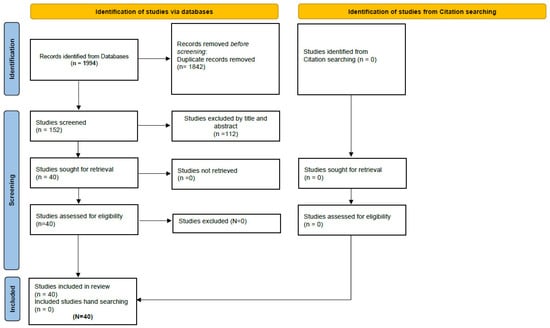
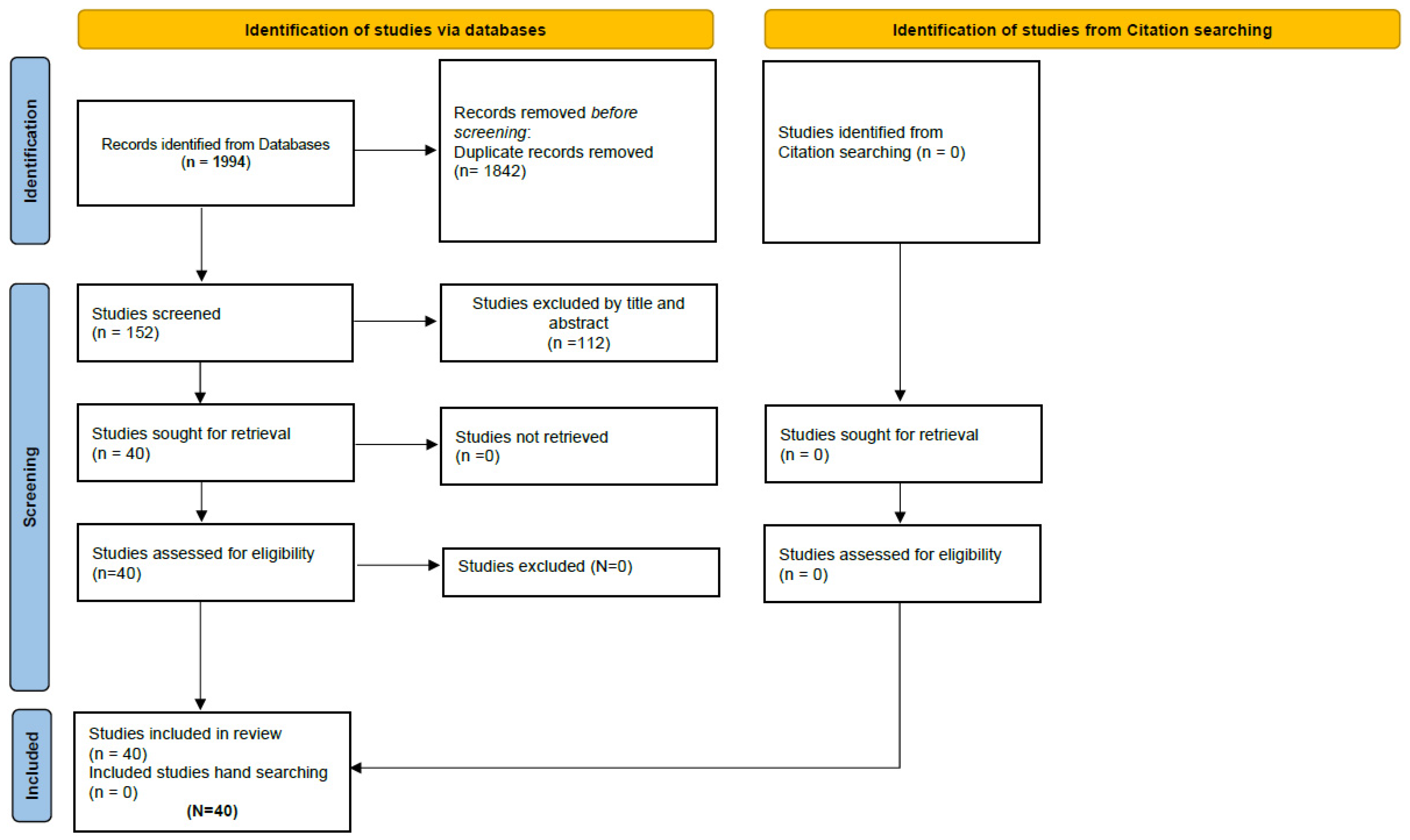
All retrieved records were imported into Rayyan QCRI software (http://rayyan.qcri.org) to facilitate screening and study selection [13]. Title and abstract screening, followed by full-text review, were conducted independently by two reviewers (BAE and HM) (See Figure 1). Discrepancies were resolved through discussion, with a third reviewer (SG) consulted when consensus could not be reached.
Figure 1.
PRISMA Flow diagram.
2.4. Data Collection and Data Items
Data extraction was performed by one reviewer (HM) using a structured data extraction form. The extracted data included: author(s), year of publication, country, target population, study design, sample size, instructional design, platform used, measurement instruments, outcomes assessed, key findings, and main recommendations. To enhance accuracy, extracted data were reviewed and cross-checked, and any discrepancies were resolved through discussion among the authors.
2.5. Data Synthesis
A narrative synthesis approach was used to summarize and describe the characteristics and findings of the included studies. Consistent with scoping review methodology (PRISMA-ScR), findings were synthesized using a structured thematic mapping approach. Extracted data were iteratively grouped into key constructs, and an evidence-mapping process was used to identify patterns across studies. Given heterogeneity in design and outcomes, synthesis was conducted descriptively rather than through quantitative meta-analysis. The resulting thematic constructs were tabulated to enhance transparency of evidence mapping.
2.6. Bias Assessment and Limitations
Formal methodological quality assessment was not conducted, as it is not a mandatory component of scoping review methodology [14]. However, several methodological limitations should be noted. The search strategy was developed and executed by a single reviewer and was not formally peer-reviewed, which may introduce a risk of missed studies or confirmation bias. This risk was mitigated through the use of multiple databases, tailored search strategies, manual reference list screening, and independent dual-reviewer study selection.
2.7. Ethics Statement
No ethical review oversight was deemed necessary for this review and, therefore, no institutional review board approval was obtained.
3. Results
A total of 40 studies were identified and included in this review. Using a structured thematic mapping approach, findings from the included studies were grouped into 10 key constructs to systematically capture cross-study patterns. Across these studies, investigators used questionnaires and focus groups to assess student, faculty, and staff experiences during the rapid transition to e-learning for both didactic instruction and clinical skills training. The research captured the successes, challenges, and limitations of e-learning in pharmacy education across countries with varying levels of technological infrastructure and institutional readiness. Ten key constructs describing the nature and extent of these evaluations, along with associated recommendations, were identified and tabulated (see Supplementary Material Table S1).
3.1. University Type and Countries’ SES
These articles, published between 2020 and 2025, provide an overview of how pharmacy education shifted to e-learning during the COVID-19 pandemic. They address student adaptation and satisfaction, instructional design changes, faculty concerns, and the overall effectiveness of online platforms. Of the 40 studies, the majority were conducted in Saudi Arabia (17 studies) and Jordan (10 studies), creating a significant regional imbalance. Countries such as Algeria, Tunisia, Mauritania, Somalia, and Comoros were not represented. The studies included both public and private institutions across different economic contexts.
High-income countries: Institutions in Saudi Arabia [15,16,17,18,19,20,21,22,23,24,25,26,27,28,29,30,31], Bahrain [32], Qatar [33], and the UAE [34,35,36] had well-established digital infrastructures that facilitated smoother transitions to e-learning.
Middle- and low-income countries: Institutions in Lebanon [37], Egypt [38], Jordan [39,40,41,42,43,44,45,46,47,48], Iraq [49,50,51,52], Morocco [53], and Libya [54] faced greater challenges related to internet reliability, faculty preparedness, and student access to digital resources.
Urban vs. rural divide: A clear digital divide was evident, with urban students demonstrating greater technological access and proficiency, while rural students experienced more technical challenges, including limited connectivity and fewer institutional resources.
Taken together, these findings suggest that differences in institutional resources were not merely logistical but shaped the overall quality of the e-learning experience, including student satisfaction, engagement, and perceived learning effectiveness. Studies from high-income settings tended to emphasize optimization and engagement, whereas those from lower-resource contexts highlighted fundamental access and continuity challenges.
3.2. Population Studied and Sample Size
The studies included a range of participants, primarily students at different stages of their pharmacy programs, as well as faculty and other university personnel. Sample sizes varied widely, from fewer than 50 participants to more than 2000.
Mid-sized studies: Many studies surveyed between 400 and 1000 participants, providing a balanced perspective on experiences.
Large cross-sectional studies: Some studies, such as Saeed and Almendeel [30], included over 2000 pharmacy students, offering large-scale insights.
Undergraduate vs. postgraduate: Undergraduate students were the primary focus, though some studies examined postgraduate training, including virtual internships (e.g., Almohammed et al. [24]).
Faculty perspectives: Faculty challenges were explored in studies such as Alqurshi [25].
3.3. Research Methods and Designs
A range of research designs was used, with cross-sectional surveys being the most common.
Cross-sectional studies (CSS): Representing over 60% of the included research, these studies provided large-scale quantitative data.
Mixed-methods studies (MMS): Combined qualitative and quantitative approaches to provide deeper insights into experiences and adaptations.
Quasi-experimental studies: Some studies (e.g., Ahmed et al. [50]) evaluated hybrid models and learning outcomes.
3.4. Instructional Design Approaches
The studies identified several instructional models used in pharmacy e-learning.
Blended learning: Both synchronous and asynchronous approaches were used. Many students preferred hybrid models over fully online formats, particularly for practice-based training [16].
Competency-based instruction: Online learning supported theoretical knowledge but limited hands-on clinical experience [24].
Flipped classroom and project-based learning: These approaches improved engagement and performance in some settings [20].
Simulation-based learning: Virtual simulations were used as alternatives to clinical training, though students reported reduced real-world interaction [43].
Across studies, instructional approaches that incorporated synchronous interaction and hybrid elements were more consistently associated with positive student perceptions, whereas fully asynchronous models were more frequently linked to disengagement and lower perceived learning outcomes.
3.5. Faculty Workload and Institutional Adaptations
Faculty workload increased substantially during the transition to online teaching. Studies such as Ali et al. [23] highlighted the need for training in digital tools and assessment strategies. Institutions in high-income settings were better equipped to provide support, whereas those in middle- and low-income countries faced greater challenges.
3.6. Student Satisfaction and Choices
Student satisfaction with e-learning varied across studies. While some students valued convenience, access to recorded lectures, and autonomy, others reported dissatisfaction due to reduced interaction and technical challenges. In Saudi Arabia, one study reported that 85% of students preferred to continue e-learning post-pandemic [30]. However, this high level of preference was not consistently observed across other settings. Studies from Jordan and Iraq reported lower satisfaction, particularly among final-year students and those in rural areas with limited internet access [34,39]. Blended learning, combining online theoretical instruction with face-to-face practical components, was the most commonly reported instructional approach [48]. These differences suggest that student preference for e-learning was highly context-dependent, influenced by infrastructure reliability, stage of training, and the extent to which programs incorporated in-person or practice-based components.
3.7. Engagement, Motivation, and Interaction
Challenges with motivation and engagement were reported across many studies. Key concerns included reduced peer interaction, home distractions, and limited real-time feedback. One study reported that 39.2% of respondents experienced distractions and 25.3% reported low motivation [17]. Interactive approaches, including synchronous sessions and flipped classrooms (e.g., iFEEL model [20]), improved engagement, whereas asynchronous formats were associated with lower participation. These findings indicate that engagement was less a function of modality alone and more dependent on instructional design features, particularly opportunities for real-time interaction and structured participation.
3.8. Trust in Learning and Acquisition of Clinical Skills
Students reported lower confidence in developing clinical skills through e-learning. For example, 43% of students in one study expressed concern about limited patient interaction during virtual internships [24]. Another study reported that over 70% believed online laboratories negatively affected practical skill acquisition [47]. Although telepharmacy and simulation were used as interim solutions, students expressed a preference for in-person training. Despite the use of virtual simulations, the consistent concern across studies suggests that current e-learning modalities are insufficient substitutes for experiential clinical training, reinforcing the importance of hybrid or in-person components in pharmacy education.
3.9. Mental Health and Well-Being
All included studies reported increased stress, anxiety, and physical discomfort associated with prolonged screen time and reduced social interaction. Moderate levels of depression and anxiety were observed, particularly among students with limited peer contact and physical activity [41]. Additional studies reported fatigue, musculoskeletal discomfort, and burnout [35]. Female students and those without dedicated study spaces reported higher stress levels. Increased stress, anxiety, and physical discomfort were consistently reported among the studies, largely attributed to prolonged screen time, reduced peer interaction, and disruptions to established learning routines.
3.10. Institutional and Faculty Readiness
Institutional readiness varied significantly by country and income level. High-income countries such as Saudi Arabia and the UAE demonstrated stronger digital capacity and faculty support systems. In contrast, in countries such as Iraq, Jordan, and Libya, the transition exposed weaknesses in IT infrastructure, assessment tools, and instructional design. Faculty workload increased due to content digitization and increased student support needs, underscoring the importance of continued investment in technology and training [23].
4. Discussion
The pivot to e-learning in response to the COVID-19 pandemic ignited innovation in pharmacy education across Arabic-speaking countries. The dramatic shift required faculty, students, instructional staff, and administrators to find new ways to engage in e-learning—fully or partially—particularly when it came to hands-on clinical training and the development of provider–patient communication and relationship-building skills.
Findings have implications for the infrastructure, teaching/learning process, student engagement strategies, student assessment strategies, and mental health effects of learning at a distance and sometimes asynchronously.
4.1. Patient Interaction and Communication Skills
A key gap identified across the reviewed studies is the limited development of patient interaction and communication skills in e-learning environments. While online platforms supported continuity of theoretical instruction, they were less effective in fostering the interpersonal competencies central to pharmacy practice.
Evidence from several studies underscores this concern. For example, students in virtual training settings reported limited confidence in patient-facing skills, with concerns about reduced exposure to direct care [24]. Similarly, the absence of real-time interaction, including non-verbal communication and immediate feedback, diminished the perceived authenticity of training experiences [43] and contributed to a sense of incomplete professional development [33].
These findings suggest that, although simulation and telepharmacy served as useful interim strategies, they do not fully replicate the experiential and relational aspects of in-person training. Communication skills, such as counseling, active listening, and patient engagement, require repeated, high-feedback interactions that are difficult to reproduce in fully virtual formats.
To address this gap, pharmacy programs should more intentionally integrate communication training into blended learning models. Approaches such as standardized patient simulations, structured role-play, and guided reflection within telehealth contexts may help strengthen these competencies. Embedding such activities within both formative and summative assessment frameworks will also reinforce their importance in professional readiness.
Thus, strengthening patient interaction skills should be a priority in post-pandemic curriculum design to ensure that graduates are adequately prepared for real-world practice.
4.2. Infrastructure Challenges and Digital Preparedness
Technological infrastructure emerged as a major barrier across many studies. Challenges included limited internet connectivity, inadequate technical support, and restricted access to reliable devices. Several studies reported moderate satisfaction with e-learning, often constrained by technical issues such as network delays and reduced interaction.
Ahmed et al. [50] noted that poor internet connectivity disrupted synchronous components of hybrid learning, while recorded lectures were favored for their accessibility. These findings highlight the need for sustained investment in IT infrastructure and user-friendly learning platforms. Ensuring equitable access to high-speed internet and providing financial support for necessary hardware are critical, particularly in countries with marked socioeconomic disparities such as Jordan, Iraq, and Saudi Arabia.
4.3. Blended Learning: The Future-Proof Model
A strong preference for blended learning was observed across the reviewed studies. While fully online education ensured continuity during the pandemic, it often could not support high-quality practical training. For example, Salama and Altaif [48] reported that 75.2% of students preferred a blended model combining online and face-to-face instruction, particularly for laboratory-based courses.
Other studies demonstrated that hybrid models—where theoretical content is delivered online and practical training occurs in person—can effectively balance flexibility and skill development [20,50].
Blended learning addresses many limitations of fully online education while offering adaptability across learning environments. Institutions should therefore develop structured strategies to integrate flipped classrooms, interactive e-lectures, and simulation-based tools into traditional curricula.
4.4. Student Motivation and Engagement
Student engagement and motivation were consistently reported as major challenges. Contributing factors included reduced peer interaction, home-based distractions, and limited immediate feedback, all of which affected participation.
For example, Thangam [17] reported that 39.2% of students experienced significant distractions, while others reported low motivation. Additionally, Almhdawi et al. [41] identified moderate levels of depression and anxiety associated with social isolation.
Interactive pedagogical approaches have been used to address these challenges. Shahba et al. [20] found that the iFEEL model significantly improved student engagement and performance, with 75% of students expressing a preference for this approach. These findings suggest that institutions should prioritize faculty training in interactive teaching methods to promote active learning.
4.5. Assessment Integrity and Quality Assurance
The transition to e-learning raised concerns regarding the reliability and validity of student assessments, particularly in relation to academic integrity. Studies [25,44] reported instances of academic dishonesty during remote examinations, as well as technical issues that affected assessment quality.
Alternative formats such as open-book examinations introduced additional concerns about accurately assessing student competencies. These findings highlight the need for robust assessment frameworks incorporating proctoring technologies, question randomization, and practical components.
Innovative approaches, such as the use of pre- and post-tests in interactive learning models [20], demonstrate potential for improving assessment validity. Blended assessment strategies may enhance the credibility of online evaluation systems.
4.6. Physical and Mental Health Considerations
The shift to online learning was associated with changes in both mental and physical well-being. Studies reported increased stress, anxiety, and physical discomfort related to prolonged screen time and reduced social interaction [35,41].
These effects were compounded by behavioral changes, including reduced physical activity and altered daily routines. Female students and those lacking dedicated study spaces reported higher stress levels.
Institutions should incorporate comprehensive mental health support within academic frameworks. Strategies may include accessible counseling services, promotion of physical activity, ergonomic guidance, and the development of virtual peer-support networks to reduce isolation.
4.7. Institutional Preparedness and Leadership
Institutional preparedness played a critical role in the effectiveness of the transition to e-learning. Studies suggest that leadership, organizational culture, and adaptability significantly influenced outcomes [32].
Frameworks such as Ciottone’s disaster cycle [55] help explain how institutional flexibility and resilience enabled more effective responses. Moving forward, leadership should focus on sustaining effective innovations introduced during the pandemic while addressing identified gaps.
Retaining recorded lectures, expanding simulation-based training, and integrating telehealth tools can contribute to the continued advancement of pharmacy education.
5. Recommendations
Pre-professional healthcare education should adopt long-term, student-centered strategies that integrate experiential learning with advanced technology. The following recommendations address key areas for improvement.
5.1. Strengthening Infrastructure and Technology
Institutions should invest in digital infrastructure to ensure equitable access and effective delivery of online education. Key priorities include:
- Expanding access to high-speed internet, particularly in underserved areas;
- Enhancing e-learning platforms with interactive case studies and simulations;
- Strengthening cybersecurity measures to protect data integrity.
Future research: Explore the role of AI-driven tools in improving engagement and learning outcomes.
5.2. Supporting Digital Learning for Faculty and Students
Effective online education depends on the digital readiness of both faculty and students. Institutions should:
- Provide faculty development programs in e-learning methodologies and digital tools;
- Offer student orientation on navigating online platforms and maintaining academic integrity.
Future research: Examine the impact of ongoing faculty development on learning outcomes.
5.3. Advancing Blended Learning
Blended learning should be a central model in pharmacy education. Institutions should:
- Implement flipped classroom approaches;
- Use problem-based and team-based learning strategies;
- Expand virtual labs and clinical simulations.
Future research: Assess long-term impacts of blended learning on competency development.
5.4. Enhancing Assessment Strategies
To improve assessment quality in virtual settings, institutions should:
- Develop competency-based assessment tools;
- Use learning analytics to monitor student performance;
- Incorporate frequent formative assessments;
- Improve remote proctoring systems.
Future research: Evaluate adaptive assessment technologies.
5.5. Supporting Mental Health and Well-Being
Institutions should prioritize mental health by:
- Establishing virtual peer-support systems;
- Providing accessible counseling services;
- Promoting balanced workloads;
- Educating faculty to recognize and respond to student distress.
Future research: Investigate long-term effects of mental health interventions on academic outcomes.
This study contributes to the literature in several distinct ways. First, it examines a unique and underreported event within the context of the Arab League, a setting that remains comparatively understudied in pre-licensure pharmacy education. Second, rather than pursuing cross-professional or cross-national comparisons, this analysis prioritizes depth over breadth, offering a detailed and grounded account of processes that are often treated abstractly in broader reviews. Third, the study draws on a panoramic analysis of evaluation characteristics across programs, providing insight into pharmacy education practices that are not yet well captured in the existing literature.
6. Limitations
Limitations in these studies were evident. The methodologies were not uniform, and hence any comparison was not as robust. Most of the research depended on self-report data, which is vulnerable to bias, overrepresenting the high-achieving students and omitting accounts of disengaged or marginalized learners. Most of the research was focused on the short-term impacts that online education had during the very beginning of the pandemic, with very limited exploration of longer-term outcomes such as practical skills development or career readiness. Equally underrepresented were the views of staff, another important constituent in any holistic understanding of challenges related to online education. Geographically, many such studies have a certain region of focus, and thus generalizing such findings across other parts of the world with different educational systems and technological infrastructures may be inappropriate. One included study was conducted in a multi-national setting outside the Arab region but was retained due to its relevance to pharmacy education during the COVID-19 e-learning transition; however, its findings may not fully reflect region-specific experiences. Very little attention has been paid to access to digital tools and financial barriers, which constitute some of the most critical factors affecting learning experiences.
7. Conclusions
The COVID-19 pandemic necessitated a rapid transition to e-learning in pharmacy education, prompting widespread curricular and instructional adaptation across the included countries in this review. While the evidence base is geographically concentrated and does not fully represent all League of Arab States member countries, consistent patterns emerged across diverse settings regarding both the benefits and challenges of this transition.
Institutions must embrace integrative and flexible solutions that leverage the advantages of online learning while addressing its limitations. Staff development, mentoring, and sustained investment in digital infrastructure are essential to support teaching effectiveness, student well-being, and long-term sustainability. Blended learning emerged as a key model, combining the strengths of online theory with in-person experiential training.
Although these findings are drawn from a subset of countries, they provide transferable insights that may inform pharmacy education in similar contexts, particularly in settings undergoing digital transformation. At the same time, the absence of studies from several Arab countries highlights a critical gap in the literature and underscores the need for future research in underrepresented regions to ensure more equitable and comprehensive regional understanding.
Synthesis of findings from these studies yields the following recommendations for pharmacy education development:
- ➢
- Infrastructure: Improve IT systems and ensure equitable access to digital tools.
- ➢
- Blended Models: Integrate online theoretical instruction with hands-on practical learning.
- ➢
- Engaging Learning: Promote interactive pedagogies such as flipped classrooms.
- ➢
- Assessment: Develop robust and transparent evaluation methods, including practical competencies where feasible.
- ➢
- Mental Health: Expand student support services addressing psychological and physical well-being.
- ➢
- Institutional Planning: Strengthen leadership and preparedness for future disruptions.
Supplementary Materials
The following supporting information can be downloaded at: https://www.mdpi.com/article/10.3390/pharmacy14040099/s1, Table S1: Summary of study findings (n = 40) [15,16,17,18,19,20,21,22,23,24,25,26,27,28,29,30,31,32,33,34,35,36,37,38,39,40,41,42,43,44,45,46,47,48,49,50,51,52,53,54].
Author Contributions
H.M., M.M. and S.F.G.: Data curation; Formal analysis; Investigation; Methodology; Project administration; Supervision; Writing—original draft, Writing—Review and Editing. B.H.A.-E.: Conceptualization; Methodology; Project administration; Supervision; Writing—original draft, Writing—Review and Editing. All authors have read and agreed to the published version of the manuscript.
Funding
This research received no external funding.
Institutional Review Board Statement
Not applicable. Given the nature of this descriptive review, no ethical oversight was found to be necessary and, therefore, no institutional review board was acquired.
Informed Consent Statement
Not applicable.
Data Availability Statement
All data generated and analyzed during this review are included in the published review article.
Conflicts of Interest
The authors declare no conflicts of interest.
References
- United Nations. Education During COVID-19 and Beyond. Available online: https://www.un-ilibrary.org/content/papers/27082245/18 (accessed on 3 April 2024).
- Betts, K.; Delaney, B.; Galoyan, T.; Lynch, W. Historical Review of Distance and Online Education from 1700s to 2021 in the United States: Instructional Design and Pivotal Pedagogy in Higher Education. J. Online Learn. Res. Pract. 2021, 8, 3–55. [Google Scholar] [CrossRef] [Scilit]
- Attarabeen, O.F.; Gresham-Dolby, C.; Broedel-Zaugg, K. Pharmacy student stress with transition to online education during the COVID-19 pandemic. Curr. Pharm. Teach. Learn. 2021, 13, 928–934. [Google Scholar] [CrossRef] [Scilit] [PubMed]
- Kawaguchi-Suzuki, M.; Nagai, N.; Akonoghrere, R.O.; Desborough, J.A. COVID-19 Pandemic Challenges and Lessons Learned by Pharmacy Educators Around the Globe. Am. J. Pharm. Educ. 2020, 84, ajpe8197. [Google Scholar] [CrossRef] [Scilit] [PubMed]
- Pires, C. Perceptions of Pharmacy Students on the E-Learning Strategies Adopted During the COVID-19 Pandemic: A Systematic Review. Pharmacy 2022, 10, 31. [Google Scholar] [CrossRef] [Scilit] [PubMed]
- Kahaleh, A.A.; Ellington, T.M.; Coker, A.O.; Tillery, E.; Manasco, K.B.; Truong, H.-A.; Kebodeaux, C.D.; Edwards, K.L.; Hayatshahi, A.; Gumina, G.; et al. Impact of COVID-19 on Pharmacy Education and Practice: Strategies to Boost Advocacy and Unity among Health Care Organizations. Am. J. Pharm. Educ. 2023, 87, 100091. [Google Scholar] [CrossRef] [Scilit] [PubMed]
- Nik Mohamed, M.H.; Mak, V.; Sumalatha, G.; Nugroho, A.E.; Hertiani, T.; Zulkefeli, M.; Dorjbal, E.; Dashbaljir, S.; Faller, E.M.; Benosa, C.A.C.; et al. Pharmacy education during and beyond COVID-19 in six Asia-Pacific countries: Changes, challenges, and experiences. Pharm. Educ. 2021, 20, 183–195. [Google Scholar] [CrossRef] [Scilit]
- Muhaimin, M.; Habibi, A.; Riady, Y.; Alqahtani, T.M.; Chaerunisaa, A.Y.; Wijaya, T.T.; Milanda, T.; Yusop, F.D.; Albelbisi, N.A. COVID-19 distance and online learning: A systematic literature review in pharmacy education. BMC Med. Educ. 2023, 23, 367. [Google Scholar] [CrossRef] [Scilit] [PubMed]
- Frenzel, J.; Porter, A. The Need to Educate Pharmacy Students in Telepharmacy and Telehealth. Am. J. Pharm. Educ. 2021, 85, 8566. [Google Scholar] [CrossRef] [Scilit] [PubMed]
- Tricco, A.C.; Lillie, E.; Zarin, W.; O’Brien, K.K.; Colquhoun, H.; Levac, D.; Moher, D.; Peters, M.D.J.; Horsley, T.; Weeks, L.; et al. PRISMA Extension for Scoping Reviews (PRISMA-ScR): Checklist and Explanation. Ann. Intern. Med. 2018, 169, 467–473. [Google Scholar] [CrossRef] [Scilit] [PubMed]
- Arksey, H.; O’Malley, L. Scoping studies: Towards a methodological framework. Int. J. Soc. Res. Methodol. 2005, 8, 19–32. [Google Scholar] [CrossRef] [Scilit]
- Blair, I.; Grivna, M.; Sharif, A.A. The “Arab World” is Not a Useful Concept When Addressing Challenges to Public Health, Public Health Education, and Research in the Middle East. Front. Public Health 2014, 2, 30. [Google Scholar] [CrossRef] [Scilit] [PubMed]
- Ouzzani, M.; Hammady, H.; Fedorowicz, Z.; Elmagarmid, A. Rayyan—A web and mobile app for systematic reviews. Syst. Rev. 2016, 5, 210. [Google Scholar] [CrossRef] [Scilit] [PubMed]
- Peters, M.D.J.; Marnie, C.; Tricco, A.C.; Pollock, D.; Munn, Z.; Alexander, L.; McInerney, P.; Godfrey, C.M.; Khalil, H. Updated methodological guidance for the conduct of scoping reviews. JBI Evid. Synth. 2020, 18, 2119–2126. [Google Scholar] [CrossRef] [Scilit] [PubMed]
- Alghamdi, S.; Ali, M. Pharmacy Students’ Perceptions and Attitudes Towards Online Education During COVID-19 Lockdown in Saudi Arabia. Pharmacy 2021, 9, 169. [Google Scholar] [CrossRef] [Scilit] [PubMed]
- Al Zahrani, E.M.; Al Naam, Y.A.; AlRabeeah, S.M.; Aldossary, D.N.; Al-Jamea, L.H.; Woodman, A.; Shawaheen, M.; Altiti, O.; Quiambao, J.V.; Arulanantham, Z.J.; et al. E- Learning experience of the medical profession’s college students during COVID-19 pandemic in Saudi Arabia. BMC Med. Educ. 2021, 21, 443. [Google Scholar] [CrossRef] [Scilit] [PubMed]
- Thangam, M.M.N. Satisfaction and Challenges of Online Learning Among Healthcare Students: Towards Digital Education in the Healthcare Profession in Saudi Arabia. Med. Forum Mon. 2023, 34, 2–6. [Google Scholar]
- Geddawy, A.; Alajmi, M.; Alaskar, A.M.; Alwadani, S.T.; Alanezi, A.F.; Alhomaidhi, A.A.; Al-Ghamdi, S. Undergraduate health sciences students’ response regarding COVID-19 pandemic in Saudi Arabia: An observational study. Postgrad. Med. 2023, 135, 234–243. [Google Scholar] [CrossRef] [Scilit] [PubMed]
- Shawaqfeh, M.S.; Al Bekairy, A.M.; Al-Azayzih, A.; Alkatheri, A.A.; Qandil, A.M.; Obaidat, A.A.; Al Harbi, S.; Muflih, S.M. Pharmacy Students Perceptions of Their Distance Online Learning Experience During the COVID-19 Pandemic: A Cross-Sectional Survey Study. J. Med. Educ. Curric. Dev. 2020, 7, 2382120520963039. [Google Scholar] [CrossRef] [Scilit] [PubMed]
- Shahba, A.A.; Alashban, Z.; Sales, I.; Sherif, A.Y.; Yusuf, O. Development and Evaluation of Interactive Flipped e-Learning (iFEEL) for Pharmacy Students During the COVID-19 Pandemic. Int. J. Environ. Res. Public Health 2022, 19, 3902. [Google Scholar] [PubMed]
- Jan, B.L.; Albadrni, B.; Syed, W.; Ahmad, A.; Alkharfy, K.M. Knowledge and attitude of pharmacy students towards COVID-19 pandemic and its impact on their education and learning. Farmacia 2022, 70, 372–378. [Google Scholar] [CrossRef] [Scilit]
- Al-Neklawy, A.F.; Ismail, A.S.A. Online anatomy team-based learning using blackboard collaborate platform during COVID-19 pandemic. Clin. Anat. 2022, 35, 87–93. [Google Scholar] [CrossRef] [Scilit] [PubMed]
- Ali, M.; Allihyani, M.; Abdulaziz, A.; Alansari, S.; Faqeh, S.; Kurdi, A.; Alhajjaji, A. What just happened? Impact of on-campus activities suspension on pharmacy education during COVID-19 lockdown—A students’ perspective. Saudi Pharm. J. 2021, 29, 59–66. [Google Scholar] [CrossRef] [Scilit] [PubMed]
- Almohammed, O.A.; Alotaibi, L.H.; Ibn Malik, S.A. Student and educator perspectives on virtual institutional introductory pharmacy practice experience (IPPE). BMC Med. Educ. 2021, 21, 257. [Google Scholar] [CrossRef] [Scilit] [PubMed]
- Alqurshi, A. Investigating the impact of COVID-19 lockdown on pharmaceutical education in Saudi Arabia—A call for a remote teaching contingency strategy. Saudi Pharm. J. 2020, 28, 1075–1083. [Google Scholar] [CrossRef] [Scilit] [PubMed]
- Alsahali, S.; Almutairi, S.; Almutairi, S.; Almofadhi, S.; Anaam, M.; Alshammari, M.; Abdulsalim, S.; Almogbel, Y. Pharmacy Students’ Attitudes Toward Distance Learning After the COVID-19 Pandemic: Cross-Sectional Study from Saudi Arabia. JMIR Form. Res. 2024, 8, e54500. [Google Scholar] [CrossRef] [Scilit] [PubMed]
- Altwaijry, N.; Ibrahim, A.; Binsuwaidan, R.; Alnajjar, L.I.; Alsfouk, B.A.; Almutairi, R. Distance Education During COVID-19 Pandemic: A College of Pharmacy Experience. Risk Manag. Healthc. Policy 2021, 14, 2099–2110. [Google Scholar] [CrossRef] [Scilit] [PubMed]
- Alwassil, O.I.; Almusharraf, A.I.; Alzuman, A.; Albaz, N.; Alyousif, S.M. Innovative pedagogy: Nurturing excellence through an effective student-centered approach in medicinal chemistry courses. Humanit. Soc. Sci. Commun. 2024, 11, 1284. [Google Scholar] [CrossRef] [Scilit]
- Panda, D.S.; Gamal, M.; Zafar, A.; Parambi, D.G.T.; Senapati, A.K.; Patro, S.K.; Sahoo, P.K.; Bose, A. A study on the effectiveness of online teaching in pharmacy education from teacher and student perspectives during the COVID-19 pandemic. Pharm. Educ. 2021, 20, 297–301. [Google Scholar] [CrossRef] [Scilit]
- Saeed, M.S.; Almendeel, H.M. Perceptions of pharmacy students towards online learning during COVID-19 pandemic in Saudi Arabia. J. Adv. Pharm. Educ. Res. 2023, 13, 6–14. [Google Scholar] [CrossRef] [Scilit]
- Kim, R.E.; Morningstar-Kywi, N.; Romero, R.M.; Chan, K.M.; Gabrielyan, L.; Mojab, Y.; Parikh, S.S.; Nokes, L.; Graham, T.; Haworth, I.S. An online international pharmacy summer course during the COVID-19 pandemic. Pharm. Educ. 2021, 20, 136–144. [Google Scholar] [CrossRef] [Scilit]
- Cassidy, D.; Sklar, D.; Cullen, M.; Edwards, G.; Bruen, C.; Moffett, J.; Kelly, H.; Doyle, A.; Crehan, M.; Illing, J. Lessons learned from navigating the COVID pandemic in a health sciences university: A disaster medicine perspective. Cogent Educ. 2024, 11, 2397193. [Google Scholar] [CrossRef] [Scilit]
- Bawadi, H.; Shami, R.; El-Awaisi, A.; Al-Moslih, A.; Abdul Rahim, H.; Du, X.; Moawad, J.; Al-Jayyousi, G.F. Exploring the challenges of virtual internships during the COVID-19 pandemic and their potential influence on the professional identity of health professions students: A view from Qatar University. Front. Med. 2023, 10, 1107693. [Google Scholar] [CrossRef] [Scilit] [PubMed]
- Abdel Rahman, R.M.; Alsalhi, N.R.; Eltahir, M.E.; Al-Qatawneh, S.S.; Alzoubi, A.M.A. Applying Online Learning in Higher Education Institutions During the COVID-19 Pandemic: A Field Study in the United Arab Emirates (UAE). Inf. Sci. Lett. 2022, 11, 639–656. [Google Scholar] [CrossRef] [Scilit]
- Elnour, A.A.; Abou Hajal, A.; Goaddar, R.; Elsharkawy, N.; Mousa, S.; Dabbagh, N.; Mohamad Al Qahtani, M.; Al Balooshi, S.; Othman Al Damook, N.; Sadeq, A. Exploring the pharmacy students’ perspectives on off-campus online learning experiences amid COVID-19 crises: A cross-sectional survey. Saudi Pharm. J. 2023, 31, 1339–1350. [Google Scholar] [CrossRef] [Scilit] [PubMed]
- Rabbani, S.A.; Wadhwa, T.; Sridhar, S.B.; Shareef, J.; Anwer Ali, A.; Gm Rao, P. Experiential training during COVID-19 pandemic: A virtual attachment experience from a college of pharmaceutical sciences in the United Arab Emirates. Pharm. Educ. 2021, 21, 51–55. [Google Scholar] [CrossRef] [Scilit]
- Halat, D.H.; Safwan, J.; Akel, M.; Rahal, M. Pharmacy education shift during times of pandemic and collapse: A perspective from a school of pharmacy in Lebanon. Pharm. Educ. 2022, 22, 33–40. [Google Scholar] [CrossRef] [Scilit]
- Sabry, N.A.; Kamel, A.; Farid, S.A. Designing and using an online survey as a tool for teaching pharmacy students about COVID-19: Innovation in experiential learning or assessment. Pharm. Educ. 2020, 20, 19–20. [Google Scholar] [CrossRef] [Scilit]
- Abu-Huwaij, R.; Alkhader, E.; Gharaibeh, S.; Khalil, I. Bridging gaps in distance learning during a pandemic: Exploratory questionnaire based analysis in Jordan during COVID-19 lockdown. Int. J. Technol. Enhanc. Learn. 2022, 14, 198–216. [Google Scholar] [CrossRef] [Scilit]
- Al-Alami, Z.M.; Adwan, S.W.; Alsous, M. Remote learning during COVID-19 lockdown: A study on anatomy and histology education for pharmacy students in Jordan. Anat. Sci. Educ. 2022, 15, 249–260. [Google Scholar] [CrossRef] [Scilit] [PubMed]
- Almhdawi, K.A.; Alazrai, A.; Obeidat, D.; Altarifi, A.A.; Oteir, A.O.; Aljammal, A.H.; Arabiat, A.A.; Alrabbaie, H.; Jaber, H.; Almousa, K.M. Healthcare students’ mental and physical well-being during the COVID-19 lockdown and distance learning. Work 2021, 70, 3–10. [Google Scholar] [CrossRef] [Scilit] [PubMed]
- Barakat, M.; Farha, R.A.; Muflih, S.; Al-Tammemi, A.B.; Othman, B.; Allozi, Y.; Fino, L. The era of E-learning from the perspectives of Jordanian medical students: A cross-sectional study. Heliyon 2022, 8, e09928. [Google Scholar] [CrossRef] [Scilit] [PubMed]
- Barakat, M.M.; Al-Qudah, R.A.; Abu Farha, R.; ALSalamat, H.A.; El-Hajji, F.D.; Akour, A. Perception of Jordanian Pharmacy Students Towards Community Pharmacy-Virtual Training Experience during COVID-19 Outbreak. Pharm. Pract. 2023, 21, 1–9. [Google Scholar] [CrossRef] [Scilit]
- Elsalem, L.; Al-Azzam, N.; Jum’ah, A.A.; Obeidat, N. Remote E-exams during COVID-19 pandemic: A cross-sectional study of students’ preferences and academic dishonesty in faculties of medical sciences. Ann. Med. Surg. 2021, 62, 326–333. [Google Scholar] [CrossRef] [Scilit] [PubMed]
- Elsalem, L.; Al-Azzam, N.; Jum’ah, A.A.; Obeidat, N.; Sindiani, A.M.; Kheirallah, K.A. Stress and behavioral changes with remote E-exams during the COVID-19 pandemic: A cross-sectional study among undergraduates of medical sciences. Ann. Med. Surg. 2020, 60, 271–279. [Google Scholar] [CrossRef] [Scilit] [PubMed]
- Jarab, A.S.; Al-Qerem, W.; Mukattash, T.L.; Al-Hajjeh, D.; Al-Azayzih, A.; Abu Hammour, K. Impact of Distance Learning on Pharmacy and Pharm.D Undergraduates’ During the COVID-19 Pandemic in Jordan. Jordan J. Pharm. Sci. 2022, 15, 355–364. [Google Scholar] [CrossRef] [Scilit]
- Mohammad, H.; AlMuhaissen, S. The Impact of Online Education of Practical Courses on Pharmacy Students Practical and Communication Skills: Students’ Perceptions. Jordan J. Pharm. Sci. 2023, 16, 301–312. [Google Scholar] [CrossRef] [Scilit]
- Salama, A.; Altaif, K. Challenges to Online Pharmacy Classes during COVID 19 Pandemic: Cross sectional study in Jordan. Pharmacia 2022, 69, 943–946. [Google Scholar] [CrossRef] [Scilit]
- Ahmed, K.K.; Salman, S.S.; Abbas, W.A.; Alkaisy, S.W.; Kathem, S.H. Sudden Transition of Pharmacy Education from Traditional to Distance Learning in the Era of COVID-19: Action Steps of a Leading Pharmacy School in Iraq. Iraqi J. Pharm. Sci. 2020, 29, 271–278. [Google Scholar] [CrossRef] [Scilit]
- Ahmed, K.K.; Al-Jumaili, A.A.; Salman, S.S.; Kathem, S.H. The Students Experience of Hybrid- Education Model at The University of Baghdad College of Pharmacy. Iraqi J. Pharm. Sci. 2021, 30, 269–277. [Google Scholar] [CrossRef] [Scilit]
- Al-Mansouri, L.; Al-Obaidi, F.R.; Abdullah, N.A. Online learning during the COVID-19 pandemic: Medical students’ perspective of challenges and barriers. Med. J. Babylon 2024, 21, 25–29. [Google Scholar] [CrossRef] [Scilit] [PubMed]
- Mohammed, M.M.; Rashid, A.A.; Abbas, A.N. Perception and preference of pharmacy students toward e-learning during the COVID-19 pandemic. J. Adv. Pharm. Technol. Res. 2023, 14, 351–355. [Google Scholar] [CrossRef] [Scilit] [PubMed]
- Benomar, A.; Cherif Chefchaouni, A.; Rahali, Y.; El Alaoui, Y. Perception and expectation of Moroccan pharmacy students regarding e-learning in the context of COVID-19 pandemic lockdown. Ann. Pharm. Fr. 2024, 82, 698–705. [Google Scholar] [CrossRef] [Scilit] [PubMed]
- Elberkawi, E.K.; Maatuk, A.; Elharish, S.F.; Eltajoury, W.M. A Comparative Study of the Challenges and Obstacles Facing E-Learning During the COVID-19 Pandemic from the Perspectives of University Instructors and Students. In Proceedings of the 2022 Australasian Computer Science Week, Brisbane, Australia, 14–18 February 2022; pp. 186–192. [Google Scholar]
- Ciottone, G.R. (Ed.) Ciottone’s Disaster Medicine, 3rd ed.; Elsevier: Philadelphia, PA, USA, 2024. [Google Scholar]

Disclaimer/Publisher’s Note: The statements, opinions and data contained in all publications are solely those of the individual author(s) and contributor(s) and not of MDPI and/or the editor(s). MDPI and/or the editor(s) disclaim responsibility for any injury to people or property resulting from any ideas, methods, instructions or products referred to in the content. |
© 2026 by the authors. Licensee MDPI, Basel, Switzerland. This article is an open access article distributed under the terms and conditions of the Creative Commons Attribution (CC BY) license.