
Learner Engagement and Writing Performance in Assessment as Learning L2 Writing


Abstract
1. Introduction
2. Literature Review
2.1. AaL in L2 Writing
2.2. AaL and Learner Engagement
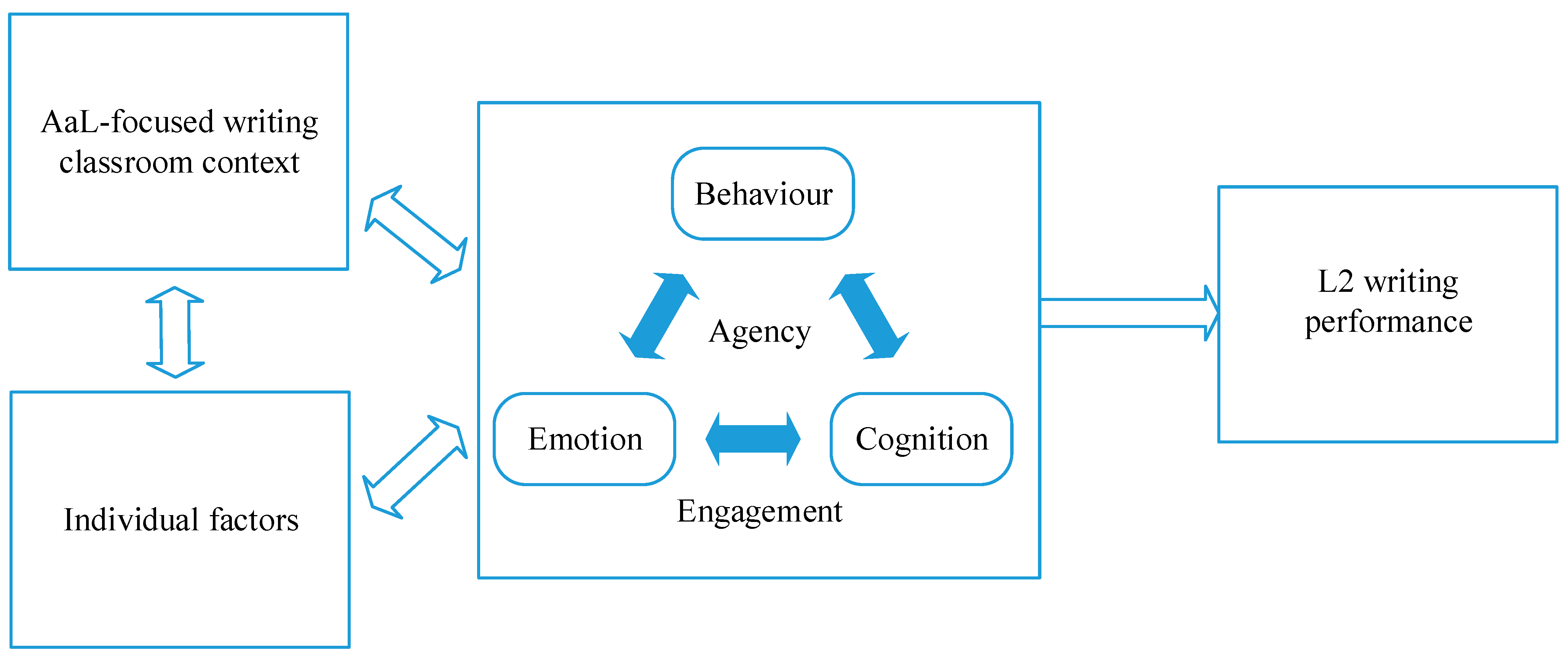
- Proactive involvement in learning self-regulation pertained to (1) affective strategies used to maintain a positive attitude toward L2 writing, (2) metacognitive operations such as planning, self-monitoring, self-assessment, reflection, and goal adjustment in cognition, and (3) goal-oriented actions including finding external resources and learning additional knowledge, as well as self-initiated revisions (e.g., form-focused and meaning-focused) in behaviour.
- Reciprocal involvement concerned how learners interacted with peers and teachers to collaboratively establish an assessment context through their actions. This included providing constructive contributions (e.g., summarizing the success criteria for a genre with peers), expressing preferences (e.g., requesting specific feedback), and seeking assistance (e.g., asking for clarification on feedback, Wang & Lee, 2021; Wang & Shen, 2025).
3. Methods
3.1. Context and Participants
3.1.1. Teacher Participant and Her AaL Implementation in L2 Writing
3.1.2. Student Participants
3.2. Data Collection
3.3. Data Analysis
4. Findings
4.1. Sarah
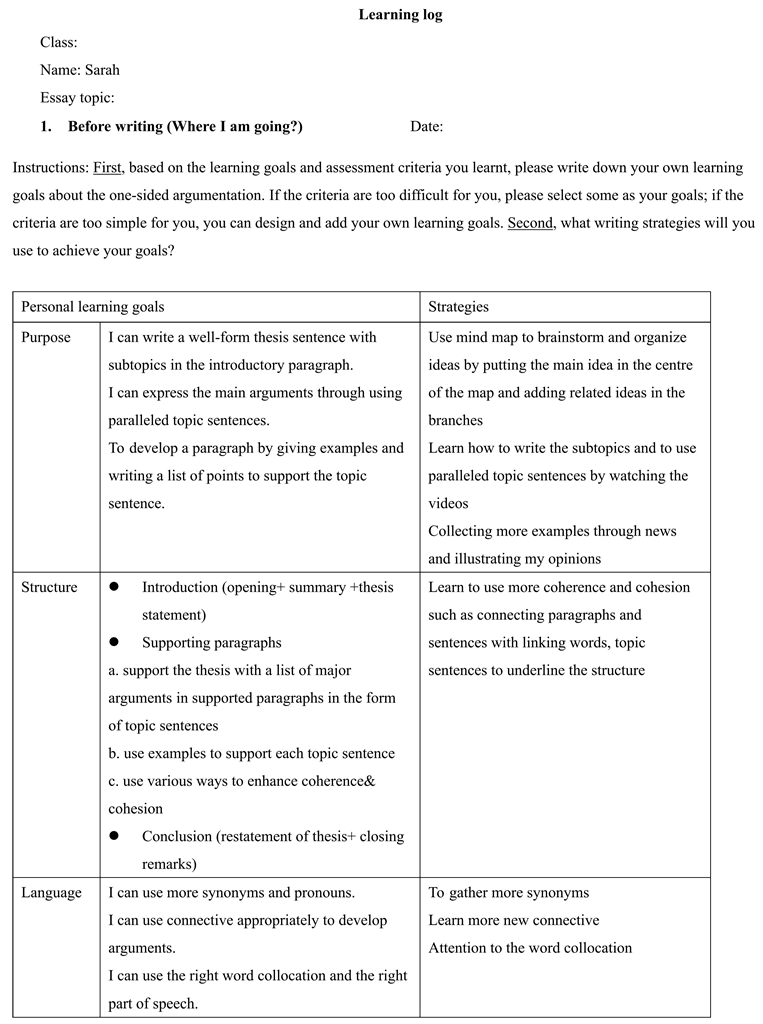
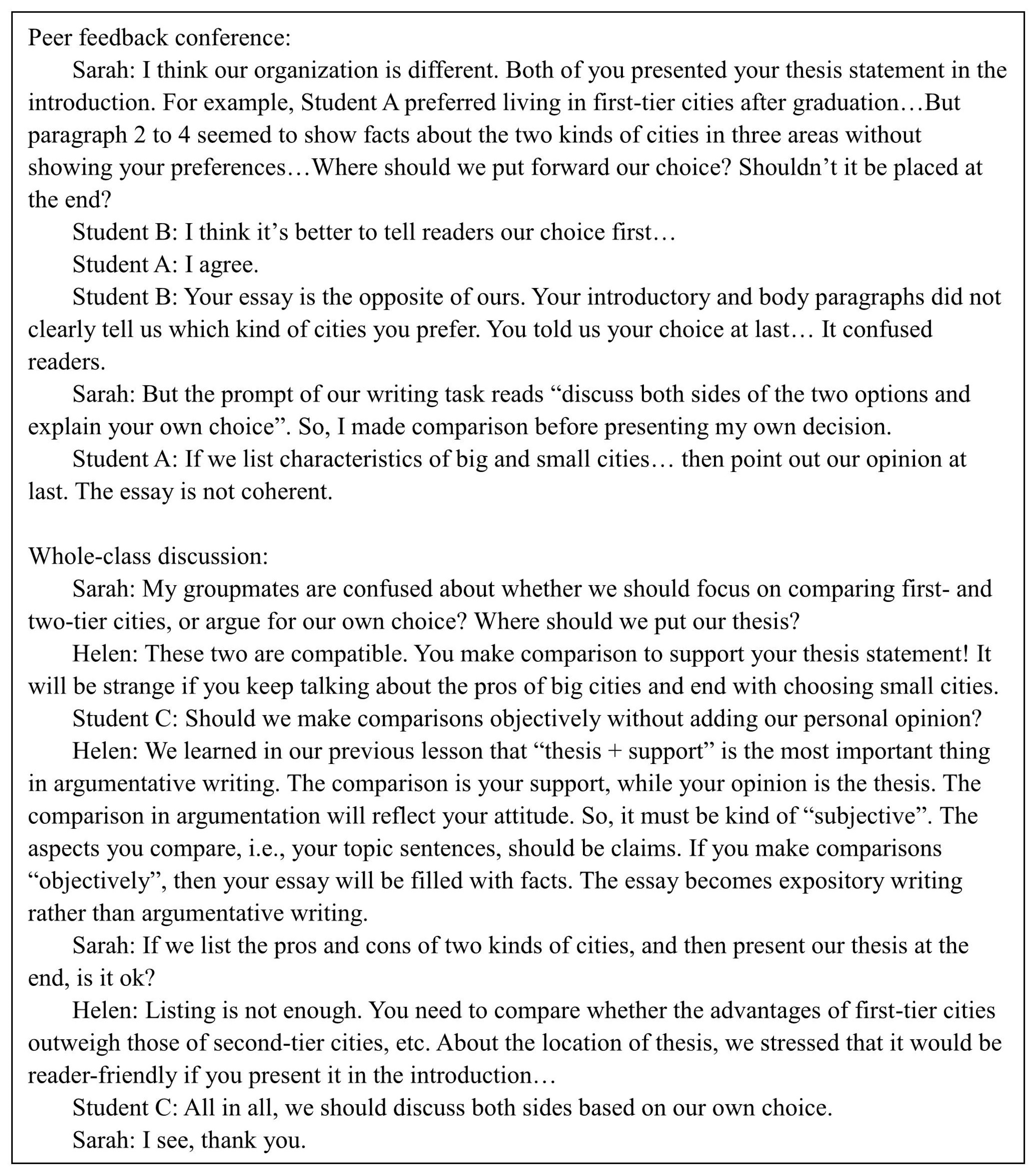
The purpose of argumentative writing is to put forward my opinion, and then analyze and support my argument in paragraphs… For structure, I begin an argumentation with an introduction of the topic, summarize the materials, and then present a thesis statement. I use two to three arguments to support my thesis statement. According to these arguments, I come up with topic sentences…and support them. In the conclusion, I restate my thesis statement and propose a piece of advice, etc.(Post-study interview)
Since I need to think on my own when analyzing sample texts and discussing with peers, instead of just listening to my teacher’s explanation, I have a stronger impression of the key features of argumentation in the aspects of purpose, content, and structure… With these criteria, I know what to pay attention to during writing and what to improve during revision.(Post-study interview)
4.2. Anne
When summarizing key features of good argumentative writing from the sample, I wrote grammar accuracy and sentence coherence. However, my groupmates and teacher attached importance to the content…Then I realized content is important”.(Post-study interview)
5. Discussion
6. Conclusions
Supplementary Materials
Funding
Institutional Review Board Statement
Informed Consent Statement
Data Availability Statement
Conflicts of Interest
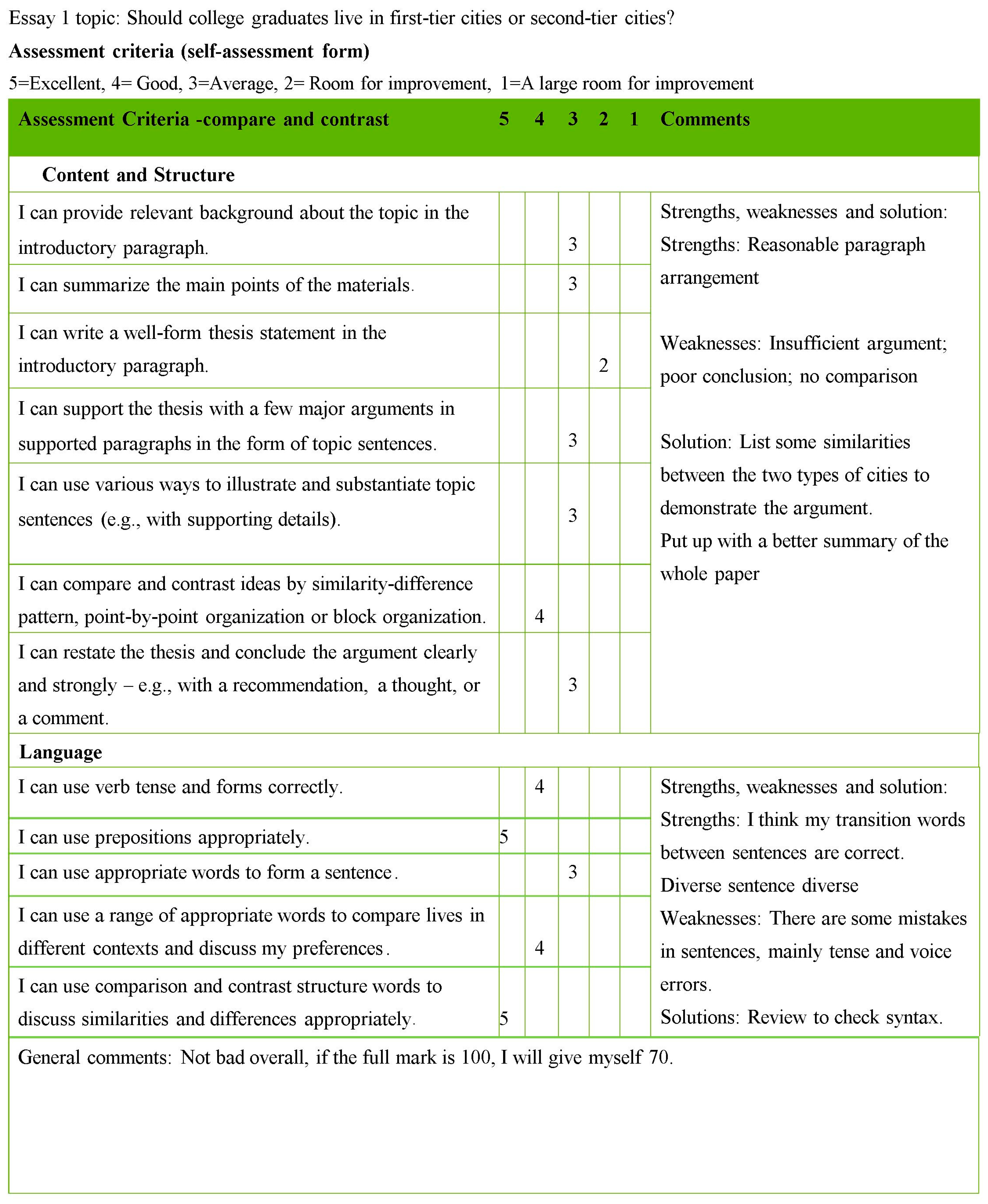
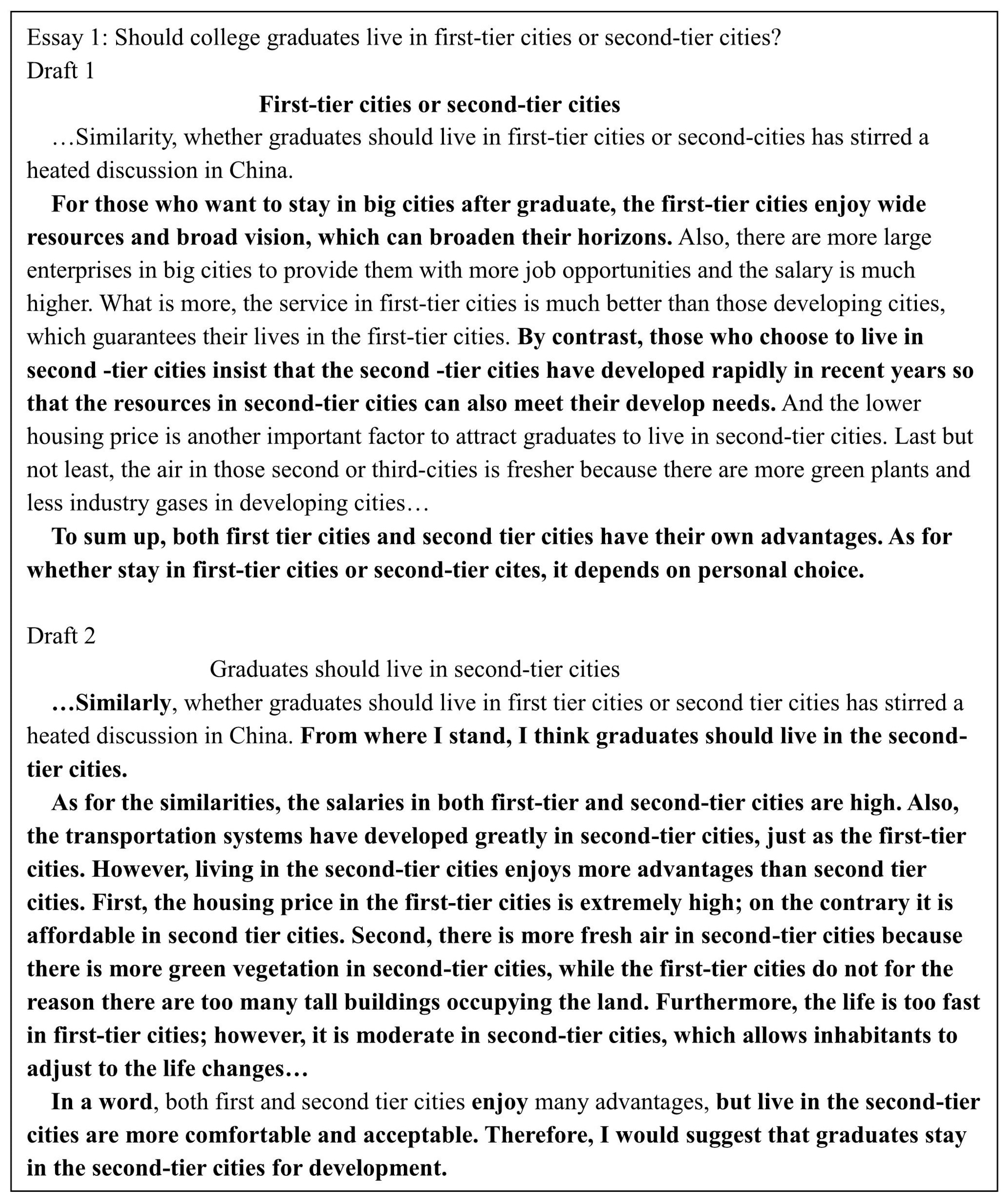
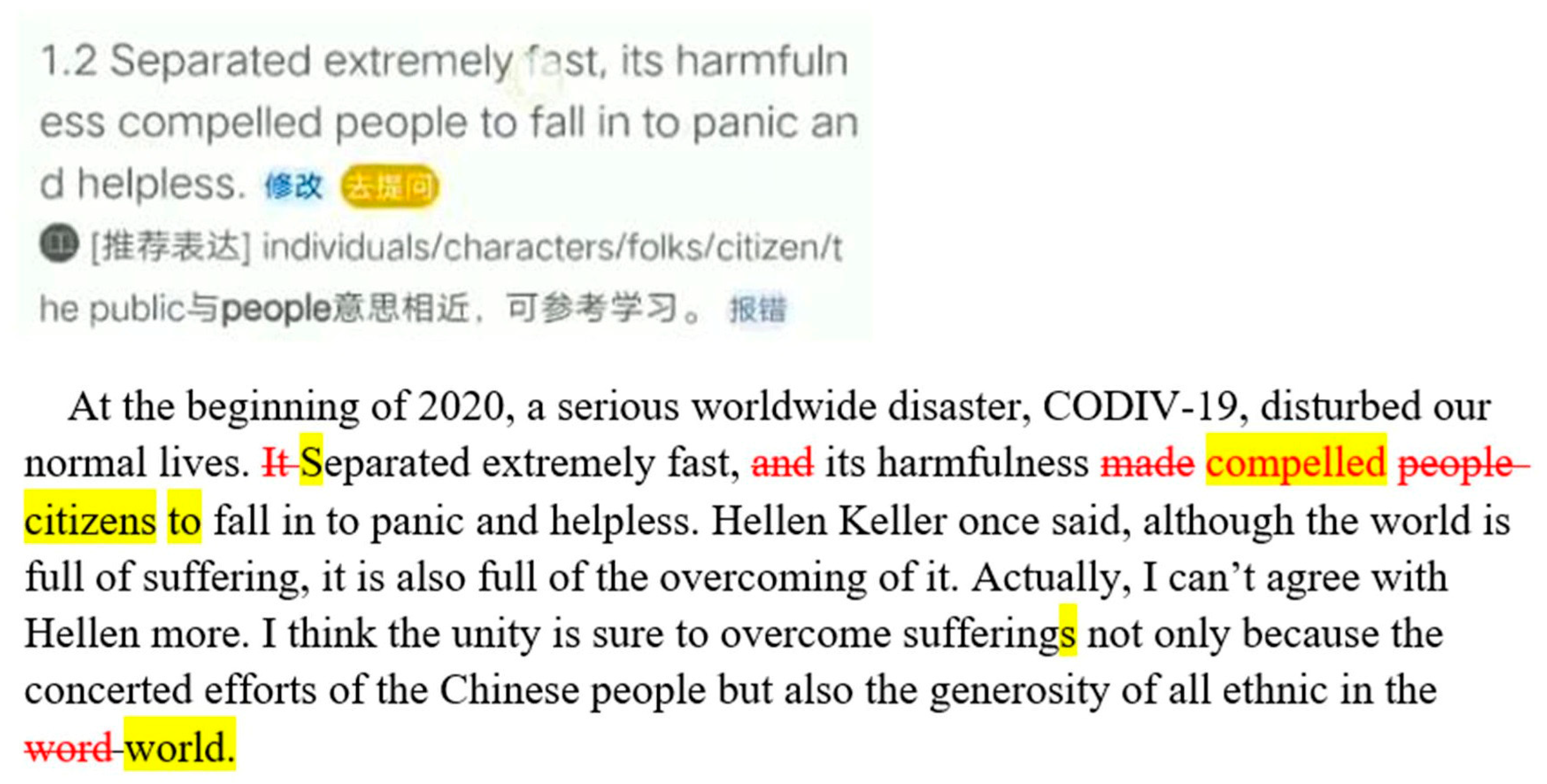
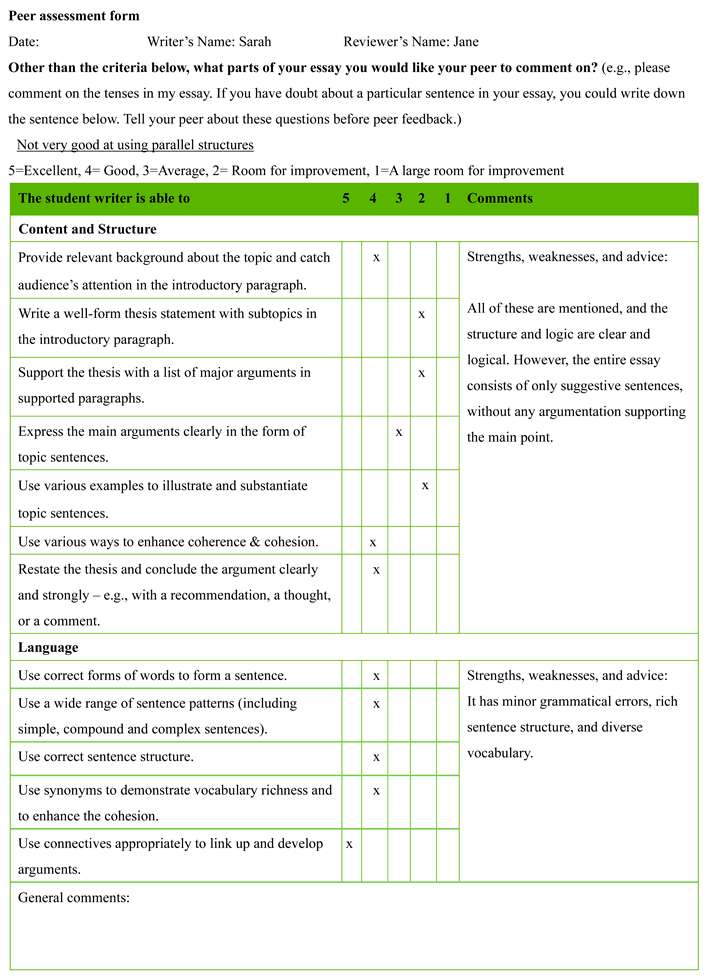
Appendix A. Samples of a Learning Log and Assessment Forms




References
- Allal, L. (2011). Pedagogy, didactics and the co-regulation of learning: A perspective from the French-language world of educational research. Research Papers in Education, 26(3), 329–336. [Google Scholar] [CrossRef]
- Bai, B. (2015). The effects of strategy-based writing instruction in Singapore primary schools. System, 53, 96–106. [Google Scholar] [CrossRef]
- Bai, R., Hu, G., & Gu, P. (2014). The relationship between use of writing strategies and English proficiency in Singapore primary schools. The Asia-Pacific Education Researcher, 23(3), 355–365. [Google Scholar] [CrossRef]
- Bandura, A. (2006). Toward a psychology of human agency. Perspectives on Psychological Science, 1(2), 164–180. [Google Scholar] [CrossRef]
- Black, P., & Wiliam, D. (2009). Developing the theory of formative assessment. Educational Assessment, Evaluation and Accountability, 21(1), 5–31. [Google Scholar] [CrossRef]
- Carless, D., & Chan, K. K. H. (2017). Managing dialogic use of exemplars. Assessment & Evaluation in Higher Education, 42(6), 930–941. [Google Scholar] [CrossRef]
- Christenson, S. L., Reschly, A. L., & Wylie, C. (Eds.). (2012). Handbook of research on student engagement. Springer Science. [Google Scholar]
- Clark, I. (2012). Formative assessment: Assessment is for self-regulated learning. Educational Psychology Review, 24(2), 205–249. [Google Scholar] [CrossRef]
- Cleary, T. J., & Zimmerman, B. J. (2012). A cyclical self-regulatory account of student engagement: Theoretical foundations and applications. In S. L. Christenson, A. L. Reschly, & C. Wylie (Eds.), Handbook of research on student engagement (pp. 237–257). Springer. [Google Scholar]
- Dann, R. (2002). Promoting assessment as learning: Improving the learning process. Routledge Falmer. [Google Scholar]
- Earl, L. M. (2013). Assessment as learning: Using classroom assessment to maximize student learning (2nd ed.). Corwin Press. [Google Scholar]
- Fredricks, J., Blumenfeld, P., & Paris, A. (2004). School engagement: Potential of the concept, state of the evidence. Review of Educational Research, 74(1), 59–109. [Google Scholar] [CrossRef]
- Gao, H. (2011). A construct validation study of CET band 4. Foreign Language Testing and Teaching, 4, 33–41. [Google Scholar]
- Hale, C. C. (2015). Self-assessment as academic community building: A study from a Japanese liberal arts university. Language Testing in Asia, 5(1), 1. [Google Scholar] [CrossRef]
- Hawe, E., & Parr, J. (2014). Assessment for learning in the writing classroom: An incomplete realisation. Curriculum Journal, 25(2), 210–237. [Google Scholar] [CrossRef]
- He, M., & Wang, L. (2025). Implementing assessment as learning in online EFL writing classes. RELC Journal, 56(2), 468–482. [Google Scholar] [CrossRef]
- Huang, S. (2015). Setting writing revision goals after assessment for learning. Language Assessment Quarterly, 12(4), 363–385. [Google Scholar] [CrossRef]
- Hyland, K. (2003). Second language writing. Cambridge University Press. [Google Scholar]
- Hyland, K. (2007). Genre pedagogy: Language, literacy and L2 writing instruction. Journal of Second Language Writing, 16(3), 148–164. [Google Scholar] [CrossRef]
- Lam, R. (2010). A peer review training workshop: Coaching students to give and evaluate peer feedback. TESL Canada Journal, 27(2), 114. [Google Scholar] [CrossRef]
- Lam, R. (2013). The relationship between assessment types and text revision. ELT Journal, 67(4), 446–458. [Google Scholar] [CrossRef]
- Lam, R. (2016). Assessment as learning: Examining a cycle of teaching, learning, and assessment of writing in the portfolio-based classroom. Studies in Higher Education, 41(11), 1900–1917. [Google Scholar] [CrossRef]
- Lantolf, J. P. (2006). Sociocultural theory and L2 development: State-of-the-art. Studies in Second Language Acquisition, 28, 67–109. [Google Scholar] [CrossRef]
- Lee, I. (2016). Putting students at the centre of classroom L2 writing assessment. Canadian Modern Language Review, 72(2), 258–280. [Google Scholar] [CrossRef]
- Lee, I. (2017). Classroom writing assessment and feedback in L2 school contexts. Springer. [Google Scholar]
- Lee, I., & Coniam, D. (2013). Introducing assessment for learning for EFL writing in an assessment of learning examination-driven system in Hong Kong. Journal of Second Language Writing, 22(1), 34–50. [Google Scholar] [CrossRef]
- Lee, I., & Mak, P. (2018). Metacognition and metacognitive instruction in second language writing classrooms. TESOL Quarterly, 52(4), 1085–1097. [Google Scholar] [CrossRef]
- Lee, I., Mak, P., & Yuan, R. (2019). Assessment as learning in primary writing classrooms: An exploratory study. Studies in Educational Evaluation, 62, 72–81. [Google Scholar] [CrossRef]
- Leung, C., Davison, C., East, M., Evans, M., Green, A., Hamp-Lyons, L., Liu, L., & Purpura, J. E. (2018). Using assessment to promote learning: Clarifying constructs, theories, and practices. In J. M. Davis, J. M. Norris, M. E. Malone, T. McKay, & Y. A. Son (Eds.), Useful assessment and evaluation in language education (pp. 75–91). Georgetown University Press. [Google Scholar]
- Mackey, A., & Gass, S. M. (2005). Second language research: Methodology and design. Lawrence Erlbaum. [Google Scholar]
- Marshall, B., & Jane Drummond, M. (2006). How teachers engage with assessment for learning: Lessons from the classroom. Research Papers in Education, 21(2), 133–149. [Google Scholar] [CrossRef]
- Mercer, S., & Dörnyei, Z. (2020). Engaging language learners in contemporary classrooms. Cambridge University Press. [Google Scholar]
- Miles, M., Huberman, A., & Saldaña, J. (2014). Qualitative data analysis: A methods sourcebook (3rd ed.). Sage. [Google Scholar]
- Nicol, D., & Macfarlane-Dick, D. (2006). Formative assessment and self-regulated learning: A model and seven principles of good feedback practice. Studies in Higher Education, 31(2), 199–218. [Google Scholar] [CrossRef]
- Oga-Baldwin, W. Q. (2019). Acting, thinking, feeling, making, collaborating: The engagement process in foreign language learning. System, 86, 102128. [Google Scholar] [CrossRef]
- Oxford, R. L., Rubin, J., Chamot, A. U., Schramm, K., Lavine, R., Gunning, P., & Nel, C. (2014). The learning strategy prism: Perspectives of learning strategy experts. System, 43, 30–49. [Google Scholar] [CrossRef]
- Powell, K. C., & Kalina, C. J. (2009). Cognitive and social constructivism: Developing tools for an effective classroom. Education, 130(2), 241–250. [Google Scholar]
- Reeve, J. (2013). How students create motivationally supportive learning environments for themselves: The concept of agentic engagement. Journal of Educational Psychology, 105(3), 579–595. [Google Scholar] [CrossRef]
- Reeve, J., Cheon, S. H., & Jang, H. (2020). How and why students make academic progress: Reconceptualizing the student engagement construct to increase its explanatory power. Contemporary Educational Psychology, 62, 101899. [Google Scholar] [CrossRef]
- Rifkin, B. (2005). A ceiling effect in traditional classroom foreign language instruction: Data from Russian. The Modern Language Journal, 89(1), 3–18. [Google Scholar] [CrossRef]
- Shepard, L. A. (2000). The role of assessment in a learning culture. Educational Researcher, 29(7), 4–14. [Google Scholar] [CrossRef]
- Storch, N. (2008). Metatalk in a pair work activity: Level of engagement and implications for language development. Language Awareness, 17, 95–114. [Google Scholar] [CrossRef]
- Teng, L. S., & Zhang, L. J. (2018). Effects of motivational regulation strategies on writing performance: A mediation model of self-regulated learning of writing in English as a second/foreign language. Metacognition and Learning, 13(2), 213–240. [Google Scholar] [CrossRef]
- Van Lier, L. (2008). Agency in the classroom. In J. P. Lantolf, & M. E. Poehner (Eds.), Sociocultural theory and the teaching of second languages (pp. 163–186). Equinox. [Google Scholar]
- Wang, L., & Lee, I. (2021). L2 learners’ agentic engagement in an assessment as learning-focused writing classroom. Assessing Writing, 50, 100571. [Google Scholar] [CrossRef]
- Wang, L., Lee, I., & Park, M. (2020). Chinese university EFL teachers’ beliefs and practices of classroom writing assessment. Studies in Educational Evaluation, 66, 100890. [Google Scholar] [CrossRef]
- Wang, L., & Shen, B. (2025). Influencing factors of L2 writers’ engagement in an assessment as learning-focused context. International Review of Applied Linguistics in Language Teaching, 63(4), 2591–2632. [Google Scholar] [CrossRef]
- Wiliam, D. (2011). What is assessment for learning? Studies in Educational Evaluation, 37(1), 3–14. [Google Scholar] [CrossRef]
- Wong, K. M., & Mak, P. (2019). Self-assessment in the primary L2 writing classroom. Canadian Modern Language Review, 75(2), 183–196. [Google Scholar] [CrossRef]
- Xiang, W. (2004). Encouraging self-monitoring in writing by Chinese students. ELT Journal, 58(3), 238–246. [Google Scholar] [CrossRef]
- Xiang, X., Yuan, R., & Yu, B. (2022). Implementing assessment as learning in the L2 writing classroom: A Chinese case. Assessment & Evaluation in Higher Education, 47(5), 727–741. [Google Scholar] [CrossRef]
- Zhang, Z. V. (2020). Engaging with automated writing evaluation (AWE) feedback on L2 writing: Student perceptions and revisions. Assessing Writing, 43, 100439. [Google Scholar] [CrossRef]




| Timeline | Data Collected |
|---|---|
| Week 1 | Pre-test |
| Week 2 | Pre-study interviews |
| Week 4 | Essay 1 Draft 1 (E1D1) with think-alouds, learning logs and stimulated recalls (within 2 days after completing each draft) |
| Week 5 | Self-assessment forms of E1D1 |
| E1D2 with think-alouds, learning logs and stimulated recalls | |
| Week 6 | Peer feedback forms and conference recordings of E1D2 |
| Week 7 | E1D3 with think-alouds, learning logs and stimulated recalls |
| Week 8 | Teacher feedback forms of E1D3 |
| Week 9 | E1D4 with think-alouds, learning logs and stimulated recalls |
| Week 11 | E2D1 with think-alouds, learning logs and stimulated recalls |
| Week 12 | Self-assessment forms of E2D1 |
| E2D2 with think-alouds, learning logs and stimulated recalls | |
| Week 13 | Peer feedback forms and conference recordings of E2D2 |
| Week 14 | E2D3 with think-alouds, learning logs and stimulated recalls |
| Week 15 | Teacher feedback forms of E2D3 |
| Week 16 | E2D4 think-alouds, learning logs and stimulated recalls |
| Week 16 | Pro-test and post-study interviews |
| During the term | Classroom observation |
| Categories | Codes |
|---|---|
| Content and Structure | CS1. Introduction-Lead in |
| CS2. Introduction-Thesis statement | |
| CS3. Body-Presenting main arguments in topic sentences | |
| CS4. Body-Organizing main arguments in proper paragraphs | |
| CS5. Body-Supporting details | |
| CS6. Conclusion-Restating thesis and summarizing main arguments | |
| CS7. Conclusion-Concluding the arguments | |
| CS8. Logic and persuasiveness of ideas | |
| Language | LA1. Grammatical accuracy (verb tenses and forms, prepositions (prep.), word choices, word forms) |
| LA2. Sentence patterns (range and appropriateness) | |
| LA3. Vocabulary (range and appropriateness) | |
| LA4. Connectives (range and appropriateness) |
| Error Types | Verb Form and Tense | Prep. | Word Choice | Word Form | Sentence Structure | Ratio (Number of Errors/Total Word Count) |
|---|---|---|---|---|---|---|
| Draft Number (Total Word Count) | ||||||
| Essay 1 Draft 1 (241) | 2 | 1 | 3 | 2.5% | ||
| Essay 1 Draft 2 (257) | 1 | 1 | 3 | 1.9% | ||
| Essay 1 Draft 3 (314) | 1 | 2 | 3 | 1.9% | ||
| Essay 1 Draft 4 (275) | 0 | 0 | 1 | 0.4% | ||
| Essay 2 Draft 1 (415) | 1 | 1 | 5 | 0 | 3 | 2.4% |
| Essay 2 Draft 2 (454) | 1 | 1 | 5 | 0 | 3 | 2.2% |
| Essay 2 Draft 3 (444) | 1 | 1 | 5 | 0 | 3 | 2.3% |
| Essay 2 Draft 4 (454) | 1 | 1 | 2 | 0 | 1 | 1.1% |
| Error Types | Verb Form and Tense | Prep. | Word Choice | Word Form | Sentence Structure | Ratio (Number of Errors/Total Word Count) |
|---|---|---|---|---|---|---|
| Draft Number (Total Word Count) | ||||||
| Essay 1 Draft 1 (294) | 1 | 2 | 0 | 1.0% | ||
| Essay 1 Draft 2 (281) | 2 | 0 | 0 | 0.7% | ||
| Essay 1 Draft 3 (245) | 2 | 0 | 0 | 0.8% | ||
| Essay 1 Draft 4 (263) | 1 | 0 | 0 | 0.4% | ||
| Essay 2 Draft 1 (396) | 5 | 3 | 3 | 1 | 2 | 3.5% |
| Essay 2 Draft 2 (410) | 3 | 2 | 1 | 1 | 2 | 2.2% |
| Essay 2 Draft 3 (432) | 4 | 2 | 1 | 1 | 2 | 2.3% |
| Essay 2 Draft 4 (441) | 4 | 2 | 0 | 1 | 1 | 1.8% |
Disclaimer/Publisher’s Note: The statements, opinions and data contained in all publications are solely those of the individual author(s) and contributor(s) and not of MDPI and/or the editor(s). MDPI and/or the editor(s) disclaim responsibility for any injury to people or property resulting from any ideas, methods, instructions or products referred to in the content. |
© 2026 by the author. Licensee MDPI, Basel, Switzerland. This article is an open access article distributed under the terms and conditions of the Creative Commons Attribution (CC BY) license.
Share and Cite
Wang, L. Learner Engagement and Writing Performance in Assessment as Learning L2 Writing. Languages 2026, 11, 62. https://doi.org/10.3390/languages11040062
Wang L. Learner Engagement and Writing Performance in Assessment as Learning L2 Writing. Languages. 2026; 11(4):62. https://doi.org/10.3390/languages11040062
Chicago/Turabian StyleWang, Lu. 2026. "Learner Engagement and Writing Performance in Assessment as Learning L2 Writing" Languages 11, no. 4: 62. https://doi.org/10.3390/languages11040062
APA StyleWang, L. (2026). Learner Engagement and Writing Performance in Assessment as Learning L2 Writing. Languages, 11(4), 62. https://doi.org/10.3390/languages11040062